12 Unique Interior Design Portfolio Ideas and Room Inspirations
- Home Interior Design
 Ben
Ben- 0
- 40 minutes read
Your interior design portfolio could be the most beautiful collection of work in existence, but if it’s presented poorly, nobody will ever know.
I learned this lesson the hard way when I submitted my first portfolio for a dream job – stunning projects, terrible presentation – and watched it disappear into the rejection pile faster than you can say “mood board.”
The truth about interior design portfolios is that presentation matters just as much as the work itself. Potential clients and employers spend mere seconds scanning your portfolio before deciding whether you’re worth their time.
That gorgeous kitchen renovation you spent months on? It’ll get overlooked if it’s buried in a cluttered, confusing layout that makes people’s eyes glaze over.
These twelve interior design portfolio ideas will help you showcase your work in ways that actually convert viewers into clients.
Whether you’re a fresh graduate building your first portfolio or an established designer looking to refresh your presentation, these concepts will transform how people perceive your talent. Because let’s be honest – you deserve to be judged by your best work, not by a mediocre PDF.
1. Minimalist Interior Design Portfolio Layouts
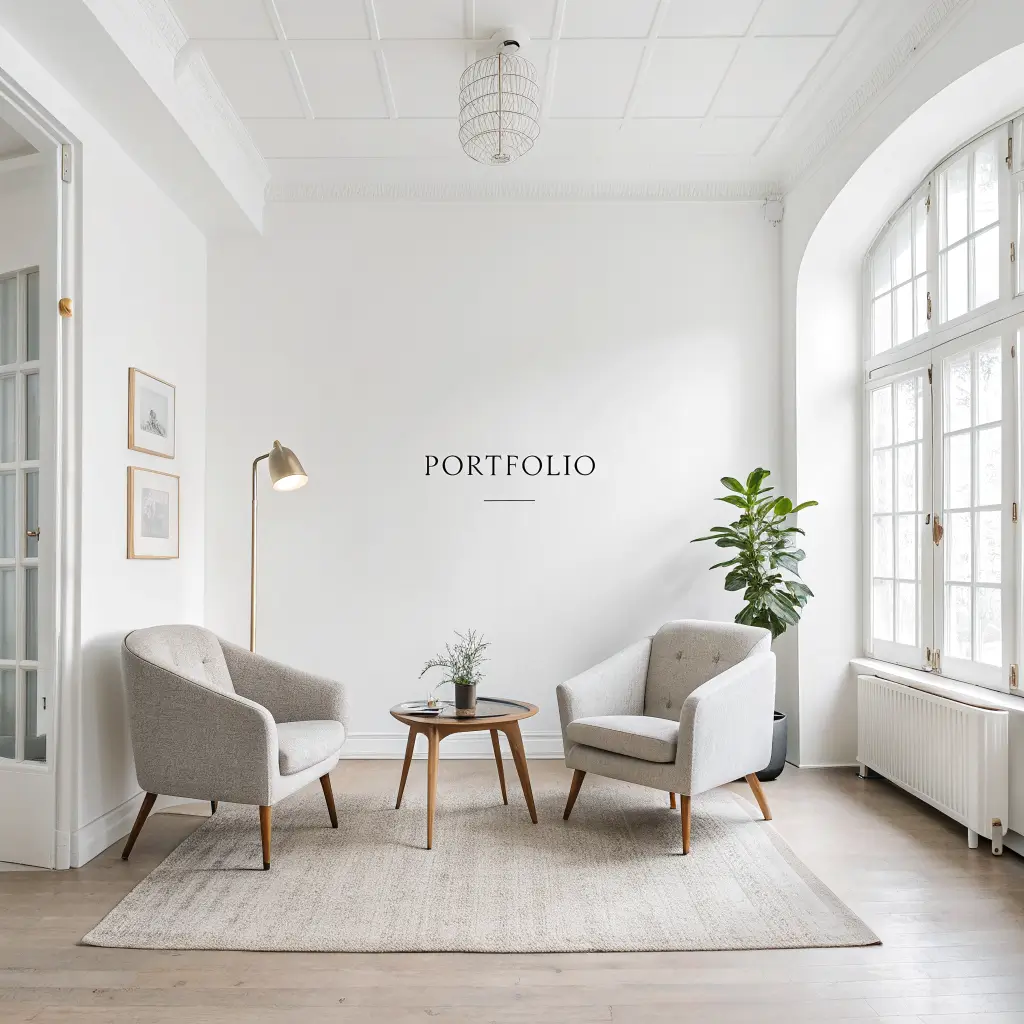
Minimalist portfolio layouts let your work speak for itself without visual distractions competing for attention. This approach uses generous white space, clean typography, and strategic image placement to create a sophisticated presentation that clients associate with premium design services.
The psychology behind minimalist portfolios works in your favor. When viewers aren’t overwhelmed by busy layouts, they spend more time actually looking at your work. I switched to a minimalist portfolio format two years ago, and my client response rate doubled within months.
White space is your secret weapon here. Don’t fear empty areas – they create visual breathing room that makes your projects feel more luxurious and intentional. Think of it like the negative space in high-end interior design; it’s not wasted, it’s purposeful.
Creating Effective Minimalist Layouts
Essential minimalist elements:
- One project per page to maintain focus
- Consistent margins throughout the portfolio
- Limited color palette – typically two to three colors
- High-quality photography with clean compositions
- Simple, readable typography without decorative fonts
- Ample white space around every element
The minimalist approach works particularly well for designers targeting luxury clients who associate clean presentation with sophisticated taste.
2. Modern Apartment Portfolio Inspiration
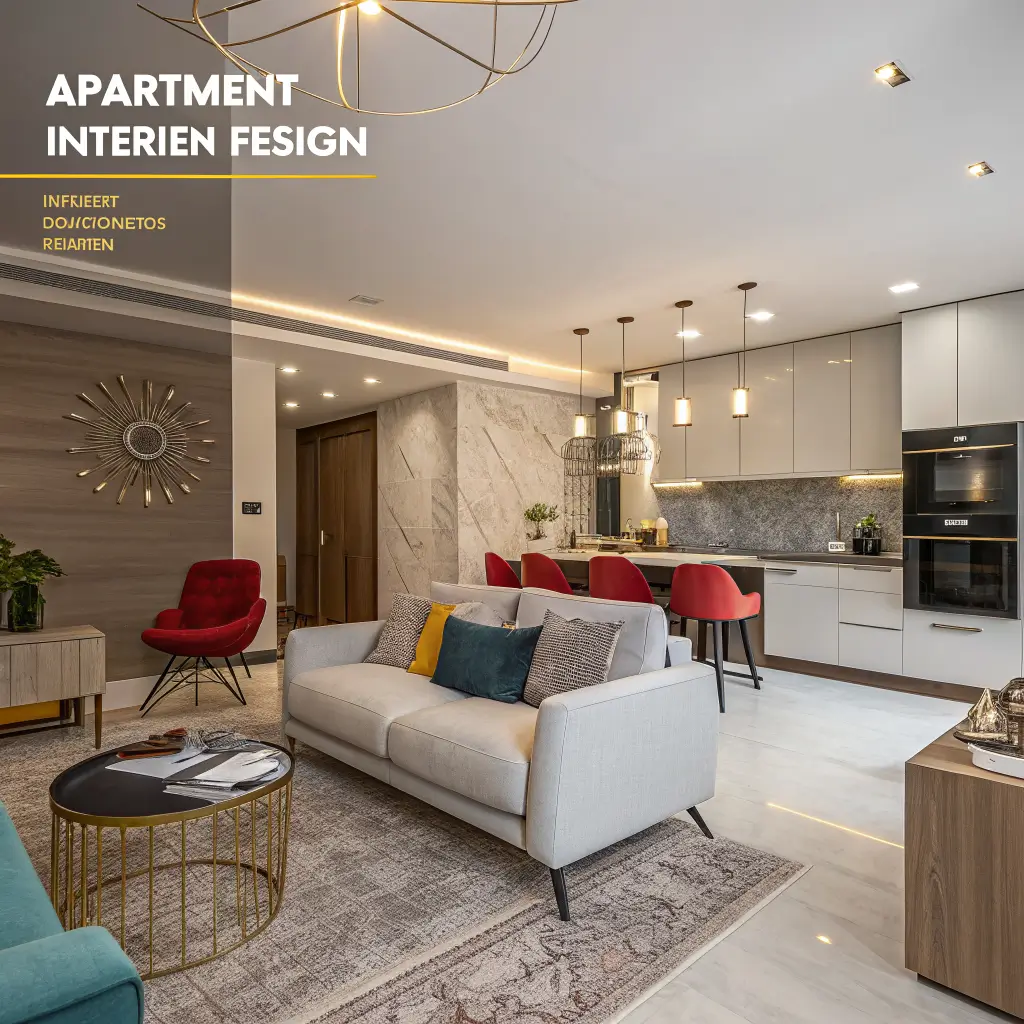
Modern apartment portfolios showcase your ability to transform compact urban spaces into functional, beautiful homes. This portfolio style appeals specifically to clients with contemporary apartments, condos, and city dwellings.
Specialization can actually expand your client base. By focusing your portfolio on modern apartment design, you position yourself as an expert rather than a generalist. Potential clients searching for exactly this expertise will choose you over someone with a scattered portfolio.
The key is demonstrating your understanding of modern apartment challenges. Show before-and-after transformations, highlight clever storage solutions, and emphasize how you maximize limited square footage. These practical demonstrations resonate with apartment dwellers far more than pretty pictures alone.
Modern Apartment Portfolio Components
Showcasing urban expertise:
- Space optimization examples with measurements
- Multi-functional furniture solutions you’ve implemented
- Lighting strategies for typically dim urban spaces
- Before and after transformations
- Floor plan comparisons showing improved layouts
- Detail shots of custom storage solutions
This portfolio style attracts young professionals, urban couples, and investors developing rental properties.
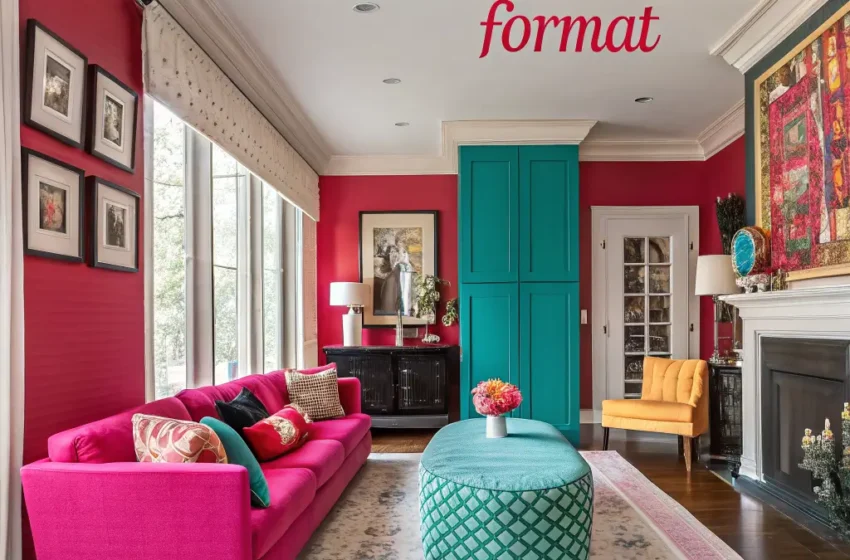
3. Colorful and Bold Interior Portfolio Ideas
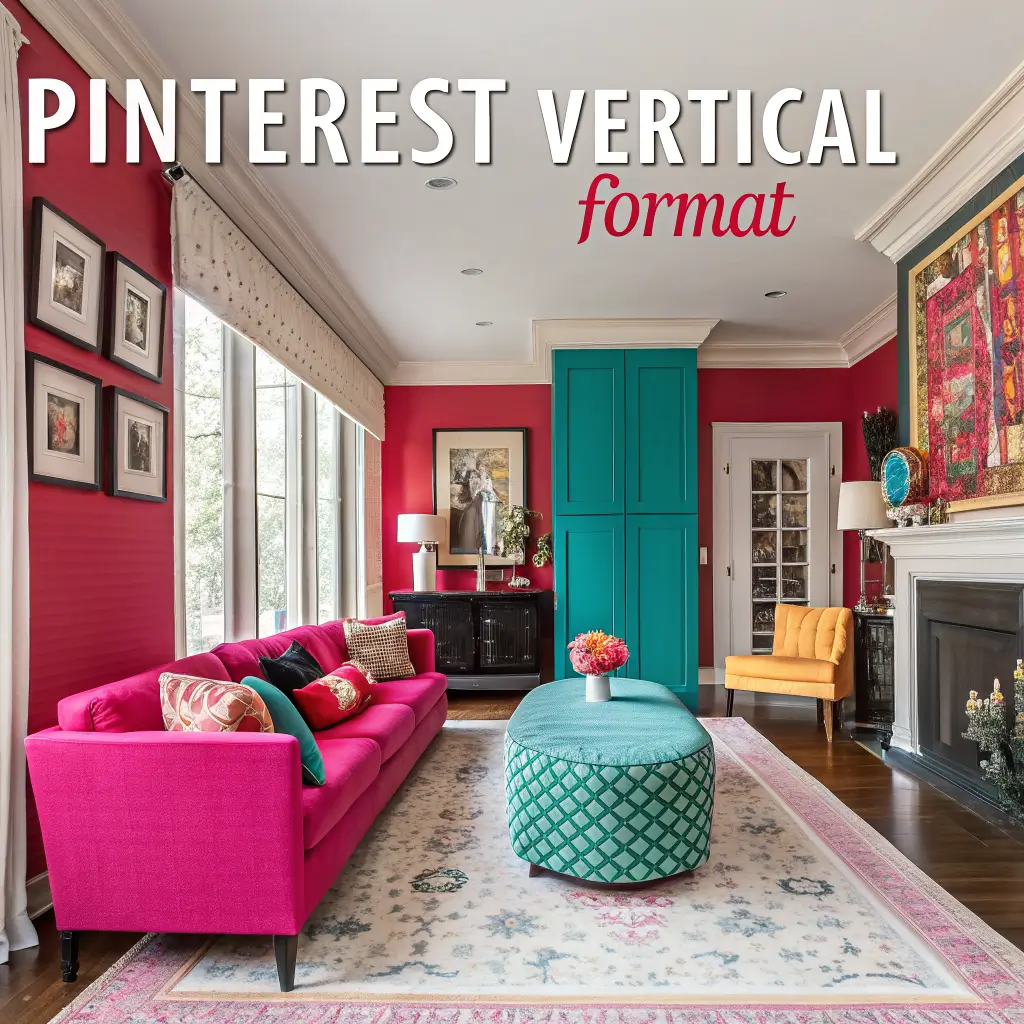
Colorful and bold portfolios announce that you’re not afraid to take design risks – and neither should your clients be. This approach attracts clients who want distinctive spaces rather than safe, forgettable designs.
The bold portfolio approach requires confidence in your color choices. Every spread should feel intentional and cohesive, even when featuring dramatically different color schemes. I organize my bold projects by color temperature, creating visual flow that feels exciting rather than chaotic.
Your portfolio layout should match the energy of your work. Use color strategically in your typography, page borders, and divider pages to create a cohesive experience. The portfolio itself becomes a demonstration of your color confidence.
Bold Portfolio Presentation
Creating colorful impact:
- Color-coordinated sections grouping similar projects
- Vibrant typography that complements project photos
- Colorful chapter dividers between project categories
- Detail shots highlighting your color choices
- Client testimonials about bold design choices
- Material palettes showing color inspiration sources
This portfolio style attracts creative entrepreneurs, hospitality businesses, and clients seeking Instagram-worthy spaces.
Also Read:10 Timeless Japanese Interior Design Ideas for Serene Homes
4. Scandinavian Style Portfolio Concepts
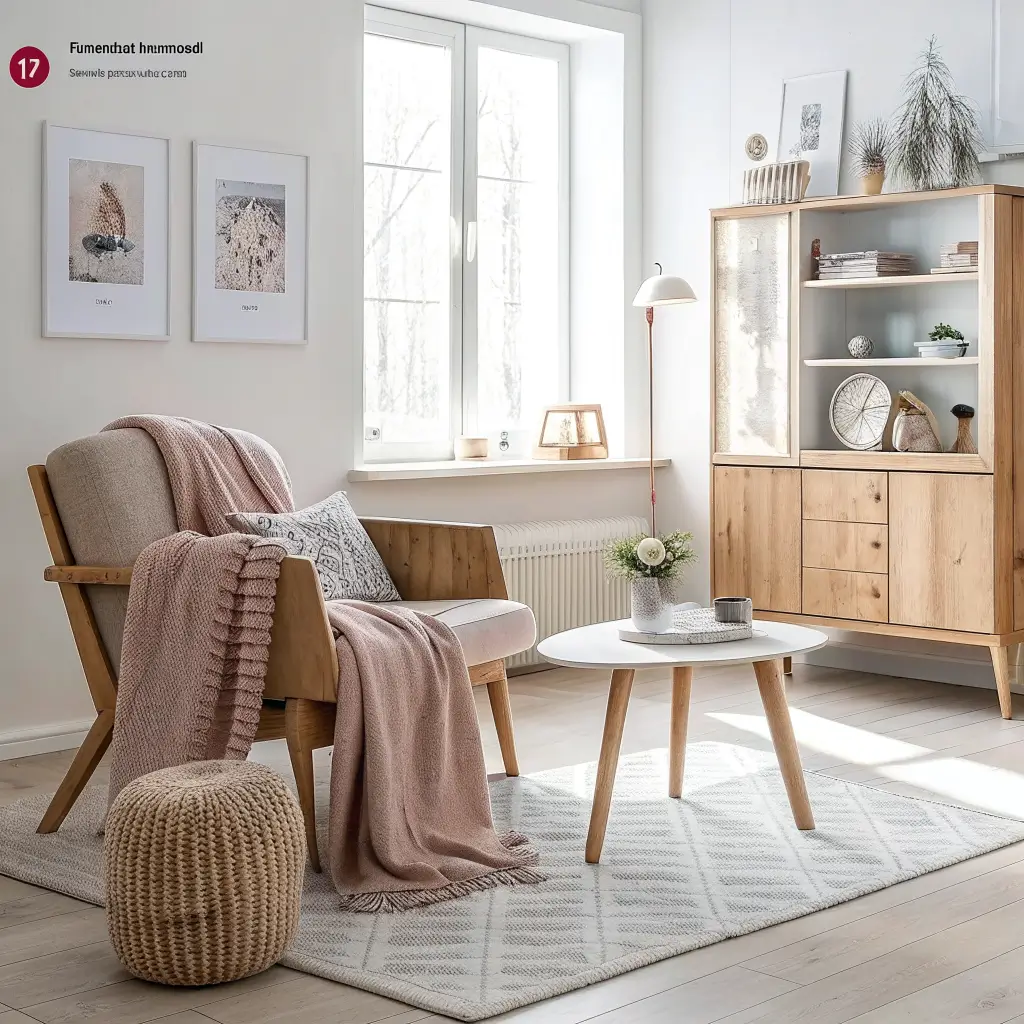
Scandinavian style portfolios embody the hygge philosophy through clean, warm presentation that feels both professional and inviting. This approach appeals to clients who value simplicity, functionality, and natural beauty.
The Scandinavian portfolio aesthetic mirrors the design philosophy itself. Natural materials, soft colors, and plenty of breathing room create a viewing experience that feels calm and sophisticated. It’s minimalism with warmth – not cold or sterile.
Consistency is crucial in Scandinavian-style portfolios. Maintain the same visual language throughout – similar photo styles, consistent typography, and cohesive color tones. This unified approach demonstrates your ability to create harmonious spaces.
Scandinavian Portfolio Elements
Nordic design presentation:
- Natural paper textures for printed portfolios
- Soft, muted color palettes throughout
- Simple sans-serif typography with clean lines
- Lifestyle photography showing spaces in use
- Material boards featuring natural textures
- Calm, balanced layouts without visual clutter
This portfolio approach appeals to sustainability-conscious clients and those seeking serene, functional spaces.
5. Luxury Home Interior Portfolio Designs
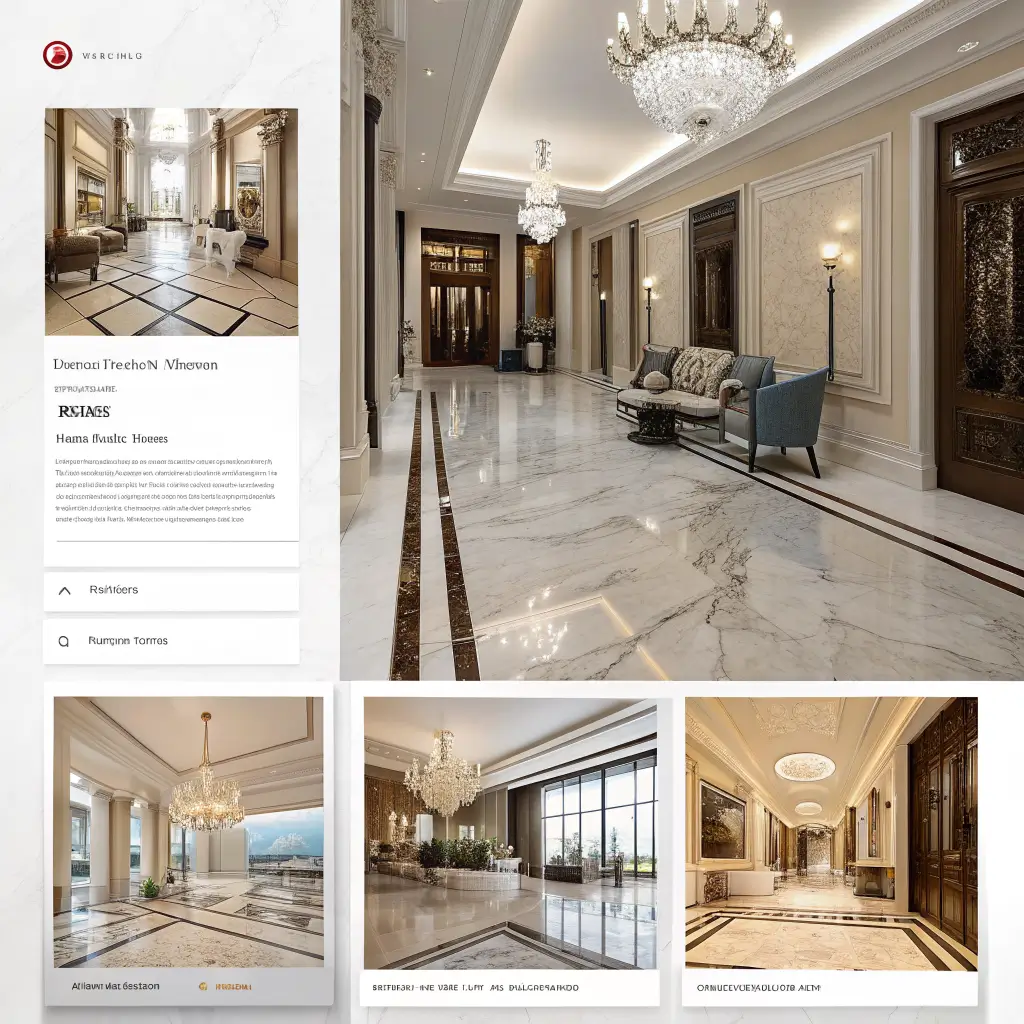
Luxury home portfolios communicate premium quality through every detail of your presentation. This isn’t just about showing expensive projects – it’s about presenting your work in a way that feels exclusive and sophisticated.
The luxury portfolio experience starts before anyone sees your work. Premium paper stocks, custom binding, and thoughtful packaging signal quality before the first page turns. I invested in high-quality printed portfolios for luxury client meetings, and the ROI justified every dollar.
Photography quality becomes non-negotiable in luxury portfolios. Professional architectural photography with perfect lighting distinguishes your work from amateur presentations. If your projects look incredible but your photos don’t do them justice, invest in professional photography immediately.
Luxury Portfolio Presentation
Premium presentation elements:
- Custom leather or linen binding for physical portfolios
- Thick, premium paper stock with luxurious feel
- Professional architectural photography throughout
- Elegant typography with sophisticated font pairings
- Gold foil or embossed details on covers
- Limited project selection featuring only the best work
This portfolio style attracts high-net-worth clients, luxury developers, and boutique hotels.
6. Small Space Interior Portfolio Examples
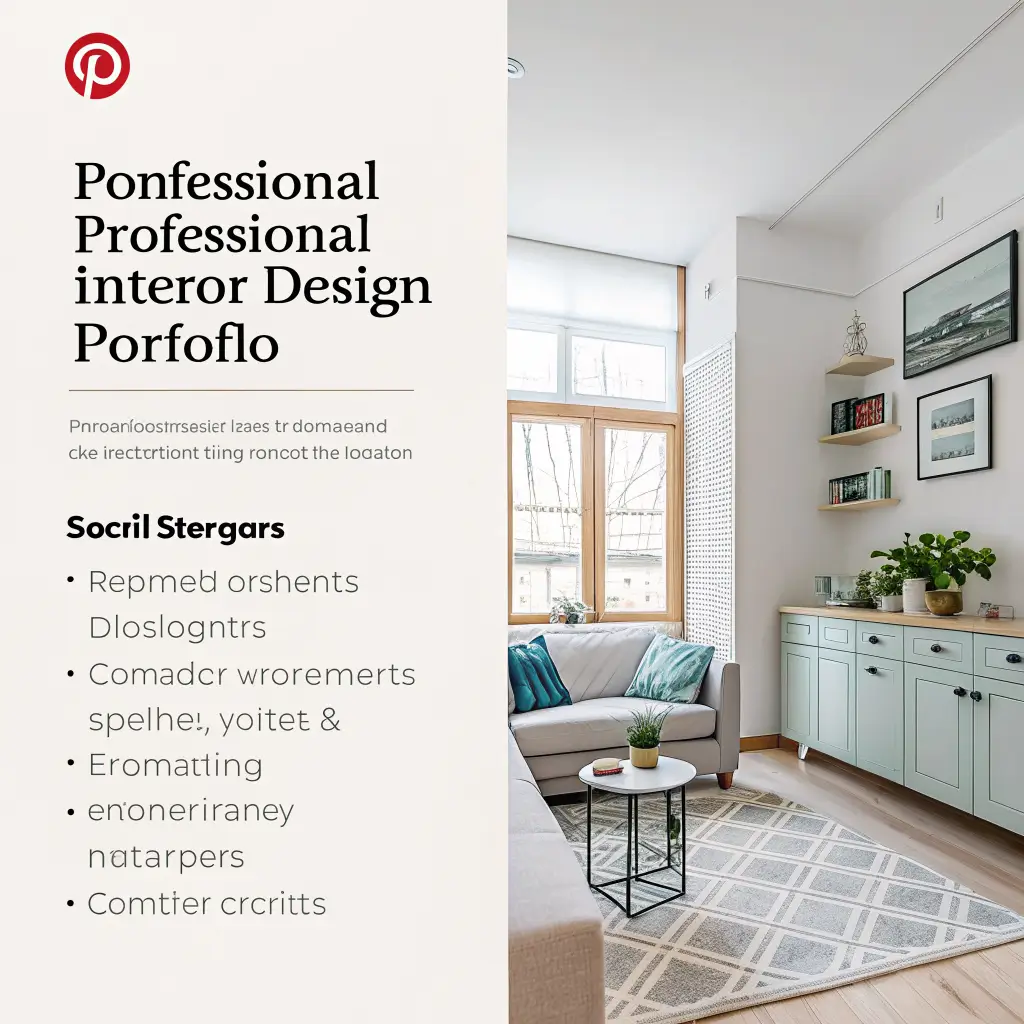
Small space portfolios demonstrate your genius for maximizing minimal square footage – a skill that’s increasingly valuable as living spaces shrink. This specialization positions you as the go-to designer for challenging spatial constraints.
The presentation should reflect your space-saving philosophy. Efficient, well-organized layouts demonstrate you practice what you preach. Every page should feel intentional, with nothing wasted – just like your design approach.
Document your problem-solving process visibly. Floor plans, 3D renderings showing spatial solutions, and step-by-step transformations help clients understand your thinking. This transparency builds trust with clients nervous about their small spaces.
Small Space Portfolio Strategy
Showcasing spatial solutions:
- Annotated floor plans explaining design decisions
- Before and after measurements proving space gains
- Custom furniture solutions you’ve designed
- Hidden storage reveals through multiple angles
- Multi-use space documentation showing flexibility
- Client testimonials about improved functionality
This portfolio attracts first-time homeowners, studio apartment dwellers, and tiny home enthusiasts.
Also Read: 10 Stylish Interior Ceiling Design Ideas and Trendy Room Looks
7. Eco-Friendly Interior Design Portfolio Ideas
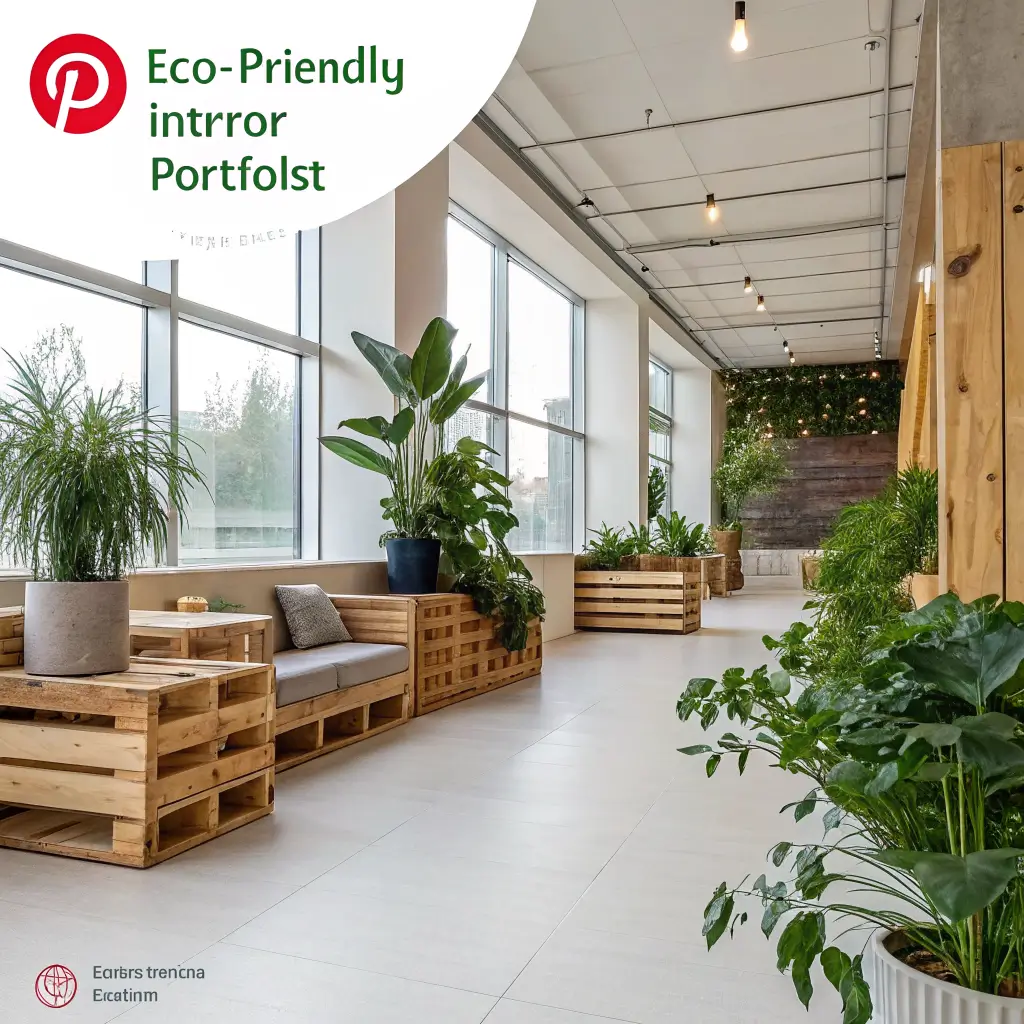
Eco-friendly portfolios highlight your commitment to sustainable design in ways that resonate with environmentally conscious clients. This specialization is growing rapidly as more clients prioritize sustainability.
Sustainability extends to your portfolio presentation. Use recycled papers, soy-based inks, and eco-friendly binding for physical portfolios. Your presentation should embody the values you claim to represent.
Document the environmental impact of your choices. Include material certifications, energy efficiency improvements, and sustainability metrics alongside beautiful photography. This data-driven approach appeals to clients who want accountability, not just greenwashing.
Sustainable Portfolio Components
Demonstrating environmental commitment:
- Material sourcing documentation showing sustainable origins
- Energy efficiency data from completed projects
- Certification logos for sustainable materials used
- Before and after environmental impact comparisons
- Upcycled and repurposed element highlights
- Local artisan and vendor partnerships
This portfolio approach attracts eco-conscious homeowners, LEED-focused developers, and sustainable hospitality brands.
8. Creative Typography for Portfolio Presentation
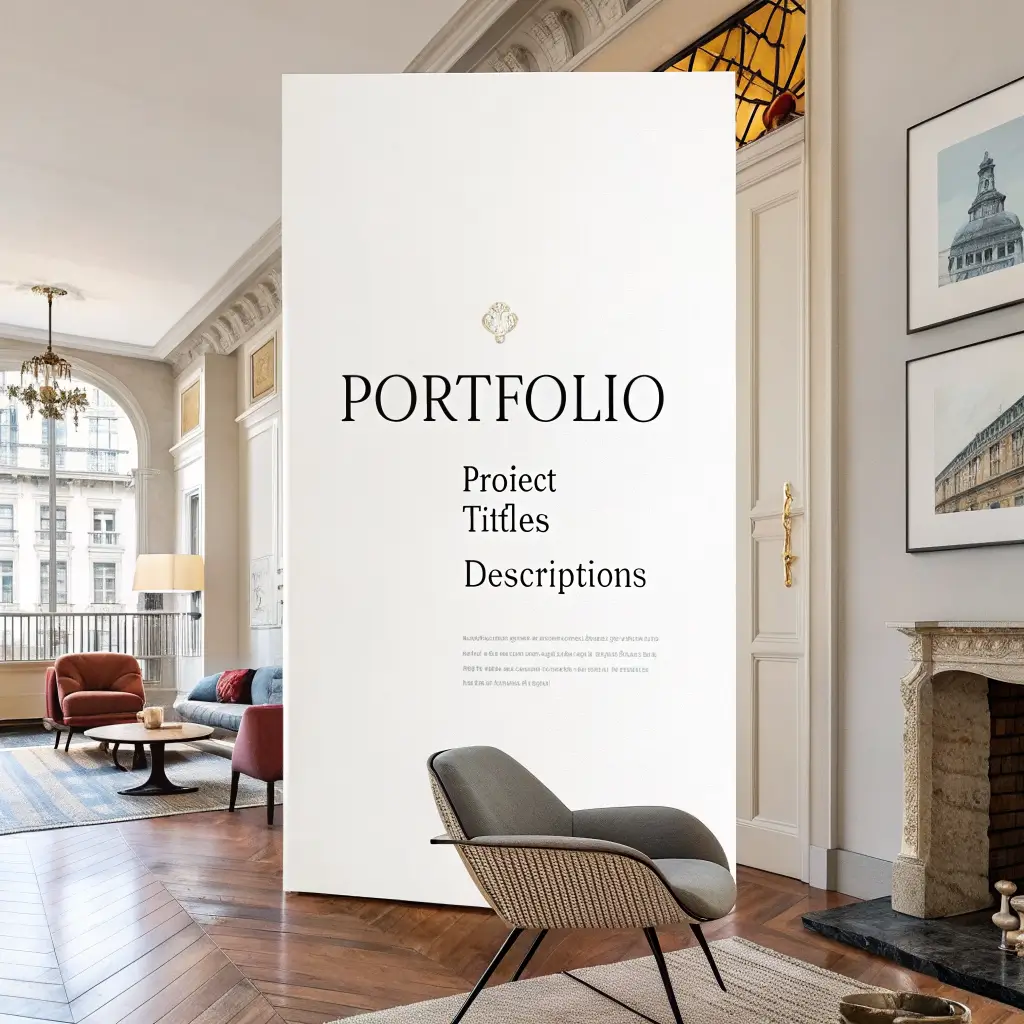
Creative typography transforms your portfolio from a simple project collection into a memorable brand experience. The right typography communicates your design personality before clients even view your work.
Typography choices should complement, not compete with your work. Select fonts that enhance your projects without overwhelming them. I spent weeks testing different font combinations before finding pairs that felt both distinctive and professional.
Hierarchy through typography guides viewers through your content. Use scale, weight, and spacing to create clear visual paths that direct attention where you want it. Strong typography makes complex portfolios feel effortless to navigate.
Typography Best Practices
Font selection and usage:
- Limit font families to two or three maximum
- Create clear hierarchy through size variation
- Consider readability across all devices and formats
- Match typography to your design aesthetic
- Test print and digital appearances separately
- Maintain consistency throughout the entire portfolio
Strong typography distinguishes designers who understand visual communication from those who simply display pretty pictures.
9. Interior Design Mood Board Portfolio Ideas
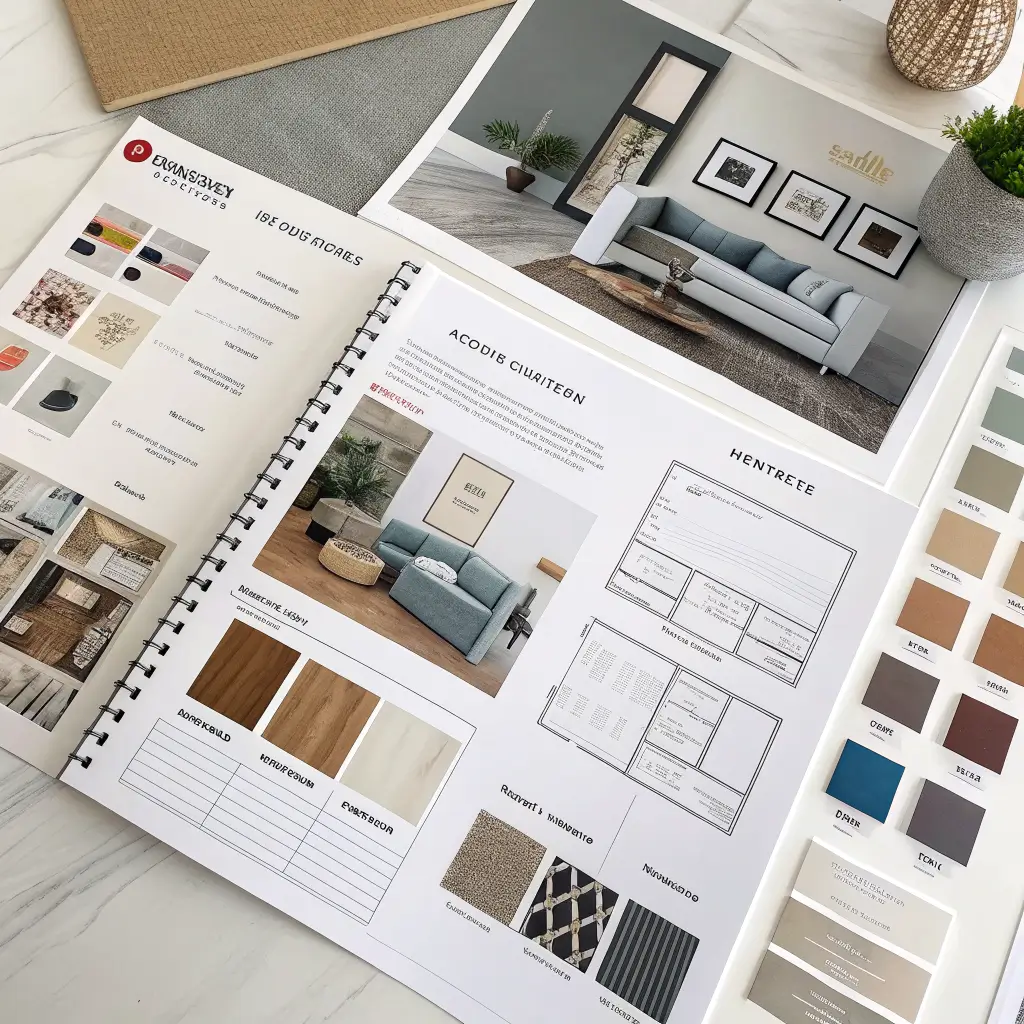
Mood board portfolios reveal your creative process and design thinking in ways that finished photos alone cannot. This approach helps clients understand how you develop concepts from inspiration to reality.
Including mood boards demonstrates transparency. Clients see how you gather inspiration, select materials, and build color palettes before executing designs. This insight builds trust and helps clients feel involved in the creative process.
Organization matters with mood board portfolios. Present mood boards alongside corresponding finished projects to show the journey from concept to completion. This side-by-side approach validates your design process.
Mood Board Portfolio Structure
Process-focused presentation:
- Initial inspiration sources and references
- Color palette development progression
- Material selection boards with actual swatches
- Concept to completion comparisons
- Client collaboration documentation
- Evolution of ideas through design phases
This portfolio style attracts clients who want involvement in the design process and appreciate creative transparency.
Also Read: 12 Beautiful Interior Design Mood Board Ideas to Try Today
10. Digital vs Printed Portfolio Layout Inspirations
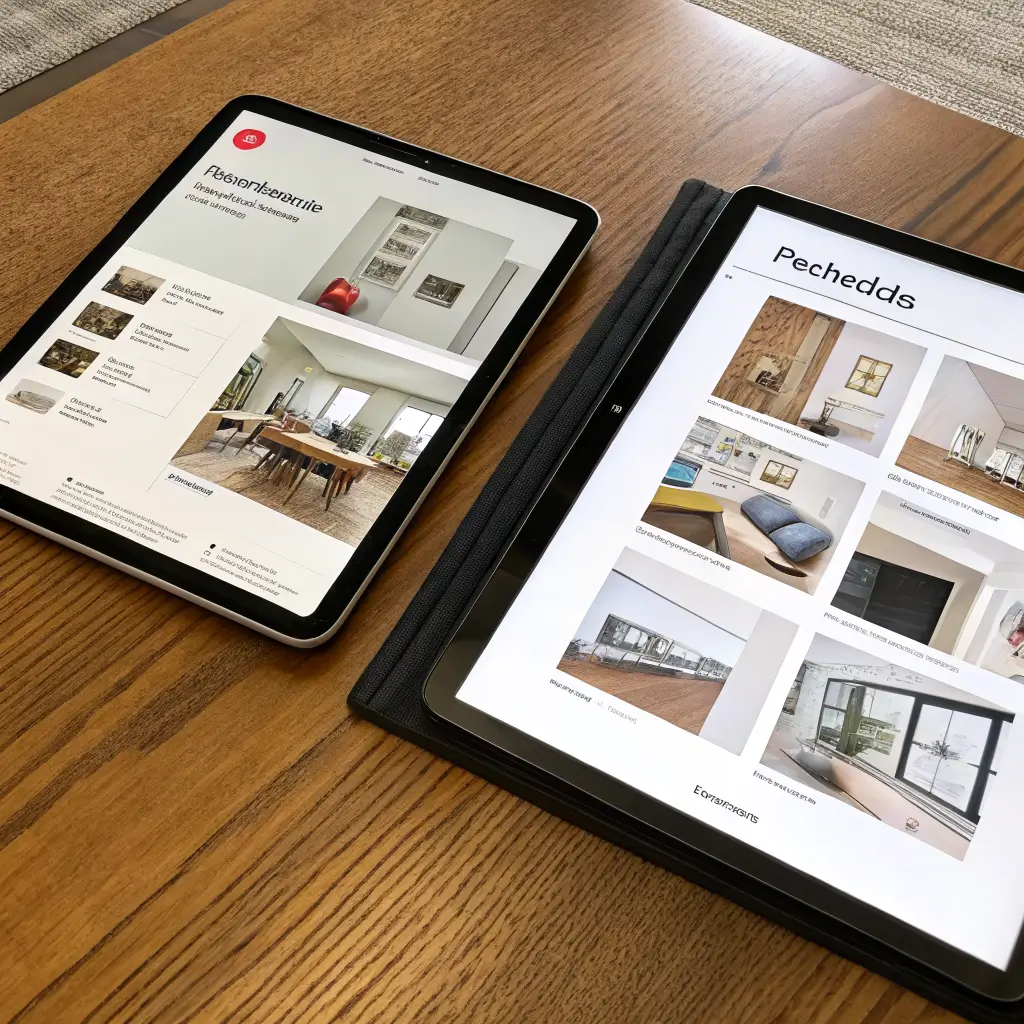
Understanding both digital and printed portfolios gives you flexibility to present work effectively in any situation. Each format has distinct advantages that serve different presentation contexts.
Digital portfolios offer convenience and accessibility. They’re easily updated, shareable via link, and accessible anywhere with internet connection. However, screen fatigue is real, and digital viewing often feels less special than physical presentations.
Printed portfolios create memorable experiences. The tactile quality of holding beautiful work builds emotional connections that screens simply cannot replicate. For high-value client meetings, nothing beats a well-crafted physical portfolio.
Choosing the Right Format
Digital vs print considerations:
Digital Portfolio Advantages:
- Instant updates when you complete new projects
- Easy sharing via email or social media
- Video integration showing space transformations
- Analytics tracking to see viewer engagement
- Cost-effective production and distribution
Printed Portfolio Advantages:
- Tactile experience that creates lasting impressions
- Controlled viewing without digital distractions
- Premium perception associated with physical media
- No technology failures during presentations
- Memorable differentiation from digital-only competitors
The ideal strategy? Maintain both formats tailored to different client interactions. FYI, this dual approach has consistently landed me higher-value clients.
11. Contemporary Office Interior Portfolio Concepts
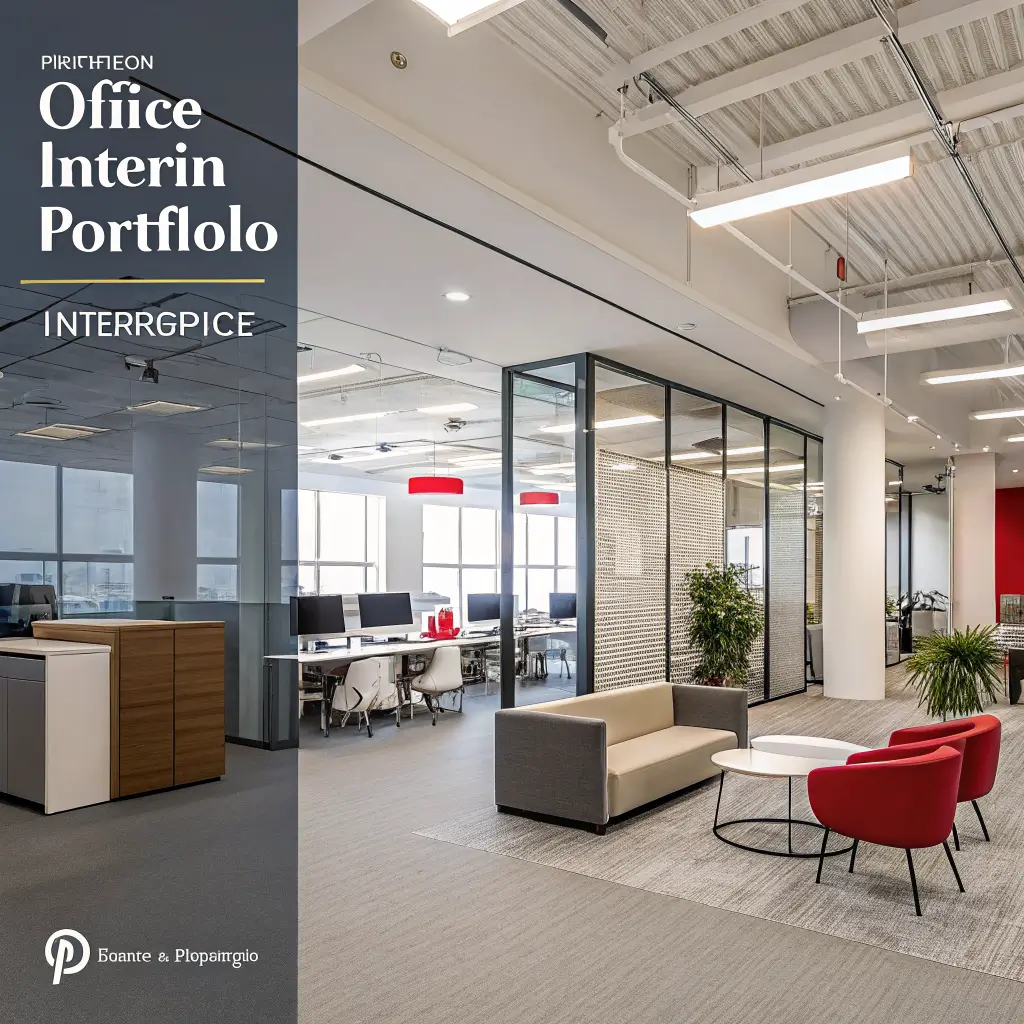
Contemporary office portfolios position you as an expert in commercial workspace design – a lucrative specialization that differs significantly from residential work.
Commercial clients have different priorities than residential ones. Focus on productivity improvements, brand expression, and employee wellbeing rather than just aesthetic beauty. Your portfolio should demonstrate understanding of how design affects business outcomes.
Include data wherever possible. Employee satisfaction improvements, productivity metrics, and brand alignment documentation speak to commercial decision-makers. These clients make decisions based on ROI, not just visual appeal.
Commercial Portfolio Elements
Business-focused presentation:
- Workplace strategy documentation and diagrams
- Brand integration examples showing corporate identity
- Collaborative space designs and their purposes
- Technology integration solutions for modern workplaces
- Employee wellness features and their benefits
- Post-occupancy feedback from completed projects
This portfolio approach attracts corporate clients, startups, and co-working space developers.
12. Cozy and Warm Home Interior Portfolio Styles
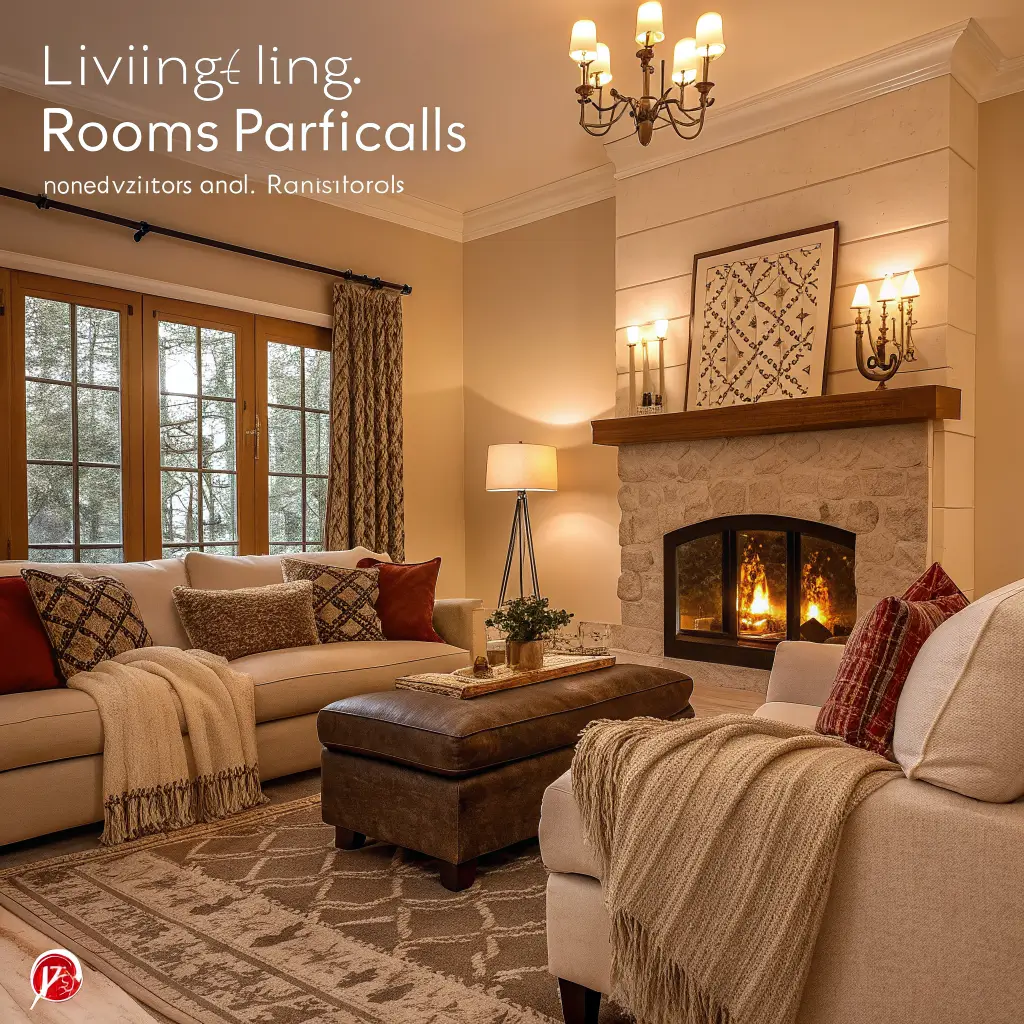
Cozy and warm portfolios appeal to clients who prioritize comfort over trends – a significant market segment that values livability above all else.
The presentation should feel warm and inviting itself. Soft colors, comfortable typography, and lifestyle photography create an emotional response that aligns with your design philosophy. Viewers should feel relaxed just browsing your portfolio.
Show spaces being lived in, not just photographed. Include images with pets, family gatherings, and everyday moments that demonstrate how your designs support real life. This approach differentiates you from designers focused only on architectural perfection.
Warm Portfolio Presentation
Creating emotional connection:
- Lifestyle photography showing spaces in use
- Warm color palettes in layout design
- Personal touches highlighting family needs
- Seasonal variations showing spaces year-round
- Comfort-focused details like reading nooks and fireplaces
- Client family testimonials about improved quality of life
This portfolio style attracts families, empty nesters, and clients prioritizing home sanctuary.
Building Your Perfect Portfolio
After exploring these twelve interior design portfolio ideas, remember that the best portfolio reflects your authentic design identity.
Don’t try to be everything to everyone – choose approaches that align with your specialization and target clients.
Start by identifying your ideal client. What matters most to them? Sustainability? Luxury? Small space solutions? Your portfolio should speak directly to their priorities and demonstrate your expertise in solving their specific problems.
Quality always trumps quantity. Ten stunning projects presented beautifully will outperform fifty mediocre projects in a cluttered layout.
Edit ruthlessly, keeping only work that represents where you want your career to go, not where it’s been.
Consider your portfolio a living document. Update regularly as you complete new work and your design perspective evolves. The designers who land the best clients treat their portfolios as ongoing investments, not one-time projects.
Your portfolio is often the first impression potential clients have of your work. Make it count by choosing presentation approaches that showcase not just your projects, but your professionalism, attention to detail, and unique design perspective.
Because in the end, clients aren’t just hiring your past work – they’re betting on your ability to create something amazing for them. And a stellar portfolio convinces them that bet will pay off IMO :/