15 Stunning Italian Farmhouse Kitchen Ideas to Inspire Your Home
- Kitchen ideas
 Ben
Ben- 0
- 39 minutes read
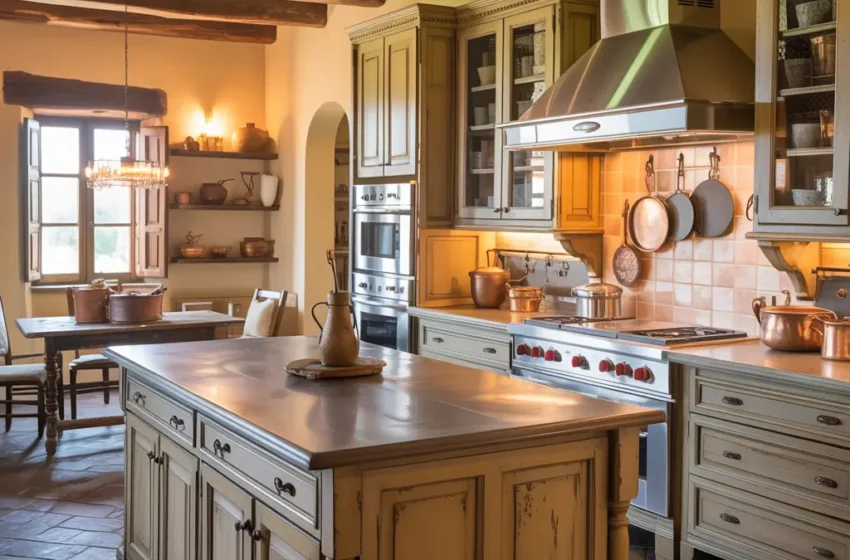
You know that feeling when you walk into someone’s kitchen and immediately want to move in? That’s exactly what happened to me the first time I stepped into an authentic Italian farmhouse kitchen in Tuscany. The warmth, the charm, the way everything just felt right – I knew I had to recreate that magic back home. And honestly, after years of obsessing over Italian design, I’ve discovered that you don’t need a villa in the countryside to nail this look.
Let me share the 15 best Italian farmhouse kitchen ideas that have transformed countless kitchens from boring to bellissimo. Trust me, your kitchen (and your dinner guests) will thank you.
Rustic Wooden Beam Kitchen
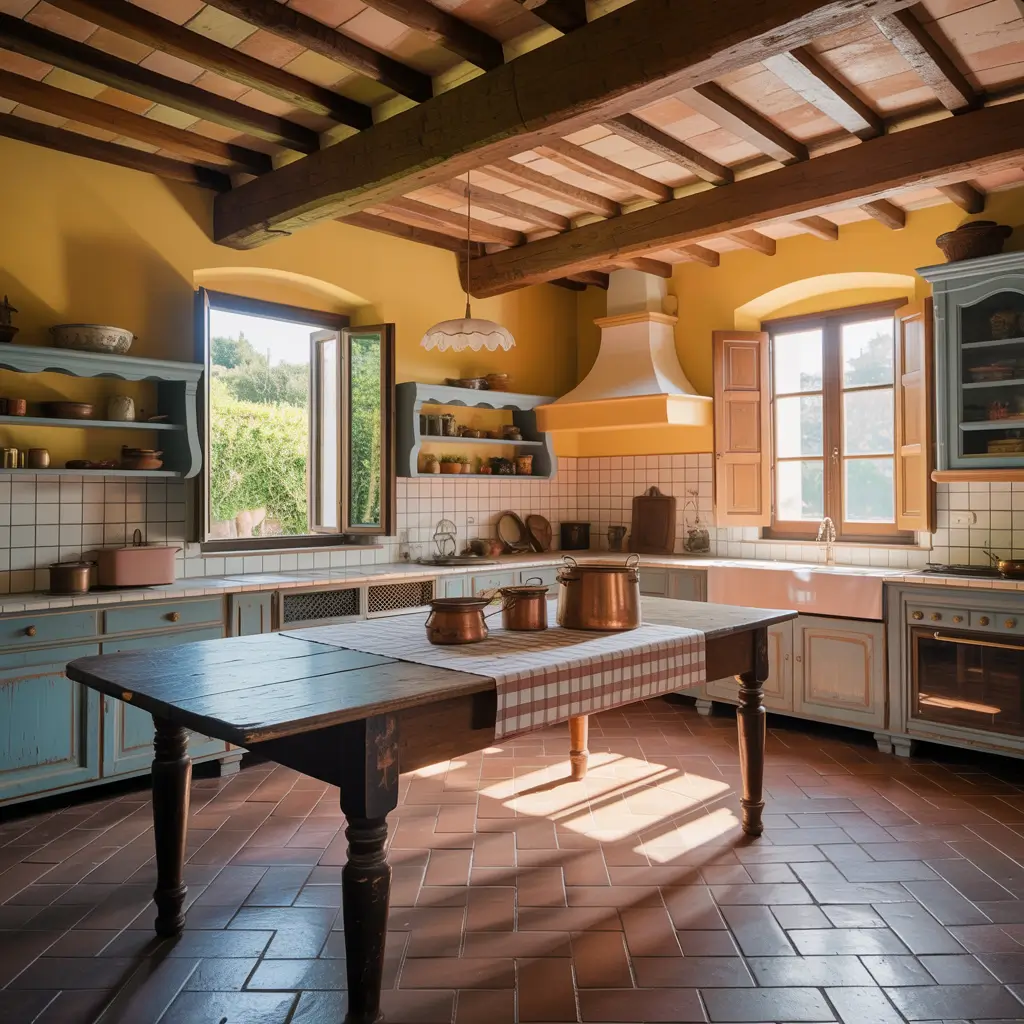
Nothing screams Italian farmhouse quite like exposed wooden beams stretching across your ceiling. I remember walking into my friend’s newly renovated kitchen and thinking, “Did they actually import these from Italy?” Turns out, they just knew what they were doing.
These beams instantly add character and that coveted old-world charm. You want beams that look like they’ve been there for centuries, even if you installed them last Tuesday. The key is choosing weathered or reclaimed wood – the more imperfect, the better. Those knots, cracks, and color variations? They’re not flaws; they’re personality.
Making It Work in Modern Homes
Here’s what most people don’t realize: you don’t need cathedral ceilings to pull this off. Even standard 8-foot ceilings can handle decorative beams. Just keep them proportional – massive beams in tiny kitchens look ridiculous (learned that the hard way).
Consider these options:
- Hollow faux beams for easier installation
- Reclaimed barn wood for authentic character
- Dark-stained pine for budget-friendly charm
- Natural cedar for that fresh wood scent
The best part? These beams hide a multitude of ceiling sins. Got an ugly popcorn ceiling? Beams to the rescue!
Terracotta Tile Backsplash
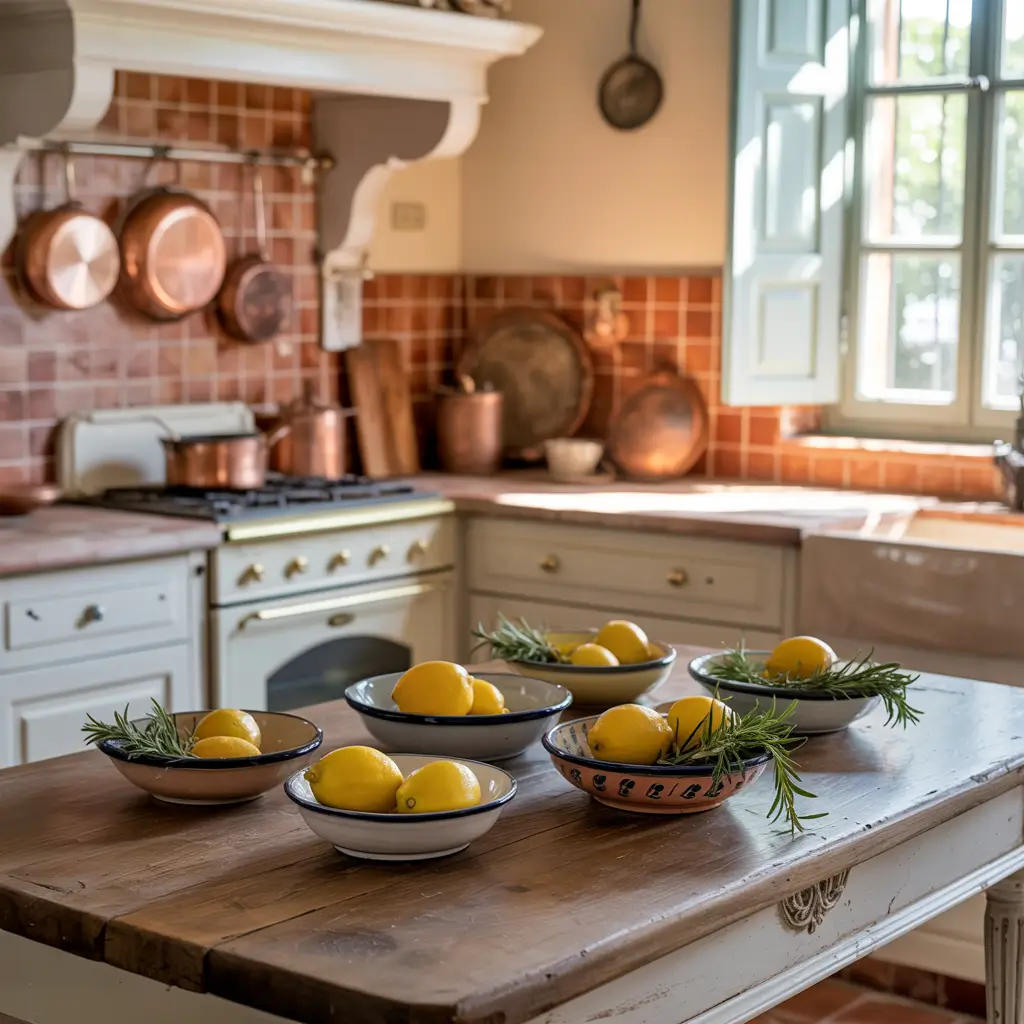
Can we talk about how terracotta tiles just hit different? They bring this warm, earthy vibe that makes everything else in your kitchen look more expensive. I’ve installed these babies in three different kitchens now, and each time, people ask if I hired an Italian designer.
The rich, burnt orange tones complement literally everything – white cabinets, dark wood, stainless steel, you name it. But here’s the insider secret: not all terracotta is created equal. You want tiles with slight color variations and maybe some subtle texture. Those perfectly uniform tiles from the big box store? They’re missing the point entirely.
Installation Tips That Actually Matter
Installing terracotta requires patience (and maybe a glass of wine). These tiles are porous, so seal them properly or prepare for stain city. I learned this lesson when my tomato sauce decided to become a permanent art installation on my unsealed tiles.
Key considerations:
- Choose handmade tiles for authentic irregularities
- Mix tiles from different boxes to ensure natural variation
- Use warm-toned grout – never bright white
- Apply multiple coats of sealant (seriously, don’t skimp here)
Vintage Farmhouse Sink Setup
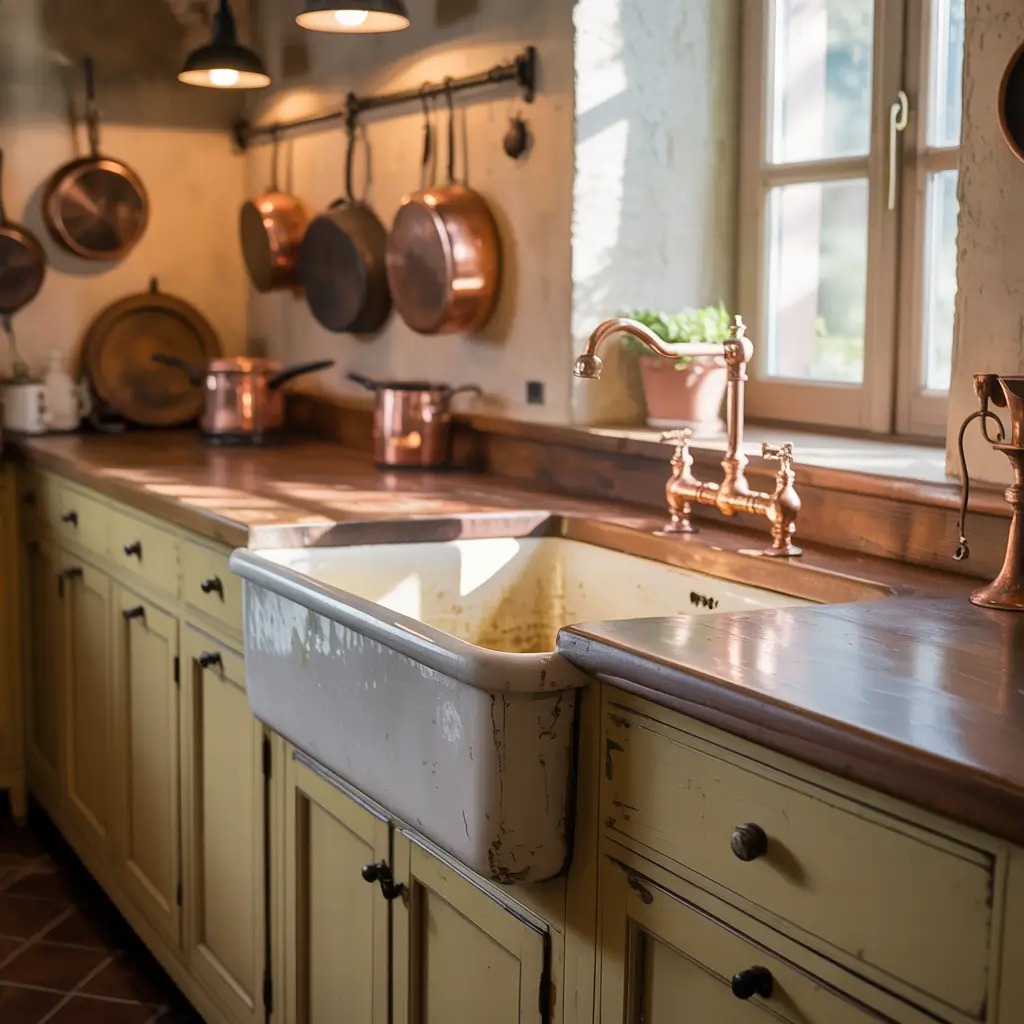
Let’s be real – farmhouse sinks have been having a moment for years, but the Italian version takes it up a notch. We’re talking deep, generously sized basins that can handle your biggest pasta pot without breaking a sweat.
The traditional Italian approach favors natural stone or fireclay over the trendy stainless steel versions. My personal favorite? A slightly weathered marble sink I found at a salvage yard. Sure, it weighs as much as a small car, but the character it brings is unmatched.
Choosing Your Perfect Sink
Here’s what separates an Italian farmhouse sink from its American cousin:
- Deeper basins (we’re talking 10+ inches)
- Natural materials over manufactured ones
- Subtle decorative edges or carved details
- Slightly off-white colors instead of stark white
The installation can be tricky – these sinks are heavy and need proper support. My contractor actually had to reinforce my cabinets, but seeing that beautiful sink every morning makes it worth the extra effort.
Also Read; 15 Stunning Farmhouse Sink Kitchen Ideas and Cozy Designs
Open Shelving with Ceramic Jars
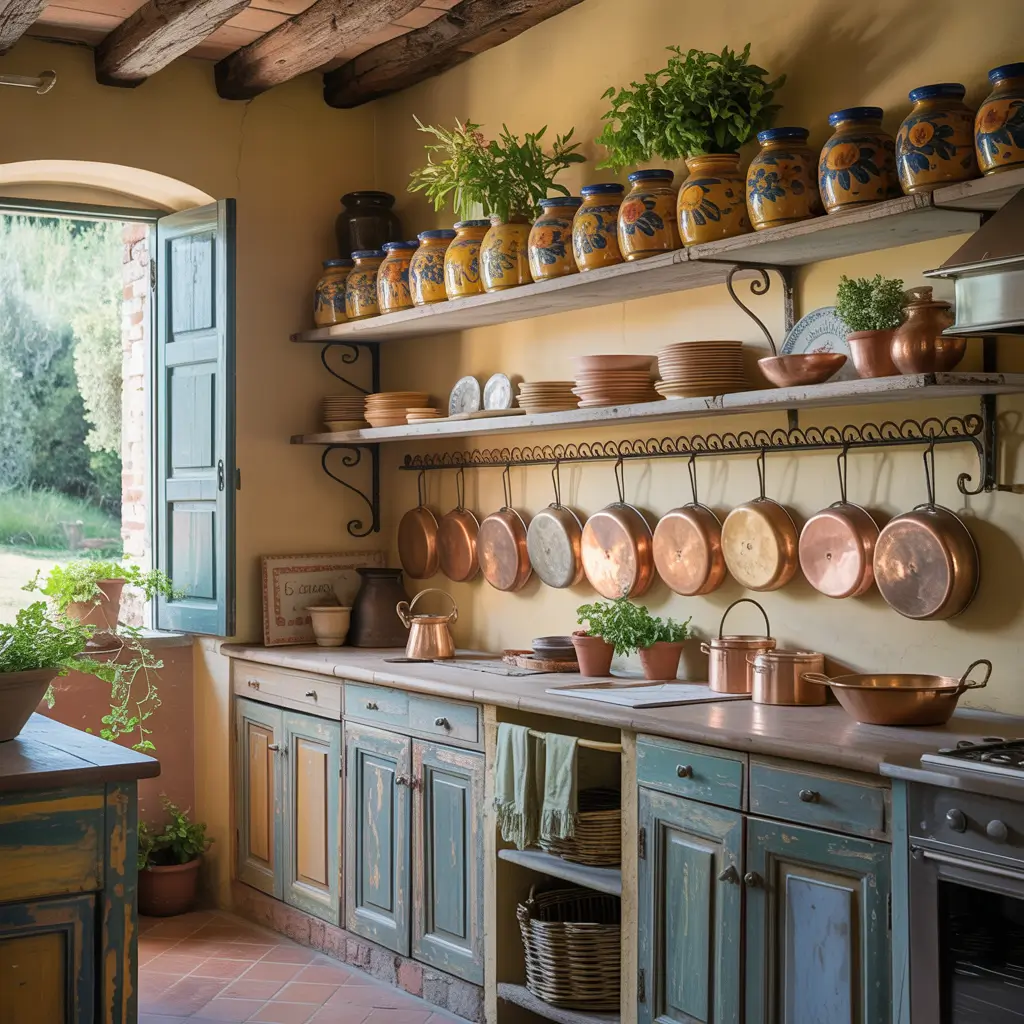
Whoever decided kitchens needed to hide everything behind cabinet doors clearly never visited Italy. Open shelving isn’t just practical; it’s a design statement that says, “Yes, I actually cook here, and I’m not afraid to show it.”
I fill my shelves with mismatched ceramic jars, vintage olive oil bottles, and those gorgeous hand-painted bowls I definitely didn’t need but couldn’t resist. The trick is making it look effortlessly curated rather than cluttered. Think of it as functional art – everything displayed should be beautiful enough to earn its spot.
The Art of Styling Open Shelves
Creating that perfect “organized chaos” takes practice:
- Group similar items but vary the heights
- Mix textures – smooth ceramics with rough baskets
- Add greenery – fresh herbs in terracotta pots
- Leave breathing room – overcrowding kills the vibe
Pro tip: Keep your everyday dishes on these shelves. Nothing says “lived-in Italian kitchen” like well-used plates and bowls within arm’s reach.
Warm Neutral Color Palette Kitchen
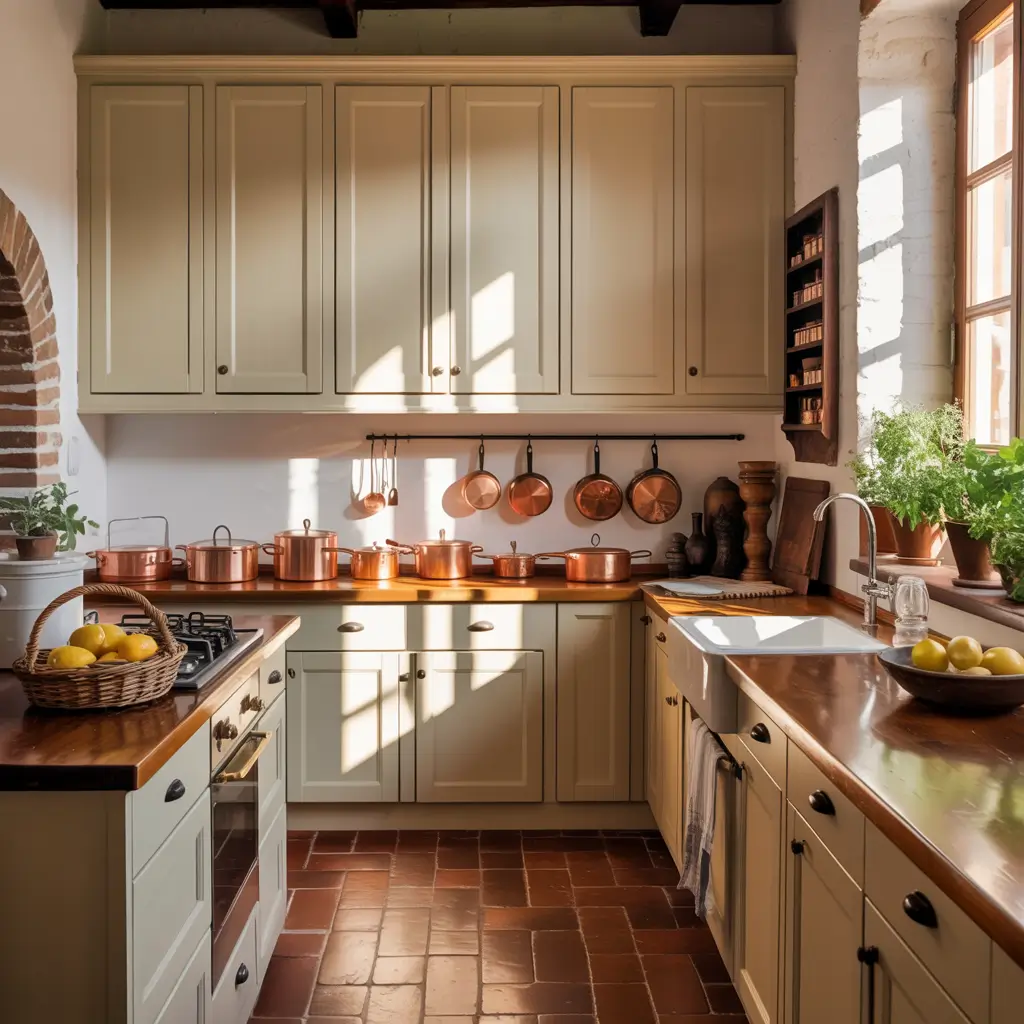
Italian farmhouse kitchens don’t do bold color statements – they whisper in warm, earthy tones that make you want to slow down and savor life. Think creamy whites, soft beiges, warm grays, and those perfect terracotta accents.
I’ve seen people try to force bright blues or greens into this style, and honestly? It never works. The magic happens when you layer different shades of the same warm neutrals. My kitchen uses five different beige tones, and somehow they all play nicely together.
Building Your Color Story
Start with these foundational colors:
- Warm white walls (never cool white – this isn’t Scandinavia)
- Natural wood tones in varying shades
- Soft gray-greens for subtle contrast
- Terracotta or rust accents for warmth
The beauty of this palette? It makes your kitchen feel larger and more cohesive. Plus, you can change accessories seasonally without clashing with your base colors.
Exposed Brick Wall Kitchen
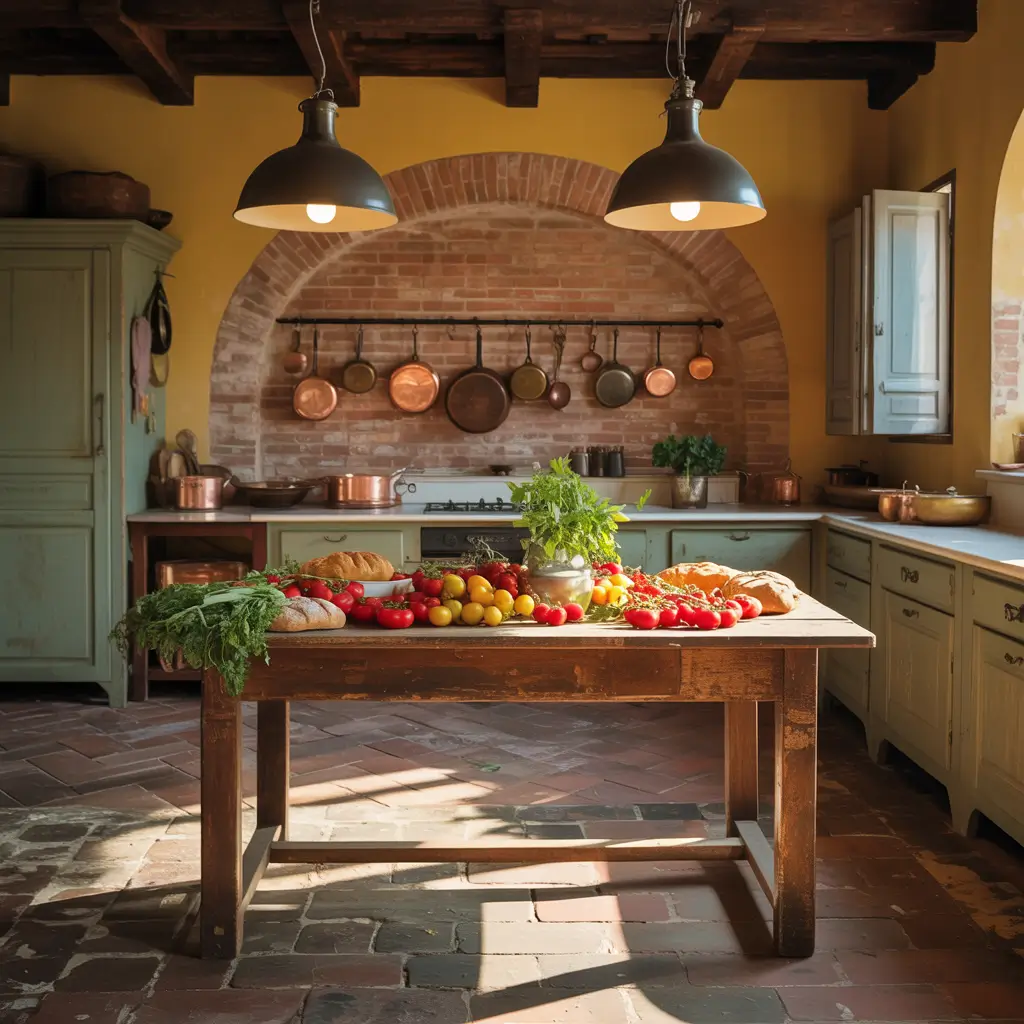
Want to add instant character? Expose that brick wall hiding behind your drywall. Or if you’re like me and live in a house with zero original brick, fake it ’til you make it with brick veneer. Judge me all you want, but my faux brick wall looks pretty convincing 🙂
The key is choosing the right brick color – you want warm reds and oranges, not that gray industrial look. This isn’t a Brooklyn loft; it’s an Italian farmhouse. The brick should look aged, maybe with some white lime wash for that authentic weathered appearance.
Making Brick Work in Your Space
Not every wall needs the brick treatment:
- Choose one focal wall – usually behind the stove
- Consider half walls if full brick feels overwhelming
- Seal the brick to prevent dust and crumbling
- Add strategic lighting to highlight the texture
FYI, cleaning brick walls isn’t exactly fun. But the warmth and texture they add? Totally worth the occasional dusting session.
Also Read: 15 Stunning Modern Farmhouse Kitchen Ideas for Cozy Spaces
Stone Countertops with Wooden Cabinets
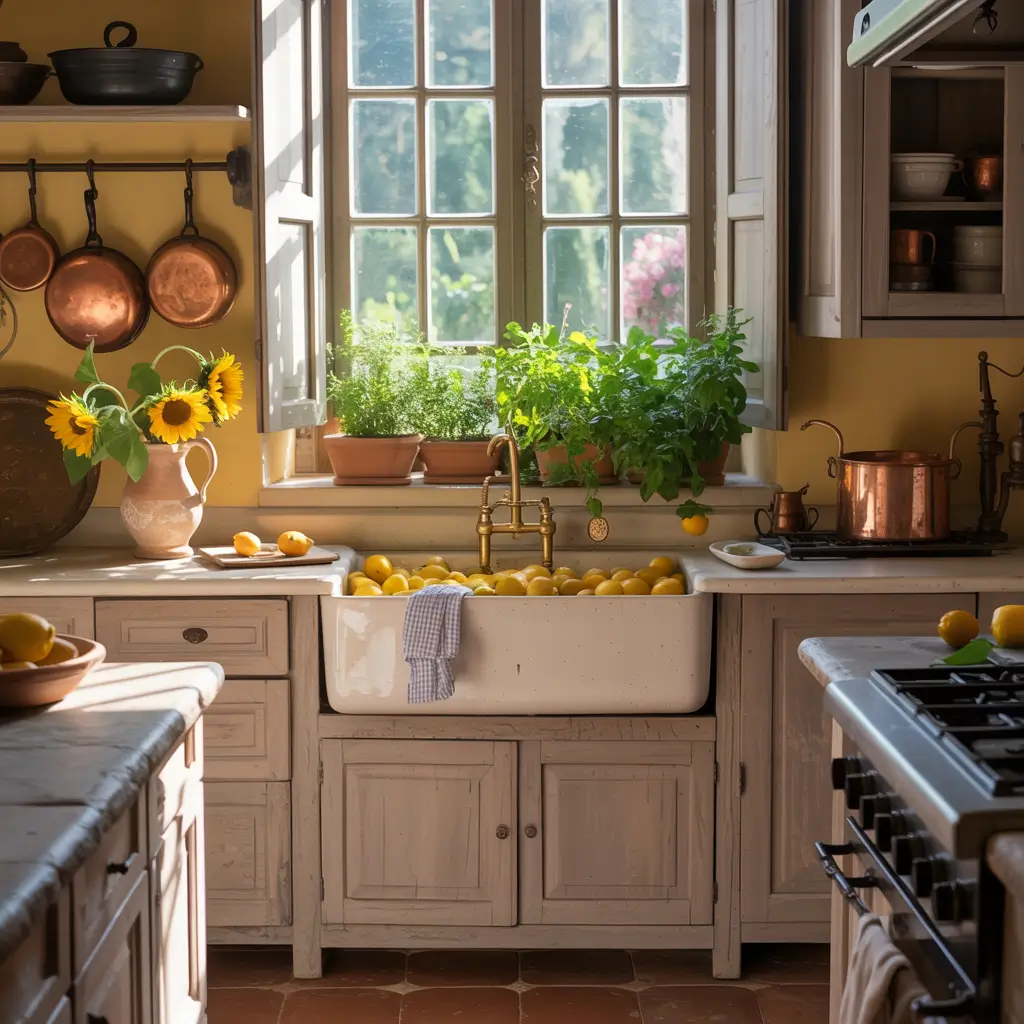
This combination is Italian kitchen perfection – the coolness of natural stone balanced with warm wood cabinets. I’m partial to honed marble or limestone countertops paired with chestnut or walnut cabinets. The contrast creates visual interest without being jarring.
Skip the polished granite trend – you want stone that looks like it was quarried from the Tuscan hills. Honed or leathered finishes give you that authentic, aged appearance while being more forgiving with daily use.
Selecting Your Materials
Consider these winning combinations:
- Carrara marble + dark walnut cabinets
- Limestone + honey-toned oak
- Soapstone + painted wood cabinets
- Travertine + distressed pine
Remember, natural stone requires maintenance. But every water ring and wine stain just adds to the story your kitchen tells.
Copper Pendant Lighting Above Island
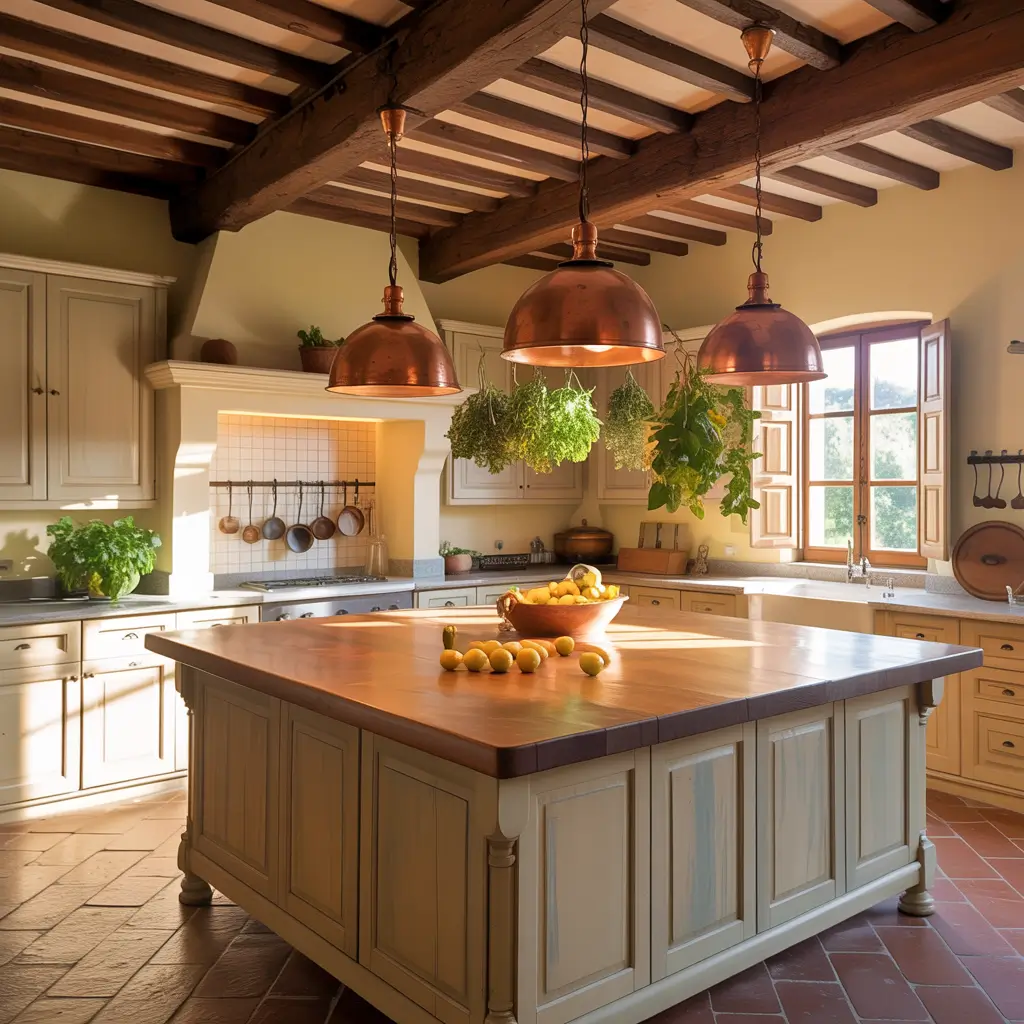
Nothing elevates an Italian farmhouse kitchen quite like aged copper pendant lights. I splurged on three hammered copper pendants for my island, and they’re honestly the first thing people notice when they walk in.
The warm glow copper gives off is unmatched – it makes everyone look good and food look even better. Plus, copper develops this gorgeous patina over time that you just can’t fake (though plenty of manufacturers try).
Lighting Design That Works
Getting the scale right matters:
- Size pendants at 1/3 your island width for proper proportion
- Hang 30-36 inches above the counter surface
- Use odd numbers (three or five) for visual balance
- Mix metals sparingly – copper plays well with brass, not chrome
The best part about copper? It works year-round but especially shines during those cozy fall and winter months.
Tuscan-Inspired Herb Garden Window
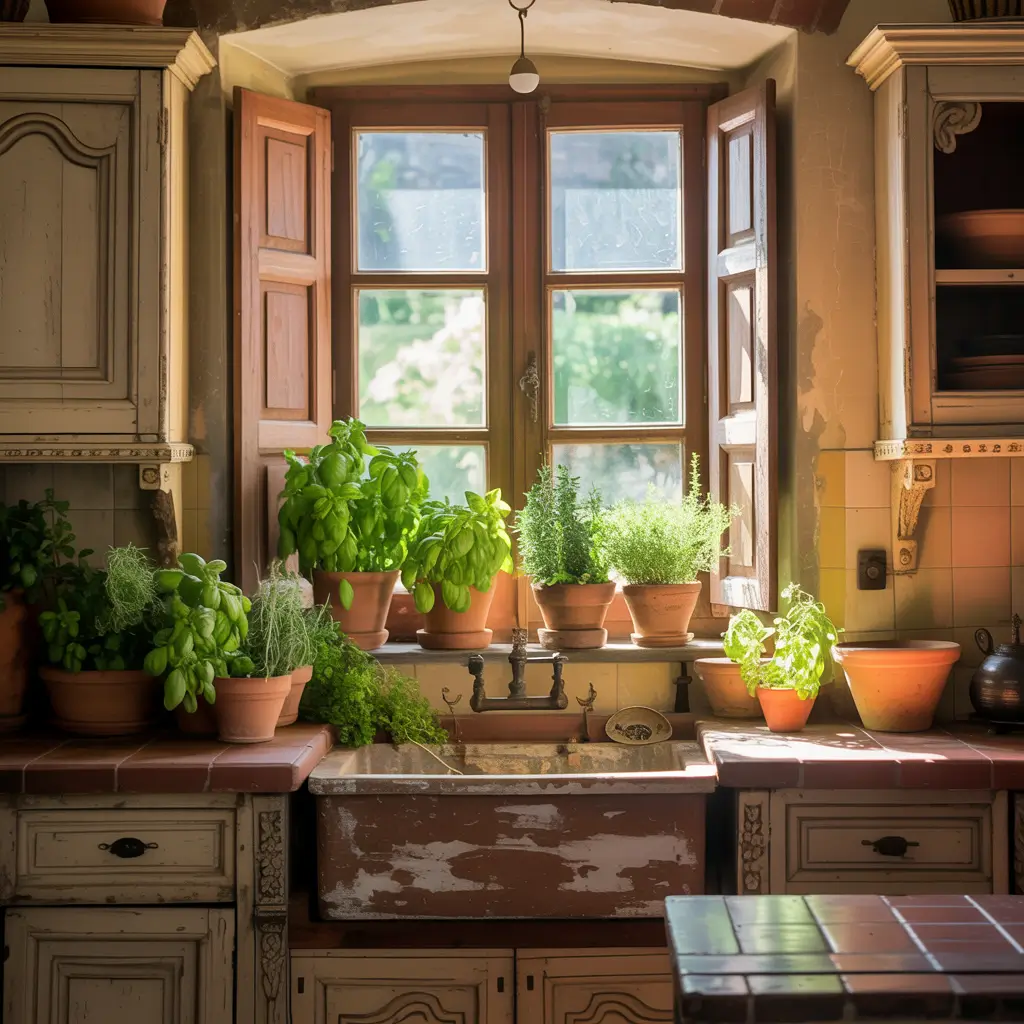
Ever notice how Italian kitchens always smell amazing? It’s not just the cooking – it’s the fresh herbs growing right there on the windowsill. Creating a mini herb garden in your kitchen window brings life, fragrance, and convenience to your cooking.
I keep basil, rosemary, oregano, and thyme in mismatched terracotta pots on my window ledge. Not only do they look charming, but grabbing fresh herbs while cooking makes me feel like a legitimate Italian nonna (even though my pasta still comes from a box half the time).
Creating Your Window Garden
Success with kitchen herbs requires:
- South-facing windows for maximum sunlight
- Well-draining pots with saucers
- Regular pruning to encourage growth
- Rotation system – some herbs inside, some outside
Pro tip: Start with basil and rosemary – they’re practically indestructible and smell incredible.
Also Read: 15 Stunning Rustic Farmhouse Kitchen Island Ideas for Your Home
Distressed Cabinetry with Modern Appliances
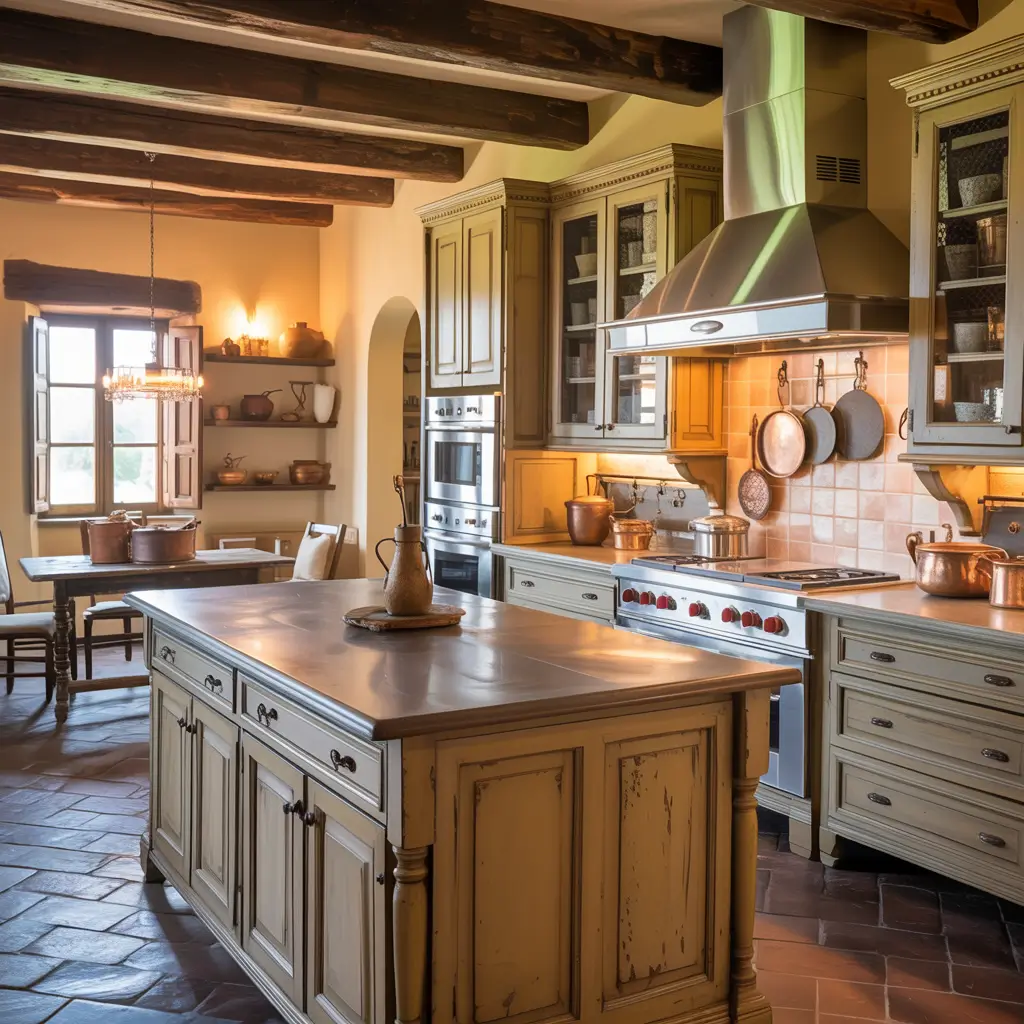
Here’s where Italian farmhouse gets interesting – mixing old with new. Your cabinets should look like they’ve been passed down through generations, but your appliances? They can be thoroughly modern.
I painted my cabinets and then strategically sanded edges and corners for that perfectly imperfect distressed look. Paired with my sleek induction cooktop, it’s the best of both worlds. The contrast keeps the space from feeling like a museum while maintaining that rustic charm.
Achieving the Perfect Distress Level
The goal is “gracefully aged,” not “falling apart”:
- Focus distressing on high-touch areas – edges, corners, handles
- Layer paint colors for depth
- Use fine sandpaper for subtle wear
- Seal everything to prevent further chipping
Modern appliances to consider:
- Panel-ready dishwashers that blend with cabinetry
- Professional-style ranges in classic colors
- Built-in espresso machines (because Italy)
- Wine refrigerators tucked into islands
Large Farmhouse Dining Table Integration
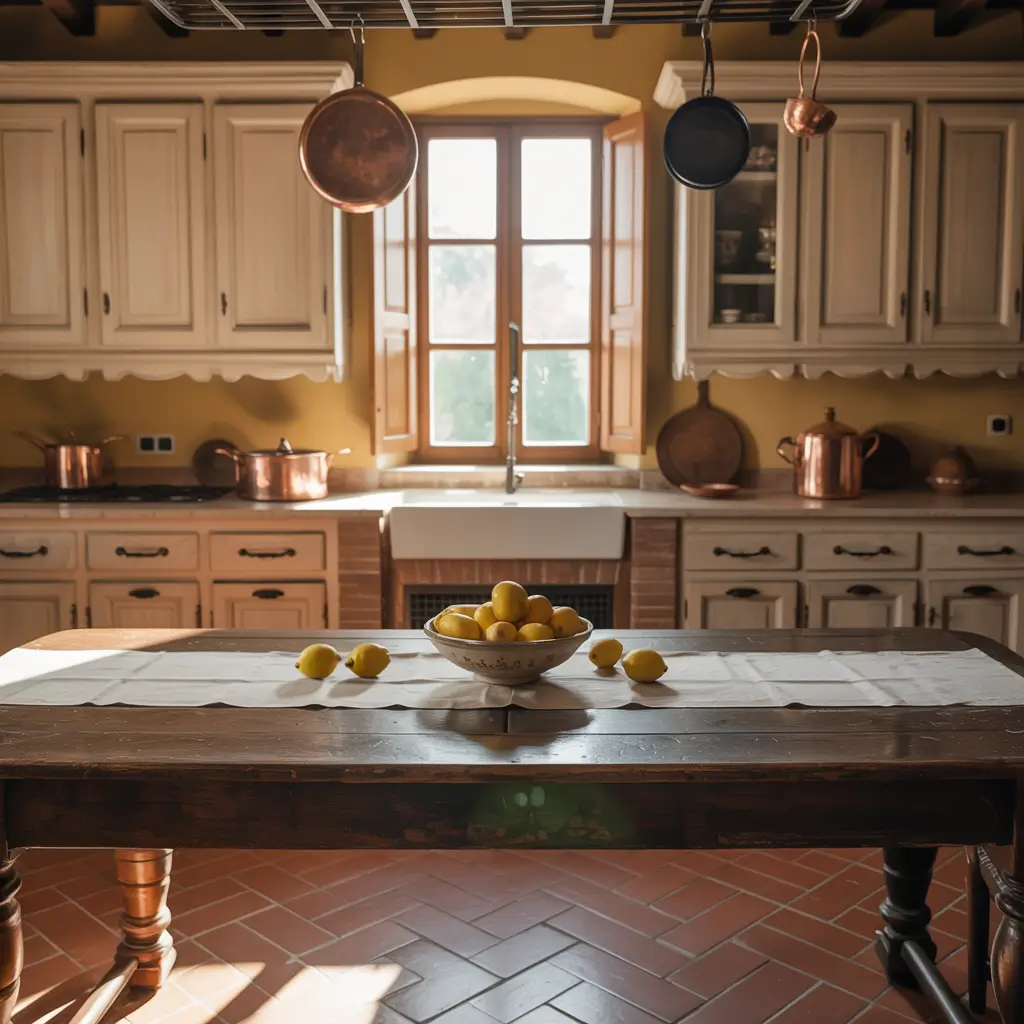
Italian kitchens don’t just cook food – they celebrate it. That means your kitchen needs space for a proper dining table, not some tiny breakfast nook. We’re talking a substantial wooden table that seats at least six, preferably more.
My table is reclaimed chestnut, complete with old nail holes and saw marks. It’s not just furniture; it’s the heart of the kitchen where pasta gets rolled, vegetables get chopped, and wine gets spilled during animated conversations.
Choosing Your Statement Table
Look for these characteristics:
- Solid wood construction – no veneers
- Natural or minimally finished surface
- Generous proportions – at least 3 feet wide
- Mixed seating – chairs and maybe a bench
The table should feel permanent, like it’s been there forever and will outlast us all. That flimsy extendable thing from IKEA? Not going to cut it here.
Mosaic Tile Accent Wall
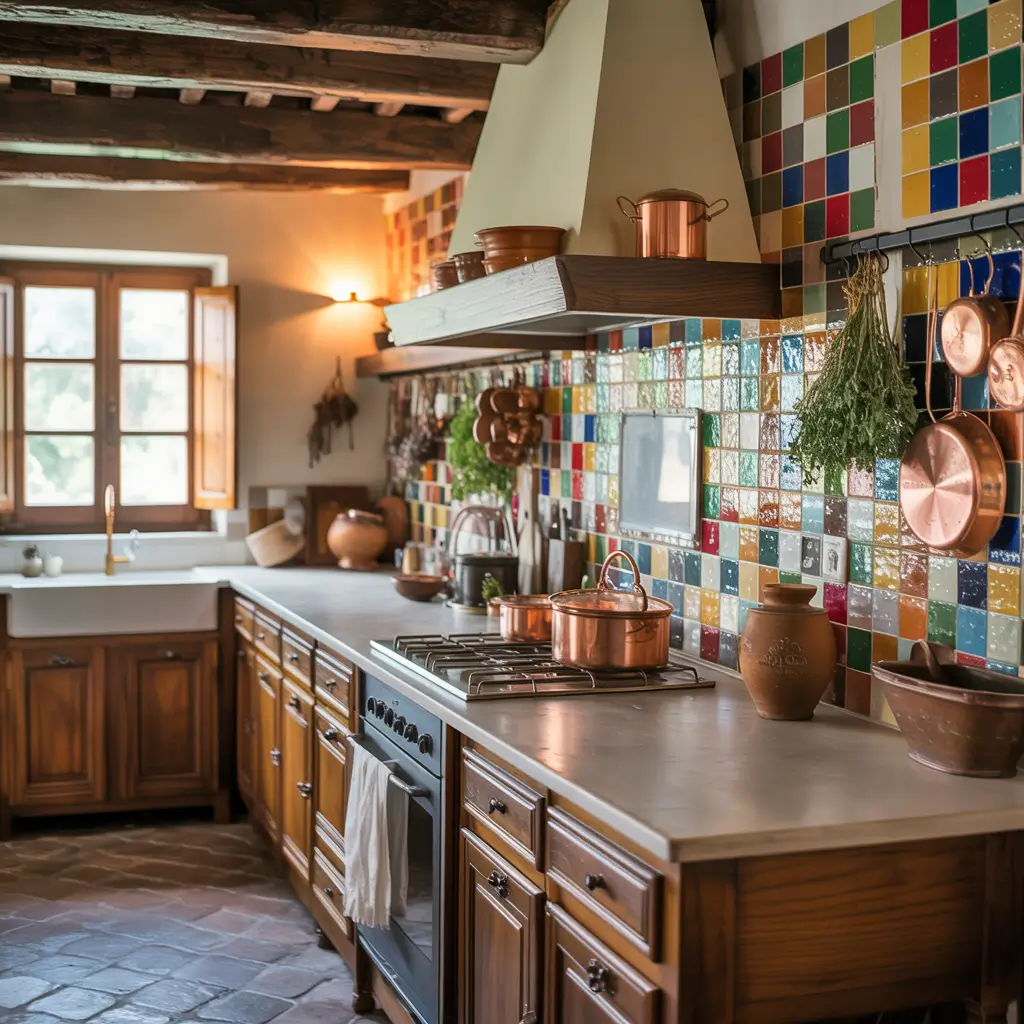
Want to add artistic flair without going overboard? A mosaic tile accent wall brings color and pattern while staying true to Italian tradition. I installed a subtle blue and white mosaic behind my stove, inspired by the tiles I saw in Amalfi.
The key is choosing patterns that feel timeless rather than trendy. Geometric patterns, traditional Mediterranean motifs, or even simple color gradients work beautifully. Just please, avoid anything that screams “2024 Pinterest board.”
Design Considerations
Keep these tips in mind:
- Limit mosaics to one area – usually behind the range
- Choose muted colors over bright, bold patterns
- Consider vintage or reclaimed tiles for authenticity
- Frame with simple tiles to define the space
Installation requires patience and precision. Hire a pro if you’re not confident – crooked mosaics are impossible to unsee.
Antique Italian Cabinetry Display
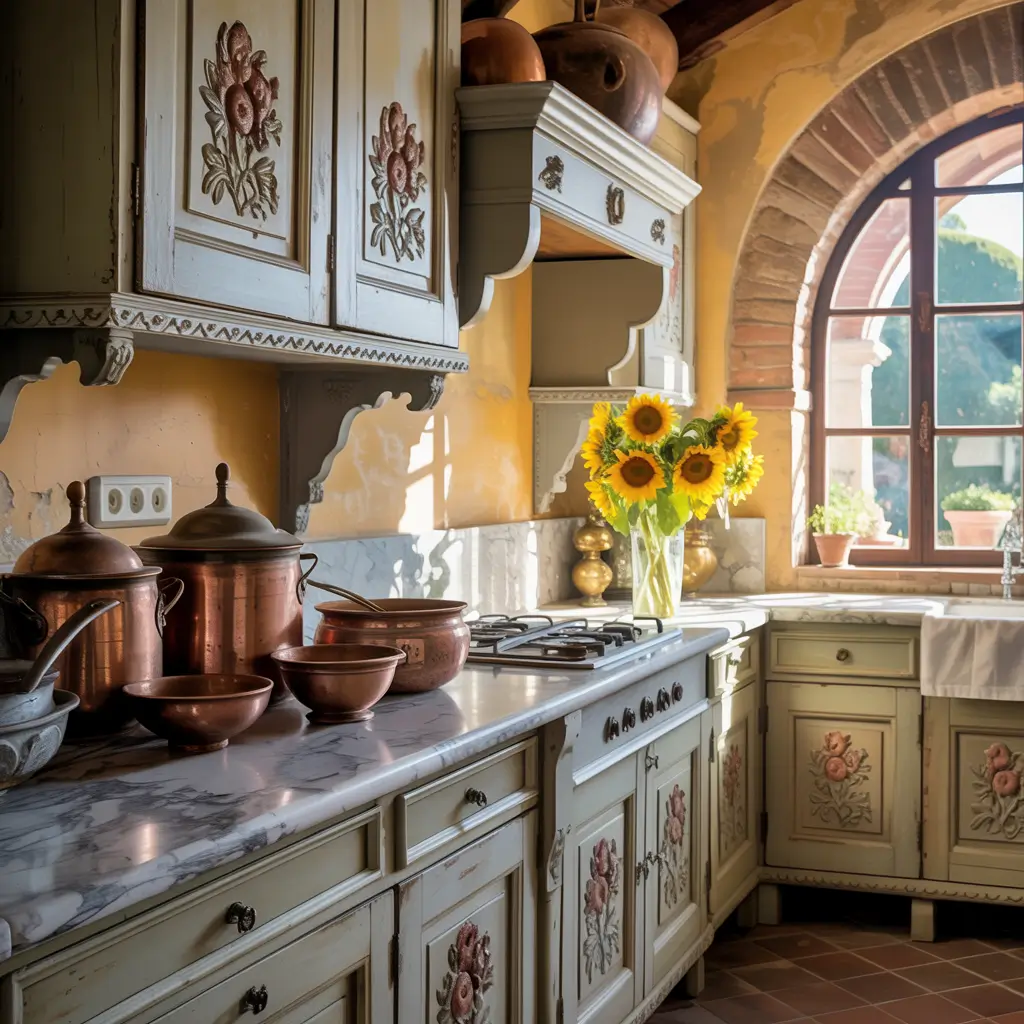
Nothing adds authenticity like an actual antique Italian cabinet. I scored a 19th-century pine cupboard at an estate sale, and it’s now my favorite kitchen feature. These pieces bring history and craftsmanship modern furniture can’t replicate.
You don’t need a museum piece – even a well-worn vintage cabinet adds character. Use it to display your best dishes, store linens, or hide that growing collection of specialty vinegars you swear you’ll use someday.
Incorporating Antiques Successfully
Make antiques work in modern kitchens:
- Choose pieces that are functional, not just decorative
- Don’t over-restore – patina is your friend
- Mix one or two antiques with newer pieces
- Ensure proportions work with your space
IMO, one genuine antique beats ten reproduction pieces every time.
Rustic Pantry with Open Storage
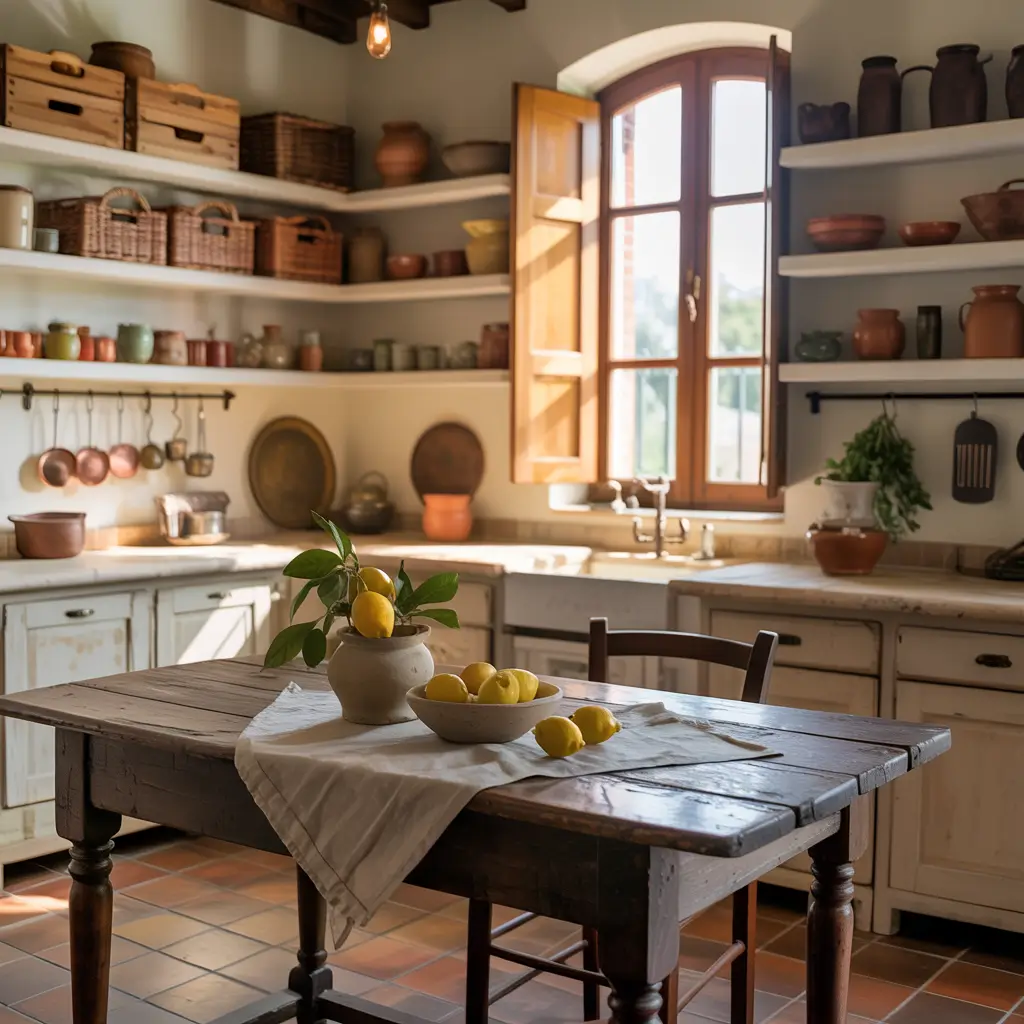
The Italian approach to pantry storage is refreshingly honest – show what you’ve got. Open pantries with wooden shelving, woven baskets, and glass jars create a market-like feel right in your kitchen.
I converted a closet into an open pantry with reclaimed wood shelves and vintage crates. Everything from pasta to preserved lemons is visible and accessible. It forces me to keep things organized, but the visual impact is worth the effort.
Creating Functional Beauty
Organize your open pantry with:
- Glass jars for dry goods – uniform or mismatched
- Woven baskets for produce
- Wooden crates for bottles
- Hooks for dried herbs and garlic
Label nothing – the contents should be obvious. If you need labels to identify your food, you’re probably overthinking it.
Mixed Wood and Marble Countertops
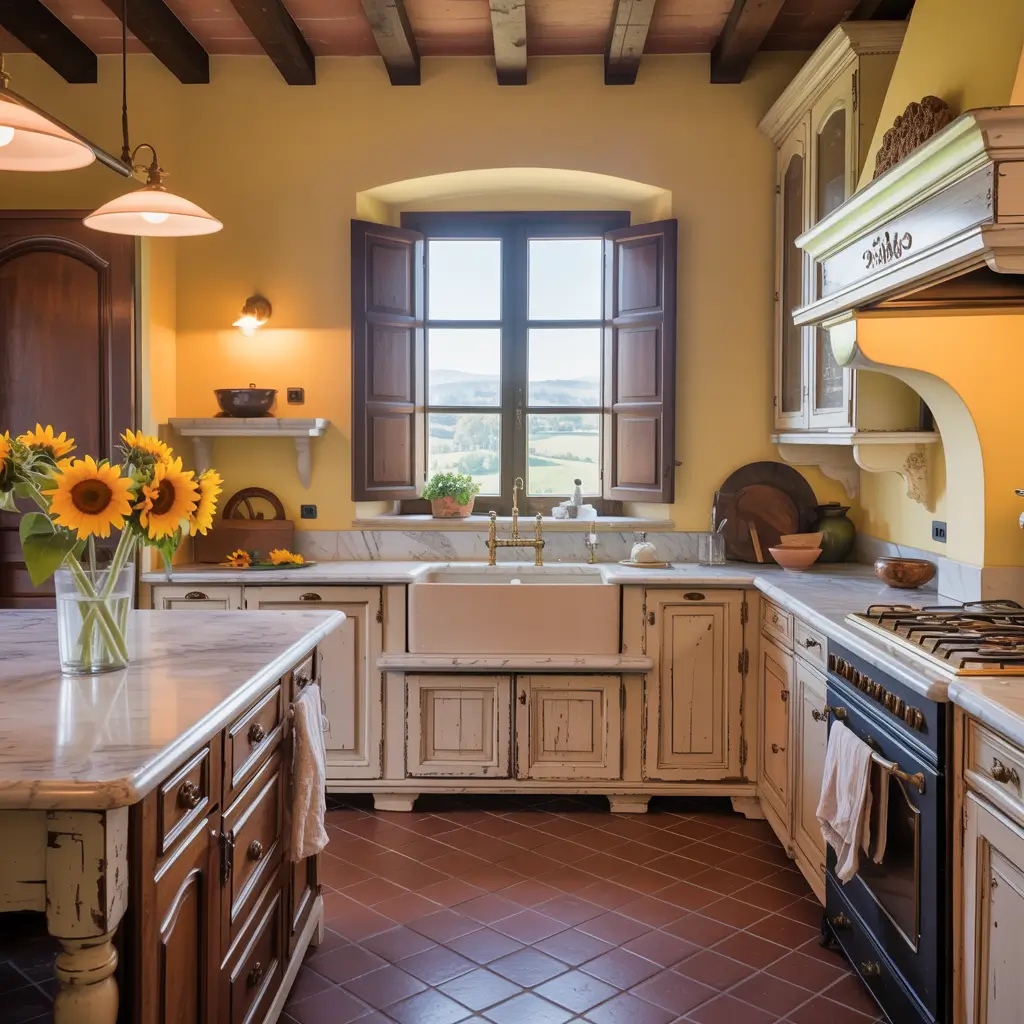
Why choose between wood and marble when you can have both? Mixing countertop materials adds visual interest and practical zones to your kitchen. I use marble for baking areas and wood for prep work – each material where it performs best.
The transition between materials should feel intentional, not accidental. Use the wood for island tops or breakfast bars, and reserve marble for perimeter counters. The contrast creates distinct work zones while maintaining visual flow.
Making Mixed Materials Work
Successfully combine materials by:
- Keeping wood and stone in the same tone family
- Creating clear boundaries between materials
- Using wood for warmth in eating areas
- Placing marble near water sources for practicality
Regular maintenance keeps both materials looking their best. Oil your wood monthly and seal your marble annually – your countertops will age gracefully together.
Bringing It All Together
Creating an authentic Italian farmhouse kitchen isn’t about following every trend or buying the most expensive materials. It’s about building a space that feels lived-in, loved, and ready for life’s important moments – which in Italy, usually revolve around food.
Start with one or two ideas that resonate with you. Maybe it’s adding wooden beams or installing open shelving. Build from there, letting your kitchen evolve naturally. The best Italian farmhouse kitchens don’t happen overnight; they develop character over time, just like that perfect pasta sauce recipe you’re still perfecting.
Remember, perfection isn’t the goal here – personality is. Those slightly crooked tiles, the mismatched ceramics, the worn spots on your wooden table – they’re not flaws. They’re proof that your kitchen is more than just a showpiece. It’s where life happens, where memories are made, and where everyone naturally gathers.
So grab a glass of wine, put on some Italian music, and start planning your transformation. Your kitchen is about to become everyone’s favorite room in the house. And who knows? You might even find yourself cooking more pasta. Buon appetito!