12 Colorful Kids Bedroom Ideas and Cheerful Wall Art
- Bedroom Design
 Ben
Ben- 0
- 32 minutes read

Let’s face it – designing a kid’s bedroom feels like trying to solve a Rubik’s cube while blindfolded. You want something Instagram-worthy, your kid wants a room that looks like a toy store exploded, and your budget wants you to calm down.
After redesigning my daughter’s room three times in two years (and my son’s twice), I’ve learned that finding the perfect balance between practical and magical isn’t impossible – you just need the right ideas.
The truth is, kids’ bedrooms need to work harder than any other room in your house. They’re playrooms, study spaces, reading nooks, and sometimes even fortresses defending against imaginary dragons.
Getting all that functionality while keeping things stylish? That’s where these ideas come in handy.
Space-Saving Kids Bedroom Ideas for Small Rooms

Small room, big dreams – sound familiar? When my kids shared a 10×10 bedroom, I thought I’d lose my mind trying to fit everything. The secret isn’t getting rid of stuff (good luck with that), it’s getting creative with every single inch of space you have.
Vertical space becomes your best friend when floor space runs out. I installed floating shelves up to the ceiling, and suddenly we had room for 47 stuffed animals and roughly 3,000 tiny toy cars. The kids needed a step stool to reach the top shelves, but guess what? They loved the climbing aspect.
Smart Furniture Choices That Actually Work
Here’s what transforms tiny rooms into functional spaces:
- Loft beds with built-in desks underneath (instant room doubler)
- Storage ottomans that hide everything from LEGOs to art supplies
- Wall-mounted fold-down desks for homework time
- Beds with drawers built into the base
- Over-door organizers for absolutely everything
The game-changer in our small room? A murphy bed that folds into the wall. During the day, the kids had tons of play space. At night, boom – instant bedroom. Sure, it cost more upfront, but considering we didn’t need to move houses, I’d call that a win.
Maximizing Corner Spaces
Corners often become dead zones in small rooms, but they don’t have to be. Corner shelving units, L-shaped desks, or even corner reading chairs make these awkward spaces functional. My son’s corner became his “command center” with a small desk and wall-mounted organizers.
DIY Themed Kids Bedroom Ideas on a Budget
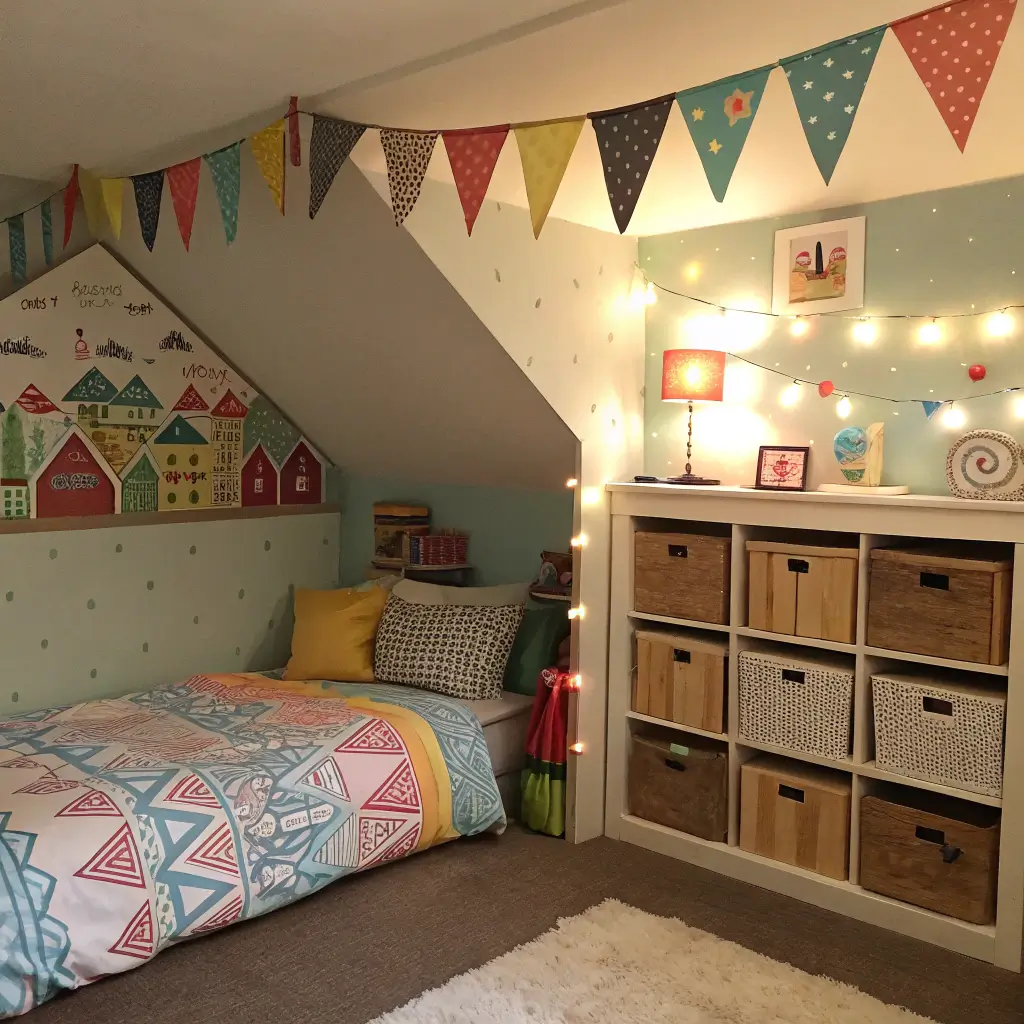
Who says you need a trust fund to create an amazing themed bedroom? Some of the coolest kids’ rooms I’ve seen came from parents with more creativity than cash. DIY projects not only save money but create unique spaces that no store-bought room could match.
Last summer, we transformed my daughter’s room into an enchanted forest for less than $150. We painted tree silhouettes on the walls (free-handed, because stencils are for people with patience), hung string lights as “fireflies,” and made fabric butterflies from dollar store materials.
Budget-Friendly Theme Ideas That Look Expensive
Transform rooms without breaking the bank:
- Paint one accent wall with a mural using projector tracing
- Create themed gallery walls with printed artwork
- Use removable wall decals for instant transformation
- Make no-sew curtains from themed fabric
- Repurpose cardboard boxes into themed storage
The projector trick changed everything for us. Borrow a projector, trace any design onto the wall, and paint. Suddenly you’re an artist, and your kid thinks you’re basically Michelangelo. Total cost? Just the paint.
Getting Kids Involved in DIY
Here’s a pro tip: kids take better care of rooms they helped create. Let them paint furniture, make artwork, or choose fabric patterns. My son painted polka dots on his dresser drawers (they’re crooked, but he loves them), and he actually keeps that dresser organized now.
Colorful and Playful Kids Bedroom Ideas
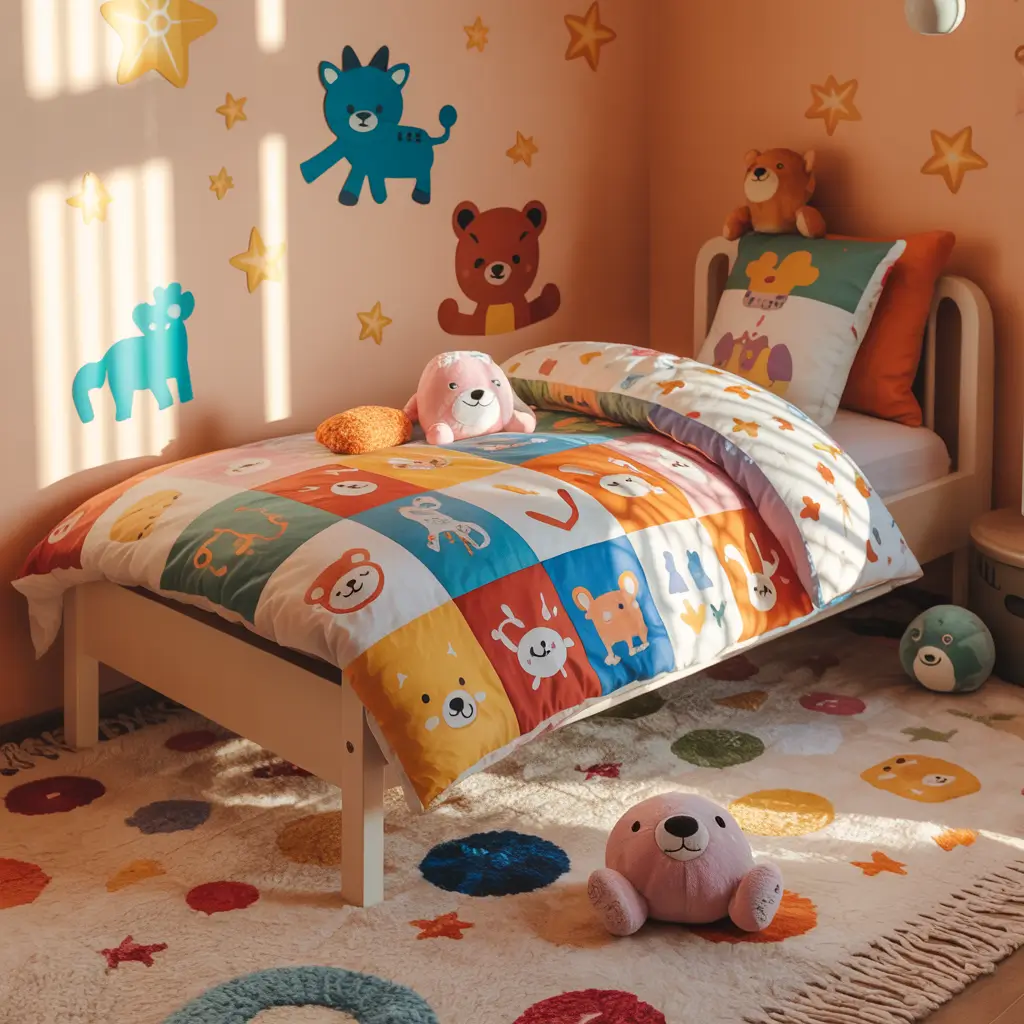
Remember when you thought beige was a practical choice for a kid’s room? Yeah, me too. Three days later, it looked like a rainbow threw up everywhere anyway. Embracing color from the start means you’re designing with reality, not fighting against it.
My daughter’s room uses what I call “controlled chaos colors” – bright and playful but with a method to the madness. We picked three main colors (pink, turquoise, and yellow) and stuck to them religiously. Everything else stays white or natural wood.
Color Psychology for Kids’ Spaces
Different colors create different moods:
- Blues and greens promote calmness and focus
- Yellows and oranges encourage creativity and energy
- Purples stimulate imagination
- Soft pinks create comfort and warmth
- Bold reds… well, maybe save those for accents only
Want to know what doesn’t work? Painting everything in super bright colors. Trust me, you’ll get a headache just walking in there. Balance bold colors with neutral bases, and everyone stays happy.
Playing with Patterns
Mix patterns like a pro by following the rule of three: one large pattern, one medium, and one small. We use striped bedding (large), polka dot pillows (medium), and geometric drawer pulls (small). It looks intentional rather than chaotic.
Also Read: 10 Creative Boys Bedroom Ideas Age 8-10 and Colorful Layouts
Minimalist Kids Bedroom Ideas for Calm Spaces
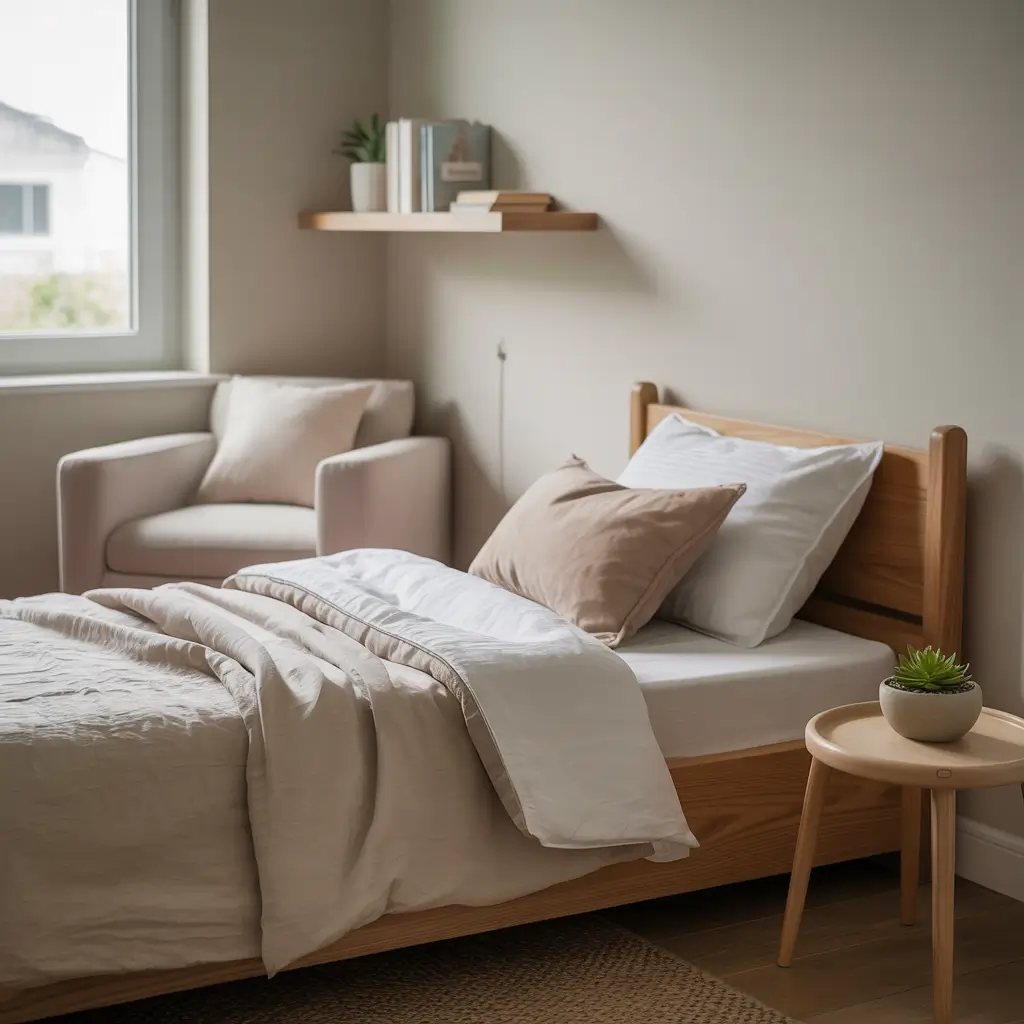
Minimalism and kids sound like opposites, right? But hear me out – minimalist design doesn’t mean boring or empty, it means intentional and peaceful. After dealing with sensory overload in my son’s first bedroom, we went minimal for his redesign, and the difference in his sleep quality was incredible.
The key isn’t eliminating everything kids love. You’re creating calm backgrounds that let their favorite things shine. Think white walls with one piece of amazing artwork, or simple furniture with one special toy display.
Essential Elements for Minimalist Kids’ Rooms
Focus on these fundamentals:
- Neutral base colors (white, gray, beige, soft pastels)
- Hidden storage solutions everywhere
- Quality over quantity in furniture choices
- One or two statement pieces maximum
- Natural materials and textures
What surprised me most? My kids actually prefer the calmer space. They can find their toys easier, cleanup takes five minutes instead of fifty, and bedtime became less of a battle.
Making Minimalism Kid-Friendly
The trick is choosing minimalism that works with kids, not against them. Use closed storage so toys disappear when not in use. Pick furniture with rounded edges and durable finishes. Add warmth through textiles like cozy rugs and soft blankets.
Nature-Inspired Kids Bedroom Ideas
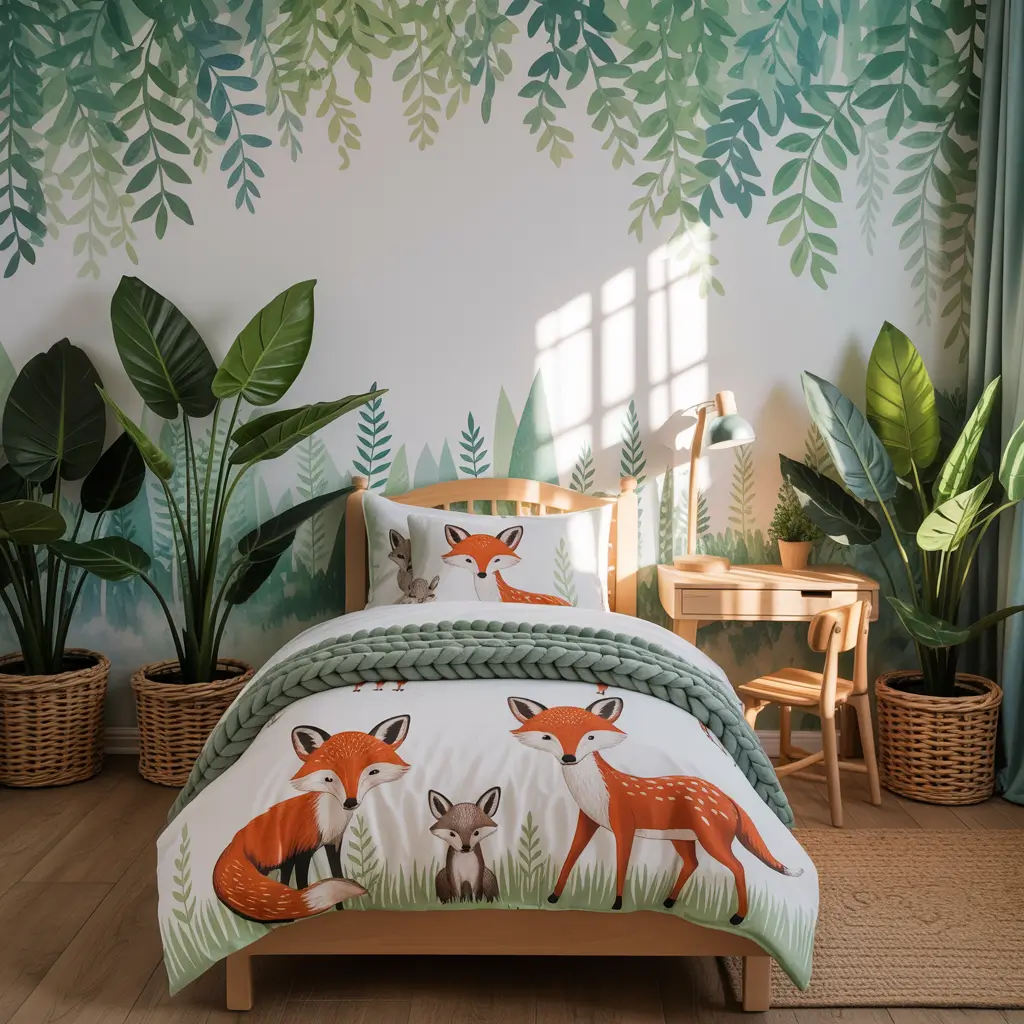
Bringing the outdoors inside creates magical spaces that grow with kids. Nature themes never go out of style because they’re timeless, not trendy. Plus, studies show natural elements help kids focus and feel calmer – basically free therapy.
We created a woodland theme in my nephew’s room using mostly things we found on hikes. Branches became curtain rods, collected rocks lined windowsills, and pressed leaves turned into artwork. Cost? Almost nothing. Impact? Huge.
Creating Natural Environments Indoors
Elements that bring nature inside:
- Live plants kids can care for (pothos survives everything)
- Wood furniture and accessories
- Nature-inspired color palettes
- Natural fiber rugs and textiles
- Rock, shell, or feather collections as decor
FYI, fake plants work too if you’re plant-killers like us. The visual impact matters more than authenticity. My daughter has a fake succulent garden she “waters” with her toy watering can, and she’s perfectly happy.
Educational Nature Elements
Make the room educational by adding constellation maps, animal identification posters, or growth charts designed like trees. My son learned to identify birds from the Audubon prints on his wall before he could tie his shoes.
Storage-Friendly Kids Bedroom Ideas for Toys
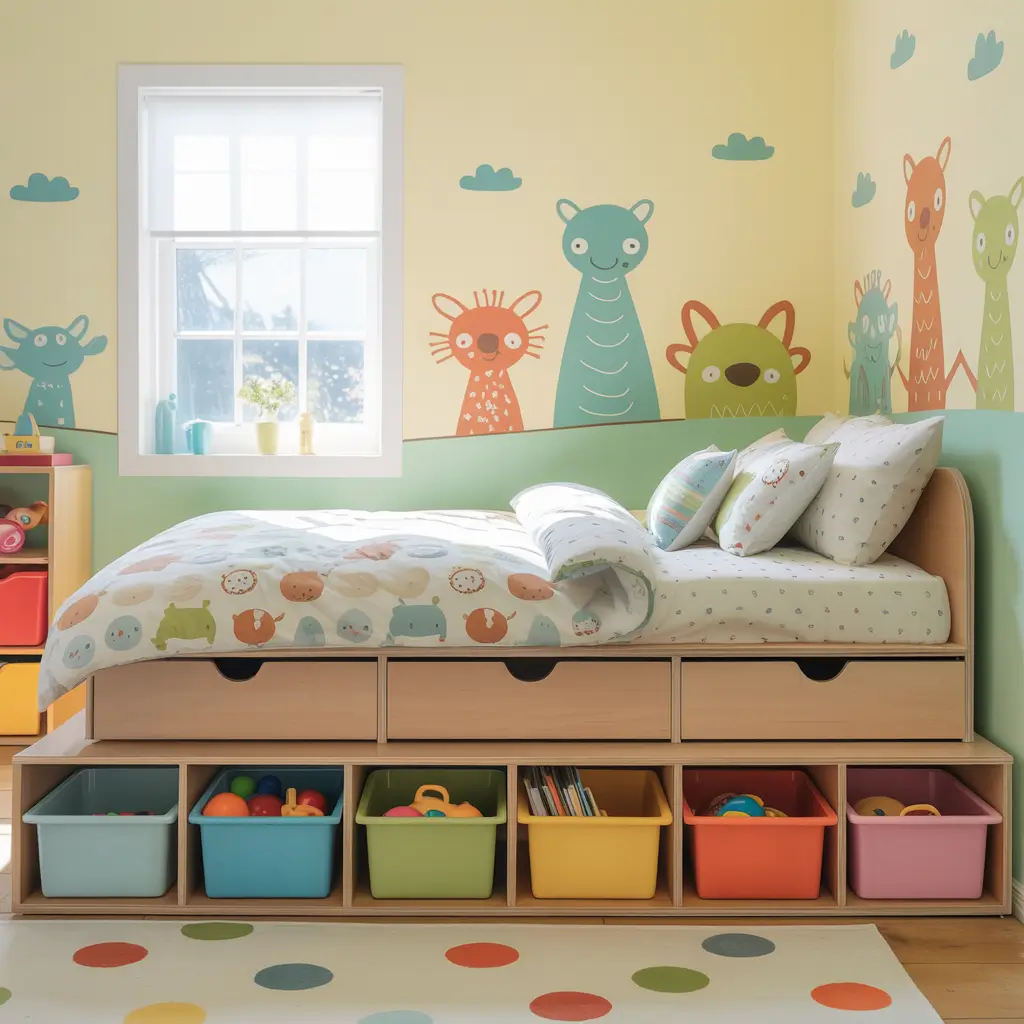
Let’s talk about the toy situation. If your kid’s room doesn’t look like FAO Schwarz exploded, are you even parenting? Smart storage solutions mean the difference between stepping on LEGOs at 2 AM or actually finding the floor.
After years of trial and error, I’ve found what actually works: accessible storage at kid height. They can’t clean up if they can’t reach the shelves, and you’ll just end up doing it yourself (again).
Storage Systems That Kids Will Actually Use
Winning storage solutions:
- Clear bins so kids can see what’s inside
- Picture labels for non-readers
- Low, open shelving for everyday toys
- Rotating toy system (hide half, swap monthly)
- One-category-per-bin organization
The rotating toy system saved my sanity. Half the toys live in the closet, and we swap them monthly. Suddenly, old toys feel new again, and there’s half the mess to clean. Why didn’t anyone tell me this sooner?
Creative Storage Solutions
Think beyond traditional toy boxes. Hanging mesh bags for stuffed animals, under-bed rolling crates for blocks, and pegboards for dress-up clothes all work brilliantly. My personal favorite? Rain gutters mounted as book displays – genius and cheap.
Also Read: 12 Stylish Boys Bunkbed Bedroom Ideas for Modern Homes
Personalized Kids Bedroom Ideas with Name Decor

Kids love seeing their names everywhere – it’s like their personal brand before they even know what branding is. Personalized decor makes kids feel ownership over their space, which translates to taking better care of it.
We went all-in on personalization for my daughter’s fifth birthday. Name bunting, monogrammed pillows, and a growth chart with her name. Did we go overboard? Maybe. Does she tell everyone who visits that it’s “Emma’s special room”? Absolutely.
DIY Personalization Projects
Create personalized touches without custom ordering:
- Wooden letters from craft stores painted to match decor
- Washi tape names on walls (removable and changeable)
- Photo displays spelling their initials
- Handprint art with their name and age
- Custom bookmark displays for readers
The wooden letters became an ongoing project. Each birthday, she repaints them in her current favorite colors. It’s become a tradition, and we have photos of every iteration.
Beyond Just Names
Personalization goes beyond names. Display their artwork, frame their achievements, or create a “museum wall” of their collections. My son has a “rock museum” with labeled specimens he’s found. It’s basically a shelf with rocks, but calling it a museum makes him feel important.
Cozy Reading Nooks for Kids Bedroom Ideas
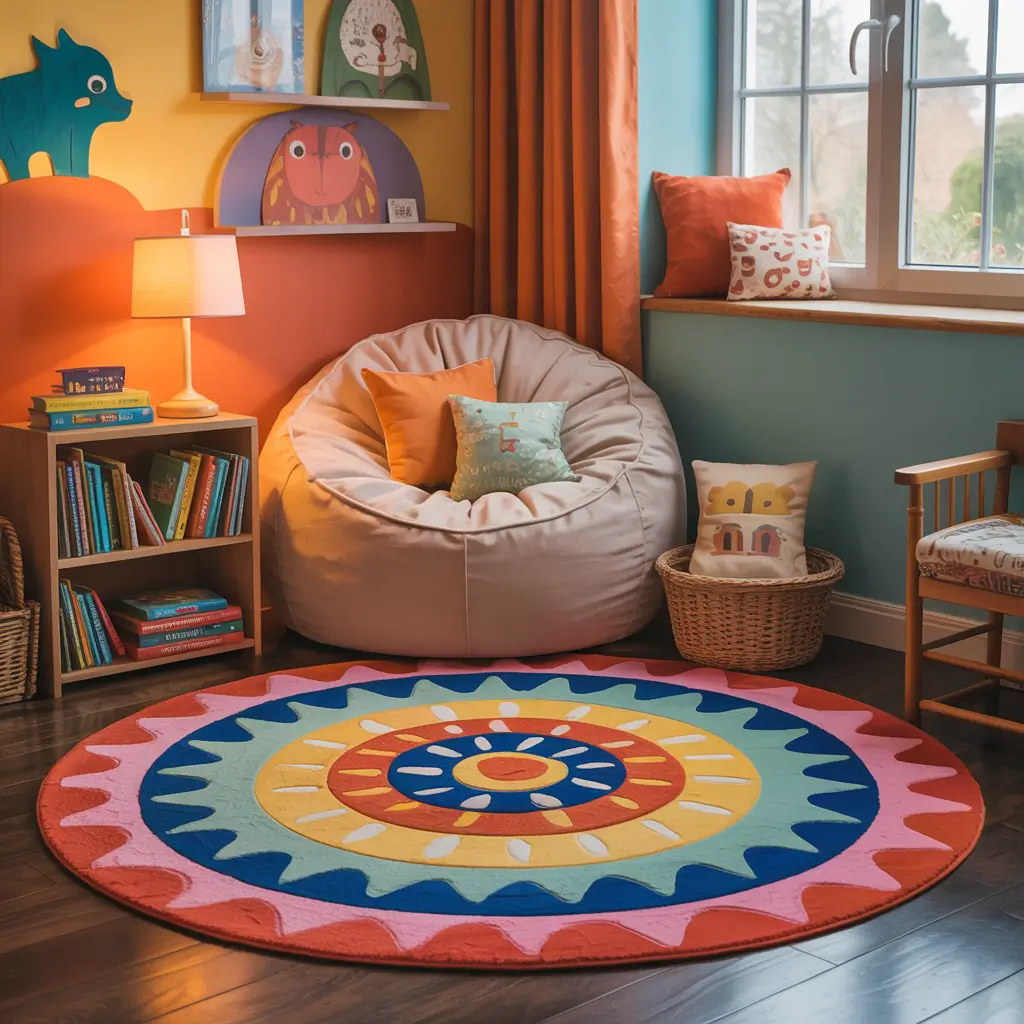
Want your kids to love reading? Give them a space that makes books feel special. A dedicated reading nook transforms reading from homework to adventure. It doesn’t need to be elaborate – just comfortable and inviting.
Our reading nook started as a corner with pillows. Now it’s a canopy tent with fairy lights, floor cushions, and a basket of current favorites. My daughter spends hours there, and I’m not complaining about too much reading time 🙂
Essential Reading Nook Elements
Create the perfect reading spot with:
- Comfortable seating (bean bags, floor cushions, or small chairs)
- Good lighting (natural plus task lighting)
- Book storage within arm’s reach
- Soft textiles for coziness
- A small table for drinks and snacks
The lighting matters more than you think. Bad lighting equals tired eyes equals kids who don’t want to read. We installed a reading light with adjustable brightness, and reading time doubled.
Making Reading Nooks Grow with Kids
Design flexibility into the nook. Adjustable shelving, modular seating, and changeable decor mean the space evolves with their reading level and interests. The princess canopy might become astronomy posters, but the cozy corner remains.
Shared Kids Bedroom Ideas for Siblings
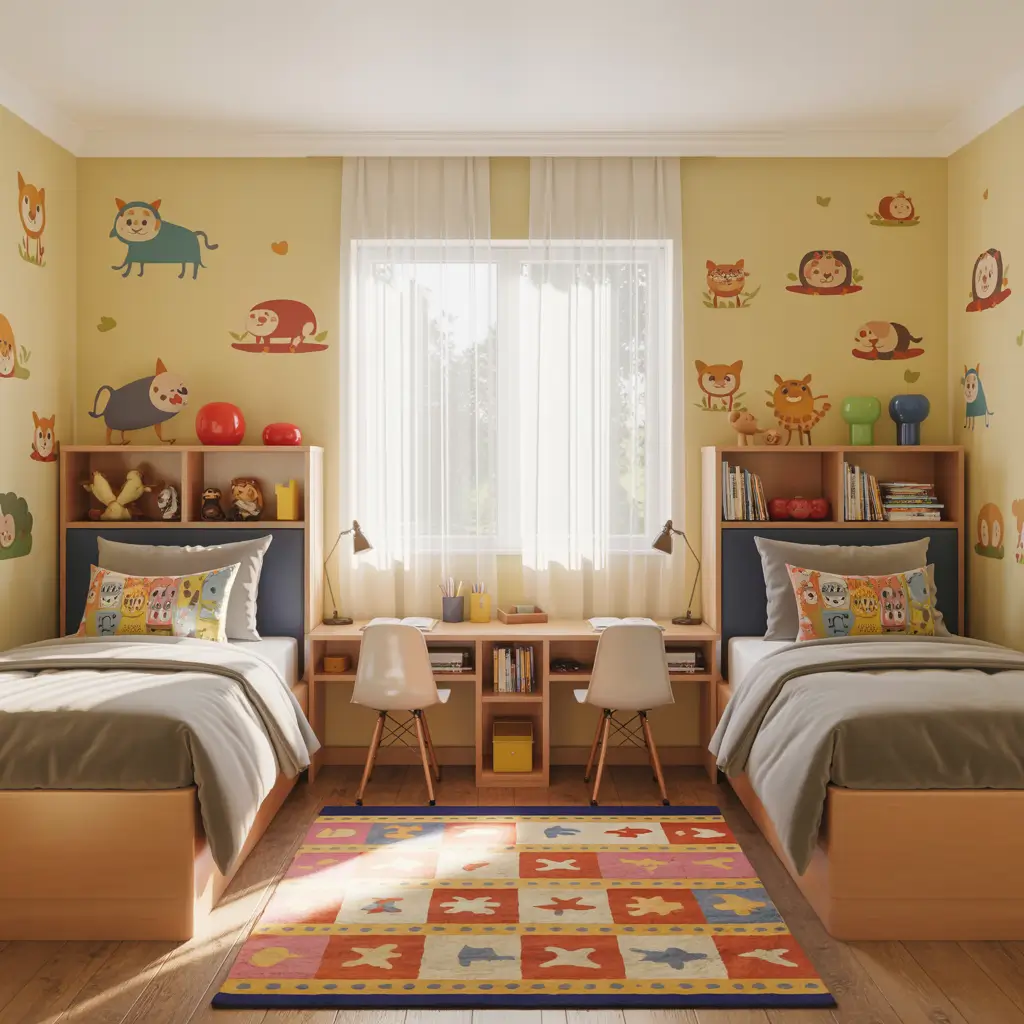
Shared rooms – where sibling rivalry meets interior design. After refereeing approximately 847 arguments about “his side” and “her side,” I’ve learned that clear boundaries and equal everything keep the peace (mostly).
We tried the invisible line down the middle approach. Spoiler: invisible lines don’t work with kids. Physical dividers, different colored zones, or elevated beds creating separate spaces work much better.
Strategies for Peaceful Coexistence
Keep the peace with these approaches:
- Define personal zones clearly with rugs or tape
- Assign specific storage to each child
- Use different colors for each child’s belongings
- Create neutral shared spaces
- Establish room rules together
Color coding changed everything. Blue bins for him, pink for her. Blue hangers, pink hangers. Blue towel, pink towel. Simple? Yes. Effective? Absolutely. Arguments about ownership dropped by 90%.
Making Shared Rooms Feel Special
Each child needs something that’s uniquely theirs. Individual reading lights, personal cork boards, or special display shelves give kids ownership within the shared space. My kids each have a “gallery wall” for their artwork – same size, same frames, totally different vibes.
Also Read: 10 Trendy Boys Shared Bedroom Ideas for Fresh Room Makeovers
Modern and Trendy Kids Bedroom Ideas
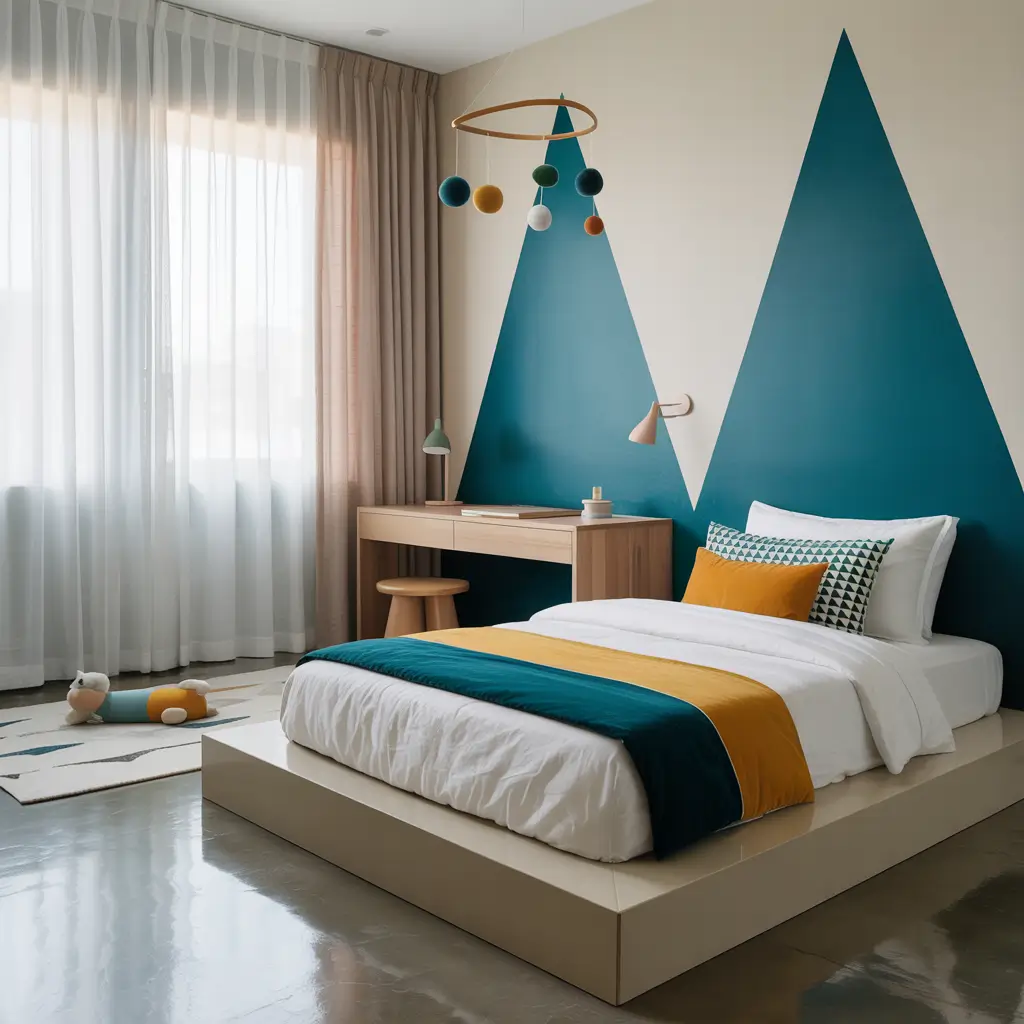
Modern design for kids doesn’t mean adult rooms with smaller furniture. It means incorporating current trends in kid-appropriate ways that won’t look dated in two years.
We recently updated my son’s room with modern industrial touches – metal and wood furniture, Edison bulb string lights, and geometric patterns. It looks like it belongs in a design magazine but still functions for an 8-year-old who builds LEGO cities on his floor.
Current Trends That Work for Kids
Trending elements perfect for kids’ rooms:
- Mixed metals (brass and black hardware)
- Geometric patterns in textiles
- Statement lighting fixtures
- Two-toned furniture
- Minimalist wall murals
The two-toned furniture trend works especially well. We painted just the drawer fronts of an old dresser in navy, keeping the frame white. Instant modern update for $20 worth of paint.
Balancing Trendy with Timeless
The secret to modern kids’ rooms? Trendy accessories with classic bones. Invest in quality, simple furniture, then add trending elements through bedding, artwork, and accessories you can easily change. That macramé wall hanging might not last, but the solid wood bed frame will.
Making It All Work Together
After all these ideas, you might feel overwhelmed. Here’s the truth: the best kids’ bedroom combines elements that work for your specific situation.
Maybe you need storage-heavy solutions with minimalist design. Or perhaps a nature-themed reading nook in a small shared room.
Start with your biggest challenge and solve that first. Small room? Focus on space-saving solutions. Messy kid? Prioritize storage. Siblings sharing? Establish zones before anything else.
IMO, the perfect kids’ bedroom grows and changes with your child. What works at age 3 won’t work at 10, and that’s okay. Build in flexibility, involve your kids in decisions, and remember – it’s their space to dream, play, and grow.
Make it magical, but also make it work for real life. Because at the end of the day, the best kids’ bedroom is one where everyone’s happy – kids included, parents especially.