10 Modern Kids Room Interior Design Ideas for Growing Kids
- Home Interior Design
 Ben
Ben- 0
- 36 minutes read
Let’s face it – designing a kids room is basically like trying to predict the future while solving a puzzle, blindfolded.
One day they’re obsessed with dinosaurs, the next it’s all about unicorns, and somehow you’re supposed to create a space that survives these rapid-fire interest changes without requiring complete renovation every six months.
After designing rooms for my own two kids (and watching one dinosaur phase transform into a space obsession practically overnight), I’ve learned that the best kids room designs balance imagination with practicality.
You want magic, but you also need storage for those approximately seven thousand toys that somehow multiply when you’re not looking.
These ten kids room interior design ideas come from real experience, real messes, and real solutions that actually work.
Whether you’re designing for a toddler who tests every piece of furniture’s durability or a tween who suddenly has opinions about everything, these ideas will help you create spaces that grow with your kids, spark their creativity, and maybe – just maybe – keep the chaos somewhat contained.
1. Adventure-Themed Loft Bed Room
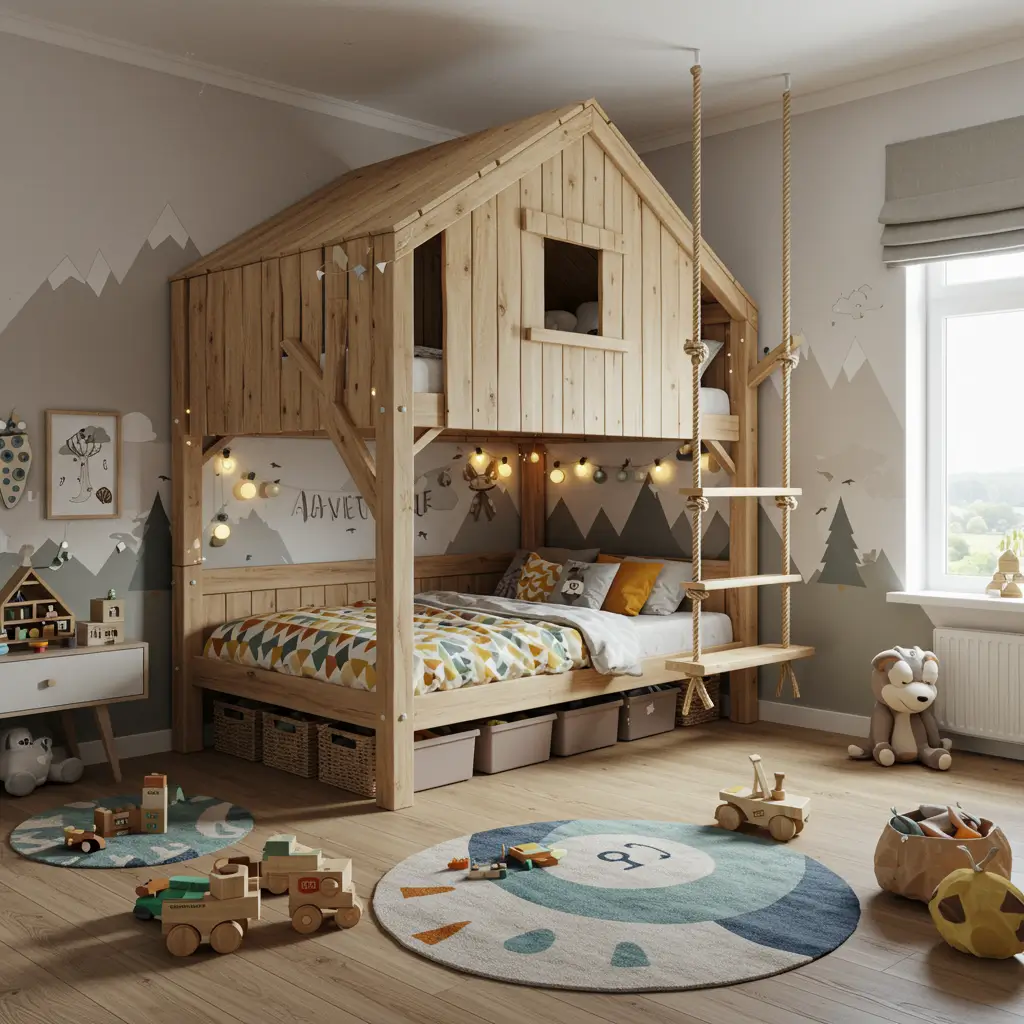
Adventure-themed loft bed rooms transform sleeping into an expedition that makes bedtime actually exciting. That loft bed isn’t just furniture – it’s a treehouse, a castle tower, a spaceship cockpit. Whatever adventure your kid’s imagination creates.
The vertical space a loft bed frees up is genuinely life-changing. Suddenly that tiny bedroom has room for a desk, play area, or reading corner underneath. I installed a loft bed in my son’s 8×10 room, and it went from cramped closet vibes to adventure headquarters. The floor space practically doubled.
The adventure theming extends beyond the bed itself. Rope ladders instead of standard ladders, canvas canopy “tents,” even slide exits – these elements turn the ordinary into extraordinary. One parent I know added a fireman’s pole beside the bed. Excessive? Maybe. Coolest room in the neighborhood? Absolutely.
Loft Bed Safety Essentials
Making adventure safe:
- Sturdy guardrails on all open sides
- Age-appropriate height – most recommend 6+ for top bunks
- Secure ladder attachment that won’t shift
- Proper mattress depth below guardrail height
- No hanging cords near the bed
- Soft landing zone with rugs below
The investment in quality matters here. Cheap loft beds wobble, and wobbly beds create anxious parents who can’t sleep knowing their kid is six feet in the air on questionable construction.
2. Minimalist Scandinavian Kids Room
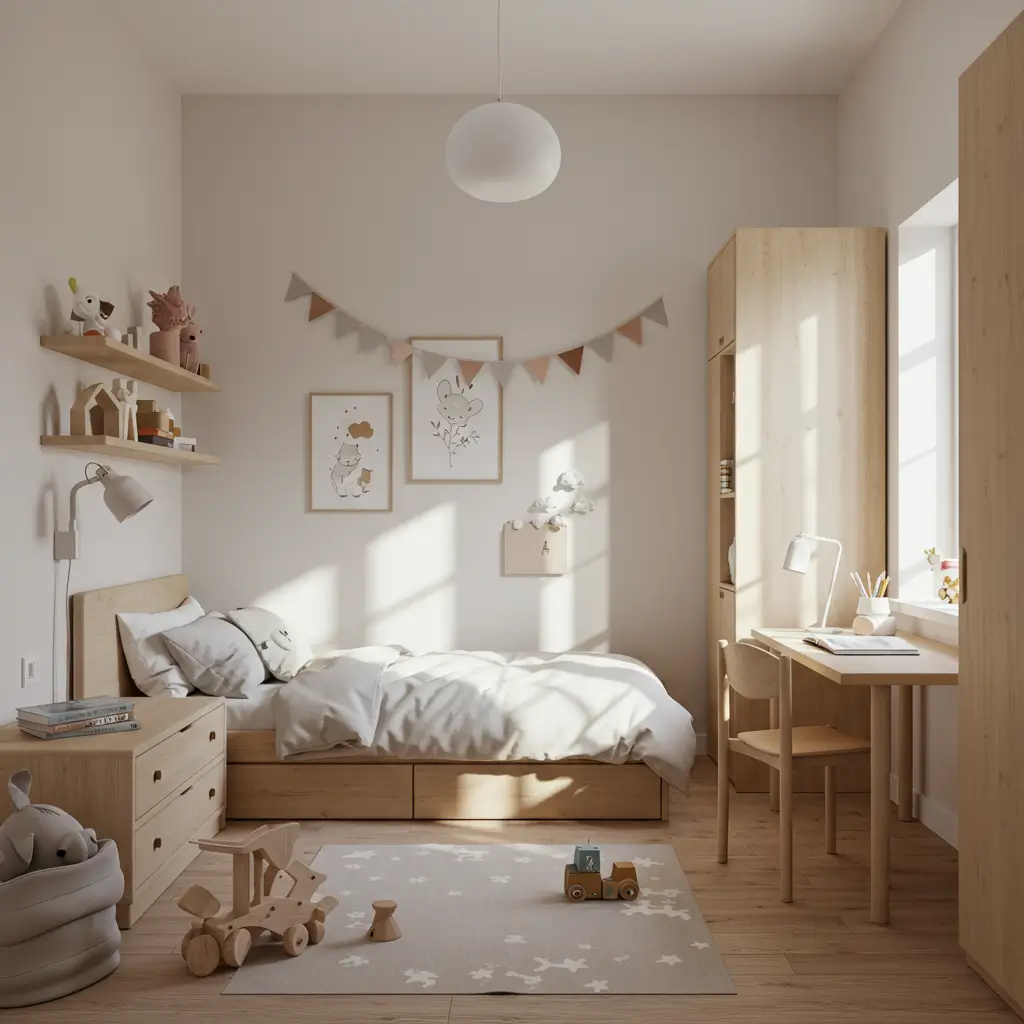
Minimalist Scandinavian kids rooms prove that clean design and childhood chaos can coexist – sort of. This style creates calm spaces that somehow survive the daily tornado of toys, books, and whatever mysterious sticky substances kids generate.
The color palette keeps things serene. Whites, soft grays, and natural wood tones dominate, with toys and artwork providing the color. I converted my daughter’s overstimulating rainbow room to Scandinavian minimal, and her sleep improved dramatically. Turns out, neon walls at 3 AM aren’t exactly soothing.
Storage becomes almost obsessive in Scandinavian design. Everything has a place, and ideally that place is hidden. Closed storage prevents visual clutter while making cleanup straightforward – even for kids. “Put the toys in the box” is way easier than “organize the toys by category on the appropriate shelf.”
Scandinavian Kids Room Elements
Nordic design for little ones:
- Low furniture at child-accessible heights
- Natural materials like wood and cotton
- Closed storage hiding the chaos
- Soft textiles for warmth and comfort
- Minimal decorations that rotate seasonally
- Neutral base that grows with the child
The longevity factor is real. Scandinavian kids rooms don’t look “babyish” at any age, so you avoid the complete redesign when your kid suddenly decides they’re “too old” for their current room.
3. Space Explorer Bedroom Design
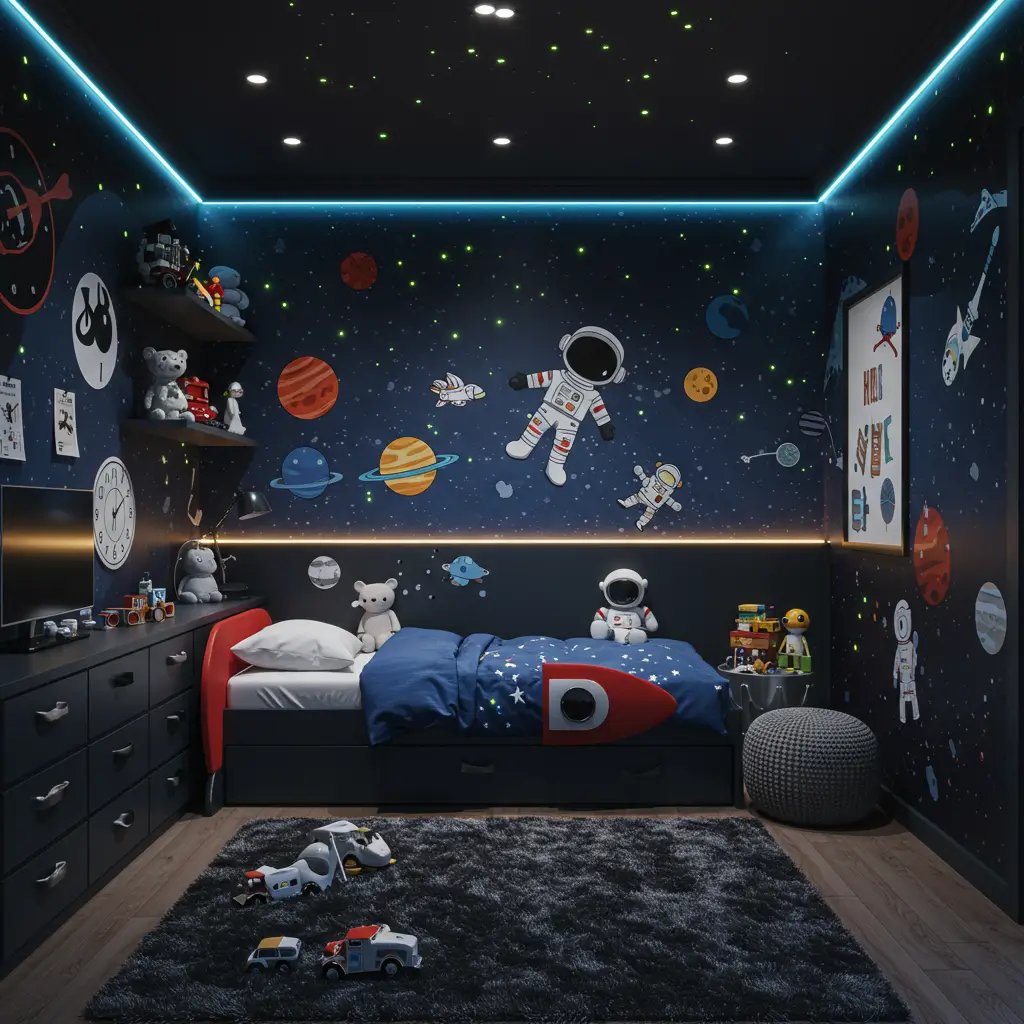
Space explorer bedrooms launch imaginations into orbit while creating rooms that stay relevant for years. Space never goes out of style – it just gets more fascinating as kids learn actual science. My nephew’s space room has evolved from cute astronaut theme at age 4 to serious astronomical interest at age 10, same basic design.
The ceiling becomes prime real estate in space rooms. Glow-in-the-dark stars are just the beginning – ceiling murals, projectors, even constellation accuracy for the science-minded kids. One family painted their entire ceiling as a scale representation of the solar system. Their kid learned planetary order before learning to tie shoes.
Color palettes in space rooms range dramatically. Deep navy and black create dramatic night sky vibes, while white and silver channel futuristic space station aesthetics. Both work – the key is committing to one direction.
Space Room Design Features
Launching imagination:
- Galaxy-themed bedding anchoring the theme
- Glow elements for nighttime magic
- Rocket ship furniture or accessories
- Planetary decals at accurate scale (optional but cool)
- Astronaut touches like helmet storage hooks
- Science-accurate posters growing with the child
The educational bonus can’t be ignored. Space rooms naturally spark curiosity about science, math, and exploration. That themed bedroom might inspire a future astronomer.
Also Read: 12 Beautiful Coffee Shop Interior Design Ideas for Rustic Charm
4. Fairy Tale Princess Room Makeover
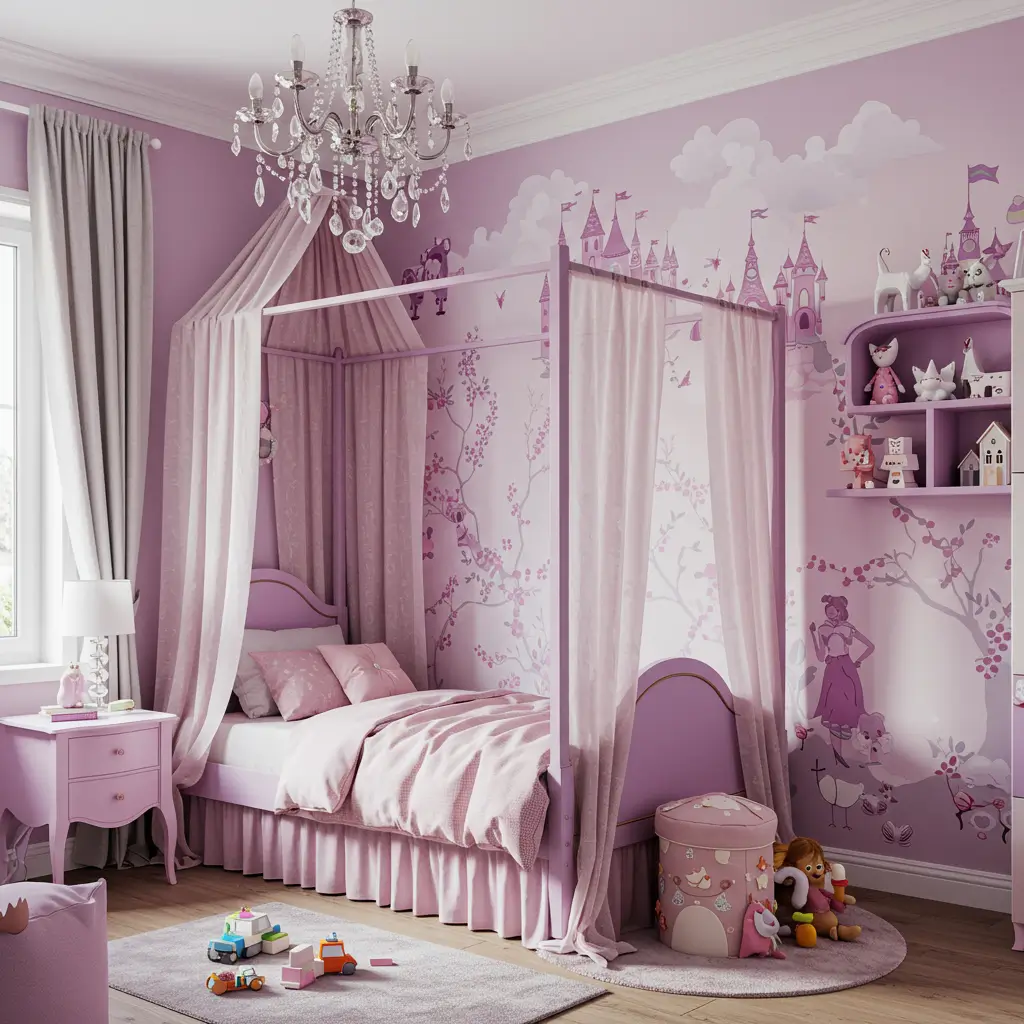
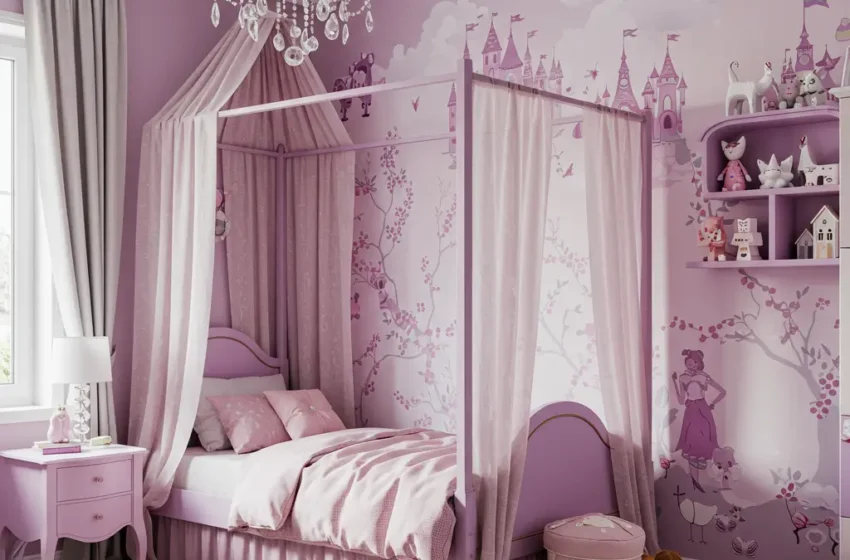
Fairy tale princess rooms create enchanted spaces where imagination rules – but modern princess rooms have evolved far beyond passive tower-waiting. Think brave adventurers, clever problem-solvers, and magic wielders who save themselves.
The canopy bed remains iconic but gets updates. Sheer fabric draping from ceiling creates castle tower vibes without the dust-collecting frills of traditional canopy beds. My daughter’s “castle” is actually just curtain rods and tulle, but she’s fully convinced she’s royalty. Mission accomplished.
Color palettes in princess rooms expand beyond pink. Dusty rose, soft lavender, mint green, and gold create sophisticated fairy tale aesthetics that don’t scream “toddler” when your kid hits eight. The goal is magical, not cliché.
Modern Princess Room Elements
Enchanted design features:
- Canopy or draping creating royal sleeping quarters
- Crown or tiara wall hooks and decor
- Mirror “magic mirror” vanity area
- Sparkle touches through metallic accents
- Castle silhouette elements without overwhelming
- Strong princess imagery showing adventure
The updating becomes easy with this base. Swap specific character items while keeping the fantasy foundation, and the room transitions smoothly as princess preferences change.
5. Jungle Safari Playroom Interior
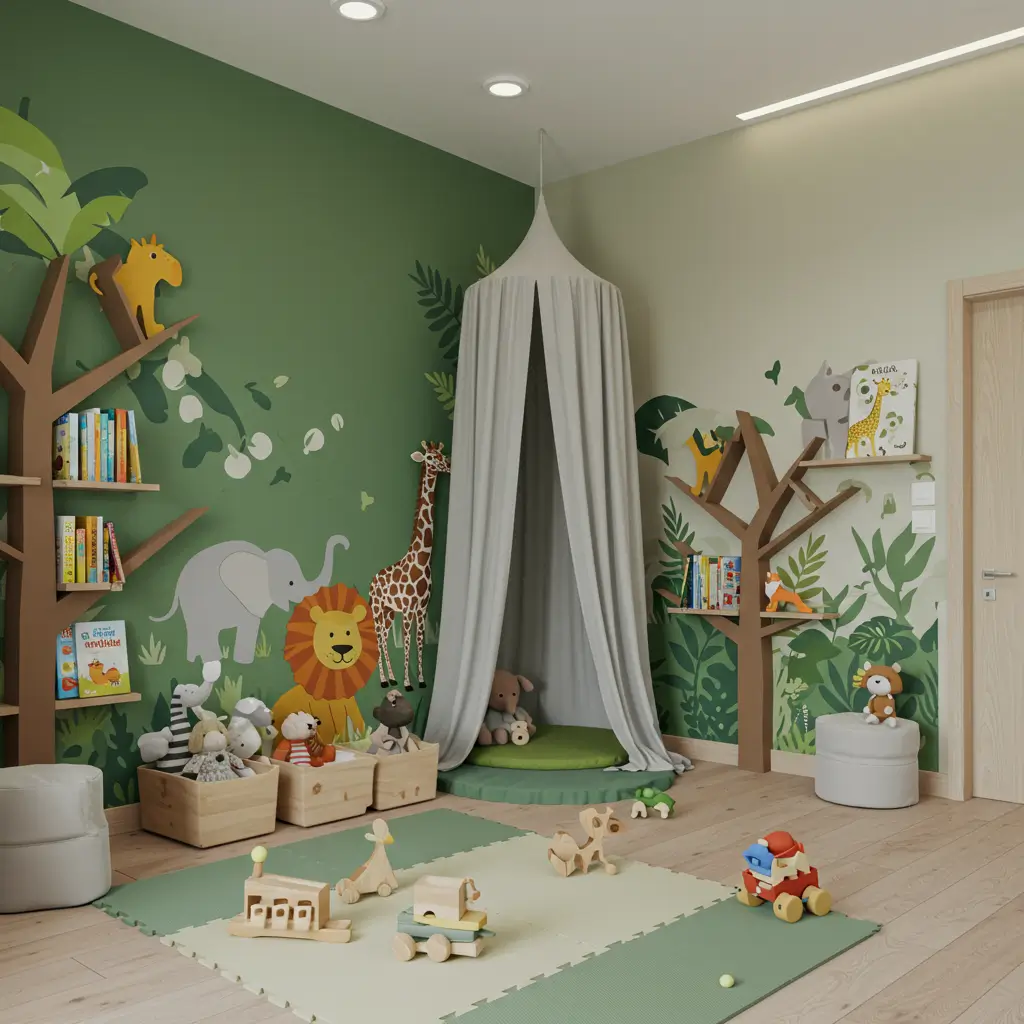
Jungle safari playrooms bring the wild indoors where kids can explore without sunscreen or bug spray. This theme taps into kids’ natural fascination with animals while creating visually rich spaces that stimulate creativity.
The immersive approach works best for jungle themes. Floor-to-ceiling murals, vine-like hanging elements, even textured “tree trunk” accents create environments that feel transported. FYI, kids take jungle rooms seriously – expect safari expeditions, animal rescue missions, and lots of binocular-related requests.
Green dominates the palette for obvious reasons. Multiple shades of green from lime to forest create depth, while pops of orange, yellow, and brown represent the animal kingdom. The variety prevents monotony while staying true to the theme.
Safari Playroom Features
Creating the wild:
- Animal wall decals or murals
- Natural textures like rattan and bamboo
- Plush animal collection as inhabitants
- Binoculars and explorer gear for play
- Tent or canopy as safari camp
- Leaf patterns throughout textiles
The educational opportunities multiply in jungle rooms. Animal facts, geography, ecology – the themed play naturally incorporates learning without feeling like school.
6. Modern Color-Blocked Kids Room
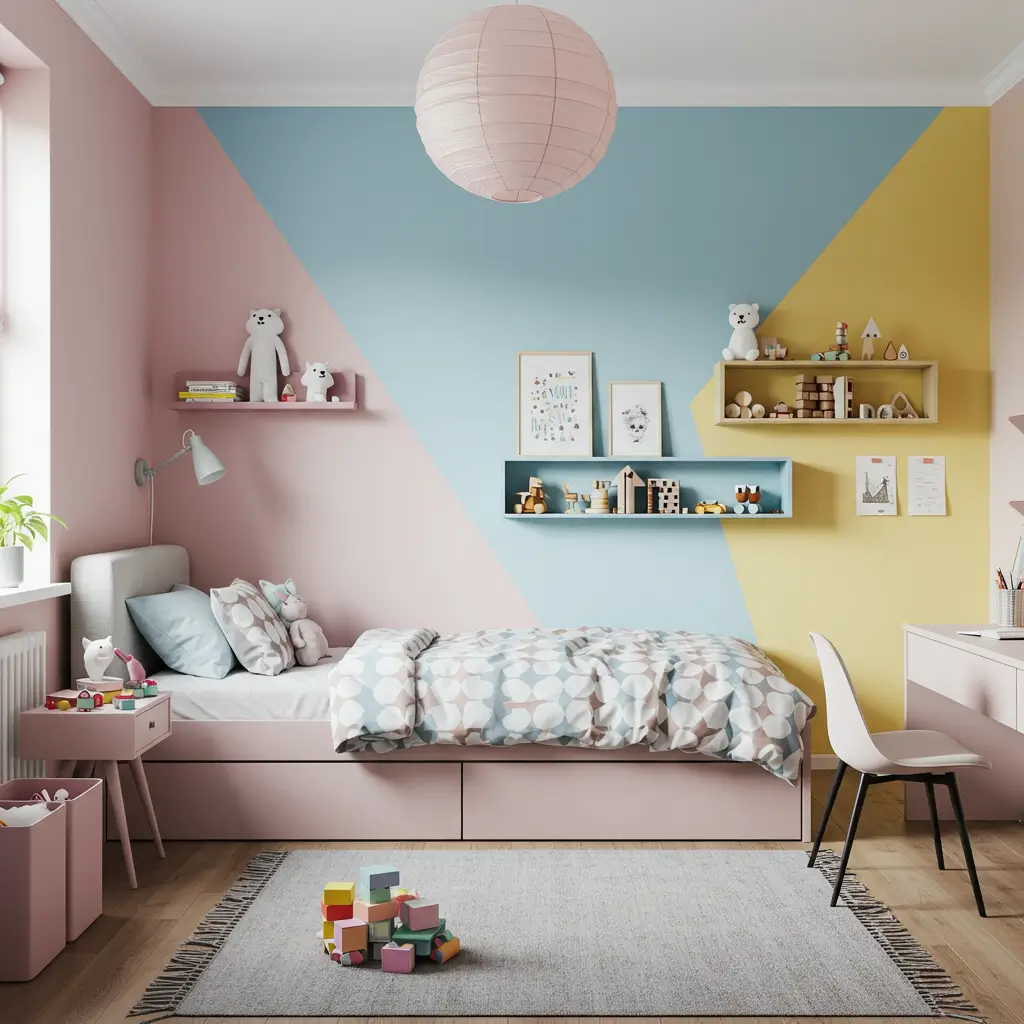
Modern color-blocked kids rooms bring bold visual impact through strategic color placement. This isn’t chaotic rainbow walls – it’s intentional geometric color that creates sophisticated, energetic spaces.
The technique requires planning. Choose three to four colors maximum, then create distinct zones through painted shapes, wall panels, or furniture placement. One wall might feature large geometric color blocks, while the rest stays neutral. The result feels artistic rather than overwhelming.
The flexibility of color-blocking saves money long-term. Paint is cheap, so evolving the room just requires new color choices, not new furniture. My friend has repainted her daughter’s color-blocked room twice in three years, updating from pastels to brights to muted tones as preferences changed.
Color-Blocking Techniques
Bold design strategies:
- Geometric shapes on accent walls
- Color zoning for different activities
- Furniture in coordinating colors
- Ceiling color extending the concept
- Painted floor areas defining zones
- Neutral base making colors pop
The execution matters enormously. Crisp edges and quality paint separate intentional design from messy DIY gone wrong. Take your time with painter’s tape.
Also Read: 10 Cozy Interior Design Styles Ideas for Comfortable Living
7. Cozy Reading Nook Bedroom
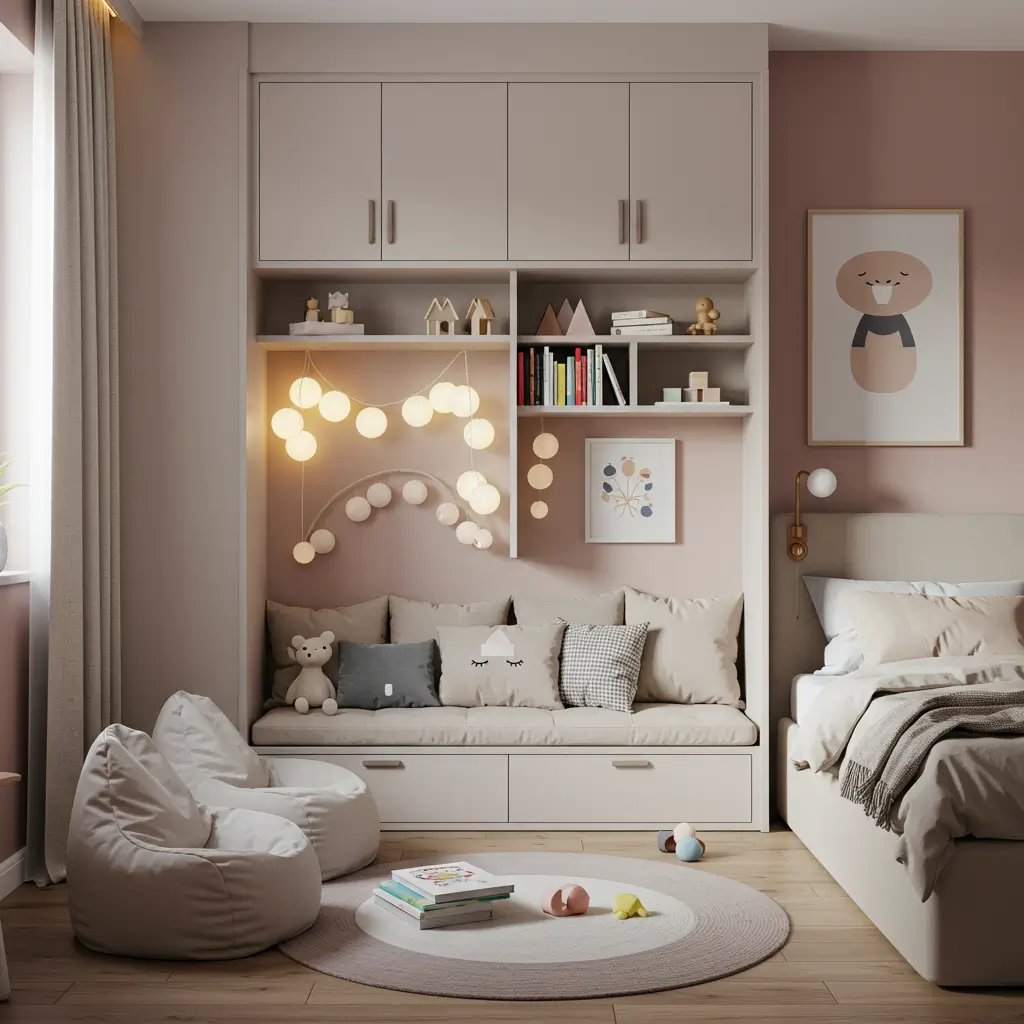
Cozy reading nook bedrooms prioritize creating dedicated spaces where books become adventures. These rooms acknowledge that encouraging reading requires more than a bookshelf – it requires an irresistible reading environment.
The nook itself can take many forms. Canopy corners, built-in window seats, teepees, converted closets – anywhere that creates a cocoon works. I transformed my son’s closet into a reading nook by removing the doors, adding cushions, installing a book ledge, and stringing fairy lights. He now reads voluntarily. I nearly cried.
Lighting in reading nooks requires thought. Warm, adequate lighting prevents eye strain while maintaining cozy ambiance. Battery-operated fairy lights plus a proper reading lamp creates perfect conditions without complicated electrical work.
Reading Nook Essentials
Building book lovers:
- Comfortable seating with proper back support
- Adequate lighting for reading without strain
- Book storage within arm’s reach
- Cozy textiles like pillows and blankets
- Privacy element creating enclosed feeling
- Personal touches making it “their” space
The long-term benefits extend beyond decor. Kids with reading nooks read more, develop stronger language skills, and have healthy screen-free entertainment options.
8. DIY Creative Wall Art Room
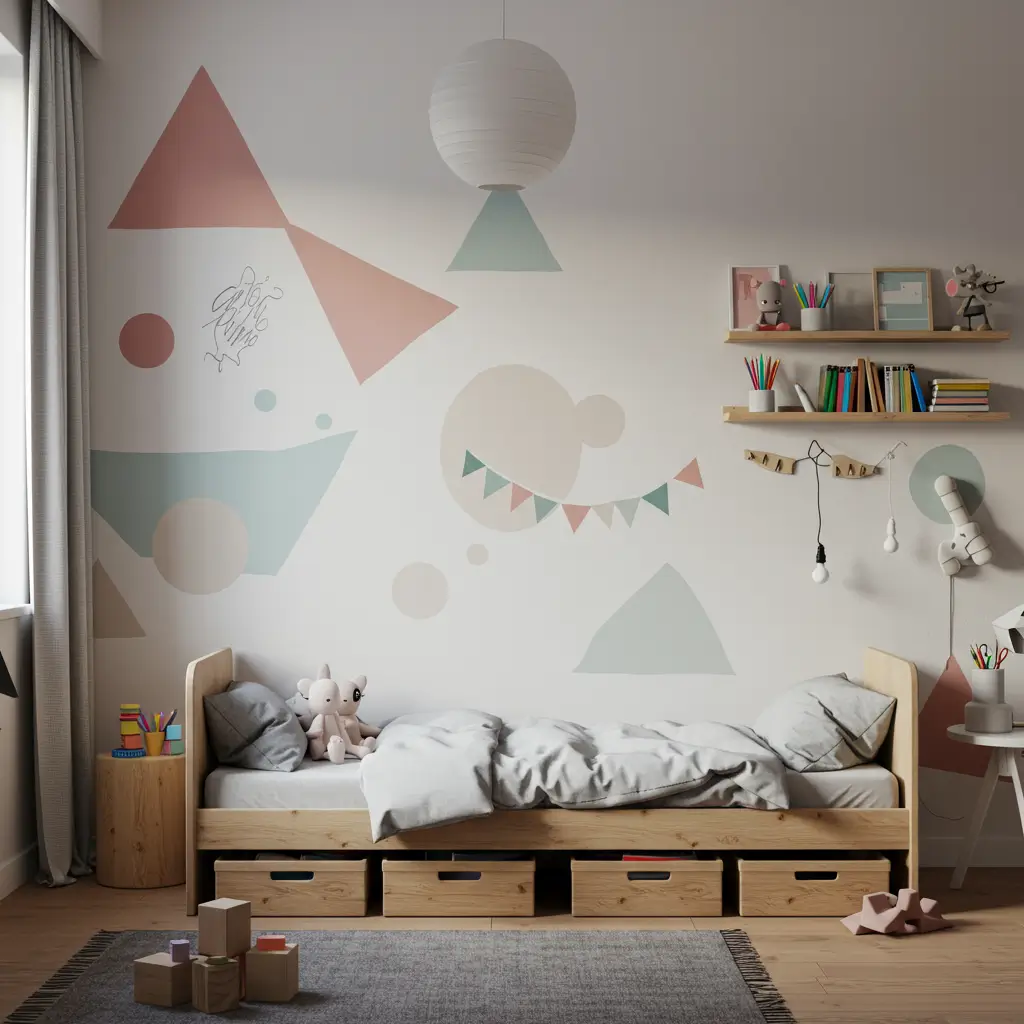
DIY creative wall art rooms turn your child into the artist whose work decorates their own space. This approach creates personally meaningful rooms while celebrating your kid’s creativity – and saves money on expensive art.
The gallery wall approach works beautifully. Rotating displays of your child’s artwork create ever-changing decor that grows with their skills. Use matching frames for cohesion, or go eclectic with mixed frames for gallery vibes. Either way, you’ll never run out of content.
Interactive wall elements expand the concept. Chalkboard walls, magnetic paint sections, corkboard displays – these encourage ongoing creativity rather than static decoration. One family painted an entire wall with whiteboard paint. It gets used daily for everything from homework to elaborate fantasy maps.
DIY Art Room Features
Encouraging creativity:
- Gallery wall for rotating artwork display
- Chalkboard or whiteboard surfaces
- Art supply storage at accessible height
- Easel or art station for creating
- Frame displays with clip systems for easy swapping
- Washi tape galleries for damage-free display
The self-esteem boost is real. Kids whose art decorates their rooms feel valued and develop confidence in their creative abilities.
9. Nautical Ocean Adventure Room
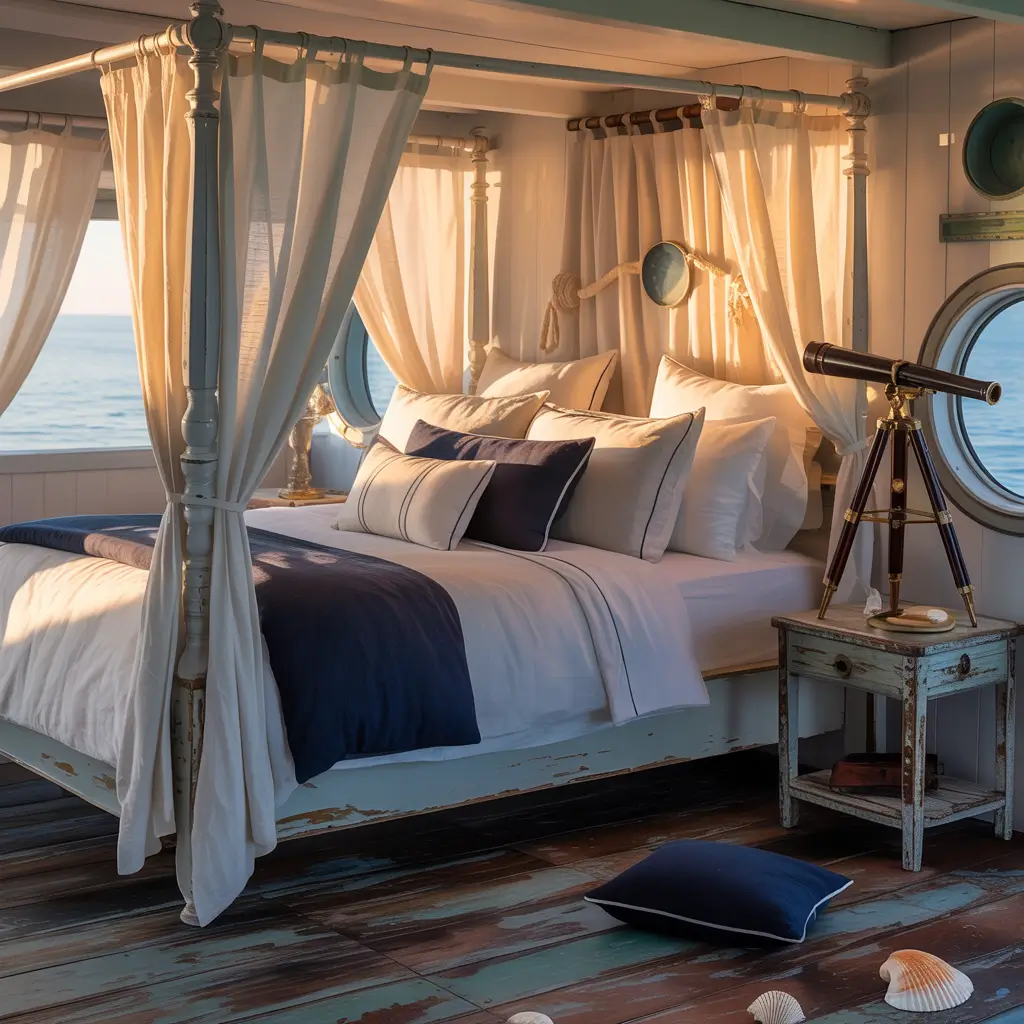
Nautical ocean adventure rooms bring coastal vibes inland while tapping into kids’ endless fascination with what lurks beneath the waves. From pirate adventures to marine biology, ocean themes offer depth (pun intended) that grows with children.
The color palette stays true to the sea. Navy blue, aqua, turquoise, white, and sandy beige create authentic coastal aesthetics without costume-shop cliché. The goal is ocean-inspired, not “we stole decorations from a seafood restaurant.”
Maritime elements add authenticity. Rope details, ship wheel accents, porthole mirrors, anchor motifs – these create nautical atmosphere through details rather than overwhelming themes. One client’s ocean room uses actual salvaged boat parts as decor. Overkill? Perhaps. Amazing? Definitely.
Ocean Room Design Elements
Coastal adventure features:
- Wave patterns in textiles and murals
- Rope and net accents
- Marine life artwork or decals
- Nautical stripes in bedding and curtains
- Driftwood decorative elements
- Sea creature plush collections
The versatility surprises people. Ocean themes adapt from baby to teen by shifting focus from cute sea creatures to sophisticated coastal design.
Also Read: 10 Unique Luxury Interior Design Ideas to Transform Homes
10. Multifunctional Small Space Kids Room
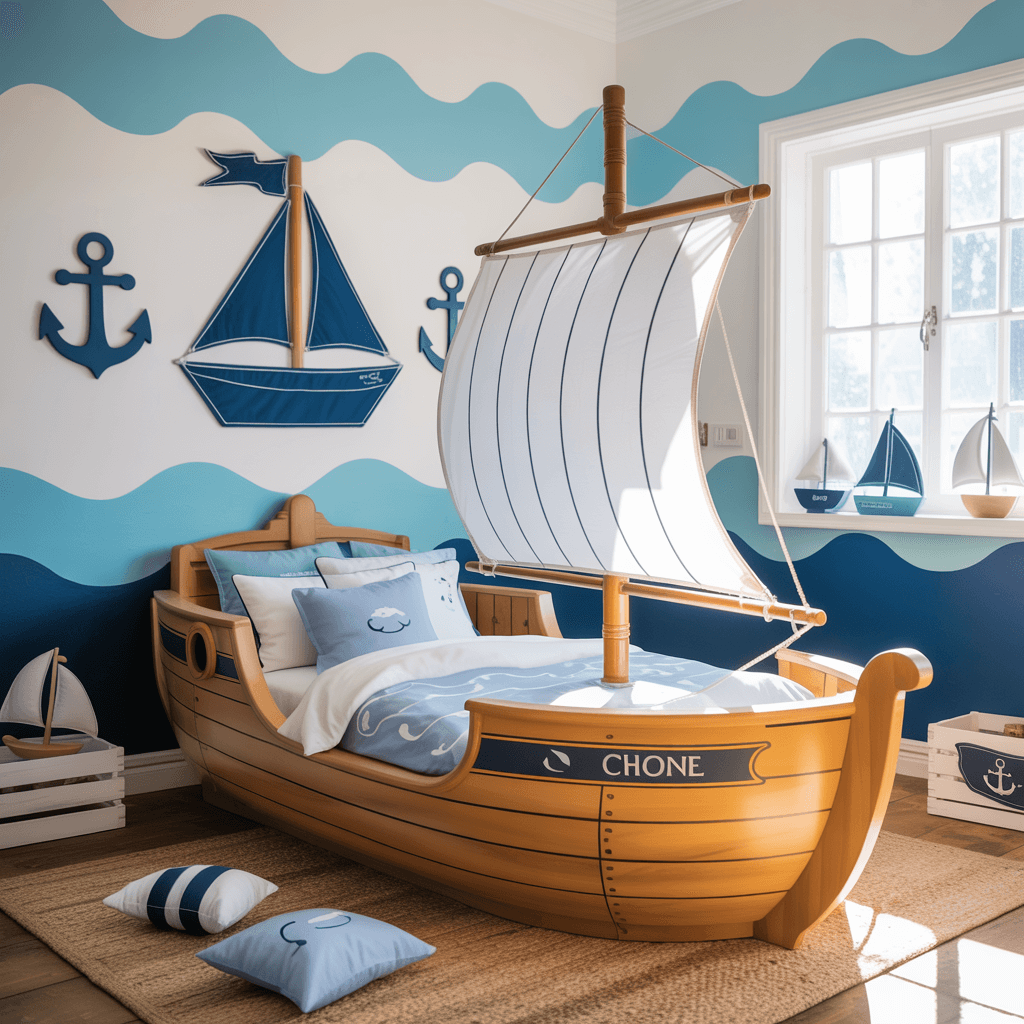
Multifunctional small space kids rooms acknowledge reality: most kids don’t have mansion-sized bedrooms, yet they still need space for sleeping, playing, studying, and storing approximately one million items.
Vertical thinking saves small rooms. Loft beds with desks underneath, wall-mounted shelves to the ceiling, over-door organizers – every inch counts. My kids share a 10×12 room that functions better than many larger spaces because we maximized every vertical opportunity.
Furniture that multitasks earns its place. Storage ottomans, beds with drawers, desks that fold away – single-purpose furniture doesn’t belong in small rooms. That cute chair that only serves as a chair? Find something that also stores stuffed animals.
Small Space Solutions
Maximizing limited square footage:
- Loft or bunk beds freeing floor space
- Under-bed storage utilizing hidden space
- Wall-mounted everything from desks to bookshelves
- Mirror placement creating space illusion
- Light colors expanding visual space
- Multipurpose furniture serving multiple functions
The organization systems matter more in small spaces. Without good systems, small rooms become disaster zones instantly. Invest in containers, labels, and easy cleanup routines.
Making Small Spaces Feel Bigger
Visual tricks that work:
- Continuous flooring without visual breaks
- Vertical stripes drawing eyes upward
- Minimal floor furniture keeping space open
- Hidden storage eliminating visual clutter
- Strategic lighting brightening corners
- Cohesive color scheme throughout
The constraint breeds creativity. Some of the most imaginative rooms I’ve seen were the smallest because limitations forced innovative solutions.
Creating Your Kid’s Dream Room
After exploring these ten kids room interior design ideas, here’s the honest truth: the best kids room is one your child actually loves, not one that photographs perfectly.
Ask them what they want. Their answers might surprise you – or horrify you, depending on the request.
Start with the room’s practical needs. Sleep, storage, play, study – how will this space serve your child’s daily life? Once you nail the function, layer on the fun. Theme elements, color choices, and decorative touches come after the basics work.
Remember that kids rooms should evolve. Build in flexibility from the start – neutral bases with themed accessories, adjustable furniture, swap-friendly decor. What works at age five might embarrass them at age ten, and complete room overhauls get expensive.
The goal isn’t creating a magazine-worthy space (though that’s nice). It’s creating a room where your child feels safe, inspired, and comfortable. Whether that means a full jungle safari or simple Scandinavian minimalism depends entirely on your kid and your space.
These rooms won’t stay perfect – kids guarantee that. But they’ll create environments where imagination thrives, creativity flourishes, and maybe, just maybe, toys occasionally find their way back into storage bins.
Now go design that room before your kid’s current obsession changes again. The dinosaur phase waits for no parent :/