15 Stylish Kids Room Wardrobe Design Ideas for Modern Homes
- Wardrobe Design
 Ben
Ben- 0
- 56 minutes read
Remember when you thought organizing your kid’s room would be easy? Yeah, me too. Then reality hit, and suddenly you’re drowning in a sea of tiny clothes, toys, and that mysterious collection of rocks your five-year-old insists on keeping.
Trust me, I’ve been there, and the right wardrobe design can literally save your sanity.
After redesigning my kids’ rooms three times (and counting), I’ve learned that a good wardrobe isn’t just storage—it’s a game-changer.
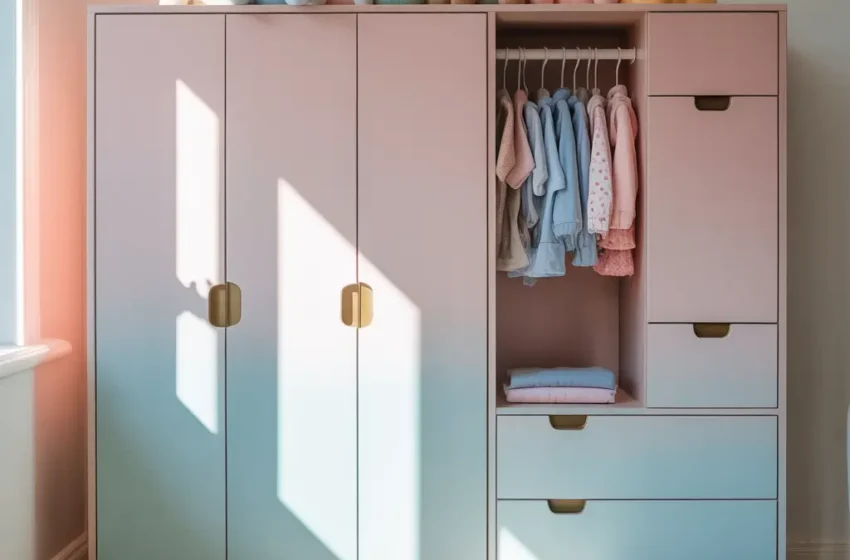
You need something that works for tiny humans who can’t reach the top shelf and somehow manage to create chaos in perfectly organized spaces within minutes.
So let’s talk about wardrobe designs that actually work. Not the Pinterest-perfect ones that look amazing for exactly five seconds, but real, practical solutions that survive the daily hurricane of childhood.
1. Colorful Modular Wardrobe for Kids
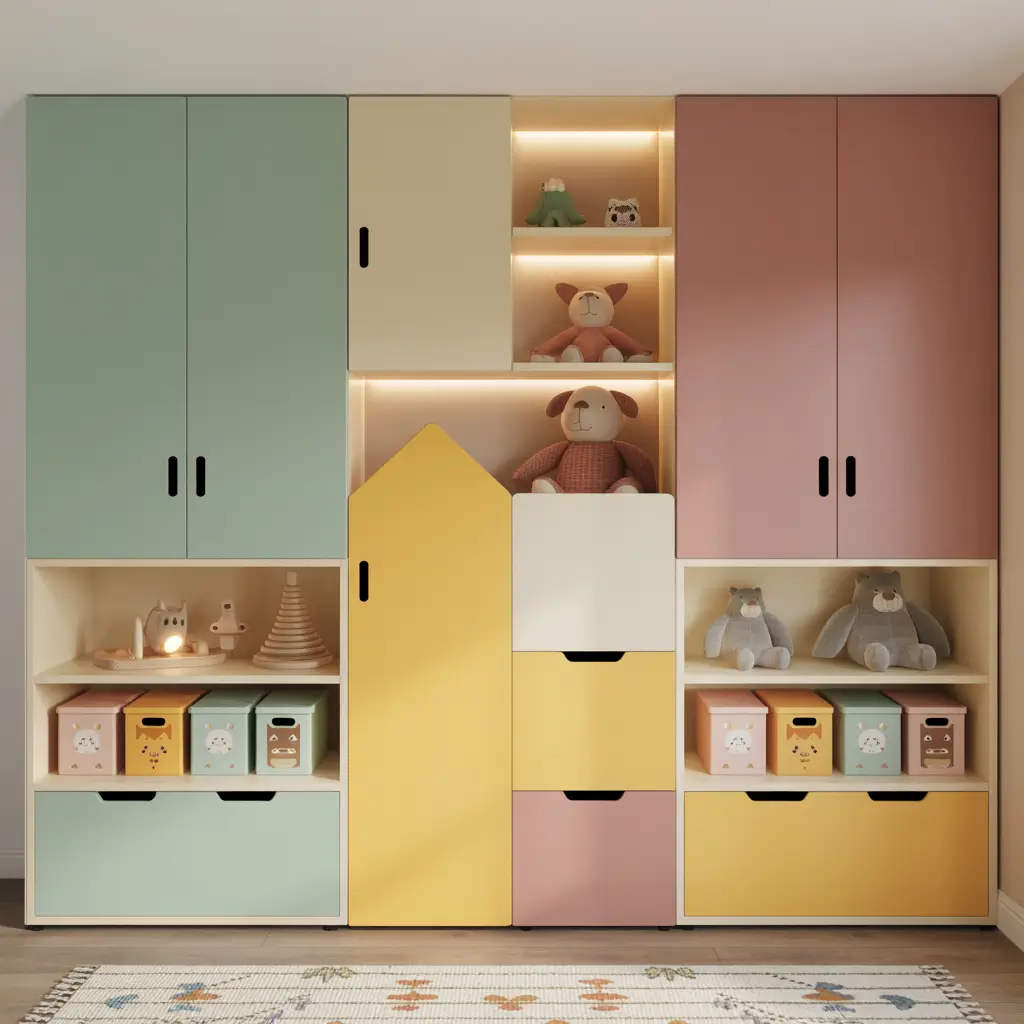
Why Modular Works Magic
You know what’s brilliant about modular wardrobes? They’re basically grown-up LEGOs that actually serve a purpose. I installed one of these bad boys in my daughter’s room last year, and honestly, it’s been a game-changer.
The beauty lies in flexibility. Need more hanging space this month? Add a rod module. Suddenly drowning in board books? Swap in some shelf units. Kids grow ridiculously fast (seriously, where does all that food go?), and modular systems grow right along with them.
Color Psychology Meets Storage
Here’s something most people don’t consider: colors affect kids’ moods and behaviors. Bright, vibrant modules can actually make organizing fun—who would’ve thought? My kids now fight over who gets to put clothes away. I’m not kidding.
Go for primary colors if you want energy and creativity. Pastels work better for calmer kids or if you’re trying to create a more soothing environment. Mix and match colors to create zones: blue for everyday clothes, yellow for special occasions, green for sports gear.
Setting It Up Right
Start with these essential modules:
- 2-3 hanging sections (one for current season, one for next)
- 4-6 cube storage units (perfect for folded items)
- 2 drawer modules (underwear and socks need homes too)
- Top shelf units (for out-of-season or too-big clothes)
The best part? When your kid outgrows it, you can reconfigure the whole thing for their teenage years. No need to buy new furniture every few years.
2. Space-Saving Sliding Door Wardrobe
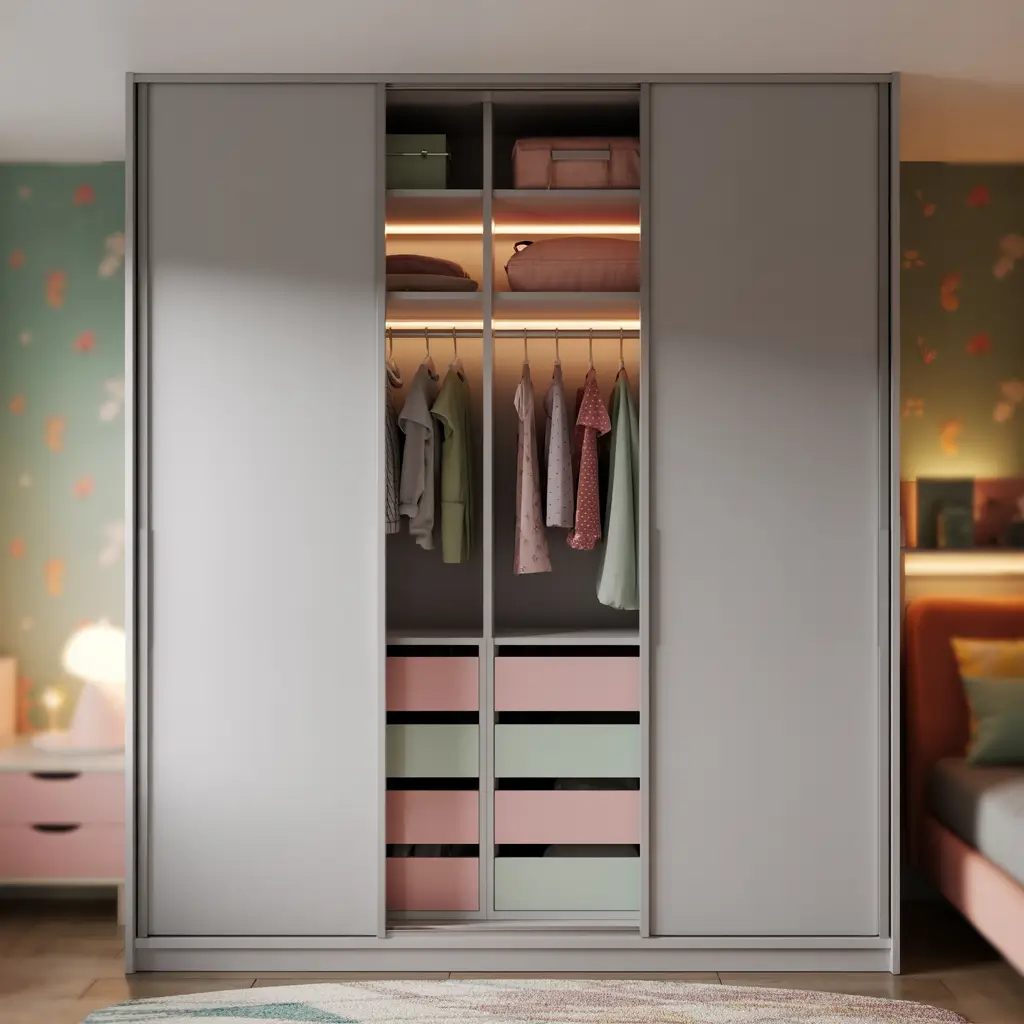
The Small Room Solution
Got a room smaller than a parking space? Welcome to the club. Sliding doors are your new best friend, and I’ll tell you why.
Traditional swing-out doors need at least 24 inches of clearance. In a tiny room, that’s prime real estate you can’t afford to waste. Sliding doors? Zero clearance needed. You can literally put the bed right up against the wardrobe if you need to.
Mirror, Mirror on the Door
Here’s a pro tip that changed my life: get sliding doors with built-in mirrors. Not only does it make the room look twice as big (optical illusions FTW), but it also means one less thing hanging on the wall that your kids can knock down.
My son uses his mirror doors for everything from checking his superhero costume to practicing his “scary faces.” Multi-functional furniture is where it’s at when you’re working with limited space.
Making It Work
Consider these features when choosing your sliding door system:
- Soft-close mechanisms (trust me, 6 AM door slamming gets old fast)
- Lower track systems (easier for kids to operate)
- Bypass doors (both panels slide, giving better access)
- Safety locks at the top (for when you need to hide birthday presents)
3. Themed Cartoon Character Wardrobe
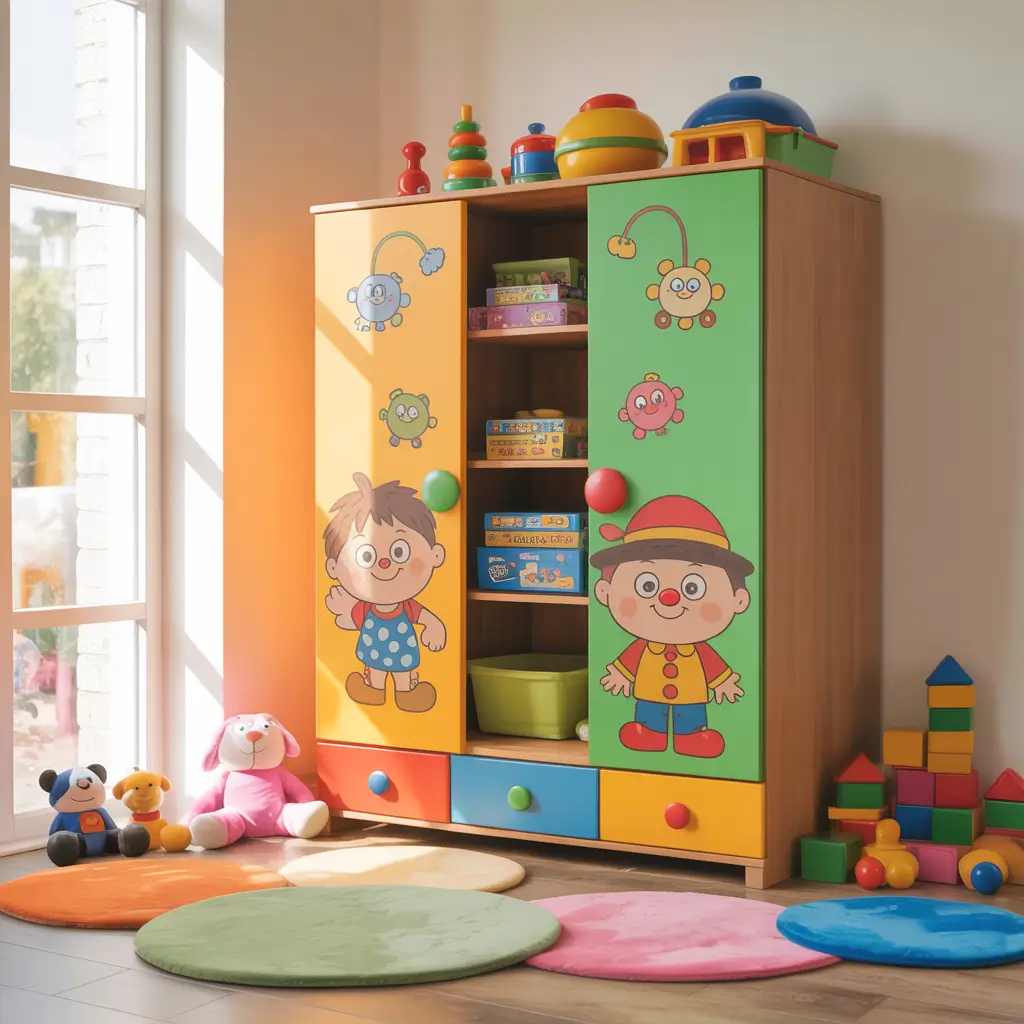
When Storage Meets Imagination
Want to see a kid actually excited about putting clothes away? Slap their favorite character on that wardrobe. I know it sounds simple, but the psychology behind it is genius.
Kids associate their favorite characters with fun and adventure. When Elsa or Spider-Man is “guarding” their clothes, suddenly organizing becomes part of their imaginative play. It’s not just storage anymore—it’s their secret headquarters.
The Removable Approach
Here’s where I learned my lesson the hard way: kids’ interests change faster than you can say “Baby Shark.” Don’t paint characters directly on the wardrobe unless you want to repaint in six months when they’ve moved on to the next obsession.
Instead, try these approaches:
- Removable wall decals on plain wardrobe doors
- Magnetic panels you can swap out
- Clip-on fabric covers (washable is key)
- Interchangeable door panels with different themes
Creating the Magic
The trick is balancing theme with functionality. You want enough character presence to excite them but not so much that it becomes overwhelming or limits the wardrobe’s lifespan.
Focus the theme on door fronts and handles. Keep the interior relatively neutral so it doesn’t clash with their clothes. And always, always leave room for them to add their own touches—kids love feeling like they’ve contributed to the design.
Also Read: 15 Beautiful Wardrobe Design Modern Ideas for Every Space
4. Minimalist White Wardrobe with Storage Bins
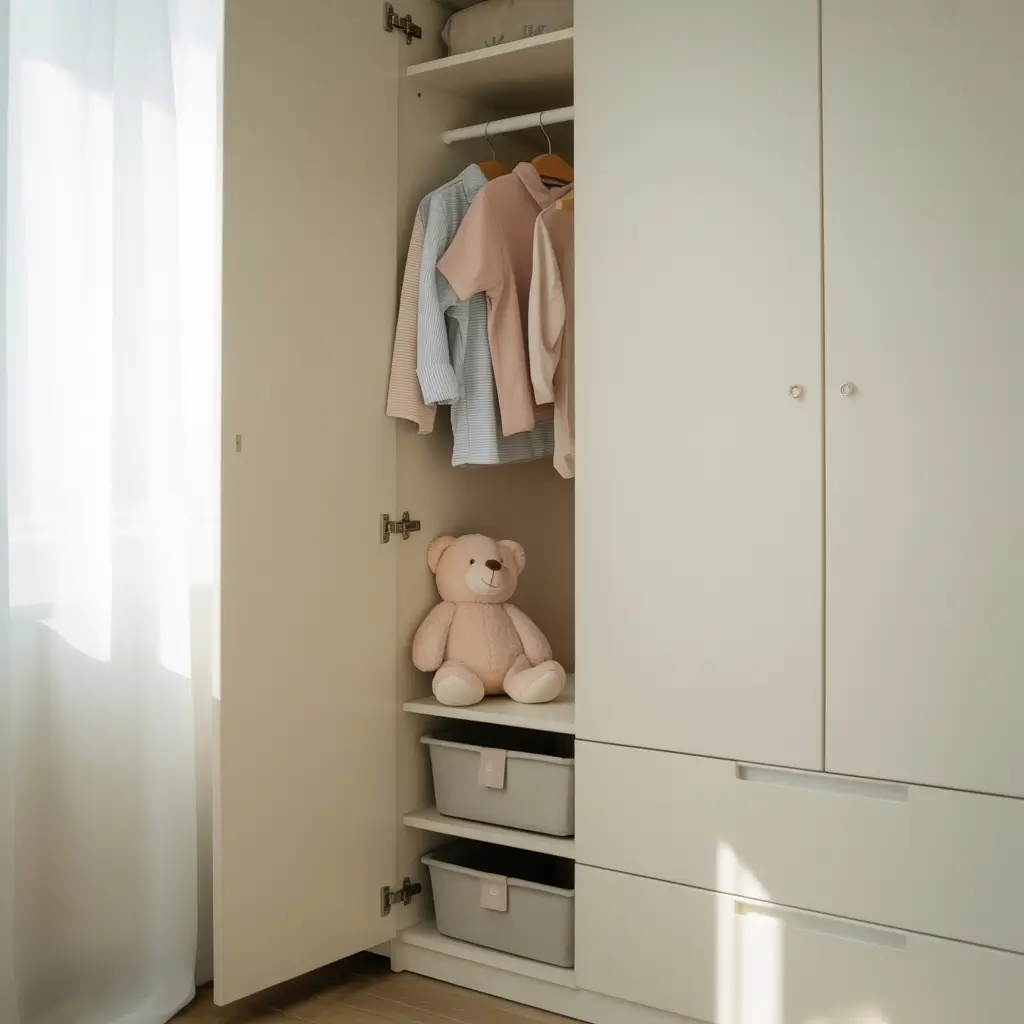
The Clean Slate Approach
Okay, I know what you’re thinking. “Minimalist? For kids? Have you lost your mind?” But hear me out. Sometimes less really is more, especially when you’re dealing with visual chaos everywhere else in their room.
A white wardrobe acts like a blank canvas. It doesn’t compete with toys, books, or that art project explosion on their desk. Plus, white makes small rooms feel bigger and brighter—always a win in my book.
The Storage Bin System
This is where the magic happens. Colorful storage bins inside a white wardrobe create the perfect balance between calm and fun. Each bin gets a category, and suddenly sorting becomes a matching game.
I use this system with my youngest:
- Blue bins for everyday clothes
- Red bins for pajamas
- Green bins for outdoor play clothes
- Yellow bins for accessories and small items
- Clear bins for shoes (so you can actually find matching pairs)
Labels That Actually Work
Ever tried teaching a three-year-old to read labels? Yeah, good luck with that. Instead, use picture labels combined with words. Stick a photo of socks on the sock bin, pants on the pants bin. It’s foolproof, and it actually helps with early reading skills too.
The minimalist approach also means less to clean, less to break, and less to outgrow. When tastes change, you’re just switching out bins, not replacing entire furniture pieces.
5. Loft Bed with Integrated Wardrobe
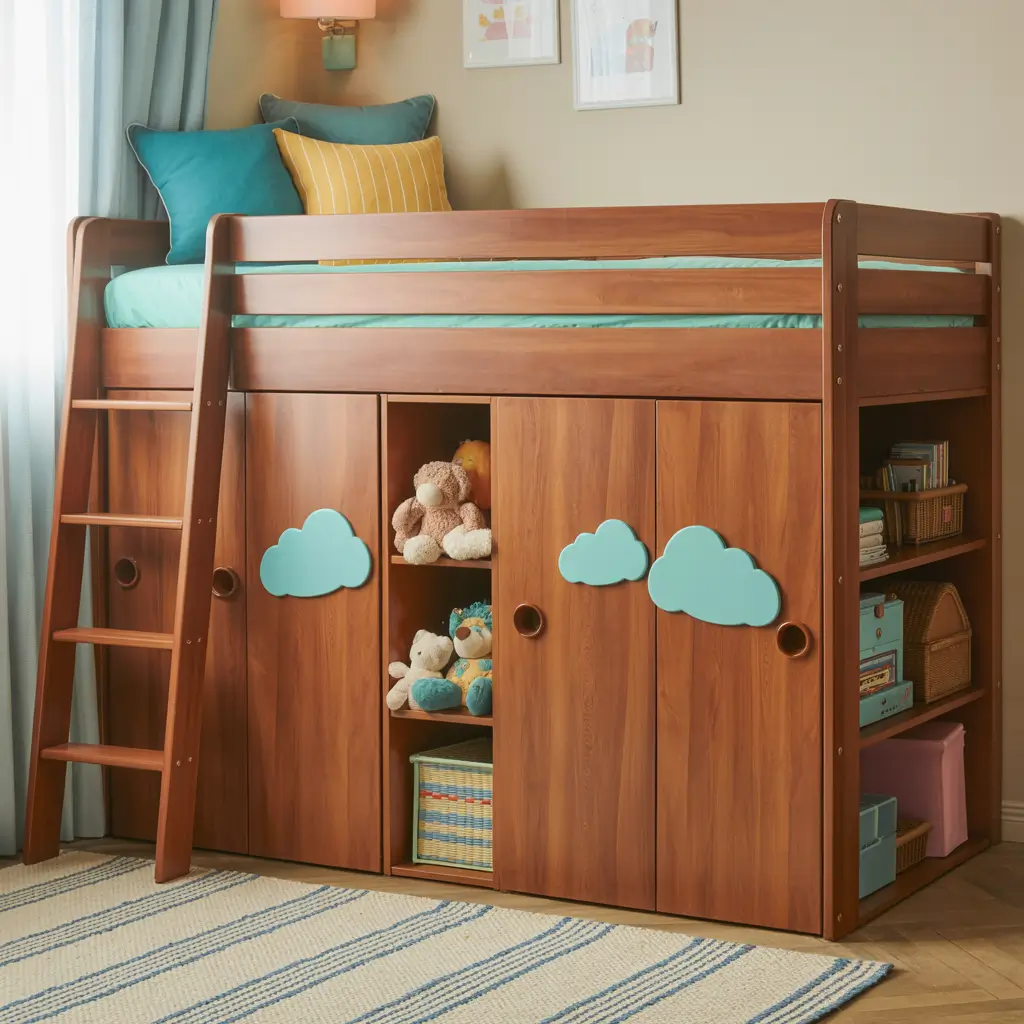
The Ultimate Space Maximizer
If you really want to blow your kid’s mind while maximizing every square inch, loft beds with built-in wardrobes are absolutely brilliant. You’re essentially getting two pieces of furniture in the footprint of one.
I installed one of these in my son’s tiny room, and suddenly we had space for a reading nook underneath. The wardrobe sits flush against the bed structure, creating this cool fort-like feel that kids absolutely love.
Safety First (Obviously)
Before you jump on this bandwagon, let’s talk safety. Kids under six shouldn’t sleep in loft beds—that’s not me being paranoid, that’s actual safety guidelines. Also, make sure you’ve got:
- Guardrails on all sides (minimum 5 inches above mattress)
- A sturdy ladder with wide steps
- Anti-slip strips on ladder rungs
- Good lighting for nighttime bathroom trips
Configuration Options
The beauty of integrated designs is flexibility. Most come with modular components you can arrange based on your needs:
- Wardrobe on one side, desk on the other
- Full wardrobe underneath with ladder on the side
- Half wardrobe, half play space
- Corner wardrobe with diagonal bed above
Pro tip: Get one with a reversible ladder. Room layouts change, and being able to switch the ladder side is a lifesaver.
6. Open Shelf Wardrobe with Hanging Rods
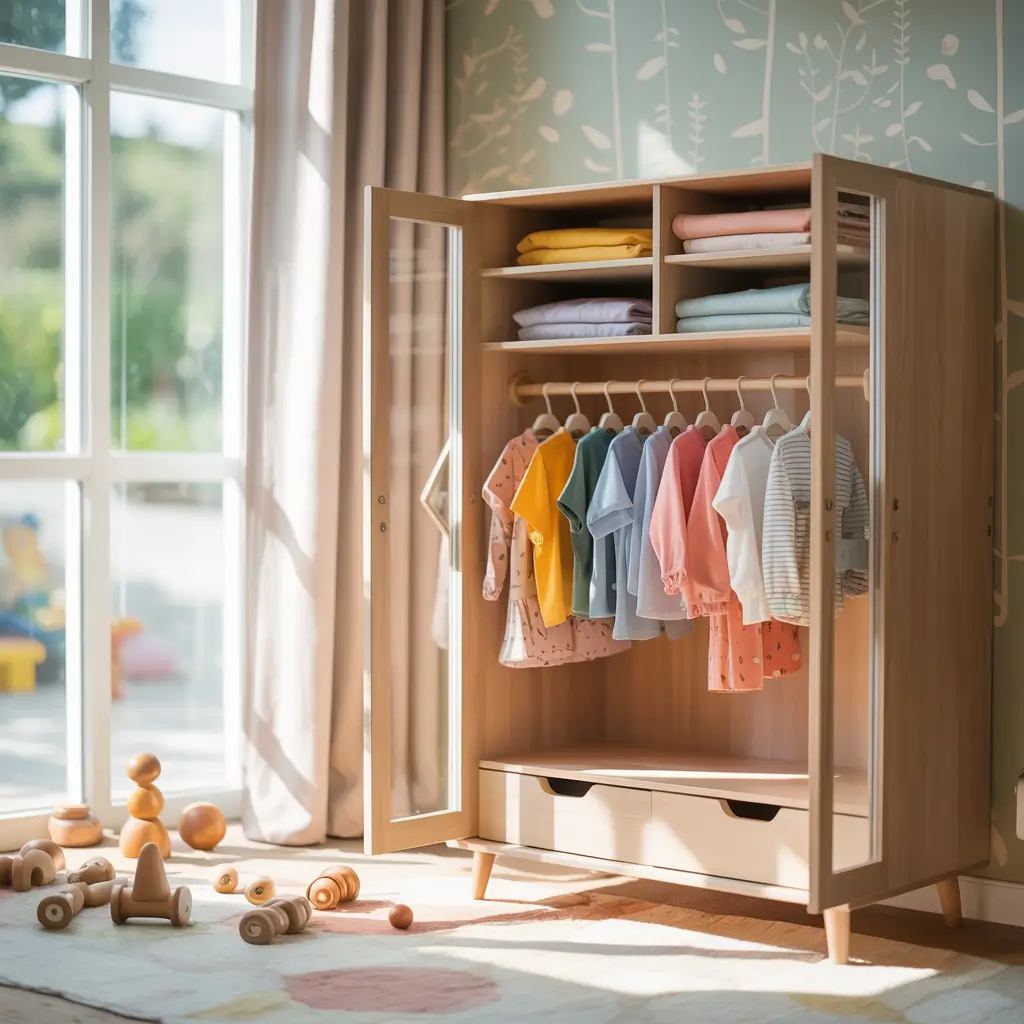
The “Everything Visible” Philosophy
You know those mornings when your kid insists they have “nothing to wear” while staring at a full wardrobe? Open shelf systems solve that problem instantly. When kids can see everything, decision-making becomes easier.
I switched to an open system last year, and morning meltdowns decreased by roughly 73% (yes, I kept track). The visibility factor is huge for kids who haven’t developed great object permanence yet.
Organizing the Chaos
The trick with open wardrobes? Organization is non-negotiable. Without doors to hide the mess, everything needs a designated spot:
- Use matching hangers (trust me on this)
- Fold clothes uniformly (Marie Kondo style works great)
- Group by color or type
- Keep frequently used items at kid height
- Use shelf dividers to prevent toppling towers
Adding Personality
Open wardrobes become part of the room’s decor, so make them pretty! Add:
- Decorative storage boxes on upper shelves
- Fun bookends to separate folded stacks
- LED strip lights for a boutique feel
- Cute labels or signs for different sections
The best part? Kids actually maintain these better because they can see when things are out of place. It’s like magic, but with furniture.
Also Read: 15 Trendy Sliding Door Wardrobe Designs and Minimalist Inspirations
7. DIY Wooden Wardrobe with Chalkboard Doors
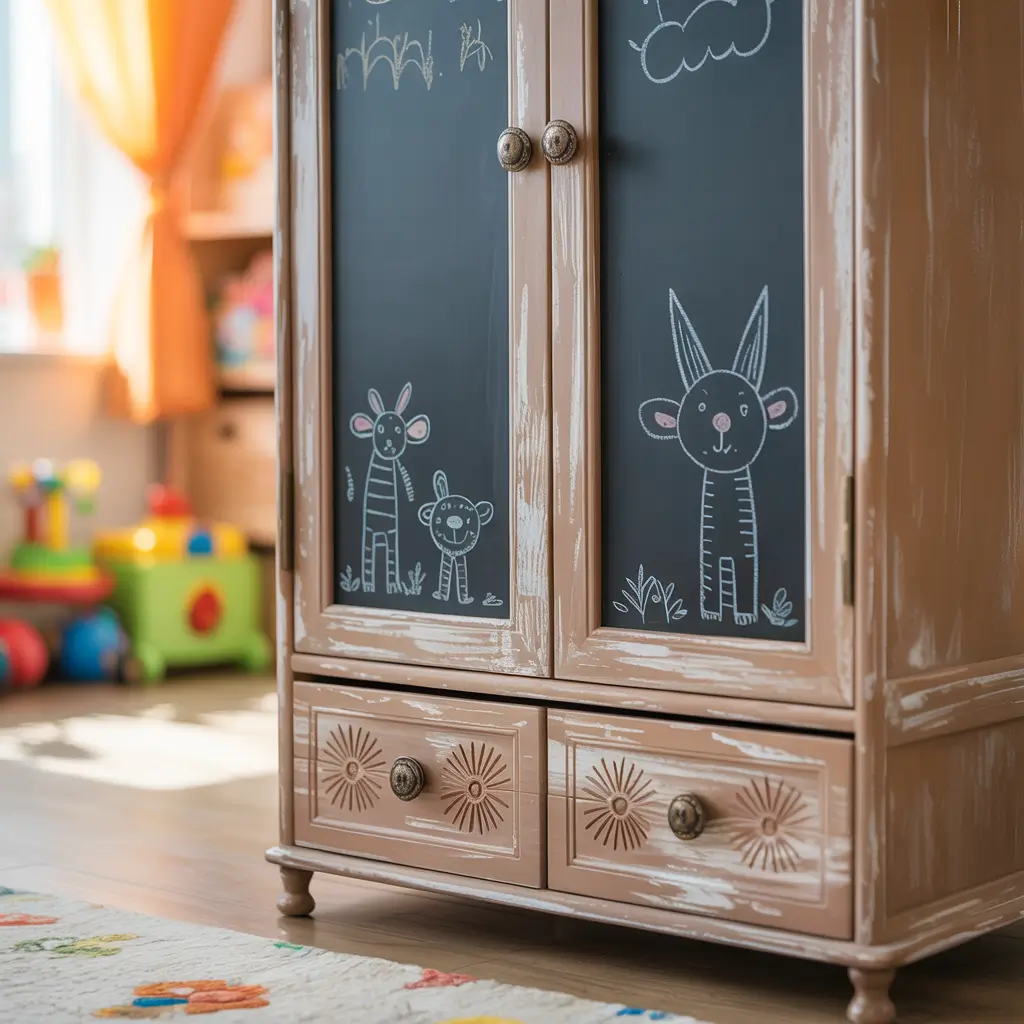
The Creative Storage Solution
Want a wardrobe that doubles as an art gallery? Chalkboard paint on wardrobe doors is genius, and I’m not just saying that because my kids drew a dinosaur wearing a tutu on theirs last week.
This DIY project transformed a boring hand-me-down wardrobe into the centerpiece of my daughter’s room. Every week, she creates new “door art,” and honestly, some of it’s better than what I could do.
The DIY Process
Here’s how you make it happen:
- Sand those doors thoroughly (skip this and regret it later)
- Prime with a good quality primer (especially important on glossy surfaces)
- Apply 2-3 coats of chalkboard paint (more coats = better writing surface)
- Let cure for 3 days (patience is painful but necessary)
- Season the surface by rubbing chalk all over and erasing
Making It Functional
Besides being ridiculously fun, chalkboard doors serve practical purposes:
- Daily reminders (“Pack gym clothes!”)
- Outfit planning (draw tomorrow’s outfit combo)
- Growth chart (mark heights right on the door)
- Homework lists (if you’re into that kind of torture)
Keep a small basket attached to the side with chalk and erasers. Get dustless chalk unless you enjoy sweeping constantly. And here’s a secret: liquid chalk markers work amazing for semi-permanent designs.
8. Pastel Ombre Wardrobe Design
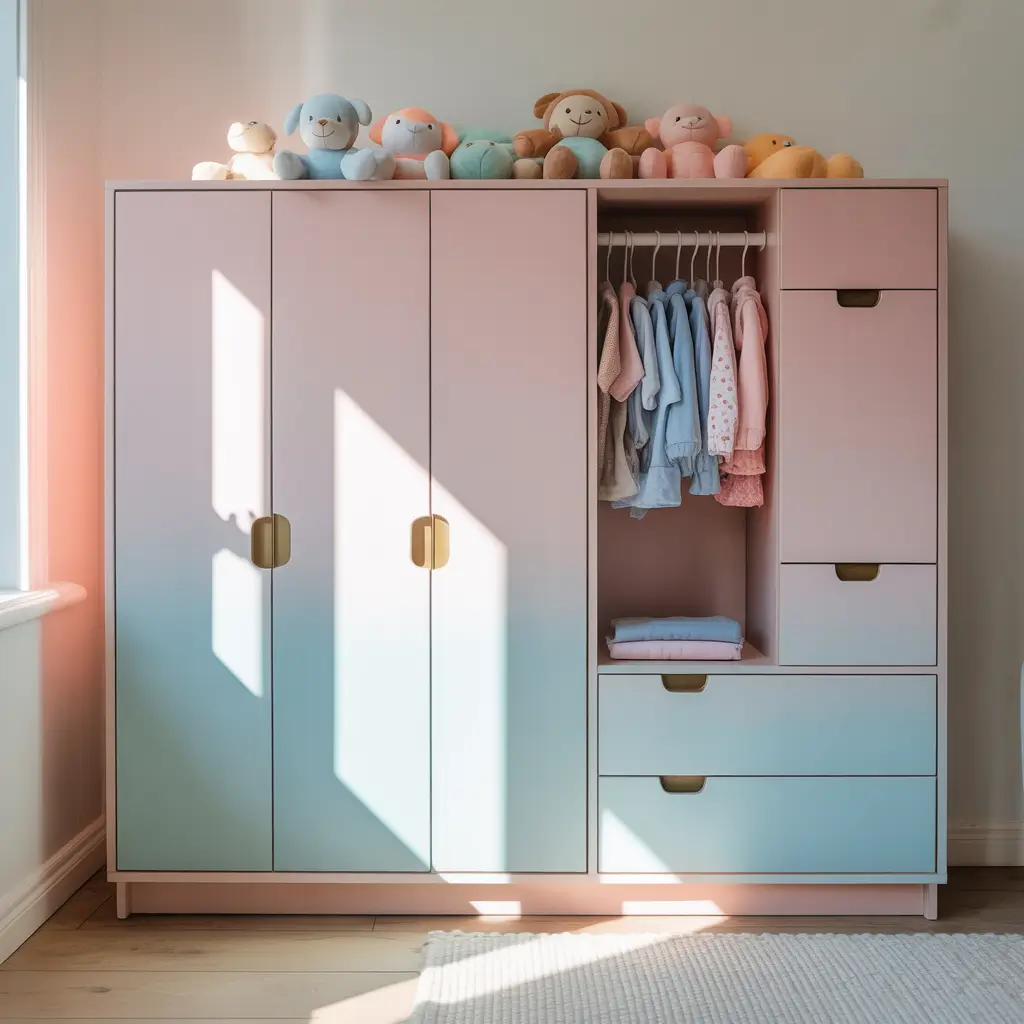
The Gradient Effect That Works
Ever notice how kids are drawn to gradients and rainbows? There’s something about the gentle color transition that just speaks to them. Ombre wardrobes tap into this fascination while staying sophisticated enough to last through their teenage years.
I painted my daughter’s wardrobe in a pink-to-purple ombre last summer, and even her teenage cousin admitted it was “actually pretty cool.” That’s basically a five-star review in teen speak.
DIY Ombre Technique
Creating the perfect gradient isn’t as hard as you’d think:
- Choose 3-4 shades of the same color family
- Start with the lightest shade as your base
- Work in horizontal sections (easier than vertical)
- Blend while wet using a large brush or sponge
- Use painter’s tape for cleaner lines between sections
Color Combinations That Pop
Some winning combinations I’ve seen:
- Mint to seafoam (calming and gender-neutral)
- Peach to coral (warm and energizing)
- Sky blue to navy (classic and grows with them)
- Lavender to plum (sophisticated yet playful)
- Yellow to orange (sunshine vibes all day)
The gradient effect also creates an illusion of height, making the wardrobe—and room—feel larger. It’s basically an optical illusion that stores clothes. Win-win!
9. Compact Corner Wardrobe for Small Rooms
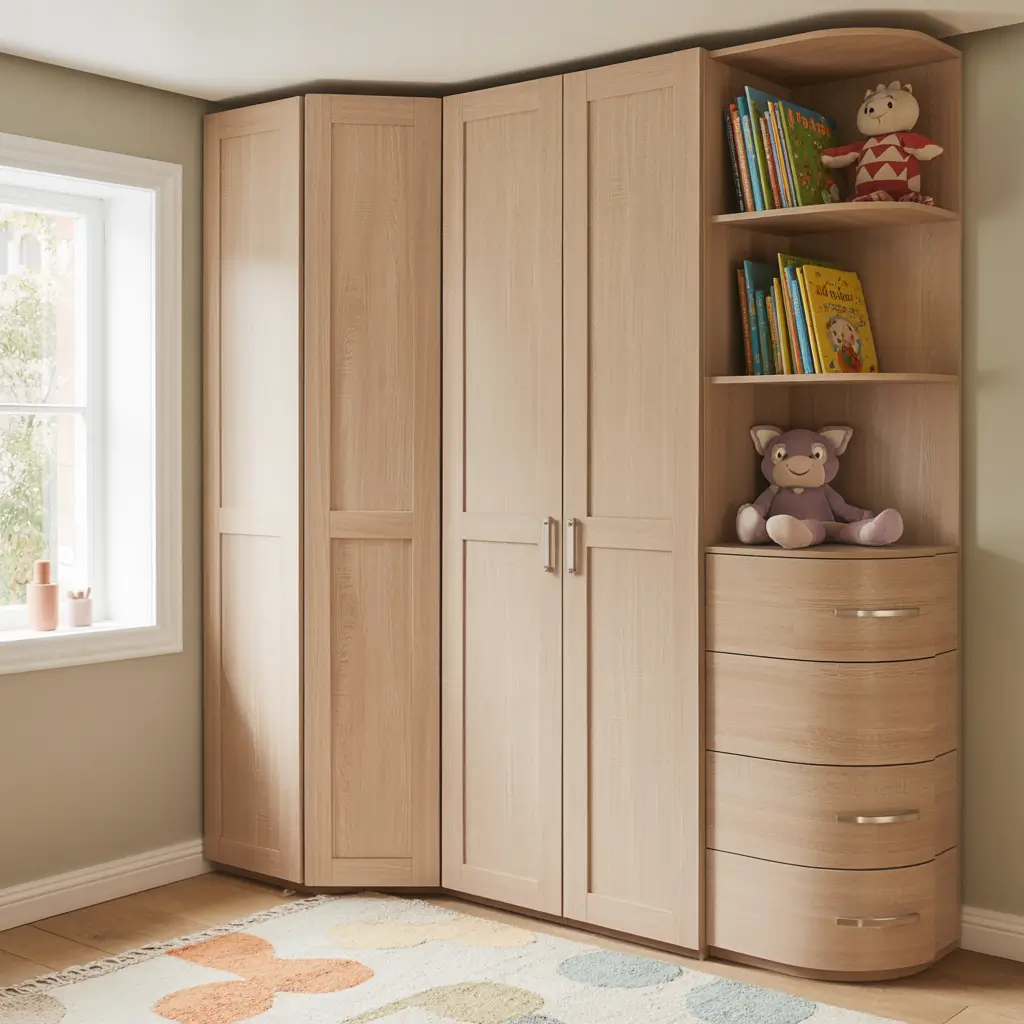
Maximizing Dead Space
Corners are the Bermuda Triangle of bedroom design—stuff goes there and never gets used again. Corner wardrobes flip this script completely, turning wasted space into premium storage.
When we moved to a smaller house, I thought my son’s room was doomed. Then I discovered corner wardrobes, and honestly, it felt like finding extra square footage I didn’t know existed.
The L-Shape Advantage
Corner units typically come in L-shapes, and here’s why they rock:
- Double the hanging space without eating floor area
- Natural zones for different clothing types
- Better weight distribution (more stable than straight units)
- Creates a cozy nook feeling in the room
Smart Interior Solutions
Make the most of corner wardrobes with:
- Lazy Susan mechanisms for deep corners
- Pull-out baskets for easy access
- Diagonal hanging rods to maximize space
- Corner shelving units that rotate out
IMO, the biggest mistake people make? Not measuring properly. Measure three times, buy once—corners can be tricky with baseboards and uneven walls.
Also Read: 15 Stylish Sliding Wardrobe Design Ideas for a Sleek Look
10. Wardrobe with Pull-Out Toy Storage
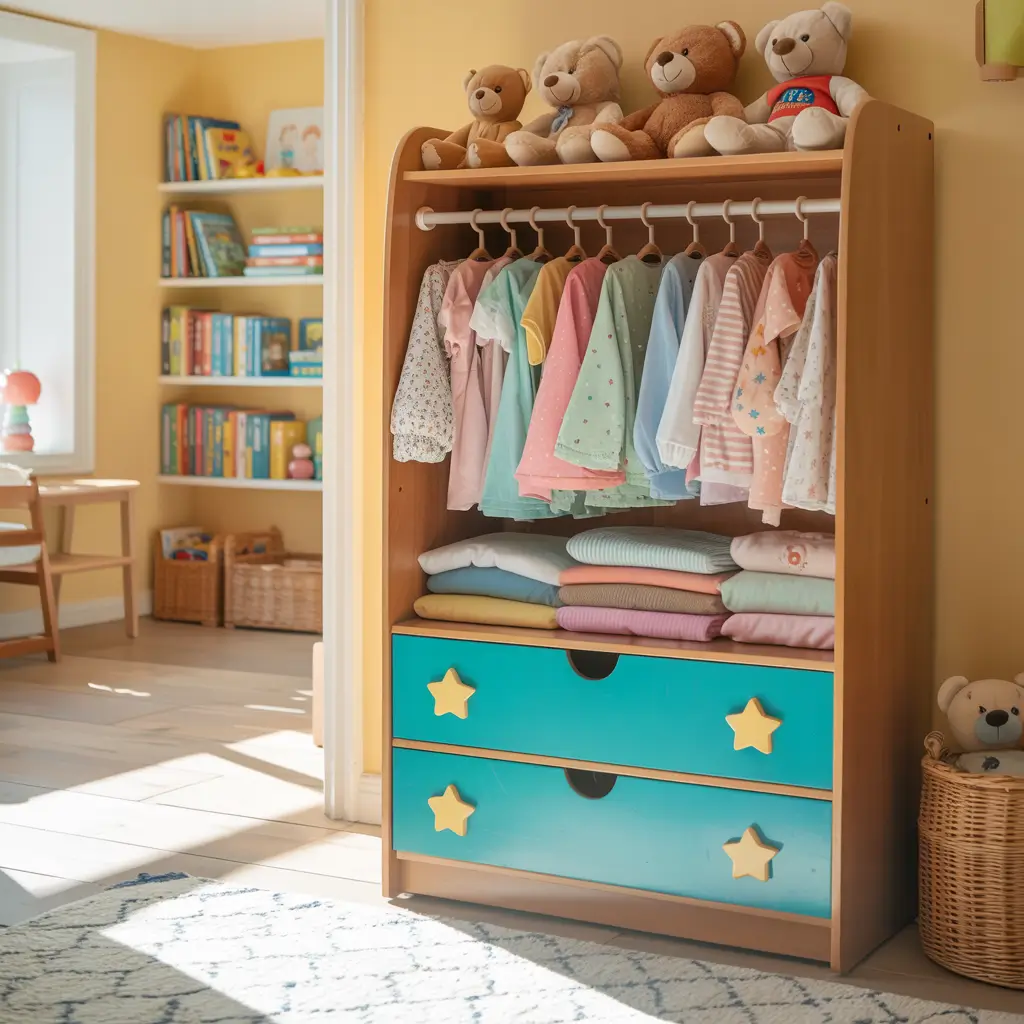
When Clothes and Toys Coexist
Let’s be real—kids’ rooms are 30% clothes and 70% toys. So why do we pretend wardrobes are just for clothing? Integrated toy storage in wardrobes is the multitasking hero we all need.
My kids’ wardrobes now have pull-out bins at the bottom specifically for toys. Game-changer? Absolutely. The number of LEGOs I’ve stepped on has decreased by at least 80%.
The Pull-Out System
Here’s what works:
- Deep drawers on full-extension slides (so nothing hides in back)
- Clear bins inside drawers (for easy categorization)
- Soft-close mechanisms (because kids and gentle don’t mix)
- Labels with pictures (so everyone knows where things go)
Toy Rotation Made Easy
With pull-out storage, you can easily implement toy rotation:
- Keep current favorites in easy-reach bins
- Store “resting” toys in higher drawers
- Swap monthly to keep things fresh
- Use this system for seasonal items too
The beauty? When friends come over, you can quickly slide everything closed for an instantly tidy room. It’s basically cheating at housekeeping, and I’m totally okay with that 🙂
11. Multi-Compartment Wardrobe with Drawers
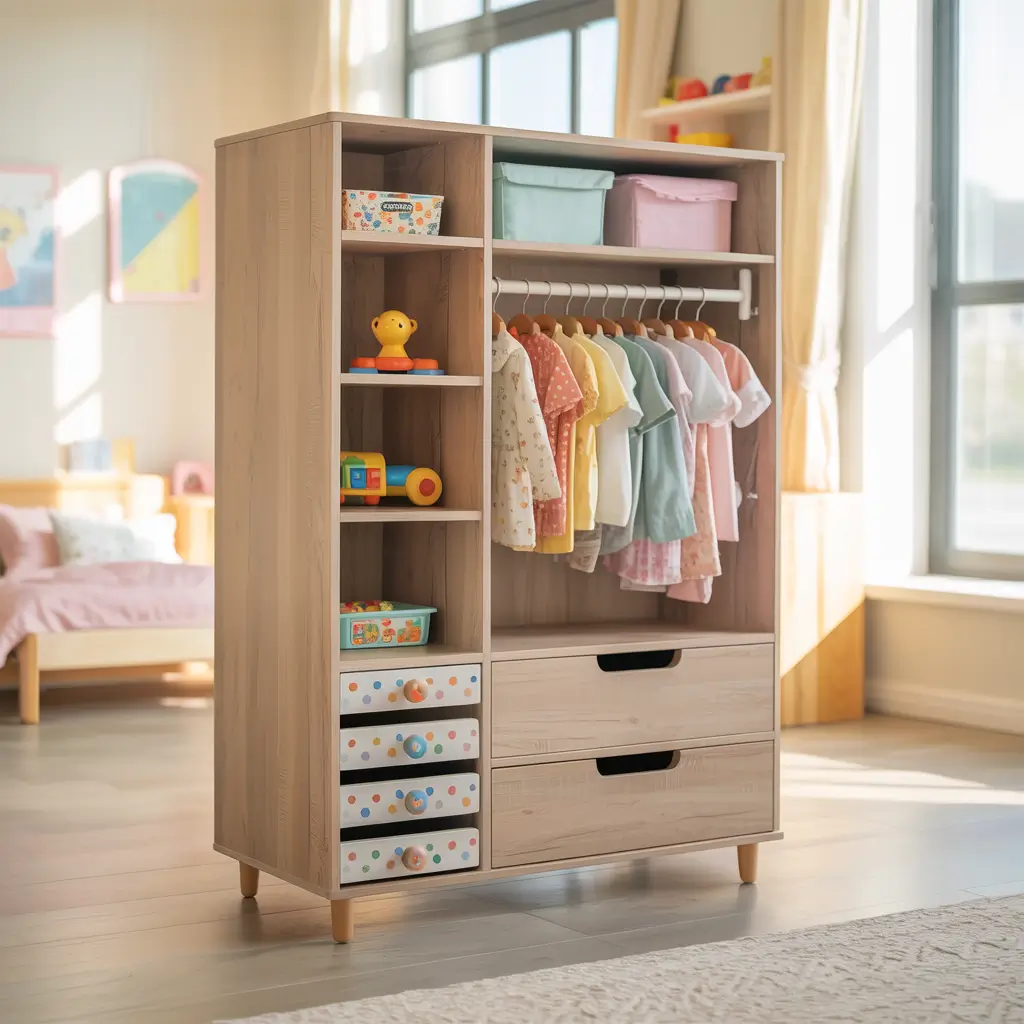
The Organization Dream
Remember those old-school secretary desks with a million tiny compartments? Multi-compartment wardrobes are like that, but for clothes. Every single item has its own designated space, and it’s as satisfying as it sounds.
I invested in one of these for my super-organized daughter (she labels her labels, not joking), and watching her sort everything into its perfect spot is oddly therapeutic.
Compartment Configuration
The ideal setup includes:
- Small drawers for underwear and socks
- Medium drawers for t-shirts and shorts
- Large drawers for sweaters and pants
- Vertical compartments for bags and sports equipment
- Adjustable shelves for growing collections
The Teaching Tool Aspect
Here’s an unexpected benefit: compartmentalized storage teaches kids categorization and organization skills. They learn to group similar items, estimate space needs, and maintain systems. It’s basically a life skills course disguised as furniture.
My tip? Start with fewer compartments and add dividers as needed. Too many compartments initially can overwhelm kids (and honestly, adults too).
12. Rustic Wooden Wardrobe with Sliding Ladder
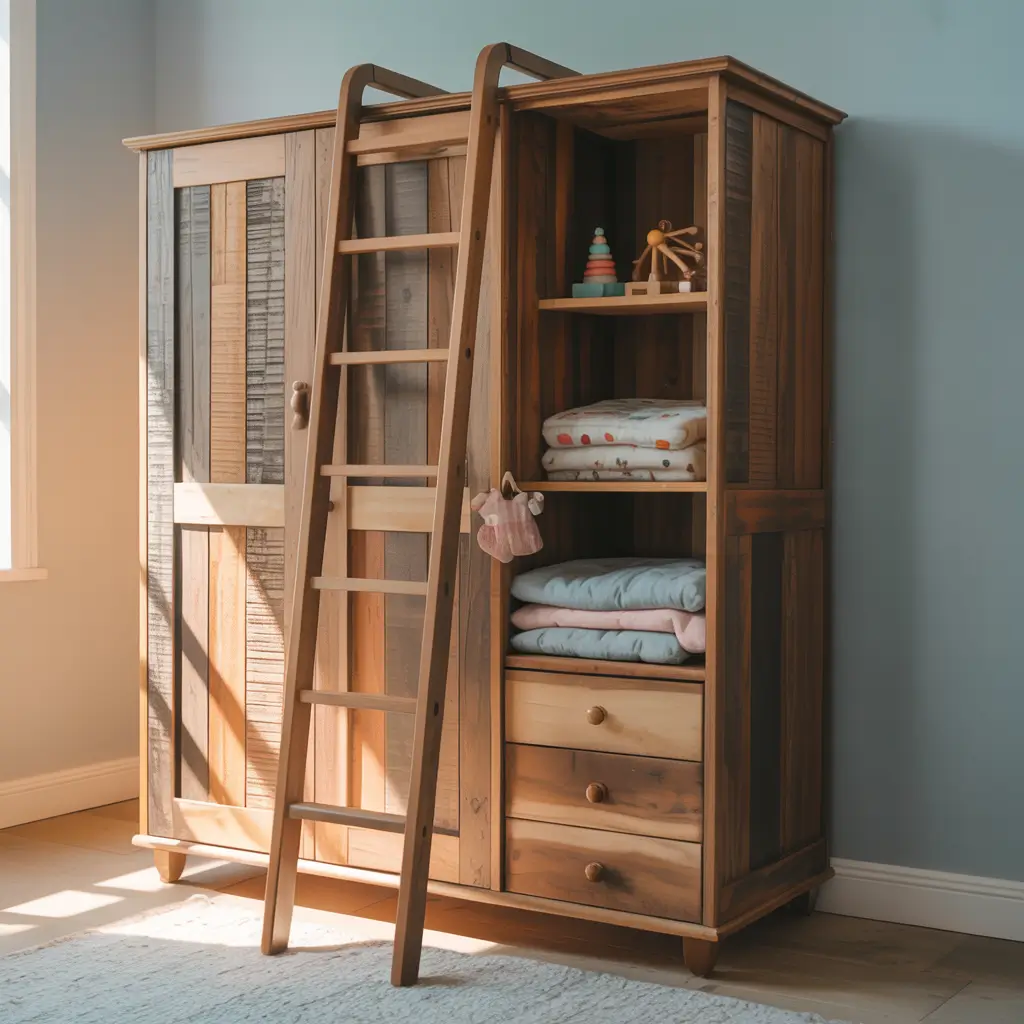
The Library Ladder Effect
You know those gorgeous library ladders that make you feel like Belle in Beauty and the Beast? Now imagine that, but for your kid’s wardrobe. It’s functional, it’s fun, and it makes reaching high shelves an adventure instead of a struggle.
We added a sliding ladder to my son’s wardrobe last year, and I swear he organizes his top shelves more than the bottom ones now. Who knew height could be such a motivator?
Safety Considerations
Before you go ladder-crazy, some ground rules:
- Weight limit awareness (check manufacturer specs)
- Locking mechanisms when not in use
- Non-slip steps are non-negotiable
- Supervised use for younger kids
- Proper wall mounting for the rail system
The Rustic Appeal
Pair the ladder with:
- Reclaimed wood finishes for authentic charm
- Iron hardware for industrial touches
- Open shelving to show off the ladder access
- Vintage baskets for storage with character
The ladder adds vertical interest to the room and makes kids feel grown-up and independent. Plus, it’s a conversation starter when friends come over.
13. Wardrobe with Built-in Study Desk
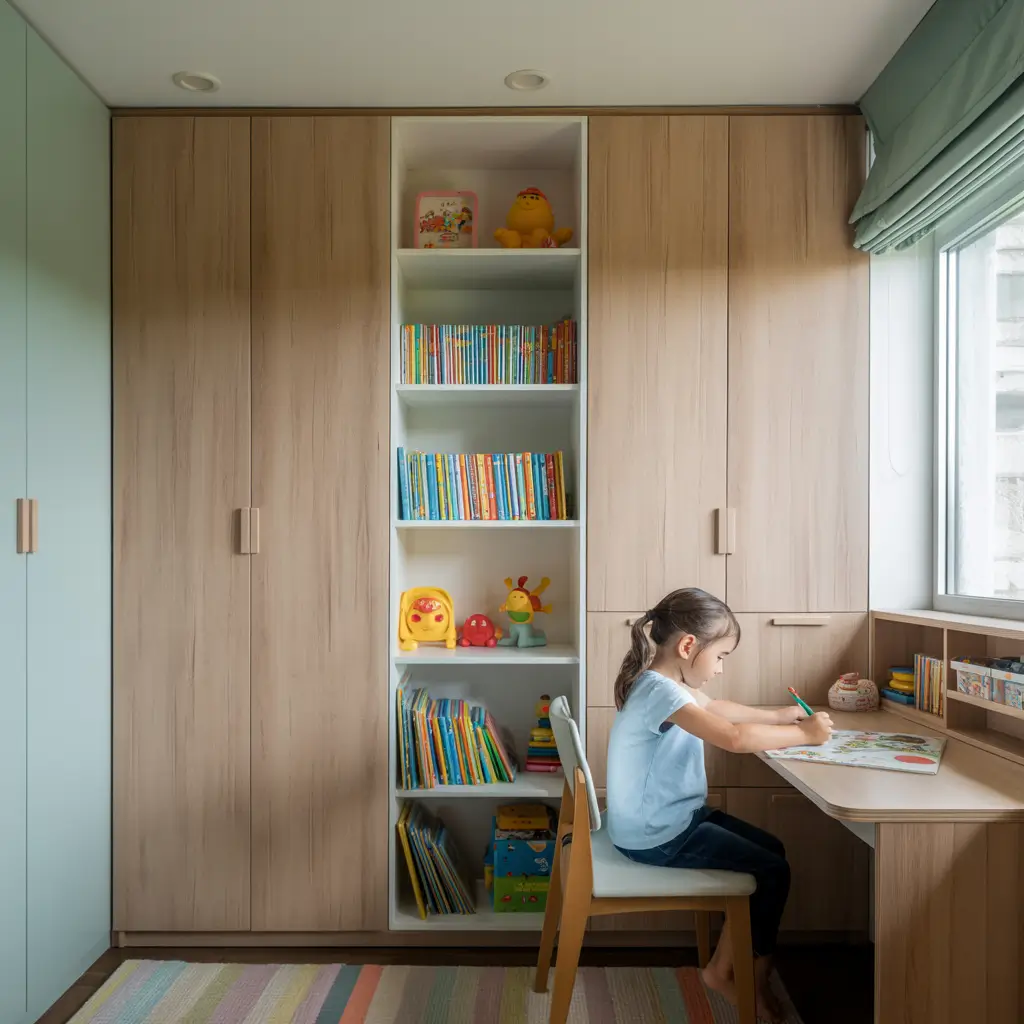
The Homework Station Combo
Space is precious, and combining a wardrobe with a study desk is basically real estate genius. You get storage, workspace, and organization all in one footprint. My daughter’s room gained an extra 15 square feet of play space with this setup.
The desk typically slides out or folds down from the wardrobe, creating an instant homework station that disappears when not needed. It’s like furniture transformation magic.
Desk Configuration Options
Popular setups include:
- Pull-out desk drawer (slides back when done)
- Fold-down desktop attached to wardrobe side
- Fixed desk integrated into the wardrobe base
- Corner desk connecting two wardrobe units
Creating the Study Zone
Make it functional with:
- Built-in pencil drawers in the desk
- Overhead shelving for books and supplies
- Cork board backing for notes and artwork
- LED task lighting integrated into the wardrobe
- Cable management for devices and chargers
The combo teaches kids to associate getting dressed and doing homework as part of their daily routine. Plus, everything they need is in one spot—no more “I can’t find my pencil” excuses!
14. Color-Blocked Wardrobe with Fun Handles
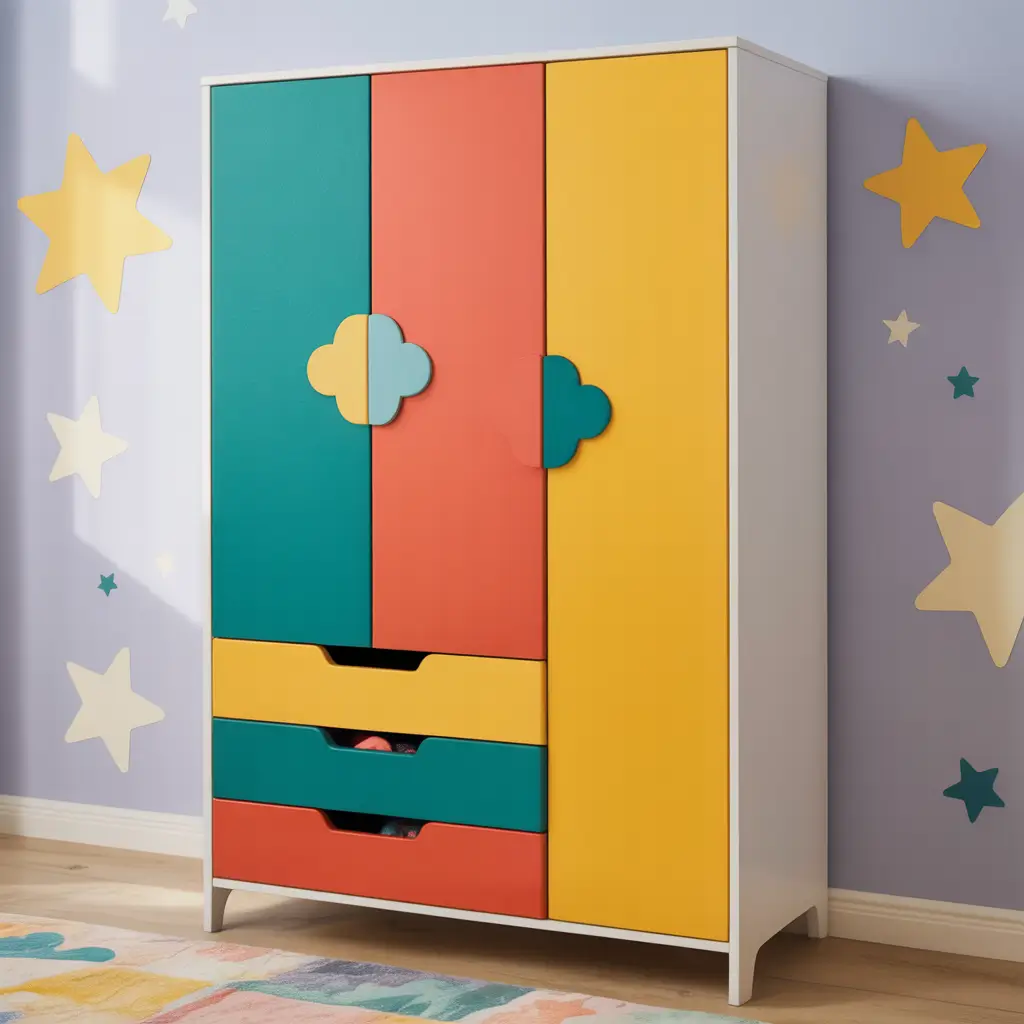
The Statement Piece Approach
Why settle for boring when you can have bold? Color-blocked wardrobes turn storage into art. Think Mondrian meets toy box, and you’re on the right track.
I painted my son’s wardrobe with color blocks last spring—navy, mustard, and white—and now it’s literally the coolest thing in his room. Even his friends ask if we bought it from some fancy store (nope, just paint and patience).
The Color-Blocking Technique
Here’s how to nail it:
- Choose 3-4 colors max (more gets chaotic)
- Use painter’s tape for crisp lines
- Plan your pattern on paper first
- Consider the 60-30-10 rule (dominant, secondary, accent colors)
- Let each color dry completely before taping the next
Handle Hardware That Pops
Fun handles complete the look:
- Animal-shaped knobs for younger kids
- Leather pulls for a sophisticated touch
- Colorful geometric handles to match the blocks
- Mix and match different styles for each door
- DIY painted handles for a custom look
FYI, changing handles is the easiest way to update any wardrobe. It takes 20 minutes and makes it look like a completely different piece.
15. Convertible Wardrobe That Grows with Kids
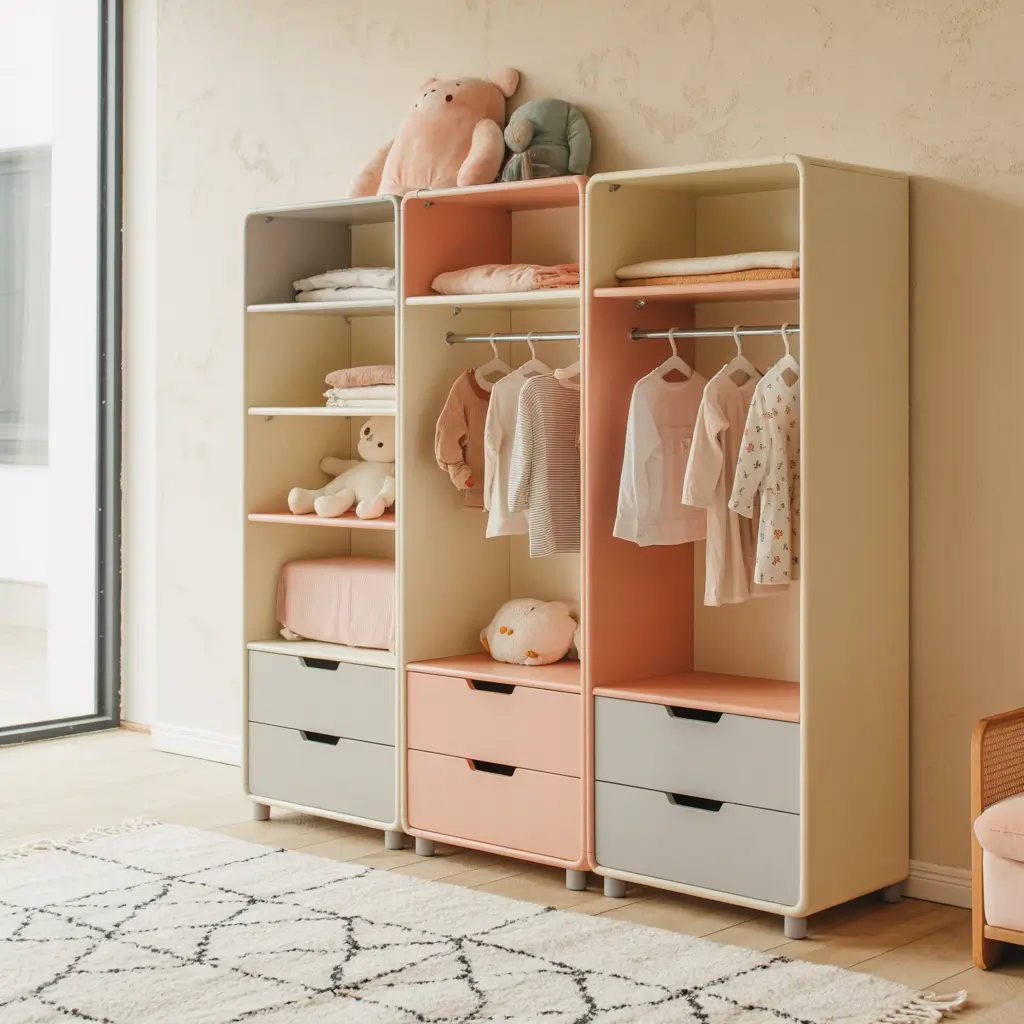
The Long-Term Investment
Here’s the thing—kids grow stupidly fast. Convertible wardrobes adjust to their changing needs, saving you from buying new furniture every few years. It’s sustainability meets practicality.
I bought a convertible system when my daughter was three. She’s now ten, and we’re still using the same wardrobe, just configured differently. That’s seven years of not buying new furniture. My wallet thanks me regularly.
Conversion Features to Look For
Essential adaptability elements:
- Adjustable hanging rods (multiple height options)
- Removable shelves (spacing changes as clothes get bigger)
- Modular drawers (add or remove as needed)
- Reversible doors (change the look without replacing)
- Expandable width (some systems let you add sections)
Planning for Growth Stages
Think ahead to different life stages:
- Toddler stage: Lower rods, toy storage, easy-access bins
- Elementary age: Mix of hanging and shelving, homework supplies
- Tween years: More hanging space, privacy features
- Teen phase: Full-length mirror, accessory storage, maybe a lock :/
Making the Investment Worth It
Choose quality materials that age well—solid wood or high-grade MDF over particle board. Neutral base colors let you update with accessories rather than repainting. And always, always keep the assembly instructions (future you will thank present you).
Final Thoughts
After trying most of these designs myself (and learning from plenty of mistakes), here’s what I know for sure: the best kids’ wardrobe is one they’ll actually use.
It doesn’t matter how Pinterest-perfect it looks if your kid can’t reach their clothes or won’t put things away.
Start with your child’s needs and habits. Do they love to climb? Maybe that ladder wardrobe is perfect. Are they artistic? Chalkboard doors could be the answer.
Super organized? Multi-compartment systems will make their little hearts sing.
Remember, you’re not just organizing clothes—you’re teaching life skills, encouraging independence, and creating a space where your kid feels comfortable and in control.
And honestly? When kids feel ownership over their space, they take better care of it.
The wardrobe you choose becomes part of their daily routine, their room’s personality, and maybe even their childhood memories. So pick something that works for your space, your budget, and most importantly, your kid’s personality.
Because at the end of the day, the best wardrobe design is the one that makes both of you happy—even if it’s covered in dinosaur stickers and has a secret candy stash in the bottom drawer (we won’t tell).
Now go forth and organize! Your future self (the one not tripping over random toys at 2 AM) will thank you for it.