10 Cozy Kids Study Room Ideas and Perfect Reading Spots
- Bedroom Design
 Ben
Ben- 0
- 41 minutes read
You know that feeling when you step on a stray Lego while trying to help your kid with long division? It’s a special kind of pain that usually signals one thing: the current study situation has spiraled out of control.
I spent three years trying to convince my youngest that the kitchen island was a “collaborative workspace” before I finally admitted it was just a magnet for crumbs and lost permission slips.
We needed a real plan, and honestly, you probably do too.
Creating a space that actually makes a child want to sit down and focus represents the holy grail of parenting. You don’t need a massive budget or a dedicated wing of your house to pull this off.
You just need a bit of strategy and some clever 10 kids study room ideas ideas that prioritize both function and flair.
Let’s walk through some of my favorite ways to transform a chaotic corner into a high-performance learning sanctuary.
1. Cozy Reading Nook with Bean Bags
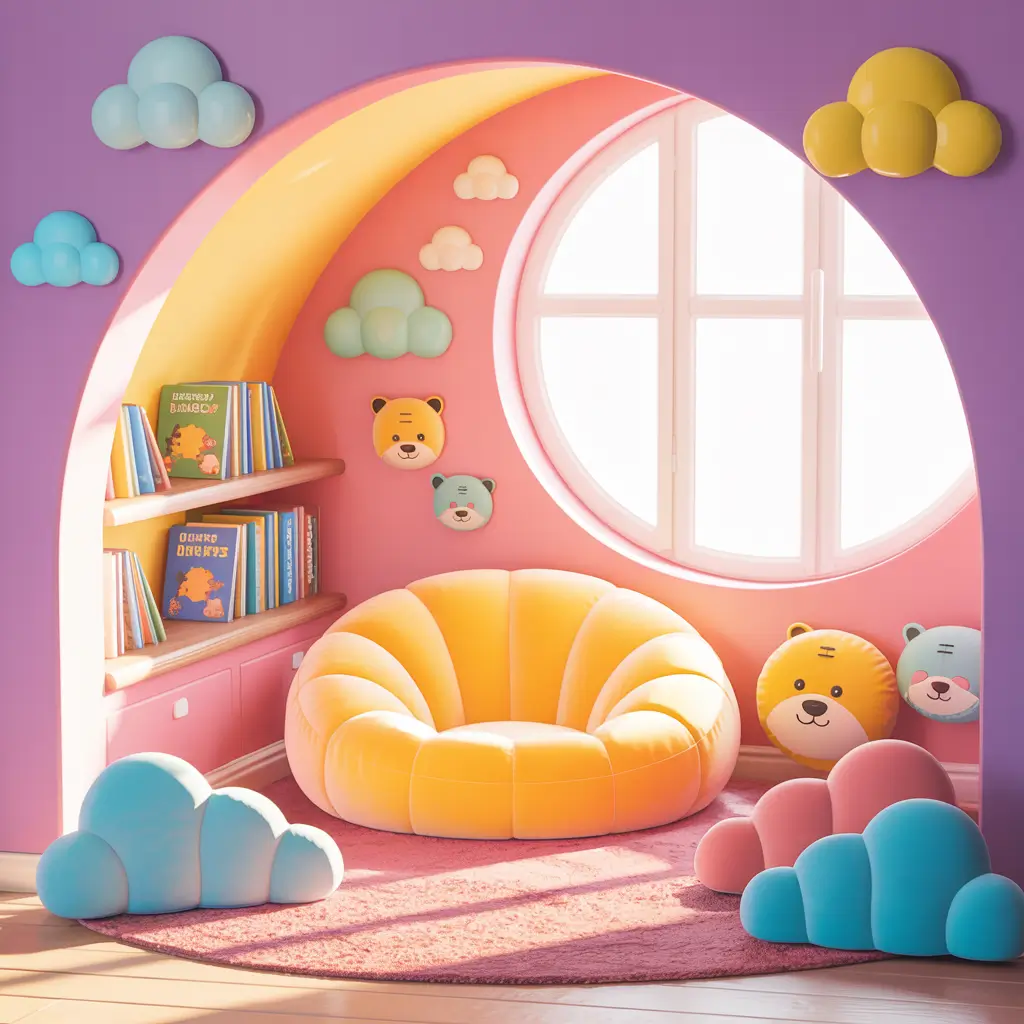
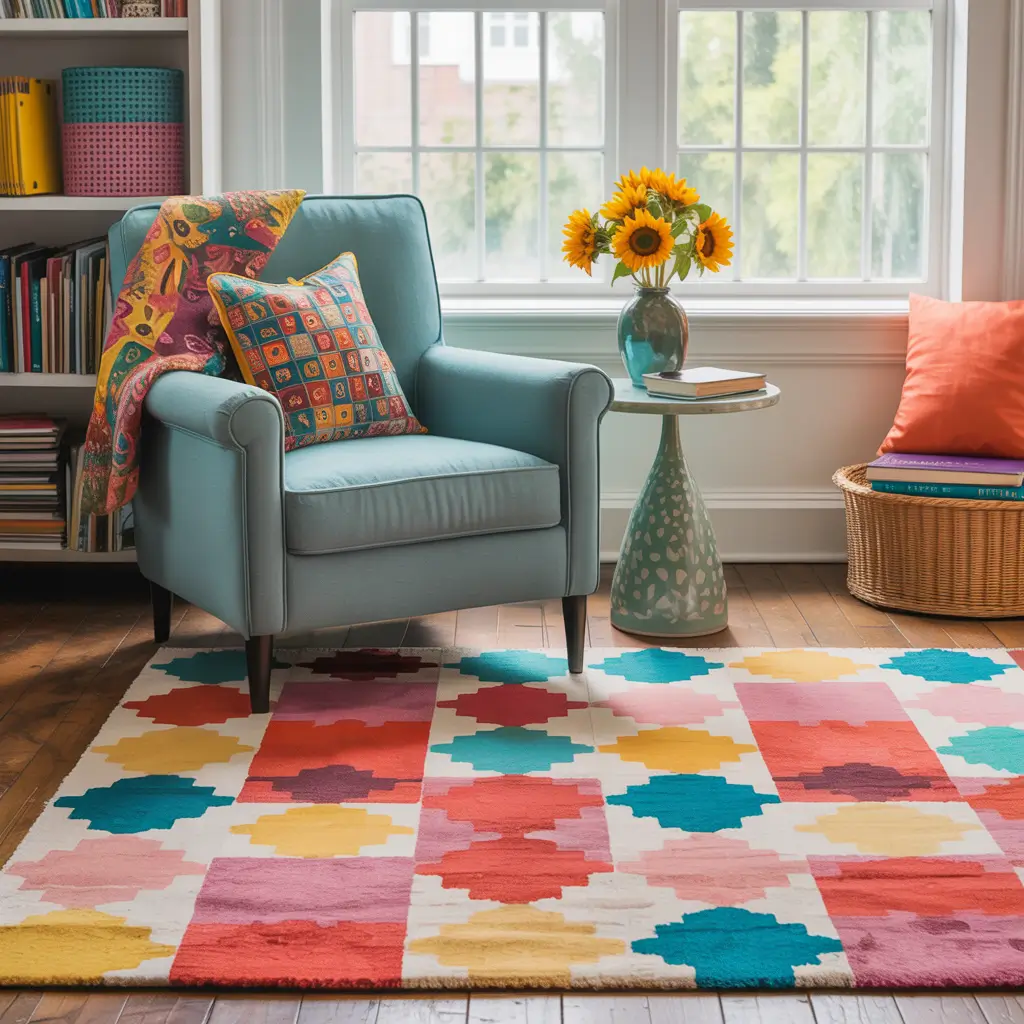
I firmly believe a study room without a reading corner feels incomplete. Studying isn’t just about grinding through math worksheets; it’s about getting lost in a story or a research book. A cozy reading nook with bean bags provides the perfect low-pressure environment for a child to decompress while still engaging their brain.
Why Bean Bags Rule the World
Bean bags offer a level of flexibility that traditional chairs just can’t match. I love how they mold to a child’s body, providing a sensory “hug” that helps many kids sit still for longer periods. Plus, you can easily toss them into a corner when you need to clear the floor for a science project.
Elements of a Perfect Nook
- High-quality bean bags: I suggest you look for covers that are machine-washable because, let’s be real, snacks will happen.
- A dedicated book ledge: Install a low-profile shelf at eye level so your kid can see the covers of their favorite books.
- Task lighting: A floor lamp with a warm bulb prevents eye strain during those late-afternoon reading marathons.
- A plush rug: This defines the space and adds an extra layer of “cozy” to the room.
Ever wondered why kids gravitate toward small, enclosed spaces? It makes them feel secure. I added a small canopy over our reading nook last year, and my son suddenly started reading for twenty minutes longer every night. It’s a simple trick, but it works wonders for focus.
2. Minimalist Desk Setup for Small Spaces
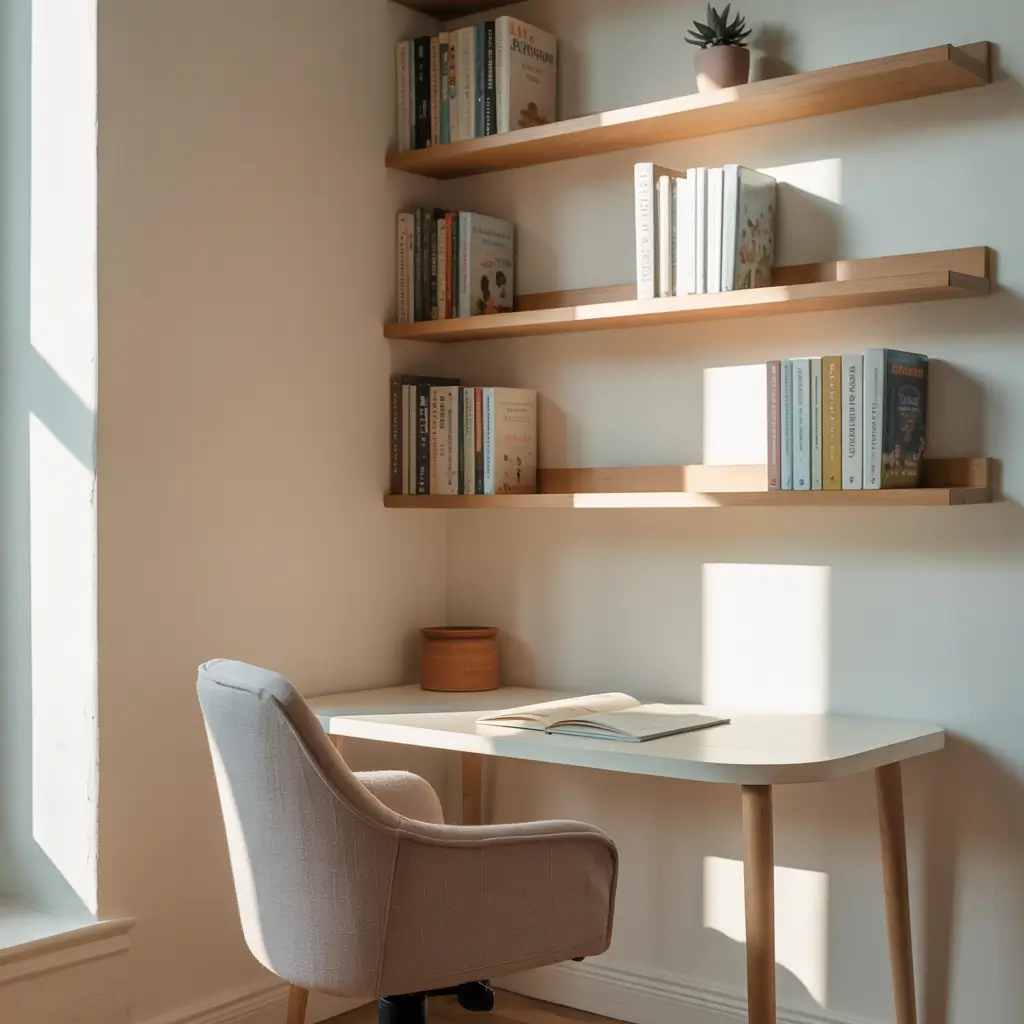
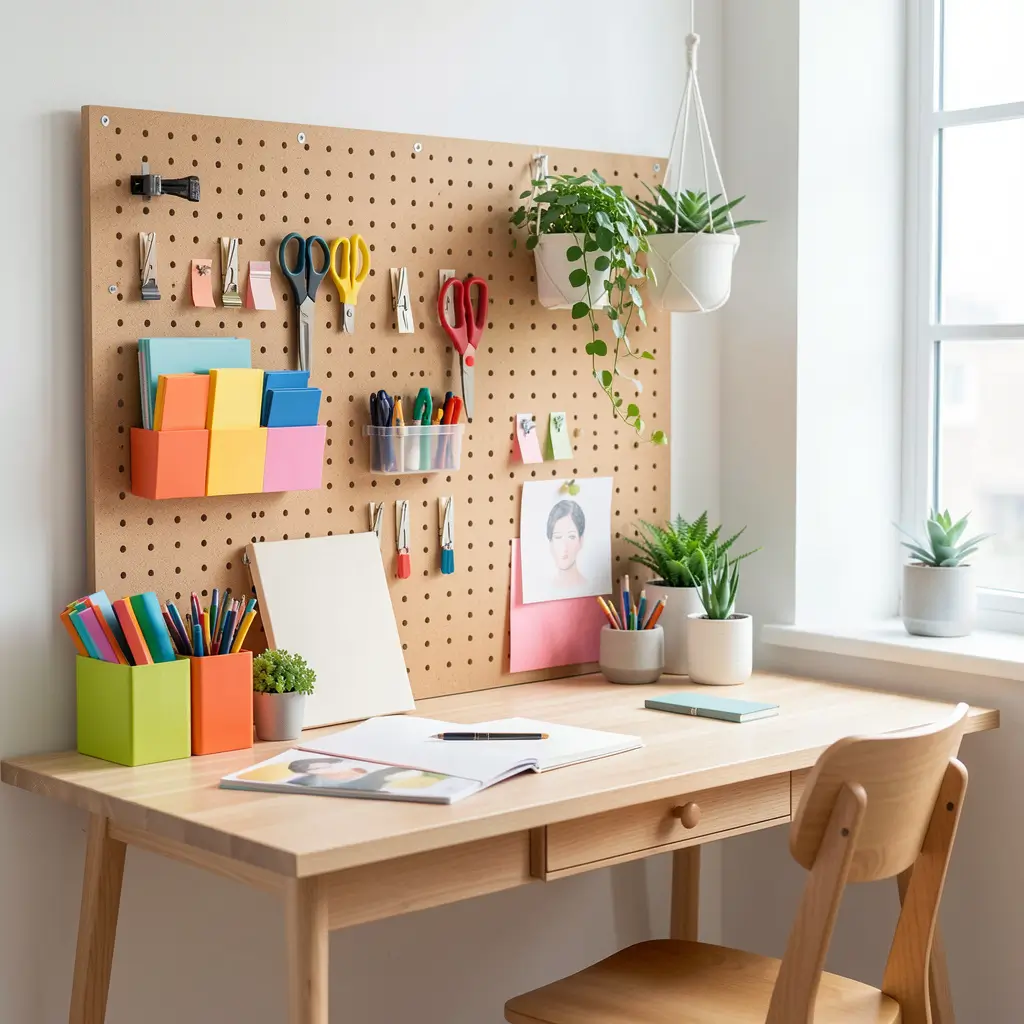
I once saw a desk so cluttered I thought the child was running a black-market trading post for vintage Pokémon cards. If you inhabit a smaller home, you can’t afford that kind of visual noise. A minimalist desk setup focuses on “less is more,” which actually helps kids with shorter attention spans stay on track.
The Power of Neutrality
I recommend you stick to a simple color palette—think whites, light oaks, and soft grays. These colors reflect natural light and make a tiny room feel surprisingly airy. When you remove the neon distractions, the homework becomes the most interesting thing in the room (or at least, the most visible thing).
Essential Minimalist Gear
- A sleek, legless desk: Mount a sturdy tabletop directly to the wall to keep the floor space open.
- One ergonomic chair: I love a chair that supports the spine but doesn’t have too many “spinny” parts to distract the user.
- Hidden storage: Use a single drawer or a nearby bin to hide the “messy” supplies like glue sticks and scrap paper.
- A clear desk mat: This protects the surface without adding visual weight.
IMO, the secret to minimalism involves the “one-in, one-out” rule. If your kid gets a new set of markers, the old, dried-up ones must go. Minimalism requires maintenance, but it saves your sanity in the long run. 🙂
3. Colorful Wall Art Study Corner
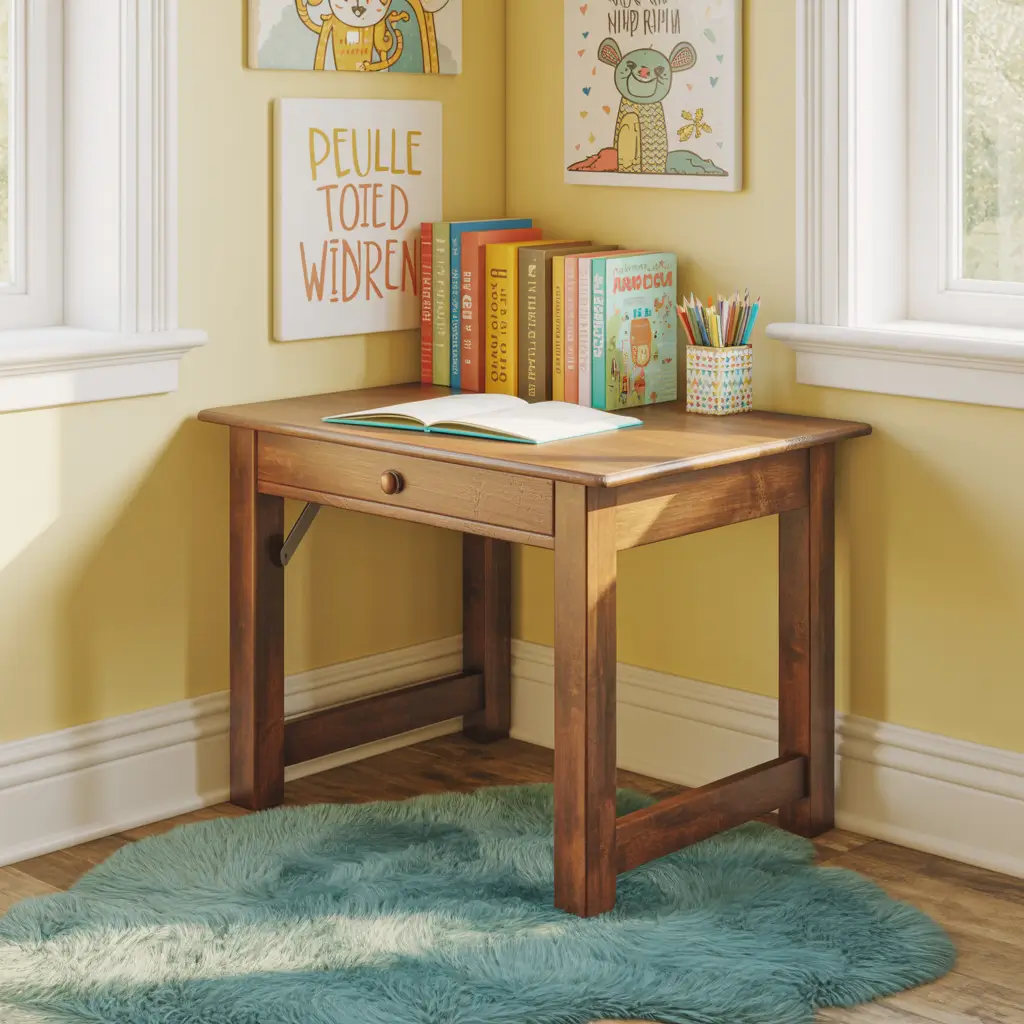
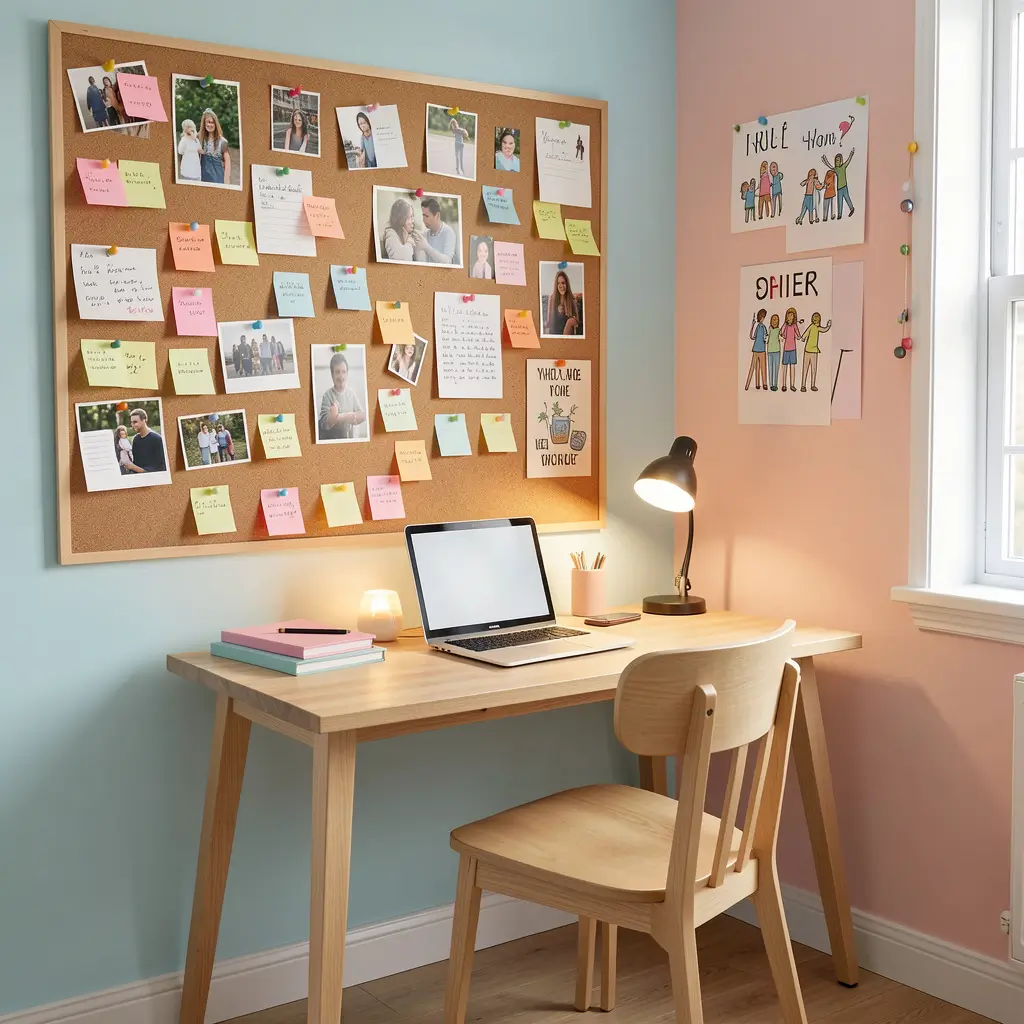
If your child has an artistic soul, a boring beige wall will likely drain their energy faster than a dead tablet battery. A colorful wall art study corner uses visual stimulation to spark creativity. I’m not talking about random posters; I’m talking about a curated gallery that reflects your child’s current obsessions and achievements.
Creating a Gallery Wall
Don’t just tape papers to the wall. I suggest you use matching frames or a coordinated hanging system to make the art feel intentional. I love the “changeable art frames” that open like a cabinet—you can slide a new masterpiece in every Friday afternoon without any hassle.
What to Hang
- Inspirational quotes: Choose phrases that emphasize effort over perfection.
- Their own work: Frame a particularly good essay or a science diagram.
- Educational maps: A colorful world map or a periodic table adds function to the fashion.
- Personal photos: Pictures of them achieving goals (like sports or music) build confidence.
Does a colorful wall distract a kid? Not if you keep the boldest colors behind the monitor or desk chair. I recommend you place the most vibrant pieces on the wall they face when they aren’t working, so their peripheral vision remains relatively calm while they focus on the computer screen.
Also Read: 12 Cute Study Room Aesthetic Ideas for Cozy Corners
4. DIY Chalkboard Study Wall
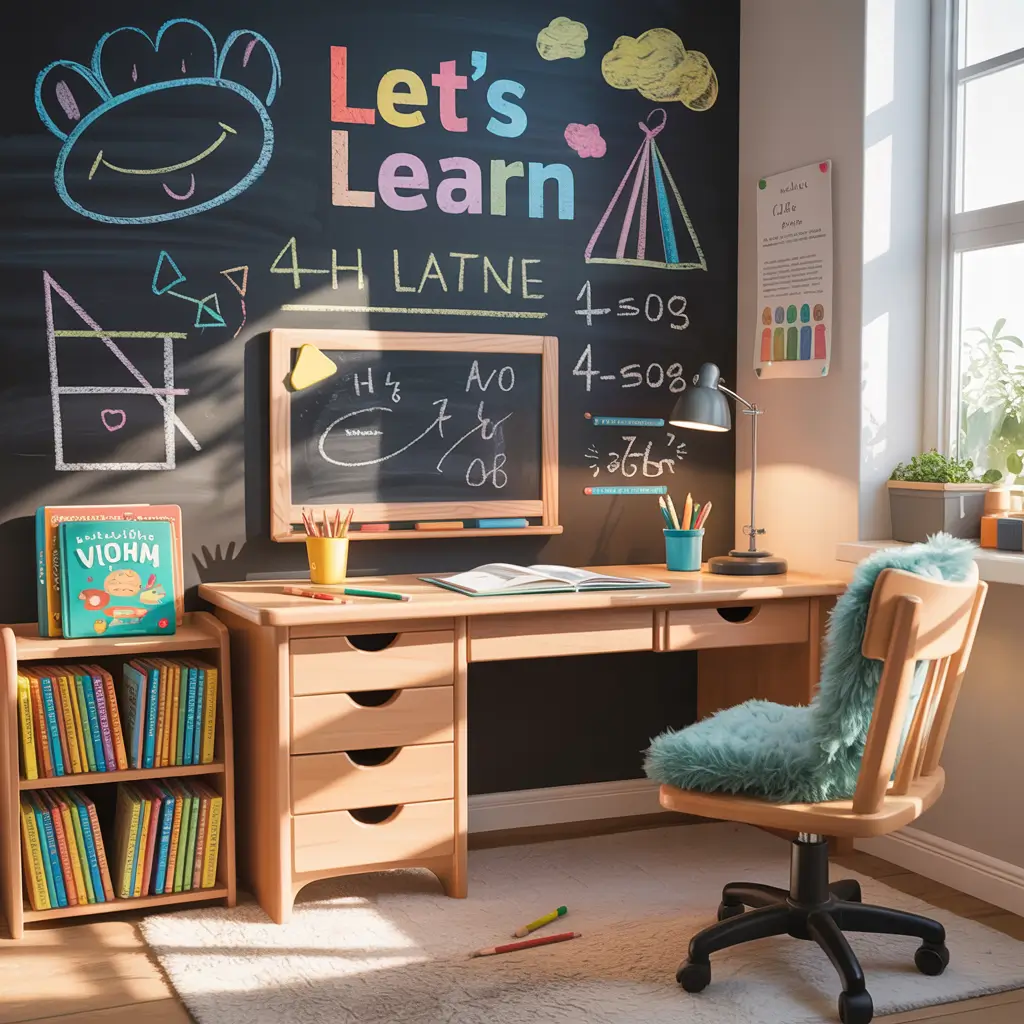
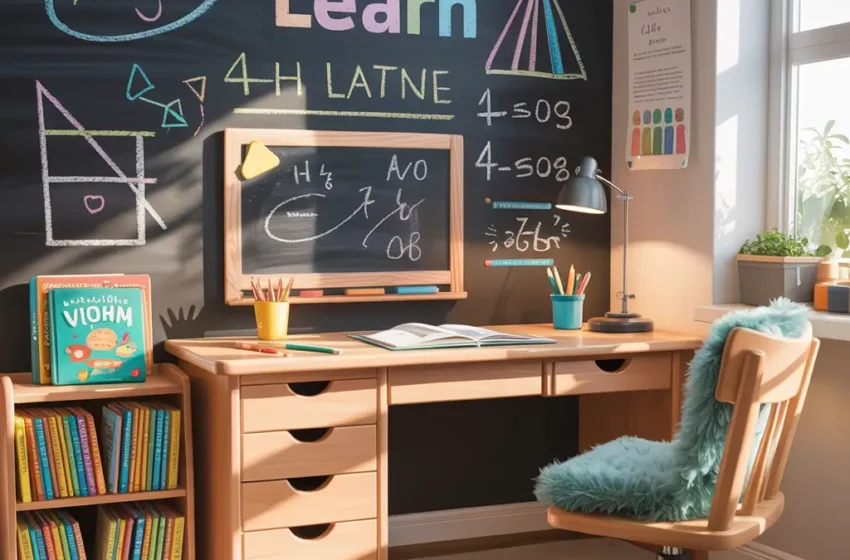
I love this feature because it turns the room itself into a learning tool. A DIY chalkboard wall allows kids to work through complex problems on a massive scale. Whether they are practicing their ABCs or sketching out a physics diagram, the ability to “go big” changes the way they process information.
Why It Works for Kinesthetic Learners
Some kids need to move while they learn. I noticed my daughter retained her spelling words much better when she wrote them in giant chalk letters across the wall rather than on a tiny piece of paper. The physical movement of the arm helps “lock in” the memory.
How to Build It
- Select your paint: I recommend high-quality chalkboard paint (you can even find it in colors other than black now!).
- Prep the surface: Sand the wall until it’s perfectly smooth; every bump shows up under chalkboard paint.
- Frame it out: Use simple wood molding to create a “border” around the chalkboard area so it looks like a design choice rather than a random patch of dark paint.
- Buy dustless chalk: Trust me on this—your vacuum cleaner will thank you.
FYI, if you are a renter, you don’t have to miss out. I’ve used removable chalkboard wallpaper in the past, and it works surprisingly well. It peels right off when you move out, leaving the security deposit intact. It’s the ultimate “low-risk, high-reward” study room upgrade.
5. Floating Shelves for Books and Supplies
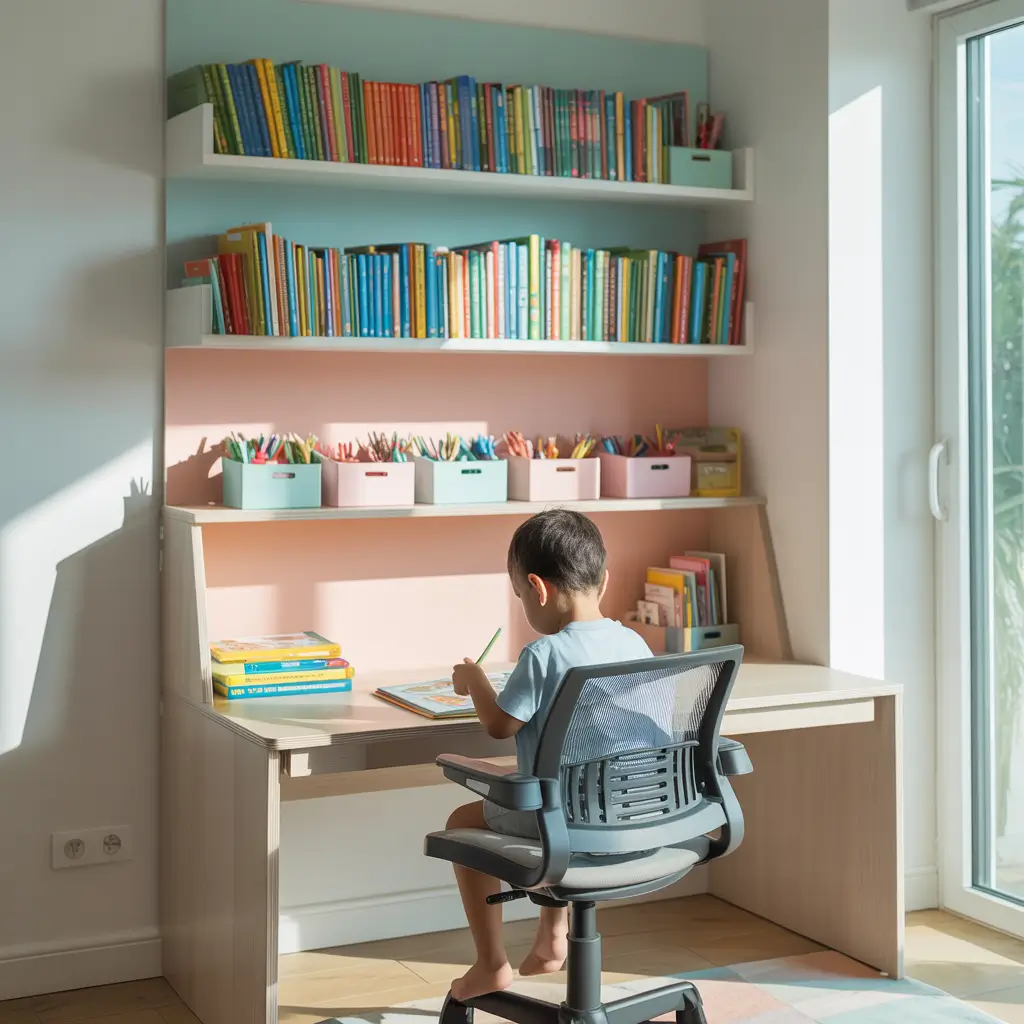
I firmly believe the floor is for walking, not for storing mountains of textbooks. Floating shelves represent the ultimate organizational hack for any study space. They draw the eye upward, highlighting the height of the room and keeping the desk surface completely clear for actual work.
Mastering the Vertical Space
I suggest you install your floating shelves at varying heights. Put the “everyday” items—like notebooks and pencil cups—on the lowest shelf within easy reach. Put the “occasionally” items—like reference books or project kits—on the higher shelves.
Styling for Success
- Use uniform containers: I love clear acrylic bins or matching woven baskets to hide the “ugly” stuff like staplers and extra tape.
- Color-code the books: This isn’t just for Instagram; it helps kids find what they need faster.
- Add a small plant: A little greenery on a high shelf adds life to the room without taking up desk real estate.
- Incorporate a clock: A simple analog clock on a shelf helps kids practice time management without a digital screen.
Rhetorical question: why do we buy huge, bulky bookcases that eat up three square feet of floor space? Floating shelves provide the same storage capacity with a much lighter visual footprint. I replaced a heavy mahogany bookshelf with three long white floating shelves last summer, and the room feels like it doubled in size.
6. Nature-Inspired Study Room Theme
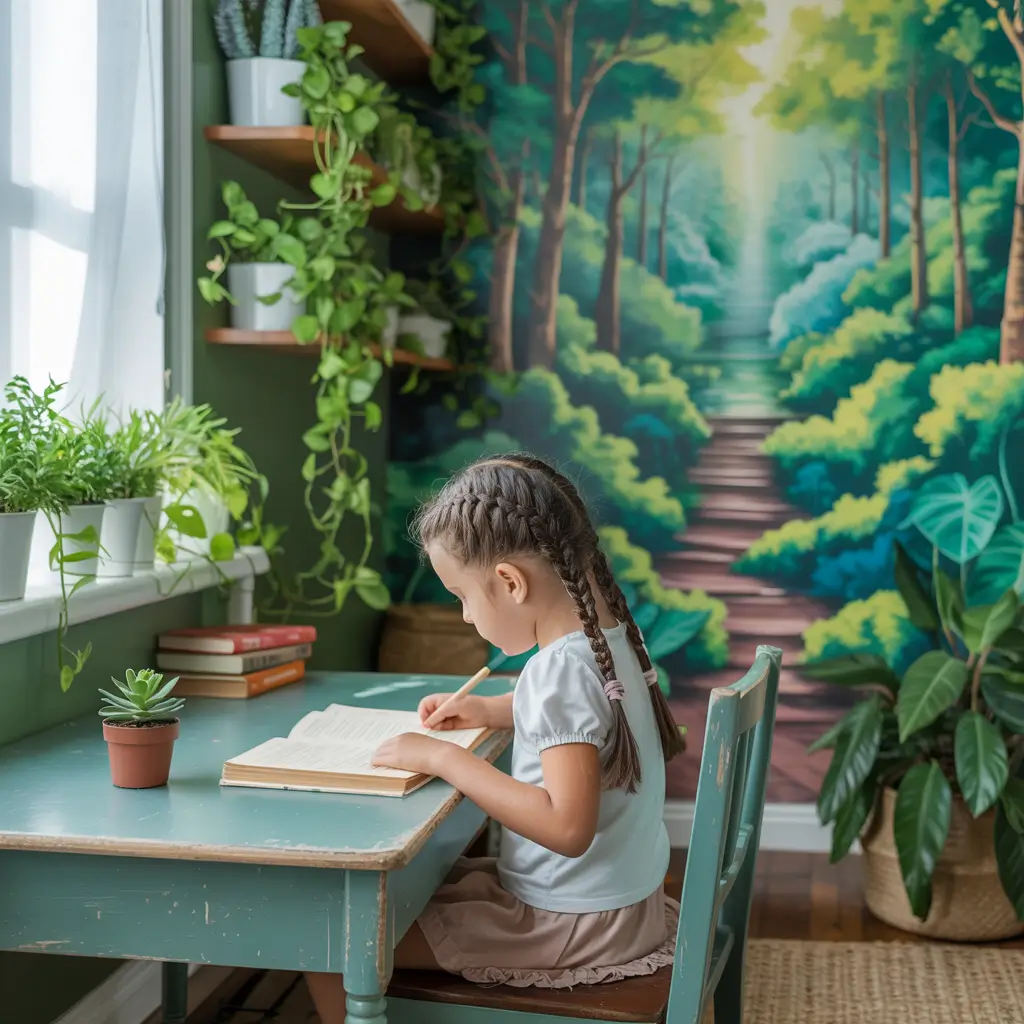
“Biophilic design” is a fancy way of saying we should bring the outdoors in. A nature-inspired study room uses natural materials, earth tones, and living plants to lower a child’s stress levels. I’ve found that my kids stay “in the zone” much longer when they feel connected to the natural world.
The Palette of Calm
I recommend you use colors like sage green, sky blue, and warm terracotta. These shades are scientifically proven to lower heart rates and improve focus. I once painted a study area in a bright, “energizing” orange, and my kid was so hyper he couldn’t sit still for five minutes. We swapped to a soft forest green, and the transformation was almost spooky.
Bringing in the Elements
- Potted plants: I suggest a Snake Plant or a ZZ Plant because they are virtually impossible for a child (or a busy parent) to kill.
- Natural wood textures: A desk with a visible wood grain feels more grounded than a plastic one.
- Botanical prints: Frame some vintage-style illustrations of leaves or animals.
- Natural light: Position the desk perpendicular to a window to maximize Vitamin D without causing screen glare.
IMO, the best part about a nature theme involves the “mental break” it provides. Looking at a living plant for 20 seconds helps recalibrate the eyes after staring at a tablet. Nature serves as a reset button for a tired brain.
Also Read: 10 Creative Small Study Room Ideas for Compact Homes
7. Multi-Functional Loft Bed with Desk
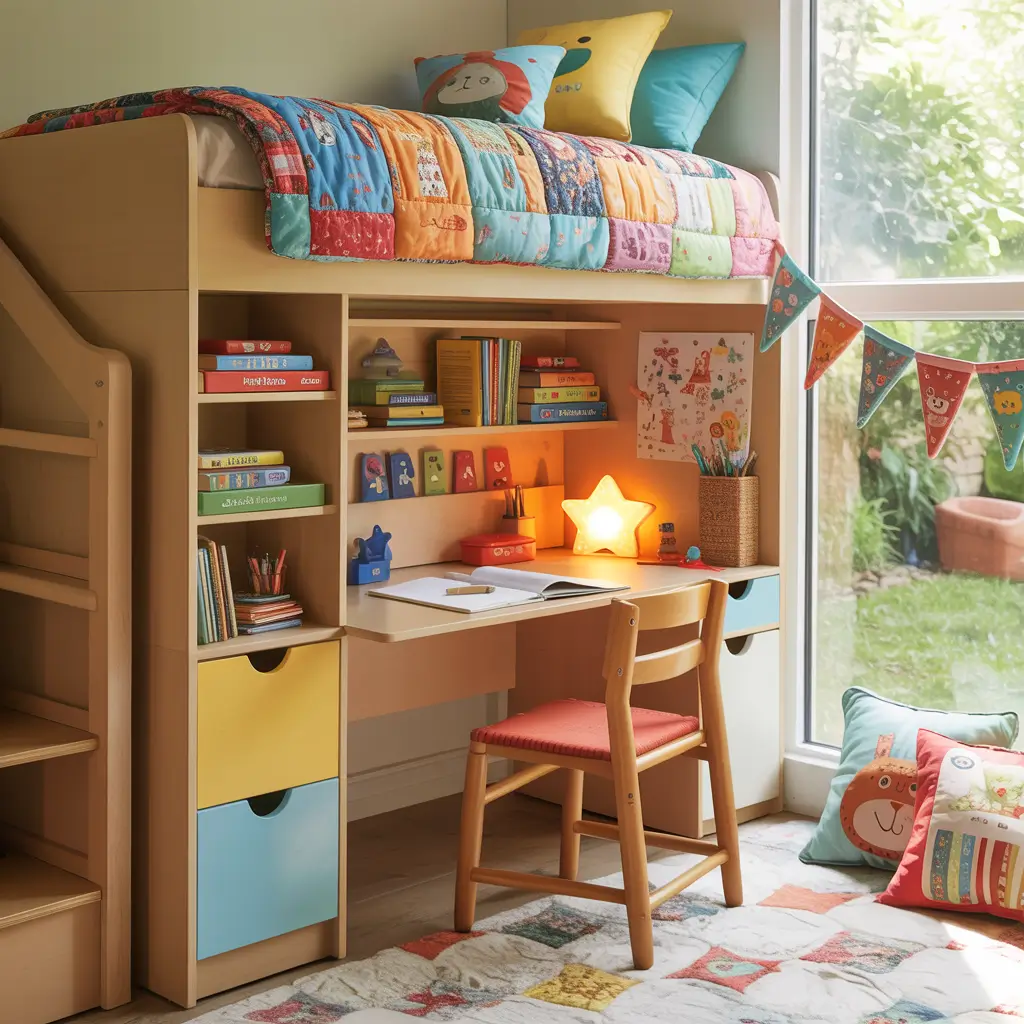
If your kid’s bedroom is also their study room, you have to play the spatial puzzle game. A lofted bed with a built-in desk is the undisputed heavyweight champion of small-room design. It literally doubles your usable square footage by stacking the “work zone” under the “sleep zone.”
Creating the “Zone” Separation
I love how a loft bed creates a psychological boundary. When the kid is up top, it’s time for sleep. When they are underneath, it’s time for business. I’ve noticed that this physical separation helps kids who struggle to “shut off” their brains at night.
Tips for a Great Loft Setup
- Focus on lighting: The area under a loft bed can get dark and cave-like. I recommend you install a long LED strip or multiple puck lights to brighten the workspace.
- Check the height: Ensure your child can sit upright at the desk without hitting their head on the bed slats.
- Add a “soft” touch: Since loft frames are often metal or hard wood, add a small rug and some fabric wall hangings to dampen the sound.
- Secure the ladder: I always check the bolts once a month—safety first!
Rhetorical question: why pay for two rooms when you can just use the top and bottom of one? I helped my sister set this up for her twins, and it turned their cramped shared room into two private mini-suites. It’s a total game-changer for urban living.
8. Pastel-Themed Study Room for Girls
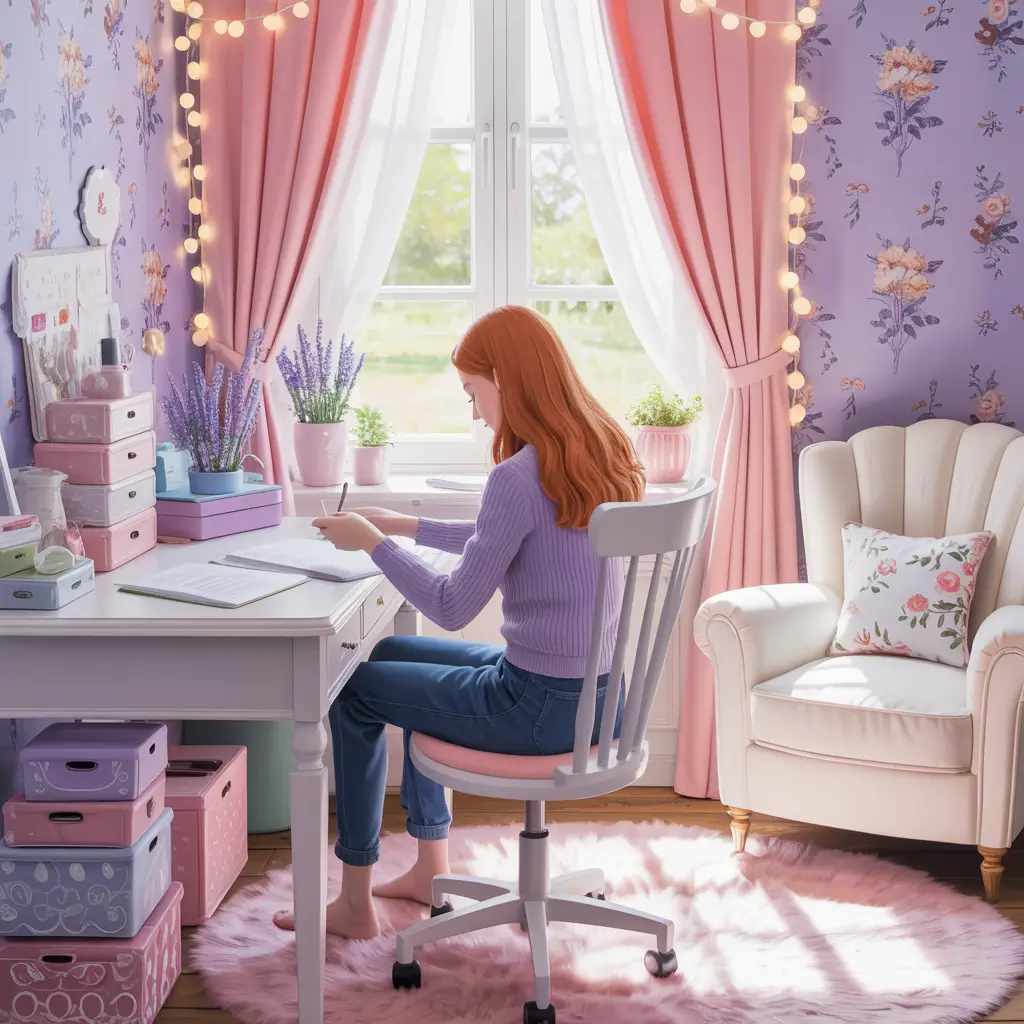
Don’t let anyone tell you that pastels are “too babyish.” A pastel-themed study room can feel incredibly sophisticated and serene. I love using soft lavenders, mint greens, and dusty pinks to create an environment that feels like a quiet, high-end spa.
The Sophisticated Pastel Approach
I recommend you avoid the “Pepto-Bismol” look by pairing your pastels with plenty of crisp white and metallic accents. Gold or rose gold desk accessories look stunning against a pale mint wall. Pastels provide color without the chaos, which is ideal for a high-focus environment.
Elements to Include
- Velvet textures: A soft, pastel-colored desk chair adds a touch of luxury.
- Sheer curtains: These filter the light into a soft glow that makes the room feel ethereal.
- White furniture: This allows the pastel wall colors to take center stage without competing.
- Minimalist art: Choose simple line drawings or watercolor prints in coordinating shades.
I once styled a room in “duck egg blue” for a teenager, and she actually started doing her makeup and her homework there because the light was so flattering. If a kid feels beautiful in their space, they will spend more time in it. It’s just basic human nature. :/
9. Bright and Playful Boys’ Study Zone
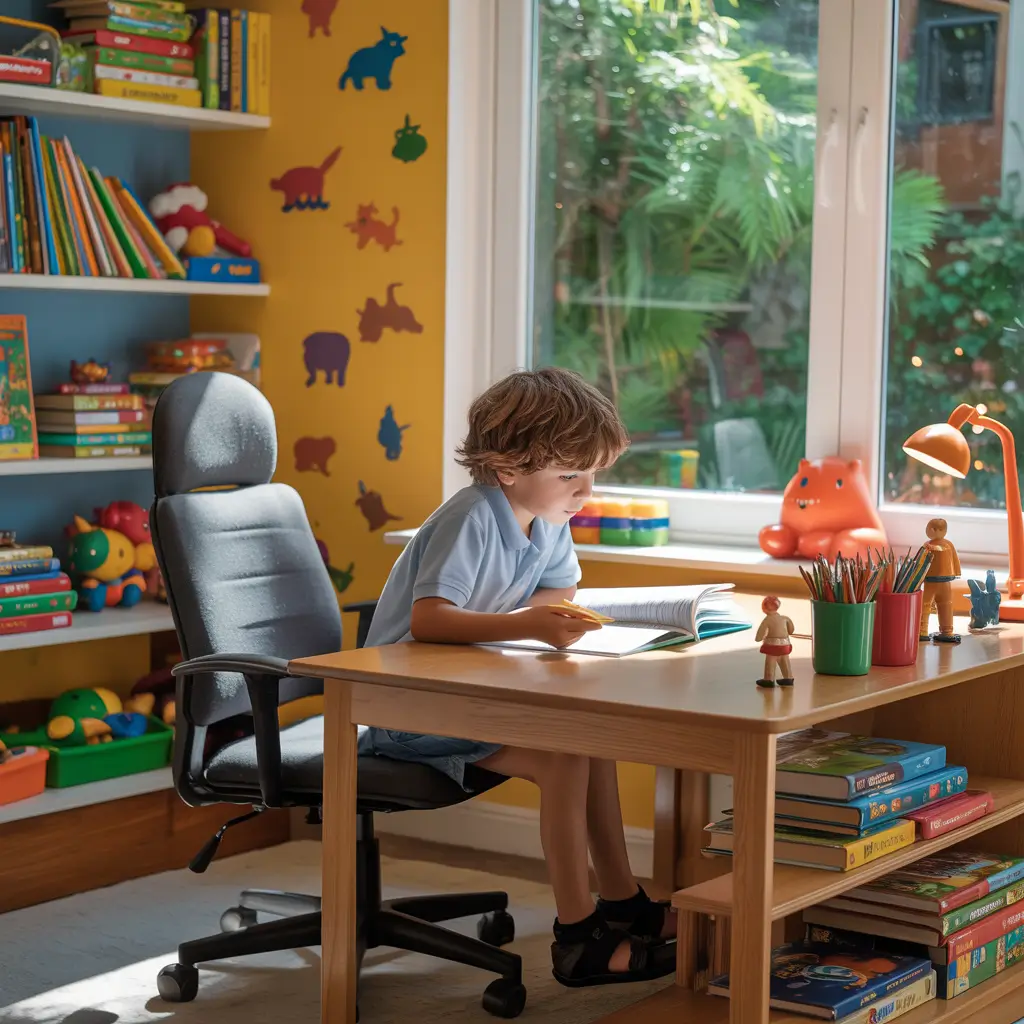
If your boy has high energy, a “quiet spa” vibe might just put him to sleep. A bright and playful study zone uses primary colors and bold patterns to keep the energy levels high and the motivation flowing. I love using navy blue, vibrant red, and “construction” yellow for this look.
The High-Contrast Strategy
I suggest you use a dark navy blue for the main desk wall and then pop it with bright yellow bins and a red chair. The high contrast keeps the brain alert. I’ve seen this work wonders for kids who tend to get “foggy” or bored during long reading sessions.
Must-Have Features
- Industrial elements: Use metal locker-style cabinets for storage—they are durable and look “cool.”
- Large-scale patterns: A geometric rug with bold shapes anchors the room.
- Sports or tech accents: Incorporate their hobbies into the decor, like a basketball-shaped bin or a keyboard with customizable RGB lights.
- A “brain dump” station: Install a large magnetic white-board where they can scribble ideas quickly.
Ever wondered why fast-food restaurants use red and yellow? It creates a sense of urgency. You can use that same psychology (in moderation) to help a kid power through their chores and homework. Just make sure you balance it with a neutral floor to prevent a total sensory overload.
Also Read: 12 Beautiful Study Room Design Ideas and Bright Nooks
10. Montessori-Style Learning Space
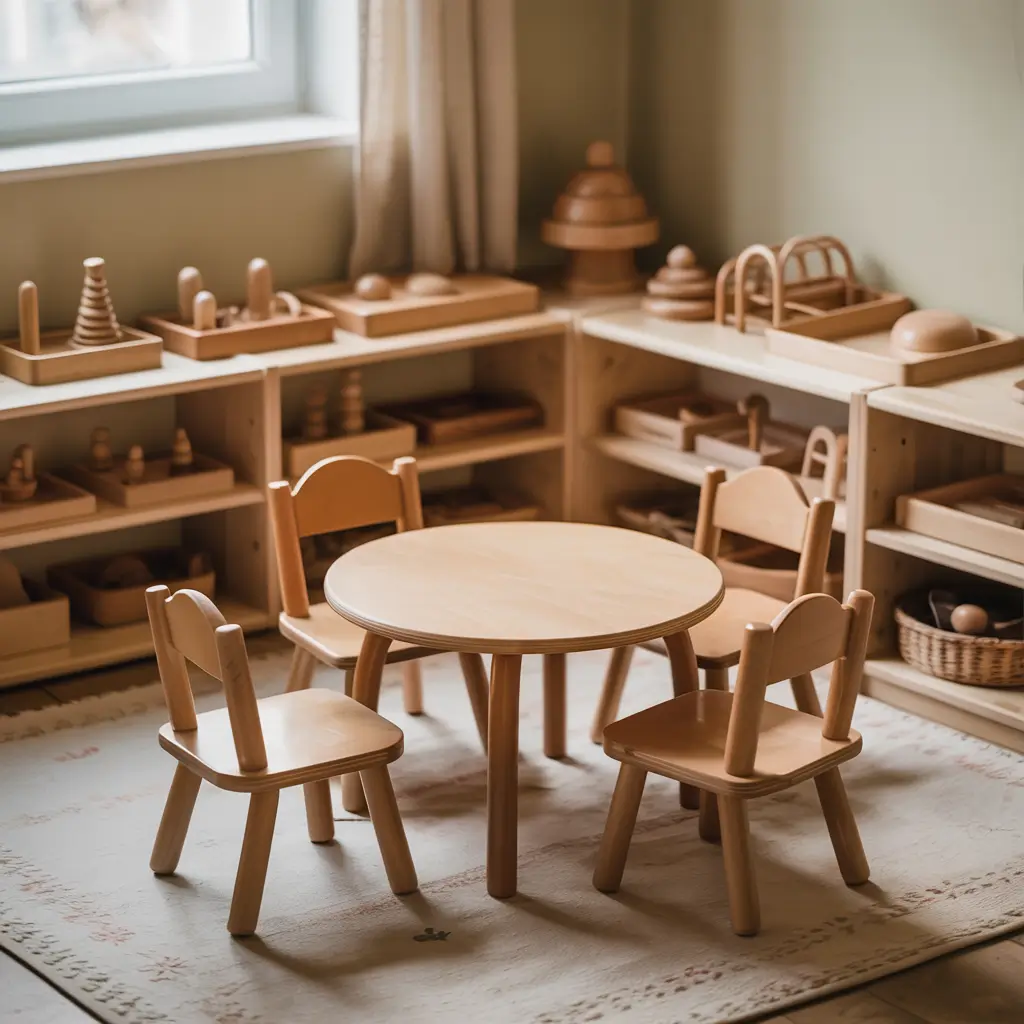
This idea is all about autonomy and accessibility. A Montessori-style study room assumes that a child is a capable human being who should be able to reach their own supplies without asking for help. I love this approach for younger kids who are just starting to develop their study habits.
Low and Accessible
I recommend you keep everything at the child’s height. Replace a tall desk with a low, sturdy table. Swap a high bookcase for floor-level bins. When a child can see and reach their own tools, they take “ownership” of their learning.
The Montessori Checklist
- Open shelving: Forget closed toy boxes; let the materials be visible and inviting.
- Order and beauty: Each item should have a specific “home” on the shelf.
- Natural materials: Stick to wood, cotton, and metal rather than plastic.
- Real-world tools: Give them real staplers, real rulers, and real magnifying glasses.
I noticed my daughter became much more responsible for cleaning up when I moved her art supplies into low, labeled bins. She didn’t need me to tell her where things went—the room told her. An organized environment creates an organized mind. It’s the ultimate gift you can give a developing student.
Technical Details: Lighting and Ergonomics
I know you want the room to look cute for Pinterest, but if you ignore the “boring” stuff, your kid will end up with a sore back and a headache. Let’s talk about the technical specs that actually matter for a study room.
The 90-90-90 Rule
I suggest you adjust the desk and chair height so your child can sit with their feet flat on the floor, their knees at a 90-degree angle, and their elbows at a 90-degree angle. If the desk is too high, use a footrest. Proper ergonomics prevent long-term physical issues and help kids stay focused for longer.
Lighting Temperatures
Not all light bulbs are equal. I recommend you look at the “Kelvin” (K) rating on the box:
- 2700K – 3000K: Warm white (Great for the reading nook).
- 4000K – 5000K: Cool white/Daylight (Essential for the main desk to keep them alert).
FYI, I use smart bulbs in my kids’ rooms so I can change the light from “focus mode” during the day to “relax mode” in the evening. It’s a small investment that makes a massive difference in their circadian rhythms.
Comparison of Study Room Layouts
Before you start dragging furniture around, look at this quick comparison of the three most popular layouts for kids’ rooms.
| Feature | Corner Nook | Loft Setup | Minimalist Wall |
|---|---|---|---|
| Space Required | Low | High (Vertical) | Medium |
| Focus Level | High (Enclosed) | High (Private) | Medium (Open) |
| Cost to Build | Low | High | Medium |
| Best For | Introverts | Shared Rooms | Small Apartments |
Frequently Asked Questions
How can I make a study room on a budget?
Paint is your best friend. A single gallon of a fresh color can change the entire energy of a room for under $40. Also, check Facebook Marketplace for “good bones” furniture that you can refinish with a bit of sandpaper and a new set of knobs.
What is the best age to start a dedicated study space?
I recommend starting as soon as they have regular homework—usually around first grade. Even a small “coloring station” at age four helps them associate a specific chair with “focus time.”
How do I keep the study room clean?
The “Five Minute Reset” is my secret weapon. Every night before bed, we set a timer for five minutes and everyone has to put their supplies back in their designated homes. If you have a system (like the Montessori bins), this is easy.
My Personal Connection to Kids’ Design
I want to share a quick story. Three years ago, my daughter was struggling with her reading. We were trying to do lessons at the dining table, but she was constantly distracted by the fridge humming, the dog barking, and her brother’s iPad. She felt like a failure because she couldn’t “just focus.”
I finally decided to clear out a small corner of her room and build a nature-inspired reading nook with a simple bean bag and some floating shelves. The first night she sat in there, she read for 30 minutes straight without looking up once. It wasn’t that she couldn’t focus—it was that her environment wasn’t helping her focus. That experience is why I’m so passionate about these 10 kids study room ideas ideas. A well-designed room is an act of love.
Final Thoughts: Build It Together
The most important advice I can give you? Involve your kid in the process. If they help pick the paint color or assemble the floating shelves, they will feel a sense of pride and ownership.
They won’t just see it as “the place where I have to do work”; they will see it as their space.
Start small. You don’t have to renovate the whole study room this weekend. Maybe just buy a bean bag or install a chalkboard panel. See how your child responds and grow from there.
You deserve a home that feels organized, and your kid deserves a space that makes them feel like a genius.
Now, go grab a tape measure and start planning! Your future (less stressed) self will thank you for it. And seriously, hide those computer wires—you’ll thank me later :/