10 Easy Kindergarten Classroom Decor Ideas for Organized Classrooms
- Classroom Decor
 Ben
Ben- 0
- 40 minutes read
Remember walking into your kindergarten classroom for the first time? That magical feeling when everything looked like it jumped straight out of a storybook? Well, here’s the thing – creating that same wonder for today’s five-year-olds doesn’t require a master’s degree in interior design or a trust fund.
I’ve spent the last decade transforming bland classrooms into learning wonderlands, and trust me, you don’t need Pinterest-perfect skills to pull this off. What you really need are practical ideas that actually work when twenty tiny humans descend upon your space every morning. These aren’t just pretty decorations; they’re organizational systems disguised as fun decor that’ll save your sanity by October.
Let’s talk about classroom setups that make kids excited to learn AND help you keep track of those 47 glue sticks that somehow disappear by lunchtime. Ready to transform your classroom without breaking the bank or your back?
Rainbow-Themed Learning Corners
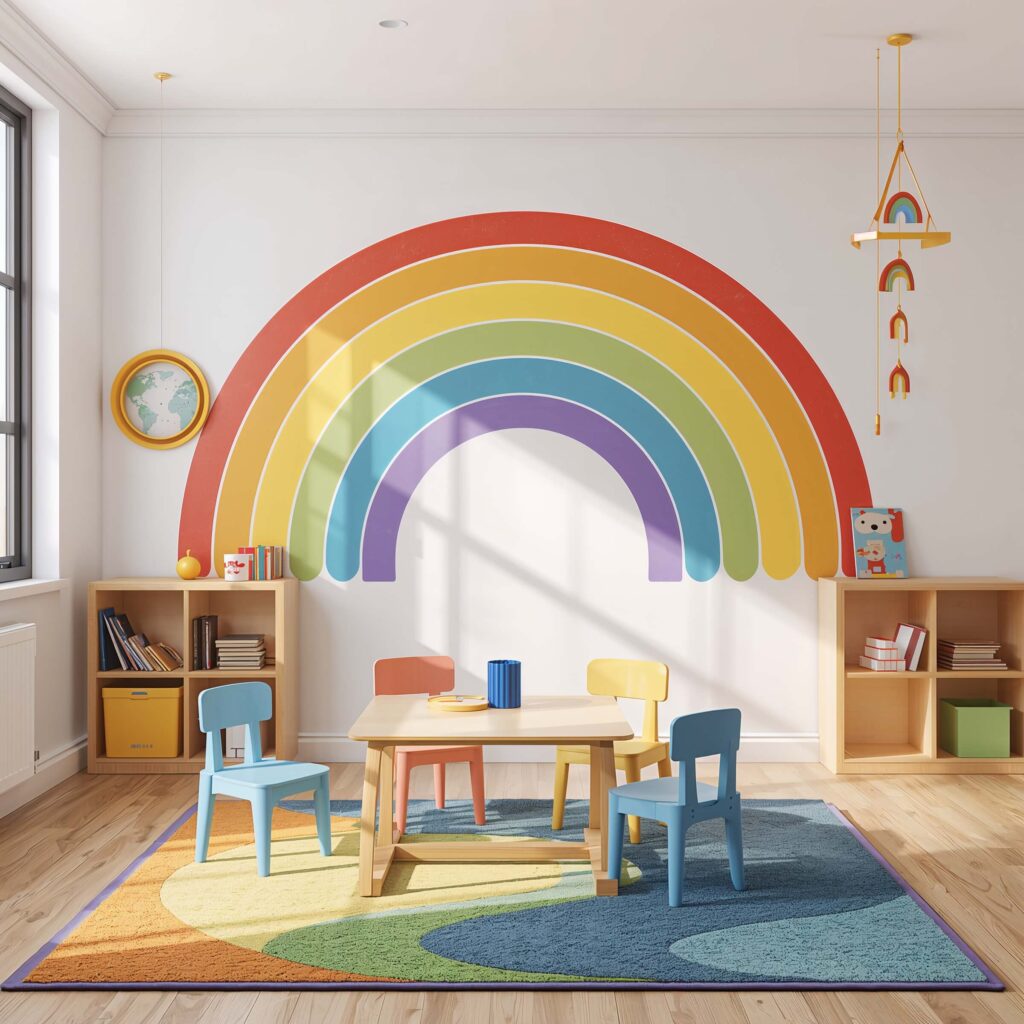
Who says organization can’t be fabulous? Rainbow-themed learning corners transform your classroom into a visual feast while secretly teaching kids about categories, colors, and spatial awareness. I discovered this trick during my third year of teaching when I accidentally organized my supplies by color – the kids literally organized themselves without me saying a word.
Start by assigning each learning station a specific color from the rainbow spectrum. Your math corner gets red, language arts becomes orange, science transforms into yellow – you get the picture. The beauty here lies in the simplicity: kids naturally gravitate toward their assigned colors, and cleanup becomes a matching game instead of a battle.
Setting Up Your Rainbow Zones
Create visual boundaries using colored tape on the floor or hanging fabric panels from the ceiling. I use shower curtains from the dollar store (yeah, you heard that right) because they’re cheap, wipeable, and come in every color imaginable. String them up with fishing line, and boom – instant room dividers that cost less than your morning coffee run.
Here’s what makes this system genius:
- Red Corner: Math manipulatives, counting bears, number lines
- Orange Corner: Art supplies, creative materials, easels
- Yellow Corner: Science experiments, magnifying glasses, nature collections
- Green Corner: Building blocks, construction materials, STEM activities
- Blue Corner: Quiet activities, puzzles, fine motor skills
- Purple Corner: Dramatic play, dress-up clothes, puppets
The organizational magic happens when you label everything with corresponding colored dots. Those little adhesive circles become your best friend – stick them on bins, shelves, and even the kids’ name tags for center time. Watch how quickly five-year-olds become organizational ninjas when everything has a color-coded home.
Making It Stick (Literally and Figuratively)
Want to know the secret sauce? Consistency is everything. Keep the same color assignments all year long. By November, kids automatically know that red means math time, and they’ll start preparing mentally before they even reach the corner. It’s basically Pavlovian conditioning, but make it cute.
Nature-Inspired Wall Murals
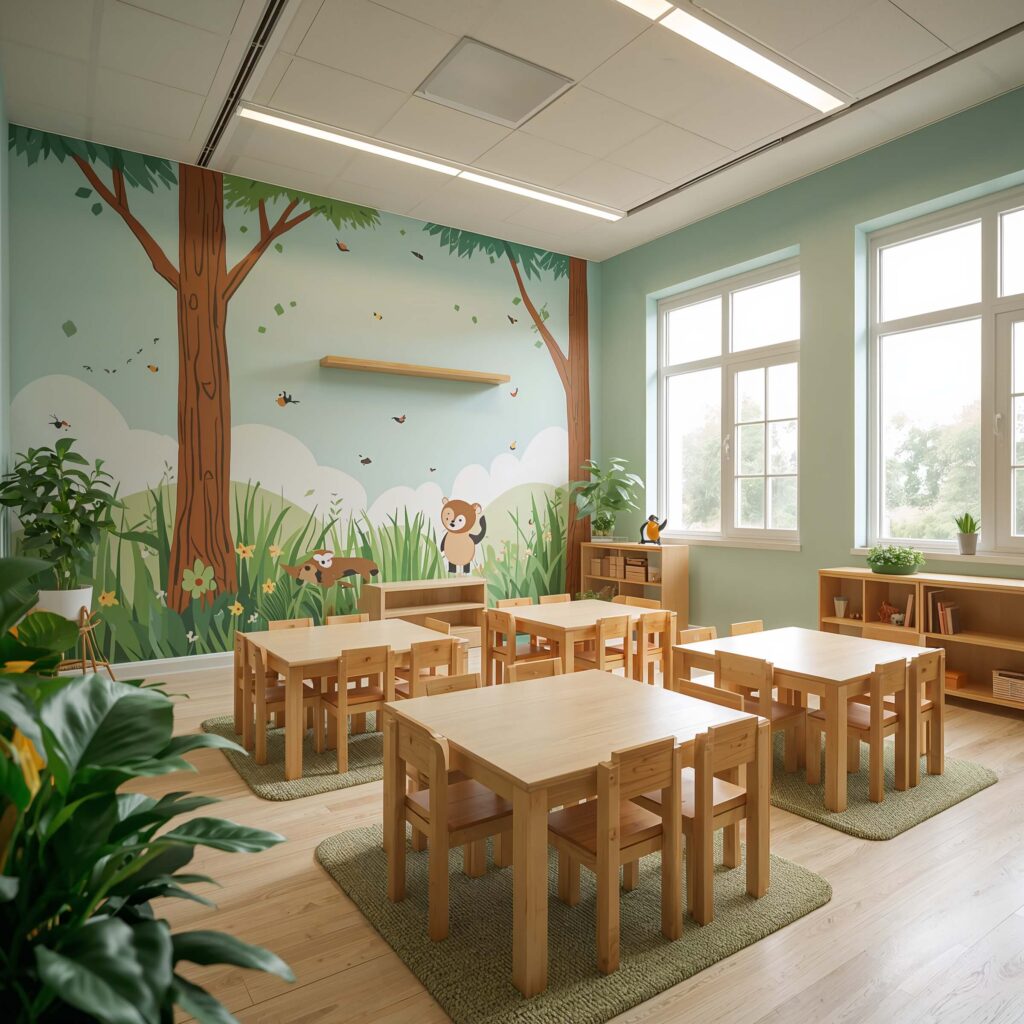
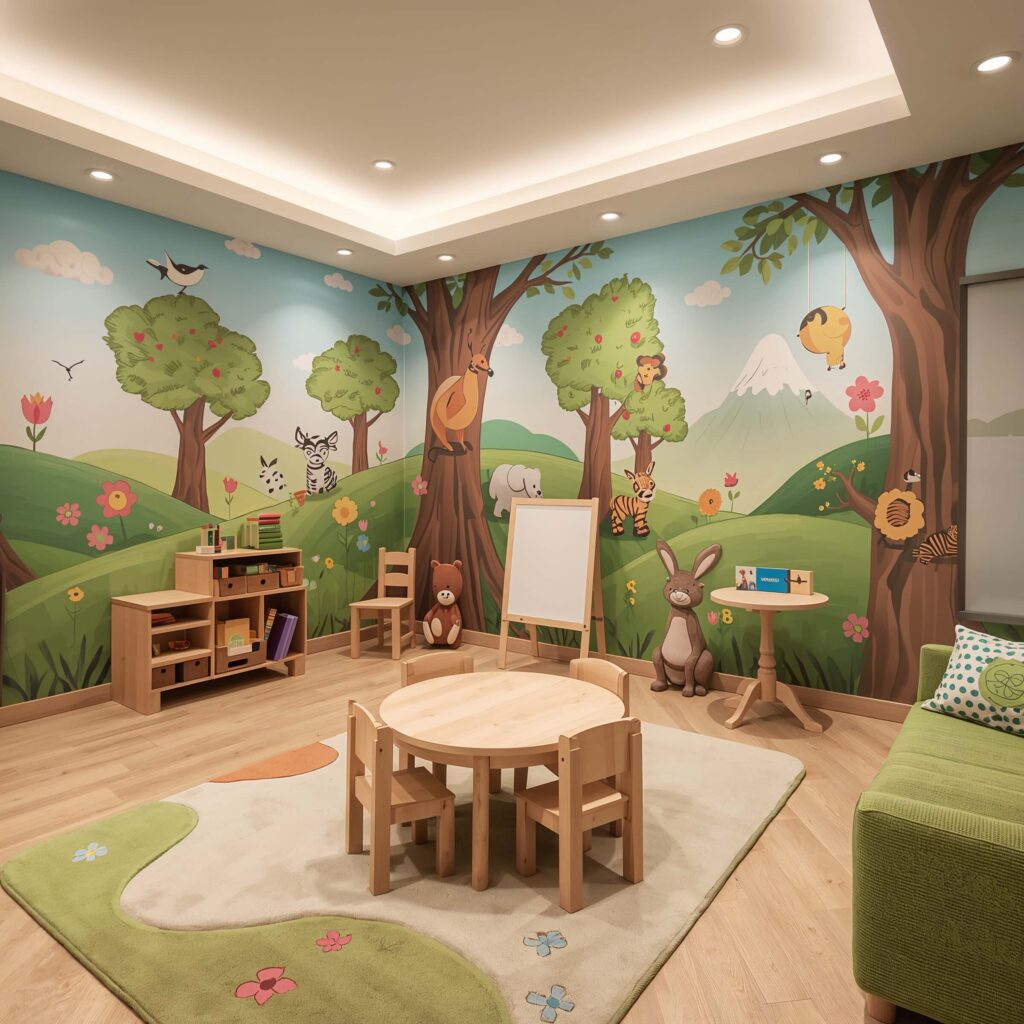
Forget those expensive wall decals that peel off after two weeks. Nature-inspired murals bring the outdoors in while creating a calming atmosphere that actually helps with behavior management. Ever notice how kids chill out on nature walks? Same principle applies here.
I learned this after inheriting a classroom with prison-gray walls (seriously, who picks these colors?). Armed with some cheap acrylic paint and zero artistic talent, I created a forest scene that transformed the entire vibe of the room. The trick isn’t perfection – it’s creating layers and textures that give kids something interesting to look at without overwhelming their senses.
DIY Mural Techniques That Actually Work
Start with a simple horizon line about three feet from the floor. Paint the bottom brown for earth, add some green hills, and create a blue sky above. That’s your base – now comes the fun part.
Tree trunks don’t need to be masterpieces. Use a sponge to dab on bark texture, or let the kids press their painted hands on the trunk for instant “leaves.” Those handprint leaves become a class family tree that parents absolutely lose their minds over during open house. FYI, take photos before adding names – you’ll want this for your portfolio 🙂
Here’s my go-to nature mural recipe:
- Background: Gradient sky using a large sponge (blue to white)
- Middle ground: Rolling hills with varying shades of green
- Foreground: Tree trunks, bushes, flowers at kid height
- Interactive elements: Velcro spots for seasonal additions
- 3D touches: Real twigs, pressed leaves under contact paper
Seasonal Adaptations Without Starting Over
The genius move? Create a mural that changes with the seasons without repainting. Add removable elements using Velcro dots – snowflakes in winter, flowers in spring, leaves in fall. Kids love being the “season helpers” who transform the wall each month. It’s like having four murals for the price of one.
DIY Alphabet and Number Boards
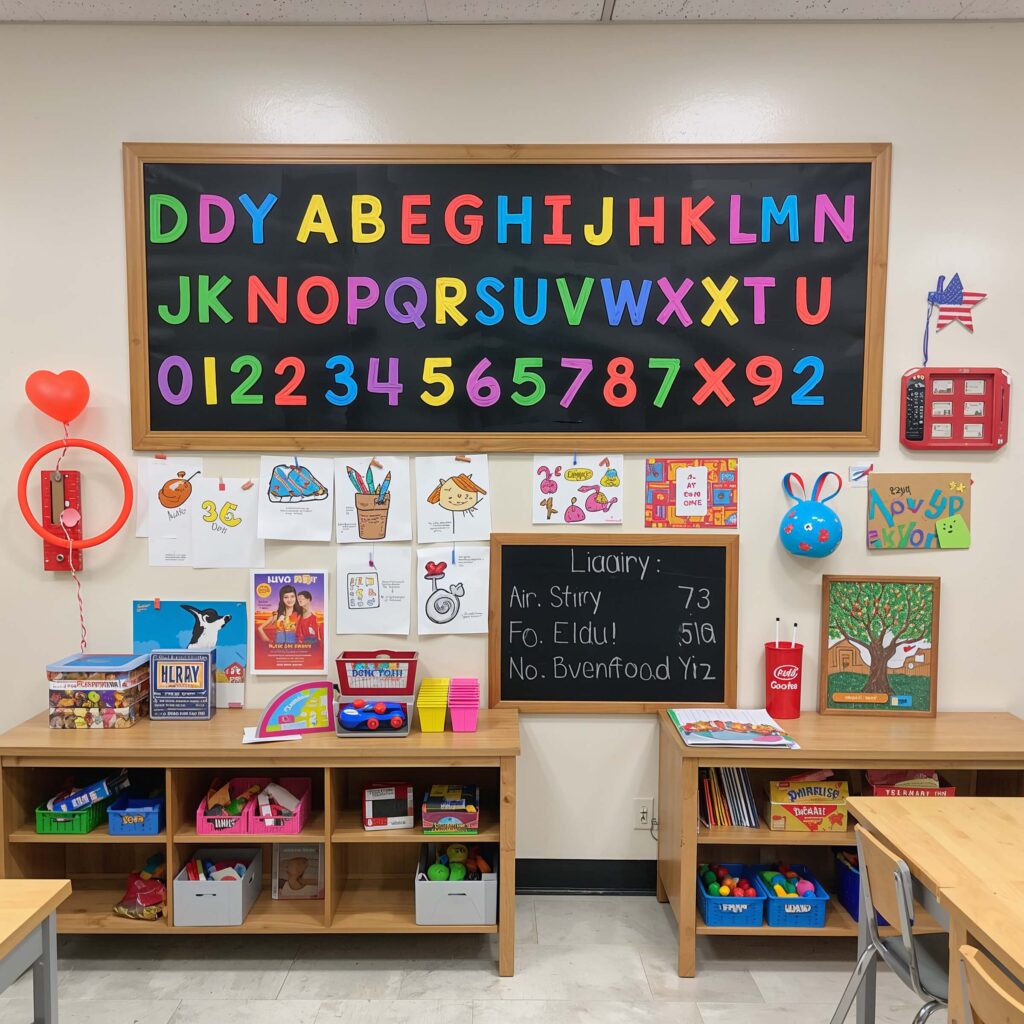
Traditional alphabet strips are boring. There, I said it. Kids see them every single day and tune them out faster than you can say “A is for Apple.” But DIY boards that kids help create? That’s where the magic happens.
My breakthrough came when I ditched the store-bought strips and created interactive alphabet boards using pizza boxes (clean ones, obviously). Each letter lives on its own mini board with a pocket for rotating pictures, objects, and student work. Kids actually touch, move, and interact with these letters daily instead of just staring at them.
Building Boards That Kids Actually Use
Start collecting sturdy cardboard pieces or foam boards from the dollar store. Cover each with colorful paper or fabric, then attach a clear plastic pocket (page protectors work perfectly). The letter goes on top in bold, tactile form – use sandpaper, felt, or puffy paint for texture that begs to be touched.
The number boards follow the same concept but include:
- Physical representations: Dots, tally marks, ten frames
- Real objects: Buttons, beans, or pasta pieces glued on
- Student photos: Groups of kids representing each number
- Interactive elements: Spinning wheels showing different representations
Mount these at kid height along a dedicated wall. I mean actual kid height – get down on your knees and check the view. Nothing drives me crazier than “kid-friendly” displays mounted at adult eye level. Your five-year-olds shouldn’t need climbing gear to see their learning materials.
Rotating Content Keeps It Fresh
The pocket system means you can switch out examples weekly. Letter B might showcase butterflies one week, then feature photos of kids whose names start with B the next. This constant rotation keeps kids engaged and makes your alphabet wall a living, breathing part of the curriculum instead of wallpaper.
Also Read: 10 Eye-Catching Classroom Decor Ideas for Happy Students
Seasonal Rotating Display Shelves
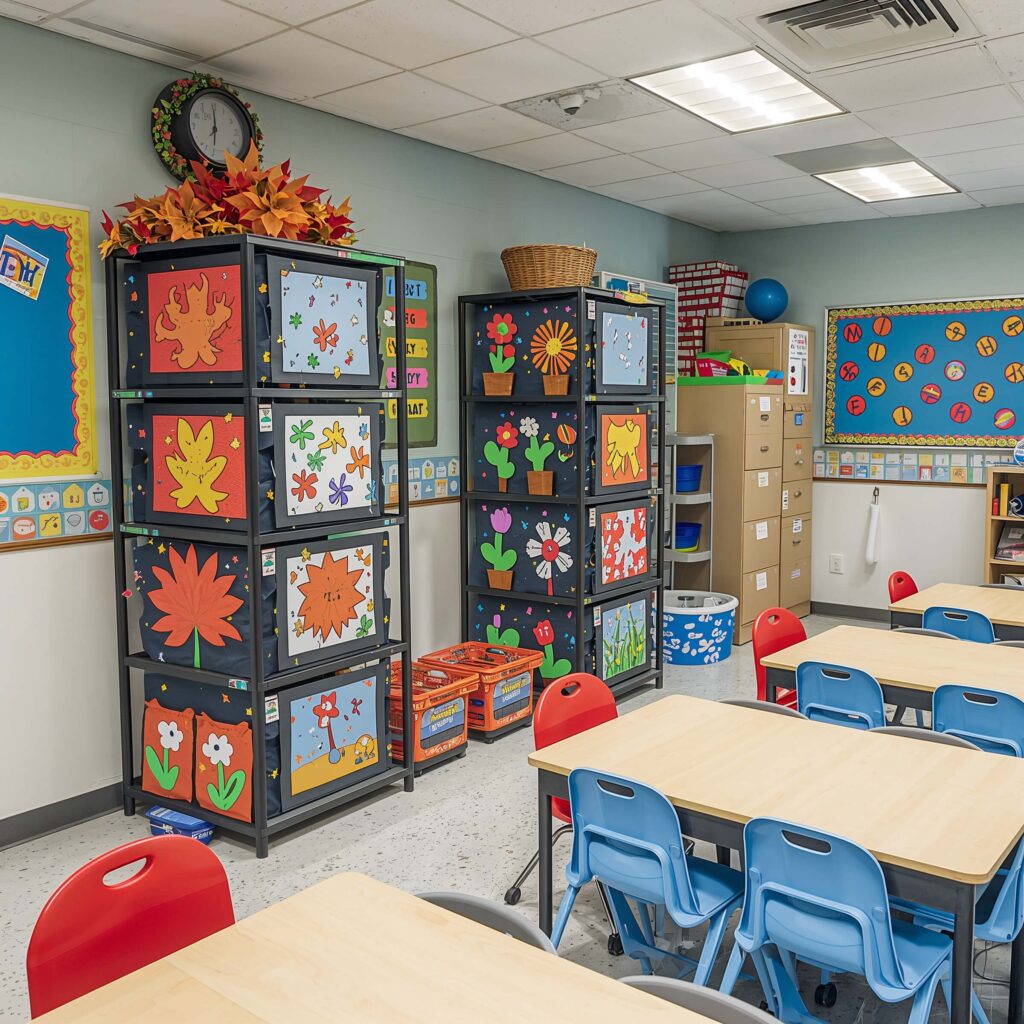
Static displays are so last decade. Rotating seasonal shelves keep your classroom fresh while teaching kids about change, time, and natural cycles. Plus, they solve that eternal teacher problem: where to put all the stuff parents donate “for the classroom.”
I stumbled onto this system when my classroom looked like a teaching supply hoarder’s paradise. Instead of cramming everything onto shelves year-round, I created a rotation system that displays materials when they’re actually relevant. Revolutionary, right?
The Four-Season Shelf System
Dedicate one bookshelf or wall unit as your seasonal showcase. Divide your materials into four bins (stored in a closet or under tables) and swap them out every three months. Your September shelf looks completely different from your January shelf, giving kids something new to explore regularly.
Each seasonal shelf should include:
- Nature specimens: Pinecones, shells, leaves (sealed in clear containers)
- Seasonal books: Rotate your library to match
- Sensory materials: Cotton “snow,” dried flowers, smooth stones
- Cultural celebrations: Items representing holidays and traditions
- Student predictions: “What will we see outside?” charts
The organizational beauty here? You’re not storing December’s snowman crafts in September or Easter eggs in November. Everything has its season, literally, which means less clutter and more intentional learning opportunities.
Making Transitions Educational
When you switch seasons, make it an event. Have kids help pack away summer items while discussing what they learned. Then unveil the fall shelf like it’s a treasure chest. These transitions become lessons in categorization, memory, and anticipation. Who knew organizing could be so educational?
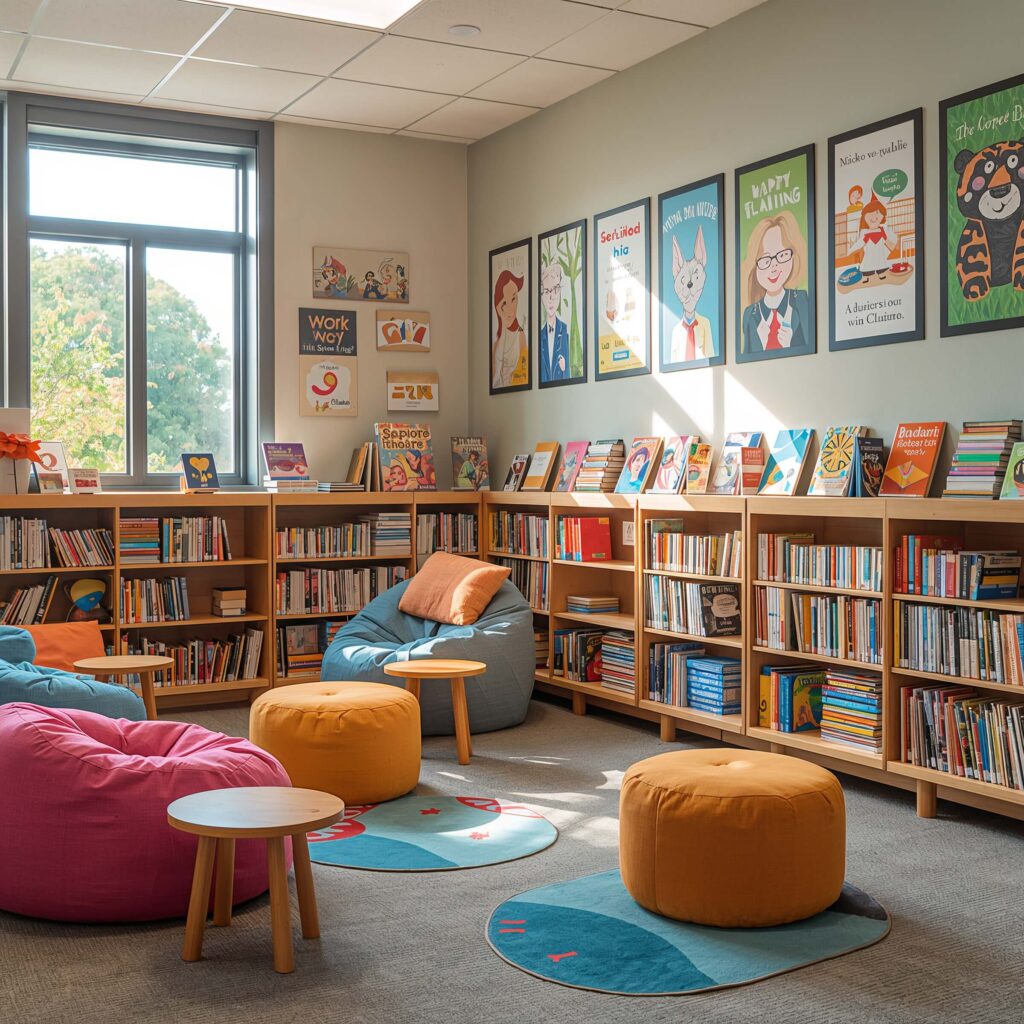
Interactive Reading Nooks
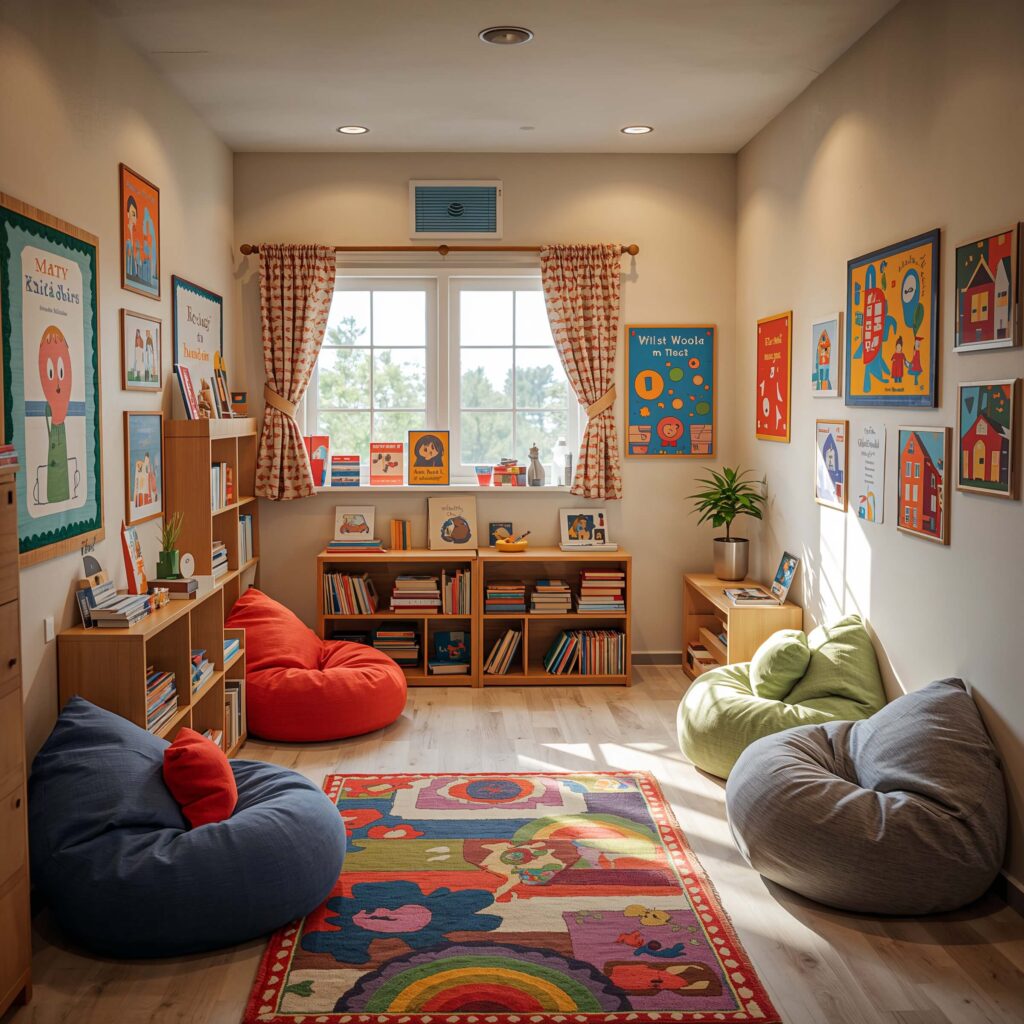
Every kindergarten needs a reading corner, but most look like forgotten library graveyards. An interactive reading nook becomes the classroom’s beating heart where kids actually choose to spend time. The secret? Make it feel like a hideaway while keeping it visible enough for supervision.
My first reading corner was literally just a carpet square and a milk crate of books. Kids avoided it like vegetables at lunch. Then I created a “cave” using a tension rod and some sheer curtains, added twinkle lights, and suddenly everyone wanted reading time. Sometimes the simplest changes create the biggest impact.
Building a Nook That Beckons
Start with defining the space using furniture, curtains, or even a small tent. Kids need boundaries to feel cozy, but you need sight lines to keep everyone safe. Sheer fabrics work perfectly – they create separation without blocking your view of who’s putting crayons up their nose.
Essential elements for reading nook success:
- Soft seating: Bean bags, floor pillows, or a small couch
- Adjustable lighting: Twinkle lights, small lamps, or a reading light
- Book display: Forward-facing shelves so kids see covers, not spines
- Personal touches: Student-made bookmarks, reading certificates
- Quiet signals: A “reading in progress” sign kids can flip
The interactive part comes from rotating book collections based on interests and themes. Notice kids obsessed with dinosaurs? Stock the nook with dino books for a week. Building excitement about specific topics makes reading feel like a treasure hunt rather than a requirement.
Storage Solutions That Actually Work
Here’s what nobody tells you about reading nooks: they become disaster zones without proper organization. Use picture labels on baskets showing book categories. Even non-readers can sort books when they see a picture of a princess means fairy tales go here. IMO, this visual system works better than any alphabetical nonsense for this age group.
Animal-Themed Learning Zones
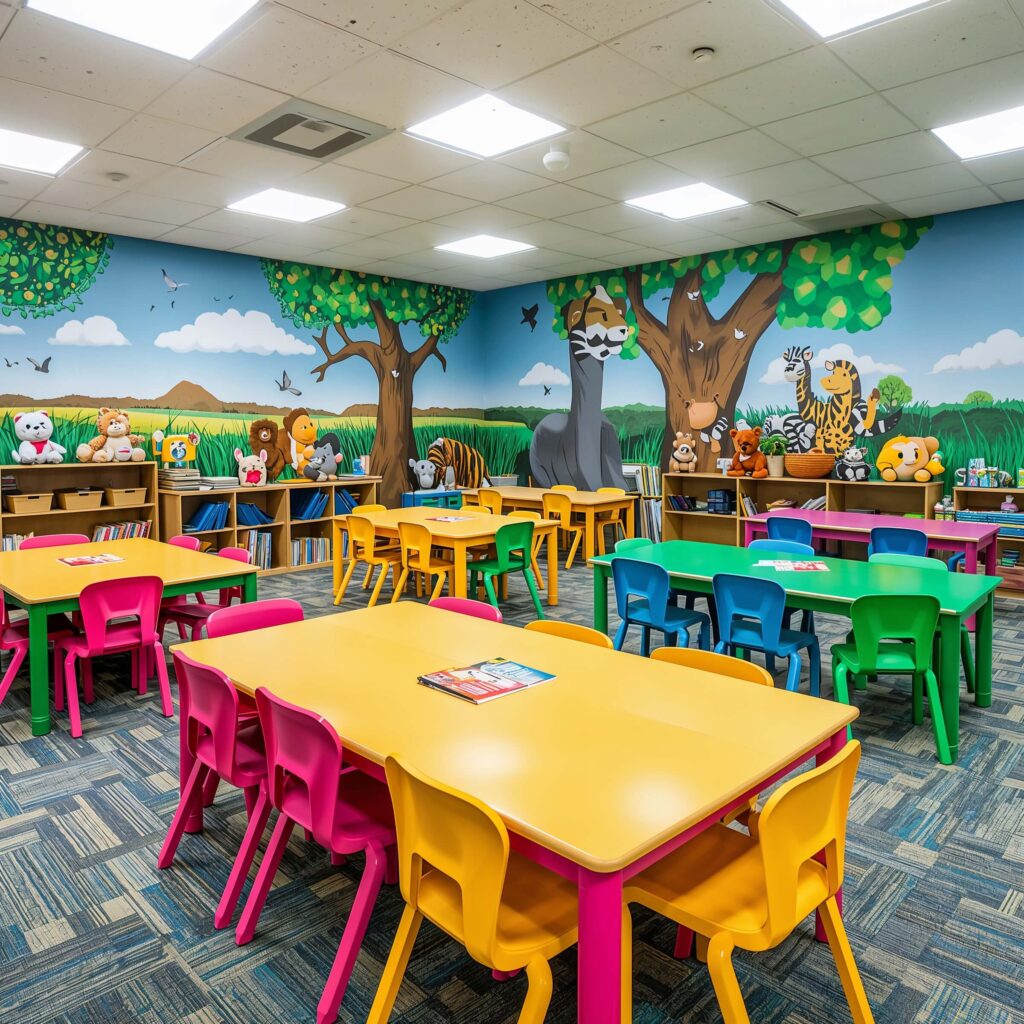
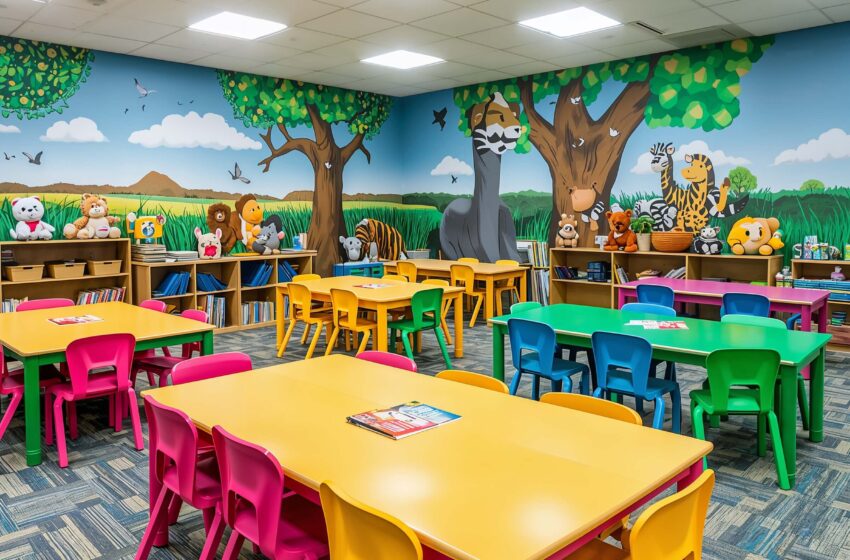
Kids connect with animals on a primal level. They’ll ignore your carefully crafted math lesson but spend twenty minutes discussing whether a T-Rex could beat a shark in a fight. Animal-themed zones harness this natural fascination while creating distinct learning areas.
I discovered this accidentally when I used animal puppets for classroom management. “Quiet like a mouse” worked better than any behavior chart I’d tried. Soon, each classroom area had an animal mascot, and behavior management basically ran itself. Sometimes the best solutions come from desperation, not planning.
Assigning Animal Ambassadors
Choose animals that represent the behavior you want in each zone. The library becomes the owl’s nest (wise and quiet), while the art area channels the peacock (colorful and creative). Kids internalize these associations faster than you’d think.
Here’s my tried-and-true animal zone lineup:
- Owl’s Library: Reading corner with owl decorations, “wise” activities
- Busy Bee Station: Math and counting activities, honeycomb patterns
- Peacock’s Art Studio: Creative supplies, colorful displays
- Turtle’s Quiet Corner: Calm-down space, slow breathing exercises
- Monkey’s Movement Zone: Gross motor area, climbing activities
Mount large animal cutouts at zone entrances. Add character by giving each animal a name and backstory. Mr. Owl loves quiet readers, while Bella Bee gets excited about patterns and counting. Kids respond to these characters like they’re real classroom members.
Behavior Management Through Animals
The magic happens when you reference animals for transitions. “Let’s tiptoe to the carpet like mice” works infinitely better than “Walk quietly.” Kids naturally mimic animal movements and sounds, making classroom management feel like play instead of rules. Plus, you can say things like “I need owl behavior in the library” without sounding like you’re constantly correcting.
Also Read: 10 Charming Preschool Classroom Decor Ideas for Cozy Classrooms
Color-Coded Classroom Organization
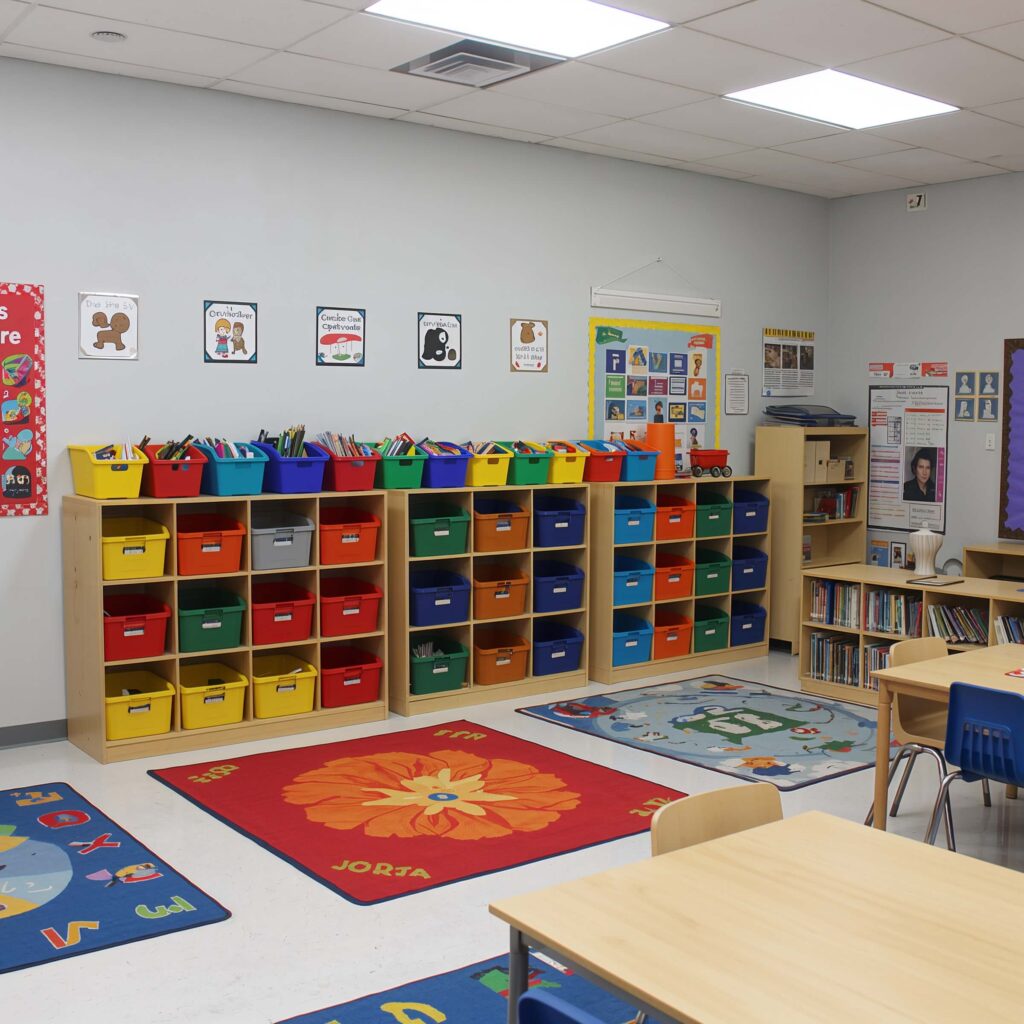
Let’s get real – color-coding everything saves approximately 73% of your sanity (that’s a scientific estimate). When every supply, station, and storage spot has a designated color, five-year-olds become surprisingly capable organizers. Who knew?
This system transformed my classroom from chaos to… well, organized chaos. Each table group gets a color, and suddenly, distributing supplies doesn’t require a megaphone and therapy afterwards. Red table gets red supply baskets, blue table gets blue folders – it’s almost embarrassingly simple.
Implementing the Rainbow Method
Start by assigning each table or group a color that stays consistent all year. Everything that group uses gets tagged with their color – pencil boxes, cubbies, folders, even their carpet spots. This isn’t just about looking pretty; it’s about creating visual systems that work without verbal instructions.
Color-coding essentials:
- Colored tape: Mark spots on carpet, desks, and walls
- Plastic baskets: One per color for each supply type
- Dot stickers: Label everything from scissors to water bottles
- Folders and notebooks: Match group colors for easy collection
- Job charts: Color-code classroom responsibilities
The beauty? When you say “Blue group, get your math baskets,” only one group moves. No more stampedes to the supply shelf that look like Black Friday shopping. Cleanup becomes a sorting game where kids race to get materials back to the right colored homes.
Beyond Basic Organization
Take it further by color-coding your behavior management system. Green choices, yellow warnings, red consequences – kids understand traffic lights intuitively. Add purple for “spectacular” and watch them strive for that special color. Visual systems speak louder than words for this age group.
Whimsical Ceiling Decorations
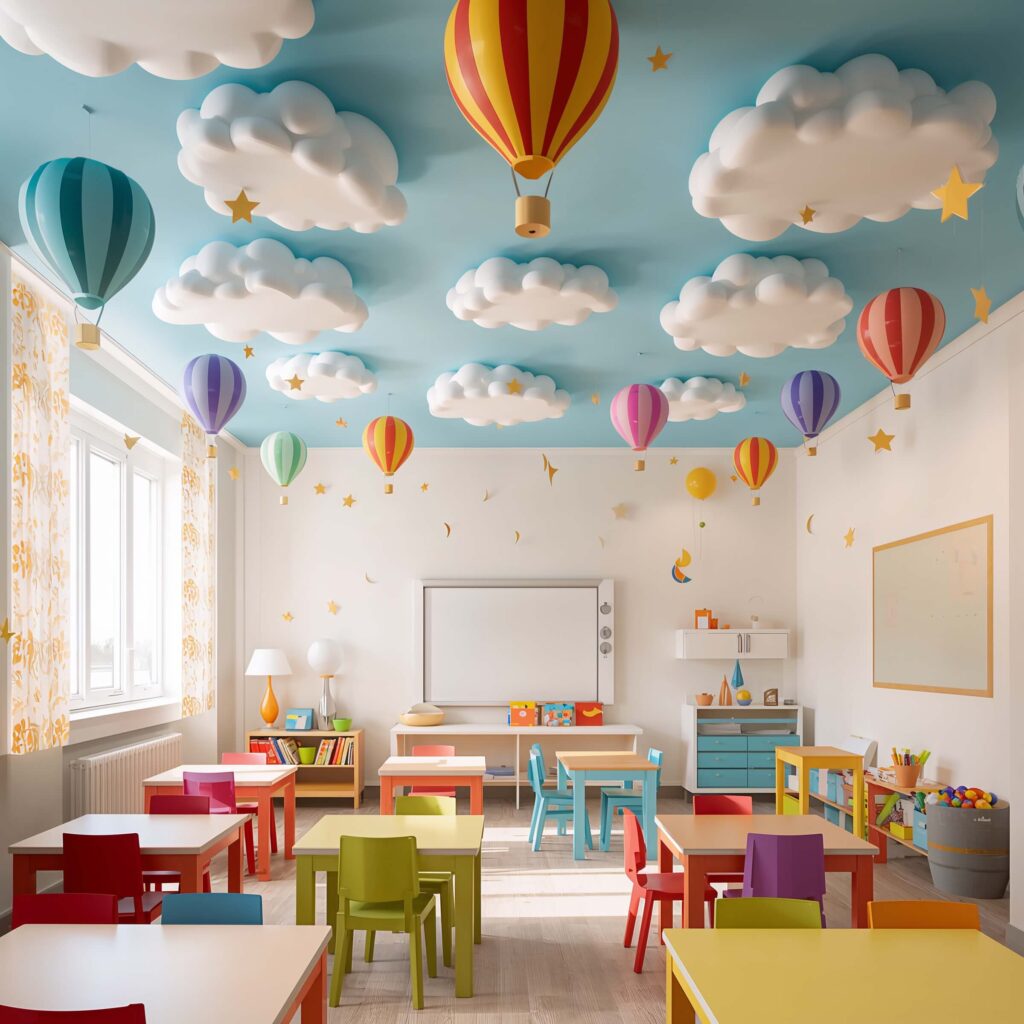
Nobody looks up in classrooms, which means you’re wasting prime real estate. Ceiling decorations add dimension to your space while keeping floor and wall space functional. Plus, kids lying on the carpet for story time need something interesting to stare at, right?
My ceiling revelation came during state testing when older kids used my room. They spent the entire time staring at my boring white ceiling tiles. The next year, I transformed those tiles into clouds, and suddenly my kindergarteners had “cloud reading” time where they’d lie on their backs making up stories. Sometimes innovation comes from pure boredom.
Hanging Magic Without Damage
Most schools have rules about ceiling modifications (spoiler alert: no holes allowed). But fishing line and clothespins become your secret weapons. String clear fishing line between existing fixtures and hang lightweight decorations that move with air currents.
Ceiling decoration ideas that won’t get you fired:
- Paper lanterns: Different sizes create depth
- Origami creations: Students make birds, butterflies, stars
- Ribbon waterfalls: Hang from embroidery hoops
- Cloud formations: Cotton batting on fishing line
- Student mobile art: Lightweight creations on coat hangers
Keep decorations above head height but low enough for impact. That sweet spot sits about 7-8 feet up – high enough to avoid basketball practice but low enough to create intimacy. Use a yardstick to check clearance because explaining a ceiling-decoration-related injury gets awkward fast :/
Seasonal Ceiling Swaps
Change ceiling decor quarterly to maintain wonder. Snowflakes in winter, butterflies in spring – you know the drill. But here’s the kicker: let kids create the decorations during art time. They’ll spend entire recesses showing their parents which butterfly they made, and you’ve got free decor. Win-win.
Student-Created Art Gallery
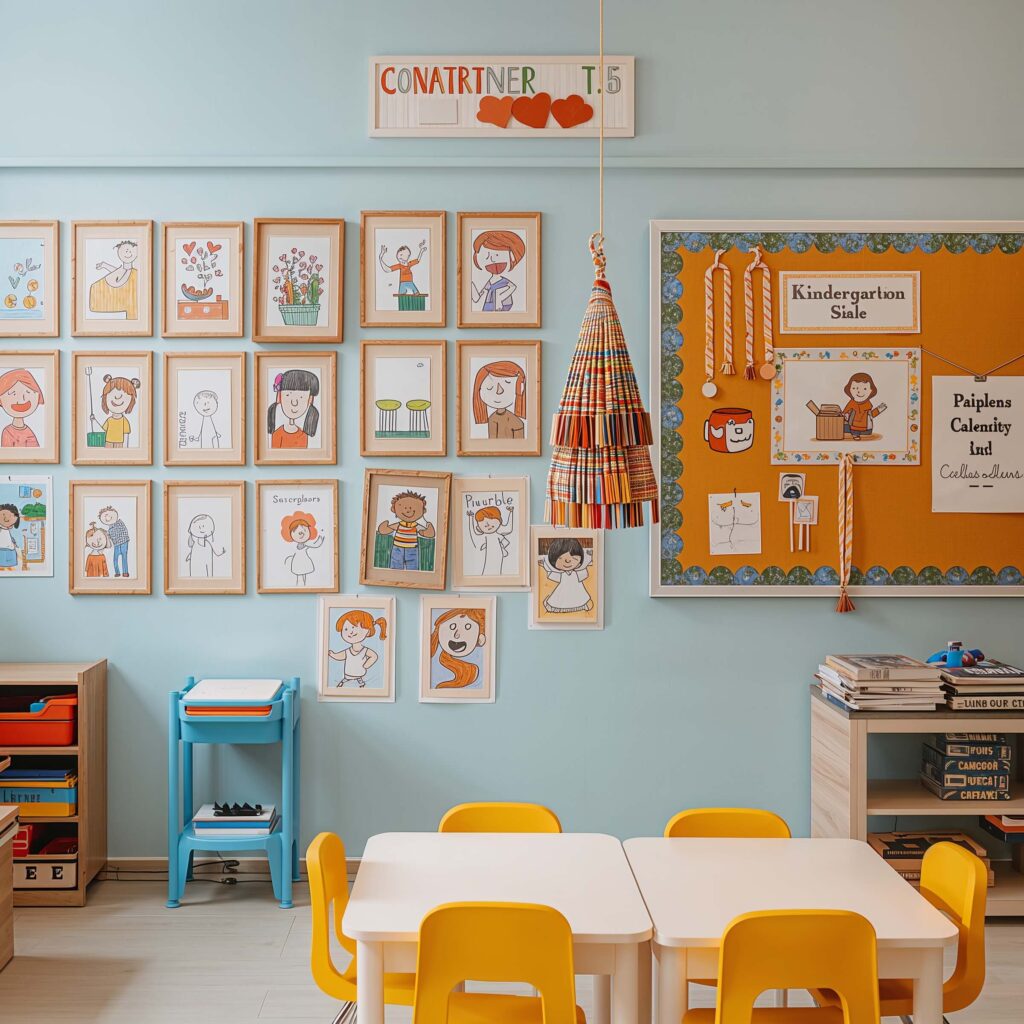
Traditional bulletin boards showcase teacher-made perfection. Boring! A student-created art gallery celebrates actual kid work, mistakes and all. Parents love seeing real creations, and kids beam with pride when their art gets gallery treatment.
I learned this lesson when a parent commented that our classroom looked “too perfect” and wondered if kids actually learned there. Ouch. But she was right – my Pinterest-worthy displays didn’t reflect actual learning. Now, every wall features authentic student work, and our room looks lived-in and loved.
Gallery Basics That Work
Create a dedicated gallery wall using wire and clothespins (like a fancy art museum, but achievable). Hang wire at kid eye-level using removable adhesive hooks. This system lets you change displays instantly without pushpin holes everywhere.
Gallery must-haves:
- Frames: Dollar store frames elevate any artwork
- Labels: Kids write their own artist statements
- Spotlights: Cheap LED spots highlight featured pieces
- Opening nights: Monthly gallery walks for parents
- Artist interviews: Record kids explaining their work
Rotate artwork weekly so everyone gets featured. Keep a gallery checklist ensuring equal representation. Nothing starts parent drama faster than unequal display time. Trust me, I’ve lived through the “Why isn’t Timmy’s art up?” interrogation.
Beyond Traditional Art
Expand your gallery to include photos of 3D creations, building block masterpieces, and even dramatic play scenarios. Kids create constantly – your gallery should reflect that diversity. Document everything with photos if you can’t display physical items.
Also Read: 10 Inspiring Basement Layout Ideas Floor Plans for Family Fun
Soft Play & Cozy Carpet Corners
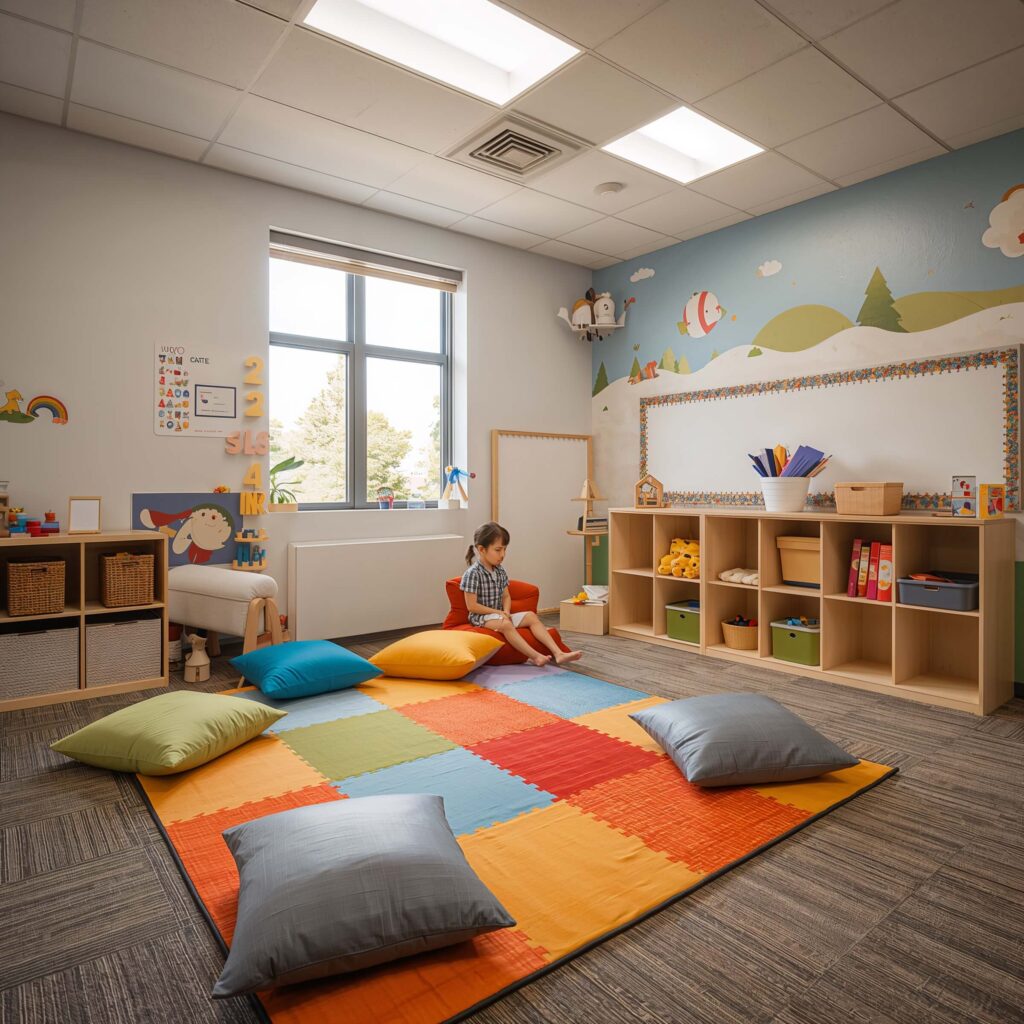
Hard floors and plastic chairs don’t exactly scream comfort. Soft play areas give kids space to relax, reset, and actually enjoy being in your classroom. These corners become behavior management tools disguised as cozy retreats.
My first classroom had all the comfort of a medical waiting room. When I added one small rug and some pillows, kids’ behavior improved dramatically. Turns out, five-year-olds need soft spaces to decompress. Who would’ve thought physical comfort affects emotional regulation? (Everyone. Everyone would’ve thought that.)
Creating Comfortable Learning Spaces
Start with a quality carpet or rug that can handle kindergarten life. Skip the thin educational rugs that pill after a week. Invest in something thick enough for comfortable sitting with a pattern that hides inevitable spills.
Essential soft corner elements:
- Various seating options: Pillows, bean bags, floor cushions
- Texture variety: Fuzzy, smooth, bumpy sensory options
- Defined boundaries: Use furniture or shelving to create walls
- Calming colors: Blues, greens, and neutrals reduce overstimulation
- Personal space markers: Individual carpet squares or cushions
The key? Multiple soft spaces throughout the room, not just one corner. Create a reading carpet, a morning meeting rug, and a calm-down corner. Different spaces serve different purposes, and kids learn to self-regulate by choosing appropriate spots.
Maintenance Without Madness
Here’s the reality: soft materials in kindergarten get gross. Washable covers save your sanity and your health. Choose materials that can handle weekly washing or at least vigorous spray-and-wipe sessions. Label everything with washing instructions because you’ll forget by October.
Create a cleaning rotation where kids help maintain their soft spaces. They can shake out pillows, straighten rugs, and organize cushions. Making them stakeholders in cleanliness works better than constant reminders to “be careful.”
Pulling It All Together
Creating an organized, engaging kindergarten classroom doesn’t require an interior design degree or unlimited budget. Start with one area and build from there. Maybe you begin with color-coding, then add a reading nook, then tackle that ceiling. Rome wasn’t built in a day, and neither is the perfect classroom.
Remember, the goal isn’t Instagram perfection. You want a functional space where learning happens naturally and organization feels effortless. These systems work because they speak to how five-year-olds actually think and move through space. When your environment supports your teaching instead of fighting against it, everyone wins.
The best part about these ideas? They grow with your class. That rainbow organization system you start in September evolves as kids develop. Your animal zones might gain new creatures. The art gallery transforms from scribbles to actual representations. Your classroom becomes a living document of the learning happening inside.
Take what works, modify what doesn’t, and don’t stress about perfection. Kids remember how a classroom made them feel, not whether your bulletin board borders matched perfectly. Create a space full of wonder, organization, and comfort, and watch how learning flourishes. After all, you’re not just decorating a room – you’re building a community where tiny humans learn to love school.
Now get out there and transform that classroom. Your future self (specifically, November you) will thank you when those organizational systems are running themselves and your ceiling butterflies are still bringing smiles. Happy decorating!