10 Stylish Kitchen Cupboard Organization Ideas for Modern Kitchens
- Cupboard Design
 Ben
Ben- 0
- 28 minutes read
ALet me guess—you just opened your kitchen cupboard and something fell out, right? Or maybe you spent five minutes searching for that one spice you know is in there somewhere, buried behind fourteen other bottles you forgot you owned.
I’ve been there, friend. My kitchen cupboards used to be a disaster zone where Tupperware lids went to die and expired cans of beans held secret meetings in the back corners. Opening a cupboard felt like playing Jenga with my kitchenware one wrong move and everything would come crashing down.
Then I had my breaking point. A can of tomatoes literally jumped out and bruised my foot. That’s when I decided enough was enough and dove headfirst into the world of kitchen organization.
After countless trials, some embarrassing failures, and way too much money spent on organizers that didn’t work, I’ve finally cracked the code.
These ten kitchen cupboard organization ideas actually work in real life, not just on Pinterest. They’re practical, sustainable, and won’t require you to become a minimalist or spend your entire weekend rearranging things.
Let’s transform those chaotic cupboards into organized spaces that’ll make cooking feel less like a scavenger hunt and more like the joy it should be.
1. Pull-Out Pantry Shelves
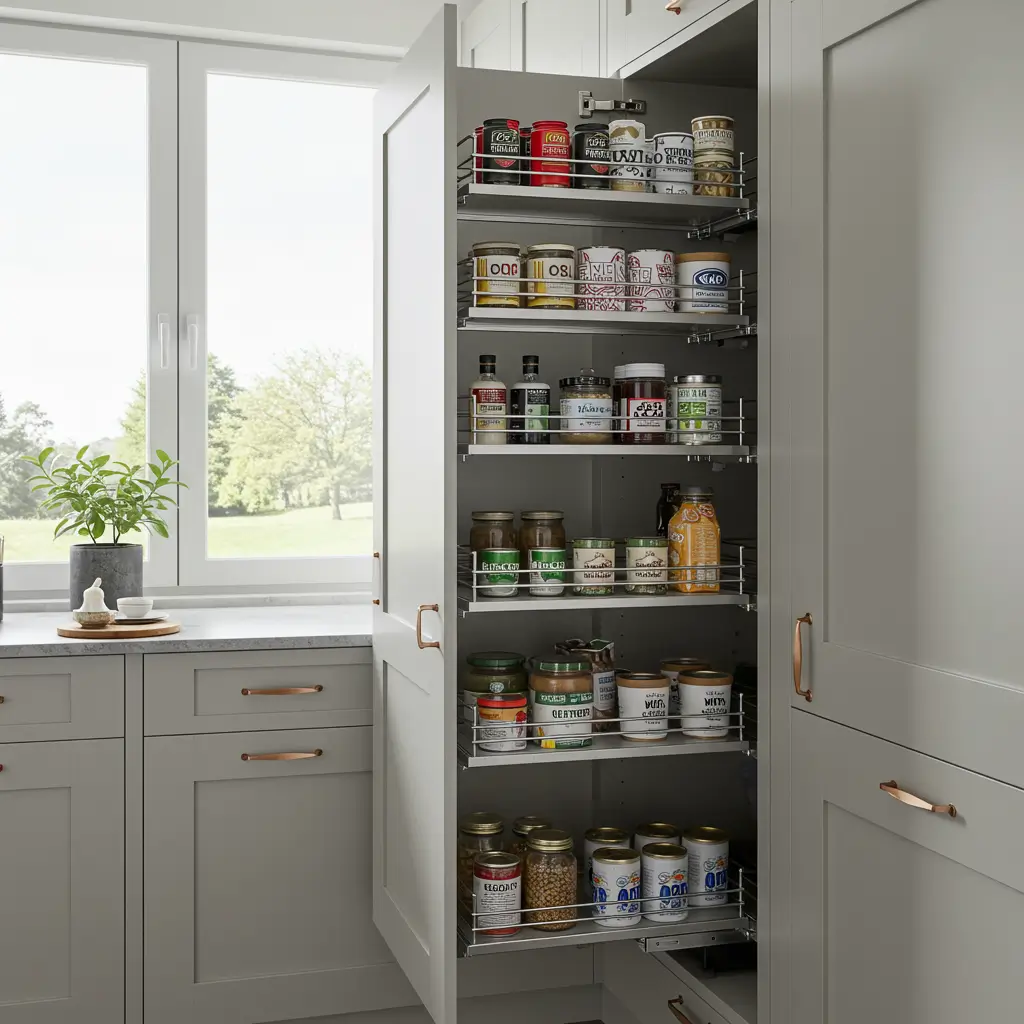
Pull-out shelves are hands-down the best investment I ever made for my kitchen cupboards. They turn those deep, dark cabinet caves where food goes to expire into accessible storage you can actually use.
Why Pull-Outs Change Everything
Ever shoved something to the back of a deep cupboard and forgotten about it for months? Pull-out shelves eliminate that problem completely. Everything glides forward with a simple tug, bringing even the items in the very back within easy reach. No more getting on your hands and knees to excavate expired canned goods.
I installed pull-out shelves in my pantry cupboard two years ago, and I’m still amazed every time I use them. That can of coconut milk I need? Just pull out the shelf and grab it. No archaeological dig required. The smooth gliding action feels so satisfying that I sometimes pull them out just for fun (yes, I’m that person now).
Making Pull-Outs Work for You
Choose heavy-duty slides rated for at least 75-100 pounds. Kitchen items are heavier than you think, especially when you load shelves with canned goods and bottles. Cheap slides stick, wobble, or break within months—trust me, I learned this the hard way with my first budget attempt.
Full-extension slides are worth the extra money. They pull out completely, not just halfway. What’s the point of a pull-out shelf if you still can’t reach stuff in the back? Soft-close features prevent slamming and add that luxury kitchen feel that makes you smile every time you close them.
2. Lazy Susan Corner Cupboard
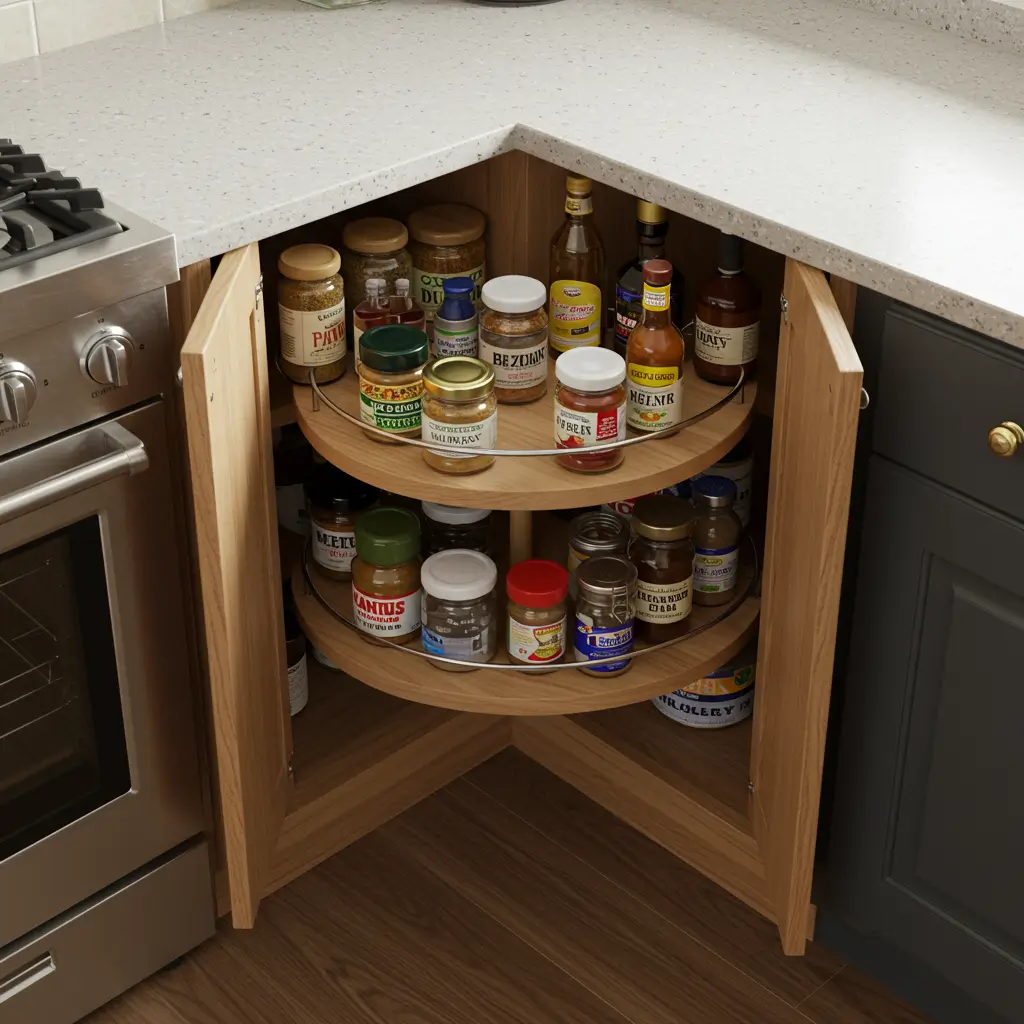
Corner cupboards are like the Bermuda Triangle of kitchens—things go in and never come out. Lazy Susans solve this problem by bringing everything within reach with a simple spin.
The Rotating Revolution
Corner cupboards waste massive amounts of space with their hard-to-reach depths. A Lazy Susan transforms this dead zone into prime storage real estate. Spin the turntable and everything rotates to you. It’s like magic, except it’s just good design.
I use a two-tier Lazy Susan in my corner cupboard for oils, vinegars, and condiments. Before this, I owned three bottles of soy sauce because I kept forgetting I already had some hiding in the back. Now I spin, see everything, and actually use what I have. My grocery bill went down just from reducing duplicate purchases.
Choosing the Right Lazy Susan
Measure your corner cupboard carefully before buying. The Lazy Susan needs to spin freely without hitting cupboard walls. Leave at least an inch of clearance on all sides for smooth rotation. Non-slip surfaces prevent bottles from sliding off during spinning—nothing ruins your day like a vinegar spill in your cupboard.
Two-tier Lazy Susans double your storage in the same footprint. Just ensure you have enough vertical clearance between tiers for your tallest items. Those giant olive oil bottles need breathing room, and bonking them together while spinning defeats the purpose.
3. Tiered Spice Rack Organizers
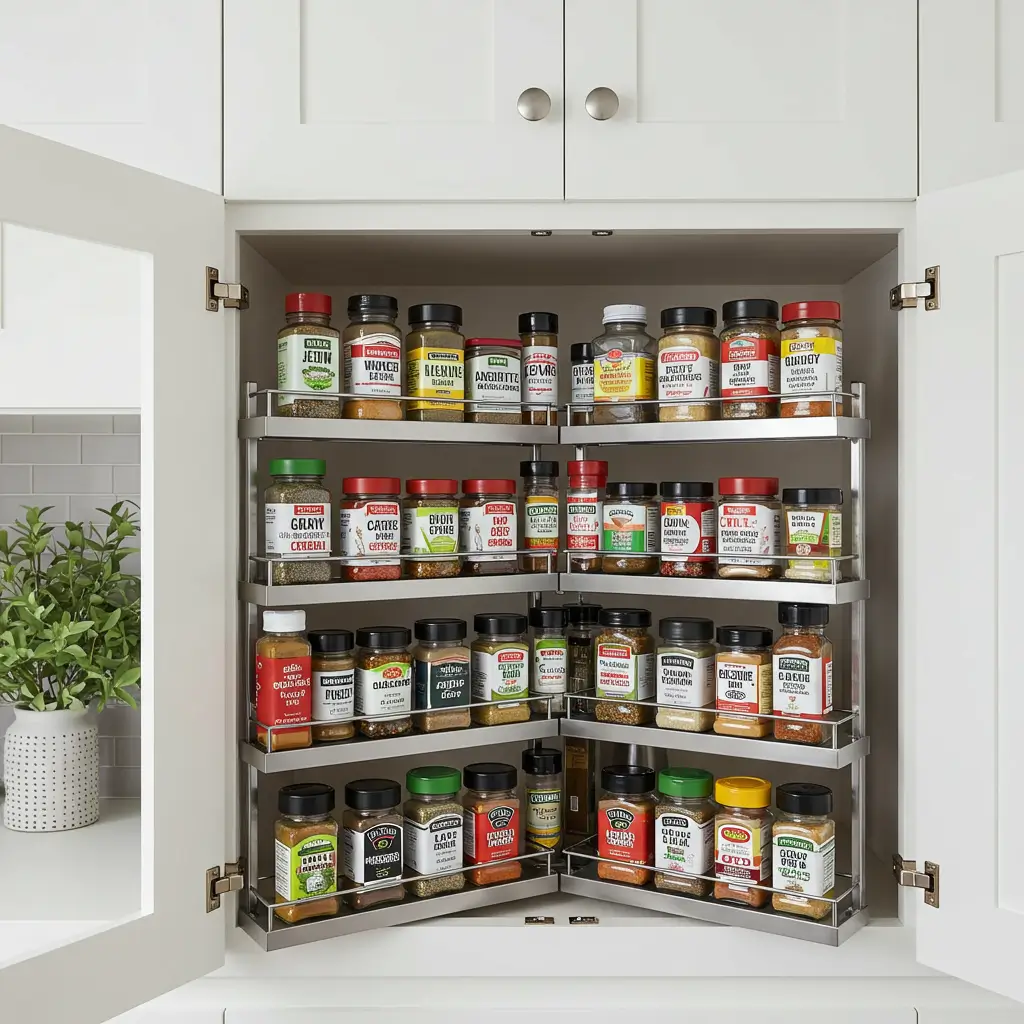
If you’ve ever bought duplicate spices because you couldn’t find the one buried in the back, tiered organizers will change your life. They create stadium seating for your spice collection, making every bottle visible and accessible.
Stadium Seating for Spices
Tiered risers place spices at different heights so you can see every label at a glance. No more digging through layers of bottles, knocking things over, or playing guess-the-spice-by-shaking-it. Everything sits in clear view, organized and ready to use.
I went from using the same five spices repeatedly (because they lived in front) to actually utilizing my full collection. Turns out I own cardamom, star anise, and five different types of paprika. Who knew? The tiered system revealed spices I’d forgotten I had and inspired me to try new recipes.
Setting Up Your Spice System
Alphabetize your spices on the tiers. Yes, it sounds obsessive, but when you’re cooking dinner and need cumin quickly, alphabetical order saves precious time. If alphabetical feels too rigid, group by cuisine type—Italian spices together, Asian spices together, baking spices together.
Choose tiered organizers that fit your cupboard height. Some are too tall for standard cupboards and create wasted space above. Adjustable tiers work brilliantly because you can customize spacing based on your bottle sizes. Short spice jars on one level, tall bottles on another—maximum efficiency.
Also Read: 12 Creative Cupboard Organization Ideas for Small Spaces
4. Hanging Cupboard Door Storage

The inside of your cupboard doors is prime real estate that most people completely waste. Hanging organizers transform these forgotten surfaces into functional storage for lightweight items.
Door Space Magic
Over-the-door racks, hooks, and pockets utilize vertical space without taking up shelf room. Mount measuring cups on hooks, store spice packets in pockets, or hang cleaning supplies on the inside of under-sink cupboard doors. This strategy keeps frequently used items within easy reach while freeing up shelf space for bulkier items.
I installed simple hooks on my cupboard doors for measuring spoons and cups, and it’s amazing how much this tiny change improved my cooking workflow. No more digging through the utensil drawer—I just open the cupboard and grab what I need. Game-changer for daily cooking efficiency.
Installation Tips
Measure your cupboard door thickness and hinge clearance before buying organizers. Some doors won’t close properly with certain rack styles. Test the door’s closing action before permanently installing anything. Nothing’s more frustrating than a perfect organizer that prevents your cupboard from closing.
Don’t overload door organizers. They work great for lightweight items but struggle with heavy bottles or appliances. The constant opening and closing puts stress on mounting points. Keep it reasonable or risk everything crashing down at 3 AM (yes, it happened to me).
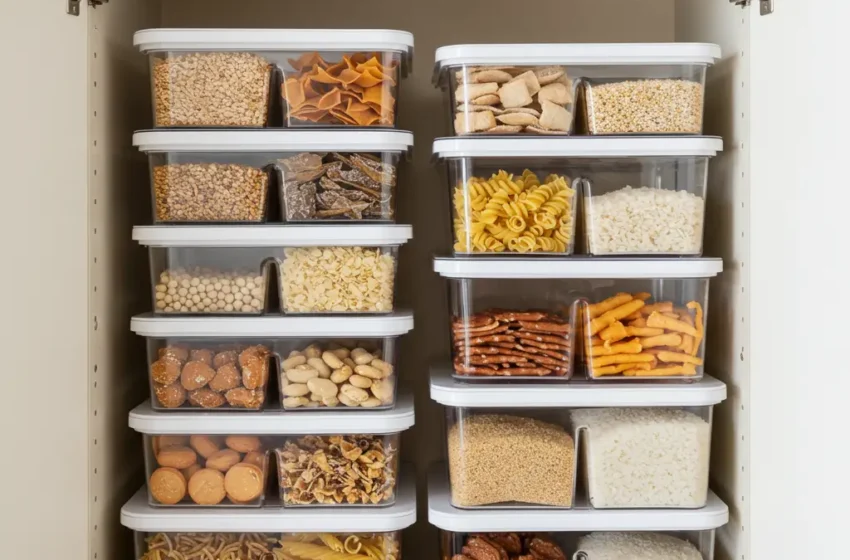
5. Stackable Clear Storage Bins
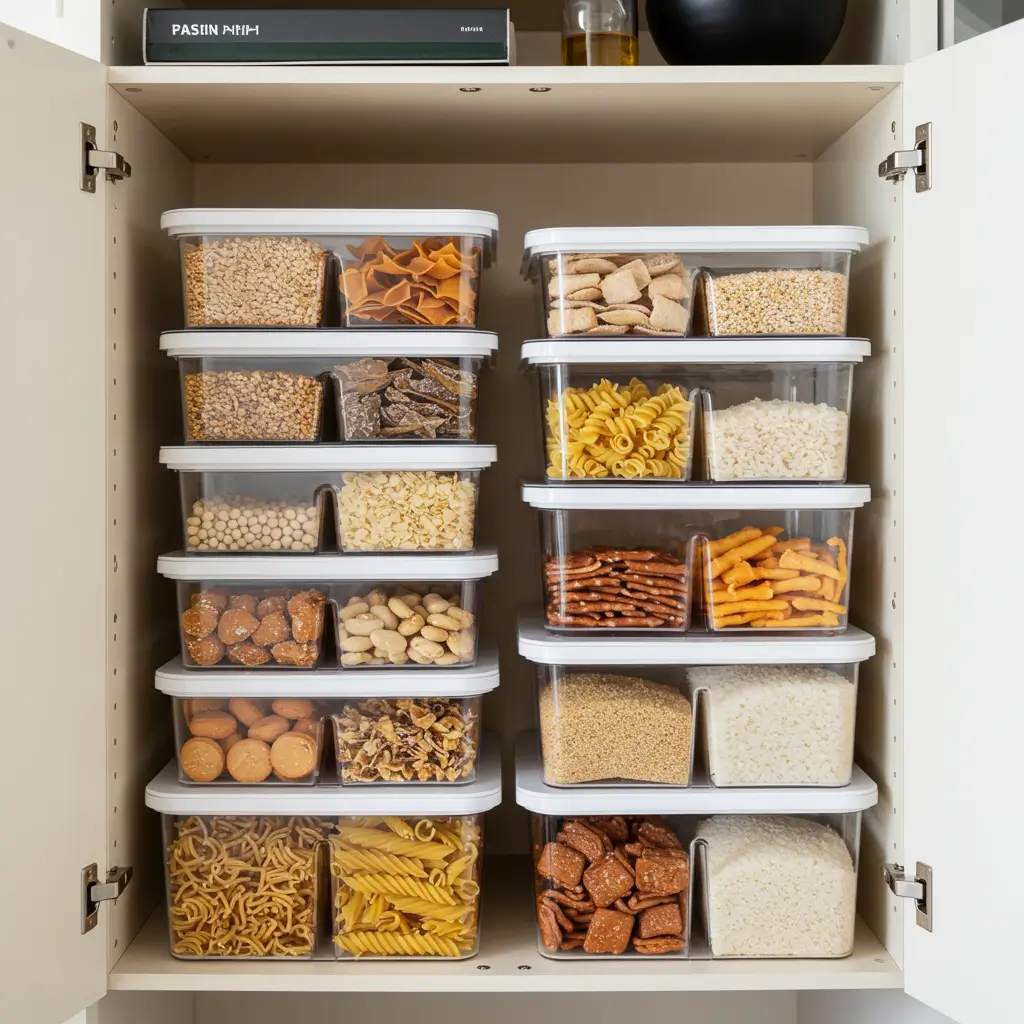
Clear stackable bins transform chaotic cupboards into organized zones where you can see exactly what you have. They’re like giving your cupboards a filing system that actually works.
The Clarity Advantage
Clear bins let you see contents without pulling everything down. Stack bins by category—snacks, baking supplies, breakfast items—and suddenly your cupboard makes sense. No more mystery containers or forgotten items hiding in corners.
I switched to clear stackable bins for pantry organization, and my kids can finally find snacks independently. Each bin holds different snack types, clearly visible and easily accessible. This reduced the “Mom, where’s the granola bars?” questions by approximately 87% (I’m estimating, but it feels accurate).
Bin Selection Strategy
Choose bins with stable bases that don’t wobble when stacked. Flimsy bins tip over and create new organizational problems. Square or rectangular bins use space more efficiently than round ones—they align perfectly without wasted gaps.
Don’t stack higher than you can comfortably reach. Three to four bins high is usually the sweet spot. Any higher and you’re climbing or risking an avalanche every time you need something from the bottom. Label bin fronts so everyone in your household knows what belongs where.
6. Sliding Drawer Inserts for Utensils
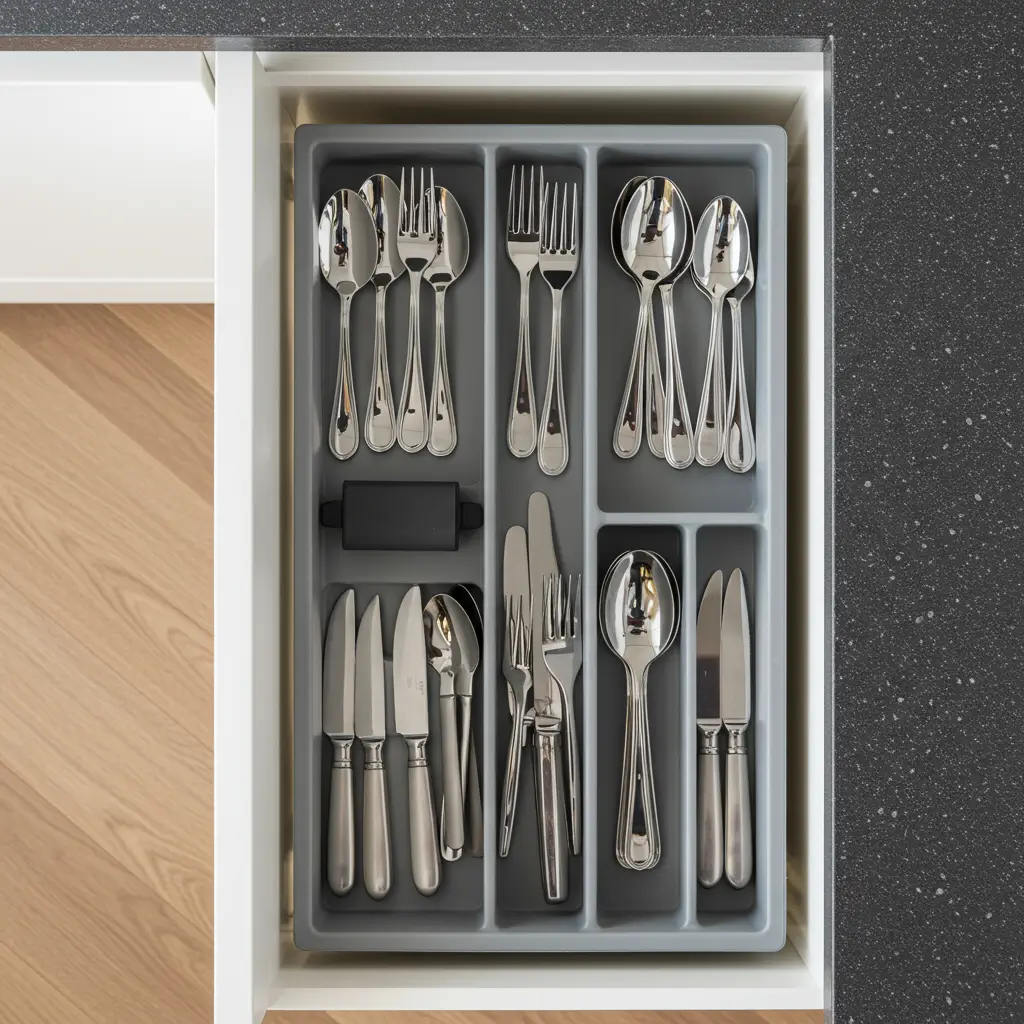
Utensil drawers become chaotic black holes without proper organization. Sliding drawer inserts create multiple tiers within one drawer, tripling your storage capacity while keeping everything organized.
The Sliding Solution
Sliding inserts feature tiers that slide aside to reveal additional storage below. The top tier holds everyday utensils, while lower tiers store less-used items like specialty tools and gadgets. This system maximizes drawer depth without creating the usual jumbled mess.
I installed a sliding insert in my utensil drawer and finally gave proper homes to all my kitchen tools. Garlic press, apple corer, citrus reamer, pizza cutter—everything has a designated spot I can actually access. No more dumping the entire drawer to find one tool.
Making Sliding Inserts Work
Measure your drawer dimensions precisely before ordering. Sliding inserts need snug fits to function properly. Too loose and they shift around; too tight and they don’t slide smoothly. Most manufacturers provide sizing guides, so use them.
Don’t overload tiers with heavy items. Sliding mechanisms struggle under excessive weight and may stick or break. Keep heavy items on bottom tiers, lighter items on top. This maintains smooth sliding action and extends the insert’s lifespan.
Also Read: 10 Elegant Modern Cupboard Design Ideas to Refresh Homes
7. Adjustable Shelf Dividers
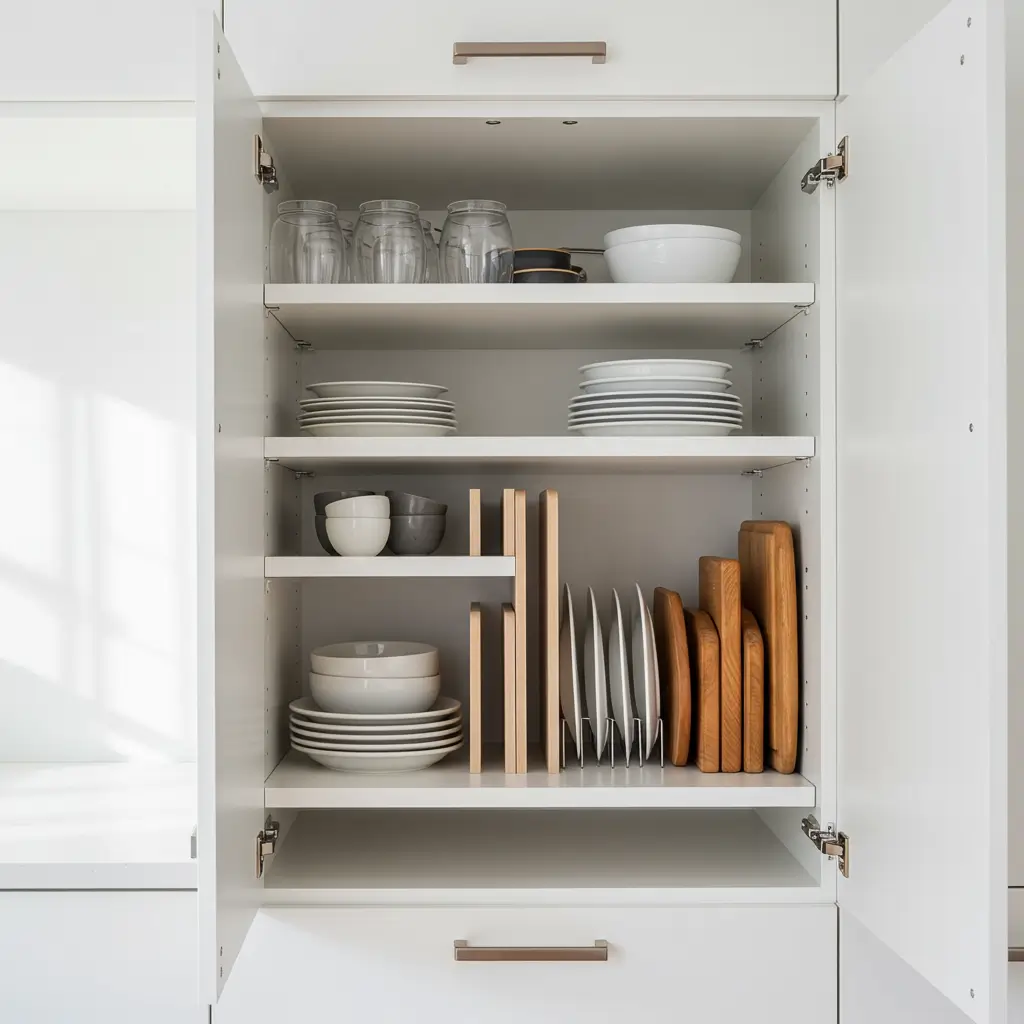
Adjustable shelf dividers are like the chameleons of cupboard organization—they adapt to whatever you need. These flexible systems create customized compartments that change as your storage needs evolve.
Flexibility Is Key
Unlike permanent shelving, adjustable dividers move and resize. Need wide compartments for large containers this month? Adjust the dividers. Switching to smaller items next month? Reconfigure in seconds. This adaptability makes them perfect for changing storage needs.
I use adjustable dividers in my tupperware cupboard, and they’ve saved me from the lid avalanche problem. Containers in one section, lids organized by size in another. When I bought new containers, I simply adjusted the dividers to accommodate them. No reconstruction required.
Choosing Quality Dividers
Look for spring-loaded or expandable dividers that adjust to different cupboard widths. They should hold firmly without slipping when you remove items. Cheap dividers shift constantly and defeat the purpose of organization.
Start with a basic set and add pieces as needed. Many adjustable systems are modular and work together, letting you build customized solutions over time. This approach spreads costs and lets you experiment with configurations before committing fully.
8. Under-Shelf Hanging Baskets

Under-shelf baskets utilize that wasted space between shelves, effectively creating additional storage without adding more shelving. They’re perfect for lightweight items and create bonus storage in already-packed cupboards.
Maximizing Vertical Space
Most cupboards have several inches of unused space between shelves and the items stored on them. Under-shelf baskets hook over existing shelves and hang underneath, using this dead space productively. Store coffee filters, tea bags, small packages, or anything lightweight that needs a home.
I added under-shelf baskets in my pantry for snack bars and individual snack bags. This freed up shelf space for bulkier items while keeping grab-and-go snacks accessible. My kids can reach them easily, promoting independence and reducing the constant “can you get me a snack?” requests.
Installation and Use
Choose baskets that fit your shelf depth. They should hang securely without swinging or falling when you remove items. Wire baskets work well because you can see contents, but solid baskets work for less-attractive items you want to hide.
Don’t exceed weight limits. Under-shelf baskets aren’t designed for heavy items. They work brilliantly for packets, bags, and lightweight kitchen items but struggle with cans or bottles. Respect the weight limits or risk damaged shelves and baskets.
9. Transparent Glass Jar Storage
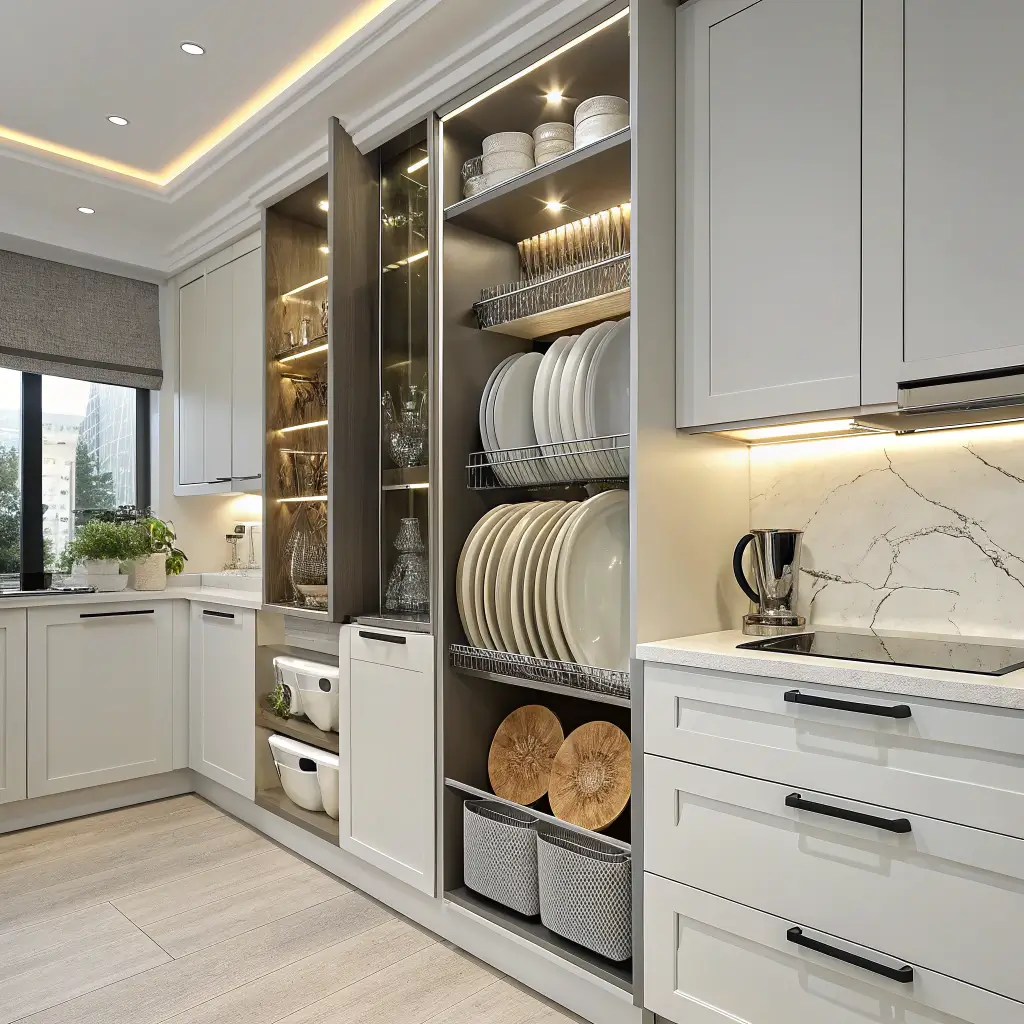
Glass jars transform pantry staples into beautiful displays while keeping ingredients fresh and visible. This system combines form and function in the most satisfying way.
Beauty Meets Function
Transferring dry goods from cardboard boxes and plastic bags into glass jars makes pantry cupboards look intentional and organized. Different pasta shapes, rice varieties, beans, flour—all visible and aesthetically pleasing. You know exactly what needs restocking at a glance.
I switched my entire pantry to glass jars last year, and it’s probably my favorite organizational change ever. My cupboards went from chaotic to Instagram-worthy, which motivates me to maintain the organization. Plus, ingredients stay fresher in sealed jars than in partially opened boxes.
Jar Selection and Labeling
Choose uniform jar sizes and shapes for cohesive looks. Square jars use space more efficiently than round—they align perfectly without wasted gaps between containers. Ensure lids seal properly to maintain freshness. This isn’t just about aesthetics; it’s about food preservation.
Label everything, even if you think you’ll remember. Top labels work for overhead cupboards, front labels for eye-level storage. Include purchase dates if you’re committed to rotation. A label maker creates professional-looking labels, but masking tape and marker work fine too.
Also Read: 10 Chic Cupboard Ideas Bedroom and Minimalist Inspirations
10. Vertical Plate and Lid Holders

Storing plates and pan lids horizontally wastes space and makes accessing bottom items frustratingly difficult. Vertical storage solves both problems elegantly and efficiently.
Filing Your Plates
Vertical dividers let you file plates, cutting boards, and baking sheets like books instead of stacking them in precarious towers. Pull out the one you need without disturbing the rest. This simple change makes such a huge difference in daily kitchen functionality.
I installed vertical dividers for my baking sheets and cutting boards, and I actually use them all now instead of just the top ones. Accessing my cookie sheets no longer requires removing five other pans first. It’s the small wins that make cooking more enjoyable.
Choosing Divider Systems
Adjustable dividers accommodate different plate sizes and thicknesses. Some install permanently with screws; others use tension or weight to hold position. Choose based on whether you own or rent and how permanent you want the solution.
Vertical lid holders keep pan lids organized instead of creating chaotic piles. Mount them inside cupboard doors or on shelves. Suddenly you can find the right lid without trying seven wrong ones first. It’s honestly amazing how much time this saves.
Bringing It All Together
The secret to successful kitchen cupboard organization isn’t finding one perfect solution—it’s combining strategies that work for your specific space, cooking style, and household.
Maybe you need pull-out shelves plus tiered spice racks. Or clear bins with door organizers and vertical dividers.
Start with your most frustrating cupboard. Don’t try to organize everything at once or you’ll burn out. Pick the cupboard that makes you want to scream every time you open it and implement one or two solutions there.
Once that’s working smoothly, move to the next trouble spot.
Measure everything before buying organizers. Seriously, measure twice, buy once. I have a collection of organizational products that didn’t quite fit, and it’s embarrassing.
Save yourself the hassle, returns, and wasted money by measuring cupboard dimensions, door clearance, and shelf heights.
Maintain your systems. Even brilliant organization fails if nobody puts things back properly. Those first few weeks require conscious effort, but then it becomes automatic. Labels help everyone maintain the system—your partner, kids, or roommates know exactly where things belong.
Remember that organization is personal. What works for minimalists might not work for families with kids. What works for passionate cooks might not work for takeout enthusiasts. Choose solutions that match your lifestyle, not someone else’s Instagram-perfect ideal.
Be willing to adjust. If something isn’t working after a month, try a different approach. Organization should make life easier, not add stress. The right system should disappear into your routine—you use it without thinking about it.
Invest in quality for permanent solutions. Cheap organizers break, warp, or fail within months. Quality pieces last years and actually save money long-term. That said, test systems with budget options before committing to expensive upgrades if you’re unsure.