12 Gorgeous Kitchen Tiles Design Ideas for Small Spaces
- Kitchen Tiles Ideas
 Ben
Ben- 0
- 49 minutes read
Your kitchen tiles can make or break the entire vibe of your cooking space. And let’s face it—staring at outdated, boring tiles while waiting for your coffee to brew gets old really fast.
I’ve renovated three kitchens over the past decade, and trust me, choosing the right tiles caused more sleepless nights than I’d like to admit. The options feel endless.
The prices vary wildly. And that “perfect” tile you found on Pinterest? Good luck tracking it down at your local home improvement store.
But here’s the good news: once you understand what works and why, selecting kitchen tiles becomes way less overwhelming.
Whether you’re planning a full renovation or just updating your backsplash, these 12 kitchen tile design ideas will give you the inspiration and practical knowledge you need to make confident decisions.
Let’s break down each style, discuss the pros and cons, and figure out which kitchen tile design matches your lifestyle and aesthetic goals.
1. Modern Subway Tile Kitchen Design
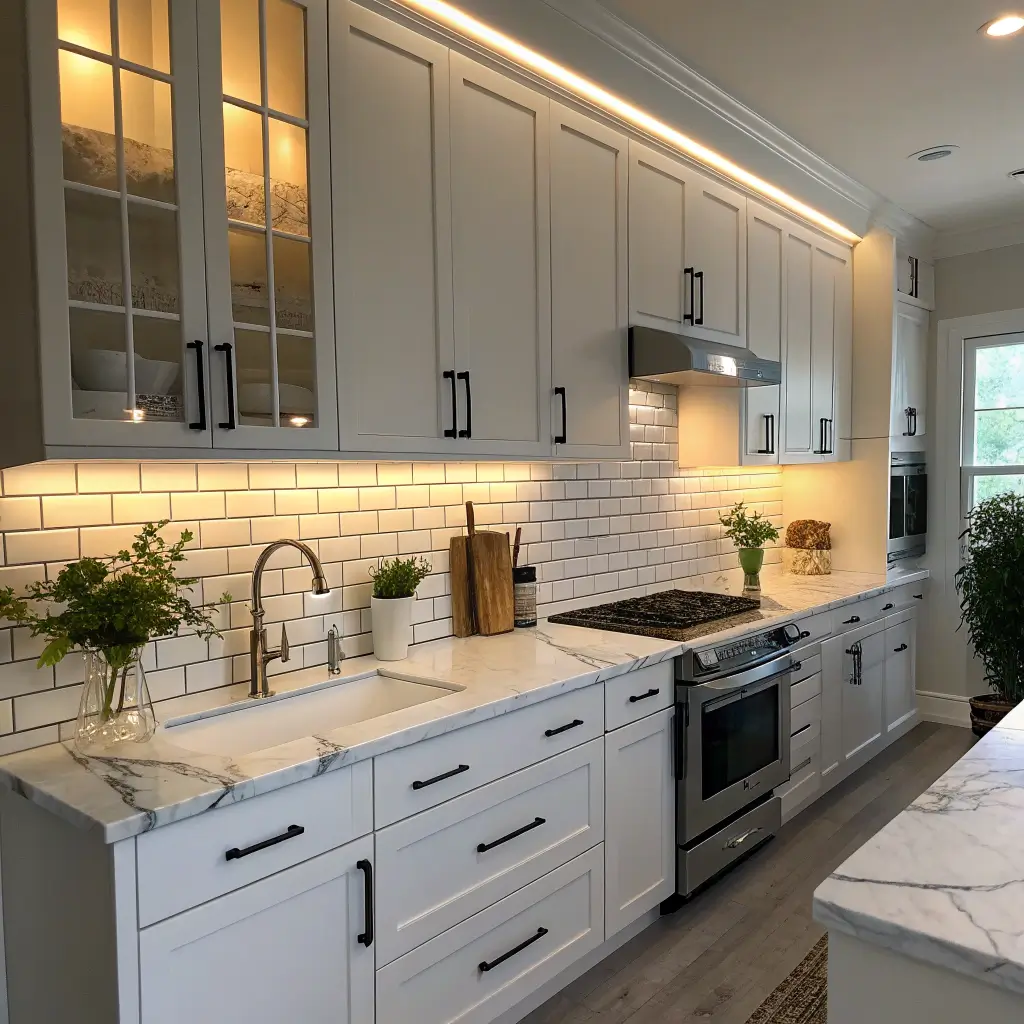
Subway tiles have been around since the early 1900s, and somehow they still manage to look fresh and contemporary. There’s a reason designers keep coming back to this classic—it works.
Why Subway Tiles Never Go Out of Style
The beauty of subway tiles lies in their simplicity. These rectangular tiles (typically 3×6 inches) create clean lines that complement virtually any kitchen style, from farmhouse to ultra-modern.
What makes modern subway tile designs different from traditional applications? It’s all about the details:
- Varied layouts: Herringbone, vertical stack, or staggered patterns add contemporary flair
- Colored grout: Black or contrasting grout lines make the pattern pop
- Extended sizes: Longer subway tiles (4×12 or 4×16) create a more modern proportion
- Unique finishes: Handmade, beveled, or zellige-style subway tiles add texture
I installed classic white subway tiles with charcoal grout in my last kitchen renovation. The contrast created instant visual interest without overwhelming the space. Plus, the darker grout hides stains way better than white grout ever could.
Best Applications for Subway Tiles
Subway tiles shine brightest as backsplash material. Their manageable size makes installation relatively straightforward, and the classic look adds value to your home.
Consider extending subway tiles from counter to ceiling for maximum impact. This approach creates a seamless, professional look that makes even small kitchens feel more spacious.
2. Large Format Minimalist Kitchen Tiles
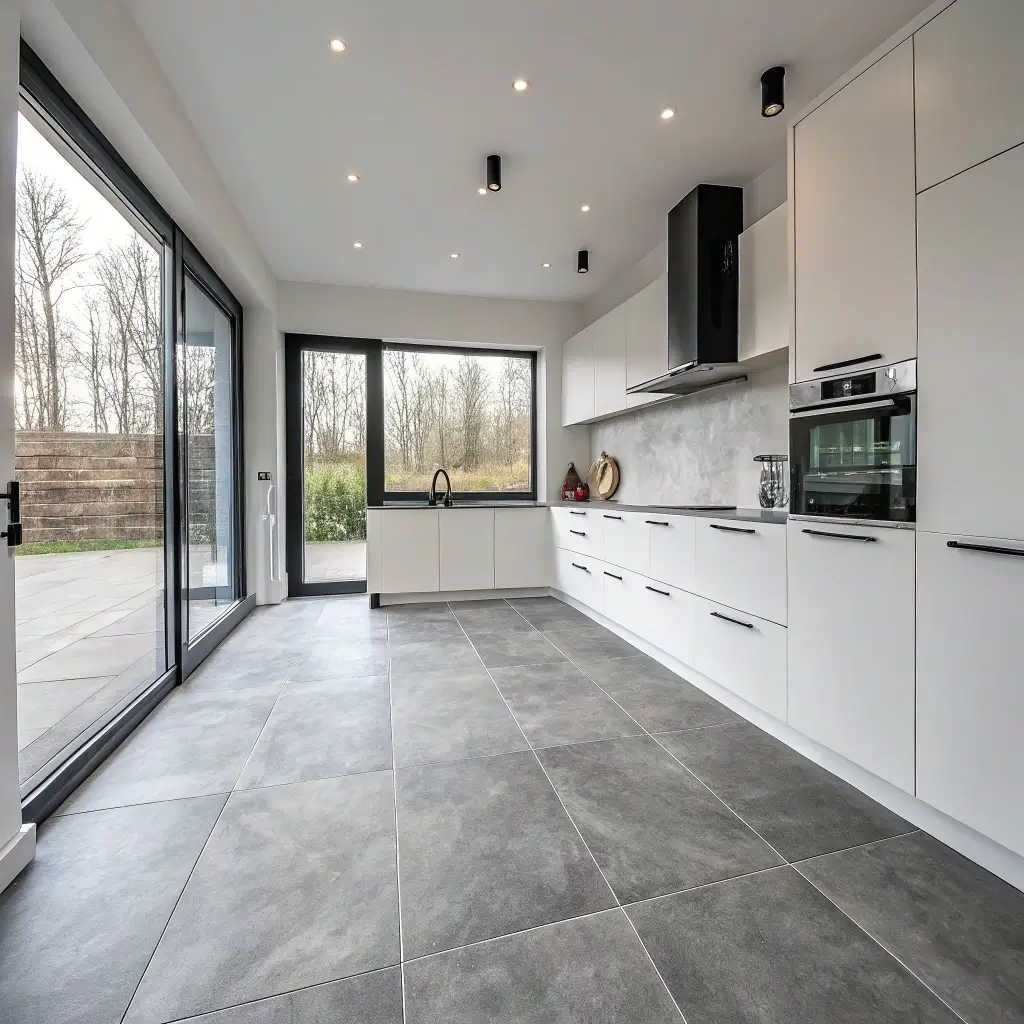
Want your kitchen to feel bigger, cleaner, and more sophisticated? Large format tiles might be your answer.
The Appeal of Going Big
Large format tiles (typically 24×24 inches or larger) reduce the number of grout lines in your space. Fewer grout lines mean easier cleaning, a more seamless appearance, and an optical illusion that makes rooms feel larger.
The minimalist aesthetic thrives on simplicity, and nothing says “less is more” quite like expansive tile surfaces with minimal interruption.
Key benefits of large format kitchen tiles include:
- Easier maintenance: Less grout means fewer places for dirt and grime to hide
- Modern aesthetic: Clean lines create a sleek, contemporary feel
- Visual expansion: Your kitchen appears larger than its actual square footage
- Versatile styling: Works on both floors and walls for a cohesive look
Considerations Before Choosing Large Format
Here’s the thing—large format tiles require perfectly level surfaces for proper installation. Any imperfections in your subfloor become immediately visible. Professional installation typically costs more due to the precision required and the weight of these tiles.
Also, large tiles don’t work well in very small kitchens. Cutting large tiles to fit tight spaces wastes material and can look awkward. For compact kitchens, medium-sized tiles often work better.
3. Moroccan Pattern Kitchen Tile Style
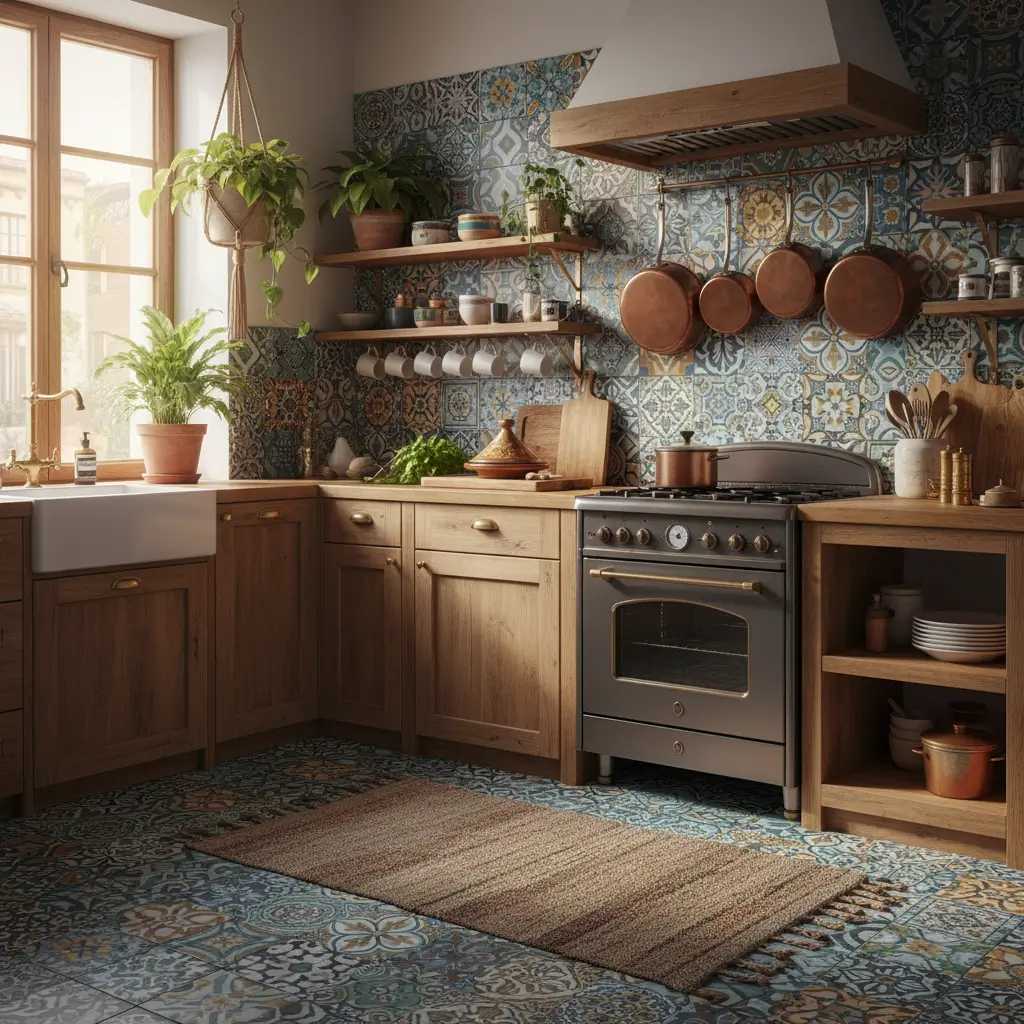
Ready to add some serious personality to your kitchen? Moroccan-inspired tiles bring bold patterns, rich colors, and centuries of cultural heritage to your cooking space.
Understanding Moroccan Tile Aesthetics
Moroccan tiles encompass several distinct styles, including hand-painted zellige tiles, intricate geometric patterns, and vibrant encaustic cement tiles. These tiles originated in Morocco and throughout the Mediterranean region, where they’ve adorned homes, palaces, and mosques for generations.
The characteristic features of Moroccan tile designs include:
- Geometric precision: Complex mathematical patterns create mesmerizing visual effects
- Vibrant color palettes: Blues, greens, yellows, and terracotta tones dominate
- Handcrafted variations: Slight imperfections add authenticity and charm
- Cultural storytelling: Each pattern carries historical significance
Where to Use Moroccan Tiles in Your Kitchen
I recommend using Moroccan pattern tiles strategically rather than everywhere. A full kitchen covered in bold patterns can feel overwhelming. Instead, consider these applications:
- Backsplash focal point: Create a stunning statement behind your range
- Floor accent: Use patterned tiles in a defined area, bordered by solid tiles
- Island feature: Cover the sides of your kitchen island for unexpected drama
- Niche or shelf backing: Add interest to built-in shelving
The key is balance. Pair Moroccan tiles with solid, neutral surfaces to let the pattern shine without competing for attention.
Also Read: 10 Elegant Kitchen Floor Tiles Ideas for Stylish Kitchens
4. Marble Look Luxury Kitchen Tiles
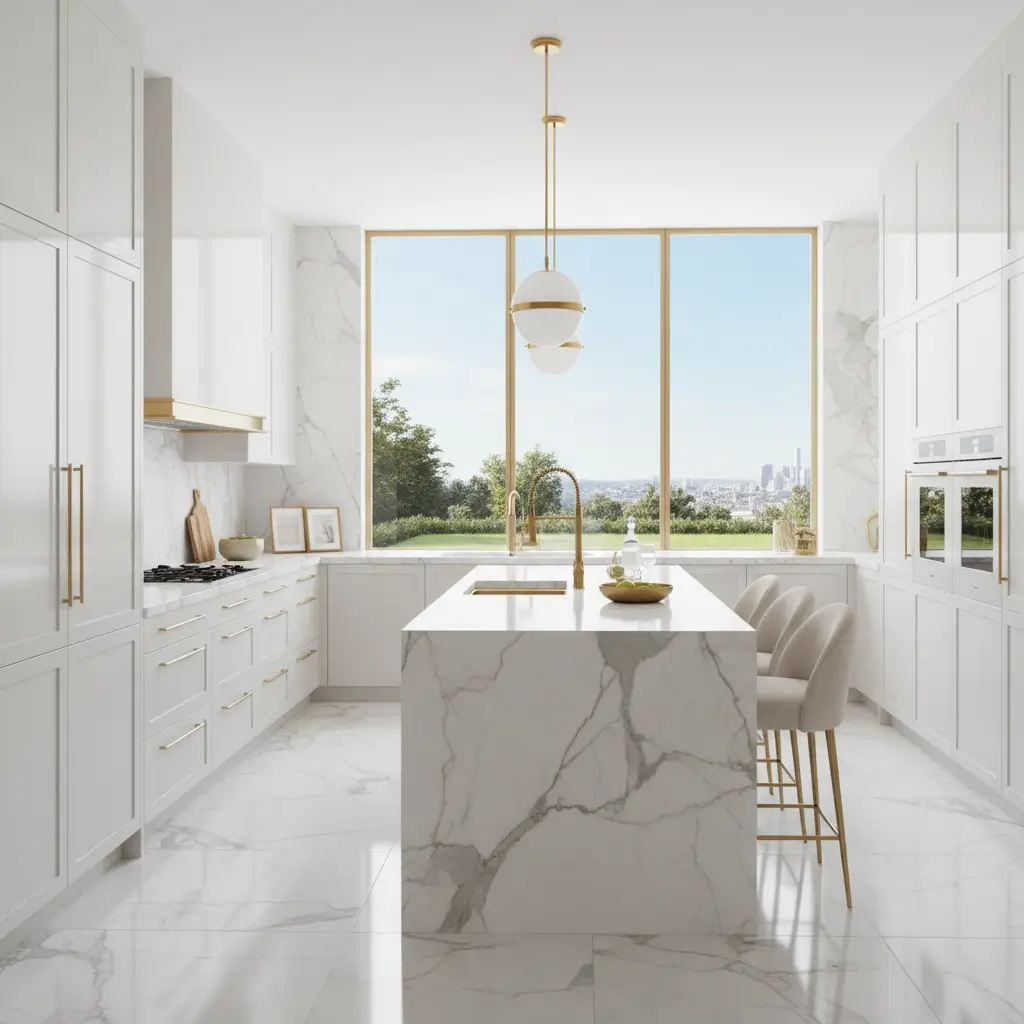
Real marble is gorgeous. Real marble is also expensive, high-maintenance, and prone to staining from acidic foods. Enter marble-look tiles—all the elegance with way less drama.
The Case for Marble-Look Porcelain
Modern porcelain tiles replicate the veining, depth, and luminosity of natural marble so convincingly that even design professionals struggle to spot the difference. These tiles offer luxury aesthetics at a fraction of the cost and maintenance.
Why choose marble-look tiles over actual marble?
- Durability: Porcelain resists scratches, stains, and etching from acidic substances
- Cost-effective: Significantly cheaper than natural marble
- Consistent patterns: No surprises—what you see in the showroom is what you get
- Easy maintenance: Standard cleaning products work perfectly
- Variety: Available in Carrara, Calacatta, Statuario, and countless other marble styles
Creating Authentic Marble Effects
To make your marble-look tiles appear as authentic as possible, pay attention to installation details. Choose tiles with varied veining patterns and rotate them during installation to avoid repetitive looks. Use matching grout colors to minimize visible seams.
For countertop-to-backsplash applications, select tiles with coordinating veining that flows naturally. This creates the illusion of a continuous marble slab—the ultimate luxury look without the luxury price tag. 🙂
5. Matte Finish Neutral Kitchen Tiles
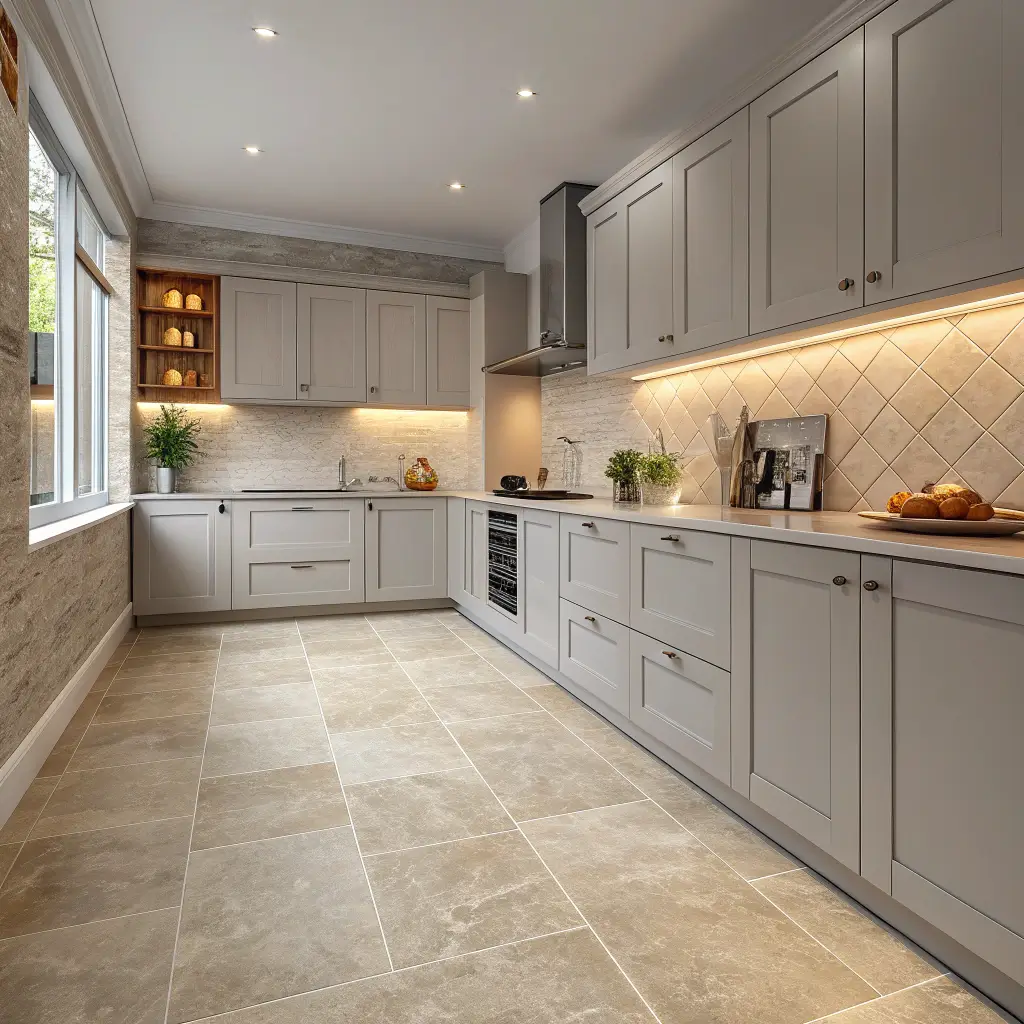
Shiny tiles had their moment, but matte finishes have taken over as the preferred choice for contemporary kitchens. And honestly? I get it.
Why Matte Finishes Dominate Modern Design
Matte finish tiles offer a sophisticated, understated elegance that glossy tiles simply can’t match. They feel warmer, hide imperfections better, and photograph beautifully—which matters more than ever in our Instagram-obsessed world.
The advantages of matte kitchen tiles include:
- Hide water spots and fingerprints: Especially important in busy kitchens
- Slip resistance: Matte surfaces provide better traction, crucial for floors
- Contemporary aesthetic: Align with current minimalist design trends
- Warm appearance: Matte finishes absorb light rather than reflecting it
- Forgiving surfaces: Minor scratches and wear show less prominently
Choosing the Right Neutral Tone
Neutral doesn’t mean boring. The spectrum of neutral matte tiles spans from warm beiges and taupes to cool grays and greiges (gray-beige hybrids). Your choice should complement your cabinetry, countertops, and overall kitchen palette.
Consider these neutral matte options:
- Warm neutrals (cream, sand, taupe): Best with wood cabinets and brass hardware
- Cool neutrals (gray, charcoal, white): Pair beautifully with white or dark cabinets
- Greige tones: Versatile option that works with both warm and cool elements
IMO, greige offers the most flexibility if you’re uncertain about your long-term design direction. It bridges warm and cool tones, giving you freedom to evolve your decor without clashing with your tiles.
6. Geometric Kitchen Tile Design Ideas
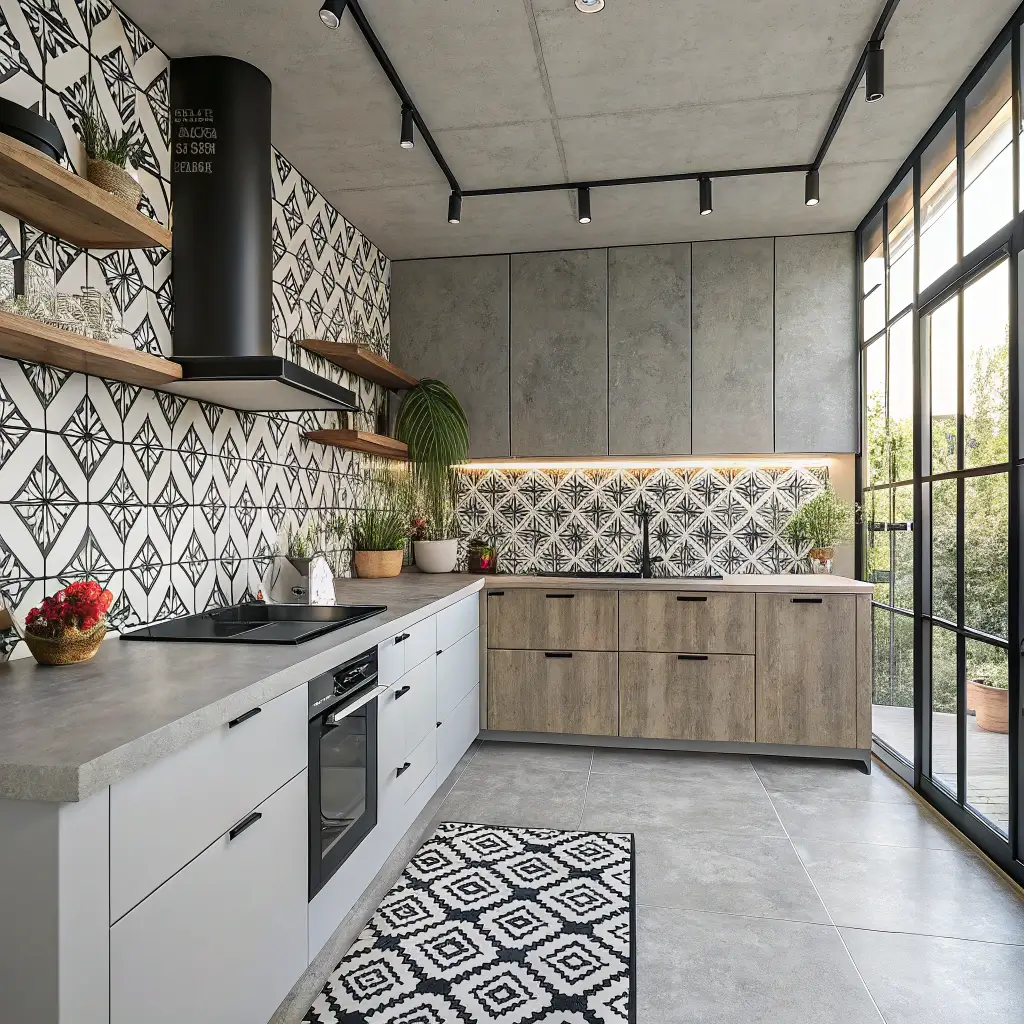
Want to inject some serious visual interest into your kitchen? Geometric tiles turn ordinary surfaces into captivating focal points.
The Power of Shapes and Patterns
Geometric tiles move beyond traditional squares and rectangles to incorporate hexagons, triangles, arabesque shapes, and complex tessellating patterns. These designs add movement, energy, and architectural interest to any kitchen.
Popular geometric tile shapes include:
- Hexagons: From small mosaic sizes to large statement pieces
- Chevron and herringbone: Directional patterns that create flow
- Fish scale (scallop): Organic, Art Deco-inspired curves
- Arabesque: Elegant, flowing shapes with Mediterranean influences
- Triangles: Modern, edgy, and perfect for contemporary spaces
Balancing Geometric Tiles with Your Kitchen
The trick with geometric tiles is knowing when to stop. A hexagon tile floor paired with a chevron backsplash paired with geometric cabinet fronts equals visual chaos. Nobody wants that.
Choose one geometric element and let it shine. Keep surrounding surfaces simple and solid. This approach lets your geometric tiles make a statement without overwhelming your kitchen.
For backsplashes, geometric tiles work wonderfully behind ranges or sinks as defined accent areas. For floors, consider using geometric patterns in breakfast nooks or under kitchen islands to create visual zones within open floor plans.
Also Read: 10 Charming Kitchen Tiles Backsplash Ideas for Farmhouse Style
7. Classic White Kitchen Tile Design
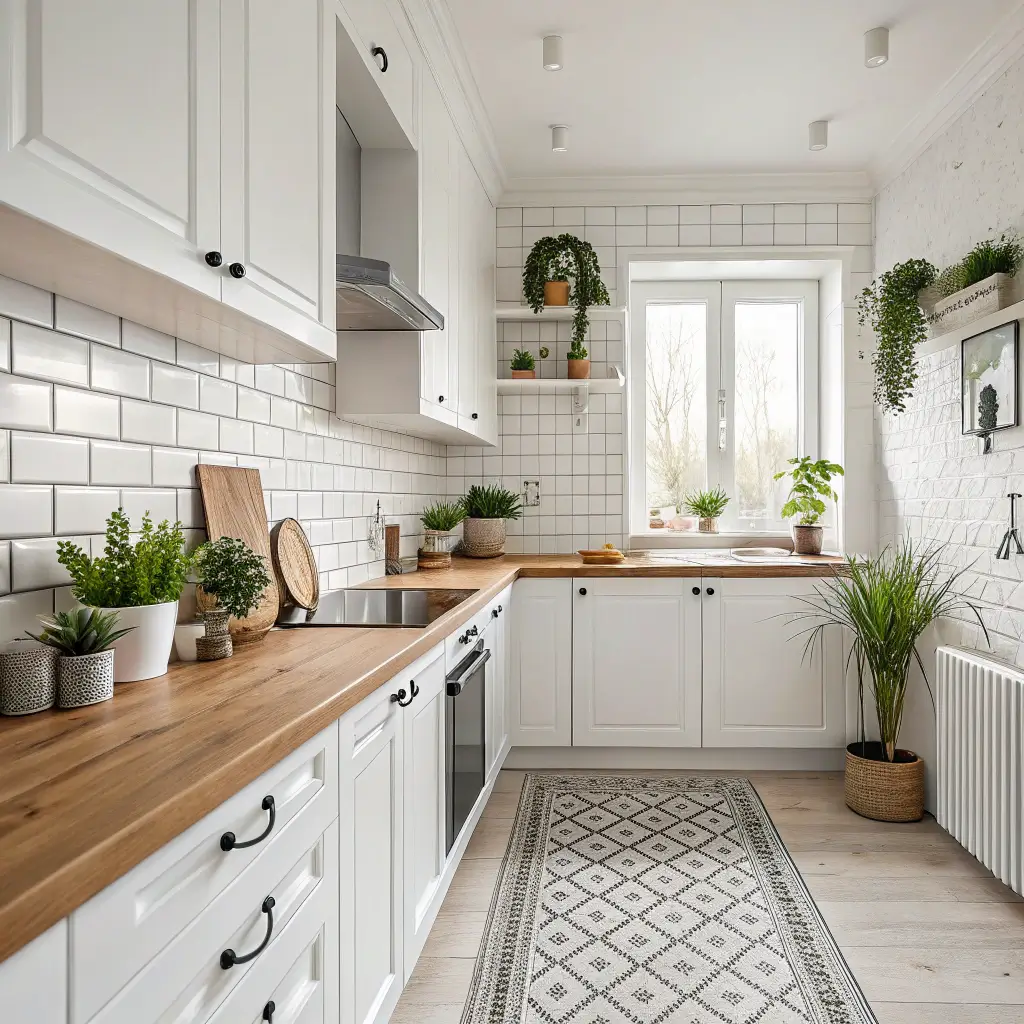
Some things never go out of style. Classic white kitchen tiles fall firmly into this category, offering timeless elegance that transcends fleeting trends.
The Enduring Appeal of White Tiles
White tiles create bright, clean, and inviting kitchen spaces. They reflect light beautifully, make small kitchens feel larger, and provide a blank canvas for your personal touches through accessories and accent colors.
Why homeowners and designers consistently choose white kitchen tiles:
- Timeless appeal: White has anchored kitchen design for over a century
- Maximum light reflection: Essential for kitchens with limited natural light
- Resale value: White kitchens consistently attract buyers
- Flexibility: Change your kitchen’s mood by swapping accessories
- Cleanliness perception: White communicates hygiene and freshness
Making White Tiles Interesting
Here’s the honest truth about white tiles—they can look sterile and boring if you don’t add visual interest. The solution lies in texture, pattern, and finish variations.
Consider these approaches:
- Textured white tiles: Add dimension without adding color
- Varied tile sizes: Mix large floor tiles with smaller backsplash mosaics
- Pattern play: White tiles in herringbone or chevron patterns
- Finish contrast: Combine matte floor tiles with glossy wall tiles
- Warm white vs. cool white: Choose the undertone that matches your aesthetic
FYI, white tiles show dirt and grime more readily than darker options. If you’re not into regular cleaning, consider off-white or cream variations that offer similar brightness with less visible mess.
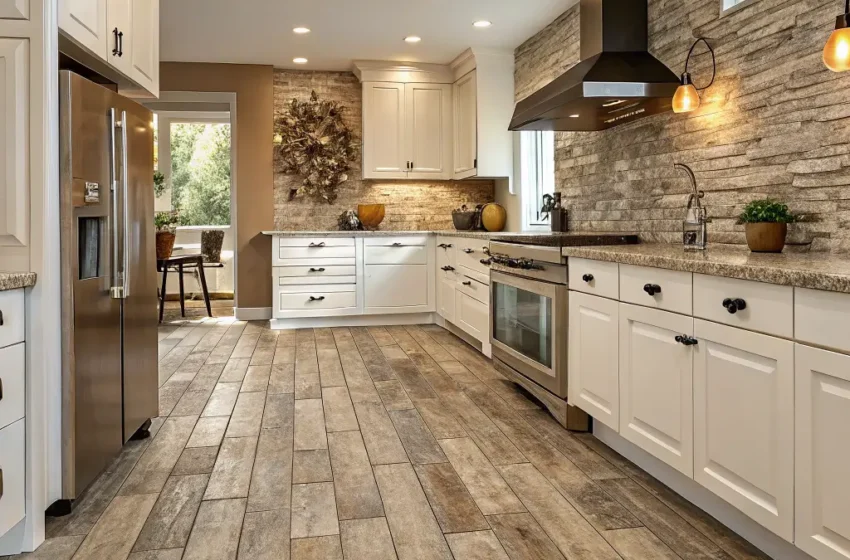
8. Wood Look Kitchen Tile Flooring
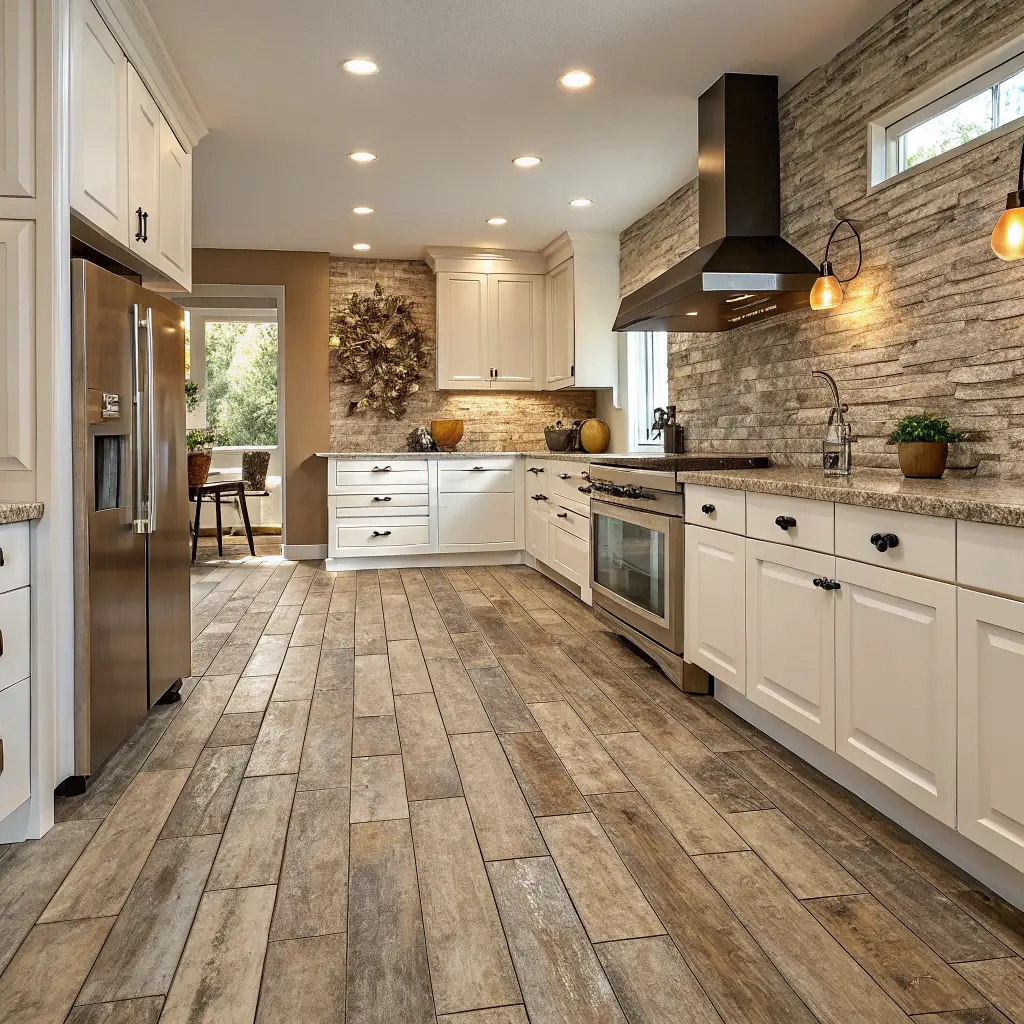
You want the warmth and beauty of hardwood floors in your kitchen, but you know water, spills, and heavy foot traffic will destroy actual wood within years. Wood-look tiles solve this dilemma perfectly.
The Best of Both Worlds
Wood-look porcelain tiles capture the grain patterns, color variations, and textural details of natural hardwood while offering the durability and water resistance of ceramic materials.
Why wood-look tiles outperform actual hardwood in kitchens:
- Waterproof: No warping, swelling, or damage from spills
- Scratch resistant: Dropped pots and pet claws won’t leave marks
- Easy maintenance: Simply mop and go—no refinishing ever needed
- Consistent performance: Temperature and humidity fluctuations don’t affect tiles
- Cost-effective: Often cheaper than quality hardwood with installation included
Selecting Realistic Wood-Look Tiles
Not all wood-look tiles convince equally. Cheap versions look obviously fake, which defeats the entire purpose. When shopping for wood-look kitchen tiles, prioritize:
- Rectified edges: Precisely cut edges allow for minimal grout lines
- Varied plank designs: Multiple pattern variations prevent repetitive appearance
- Realistic textures: Actual wood grain texture you can feel, not just printed patterns
- Natural color variations: Slight shade differences between planks add authenticity
- Appropriate sizing: Plank proportions that match typical hardwood dimensions
Install wood-look tiles with grout that closely matches the tile color. This minimizes visible seams and enhances the hardwood illusion. Running planks lengthwise through your kitchen makes the space appear longer and more expansive.
9. Two Tone Kitchen Tile Design
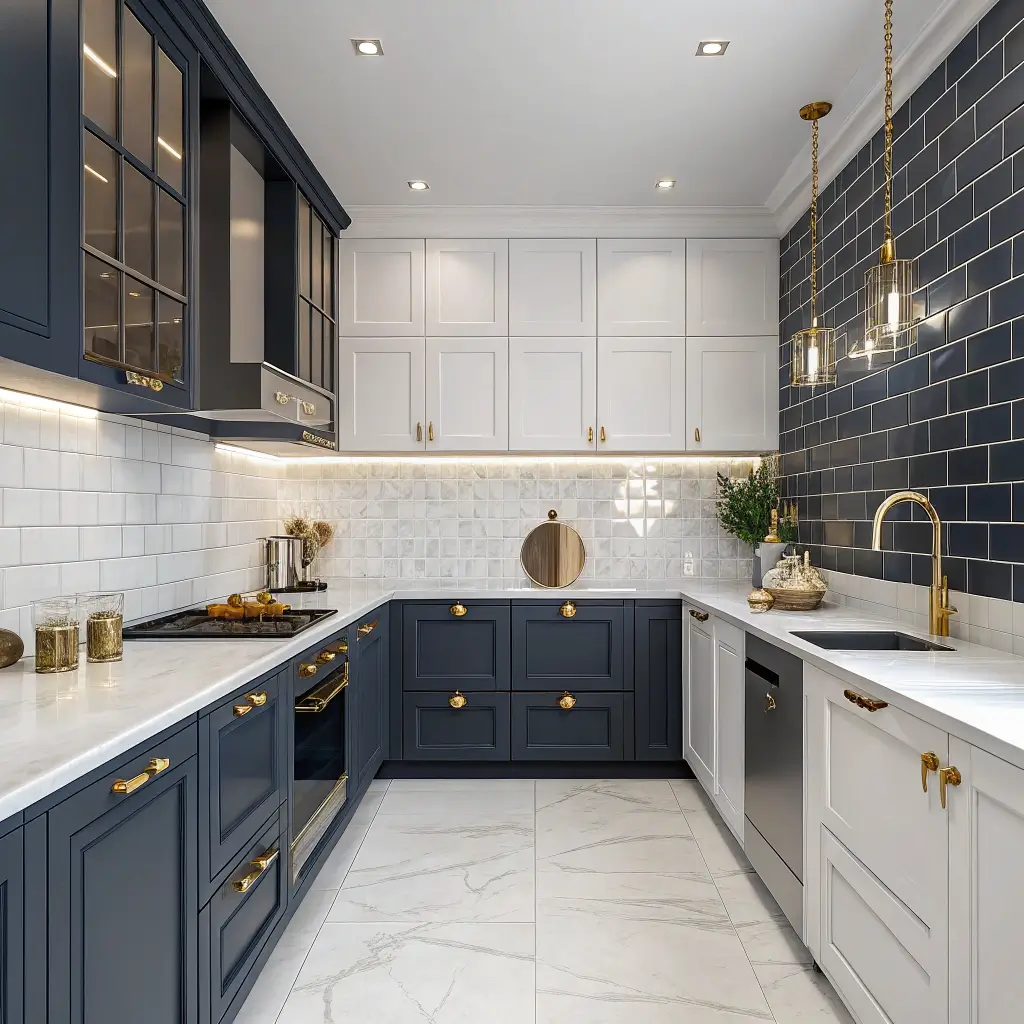
Why settle for one tile when two can create so much more visual interest? Two-tone tile designs add depth, define spaces, and showcase your design creativity.
Understanding Two-Tone Applications
Two-tone kitchen tile designs strategically combine contrasting or complementary tiles to create visual separation, highlight architectural features, or simply add personality to your space.
Popular two-tone approaches include:
- Upper and lower division: Different tiles above and below a chair rail or counter height
- Floor transitions: Distinct tile zones for cooking versus dining areas
- Accent panels: Feature walls or backsplash sections in contrasting tiles
- Border treatments: Frame areas with complementary tiles
- Checkered patterns: Classic alternating tile colors
Creating Cohesive Two-Tone Designs
The key to successful two-tone tile design lies in intentional contrast. Your tiles should differ enough to read as deliberate choices, not mistakes or mismatched leftovers.
Consider these combinations:
- Light and dark versions of the same tile: Safe, coordinated approach
- Solid and patterned pairs: Pattern adds interest while solid provides rest
- Matte and glossy finishes: Same color, different texture
- Complementary colors: Opposites on the color wheel create energy
- Scale variations: Large format paired with mosaic accents
I experimented with a two-tone backsplash in my previous kitchen—white subway tiles with a band of navy blue running behind the cooktop. The contrast drew attention exactly where I wanted it while keeping the overall look cohesive. Highly recommend this approach for adding personality without overwhelming commitment.
Also Read: 12 Amazing Kitchen Wall Tiles Ideas and Colorful Patterns
10. Vintage Inspired Kitchen Tile Patterns
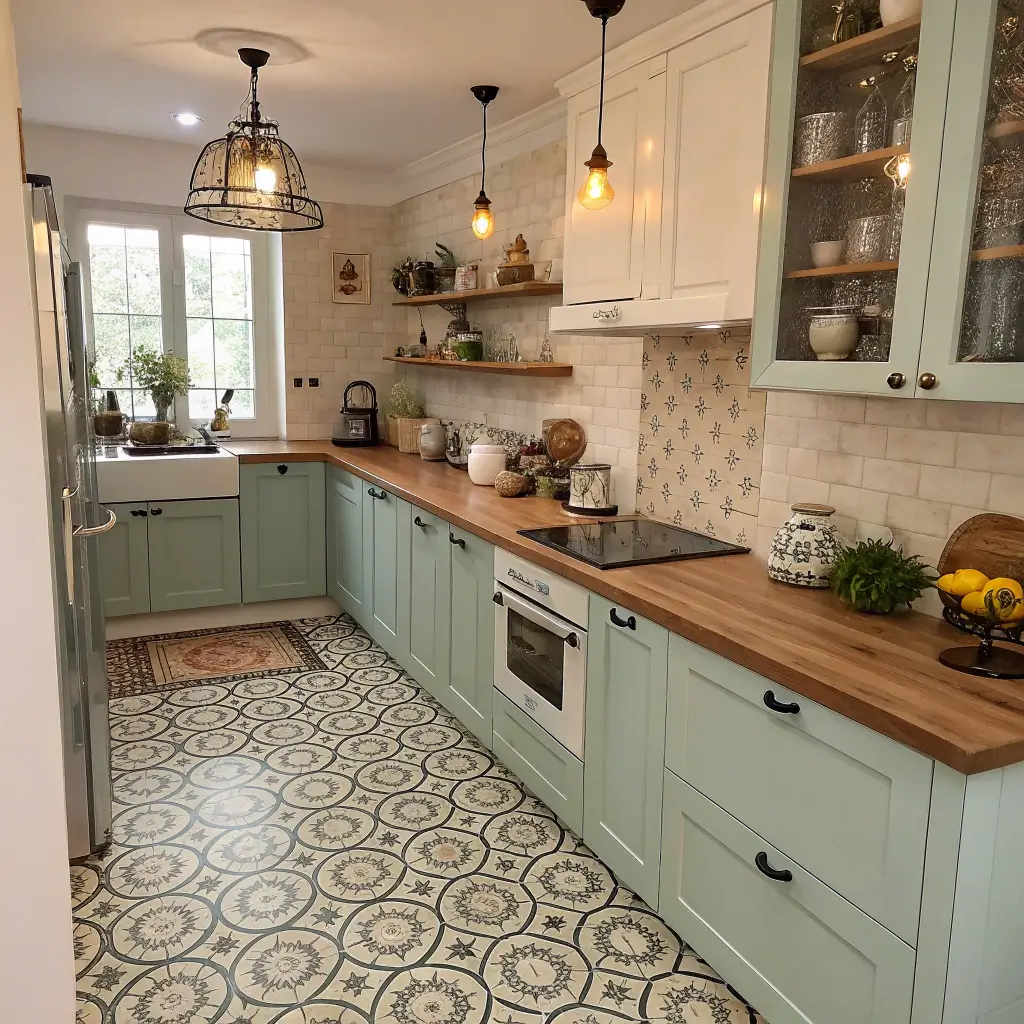
Everything old becomes new again, and vintage-inspired kitchen tiles prove this point beautifully. These tiles bring nostalgic charm while meeting modern performance standards.
Capturing Retro Elegance
Vintage-inspired tiles reference design eras from Victorian times through mid-century modern, offering patterns and color palettes that evoke specific historical moments. These tiles add character, warmth, and storytelling to contemporary kitchens.
Popular vintage tile styles include:
- Victorian encaustic: Intricate geometric patterns in earthy tones
- 1920s Art Deco: Bold geometry with gold, black, and jewel tones
- 1950s checkerboard: Classic black and white or pastel variations
- Mid-century atomic: Starburst patterns and retro color combinations
- Mediterranean heritage: Hand-painted looks with aged patina effects
Blending Vintage with Contemporary
The challenge with vintage tiles? They can tip your kitchen from “charming” to “grandma’s house” pretty quickly. Balance matters tremendously.
Pair vintage-inspired floor tiles with modern cabinetry and fixtures to keep the overall look current. Or use vintage patterns sparingly as backsplash accents while keeping floors neutral and contemporary.
I’ve seen gorgeous kitchens that feature vintage encaustic-style tiles only in the area in front of the sink or stove, bordered by solid tiles. This approach delivers the vintage character without committing to a full retro aesthetic.
11. Bold Color Statement Kitchen Tiles
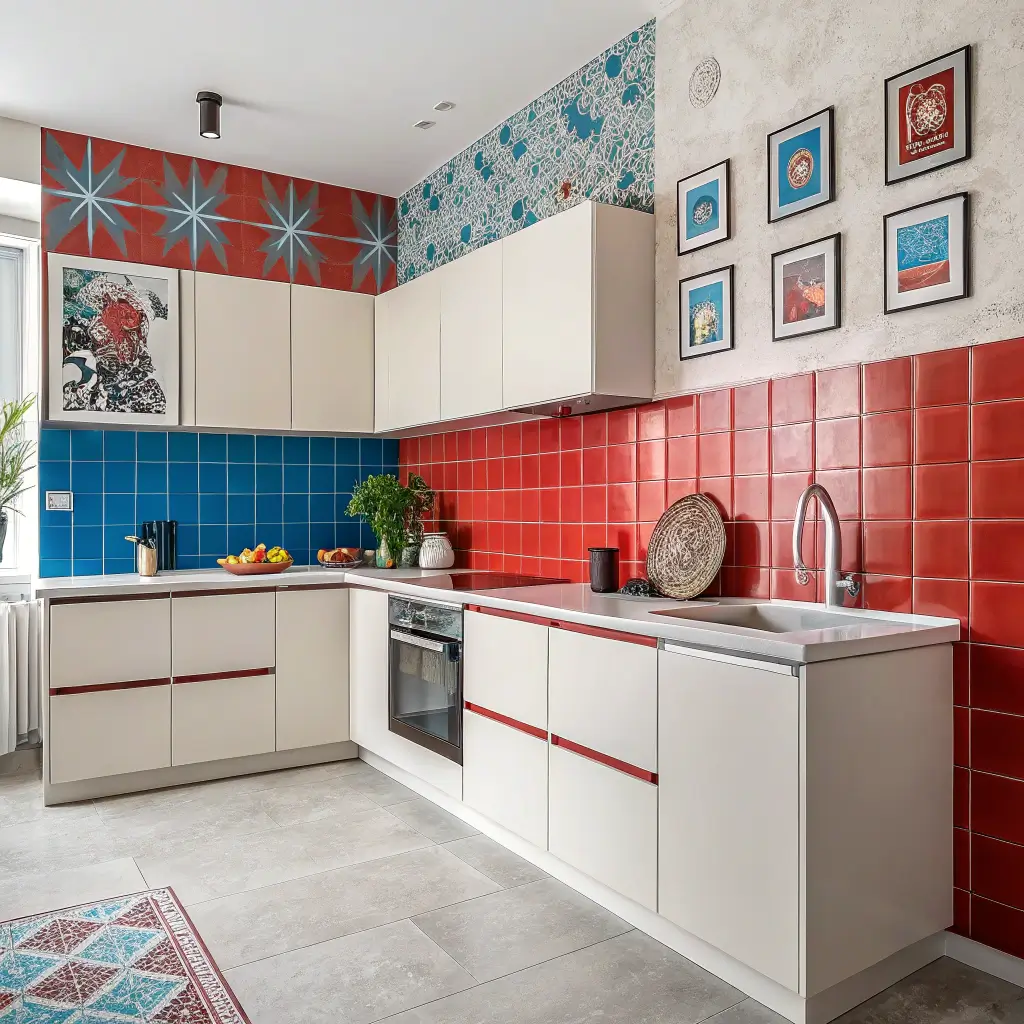
Neutral kitchens are lovely, but sometimes you want your cooking space to reflect your vibrant personality. Bold color tiles make that possible—and they’re absolutely stunning when executed well.
Embracing Color in the Kitchen
Bold colored tiles range from deep jewel tones like emerald green and sapphire blue to vibrant options like sunny yellow and coral. These tiles transform kitchens from functional spaces into genuine design statements.
Popular bold tile colors and their effects:
- Deep green: Sophisticated, natural, pairs beautifully with brass and wood
- Navy blue: Classic, anchoring, works in traditional and modern settings
- Terracotta: Warm, inviting, Mediterranean vibes
- Black: Dramatic, luxurious, requires careful lighting consideration
- Yellow: Cheerful, energizing, perfect for brightening darker kitchens
- Pink and coral: Playful, contemporary, surprisingly versatile
Making Bold Colors Work
The secret to successful bold kitchen tiles? Confidence and commitment. Half-hearted color attempts look awkward. If you’re going bold, own it.
That said, balance remains essential:
- Limit bold color to one surface: Either backsplash OR floor, not both
- Pair with neutral companions: White cabinets and counters let color shine
- Consider lighting carefully: Bold colors can absorb light, darkening spaces
- Test samples extensively: Colors shift dramatically between showroom and home lighting
- Think long-term: Trendy colors date faster than classic choices
Start with a bold backsplash if you’re nervous about committing. Backsplashes are relatively affordable to replace compared to floors, giving you room to experiment without permanent consequences.
12. Textured Kitchen Tile Design Ideas
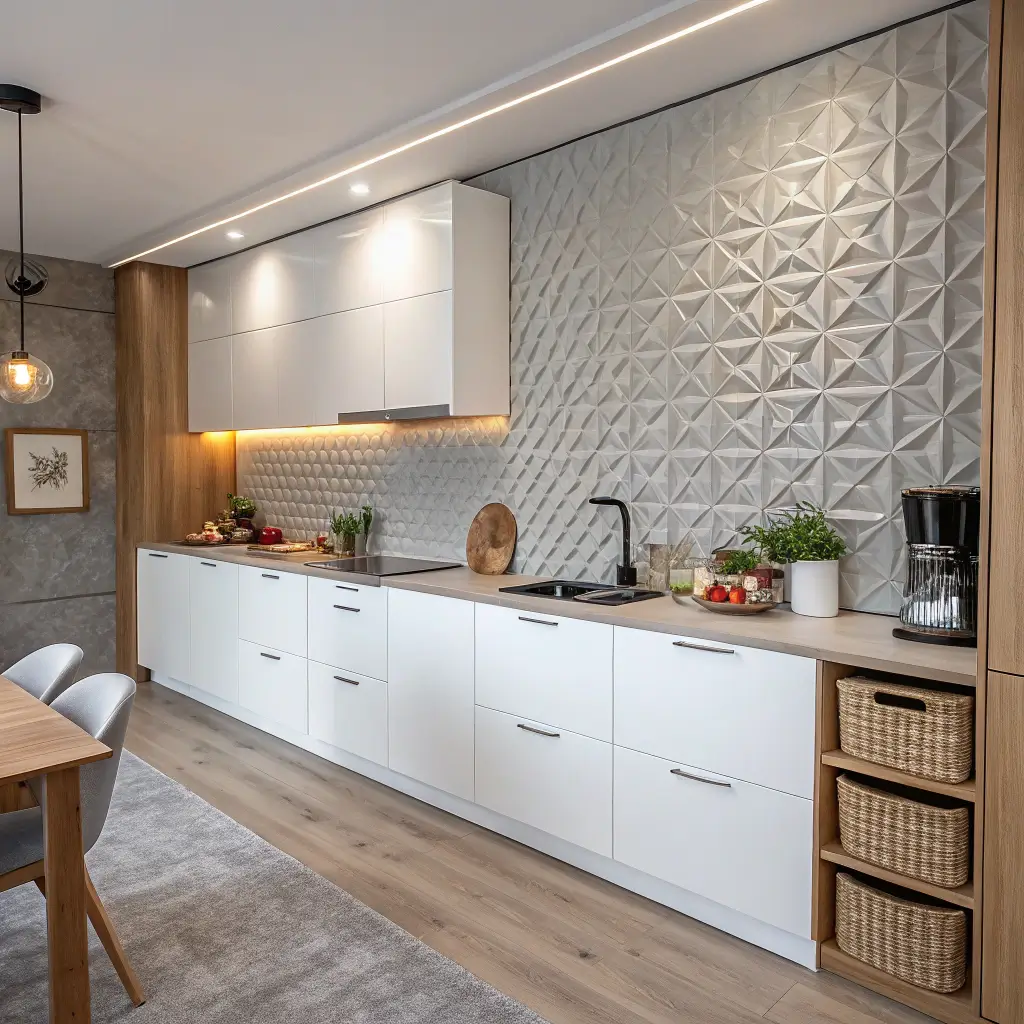
Flat tiles are perfectly fine, but textured tiles add a dimension that photographs can’t fully capture. You have to experience them in person to appreciate their impact.
Why Texture Matters in Tile Design
Textured tiles engage multiple senses. They catch light differently throughout the day, create shadows and highlights that add depth, and provide tactile interest that flat tiles simply cannot match.
Types of textured kitchen tiles:
- 3D relief patterns: Raised geometric or organic shapes
- Handmade variations: Irregular surfaces from artisan production
- Riven or split face: Natural stone textures with organic irregularity
- Fabric-look: Tiles mimicking linen, canvas, or woven materials
- Wave patterns: Undulating surfaces that play with light
- Brick-look: Textured surfaces replicating authentic brick
Practical Considerations for Textured Tiles
Before committing to textured tiles, consider maintenance implications. Deep textures collect grease and dust more readily than smooth surfaces. In heavy-cooking kitchens, heavily textured backsplashes require more frequent cleaning.
For backsplashes, subtle textures like handmade zellige-style tiles work better than dramatic 3D patterns that trap cooking residue. Save the boldest textures for areas away from the stove.
For floors, texture adds valuable slip resistance but avoid patterns so deep they become uncomfortable underfoot or difficult to sweep. Medium textures offer the best balance of visual interest and practicality.
Choosing the Right Kitchen Tiles for Your Space
After exploring these 12 kitchen tile design ideas, you might feel more overwhelmed than when you started. That’s completely normal. Tile selection involves numerous decisions that affect your kitchen’s appearance, functionality, and long-term satisfaction.
Here’s my practical advice after years of tile selection experience:
Start with Function
Before aesthetics, consider practical requirements:
- Floor tiles: Prioritize durability, slip resistance, and ease of cleaning
- Backsplash tiles: Consider grease resistance and cleaning frequency
- High-traffic areas: Choose harder-wearing materials
- Water exposure zones: Ensure proper water resistance ratings
Narrow Your Style Direction
Pick one or two design ideas from this list that genuinely excite you. Mixing too many concepts creates visual confusion. A cohesive kitchen commits to a clear aesthetic direction.
Sample Everything
Never choose tiles based solely on online images. Order samples and live with them for at least a week. View them at different times of day under various lighting conditions. Place them against your cabinets and countertops.
Consider Longevity
Tiles represent a significant investment and last for decades. Choose designs that you’ll still love in ten years, not just what’s trending this season.
Final Thoughts
Your kitchen tiles set the foundation—literally and figuratively—for your entire kitchen design.
Whether you gravitate toward timeless subway tiles, bold Moroccan patterns, or sophisticated marble-look porcelain, the right choice transforms your cooking space into somewhere you genuinely enjoy spending time.
I’ve made both brilliant and regrettable tile decisions over the years.
The brilliant choices happened when I trusted my instincts, prioritized quality over trends, and gave myself permission to choose something that felt genuinely “me.”
The regrettable decisions? Those came from rushing, choosing based on price alone, or trying to please someone else’s taste instead of my own.
Take your time with this decision. Visit showrooms. Touch the tiles. Imagine them covered in splattered tomato sauce and morning coffee spills. Picture yourself mopping them at midnight after a dinner party.
The perfect kitchen tiles exist for your space, your lifestyle, and your aesthetic vision. Now you have twelve solid starting points to find them. Happy tile hunting! 🙂