10 Creative Kitchen Tiles Texture Ideas and Unique Patterns
- Kitchen Tiles Ideas
 Ben
Ben- 0
- 52 minutes read
Flat, boring tiles have dominated kitchens for too long. Texture adds dimension that photographs cannot fully capture—you need to experience it in person to understand the difference.
I discovered the power of textured tiles accidentally. After installing standard smooth tiles in my first kitchen renovation, I visited a friend’s home featuring handmade zellige tiles with subtle surface variations.
Running my fingers across those tiles, watching light dance across their irregular surfaces, I realized what my kitchen lacked: texture that engaged more than just my eyes.
Kitchen tile texture transforms functional surfaces into tactile experiences. The right texture catches light uniquely, hides imperfections gracefully, and creates visual depth that smooth tiles simply cannot achieve.
Whether you prefer subtle surface variations or dramatic 3D relief patterns, textured kitchen tiles offer incredible design opportunities.
From rustic stone effects to sleek metallic shimmers, these surfaces add character that elevates ordinary kitchens into extraordinary spaces.
Ready to explore kitchen tile texture ideas that bring dimension to your cooking space?
These ten approaches cover everything from understated matte finishes to bold sculptural statements, helping you find textures that resonate with your design vision.
1. Modern Matte Kitchen Tiles Inspiration
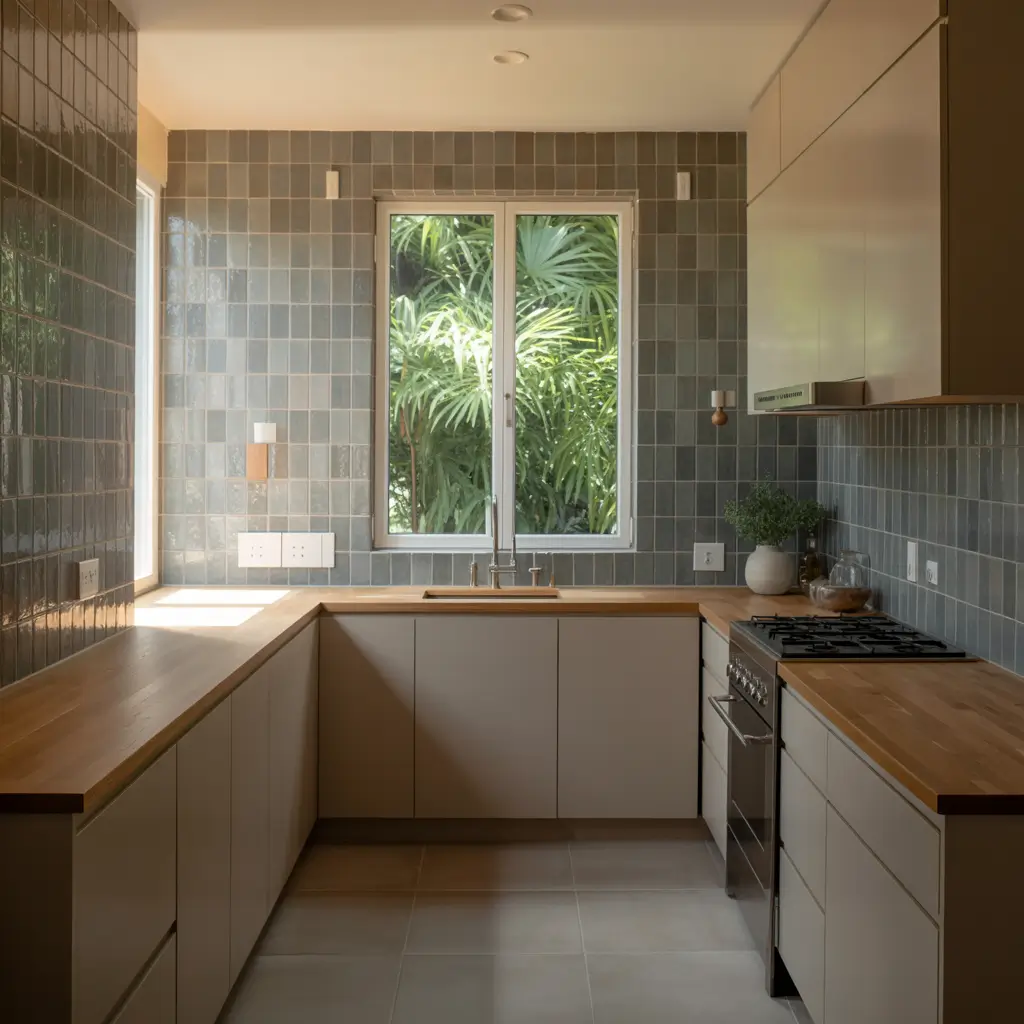
Matte finishes deliver sophisticated texture through light absorption rather than reflection. These surfaces feel warmer, softer, and more contemporary than their glossy counterparts.
Understanding Matte Appeal
Modern matte kitchen tiles absorb light rather than bouncing it back, creating velvety surfaces with incredible visual depth. This subtle texture feels luxurious without demanding attention.
Why matte textures dominate contemporary design:
- Fingerprint forgiveness: Shows smudges far less than glossy alternatives
- Warm appearance: Absorbs light for softer visual effects
- Contemporary credibility: Aligns perfectly with minimalist trends
- Water spot resistance: Marks show less prominently
- Sophisticated subtlety: Texture without obvious dimension
- Comfortable elegance: Feels approachable rather than precious
Matte Texture Applications
Matte tiles work beautifully throughout kitchens:
Backsplash applications: Matte surfaces behind ranges create sophisticated focal points without harsh reflections. Cooking steam and grease wipe away easily without revealing streaks.
Floor installations: Matte floor tiles provide excellent slip resistance while maintaining clean, contemporary aesthetics. Their texture offers practical safety alongside visual appeal.
Full wall treatments: Extending matte tiles from countertop to ceiling creates seamless, gallery-like surfaces. Without reflective glare, these expanses feel calm and intentional.
Consider color temperature when choosing matte tiles. Cool grays and whites feel distinctly modern. Warm neutrals and earth tones create cozy contemporary atmospheres. Both work beautifully—choose based on your overall kitchen palette.
I’ve found matte textures particularly forgiving in busy family kitchens. The surface variations hide everyday wear better than glossy finishes, maintaining beautiful appearances despite constant use.
2. Glossy Tiles That Brighten Your Kitchen
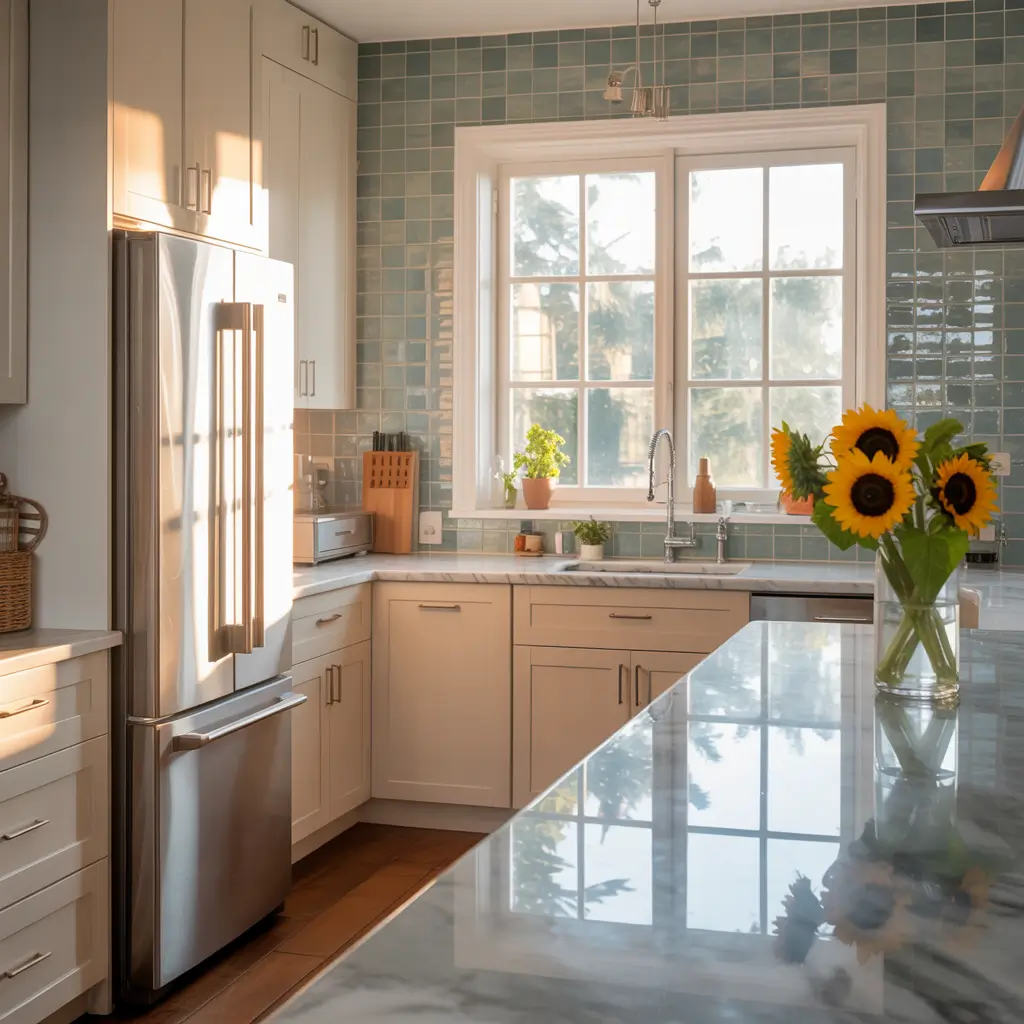
Glossy textures catch and multiply light, creating luminous surfaces that brighten spaces dramatically. These reflective tiles feel fresh, clean, and energizing.
The Glossy Texture Advantage
Glossy kitchen tiles feature smooth, reflective surfaces that bounce light throughout cooking spaces. This texture creates visual expansion that makes kitchens feel larger and brighter.
Why glossy textures work:
- Light multiplication: Reflective surfaces brighten dark kitchens
- Space enhancement: Creates illusion of larger rooms
- Clean perception: Shiny surfaces communicate hygiene
- Easy cleaning: Smooth textures wipe clean effortlessly
- Depth creation: Reflections add dimensional interest
- Classic appeal: Timeless finish with proven popularity
Maximizing Glossy Effects
Position glossy tiles strategically for maximum impact:
Near windows: Glossy tiles near natural light sources multiply available illumination. North-facing kitchens benefit enormously from these reflective surfaces.
Under-cabinet areas: Glossy backsplashes reflect under-cabinet lighting beautifully, creating ambient glow that enhances evening cooking atmospheres.
Small kitchen applications: Compact kitchens feel more spacious with reflective surfaces bouncing light throughout limited areas.
Feature walls: Single glossy accent walls create focal points while maintaining balanced lighting elsewhere.
Consider maintenance realistically. Glossy textures show every fingerprint, water spot, and smudge. If constant cleaning frustrates you, limit glossy tiles to areas away from high-touch zones.
The combination of glossy texture with color dramatically affects outcomes. White glossy tiles maximize brightness. Colored glossy tiles create jewel-like brilliance. Dark glossy tiles add drama while maintaining some light reflection.
3. Rustic Textured Tiles for Cozy Kitchens

Rustic textures bring warmth and character that manufactured smoothness cannot replicate. These surfaces tell stories of craftsmanship and natural materials.
The Rustic Texture Appeal
Rustic textured kitchen tiles feature deliberate irregularities, rough surfaces, and natural variations. These characteristics create authentic, lived-in atmospheres perfect for welcoming cooking spaces.
Why rustic textures captivate:
- Organic warmth: Natural imperfections feel inviting
- Character depth: Surface variations add visual interest
- Practical hiding: Rough textures conceal everyday wear
- Timeless aging: Rustic tiles improve with use
- Craftsmanship connection: Reference traditional tile-making
- Cozy atmospheres: Create comfortable, homey feelings
Rustic Texture Options
Terracotta tiles feature natural clay textures with color variations and surface irregularities. Their warm earth tones suit Mediterranean, farmhouse, and traditional kitchens.
Handmade ceramic tiles display intentional irregularities from artisan production. Slight warping, uneven glazing, and varying thickness create authentic character.
Reclaimed brick-look tiles replicate aged brick surfaces with weathered textures. These tiles bring industrial-rustic charm without actual brick installation challenges.
Natural stone effects mimic slate, limestone, or travertine with realistic surface textures. Modern porcelain achieves remarkably authentic natural stone appearances.
Consider grout carefully with rustic textures. Wide grout lines suit traditional rustic aesthetics. Narrow grout creates more contemporary interpretations. Grout color affects overall appearance significantly.
IMO, rustic textures work best when committed to fully. Half-rustic, half-modern combinations often feel confused. Embrace the aesthetic completely for best results.
Also Read: 10 Inspiring Moroccan Tiles Kitchen Ideas and Pattern Magic
4. 3D Geometric Kitchen Tile Designs

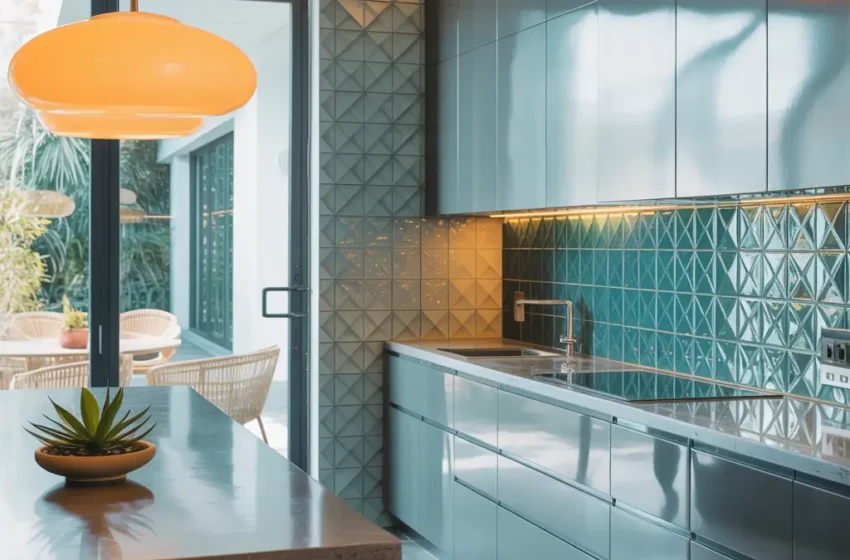
Three-dimensional tiles bring surfaces to life with sculptural patterns that cast shadows and catch light dramatically. These textures create architectural statements.
Understanding 3D Tile Impact
3D geometric kitchen tiles feature raised patterns creating actual dimension. These tiles transform flat walls into sculptural surfaces that change appearance throughout the day.
Why 3D textures captivate:
- Shadow play: Raised patterns create constantly shifting shadows
- Architectural interest: Add dimension without structural changes
- Dramatic impact: Impossible to ignore without being loud
- Light interaction: Catch illumination from various angles
- Artistic expression: Turn walls into sculptural installations
- Unique character: Create spaces unlike any others
3D Pattern Options
Wave patterns create undulating surfaces mimicking water ripples. These organic geometries feel calming and add gentle movement to kitchen walls.
Angular geometrics use sharp shapes—triangles, diamonds, hexagons—in raised relief. These structured patterns suit contemporary and Art Deco-inspired kitchens.
Organic textures feature irregular raised surfaces suggesting natural formations. These patterns bring nature-inspired dimension to cooking spaces.
Layered designs stack overlapping shapes creating depth perception. These complex patterns reward extended viewing.
3D Texture Practical Considerations
Before committing to 3D tiles, consider maintenance implications:
- Dust accumulation: Raised surfaces collect dust in crevices
- Grease concerns: Deep textures behind ranges trap cooking residue
- Cleaning effort: Sculptural surfaces require more attention than flat tiles
- Strategic placement: Position 3D tiles away from heavy splatter zones
3D textures work best above splash-prone areas or in defined feature sections. Behind sinks and ranges, simpler textures prove more practical despite their lesser visual drama. 🙂
5. Natural Stone Texture Kitchen Ideas

Nothing replicates natural stone’s authentic texture—but modern alternatives come remarkably close. These surfaces bring geological character to kitchen design.
Natural Stone Texture Appeal
Natural stone texture kitchen tiles deliver organic surface variations formed over millennia. Whether authentic stone or convincing porcelain replications, these textures add gravitas and permanence.
Why stone textures work:
- Geological authenticity: Real natural character and variation
- Timeless appeal: Stone has anchored design for centuries
- Tactile richness: Surfaces invite touch and exploration
- Color depth: Natural variations create visual complexity
- Durability perception: Stone communicates lasting quality
- Versatile styling: Works in traditional through contemporary kitchens
Stone Texture Options
Slate effects deliver layered, riven surfaces with dramatic texture. Their dark, stratified appearances suit industrial and contemporary kitchens.
Marble textures combine veining patterns with smooth or honed surface finishes. These elegant textures communicate luxury effectively.
Limestone variations offer softer, more subtle textures than dramatic slate. Their gentle surfaces suit traditional and Mediterranean kitchens.
Travertine effects feature characteristic pitting and natural holes. These distinctive textures bring warmth and historical reference.
Quartzite appearances deliver dramatic veining with crystalline surface textures. These striking tiles make powerful contemporary statements.
Authentic Versus Porcelain Stone Textures
Authentic natural stone offers genuine texture but requires sealing, careful maintenance, and accepts natural variation between pieces.
Porcelain stone-effects replicate natural textures convincingly while offering easier maintenance, consistent sizing, and lower costs. Modern printing technology creates remarkably realistic appearances.
For most kitchen applications, porcelain stone-effect tiles offer practical advantages without sacrificing visual impact. Reserve authentic stone for low-traffic accent areas if budget allows.
6. Subway Tiles with Unique Finishes
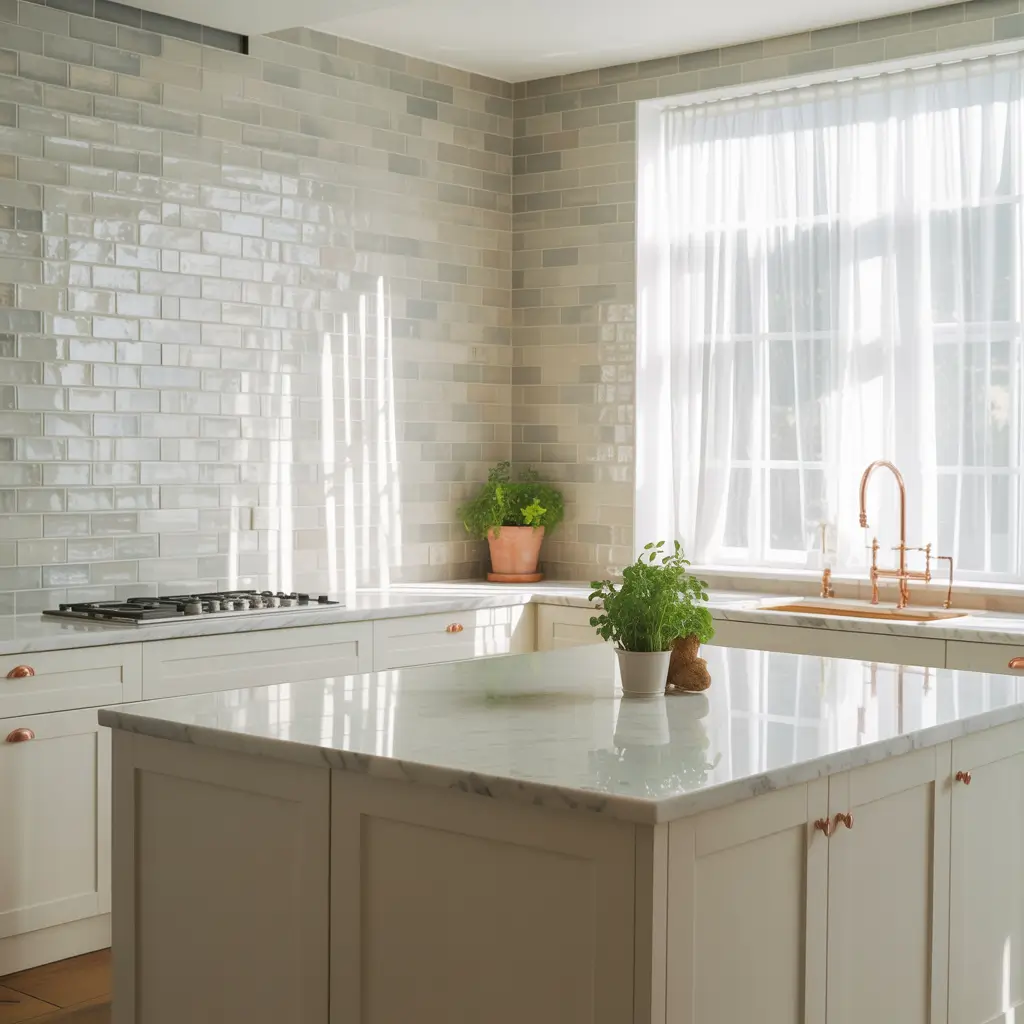
Subway tiles need not remain boring. Unique finishes transform this classic format into textured surfaces with genuine character.
Beyond Basic Subway
Textured subway tiles take familiar rectangular formats and add surface interest through various finishes. These tiles maintain classic proportions while delivering contemporary texture.
Texture options for subway tiles:
- Beveled edges: Angled sides catch light and create shadow lines
- Crackle glazes: Intentional crazing creates aged, textured appearances
- Handmade variations: Uneven surfaces add organic character
- Zellige finishes: Moroccan-style glazing with rich color depth
- Matte surfaces: Velvety textures without gloss
- Textured reliefs: Subtle 3D patterns within subway format
Unique Finish Applications
Beveled subway tiles catch light along their angled edges, creating subtle shadow lines between tiles. This simple texture adds significant depth to classic installations.
Crackle-glazed subway tiles feature intentional fine cracks throughout their glazed surfaces. This vintage-inspired texture adds character while maintaining smooth, easy-clean surfaces.
Handmade subway tiles display surface irregularities from artisan production. Their organic variations create unique installations where no two tiles appear identical.
Zellige-style subway tiles combine rectangular formats with Moroccan glazing techniques. Color variations within each tile create shimmering, dimensional surfaces.
Consider grout impact on textured subway tiles. Contrasting grout emphasizes individual tiles and their textures. Matching grout creates more unified surfaces where texture reads as continuous.
FYI, textured subway tiles cost more than basic options but deliver significantly more visual interest. The investment proves worthwhile for surfaces you’ll view daily for years.
Also Read: 12 Sophisticated Black Tiles Kitchen Ideas and Color Combos
7. Bold Patterned Tiles for Statement Kitchens
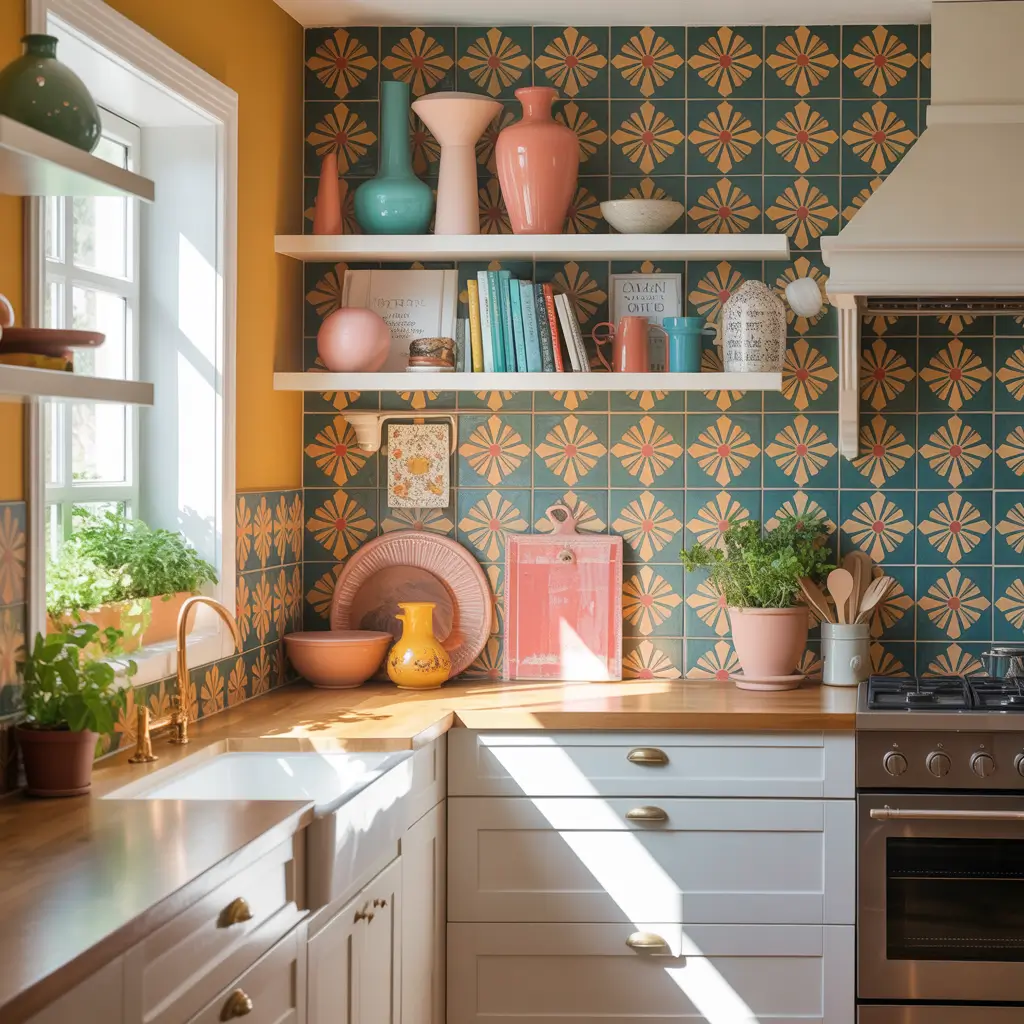
Patterns create visual texture through design rather than surface dimension. Bold graphic patterns deliver texture-like complexity that engages eyes continuously.
Pattern as Texture
Bold patterned kitchen tiles create visual texture through graphic designs. While surfaces may remain smooth, patterns add complexity that functions similarly to physical texture.
Why patterns deliver texture-like effects:
- Visual complexity: Multiple elements engage eyes continuously
- Depth perception: Pattern layers create dimensional illusion
- Light interaction: Different pattern colors reflect differently
- Movement creation: Geometric patterns suggest motion
- Interest sustainability: Complex patterns reward extended viewing
- Unique expression: Personal pattern choices create distinctive spaces
Pattern Texture Categories
Geometric patterns use mathematical precision to create repeating visual textures. Stars, hexagons, and interlocking shapes form complex visual tapestries.
Organic patterns feature flowing, natural designs. Botanical motifs, abstract waves, and irregular shapes create softer visual textures.
Cultural patterns reference specific design traditions—Moroccan, Portuguese, Mexican, Mediterranean. These patterns bring cultural texture alongside visual complexity.
Modern graphics use contemporary abstract designs. Bold lines, color blocks, and artistic compositions create unique visual textures.
Balancing Bold Patterns
Bold pattern textures require careful surrounding restraint:
- Simple cabinets: Flat-panel doors balance busy pattern textures
- Solid countertops: Minimal countertop patterns prevent visual competition
- Neutral walls: Plain painted surfaces provide rest from pattern activity
- Strategic placement: Use patterns in defined areas rather than everywhere
The key involves letting patterns star while supporting elements play backup roles. Too many textural elements compete rather than complement.
8. Minimalist Textured Tiles for Small Spaces

Small kitchens benefit from subtle textures that add interest without overwhelming limited areas. Minimalist textures deliver dimension with appropriate restraint.
Texture in Compact Kitchens
Minimalist textured tiles for small kitchens provide visual interest through subtle surface variations. These restrained textures add depth without cluttering compact spaces.
Why subtle textures work in small kitchens:
- Appropriate scale: Gentle textures suit limited areas
- Visual expansion: Subtle variations don’t close spaces
- Interest without overwhelm: Add dimension modestly
- Light-friendly: Don’t absorb excessive illumination
- Professional appearance: Look intentionally designed
- Broad appeal: Please various taste preferences
Minimalist Texture Options
Linen-look tiles feature fabric-like surface textures. Their gentle weave patterns add interest without drama.
Brushed finishes create directional surface textures through manufacturing processes. These subtle variations catch light softly.
Micro-textured surfaces incorporate tiny surface irregularities visible only up close. From distance, surfaces appear smooth; upon inspection, texture emerges.
Honed stone effects deliver subtle natural variation without polished reflection or rough surfaces. These middle-ground textures suit minimalist aesthetics.
Soft matte glazes create barely-there surface variations through glaze application. Their gentle unevenness adds warmth without obvious texture.
Strategic Texture Placement
In small kitchens, concentrate texture in feature areas:
- Backsplash focus: Apply textured tiles behind ranges as focal points
- Floor interest: Textured floor tiles add dimension underfoot
- Accent zones: Define specific areas with subtle texture while keeping others smooth
- Single surface commitment: Choose one textured application rather than multiple competing textures
Consistency matters in compact spaces. One well-executed texture creates impact. Multiple textures fragment already-limited visual territory.
9. Metallic and Shimmering Kitchen Tiles

Metallic textures catch light uniquely, adding glamour and movement that matte or standard glossy surfaces cannot achieve.
The Metallic Texture Difference
Metallic and shimmering kitchen tiles incorporate actual metal, metallic glazes, or iridescent finishes. These textures create light-catching surfaces with genuine sparkle.
Why metallic textures captivate:
- Light multiplication: Reflective surfaces brighten spaces dramatically
- Movement creation: Shifting reflections add visual energy
- Glamour injection: Metallic finishes communicate luxury
- Contemporary edge: Shimmering surfaces feel modern and designed
- Focal point creation: Metallic areas naturally draw attention
- Unique character: Create distinctive, memorable spaces
Metallic Texture Options
Stainless steel tiles deliver authentic metal texture. Their industrial character suits contemporary and professional-style kitchens.
Copper and brass finishes bring warm metallic textures. These surfaces age beautifully, developing patina that adds character over time.
Metallic-glazed ceramics incorporate metallic particles within traditional tile glazes. These tiles offer metallic shimmer with ceramic practicality.
Iridescent finishes create color-shifting surfaces that change appearance with viewing angle. Their rainbow effects add magical quality to kitchen surfaces.
Hammered metal effects feature textured metallic surfaces with dimensional variation. These tiles combine metallic finish with physical texture.
Metallic Texture Considerations
Maintenance expectations: Metallic surfaces show fingerprints, water spots, and smudges prominently. Accept regular cleaning as part of the aesthetic.
Accent applications: Use metallic textures as accents within larger neutral installations rather than full coverage. Strategic placement maximizes impact while limiting maintenance.
Lighting interaction: Position metallic tiles where they’ll catch natural or artificial light effectively. Poorly lit metallic surfaces lose their magic.
Warm versus cool metallics: Brass and copper suit warm kitchen palettes. Stainless and chrome complement cool color schemes. Mix metallics cautiously—stick to one family for cohesion.
Also Read: 10 Chic Terracotta Tiles Kitchen Ideas and Color Combos
10. Mixed Texture Tiles for Creative Backsplashes

Combining multiple textures creates complex, layered surfaces that reward extended viewing. Mixed texture approaches offer maximum visual interest.
The Mixed Texture Concept
Mixed texture kitchen tiles combine different surface finishes within single installations. Matte meets glossy, smooth meets rough, creating dynamic surfaces with incredible depth.
Why mixing textures works:
- Visual complexity: Multiple textures engage eyes continuously
- Depth creation: Different surfaces add dimensional perception
- Light variety: Various textures interact with light differently
- Design sophistication: Shows intentional, curated approach
- Personal expression: Create unique combinations nobody else has
- Interest sustainability: Complex installations remain engaging
Mixed Texture Approaches
Matte and glossy combinations alternate between light-absorbing and light-reflecting surfaces. This contrast creates rhythm and visual movement.
Smooth and textured pairings combine slick surfaces with rough or dimensional tiles. The tactile contrast adds interest both visually and physically.
Pattern and solid mixing incorporates patterned tiles as accent elements within textured solid fields. Patterns provide focal points while textures provide supporting context.
Scale mixing combines different tile sizes with corresponding texture variations. Large smooth tiles with small textured mosaics create interesting juxtapositions.
Material mixing incorporates different materials—ceramic with stone, glass with metal—each bringing distinct textures to unified installations.
Successful Texture Mixing Strategies
Color unification: Use consistent color palettes across different textures. Common colors connect varied surfaces visually.
Intentional placement: Position different textures deliberately rather than randomly. Create patterns or zones that feel designed.
Transition planning: Consider how textures meet. Clean lines between different textures look intentional; ragged edges look accidental.
Proportion balance: Distribute texture types thoughtfully. Dominant textures should cover approximately 60-70% of surfaces, with accent textures comprising the remainder.
Installation expertise: Mixed texture installations require professional installation. Varying tile thicknesses and surface types challenge DIY approaches significantly. 🙂
Practical Texture Considerations
Before committing to textured tiles, understand practical implications.
Cleaning Requirements
Different textures require different maintenance:
- Smooth glossy surfaces: Show everything but clean easily
- Matte finishes: Hide marks better, clean similarly
- Rough textures: Trap dirt in crevices, require more effort
- 3D surfaces: Accumulate dust and grease, need regular attention
- Metallic finishes: Show fingerprints prominently
Match texture choices with your actual cleaning tolerance. Beautiful textures that frustrate you daily serve nobody well.
Placement Strategy
Apply textures strategically based on practical needs:
- Behind ranges: Smooth or slightly textured surfaces clean easiest
- Behind sinks: Water-resistant, easy-clean textures work best
- Away from splash zones: Deep textures perform better
- High-touch areas: Fingerprint-forgiving textures reduce frustration
Lighting Interaction
Texture depends on lighting for full impact:
- Under-cabinet lighting: Essential for textured backsplashes
- Natural light: Enhances texture variations throughout day
- Directional lighting: Creates dramatic texture shadows
- Ambient lighting: Softens texture perception
Plan lighting alongside texture selections. Poorly lit textured surfaces waste their dimensional potential.
Final Thoughts
Kitchen tile texture transforms surfaces from functional necessities into design features that engage multiple senses.
The right texture catches light uniquely, feels interesting to touch, and creates visual depth that smooth tiles cannot achieve.
I think back to running my fingers across those zellige tiles in my friend’s kitchen, understanding instantly what texture adds to cooking spaces.
That tactile experience changed how I approach tile selection entirely.
Whether you prefer subtle matte variations, dramatic 3D reliefs, shimmering metallic surfaces, or creative mixed-texture combinations, textured tiles offer incredible design opportunities.
The key involves matching texture choices with your aesthetic preferences, maintenance tolerance, and practical kitchen needs.
Take your time selecting textures. Order physical samples—texture cannot translate through screens. Touch the tiles. View them under various lighting. Consider cleaning realistically.
Your kitchen deserves surfaces that reward attention. Textured tiles deliver exactly that—dimension, character, and visual interest that flat surfaces simply cannot match.
Now go find textures that speak to your senses.