12 Functional Laundry Room Shelves Ideas for Every Home
- Floating Shelves
 Ben
Ben- 0
- 29 minutes read
Laundry rooms are the forgotten stepchildren of home design, aren’t they? Mine used to be a chaotic wasteland where detergent bottles went to die and single socks disappeared into the void.
Then I discovered that smart shelving could transform this utilitarian space from “necessary evil” into something that actually sparks joy (yes, even for laundry).
After years of battling laundry room chaos and finally creating a space that works beautifully, I’ve learned that the right shelving makes all the difference.
We’re not just talking about cramming more stuff into a small space we’re talking about creating an organized, efficient system that makes laundry day less of a chore and more of a satisfying ritual.
Let me share the shelving solutions that transformed my laundry room from disaster zone to Pinterest-worthy paradise.
Floating Wooden Laundry Shelves: The Warm and Functional Choice
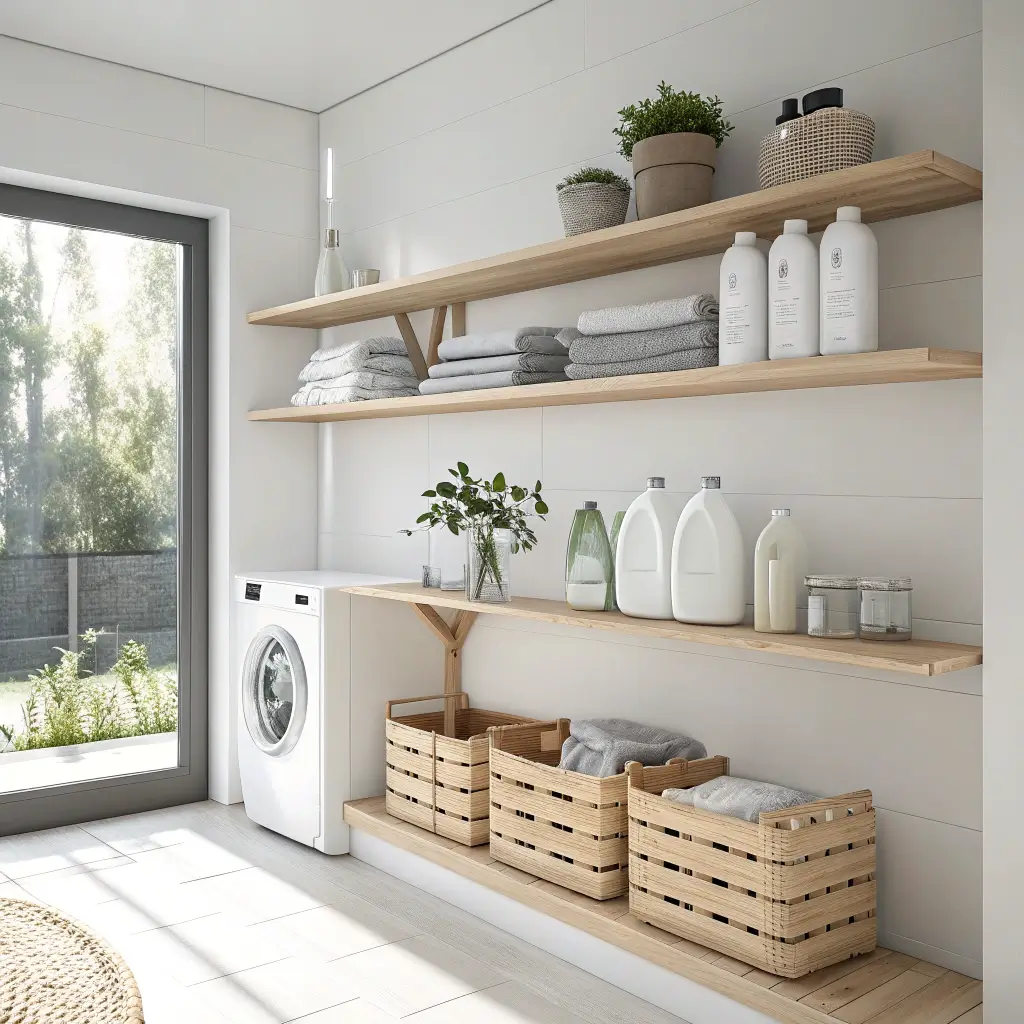
Floating wooden shelves bring warmth to what’s typically the most sterile room in your house. I installed three oak floating shelves above my washer and dryer, and suddenly my laundry room felt less like a basement utility closet and more like a cozy workspace. The wood adds character while providing practical storage for all those bottles and boxes.
The beauty of floating shelves lies in their clean lines and space-saving design. They don’t eat up floor space or make small laundry rooms feel cramped. Plus, the hidden mounting system creates that sleek, modern look that makes even budget renovations appear expensive.
Making Floating Shelves Work in Humid Spaces
Seal your wood properly for laundry room conditions. I learned this the hard way when my first set of shelves started warping after six months of steam exposure. Now I use marine-grade polyurethane on all my laundry room wood – it handles humidity like a champ.
Choose the right depth for your supplies. I made my shelves 10 inches deep, which perfectly accommodates standard detergent bottles while leaving room for fabric softener and stain removers. Too shallow and nothing fits properly; too deep and you’re playing hide-and-seek with supplies in the back.
Install them at the right height for easy access. My shelves sit 18 inches above my washer and dryer – high enough to clear the machines when they’re open, low enough that I don’t need a stepladder to grab detergent. Measure your specific setup because every laundry room is different.
Corner Laundry Room Shelf Solutions: The Dead Space Destroyer
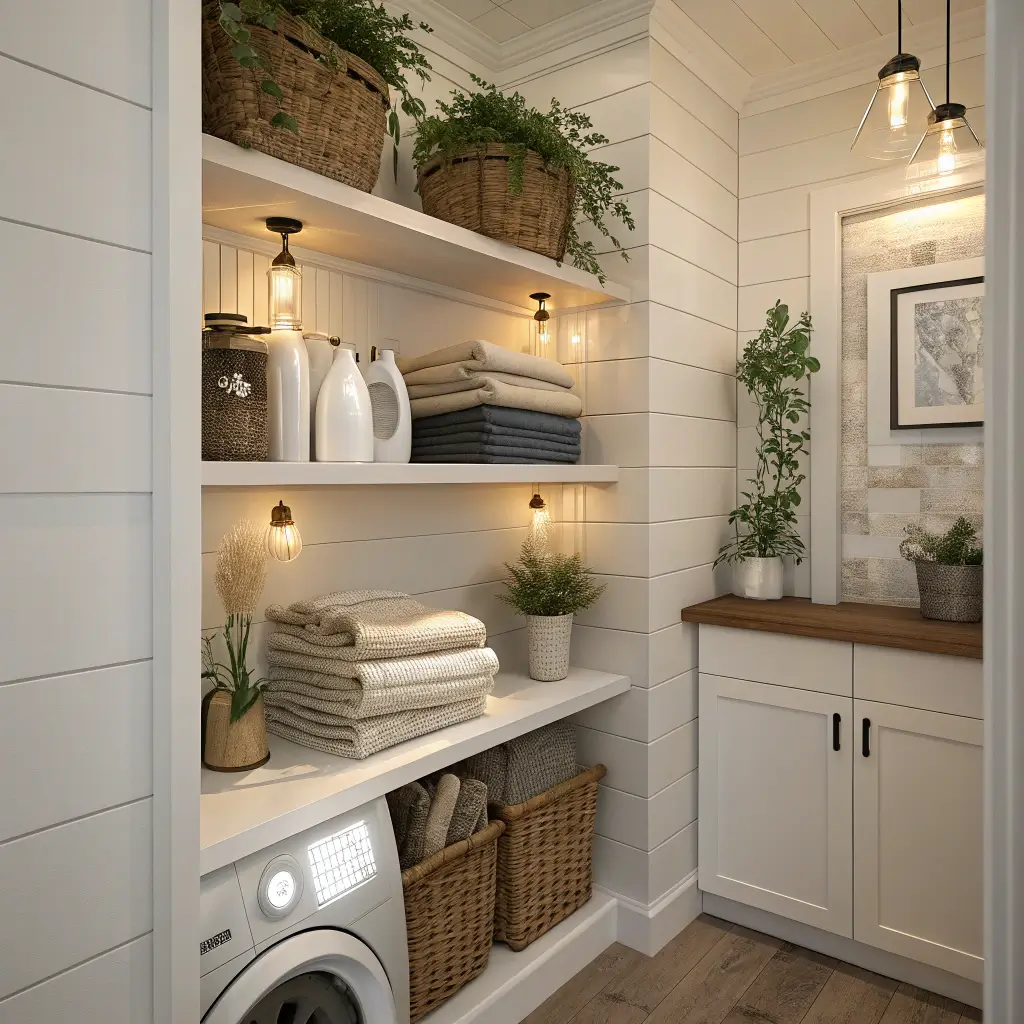
Corner shelves turn those awkward angles into storage goldmines. My laundry room had this weird corner that collected lint and sadness until I installed a corner shelf unit. Now it holds all my cleaning supplies and actually makes the space feel more organized instead of cramped.
The triangular design fits snugly into corners while maximizing vertical storage. I can store everything from spray bottles to cleaning rags in a space that was previously useless. It’s like finding hidden square footage in your home.
Conquering Laundry Room Corners
Measure your corner angle before buying anything. I assumed my corner was a perfect 90 degrees – it wasn’t. The 88-degree reality meant I had to shim my shelf unit to fit properly. Now I always measure and plan for imperfection.
Choose corner shelves with adjustable heights. My unit has moveable shelves that I can reconfigure based on what I’m storing. Tall bottles on one level, short containers on another, and everything fits perfectly without wasted space.
Consider rotating corner shelves for deep storage. I installed a lazy Susan-style corner unit that spins, making everything accessible even in the deepest part of the corner. No more archaeological expeditions to find that bottle of stain remover hiding in the back.
Open Wire Shelving for Detergents: The Industrial Efficiency
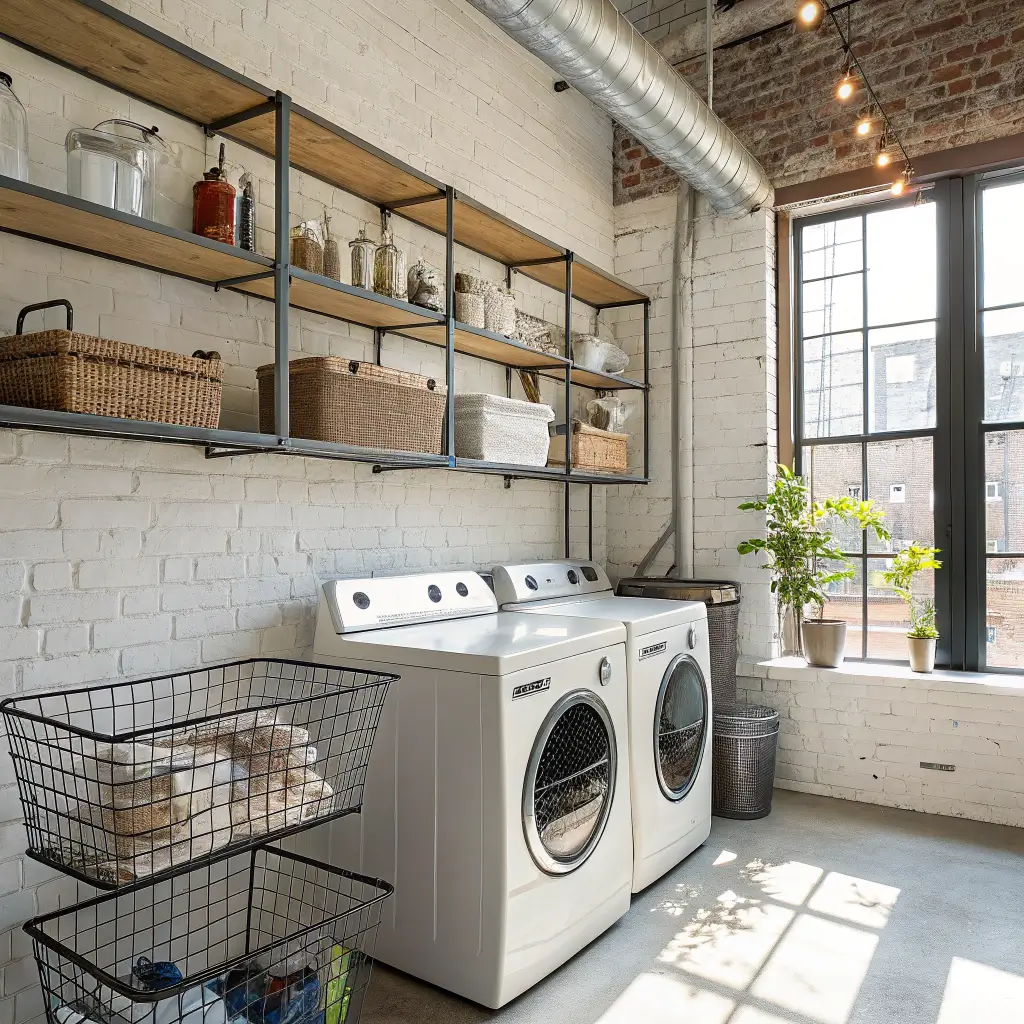
Wire shelving brings that industrial laundry vibe while providing excellent ventilation for damp items. I replaced my solid shelves with wire ones, and the improved airflow means towels dry faster and nothing gets that musty smell that haunted my old setup.
The open design lets you see everything at a glance, which prevents buying duplicate supplies because you forgot what you already had. My wire shelves hold detergents, fabric softeners, and cleaning supplies in perfect organization that actually stays organized.
Wire Shelving Success Strategies
Choose powder-coated wire to prevent rust. My first wire shelves were basic chrome that started rusting within months in the humid laundry environment. Now I only buy powder-coated options that laugh in the face of moisture.
Use shelf liners to prevent small items from falling through. I learned this after watching a bottle of fabric softener pods crash to the floor through the wire gaps. Clear shelf liners solve this problem while maintaining the open, airy feel.
Install wire shelving with proper wall anchors. These shelves can hold surprising weight when loaded with detergent bottles. I use heavy-duty wall anchors rated for twice the weight I plan to store. Better safe than explaining to your spouse why the shelf collapsed during a particularly vigorous wash cycle.
Also Read: 10 Simple IKEA Shelves Ideas for Budget-Friendly Homes
DIY Rustic Crate Shelves: The Character Builder
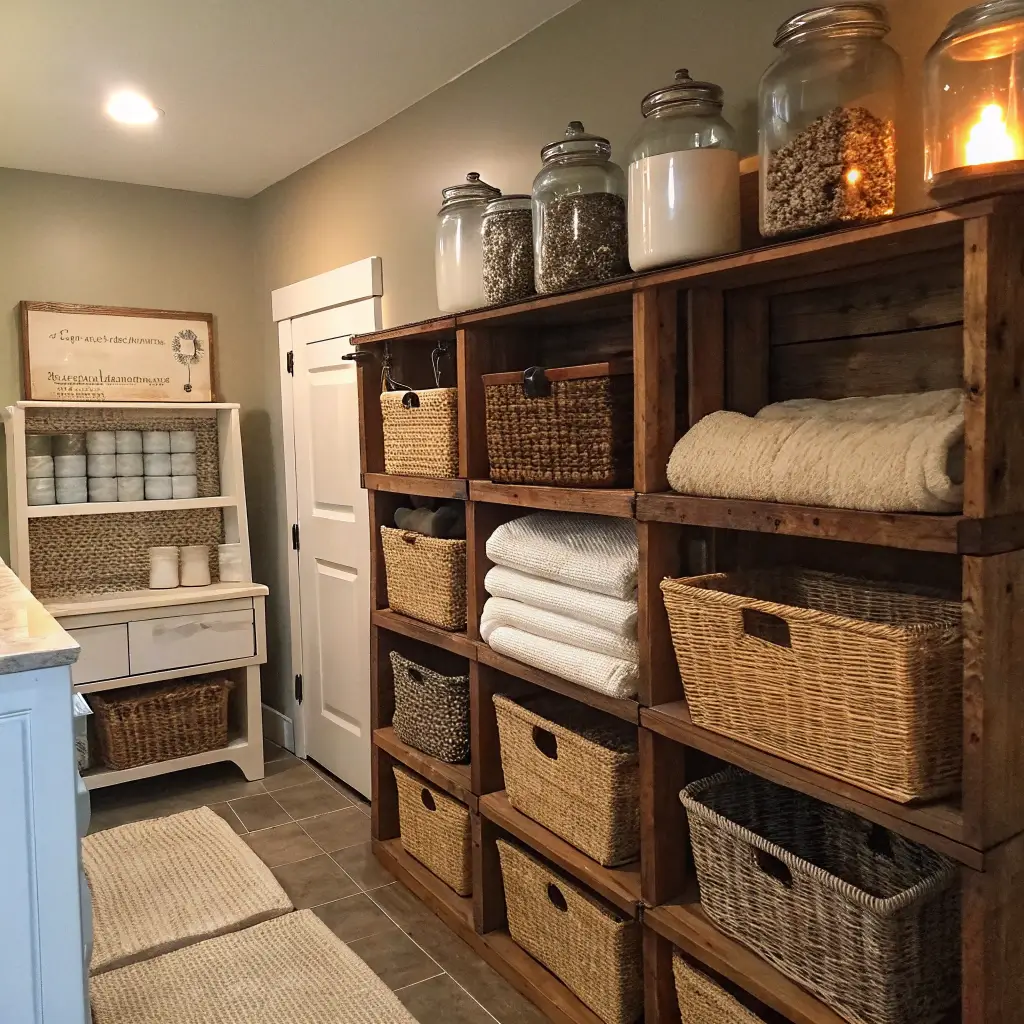
Rustic crate shelves add personality to utilitarian spaces while providing flexible storage options. I found vintage wooden crates at a flea market and turned them into the most charming laundry storage system. Each crate holds different categories of supplies, and the weathered wood makes my laundry room feel intentionally designed.
The modular nature of crate shelving means you can reconfigure as needed. Add more crates when your supply collection grows, or rearrange them when you reorganize. It’s storage that adapts to your life instead of forcing you to adapt to it.
Building Your Crate Storage Empire
Secure crates properly for wall mounting. Vintage crates weren’t designed to hang on walls, so I reinforce mounting points with additional hardware. A few extra screws prevent disasters and keep your laundry supplies safely contained.
Line crates with fabric or shelf paper for a finished look. Raw wood can snag delicate items, and the liner adds a pop of color or pattern. I use washable fabric that I can remove and clean when it gets dusty or stained.
Mix crate orientations for visual interest. Some crates face forward, others sideways, creating a dynamic wall display. This prevents the “stacked boxes” look and makes your storage feel more like intentional decor.
Minimalist White Wall Shelves: The Clean Slate Approach
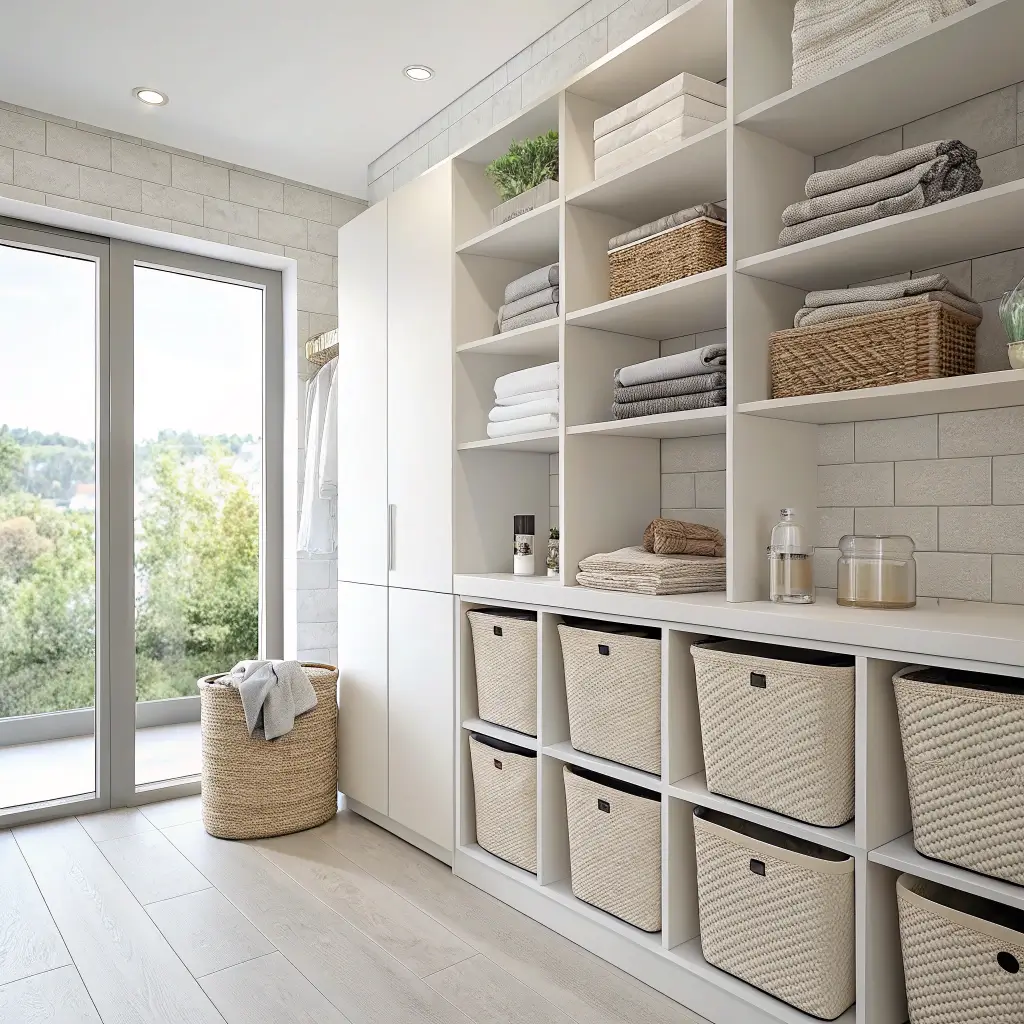
White wall shelves create that spa-like laundry room aesthetic that makes chores feel less mundane. My all-white shelving system makes my small laundry room feel twice as big and infinitely more pleasant to spend time in. The clean lines and bright color reflect light and create visual calm.
The monochrome approach lets your colorful detergent bottles become the design elements. Instead of fighting against product packaging, white shelves make everything look intentional and organized, even when you’re storing rainbow-colored cleaning supplies.
Achieving Minimalist Perfection
Choose semi-gloss paint for easy cleaning. Flat white paint in laundry rooms is asking for trouble. I use semi-gloss that wipes clean with a damp cloth, keeping my white shelves looking fresh despite the inevitable spills and splashes.
Keep styling simple and functional. Minimalist doesn’t mean empty, but it does mean intentional. I group similar items together and use matching containers when possible. The goal is calm organization, not sterile emptiness.
Add texture through containers and baskets. All-white can feel cold without some textural interest. I use white wicker baskets and ceramic containers to add warmth while maintaining the clean aesthetic. The varied textures prevent the space from feeling flat.
Ladder-Style Laundry Storage Shelves: The Vertical Solution
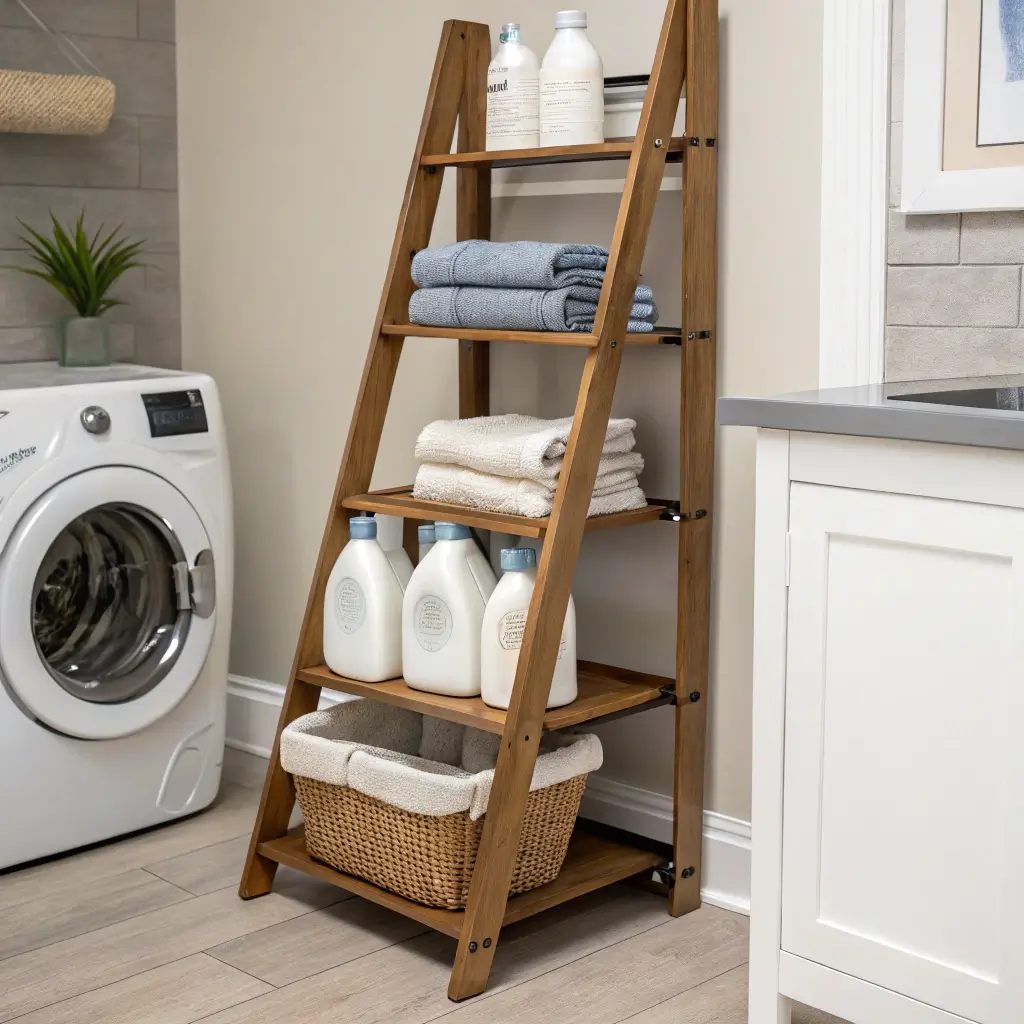
Ladder shelves lean casually against laundry room walls while providing serious storage capacity. I love mine because they don’t require permanent installation – perfect for renters or commitment-phobes. The graduated shelf sizes naturally organize items by height and frequency of use.
The angled design takes up minimal floor space while maximizing vertical storage. My ladder shelf holds everything from detergent to cleaning supplies to that collection of single socks I keep meaning to match up (spoiler: I never do).
Ladder Shelf Logistics
Secure ladder shelves to prevent tipping. Even though they lean, they need wall anchors for safety. I use furniture straps that are nearly invisible but prevent the shelf from falling forward when loaded with heavy detergent bottles.
Organize by frequency of use. Daily items go on middle shelves where they’re easy to reach. Occasional supplies live higher up, and heavy items stay low for stability. This natural organization system maintains itself better than arbitrary arrangements.
Choose the right angle for your space. Too upright and items slide forward. Too angled and you waste wall space. I found 15 degrees from vertical perfect for my setup – stable but space-efficient.
Also Read: 10 Gorgeous Hexagon Shelves Ideas and Stylish Arrangements
Over-the-Washer Space Savers: The Vertical Goldmine
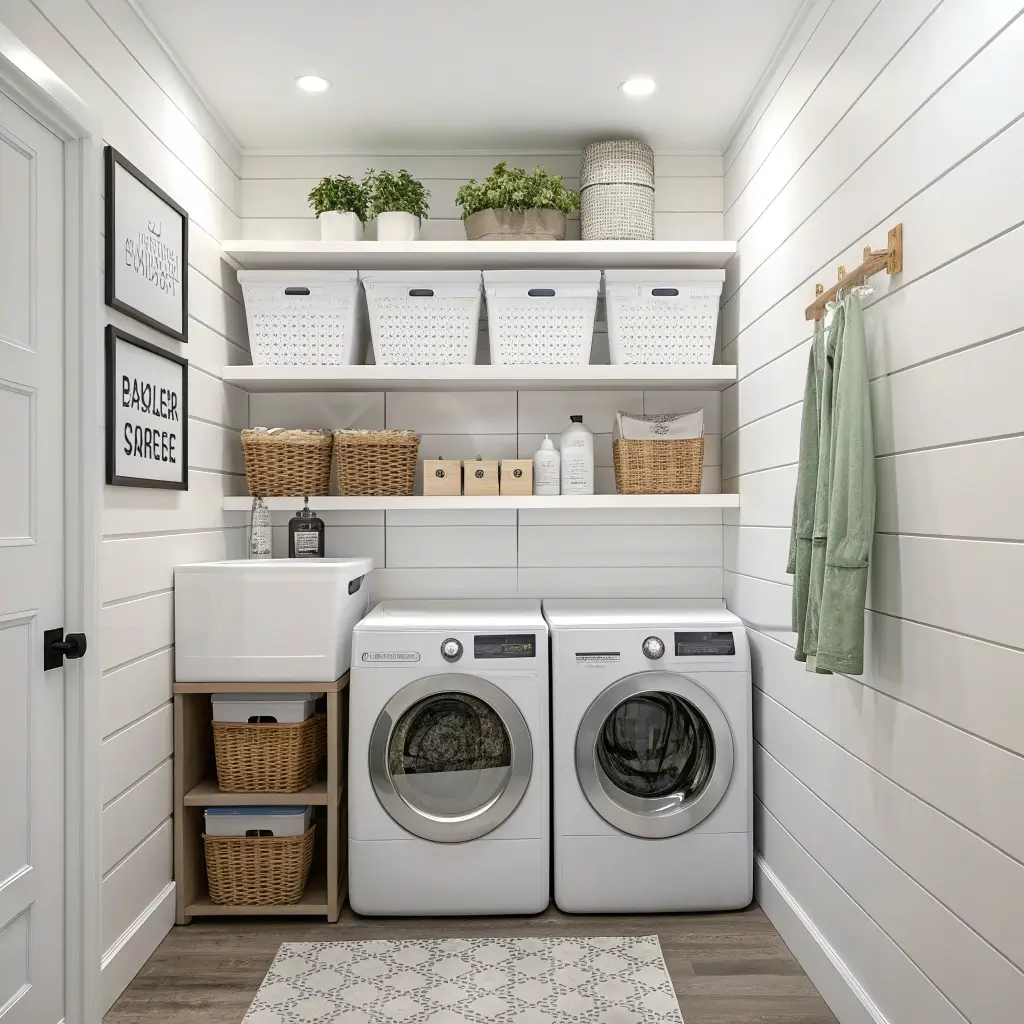
The space above your washer and dryer is prime real estate that most people ignore. I installed a shelf system over my machines, and suddenly I had storage for all my laundry supplies without sacrificing any floor space. It’s like finding hidden storage you didn’t know existed.
Over-washer shelving keeps supplies within arm’s reach while you’re actually doing laundry. No more running around the house looking for stain remover when you discover a mystery spot on your favorite shirt.
Maximizing Over-Machine Storage
Measure carefully for washer and dryer clearance. My machines need space to open fully, so I positioned shelves high enough to clear the lids. I also considered the vibration factor – shelves too close to machines will rattle and potentially dump contents.
Use closed storage for items you don’t want falling. Open shelves over machines can be problematic when vibration causes items to “walk” off edges. I use baskets and containers with lids for small items that might otherwise take a tumble.
Install shelves that can handle machine vibration. I use heavy-duty brackets and secure everything to wall studs. The extra stability prevents the rattling that can drive you crazy during wash cycles.
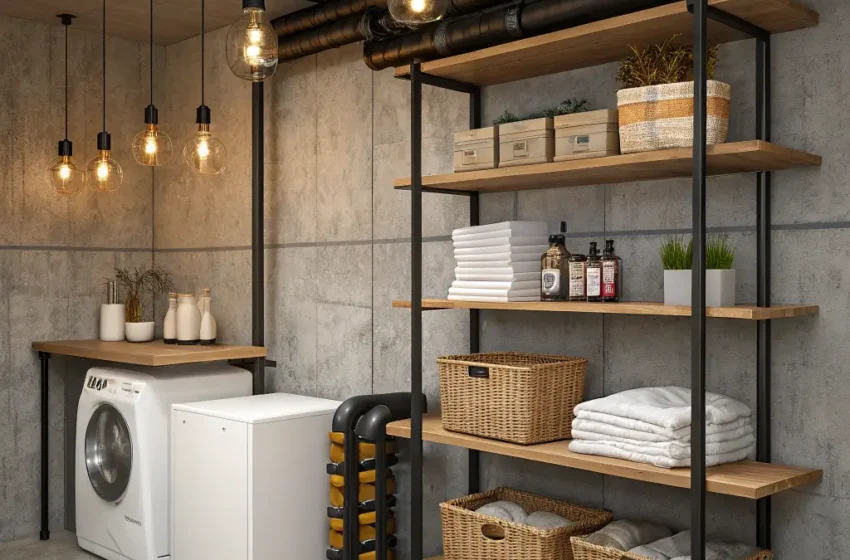
Industrial Pipe and Wood Shelves: The Urban Loft Vibe
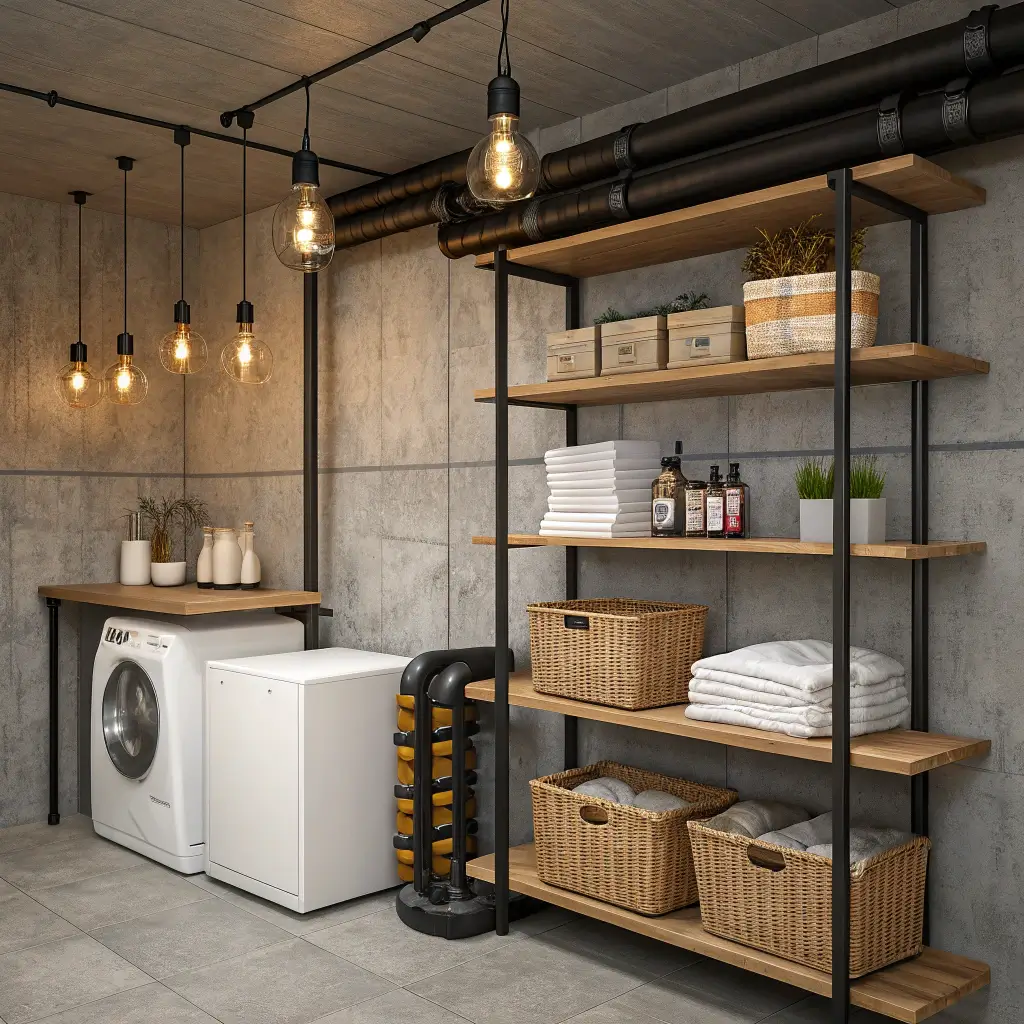
Industrial pipe shelving brings that converted-warehouse aesthetic to laundry rooms. My pipe and wood shelves make my basement laundry area feel intentionally designed rather than like an afterthought. The raw materials handle humidity and wear beautifully.
The exposed hardware becomes part of the design rather than something to hide. Every joint and fitting contributes to the industrial story, making your laundry room feel like it belongs in a trendy loft rather than a suburban basement.
Building Your Industrial Storage System
Choose black iron pipes over galvanized for better aesthetics. The cost difference is minimal, but the visual impact is significant. Black iron looks intentional and designed, while galvanized screams “plumbing supply store.”
Seal wood shelves for laundry room conditions. I use the same marine-grade finish on my pipe shelf wood as I do on other laundry room surfaces. The industrial look doesn’t mean sacrificing durability to moisture.
Plan your pipe configuration before shopping. I sketched my design and made a detailed parts list. This prevented multiple hardware store trips and ensured I had everything needed for assembly. Trust me, nothing kills DIY momentum like missing a crucial elbow joint.
Hidden Cabinet Shelves for Clutter-Free Look: The Stealth Storage
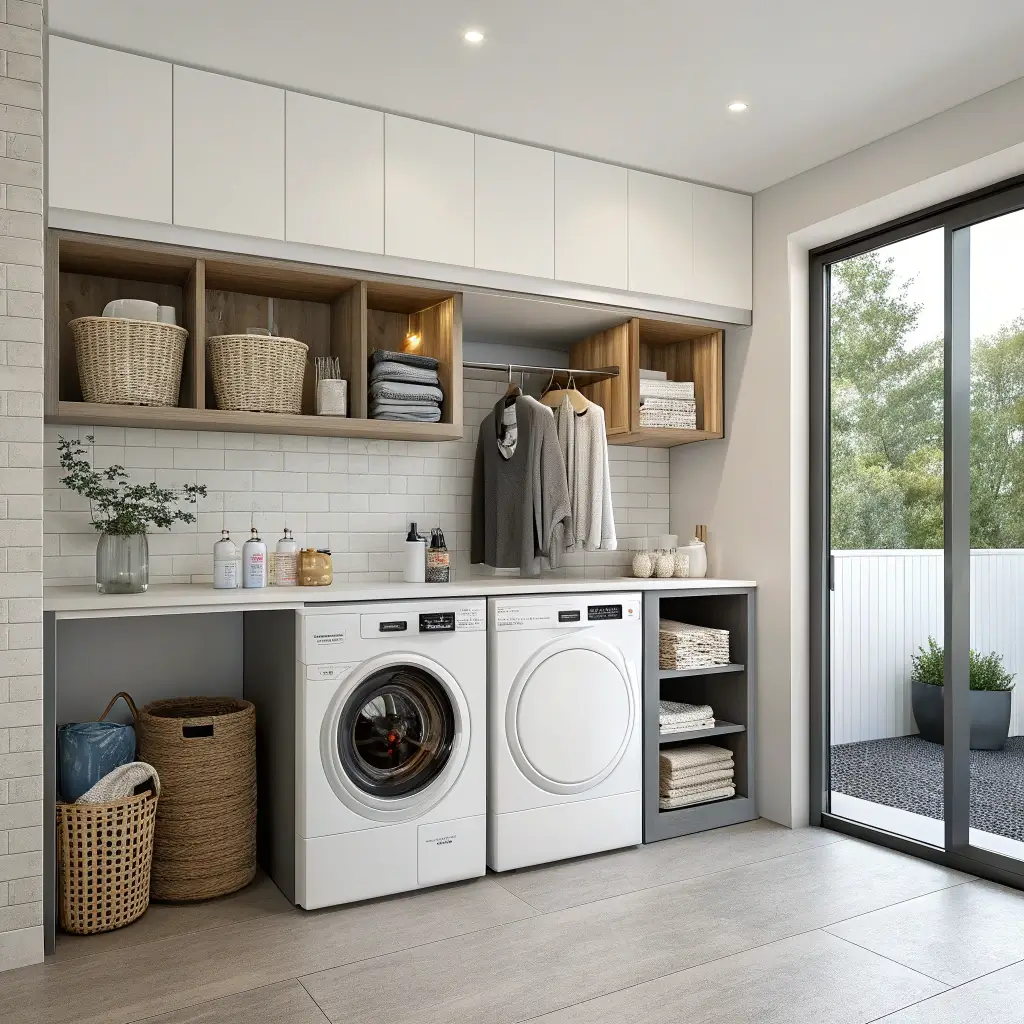
Hidden cabinet shelves maintain a clean, uncluttered appearance while providing massive storage capacity. My laundry room looks minimalist and serene, but behind those cabinet doors lies an organizational system that would make Marie Kondo weep with joy.
The closed storage hides the visual chaos of different product packaging while keeping everything accessible. I can store bulk supplies, seasonal items, and all those random cleaning products without creating visual clutter.
Designing Hidden Storage Systems
Install pull-out shelves for deep cabinets. Fixed shelves in deep cabinets create black holes where items disappear forever. My pull-out shelves bring everything forward for easy access and prevent the archaeological expeditions that deep storage usually requires.
Use clear containers for bulk storage. I buy detergent in bulk and transfer it to clear, airtight containers. This saves money and creates a uniform look inside my cabinets. Plus, I can see when supplies are running low.
Label everything clearly. Hidden storage only works if you remember what’s hidden where. I use a label maker for consistency and clarity. Even my spouse can find things now, which is saying something :/
Also Read: 10 Stunning Built-In Desk and Shelves Ideas for Small Spaces
Tiered Basket Shelving Units: The Flexible Organizer
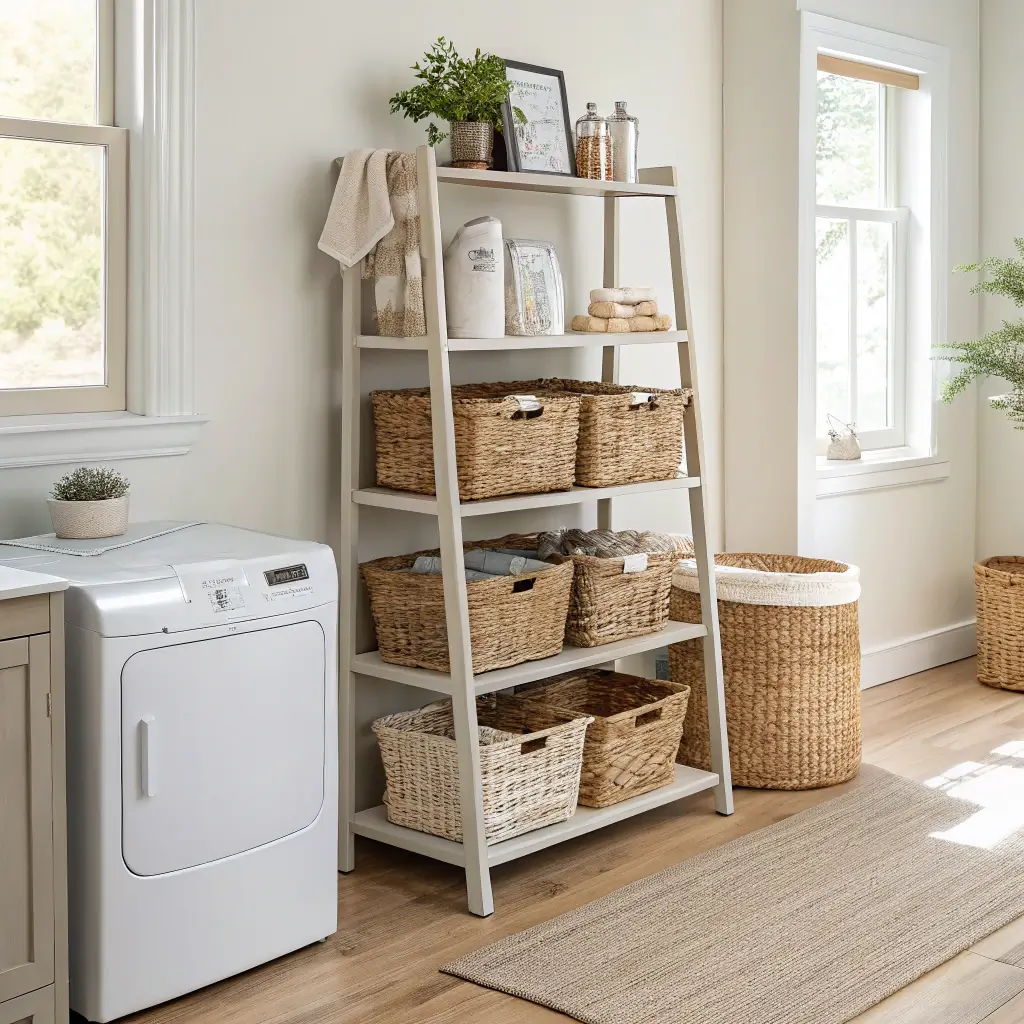
Tiered basket shelves combine the accessibility of open storage with the organization of containers. My three-tier basket unit holds different categories of supplies – detergents on top, fabric care in the middle, and cleaning supplies on bottom. The baskets slide out for easy access to everything inside.
The woven texture adds warmth to utilitarian spaces while providing practical organization. Each basket becomes its own zone, preventing the mixing and chaos that happens with open shelving.
Basket Shelving Success
Choose baskets based on your actual supplies. I measured my detergent bottles before buying baskets to ensure everything would fit properly. Nothing’s more frustrating than beautiful baskets that don’t accommodate your actual stuff.
Mix basket sizes for varied storage needs. My unit has large baskets for bulky items and smaller ones for supplies I use frequently. This customization makes the system work for my specific laundry routine rather than forcing me to adapt to arbitrary basket sizes.
Use removable baskets for flexibility. I can take entire baskets to other parts of the house when needed, then return them to the shelf unit. This mobility makes the system more functional than fixed storage.
Color-Coded Laundry Supply Organization: The Visual System
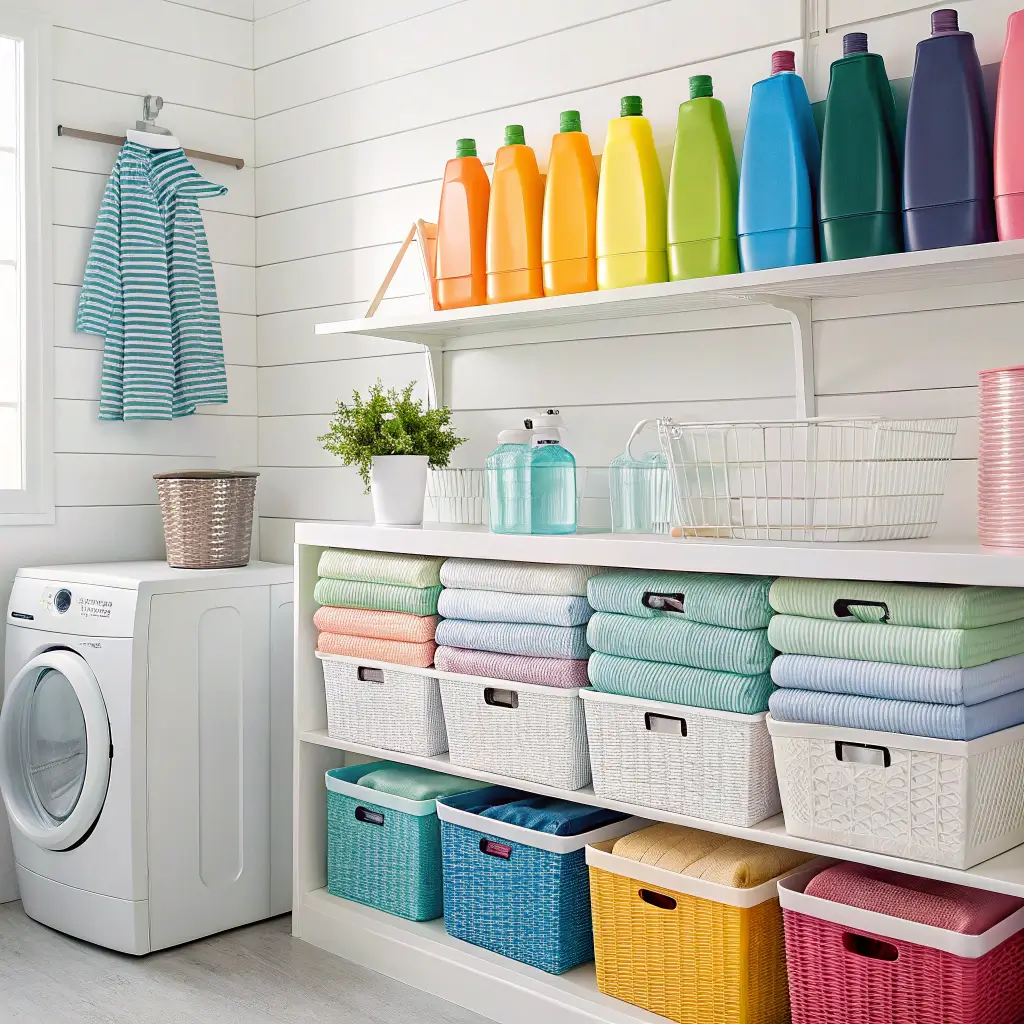
Color-coded organization turns functional storage into visual appeal. I assigned different colored containers to different supply categories – blue for detergents, green for fabric care, white for stain removal. The system looks intentional while making it impossible to grab the wrong product.
The color coding works especially well in laundry rooms because you’re often multitasking and need to grab supplies quickly. Visual cues prevent mistakes and speed up the entire laundry process.
Creating Your Color System
Choose colors that make sense for your supplies. I use cool colors for cleaning products and warm colors for fabric care items. The intuitive color associations help family members maintain the system without constant reminders.
Invest in matching containers within each color family. I bought sets of containers in each designated color rather than mixing random pieces. The consistency creates visual calm and reinforces the organizational system.
Label containers clearly even with color coding. Colors help with quick identification, but labels ensure accuracy. I use waterproof labels that can handle laundry room humidity and occasional splashes.
Compact Modular Shelving Systems: The Space Maximizer
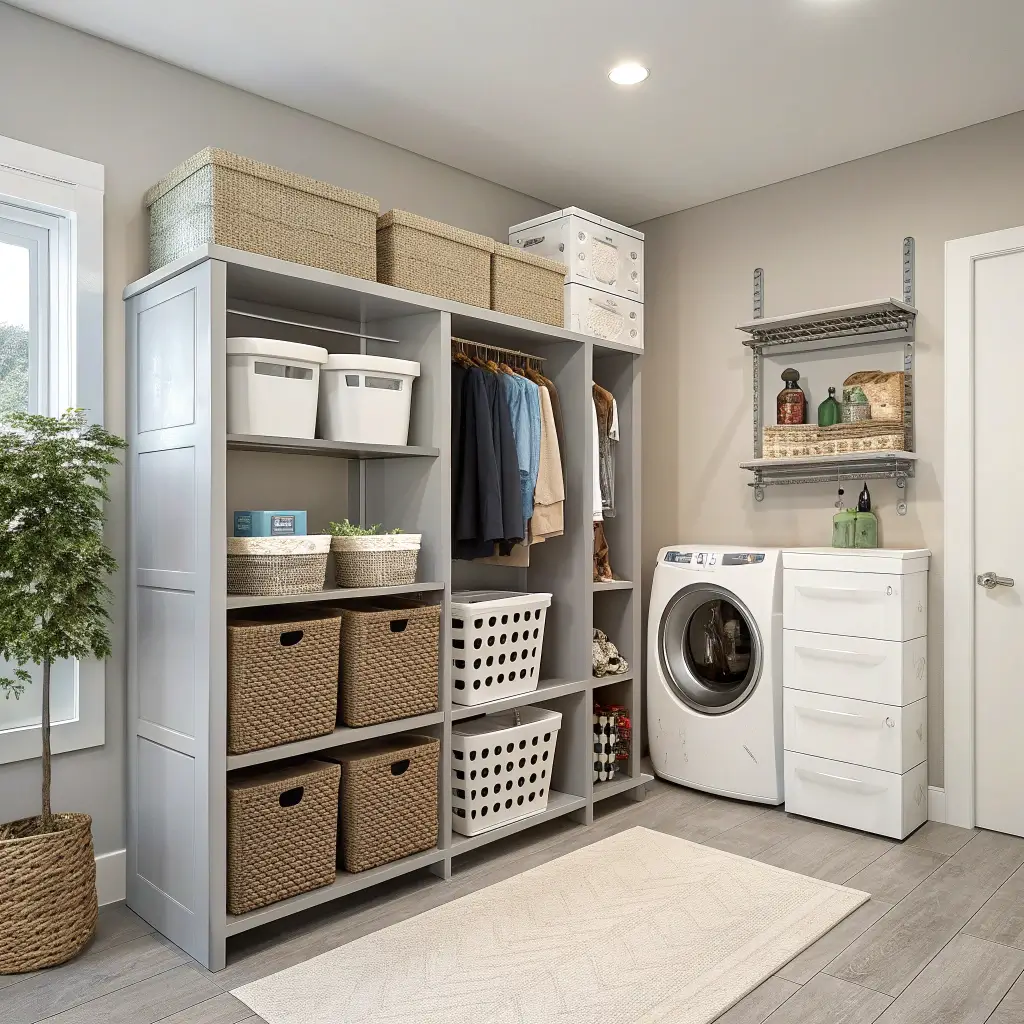
Modular shelving adapts to any laundry room size or configuration. My compact system fits perfectly in my narrow laundry closet, but I could reconfigure it if I moved to a different space. The flexibility means the investment grows with your changing needs.
The modular approach lets you start small and expand as needed. I began with basic components and added pieces as my storage needs evolved. This gradual approach spreads the cost over time while ensuring the system truly fits your lifestyle.
Modular System Strategy
Plan for future expansion when choosing modular systems. I selected a system with multiple compatible components so I could add pieces later. This forward thinking prevents the frustration of outgrowing your storage solution.
Start with essential components and add gradually. I bought the basic shelf unit first, then added drawers, baskets, and specialty organizers as I identified specific needs. This approach ensures every component earns its place.
Choose systems with adjustable components. My modular shelves have adjustable heights and removable dividers. This flexibility accommodates changing supply collections and different sized items without requiring new purchases.
Making Laundry Room Shelves Work for Your Real Life
Here’s what I’ve learned after transforming multiple laundry rooms: the best shelving system is the one you’ll actually maintain.
I’ve created gorgeous organizational systems that I never kept up because they were too complicated for my actual laundry routine.
Consider your real habits, not your aspirational ones. I wanted to be the person who decants everything into matching containers, but I’m actually the person who needs to see product labels to remember what I bought.
My current system accommodates my actual behavior instead of fighting against it.
Start with function, then add beauty. A beautiful shelf that doesn’t work for your supplies and routine will just become cluttered and frustrating. I always plan storage around what I actually need to store and how I actually do laundry.
Remember that laundry rooms work hard and need durable solutions. This isn’t the place for delicate materials or finishes that can’t handle humidity, splashes, and daily use.
I choose materials that age gracefully under real-world conditions.