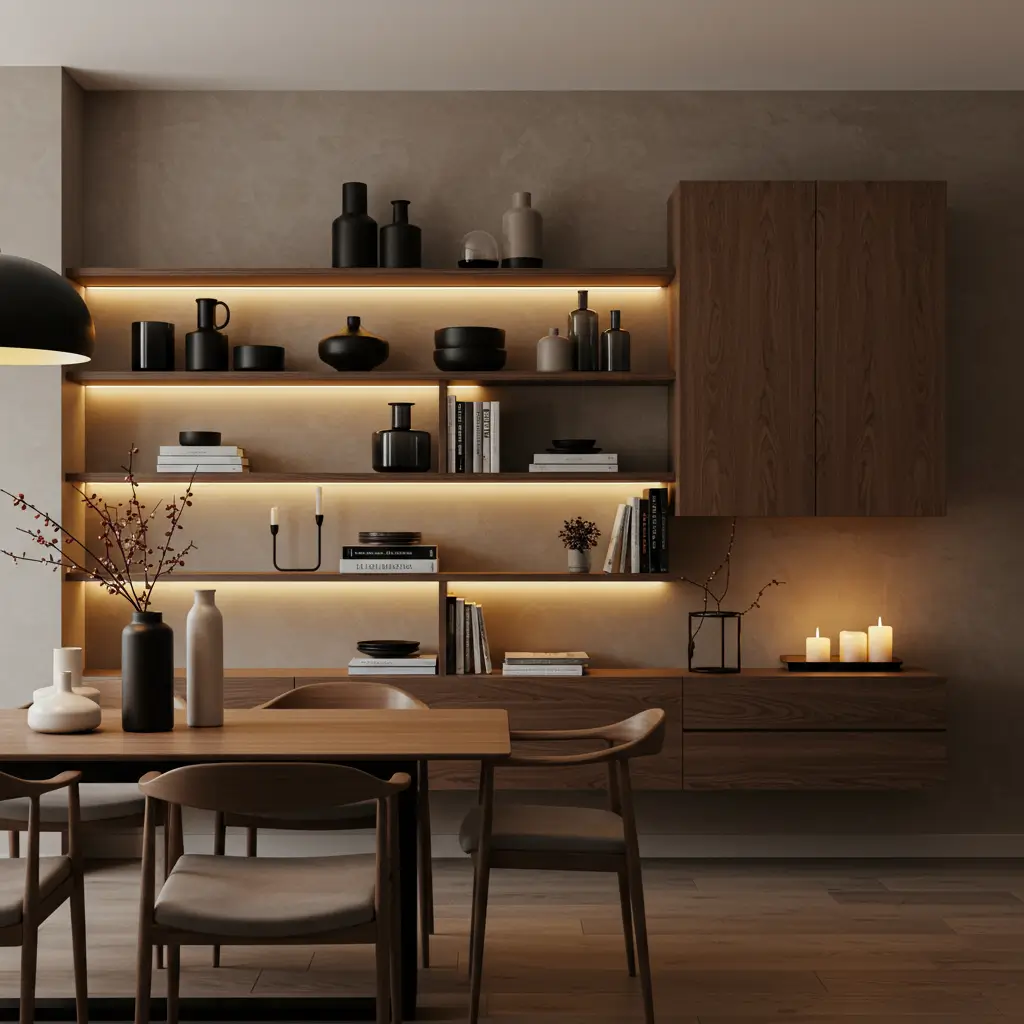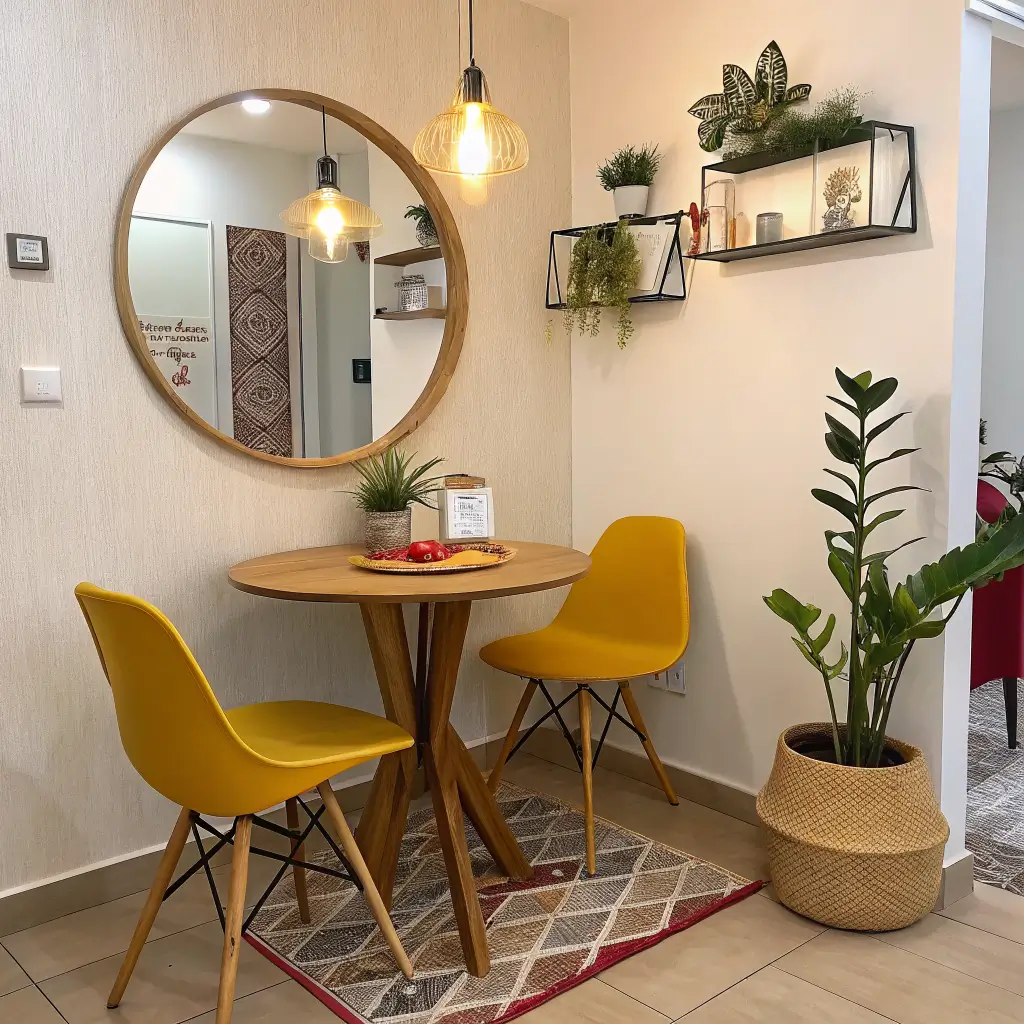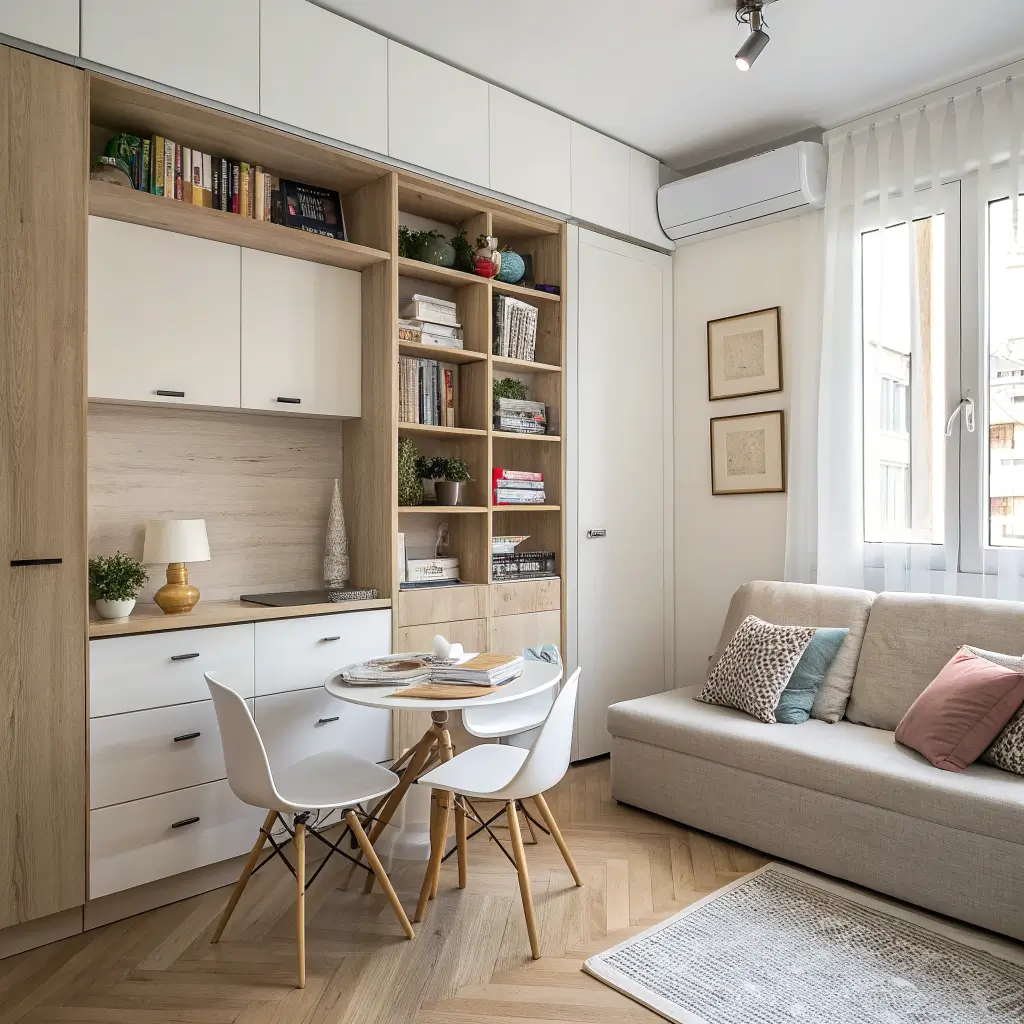
12 Creative Living Room with Dining Area Ideas for Open Layouts
- Dining Room
 Ben
Ben- 0
- 42 minutes read
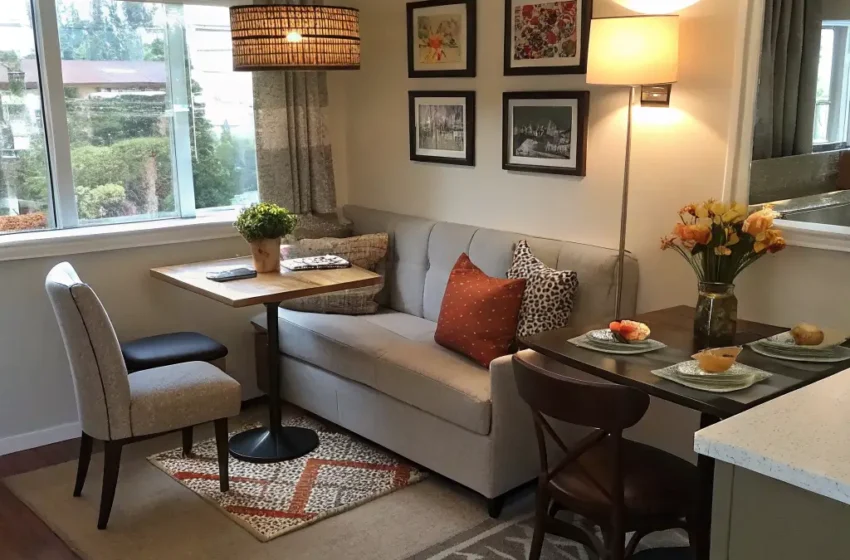
So you’re staring at your open-plan space wondering how to make your living room and dining area play nice together without looking like a furniture store threw up in your home. I get it.
When I moved into my first apartment with a combined living-dining space, I literally just pushed all the furniture against the walls and called it a day. Spoiler alert: it looked terrible.
After years of experimenting (and countless furniture rearrangements that drove my partner crazy), I’ve discovered that living room with dining area combinations can actually be the best thing about modern homes.
You just need to know how to make these two zones work together while keeping their own identities.
These 12 living room with dining area ideas come from real trial and error — my own furniture-moving marathons, design wins, epic fails, and everything I’ve learned helping friends tackle the same challenge.
Let’s transform your combo space from awkward to amazing.
1. Sofa-Back Zoning Layout
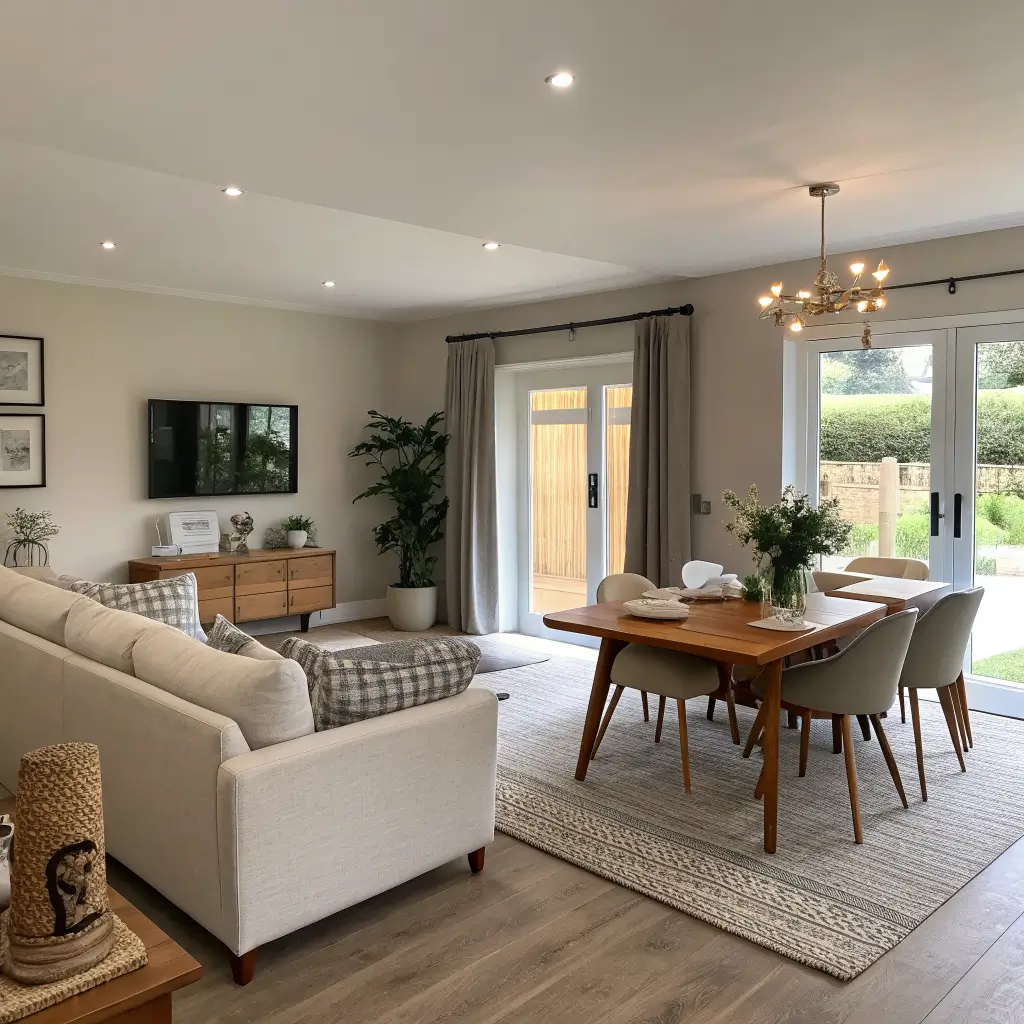
The sofa-back zoning layout uses your couch as a natural room divider, and honestly, it’s genius in its simplicity. Your sofa literally turns its back on the dining area, creating an instant visual boundary without any walls or extra furniture.
Why the Sofa-Back Method Works
I discovered this layout accidentally when I got tired of staring at my dining table while watching TV. Flipping my sofa to face away from the dining area created two distinct zones instantly. The back of the couch became a natural barrier that said “living room ends here, dining begins there.”
The beauty of this approach lies in its flexibility. You can add a console table behind the sofa for extra surface area, or leave it open for easier flow between spaces. Either way, the zones feel intentional rather than randomly placed.
Making Sofa-Back Zoning Successful
Key elements for perfect sofa-back division:
- Position the sofa perpendicular to the longest wall
- Leave 3-4 feet of walking space behind the couch
- Add a narrow console table for lamps or decor
- Use the sofa back as a display surface for plants
- Keep sight lines open above sofa height
- Anchor each zone with its own area rug
Have you ever noticed how restaurants use banquette seating to divide spaces? Same principle here — the furniture does the work so walls don’t have to.
2. Rug-Layered Space Divider
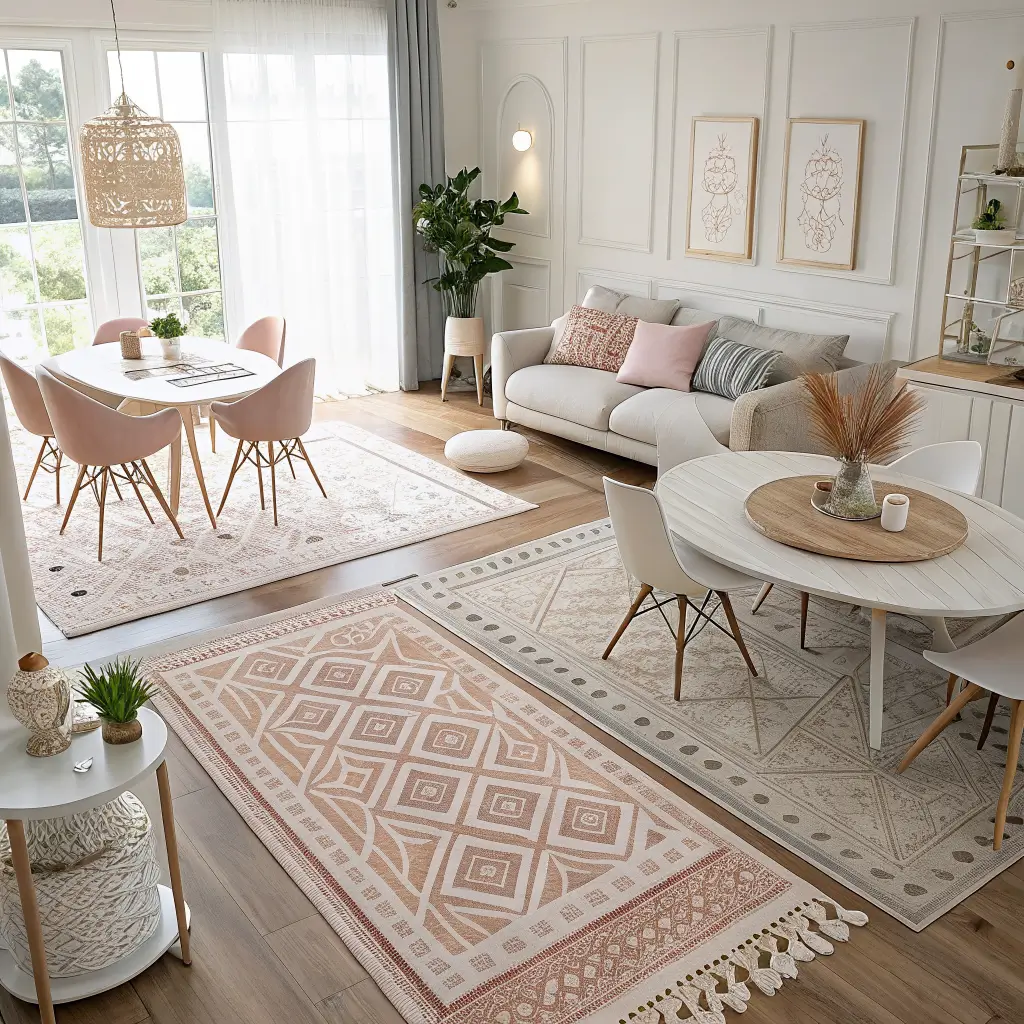
Rug layering as a space divider creates visual boundaries on the floor that your brain automatically interprets as separate zones. No construction required, just strategic textile placement that defines each area perfectly.
The Psychology of Rug Boundaries
Our brains naturally see rugs as room boundaries — it’s like drawing invisible lines that say “this space serves this purpose.” I use a large jute rug under my living room furniture and a smaller patterned rug under the dining table. The different textures and sizes immediately communicate two distinct areas.
The overlapping edge where rugs meet (or almost meet) becomes this interesting design moment that actually enhances both spaces. Plus, rugs add warmth and sound absorption, which combo spaces desperately need.
Strategic Rug Placement
How to layer rugs effectively:
- Size rugs appropriately — living room rug should fit under front sofa legs minimum
- Create 6-12 inch gaps between rugs for breathing room
- Mix textures but keep colors complementary
- Use runner rugs to create pathways between zones
- Layer smaller rugs over larger neutral ones for depth
- Ensure rugs lie flat to prevent tripping hazards
The rug trick transformed my space from “random furniture in a room” to “thoughtfully designed zones.” Best part? You can change the entire layout just by moving rugs around.
3. Round Dining Table Combo
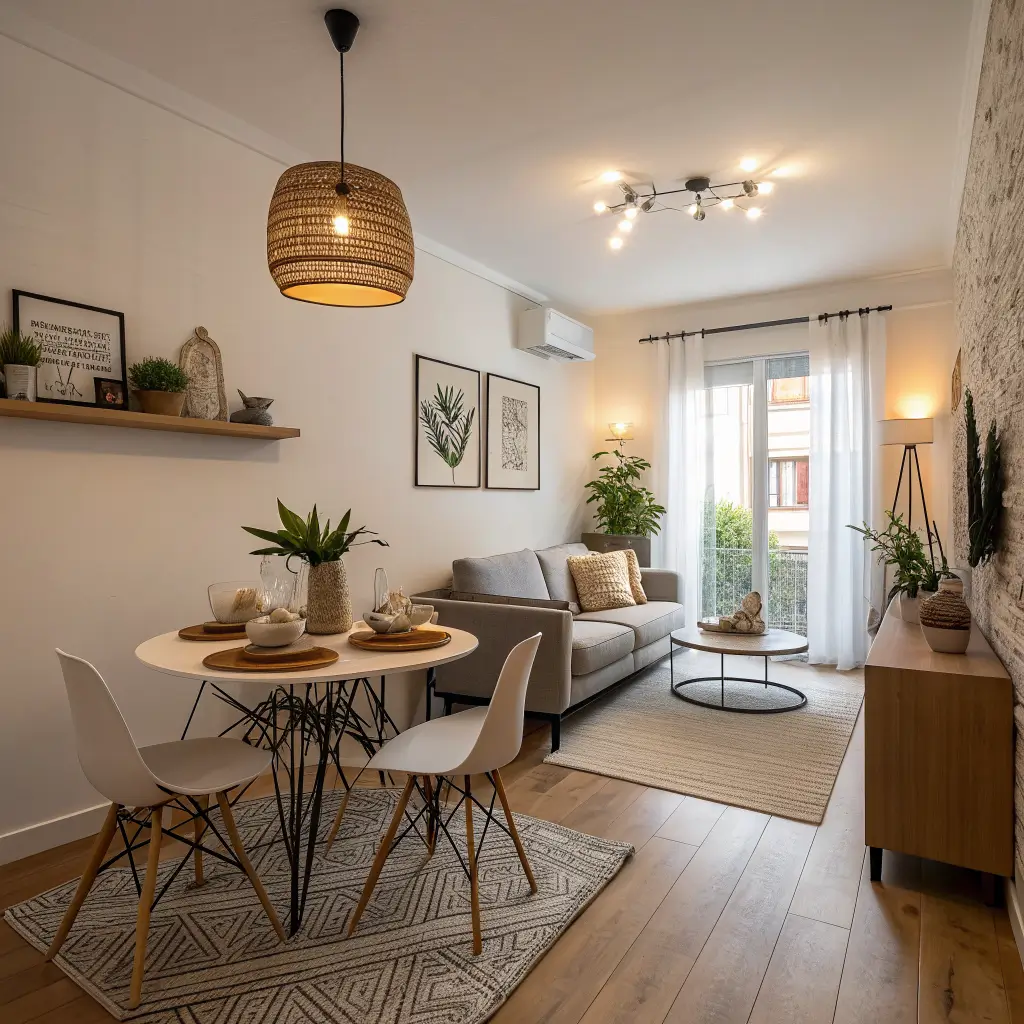
A round dining table in a combo living-dining space solves so many problems that rectangular tables create. No sharp corners to navigate, better flow, and somehow they make the whole space feel more social.
Why Round Tables Rule Combo Spaces
My rectangular table constantly felt like a barrier between the living and dining areas. Switching to a round pedestal table changed everything — suddenly the space flowed naturally, conversations happened easier, and nobody got bruised hips from corner encounters.
Round tables also scale beautifully. Daily dining for two feels intimate, but add leaves for dinner parties and you’ve got seating for six without the space feeling cramped.
Optimizing Round Table Placement
Making round tables work perfectly:
- Position slightly off-center in the dining zone
- Choose pedestal bases for maximum leg room
- Pick 42-48 inch diameter for combo spaces
- Use round-back chairs to echo the curve
- Add a round light fixture above to reinforce the shape
- Leave equal spacing on all sides for circulation
Round tables make combo spaces feel less linear and boxy. They introduce curves that soften all those right angles typical in modern homes. IMO, every combo space should at least consider going round.
Also Read: 10 Creative Dining Area Design Ideas for Open Layouts
4. Floating Furniture Arrangement
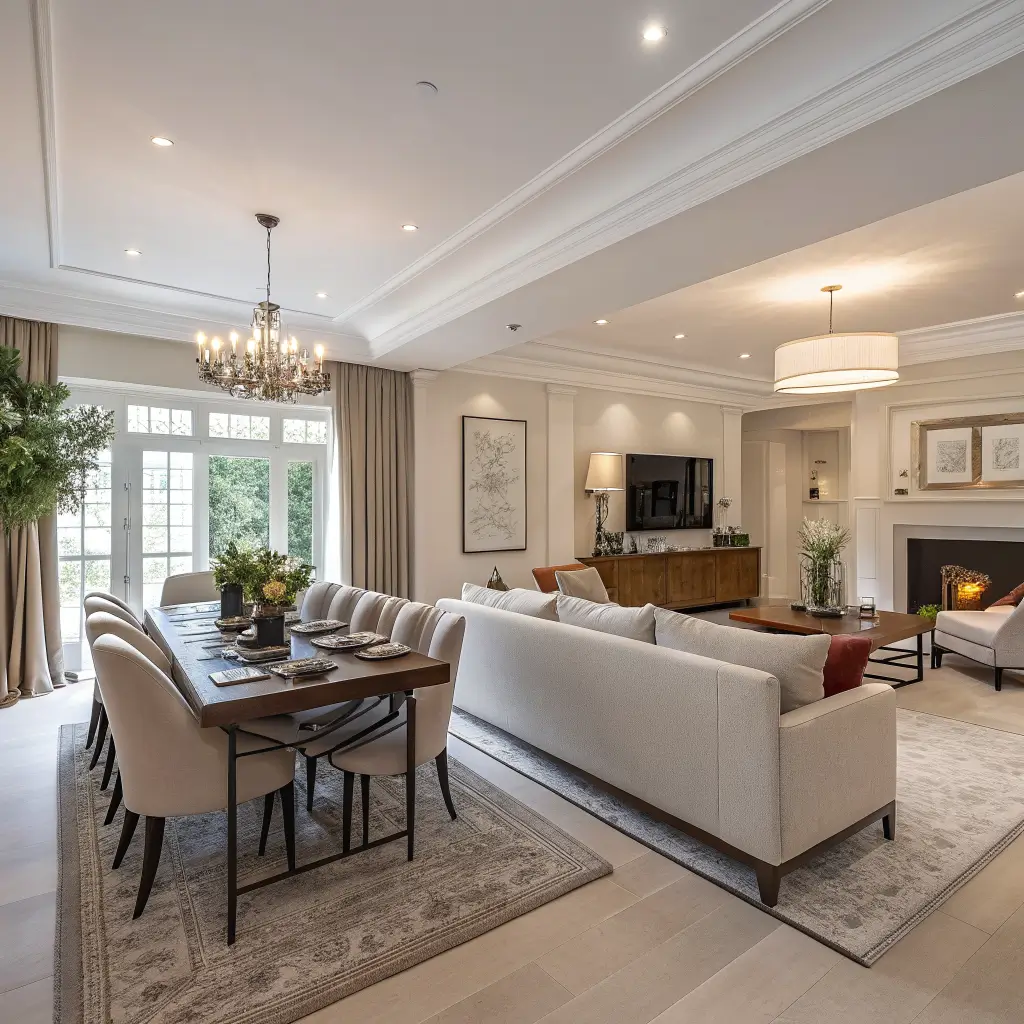
Floating furniture arrangements pull everything away from walls, creating distinct zones in the middle of your space. This approach makes rooms feel larger and more intentional, even though it seems counterintuitive.
Breaking Free from Wall-Hugging
I spent years pushing every piece of furniture against walls, thinking it would make my space feel bigger. Wrong. Floating my sofa and dining table in the middle of the room actually made it feel twice as large. The key is creating deliberate groupings rather than lining the perimeter.
Floating arrangements force you to think about traffic flow and sight lines. You create natural pathways between zones while maintaining visual connections across the space.
Floating Furniture Success Tips
How to float furniture effectively:
- Start with the largest piece (usually the sofa) and float it first
- Create conversation distances — 8 feet max between seating
- Use area rugs to anchor each floating zone
- Maintain 30-36 inch pathways between groupings
- Add floor lamps since wall outlets become distant
- Consider cord management for floating arrangements
The floating approach feels scary at first, but once you see how it opens up your space, you’ll never go back to wall-hugging again. Trust the process.
5. Statement Pendant Dining Zone
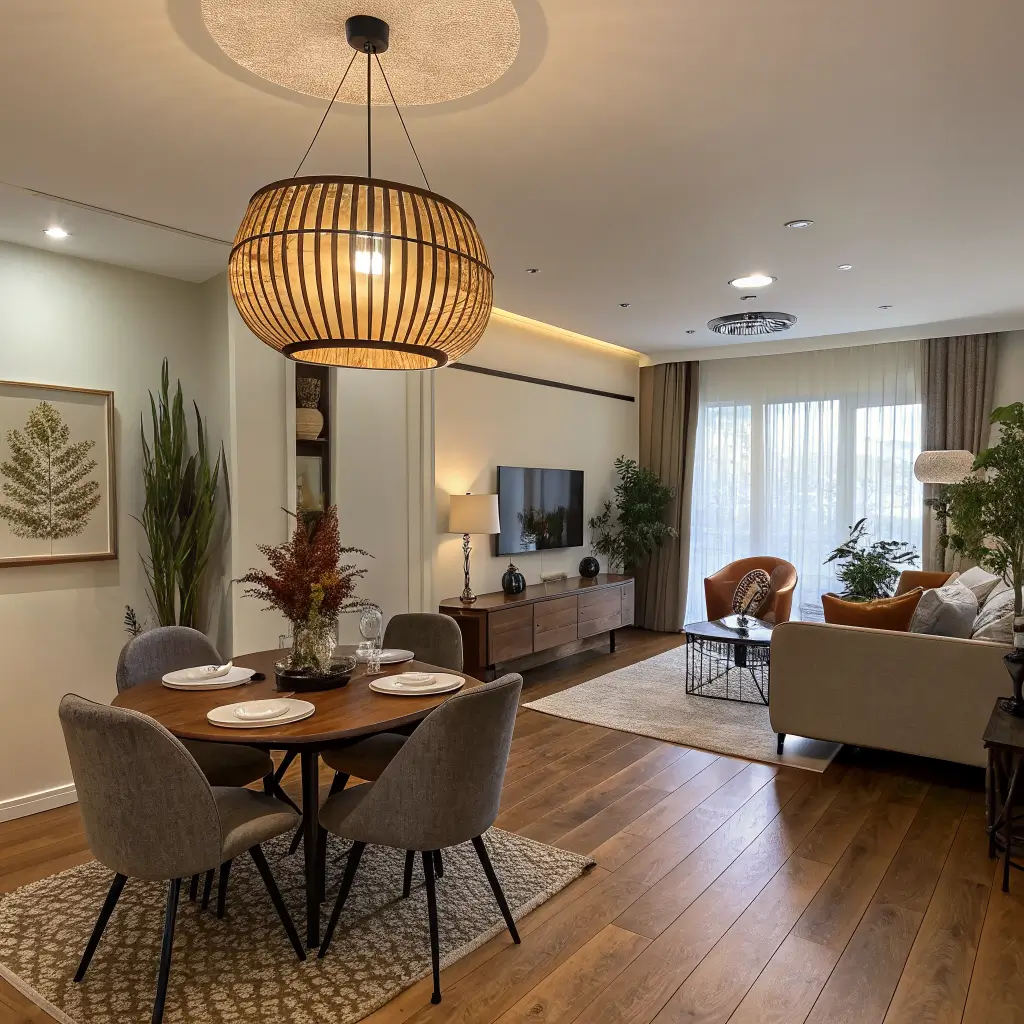
A statement pendant light over the dining zone creates an instant focal point that clearly defines where dining happens. It’s like putting a spotlight on your dining area that says “important things happen here.”
Lighting as Architecture
My dining area used to blend invisibly into the living room until I hung a dramatic brass pendant over the table. Suddenly, the dining zone had presence. That one fixture created vertical definition that no amount of furniture arranging could achieve.
Statement pendants work because they draw the eye up, creating visual height that makes spaces feel larger. They also provide task lighting exactly where you need it while adding personality.
Choosing the Perfect Pendant
What makes a pendant work in combo spaces:
- Scale it properly — 1/2 to 2/3 the table width
- Hang at correct height — 30-36 inches above table
- Choose dimmable options for mood flexibility
- Consider the view from the living room
- Match metal finishes throughout the space
- Use multiple pendants for longer tables
FYI, the pendant doesn’t need to be expensive to be effective. I’ve seen incredible vintage finds and DIY fixtures that commanded just as much attention as designer pieces. 🙂
6. Half-Wall Partition Style
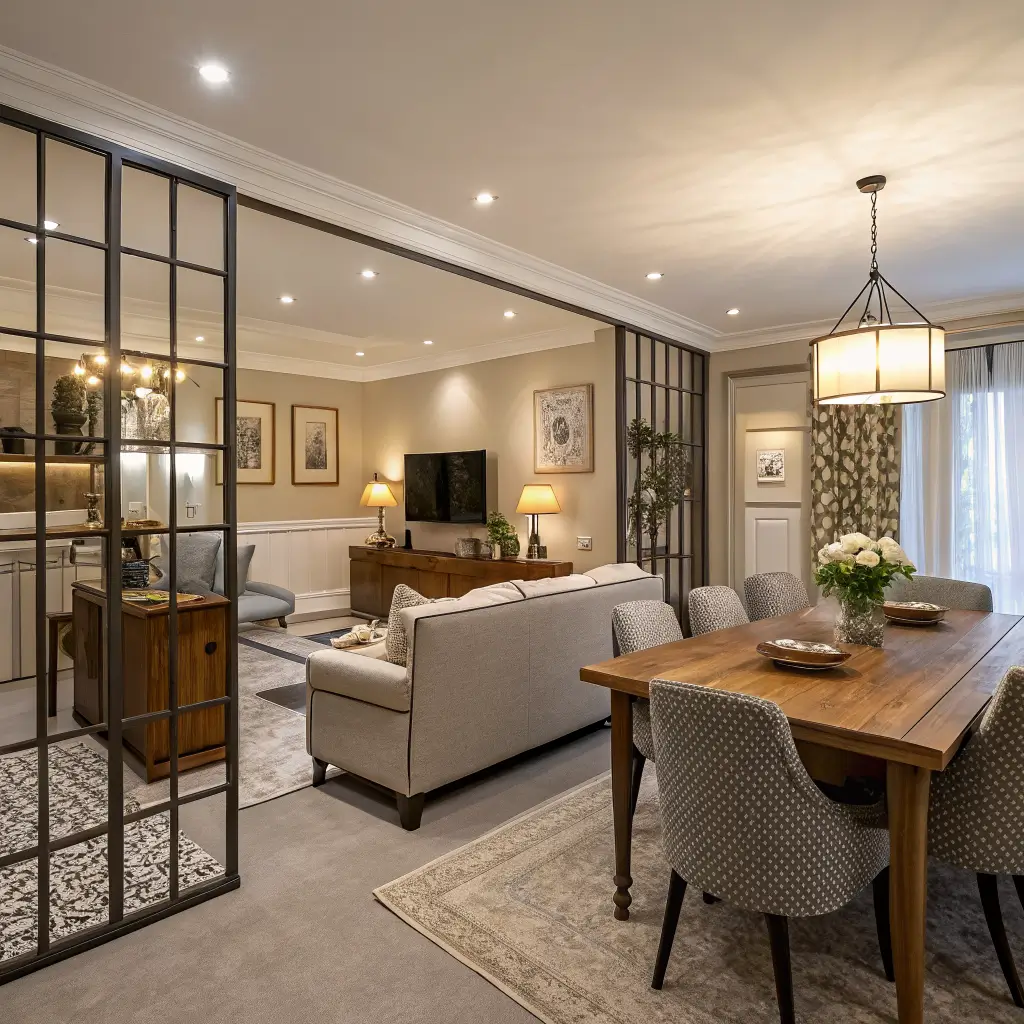
The half-wall partition style offers the best of both worlds — separation without isolation. These partial walls define spaces while maintaining the open feel that makes combo rooms appealing.
The Goldilocks of Room Division
Full walls feel too closed off, no walls feel too undefined, but half walls? Just right. My friend built a 36-inch half wall between her living and dining areas, and it completely transformed the space. The dining area gained intimacy while staying connected to the living room.
Half walls also provide bonus functionality — the top becomes a surface for plants, serving dishes during parties, or even bar-style seating if you add stools.
Half-Wall Design Strategies
Making half walls work:
- Keep height between 36-42 inches for optimal division
- Add a wood or stone cap for finished appearance
- Incorporate storage in the base if possible
- Use glass panels above for more separation with light flow
- Paint different colors on each side to reinforce zones
- Add electrical outlets for maximum functionality
Half walls require more commitment than furniture placement, but they solve the combo room challenge permanently. Sometimes that’s exactly what a space needs.
Also Read: 10 Luxury Dining Area Ideas for Sophisticated Decor
7. Open Shelf Room Divider
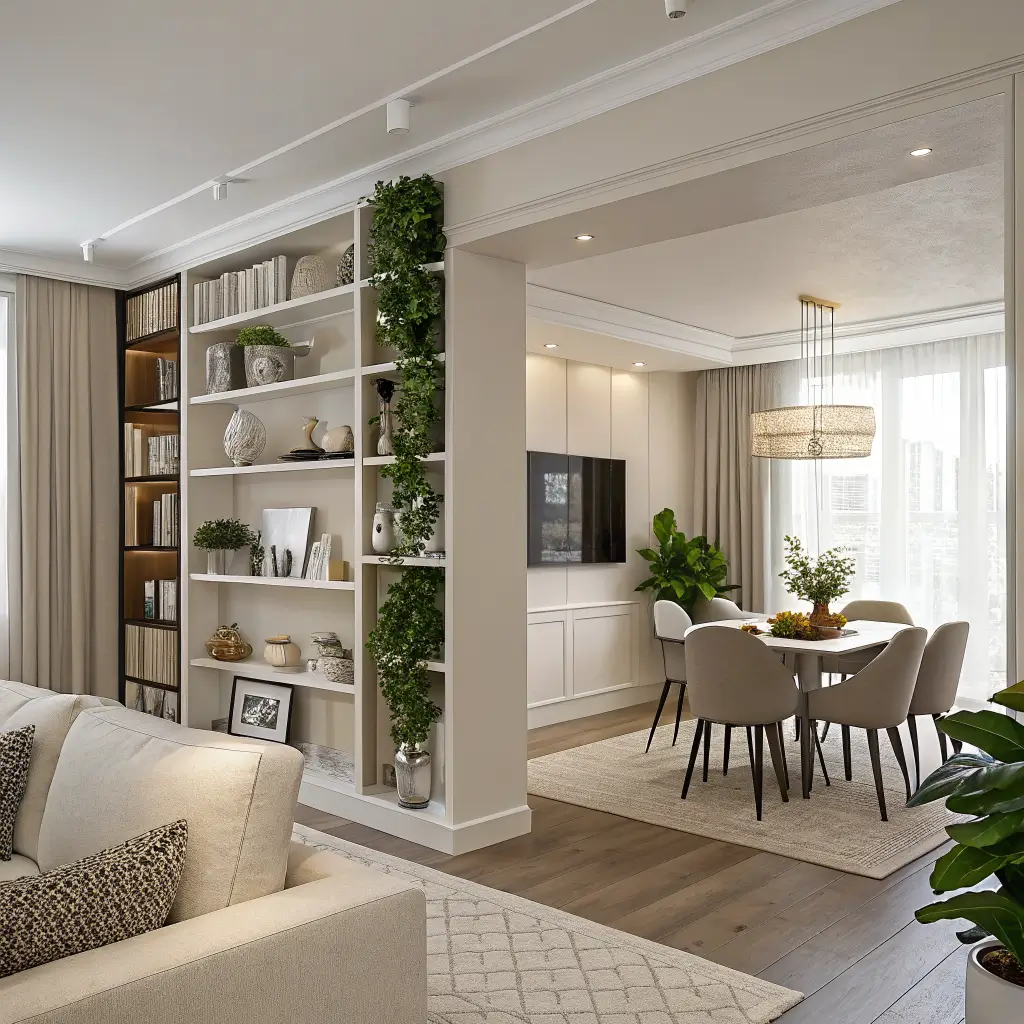
An open shelf room divider provides separation, storage, and display space without blocking light or views. It’s basically multitasking furniture at its finest.
See-Through Storage Solution
I installed a geometric open shelf unit between my living and dining areas, and it changed everything. Books and plants on the shelves create visual interest from both sides while maintaining that essential open feel. The shelving defines zones without building walls.
Open shelving works particularly well in smaller combo spaces where every square foot counts. You get division, storage, and style in one piece.
Optimizing Open Shelf Dividers
How to use open shelving effectively:
- Choose backless units for maximum light flow
- Style both sides since they’re visible from each zone
- Mix displayed items — books, plants, baskets, art
- Leave some shelves empty to prevent visual heaviness
- Secure tall units to prevent tipping
- Consider modular systems for flexibility
The best thing about open shelf dividers? They grow with your needs. Rearrange the contents seasonally, add or remove shelves, or even relocate the entire unit when you want a change.
8. Color-Zoned Living Dining Space
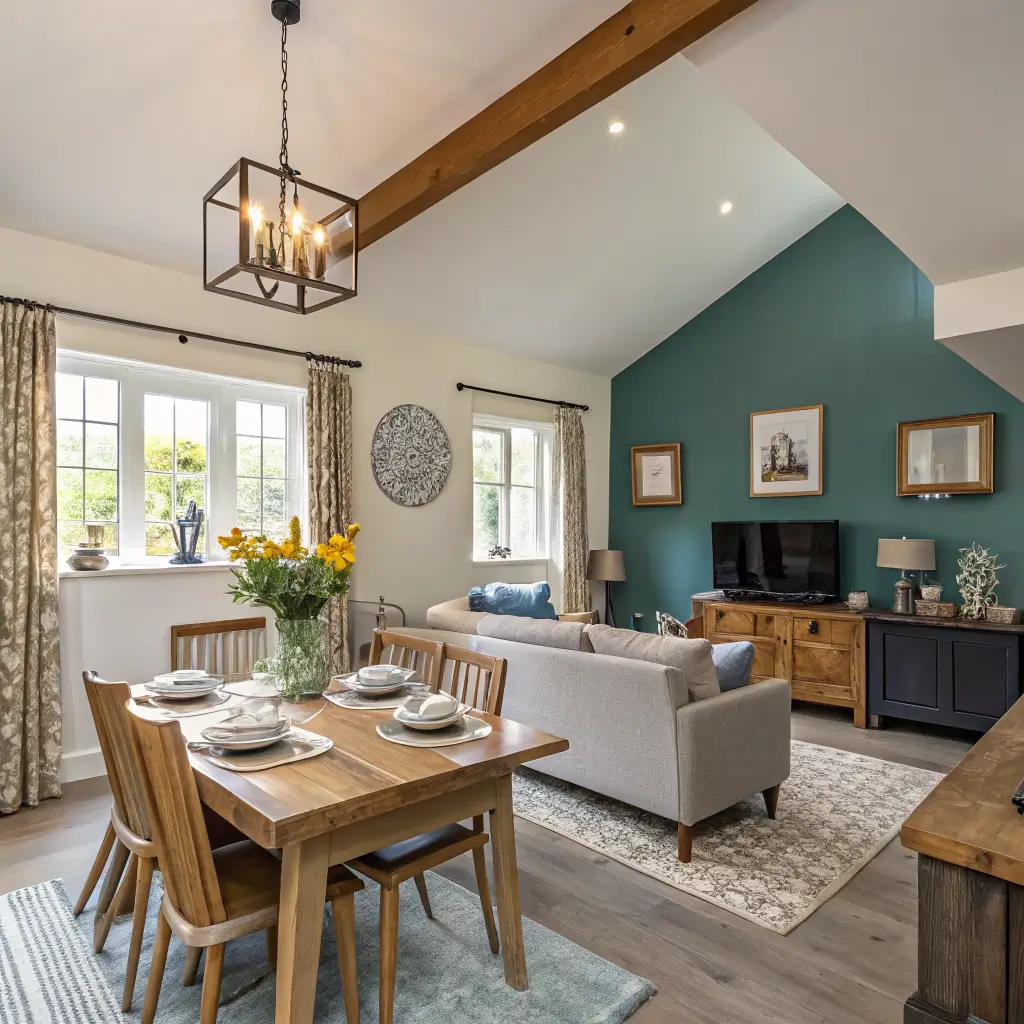
Color zoning your living dining space uses paint, wallpaper, or decor to visually separate areas. Different colors signal different functions without any physical barriers.
Psychology of Color Division
Colors affect our perception of space dramatically. I painted my dining area wall in deep navy while keeping living room walls white, and suddenly two distinct rooms emerged from one space. The color change creates a psychological boundary that’s surprisingly effective.
Color zoning works because our brains naturally group similar colors together. When you change colors, you signal a change in function or mood.
Color Zoning Strategies That Work
Effective color zoning techniques:
- Use the 60-30-10 rule for color distribution
- Keep one consistent neutral throughout for cohesion
- Change wall colors at natural breaking points
- Use color in textiles if you can’t paint
- Coordinate metallics across both zones
- Add accent colors that appear in both areas
Ever notice how boutique hotels use color to define spaces in open-plan suites? Same principle applies to your home — color becomes architecture without the construction costs.
9. Minimalist Linear Layout
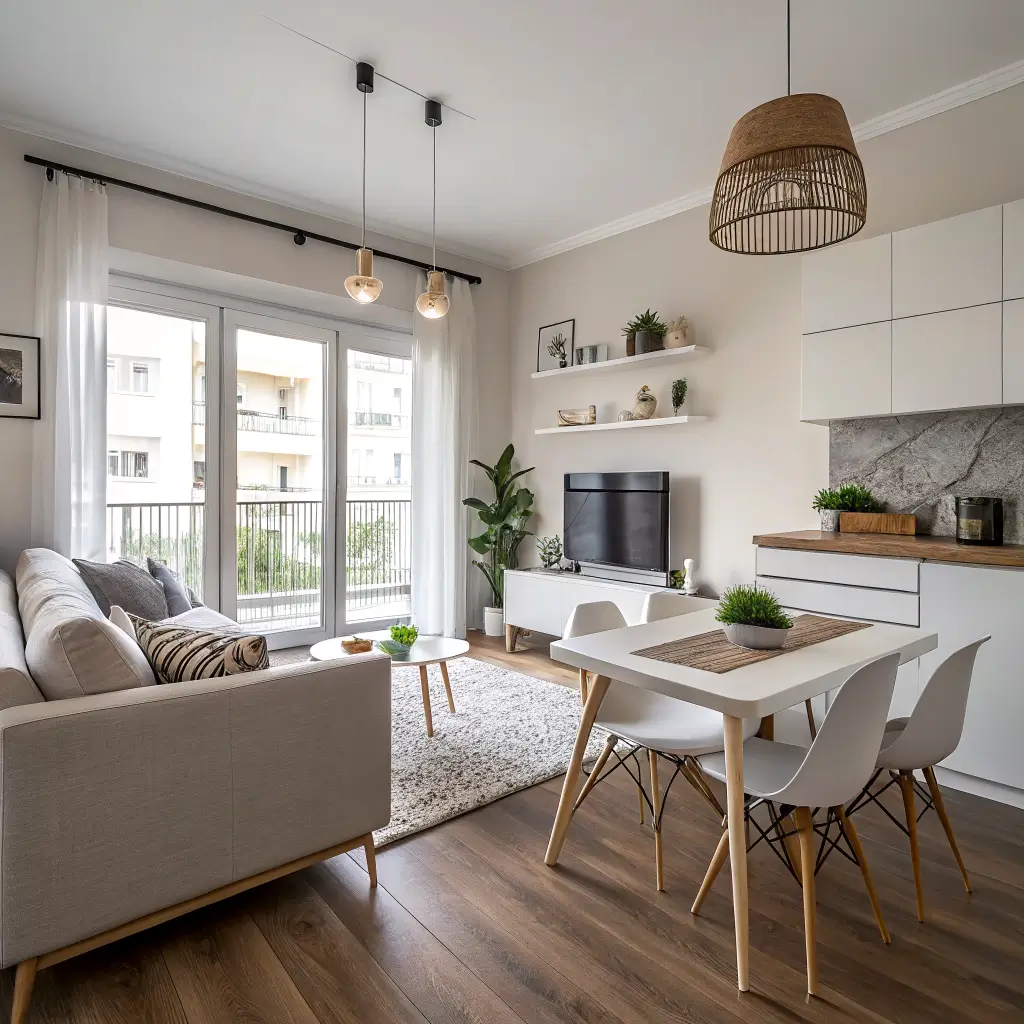
The minimalist linear layout arranges living and dining zones in a clean line along one axis. This approach eliminates visual clutter and creates a sense of flow that feels intentional and calm.
The Power of Linear Thinking
Linear layouts work because they embrace the rectangular reality of most combo spaces. My current setup places dining at one end, living at the other, with a clear pathway between. No zigzagging around furniture, no confused traffic patterns — just clean, logical flow.
This approach particularly suits modern and minimalist aesthetics where simplicity and function drive design decisions. Every piece has its place in the line.
Creating Linear Harmony
Making linear layouts successful:
- Align furniture on invisible grid lines
- Keep pathways straight and unobstructed
- Use similar heights to maintain horizontal flow
- Minimize furniture pieces to essential items only
- Choose low-profile designs that don’t block views
- Repeat materials across both zones for continuity
The minimalist linear layout might seem basic, but that simplicity creates sophisticated spaces that never feel cluttered or overwhelming. Sometimes the obvious solution is the best one.
Also Read: 10 Creative Dining Table Design Modern Ideas for Every Home
10. Corner Dining Nook Setup
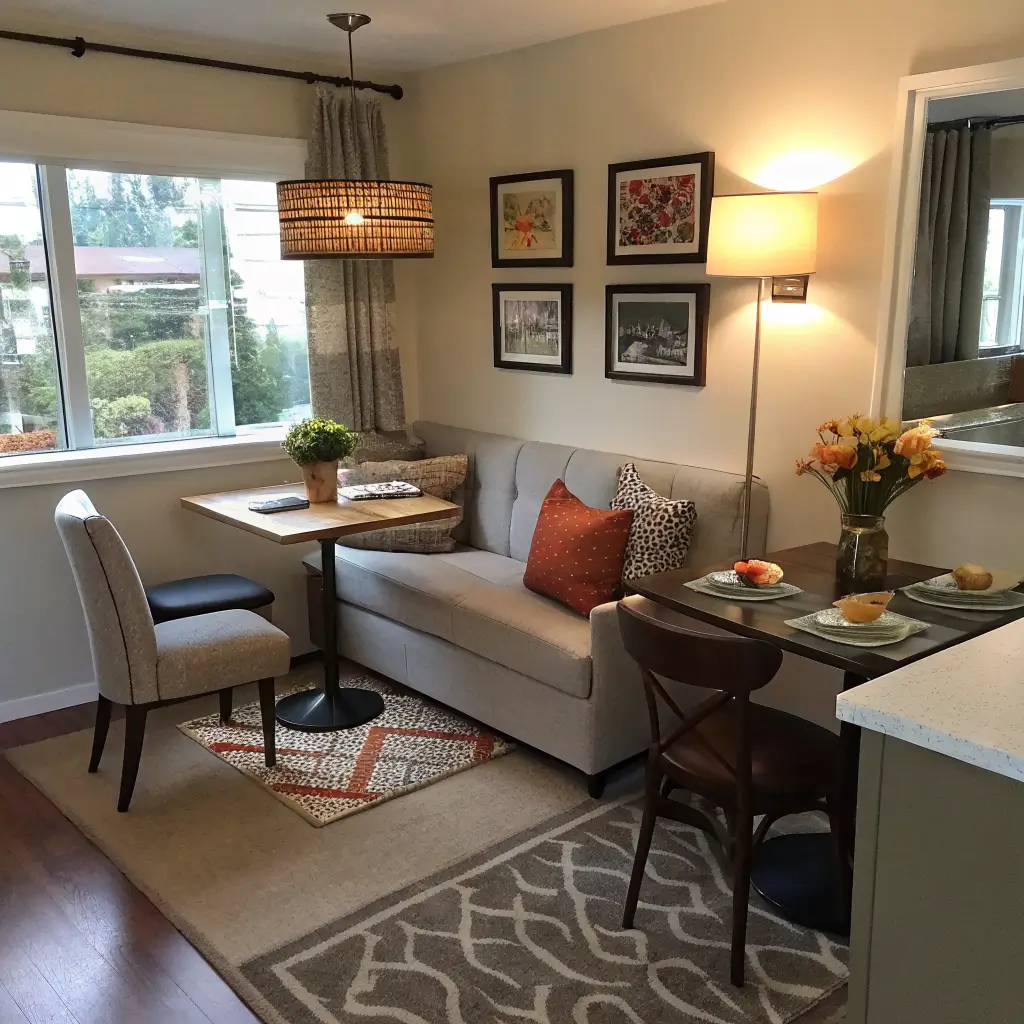
A corner dining nook setup tucked into an unused corner maximizes every inch while creating an intimate dining experience. These cozy corners often become the favorite spot in combo spaces.
Embracing Corner Potential
That awkward corner where two walls meet? Perfect dining spot. I built a simple banquette in my living room corner, added a small round table, and created the coziest breakfast nook imaginable. What was dead space became the most-used area in our home.
Corner nooks work because they feel intentionally designed rather than squeezed in. The walls provide natural boundaries that define the dining zone without any additional elements.
Corner Nook Essentials
Creating the perfect corner dining setup:
- Add built-in or freestanding banquette seating
- Choose appropriately scaled tables — usually 36-42 inches
- Install corner-specific lighting like sconces
- Use the walls for artwork or shelving
- Add cushions and pillows for comfort
- Include hidden storage in bench seating
Corner nooks prove that you don’t need a separate dining room to have a special dining experience. Sometimes the smallest spaces create the biggest impact. :/
11. Glass Divider Open Plan
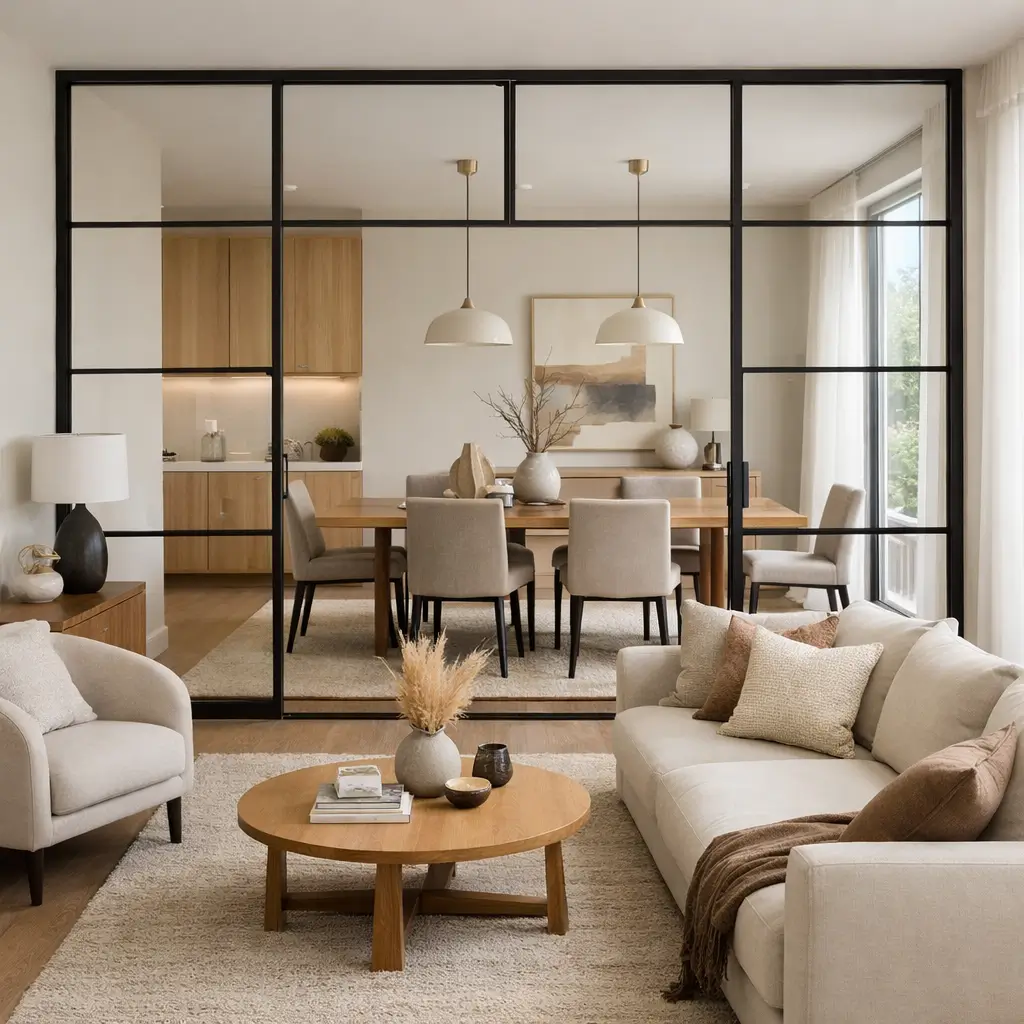
Glass dividers in open plan living-dining spaces provide acoustic separation and defined boundaries while maintaining visual openness. It’s the adult version of having your cake and eating it too.
Transparency with Purpose
My friend installed floor-to-ceiling glass panels between her living and dining areas, and the transformation was stunning. The spaces feel separate when you’re in them but visually connected when you step back. Glass provides division without darkness.
Glass dividers particularly excel in smaller spaces where solid walls would feel oppressive. They also help contain cooking smells while maintaining sight lines — crucial for entertaining.
Glass Divider Considerations
Making glass dividers work:
- Choose tempered safety glass for durability
- Consider framed vs. frameless based on your style
- Add frosted sections for subtle privacy
- Install sliding panels for flexibility
- Plan for cleaning access on both sides
- Factor in acoustics — glass reflects sound
Glass dividers represent a bigger investment than furniture solutions, but they solve the combo room challenge elegantly and permanently. Sometimes that investment makes perfect sense.
12. Two-Tone Furniture Zoning
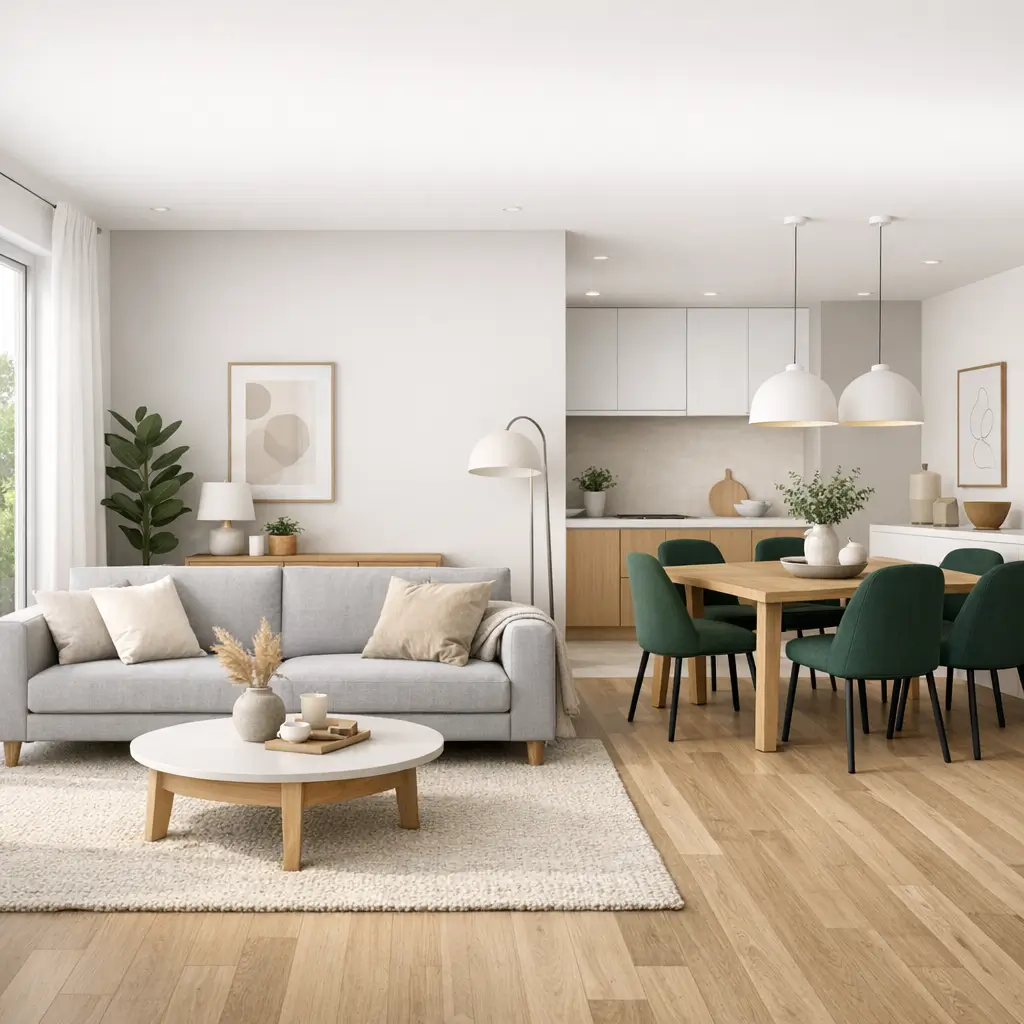
Two-tone furniture zoning uses contrasting furniture colors to define living and dining areas. Dark dining chairs with a light sofa, or vice versa, creates visual separation through color contrast.
Contrast Creates Definition
I accidentally discovered this approach when I inherited my grandmother’s dark wood dining set while owning a light gray sofa. Instead of trying to match everything, I embraced the contrast. The dark wood clearly signals “dining zone” while light upholstery says “living room”.
Two-tone zoning works because it provides visual variety without requiring any structural changes. The furniture itself becomes the room divider.
Two-Tone Success Strategies
Creating effective two-tone zones:
- Choose complementary contrasts not clashing ones
- Keep one consistent element like metal finishes
- Use the 70-30 ratio for color distribution
- Add bridging pieces that combine both tones
- Maintain consistent style despite color differences
- Echo each tone subtly in the opposite zone
The two-tone approach lets you mix inherited pieces, thrift finds, and new purchases without everything needing to match perfectly. That freedom often leads to more interesting, personal spaces.
Making Your Combo Space Complete
There you have it — 12 living room with dining area ideas that prove combo spaces aren’t a compromise but an opportunity.
Whether you prefer the simplicity of sofa-back zoning or the elegance of glass dividers, there’s an approach here that’ll transform your open plan from awkward to amazing.
The perfect living-dining combo doesn’t follow rigid rules. It responds to how you actually live. Do you entertain frequently? Focus on flow and flexibility.
Work from home? Create clear boundaries. Small space? Embrace multi-functional solutions.
Here’s what I’ve learned from years of combo-space living: the best layouts feel intentional, not accidental.
Every piece should feel placed with purpose, every zone should have clear function, and the whole space should work together harmoniously.
Your living room with dining area combination has incredible potential. Stop fighting the open plan and start celebrating it. Pick the ideas that resonate with your lifestyle, experiment with combinations, and don’t be afraid to move things around until it feels right.
The magic happens when both zones maintain their identity while creating something better together. That’s when your combo space stops feeling like a challenge and starts feeling like home.
Now excuse me while I go rearrange my furniture again — because that’s what we combo-space dwellers do for fun!