10 Stunning Mediterranean Interior Design Ideas for Warm Homesc
- Home Interior Design
 Ben
Ben- 0
- 49 minutes read
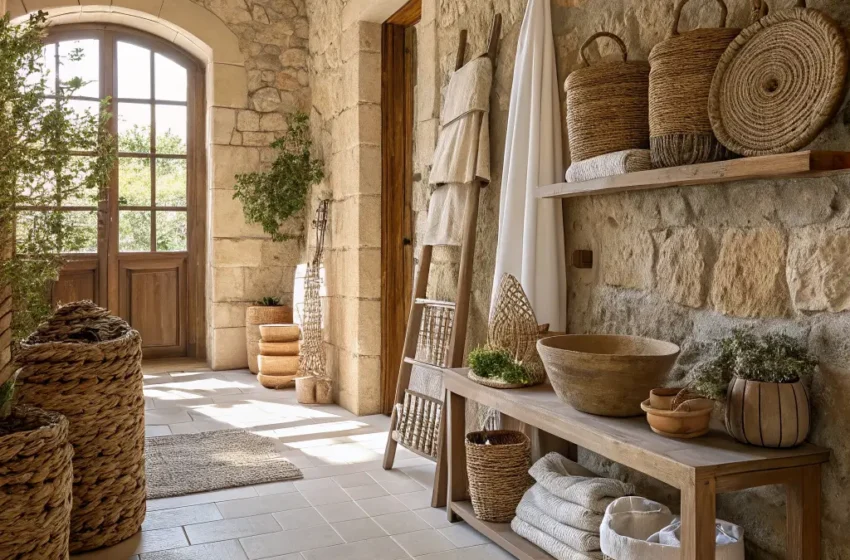
Picture this: You wake up in a room flooded with natural light, surrounded by warm terracotta tiles, white-washed walls, and the gentle breeze flowing through sheer linen curtains.
That’s the magic of Mediterranean interior design — it brings the relaxed elegance of coastal Spain, Greece, and Italy right into your home.
And honestly? After spending three weeks touring homes along the Amalfi Coast last summer, I became completely obsessed with recreating this vibe in my own space.
The best part about Mediterranean interior design ideas is that they work whether you’re living in a downtown apartment or a suburban house.
You don’t need ocean views or perfect weather to capture that breezy, sun-soaked feeling. What you need is an understanding of the core elements that make this style so irresistibly charming and timelessly elegant.
Let me walk you through ten Mediterranean design approaches that transformed my boring, beige home into something that feels like a permanent vacation spot.
1. Sun-Washed Mediterranean Living Room Ideas
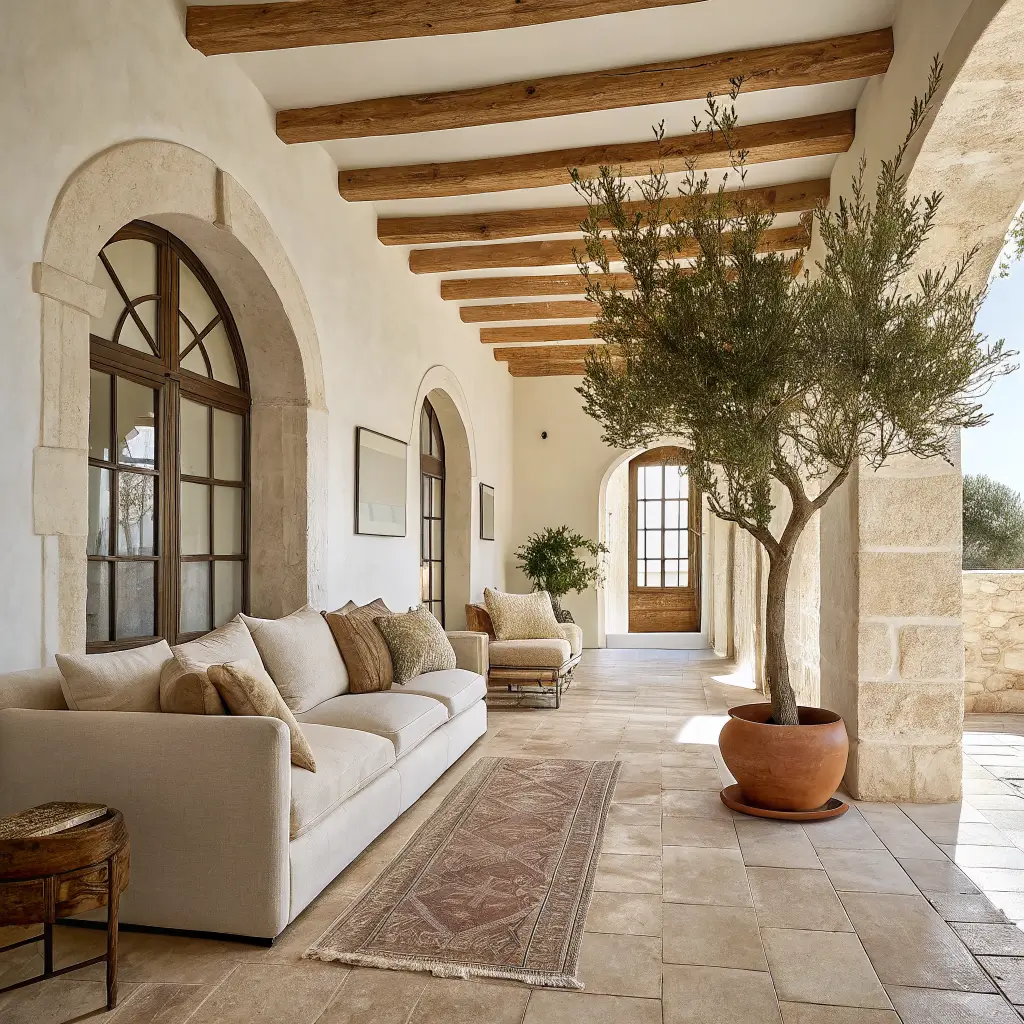
Your living room sets the tone for your entire home, and when you nail the sun-washed Mediterranean look, everything else falls into place naturally. This style captures that golden-hour glow that makes everything look better — you know, that Instagram-worthy light that usually only happens for about five minutes at sunset.
Creating That Sun-Drenched Feeling
The secret to achieving this look starts with your color foundation. Think whites, creams, and the palest yellows — colors that literally reflect light around the room. I painted my living room walls in Benjamin Moore’s “Cloud White” and immediately noticed how much brighter the space felt, even on cloudy days.
But here’s what really makes the difference: textured white walls. Smooth drywall looks fine, but when you add texture — whether through venetian plaster, limewash paint, or even a knockdown texture — the walls catch light differently throughout the day. The shadows and highlights create depth that flat walls simply can’t achieve.
Essential Elements for Sun-Washed Spaces
- Sheer white curtains that filter rather than block light
- Natural wood ceiling beams (or faux beams if you’re renting)
- Terracotta or warm wood flooring that grounds the bright walls
- Oversized windows or mirrors that maximize natural light
- Light-colored upholstery in natural fabrics like linen or cotton
- Metallic accents in brass or aged bronze that catch and reflect light
I learned the hard way that dark furniture kills this vibe instantly. Had to sell my beloved charcoal gray sofa because it looked like a black hole in my newly brightened space. Replaced it with a cream linen sectional, and suddenly the whole room breathed differently.
The Furniture Equation
Choose pieces with curved lines and organic shapes. Mediterranean design rarely features sharp corners or ultra-modern silhouettes. Look for:
- Rounded coffee tables in natural wood or whitewashed finishes
- Sofas with rolled arms and soft, inviting cushions
- Wicker or rattan accent chairs that add texture without weight
- Built-in seating with cushions (if you’re feeling ambitious)
2. Modern Mediterranean Interiors for Small Homes
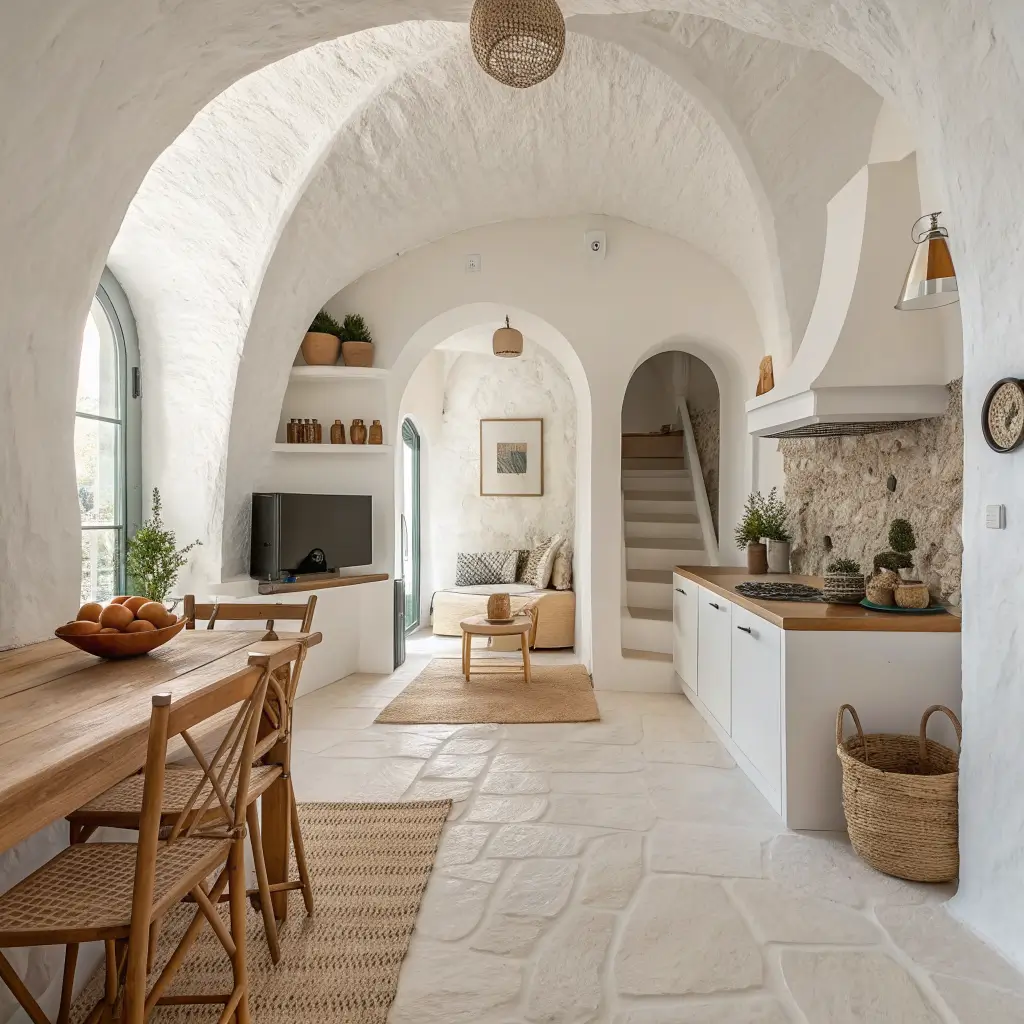
Small spaces and Mediterranean design actually work brilliantly together. Why? Because this style prioritizes openness and flow over filling every corner with stuff. When you’re working with limited square footage, this less-is-more approach becomes your best friend.
Maximizing Space the Mediterranean Way
Open floor plans dominate Mediterranean homes, and you can fake this in smaller spaces by removing unnecessary walls or using furniture placement to create zones rather than separate rooms. I knocked down the wall between my kitchen and living room (after checking with a contractor that it wasn’t load-bearing, obviously), and the space instantly felt twice as large.
The key principle here: vertical space matters as much as floor space. Mediterranean homes often feature high ceilings with exposed beams, but even if you’re stuck with standard 8-foot ceilings, you can create the illusion of height through smart design choices.
Small Space Mediterranean Solutions
Mount curtains close to the ceiling — not just above the window frame. This draws the eye upward and makes windows appear larger. Paint your ceiling the same white as your walls to eliminate the visual boundary between them. Trust me, this trick alone added perceived inches to my apartment’s height.
Built-in storage keeps clutter hidden while maintaining clean lines. Consider:
- Recessed shelving painted to match walls
- Window seats with hidden storage underneath
- Wall niches for displaying decorative items
- Floating shelves instead of bulky bookcases
The Arch Advantage
Can we talk about arched doorways and windows for a second? They’re basically the Mediterranean equivalent of a face lift for your home. Even in small spaces, replacing one rectangular doorway with an arch creates instant character. Don’t want to deal with construction? Peel-and-stick arch trim exists, and honestly, it looks pretty convincing from a distance.
3. Mediterranean Color Palette Ideas That Feel Warm & Airy
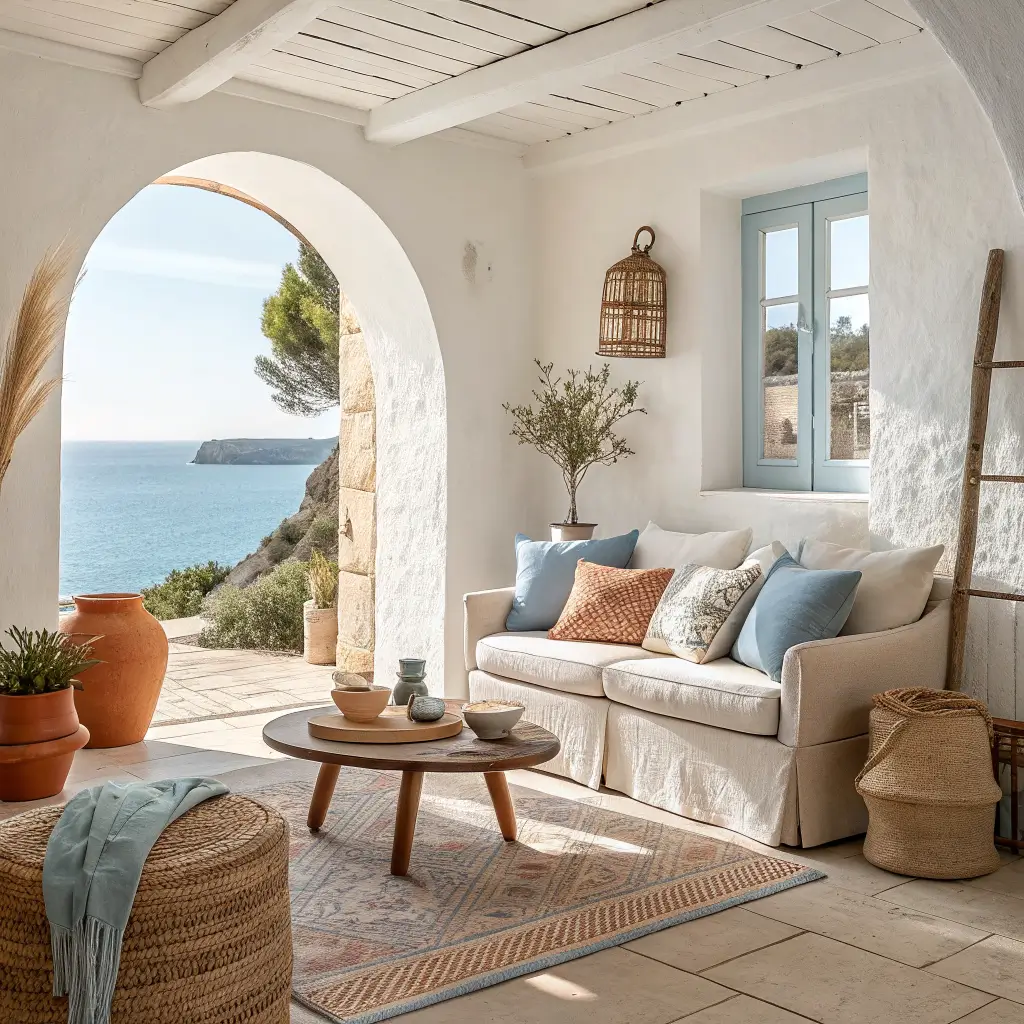
Getting the colors right makes or breaks your Mediterranean interior. This isn’t about following strict rules — it’s about capturing a feeling. That said, there’s definitely a Mediterranean color formula that works every single time.
The Core Color Story
Start with a neutral base: whites, creams, and warm beiges that mimic sun-bleached walls and sandy beaches. These aren’t boring colors; they’re the canvas that lets everything else shine. Layer in earthy mid-tones like terracotta, ochre, and warm browns that echo clay tiles and natural wood.
Then comes the fun part: accent colors inspired by the sea and sky. We’re talking:
- Deep azure blues (think Greek island doors)
- Soft sage greens (olive groves, anyone?)
- Warm coral pinks (Mediterranean sunsets)
- Golden yellows (Tuscan sunflowers)
Creating Balance and Flow
The ratio matters here. I follow what I call the 70-20-10 rule:
- 70% neutrals (walls, large furniture, floors)
- 20% warm earth tones (wood furniture, terracotta accessories)
- 10% vibrant accents (pillows, art, ceramics)
This balance keeps things interesting without overwhelming the space. Ever walked into a room that felt “too busy”? That’s usually because the color ratios are off.
Playing with Contrast
High contrast isn’t very Mediterranean. Instead, you want gentle transitions between colors. Think of how colors blend at the beach — sand gradually meets water, sky fades into horizon. That’s the vibe you’re after. Skip the stark black-and-white contrasts and opt for navy-and-cream or chocolate-and-camel combinations instead.
Also Read: 12 Inspiring Interior Design Sketches Ideas for Cozy Spaces
4. Budget-Friendly Mediterranean Interior Design Ideas
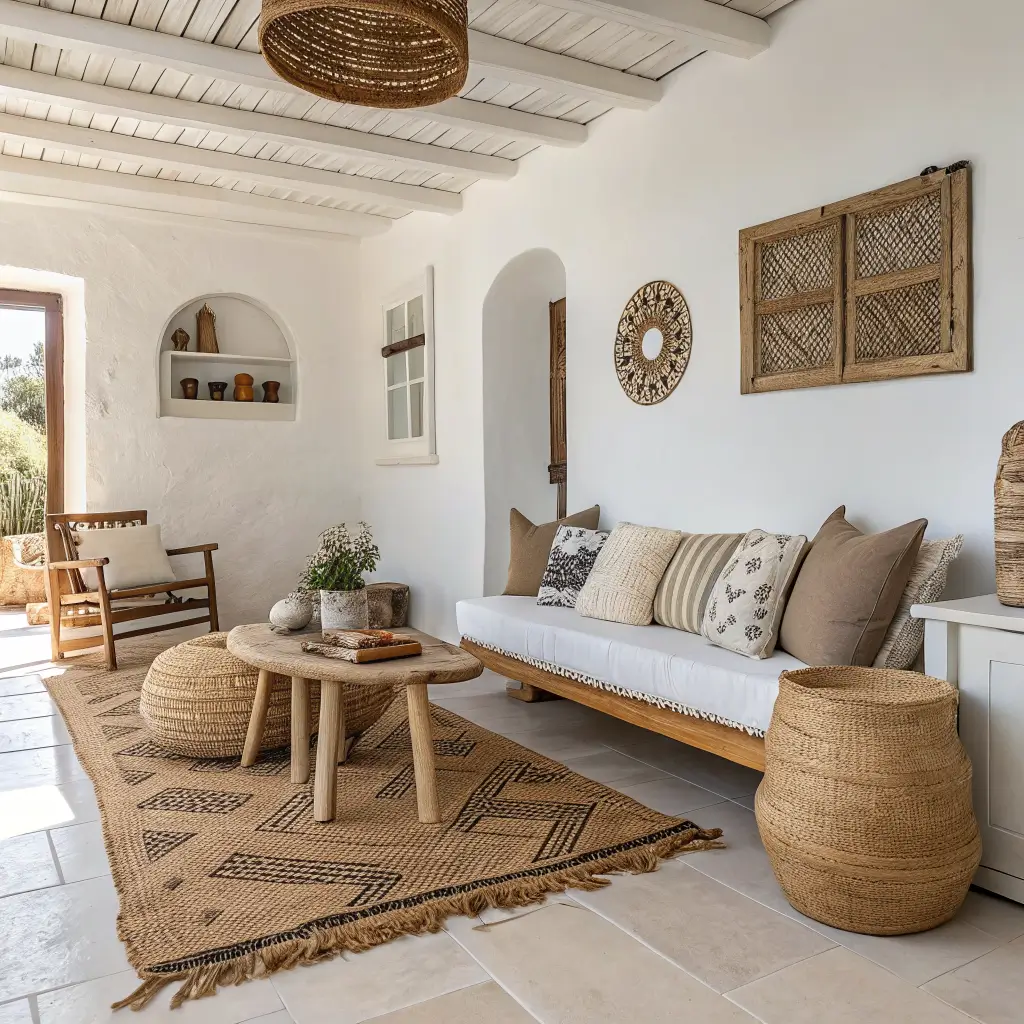
Here’s the truth: You don’t need a trust fund to achieve Mediterranean style. Some of my favorite Mediterranean elements cost practically nothing. After blowing my budget on that linen sectional I mentioned earlier, I had to get creative with everything else. Turns out, necessity really is the mother of invention.
DIY Mediterranean Magic
Limewash paint creates that perfectly imperfect, Old World texture for about $30 per gallon. Mix it yourself (lime putty + water) for even cheaper. The application process is forgiving — streaks and variations actually enhance the authentic look. I limewashed my bedroom walls in a weekend, and everyone assumes I hired a specialist.
Terracotta pots from the garden center become instant Mediterranean decor. Here’s my favorite trick:
- Buy cheap terracotta pots in various sizes
- Age them with watered-down white paint and sandpaper
- Group them together with herbs or succulents
- Instant Tuscan garden vibes for under $50
Thrifting for the Mediterranean Look
Second-hand stores are goldmines for Mediterranean pieces:
- Wicker and rattan furniture (usually needs just a quick spray paint)
- Blue and white ceramics (mix patterns fearlessly)
- Wooden cutting boards for kitchen display
- Glass bottles and jars in amber and green
- Brass candlesticks and serving pieces
- Natural fiber rugs (jute, sisal, seagrass)
Strategic Splurges
If you’re going to spend money, focus on one or two statement pieces that define the space:
- A large olive tree in a terracotta planter
- An antique or antique-style mirror with an ornate frame
- A vintage kilim or Mediterranean-style rug
- Quality linen curtains (IKEA’s are surprisingly good)
FYI, the olive tree in my living room cost more than everything else combined, but it’s the first thing people notice and immediately sets the Mediterranean mood. Worth every penny.
5. Mediterranean Style Bedroom Ideas for a Relaxing Home
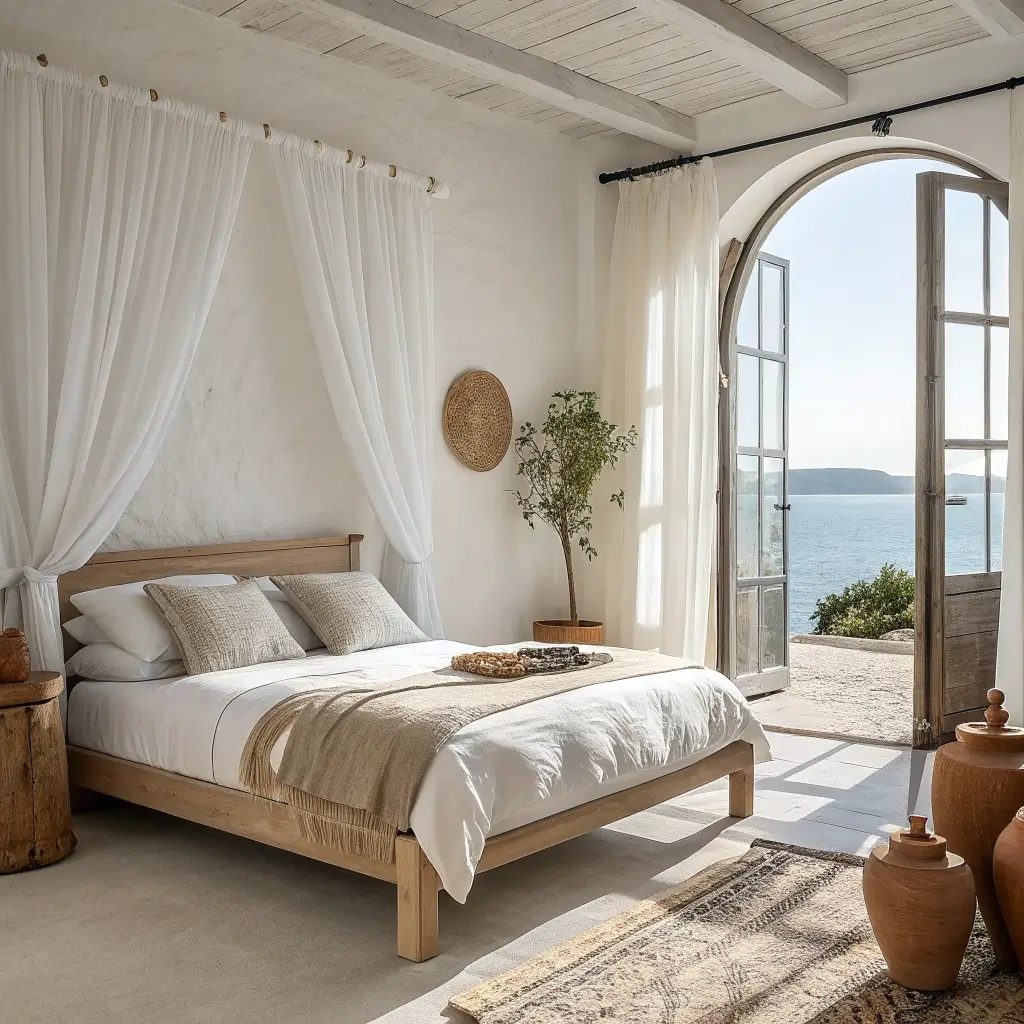
Your bedroom should feel like a luxury hotel suite on the Amalfi Coast — minus the luxury hotel price tag. Mediterranean bedrooms prioritize comfort and serenity over flashy design statements. Think less “look at me” and more “let me wrap you in comfort.”
The Foundation: Bedding and Textiles
Natural fibers rule Mediterranean bedrooms. Linen sheets might seem like a splurge, but they actually get softer with every wash and last forever. I invested in one set three years ago, and they’ve become so perfectly rumpled and soft that sleeping in anything else feels wrong.
Layer textures thoughtfully:
- Start with white or cream linen sheets
- Add a lightweight cotton or linen quilt
- Throw in a chunky knit blanket for texture
- Mix in pillows in varying sizes and subtle patterns
Creating Atmosphere
Mediterranean bedrooms feel cocoon-like without being cramped. How do you achieve this? Through smart use of:
Soft, diffused lighting instead of harsh overhead fixtures. Table lamps, wall sconces, and candles create that warm glow. I strung warm white LED lights behind a sheer canopy for instant romance — cheesy? Maybe. Effective? Absolutely.
Natural wood furniture with visible grain and imperfections. My nightstands are literally reclaimed wood planks on hairpin legs, and they look more expensive than the designer ones I was eyeing.
The Details That Matter
- Wrought iron or brass bed frames (or a simple wood headboard)
- Flowing curtains that puddle slightly on the floor
- A vintage or vintage-style trunk at the foot of the bed
- Fresh or dried lavender (the scent alone transports you)
- Ceramic or terracotta table lamps
- A cozy reading chair in natural fabric
Keep the color palette soft and soothing. This isn’t the place for bold Mediterranean blues — save those for living spaces. Bedrooms work best in whites, creams, soft grays, and the palest blues or greens.
6. Mediterranean Interior Design with Natural Textures
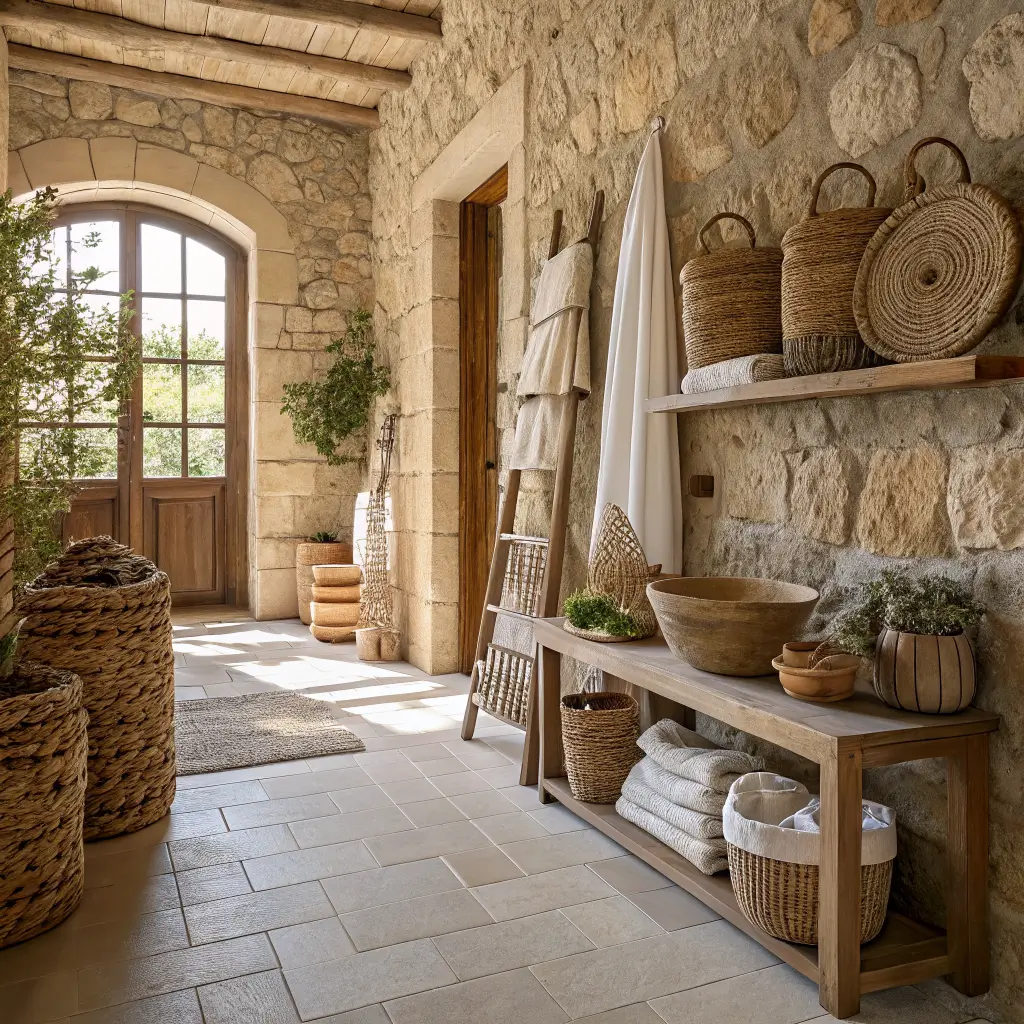
Texture is what prevents Mediterranean interiors from looking flat or boring. When you’re working with such a neutral color palette, texture becomes your secret weapon for adding depth and interest without cluttering the space.
The Texture Hierarchy
Start with your largest surfaces and work down:
Walls: Beyond paint, consider exposed brick, stone veneer, or beadboard wainscoting. I added board and batten to my dining room walls, painted it white, and instantly achieved that Greek island cottage feel.
Floors: If you’re stuck with carpet or laminate, large natural fiber rugs can completely transform the foundation of your room. Layer smaller rugs on top for extra texture — this is totally acceptable in Mediterranean design.
Window treatments: Forget heavy drapes. Think gauzy linen, cotton voile, or even burlap for a more rustic touch. The goal is filtering light, not blocking it.
Mixing Textures Like a Pro
The trick is combining rough with smooth, matte with subtle sheen:
- Smooth plaster walls + rough wooden beams
- Soft linen upholstery + nubby jute rugs
- Polished marble + raw terracotta
- Sleek ceramics + woven baskets
Never use more than five different textures in one room, or things start feeling chaotic rather than curated.
Natural Materials Shopping List
Stock up on these texture-rich materials:
- Rattan and wicker for furniture and baskets
- Jute and sisal for rugs and rope accents
- Unfinished wood for shelving and furniture
- Stone and marble for surfaces and accessories
- Wrought iron for hardware and light fixtures
- Natural clay for pots and decorative objects
- Linen and cotton for all soft furnishings
Also Read: 10 Elegant Condo Interior Design Ideas for Cozy Corners
7. Minimal Mediterranean Interior Design Ideas
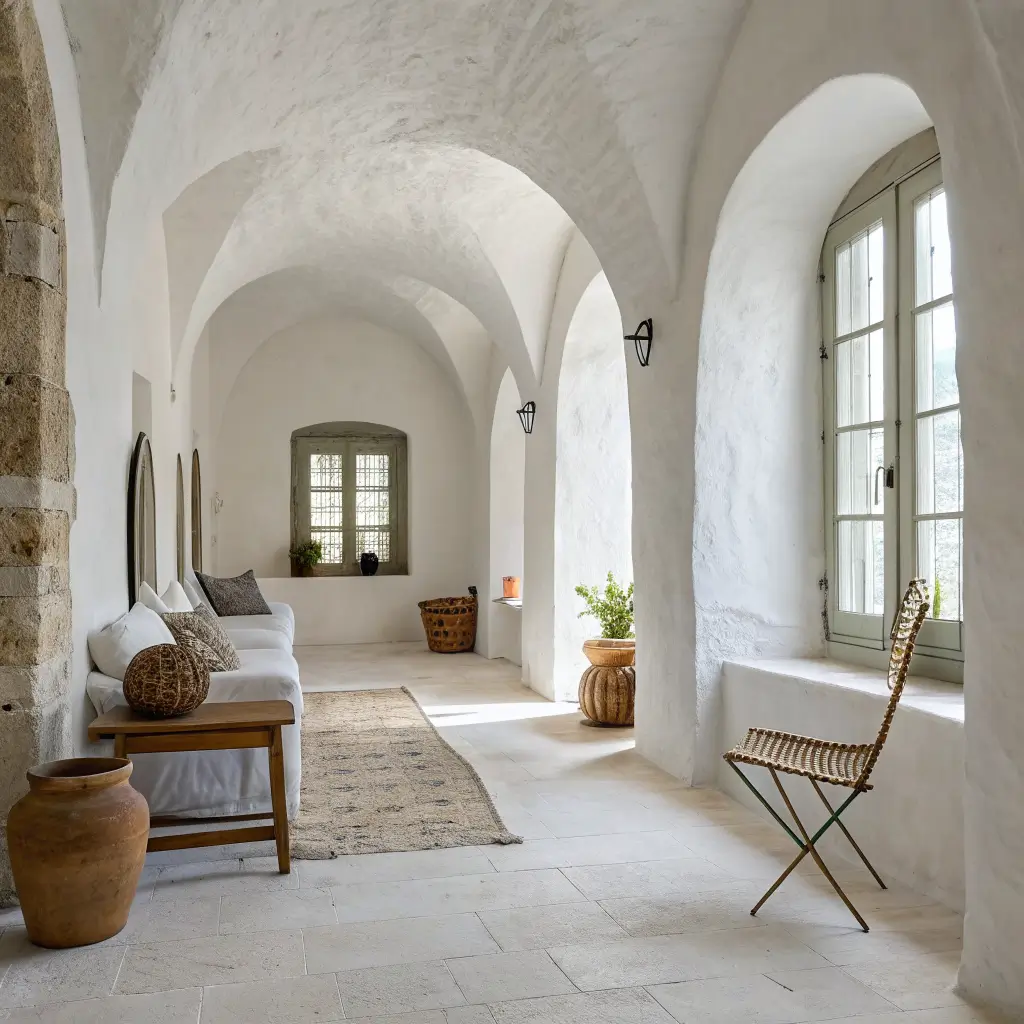
Who says Mediterranean design has to mean cluttered surfaces and busy patterns? Minimal Mediterranean strips the style down to its essential elements, creating spaces that feel both sophisticated and serene.
The Less-Is-More Approach
This isn’t about making your home feel empty — it’s about choosing quality over quantity. Every piece should earn its place. That ceramic bowl on your coffee table? It better be beautiful enough to stand alone.
Focus on:
- Clean lines with subtle curves
- Monochromatic color schemes in whites and creams
- Statement pieces rather than collections
- Hidden storage to maintain visual calm
- Negative space as a design element
Minimal Mediterranean Essentials
You only need a few key pieces to nail this look:
One spectacular light fixture — maybe a simple iron chandelier or oversized rattan pendant. Mine cost more than I’d like to admit, but it defines my entire dining room.
Built-in or floating shelves displaying just a few carefully chosen objects. Think one beautiful vase, a stack of books, maybe a small plant. That’s it.
Quality over quantity furniture — one gorgeous linen sofa beats three mismatched chairs. Every time.
The Art of Restraint
What you leave out matters as much as what you include. Skip:
- Busy patterns (solid colors or subtle textures only)
- Multiple throw pillows (two or three max)
- Gallery walls (one large piece of art instead)
- Cluttered surfaces (clear counters and tables)
The result? Rooms that feel larger, calmer, and more expensive than they actually are.
8. Mediterranean Kitchen Design Ideas with Timeless Charm
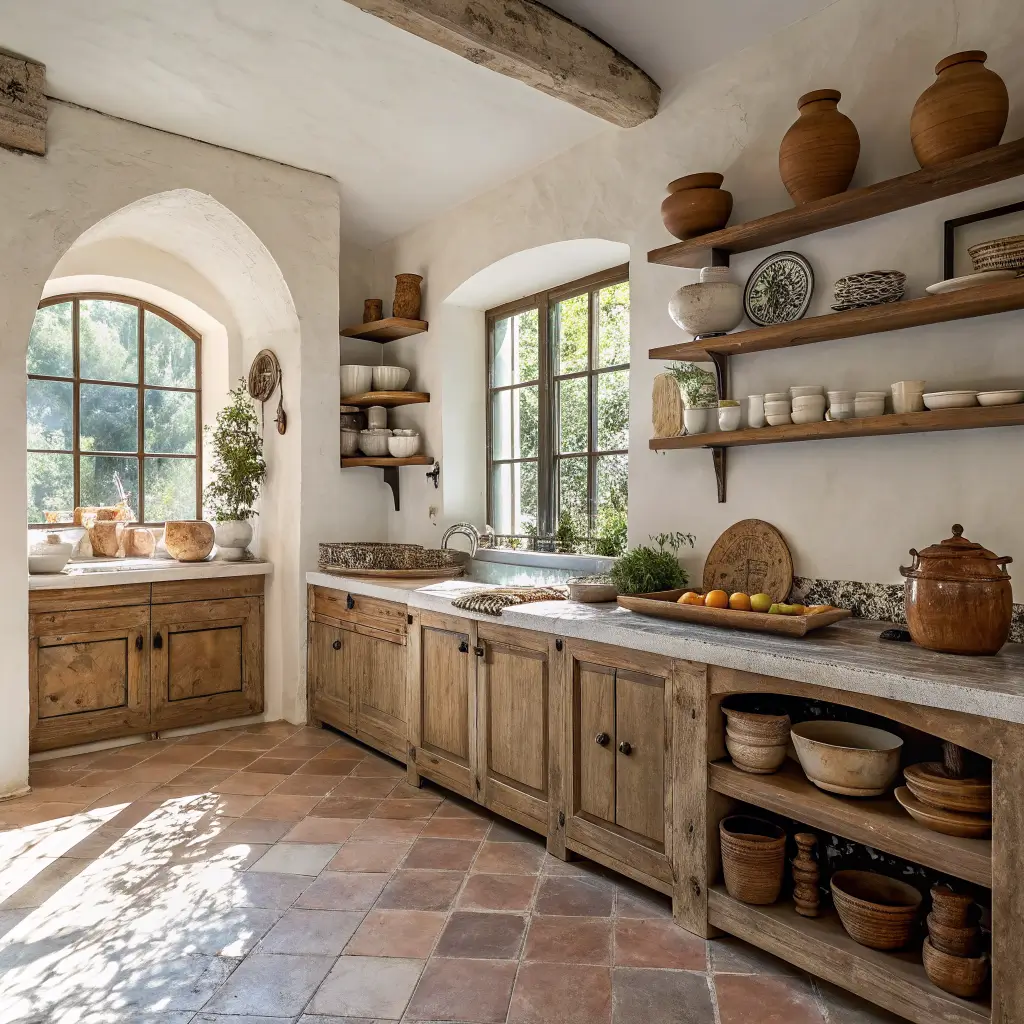
Kitchens are where Mediterranean design really shines. This is the heart of the home in Mediterranean culture, and the design should reflect that warmth and welcome. Plus, let’s be honest — cooking feels way more enjoyable when your kitchen looks like it belongs in a Tuscan villa.
Cabinet Considerations
Open shelving or glass-front cabinets keep things feeling airy while showing off your prettiest dishes. I removed the doors from my upper cabinets, painted the interiors the same white as the walls, and suddenly had to keep things organized. Sometimes forced tidiness is good motivation!
If you’re keeping solid cabinets, consider these finishes:
- Whitewashed or pickled wood
- Soft sage green or pale blue
- Natural wood with visible grain
- Cream or warm white (never stark white)
The Backsplash Makes the Room
This is where you can really have fun. Hand-painted tiles, subway tiles with contrasting grout, or natural stone all work beautifully. My personal favorite? A mix of plain white subway tiles with occasional hand-painted accent tiles scattered throughout. Looks custom, costs way less.
Mediterranean Kitchen Must-Haves
- A farmhouse sink (or apron-front sink)
- Open shelving for everyday dishes
- Hanging pot racks or rails with S-hooks
- Natural wood cutting boards as decor
- Copper or brass hardware and fixtures
- Terra cotta or patterned floor tiles
- A wooden or marble-topped island
Don’t forget the accessories that sell the look: olive oil in pretty bottles, wooden spoons in ceramic crocks, fresh herbs in terracotta pots, and a bowl of lemons that you’ll definitely forget to use before they go bad. We’ve all been there. 🙂
9. Rustic Mediterranean Interior Design for Cozy Spaces
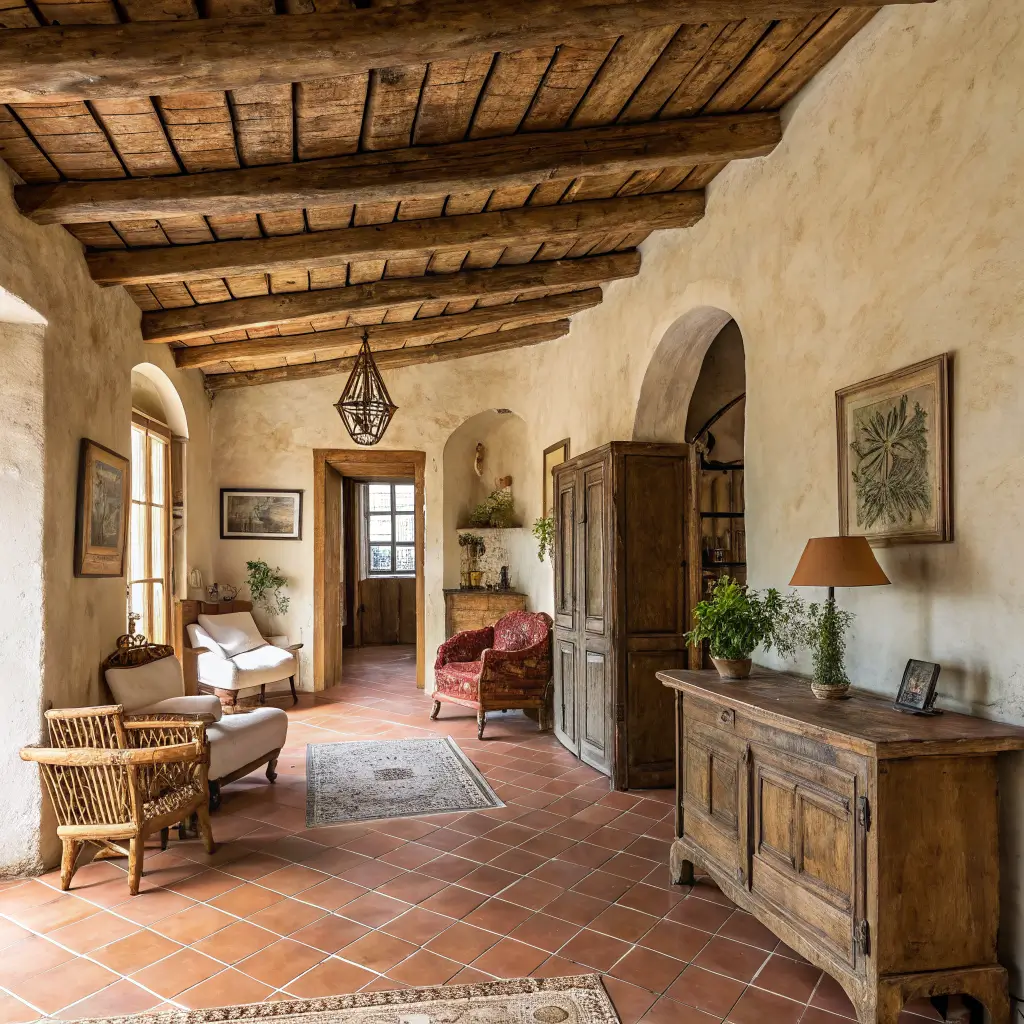
Sometimes you want your Mediterranean interior to feel less “coastal resort” and more “countryside cottage.” Rustic Mediterranean design leans into the rural side of the region — think Provence farmhouses and Tuscan villas rather than Santorini hotels.
Embracing Imperfection
Rustic Mediterranean celebrates wear, patina, and age. Those scratches on your dining table? Character. The uneven plaster on your walls? Authentic charm. This style gives you permission to keep things a little rough around the edges.
Key elements include:
- Exposed wooden beams (the rougher, the better)
- Stone or brick accent walls
- Distressed furniture with visible wear
- Heavy wooden doors with iron hardware
- Antique or antique-style accessories
Creating Cozy Corners
Rustic Mediterranean spaces feature lots of intimate seating areas. Instead of one large seating arrangement, create multiple cozy spots:
- A reading nook with a worn leather chair
- A breakfast corner with a small round table
- Window seats with plenty of cushions
- A fireplace seating area (even if it’s just candles in the hearth)
The Color Palette Shifts
While still predominantly neutral, rustic Mediterranean embraces deeper, warmer tones:
- Rich terracottas and burnt siennas
- Deep olive greens
- Warm browns and cognacs
- Mustard yellows
- Burgundy accents
These colors age beautifully and hide the inevitable wear that comes with actual living. My terracotta-colored dining room walls have survived two kids and three dinner parties that got slightly out of hand, and they still look intentionally distressed rather than damaged.
Also Read: 10 Amazing Door Design Interior Ideas and Chic Inspirations
10. Mediterranean Interior Design Ideas Without Renovation
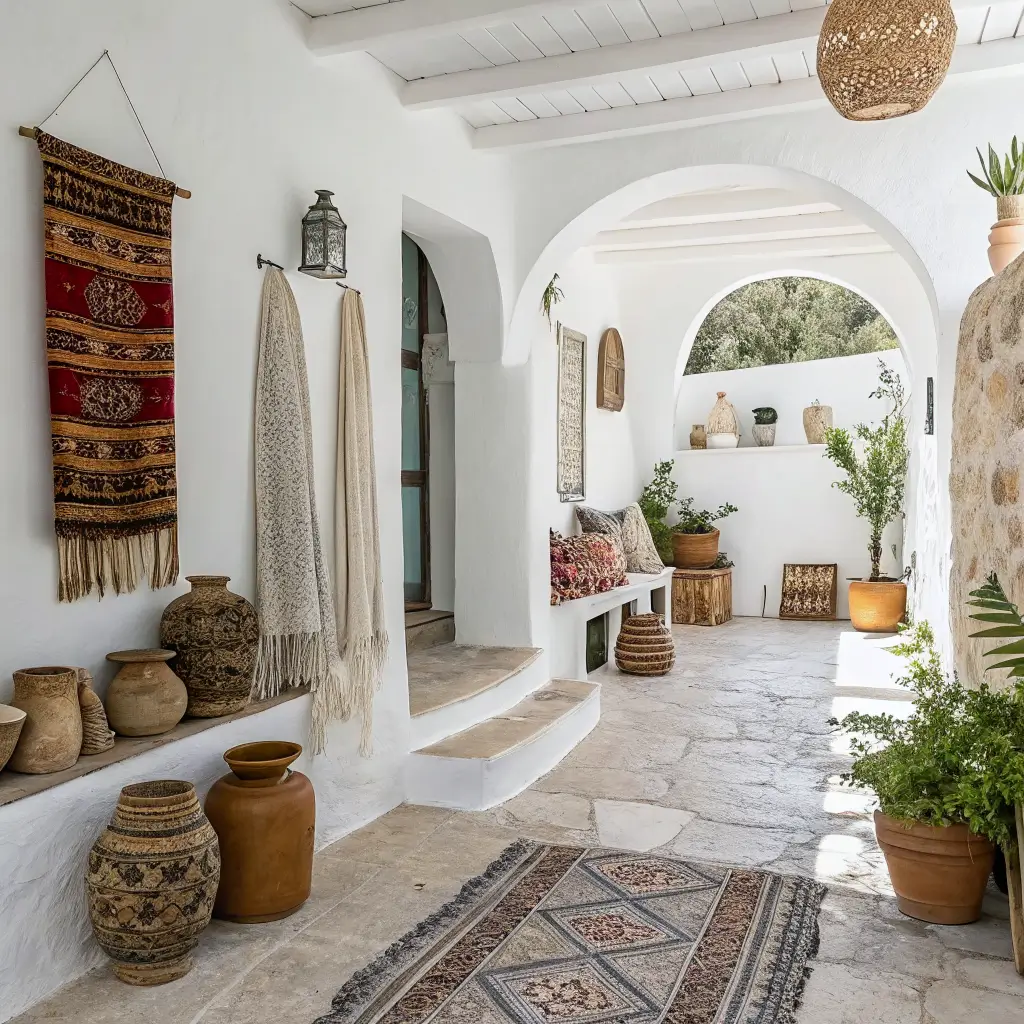
Not everyone can knock down walls or replace flooring. If you’re renting, on a budget, or just commitment-phobic, you can still achieve stunning Mediterranean style without any permanent changes.
Instant Transformation Tricks
Removable wallpaper in Mediterranean patterns (think tiles or textured plaster looks) can completely change a room. I used a faux limewash peel-and-stick wallpaper in my rental bathroom, and my landlord actually asked if he could keep it when I moved out.
Area rugs layer over any flooring to create that Mediterranean foundation. Don’t like your beige carpet? Cover it with a large jute rug and a smaller kilim on top. Problem solved, lease intact.
Furniture and Decor Swaps
These changes make the biggest impact with zero renovation:
- Slipcover your existing furniture in white or natural linen
- Add wooden blinds or bamboo shades over existing windows
- Hang sheer curtain panels for instant softness
- Lean large mirrors against walls (the more ornate, the better)
- Display collections of blue and white ceramics
- Swap out lighting fixtures (most are easier to change than you’d think)
The Power of Plants
Nothing says Mediterranean like abundant greenery. Fill your space with:
- Olive trees (real or high-quality fake)
- Rosemary, lavender, and herbs
- Succulents in terracotta pots
- Trailing ivy or pothos
- Lemon trees if you have the light
Group plants at different heights for maximum impact. IMO, you literally cannot have too many plants in Mediterranean design.
Textile Magic
The fastest way to mediterraneanize (is that a word?) any space:
- Throw linen blankets over sofas and chairs
- Add textured pillows in natural fabrics
- Hang tapestries or fabric as temporary “wallpaper”
- Use tablecloths and runners in Mediterranean patterns
- Place natural fiber rugs everywhere
Final Thoughts
Creating a home with Mediterranean interior design isn’t about perfection — it’s about capturing a feeling. That relaxed elegance, the warmth, the sense that life should be savored rather than rushed.
Whether you implement all ten of these ideas or just cherry-pick your favorites, remember that the best Mediterranean interiors feel collected over time, not designed in a day.
Start with one room, or even one corner. Maybe it’s swapping your coffee table for a worn wooden trunk, or painting one wall in warm terracotta.
Small changes add up, and before you know it, you’ll have friends asking if you hired a designer.
The real secret? Mediterranean design works because it prioritizes comfort and natural beauty over trends. These spaces age gracefully because they were never trying to be cutting-edge in the first place.
They’re timeless, welcoming, and refreshingly unpretentious — exactly what our homes should be.
Now excuse me while I go water my olive tree and pretend I’m in Tuscany instead of Toledo. Sometimes the fantasy is half the fun.