10 Creative Modern Bookshelf Decor Ideas to Transform Rooms
- Bookshelf Styling
 Ben
Ben- 0
- 37 minutes read
You know that feeling when you walk into someone’s home and their bookshelf just screams personality? Yeah, that’s what we’re going after today. Your bookshelf shouldn’t just hold books – it should tell your story, showcase your style, and maybe even make your guests a little jealous.
I’ve spent way too much time obsessing over bookshelf styling (seriously, ask my partner about the weekend I rearranged our shelves five times), and I’m here to share what actually works.
Not the Pinterest-perfect stuff that nobody can recreate, but real ideas you can pull off without hiring an interior designer.
Minimalist Monochrome Shelves
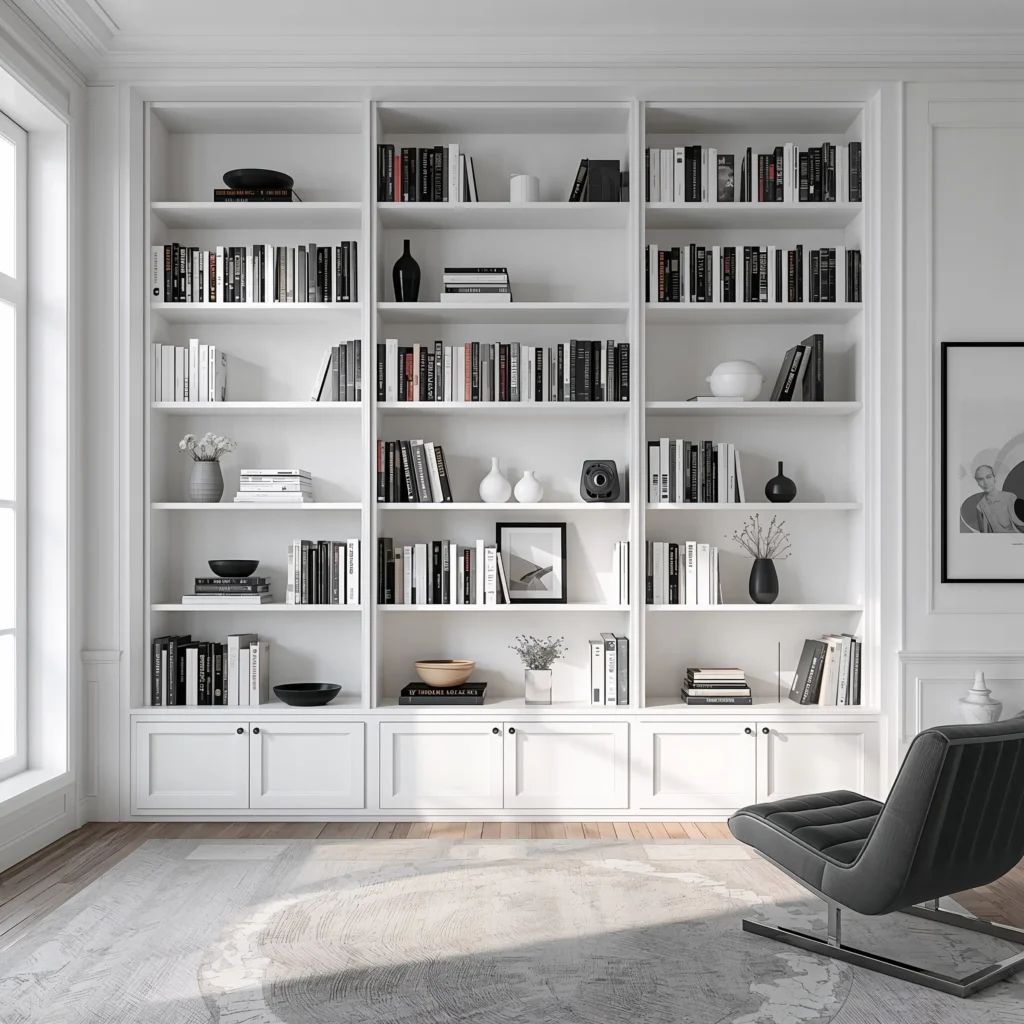
Let me start with my personal favorite – the monochrome minimalist approach. This style hits different when you get it right. Picture walking into a room where everything on the shelves speaks the same visual language: whites, grays, blacks, maybe some cream if you’re feeling wild.
Here’s what makes monochrome shelving absolutely brilliant. You create this instant sense of calm and sophistication without trying too hard. I converted my home office shelves to this style last year, and suddenly my Zoom background went from chaotic to chef’s kiss.
Want to nail this look? Start by gathering books with similar spine colors. Don’t have enough matching books? Here’s a trick I learned from a designer friend: flip some books around so the pages face outward. The cream paper creates perfect neutral breaks between darker spines.
Creating Depth in Monochrome
The secret sauce to avoiding boring monochrome shelves? Texture variation. Mix these elements:
- Matte black bookends with glossy white ceramics
- Rough linen book covers next to smooth leather journals
- Metal picture frames alongside soft fabric storage boxes
- Different book heights to create visual rhythm
You’re basically playing with light and shadow here. The monochrome palette lets texture take center stage, and trust me, your shelves will look like they belong in a design magazine.
Styling Tips That Actually Work
Keep negative space as your best friend. I know it’s tempting to fill every inch, but restraint makes this style sing. Leave at least 30% of each shelf empty – your eyes need breathing room.
Group items in odd numbers (interior designers swear by this rule for good reason). Three black vases beat four every time. Five white books trump six. Why does this work? Our brains find odd numbers more visually appealing and dynamic.
Floating Bookshelf Magic
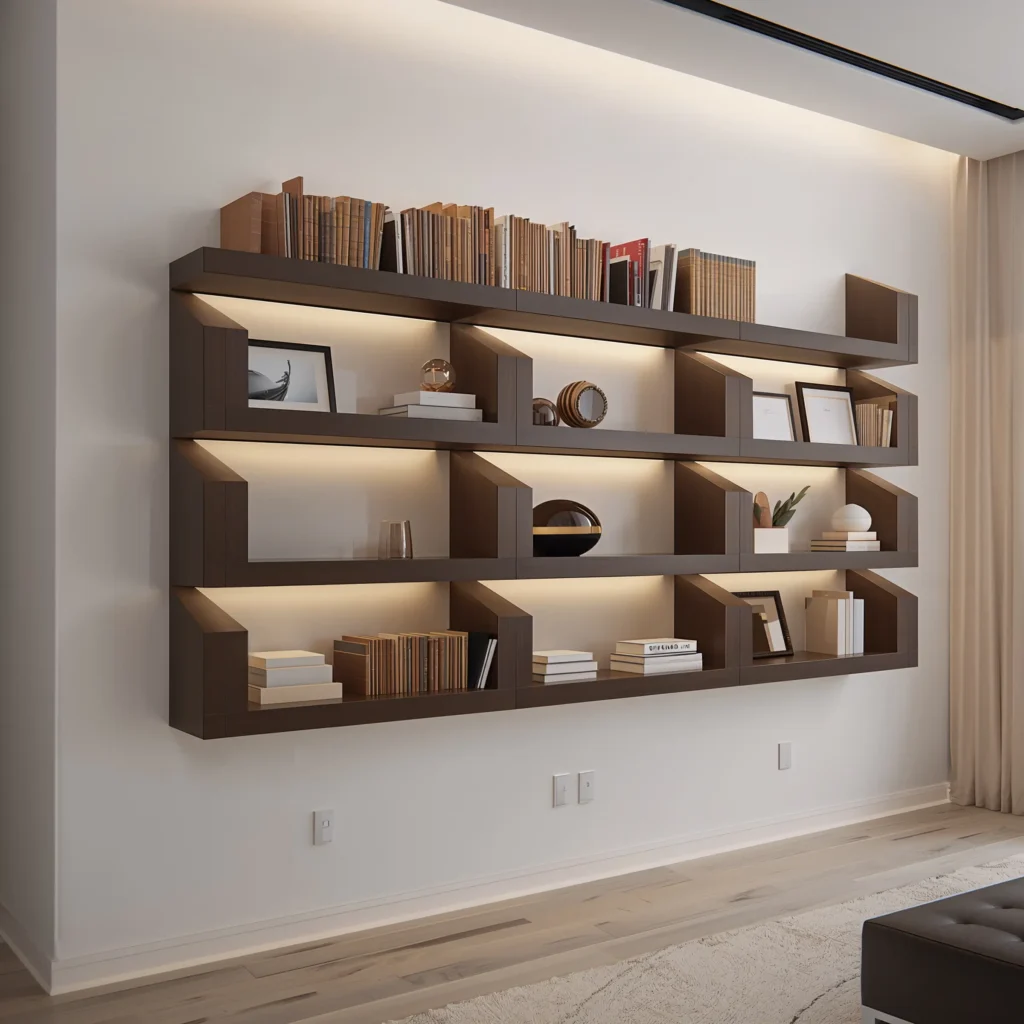
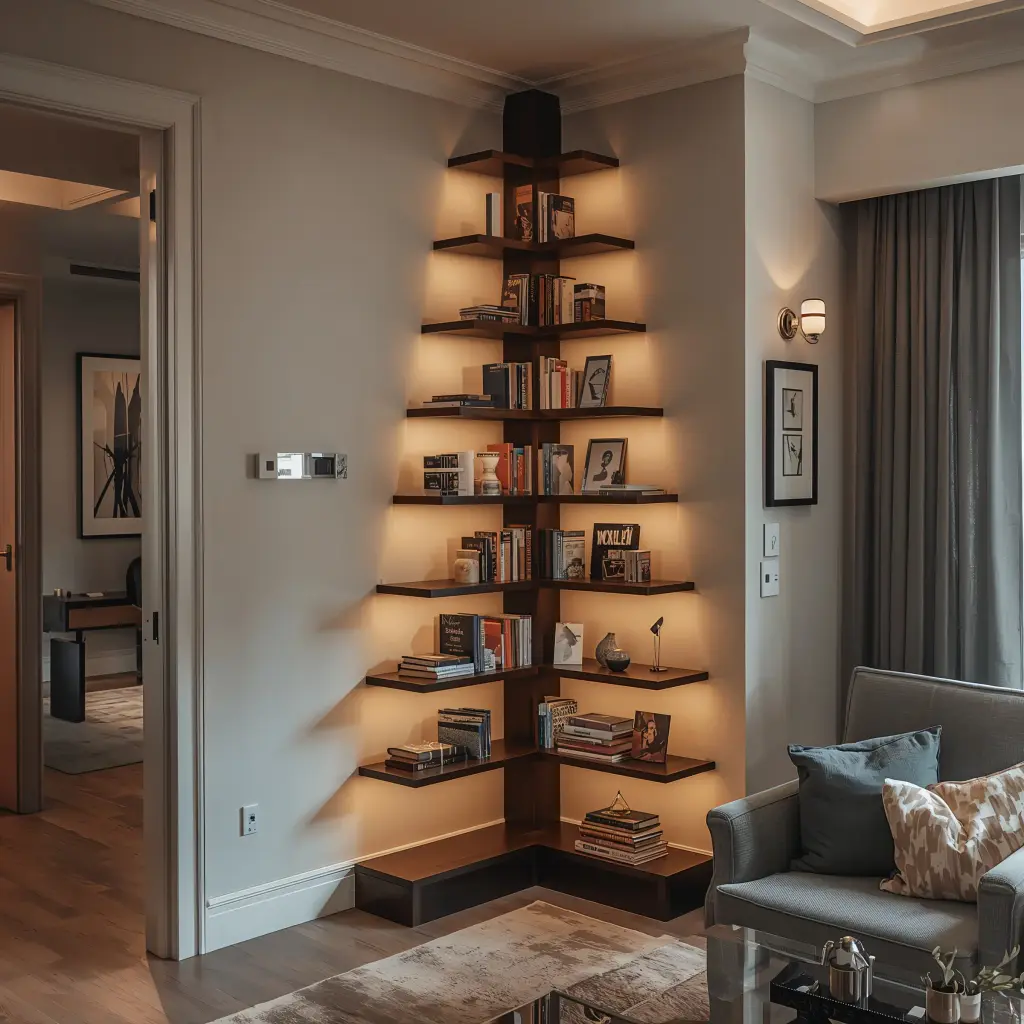
Floating shelves make books look like they’re defying gravity, and honestly, who doesn’t want a little magic in their living room? These invisible shelf brackets create the illusion that your books are stuck to the wall by pure willpower.
I installed my first floating shelf system three years ago, and visitors still ask me how the books stay up. The look on their faces when I show them the hidden L-shaped brackets? Priceless. It’s basically the adult version of a magic trick.
Installation Without the Drama
Here’s the thing nobody tells you about floating shelves: finding the studs matters more than anything else. I learned this the hard way when my first attempt resulted in a midnight book avalanche. Not fun.
Essential installation tips:
- Use a stud finder (seriously, don’t skip this)
- Level everything twice before drilling
- Choose brackets rated for 20% more weight than you plan to use
- Space shelves 10-12 inches apart for standard books
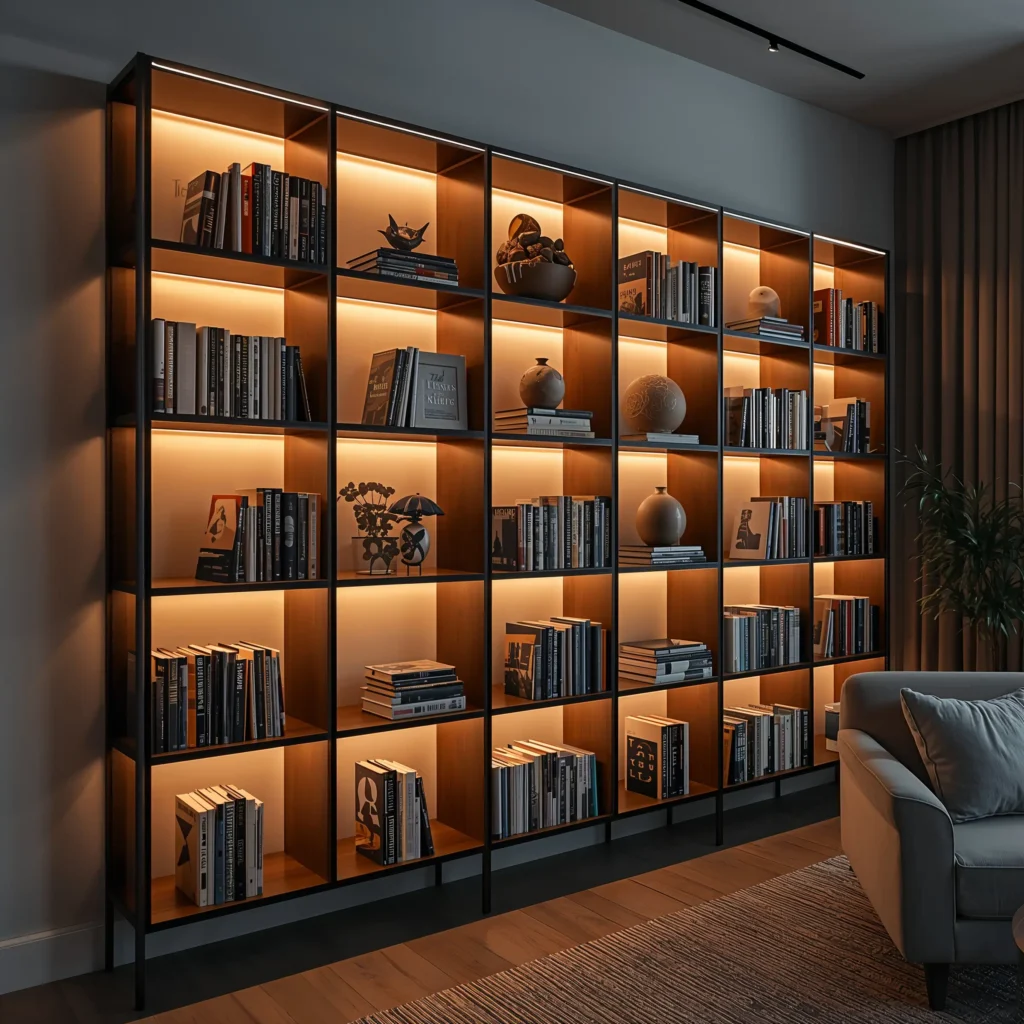
- Consider LED strip lighting underneath for extra wow factor
Styling Your Floating Display
The beauty of floating shelves? They make every book look important. Stack horizontally and vertically to create visual interest. Place your prettiest hardcovers facing forward – they deserve the spotlight.
Mix in small plants or sculptural objects between book groupings. The key word here is “small” – you want accessories that complement, not compete. A tiny succulent or minimal ceramic piece works perfectly.
Industrial Chic Book Display
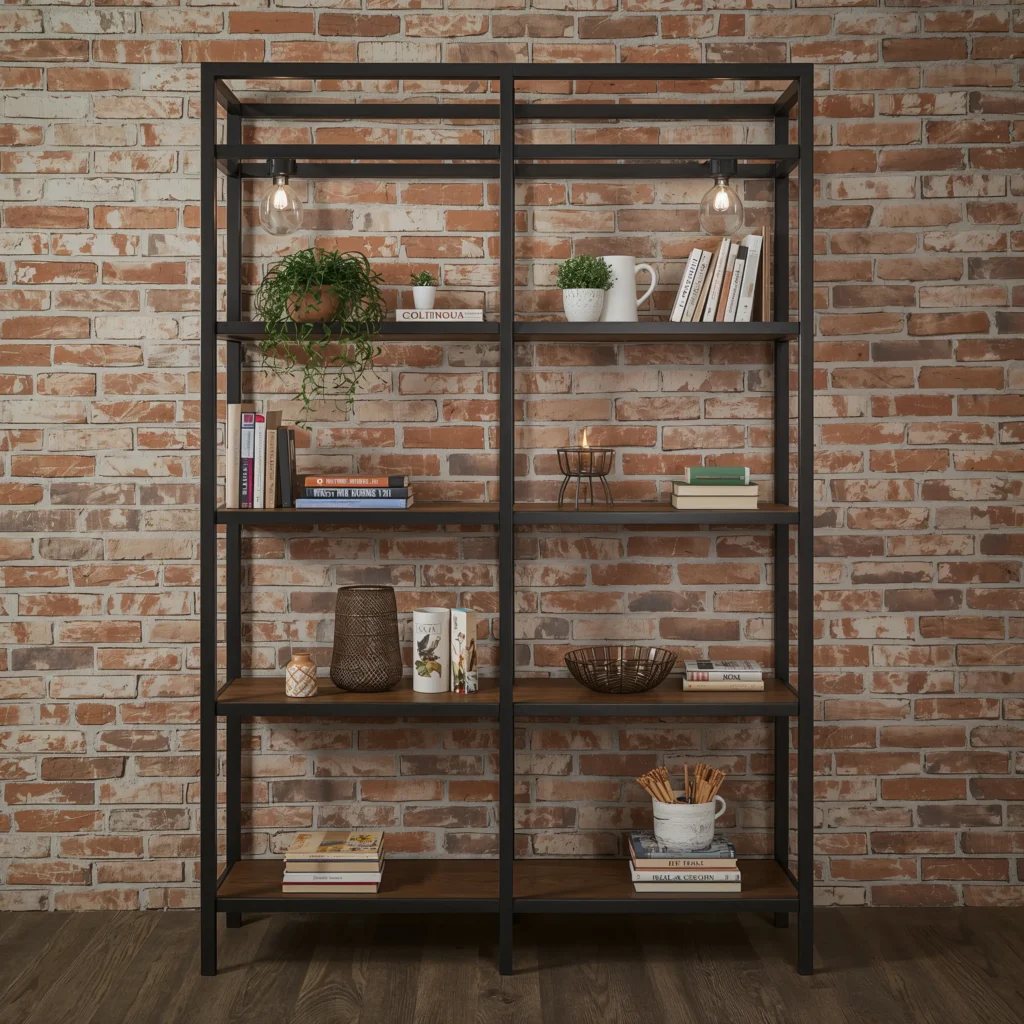
Raw meets refined in the industrial bookshelf trend, and I’m absolutely here for it. Think exposed metal pipes, reclaimed wood, and that perfect balance between rough and polished that makes everyone ask where you bought it.
My brother DIY’d an industrial pipe bookshelf last summer, and now everyone wants him to make them one. The combination of black iron pipes and weathered wood creates this effortlessly cool vibe that works in pretty much any space.
Building the Industrial Look
You don’t need actual industrial materials to nail this aesthetic (though they help). Focus on these elements:
- Metal mesh baskets for storage
- Wire bookends or metal brackets
- Leather-bound books or journals
- Edison bulb accent lighting
- Concrete or metal decorative objects
The contrast between hard industrial elements and soft book pages creates amazing visual tension. Your shelves become a conversation piece instead of just storage.
Color Palette for Industrial Shelving
Stick to a neutral, earthy palette with industrial styling. Think:
- Charcoal grays
- Rust browns
- Deep forest greens
- Cream and tan accents
- Matte black everything
Adding pops of color? Choose burnt orange or deep burgundy – they complement the industrial vibe without looking out of place. I added some vintage orange Penguin classics to my industrial shelves, and they’re perfect.
Also Read: 10 Stunning Bookshelf Inspiration Ideas and Creative Styling Tips
Geometric Shelf Styling
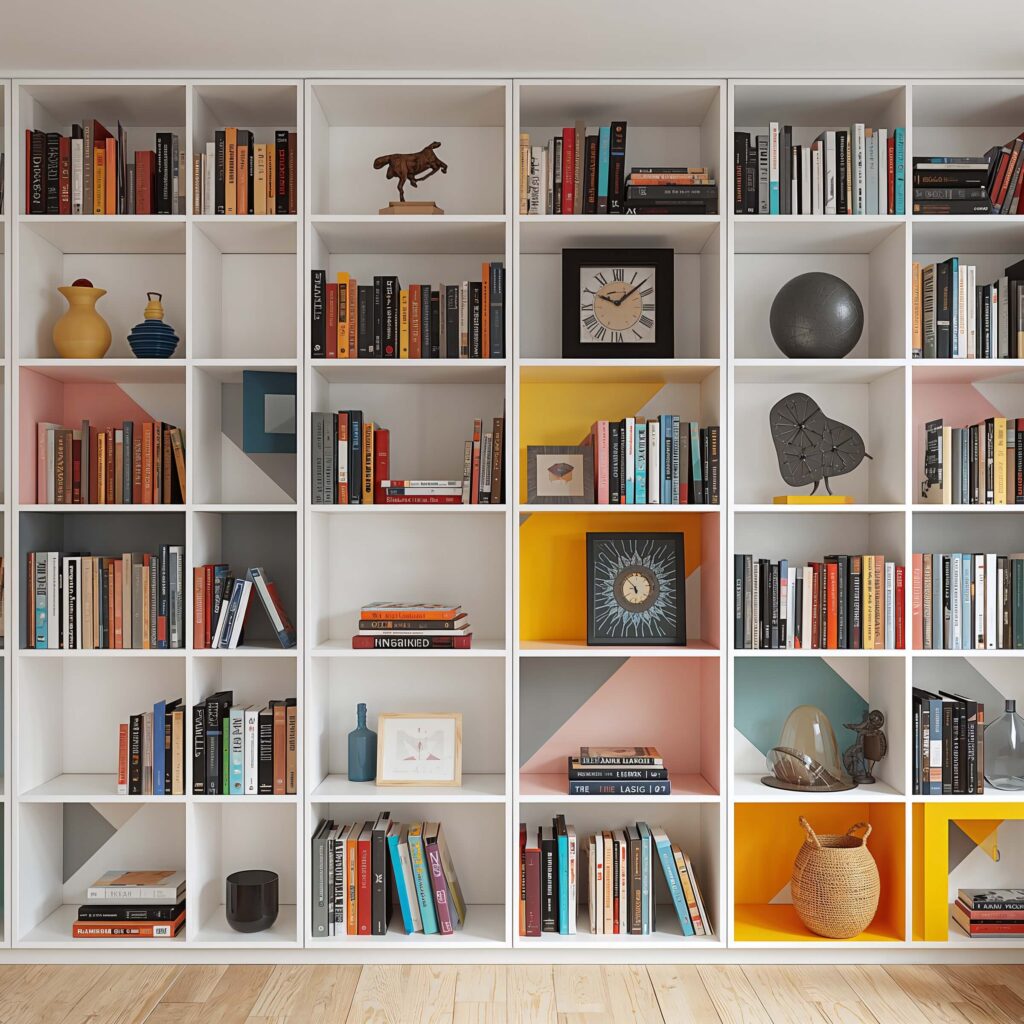
Ready to make your inner perfectionist happy? Geometric shelf arrangements turn your books into living art. We’re talking triangles, diamonds, hexagons – shapes that make your bookshelf look like it has a PhD in mathematics.
I discovered geometric styling when I couldn’t decide how to arrange my architecture books. Creating diagonal lines and pyramid formations suddenly made my reference section look intentional instead of randomly stuffed.
Creating Geometric Patterns
Start with the triangle formation – it’s foolproof. Lean books at angles to create triangular negative spaces. Stack horizontally to form pyramid shapes. Your shelves transform into a geometric playground.
Key geometric arrangements:
- Diamond patterns: Alternate vertical and angled books
- Zigzag displays: Create lightning bolt shapes with book spines
- Grid systems: Use same-height books to form perfect rectangles
- Hexagonal groupings: Arrange six books around a central object
Balance and Symmetry Rules
Here’s where it gets fun. Geometric styling loves intentional asymmetry. Create a perfect triangle on the left shelf, then break it up with a spiral arrangement on the right. The contrast keeps eyes moving.
Use bookends as anchors for your geometric designs. They provide structure and prevent your carefully arranged patterns from turning into the Leaning Tower of Literature.
Greenery & Books Combo
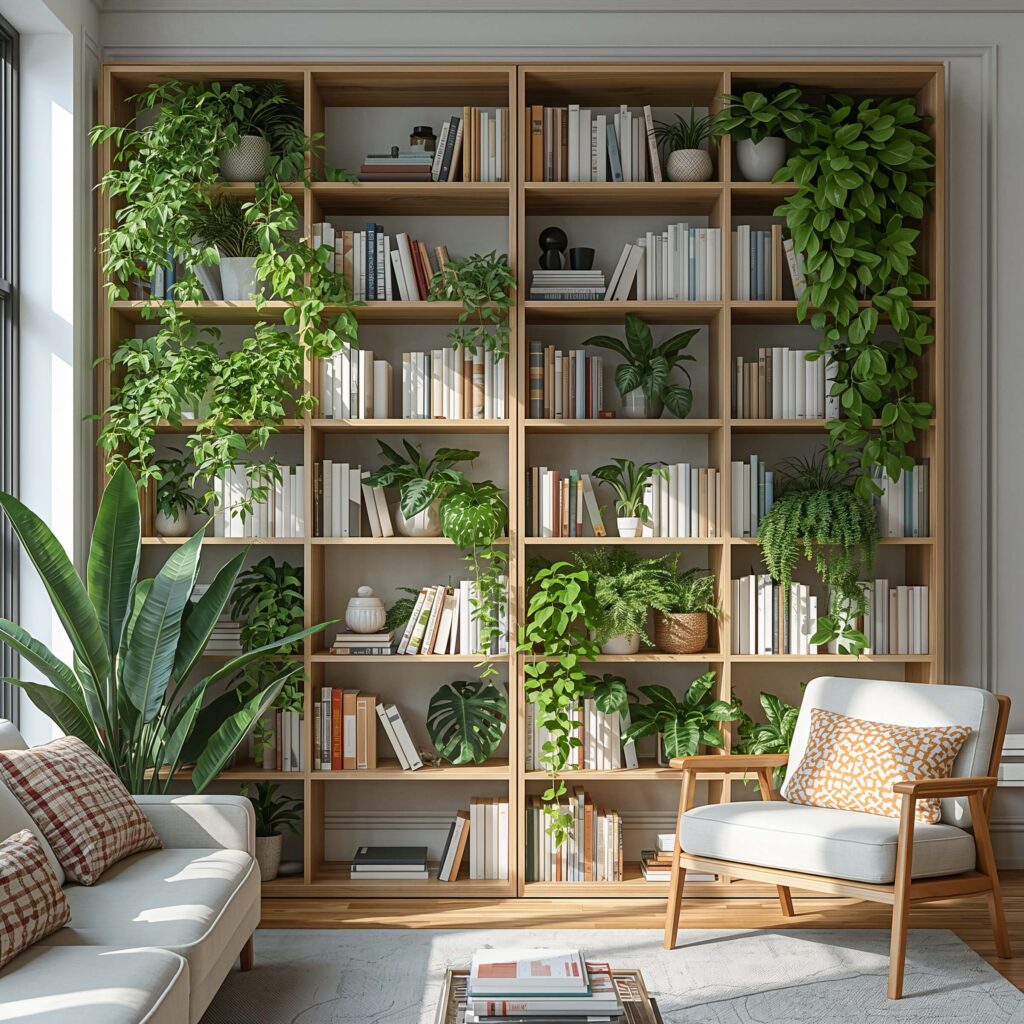
Plants and books together? Chef’s kiss. This combination brings life and warmth to any shelf, and FYI, it’s basically impossible to mess up. Even if you kill plants like I used to, there are options for you.
Adding greenery to my bookshelves completely changed my living room’s energy. The mix of natural elements with printed pages creates this organic, calming vibe that makes people want to stay and browse.
Best Plants for Bookshelf Life
Not all plants love bookshelf living. Here are the champions:
- Pothos: Trails beautifully, survives neglect
- Small succulents: Low maintenance, high impact
- Air plants: No soil needed, perfect for tight spaces
- Philodendrons: Heart-shaped leaves add softness
- Snake plants: Vertical growth, minimal water needs
Pro tip: Rotate your plants every few weeks. Books block light from certain angles, and rotation keeps everything thriving. I learned this after losing three succulents to my shadowy bottom shelf.
Styling Plants with Books
The golden rule? One plant per shelf section, max two if they’re tiny. You want green accents, not a jungle that swallows your books. Place trailing plants on higher shelves so they cascade down naturally.
Mix plant heights with book heights for rhythm. Tall snake plant next to short paperbacks. Low succulent garden beside towering hardcovers. The variation creates visual music.
Consider using vintage books as plant stands. Stack three or four horizontally, place a small planter on top. It elevates your plants literally and figuratively, plus it’s a great way to display books with damaged spines.
Color-Coded Book Arrangement
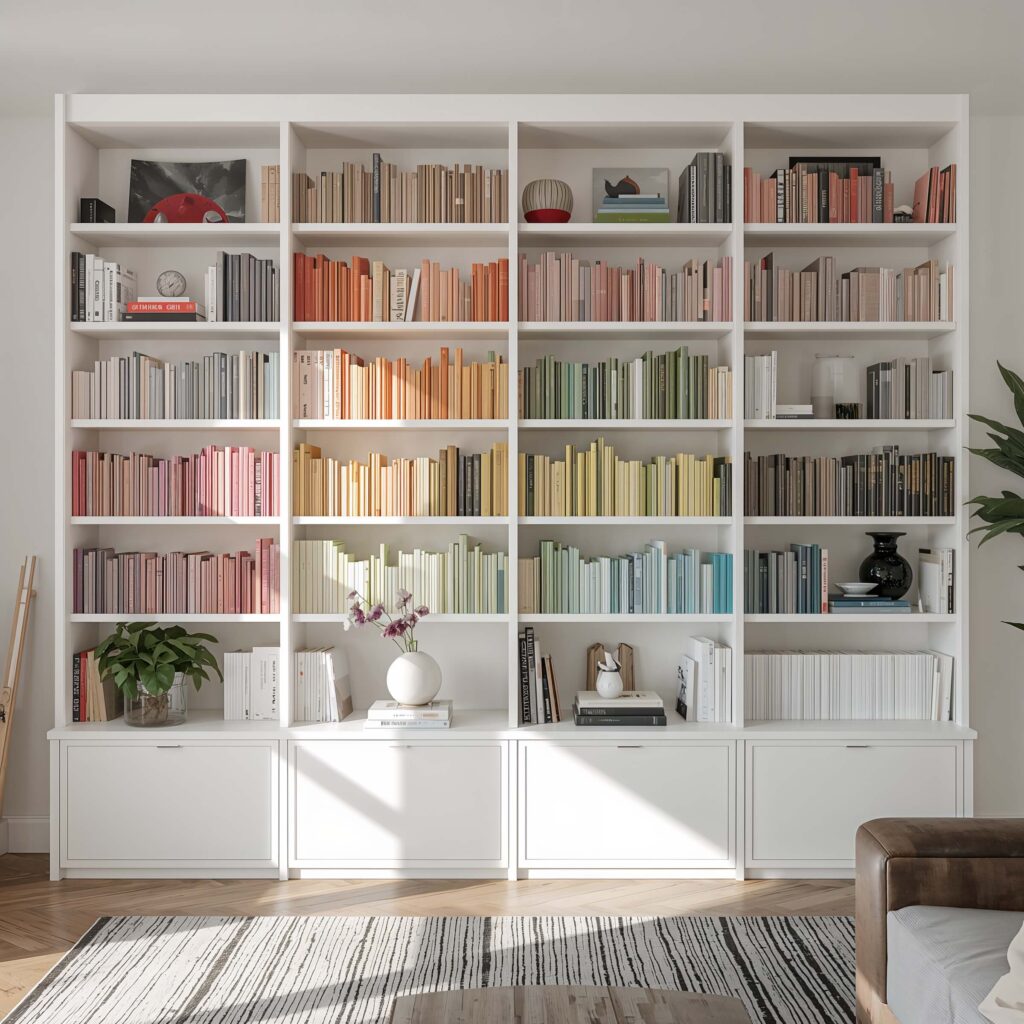
Rainbow bookshelves make my organization-loving heart sing. Color-coding your books transforms your shelf into a gradient masterpiece that’s both functional and gorgeous. Sure, finding specific titles takes longer, but who cares when it looks this good?
I color-coded my shelves during lockdown (didn’t we all rearrange everything?), and the instant mood boost was real. Walking into a room with a rainbow bookshelf just hits different.
Creating Your Color Story
Start by pulling every single book off your shelves. Yes, all of them. Group by color, then arrange within each color from light to dark. This creates smooth transitions that make the rainbow effect pop.
Color arrangement options:
- Full rainbow: ROY G. BIV in all its glory
- Ombré effect: Focus on one color family, arrange light to dark
- Warm to cool: Reds/oranges/yellows transitioning to blues/greens/purples
- Monochrome sections: Dedicate each shelf to one color
Making Color-Coding Practical
Worried about finding books? Here’s my system: I keep a simple spreadsheet on my phone with book titles and their color categories. Takes two seconds to check when needed. Old school? Maybe. Effective? Absolutely.
Mix in neutral-colored objects between color blocks. White ceramics, natural wood pieces, or metallic accents prevent the rainbow from overwhelming the space. Think of them as visual palate cleansers.
Also Read: 10 Magical Minecraft Bookshelf Ideas for Enchanting Rooms
Vintage Modern Mix
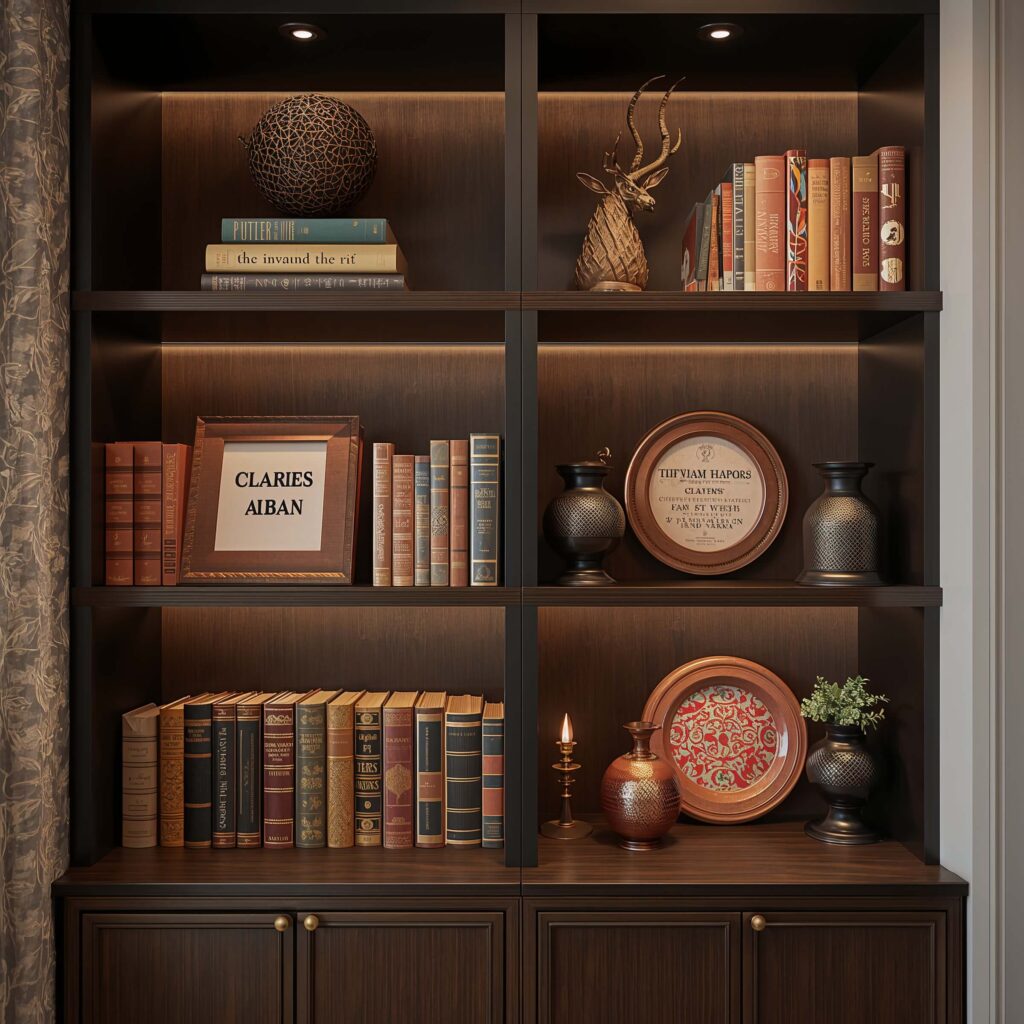
Combining vintage treasures with contemporary pieces creates the most interesting bookshelves IMO. This style tells a story – your story – through decades of design coming together in perfect harmony.
My shelves mix my grandmother’s first edition novels with brand new graphic novels, and the contrast makes both more interesting. Old leather bindings next to minimalist modern covers create this timeless-yet-current vibe.
Curating Your Vintage Modern Blend
The trick? Balance the ratio carefully. Aim for 60% modern, 40% vintage, or flip it depending on your preference. Too much vintage looks dusty; too modern lacks character.
Perfect vintage additions:
- Antique bookends: Instant character and function
- Old cameras or typewriters: Nostalgic focal points
- Vintage globes: Worldly and whimsical
- Brass accessories: Warmth and patina
- Old family photos: Personal history in frames
Creating Cohesion
Unite different eras through consistent color themes. Maybe all your vintage pieces share brass tones while modern items stick to black and white. The color thread ties everything together despite the time gap.
Layer textures across time periods. Rough vintage leather beside smooth modern ceramics. Aged wood next to sleek metal. The textural conversation between old and new keeps eyes engaged.
Art-Integrated Bookshelves
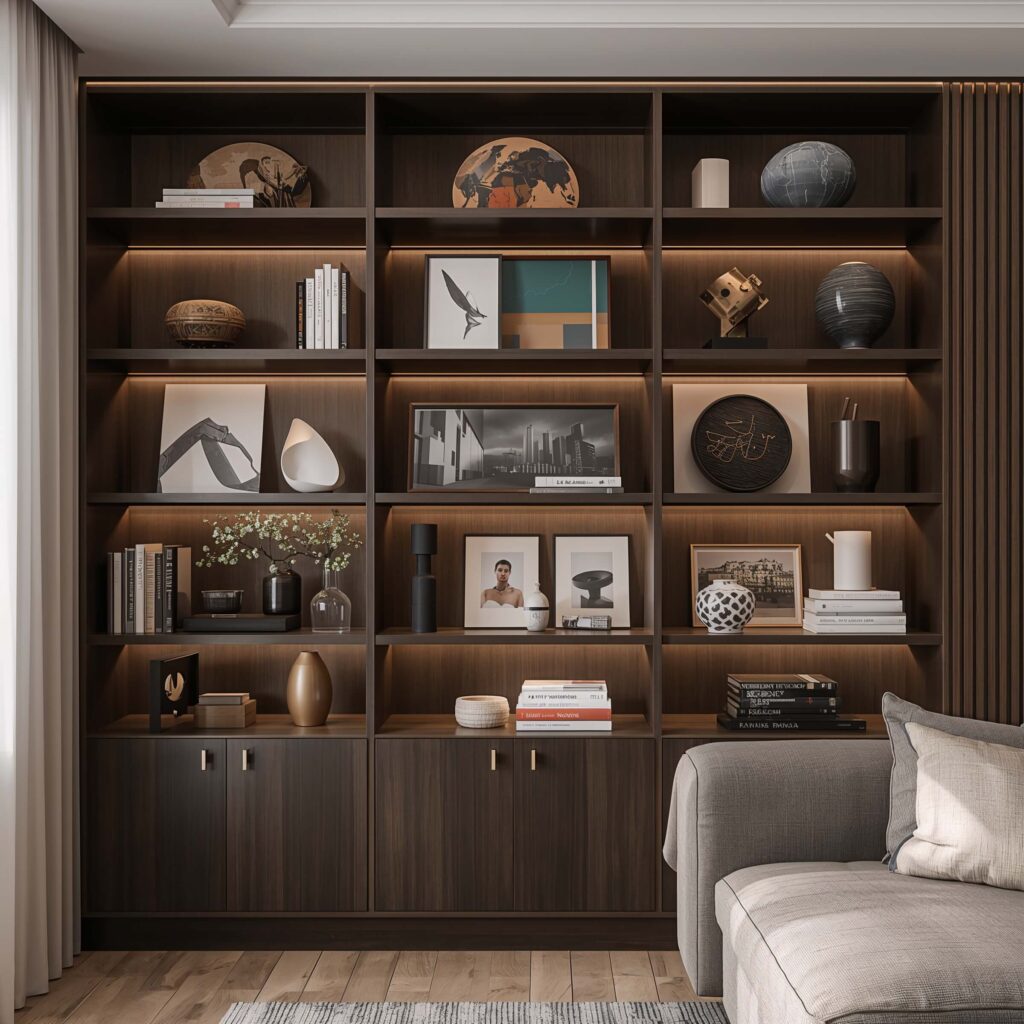
Why separate your art from your books when they can collaborate in beautiful chaos? Integrating artwork into your shelves creates gallery vibes without gallery prices. Your books become the frame for your creative expression.
I started mixing art with books after running out of wall space (first world problems, right?). Turns out, small paintings and prints tucked between books create way more visual interest than hanging everything on walls.
Choosing Art for Shelves
Size matters here. You want pieces that complement, not dominate. Think:
- Postcard-sized prints
- Small framed photographs
- Mini canvas paintings
- Illustrated book covers displayed as art
- Vintage botanical prints
Lean artwork against the back of shelves, creating layers of visual depth. Books in front, art behind, maybe a small object between. You’re basically creating mini staged vignettes on each shelf.
Art Placement Strategy
Follow the rule of thirds for art placement. Divide each shelf into three sections mentally, place art at the one-third or two-thirds mark. Never dead center – too predictable, too boring.
Create art moments rather than art everywhere. One stunning piece per shelf beats five mediocre ones. Let each artwork breathe with book buffers on either side.
Consider book spines as art too. Vintage covers, beautiful typography, or colorful spines count as artistic elements. Display pretty covers facing forward – they deserve recognition beyond their content.
Cozy Reading Nook Shelves
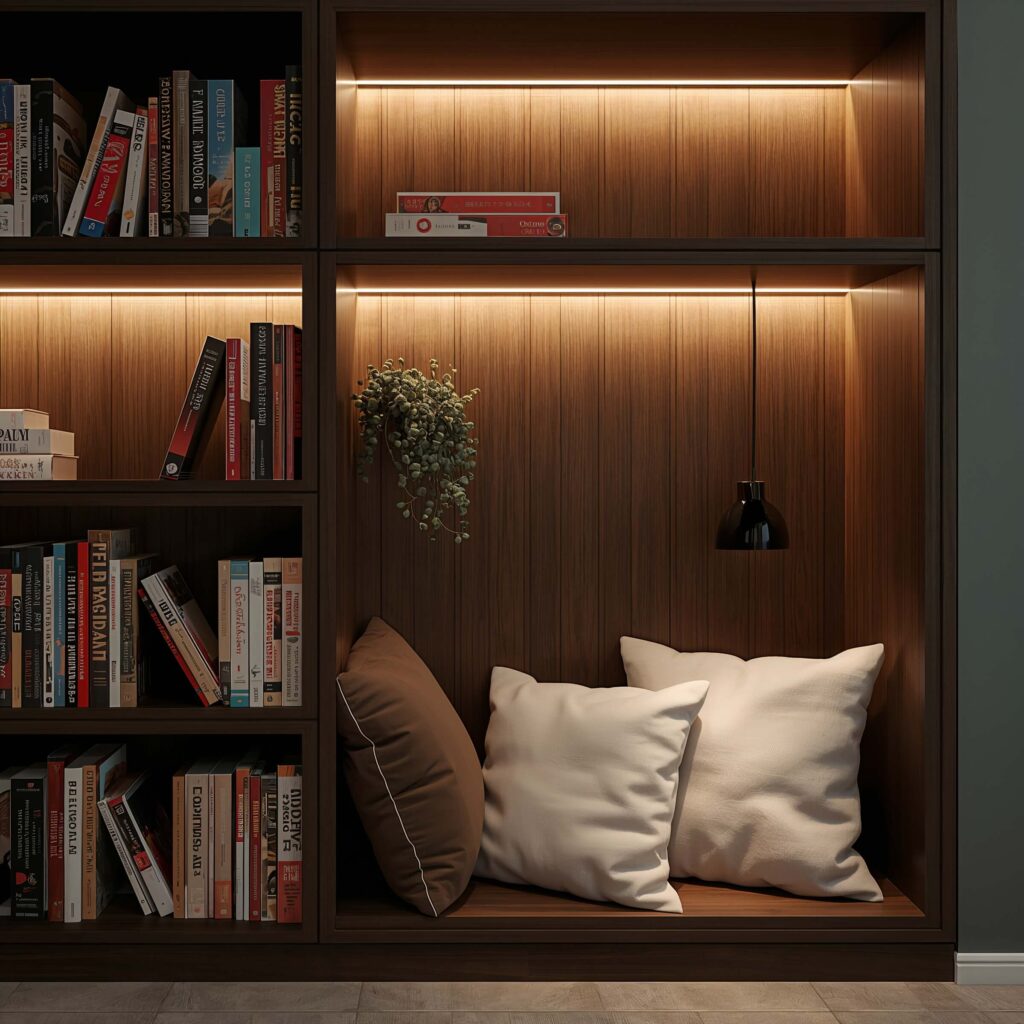
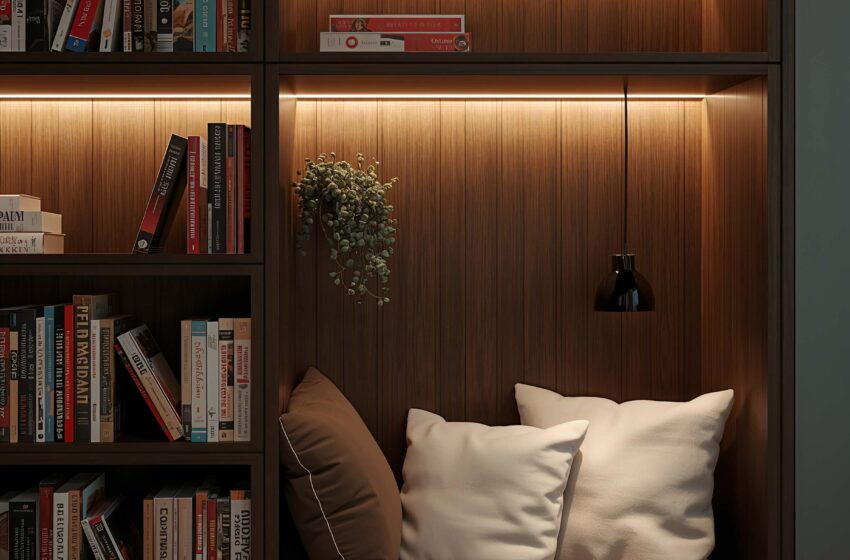
Building shelves around a reading nook creates the ultimate book lover’s paradise. We’re talking floor-to-ceiling books surrounding your favorite chair, within arm’s reach of literary escape. Living the dream, basically.
I transformed a weird corner in my bedroom into a reading nook with built-in shelves, and now it’s where I spend 90% of my free time. The cocoon effect of books surrounding you? Unmatched comfort vibes.
Designing Your Nook Shelves
Think accessibility over aesthetics for nook shelving. Your current reads should live at arm’s length from your reading spot. No standing required – that defeats the cozy purpose.
Essential nook shelf features:
- Lower shelf as side table: Perfect height for coffee and reading glasses
- Eye-level favorites: Most-reached books at sitting eye height
- Top shelf display: Pretty books you admire but rarely grab
- Built-in lighting: Reading lamps or LED strips are non-negotiable
- Cushion storage: Dedicate one cube for extra throw pillows
Making It Extra Cozy
Add soft textiles to harsh shelf edges. Drape a throw blanket over one section. Tuck a small cushion between books. The fabric softens both the look and feel of your nook.
Include personal comfort items on your nook shelves. Your favorite mug, a candle that smells like a library, that bookmark collection you can’t stop buying. These details make the space genuinely yours.
Also Read: 10 Smart White Bookshelf Ideas to Maximize Storage
Open & Airy Display
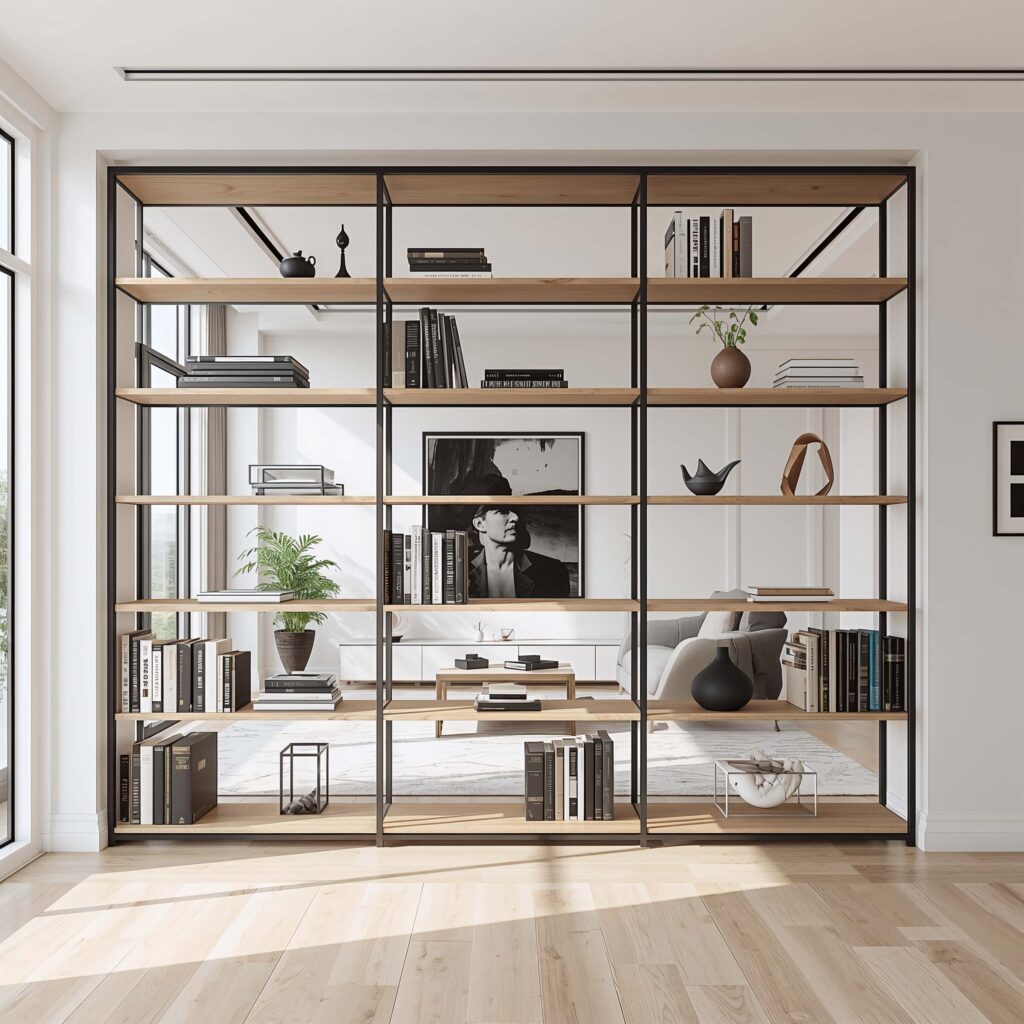
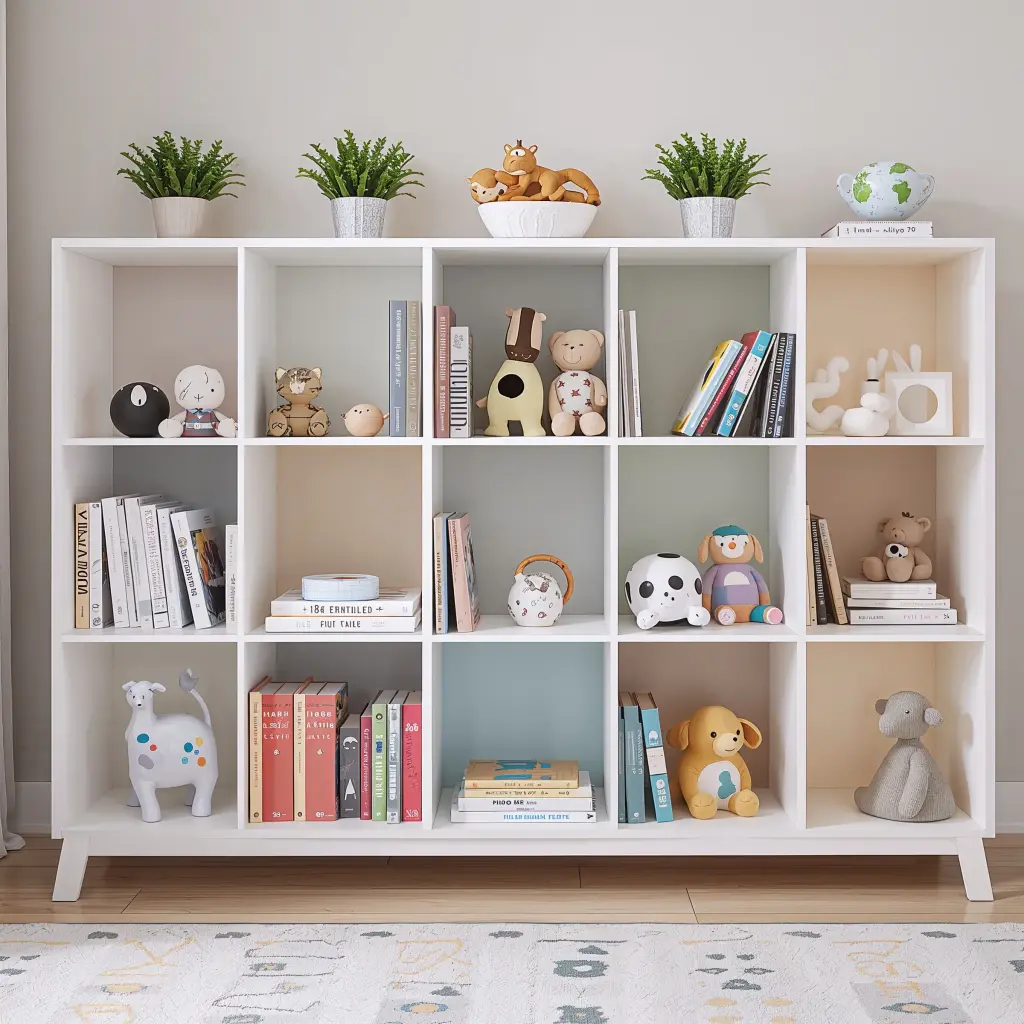
Sometimes less really is more. Open, airy shelving celebrates breathing room and makes small spaces feel twice their size. This style proves you don’t need to fill every inch to make an impact.
After years of cramming every shelf full, I tried the airy approach in my apartment’s narrow hallway. The visual weight lifted immediately 🙂 – suddenly the space felt like a gallery instead of a storage unit.
Creating Breathing Room
The secret? Negative space equals importance. When you give items room to breathe, each piece becomes significant. Your signed first edition stands out when it’s not squeezed between twenty other books.
Spacing guidelines for airy shelves:
- Leave 40-50% of each shelf empty
- Group books in clusters of 3-7
- Maintain 4-6 inches between groupings
- Use one statement piece per shelf
- Alternate full and sparse shelves vertically
Selecting Display Pieces
Choose quality over quantity for open displays. Each item should earn its spot through beauty, meaning, or both. That random paperback you’ll never reread? It doesn’t make the cut.
Focus on items with interesting shapes and heights. A tall vase next to short stacked books. A horizontal art piece beside vertical spines. The variety prevents monotony despite the minimal approach.
Consider seasonal rotation for your airy shelves. Swap items quarterly to keep the display fresh without adding clutter. Your shelves become an ever-changing gallery of your current interests.
Maintaining the Airy Aesthetic
Here’s the hard truth: airy shelves require discipline. Every new book purchase means deciding what leaves. I keep a donation box nearby for this exact reason – one in, one out keeps the balance.
Regular micro-editing sessions preserve the look. Spend five minutes weekly adjusting spacing, removing dust, and ensuring everything looks intentional. Airy doesn’t mean neglected – it means carefully curated.
Bringing It All Together
So there you have it – ten ways to transform your bookshelves from boring storage to spectacular displays. Whether you go full rainbow, embrace the industrial vibe, or create your cozy reading paradise, remember this: your shelves should reflect you.
Don’t stress about achieving Pinterest perfection. Mix these ideas, break the rules, make mistakes. The best bookshelves tell stories beyond what’s written on their pages. They show who you are, what you love, and maybe a little of who you’re becoming.
Start with one shelf, one style, one small change. Before you know it, you’ll have friends asking for your styling secrets. And when they do? Send them here, then go rearrange your shelves again. Because honestly, is there anything more satisfying than a freshly styled bookshelf? I think not.
Now excuse me while I go reorganize my shelves for the third time this month. Those geometric patterns aren’t going to create themselves, and I just bought three new plants that need homes. The obsession continues, and I wouldn’t have it any other way.