10 Inspiring Moroccan Tiles Kitchen Ideas and Pattern Magic
- Kitchen Tiles Ideas
 Ben
Ben- 0
- 50 minutes read
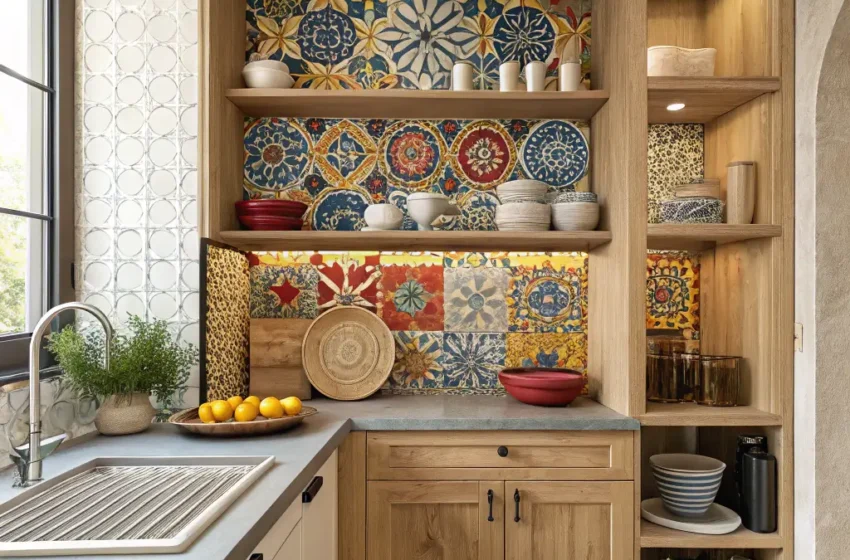
Moroccan tiles carry centuries of artisan heritage in every handcrafted piece. These stunning geometric patterns and vibrant colors transform ordinary kitchens into extraordinary spaces that tell stories.
I fell in love with Moroccan tiles during a trip to Marrakech years ago. Walking through riads and traditional homes, I couldn’t stop staring at the intricate tilework covering every surface.
Those patterns felt alive—mathematical precision meeting artistic expression in ways that seemed almost magical.
Bringing Moroccan tile aesthetics into modern kitchens might seem challenging. The bold patterns, vivid colors, and cultural significance can feel intimidating when you’re staring at your plain white backsplash wondering where to begin.
But here’s what I’ve discovered: Moroccan tiles adapt beautifully to contemporary kitchen design.
Whether you prefer subtle accents or dramatic statements, these timeless patterns work in ways that might surprise you.
Ready to explore how Moroccan tiles can transform your kitchen into something genuinely special?
These ten ideas cover everything from bold backsplashes to unexpected accent applications, proving that ancient artistry belongs in modern cooking spaces.
1. Vibrant Moroccan Backsplash Patterns
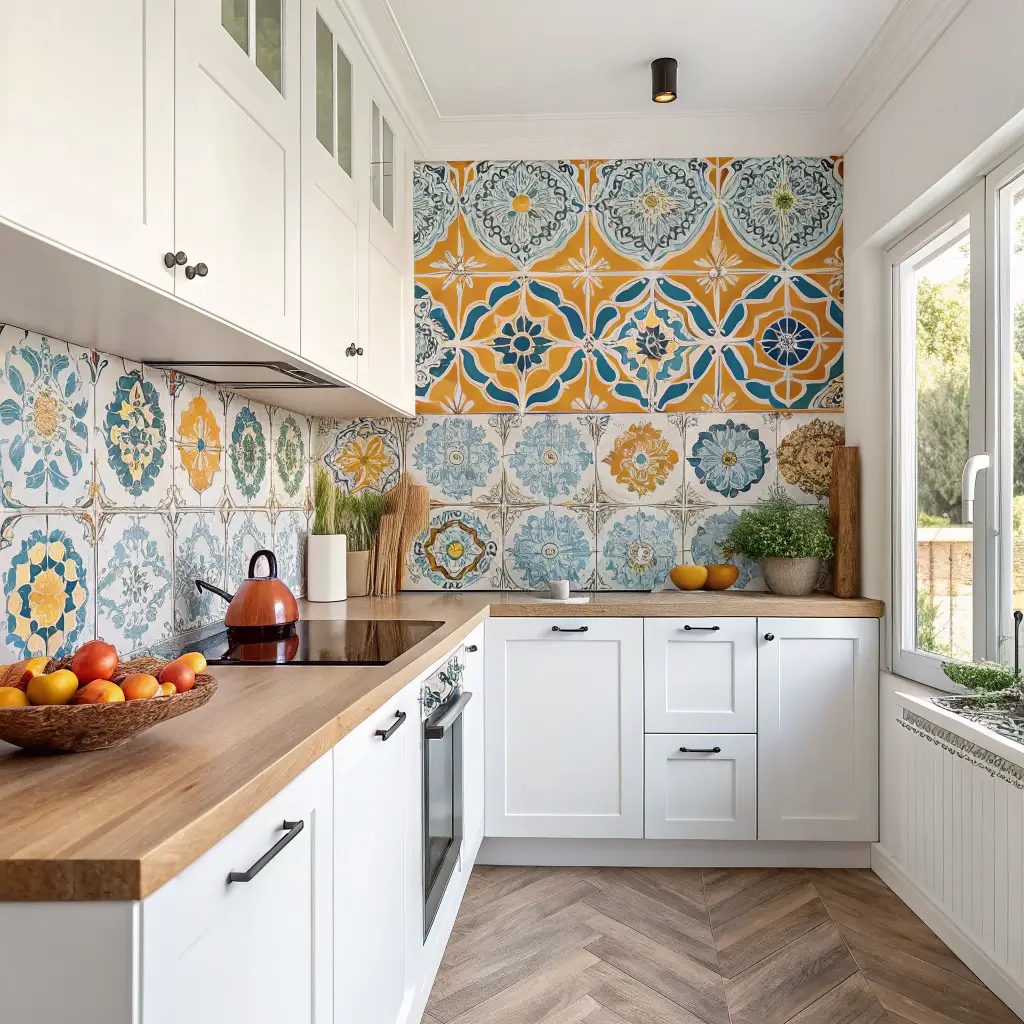
Your backsplash occupies prime visual real estate. Why waste it on boring white subway tiles when Moroccan patterns can create stunning focal points?
The Statement Backsplash Appeal
Vibrant Moroccan backsplash tiles transform functional surfaces into artwork. These intricate patterns catch attention immediately, becoming the undisputed stars of kitchen design.
Why Moroccan backsplashes captivate:
- Instant personality: One installation transforms entire kitchen atmospheres
- Cultural storytelling: Each pattern carries historical significance
- Color injection: Vibrant hues brighten neutral surroundings
- Artisan quality: Handcrafted variations add authentic character
- Conversation starting: Guests inevitably comment and ask questions
- Unique expression: Your kitchen looks unlike anyone else’s
Choosing Vibrant Patterns
Moroccan tile patterns span incredible variety:
Star and cross designs feature eight-pointed stars within geometric frameworks. These classic patterns create mesmerizing visual complexity that rewards extended viewing.
Zellige tiles offer handmade glazed squares with intentional color variations. Each tile differs slightly, creating surfaces that shimmer and shift throughout the day.
Encaustic cement tiles display intricate geometric patterns pressed into cement. These tiles offer bold graphics with matte, sophisticated finishes.
Mosaic arrangements combine small tiles into larger patterns. These installations create stunning visual effects that appear almost woven.
Consider color carefully. Blue and white combinations feel classic and timeless. Multicolored patterns deliver maximum visual impact. Monochromatic variations suit contemporary kitchens wanting pattern without color explosion.
Keep surrounding elements relatively simple. Vibrant Moroccan backsplashes need solid cabinet colors, minimal countertop patterns, and restrained accessories to shine appropriately.
2. Geometric Floor Tile Statements
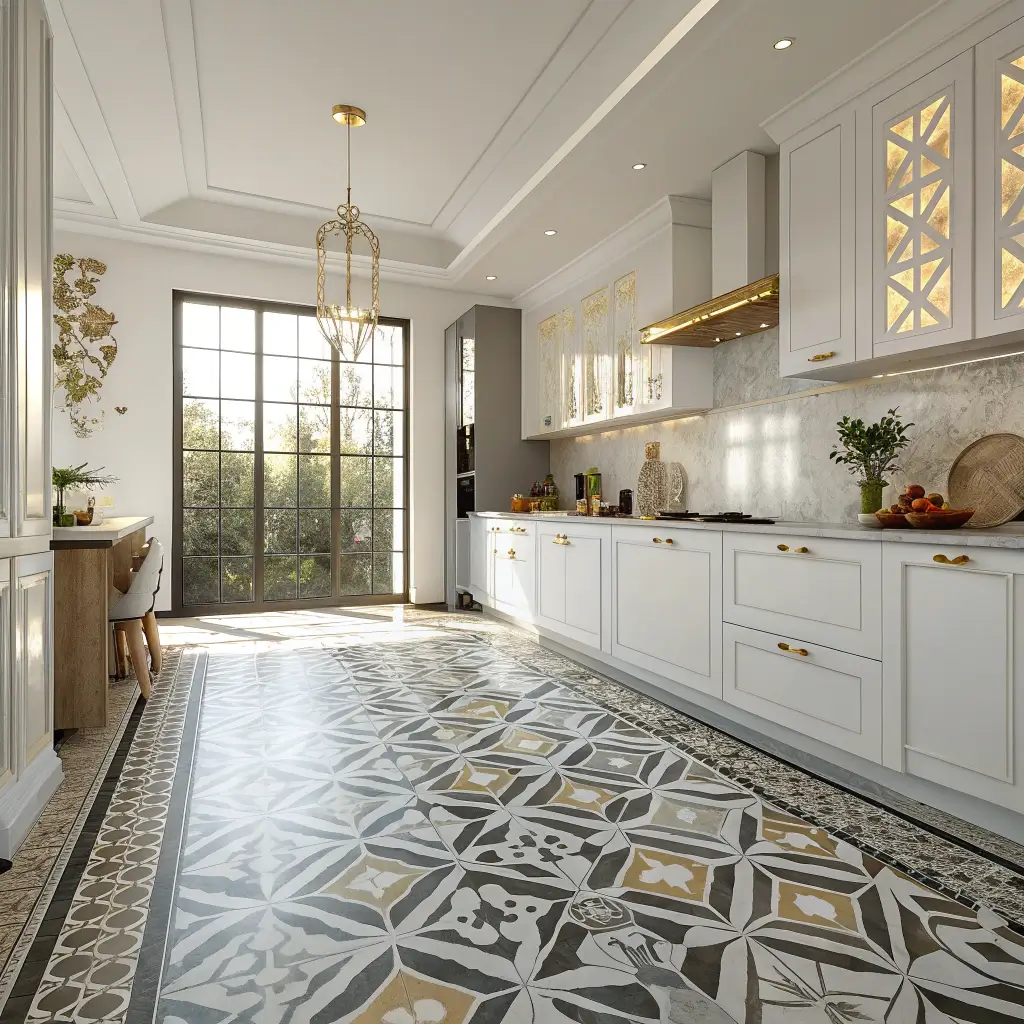
Moroccan geometric patterns underfoot create foundations that anchor entire kitchen designs. These floors become conversations pieces guests can’t ignore.
Why Moroccan Floors Work
Geometric Moroccan floor tiles deliver design impact from the ground up. Walking across these intricate patterns feels like moving through curated gallery spaces.
The floor tile advantage:
- Large canvas: Floors provide substantial area for pattern expression
- Architectural grounding: Patterns anchor floating upper elements
- Durability heritage: Moroccan floor tiles survived centuries in high-traffic areas
- Practical beauty: Patterns hide everyday dirt better than solid surfaces
- Investment value: Quality Moroccan floors add genuine home value
- Complete transformation: Floors affect entire room perception
Popular Geometric Options
Traditional geometric frameworks use mathematical precision to create repeating patterns. Stars, crosses, and interlocking shapes form complex visual tapestries.
Hexagonal arrangements combine Moroccan pattern sensibilities with contemporary tile shapes. These installations feel both ancient and modern simultaneously.
Large-scale geometric patterns create bold, contemporary statements. Fewer pattern repeats suit modern kitchen aesthetics.
Border and field combinations frame central patterns with complementary edging. This approach references traditional Moroccan architectural applications.
Consider tile size and pattern scale relative to your kitchen’s dimensions. Small kitchens benefit from medium-sized patterns that provide interest without overwhelming. Large kitchens can handle grand geometric statements confidently.
IMO, geometric Moroccan floors work best when you commit fully rather than mixing tentatively with plain tiles. Half-hearted pattern application looks accidental rather than designed.
3. Bold Colored Accent Walls

Sometimes a single wall transforms everything. Moroccan tiles on accent walls deliver maximum impact with focused installation.
The Accent Wall Strategy
Bold Moroccan accent walls concentrate pattern and color in defined areas. This focused approach creates dramatic focal points without overwhelming entire kitchens.
Why accent walls succeed:
- Controlled drama: Pattern contains itself within clear boundaries
- Budget efficiency: Less tile coverage reduces material costs
- Installation simplicity: Smaller areas suit DIY confidence
- Visual balance: Bold pattern balanced by neutral surroundings
- Flexibility: Easier to update than full kitchen tiling
- Maximum impact: Concentrated pattern creates powerful statements
Strategic Accent Placement
Consider these prime accent wall locations:
Behind ranges: Natural focal points benefit from pattern enhancement. Moroccan tiles frame cooking zones beautifully.
Open shelving backdrops: Patterned walls behind open shelving create curated display environments. Items pop against geometric backgrounds.
Kitchen nook walls: Breakfast nooks or dining areas within kitchens suit accent treatment. Pattern defines these zones clearly.
Range hood surrounds: Frame range hoods with Moroccan tile extensions. This approach creates architectural statements around functional elements.
Full single walls: Dedicate entire walls to Moroccan pattern while keeping remaining surfaces neutral. This bold commitment creates gallery-like impact.
Choose colors that complement existing elements while adding necessary pop. Blue Moroccan tiles suit white or cream kitchens. Terracotta patterns work with warm wood tones. Multicolored options suit eclectic, bohemian aesthetics.
Also Read: 12 Sophisticated Black Tiles Kitchen Ideas and Color Combos
4. Minimalist Moroccan Tile Corners
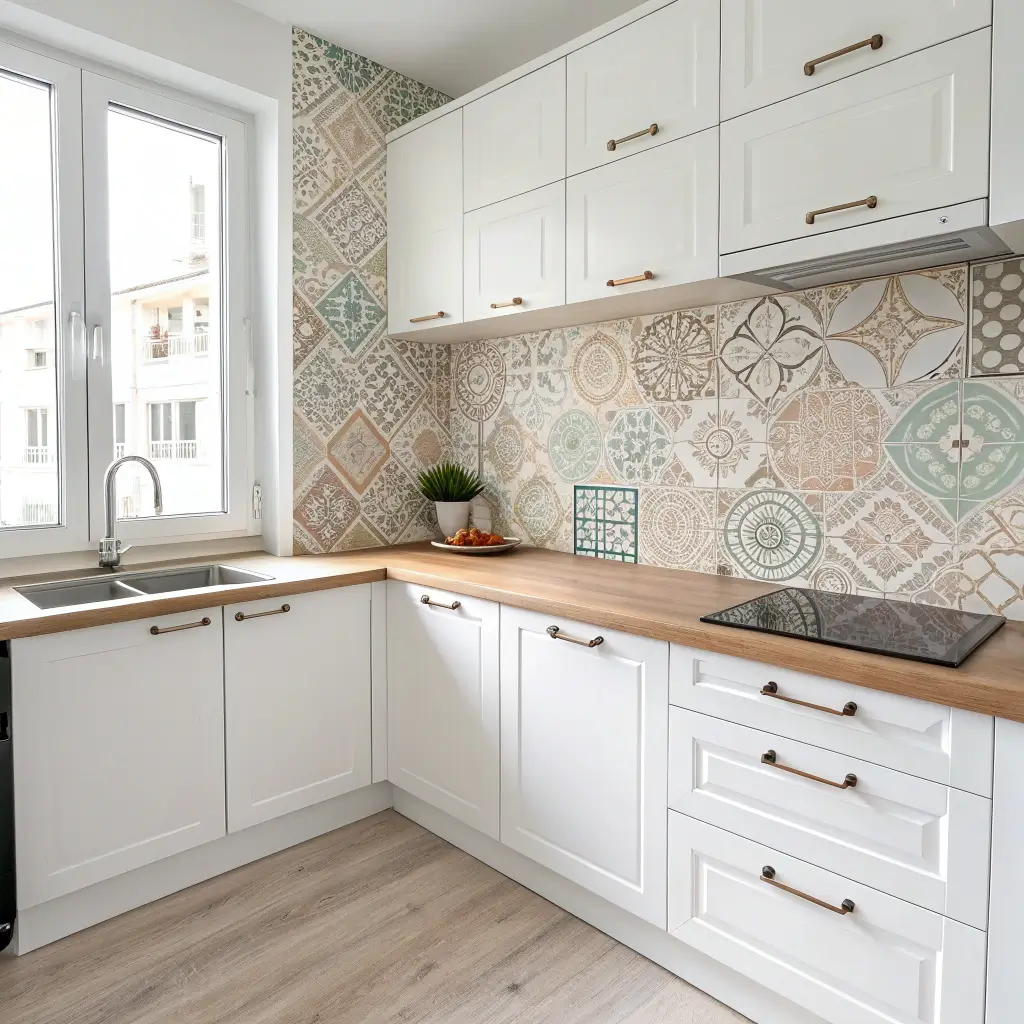
Not ready for full Moroccan commitment? Corner accents introduce pattern gradually while testing your comfort with bold design.
The Subtle Introduction Approach
Minimalist Moroccan corner tiles add pattern touches without overwhelming. These restrained applications suit those wanting Moroccan flavor without complete immersion.
Why corner accents work:
- Low commitment: Small areas require less investment and risk
- Easy updating: Simple to change if preferences evolve
- Surprising detail: Unexpected pattern placement delights observers
- Design testing: Evaluate pattern tolerance before larger applications
- Budget friendly: Minimal tile quantities reduce costs significantly
- Layered interest: Add complexity to otherwise simple kitchens
Corner Application Ideas
Countertop corner niches: Install Moroccan tiles in corner sections behind small appliance stations or coffee bars.
Window surrounds: Frame kitchen windows with Moroccan tile borders. These architectural accents draw eyes toward natural light.
Shelf brackets: Replace standard brackets with Moroccan-tiled corner supports. Unexpected placement creates delightful discovery moments.
Above cabinet spaces: Fill the gap between cabinets and ceilings with patterned corner accents rather than leaving empty space.
Corner display niches: Built-in corner shelving lined with Moroccan tiles creates stunning display environments for pottery or plants.
This approach lets you experience Moroccan tiles before committing extensively. Many homeowners start with corner accents and gradually expand as confidence grows.
5. Rustic Moroccan Kitchen Islands
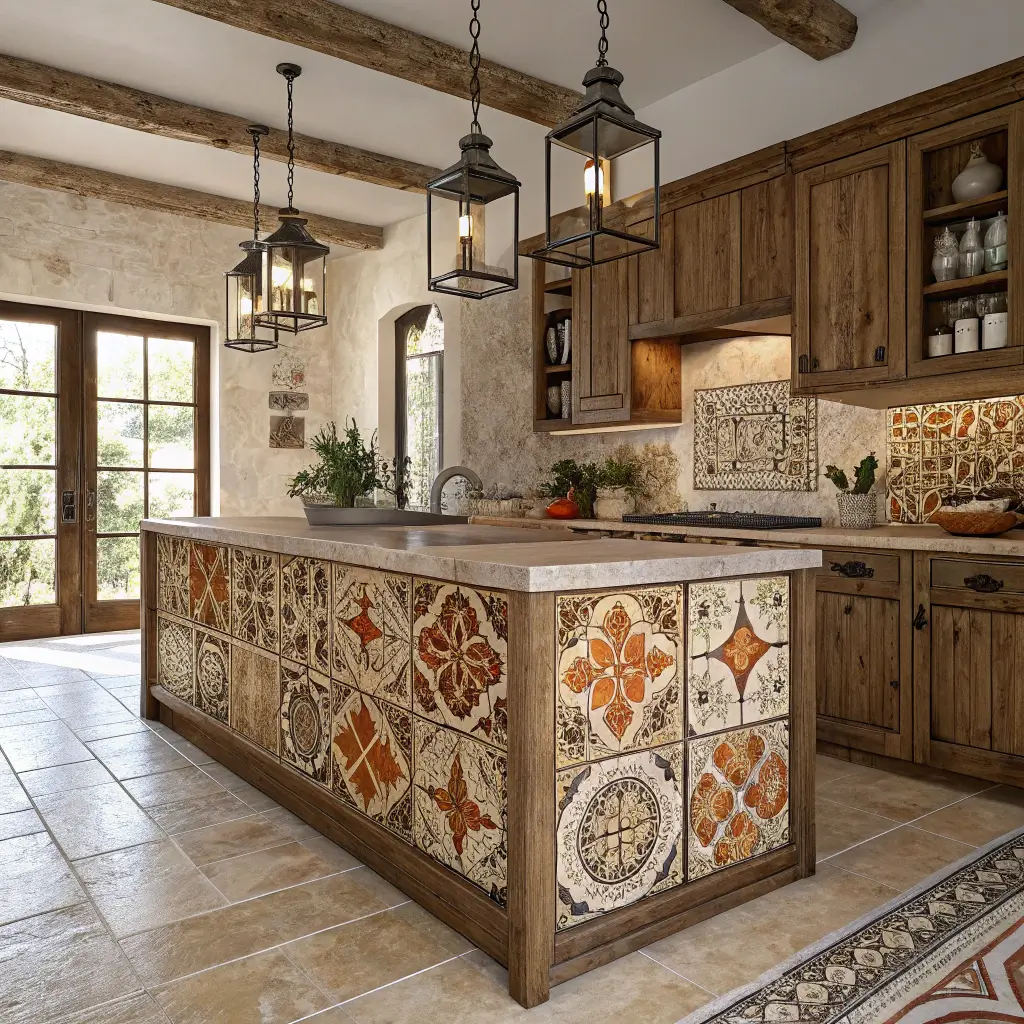
Kitchen islands command attention naturally. Cladding them in Moroccan tiles creates centerpieces that anchor entire kitchen designs.
The Island Statement
Rustic Moroccan kitchen islands combine practical food preparation with artistic expression. These installations make islands impossible to ignore.
Why Moroccan island cladding works:
- Central focus: Islands naturally draw attention—pattern enhances this
- 360-degree impact: Visible from multiple angles throughout kitchens
- Unexpected placement: Horizontal pattern application surprises pleasantly
- Rustic warmth: Handmade tiles add artisan character
- Conversation seating: Bar-side guests admire patterns up close
- Practical durability: Tile surfaces handle kitchen wear beautifully
Island Cladding Approaches
Full waterfall applications wrap pattern from island top, down sides, to floor level. This dramatic approach creates maximum visual impact.
Front panel focus applies Moroccan tiles to the visible island face while leaving back sections simpler. This approach suits islands against walls.
Base accent bands run patterned tile strips around island bases, with solid surfaces above. This grounding application adds interest without overwhelming.
Toe kick details apply pattern only at floor level, visible when standing close. These subtle details reward close inspection.
Choose patterns with appropriate scale for vertical application. Patterns designed for floors may appear differently on vertical surfaces. Request sample installations before committing.
Rustic finishes suit island applications particularly well. Handmade variations and matte surfaces hide fingerprints and kitchen grime better than glossy alternatives.
6. Moroccan Tile Countertop Accents

Countertops usually feature stone or solid surfaces. Moroccan tile countertop accents break conventions with stunning results.
The Countertop Innovation
Moroccan tile countertop accents introduce pattern into unexpected horizontal surfaces. These installations challenge design assumptions while delivering practical beauty.
Why countertop tiles work:
- Unexpected placement: Countertops rarely feature decorative tiles
- Functional beauty: Work surfaces become artwork
- Heat resistance: Tile handles hot pots and pans well
- Easy maintenance: Glazed surfaces wipe clean effortlessly
- Cultural authenticity: Traditional Moroccan homes featured tiled surfaces
- Design distinction: Sets your kitchen apart completely
Countertop Application Strategies
Full countertop coverage replaces conventional materials entirely with Moroccan tiles. This bold approach suits dedicated design enthusiasts.
Integrated trivets: Install patterned tile sections within solid countertops as built-in hot pad zones behind ranges.
Island top accents: Feature Moroccan patterns on island surfaces while keeping perimeter counters conventional.
Bar top details: Apply patterned tiles to bar-height countertops where guests sit, creating conversation-worthy surfaces.
Cutting board zones: Integrate tile sections designed specifically for food preparation activities.
Consider grout maintenance realistically. Countertop grout lines require regular sealing and cleaning. Choose darker grouts that hide staining, or use epoxy grout for maximum protection.
FYI, professional installation proves essential for countertop applications. Proper leveling, support, and sealing requires expertise that DIY approaches rarely achieve.
Also Read: 10 Chic Terracotta Tiles Kitchen Ideas and Color Combos
7. Colorful Mosaic Niche Designs
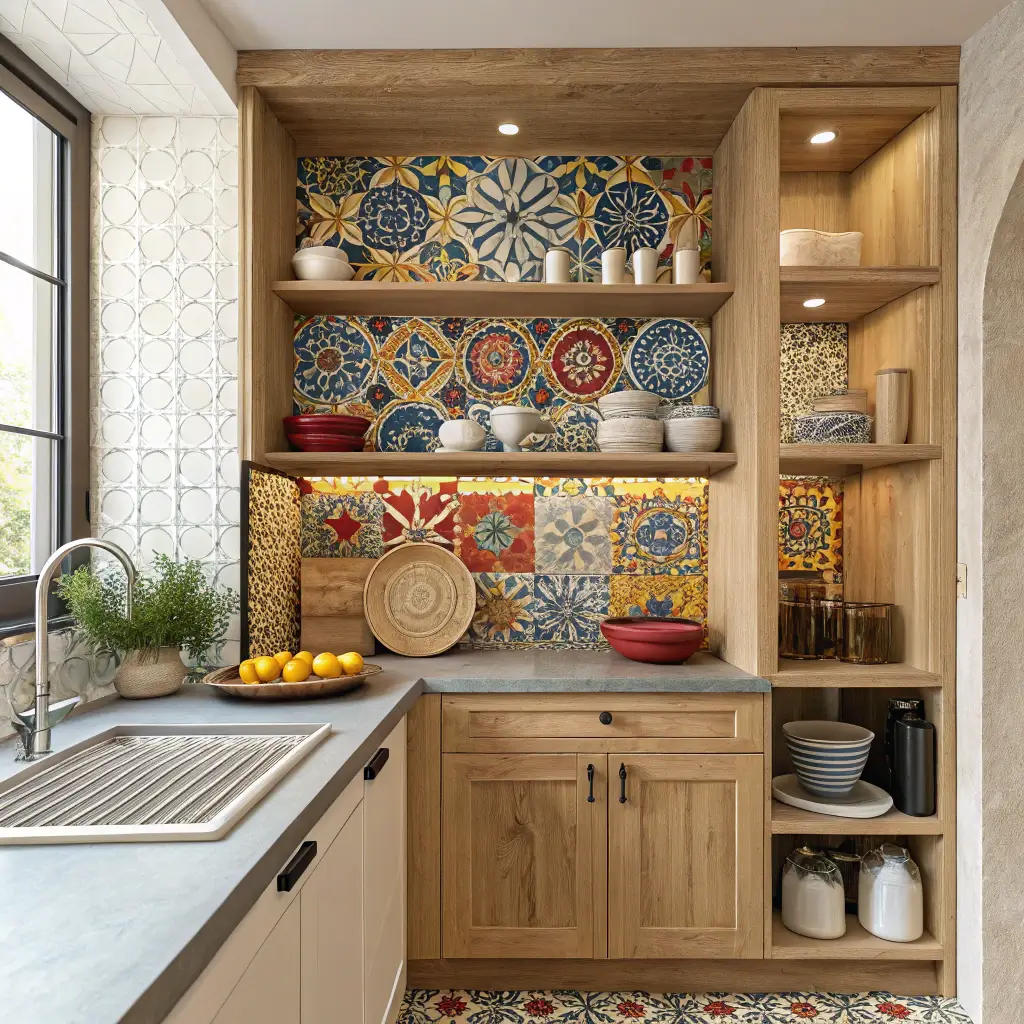
Built-in niches provide perfect canvases for Moroccan mosaic expressions. These small spaces become jewel-like focal points.
The Niche Opportunity
Colorful Moroccan mosaic niches transform recessed spaces into curated art installations. Small areas become disproportionately impactful when lined with intricate patterns.
Why mosaic niches captivate:
- Concentrated beauty: Small spaces hold pattern attention
- Framed presentation: Niches naturally frame tile artwork
- Lighting enhancement: Illuminate niches to highlight pattern brilliance
- Practical display: Store spices, oils, or decorative objects against gorgeous backgrounds
- Contained installation: Limited scope simplifies DIY projects
- Maximum impact ratio: Minimal material creates significant effect
Niche Design Approaches
Single color mosaics use varied shades within one color family. These installations feel sophisticated without overwhelming.
Multicolored explosions embrace full Moroccan color palettes. Blues, greens, yellows, and terracottas combine joyfully.
Pattern-focused designs prioritize geometric complexity over color variety. Black and white or blue and white combinations suit this approach.
Zellige variations line niches with handmade tiles featuring intentional irregularities. Their shimmer catches light beautifully.
Consider niche lighting carefully. LED strips or puck lights illuminate patterns from above, creating dramatic shadow play. Without proper lighting, niche patterns disappear into darkness.
Position decorative objects thoughtfully. Clear glass containers display contents against patterns. Colored pottery coordinates with tile hues. Metallic accents in brass or copper enhance warm pattern tones.
8. Modern Monochrome Moroccan Floors

Moroccan patterns don’t require rainbow colors. Monochrome versions deliver geometric sophistication without color complexity.
The Monochrome Advantage
Modern monochrome Moroccan floors strip pattern to essential geometry. Black and white, gray variations, or single-color gradients create contemporary interpretations of ancient traditions.
Why monochrome works:
- Contemporary sensibility: Reduced color suits modern aesthetics
- Sophisticated restraint: Pattern without color excess
- Versatile coordination: Neutral patterns work with any cabinet or countertop color
- Timeless appeal: Monochrome patterns transcend color trends
- Graphic impact: Strong contrast emphasizes geometric precision
- Wide acceptability: Broad appeal for various design preferences
Monochrome Options
Black and white geometrics create maximum graphic impact. These bold patterns suit confident, contemporary kitchens.
Gray variations soften contrast while maintaining pattern interest. Different gray tones create subtle, sophisticated surfaces.
Cream and white combinations deliver warm, subtle pattern expression. These gentle installations suit traditional and farmhouse kitchens.
Single color gradients use light-to-dark variations within one hue. Blue gradients, green gradients, or terracotta gradients maintain monochrome discipline with color interest.
Grout selection affects monochrome dramatically. Contrasting grout (white grout with dark tiles, dark grout with light tiles) emphasizes each pattern element distinctly. Matching grout creates more unified, seamless surfaces.
Modern monochrome Moroccan floors suit minimalist kitchens wanting pattern without colorful complexity. They deliver traditional craftsmanship within contemporary frameworks. 🙂
9. Patterned Moroccan Tile Stair Risers

Kitchens with stairs to basements, pantries, or split-level designs feature often-ignored surfaces. Moroccan tile stair risers transform these vertical planes into stunning design elements.
The Stair Riser Discovery
Patterned Moroccan stair risers apply tiles to the vertical faces between steps. These unexpected installations delight observers who discover them.
Why stair risers work beautifully:
- Surprising placement: Nobody expects tile artwork on stairs
- Progressive reveal: Patterns unveil as you climb
- Practical durability: Risers face less wear than treads
- Budget efficiency: Small surface areas require minimal materials
- Creative expression: Each riser can feature different pattern elements
- Easy installation: Flat vertical surfaces simplify DIY projects
Stair Riser Approaches
Unified patterns use identical tiles across all risers. This approach creates cohesive visual flow as you ascend.
Progressive variations change patterns or colors as risers climb. Lighter colors at top, darker at bottom (or vice versa) creates gradient effects.
Random mixing applies different patterns to each riser. This eclectic approach suits bohemian or maximalist aesthetics.
Alternating patterns use two coordinating patterns on alternating risers. This approach creates rhythm and visual interest.
Consider viewing angles when selecting patterns. Stair risers appear at angles—patterns with strong directional elements may appear skewed when viewed while climbing.
Coordinate riser tiles with adjacent kitchen flooring for design continuity. Matching or complementary patterns create cohesive transitions between spaces.
Also Read: 10 Creative Green Kitchen Tiles Backsplash Ideas to Try Today
10. Eclectic Mix-and-Match Tiles

Moroccan design tradition embraces pattern mixing. Eclectic combinations create uniquely personal kitchens that reject rigid design rules.
The Mix-and-Match Philosophy
Eclectic Moroccan tile combinations combine multiple patterns, colors, and styles within single installations. This approach celebrates variety over uniformity.
Why mixing patterns works:
- Personal expression: Create truly unique combinations nobody else has
- Cultural authenticity: Traditional Moroccan spaces mixed patterns freely
- Collected appearance: Looks gathered over time rather than purchased at once
- Visual richness: Multiple patterns engage eyes continuously
- Creative freedom: Reject matching pressure entirely
- Budget flexibility: Use remnant tiles and discontinued patterns
Successful Mixing Strategies
Color family cohesion: Mix various patterns that share color families. Blue patterns in different styles, for example, create cohesion through color while varying geometry.
Pattern scale mixing: Combine large-scale patterns with smaller geometric variations. Different scales create visual hierarchy and interest.
Random arrangements: Scatter different tiles randomly within fields. This approach creates patchwork aesthetics that feel handcrafted.
Defined zone variations: Apply different patterns to distinct areas—one pattern behind the range, another behind the sink, another on the floor.
Grout unification: Use consistent grout color throughout mixed installations. Common grout creates visual connection between varied patterns.
The key to successful mixing involves intentional randomness. Truly random arrangements can look chaotic. Considered mixing—balancing colors, distributing pattern types evenly, and maintaining some visual rhythm—creates designed eclecticism rather than accidental mess.
Understanding Moroccan Tile Types
Before committing to Moroccan tiles, understand the options available and their characteristics.
Authentic Zellige Tiles
Zellige tiles represent Morocco’s traditional handmade glazed tiles. Artisans hand-cut each tile, creating intentional irregularities that catch light uniquely.
Zellige characteristics:
- Handmade variations: No two tiles identical
- Color depth: Glazes create rich, dimensional color
- Light play: Irregular surfaces shimmer throughout day
- Installation skill: Irregularities require experienced installers
- Premium pricing: Authentic zellige commands significant investment
- Authenticity appeal: Genuine Moroccan craftsmanship
Encaustic Cement Tiles
Encaustic cement tiles feature patterns created by pressing colored cement into molds. These tiles offer bold graphics with matte finishes.
Encaustic characteristics:
- Precise patterns: Crisp geometric graphics
- Matte surfaces: No reflective glaze
- Sealing required: Cement needs regular sealing
- Substantial weight: Heavier than ceramic alternatives
- Pattern variety: Incredible design options available
- Historical reference: Traditional Mediterranean tile tradition
Moroccan-Style Ceramic and Porcelain
Contemporary ceramic and porcelain tiles replicate Moroccan aesthetics using modern manufacturing. These options offer traditional looks with easier maintenance.
Modern alternative characteristics:
- Consistent sizing: Uniform dimensions simplify installation
- Lower maintenance: No sealing typically required
- Budget friendly: Generally more affordable than authentic options
- Wider availability: Readily available at local retailers
- Durability: Modern materials handle wear excellently
- Pattern accuracy: Digital printing captures intricate details
Practical Moroccan Tile Considerations
Maintenance Realities
Different Moroccan tile types require different care:
Zellige tiles need gentle cleaning with pH-neutral products. Their glazed surfaces resist staining but can chip.
Encaustic cement tiles require regular sealing—typically annually—to prevent staining. Their porous surfaces absorb liquids without protection.
Modern ceramic and porcelain need minimal maintenance. Standard tile cleaners work perfectly.
Installation Expertise
Moroccan tiles, especially authentic options, benefit from professional installation. Irregular sizing, pattern alignment, and proper sealing require expertise that casual DIY rarely achieves.
Budget for professional installation unless you have significant tile experience. Improper installation wastes expensive materials and produces disappointing results.
Color Considerations
Moroccan tiles feature bold colors that affect entire kitchen atmospheres. Consider:
- Lighting impact: How colors appear under your kitchen’s specific lighting
- Coordination requirements: How patterns work with existing elements
- Long-term appeal: Whether bold colors will satisfy years from now
- Sample necessity: Always view physical samples before purchasing
Final Thoughts
Moroccan tiles carry stories. They connect modern kitchens to centuries of artisan tradition, mathematical precision, and cultural heritage.
Installing these tiles means participating in design traditions that have captivated humans for generations.
I still remember walking through those Marrakech riads, hypnotized by pattern upon pattern.
Bringing even small touches of that magic into everyday kitchens transforms cooking spaces into something genuinely special.
Whether you choose vibrant backsplash statements, subtle corner accents, or eclectic mix-and-match adventures, Moroccan tiles add personality that mass-produced alternatives cannot match.
Take your time selecting patterns and colors. Order generous samples. View them under various lighting conditions.
Consider maintenance commitments honestly. Quality Moroccan tiles represent significant investments—choose thoughtfully.
Your kitchen deserves more than generic design. Moroccan tiles offer centuries-proven beauty that only improves with time. Now go find patterns that speak to you—your extraordinary kitchen awaits.