10 Creative Music Classroom Decor Ideas That Inspire Learning
- Classroom Decor
 Ben
Ben- 0
- 30 minutes read
Remember walking into that one classroom that just felt different? You know, the kind where you actually wanted to stay after the bell rang? That’s exactly what happened to me in Mrs. Peterson’s music room back in high school. The walls practically sang with color, every corner told a musical story, and honestly, I learned more about music theory from staring at her walls during boring lectures than from any textbook. Now that I’ve been setting up music classrooms for over a decade, I totally get why she went all out with the decor.
Here’s the thing – music classroom decor isn’t just about making things pretty. When you nail the visual environment, you’re basically creating a 24/7 teaching assistant that never takes a coffee break. Students absorb information from their surroundings whether they realize it or not, and trust me, they’re always looking around (especially when they should be practicing scales).
Colorful Music Notes Wall Display
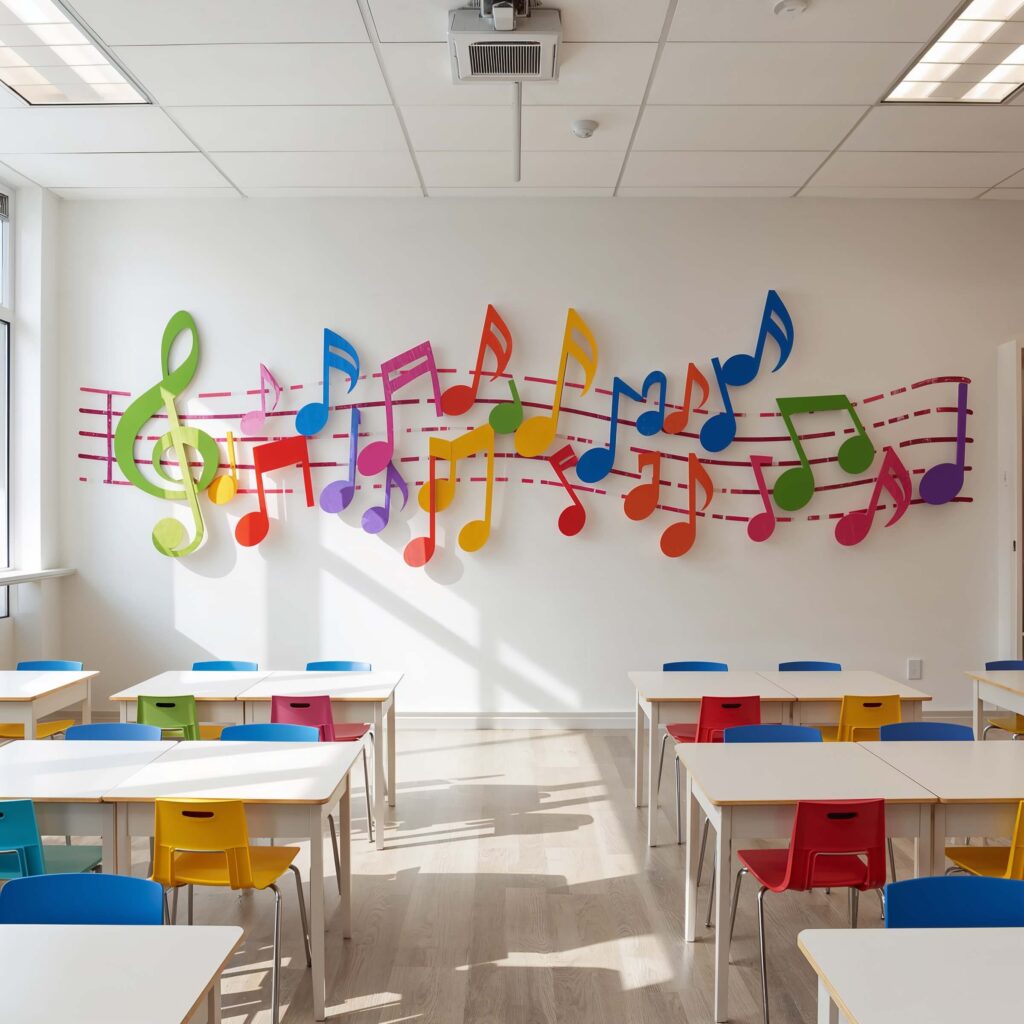
Let’s kick things off with the classic that never gets old – a vibrant music notes wall display. But hold up, we’re not talking about those sad, faded posters from the teacher supply store that scream “I gave up in 1997.”
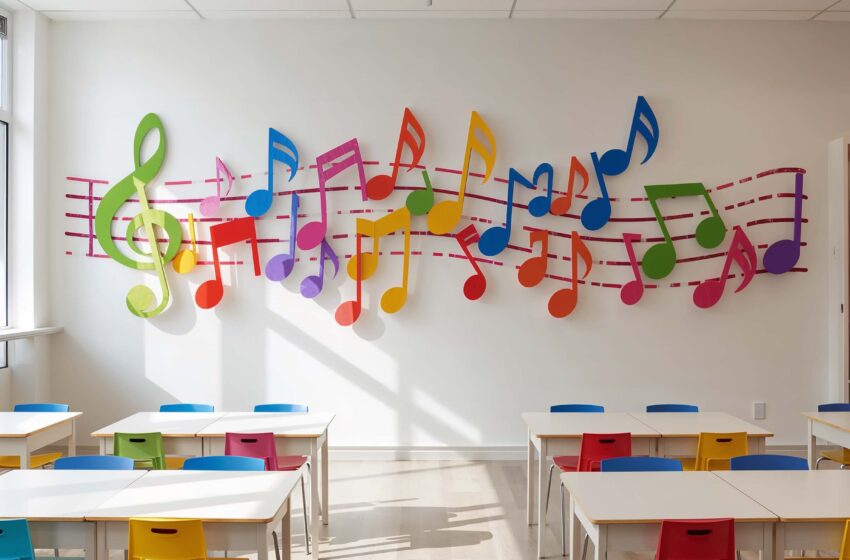
I’m talking about creating a dynamic, three-dimensional note display that makes kids actually want to learn note values. Picture this: oversized foam board notes in rainbow colors cascading across your wall like they’re dancing to their own beat. Each note gets its own personality – whole notes could be gentle clouds, while sixteenth notes zip around like caffeinated hummingbirds.
Making It Interactive
Here’s where things get fun. Why not add velcro backing to your notes so students can physically move them around to create rhythms? I tried this last year, and suddenly my most reluctant learners were fighting over who got to arrange the notes first. Who knew velcro could be such a game-changer?
Consider adding these elements to your display:
- LED string lights woven between the notes (because everything looks better with twinkly lights)
- QR codes next to each note that link to audio examples
- Student-created decorations around the main display
- Magnetic backing for easy rearrangement on metal surfaces
The best part? You can change the arrangement based on what you’re teaching. Learning about syncopation? Arrange those notes to show the off-beats. Working on time signatures? Group them accordingly. Your wall becomes a living textbook that actually holds their attention.
Instrument-Themed Bulletin Board
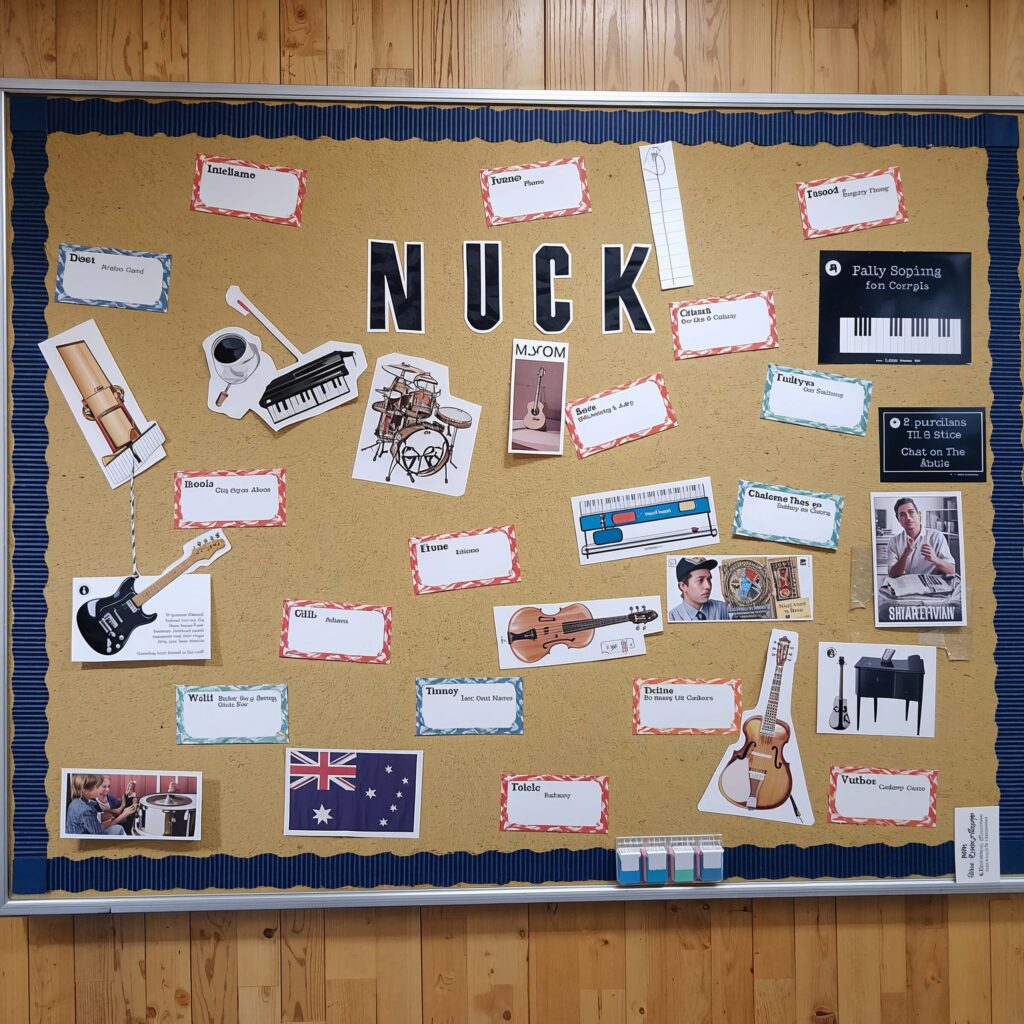
Ever noticed how kids’ eyes glaze over when you point to a standard bulletin board? Yeah, me too. That’s why an instrument-themed bulletin board needs to be anything but standard.
I once covered an entire bulletin board with brown paper and turned it into a giant guitar. The frets became sections for different announcements, and the strings? Those held student work with mini clothespins. It looked so cool that the art teacher asked if I’d gone to design school (spoiler: I definitely didn’t).
Creative Display Ideas
Transform your bulletin board into different instruments throughout the year:
- September: A massive piano keyboard where each key holds a student’s photo
- November: A drum kit showcasing rhythm exercises
- February: A heart-shaped harp for Valentine’s Day compositions
- May: A saxophone celebrating jazz appreciation month
The trick is using textured materials that make kids want to touch everything. Corrugated cardboard for drum surfaces, metallic paper for brass instruments, actual fabric for violin bodies – you get the idea. When students can feel the difference between instruments visually represented, it sticks in their brains way better than flat paper ever could.
Composer Spotlight Corner
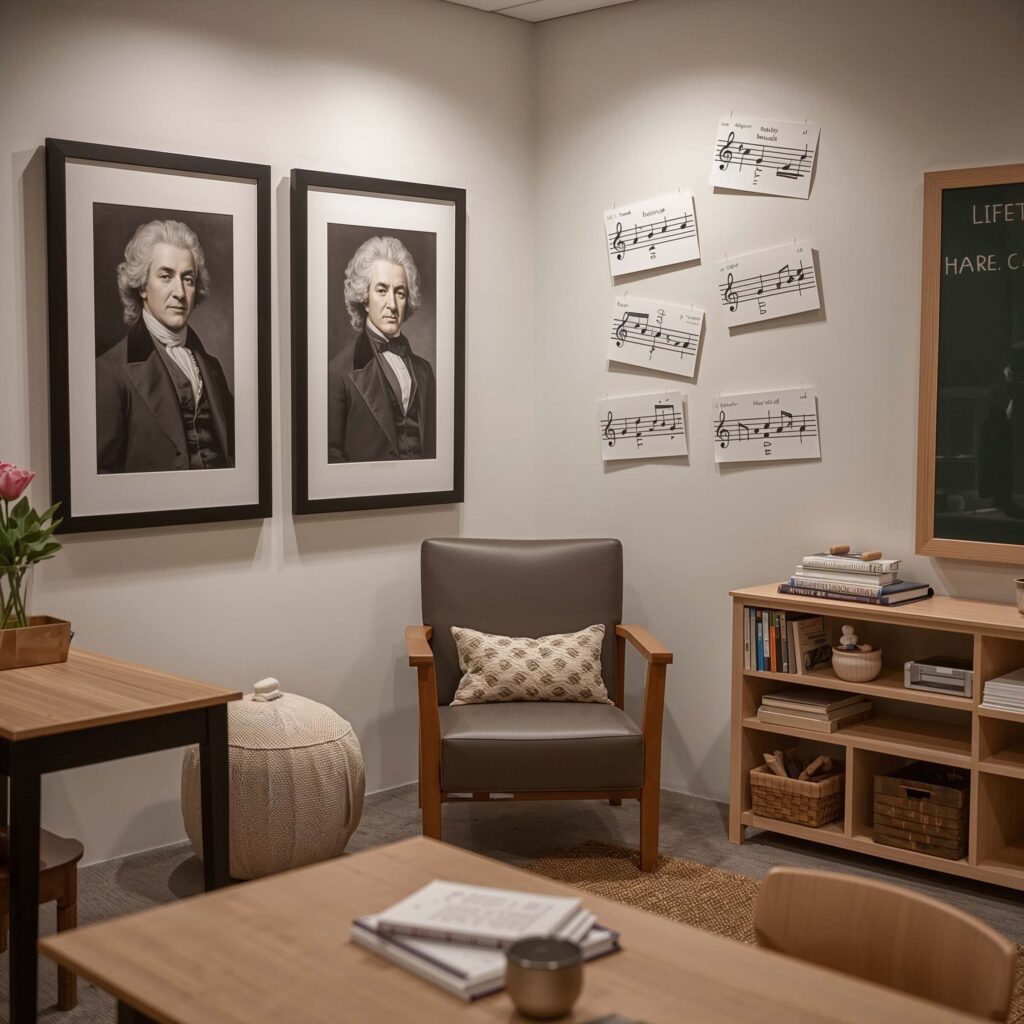
Okay, let’s be real – most kids think classical composers are just old dudes in wigs. And honestly? They’re not entirely wrong. But here’s how we make dead composers actually interesting to twelve-year-olds.
Create a “Composer of the Month” corner that feels more like a musician’s Instagram profile than a history lesson. I’m talking full biographical treatment with fun facts that make these composers seem human. Did you know Beethoven was so bad at math that he often got cheated by publishers? Or that Mozart had a pet starling that could sing one of his piano concertos? This is the stuff that makes kids remember.
Setting Up Your Corner
Your composer corner should include:
- A life-sized cardboard cutout (yes, really – kids love taking selfies with “Bach”)
- A timeline showing what else was happening in the world during their lifetime
- Spotify codes or QR codes linking to their greatest hits
- “If they lived today” section (Mozart would totally be a TikTok star, IMO)
I rotate composers monthly and let students vote on who’s next. You’d be amazed how invested they get when they have a say. Plus, watching them campaign for their favorite composer? Priceless.
Also Read: 10 Affordable Boho Classroom Decor Ideas for Budget-Friendly Fun
DIY Rhythm Pattern Wall Art
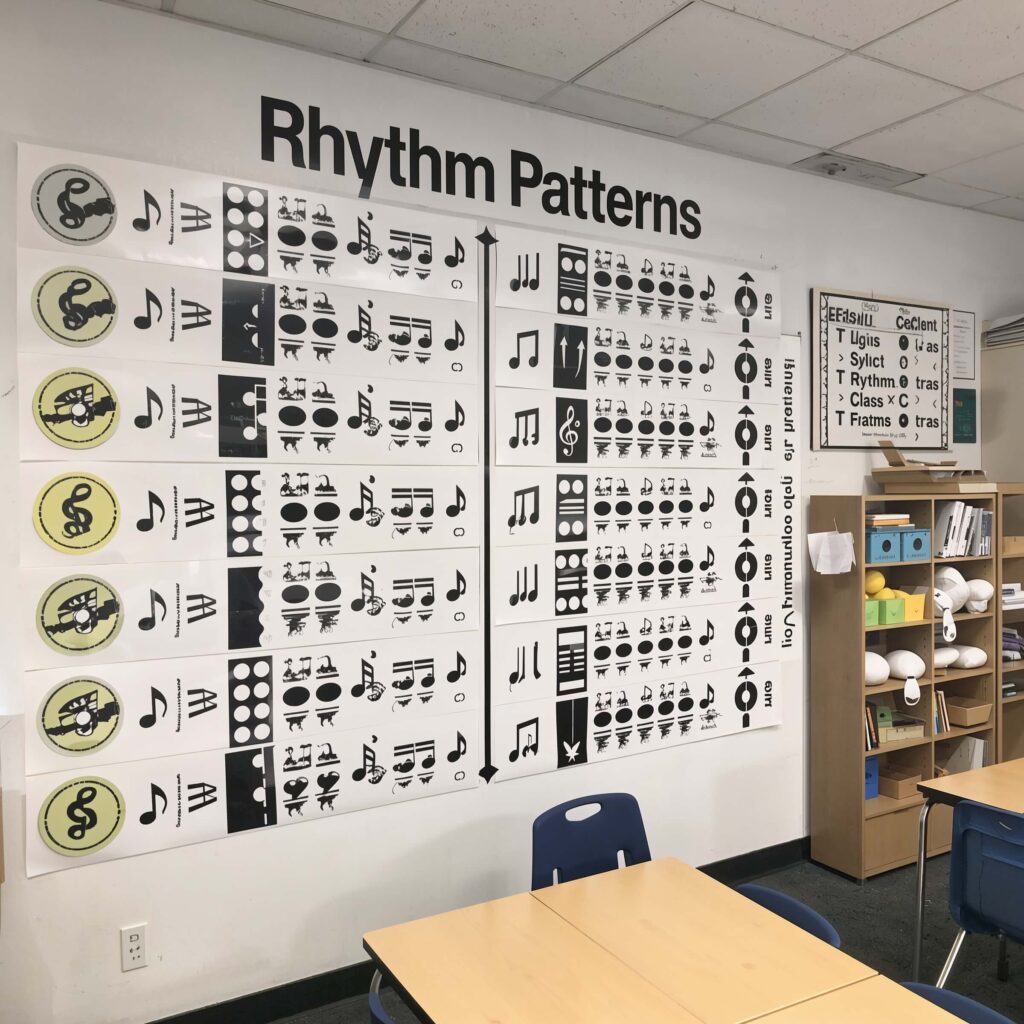
Who says educational decor can’t be aesthetic? Creating rhythm pattern wall art transforms boring notation into something that belongs in a modern art museum. And the best part? Students can help make it.
I discovered this by accident when I was trying to explain syncopation patterns. I grabbed some black electrical tape and started creating geometric patterns on the wall that represented different rhythms. Before I knew it, students were asking if they could create their own. Now it’s become our favorite end-of-unit project.
Design Techniques That Work
Here’s how to make rhythm patterns that actually look good:
- Use washi tape in coordinating colors for different note values
- Create repeating patterns that form larger geometric shapes
- Incorporate negative space strategically (silence is part of music too!)
- Add student names next to patterns they create
The visual impact hits differently when students see rhythm as art. Suddenly, they’re not just reading notes – they’re understanding how patterns create movement and flow. One student told me she finally “got” rhythm when she saw it as a design element rather than math. That’s when I knew we were onto something.
Music Genre Theme Classroom Setup
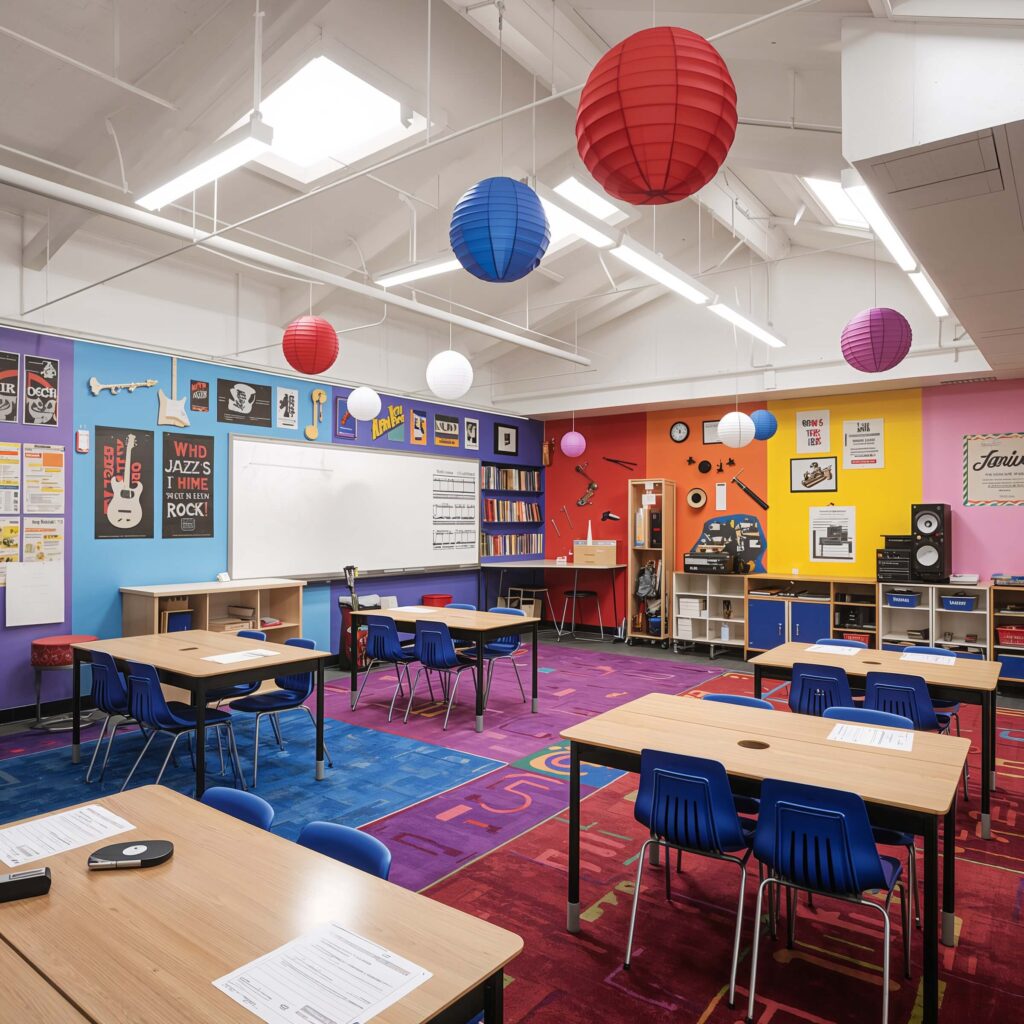
Why limit yourself to one style when music is literally all about diversity? A genre-themed classroom celebrates everything from baroque to hip-hop, and trust me, your students will appreciate the variety.
I divide my classroom into zones, each representing a different genre. The jazz corner has deep blues and golds with vintage posters. The classical section features elegant frames and rich burgundy accents. The rock area? Black and red with actual guitar picks glued to the wall in patterns. It’s like taking a world tour without leaving the room.
Zone Creation Tips
Each genre zone should include:
- Color schemes that match the mood (pastels for pop, earth tones for folk)
- Iconic imagery from that genre’s history
- Listening stations with curated playlists
- Hands-on elements (drumsticks for the rock zone, maracas for Latin)
Students naturally gravitate toward their preferred genre, but here’s the kicker – they start exploring other zones out of curiosity. I’ve watched metal heads discover they actually like baroque, and it never gets old 🙂
Interactive Sound Wall Station
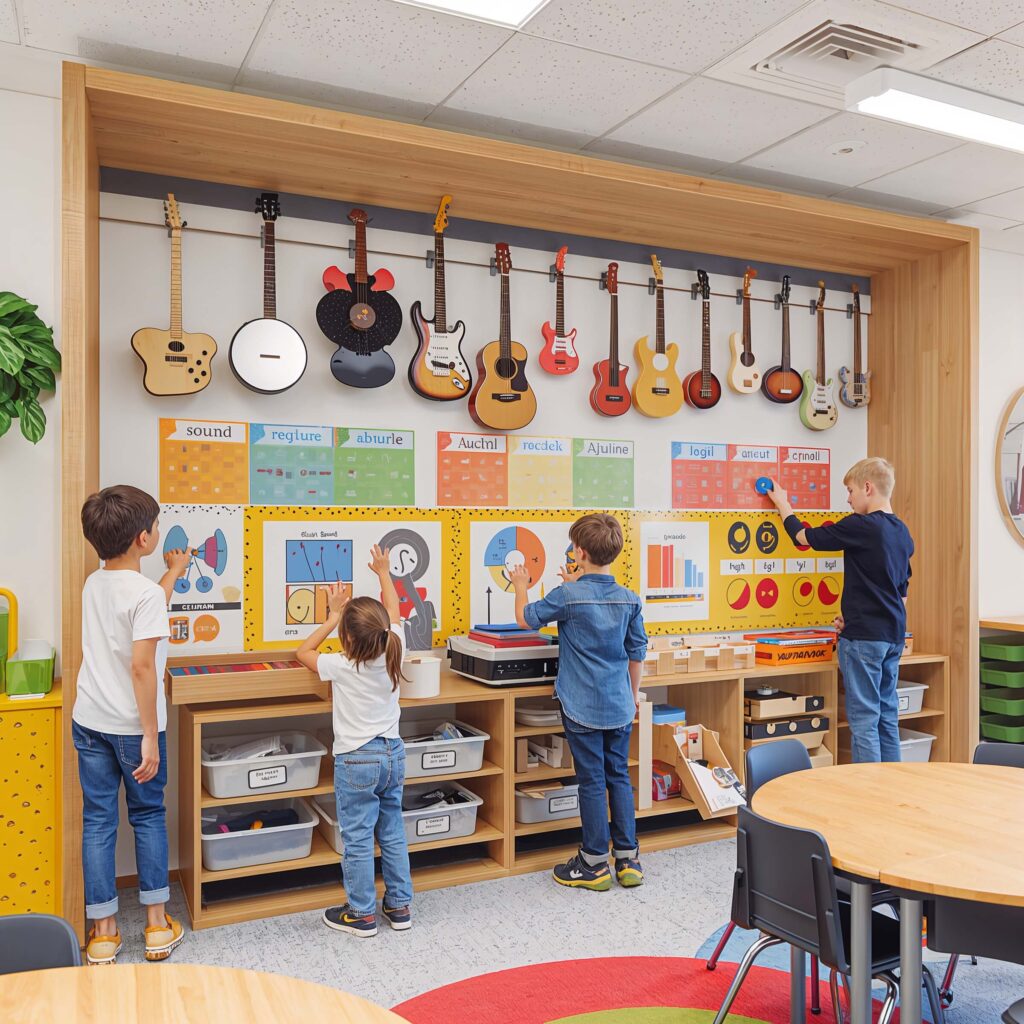
This is where things get techy (in the best way possible). An interactive sound wall isn’t just decoration – it’s a playground for ears. Think of it as a museum exhibit that lives in your classroom permanently.
I installed push buttons connected to small speakers behind different visual elements on the wall. Press the picture of a trumpet? You hear a trumpet. Touch the rhythm pattern? It plays for you. It sounds complicated, but honestly, with some basic electronics knowledge and about $50 in materials from Amazon, you can build something pretty impressive.
Building Your Sound Wall
Essential components include:
- Recordable sound buttons (available online for cheap)
- Visual triggers (pictures, patterns, words)
- Clear labeling for self-guided exploration
- Volume control (because sanity)
Students use this wall constantly, even during free time. They’ll create rhythmic patterns by pressing different buttons in sequence, or quiz each other on instrument identification. It’s learning disguised as play, which is basically the holy grail of education.
Also Read: 10 Stunning Teaching Classroom Decor Ideas for Modern Style
Vintage Vinyl Record Decor Wall
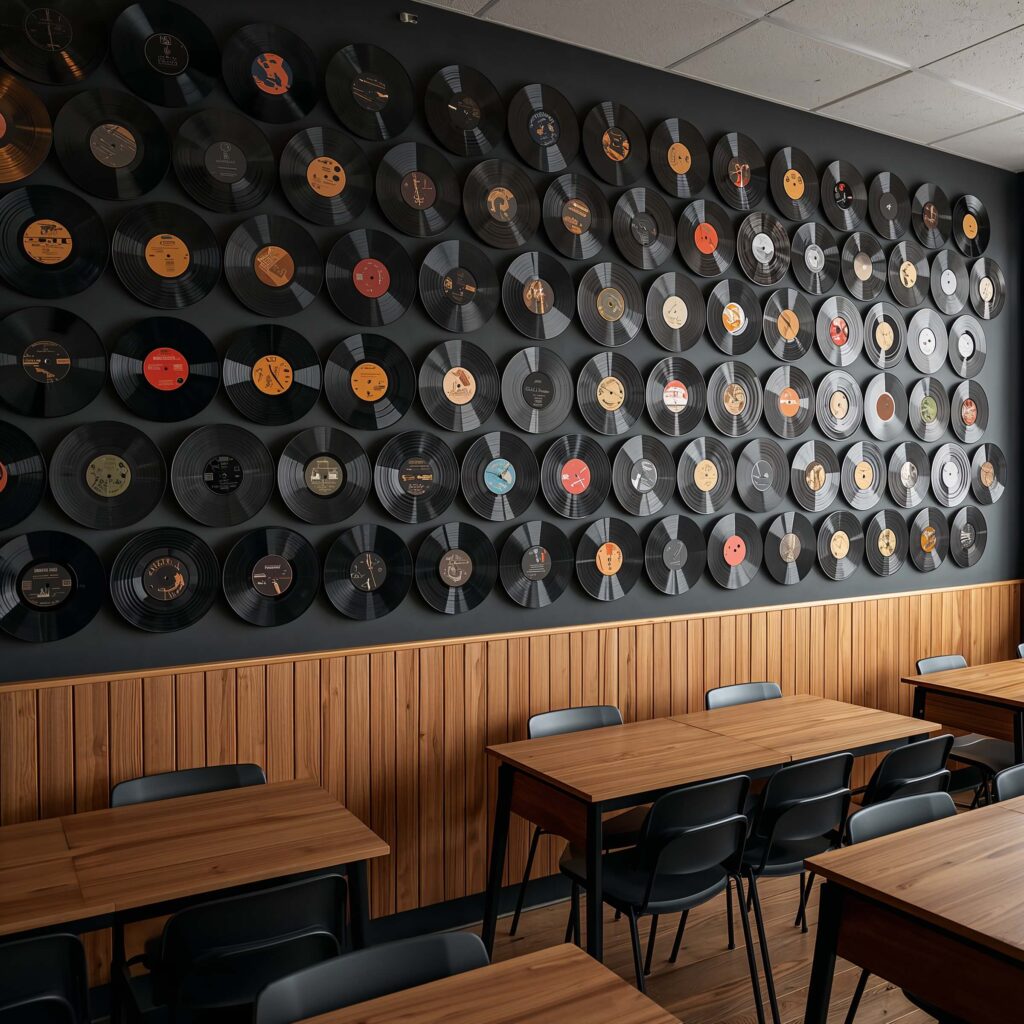
Nothing says “music appreciation” quite like actual vinyl records covering your wall. And before you panic about destroying classics – thrift stores sell scratched records for pennies. You’re not ruining Abbey Road; you’re repurposing someone’s forgotten polka collection.
I arranged records in a gradient from dark to light, creating this gorgeous ombré effect that visitors always compliment. Between the records, I tucked music vocabulary words and famous quotes about music. It looks like it belongs in a trendy coffee shop, which automatically makes it cool to teenagers.
Creative Vinyl Arrangements
Try these vinyl display ideas:
- Overlapping circles creating a bubble effect
- Straight lines for a modern gallery look
- Spiraling patterns emanating from a central point
- Mixed with album covers for variety
FYI, you can also let students paint or decorate blank records for a personalized touch. Last year’s class created a “record wall of fame” featuring their own artistic interpretations of their favorite songs. Some of those designs were legitimately frame-worthy.
Musical Alphabet Learning Display
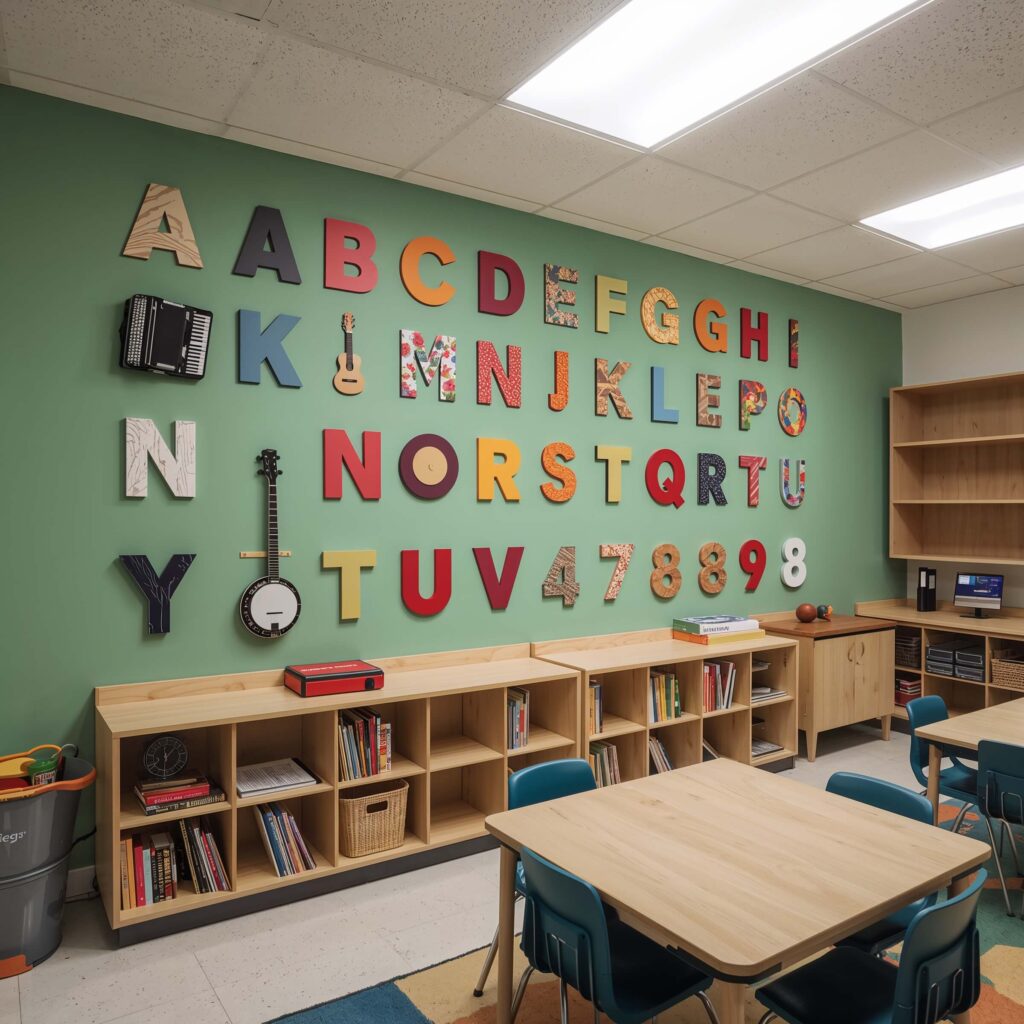
The musical alphabet might only have seven letters, but that doesn’t mean it has to be boring. Creating an engaging alphabet display helps younger students (and honestly, some older ones too) master note names without the usual drilling.
I created oversized letter cards that transform throughout the year. In October, the letters wear Halloween costumes. December? They’re decorated like ornaments. Each letter has its own personality – A is always ambitious, B is a bit bashful, C is confidently cool. Yes, I gave letters personalities. No, I’m not sorry.
Making Letters Memorable
Your musical alphabet should feature:
- Mnemonic devices that actually stick (Every Good Boy Deserves Fudge is so last century)
- Color coding that matches your other materials
- 3D elements that pop off the wall
- Student artwork incorporated into each letter
One trick that works amazingly well? Associate each letter with a popular song that starts in that key. “A” could feature Adele, “B” might showcase Beyoncé. Students remember the associations way better than traditional methods.
Rainbow Xylophone Wall Design
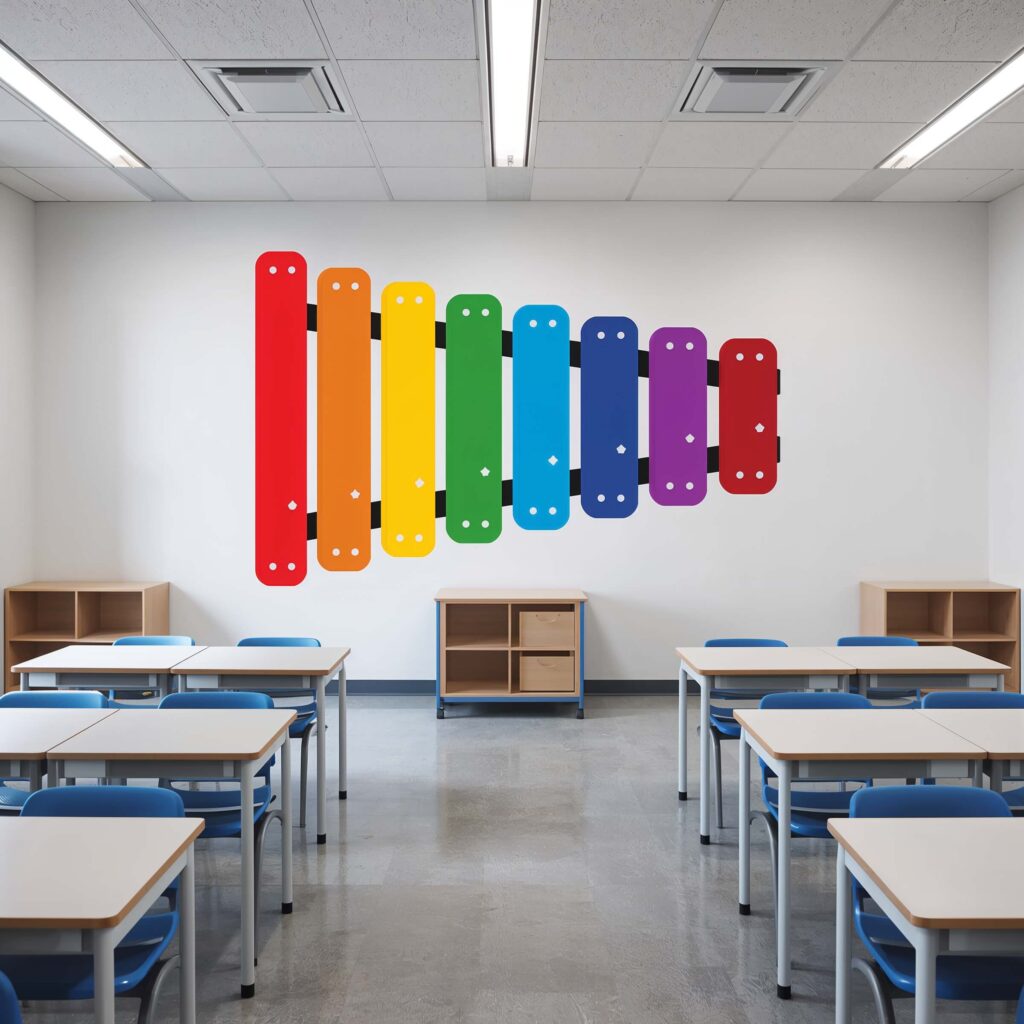
Picture a giant xylophone spreading across your wall in rainbow colors. Not only does it look incredible, but it also serves as a constant visual reference for pitch relationships. Higher notes go up, lower notes go down – it’s spatial learning at its finest.
I made mine from painted wooden slats of decreasing sizes, mounted at slight angles to create depth. Each “bar” is labeled with its note name and can even have removable stickers showing which songs use that note prominently. It’s functional art that makes everyone smile.
Installation Ideas
Consider these approaches:
- Mount bars at different depths for a 3D effect
- Add LED backlighting for extra visual impact
- Include mallets on hooks nearby for photo ops
- Create a floor version with carpet samples for kinesthetic learners
The xylophone wall becomes a natural gathering spot. Students point to notes while singing, use it to figure out melodies, and sometimes just admire how pretty it looks when sunlight hits it. That’s the kind of multi-purpose decor that earns its wall space.
Also Read: 10 Budget Board Borders Ideas Classroom Decor DIY Touch
Stage-Inspired Classroom Corner
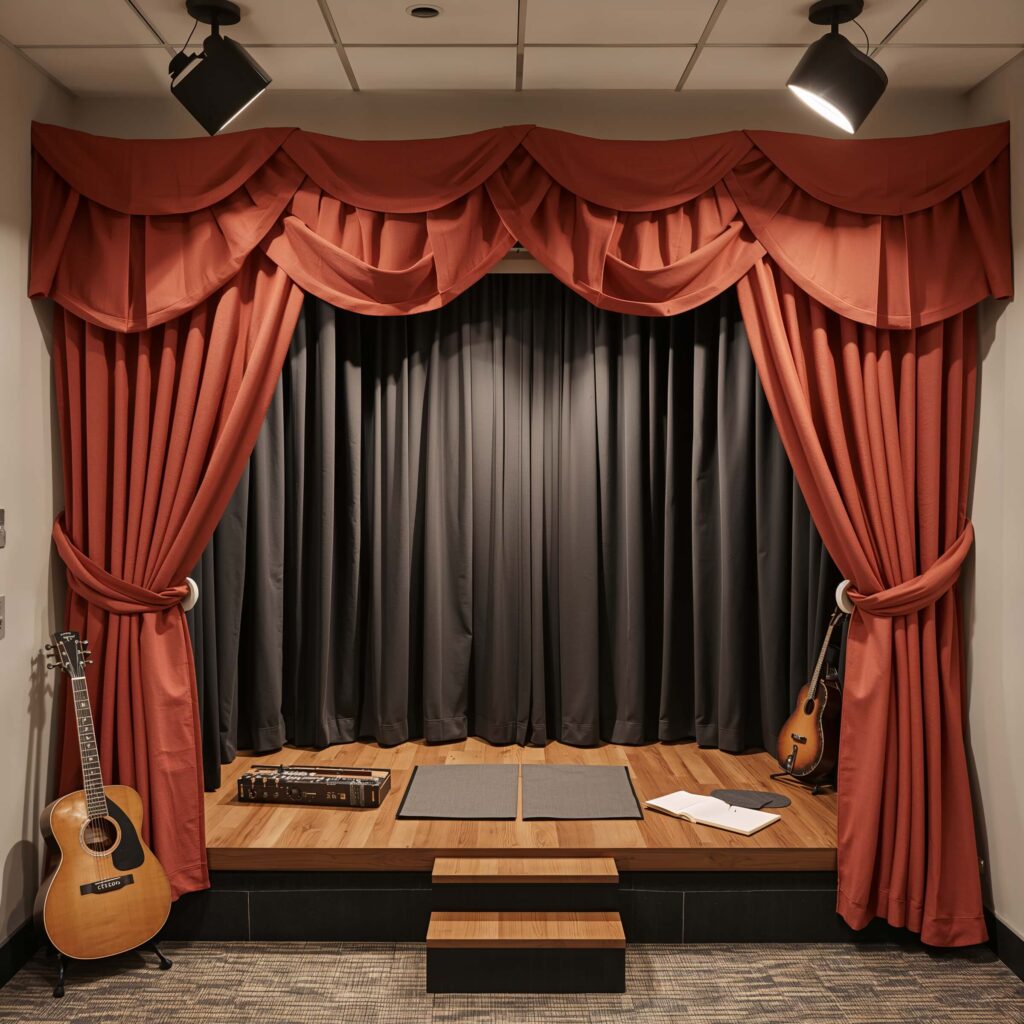
Every music room needs a performance space, even if it’s just a corner with delusions of grandeur. Creating a stage-inspired area gives students a designated spot to shine and helps nervous performers practice in a less intimidating setting.
I hung thick red curtains from a curved shower rod to create a mini proscenium. Add some battery-powered spotlights, a small platform (even a sturdy wooden box works), and boom – you’ve got Carnegie Hall’s little cousin. The curtains can close for storage or dramatic reveals, which middle schoolers absolutely live for.
Performance Space Essentials
Your stage corner needs:
- A defined performance area (tape on the floor works)
- Adjustable lighting (clip-on LED spots are perfect)
- A “backstage” area (even if it’s just behind a room divider)
- Audience seating (bean bags or cushions work great)
What makes this space special is the ritual and respect it creates around performance. When students step into that corner, they know it’s showtime. Even shy kids eventually want their moment in the spotlight. I’ve seen confidence bloom in that little corner that no amount of pep talks could have achieved.
Bringing It All Together
Look, transforming a music classroom doesn’t happen overnight (trust me, I’ve tried). But here’s what I’ve learned after years of experimenting with classroom decor: students learn better in spaces that inspire them. When your walls actively teach, when every corner invites exploration, when the whole room feels like a celebration of music – that’s when magic happens.
You don’t need a massive budget or professional design skills. Start with one idea that excites you and build from there. Maybe it’s the vinyl wall, or perhaps you’re itching to create that composer corner. Whatever you choose, make it yours. Add your personality, involve your students, and don’t be afraid to try something weird.
The best music classrooms I’ve seen weren’t perfect – they were personal. They told stories, invited questions, and made students feel like they belonged to something special. That’s what great decor does. It doesn’t just fill wall space; it creates an environment where learning feels less like work and more like discovery.
So grab some tape, raid the clearance section at your local craft store, and start creating. Your students (and your Instagram feed) will thank you. And who knows? Maybe someday, one of your students will write about how your classroom changed their life. Wouldn’t that be something? :/
Remember, at the end of the day, the best classroom decor is the kind that makes students want to come back tomorrow. Everything else is just details – really fun, colorful, musical details that happen to make teaching a whole lot more enjoyable for everyone involved.