15 Cozy Narrow Laundry Room Ideas with Smart Storage
- Laundry Room
 Ben
Ben- 0
- 37 minutes read
Let’s be honest – nobody wakes up thinking “Wow, I can’t wait to tackle that mountain of dirty clothes in my cramped laundry space!” But here’s the thing: your narrow laundry room doesn’t have to feel like a punishment chamber.
I’ve spent years wrestling with tiny laundry spaces, and trust me, I’ve learned a thing or two about making every square inch count.
You know what really gets me? When people act like you need a massive utility room to have a functional laundry setup. Total nonsense.
Some of the most efficient laundry rooms I’ve seen could fit in a closet – and that’s exactly what we’re talking about today.
Vertical Stack Laundry Design
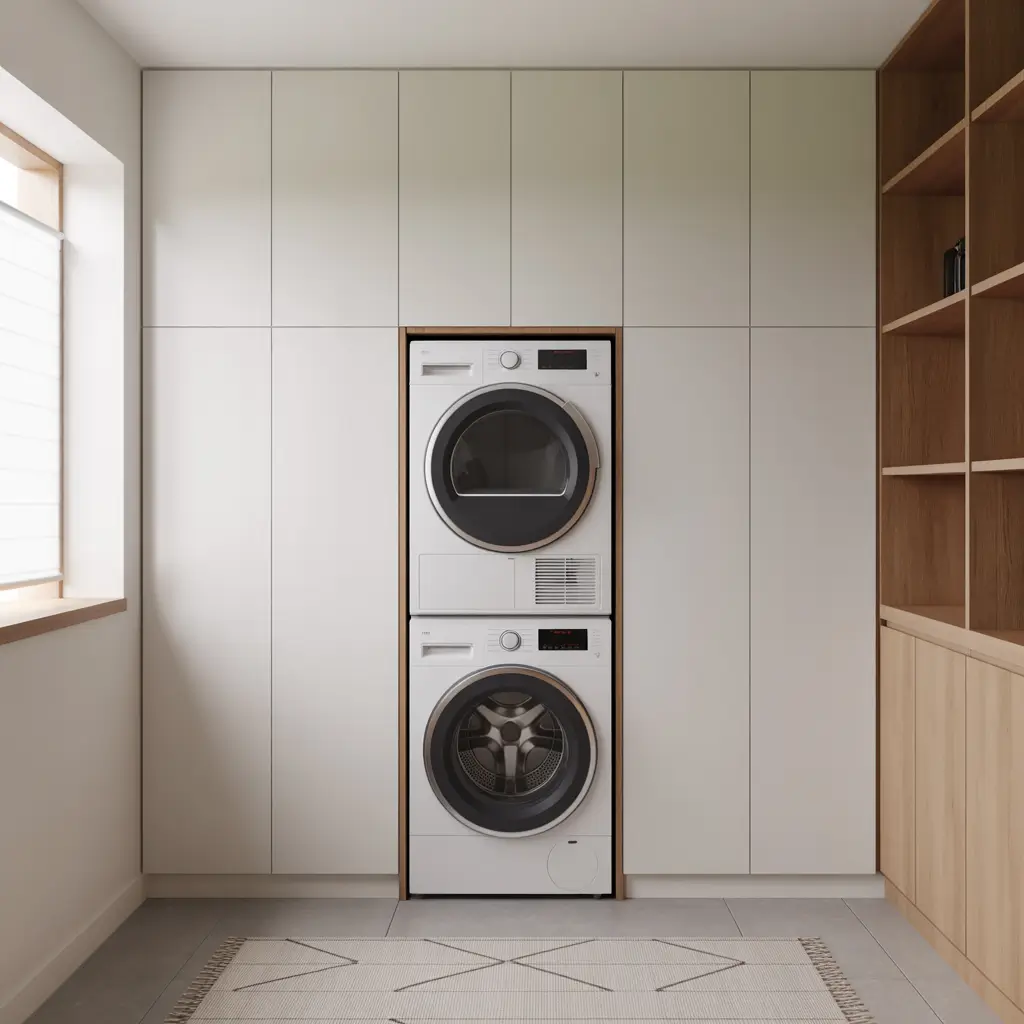
Remember when your mom told you to think vertically when organizing your bedroom? Well, she was onto something. Stacking your washer and dryer changes everything in a narrow laundry room, and I mean everything.
I made this switch three years ago, and suddenly I had floor space I didn’t know existed. You’re literally cutting your appliance footprint in half. The best part? Modern stackable units come with all the bells and whistles of their side-by-side cousins.
Making It Work in Your Space
Here’s what you need to know about going vertical:
- Minimum ceiling height: 8 feet (though 9 feet gives you breathing room)
- Width requirement: As little as 27 inches
- Ventilation needs: Proper exhaust routing is crucial
- Weight considerations: Your floor needs to handle 400+ pounds
The trick is choosing units specifically designed for stacking. Don’t just throw any dryer on top of any washer – that’s a recipe for disaster. Most manufacturers offer stacking kits that lock everything securely in place.
Sliding Barn Door Laundry Nook
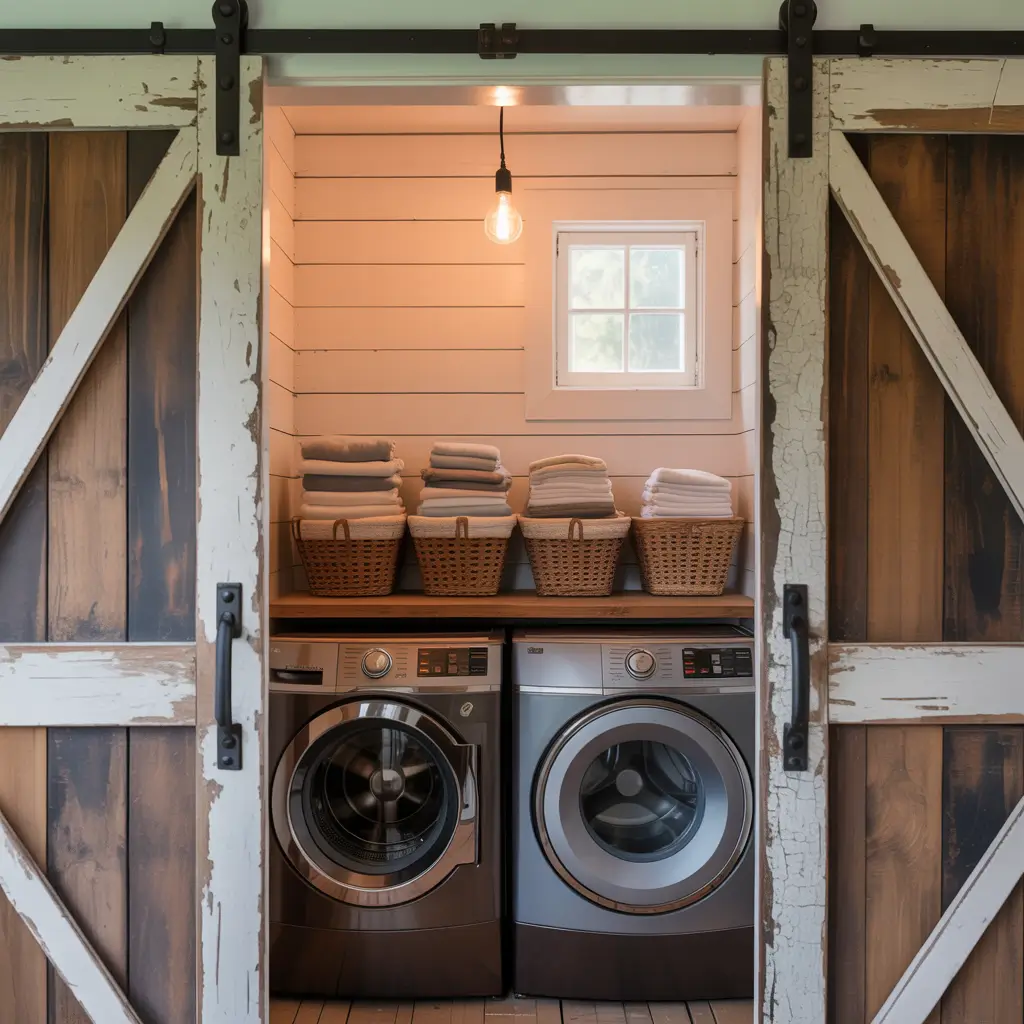
Who says barn doors belong only in farmhouses? I installed one on my laundry nook last year, and honestly, it’s been a game-changer. Traditional swing doors eat up precious floor space – space you don’t have in a narrow room.
Barn doors slide along the wall, leaving your floor completely clear. Plus, they add this rustic charm that makes even the most utilitarian space feel intentional. Ever notice how a cool door can make people forget they’re looking at a laundry room?
Installation Tips That Actually Matter
Let me save you from my mistakes:
- Track length should be twice your door width
- Use soft-close hardware (trust me, slamming barn doors at 2 AM isn’t cute)
- Consider a frosted glass panel for natural light flow
- Mount the track into studs, not just drywall
The hardware typically runs $150-300, but compared to renovating for more space? That’s pocket change.
Foldable Countertop Space
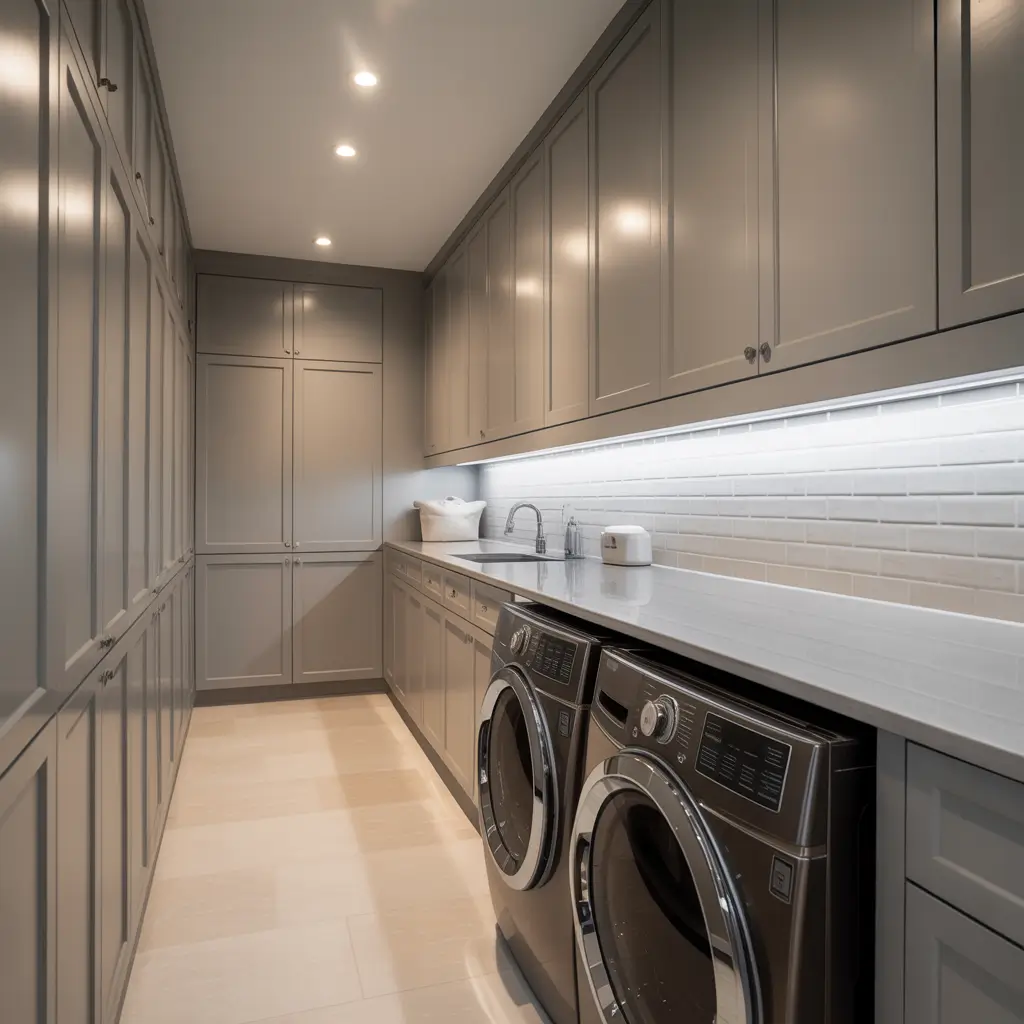
You need folding space. Period. But in a narrow laundry room, a permanent counter might make the space feel like a coffin. Enter the wall-mounted drop-leaf counter – my personal favorite space-saving hack.
I installed mine at elbow height (about 36 inches), and it folds completely flat against the wall when not in use. When I need it, boom – instant folding station. The whole thing takes up maybe 2 inches of wall space when closed.
Smart Features to Include
Make your foldable counter work harder:
- Built-in measuring tape along the edge
- Magnetic strip for stray bobby pins and coins
- Heat-resistant surface for immediate iron parking
- Support chains rated for at least 50 pounds
Pro tip: Install it opposite your washer/dryer for maximum efficiency. You want to pivot, not trek across the room with wet clothes.
Also Read: 15 Cozy Mud Room and Laundry Room Combo Ideas with
Slimline Storage Cabinets
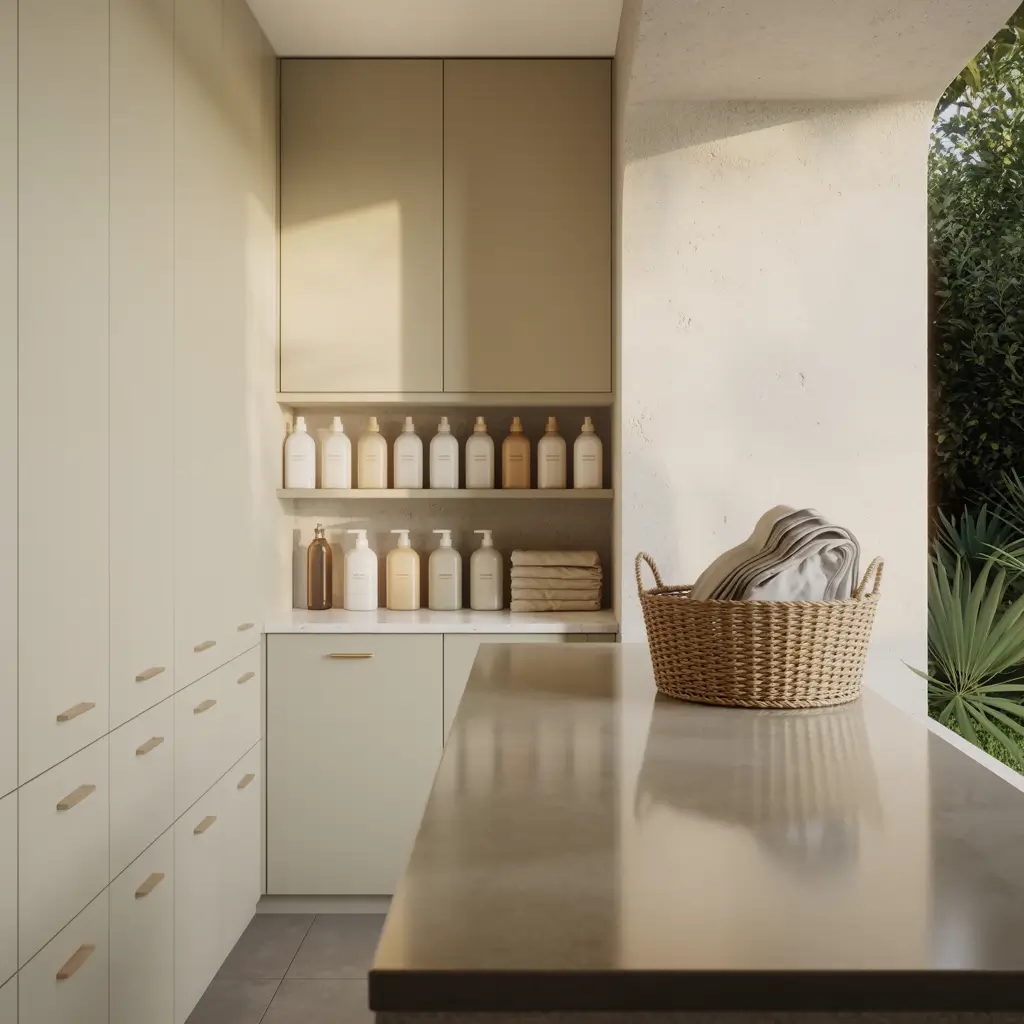
Here’s where people mess up – they buy regular cabinets and wonder why their laundry room feels cramped. Slimline cabinets (typically 12-15 inches deep instead of 24) give you storage without the bulk.
I’ve got these flanking my stacked units, and they hold everything from detergent to that random collection of missing socks. The shallow depth means I can actually see and reach everything – no more mystery items lurking in the back.
Maximizing Your Cabinet Space
Organization hacks that actually work:
- Adjustable shelves every 2 inches for customization
- Pull-out drawers for lower cabinets
- Door-mounted racks for cleaning supplies
- Clear containers for easy identification
Don’t forget about the space between your cabinets and ceiling. Those extra 12-18 inches? Perfect for seasonal items or bulk supplies.
Pull-Out Laundry Hampers
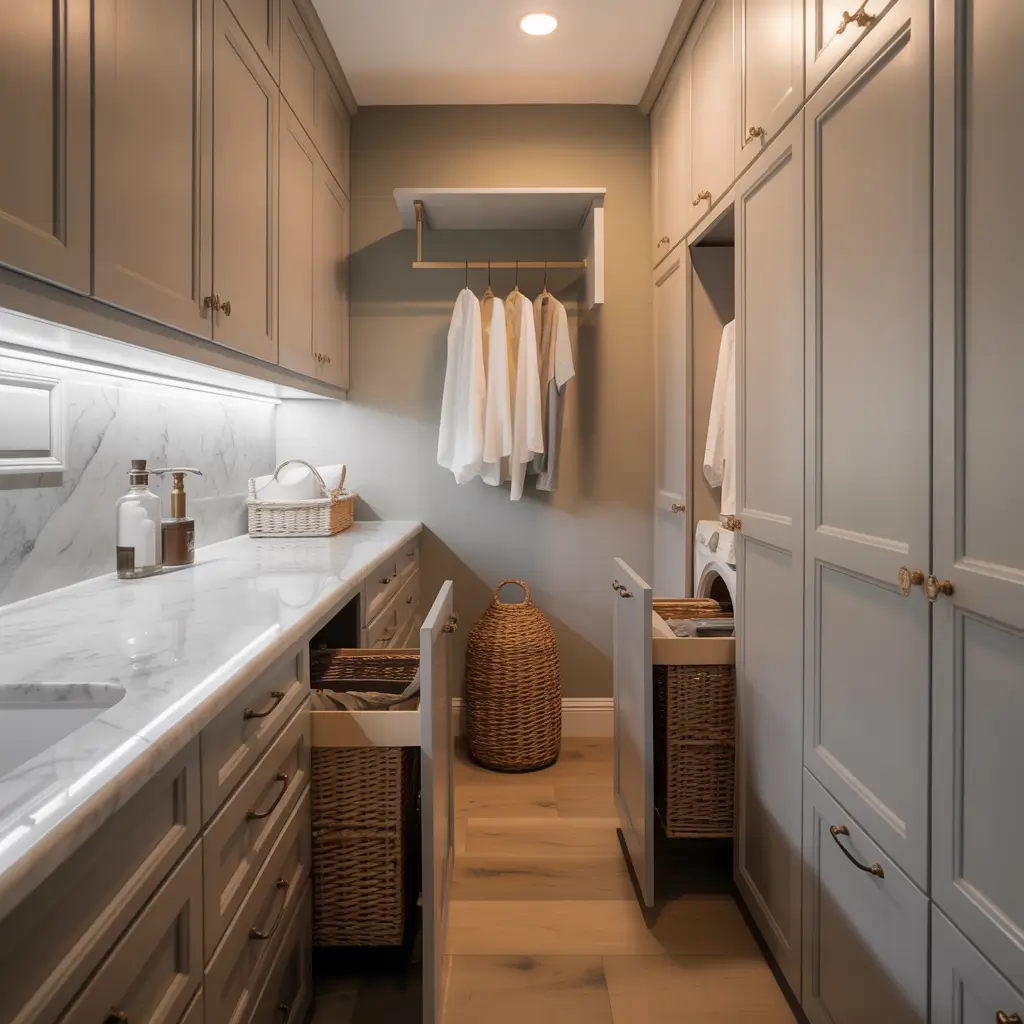
Can we talk about how traditional hampers are space vampires? They sit there, taking up floor space, getting kicked around, looking messy. Pull-out hampers hide inside cabinets and slide out on rails when needed.
I installed a three-bag system (lights, darks, delicates), and sorting happens automatically as clothes go in. No more sorting piles on laundry day – how’s that for efficiency?
Installation Considerations
What you need to know before buying:
- Standard cabinet width: 18 inches minimum
- Weight capacity: Look for 35+ pound ratings
- Ventilation: Mesh bags or ventilated cabinets prevent odors
- Height clearance: Measure twice, install once
The hardware costs about $50-80, but the sanity savings? Priceless.
Wall-Mounted Drying Rack
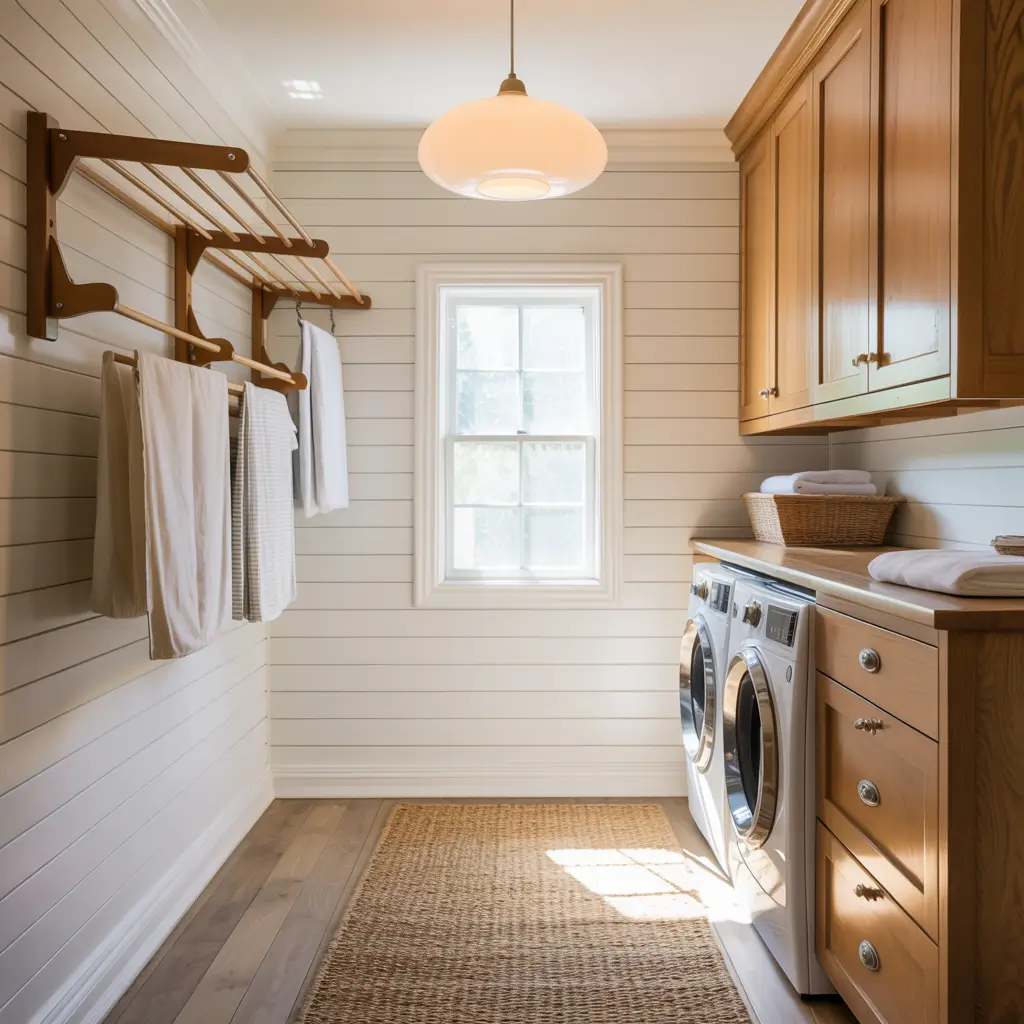
Forget those rickety floor racks that collapse when you breathe on them. Wall-mounted drying racks fold flat when not in use and extend when you need them. Mine extends 24 inches from the wall and holds a full load of delicates.
The accordion-style ones are particularly clever – they look like modern art when folded. Seriously, visitors have asked where I bought my “wall sculpture.” Little do they know it’s where my workout clothes dry 🙂
Choosing the Right Style
Your main options include:
- Accordion-style: Maximum capacity, minimal footprint
- Fold-down bars: Simple and sturdy
- Retractable lines: Nearly invisible when not in use
- Swing-arm racks: Great for corners
Mount it high enough to hang longer items, but low enough to reach comfortably. That sweet spot is usually around 5-6 feet.
Also Read: 15 Brilliant Mudroom Laundry Room Ideas for Small Areas
Compact Washer Dryer Combo Setup
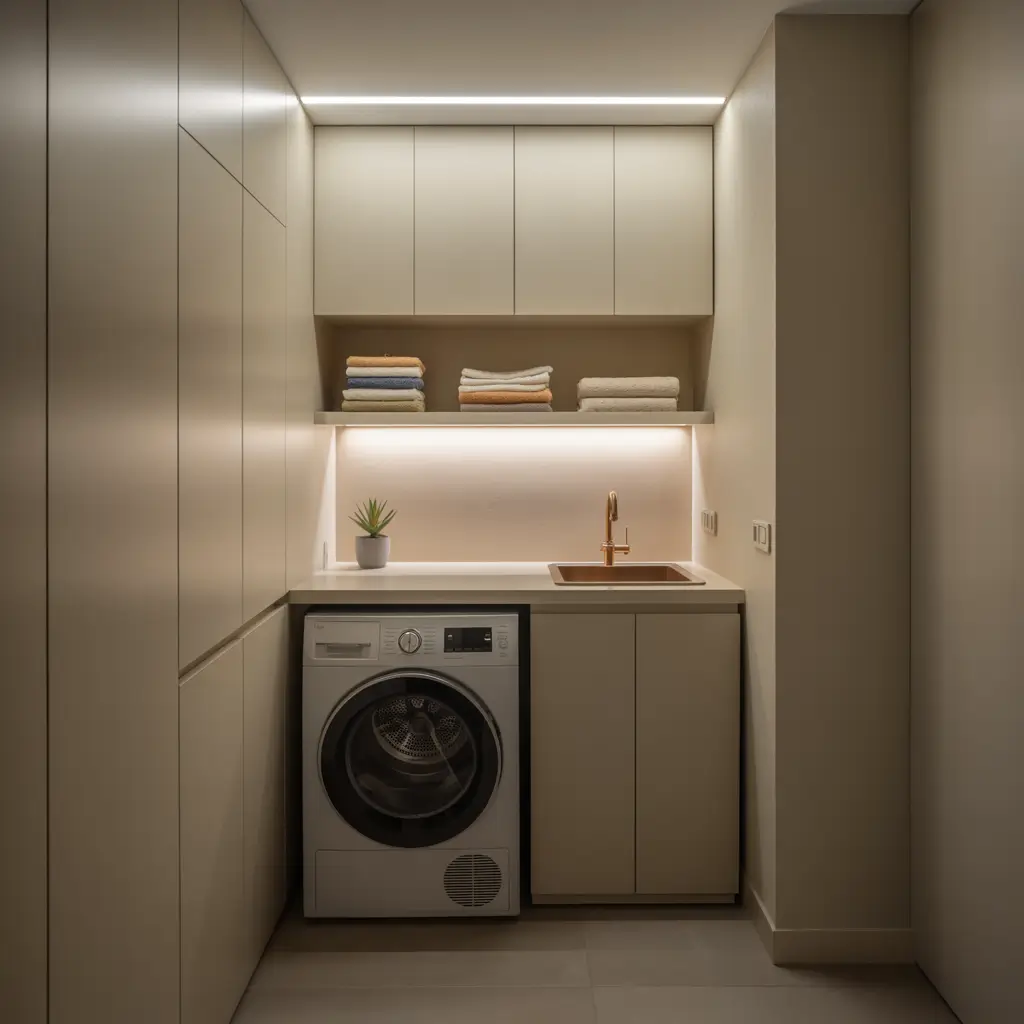
Okay, controversial opinion incoming: all-in-one washer-dryer combos get too much hate. Sure, they take longer to dry, but in a narrow space? They’re brilliant. One machine, half the footprint, and newer models actually work pretty well.
I had one in my studio apartment, and while it wasn’t perfect, it beat trudging to a laundromat. The key is understanding their limitations and working with them, not against them.
Making Combos Work for You
Real talk about combo units:
- Capacity: Usually 2.5-3.5 cubic feet (half a traditional load)
- Cycle time: 3-4 hours total (plan accordingly)
- Ventless options: Perfect for spaces without external venting
- Price point: $800-2000 depending on features
FYI, these work best for smaller households or people who do laundry frequently. If you’re washing king-size comforters weekly, maybe skip this option.
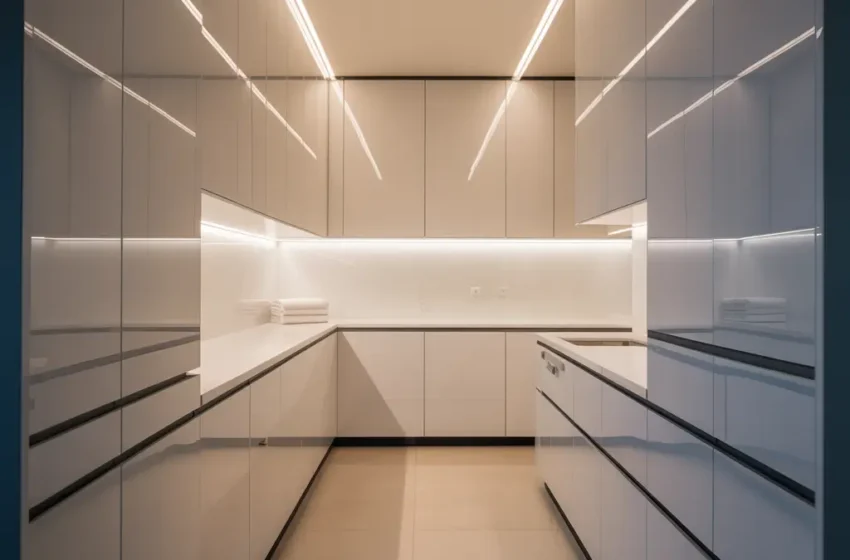
Bright White Minimalist Makeover
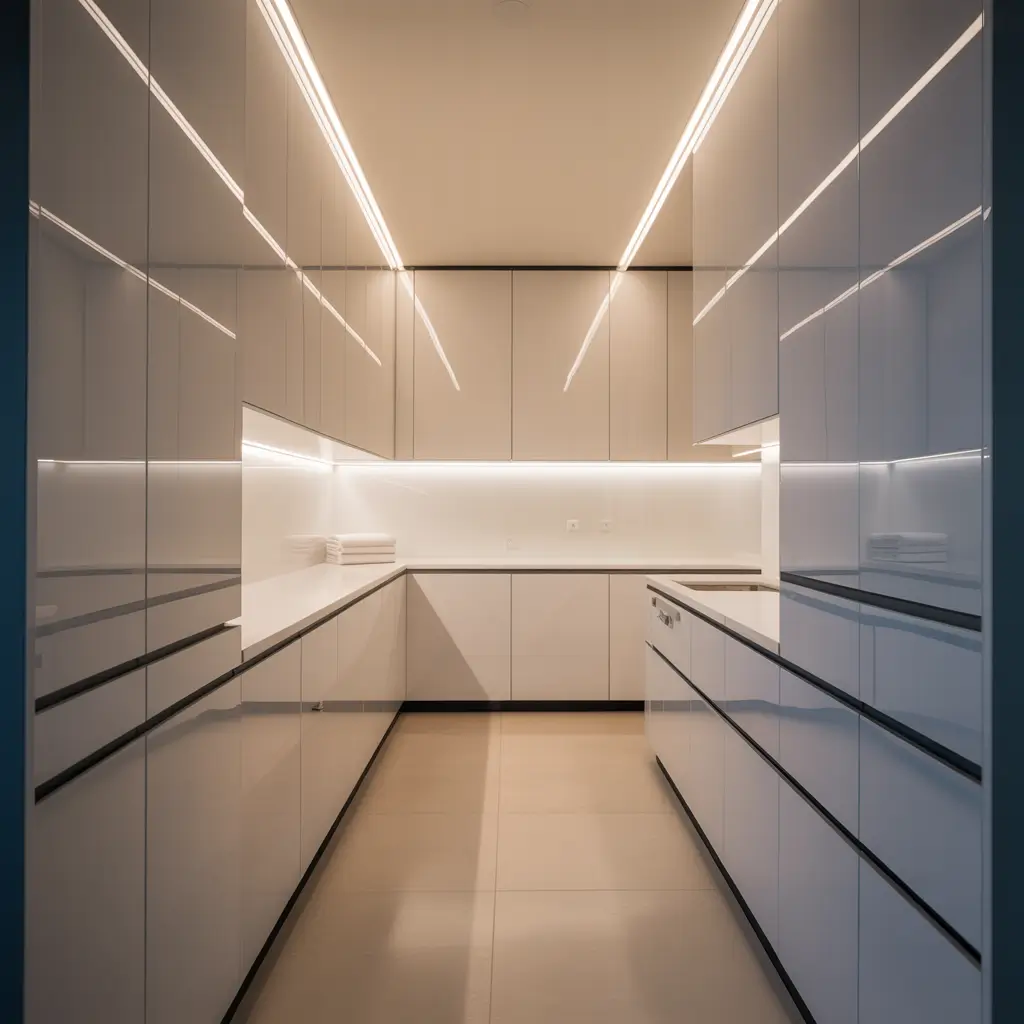
Want to know the cheapest way to make a narrow laundry room feel bigger? Paint everything white. I’m talking walls, cabinets, even the ceiling. It sounds boring, but the visual expansion is real.
My laundry closet went from cave-like to spa-like with just white paint and good lighting. The monochrome look tricks your eye into seeing one continuous space instead of choppy segments.
Elements That Make It Work
The minimalist approach requires:
- Bright white paint (not cream or off-white)
- LED strip lighting under cabinets
- Hidden hardware or push-to-open mechanisms
- Coordinated containers in white or clear
Add one pop of color through your laundry baskets or a small plant. Too much color in a tiny space creates visual chaos.
Hidden Laundry Closet Design
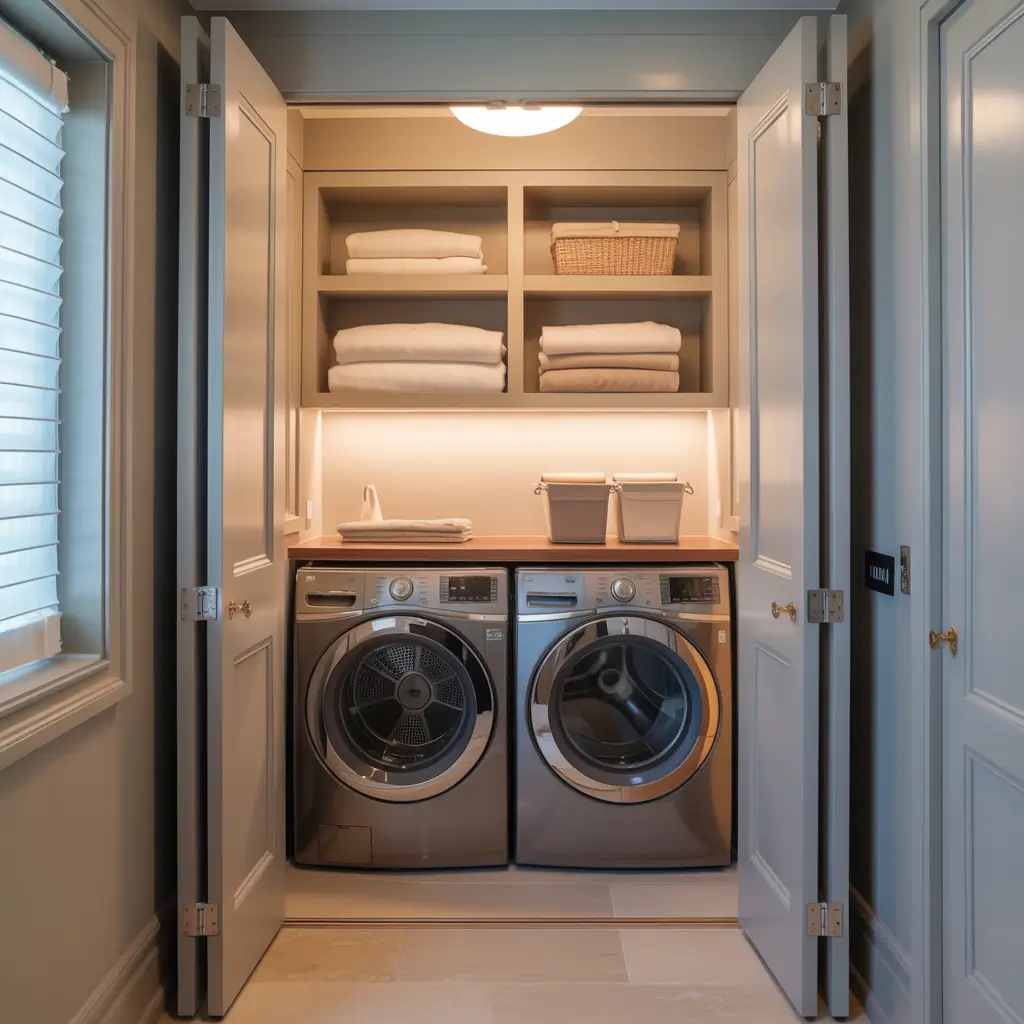
Sometimes the best laundry room is the one nobody sees. Converting a closet into a laundry space keeps everything contained and your living areas clutter-free.
I helped my sister transform her hallway closet into a laundry station, and guests have no idea it’s there. Behind bifold doors sits a fully functional laundry setup that disappears completely when closed.
Essential Components for Closet Conversions
Must-haves for closet laundry:
- Proper ventilation (seriously, don’t skip this)
- Water-resistant flooring
- Adequate electrical outlets (GFCI protected)
- Sound dampening materials
The biggest challenge? Plumbing access. You’ll want to choose a closet near existing water lines unless you’re ready for major renovation costs.
Also Read: 15 Creative Laundry Room Cabinets Ideas for Modern Homes
Floating Shelves Organization
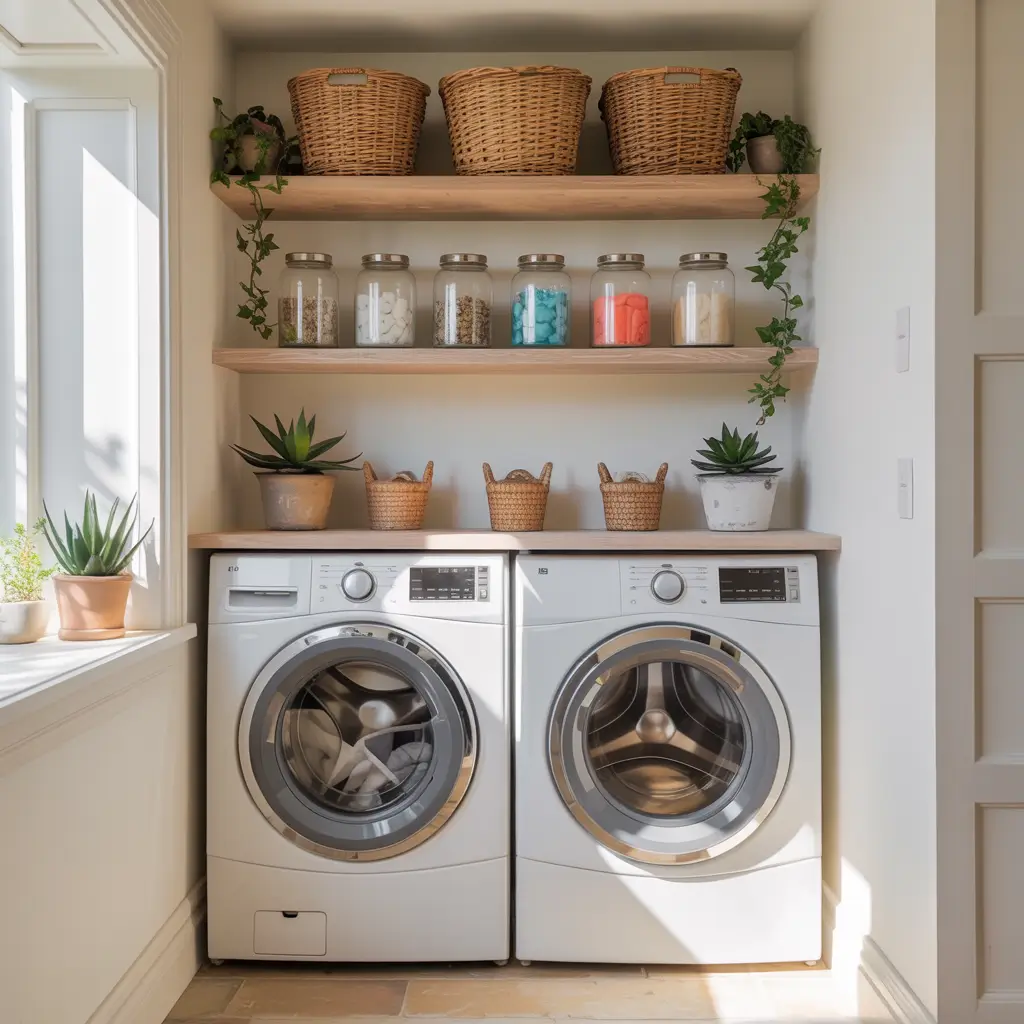
Floating shelves are the unsung heroes of narrow laundry rooms. No bulky brackets, no floor footprint, just clean lines and storage space. I’ve got three above my machines, and they hold everything from detergent to spare towels.
The trick is spacing them properly. Too close together and you can’t fit anything useful. Too far apart and you’re wasting vertical space.
Strategic Shelf Placement
Here’s my formula for perfect shelving:
- First shelf: 15-18 inches above appliances
- Shelf spacing: 12-15 inches apart
- Depth: 10-12 inches for laundry rooms
- Weight capacity: Minimum 30 pounds per shelf
Use matching baskets or bins to create a cohesive look. Mixed containers make small spaces feel cluttered, even when organized.
Under-Counter Appliance Layout
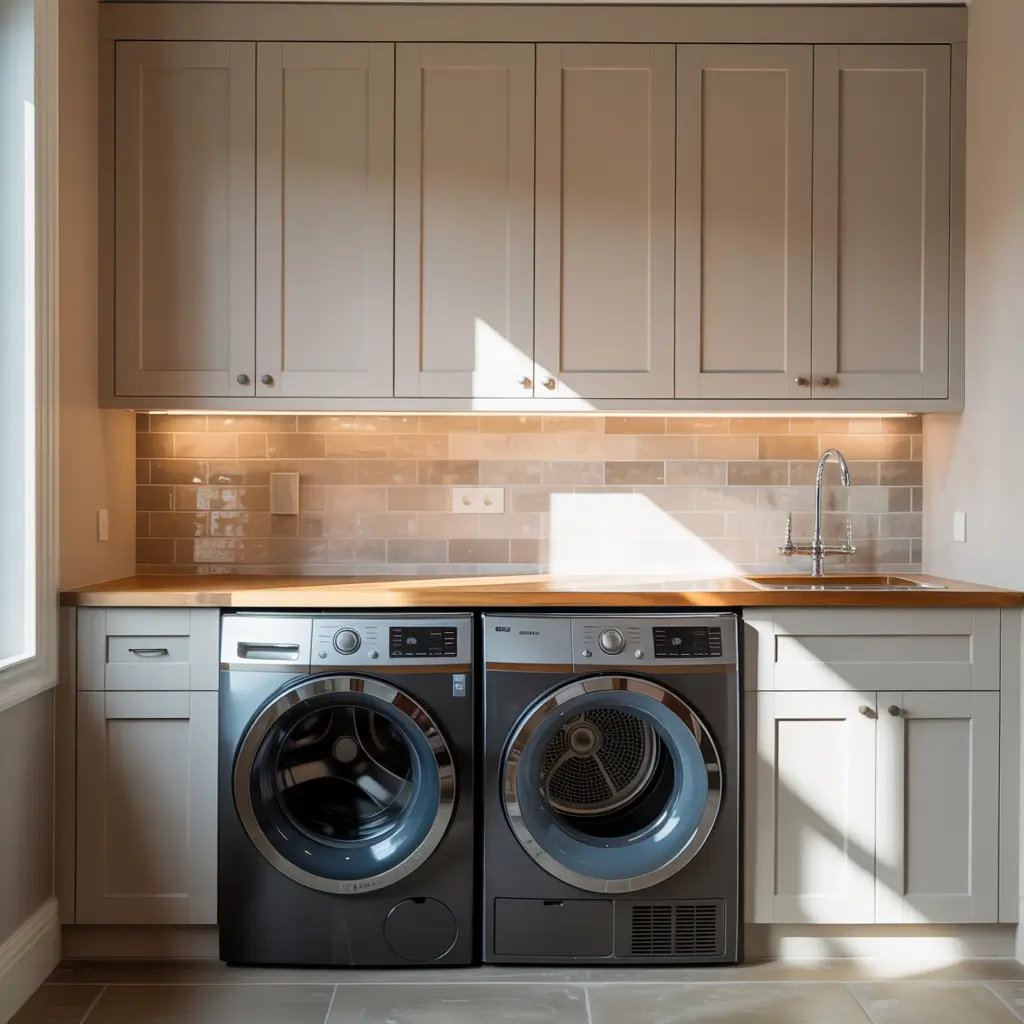
Who decided washers and dryers have to be freestanding? Under-counter installation creates a seamless, built-in look while freeing up space above for folding or storage.
This setup requires front-loading machines, but the payoff is huge. You get a continuous counter surface across the entire wall. I’ve seen people add bar stools and use it as a craft space when not doing laundry.
Planning Your Under-Counter Setup
Critical measurements to consider:
- Standard counter height: 36 inches
- Appliance height: Usually 33-34 inches
- Ventilation gap: 1-2 inches minimum
- Counter depth: 25-27 inches typically
Remember to leave access panels for maintenance. Nothing worse than tearing apart your beautiful built-ins because the filter needs cleaning.
Built-In Utility Sink Station
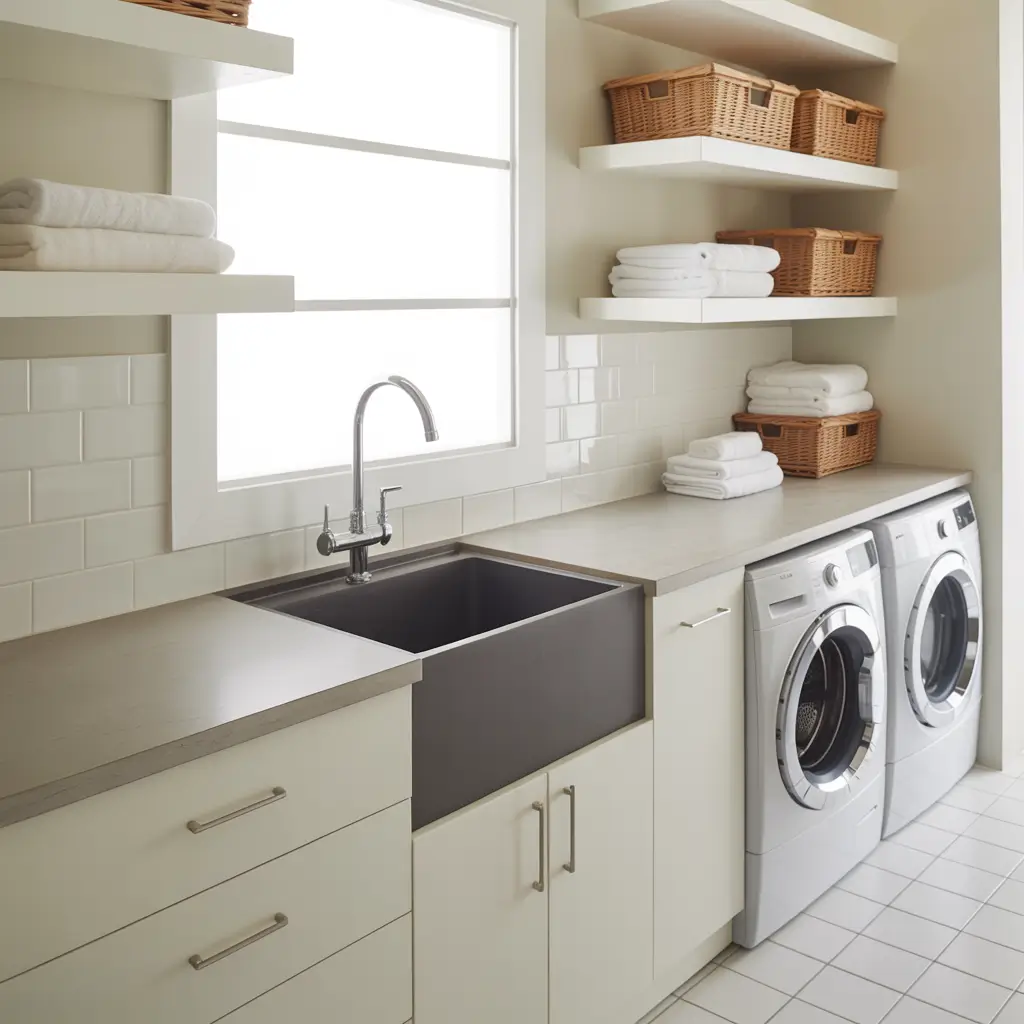
Ever tried hand-washing delicates in a bathroom sink? It’s a nightmare. A compact utility sink changes the entire laundry game, even in narrow spaces.
Modern utility sinks come in sizes as small as 15 inches wide. Mine fits perfectly next to my stacked units and handles everything from pre-treating stains to washing the dog (don’t judge).
Sink Selection Criteria
What to look for:
- Deep basin (minimum 8 inches)
- High-arc faucet for filling buckets
- Built-in washboard or ribbed bottom
- Cabinet underneath for hidden storage
IMO, skip the plastic tubs and go for composite or stainless steel. They last longer and look way better.
Narrow Hallway Laundry Conversion
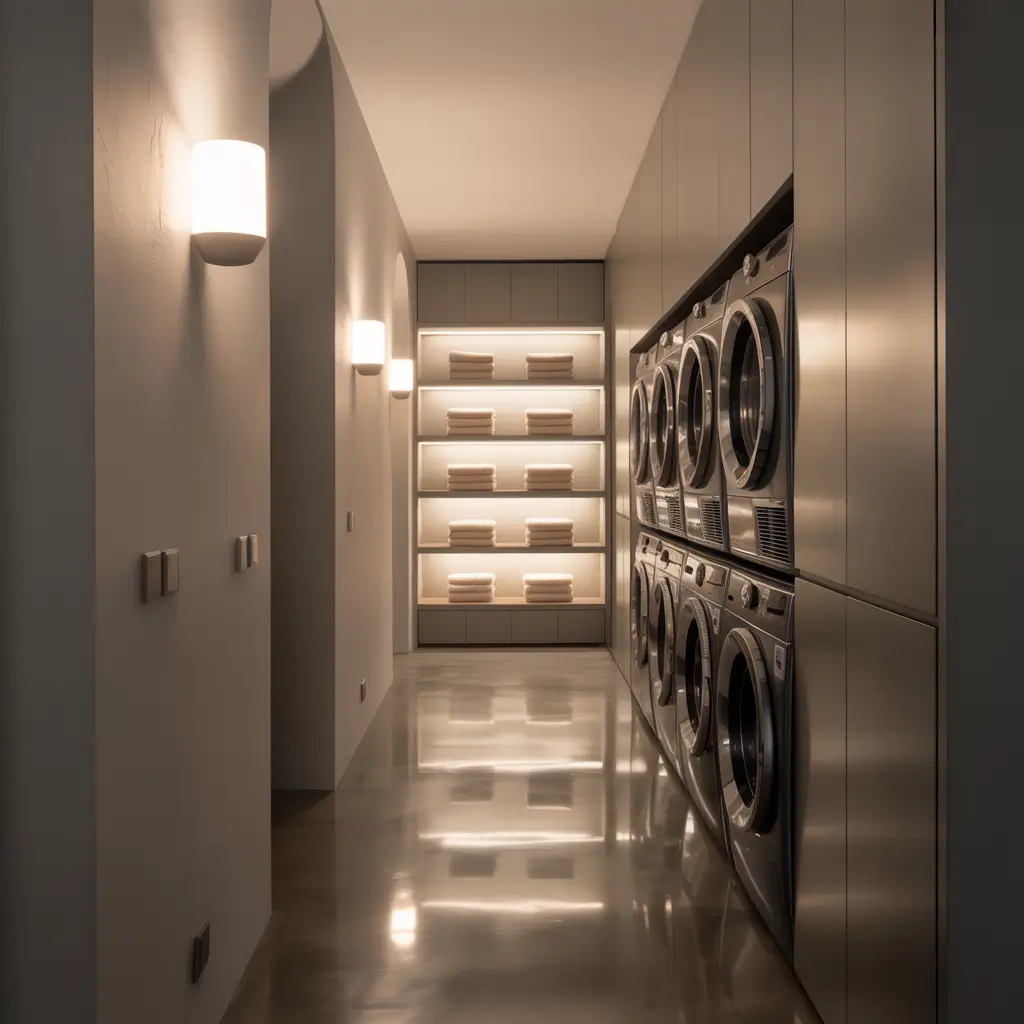
Got a dead-end hallway? Convert it to a laundry zone. Hallways are typically 36-42 inches wide – plenty of room for a functional laundry setup.
My friend transformed her upstairs hallway into a laundry area, and now she doesn’t have to haul baskets up and down stairs. The machines tuck behind louvered doors that provide ventilation while hiding the equipment.
Making Hallways Work
Key considerations for hallway conversions:
- Maintain 32 inches of clear passage (building code)
- Sound insulation is crucial near bedrooms
- Pocket doors save more space than bifolds
- Water sensor alarms for leak detection
The biggest win? Laundry happens where clothes live – upstairs near bedrooms. No more laundry basket parades through the house.
Modern Farmhouse Narrow Laundry
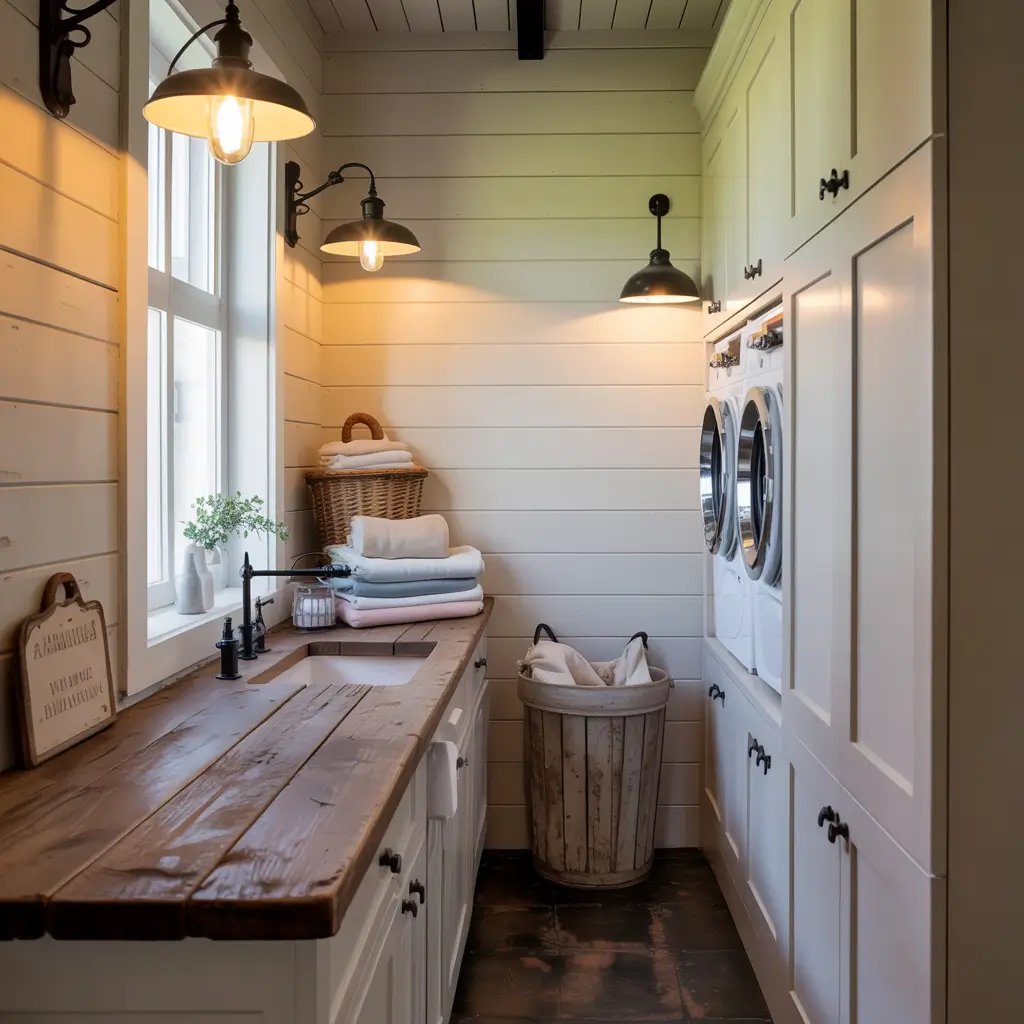
The farmhouse trend isn’t going anywhere, and honestly? It works beautifully in narrow laundry rooms. Shiplap walls, black hardware, and vintage-style signs distract from the tight quarters.
I added peel-and-stick shiplap to my laundry closet (yes, the fake stuff – sue me), and it completely transformed the vibe. Suddenly my utilitarian space had character.
Farmhouse Elements That Work
Must-have farmhouse touches:
- Shiplap or beadboard walls
- Matte black fixtures and hardware
- Wire baskets for storage
- Subway tile backsplash
- Vintage-inspired faucets
Keep the color palette simple – white, black, and natural wood. Too many colors in a small space ruins the farmhouse aesthetic.
Ceiling-to-Floor Storage System
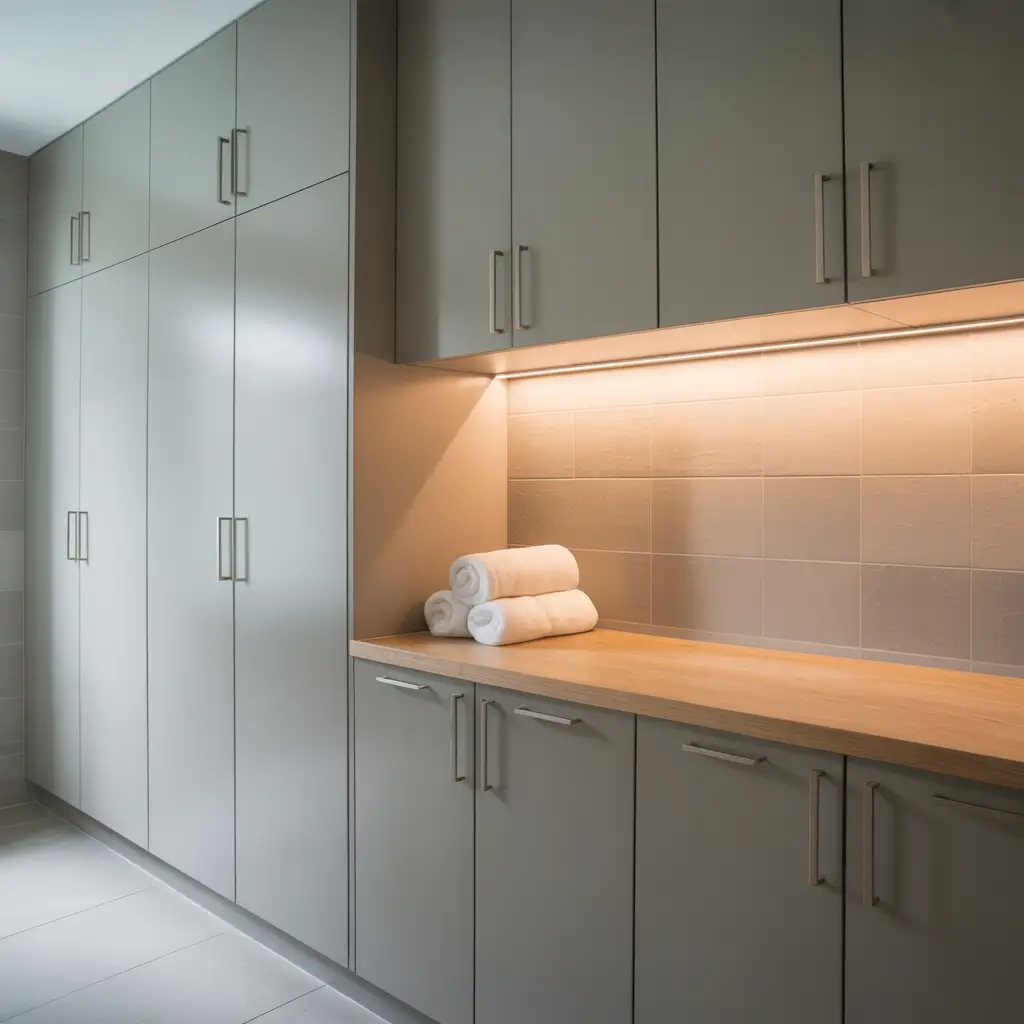
When you’re short on square footage, you’ve got to think tall. Floor-to-ceiling storage systems maximize every inch of vertical space without crowding the floor.
I installed an adjustable track system that goes from floor to ceiling, with various shelf and basket configurations. The flexibility means I can reconfigure as needs change – something fixed cabinets can’t do.
Building Your Vertical System
Components for maximum efficiency:
- Adjustable standards every 16-24 inches
- Mix of shelves and baskets
- Pull-out hampers at hip height
- Top shelf for rarely-used items
Leave the bottom 6 inches clear for easy floor cleaning. Nothing collects dust bunnies quite like floor-level storage in a laundry room.
Final Thoughts on Narrow Laundry Spaces
Look, I get it – working with a narrow laundry room feels limiting at first.
But here’s what I’ve learned: constraints breed creativity. Some of the most efficient, organized laundry spaces I’ve seen started as “problem” areas.
The key is choosing solutions that match your specific needs. Maybe you need maximum storage, or perhaps easy access matters most.
There’s no one-size-fits-all answer, but these 15 ideas give you a solid starting point.
Start with one improvement. Seriously, just one. Maybe it’s adding a floating shelf or swapping to a barn door.
Small changes add up, and before you know it, you’ll have a narrow laundry room that actually works. Who knows? You might even start looking forward to laundry day.
Okay, that might be pushing it, but at least you won’t dread it anymore 🙂