10 Genius Neutral Classroom Decor Ideas for Organized Rooms
- Classroom Decor
 Ben
Ben- 0
- 44 minutes read
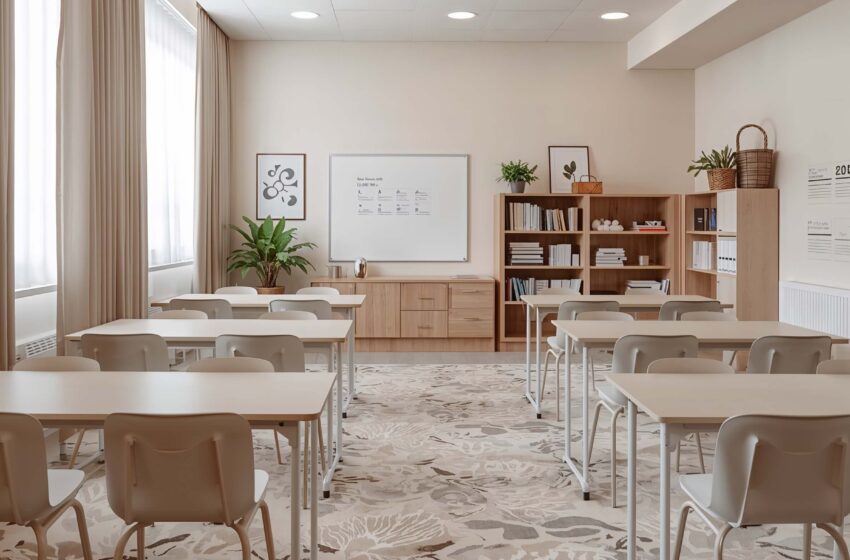
You know that moment when you walk into a classroom and instantly feel… calm? That’s the magic of neutral decor working its subtle charm. After spending years helping teachers transform their chaotic, rainbow-explosion classrooms into serene learning sanctuaries, I’ve discovered that neutral doesn’t mean boring – it means brilliant.
Let me share something that’ll probably make you nod along: I used to think classrooms needed every color of the rainbow plastered on every surface. Boy, was I wrong! Turns out, our kids (and honestly, we teachers too) function way better when we’re not visually assaulted by neon poster boards at 8 AM.
These ten neutral classroom ideas I’m about to share? They’ve literally saved my sanity and transformed how my students engage with their learning space. And FYI, your wallet will thank you too – neutral decor tends to last way longer than trendy themes that’ll look dated faster than you can say “classroom makeover.”
Minimalist Nature-Inspired Classroom
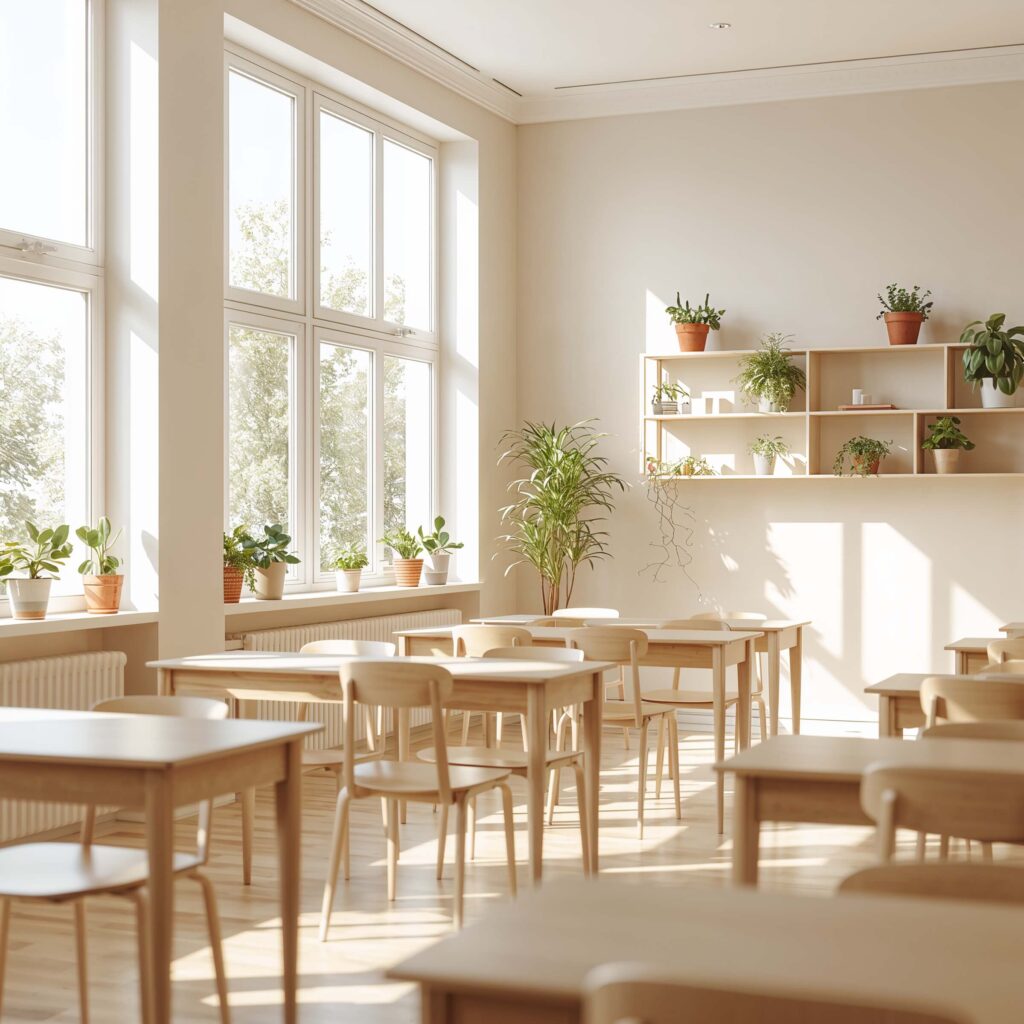
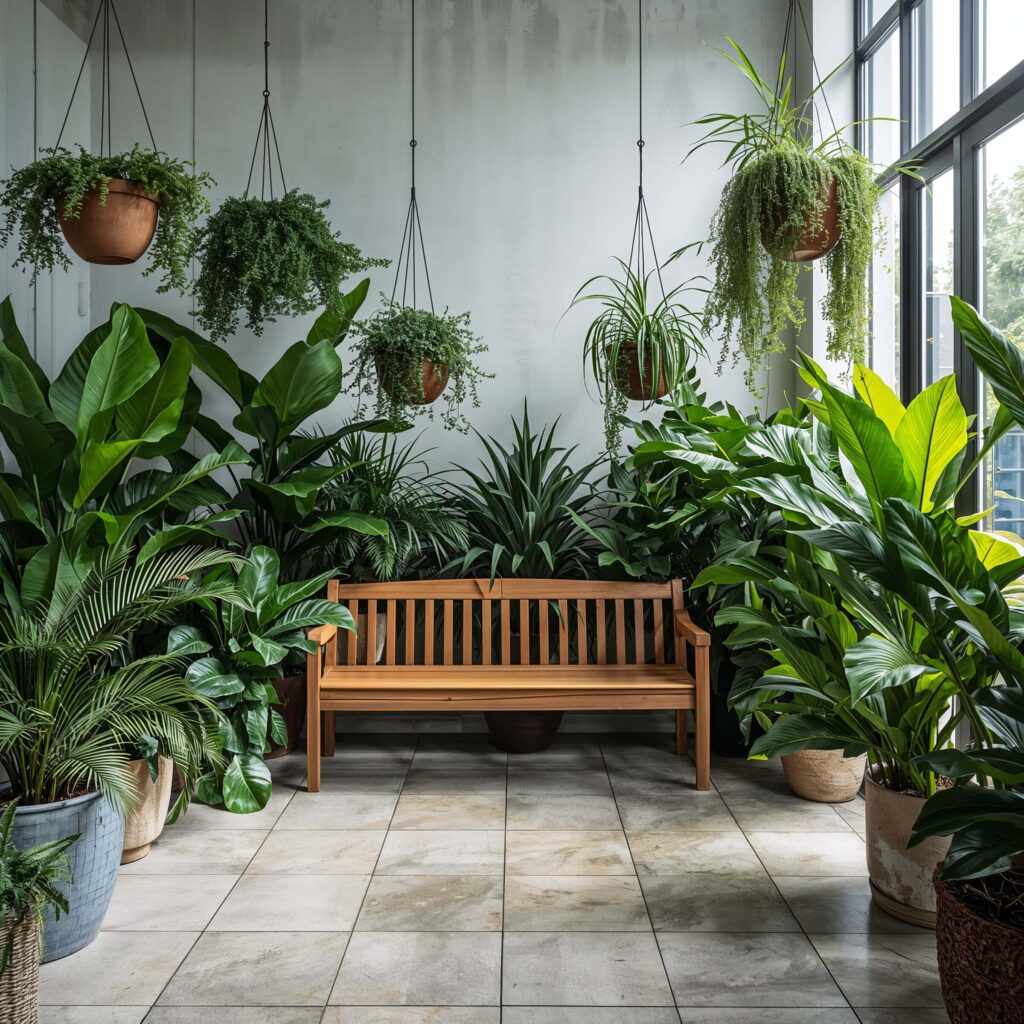
Ever wonder why spas always feel so zen? They’ve mastered the art of bringing nature indoors without the mess. Your classroom can steal that same vibe, and trust me, it’s easier than keeping a class goldfish alive.
I started my nature-inspired transformation with simple wooden elements – think bamboo organizers, cork boards, and natural wood frames. The key here isn’t recreating a forest (we’re teachers, not landscape architects), but rather incorporating subtle natural textures that ground the space. My students actually told me they feel less anxious during tests now – coincidence? I think not.
Essential Elements for Your Nature-Inspired Space
Here’s what works like a charm:
- Potted succulents on windowsills (nearly impossible to kill, even for us busy teachers)
- Neutral-toned nature photography instead of cartoon posters
- Woven baskets for storage that actually look intentional
- Light wood grain contact paper to transform tired furniture
- Stone-colored fabrics for any soft furnishings
The beauty of this approach? You’re creating a timeless aesthetic that won’t scream “2024” in five years. Plus, natural elements have this magical ability to make even the most institutional classroom feel warm and inviting.
Making It Work on a Budget
You don’t need to raid your savings account for this look. I’ve found amazing wooden crates at garage sales, transformed them with a bit of sandpaper, and boom – instant nature-inspired storage. Dollar stores often carry faux succulents that look surprisingly real (and won’t judge you for forgetting to water them).
Soft Beige and White Learning Space
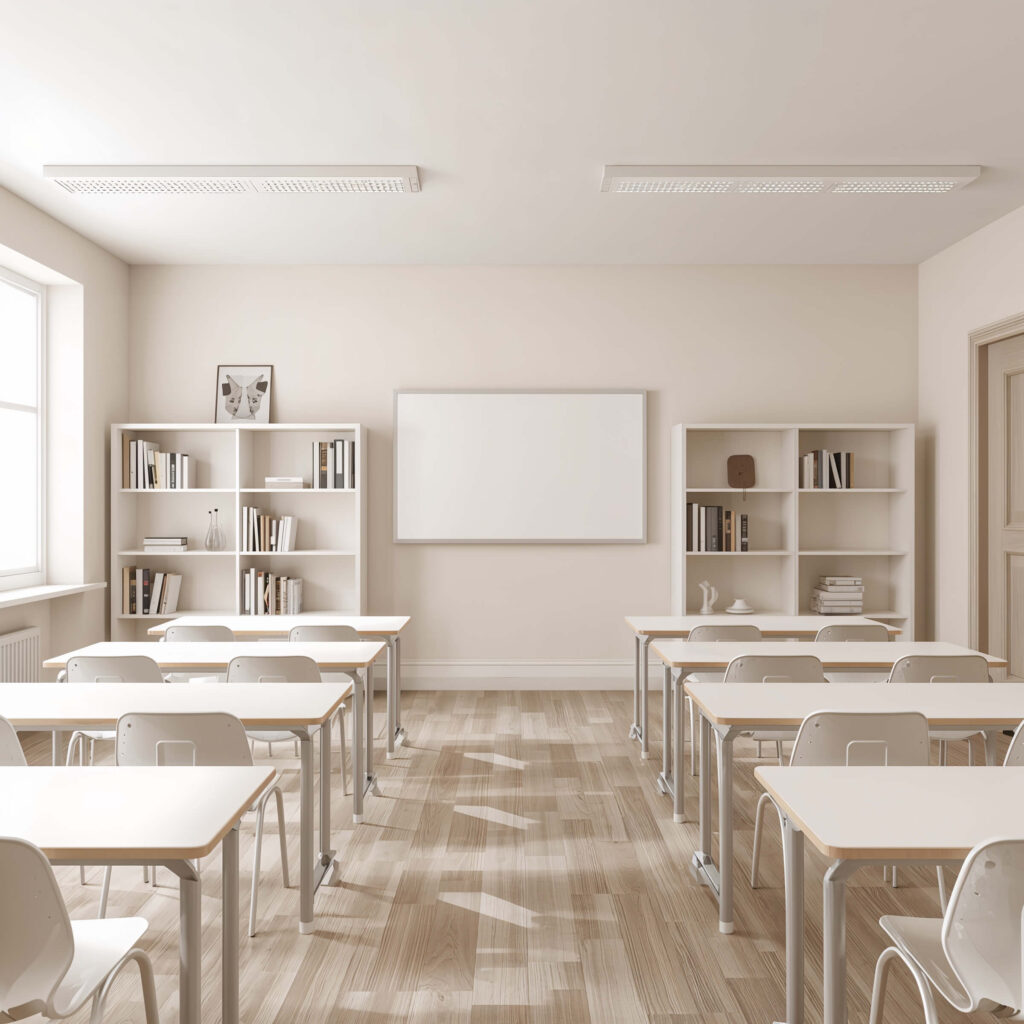
Okay, before you panic about white anything in a classroom full of kids, hear me out. We’re not talking pristine, clinical white here – we’re talking warm, washable, wonderful whites and beiges that create the perfect blank canvas for learning.
My beige and white classroom transformation started when I realized my students were literally bouncing off the walls – probably because the walls were electric blue. Who thought that was calming? The switch to soft neutrals was like giving everyone a visual exhale.
The Psychology Behind the Palette
Beige and white spaces actually improve focus – there’s real science behind this! These colors reduce visual noise, allowing students’ brains to concentrate on what matters: learning. I noticed my ADHD students particularly thrived in this calmer environment.
The trick is layering different shades and textures:
- Cream-colored bulletin board paper (way cheaper than fancy fabric)
- Off-white storage bins that hide the chaos
- Beige carpet squares for defined learning zones
- Ivory curtains to soften harsh fluorescent lighting
Keeping It Clean (Really!)
“But what about markers? Paint? That mysterious sticky substance kids seem to generate?” I get it. Here’s my secret weapon: washable paint in “greige” (grey-beige) for accent walls and Magic Erasers in bulk. Seriously, buy them by the case.
Modern Monochrome Bulletin Boards
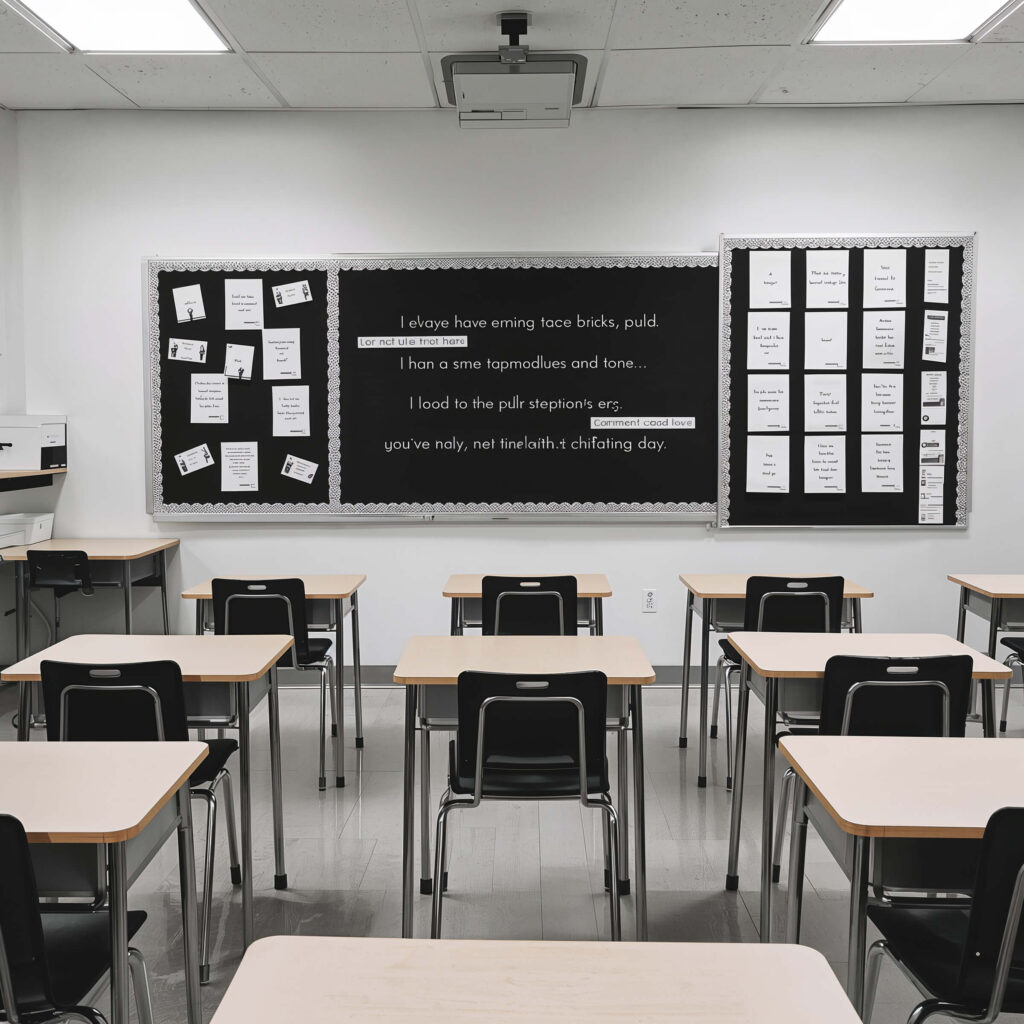
Remember those bulletin boards that looked like a craft store exploded? Yeah, we’re not doing that anymore. Modern monochrome boards are where it’s at, and they’re surprisingly more functional than their rainbow cousins.
I discovered this approach accidentally when I ran out of colored paper mid-year. Using only black, white, and grey forced me to get creative with texture and layout instead of relying on color to grab attention. The result? Students actually read what’s on the boards now!
Design Strategies That Work
Creating visual interest without color requires some clever tactics:
- Geometric borders in alternating black and white
- Grey scale student work displays (use a copier to make everything uniform)
- Typography-focused headers instead of cutesy fonts
- Layered paper techniques for depth without color chaos
The best part about monochrome boards? They make student work the star, not the background. When everything else is neutral, that amazing essay or art project really pops.
Practical Applications
Think about different board purposes:
- Learning objectives board: Clean white background, bold black text
- Student achievement wall: Grey backdrop with white frames
- Calendar/schedule area: Black and white grid system that’s actually readable
Also Read: 10 Trendy High School Classroom Decor Ideas That Wow Students
Calm Pastel Accents with Neutral Base
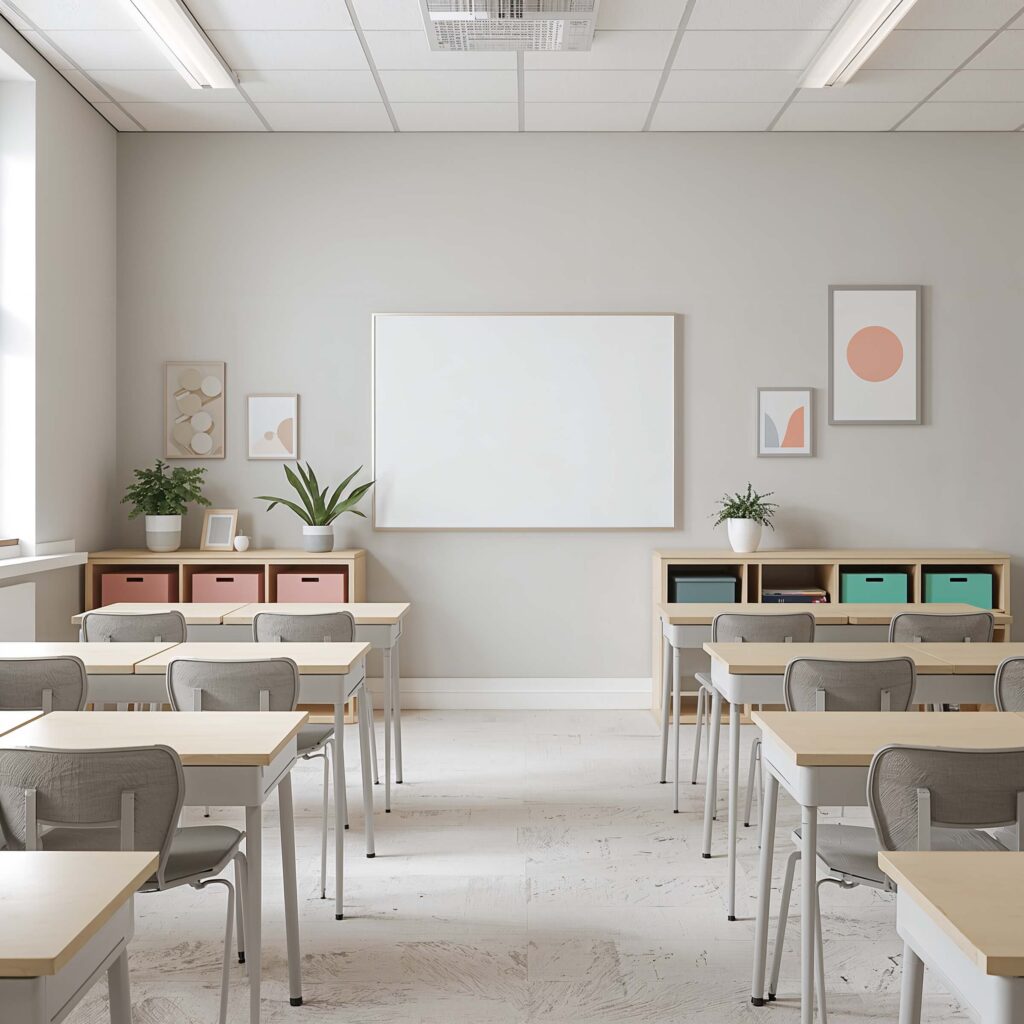
Now, I know I’ve been preaching the neutral gospel, but even I admit a classroom needs some color. The secret? Barely-there pastels that whisper instead of shout.
My favorite approach involves keeping 90% of the room neutral and adding tiny pops of sage green, dusty pink, or soft lavender. Think of it like seasoning – a little goes a long way. These gentle colors add personality without overwhelming the senses.
Strategic Color Placement
Where you place these accents matters:
- Pastel cushions in the reading corner (washable covers, obviously)
- Soft colored file folders for organization
- Muted tone book bins that complement rather than compete
- Pale accent wall behind the teaching area (if you’re feeling brave)
The rule I follow? If you’re questioning whether it’s too bright, it probably is. When in doubt, go lighter.
Color Psychology in Action
Different pastels serve different purposes:
- Soft blues and greens: Promote calm and focus
- Gentle yellows: Encourage creativity without overstimulation
- Dusty pinks: Create warmth without distraction
- Lavender greys: Perfect balance of color and neutral
I’ve noticed my afternoon classes, when everyone’s typically cranky, run smoother in this environment. Coincidence? IMO, absolutely not 🙂
Scandinavian Style Classroom Setup
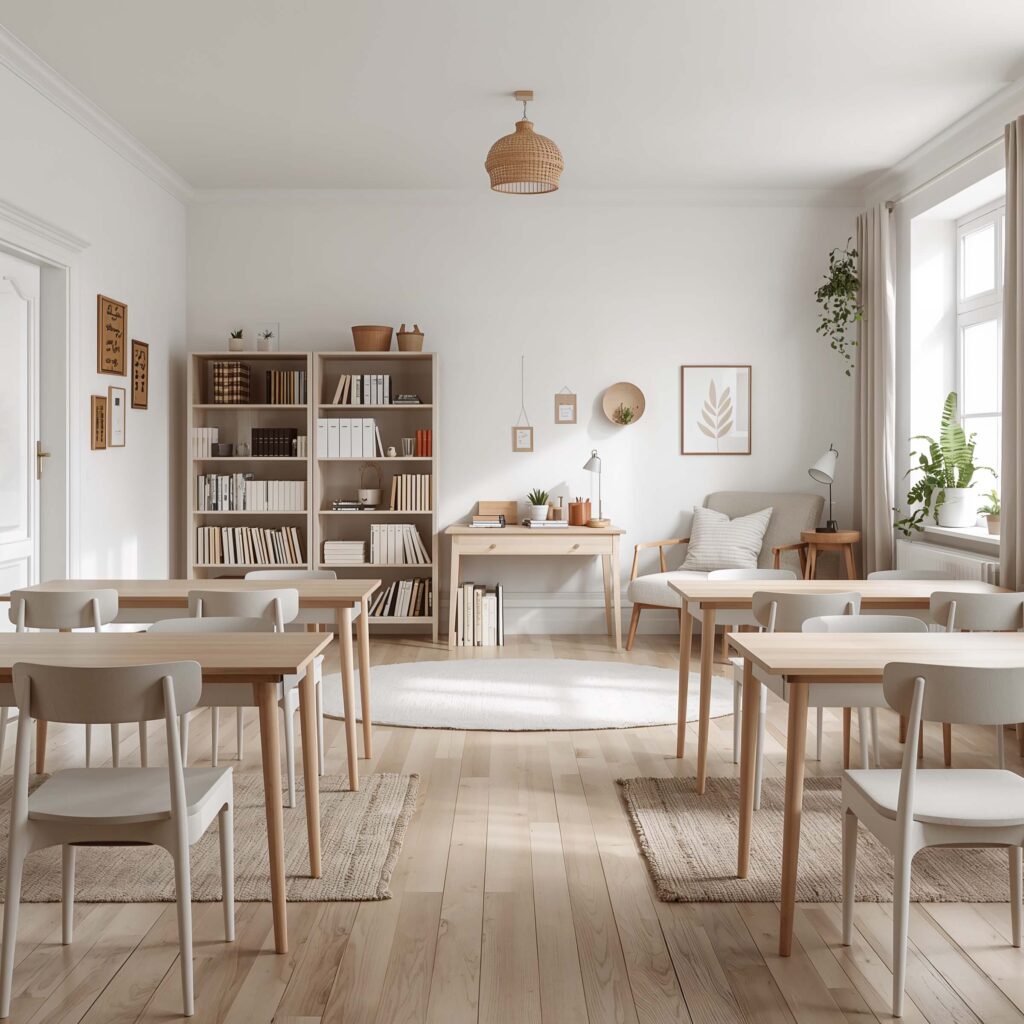
If you’ve ever scrolled through Pinterest and felt envious of those impossibly organized Nordic spaces, you’re not alone. The good news? Scandinavian style translates perfectly to classrooms, and it’s basically designed for functionality.
This style became my obsession after visiting a Danish school during a teaching exchange. Their classrooms felt like calm, productive cocoons rather than the sensory assault chambers I was used to. The secret? They follow the “lagom” principle – not too much, not too little, just right.
Core Scandinavian Elements
Here’s what makes this style work in educational settings:
- Light wood furniture (or convincing contact paper alternatives)
- White walls with minimal decoration
- Cozy textiles in neutral tones
- Maximized natural light
- Plants, plants, and more plants
The philosophy here is “form follows function” – everything has a purpose and a place. No random decorative items collecting dust and distracting students.
Creating Hygge in the Classroom
Hygge (that cozy Danish feeling) isn’t just for coffee shops. You can create it with:
- Soft lighting options beyond fluorescents (lamp corners are game-changers)
- Textured throws on reading chairs
- Natural materials wherever possible
- Organized, visible storage that’s actually attractive
My students literally ask to stay after school now. When kids want to hang out in your classroom, you know you’re doing something right.
Neutral Wall Decals and Inspirational Quotes
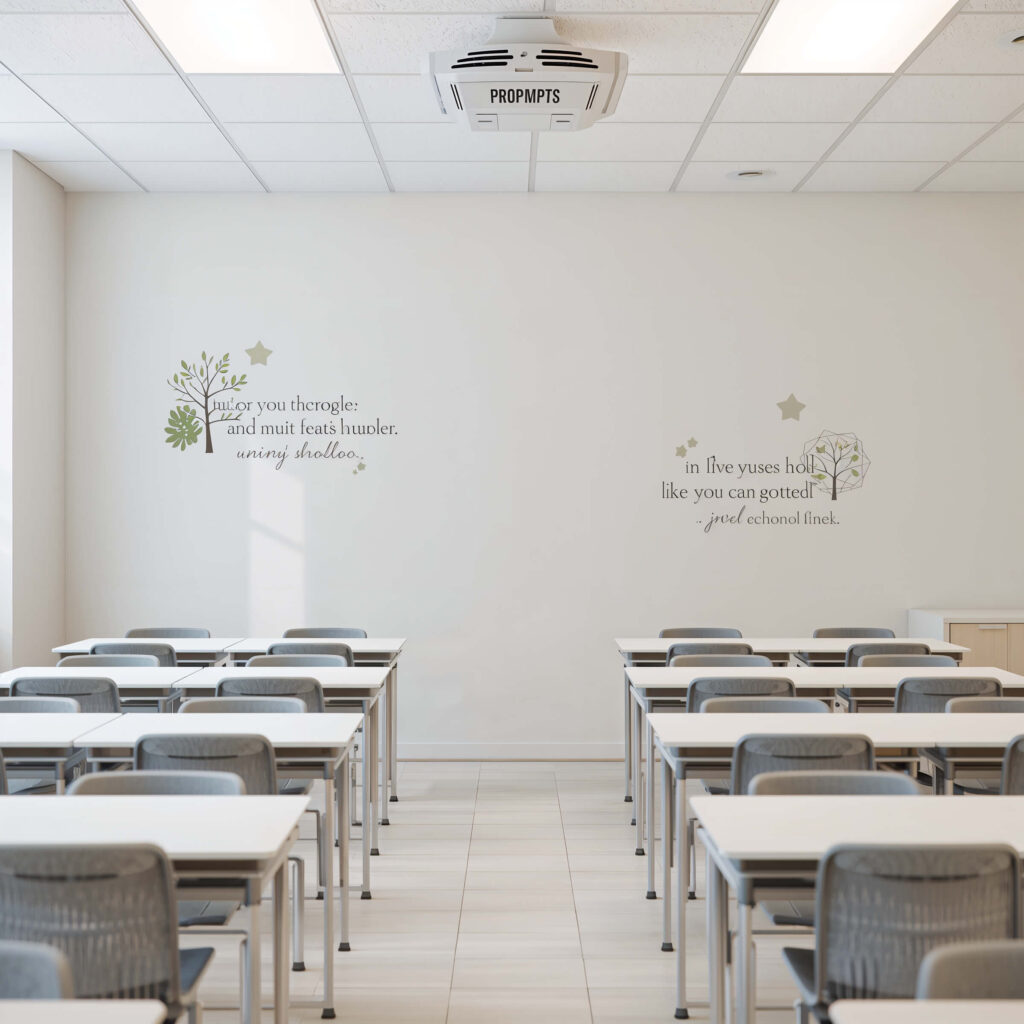
Gone are the days of Comic Sans motivational posters (thank goodness). Today’s neutral wall decals offer sophistication while still inspiring young minds. And no, we’re not talking about “Hang in There” cat posters.
I discovered vinyl decals during my second year teaching, right after I spent an entire weekend painting elaborate murals that looked… questionable. Removable decals saved my sanity and my security deposit. They’re basically the classroom decorator’s best friend.
Choosing the Right Messages
The quotes and designs you choose matter:
- Growth mindset phrases in elegant typography
- Simple geometric patterns that add interest without chaos
- Nature silhouettes (trees, mountains, clouds) in grey tones
- Mathematical or scientific diagrams in minimalist style
Keep the messages authentic and relevant. Kids can smell fake positivity from a mile away.
Placement Strategy
Strategic placement maximizes impact:
- Above the board: Key learning principles
- Near the door: Daily affirmations
- Reading corner: Literary quotes
- Problem-solving area: Growth mindset reminders
The beauty of decals? When they start peeling (and they will), you just remove them. No repainting required.
Also Read: 10 Inspiring Middle School Classroom Decor Ideas Cozy Space
Cozy Earth-Tone Reading Nook
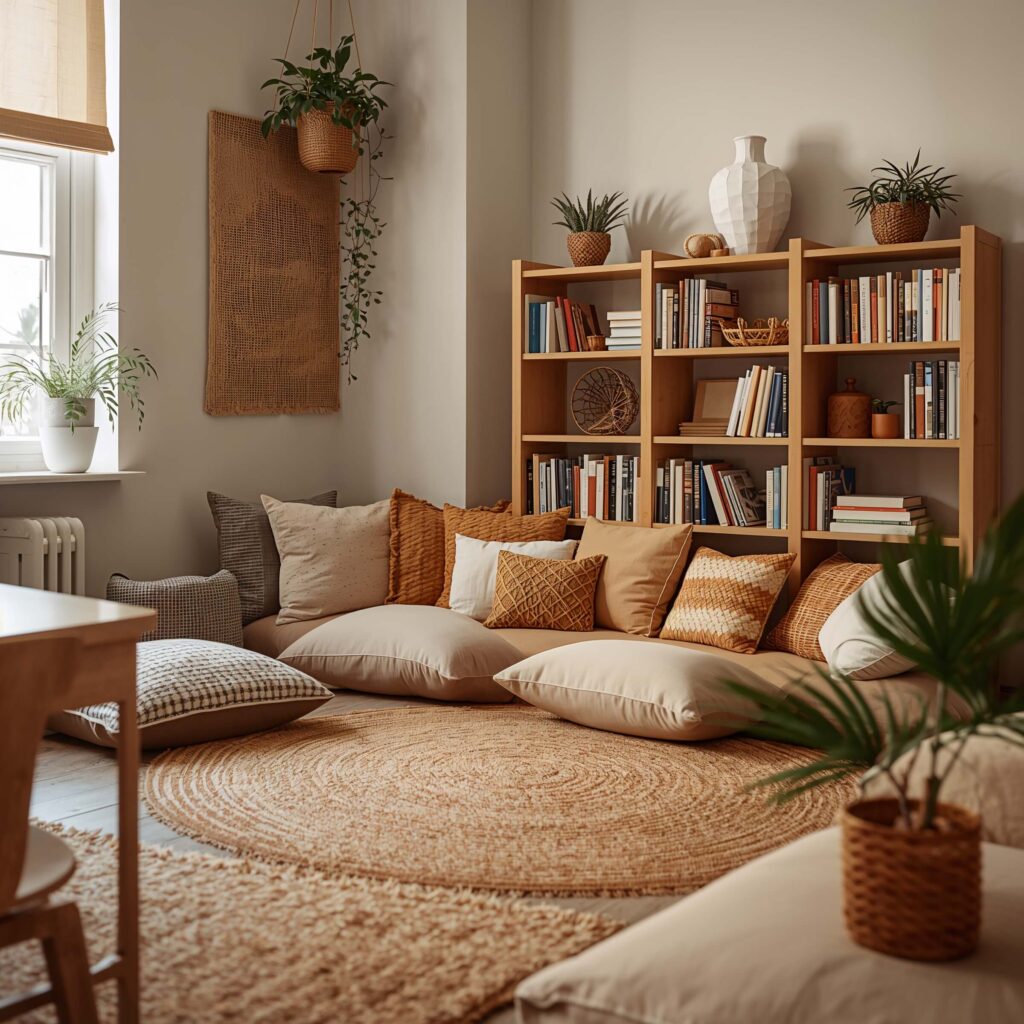
Every classroom needs that special spot where magic happens – and by magic, I mean kids actually choosing to read. Creating an earth-tone reading nook transformed my reluctant readers into book devourers.
This wasn’t always the case. My first reading corner was basically a pile of bean bags that leaked those annoying little balls everywhere. Now? It’s a carefully curated space that rivals any trendy coffee shop reading area.
Essential Elements for Comfort
Building the perfect reading sanctuary requires:
- Neutral area rug in browns or deep greens
- Mix of seating options (not everyone loves bean bags)
- Warm lighting (string lights or soft lamps)
- Book displays facing outward
- Soft barriers creating semi-privacy
The key is making it feel separate from the “work” areas while still maintaining supervision ability.
Storage Solutions That Work
Books need homes, but metal shelves scream “library,” not “cozy nook.” Try these:
- Wooden crates stacked and secured
- Floating shelves at kid height
- Woven baskets for book sorting
- Natural fabric book slings
I learned the hard way that accessibility trumps aesthetics – if kids can’t reach the books easily, your beautiful nook becomes useless decoration.
Making It Multi-Functional
Your reading nook can serve double duty:
- Morning meeting spot
- Calm-down area for overwhelmed students
- Small group instruction space
- Independent work zone
Just add a small lap desk or two, and suddenly your cozy corner becomes the room’s most versatile space.
Neutral Shelving and Organized Storage
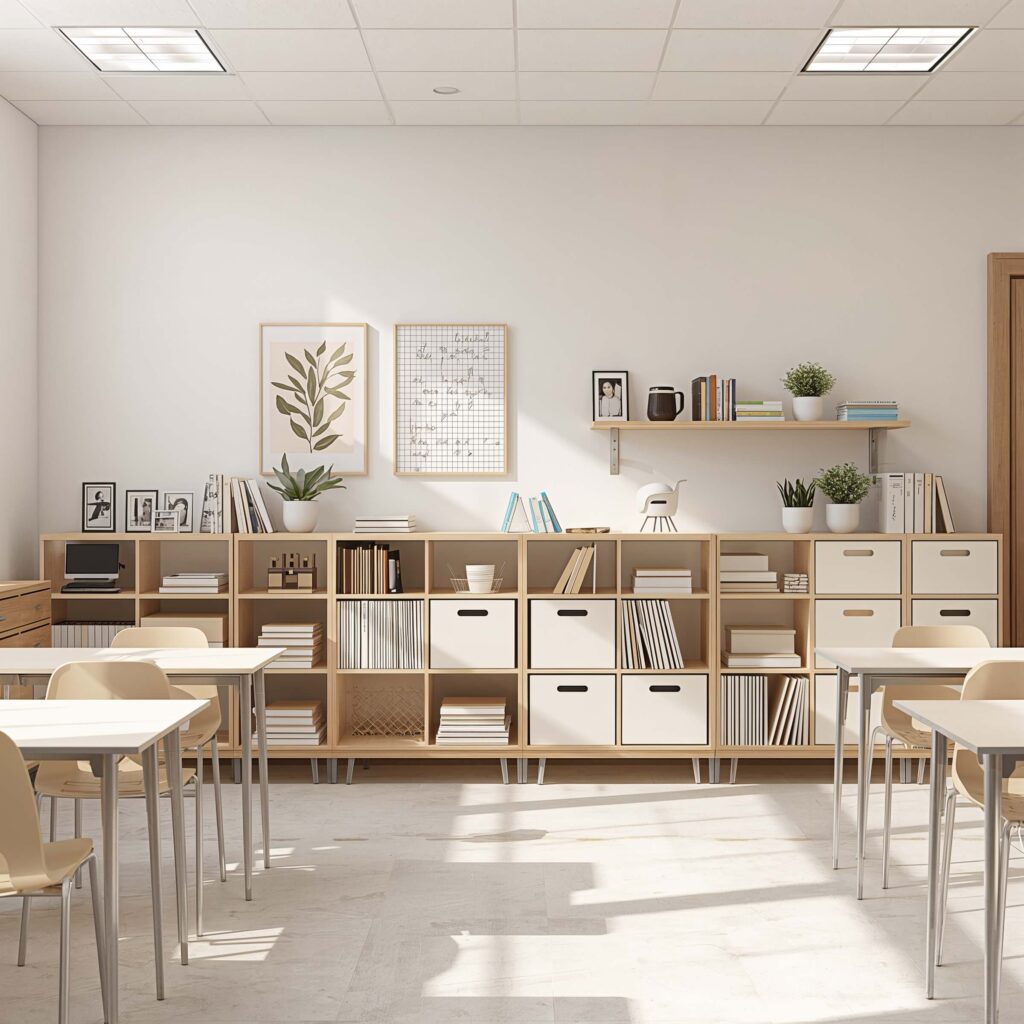
Let’s talk about the unsexy hero of classroom design: storage. Neutral, organized shelving might not win Instagram likes, but it’ll save your sanity daily. Trust me, I learned this after my rainbow-colored bin system made me dizzy every morning.
The revelation came when I realized matching storage containers in neutral tones made everything look intentional, even when chaos reigned inside those bins. It’s basically organized deception at its finest.
Choosing the Right Storage Systems
Not all storage is created equal:
- Open shelving units in white or light wood
- Matching bins in beige, grey, or white
- Clear containers with neutral labels
- Drawer units that hide the mess completely
The trick? Everything needs a designated home, and that home needs to make sense. Art supplies near the art area – revolutionary, right?
Labeling Like a Pro
Forget cute fonts that nobody can read. Effective labeling uses:
- Clear, consistent fonts
- Picture labels for younger students
- Color-coding within the neutral palette (different greys, for example)
- Removable labels because things change
I use a label maker religiously now. It’s oddly satisfying and makes clean-up time actually functional.
Maximizing Vertical Space
Why waste valuable floor space when walls exist? Vertical storage solutions include:
- Wall-mounted cubbies
- Hanging organizers on unused doors
- Ceiling-suspended storage (if allowed)
- Magnetic strips for metal items
My classroom gained about 30% more usable space just by thinking vertically. Who knew geometry would be so practical?
Subtle Patterned Rugs and Curtains
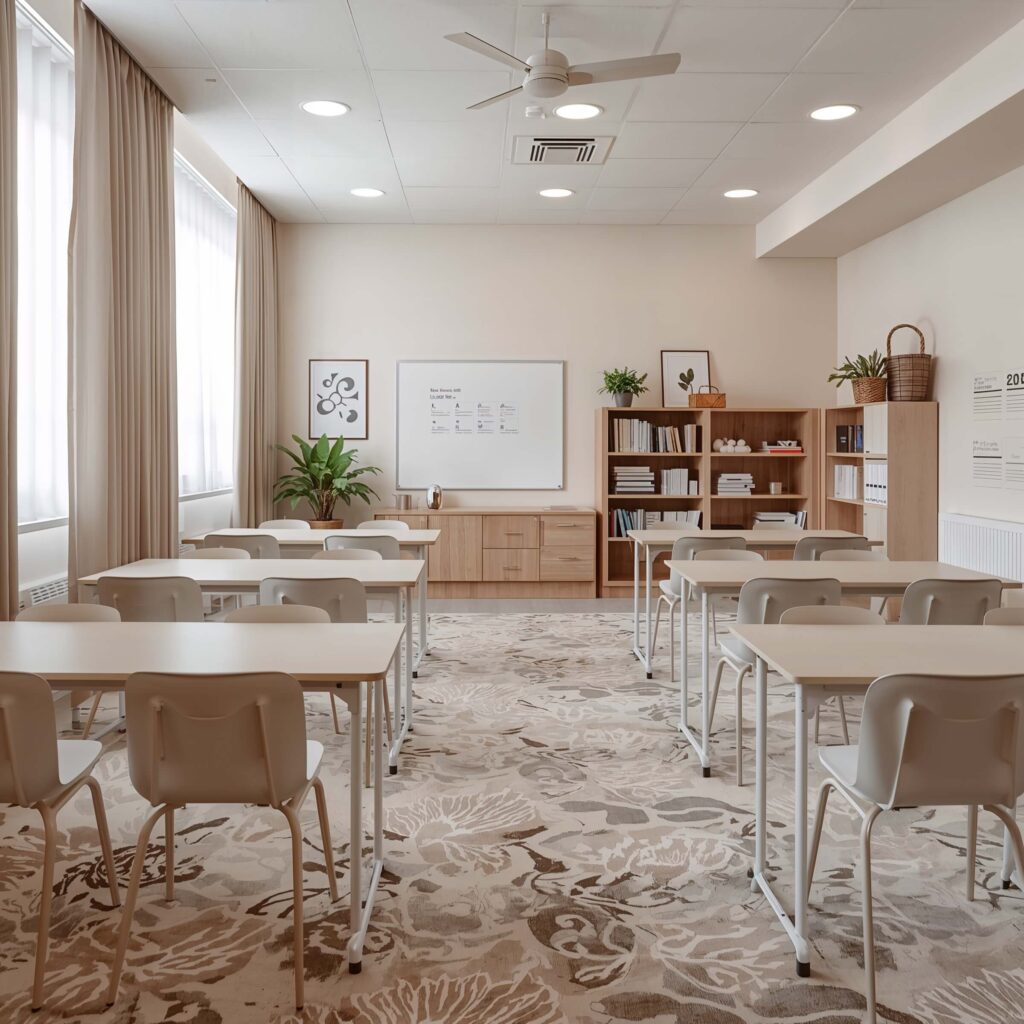
Patterns in a neutral classroom? Absolutely – but we’re talking sophisticated subtle patterns, not cartoon characters or alphabet soup designs. These elements add visual interest without inducing headaches.
I discovered the power of subtle patterns when I replaced my “educational” alphabet rug with a simple geometric design. Suddenly, kids could actually focus during circle time instead of playing “find the letter” with their fingers.
Pattern Selection Guidelines
Choose patterns that enhance, not overwhelm:
- Geometric designs in varying shades of grey
- Subtle stripes in neutral tones
- Natural textures like jute or sisal
- Tone-on-tone patterns that add depth
The goal? Visual interest without visual noise. If you have to squint to see the pattern from across the room, you’ve nailed it.
Functional Considerations
Pretty patterns mean nothing if they don’t work practically:
- Washable rugs (because spills happen)
- Low-pile options (easier to clean)
- Non-slip backing (safety first)
- Durable materials that survive daily traffic
After destroying three “cute” rugs in one year, I learned durability beats adorability every time.
Window Treatment Wisdom
Curtains do more than block light:
- Light-filtering options maintain brightness
- Thermal curtains help with temperature control
- Simple patterns that won’t date quickly
- Adjustable options for different times of day
Pro tip: Tension rods and clip rings make curtain changes easy when you inevitably get bored :/
Also Read: 10 Creative Music Classroom Decor Ideas That Inspire Learning
Minimalist Desk and Chair Arrangement
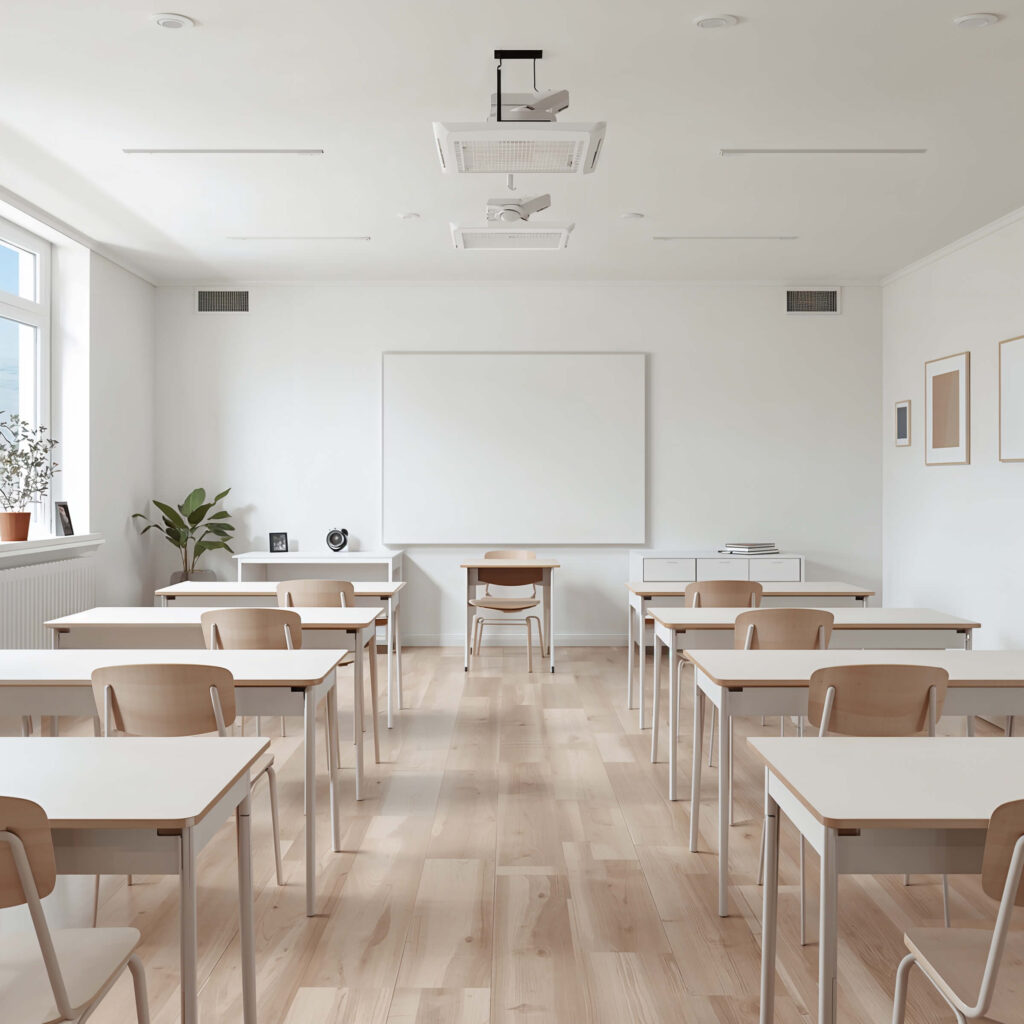
The furniture arrangement can make or break your neutral classroom vibe. Minimalist desk setups aren’t about having less – they’re about having what you need, where you need it, without excess.
My transformation here was dramatic. I went from U-shaped rows (because that’s what everyone did) to flexible clustering that actually made sense. The result? Better collaboration and way less furniture traffic jams.
Arrangement Strategies That Work
Different configurations serve different purposes:
- Small group pods for collaboration
- Individual islands for testing
- Horseshoe formation for discussions
- Flexible stations that can be reconfigured
The key is purposeful placement. Every desk should have a clear sight line to instructional areas.
Desk Organization Systems
Minimalist doesn’t mean empty:
- Desktop caddies in neutral colors
- Under-desk hooks for backpacks
- Seat sacks in matching fabrics
- Simple supply stations within reach
Each student needs exactly what they need – nothing more, nothing less. It’s surprisingly freeing when you eliminate the excess.
Chair Considerations
Don’t overlook seating:
- Alternative seating options (stability balls, wobble cushions)
- Consistent chair colors (spray paint works wonders)
- Proper height adjustment for different students
- Quiet chair glides to reduce noise
I invested in tennis balls for chair legs one summer. Best $20 I ever spent on classroom peace.
Teacher Desk Decisions
Your desk sets the tone:
- Clutter-free surface (hide everything in drawers)
- Neutral desk accessories
- Minimal personal items
- Strategic placement for supervision
I actually removed my teacher desk entirely last year and used a small standing station instead. Game-changer for classroom management and my back!
Making It All Work Together
Creating a cohesive neutral classroom isn’t about following rules religiously – it’s about finding what works for your space and students. These ideas I’ve shared? They’re starting points, not commandments.
The biggest lesson I’ve learned through my neutral classroom journey is that less really is more. My students are calmer, more focused, and surprisingly, more creative when they’re not visually overwhelmed. The neutral backdrop becomes a canvas for their imagination rather than competition for their attention.
Will you miss the rainbow explosion at first? Maybe. But when you see your students thriving in their serene learning environment, when parents compliment the “grown-up” feel of your classroom, and when you actually enjoy being in your space eight hours a day, you’ll never go back.
Start small if you need to. Pick one area – maybe that reading nook or those bulletin boards – and transform it. Watch how it changes the energy in your room. Then keep going, one neutral, organized element at a time.
Remember, the goal isn’t to create a boring beige box. It’s to design a space where learning is the star, not the decorations. Your students (and your sanity) will thank you for it. And who knows? You might just inspire the teacher next door to ditch their neon poster collection too. We can dream, right?