10 Fun Nursery Bookshelf Ideas to Organize with Style
- Bookshelf Styling
 Ben
Ben- 0
- 36 minutes read
Remember when you thought setting up a nursery just meant throwing a crib in a room and calling it a day? Yeah, me too.
Then I actually had a kid and realized that organizing baby books becomes a full-time job, especially when your little one discovers the joy of pulling every single book off the shelf at 6 AM.
After testing (and cursing at) countless bookshelf options, I’ve finally cracked the code on what actually works in a nursery.
And trust me, not all bookshelves are created equal – some look gorgeous but hold exactly three board books before toppling over. Others work great but make your nursery look like a kindergarten classroom storage closet.
So let’s chat about the 10 best nursery bookshelf ideas that combine style, function, and that all-important factor: surviving toddler destruction.
Floating Cloud Bookshelf
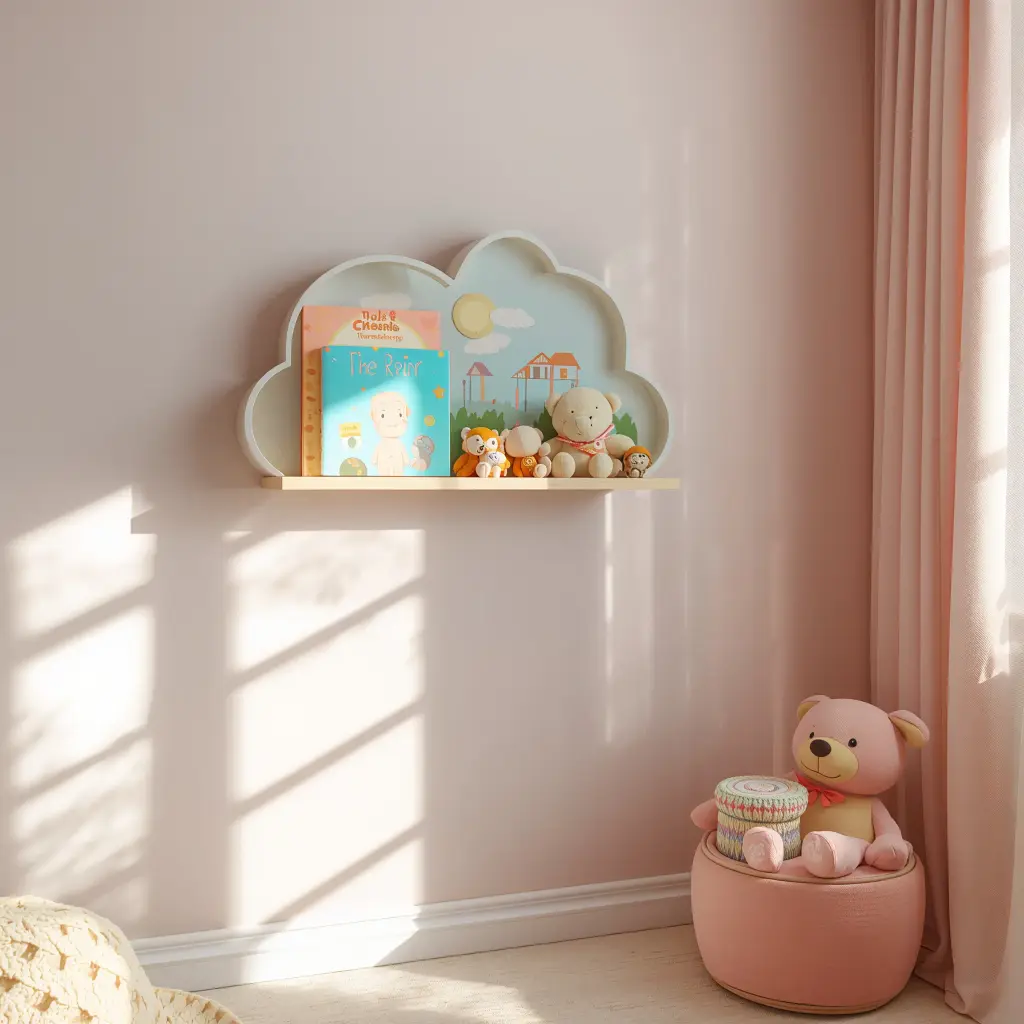
Why Cloud Shelves Work Magic in Nurseries
You know what makes me smile every time I walk into my daughter’s room? Those fluffy cloud shelves floating on her wall like they’re straight out of a storybook. Cloud bookshelves create instant whimsy without taking up any floor space – which, FYI, you’ll need for all those toys that multiply overnight.
I installed three different-sized clouds at varying heights, and here’s the genius part: they double as wall art. When you’re not using them for books, they look intentional, not like empty storage begging to be filled with more stuff you don’t need.
The best part? My toddler can reach the lowest cloud but can’t demolish the entire bookshelf system in one go. Parents: 1, Chaos: 0.
Installation Tips That’ll Save Your Sanity
Here’s what nobody tells you about floating shelves: wall anchors are your best friend. Don’t just screw these babies into drywall and hope for the best. I learned this lesson when my first attempt came crashing down at 2 AM (nothing like a midnight heart attack, right?).
Use these materials for sturdy cloud shelves:
- Heavy-duty wall anchors rated for at least 30 pounds
- Level (because crooked clouds will haunt your dreams)
- Stud finder if you can hit studs
- White MDF or pine wood for the actual clouds
Pro tip: Paint the edges of your clouds in a soft gray or blue for that 3D effect that makes them pop against the wall.
Tree-Shaped Wooden Shelf
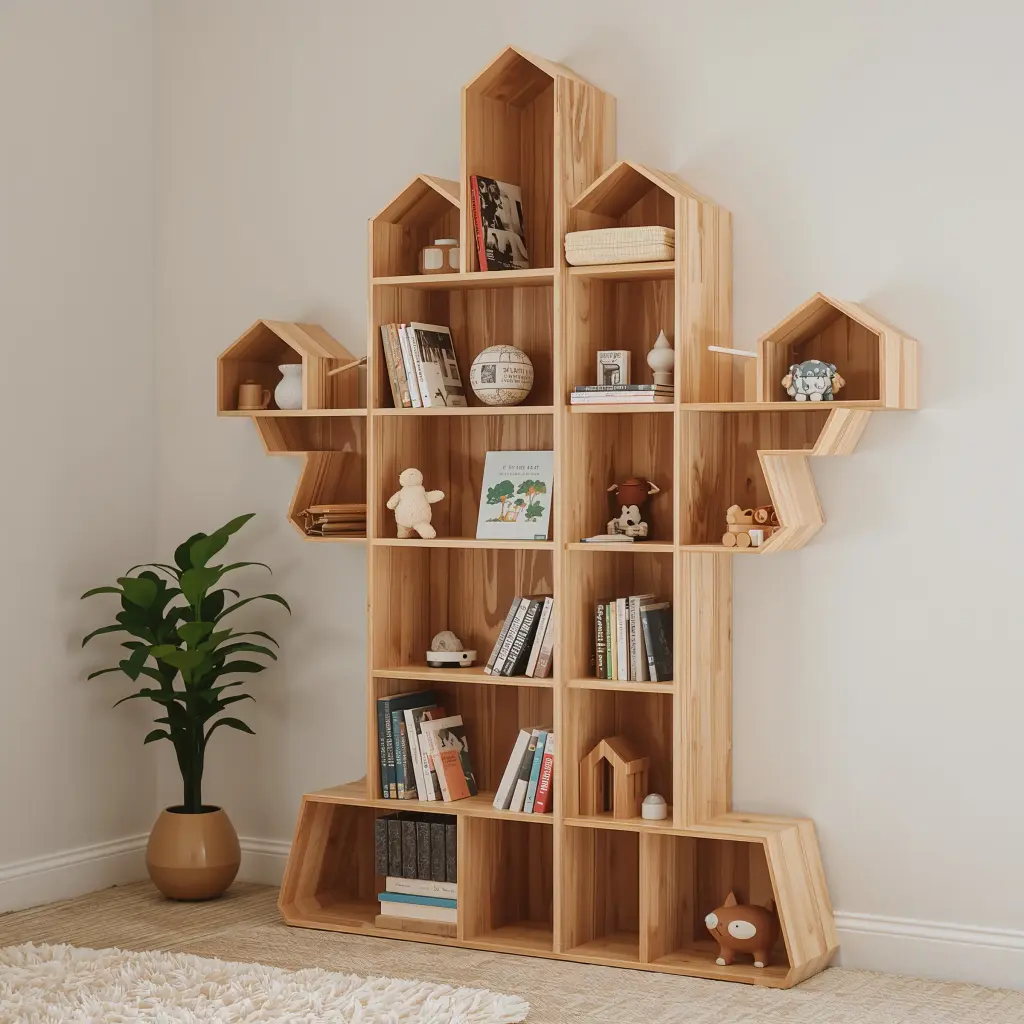
Creating a Forest Theme That Grows With Your Child
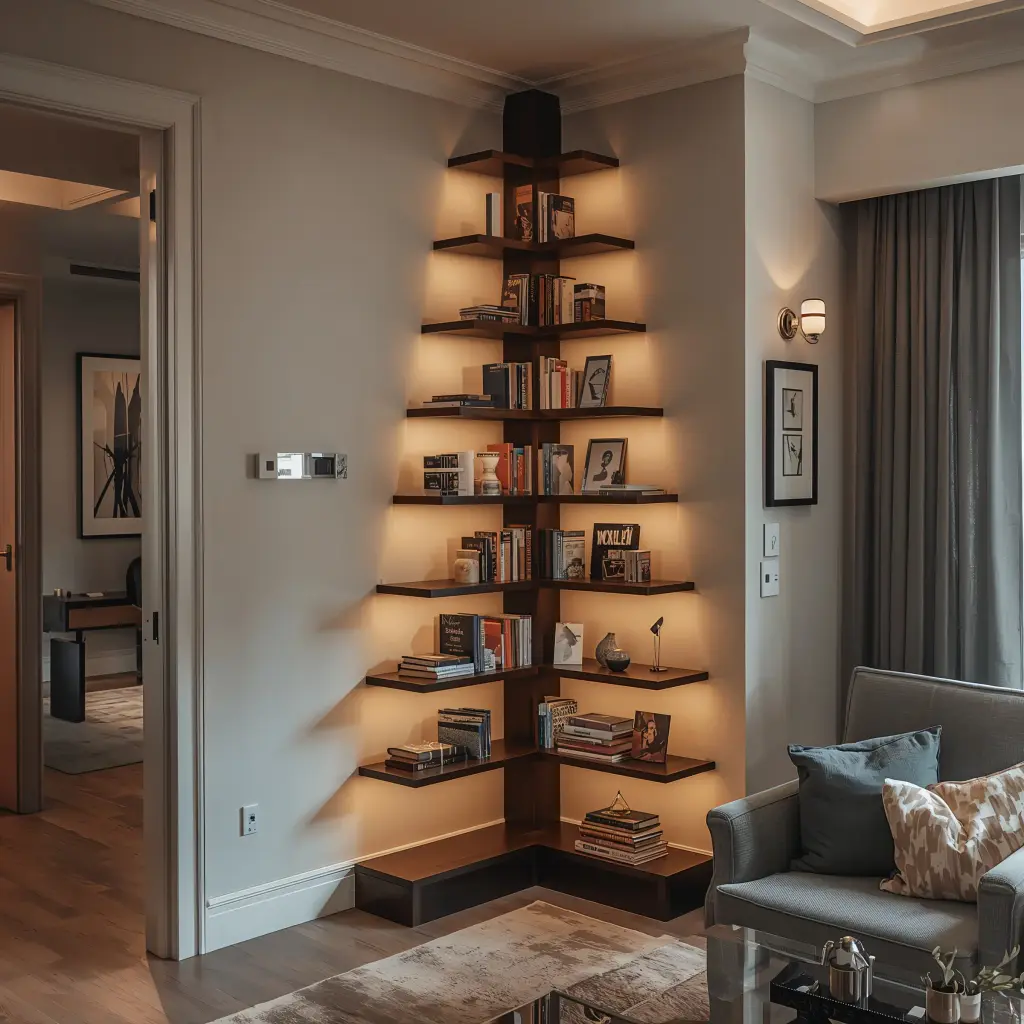
Want to know what bookshelf gets the most compliments in my son’s room? The tree-shaped wooden shelf that basically turns one corner into an enchanted forest. This isn’t just storage; it’s a statement piece that makes adults go “aww” and kids go “wow!”
I went with a natural oak finish because let’s be real – it hides fingerprints better than painted surfaces. The branches work as individual shelves, and some designs even include little carved animals or birds perched on the branches. My kid thinks it’s the coolest thing ever, and honestly? So do I.
The tree shelf grows with your child too. Right now it holds board books and stuffed animals, but later it’ll work for chapter books, trophies, or whatever else kids collect these days.
Branch Placement Strategy
Not all tree shelves are designed equally, and placement matters more than you’d think:
Lower branches should be:
- Wider and sturdier for heavier books
- Within toddler reach (24-30 inches from floor)
- Spaced at least 8 inches apart vertically
Upper branches work best when they’re:
- Smaller for lightweight items
- Angled slightly upward to prevent sliding
- Used for display rather than daily access
Rainbow Color Ladder Shelf
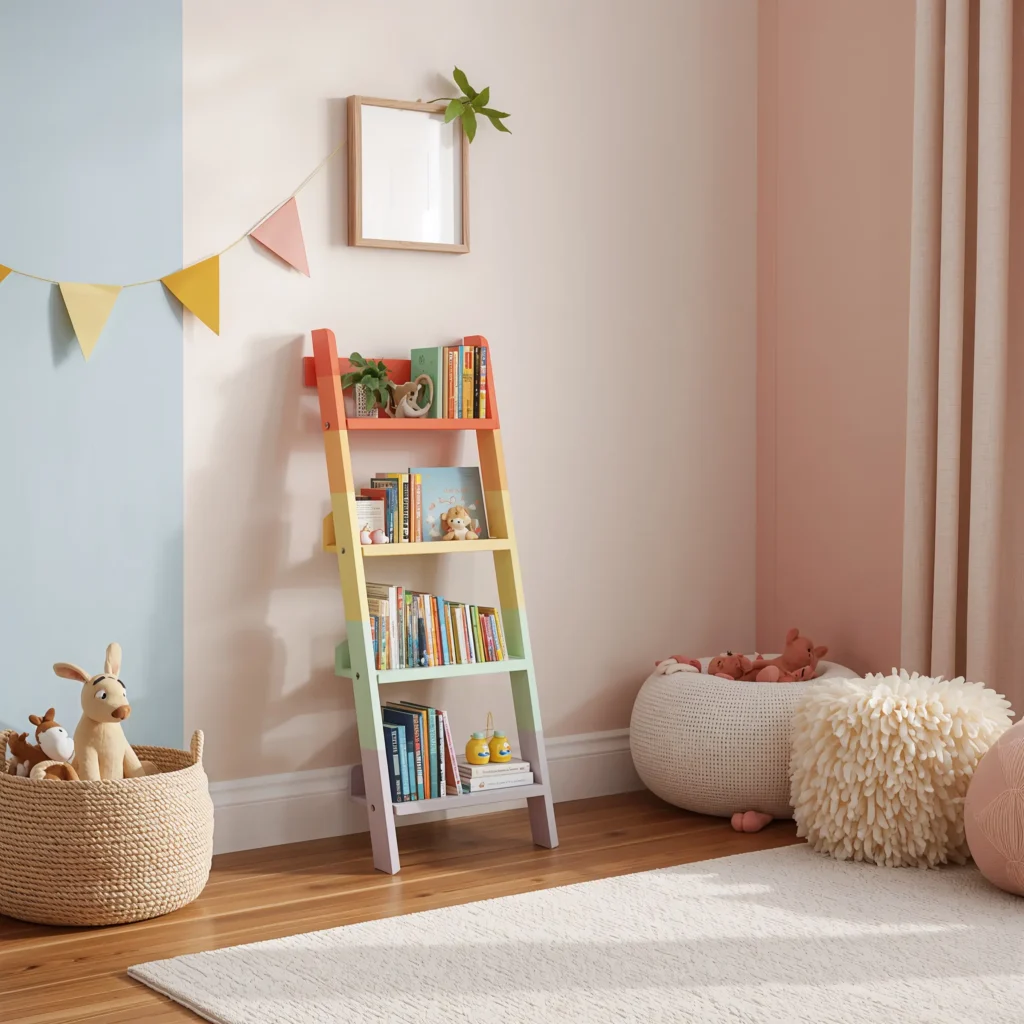
Why Rainbow Storage Makes Everything Better
Listen, I was skeptical about the rainbow ladder shelf trend at first. Seemed a bit much, you know? But then I saw how my nephew’s eyes literally light up when he picks his bedtime story from the “orange shelf” or the “purple shelf.” Color-coding turns cleanup into a game instead of a battle.
The ladder design leans against the wall at an angle, which means books naturally stay put instead of constantly falling forward. Each rung holds different colored bins or acts as a shelf itself, painted in rainbow order from bottom to top.
What really sold me? This style works whether your nursery aesthetic screams “minimalist Scandi” or “explosion of joy.” You control the intensity with your color choices.
Making Rainbow Storage Functional
Here’s how I organize our rainbow ladder:
- Red (bottom): Board books that can take a beating
- Orange: Current favorites on heavy rotation
- Yellow: Interactive books with flaps and textures
- Green: Longer story books for bedtime
- Blue: Seasonal or holiday books
- Purple (top): Books they’ll grow into
The color system means even visiting grandparents know where things go. No more “Where does this book live?” – just match the spine sticker to the shelf color.
Also Read:10 Chic Bookshelf Wall Decor Ideas for Stylish Interiors
Animal-Themed Corner Shelf
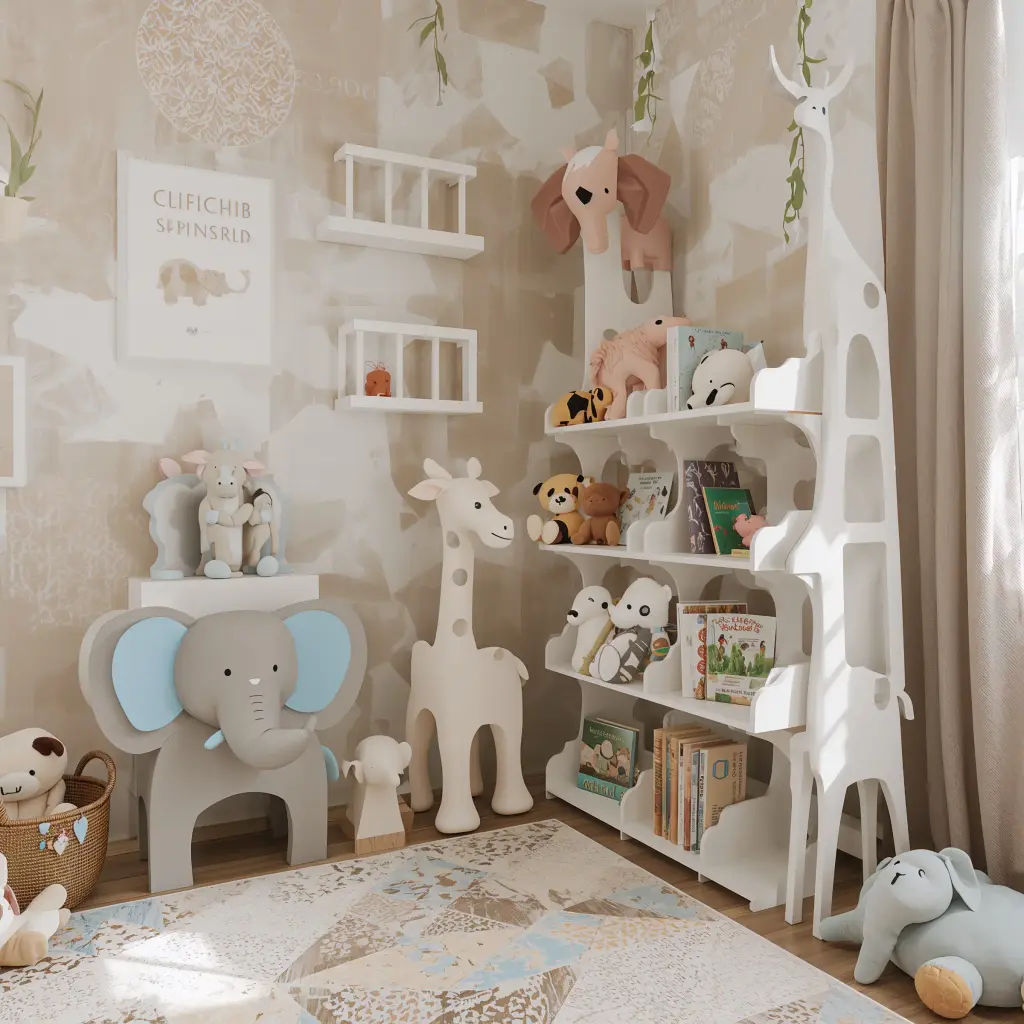
Maximizing Dead Corner Space With Style
Ever notice how nursery corners become black holes where dust bunnies and forgotten pacifiers go to die? Animal-themed corner shelves transform that wasted space into functional cute storage that actually makes sense.
I’ve got a giraffe corner shelf in my daughter’s room, and its long neck extends up the wall with platforms at different heights. The head holds her night light, while the body shelves store everything from books to her collection of approximately 47 stuffed bunnies.
Corner shelves work especially well in small nurseries where every square inch counts. Plus, they create this cozy reading nook feeling that makes bedtime stories feel extra special.
Choosing Your Animal Wisely
Not all animals make great shelves (learned this the hard way with an octopus design that was more tentacle chaos than functional storage). Here are the winners:
Best animal shapes for corner shelves:
- Giraffes (tall and narrow)
- Trees with animals (bears, owls, squirrels)
- Elephants (trunk makes great book holder)
- Dinosaurs (long necks = more shelf space)
Skip these unless you want frustration:
- Anything with too many curves
- Animals that are wider than they are tall
- Designs where the shelves are the animal’s features
Minimalist White Wall Shelf
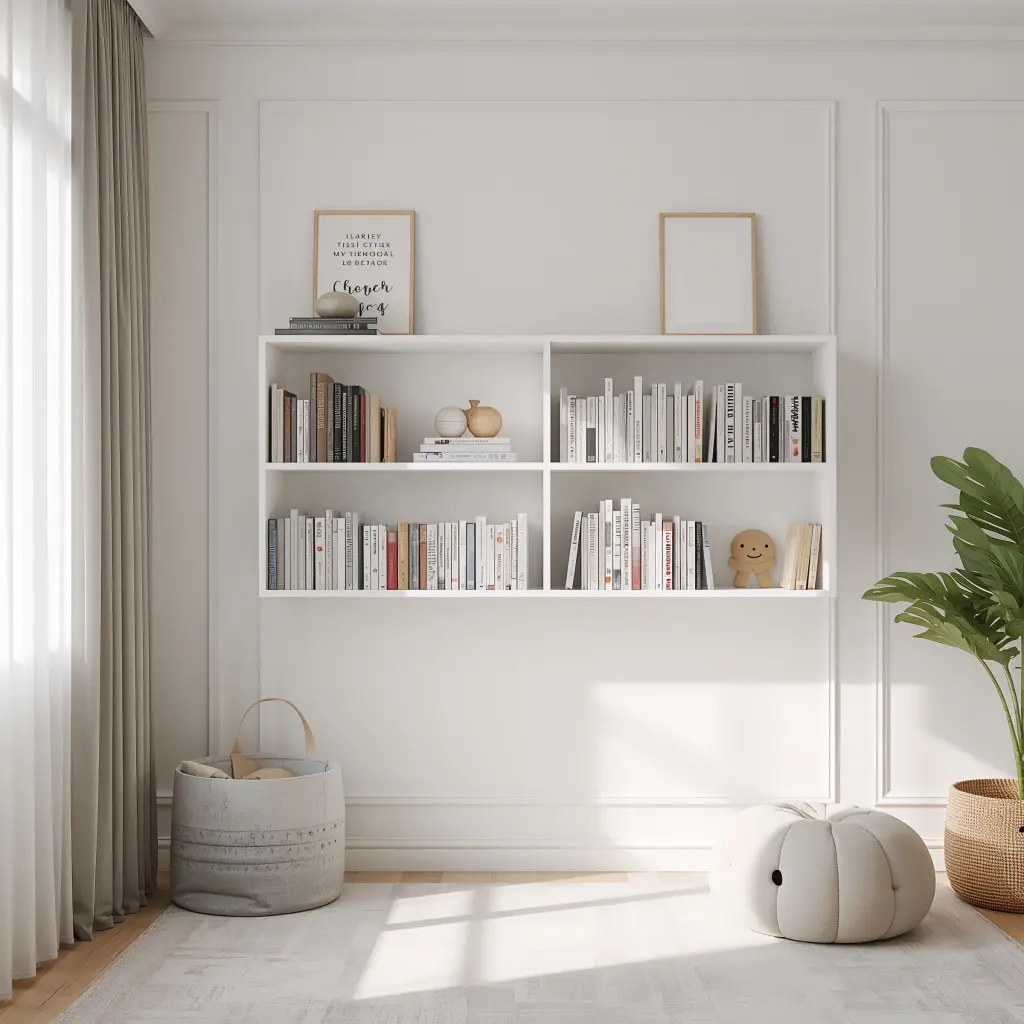
When Simple Actually Means Better
Okay, hear me out before you scroll past thinking “boring!” The minimalist white wall shelf might not win Instagram awards, but it wins at actually working in real life. Sometimes you just need something that holds books without making your nursery look like a theme park exploded.
I installed simple white ledge shelves in my friend’s nursery, and two years later, they still look fresh and modern. White reflects light, making small rooms feel bigger, and here’s the kicker: you can change the room’s entire vibe just by switching up what you display.
This week it’s dinosaur books and green plants. Next month? Unicorn books and pink accessories. The shelf stays neutral while everything else can change with your kid’s current obsession.
Strategic Placement for Maximum Impact
The magic happens when you install these at the right height:
- 30 inches high: Perfect for toddler independence
- 45 inches high: Parent-friendly, kid-visible
- 60 inches high: Display only (those special books you don’t want destroyed)
Use the rule of three: three shelves, three different heights, three to five books per shelf. This creates visual interest without overwhelming the space.
Pastel Cubby Storage Shelf
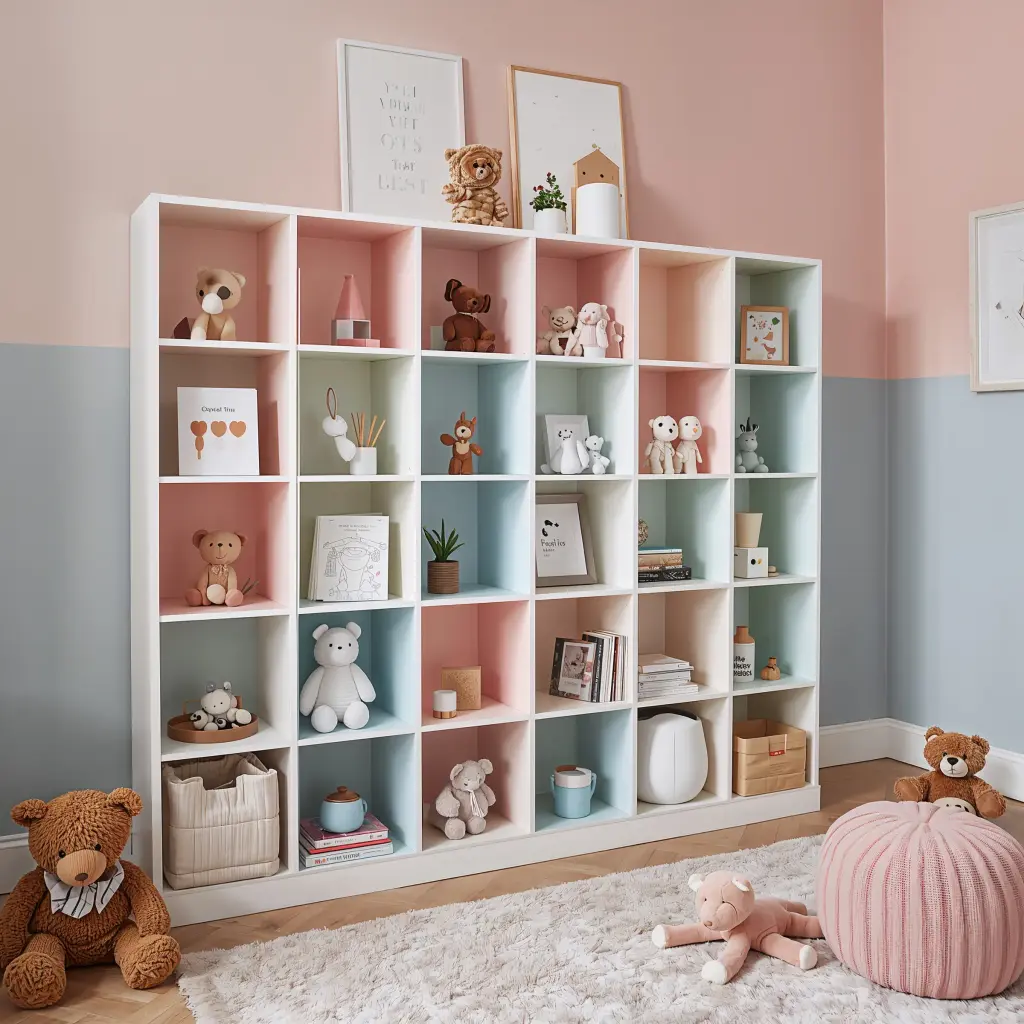
The Organization System That Actually Sticks
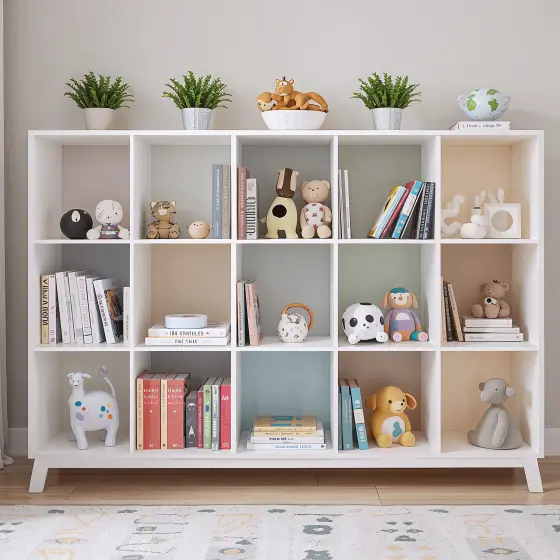
You want to know what converted me to the cubby life? Watching my toddler actually put books back where they belong because each cubby is like its own little house. Pastel cubby shelves combine the best of bins and shelves without looking like you raided a classroom supply store.
I went with soft mint, blush pink, and butter yellow cubbies because they complement literally any nursery color scheme without screaming for attention. Each cube holds about 15-20 board books standing up, or you can lay them flat and stack them.
The genius move? Assigning each cubby a category. One for bedtime books, one for “books we read 47 times a day,” and one for library books that need to go back.
Cubby Configuration Tips
Here’s what works after testing every possible arrangement:
Best cubby layouts:
- 2×3 grid for small walls
- 3×3 for standard nurseries
- 1×4 horizontal under windows
What to put in each cubby:
- Books (obviously)
- Soft storage bins for tiny board books
- Small toys that go with specific books
- That one lovey that must be present for story time
Pro tip: Leave one cubby empty on purpose. Kids need somewhere to shove things when you say “clean up” and they have 30 seconds before meltdown mode.
Also Read: 10 Creative Tree Bookshelf Ideas for Cozy Home Decor
DIY Crate Stack Bookshelf
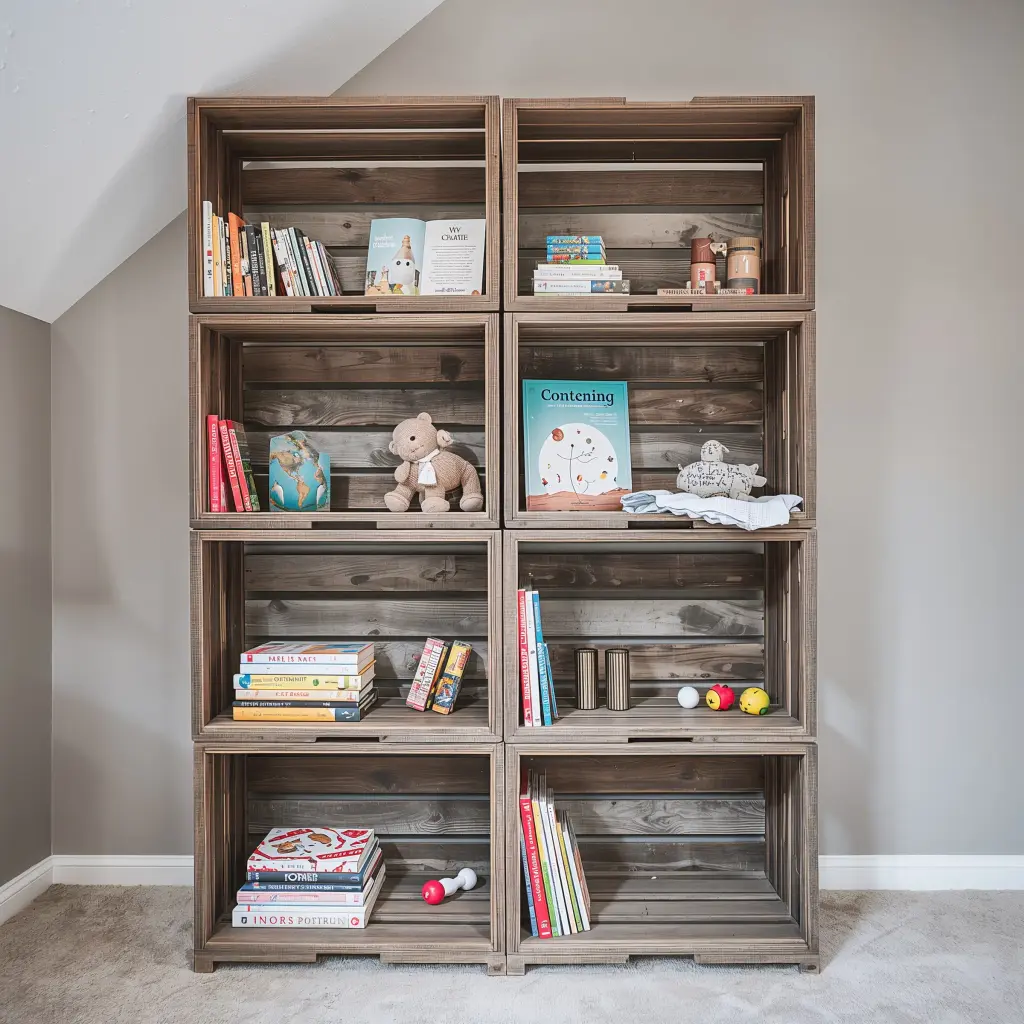
Building Bookshelf Magic on a Budget
Let me tell you about my favorite $30 bookshelf hack that looks like it came from a boutique nursery store. Wooden crates from the craft store + some sandpaper + non-toxic paint = custom bookshelf that fits your exact space and style.
I stacked three crates in a pyramid formation (two on bottom, one on top) and suddenly had this rustic-meets-modern storage solution that holds a surprising amount of books. The crates can be rearranged as your kid grows, turned into toy storage, or even become under-bed storage later.
What makes this brilliant? You can customize everything. Paint them, stain them, add wheels, attach them to the wall, or leave them free-standing. My sister even lined hers with removable wallpaper that matches her nursery theme.
Crate Selection and Safety
Not all crates are nursery-worthy. Here’s what to look for:
Good crate characteristics:
- Smooth, sanded edges (no splinter disasters)
- Solid wood, not particle board
- At least 12 inches deep for standard books
- Weight rating of 25+ pounds per crate
Assembly must-haves:
- Wood glue for permanent stacking
- L-brackets if wall-mounting
- Furniture straps for freestanding units
- Round edge guards for extra safety
IMO, this is the best option if you’re renting and can’t put holes in walls 🙂
Storybook Display Ledge
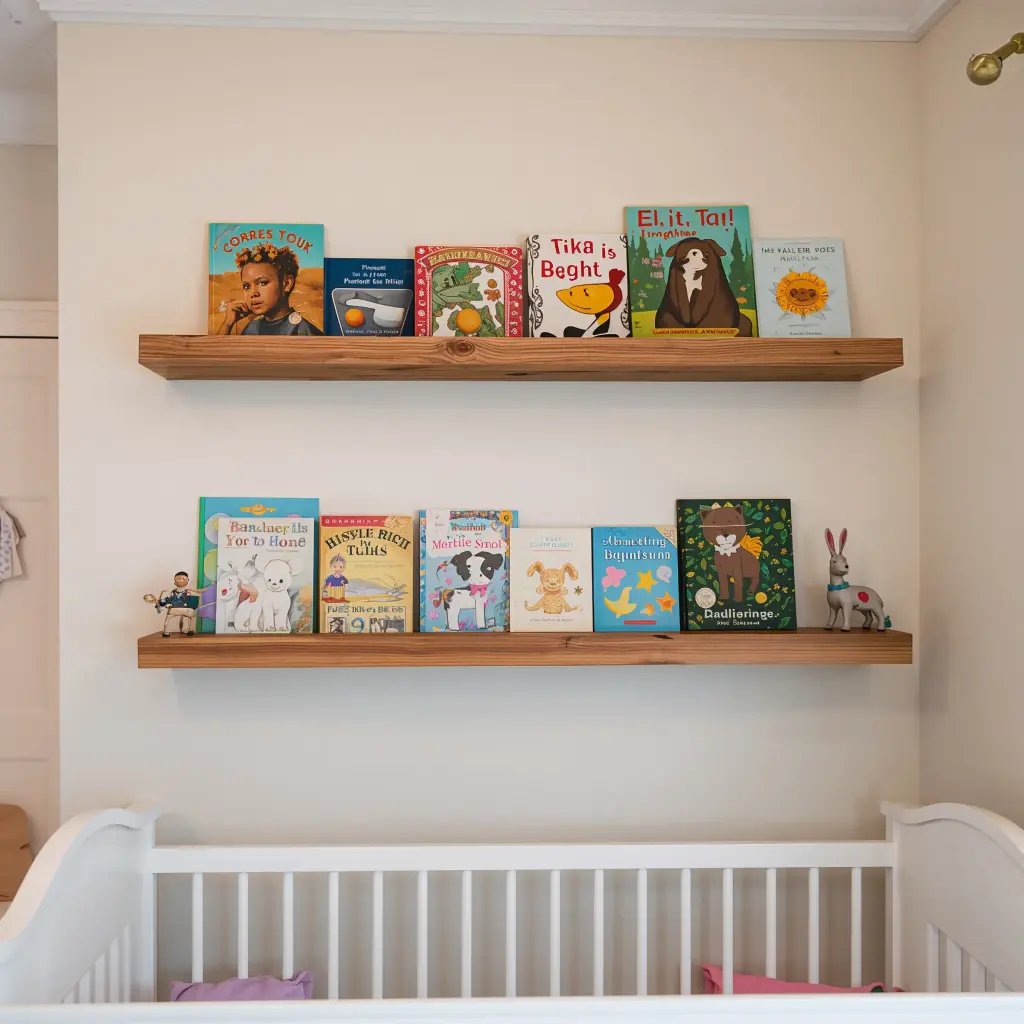
Making Books Part of Your Decor
Picture rails aren’t just for actual pictures anymore. Storybook display ledges turn your kid’s favorite books into rotating art gallery pieces that change whenever you want. This setup makes me ridiculously happy because beautiful children’s book covers deserve to be seen, not hidden spine-out on a shelf.
I installed three ledges at different heights, and here’s the game-changer: the lip on these ledges is deep enough to hold books open to favorite pages. My daughter loves seeing the “pretty pages” displayed, and it actually encourages her to look at books even when we’re not actively reading.
The display ledge system also solves the “favorite book of the week” situation. You know, when your kid wants the same book 50 times? Display it prominently, and somehow they’re more satisfied just seeing it there.
Creating Gallery Wall Impact
Display strategies that work:
- Rotate books weekly to maintain interest
- Mix sizes for visual variety
- Include one non-book item (small plant, toy)
- Face books outward during day, spine-out at night for calmer vibes
Keep these measurements in mind:
- 4-inch deep ledge for board books
- 6-inch deep for picture books
- Space ledges 12-15 inches apart vertically
Modular Cube Organizer
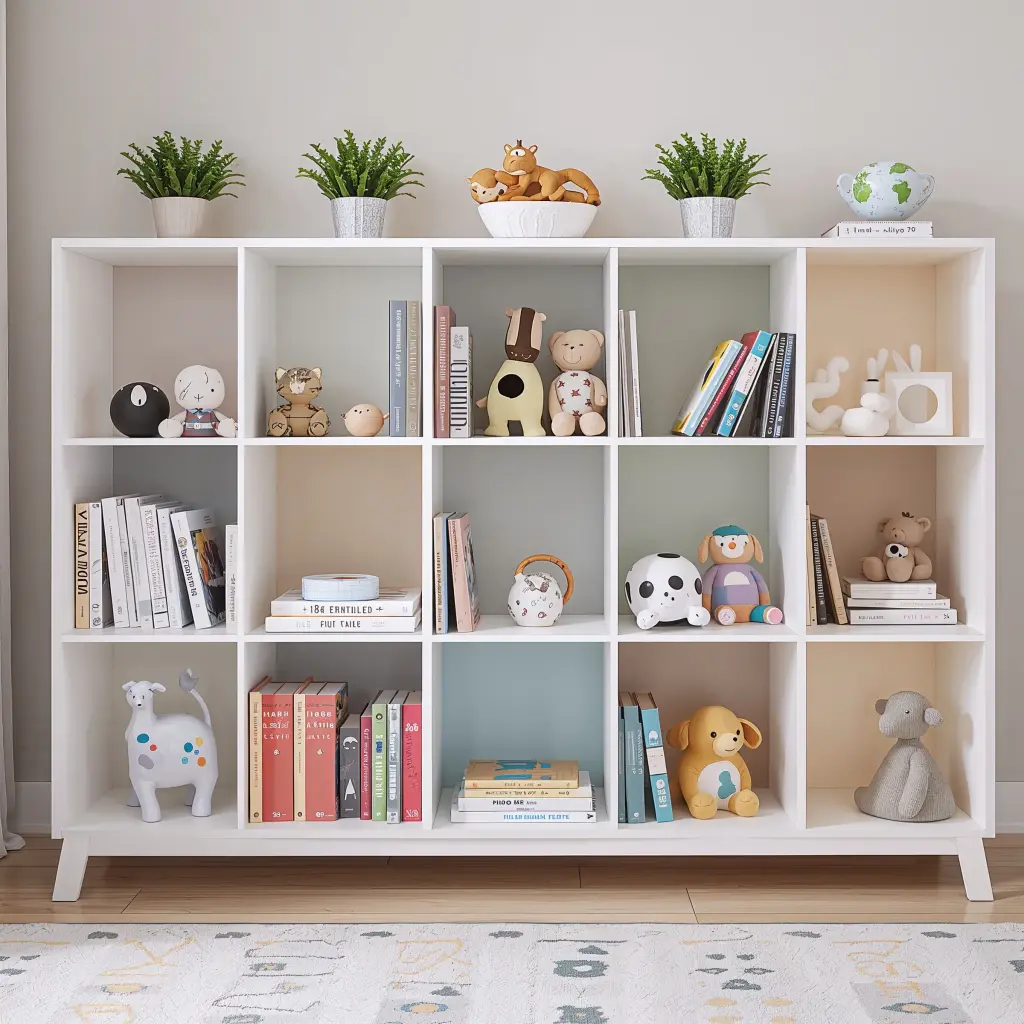
The Shelf System That Grows Up
Why do I love modular cube organizers with the fire of a thousand suns? Because they’re basically nursery Legos that you can reconfigure whenever your storage needs change. Start with four cubes for your newborn’s small book collection, add more cubes as the library grows, and eventually transform the whole thing into a toy storage system.
I started with a 2×2 configuration that fit perfectly beside the glider chair. Now it’s a 3×3 beast that holds books, bins, and those random toys that don’t fit anywhere else. The cubes work horizontally or vertically, and you can even separate them into different furniture pieces if needed.
Each cube becomes its own little zone. Books in some, fabric bins in others, display items on top. It’s organization that actually makes sense to a toddler brain.
Cube Customization Hacks
Make those basic cubes work harder:
- Add legs to lift the unit off the floor (easier cleaning!)
- Insert fabric bins in alternating cubes for hidden storage
- Install LED strips under each shelf for nighttime glow
- Attach a cushion on top to create a bench
Best cube filling strategies:
- Bottom row: Heavy books and toys
- Middle row: Daily-use items
- Top row: Display or parent-only items
Also Read: 10 Inspiring Corner Bookshelf Decor Ideas for Cozy Homes
Rustic Wooden Cradle Shelf
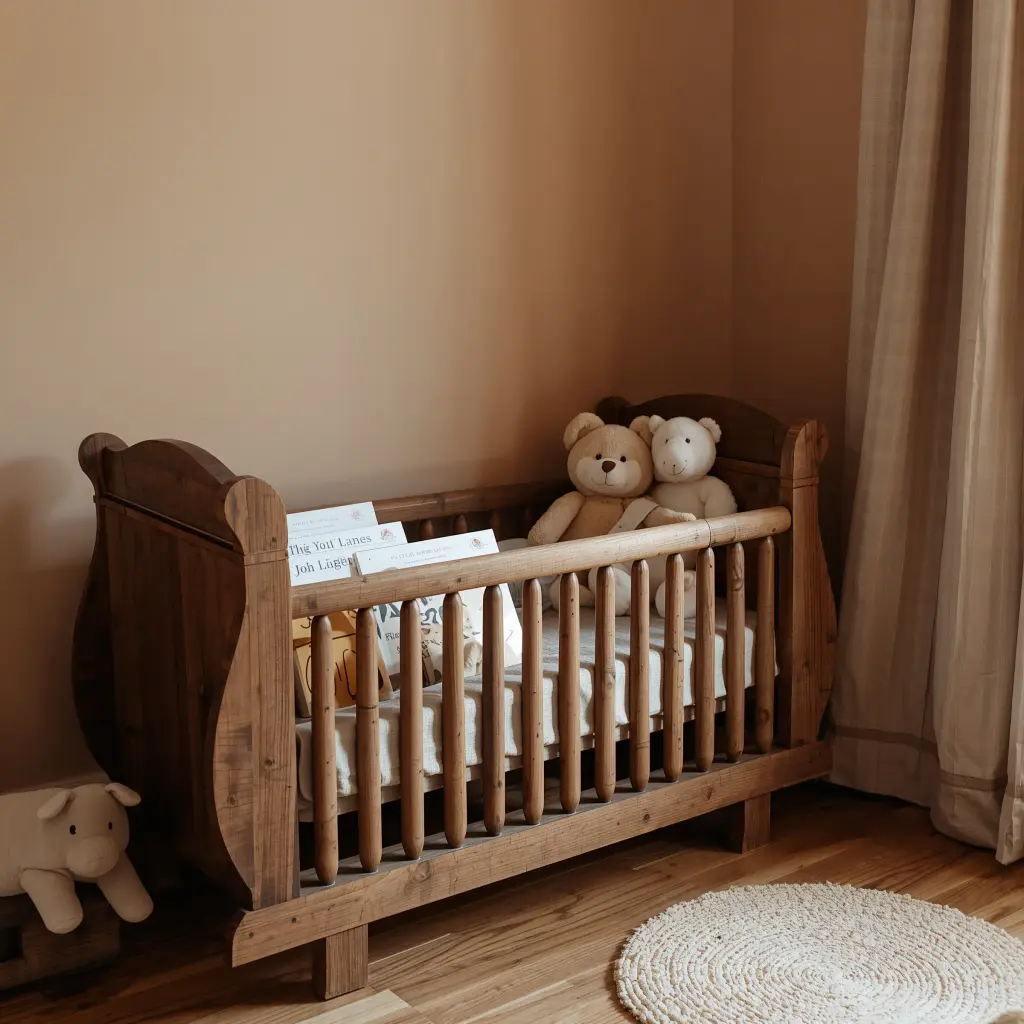
Vintage Charm Meets Modern Function
Ever seen those old wooden cradles at antique stores and thought “cute, but what would I do with that?” Turn it into a rocking bookshelf, that’s what! The rustic wooden cradle shelf brings serious farmhouse vibes while being surprisingly practical for book storage.
I found an old cradle at an estate sale for $40, gave it a good sanding, sealed it with non-toxic finish, and boom – unique bookshelf that rocks (literally). The rocking motion actually helps keep books upright, and kids find it fascinating that their bookshelf moves.
The cradle shape naturally creates compartments for different book sizes. Tall books in the middle, shorter ones on the sides. Some people even add dividers to create more sections.
Repurposing vs. Buying New
If you’re going the vintage route:
- Check for lead paint (test kits are cheap)
- Sand thoroughly to remove splinters
- Ensure rocking mechanism is smooth
- Add felt pads where it touches the floor
New cradle shelves offer:
- Consistent sizing for planning
- Modern safety standards met
- Choice of finishes and colors
- Often include mounting hardware
Either way, position cradle shelves where the rocking won’t hit walls or furniture. Learn from my mistake of putting one too close to the changing table – that was a fun discovery at 3 AM.
The Bottom Line on Nursery Bookshelves
After trying basically every bookshelf style known to parenthood, here’s what I know for sure: the best bookshelf is one that makes reading accessible and enjoyable for your family. Whether that’s a minimalist white ledge or a rainbow explosion of cubbies doesn’t matter if it works for you.
Start with one solid piece that fits your space and style. You can always add more storage later (and trust me, you will). Focus on making books accessible, visible, and part of daily life rather than hidden away.
Remember, your kid won’t remember if their bookshelf matched the Pinterest board. They’ll remember curling up with you and reading their favorite story for the hundredth time. The shelf just needs to hold the books that make those memories – everything else is just details.
Pick what speaks to you, anchor it properly, and don’t stress if it gets a little chaotic sometimes. That’s just proof it’s being used and loved, which is exactly what a good nursery bookshelf should be