10 Stylish Nursery Bookshelf Ideas for Trendy Baby Rooms
- Bookshelf Styling
 Ben
Ben- 0
- 42 minutes read
Let’s be honest — you didn’t expect nursery planning to consume your entire personality, but here you are, scrolling through Pinterest at 2 AM comparing nursery bookshelf ideas like your baby’s future reading habits depend on it. (They might, actually.) The right bookshelf does more than hold board books. It sets the tone for the whole room, teaches organization from day one, and yes, it makes your nursery look ridiculously Instagram-worthy.
I went through this exact obsession when designing my niece’s nursery last year. Started with “I’ll just pick something simple” and ended up building a custom crate shelf at midnight while watching woodworking tutorials. No regrets. The bookshelf became the single most complimented piece in the entire room — more than the crib, more than the wallpaper, more than the absurdly expensive rocking chair.
So whether you’re nesting like a champion or helping someone who is, these 10 stylish nursery bookshelf ideas will spark inspiration for every taste, budget, and room size. Let’s get into it.
Woodland-Themed Nursery Bookshelf
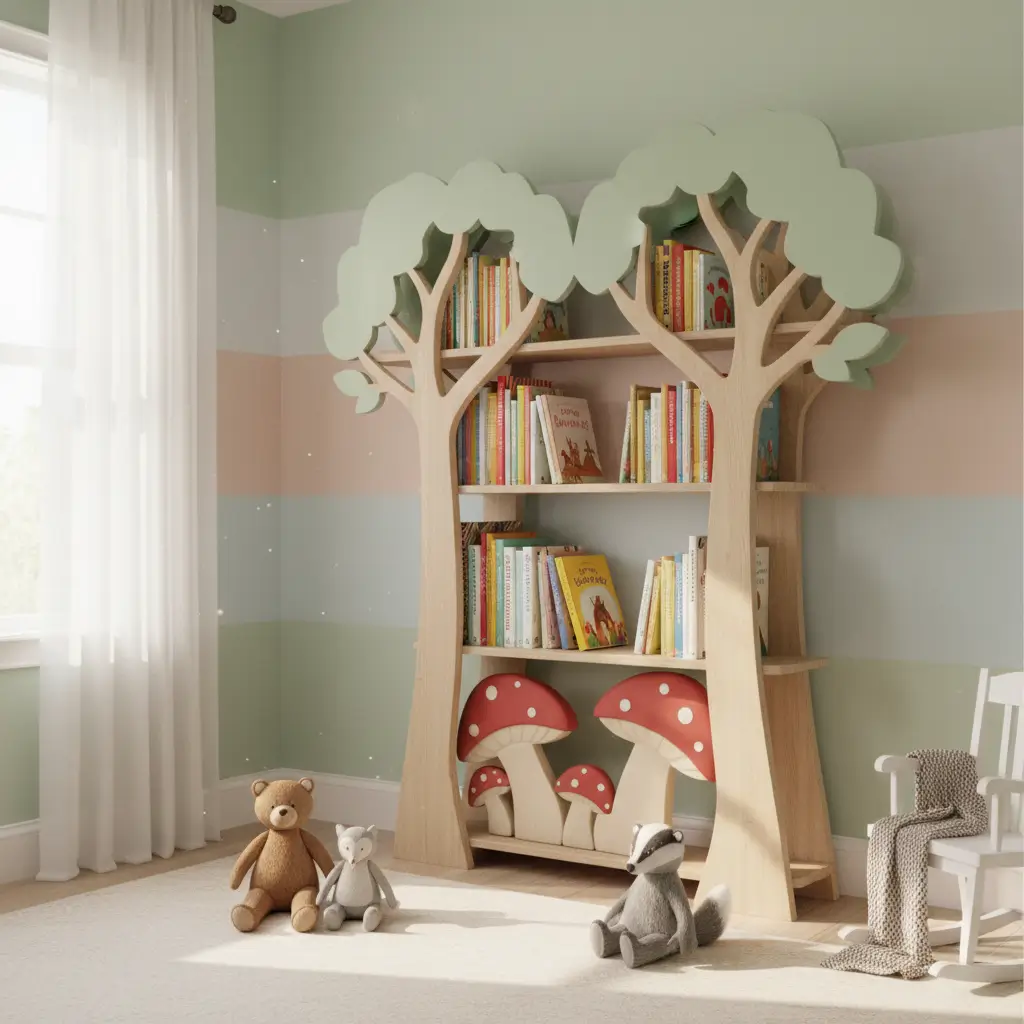
Nothing says “welcome to the world, tiny human” quite like surrounding them with forest creatures and earthy tones. Woodland-themed bookshelves bring that enchanted forest vibe right into the nursery, and honestly? They never go out of style.
Think shelving shaped like mountain ranges, painted in soft greens and browns, with little fox and owl details scattered throughout. These bookshelves double as wall art, which means you get storage AND decoration in one piece. That’s what we call a parenting win.
What Makes Woodland Shelves Special
Here’s why woodland bookshelves keep dominating nursery design:
- Gender-neutral appeal — works beautifully for any baby
- Natural color palettes — greens, browns, creams, and muted golds
- Grows with the child — a forest theme suits toddlers and kids equally well
- Pairs with multiple decor styles — rustic, Scandinavian, boho, you name it
- Easy to accessorize — plush woodland animals become both toys and decor
My favorite version? A mountain-range silhouette shelf mounted at the child’s eye level. Stack a few books on each “peak,” add a tiny felt fox figure, and you’ve created a scene straight out of a storybook. The key here sits in keeping the palette muted so the room feels calming rather than chaotic.
Styling Tips for Woodland Shelves
Don’t go overboard with the theme. You want “charming forest” not “taxidermy showroom.” Pick two or three woodland elements and let them breathe. A mushroom bookend here, a pine tree print there — subtlety wins every time.
Pair your woodland shelf with natural materials throughout the room. Woven baskets, linen curtains, and a jute rug create a cohesive look that feels intentional without screaming “I tried too hard.”
Floating Wall Nursery Bookshelf
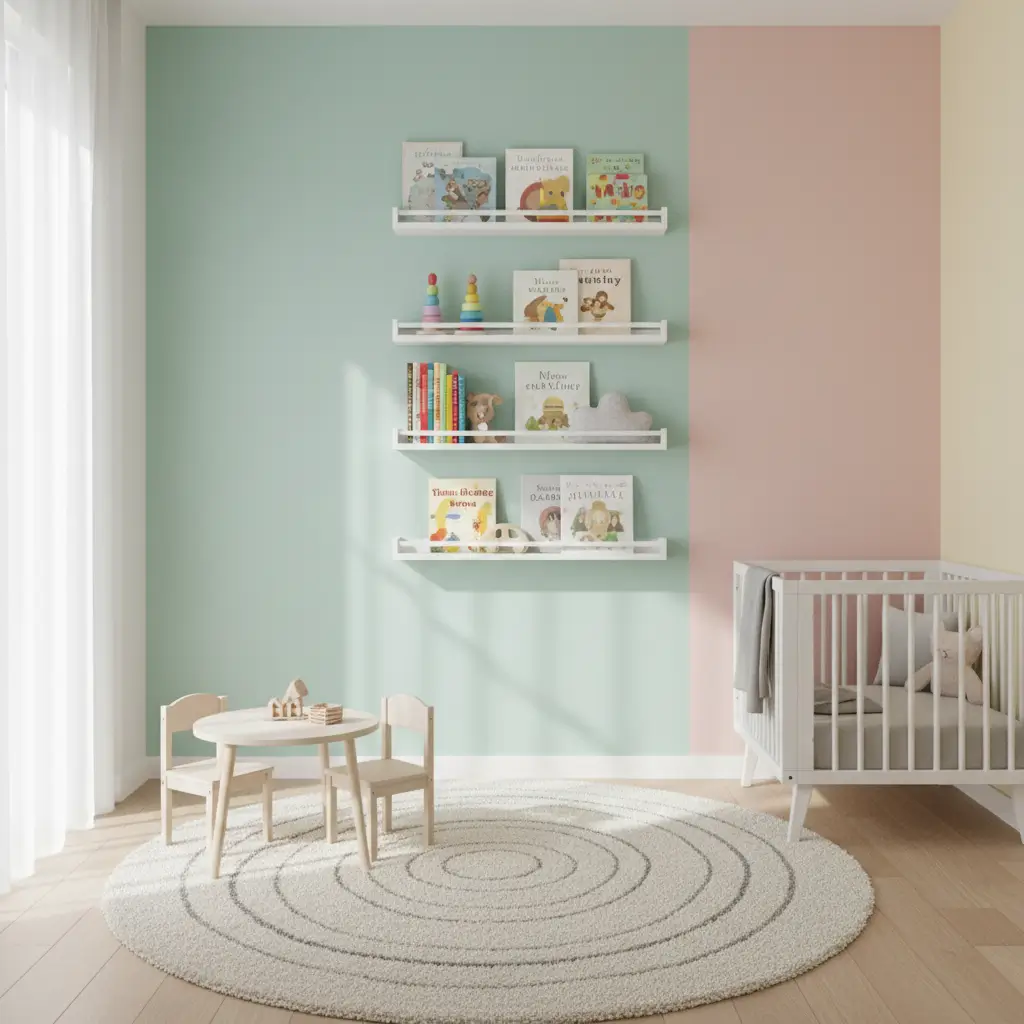
Can we take a moment to appreciate the sheer genius of floating shelves? They use zero floor space, display book covers forward (so your baby can actually see what they’re choosing), and they make any wall look like a curated children’s bookstore.
Floating nursery bookshelves rank as the most popular option for good reason. They’re affordable, easy to install (even for the tool-challenged among us), and infinitely customizable. I’ve seen people arrange them in straight lines, staggered patterns, and even diagonal cascades down the wall.
Why Forward-Facing Display Matters
Here’s something most people overlook — babies choose books by their covers. They can’t read spines. When you display books facing forward on floating shelves, you empower even the youngest readers to pick their own stories. That’s not just cute; it’s genuinely developmental.
Forward-facing shelves also turn your book collection into wall art. Those beautifully illustrated children’s books? They deserve to show off their covers, not hide spine-out on some boring traditional shelf.
Installation Considerations
A few things to keep in mind before you start drilling:
- Use appropriate wall anchors — these shelves hold more weight than you’d think once loaded with books
- Mount at child height — the bottom shelf should sit where tiny hands can reach
- Leave space between shelves — roughly 10-12 inches allows for taller picture books
- Stagger quantities — three shelves creates a balanced look for most walls
- Check for studs — seriously, don’t skip this step unless you enjoy picking up books off the floor at 3 AM
The best part about floating shelves? You can rearrange the books seasonally or as your collection grows. They’re basically the modular wardrobe of nursery storage.
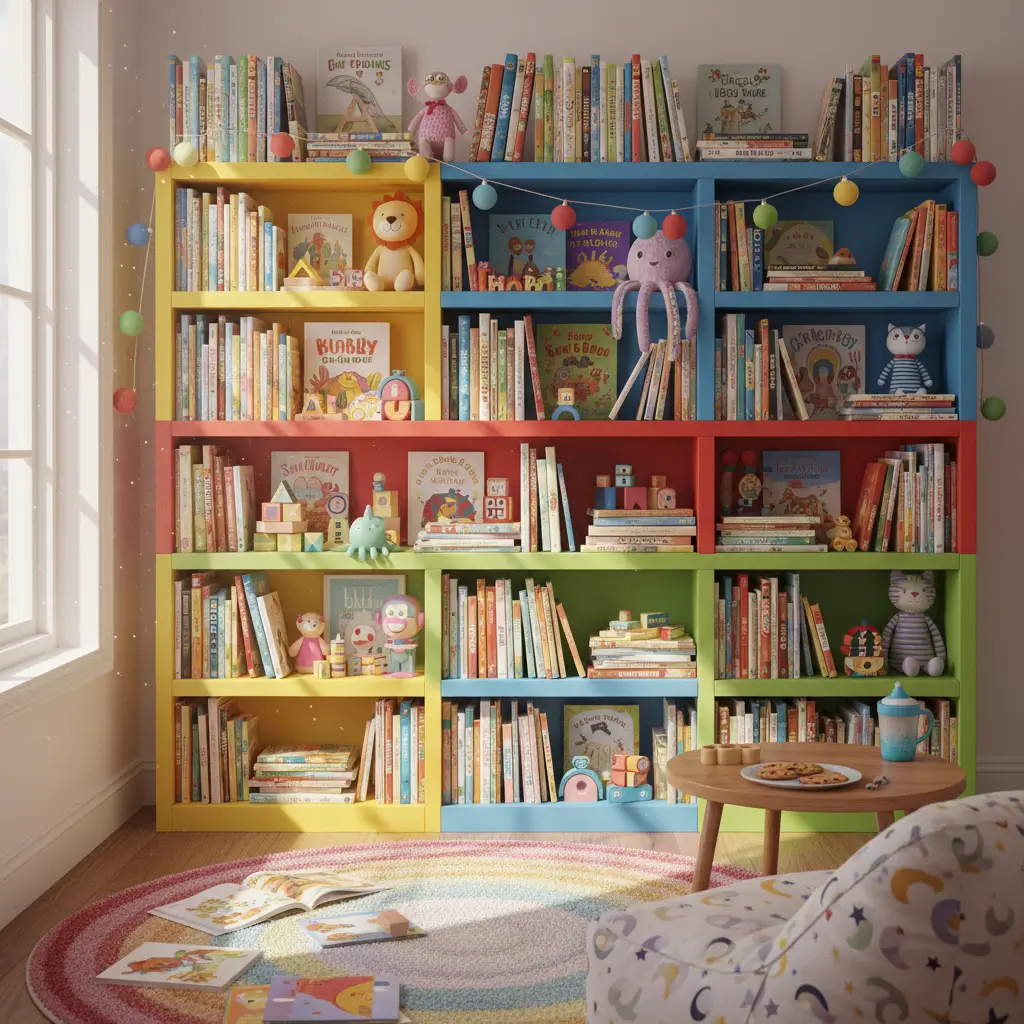
Rainbow Color-Coded Bookshelf
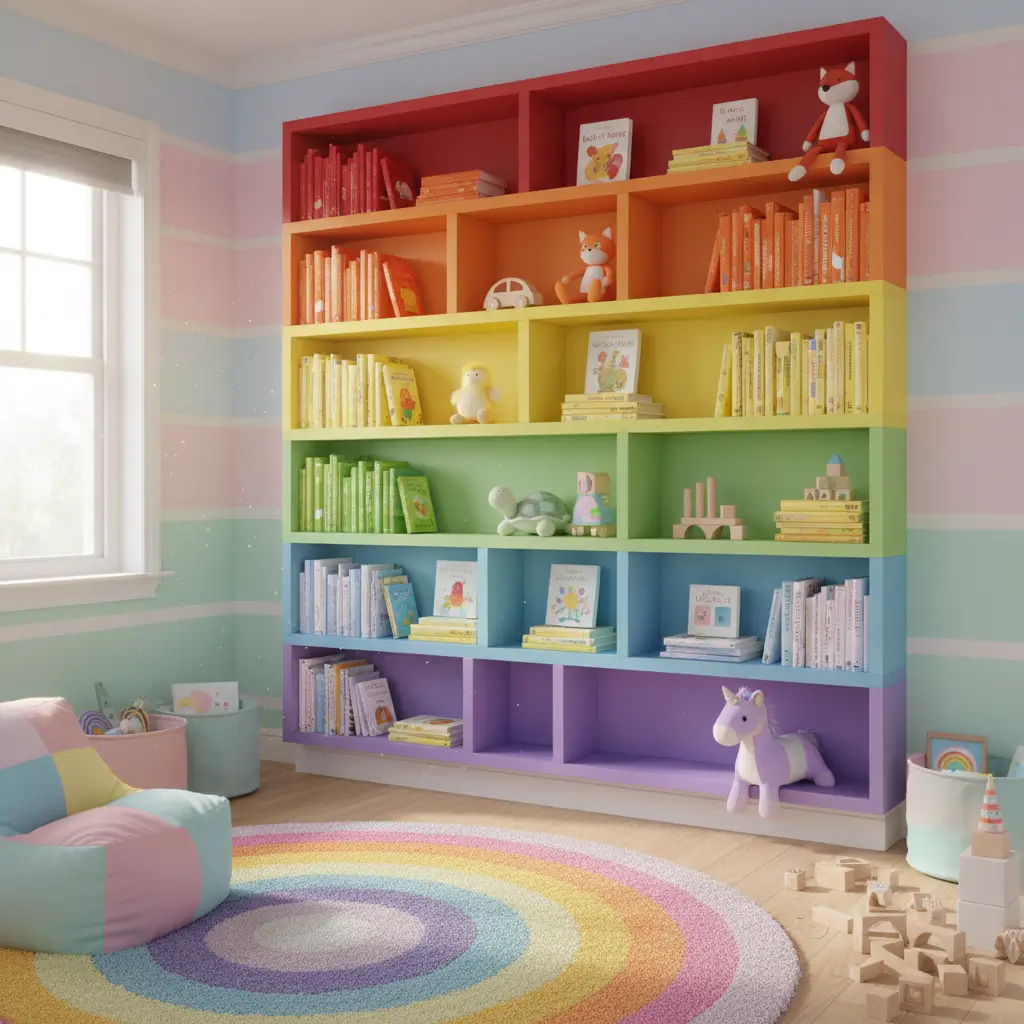
Okay, this one splits the parenting community right down the middle. You either think rainbow color-coded bookshelves represent peak nursery aesthetics, or you think they’re wildly impractical. I’m firmly in the “peak aesthetics” camp, and I’ll fight about it.
Arranging books by the color of their spines or covers creates this stunning gradient effect that makes any bookshelf look like a work of art. Red flows into orange, orange melts into yellow, and by the time you reach violet, your nursery looks like it belongs in a design magazine.
How to Create the Perfect Rainbow Effect
Getting that smooth color transition takes some effort:
- Sort all books by dominant cover color first
- Group similar shades together — don’t stress about perfect precision
- Place white and black books at opposite ends as visual anchors
- Mix book sizes within each color group for a natural look
- Add a few colorful bookends to separate sections if needed
Will you struggle to find specific titles? Yep. Will you care when you see how gorgeous it looks? Absolutely not. And honestly, your baby doesn’t care about alphabetical order anyway. They want the one with the dog on the cover — every single time.
Making Rainbow Work Long-Term
The practical concern people raise about rainbow shelving has merit — it gets harder to maintain as the collection grows. My solution? Dedicate one shelf or section to the rainbow display and use a separate basket or bin for everyday reading rotation. Best of both worlds, zero compromise on aesthetics.
You can also use this approach on any shelf type — floating shelves, cube storage, traditional bookcases. The rainbow arrangement turns even the most basic IKEA shelf into something special.
Also Read: 10 Cozy Bookshelf Wall Decor Ideas and Warm Living Room
Animal-Shaped Kids Bookshelf
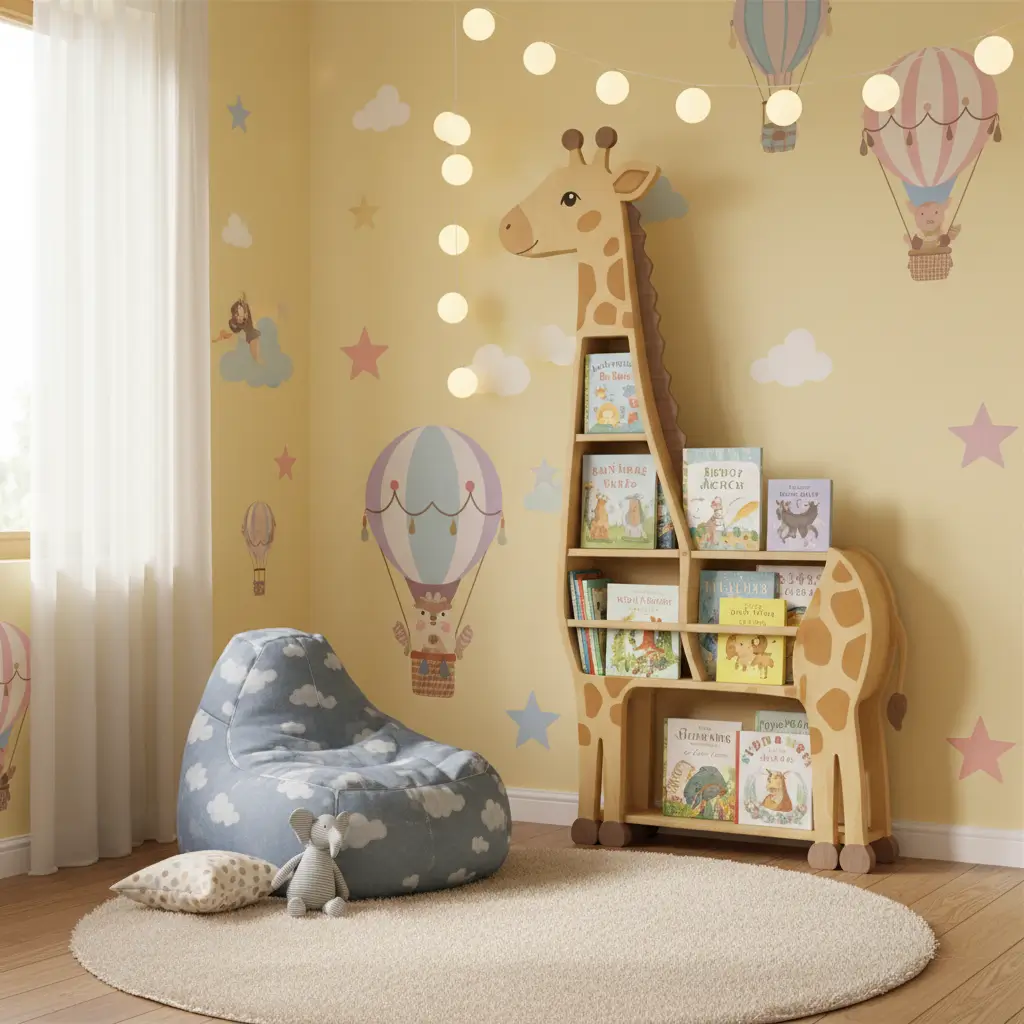
Want your nursery bookshelf to double as a statement piece? Animal-shaped bookshelves deliver personality in a way that rectangular shelves simply cannot. We’re talking shelves shaped like elephants, giraffes, bears, whales — basically a whole zoo of storage options.
I spotted a giraffe-shaped bookshelf at a friend’s baby shower, and the entire room gravitated toward it. Not the cake, not the gifts — the bookshelf. That’s the kind of impact these pieces create.
Popular Animal Shapes and Their Vibes
Different animals create different moods:
- Elephant — classic, works with safari and boho themes
- Whale or dolphin — perfect for ocean-themed nurseries
- Bear — cozy woodland feel
- Giraffe — uses vertical space brilliantly
- Bunny — soft, sweet, undeniably adorable
- Dinosaur — because who says dinos aren’t nursery material?
The trick with animal shelves? Choose one that matches your existing theme rather than forcing a random animal into a room where it doesn’t belong. A whale in a woodland nursery feels confusing. A bear? Perfect fit.
Quality and Safety Checks
Animal-shaped shelves often come from smaller artisan shops or Etsy sellers, which means quality varies wildly. Before purchasing, check these essentials:
- Rounded edges — no sharp corners anywhere
- Non-toxic paint or finish — babies will absolutely lick this thing
- Secure wall mounting — tip-over prevention matters enormously
- Weight capacity — cute means nothing if it can’t hold books
These shelves typically cost more than standard options, but they serve as both furniture and art. When you factor in the money you’d spend on separate wall decor, the investment suddenly makes much more sense.
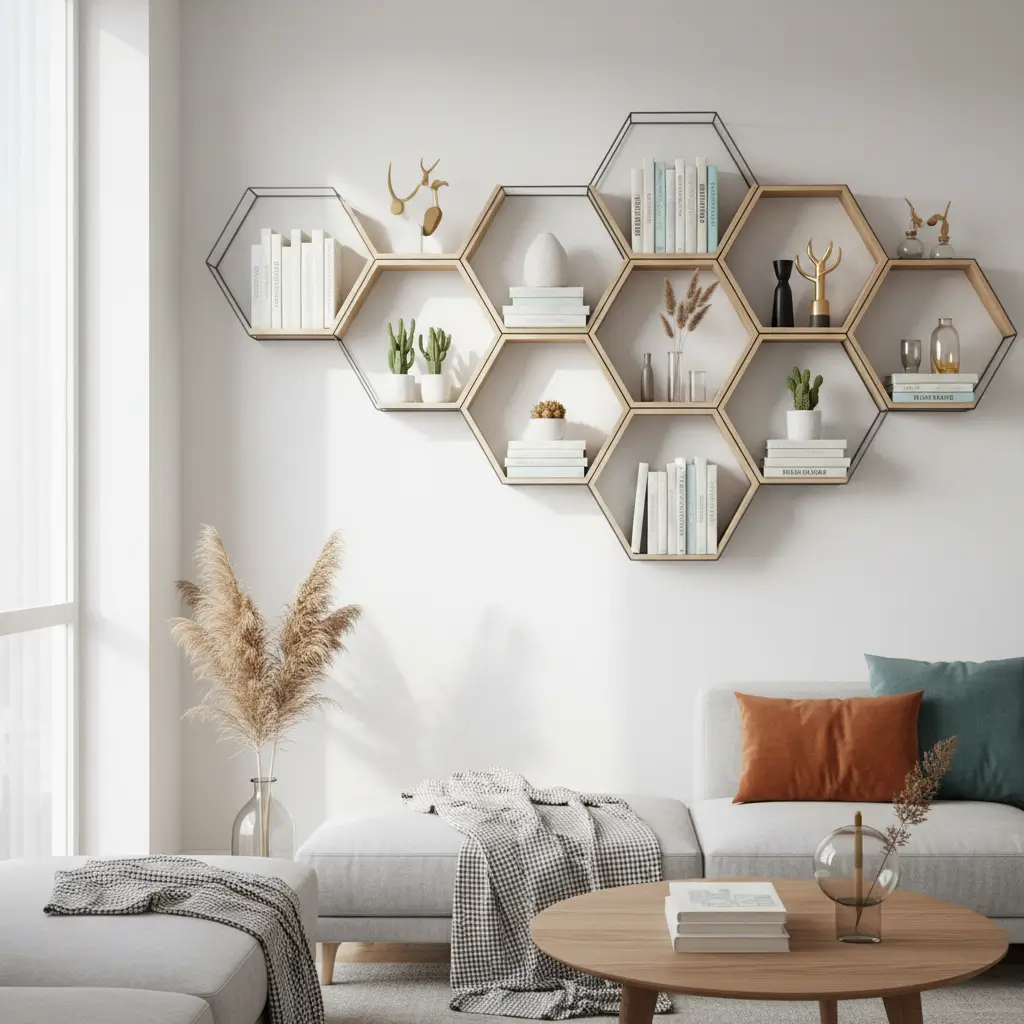
Minimalist Modern Nursery Bookshelf
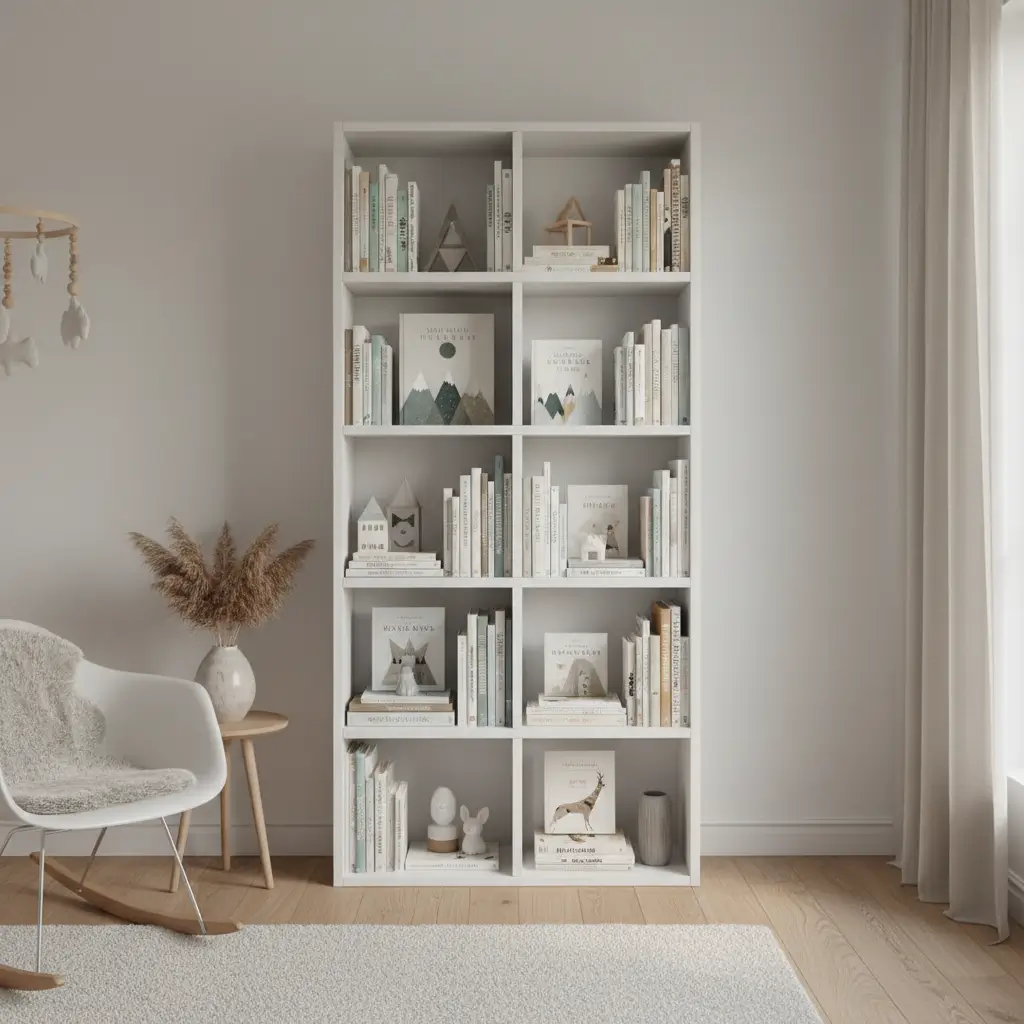
Sometimes the chicest move involves doing less. Minimalist nursery bookshelves prove that simplicity packs a serious design punch. Clean lines, neutral tones, and zero unnecessary details — just pure, functional elegance.
I know what you might think — “minimalist” and “baby room” sound like contradictions. Babies come with stuff. So much stuff. But a minimalist bookshelf actually helps combat the clutter chaos by giving everything a designated spot and encouraging you to curate rather than hoard.
Characteristics of Minimalist Shelving
What separates minimalist from just… boring?
- Simple geometric shapes — rectangles, circles, hexagons
- Monochromatic finishes — white, black, natural wood
- Hidden hardware — no visible brackets or screws
- Intentional negative space — don’t fill every inch
- Quality materials — minimalism demands better craftsmanship since there’s nothing to hide behind
The golden rule of minimalist nursery shelving? Display fewer books, but display them beautifully. Rotate your collection regularly, keeping only a handful of titles on the shelf at any time. This approach actually encourages more reading since the choices don’t overwhelm your little one.
Pairing Minimalist Shelves with Warm Elements
The biggest risk with minimalist design? Creating a space that feels sterile instead of serene. Combat this by adding warm textures nearby — a knitted blanket draped over the crib, a sheepskin rug on the floor, wooden toys on the shelf alongside books.
A single potted plant (safely out of reach, obviously) and a warm-toned light fixture transform a minimalist bookshelf area from cold showroom to cozy reading nook.
DIY Crate Stack Bookshelf
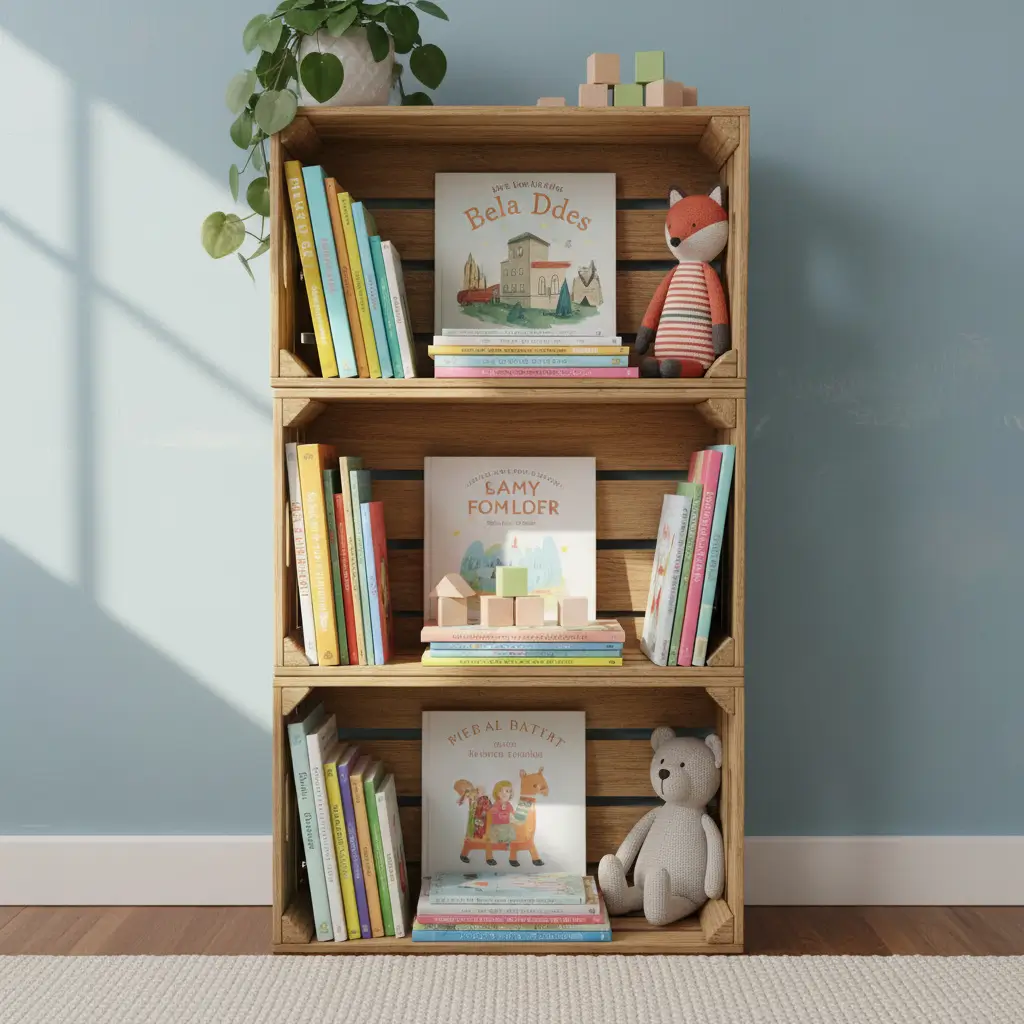
Here’s where we get crafty. DIY crate bookshelves offer that perfect blend of rustic charm and practicality, and they cost roughly the same as a fancy coffee order. Grab a few wooden crates, some sandpaper, maybe a can of paint, and you’ve got yourself a project.
I made one of these for my cousin’s nursery using four vintage apple crates from a flea market. Total cost: $35. Time invested: one Saturday afternoon. Compliments received: infinite. The satisfaction-to-effort ratio on this project remains unmatched.
Building Your Crate Bookshelf
Follow these steps for a polished result:
- Source your crates — hardware stores, thrift shops, online marketplaces
- Sand everything thoroughly — splinters and babies do not mix
- Paint or stain to match your nursery palette
- Apply non-toxic sealant — protect the finish and protect tiny mouths
- Stack and secure — use wood glue, brackets, or L-brackets to connect crates
- Anchor to the wall — this step remains absolutely non-negotiable for safety
You can stack crates vertically, horizontally, or in creative asymmetrical patterns. Some people mount individual crates on the wall like shadow boxes. Others create a full bookcase by stacking six or eight crates together.
Customization Options
The beauty of DIY? Total creative control. Paint each crate a different color for a playful look. Leave them natural for rustic vibes. Add caster wheels to the bottom for a rolling bookshelf. Line the backs with patterned wallpaper for a pop of surprise.
FYI, if you choose vintage crates, inspect them carefully for loose nails, rough patches, or chemical residues. Safety first, aesthetics second — always.
Also Read: 10 Whimsical Tree Bookshelf Ideas for Cozy Corners
Convertible Toy and Books Storage Shelf
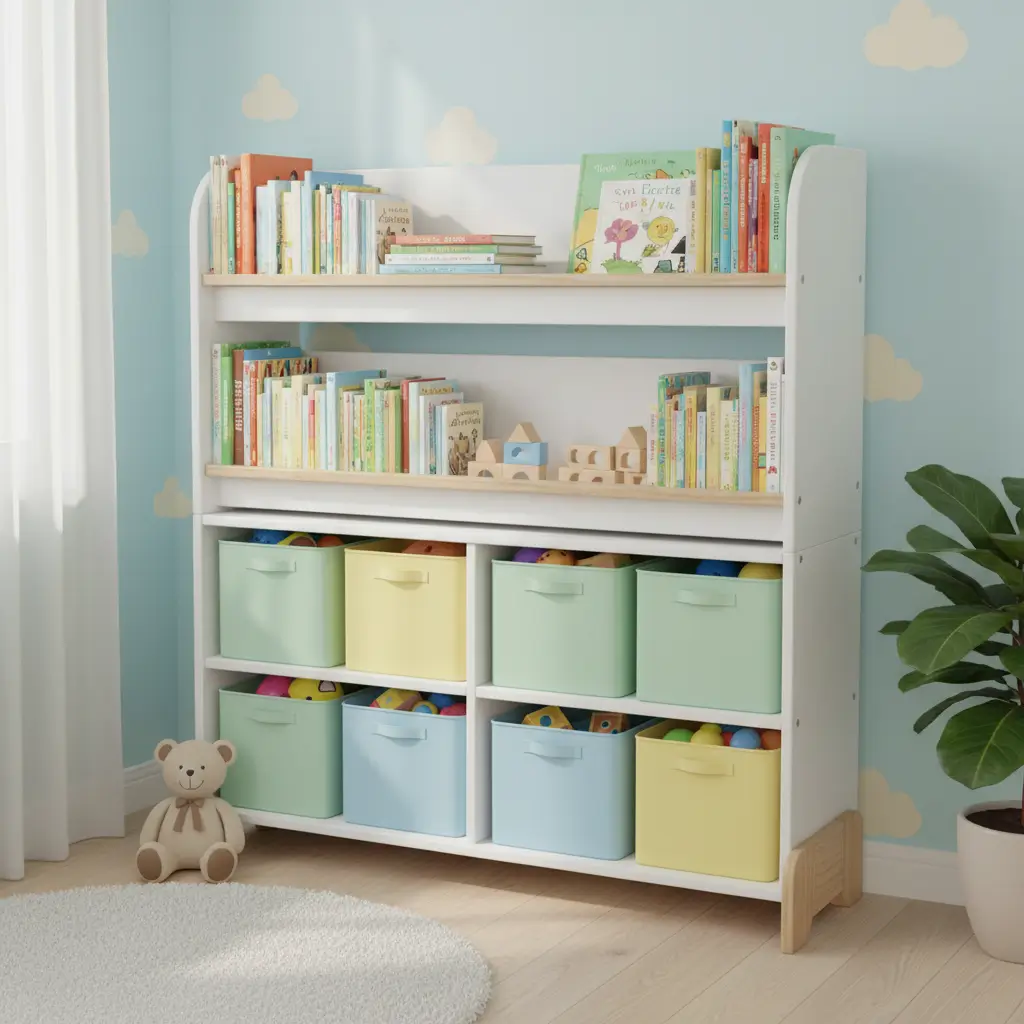
Why buy separate storage for books and toys when one brilliant piece handles both? Convertible storage shelves combine open shelving for book display with bins, baskets, or cubbies for toy storage. They’re the Swiss Army knife of nursery furniture.
Every parent I know eventually faces the “where do I put all this stuff” crisis. A convertible shelf addresses that problem before it even starts. Books on top, toys in bins below — everything visible, everything accessible, everything contained.
Features to Look For
The best convertible storage units offer:
- Adjustable shelf heights — because needs change fast with growing kids
- Removable bins or baskets — for easy toy rotation and cleanup
- Sturdy construction — this thing will take a beating, guaranteed
- Rounded corners — see previous point about beatings
- Low profile — child-accessible height encourages independence
Some models even convert from nursery shelves into toy organizers, then into display units as the child grows. You essentially buy one piece of furniture and get three lifecycle stages out of it. That’s smart shopping.
Organization Strategies
Here’s my favorite approach for convertible shelves:
- Top shelves — forward-facing books for daily reading
- Middle shelves — activity books, coloring supplies, puzzles
- Bottom bins — soft toys, building blocks, miscellaneous chaos containers
Label each bin with a picture (not words — remember, your audience can’t read yet). This teaches categorization early and makes cleanup feel like a sorting game rather than a chore. Clever, right?
Corner Space-Saving Nursery Bookshelf
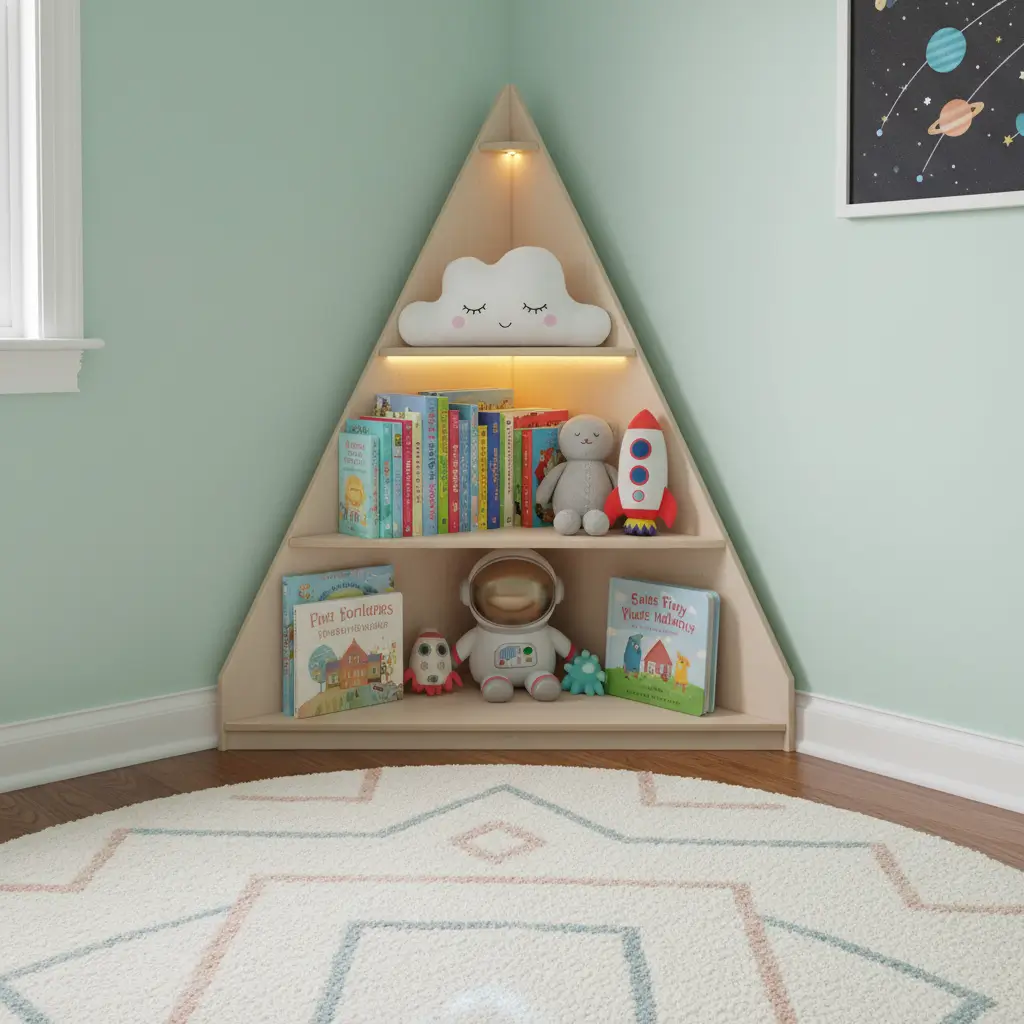
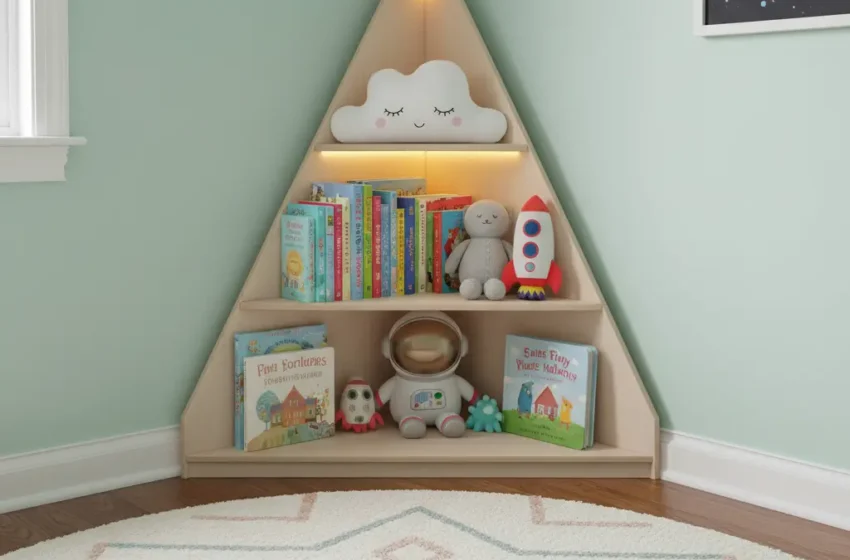
Got a weird corner doing absolutely nothing? Corner nursery bookshelves transform those overlooked spaces into functional reading areas. They’re especially valuable in smaller nurseries where every square inch counts.
I’ve always found corners to be the most underused real estate in any room. People shove a plant there or just… leave it empty. A corner bookshelf fixes that problem while adding storage you genuinely need.
Types of Corner Shelving
Several options work brilliantly in corners:
- Triangular floating shelves — hug the corner at multiple heights
- Quarter-round bookcases — freestanding units designed for corners
- Rotating carousel shelves — spin to access all sides
- Ladder-style corner units — lean against the wall junction
- Custom built-ins — if you’re feeling ambitious (and handy)
The rotating carousel deserves special attention. These cylindrical units sit right in the corner, hold a surprising number of books, and let your toddler spin them to browse titles. It’s basically a tiny library experience right in the nursery.
Making Corners Cozy
Don’t just plop a shelf in the corner and call it done. Build a reading nook around it. Add a small cushion or floor pillow beneath the shelf. Hang a simple canopy or fabric drape overhead. Mount a small reading light nearby.
Suddenly, that dead corner becomes the coziest spot in the nursery. Your child will gravitate toward it naturally, and you’ll have created a dedicated space that associates books with comfort and warmth. That’s building a reader from the ground up. IMO, every nursery deserves at least one cozy nook like this.
Vintage Wooden Storybook Shelf
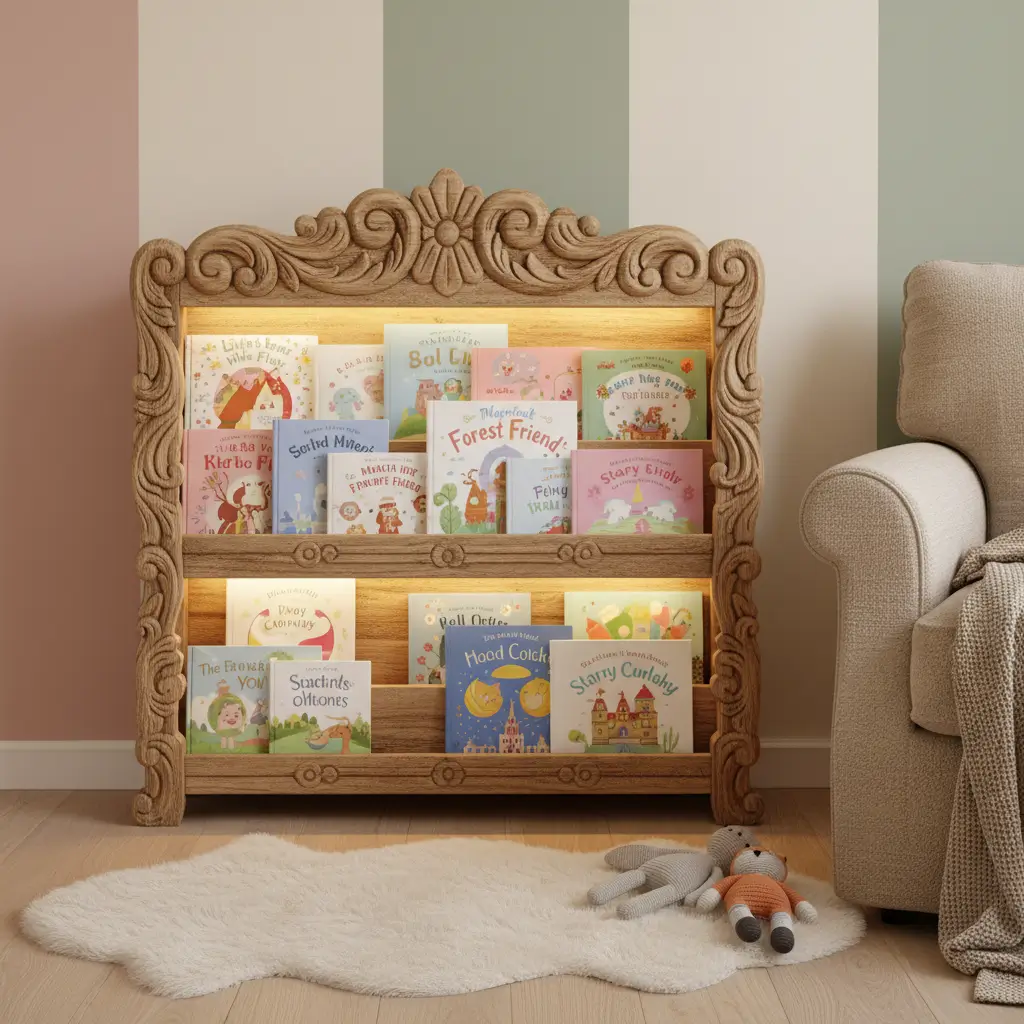
There’s something irreplaceable about vintage wooden bookshelves in a nursery. They carry warmth, history, and character that no mass-produced option can replicate. Whether you find a genuine antique or buy a vintage-inspired reproduction, these shelves add soul to baby rooms.
My absolute favorite nursery bookshelf I’ve ever seen belonged to a friend who inherited her grandmother’s small wooden shelf. It had this beautiful honey-colored patina, slightly worn edges, and decades of family memories embedded in its grain. They placed it in their daughter’s nursery, and it instantly became the emotional anchor of the room.
Sourcing Vintage Shelves
Finding the right vintage piece requires patience:
- Estate sales and flea markets — best prices, biggest selection
- Antique shops — curated but pricier
- Online marketplaces — search for “vintage children’s bookshelf” or “antique nursery furniture”
- Family attics — seriously, ask relatives what they’re storing
- Architectural salvage yards — sometimes unexpected gold mines
When evaluating vintage pieces, check for structural integrity, lead-free paint, and stable bases. Old doesn’t always mean safe, so either test or refinish with certified non-toxic products.
Refinishing and Personalizing
A light refinishing job can honor the vintage character while making the piece nursery-safe:
- Light sanding preserves the aged look while smoothing rough spots
- Natural wax or oil finish enhances wood grain without hiding it
- Chalk paint gives a soft matte look if you want to change the color
- New hardware — swap old knobs for ceramic animals or wooden shapes
The goal? Keep the vintage spirit alive while ensuring everything meets modern safety standards. You’re creating a bridge between generations, and that’s pretty special when you think about it.
Also Read: 10 Simple Corner Bookshelf Decor Ideas for Effortless Charm
Tree-Inspired Nursery Bookshelf
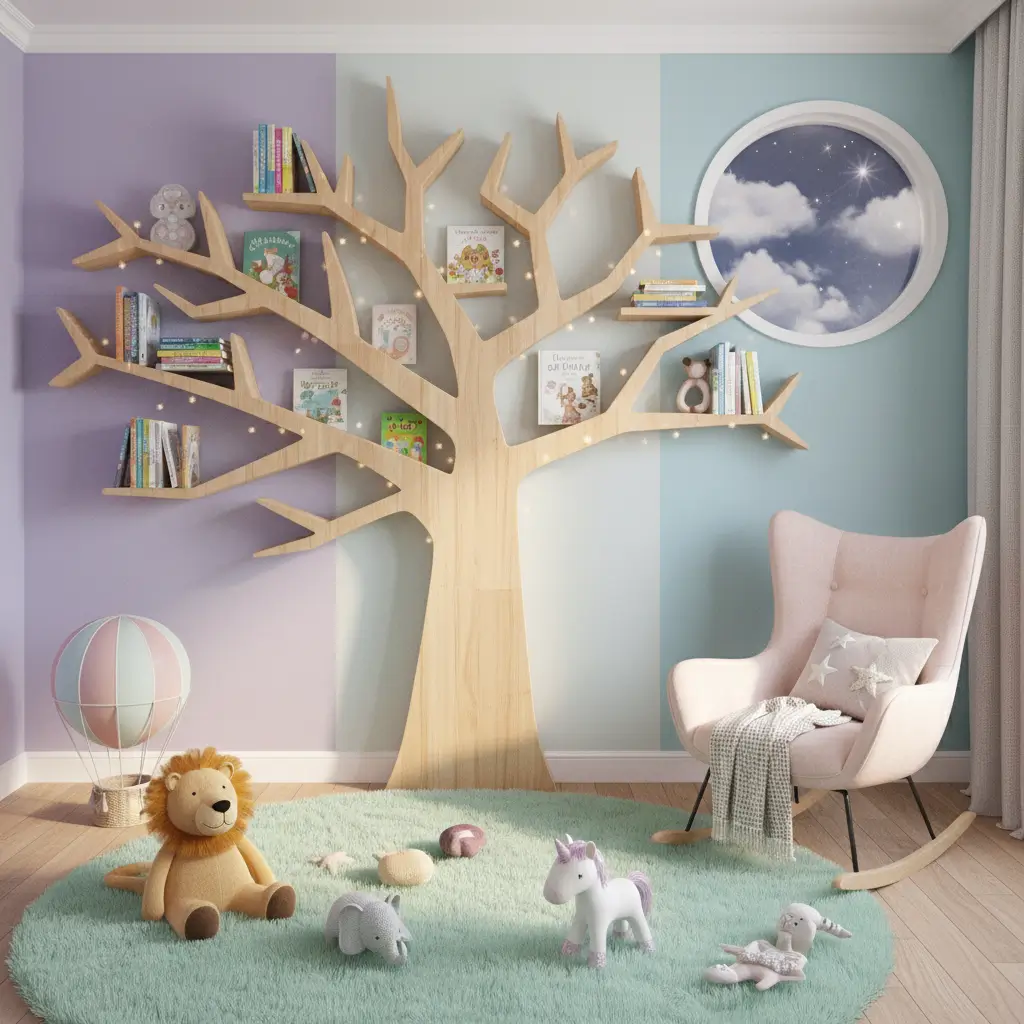
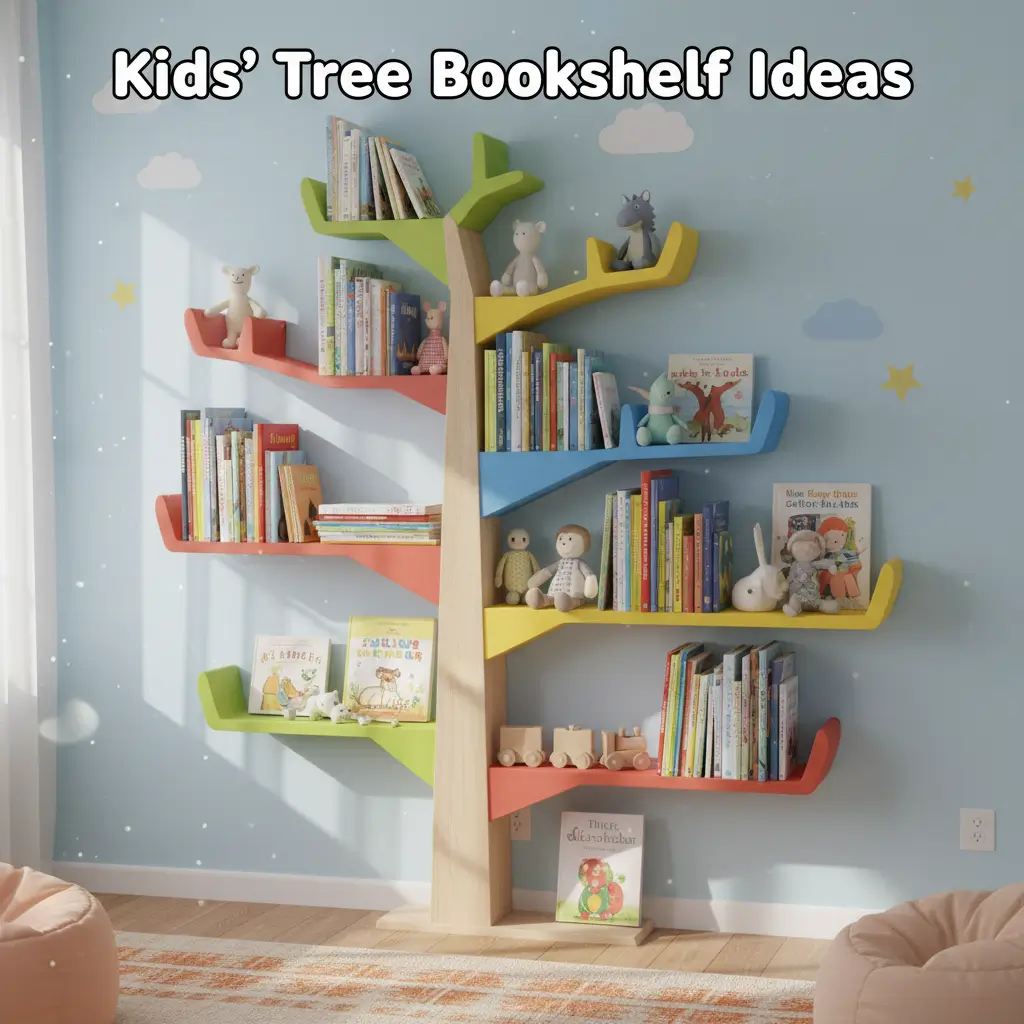
Saving arguably the most whimsical idea for last — tree-shaped nursery bookshelves turn your wall into a storybook illustration. Branches become shelves, the trunk anchors the design, and books nestle among the “leaves” like literary fruit.
These shelves consistently rank among the most popular nursery bookshelf designs online, and I completely understand why. They’re magical. They transform a flat wall into a three-dimensional scene that sparks imagination before your child even opens a single book.
Design Variations
Tree bookshelves come in several forms:
- Flat silhouette trees — cut from single sheets of wood, mounted flush to the wall
- 3D branch shelves — actual protruding branches that hold books
- Decal + shelf combos — wall decal tree with floating shelves as branches
- Full tree bookcases — freestanding units shaped like entire trees
- Birch or driftwood branches — real branches mounted as natural shelves
The decal and shelf combination offers the most flexibility. Apply a tree wall decal first, then mount floating shelves at various points along the branches. You get the visual impact of a tree bookshelf without the commitment (or cost) of a custom-built unit.
Bringing Your Tree Shelf to Life
Accessories make tree shelves truly magical:
- Small bird figurines perched on shelf edges
- Fairy lights woven through upper branches
- Felt leaf garlands cascading around book spines
- A small owl plushie sitting at the tree’s peak
- Seasonal updates — blossoms in spring, colorful leaves in fall
One word of caution — don’t overload the branches. Tree shelves look best with careful curation. A few books per branch, strategically placed, maintains the whimsical tree illusion. Pile on too many, and you lose the magic under the weight of board books about trucks.
Wrapping It All Up
Choosing a nursery bookshelf might seem like a small decision in the grand scheme of baby preparation, but it genuinely shapes how your child interacts with books from their earliest days. A thoughtfully chosen shelf invites curiosity, encourages independence, and yes — makes your nursery look absolutely fantastic.
Here’s a quick recap of your options:
- Woodland-themed for nature lovers
- Floating wall shelves for versatility and space-saving
- Rainbow color-coded for visual impact
- Animal-shaped for personality and charm
- Minimalist modern for clean, serene spaces
- DIY crate stacks for budget-friendly creativity
- Convertible storage for maximum functionality
- Corner units for unused spaces
- Vintage wooden for warmth and history
- Tree-inspired for whimsical magic
Whatever you choose, remember this — your baby won’t judge the shelf. They’ll judge whether you read to them. The shelf just makes the whole experience more beautiful, more organized, and more inviting for everyone involved.
So pick the style that makes your heart happy, fill it with books you love reading aloud (because you’ll read “Goodnight Moon” approximately 47,000 times), and create a space where stories come alive. Your future bookworm will thank you — probably by pulling every single book off the shelf and onto the floor. Repeatedly. With joy 😉