12 Creative Nursery Shelves Ideas and Fun Room Designs
- Floating Shelves
 Ben
Ben- 0
- 29 minutes read
Nursery shelves are the unsung heroes of baby room design. I learned this the hard way after my sister had her first baby and realized that cute decorations mean nothing when you can’t find diapers at 3 AM.
Her beautifully designed nursery became a chaotic mess of baby supplies within two weeks because she hadn’t planned proper storage. That’s when I became obsessed with finding nursery shelf solutions that look adorable AND actually work.
Creating the perfect nursery means balancing whimsy with practicality – not exactly easy when you’re also dealing with pregnancy brain or new parent exhaustion.
The shelves you choose need to display those precious keepsakes, store endless supplies, and somehow grow with your child from newborn to toddler and beyond.
After helping design five nurseries (my sister’s twice, because the first time taught us lessons), I’ve discovered what actually works versus what just looks good on Pinterest.
Floating Cloud Shelves: The Dreamy Display Solution
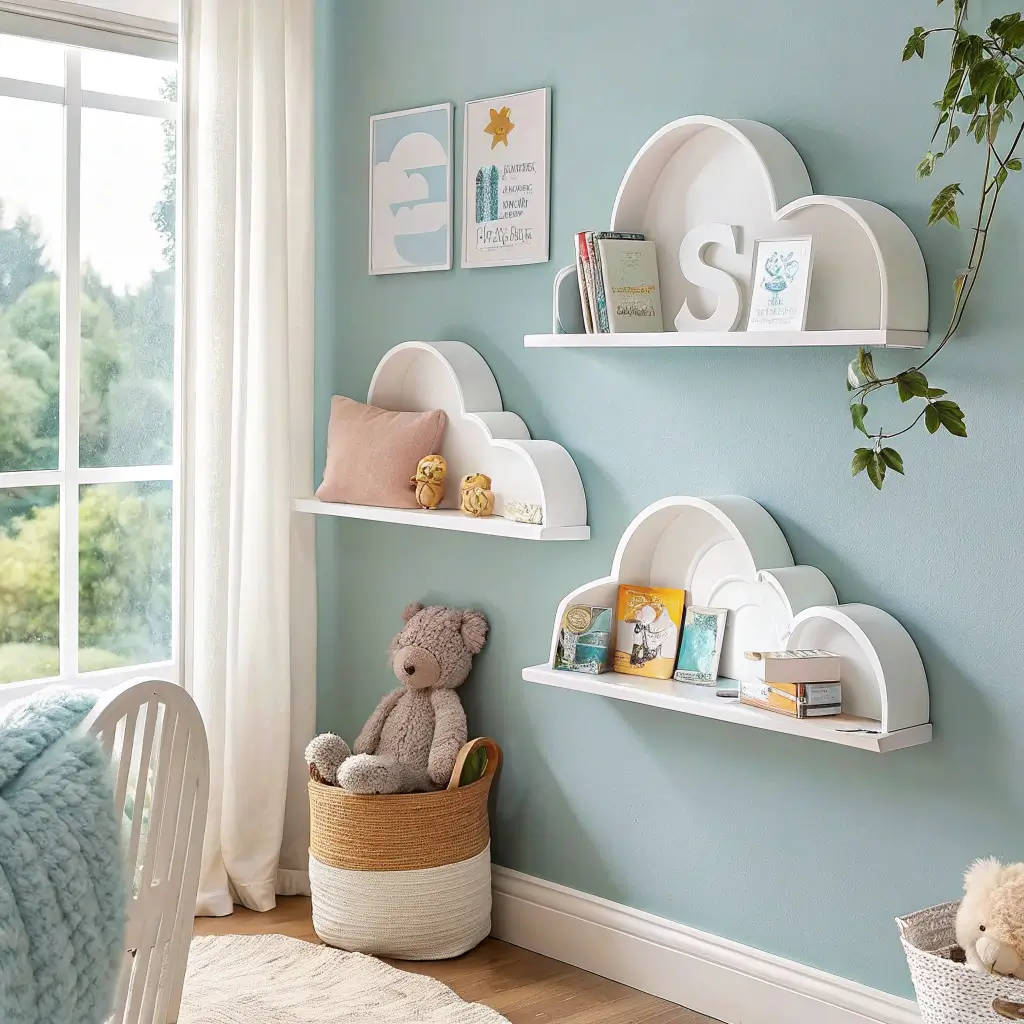
Floating cloud shelves turn ordinary wall storage into something straight out of a storybook. My niece’s nursery features two fluffy white cloud shelves, and visitors literally gasp when they see them. The whimsical shape adds magic to the room while providing legitimate storage for books, stuffed animals, and those tiny shoes nobody can resist buying.
The cloud silhouette softens the hard lines that shelves typically create, making them perfect for creating a calming, dreamlike atmosphere. Plus, they work with virtually any nursery theme – from sky scenes to rainbow motifs to simple modern designs.
Making Cloud Shelves Work Perfectly
Choose the right size for your wall space and storage needs. I made the mistake of buying clouds that were too small for the wall – they looked like sad little wisps instead of the fluffy statement pieces we wanted. Measure your wall and go bigger than you think you need.
Install them at varying heights for visual interest. My sister’s clouds sit at different levels, creating a “floating in the sky” effect that looks intentional rather than random. The staggered placement also makes reaching different items easier as baby grows.
Consider what you’ll actually store on them. Cloud shelves typically have gentle curves that work better for displaying items than storing practical supplies. My niece’s clouds hold her favorite books and special stuffed animals – things we want visible, not diapers we need to grab quickly.
Animal-Shaped Wall Shelves: The Character Builders
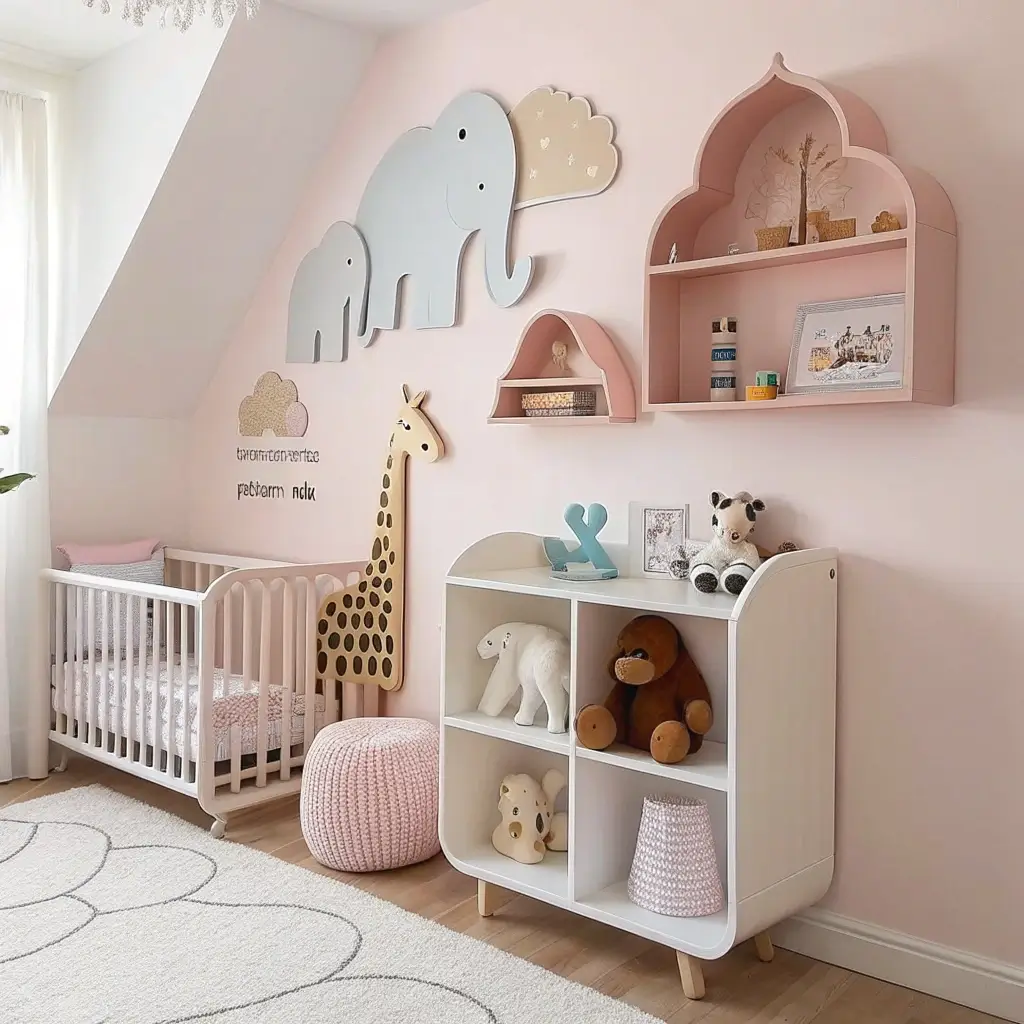
Animal-shaped shelves bring personality to nursery walls while giving you storage that makes everyone smile. I installed fox-shaped shelves in my nephew’s woodland-themed room, and they became the focal point that ties everything together. Each fox holds a few books and small toys, turning storage into decor.
The variety of animal options means you can match any theme imaginable. Elephants for safari rooms, bears for forest themes, whales for ocean nurseries – the possibilities are endless. And let’s be honest, putting tiny baby items on an adorable animal shelf is just objectively delightful.
Animal Shelf Selection Tips
Match animals to your overall nursery theme for cohesion. Random animal shelves can look chaotic rather than cute. I helped a friend choose swan shelves for her ballet-themed nursery, and they look like intentional design choices rather than afterthoughts.
Check weight limits carefully. Cute animal shapes sometimes sacrifice structural integrity for aesthetics. My first fox shelves couldn’t hold more than a few ounces, making them essentially decorative. I returned them for sturdier versions that actually function as storage.
Position them at eye level for visual impact. Animal shelves work best where people can appreciate the detail. Mounting them too high wastes the cuteness factor, and mounting them too low puts them in reach of curious toddler hands before you’re ready.
Pastel Corner Shelving Units: The Space Maximizers
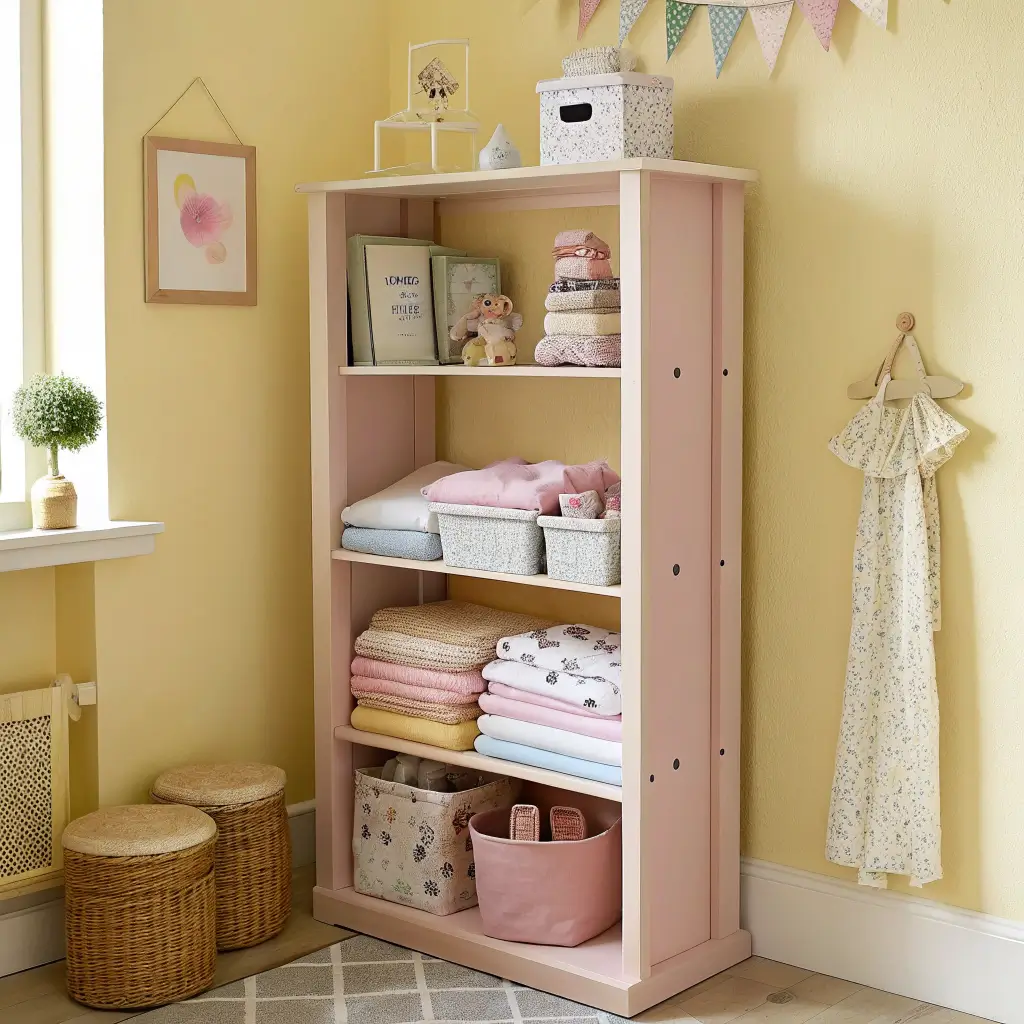
Pastel corner units turn those awkward nursery angles into functional, beautiful storage. My sister’s tiny nursery had zero floor space until we installed soft pink corner shelves that climbed from floor to chest height. Suddenly she had storage for everything without sacrificing the precious few square feet she needed for the rocking chair.
The pastel colors keep corner units from feeling heavy or intrusive. White, soft pink, mint green, and lavender all create that gentle nursery aesthetic while making corners actually useful instead of collecting dust bunnies.
Corner Shelf Strategies
Measure your corner angles before purchasing. Not all corners are perfect 90-degree angles – shocking, I know. My sister’s “square” corner was actually 88 degrees, which meant her first corner unit left an ugly gap. A cardboard template saved her second attempt.
Choose adjustable shelves when possible. Baby storage needs change constantly. The shelves that perfectly fit newborn supplies become useless when you need space for bigger toys. Adjustable heights save money and frustration.
Keep lower shelves empty initially. Babies become toddlers who become curious climbers. My sister learned to keep the bottom two shelves empty once her daughter started pulling up on furniture. Safety first, storage second.
Also Read: 10 Modern Office Shelves Ideas for Minimalist Style
DIY Crate Stacking Shelves: The Budget-Friendly Charm
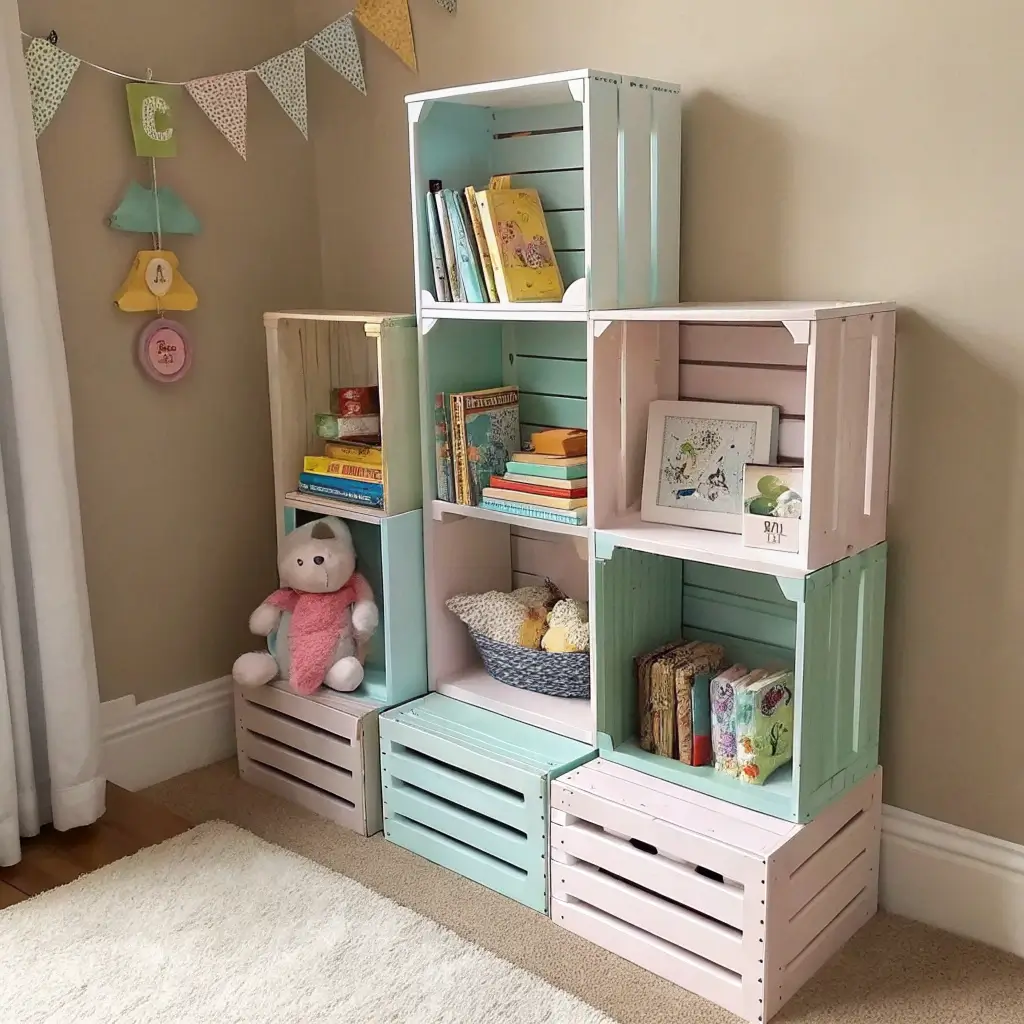
Wooden crate shelves bring rustic charm to nurseries without breaking the bank. I built my nephew’s crate shelf system for under $50, and it holds everything from books to blankets to that weird stuffed giraffe nobody remembers buying. The natural wood adds warmth that painted furniture sometimes lacks.
The modular nature of crates means you can reconfigure as needs change. Start with three crates, add two more when baby outgrows infant supplies, rearrange when they become a toddler. It’s storage that adapts without requiring new purchases.
DIY Crate Success Tips
Sand and seal crates thoroughly before use. Raw crate wood can have splinters that are definitely not baby-safe. I spent an hour sanding every surface and applied two coats of non-toxic sealant. Worth it for peace of mind.
Secure stacked crates to each other AND the wall. Unstable crate towers become dangerous climbing structures. My crates are screwed together and anchored to wall studs. They could probably survive an earthquake at this point.
Paint or stain to match your nursery palette. Raw wood works for farmhouse themes, but pastel-painted crates suit other aesthetics better. I painted mine white and mint green, creating a modern look that cost almost nothing.
Minimalist Wooden Ladder Shelves: The Scandinavian Statement
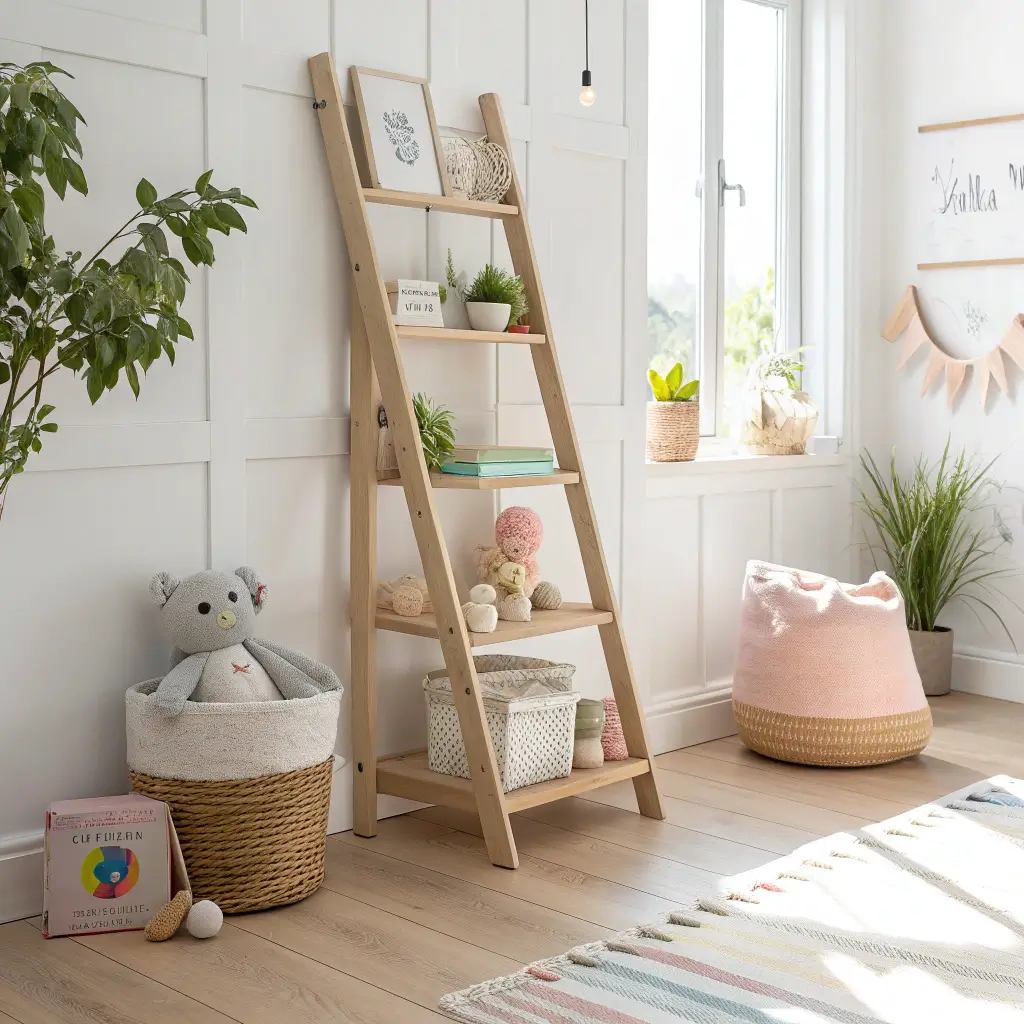
Ladder shelves bring that coveted Scandi-nursery vibe without permanent installation. My friend’s minimalist nursery features a natural birch ladder shelf that leans against the wall, providing four tiers of storage that look effortlessly stylish. The clean lines and natural materials create calm instead of chaos.
The leaning design means zero wall damage – perfect for renters or people who change their minds frequently (guilty). When baby becomes a toddler and needs different storage, just move the ladder elsewhere and start fresh.
Ladder Shelf Living
Secure the top to the wall anyway. Leaning doesn’t mean stable, especially with toddlers around. A simple furniture strap at the top prevents any tipping incidents. I’ve seen too many scary videos to skip this step.
Keep heavier items on lower shelves. Top-heavy ladder shelves become tippy and dangerous. Books and storage baskets go on the bottom two shelves, lighter items and decor climb higher.
Consider the footprint in your space planning. Ladder shelves extend into the room more than wall-mounted options. My friend’s ladder takes up about a foot of floor space, which matters in smaller nurseries.
Rainbow Color Wall Shelves: The Cheerful Statement
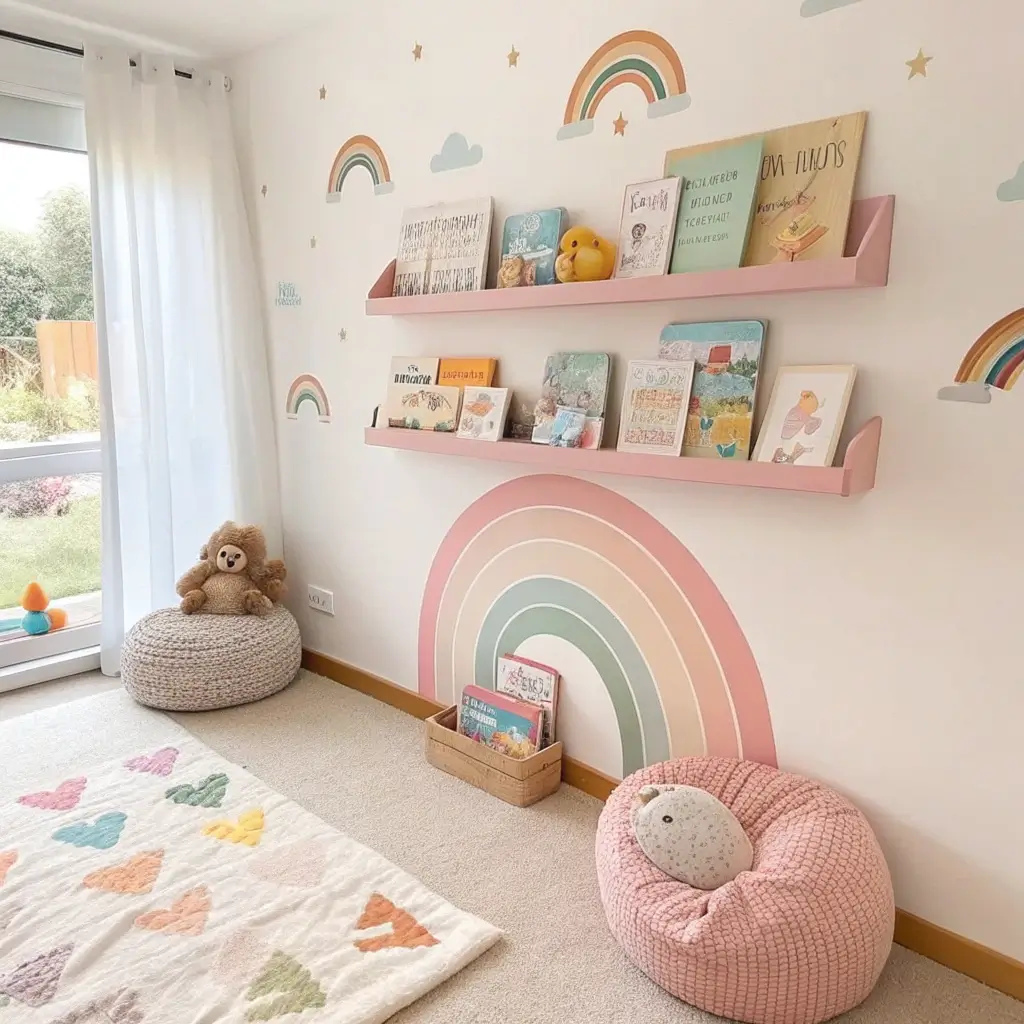
Rainbow shelves turn storage into a color theory lesson that babies love staring at. I helped install a set of seven floating shelves in rainbow order in my niece’s playroom, and she’s fascinated by the colors. Each shelf holds items in its matching hue, creating an organized and visually stunning display.
The rainbow approach works particularly well for book storage – organizing spines by color creates that satisfying gradient effect everyone wants in their shelfies. Plus, it teaches color recognition early.
Rainbow Shelf Reality Check
Commit to the color organization or accept chaos. Half-hearted rainbow attempts look messier than no theme at all. My niece’s rainbow shelves require maintaining the color order, which takes effort but creates that Instagram-worthy result.
Use removable adhesive strips if you’re not ready for permanent commitment. Rainbow trends might not last forever. I installed my niece’s with semi-permanent mounting that allows future changes without major wall damage.
Consider the overall room color scheme. Rainbow shelves against rainbow walls becomes overwhelming. The most effective rainbow displays pop against neutral white or gray backgrounds.
Also Read: 10 Stunning Bar Shelves Ideas for Small Corners
Hanging Rope Basket Shelves: The Boho Touch
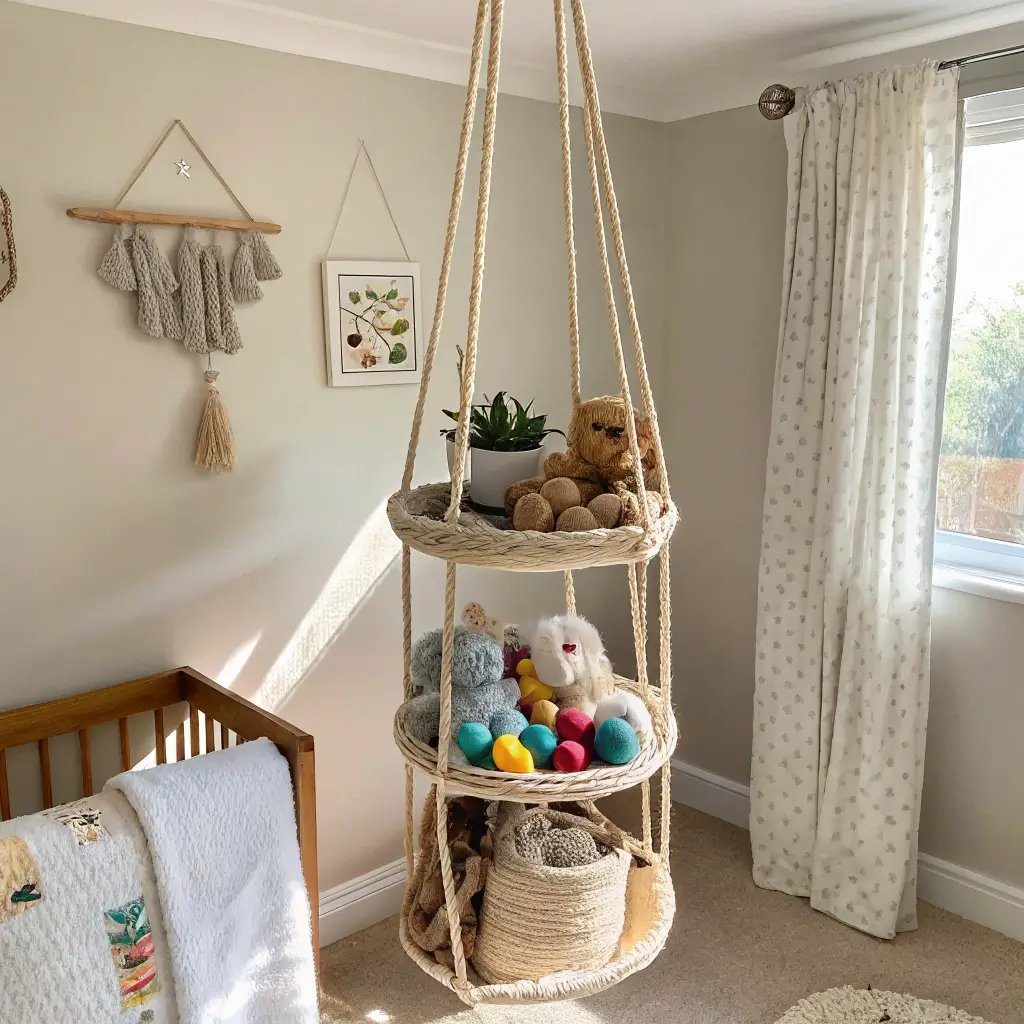
Rope basket shelves bring that trendy boho-nursery aesthetic while providing surprisingly practical storage. My sister’s macramé-inspired rope shelves hold stuffed animals and soft items, gently swaying when touched and adding movement to the room. They’re like decorative mobiles that also store things.
The soft rope and fabric construction means nothing hard can fall on baby, making these ideal above changing tables or cribs. My sister keeps loveys and burp cloths in hers – items she grabs during diaper changes and nighttime feeds.
Rope Shelf Reality
Weight limits are real – respect them. Rope shelves handle soft, lightweight items well but struggle with heavy books or hard toys. I keep my expectations realistic and my heavy items elsewhere.
Install into ceiling studs or use proper toggle bolts. Rope shelves that crash down at 2 AM are nobody’s idea of a good time. I learned this from a friend whose improperly installed shelf gave her a heart attack when it fell – thankfully, baby was in her arms, not in the crib.
Consider how swinging affects placement. Rope shelves move, which means anything near them might get bumped. Position them with clearance space around the swing radius.
Geometric Hexagon Shelves: The Modern Marvel
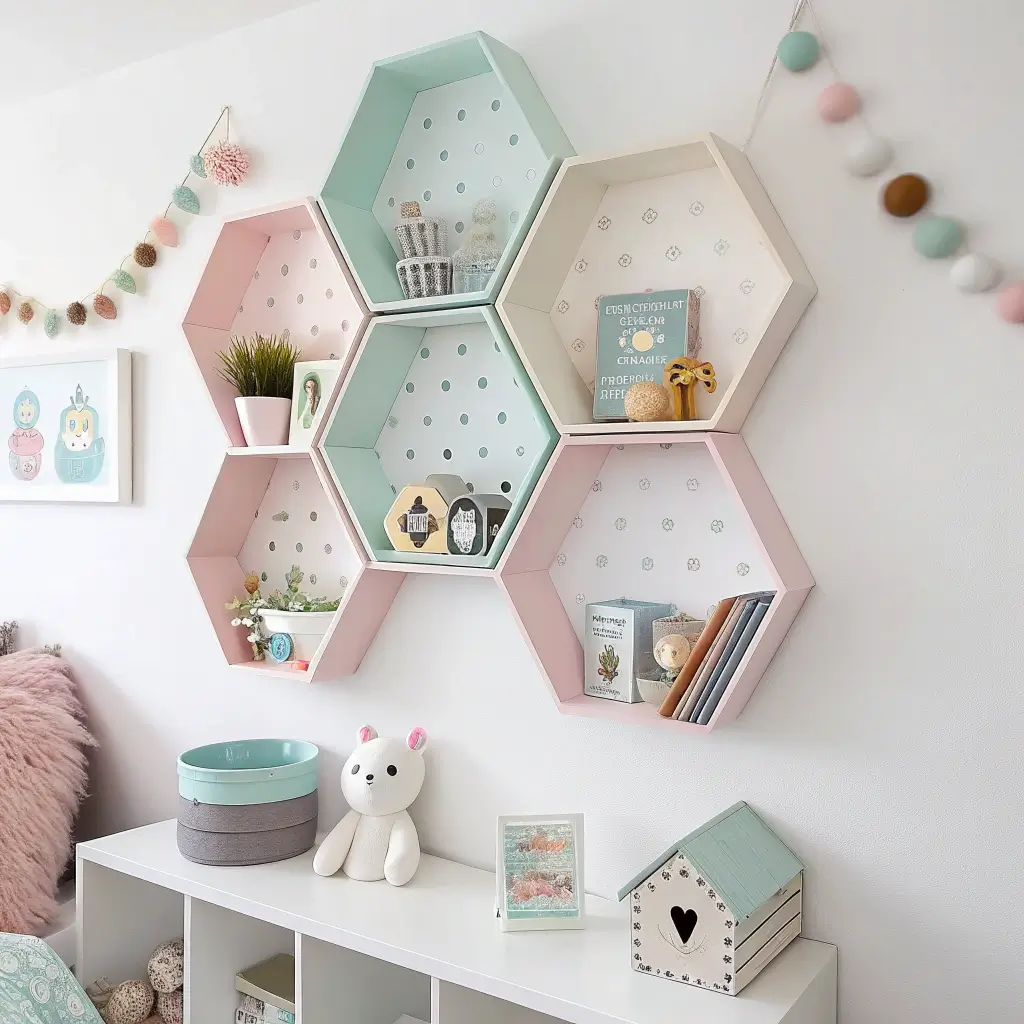
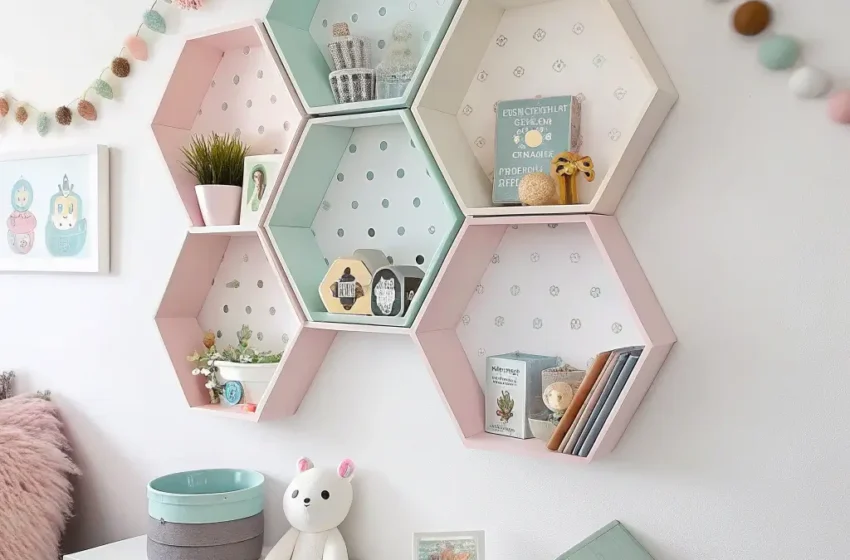
Hexagon shelves create honeycomb patterns that look modern, playful, and sophisticated all at once. My nephew’s nursery features a cluster of white hexagons that hold his growing stuffed animal collection. Each hex becomes its own little display case, keeping things organized while looking intentionally designed.
The geometric shape naturally contains items, preventing that sliding-off problem flat shelves have. Books stand upright in hexagon corners, small toys stay put, and everything has its designated cell.
Hexagon Arrangement Advice
Plan your cluster with paper templates before drilling. I spent way too long holding actual hexagons against walls before discovering paper cutouts. Template first, install once, avoid unnecessary holes.
Mix hexagon sizes for visual interest. All same-sized hexagons look like you bought a boxed set. Different sizes in the same color family look custom and thoughtful. FYI, this trick makes budget shelves look designer.
Leave some hexagons empty for balance. The temptation to fill every cell is real, but empty spaces create visual breathing room. I keep about one-third of my nephew’s hexagons empty or minimally styled.
Tree Branch Floating Shelves: The Natural Wonder
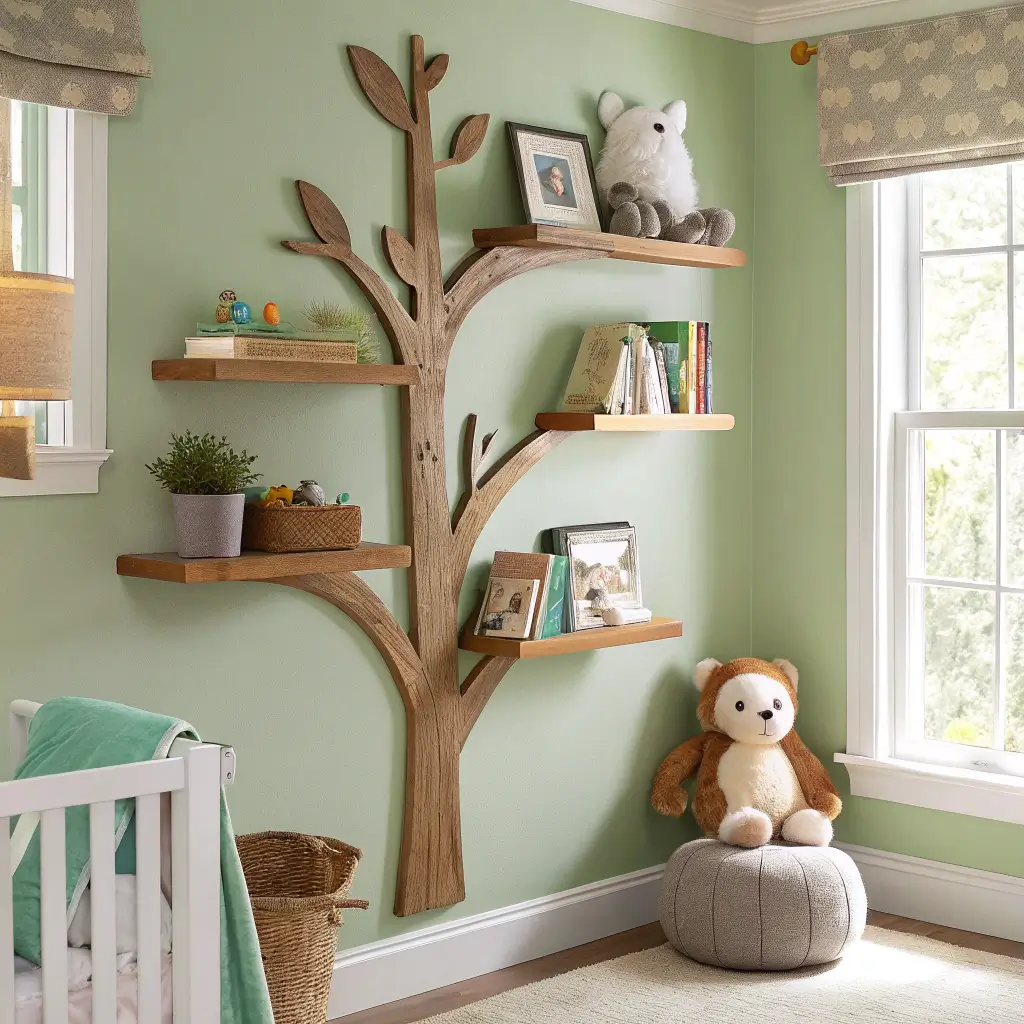
Tree branch shelves bring actual nature into the nursery, creating shelving that doubles as art. My friend’s woodland nursery features a beautiful branch shelf that holds small treasures like pinecones, tiny wooden animals, and miniature books. It looks like something from an enchanted forest.
The organic shapes of real or realistic branch shelves add character that manufactured furniture simply can’t replicate. Each branch is unique, making your nursery storage one-of-a-kind.
Branch Shelf Considerations
Seal real wood branches thoroughly. Natural branches can harbor insects or release particles. My friend’s branch got professional treatment before installation, ensuring nothing unwanted joined the nursery ecosystem.
Check weight capacity honestly. Branch shelves often sacrifice function for form. Most hold decorative items well but struggle with actual storage needs. I keep expectations realistic and use branch shelves for display, not diapers.
Position them as focal points, not primary storage. Branch shelves work best as statement pieces that hold a few special items. Primary storage should come from more practical solutions that can handle daily use.
Also Read: 12 Elegant Shower Shelves Ideas for Minimalist Bathrooms
Modular Cube Storage Shelves: The Flexible Workhorse
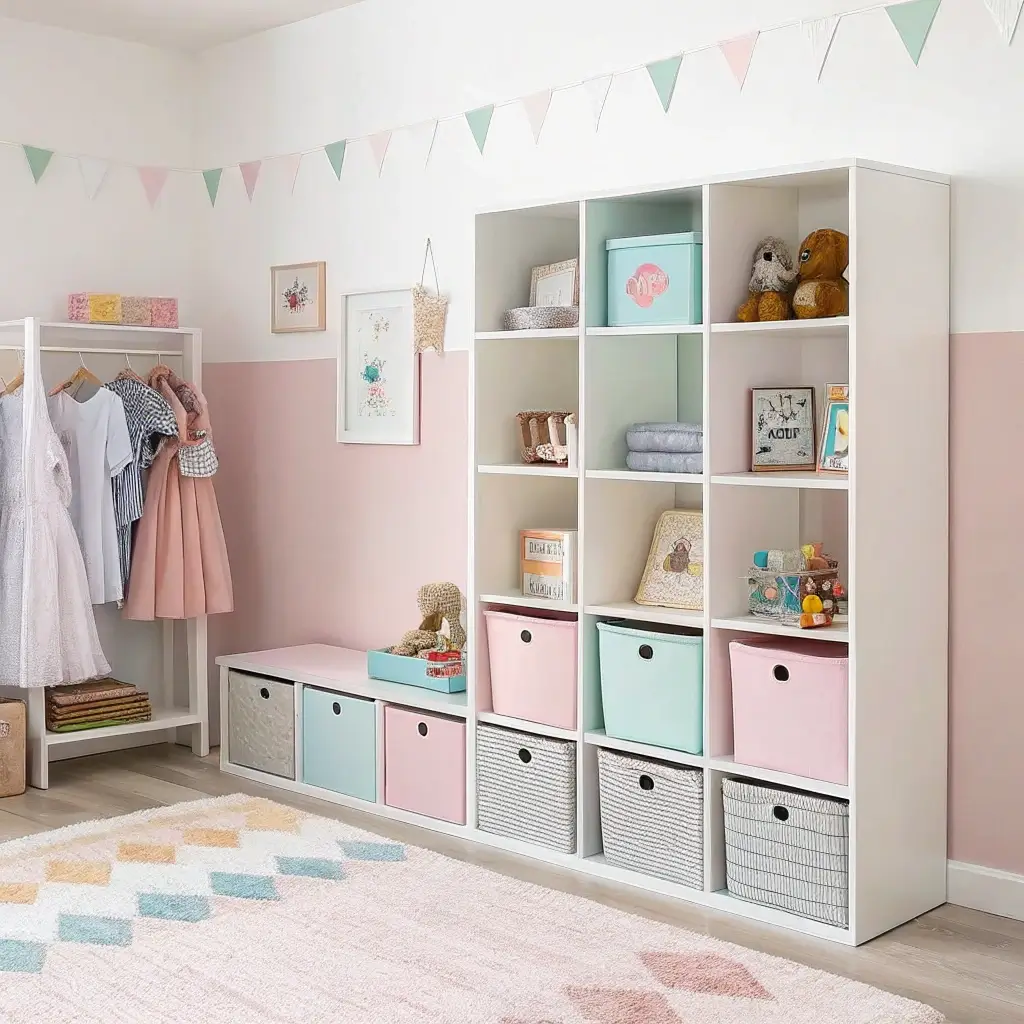
Modular cube systems are the practical backbone of nursery storage that grows with your child. My sister’s cube system started as a 2×3 configuration for baby supplies and has expanded to a 4×4 unit holding a preschooler’s entire existence. The same cubes, just rearranged and expanded.
The combination of open cubes and fabric bin inserts creates both display and hidden storage. Pretty items stay visible, while the embarrassing volume of baby supplies hides behind cute fabric fronts.
Cube System Success
Start smaller than you think you need. Storage expands to fill available space, and babies don’t need as much as marketing suggests. My sister started with six cubes and added more as actual needs emerged.
Anchor cubes to walls immediately. These units become climbing structures for toddlers. Wall anchoring isn’t optional – it’s essential for safety. Every cube unit in every nursery should attach to studs.
Mix open cubes with fabric bins strategically. I recommend 60% bins for hidden storage and 40% open for display. This ratio handles practical needs while maintaining visual appeal.
Toy Display Picture Ledge Shelves: The Book Lover’s Dream
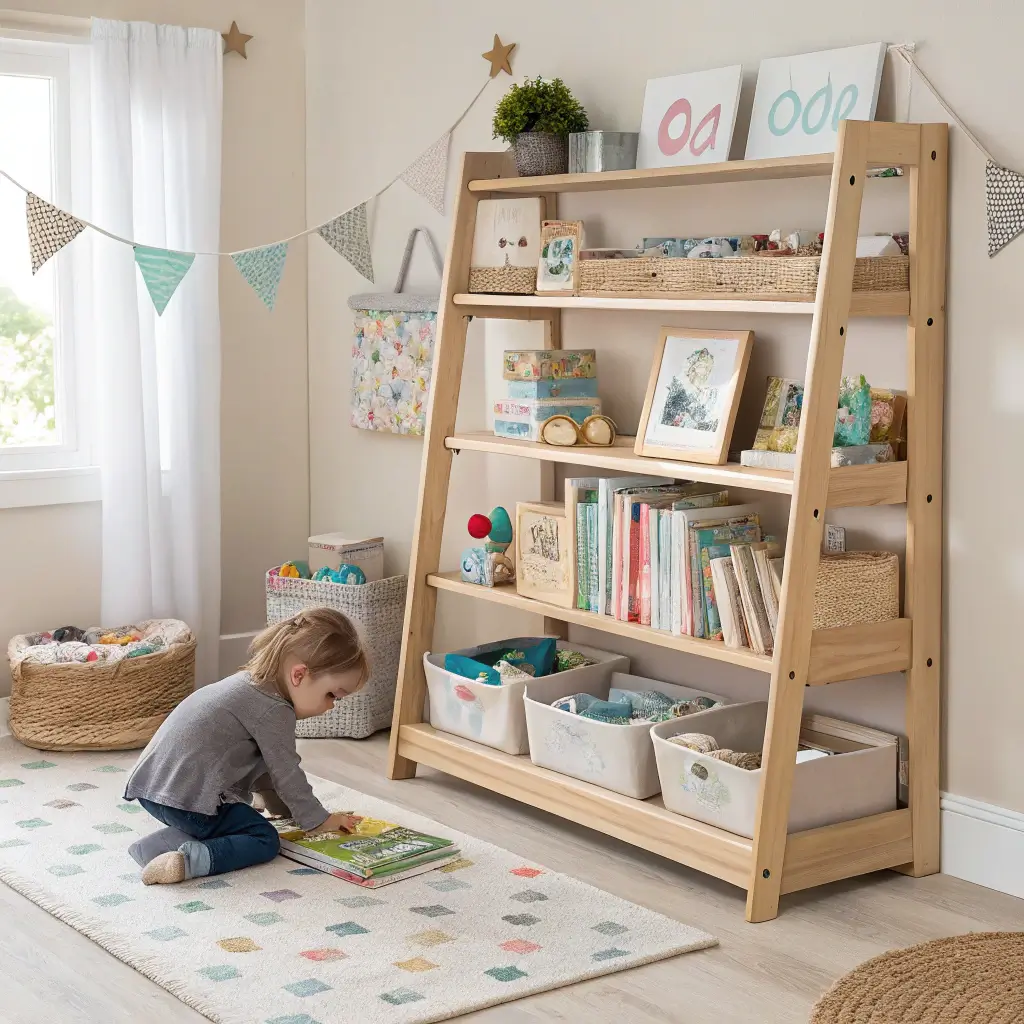
Picture ledge shelves showcase book covers rather than hiding spines on traditional shelves. My niece’s reading corner features three white ledges that display colorful book covers forward, turning her collection into rotating artwork. She picks books based on covers now, which has increased her interest in reading.
The shallow depth of ledge shelves means they work in narrow spaces where traditional shelving won’t fit. Hallways, small walls, and tight corners all become potential library space.
Ledge Shelf Logistics
Install multiple ledges at different heights for growth. My niece’s lowest ledge sits at toddler height for independent access, while higher ledges hold books for reading together. The system grows with her reach.
Rotate books regularly for renewed interest. The whole point of forward-facing display is showcasing covers that attract attention. I help my niece rotate selections weekly, keeping her “library” feeling fresh and exciting.
Use ledges for more than books. Board books, framed photos, small art prints, and lightweight toys all work on ledges. I think of them as narrow display spaces that happen to work perfectly for books.
Convertible Growth Shelves: The Long-Term Investment
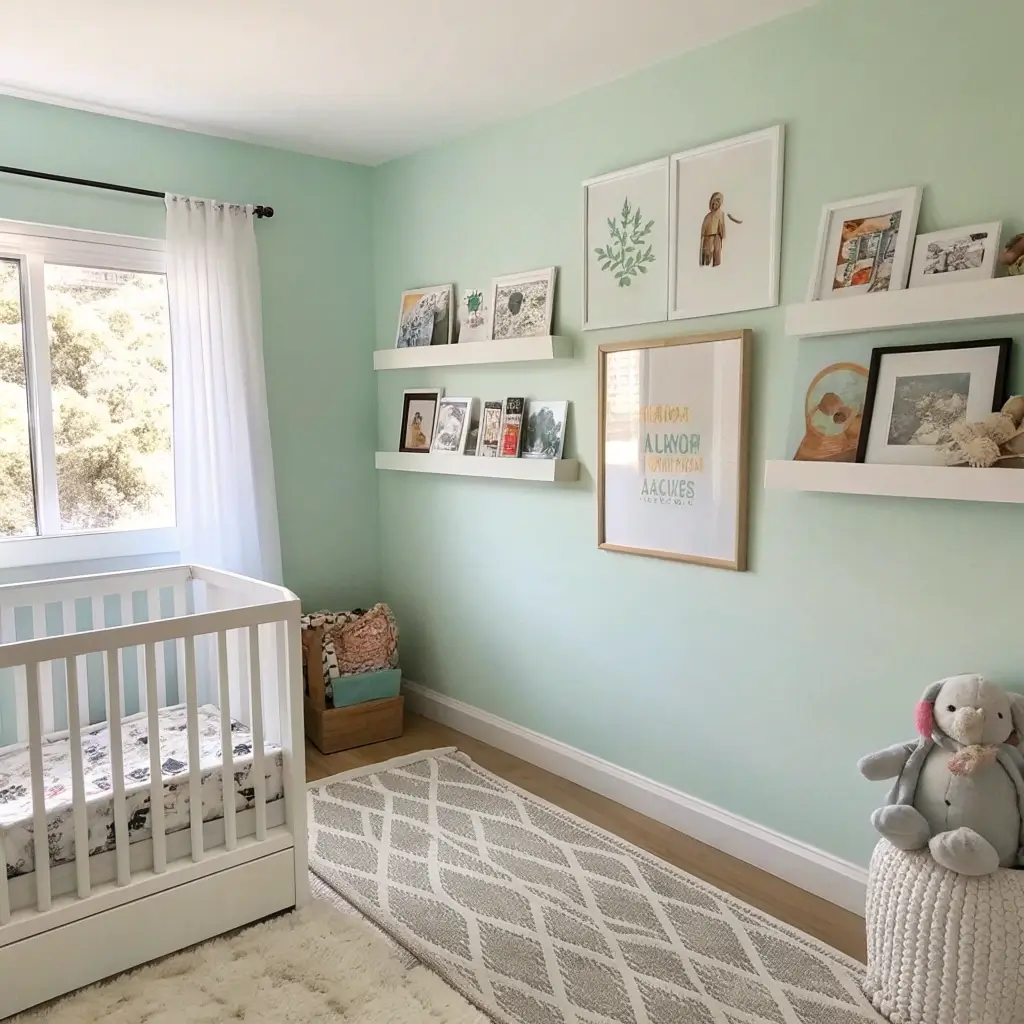
Convertible shelving systems transform as babies become kids become teenagers. My friend invested in a quality system that’s currently configured as nursery storage but can become a desk unit, bookshelf, or entertainment center as her daughter grows. One purchase, multiple lifetimes of use.
The adaptability justifies the higher upfront cost. Instead of buying new furniture at each stage, you reconfigure what you have. My friend calculates she’ll save thousands over the years compared to buying stage-specific furniture.
Growth Shelf Wisdom
Research conversion options before purchasing. Not all “convertible” systems actually convert well. Some require expensive additional pieces, others only offer limited configurations. Read reviews from parents who’ve actually converted them.
Choose neutral colors that age well. Baby pink might work now but won’t suit a teenager’s room. My friend chose white shelving that transitions seamlessly through any age and any room design.
Consider the quality of hardware and materials. Furniture that converts multiple times needs durability. Cheap particle board won’t survive repeated reconfigurations. Invest in solid wood or quality composites that handle years of use.
Making Nursery Shelves Work for Real Life
Here’s what I’ve learned from all these nursery projects: the best shelving combines your aesthetic vision with brutal practicality.
That gorgeous floating cloud might be perfect for displaying memories, but you still need somewhere to store the never-ending supply of diapers, wipes, and mysteriously multiplying onesies.
Layer your storage approach with different shelf types. My sister’s nursery combines practical cube storage with decorative cloud shelves and functional ledge shelves. Each type handles different needs, and together they cover everything.
Think about the 3 AM test – can you find what you need in the dark while half asleep? The most beautiful nursery fails if you can’t grab essentials during midnight emergencies.
I organize shelves with nighttime necessities at the most accessible heights and locations.
Safety trumps style every single time. Anchor everything, check weight limits, and keep heavy items low. Babies become mobile faster than you expect, and toddlers treat shelves like climbing gyms.
Every shelf should assume a child will eventually try to climb it :/
Remember that nurseries are temporary. That baby becomes a toddler, then a kid who wants dinosaurs instead of clouds. Choose shelving you can repurpose, repaint, or at least remove without major wall damage.
The best nursery shelves work for this stage while preparing for the next.
Your nursery should feel magical and functional, and the right shelves make both possible. Whether you go whimsical with clouds and animals or practical with cubes and ledges, create storage that serves your actual needs while making you smile every time you walk in.
Because at 3 AM when you’re stumbling to that changing table, you deserve a room that still feels special – even if you’re too tired to fully appreciate it!