10 Sophisticated Office Ceiling Design Ideas and Cozy Office Vibes
- Ceiling Design
 Ben
Ben- 0
- 32 minutes read
Remember that soul-crushing moment when you’re lying on your office floor during a mental breakdown (just me?) and you realize even the ceiling looks depressing?
Yeah, those popcorn textures and flickering fluorescent lights aren’t doing anyone’s productivity any favors. But here’s the thing – your office ceiling doesn’t have to be the visual equivalent of a Monday morning.
I spent years staring at bland office ceilings during boring meetings, and let me tell you, a well-designed ceiling changes everything. It affects your mood, productivity, and even how creative you feel.
After working in offices ranging from converted warehouses to sleek corporate towers, I’ve seen firsthand how the right ceiling design can transform a workspace from “prison cell with a paycheck” to “actually kind of inspiring.”
Why Your Office Ceiling Matters More Than You Think
Let’s get real for a second. You spend roughly 2,080 hours a year at work (I did the depressing math). That’s 2,080 hours of your ceiling either inspiring you or slowly draining your will to live. Dramatic? Maybe. But also kind of true.
A thoughtfully designed office ceiling does more than just hide HVAC systems and electrical wires. It controls acoustics, influences lighting quality, and sets the entire mood of your workspace. Ever noticed how you feel more creative in certain spaces? That’s not just the free coffee talking – it’s good design at work.
The best part? Upgrading your office ceiling doesn’t always require a massive budget or major construction. Sometimes the smallest changes make the biggest impact on how you and your team feel about coming to work.
1. Minimalist Floating Panel Ceiling
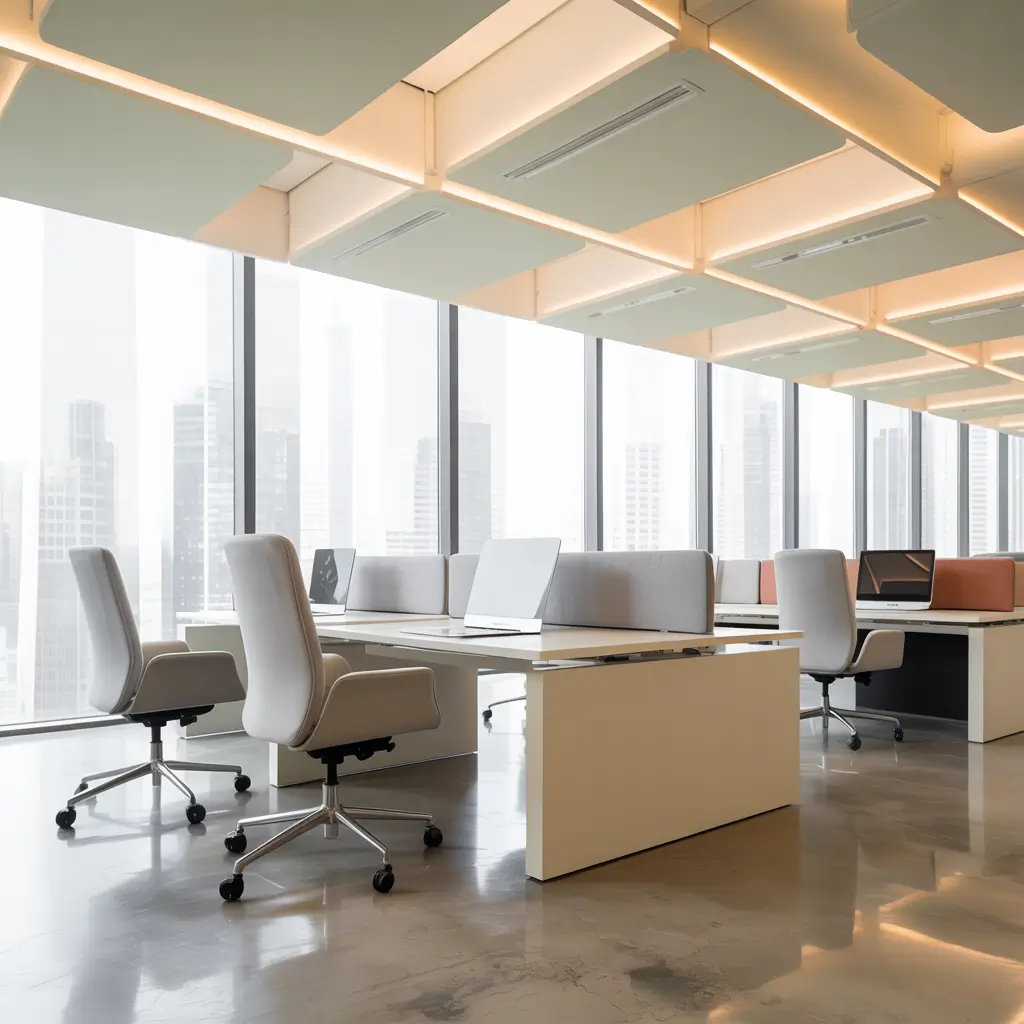
Let’s kick things off with my personal favorite – the minimalist floating panel ceiling. This design creates clean, geometric patterns using suspended panels that appear to float below the main ceiling structure. It’s like modern art you can stare at during conference calls.
I first encountered this design at a tech startup in San Francisco, and honestly, it blew my mind. The panels weren’t just decorative – they housed LED lighting and helped with acoustics. The entire office felt calmer and more organized, even during crunch time.
What makes floating panels so perfect for offices is their flexibility. You can arrange them in grids for a structured look, or go asymmetrical for something more creative. Plus, they’re modular, so you can reconfigure them as your office evolves.
Making It Work in Your Space
The key to nailing this look is choosing the right panel size and spacing. Too many panels and your ceiling looks busy. Too few and they seem random. I typically recommend starting with larger panels in meeting rooms and smaller ones in individual workspaces.
Panel materials matter too. Acoustic panels reduce noise (blessing for open offices), while translucent panels with backlighting create amazing ambiance. Mix and match based on your needs.
2. Geometric Wooden Beam Ceiling
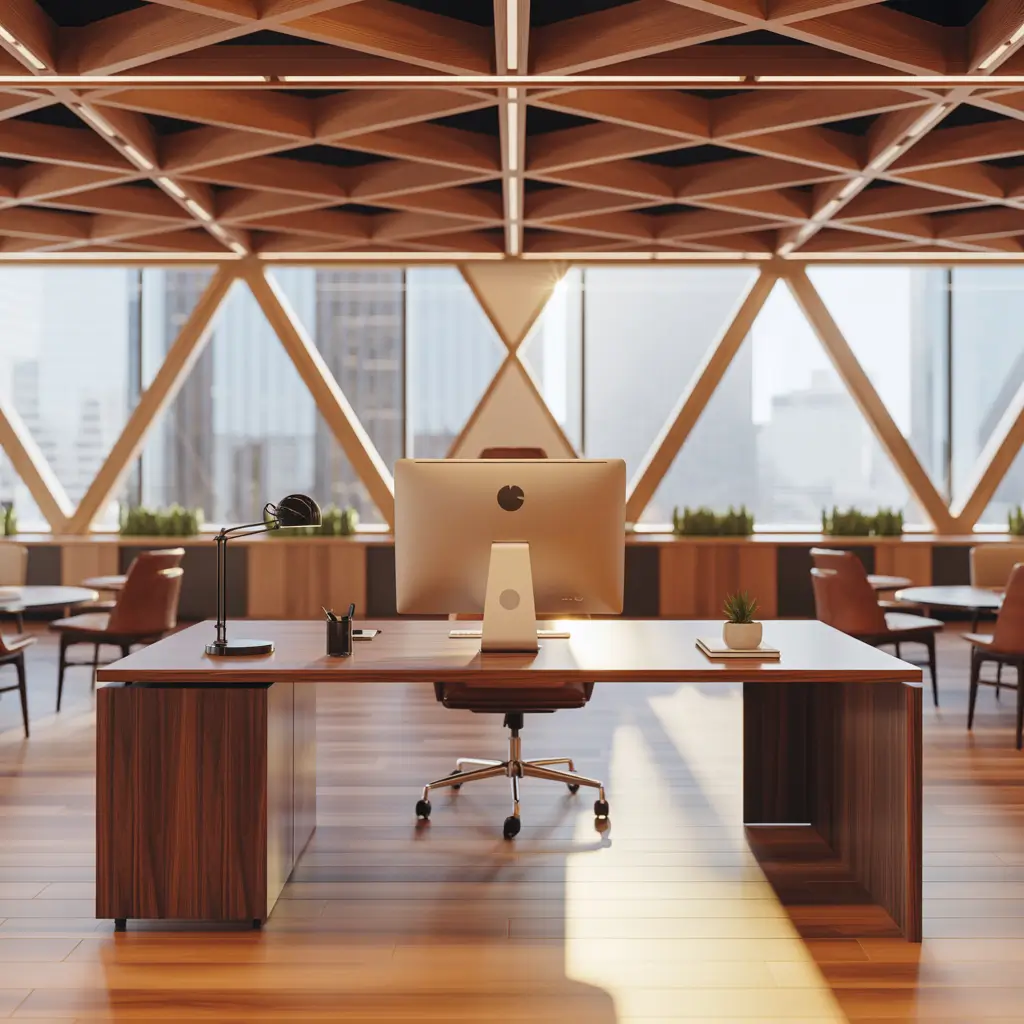
Who says offices have to feel cold and corporate? Geometric wooden beam ceilings bring warmth and sophistication that make your workspace feel less “cubicle farm” and more “creative studio.”
The beauty of wooden beams lies in their versatility. You can create simple parallel lines for a clean look, or get fancy with triangular and hexagonal patterns. I’ve seen offices use reclaimed wood for that rustic vibe, or sleek stained beams for something more contemporary.
I helped design an office for a marketing agency last year, and we used light oak beams in a diagonal pattern. The transformation was incredible – suddenly their basic rectangular room had movement and energy. Clients always comment on it during meetings.
Wood Selection Tips
Different woods create different vibes:
- Pine or bamboo keeps things light and airy
- Oak adds traditional warmth
- Walnut or mahogany brings executive-level sophistication
- Reclaimed wood tells a sustainability story
Just remember – wooden beams can make low ceilings feel even lower. If you’re working with limited height, stick to thinner beams in lighter colors.
3. Modern LED Strip Profile Ceiling
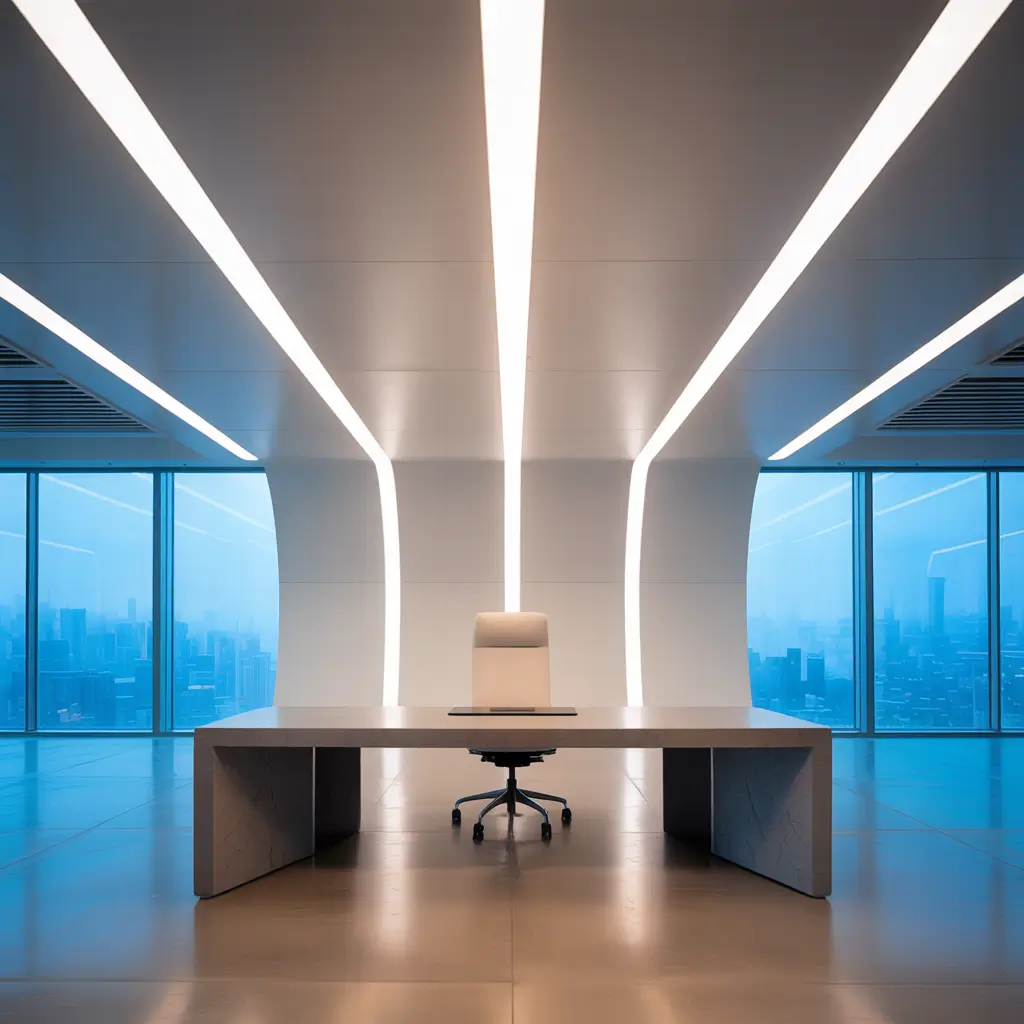
LED strip lighting integrated into ceiling profiles is basically the office equivalent of mood lighting, except it actually helps you see your work. This design uses recessed channels or surface-mounted profiles to create lines of light across your ceiling.
The coolest application I’ve seen was in a design firm where they programmed the LED strips to change color temperature throughout the day. Bright, cool light in the morning for focus, warmer tones in the afternoon to reduce eye strain. It’s like having circadian rhythm lighting built into your architecture.
You can arrange LED strips in countless patterns – parallel lines for a streamlined look, geometric shapes for visual interest, or even use them to define different zones in open-plan offices. The control you get over brightness and color is a game-changer for productivity.
Smart Lighting Integration
Here’s where it gets fun:
- Connect strips to motion sensors for energy efficiency
- Use app controls for easy adjustments
- Program different scenes for different tasks
- Sync with natural daylight for optimal illumination
FYI, installation is surprisingly DIY-friendly if you’re handy with basic electrical work. Just make sure you calculate your power requirements correctly – learned that one the hard way :/
Also Read: 12 Trendy Living Room Ceiling Design Modern Ideas to Try
4. Industrial Exposed Concrete Ceiling

Sometimes the best design is no design at all. Exposed concrete ceilings embrace the raw, unfinished aesthetic that screams “we’re too creative to care about traditional design rules.” And honestly? It works.
I used to work in a converted warehouse with exposed concrete ceilings, and while it took some getting used to, I ended up loving it. The space felt authentic and unpretentious. Plus, the thermal mass of concrete actually helped regulate temperature – who knew?
The key to making exposed concrete work in an office is balancing the hardness with softer elements. Add warm lighting, plants, and comfortable furniture to prevent your office from feeling like a parking garage.
Making Concrete Work
Success strategies for exposed concrete:
- Polish it for a more refined look
- Add strategic lighting to prevent cave vibes
- Use area rugs and soft furnishings to absorb sound
- Paint it white or gray if raw concrete feels too harsh
One warning though – acoustics can be challenging. Concrete reflects sound like crazy, so invest in some sound-absorbing elements elsewhere in your space.
5. Acoustic Soundproof Ceiling Tiles
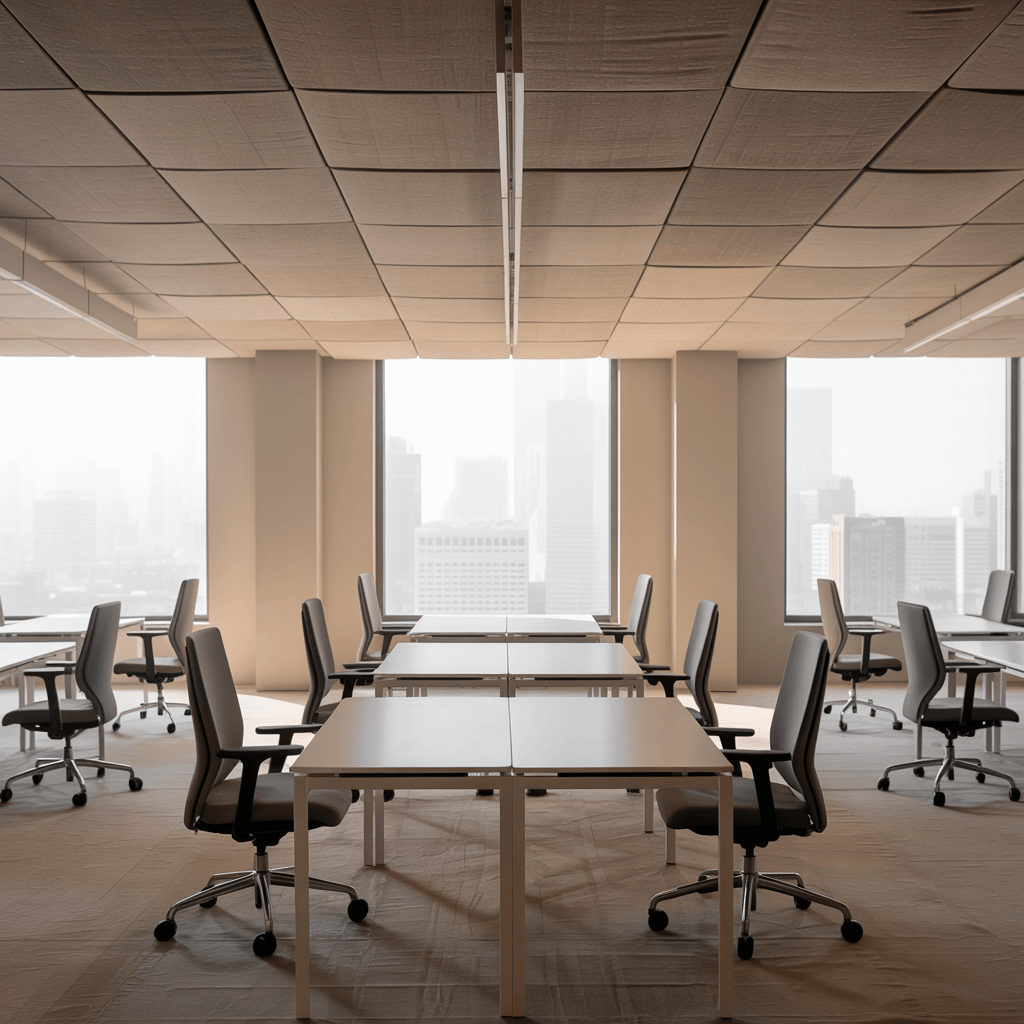
Can we have a moment of silence for everyone who’s tried to concentrate in a noisy open office? Actually, scratch that – let’s talk about acoustic ceiling tiles instead, because they’re literally designed to create that silence.
Modern acoustic tiles have come a long way from those boring squares you remember from school. Now they come in hexagons, waves, and even custom shapes. Some look like geometric art installations while secretly absorbing all your coworker’s loud phone calls.
I installed these in my home office during the pandemic (remember when we all thought working from home would be quiet?), and the difference was immediate. Suddenly I could actually hear myself think, even with kids doing virtual school in the next room.
Acoustic Performance vs. Aesthetics
The best tiles balance both:
- Felt tiles offer excellent absorption with color options
- Perforated wood combines style with function
- Fabric-wrapped panels can match your brand colors
- 3D textured tiles add visual interest while controlling sound
Pro tip: Don’t cover your entire ceiling. Strategic placement over workstations and meeting areas is often more effective than wall-to-wall coverage.
6. Glass and Skylight Office Ceiling
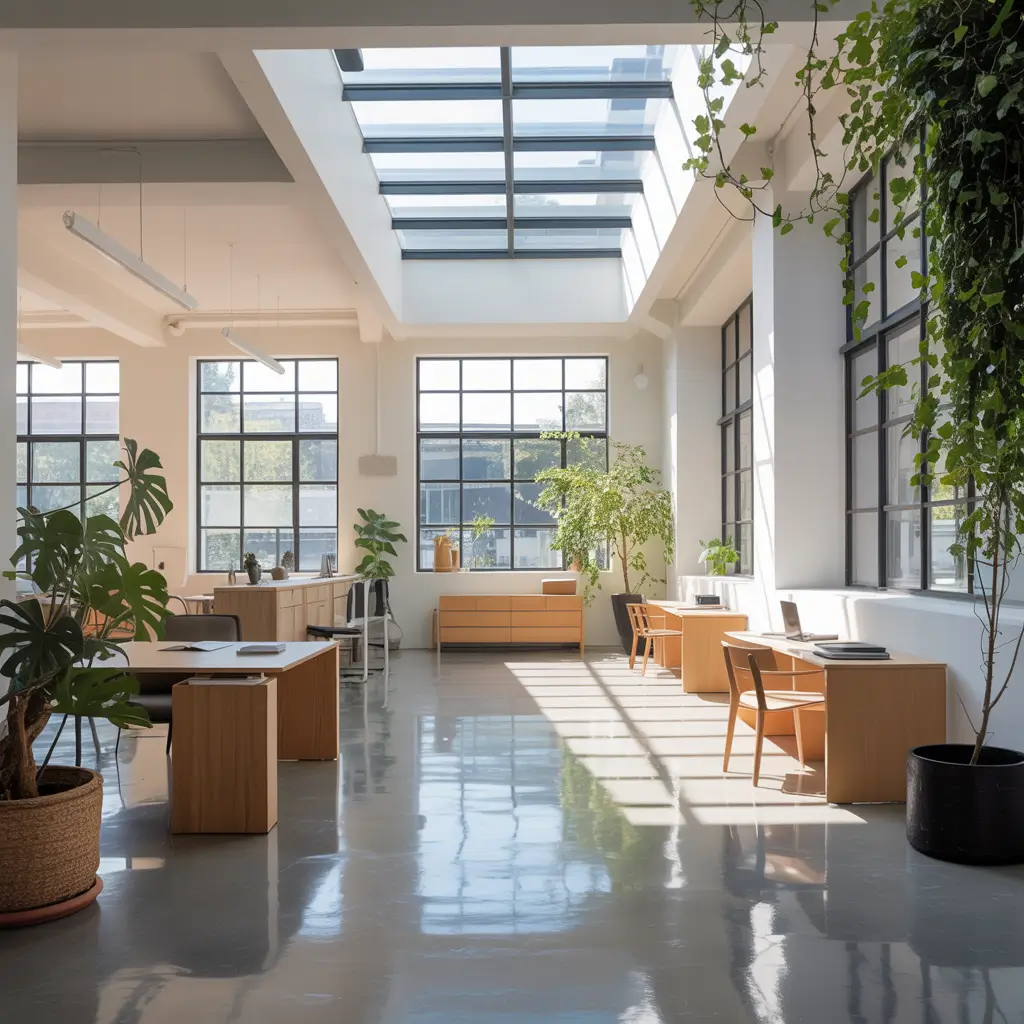
Natural light is basically productivity juice, and glass ceiling elements are your direct line to the sun. Whether you install actual skylights or use glass panels between floors, this design floods your workspace with daylight.
I once worked in an office with a central skylight atrium, and even on cloudy days, the space felt alive. There’s something about natural light that artificial lighting just can’t replicate – it makes you feel more connected to the outside world and less like a corporate drone.
Obviously, full skylights aren’t always possible (especially if you’re not on the top floor), but you can fake it. Glass panels with LED backlighting can mimic skylights surprisingly well. Some systems even simulate cloud movements and color temperature changes throughout the day.
Maximizing Natural Light
Smart strategies for glass ceilings:
- Use frosted glass to diffuse harsh direct sunlight
- Install automated blinds for glare control
- Position workstations to benefit from natural light without screen glare
- Consider UV-filtering glass to protect furniture and reduce heat
The energy savings from reduced artificial lighting can actually offset installation costs over time. Plus, your team’s vitamin D levels will thank you.
Also Read: 10 Creative Interior Ceiling Design Ideas for Stylish Spaces
7. Curved POP Layered Ceiling
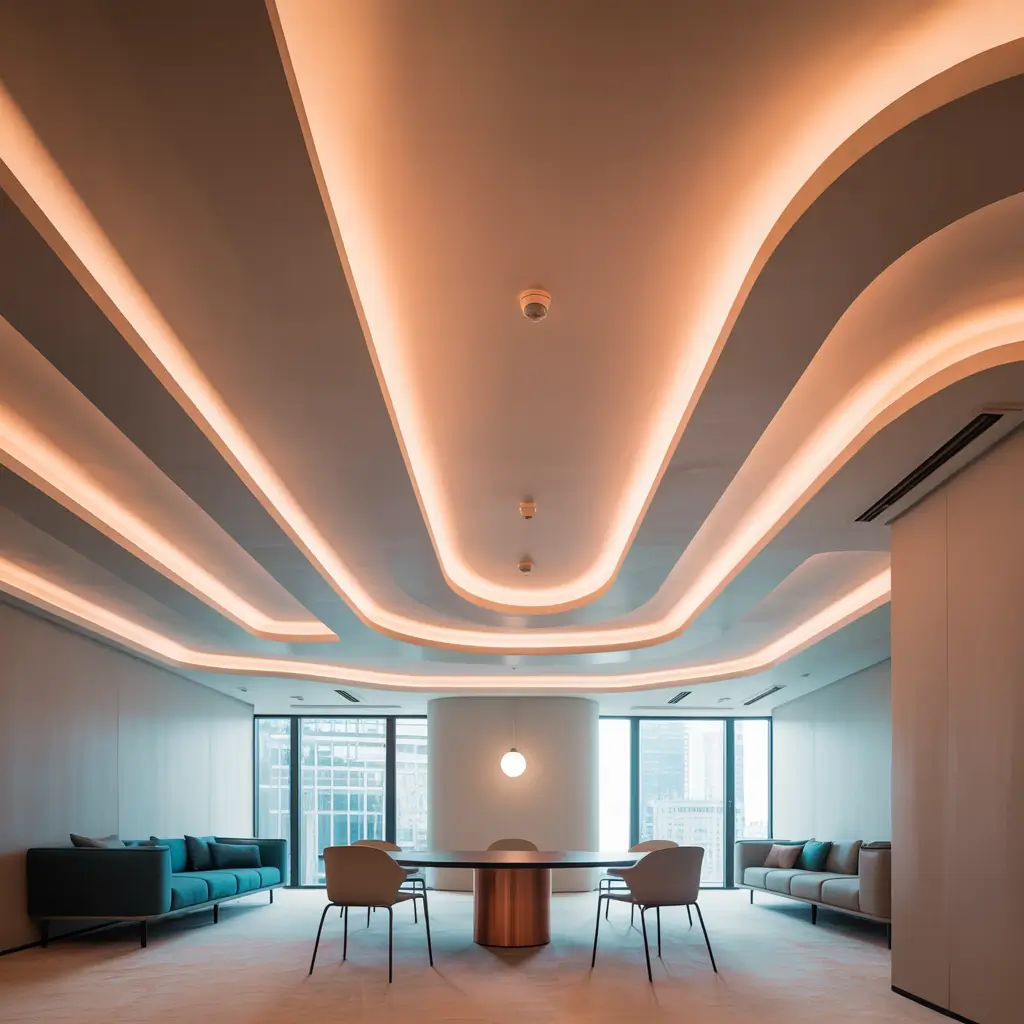
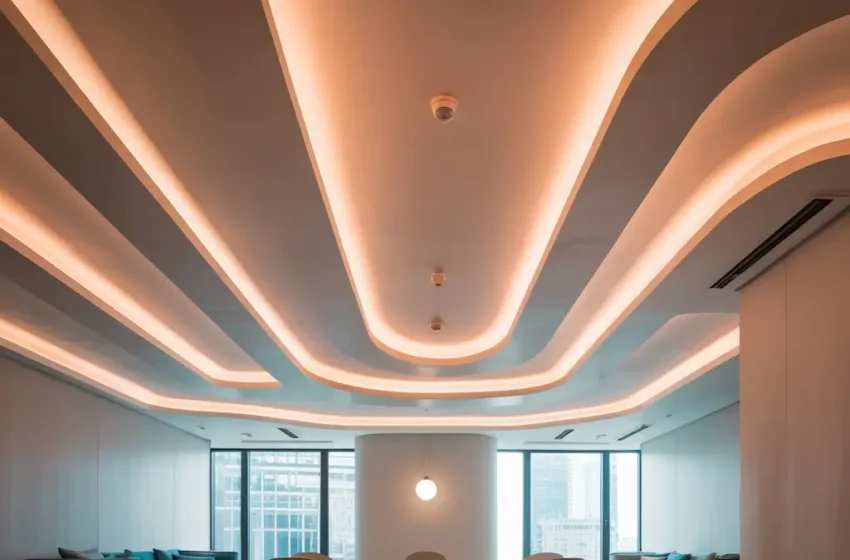
Plaster of Paris (POP) ceilings let you create smooth, curved designs that soften the typically angular office environment. These flowing forms can guide circulation, define spaces, or simply add visual interest to otherwise boring rectangles.
The first time I saw a curved POP ceiling in an office, I thought it must have cost a fortune. Turns out, it’s surprisingly affordable compared to other architectural features with similar impact. The curves made the space feel larger and more dynamic, like the ceiling was literally lifting your spirits.
Curves work especially well in reception areas and meeting rooms where you want to make an impression. They suggest creativity and forward-thinking without being too aggressive or trendy.
Design Considerations
Creating effective curves:
- Use gentle waves rather than dramatic swoops
- Integrate lighting within the curves for emphasis
- Match curve direction to traffic flow
- Keep heights reasonable to avoid claustrophobia
Remember that POP requires skilled installation. This isn’t a weekend DIY project unless you’re seriously talented with plaster work.
8. Greenery & Planter Integrated Ceiling
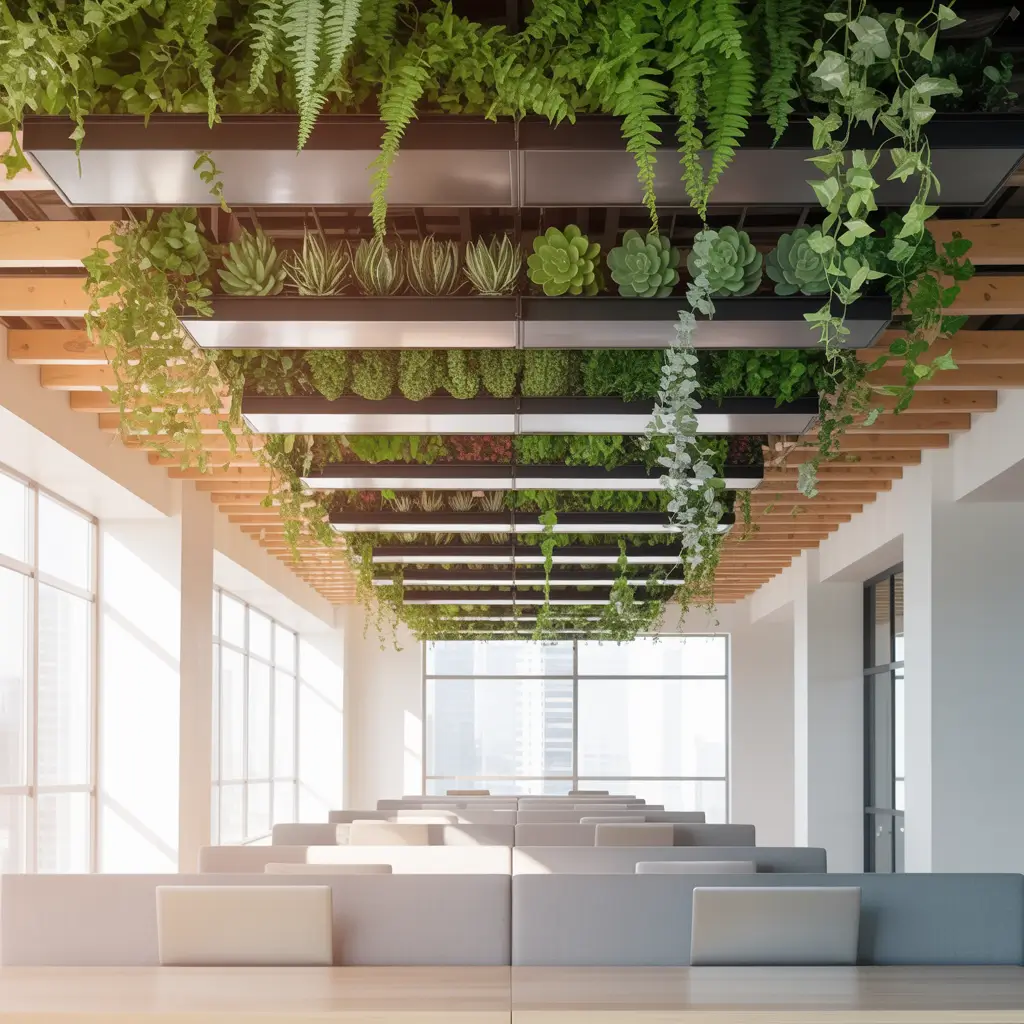
Living walls are so last year – now we’re putting gardens on the ceiling! Integrated planters and hanging gardens create a biophilic design that literally brings nature into your workspace.
I was skeptical about this trend until I visited an office with trailing plants cascading from ceiling-mounted planters. The space felt like a modern jungle (in the best way), and apparently, their sick days dropped by 30% after installation. Coincidence? Maybe. But the air definitely felt fresher.
The trick is choosing the right plants and irrigation systems. You want low-maintenance varieties that won’t drop leaves on your keyboard. Some systems even include automatic watering and grow lights, making maintenance practically foolproof.
Plant Selection Guide
Best ceiling-friendly plants:
- Pothos for trailing drama
- Spider plants for easy care
- Ferns for lush texture
- Air plants for minimal maintenance
Always consider weight load and water damage potential. Work with a structural engineer if you’re planning anything ambitious.
9. Metal Grid Suspended Ceiling
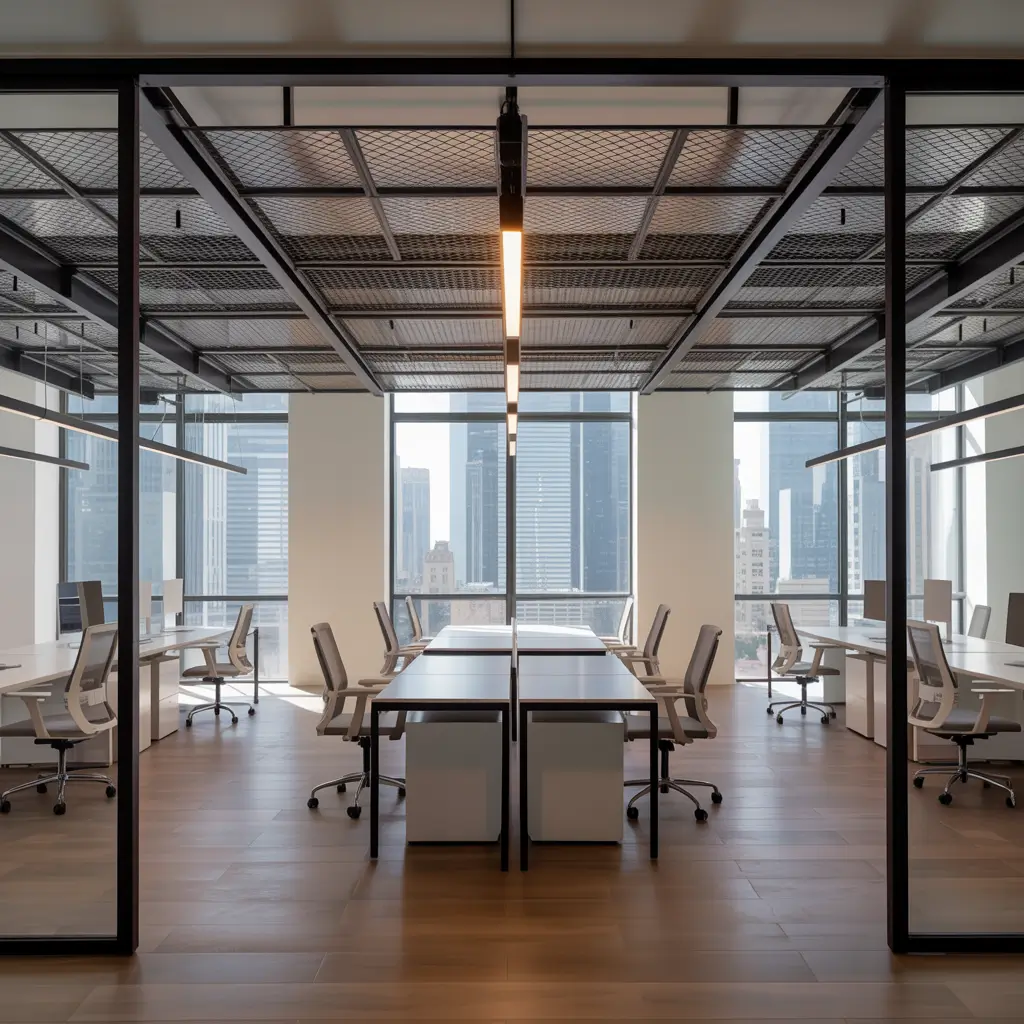
Metal grid ceilings offer an industrial-chic aesthetic that’s both functional and stylish. These systems create a semi-transparent layer that shows glimpses of the structure above while maintaining a finished appearance.
What I love about metal grids is their honesty – they don’t pretend to be anything other than what they are. Plus, they’re incredibly practical for offices that need frequent access to utilities above the ceiling.
The grid pattern itself becomes a design element. You can use different mesh sizes, colors, and materials to create various effects. Some offices even weave LED strips through the grid for an amazing lighting effect that looks like something from a sci-fi movie.
Grid System Benefits
Why metal grids rock:
- Easy access for maintenance
- Excellent ventilation
- Industrial aesthetic that never goes out of style
- Surprisingly good acoustics with the right backing
- Budget-friendly compared to solid ceilings
Just ensure your HVAC system is visually appealing if it’ll be partially visible. Nobody wants to stare at ugly ductwork all day.
Also Read:10 Inspiring Kitchen Ceiling Design Ideas for Small Kitchens
10. Artistic Painted Mural Ceiling
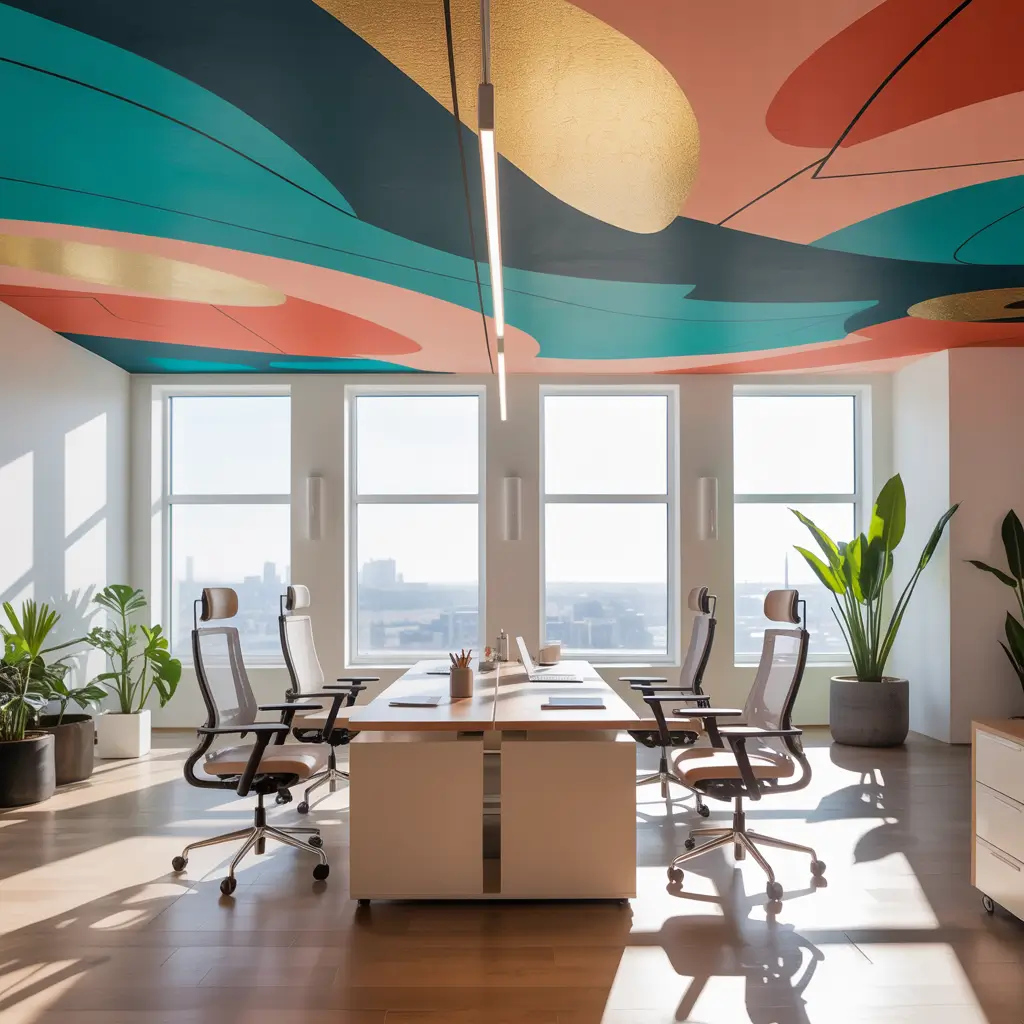
Sometimes you need to think outside the box – or in this case, paint all over it. Ceiling murals transform your office into an immersive art experience that can inspire, calm, or energize depending on the design.
I worked with a startup that painted their ceiling to look like a cloudy sky, complete with subtle color gradients. Cheesy? I thought so at first. But after a few weeks, I realized how much more relaxed I felt compared to staring at white tiles. It’s like having a permanent window to the outdoors.
Modern ceiling murals go way beyond clouds though. Abstract patterns, geometric designs, or even company-culture-inspired artwork can turn your ceiling into a conversation piece that reinforces your brand identity.
Mural Planning Tips
Creating ceiling art that works:
- Start with a professional designer’s concept
- Consider how lighting affects the artwork
- Use high-quality, low-VOC paints
- Think about long-term – will this design age well?
- Document the process for social media content (free marketing!)
IMO, this works best in creative industries where clients expect something different. Law firms might want to stick with something more subtle.
Combining Ideas for Maximum Impact
Here’s the thing – you don’t have to choose just one design approach. The best office ceilings often combine multiple elements. Maybe you pair wooden beams with LED strips, or add acoustic panels to your industrial concrete ceiling.
I’ve seen offices create different ceiling treatments for different zones. Reception areas get the wow factor with curves and lighting, while work areas prioritize acoustics and natural light. Meeting rooms might feature statement designs that reinforce company values.
The key is maintaining visual cohesion. Use consistent materials, colors, or design languages to tie everything together. You want variety, not chaos.
Budget Considerations and ROI
Let’s talk money, because even the coolest ceiling isn’t worth bankrupting your business. The good news? Many of these designs offer solid ROI through improved productivity, reduced sick days, and better employee retention.
Start by prioritizing problem areas. If noise is killing productivity, invest in acoustic solutions first. If your team complains about lighting, focus there. You can always add decorative elements later.
Consider phased implementation. Maybe you start with LED lighting this quarter, add acoustic panels next quarter, and so on. This spreads costs and lets you evaluate impact before committing to bigger changes.
Making the Decision
Choosing the right ceiling design for your office depends on several factors:
- Your industry and brand identity
- Building limitations and regulations
- Budget and timeline
- Employee needs and preferences
- Long-term flexibility requirements
Don’t forget to involve your team in the decision. After all, they’re the ones who’ll stare at this ceiling every day. Send out surveys, create mood boards, or set up a voting system. You might be surprised what resonates with people.
Final Thoughts
Your office ceiling is more than just a surface – it’s an opportunity to create an environment where people actually want to work.
Whether you go minimal with floating panels or bold with painted murals, the right ceiling design can transform your office from a place people have to be into a space they choose to be.
Remember, the best office ceiling is one that solves problems while adding beauty. It should improve acoustics, lighting, and aesthetics without making maintenance a nightmare.
Start small if you need to, but start somewhere. Your ceiling (and your team) will thank you 🙂
Ready to look up and level up your office? Trust me, once you experience the difference a well-designed ceiling makes, you’ll wonder why you stared at those boring tiles for so long.
Now get out there and create a workspace that doesn’t make people want to work from home every day!