10 Elegant Office Interior Design Ideas for Professional Style
- Home Interior Design
 Ben
Ben- 0
- 25 minutes read
Remember when “working from home” meant answering emails from your couch in pajamas? Yeah, those days ended real quick when we all realized that our dining tables weren’t cutting it as permanent desks.
After three years of remote work and approximately 847 Zoom calls where I strategically angled my camera to hide the laundry pile, I finally accepted that office design isn’t just for corporate spaces anymore.
Whether you’re setting up a home office, redesigning your corporate workspace, or just trying to make that weird corner in your bedroom functional, good office design can literally change how you work.
I’ve gone from productivity disaster to actually enjoying my work hours, all because I finally figured out how to create a workspace that doesn’t make me want to crawl back into bed.
These aren’t just pretty Pinterest ideas – they’re practical solutions that have saved my sanity and my spine.
Minimalist Home Office Makeover
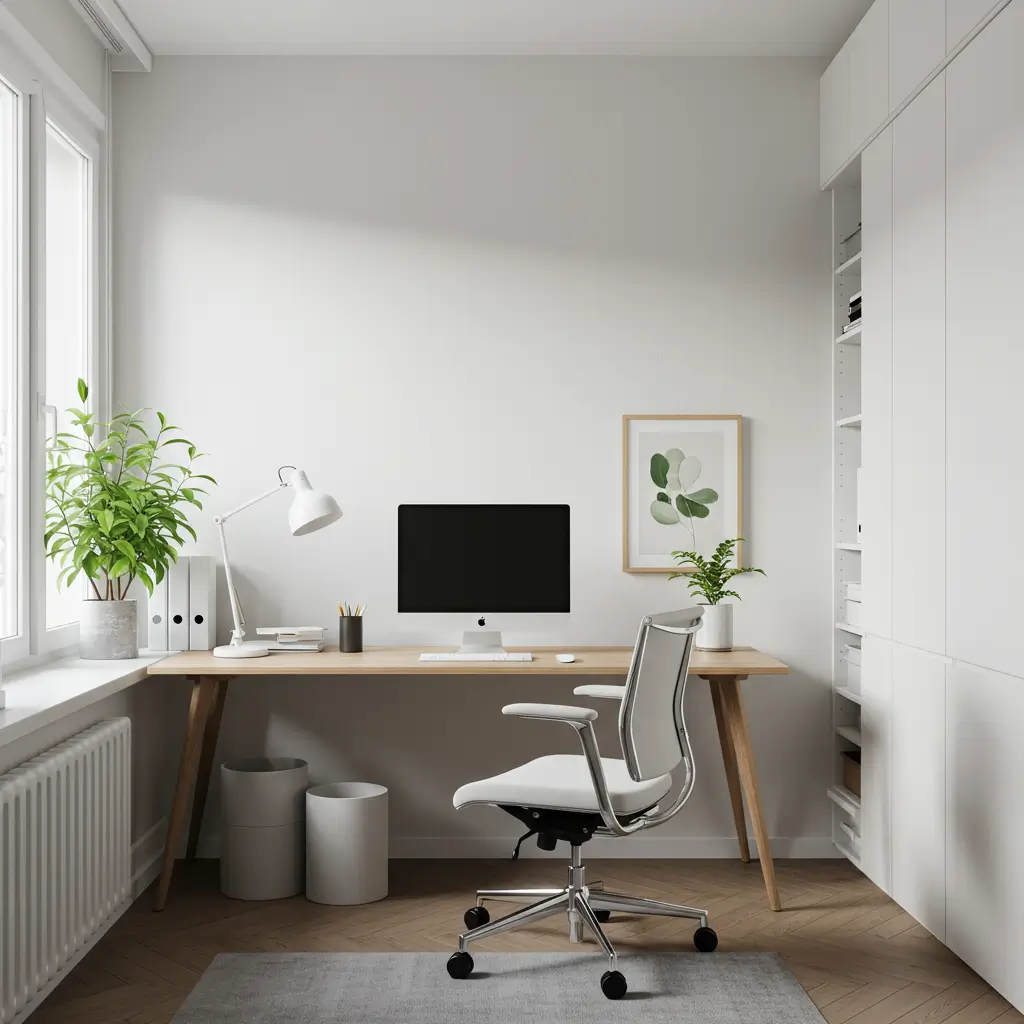
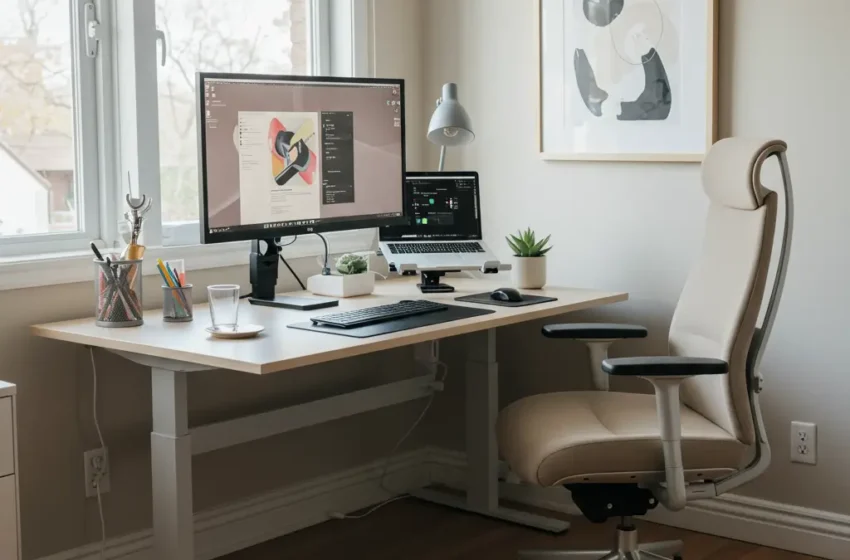
Minimalism in your office isn’t about having an empty room with a laptop on the floor (though I’ve been there during moving week). It’s about creating a space where your brain can actually focus instead of getting distracted by that pile of random cables you swear you’ll organize someday.
The minimalist office formula starts with asking yourself what you actually need to work effectively. For me, that’s a desk, a good chair, my laptop, and exactly one plant that I haven’t killed yet. Everything else was just expensive procrastination.
Essential elements for minimalist office success:
• A clean desk with only daily-use items visible
• Hidden cable management (this changes everything)
• One accent color maximum to avoid visual chaos
• Digital storage instead of physical files when possible
• Quality over quantity in every purchase decision
I discovered that removing visual clutter literally made me more productive. There’s actual science behind this – our brains spend energy processing everything we see. When I cleared my desk of everything except my laptop and coffee mug, my focus time doubled.
The game-changer was investing in a desk with built-in drawers. All those “essential” office supplies that cluttered my surface now live hidden but accessible. My workspace looks like a stock photo, but it actually functions better than my old chaos system.
Have you ever noticed how the most productive people often have the simplest setups? That’s not coincidence. They’re not wasting mental energy deciding which of their 47 pens to use.
Cozy Small Office Corners
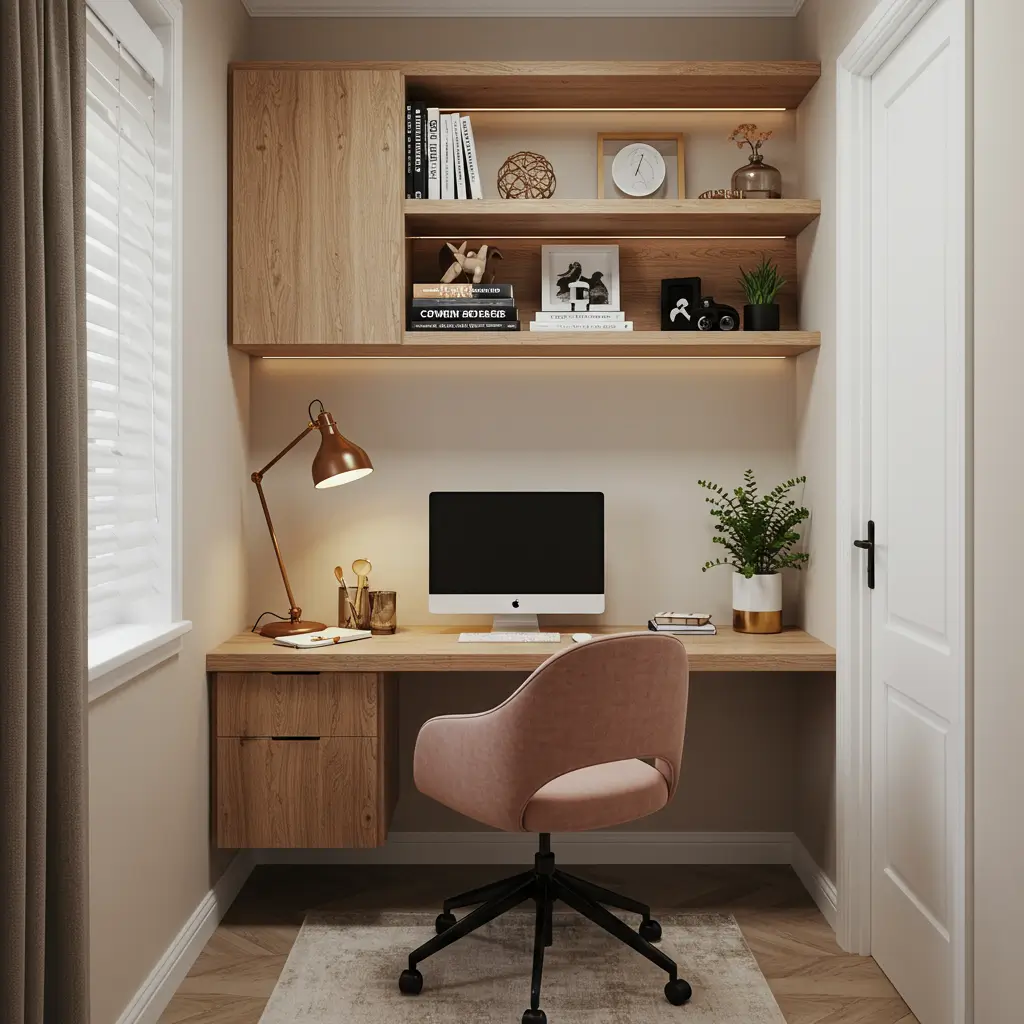
Not everyone has a spare room for an office. Most of us are cramming desks into bedrooms, living rooms, or that weird space under the stairs that Harry Potter would recognize. My first “office” was literally a TV tray in my bedroom closet. We all start somewhere.
Creating a cozy office corner requires embracing the space you have instead of mourning the space you don’t. That awkward corner by the window? Perfect. That wall space between the couch and bookshelf? Ideal.
Small corner office essentials:
• A wall-mounted or floating desk to save floor space
• Vertical storage going up, not out
• A chair that tucks completely under the desk
• Good task lighting that doesn’t take up desk space
• Mirrors to make the corner feel larger
What transformed my tiny corner was defining it as a separate zone. I used a small rug to designate “office space” and hung a curtain that I can pull for video calls. It’s like having a office with a door, minus the actual walls.
My favorite small space hack? Using pegboard on the wall for supplies. Everything stays organized and accessible without eating up precious desk real estate. Plus, it looks intentionally designed rather than desperately cramped.
Modern Corporate Workspace Designs
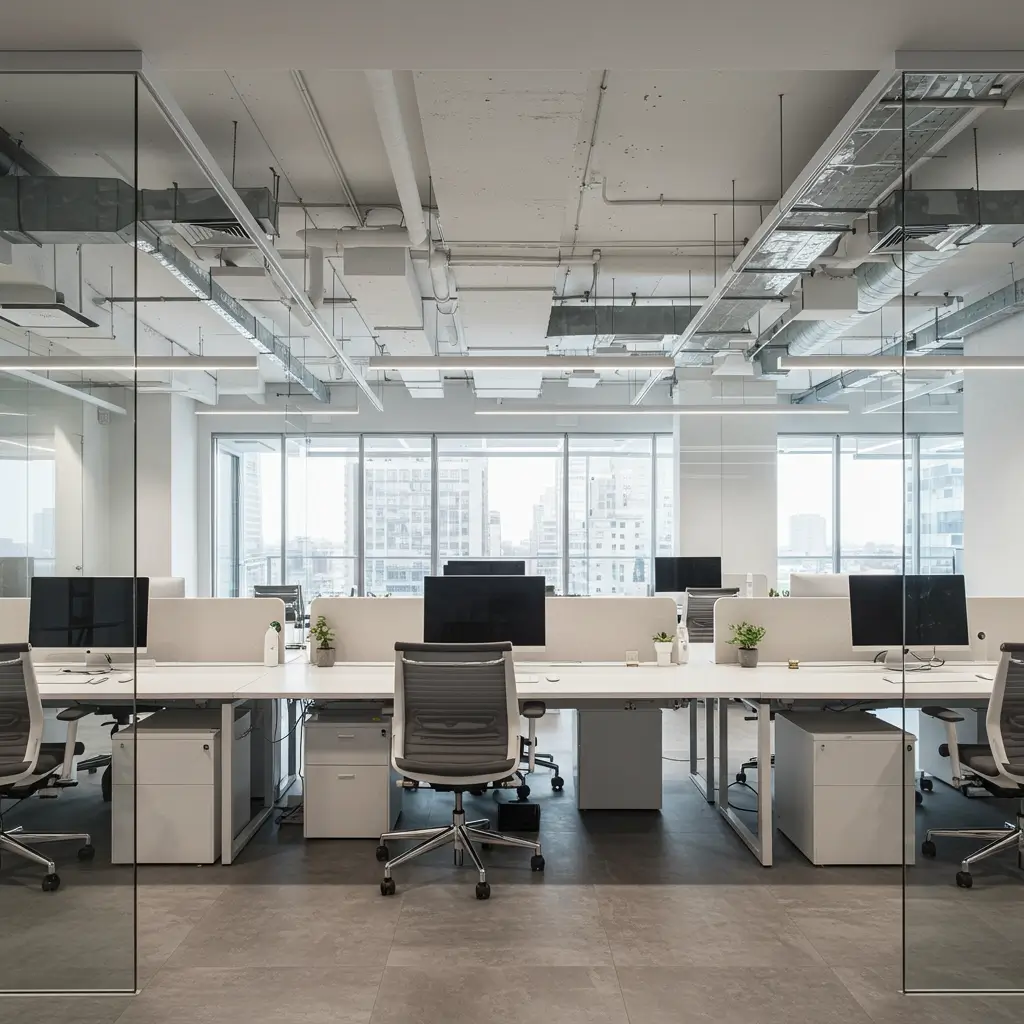
Corporate offices don’t have to feel like soul-sucking cubicle farms anymore. Even if you’re working with standard-issue office furniture, you can create a modern workspace that doesn’t make you die inside every Monday morning.
Modern corporate design focuses on flexibility, collaboration, and acknowledging that humans actually work there. Revolutionary concept, right? My company finally redesigned our office last year, and productivity genuinely increased when people stopped hating their environment.
Creating modern corporate vibes:
• Open layouts with defined quiet zones
• Standing desk options or converters
• Natural light prioritized over fluorescent horror
• Collaboration spaces that people actually use
• Personal touches allowed (novel idea!)
The biggest change in our office was adding different types of work spaces. Not everyone works well at a traditional desk. We now have standing desks, soft seating areas, and quiet phone booths. People choose their space based on their task, not their job title.
I learned that even in the most corporate environment, small personal touches matter. My desk has one family photo, one small plant, and a coffee mug with personality. These tiny rebellions against corporate sterility keep me human during long days.
Also Read: 12 Elegant Home Interior Design Ideas to Elevate Your Home
Budget-Friendly Office Decor Hacks
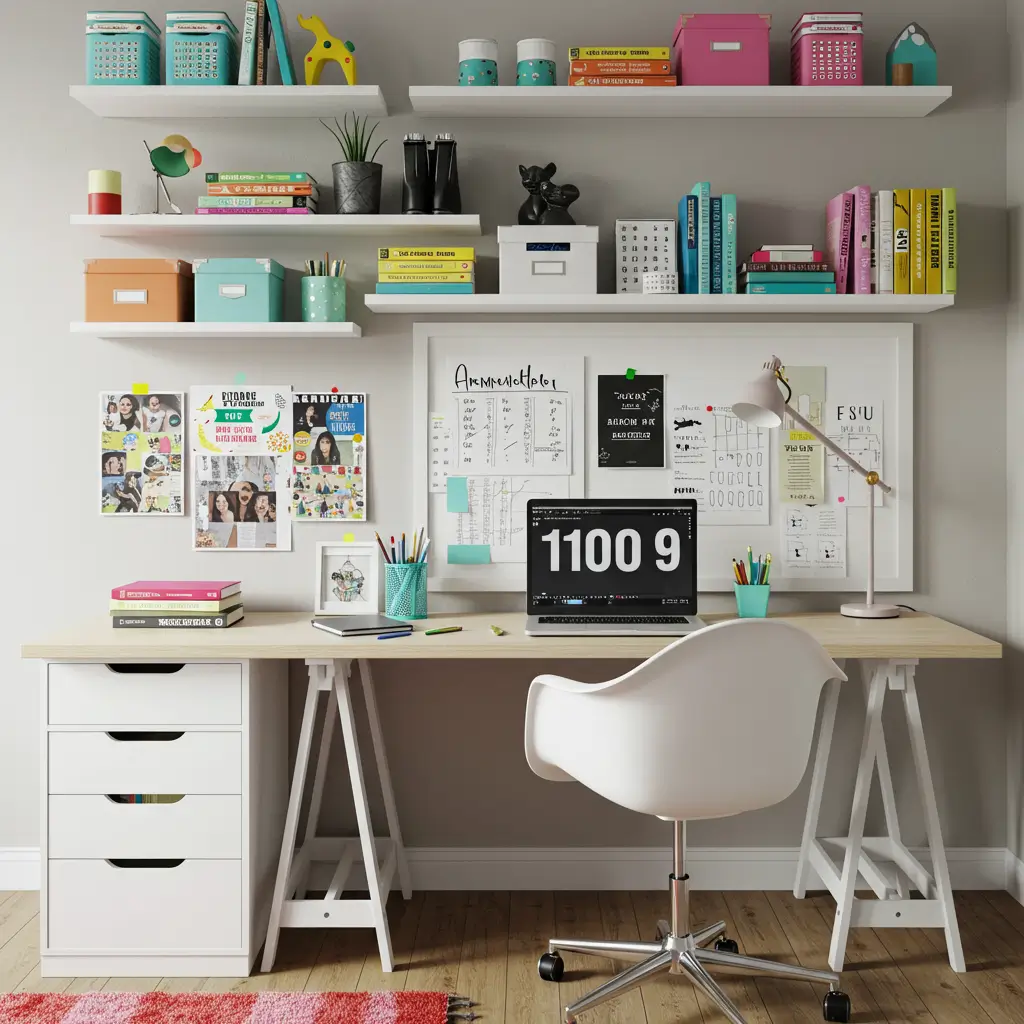
Let’s be real – not everyone has Google’s office budget. Most of us are working with “whatever’s on sale at IKEA” money. But I’ve created professional-looking offices for less than $200, and no, it doesn’t all come from Swedish furniture stores.
The budget office strategy involves three steps: DIY what you can, thrift what you can’t, and splurge only on what touches your body (chair and keyboard). Everything else can be faked or hacked.
Budget hacks that actually work:
• Contact paper turns any surface into “marble” or “wood”
• Thrift store frames + free printables = instant art
• Pegboard painted to match your wall = custom organization
• LED strips create expensive-looking lighting for $20
• Cable management boxes hide the chaos for $10
My entire office makeover cost $180, and that included a decent chair from Facebook Marketplace. The most expensive-looking feature – my “built-in” shelving – is actually just IKEA brackets and boards from Home Depot painted to match the wall.
FYI, the best budget hack is patience. Waiting for sales, checking Facebook Marketplace daily, and building slowly gets you better results than panic-buying everything at once.
Ergonomic Desk Setup Inspirations
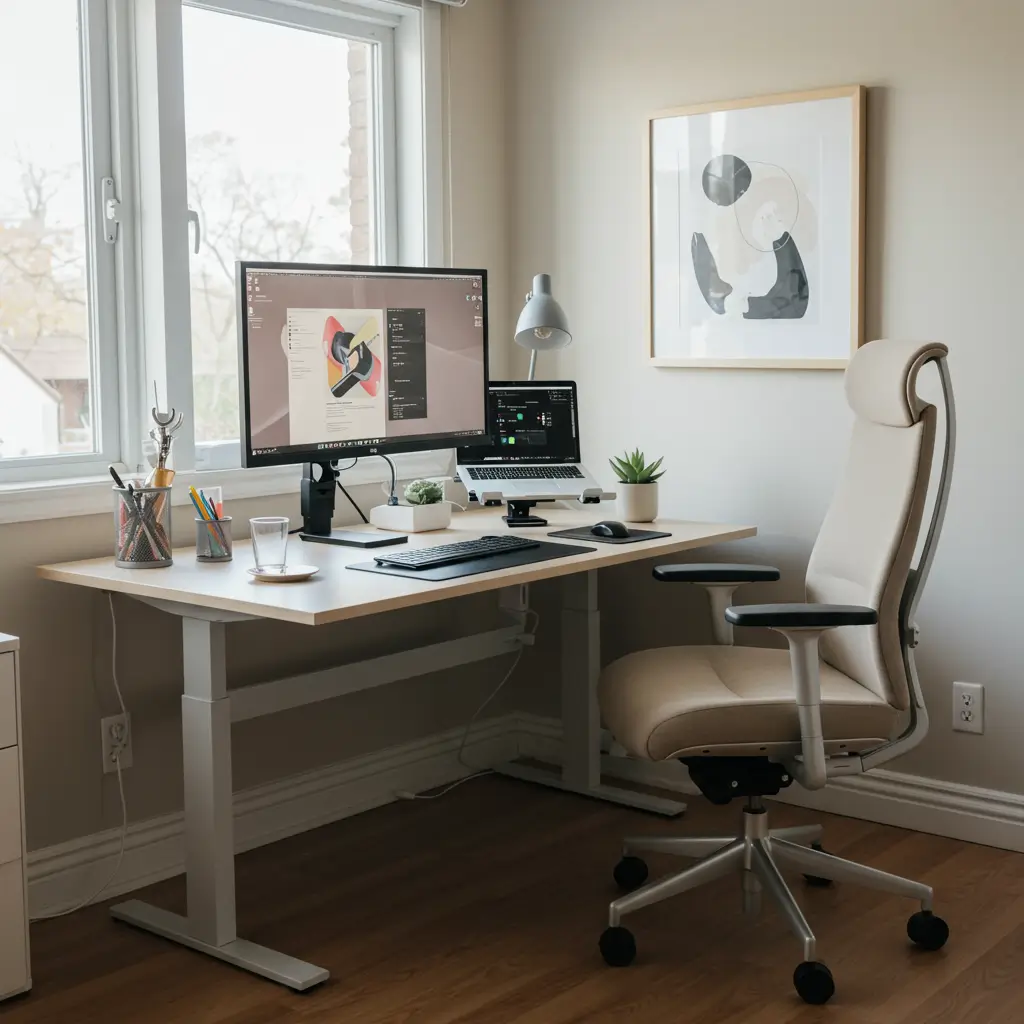
Here’s something nobody talks about enough – bad office ergonomics will literally hurt you. I learned this after developing chronic neck pain from hunching over a laptop on my couch for six months. Now I’m evangelical about proper desk setup.
Ergonomic setup isn’t just about expensive chairs (though they help). It’s about positioning everything to support your body during those long work sessions. Your future self will thank you for caring about this now.
Essential ergonomic adjustments:
• Monitor at eye level (stack books if needed)
• Keyboard at elbow height when sitting
• Feet flat on floor or footrest
• Arms supported but shoulders relaxed
• Screen arm’s length away from face
The revelation for me was discovering that laptop stands change everything. Raising my screen to eye level eliminated my neck pain within a week. Add an external keyboard and mouse, and suddenly you’re not hunched like a gargoyle.
Have you ever noticed how much better you feel after working at a properly set up desk versus hunching on the couch? That’s not just psychological. Your body is literally under less stress when everything’s positioned correctly.
Industrial Style Office Interiors
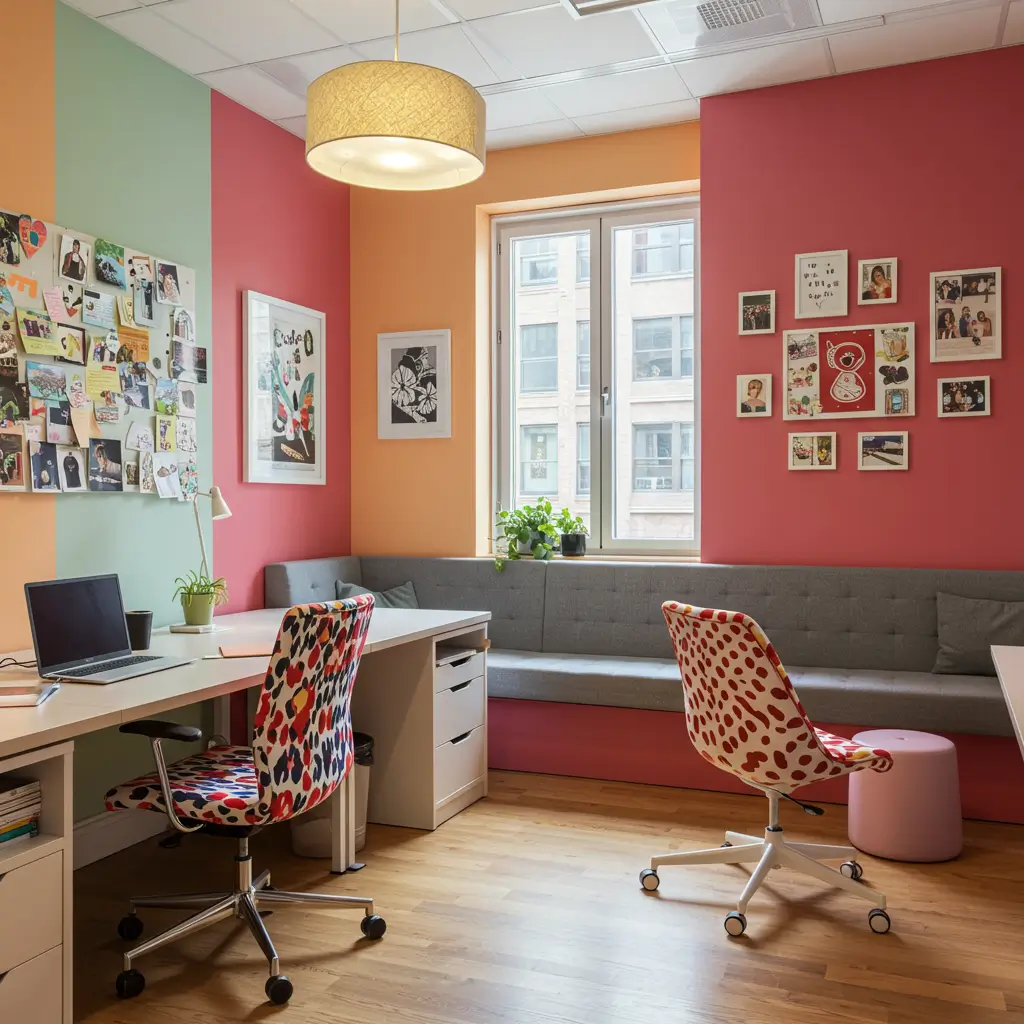
Industrial office design makes you feel like you run a startup even if you’re just doing data entry. There’s something about exposed brick and metal fixtures that adds instant cool factor to any workspace.
Creating industrial style doesn’t require living in a converted warehouse. You can fake it with the right elements and attitude. My home office looks industrial, but I live in a standard suburban house built in 1995.
Industrial elements that work anywhere:
• Metal shelving units (function meets form)
• Edison bulb lighting or exposed filament LEDs
• Brick wallpaper or one exposed brick accent wall
• Pipe shelving or desk legs (surprisingly easy DIY)
• Leather and metal furniture combinations
What surprised me about industrial design is how practical it is for offices. Everything’s durable, easy to clean, and only looks better with wear. My metal desk has scratches and coffee stains that add to its “authentic industrial patina.”
The best part? Industrial furniture is often cheaper than traditional office furniture. That metal shelving unit costs half what a wooden bookcase would, and it looks intentionally stylish rather than budget-constrained.
Also Read: 10 Fresh Interior Design Ideas for Bright and Airy Homes
Colorful Creative Office Spaces
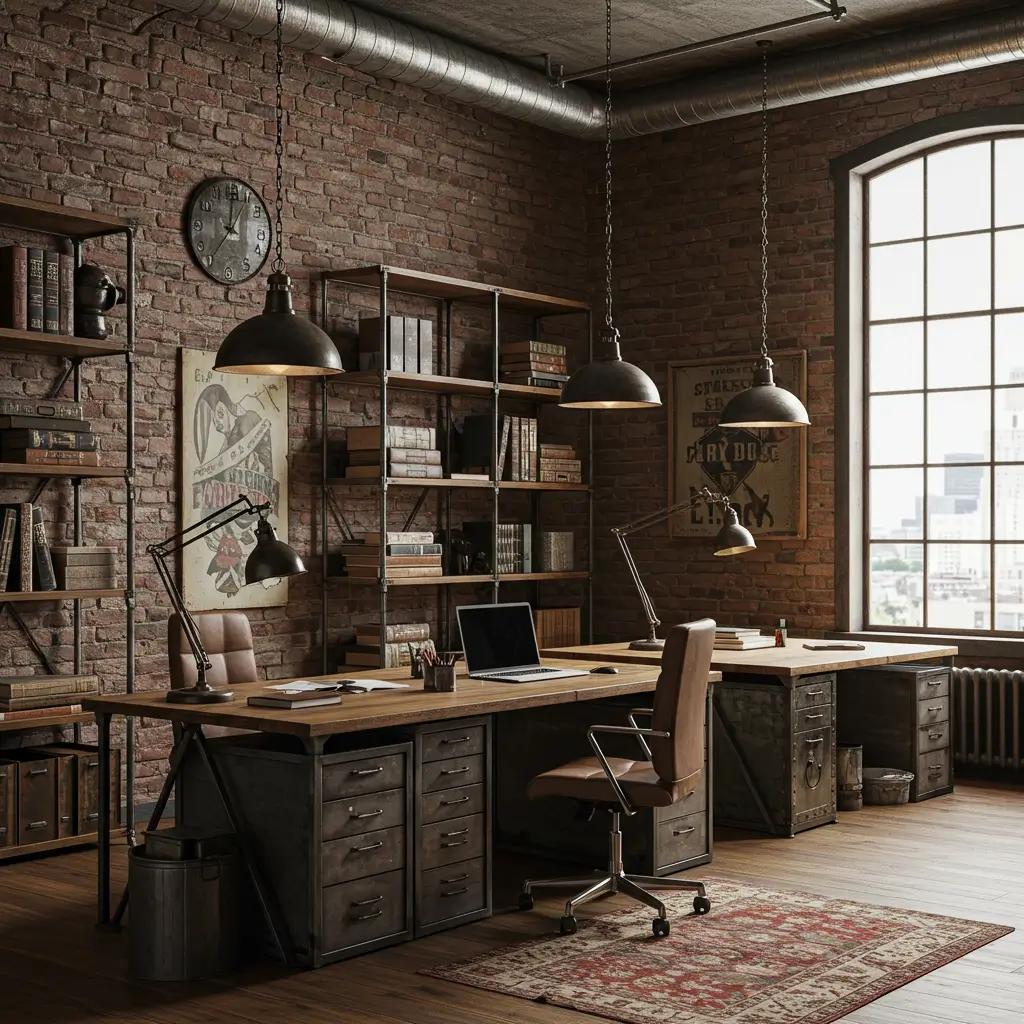
Who decided offices had to be beige? Adding color to your workspace can literally boost creativity and mood. After years of neutral everything, I painted one wall coral and suddenly started actually enjoying sitting at my desk.
Strategic color use means choosing hues that energize without overwhelming. You want inspiration, not a headache. My rule: one bold color, two supporting colors, and neutrals for everything else.
Colors that work in offices:
• Blue for focus and productivity
• Green for calm and reduced eye strain
• Yellow for energy and creativity (in small doses)
• Orange for enthusiasm and interaction
• Purple for innovation and luxury vibes
I discovered that color psychology is real when I painted my office. The coral wall behind my monitor makes me feel energized without being distracting. It’s in my peripheral vision, adding warmth without demanding attention.
The mistake I see people make? Going overboard with rainbow everything. One colorful wall or a few bright accessories work better than turning your office into a crayon box.
IMO, the best approach is starting neutral and adding color through changeable elements – art, chairs, accessories. This way, when you get sick of teal everything in six months, you’re not repainting. 🙂
Luxury Executive Office Ideas
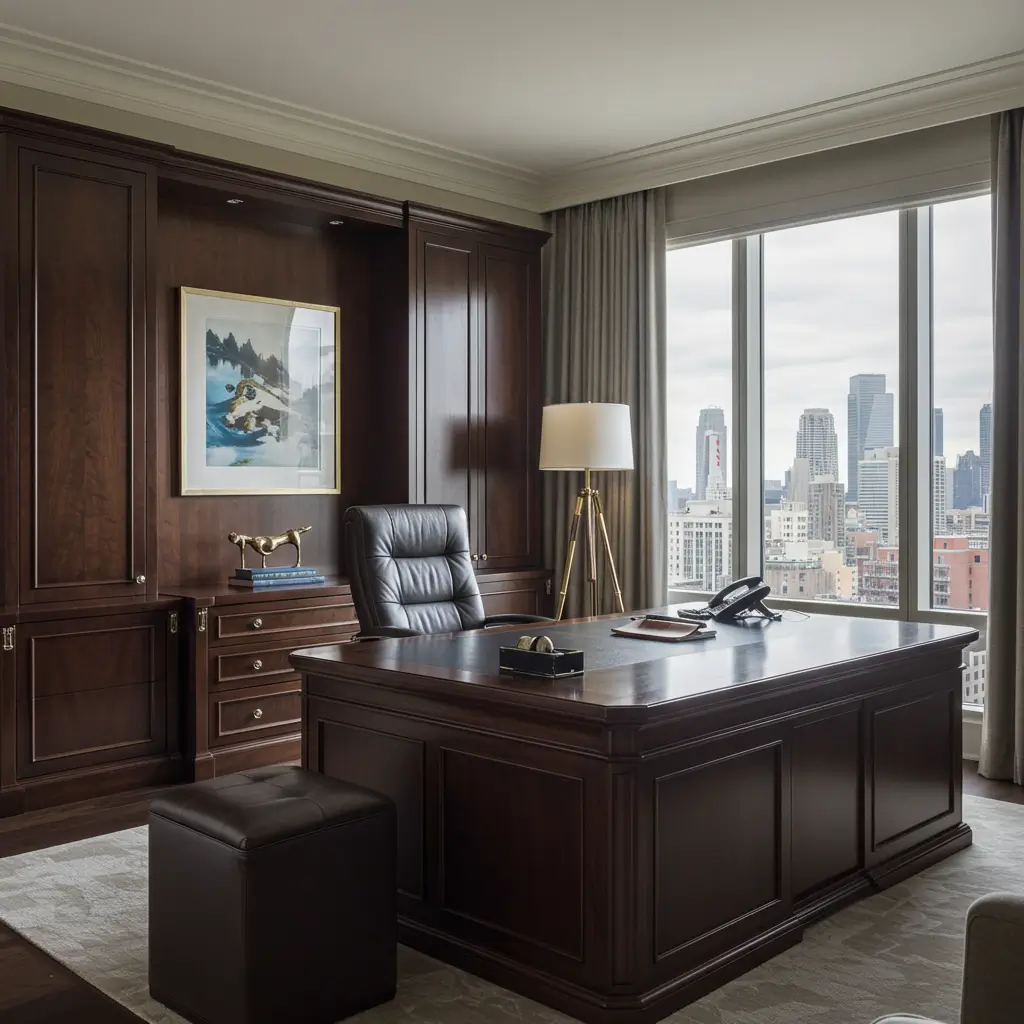
Luxury office design isn’t just for CEOs anymore. You can create an executive feel without an executive budget. It’s about choosing pieces that suggest success, even if they came from the clearance section.
The luxury office formula focuses on quality materials, sophisticated colors, and attention to detail. Rich woods, leather touches, and proper lighting can make any space feel high-end.
Executive style elements:
• A substantial desk (size matters here)
• Leather or high-quality fabric seating
• Built-in looking storage (even if it’s not)
• Artwork that makes a statement
• Layered lighting including a desk lamp
My “executive” office is mostly smoke and mirrors. That mahogany desk? It’s IKEA with wood stain. The leather chair? Craigslist find I cleaned and conditioned. The key is presentation – everything clean, organized, and intentionally placed.
The game-changer was adding a credenza behind my desk. It’s actually just a low bookshelf, but it creates that executive office layout where you can turn around to access files and supplies. Very “important business person” vibes for $50.
Scandinavian Inspired Workrooms
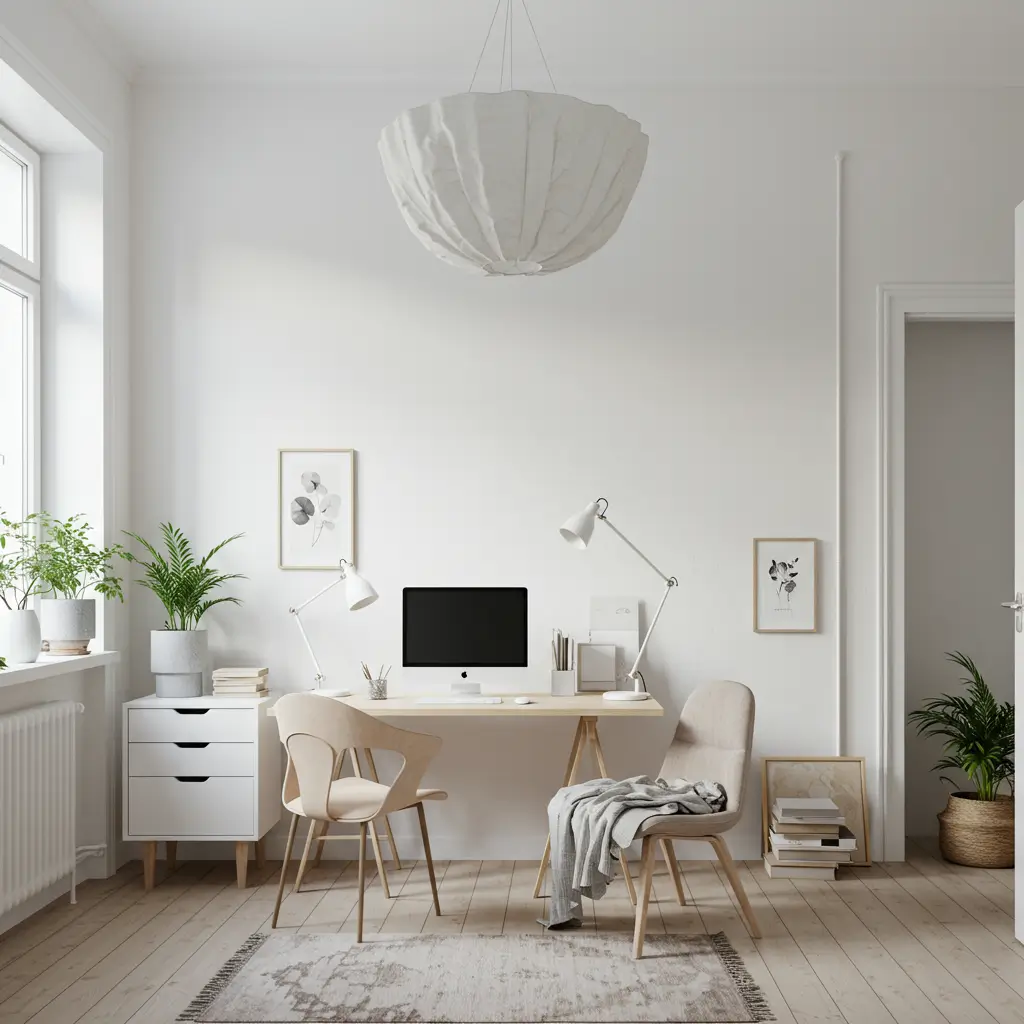
Scandinavian office design brings that same hygge comfort to your workspace. It’s about creating a calm, functional environment that makes work feel less like work and more like a lifestyle choice.
Scandinavian principles translate perfectly to offices: functionality, natural materials, and enough comfort to support long work sessions without sacrificing style.
Creating Scandinavian office vibes:
• Light wood tones (or convincing laminates)
• White walls with one accent color maximum
• Tons of natural light or good alternatives
• Cozy textiles like wool throws for breaks
• Plants for life and air quality
What I love about Scandinavian office design is how timeless it feels. While other styles date themselves, this approach stays fresh because it’s based on function rather than trends.
My Scandinavian-inspired office uses exactly five colors: white, light wood, gray, black, and green from plants. This limitation actually makes decisions easier – if something doesn’t fit the palette, it doesn’t come in.
Have you noticed how calm Scandinavian spaces make you feel? That’s intentional. The style prioritizes mental wellbeing through environmental choices, which is exactly what you need in a workspace.
Also Read: 12 Sophisticated Luxury Home Interior Design Ideas for Glamour
Multi-Functional Office Layouts
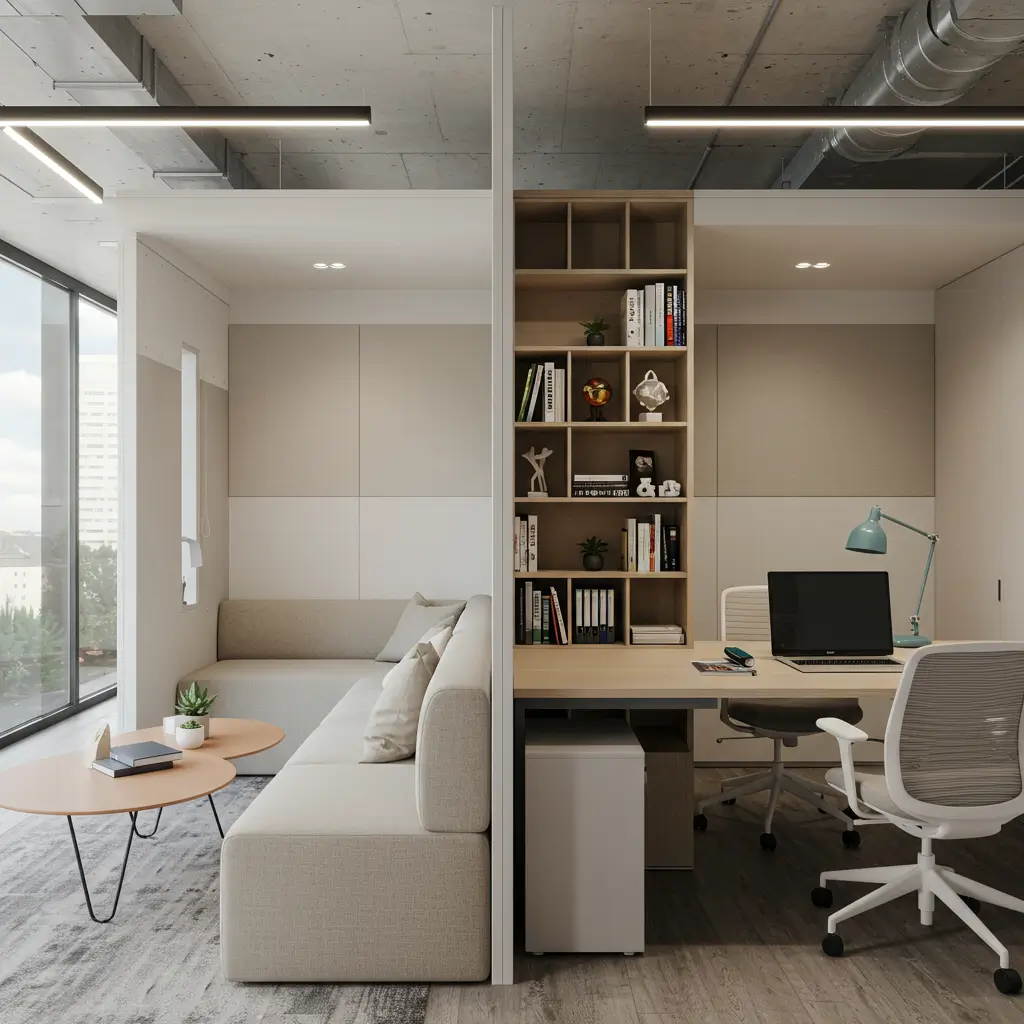
Modern life demands offices that do more than just “office.” Mine transforms from workspace to yoga studio to podcast recording booth depending on the day. Multi-functional design isn’t just smart – it’s necessary when space comes at a premium.
Creating multi-functional offices requires thinking in terms of zones and times. What needs to happen in this space, and when? My office has three modes: work mode, creative mode, and relaxation mode.
Multi-functional must-haves:
• Furniture on wheels for easy reconfiguration
• Foldable or expandable desk options
• Storage that hides non-office functions
• Lighting that adjusts for different activities
• Room dividers or curtains for instant transformation
The breakthrough for me was creating invisible zones. Different rugs define different areas. The desk area has a low-pile rug for chair rolling. The reading corner has a plush rug for comfort. The exercise area has interlocking foam tiles that hide under the desk when not in use.
My favorite multi-functional hack? A projector instead of a second monitor. During work, it displays spreadsheets on the wall. After work, it’s movie night. One device, multiple functions, zero extra furniture.
Making Your Office Work for You
After exploring these ten office interior design ideas, here’s the truth: the best office design is the one that makes you want to sit down and work. Whether that’s minimalist and calm or colorful and chaotic depends entirely on how your brain operates.
I’ve tried every style mentioned here, and my current office is actually a hybrid of several. It’s minimalist in organization, industrial in furniture, Scandinavian in color palette, and multi-functional in layout.
This Frankenstein approach works because I took the best elements from each style for my specific needs.
Start with one change. Maybe it’s just organizing your cables or adding a plant. Small improvements compound into major transformations. My office evolved over two years, with each change teaching me something about how I actually work versus how I think I should work.
Remember, your office should support your success, not just look successful. The most Instagram-worthy office means nothing if you can’t actually work in it. Create a space that makes you productive, comfortable, and maybe even a little bit excited for Monday morning.
And if that seems impossible, well, at least aim for a space that doesn’t make you want to throw your laptop out the window. Baby steps. :/