15 Dreamy Open Concept Kitchen Living Room Layout Ideas for Every Style
- Kitchen ideas
 Ben
Ben- 0
- 47 minutes read

Let me guess—you’re standing in your kitchen right now, staring at that wall between you and your living room, wondering if today’s the day you finally grab a sledgehammer.
I’ve been there. Three years ago, I took down that wall in my 1970s ranch, and watching it come down felt like opening curtains after living in a cave.
The thing about open concept layouts? They’re not just trendy Instagram fodder. They fundamentally change how you live, entertain, and connect with your family.
After helping redesign twenty-something open layouts (yes, I’ve become that friend), I’ve seen what transforms these spaces from “nice idea” to “why didn’t we do this sooner?”
Whether you’re planning a full gut renovation or just daydreaming about better flow, these layout ideas will show you exactly how to nail that perfect kitchen-living room combo.
Let’s explore what actually works in real homes with real families (and real budgets).
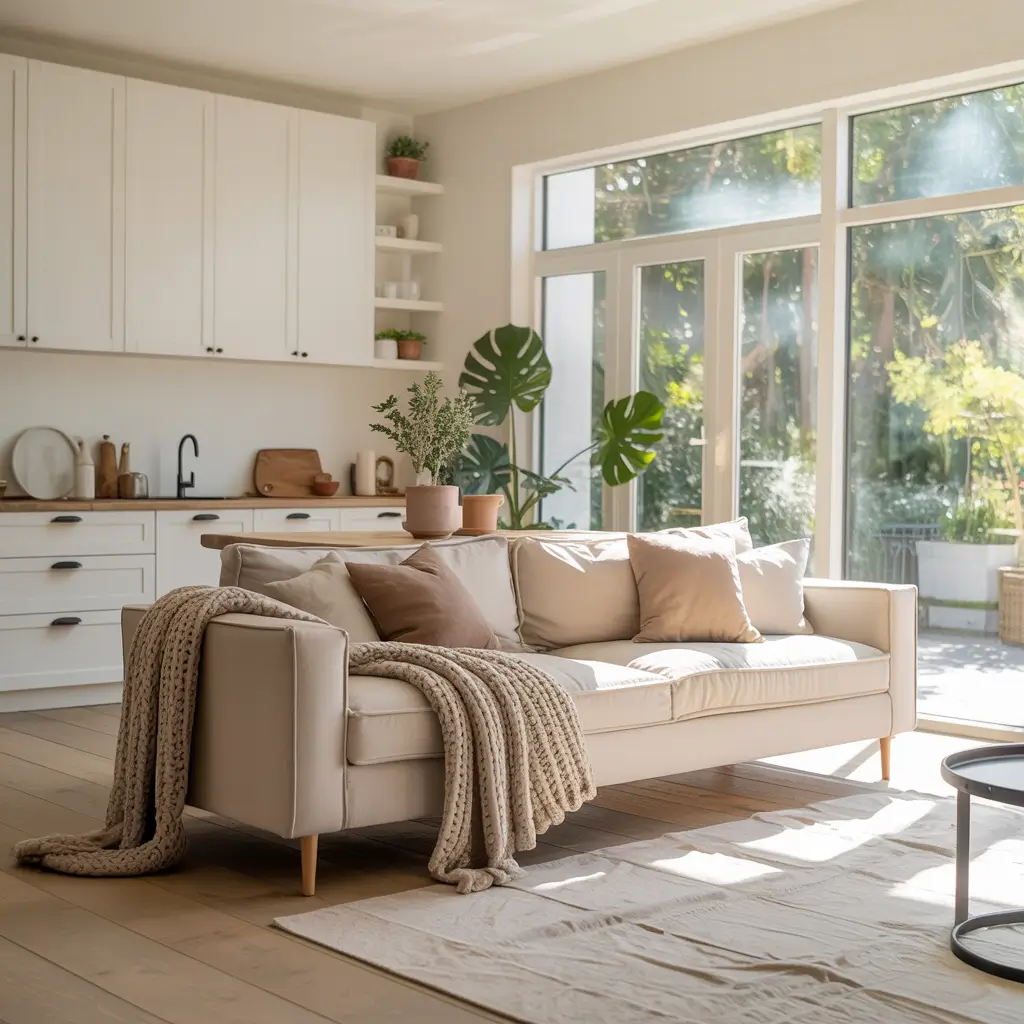
1. Minimalist Scandinavian Open Layout
The Art of Organized Emptiness
Scandinavian open layouts master the seemingly impossible task of making empty space feel warm and inviting. When I first saw a true Scandi open concept in Stockholm, I realized my cluttered American version was missing the point entirely.
Essential Scandi layout elements:
- Kitchen island as the only divider (clean lines, no upper cabinets)
- Consistent flooring throughout (light wood or white-washed)
- Built-in storage everywhere (hidden is the goal)
- Strategic furniture placement (each piece has breathing room)
- Unified color palette (whites, grays, natural wood)
Making Minimalism Livable
The trick to a successful Scandinavian layout lies in the flow. I learned to:
- Position the sofa facing away from the kitchen (creates subtle separation)
- Use one large rug to anchor the living area
- Keep kitchen counters completely clear
- Add warmth through textiles, not clutter
My Scandi-inspired layout gets more “how do you keep it so clean?” questions than anything else. Secret? When everything has a hidden home, tidying takes minutes.
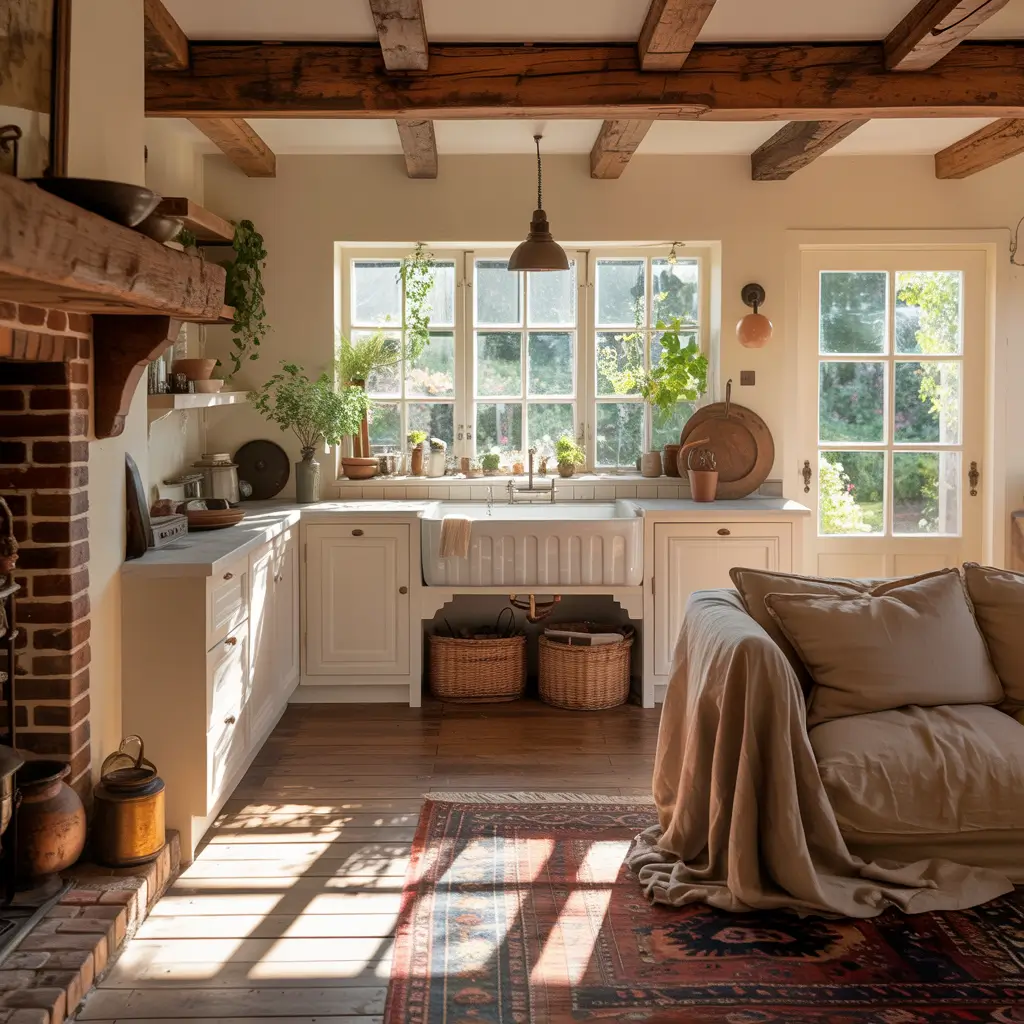
2. Cozy Farmhouse Open Concept Design
Where Rustic Meets Functional
Farmhouse open concepts create that “everyone gather ’round” feeling without making anyone feel cramped. After spending a weekend at a friend’s converted barn, I understood why farmhouse layouts work so brilliantly for real families.
Layout Must-Haves
Build your farmhouse flow with:
- Oversized island with seating (the heart of everything)
- Clear sight lines to living area (watch kids while cooking)
- Multiple seating areas (formal and casual)
- Open shelving display (functional decoration)
- Wide walkways (36 inches minimum)
Creating Cozy in Open Spaces
Farmhouse layouts combat the “airplane hangar” effect through:
- Exposed beams that define zones
- Large area rugs in the living space
- Pendant lights over the island
- Mix of seating heights and styles
3. Modern Industrial Loft Layout
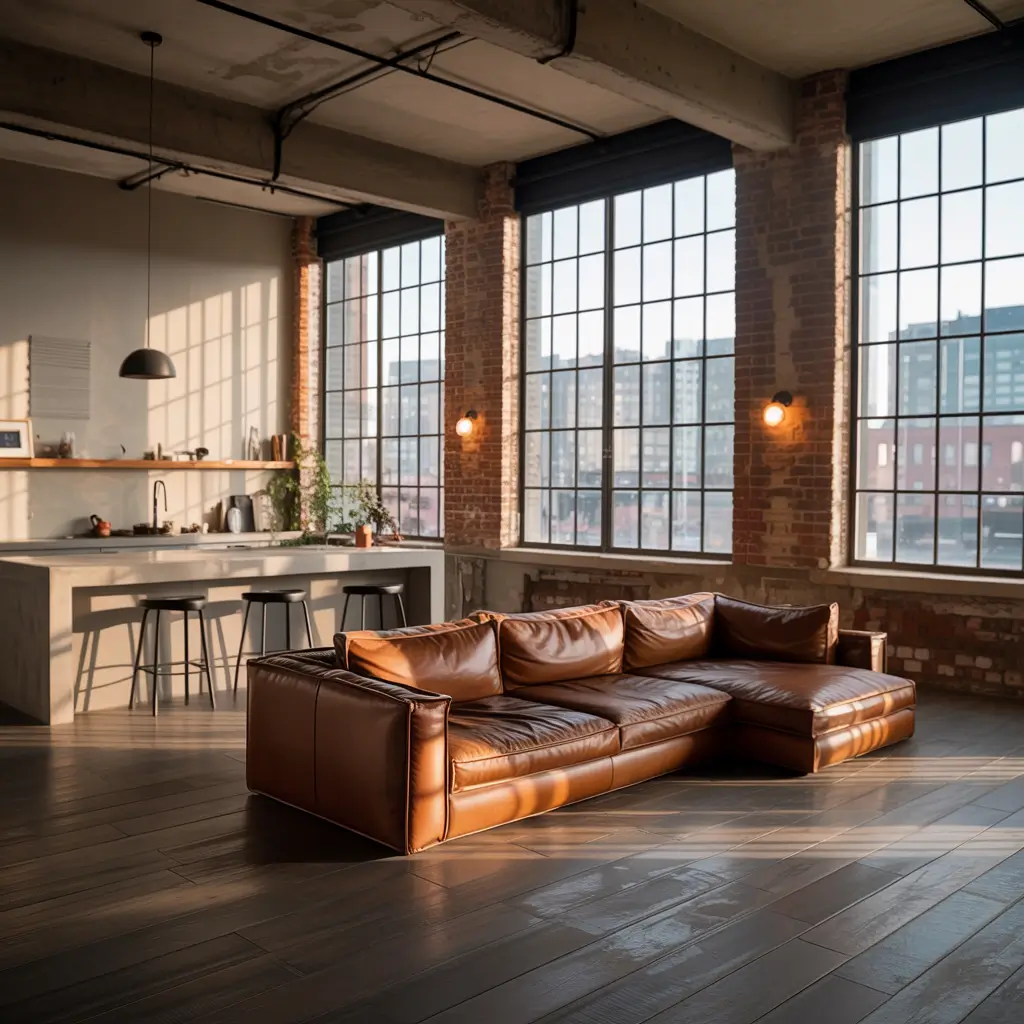
Urban Edge Meets Open Living
Industrial layouts embrace raw materials and honest architecture without sacrificing comfort. My brother’s converted warehouse taught me that concrete and cozy aren’t mutually exclusive.
Industrial Layout Strategies
Make the most of loft living:
- Kitchen along one wall (maximizes open space)
- Rolling island (flexibility is key)
- Metal and glass partitions (define without closing)
- Exposed ductwork as design (embrace, don’t hide)
- Modular furniture (adapt as needed)
Softening Industrial Edges
Balance raw with refined:
- Area rugs define living zones
- Warm lighting counters cool materials
- Plants add life to hard surfaces
- Textiles prevent echo chambers
Also Read: 15 Gorgeous Open Space Living Room and Kitchen Ideas for
4. Small Space Open Kitchen-Living Combo
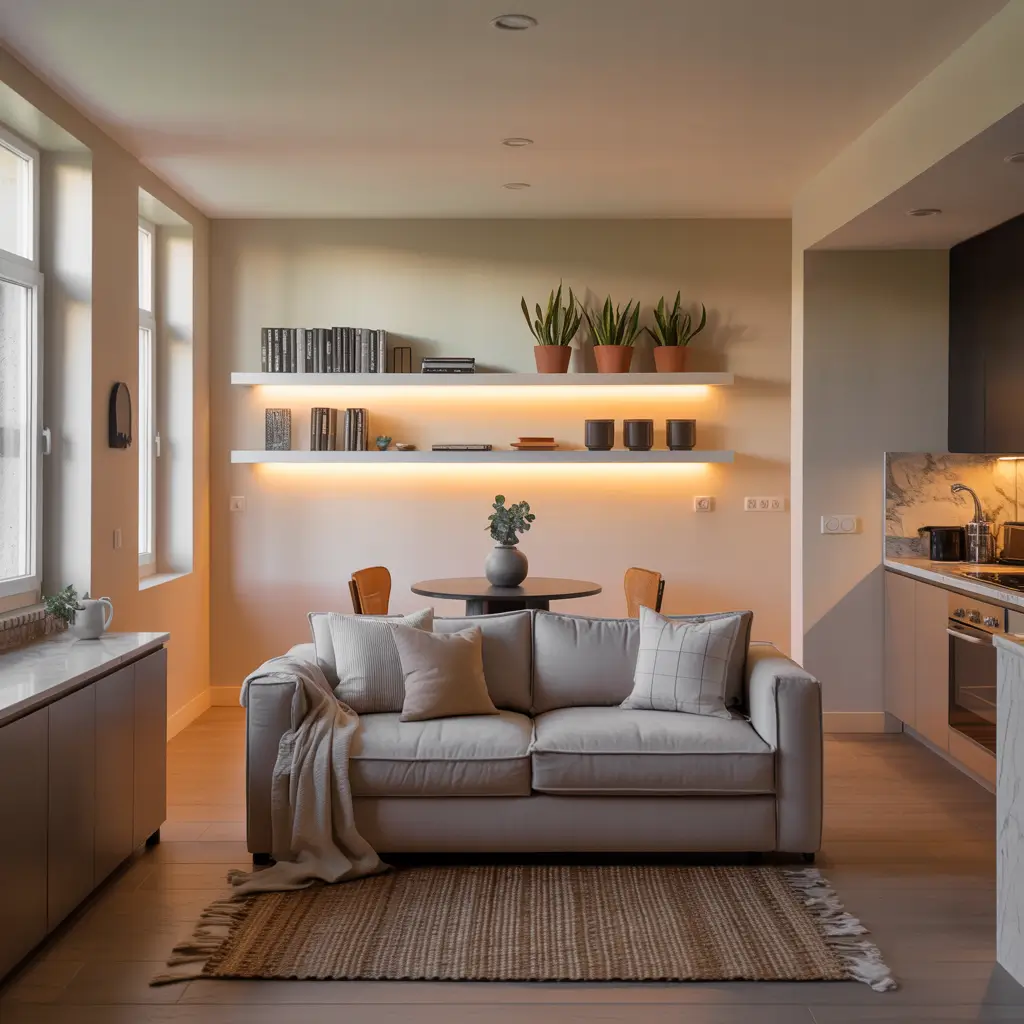
Making Every Inch Count
Small open layouts require ninja-level planning and furniture that earns its keep. My 650-square-foot apartment proved that size doesn’t determine style—smart layout does.
Small Space Layout Hacks
Maximize your mini kingdom:
- Peninsula instead of island (saves precious feet)
- Furniture against walls (creates center flow)
- Vertical storage solutions (up, not out)
- Multi-functional pieces (ottoman with storage)
- Consistent color scheme (visually expands space)
Traffic Flow in Tight Spaces
Success comes from:
- Creating one clear pathway
- Avoiding furniture in traffic lanes
- Using round tables (no corners to bump)
- Keeping scale proportionate
5. Coastal Chic Open Plan Interior
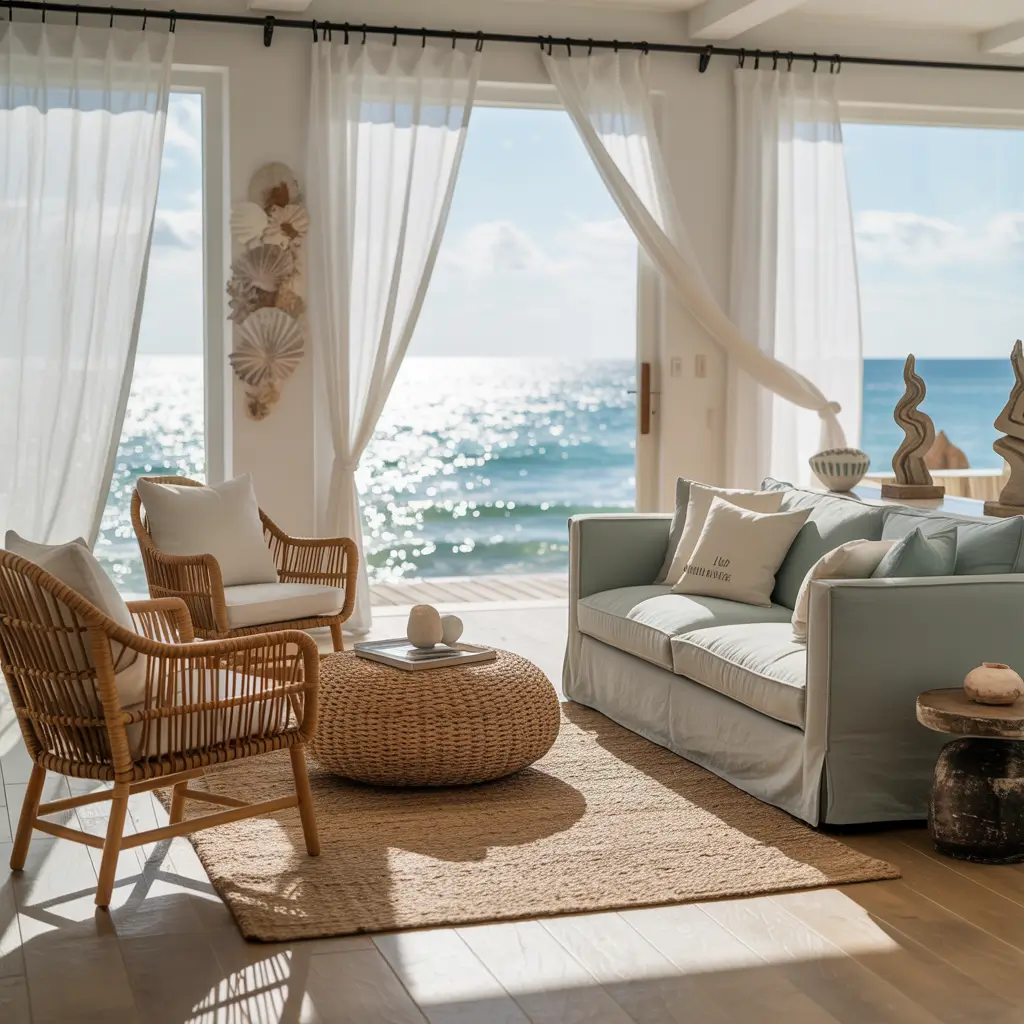
Bringing Beach Vibes Inland
Coastal layouts capture that breezy, vacation feeling without the sand in your shoes. I recreated this vibe in landlocked Colorado, proving location doesn’t limit inspiration.
Coastal Layout Elements
Create ocean-inspired flow:
- White kitchen with blue island (subtle nautical nod)
- Living room facing kitchen (social flow)
- Natural fiber rugs (define spaces naturally)
- Shiplap accent wall (adds texture without closing in)
- Plenty of natural light (mirrors if windows are limited)
Avoiding Cliché Coastal
Keep it sophisticated:
- Limit actual nautical items
- Focus on colors and textures
- Use quality materials
- Mix in contemporary pieces
6. Mid-Century Modern Open Layout
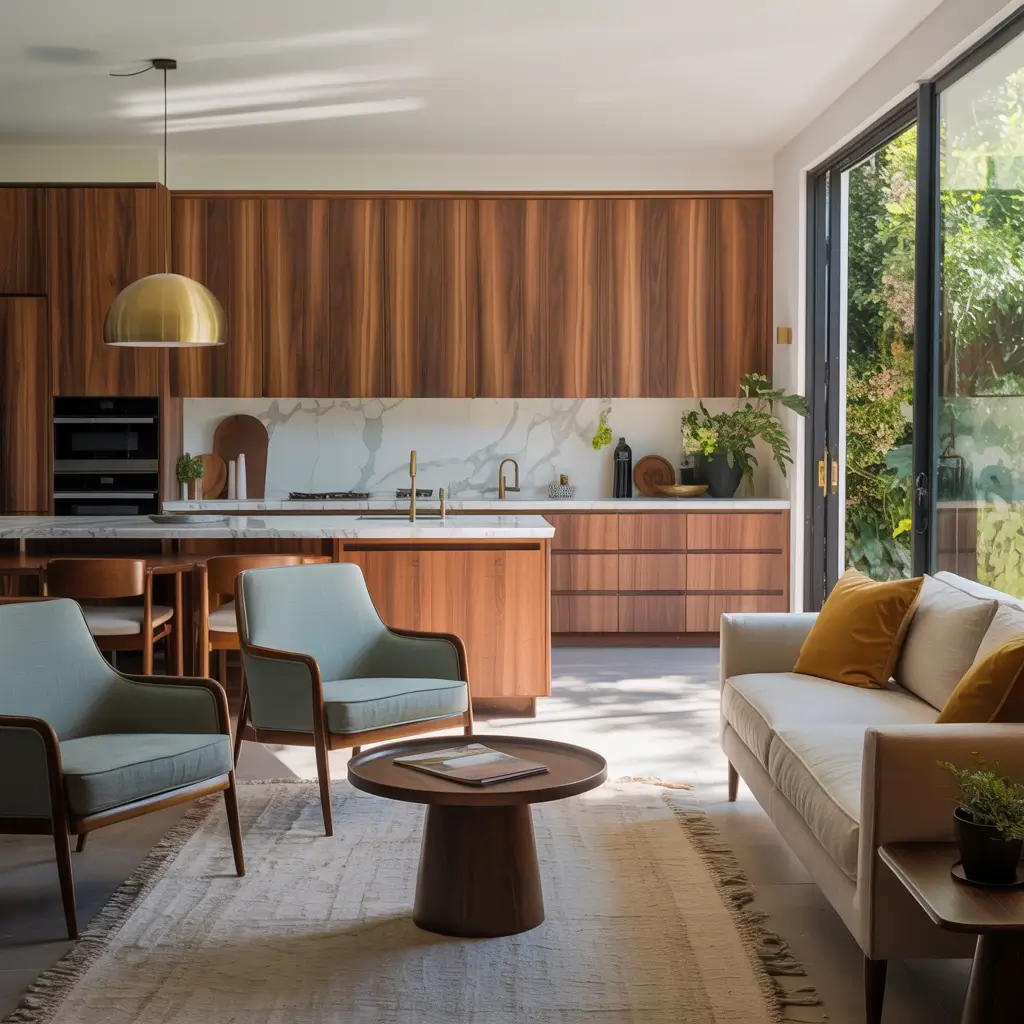
Retro Cool for Modern Living
MCM layouts prove good design never goes out of style. When I scored a vintage Eames chair, it sparked a complete layout redesign that still makes me smile daily.
MCM Layout Principles
Channel that mid-century magic:
- Linear kitchen design (clean, uncluttered)
- Sunken living room (if possible)
- Built-in storage (form meets function)
- Statement lighting (Sputnik chandelier, anyone?)
- Clear zones without walls (furniture defines spaces)
Modernizing MCM
Update the classic:
- Add current appliances discretely
- Include comfortable seating
- Mix vintage with new pieces
- Incorporate today’s technology invisibly
Also Read: 15 Stunning Open Plan Kitchen Dining Living Ideas for Modern
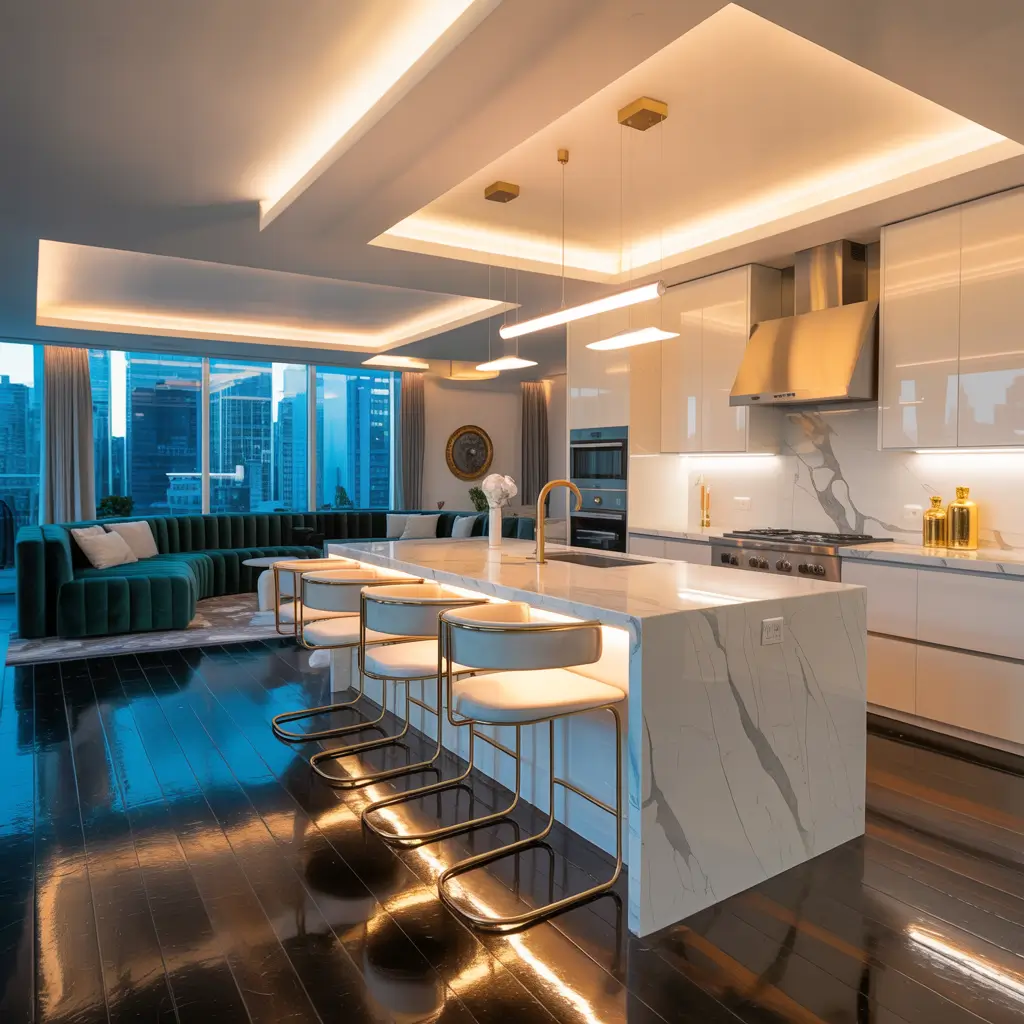
7. Luxury Open Concept with Statement Island
When the Island Steals the Show
Luxury layouts with statement islands create a natural gathering point that anchors the entire space. My splurge on a waterfall marble island transformed our open concept from nice to “is this a magazine?”
Statement Island Design
Make your island the star:
- Oversized proportions (bigger than you think)
- Contrasting materials (different from perimeter)
- Multiple levels (dining and prep heights)
- Built-in appliances (wine fridge, microwave drawer)
- Dramatic lighting above (chandeliers work)
Layout Around the Island
Success requires:
- Minimum 42-inch walkways
- Clear sight lines to living area
- Strategic seating placement
- Proper electrical planning
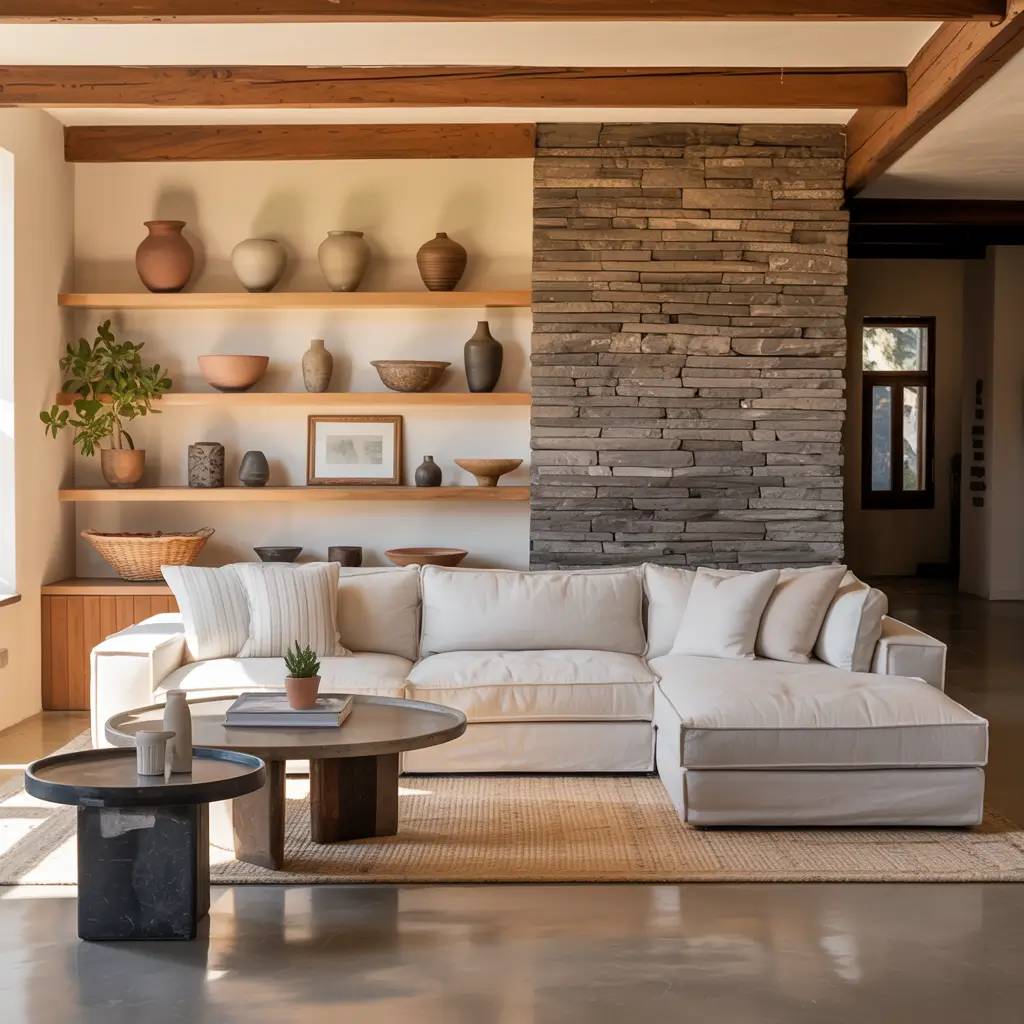
8. Rustic Contemporary Living-Kitchen Blend
Where Old Meets New
Rustic contemporary layouts blend weathered charm with clean modern lines. This combination in my current home gets more “what style is this?” questions than any other design choice.
Blending Elements Successfully
Mix rustic and contemporary:
- Reclaimed wood island, modern cabinets (best of both)
- Industrial bar stools (bridge the styles)
- Mixed metals (brass and black)
- Contemporary sofa, rustic coffee table (intentional contrast)
- Neutral backdrop (lets materials shine)
Creating Cohesion
Unite different styles through:
- Consistent color palette
- Repeated materials in both areas
- Similar proportions
- Balanced distribution of styles
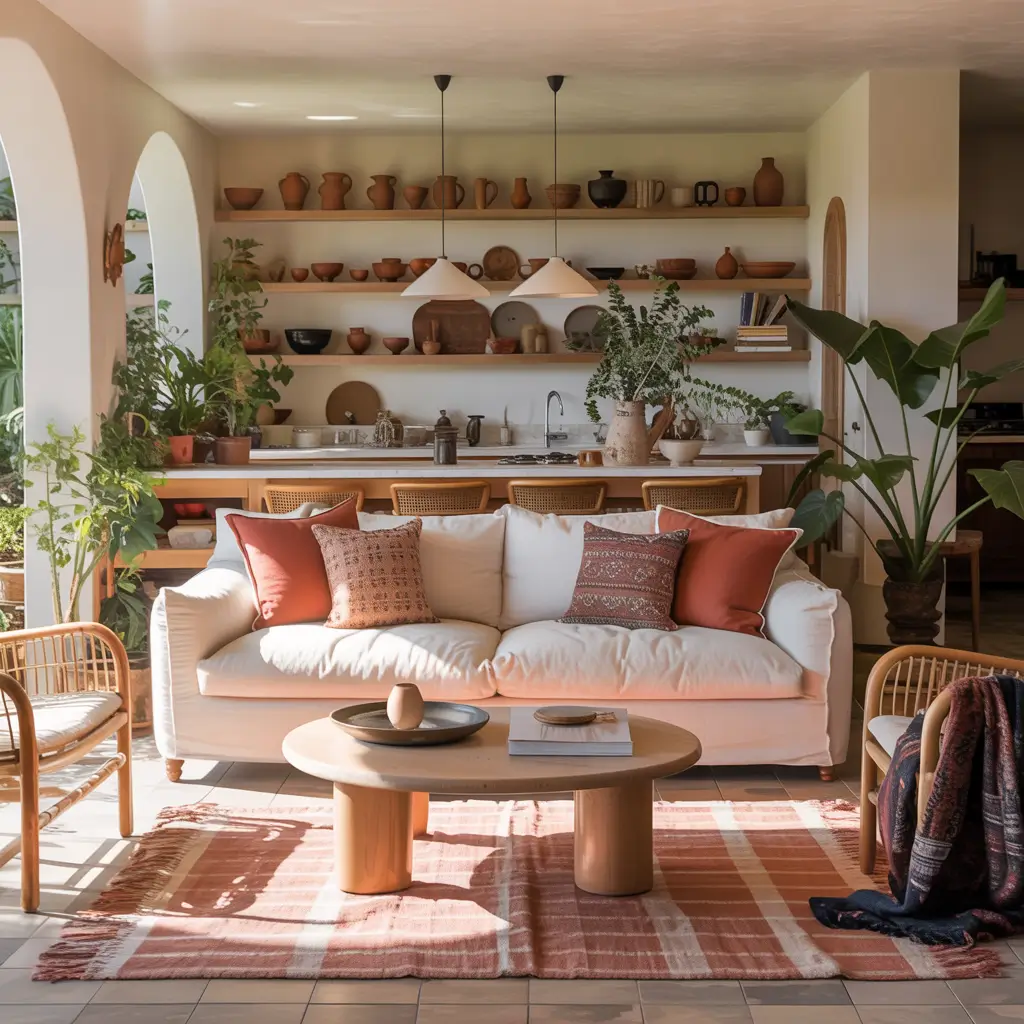
9. Boho-Inspired Open Living Area
Eclectic Without Chaos
Boho open layouts embrace collected treasures while maintaining functional flow. My boho phase taught me that free-spirited doesn’t mean free-for-all.
Boho Layout Strategies
Create organized eclecticism:
- Low-profile furniture (maintains sight lines)
- Layered rugs (define spaces softly)
- Plants as natural dividers (living walls)
- Mixed seating options (floor cushions to sofas)
- Open shelving displays (curated collections)
Preventing Boho Overload
Keep it livable:
- Edit regularly (not everything stays)
- Group collections together
- Maintain clear pathways
- Balance busy and calm areas
Also Read: 15 Stunning Open Kitchen and Living Room Ideas to Inspire
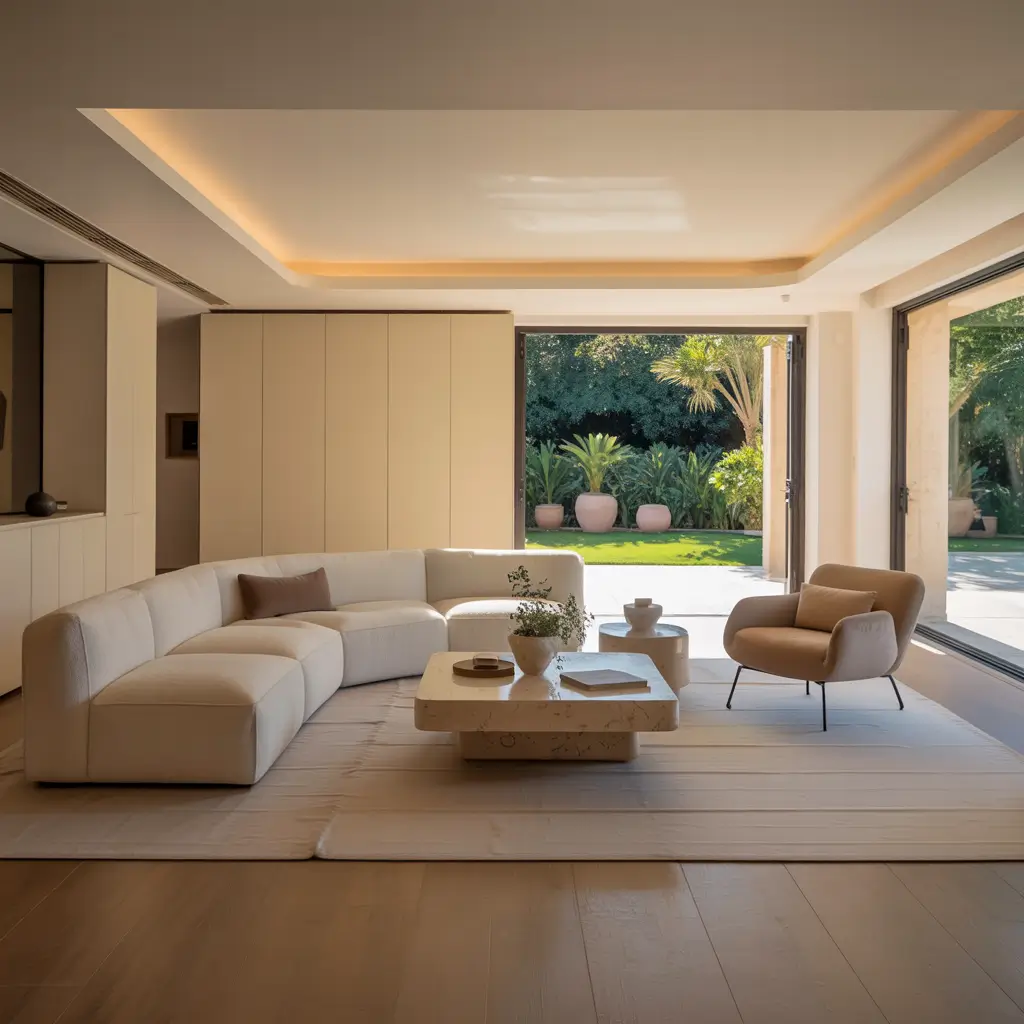
10. Neutral Toned Open Concept Space
Sophisticated Simplicity
Neutral layouts prove beige isn’t boring when layered correctly. My all-neutral redesign made our home feel twice as expensive without changing the footprint.
Neutral Layout Success
Create depth without color:
- Varying shades of neutral (cream to charcoal)
- Mixed textures (rough, smooth, soft)
- Natural materials (wood, stone, linen)
- Strategic lighting (creates shadows and interest)
- One statement piece (adds personality)
Keeping Neutrals Interesting
Prevent monotony through:
- Scale variation in furniture
- Unexpected shapes
- Quality materials
- Subtle pattern mixing
11. Open Layout with Double-Sided Fireplace
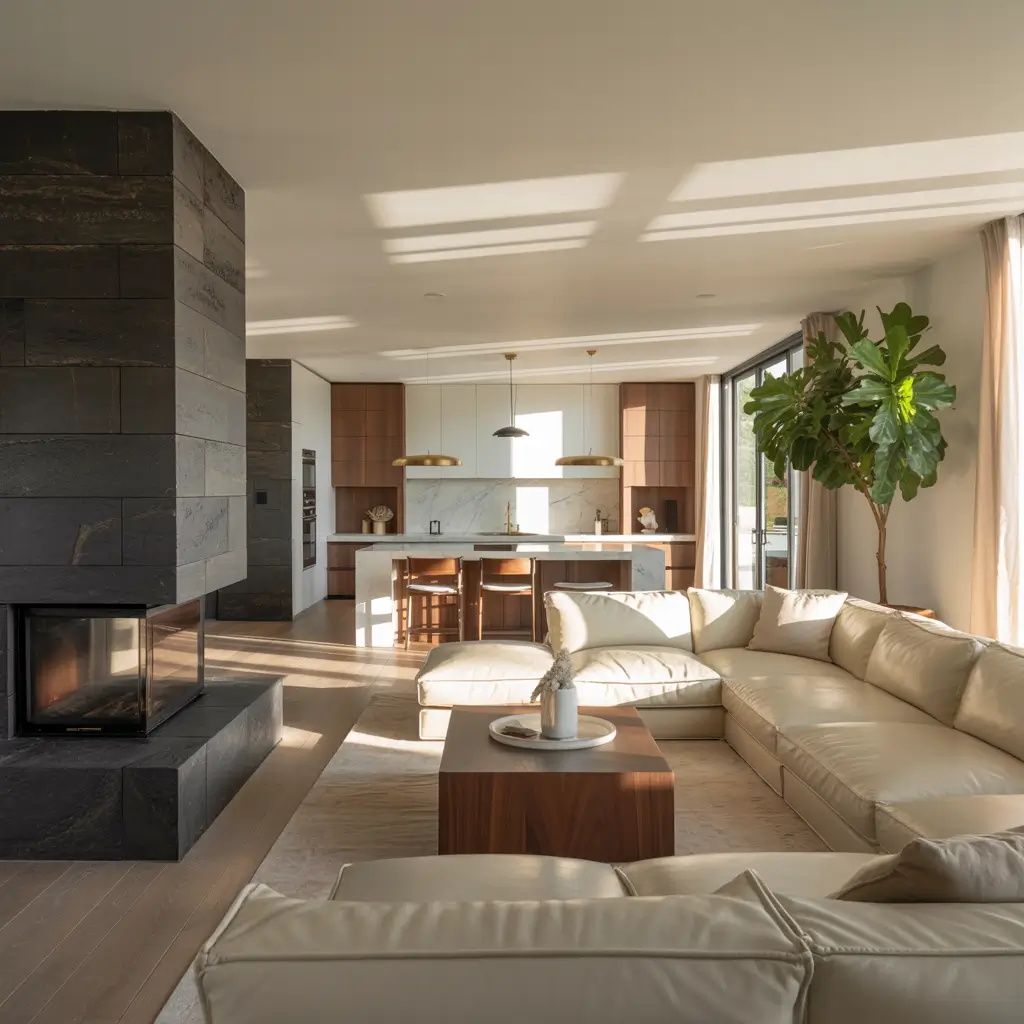
The Ultimate Room Divider
Double-sided fireplaces create separation without walls and ambiance in both spaces. Installing one was our biggest splurge, but it literally transformed two rooms simultaneously.
Fireplace Layout Planning
Position for maximum impact:
- Between kitchen and living (natural divider)
- Centered in space (balanced focal point)
- Appropriate scale (not overwhelming)
- Safe distances (from furniture and traffic)
- Ventilation considerations (crucial for gas or wood)
Working Around the Fireplace
Design considerations:
- Furniture faces fireplace from both sides
- Maintain clear pathways around it
- Use hearth for additional seating
- Consider TV placement carefully
12. Bright and Airy Open Floor Plan
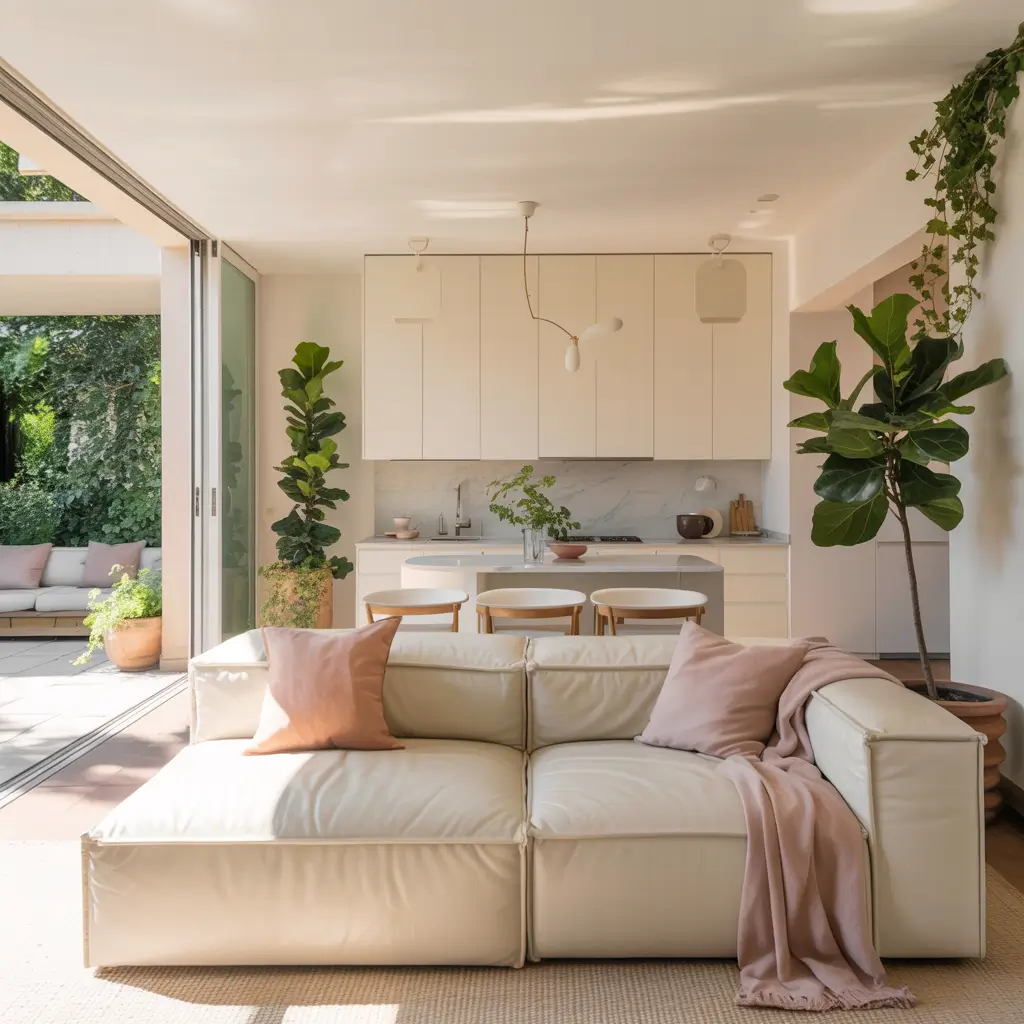
Maximum Light, Maximum Life
Bright, airy layouts make every day feel like the first day of spring. After living in a dark apartment, I became obsessed with creating light-filled spaces.
Achieving Brightness
Maximize light through:
- White or light cabinets (reflects light)
- Minimal upper cabinets (opens sight lines)
- Strategic mirror placement (doubles natural light)
- Light flooring throughout (brightens from below)
- Sheer window treatments (privacy without darkness)
Layout for Light
Position elements to enhance brightness:
- Keep tall furniture away from windows
- Use glass where possible
- Choose reflective surfaces
- Maintain clear paths for light travel
13. Urban Apartment Open Kitchen Design
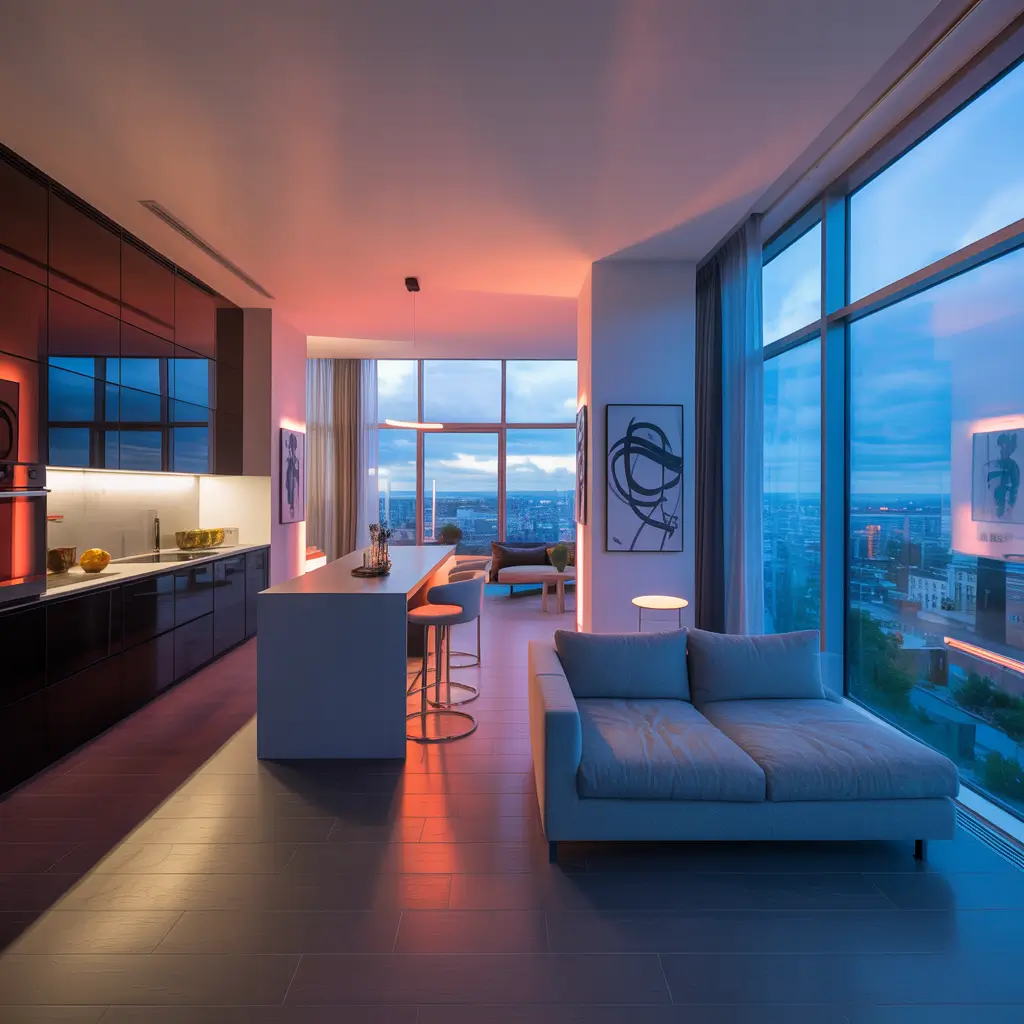
City Living at Its Finest
Urban apartment layouts maximize style and function in minimal square footage. Living in three different city apartments taught me that constraints spark creativity.
Urban Layout Essentials
Make city living work:
- Galley kitchen opening to living (efficient use)
- Bar seating only (no room for table)
- Wall-mounted everything (floor space precious)
- Mirrors expand visually (trick the eye)
- Consistent materials (creates flow)
City-Specific Solutions
Address urban challenges:
- Sound-absorbing materials
- Window treatments for privacy
- Compact appliances that perform
- Vertical storage solutions
14. Family-Friendly Open Concept Setup
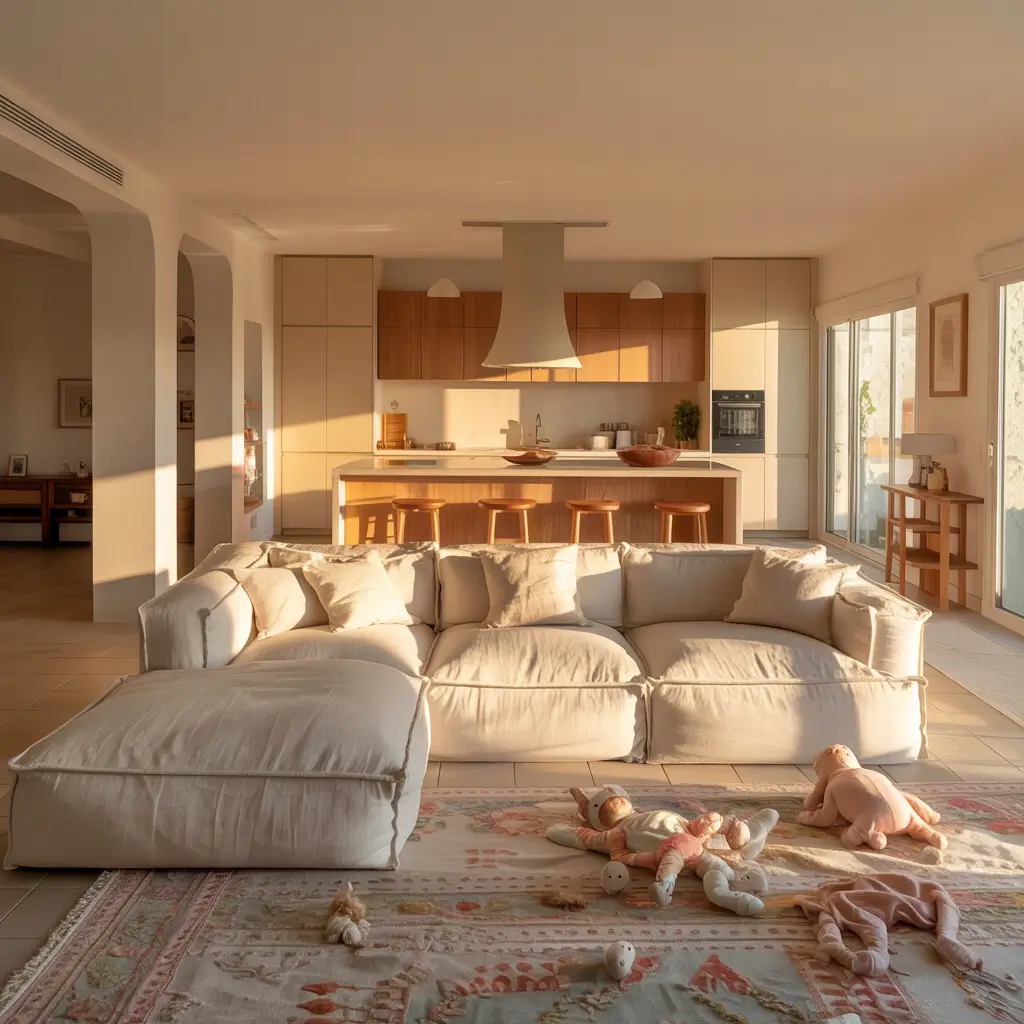
Real Life Meets Good Design
Family-friendly layouts balance style with the reality of kids, pets, and actual living. Our layout survived two toddlers and a puppy—that’s the ultimate test.
Family Layout Priorities
Design for real families:
- Clear sight lines everywhere (supervision made easy)
- Durable materials (performance fabrics)
- Rounded corners (safety first)
- Hidden storage (toys disappear fast)
- Easy-clean surfaces (because spills happen)
Zones for Everyone
Create spaces within space:
- Homework station at island
- Play area in sight of kitchen
- Adult seating away from toys
- Storage accessible to kids
15. Open Concept with Dining Zone Divider
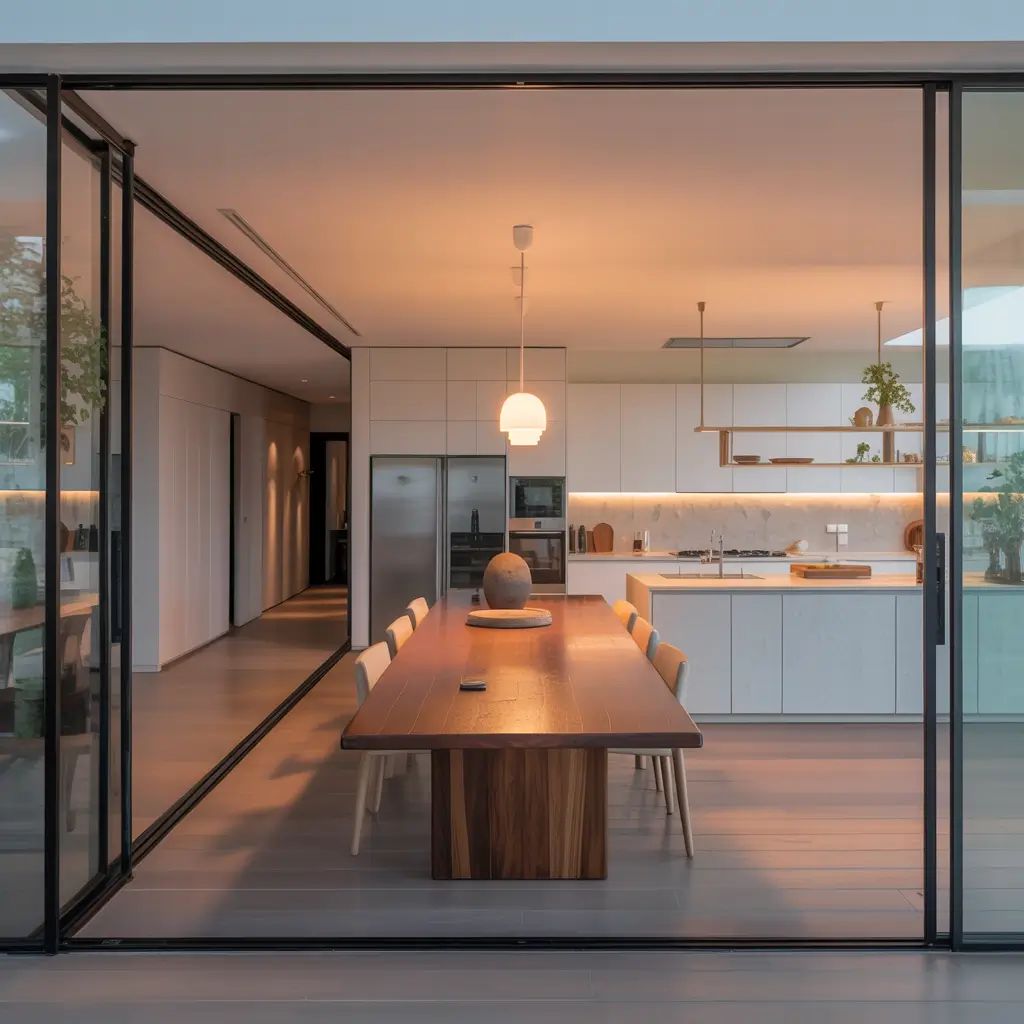
The Best of Both Worlds
Dining zones as dividers offer definition without walls and flexibility for entertaining. FYI, this layout saved our marriage during lockdown—just enough separation to not drive each other crazy 🙂
Creating the Dining Division
Use dining space strategically:
- Perpendicular to kitchen island (creates an L)
- Different lighting over dining (defines zone)
- Rug under dining table (anchors space)
- Open shelving as backdrop (subtle barrier)
- Different chair heights (visual separation)
Flexible Dining Solutions
Adapt for different needs:
- Expandable tables for entertaining
- Bench seating for flexibility
- Rolling carts for extra surface
- Multiple lighting scenes
Final Thoughts
Creating the perfect open concept kitchen living room layout isn’t about copying someone else’s space—it’s about understanding how your family actually lives and designing around that reality.
Whether you lean minimalist or embrace maximalist chaos, the key is creating flow that supports your lifestyle.
Start by really observing how you currently use your space. Where do traffic jams happen? Where does clutter accumulate?
What activities need better support? Your layout should solve problems, not create them.
Remember, the best open concept layout is one that makes daily life easier while looking good enough for company.
If that means your kitchen island doubles as homework central and your living room hosts dance parties, perfect. Real life happens in these spaces—design for it.
The magic of open concept living comes from connection—between spaces, between activities, and most importantly, between people.
Get the layout right, and everything else falls into place. IMO, that’s worth knocking down a wall or two :/
Now stop scrolling through Pinterest and start planning your layout transformation. Your future self (the one hosting effortless dinner parties while actually enjoying them) will thank you!