10 Smart Outdoor Shoe Storage Ideas That Save Space
- Shoe Storage
 Ben
Ben- 0
- 33 minutes read
Your porch looks like a shoe store after a tornado, doesn’t it? Muddy hiking boots by the door, wet running shoes drying on the steps, garden clogs scattered everywhere, and that one flip-flop that’s been sitting in the corner since last summer.
Outdoor spaces have unique storage challenges—weather, dirt, and the fact that people actually kick off their nastiest shoes there.
I’ve been fighting the outdoor shoe battle for years. Between hiking gear, gardening shoes, beach sandals, and the everyday shoes we leave on the porch to avoid tracking dirt inside, our outdoor area was a legitimate disaster zone.
But here’s what I’ve learned: outdoor shoe storage needs to be tough, weather-resistant, and actually functional for real-life use. Pretty Pinterest solutions that fall apart after one rainstorm? Yeah, we’re not doing that.
Let’s talk about 10 outdoor shoe storage ideas that actually hold up to sun, rain, and daily abuse.
1. Weatherproof Wooden Shoe Bench
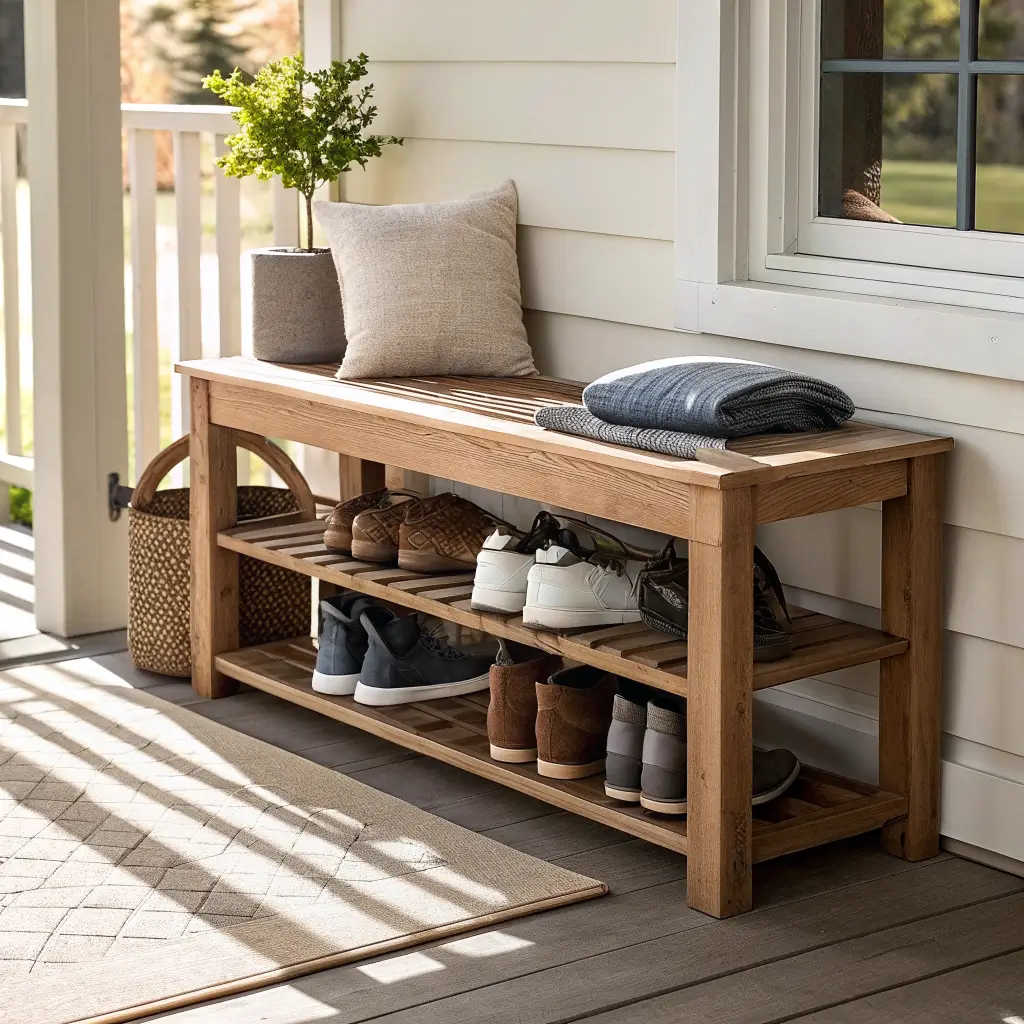
If you’re going to invest in one piece of outdoor shoe storage, make it a solid wooden bench. I built mine from cedar about three years ago, and it’s still going strong despite living outside year-round through rain, snow, and brutal summer sun.
Cedar, teak, and pressure-treated wood are your friends for outdoor furniture. They resist rot, handle moisture, and age beautifully instead of falling apart. My bench has open slats underneath for shoe storage and a solid top for sitting—perfect for wrestling with muddy boots without doing that awkward one-leg balance thing.
Why weatherproof wooden benches work outdoors:
- Built to last: Quality wood handles weather way better than plastic
- Dual purpose: Storage and seating in one piece
- Drainage design: Slatted construction lets water escape
- Ages gracefully: Develops character instead of looking worn out
The open slat design underneath is crucial. Shoes need airflow to dry out, and solid storage would just trap moisture and create a gross mildew situation. My bench holds about 8 pairs comfortably, and everything dries naturally between uses. No weird smells, no mold problems—just functional storage that works with outdoor conditions instead of fighting them.
I sealed mine with outdoor wood sealant annually for the first two years, but honestly, I’ve slacked on that lately and it’s still fine. Cedar is naturally weather-resistant, so even my neglect hasn’t destroyed it. That said, maintenance does extend its life—I just choose to live dangerously sometimes.
2. Hanging Outdoor Shoe Organizer
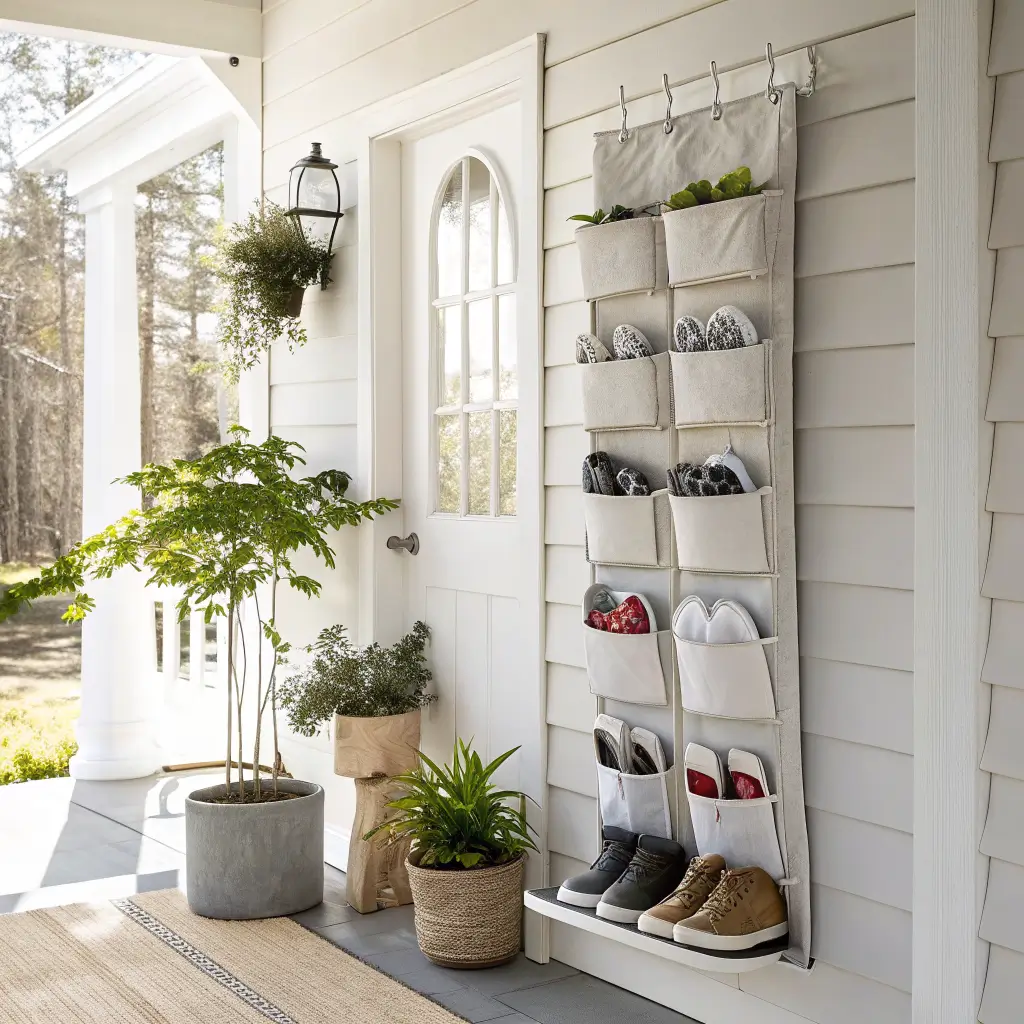
Who says over-the-door organizers are just for indoors? I hung a heavy-duty canvas organizer on the exterior side of our mudroom door, and it’s been a game-changer for wet shoes that need to dry.
The key is getting an outdoor-appropriate version—thick, weatherproof fabric that won’t disintegrate the first time it rains. I use mine specifically for shoes that are actively drying out. Wet hiking boots after a trail? Into the hanging organizer. Muddy gardening shoes? Same deal. They hang there until they’re dry, then move to more permanent storage.
Hanging organizer advantages for outdoor use:
- Excellent drainage: Shoes hang at angles, water drips out
- Maximum airflow: Shoes dry faster than in enclosed storage
- Space-efficient: Uses door space you’re not using anyway
- Easy to clean: Hose it down when it gets gross
The vertical hanging position means shoes drain naturally and air circulates around them. This is huge for outdoor storage where moisture management is everything. Trapped moisture means mildew, rust on eyelets, and shoes that smell like a locker room. Proper drainage prevents all that nonsense.
I empty the bottom pockets periodically because they collect dirt and debris that falls from shoes above. Takes maybe two minutes and keeps everything functioning properly. Small maintenance, big payoff in terms of keeping your outdoor shoe storage from becoming disgusting.
3. DIY Pallet Shoe Rack
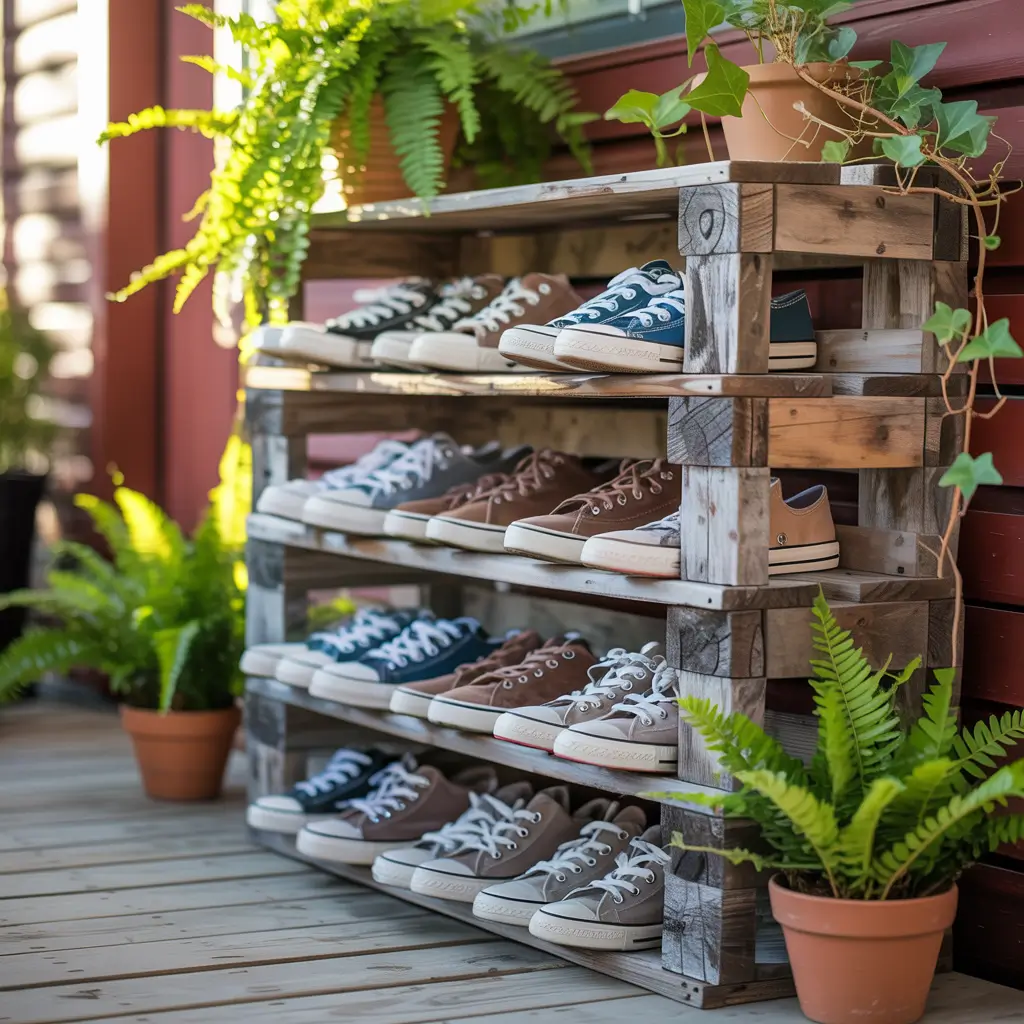
Free materials and functional outdoor storage? Pallets are where it’s at. I made a pallet shoe rack for our back porch using two pallets I grabbed from a warehouse (with permission, obviously—don’t steal pallets).
Pallets are basically pre-made shelving that happens to be perfect for shoes. The slatted construction provides built-in drainage and airflow, and the rustic look actually fits outdoor spaces better than trying to make things look fancy. I mounted mine vertically against the porch wall, and it holds about 15 pairs of various outdoor footwear.
Why pallet racks are perfect for outdoor shoe storage:
- Free or cheap: Pallets cost nothing if you know where to look
- Natural drainage: Slats let water run through
- Weather-appropriate aesthetic: Rustic fits outdoor spaces
- Customizable size: Cut, stack, or combine however you want
I sanded mine down to avoid splinters and gave it a coat of outdoor stain to help it last longer. The whole project cost maybe $12 in supplies and took about three hours including drying time. Compare that to buying outdoor furniture, and the value is insane.
The pallet currently holds our gardening shoes, beach sandals, and backup sneakers. Everything dries naturally, dirt falls through to the ground, and maintenance is basically zero. I hose it down occasionally when it looks dirty, and that’s the extent of upkeep. FYI, make sure your pallet isn’t treated with nasty chemicals—look for ones stamped “HT” (heat-treated) rather than “MB” (methyl bromide).
Also Read: 12 Simple Shoe Storage Ideas for Small Spaces That Work
4. Covered Porch Shoe Cabinet
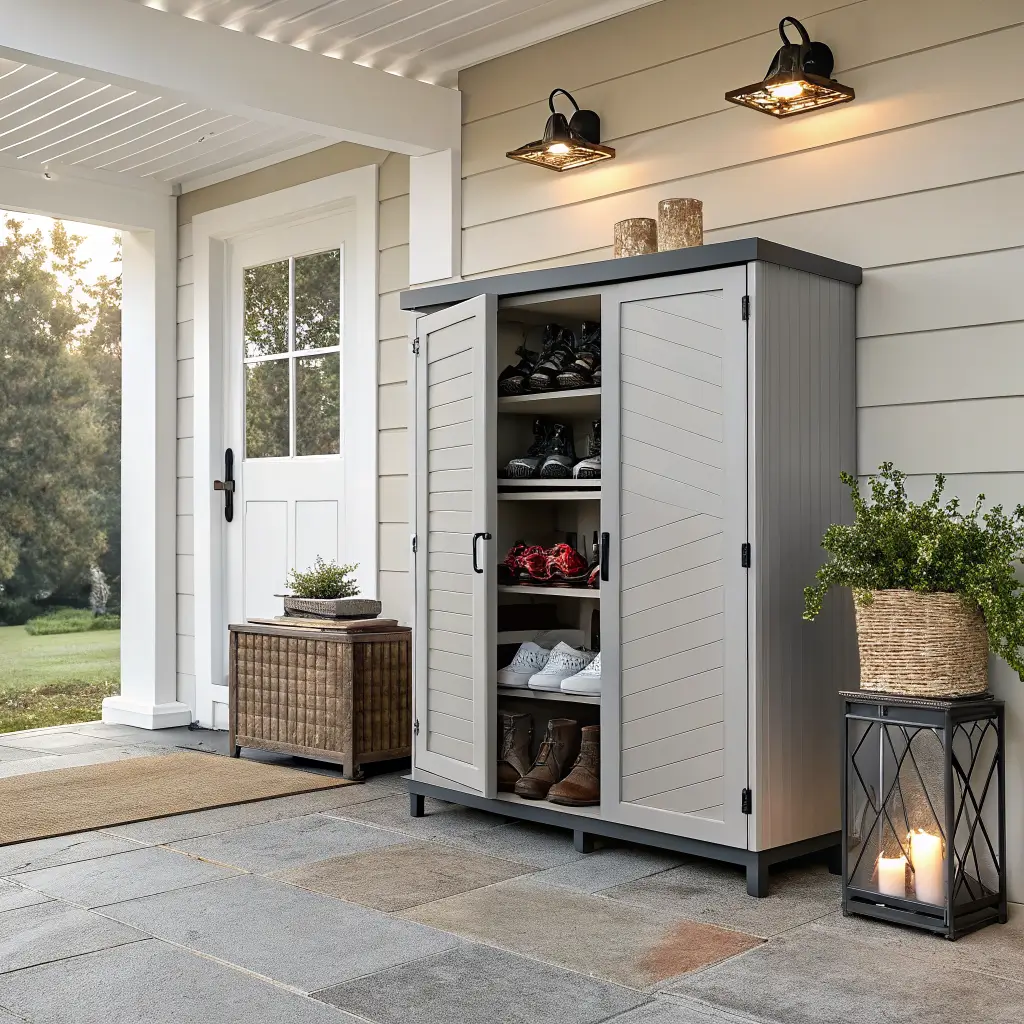
If you have a covered porch, an actual cabinet can work—as long as it’s designed for outdoor use. I splurged on a resin shoe cabinet that looks like wood but is actually weatherproof plastic, and it’s been worth every penny.
The cabinet sits on our covered porch and holds about 12 pairs of shoes in enclosed storage. This works because it’s protected from direct rain but still needs to handle humidity, temperature swings, and general outdoor conditions. Regular indoor furniture would be trashed in months, but outdoor-rated cabinets are built different.
Covered porch cabinet benefits:
- Weather protection: Keeps shoes dry and clean
- Enclosed storage: Hides mess from view
- Looks intentional: Actual furniture piece, not makeshift storage
- Critter-proof: Closed doors keep pests out
The resin construction is key. It looks like painted wood but won’t rot, warp, or need constant maintenance. I’ve done literally nothing to maintain it beyond occasionally wiping off pollen, and it still looks new three years later. Real wood cabinets would need regular sealing and would still eventually deteriorate.
I keep our “nice” outdoor shoes in here—the ones we wear for quick errands or walking the dog. The really muddy, gross shoes live elsewhere in more open storage. The cabinet is for shoes that are relatively clean and just need a place to live outside the house.
5. Vertical Shoe Tower for Small Spaces
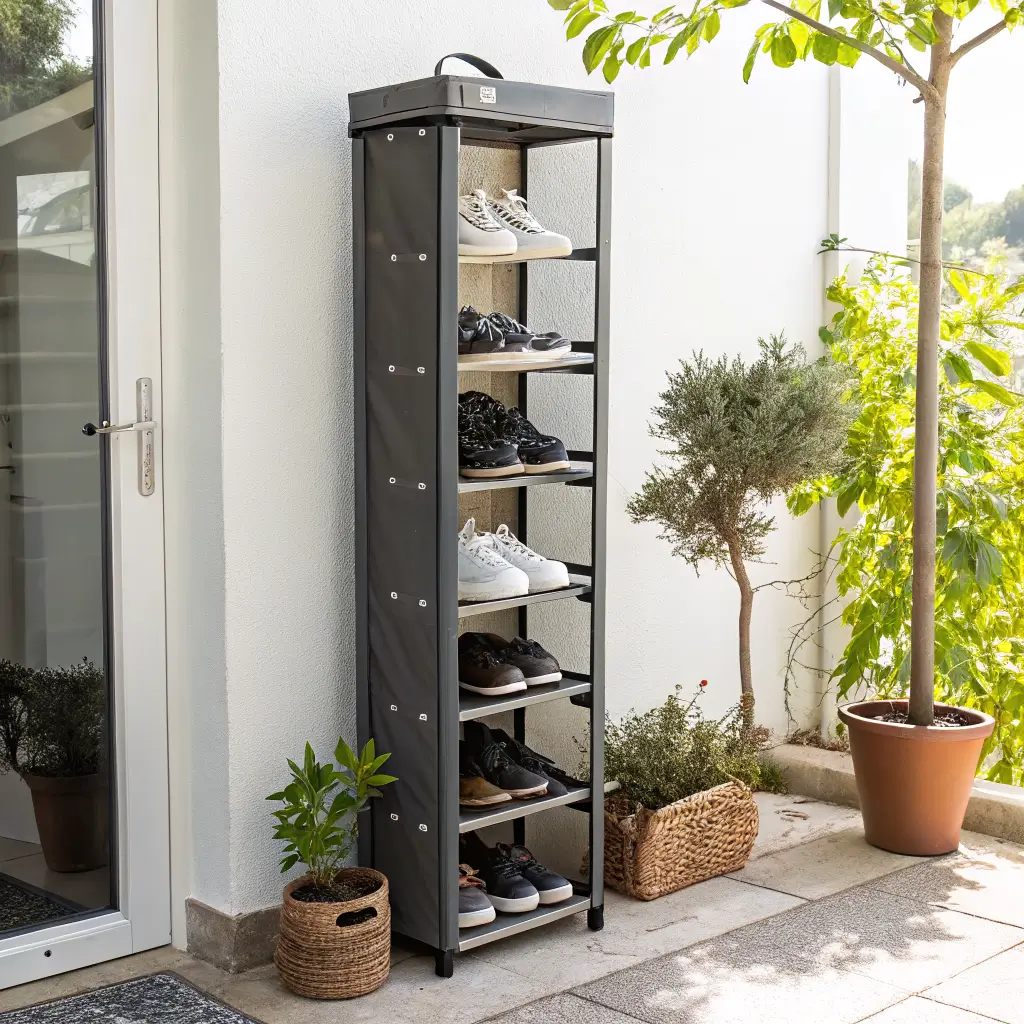
Porches and patios are usually cramped, so vertical storage makes perfect sense. I use a metal vertical shoe tower on our small patio, and it holds 20 pairs in about 2 square feet of floor space.
The tower design stacks multiple tiers of open shelving going upward. Metal construction handles outdoor conditions without rusting (powder-coated or stainless steel only—regular metal will rust immediately). The open design means rain doesn’t collect and shoes get airflow, which is crucial for outdoor storage.
Why vertical towers work for outdoor spaces:
- Minimal footprint: Perfect for small porches or patios
- High capacity: Stores lots of shoes in limited space
- Metal durability: Handles weather without falling apart
- Open airflow: Shoes dry naturally between uses
I positioned mine under the roof overhang where it gets some weather protection but still needs to handle outdoor conditions. The powder-coated finish has held up perfectly—no rust, no degradation, just functional storage that keeps working.
The bottom shelf tends to collect the most dirt since that’s where the muddiest shoes go. I spray it down with a hose monthly, which takes 30 seconds and keeps everything from getting gross. Outdoor storage requires accepting that things will get dirty and planning for easy cleaning rather than trying to keep everything pristine.
6. Repurposed Crate Shoe Storage
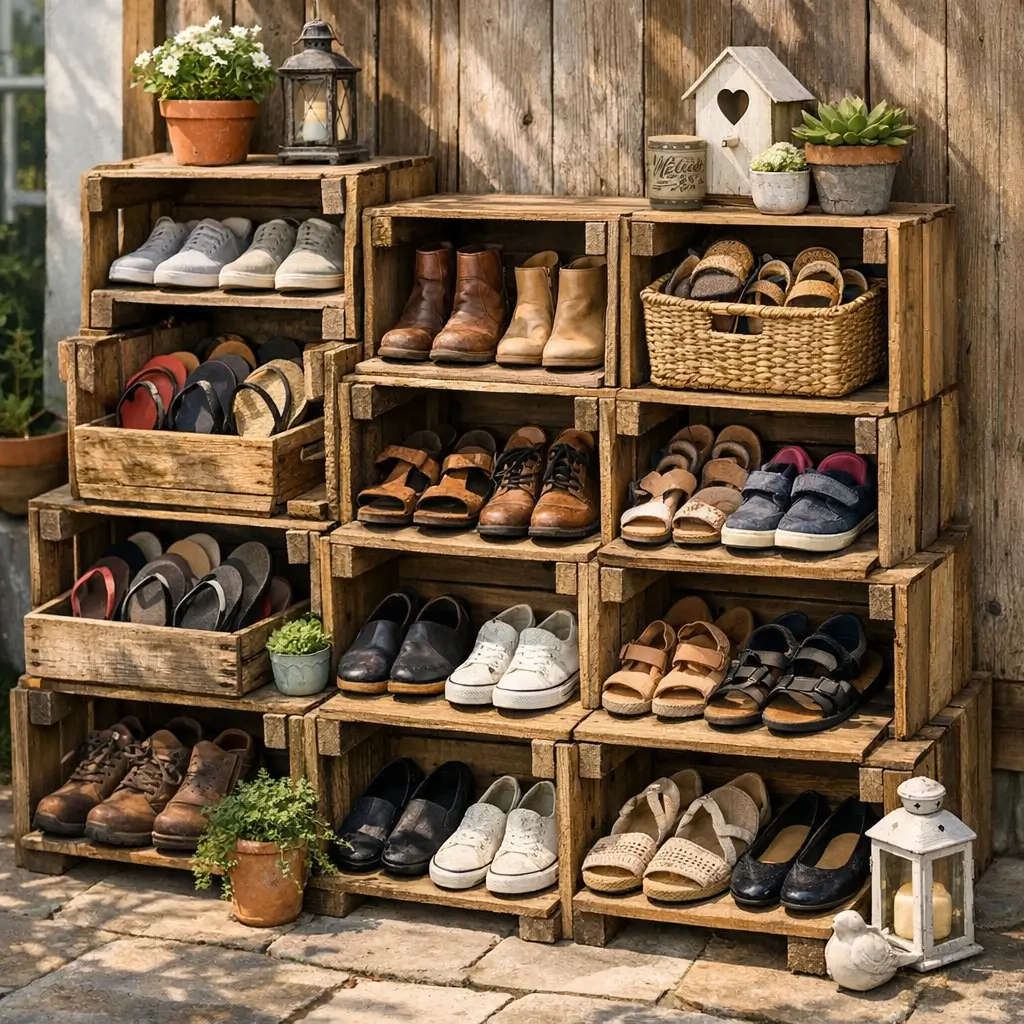
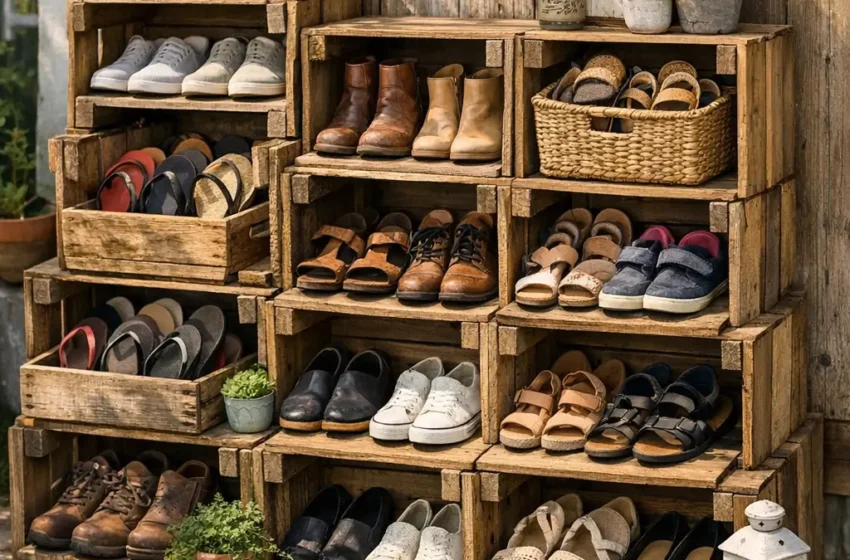
Vintage wooden crates make surprisingly great outdoor shoe storage. I found old apple crates at a flea market, stacked them on our porch, and created character-filled storage that actually works.
The crate design provides natural compartments for different shoes, and the slatted wood construction handles outdoor conditions well. Plus, the vintage aesthetic adds charm to outdoor spaces in a way that new storage never quite manages. Each crate holds 3-4 pairs depending on shoe size, and you stack them however fits your space.
Repurposed crate advantages:
- Unique character: Each crate has its own history and look
- Natural drainage: Slatted sides let water escape
- Modular design: Stack and arrange however works
- Budget-friendly: Usually cheaper than new storage
I treated mine with outdoor wood sealer to extend their life, but they’re already decades old and still functional, so I’m not worried about them falling apart. The weathered look actually improves over time, developing more patina and character. Can’t say the same about plastic storage that just looks increasingly ratty.
I organize by use—one crate for gardening shoes, one for beach stuff, one for everyday outdoor footwear. The visual separation makes finding what I need obvious at a glance. No digging, no searching, just grab from the right crate and go.
Also Read: 10 Amazing Garage Shoe Storage Ideas to Declutter Fast
7. Waterproof Shoe Storage Box
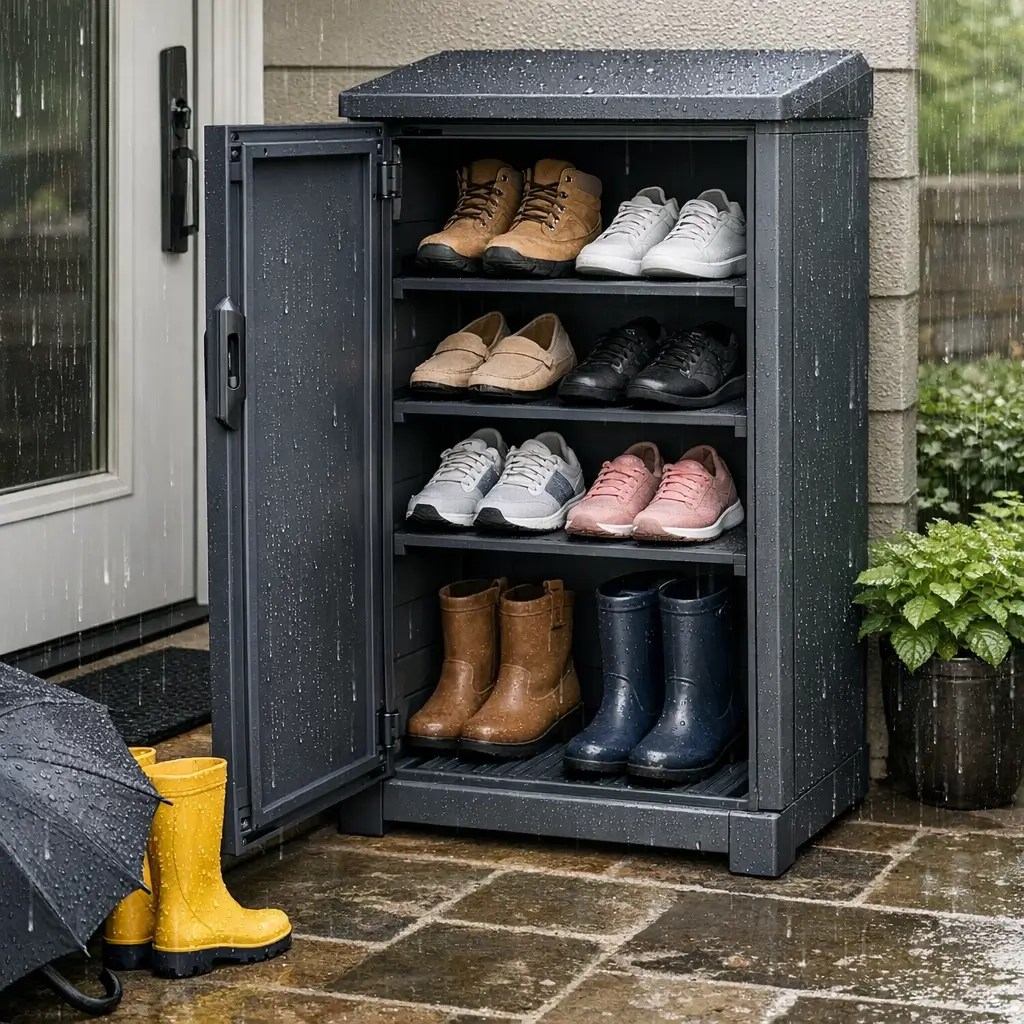
Sometimes you need fully enclosed, weatherproof storage for shoes you want to protect. I use a large deck box specifically rated for outdoor use, and it keeps seasonal shoes dry and protected when they’re not in rotation.
These boxes are built to handle rain, sun, and temperature extremes while keeping contents completely dry inside. I store winter boots in summer, fancy sandals in winter, and basically any shoes I’m not currently using but will need later. The waterproof seal means everything stays pristine until I need it again.
Waterproof box benefits:
- Complete weather protection: Keeps shoes totally dry
- Seasonal storage solution: Perfect for off-season footwear
- Sits on deck or patio: Outdoor-rated construction
- Dual purpose: Can also serve as extra seating
The box I got has a seat-rated lid, so it doubles as patio seating when we have guests. Multi-functional furniture is huge for outdoor spaces that are usually smaller than indoor rooms. Everything needs to earn its place by doing multiple jobs.
I open it periodically to let fresh air circulate and prevent mustiness. Even waterproof boxes can get stuffy inside, and shoes need occasional airflow. Once a month, I prop the lid open for a few hours on a sunny day, and that keeps everything fresh. IMO, this tiny bit of maintenance is worth having perfectly protected seasonal storage.
8. Outdoor Shoe Hammock Rack
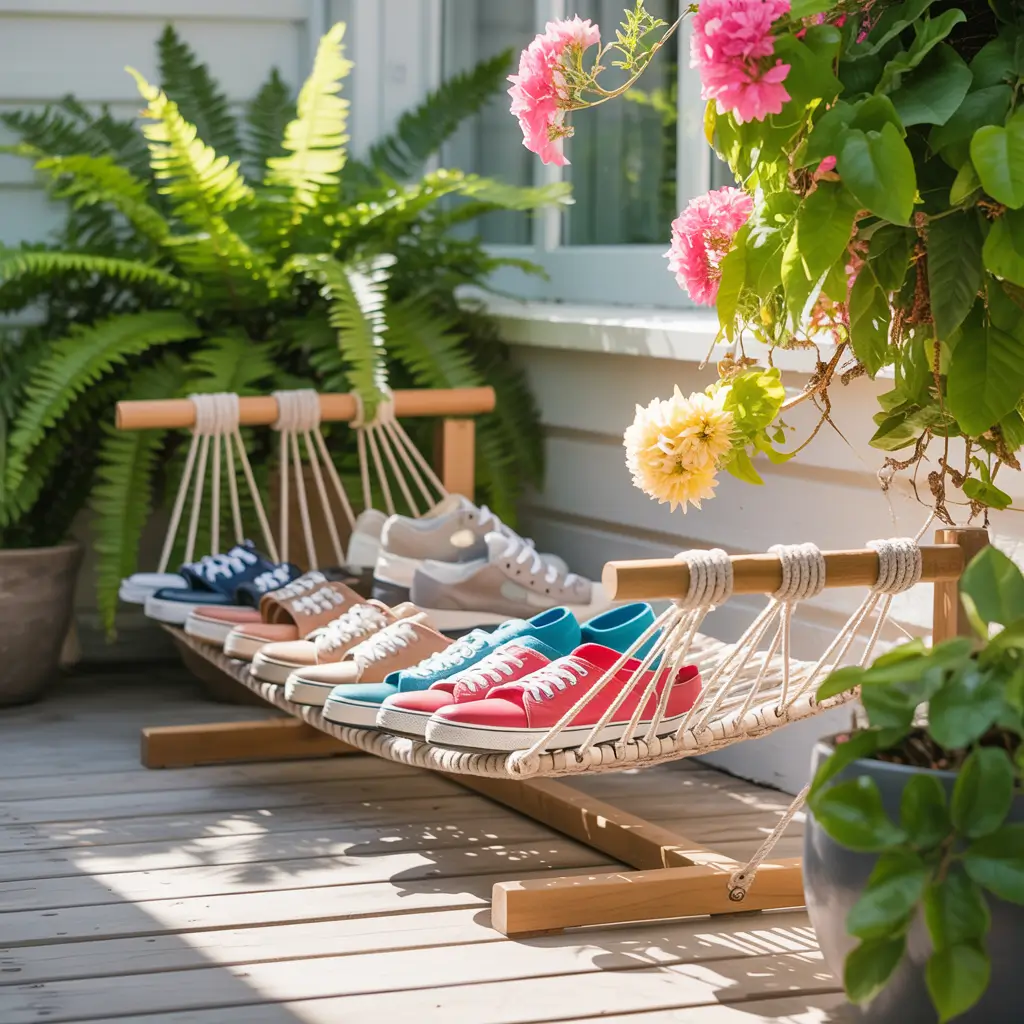
This sounds weird until you see it in action—hammock-style shoe racks are legitimately clever. I installed one between two porch posts, and it holds shoes in fabric slings that provide drainage and airflow while looking oddly stylish.
The hammock design uses tension to hold shoes in place, with multiple tiers of fabric or rope creating pockets for different pairs. Water drains through immediately, shoes get constant airflow, and the whole thing has this casual, beachy vibe that fits outdoor spaces perfectly.
Hammock rack advantages for outdoor use:
- Superior drainage: Nothing solid to trap water
- Excellent airflow: Shoes dry incredibly fast
- Unique aesthetic: Looks interesting instead of utilitarian
- Space-efficient: Uses vertical space between posts or walls
I use heavy-duty outdoor rope for mine because regular fabric would deteriorate quickly. Marine-grade rope handles weather indefinitely and looks intentionally nautical rather than makeshift. The whole installation took maybe an hour and cost under $25 in materials.
The hammock works best for lighter shoes—sandals, flip-flops, canvas sneakers. Heavy boots would stretch the rope over time and make the whole thing sag. I keep those in more traditional storage and use the hammock for everyday summer footwear.
9. Sliding Shoe Drawers for Entryway
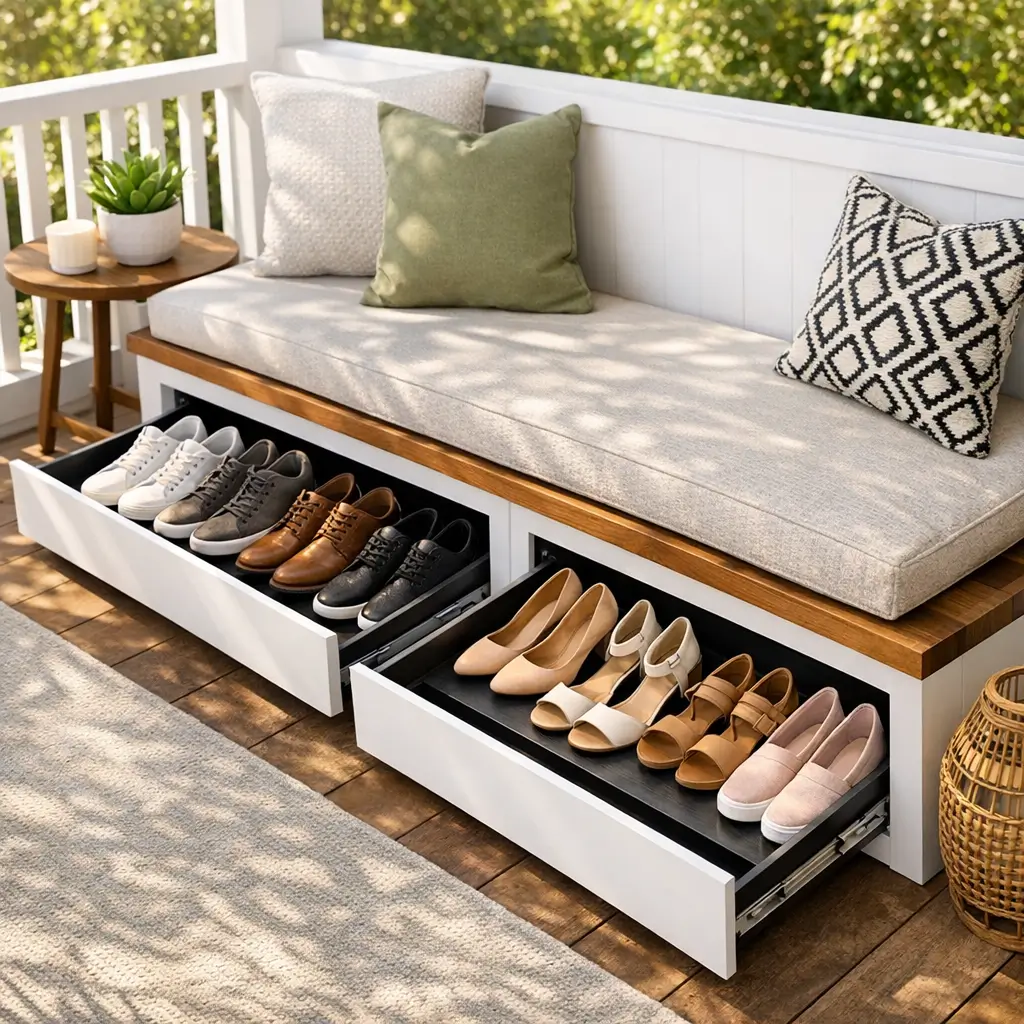
If your outdoor space has any built-in structure, sliding drawers are sleek and functional. I built shallow drawers that slide under our porch bench, creating hidden storage that protects shoes from weather while keeping them easily accessible.
The drawers slide out on basic hardware—nothing fancy, just drawer slides rated for outdoor use. Each drawer holds 6-8 pairs depending on size, and the enclosed design keeps shoes protected from rain, sun, and curious animals. Pull out a drawer, grab your shoes, slide it back—simple and effective.
Sliding drawer benefits:
- Hidden storage: Keeps outdoor areas looking clean
- Weather protection: Enclosed design shields shoes
- Easy access: Slides out smoothly when needed
- Customizable: Build to fit your exact space
I constructed mine using exterior-grade plywood and outdoor-rated drawer slides. The drawers aren’t fancy—just functional boxes that slide in and out—but they work perfectly. Sometimes simple solutions are the best solutions, especially outdoors where complicated mechanisms fail quickly.
I lined the bottoms with rubber mats that I can pull out and hose down when they get dirty. Outdoor storage gets gross—accepting this and planning for easy cleaning makes life way easier than trying to keep everything pristine. Clean the mats monthly, and the drawers stay functional and reasonably clean.
Also Read: 10 Creative Shoe Storage Ideas Closet Ideas for Busy Homes
10. Rustic Shoe Storage Bench with Cushion
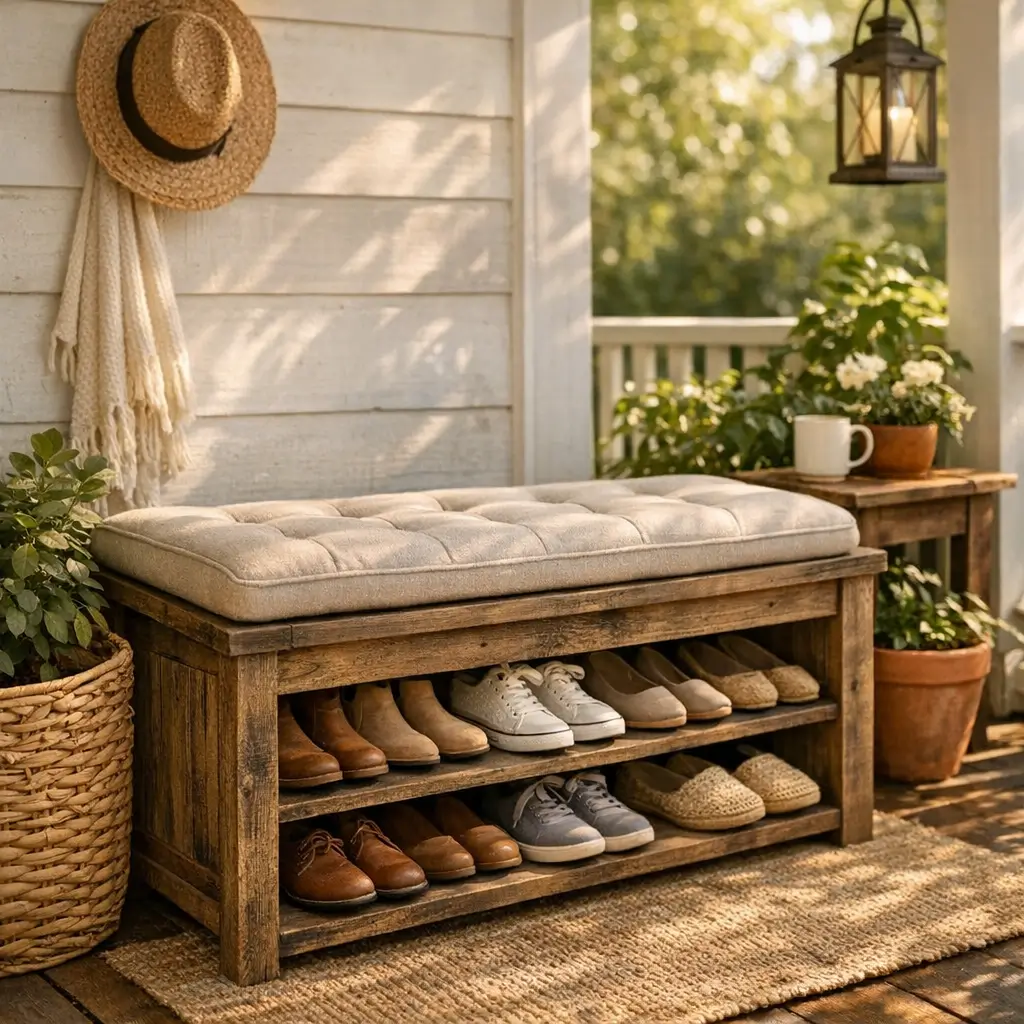
Combining comfortable seating with shoe storage creates the perfect porch setup. I built a rustic bench with open cubbies underneath and a cushioned top, and it’s become the most-used piece of furniture on our porch.
The bench provides seating for putting on shoes (crucial—I’m too old for the one-leg balance routine), storage in the cubbies below, and comfort with outdoor cushions on top. The rustic construction using rough-cut lumber fits the outdoor aesthetic while being built tough enough to handle weather and daily use.
Rustic bench with cushion advantages:
- Maximum functionality: Seating, storage, and comfort combined
- Outdoor-appropriate style: Rustic looks right in outdoor spaces
- Encourages use: Comfortable seating means people actually use it
- Customizable design: Build to fit your exact needs
I used pressure-treated lumber for weather resistance and left gaps between bottom slats for drainage. The cubbies hold about 10 pairs of shoes, and the open design means everything dries naturally. The top boards are solid for comfortable sitting, with outdoor cushions that I bring inside during heavy weather.
The cushions are key for making the bench actually comfortable. I got outdoor-rated cushions that handle moisture and sun exposure, and they transform the bench from functional to actually pleasant. People naturally gravitate to comfortable spots, so making your outdoor shoe area comfortable means people will actually use it properly instead of just kicking shoes off wherever.
Making Outdoor Storage Actually Work
Outdoor shoe storage is fundamentally different from indoor storage. You’re dealing with weather, temperature swings, moisture, dirt, and general abuse that indoor storage never sees. Whatever solutions you choose need to handle these conditions while still being functional for daily use.
Drainage and airflow are everything outdoors. Shoes that can’t dry out properly will get moldy, smell terrible, and deteriorate faster. Every outdoor storage solution should either provide open airflow or have drainage built in. Solid, enclosed storage without ventilation is a recipe for gross shoes and storage that smells like a swamp.
Think about your specific climate too. I’m in a place with significant rainfall, so drainage is my top priority. If you’re in a super sunny, dry climate, UV protection might matter more. Cold climates need storage that handles freezing temperatures. Match your solutions to your actual conditions rather than just copying what looks good online.
Material choice matters way more outdoors than indoors. Cheap plastic falls apart in sun. Regular wood rots without proper treatment. Metal rusts unless it’s powder-coated or stainless steel. Fabric disintegrates if it’s not rated for outdoor use. Spend a bit more on quality materials, or you’ll be replacing everything in a year. Trust me—I learned this the expensive way.
Maintenance is non-negotiable for outdoor storage. Everything gets dirty. Rain brings mud. Sun fades colors. You need to accept that outdoor storage requires regular cleaning and occasional maintenance. I clean mine monthly, which keeps everything functional and prevents small issues from becoming big problems. Ignoring maintenance means outdoor storage deteriorates fast.
Position matters too. Even “outdoor” storage benefits from some weather protection. Under roof overhangs, on covered porches, or in spots that get less direct rain and sun—these locations extend the life of your storage significantly. If you can give storage any protection from the elements, do it.
Get Your Outdoor Shoe Situation Under Control
Your porch doesn’t have to look like a shoe bomb went off every single day. Outdoor shoe storage that actually works is totally achievable—you just need solutions built for outdoor conditions rather than trying to use indoor storage outside.
Start with your biggest pain point. For me, it was wet, muddy shoes with nowhere to dry out properly. The hanging organizer solved that immediately.
Once your primary problem is handled, you can add secondary storage for other needs without feeling overwhelmed by chaos.
Mix and match solutions based on your space and needs. I use a combination of a wooden bench, hanging organizer, and waterproof deck box.
No single solution handles everything, but together they create a system that actually manages our outdoor footwear effectively.
Your outdoor space has storage potential—you just need to think about it differently than indoor storage. Weather resistance, drainage, and durability matter way more than aesthetics, though getting both is obviously ideal.
Choose solutions that work first and look good second, and you’ll end up with outdoor storage that actually lasts 🙂
Now go measure your porch, figure out what weather challenges you’re dealing with, and start implementing storage that’ll survive your climate while keeping shoes organized.
Your outdoor space deserves better than that shoe pile by the door, and your shoes deserve storage that actually protects them. You’ve got this!