10 Unique Patterned Kitchen Tiles Ideas for Stylish Interiors
- Kitchen Tiles Ideas
 Ben
Ben- 0
- 55 minutes read
Plain tiles feel safe. Patterned tiles feel alive. And honestly? Your kitchen deserves to feel alive.
I spent years playing it safe with neutral solid tiles, convinced that patterns would overwhelm my cooking space or date quickly.
Then I installed Moroccan-inspired geometric tiles behind my range, and that single decision transformed my entire kitchen personality. Every morning now, I actually enjoy staring at my backsplash while waiting for coffee to brew.
Patterned kitchen tiles add visual complexity that solid colors simply cannot achieve. They create focal points, hide everyday grime, and inject personality into spaces where we spend significant time.
Whether you prefer subtle geometric variations or bold statement-making designs, patterned tiles offer solutions for every aesthetic preference.
The variety available today extends far beyond your grandmother’s floral ceramics (though those have made a stunning comeback too).
From Mediterranean mosaics to contemporary line art, from classic checkerboards to eclectic patchwork mixes, patterned kitchen tiles span centuries of design heritage and modern innovation.
Ready to explore patterned kitchen tile ideas that elevate ordinary cooking spaces into extraordinary ones? These ten approaches cover the full spectrum of pattern possibilities.
1. Moroccan-Inspired Geometric Tiles

Moroccan tiles carry centuries of mathematical precision and artistic heritage. These intricate patterns create kitchens with cultural depth and stunning visual complexity.
Understanding Moroccan Pattern Appeal
Moroccan-inspired geometric tiles combine precise mathematical designs with vibrant color palettes. These patterns create mesmerizing surfaces that reward extended viewing.
Why Moroccan geometric patterns captivate:
- Mathematical beauty: Precise geometry creates satisfying visual order
- Cultural storytelling: Each pattern carries historical significance
- Artisan heritage: Centuries of craftsmanship tradition
- Visual complexity: Intricate details engage eyes continuously
- Versatile adaptation: Works in various kitchen styles
- Statement impact: Impossible to ignore or forget
Moroccan Pattern Varieties
Different Moroccan patterns create different effects:
Star and cross designs feature eight-pointed stars within geometric frameworks. These classic patterns create stunning backsplash focal points.
Zellige tiles offer handmade glazed surfaces with intentional color variations. Their shimmer creates ever-changing pattern experiences.
Encaustic cement tiles display bold geometric patterns pressed into cement. Their matte surfaces add sophisticated depth.
Arabesque shapes incorporate flowing curved elements within geometric structures. These patterns feel both mathematical and organic.
Geometric mosaics combine small tiles into larger pattern compositions. These installations create detailed, intricate surfaces.
Apply Moroccan patterns strategically:
- Behind ranges: Natural focal points benefit from pattern enhancement
- Feature niches: Line built-in shelving with intricate geometry
- Floor runners: Define zones with patterned pathways
- Accent walls: Single walls can handle full pattern intensity
Keep surrounding elements simple when using Moroccan geometric tiles. Solid cabinet colors and plain countertops let intricate patterns shine appropriately.
2. Classic Black & White Checkerboard

Checkerboard patterns carry design heritage stretching back centuries. This timeless arrangement creates graphic impact that never truly dates.
The Checkerboard Legacy
Classic black and white checkerboard tiles represent one of design’s most enduring pattern choices. From European palaces to American diners, checkerboard transcends specific eras or styles.
Why checkerboard patterns endure:
- Maximum contrast: No colors create stronger visual tension
- Timeless recognition: Centuries of design precedent
- Graphic energy: Alternating squares create dynamic movement
- Versatile styling: Works in traditional through ultra-modern contexts
- Bold yet familiar: Statement-making without being trendy
- Clean aesthetic: Communicates precision and intention
Checkerboard Variations
Different checkerboard approaches create different effects:
Traditional straight-set checkerboard aligns squares in standard grid formation. This classic arrangement suits most kitchen styles.
Diamond-set checkerboard rotates the pattern 45 degrees. This orientation adds movement and contemporary edge.
Large format checkerboard (12×12 inches or larger) feels more contemporary. Bigger squares create cleaner, less busy appearances.
Small format checkerboard (4×4 or 6×6 inches) feels more authentically vintage. Smaller squares create intricate, traditional surfaces.
Varied proportion checkerboard mixes square sizes within single installations. This approach adds complexity to classic patterns.
Style black and white checkerboard with complementary elements:
- Chrome or black fixtures for contemporary interpretations
- Brass hardware for vintage-inspired warmth
- White cabinets maintaining brightness
- Colored accents adding personality pops
- Retro appliances embracing vintage references
3. Vintage Floral Ceramic Patterns

Floral patterns have made stunning comebacks. These romantic designs add feminine charm and botanical beauty to contemporary kitchens.
The Floral Pattern Revival
Vintage floral ceramic patterns bring botanical elegance that geometric designs cannot replicate. These tiles add softness, romance, and natural beauty.
Why floral patterns appeal:
- Natural beauty: Botanical references connect to nature
- Romantic character: Softer aesthetic than geometric patterns
- Historical charm: References beloved design eras
- Color opportunity: Florals incorporate diverse color palettes
- Personality expression: Shows appreciation for traditional craftsmanship
- Unique positioning: Less common than geometric alternatives
Floral Pattern Styles
Different floral approaches suit different tastes:
Victorian-inspired florals feature intricate, realistic botanical illustrations. These detailed patterns suit traditional and vintage-inspired kitchens.
Arts and Crafts florals display stylized, simplified botanical forms. These patterns suit craftsman and organic modern spaces.
Mid-century florals show bold, graphic botanical interpretations. These patterns suit retro-inspired contemporary kitchens.
Contemporary florals present modern botanical abstractions. These patterns suit kitchens wanting floral beauty without vintage associations.
Delft-style florals combine blue and white colorways with botanical motifs. These patterns suit traditional and farmhouse kitchens.
Apply floral patterns thoughtfully:
- Backsplash features: Florals create beautiful behind-range focal points
- Accent panels: Combine florals with solid tiles for balanced designs
- Niche treatments: Line alcoves or shelving backgrounds
- Floor borders: Frame practical floors with decorative floral edging
IMO, floral patterns work best when surrounded by simple, solid companions. Too much pattern creates chaos rather than beauty.
Also Read: 10 Dreamy Blue Kitchen Tiles Ideas and Timeless Styles
4. Mediterranean Blue Mosaic Tiles
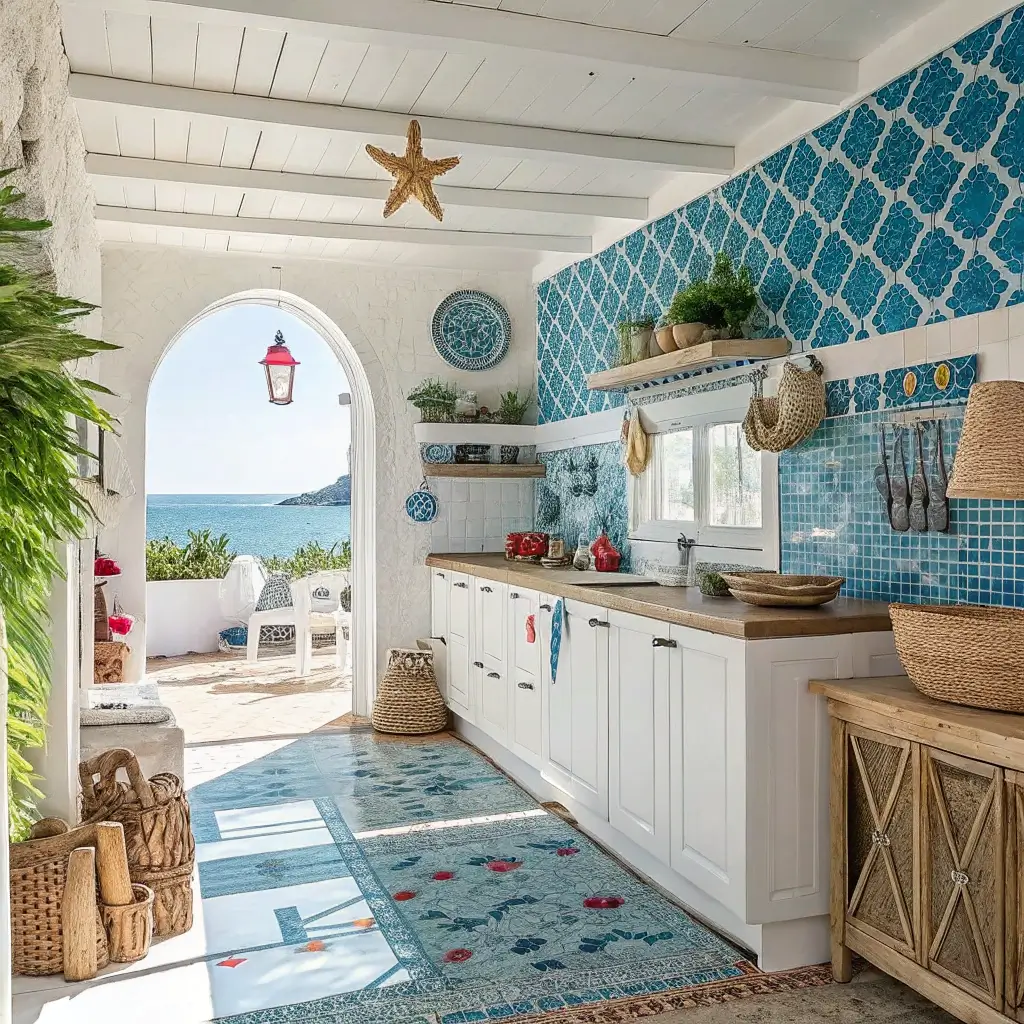
Mediterranean mosaics capture centuries of coastal design heritage. Blue colorways evoke ocean, sky, and the relaxed elegance of seaside living.
Understanding Mediterranean Mosaic Appeal
Mediterranean blue mosaic tiles combine traditional mosaic techniques with ocean-inspired color palettes. These patterns create kitchens with vacation atmosphere and cultural depth.
Why Mediterranean blue mosaics captivate:
- Coastal reference: Evokes seaside relaxation instantly
- Artisan heritage: Traditional mosaic craftsmanship
- Color harmony: Blue variations create soothing palettes
- Visual texture: Multiple small tiles add tactile interest
- Cultural storytelling: References Mediterranean design traditions
- Timeless elegance: Centuries of proven appeal
Mediterranean Mosaic Options
Different mosaic approaches create different effects:
Traditional geometric mosaics use small blue tiles in structured patterns. These classic arrangements suit both traditional and contemporary kitchens.
Random mixed mosaics scatter various blue shades organically. These installations feel collected and artisanal.
Gradient blue mosaics transition through blue tones across surfaces. These arrangements add movement and depth.
Blue and white combinations balance color with brightness. This classic pairing prevents blue overwhelm.
Mixed material mosaics combine blue glass with stone or ceramic elements. These textural combinations add complexity.
Complete Mediterranean mosaic kitchens with:
- White or cream cabinets maintaining brightness
- Natural wood accents adding warmth
- Terracotta or warm stone elements
- Brass or bronze hardware
- Coastal-inspired accessories
- Open shelving displaying ceramics
5. Bold Herringbone Statement Wall
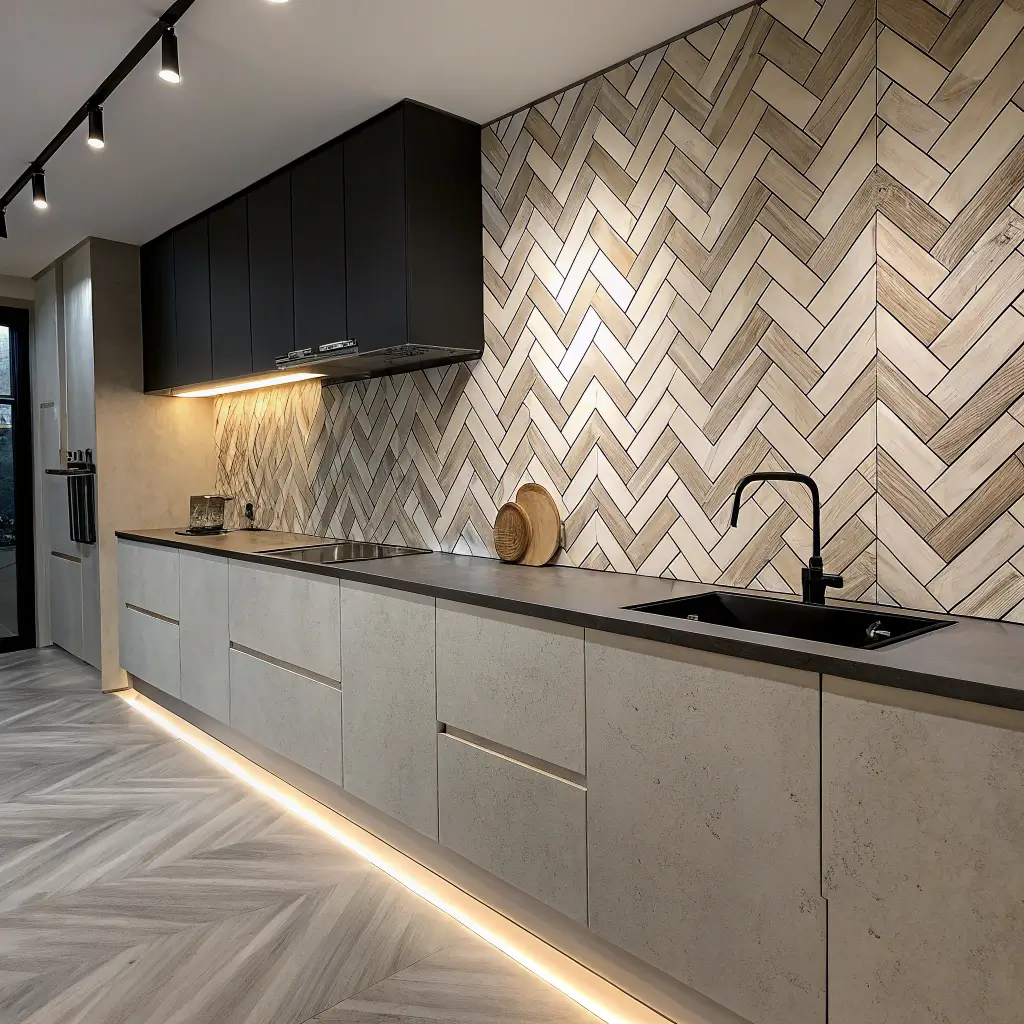
Herringbone patterns transform simple rectangular tiles into dynamic, sophisticated installations. This arrangement adds movement that straight layouts cannot achieve.
The Herringbone Pattern Advantage
Bold herringbone statement walls arrange rectangular tiles at 45-degree angles, creating V-shaped patterns with architectural energy.
Why herringbone patterns captivate:
- Visual movement: Angled patterns create dynamic energy
- Sophisticated upgrade: Elevates basic tiles dramatically
- Vertical emphasis: Can make ceilings appear higher
- Classic credentials: Historical pattern with proven appeal
- Same tiles, different impact: Transform ordinary materials
- Architectural interest: Add dimension through arrangement alone
Creating Herringbone Statements
Apply herringbone for maximum impact:
Full-height backsplashes from countertop to ceiling maximize herringbone drama. This commitment creates genuine statement features.
Feature walls beyond backsplash zones extend herringbone into visible kitchen areas. This approach creates comprehensive design impact.
Colored tile herringbone adds pattern complexity to color statements. Green, blue, or black herringbone doubles visual interest.
Contrasting grout herringbone emphasizes individual tile placement. Dark grout with light tiles (or vice versa) highlights the pattern clearly.
Mixed material herringbone combines different tile finishes within herringbone arrangements. This textural complexity adds additional interest.
Herringbone installation requires more effort than straight layouts:
- Additional cuts: Angled patterns waste more material
- Precision demands: Alignment must remain consistent throughout
- Professional recommendation: Complex patterns benefit from expertise
- Budget consideration: Installation costs typically increase
FYI, herringbone patterns deserve full commitment. Partial herringbone applications often look hesitant rather than designed.
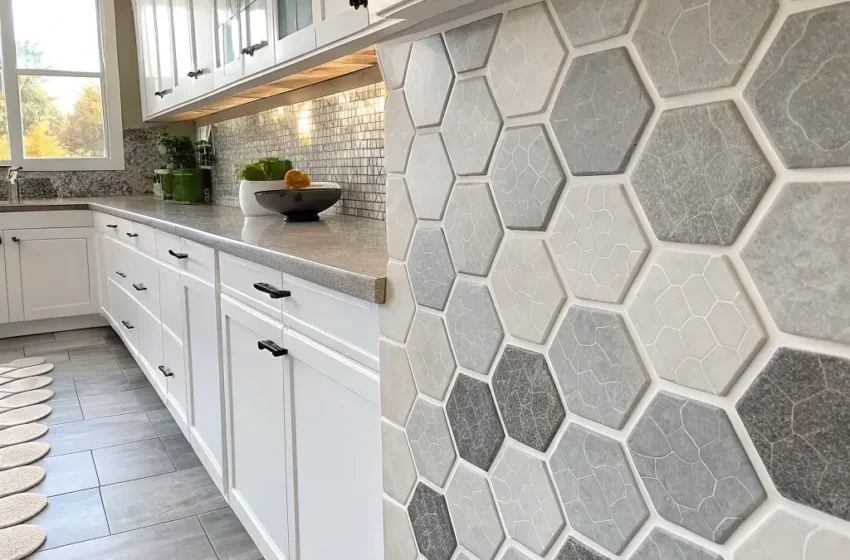
6. Hexagonal Honeycomb Patterns

Hexagons reference natural honeycomb structures while delivering geometric sophistication. These shapes add visual interest that squares and rectangles cannot achieve.
Understanding Hexagonal Appeal
Hexagonal honeycomb patterns bring organic geometry to kitchen surfaces. These naturally occurring shapes feel both mathematical and natural simultaneously.
Why hexagon patterns work:
- Natural reference: Honeycomb structures appear throughout nature
- Geometric interest: Shape creates pattern through form alone
- Versatile sizing: Available from tiny mosaics to large statements
- Organic edges: Can create flowing boundaries rather than straight lines
- Contemporary classic: Modern feel with natural foundations
- Visual complexity: Shape itself provides pattern interest
Hexagonal Pattern Options
Different hexagonal approaches create different effects:
Solid color hexagons let shape create pattern. Single colors emphasize geometric form purely.
Mixed color hexagons combine various shades within hexagonal arrangements. This approach adds color complexity to geometric interest.
Patterned hexagons incorporate designs within individual hexagonal tiles. This layered approach doubles visual complexity.
Graduated sizing combines different hexagon sizes within installations. This approach adds hierarchical interest.
Mixed material hexagons combine different finishes—matte with glossy, ceramic with stone. This textural variety adds depth.
Hexagon applications for kitchens:
- Backsplash features: Hexagons create stunning behind-range focal points
- Floor installations: Large hexagons create contemporary floor statements
- Transition zones: Hexagons can flow organically between spaces
- Partial walls: Create artistic boundaries with organic hexagon edges
Consider grout color carefully with hexagons. Contrasting grout emphasizes individual shapes clearly. Matching grout creates more unified, seamless surfaces.
Also Read: 10 Elegant Pink Tiles Kitchen Ideas to Transform Your Home
7. Pastel Retro Kitchen Tiles

Pastel patterns evoke mid-century design cheerfulness. These gentle colors combined with vintage patterns create joyful cooking spaces.
The Retro Pastel Appeal
Pastel retro kitchen tiles combine soft colors with vintage-inspired patterns. These tiles create kitchens with nostalgic warmth and cheerful personality.
Why pastel retro patterns captivate:
- Nostalgic warmth: References beloved design eras
- Cheerful character: Gentle colors feel optimistic
- Feminine charm: Soft palettes add welcoming warmth
- Pattern variety: Retro designs span diverse pattern types
- Conversation starting: Vintage choices inspire comments
- Joyful cooking: Cheerful spaces enhance kitchen experiences
Pastel Retro Pattern Options
Geometric pastels combine soft colors with structured patterns. These designs balance vintage color with orderly geometry.
Floral pastels pair botanical motifs with gentle colorways. These romantic patterns suit traditional and cottage-style kitchens.
Abstract pastels feature mid-century artistic patterns in soft tones. These designs suit contemporary retro interpretations.
Checkerboard pastels update classic checkerboard with gentle colors. Pink and white, mint and cream create softer variations.
Mixed pattern pastels combine various vintage-inspired designs. This eclectic approach celebrates retro diversity.
Style pastel retro patterns with:
- White or cream cabinets maintaining brightness
- Vintage-inspired appliances where available
- Chrome or pastel-colored hardware
- Retro lighting fixtures
- Displayed vintage dishware and accessories
- Coordinating small appliances in retro colors
8. Modern Minimalist Line Art Tiles

Line art patterns bring contemporary sophistication to kitchen surfaces. These clean, graphic designs suit spaces where minimal complexity matters.
Understanding Line Art Pattern Appeal
Modern minimalist line art tiles feature simple linear designs with maximum impact. These patterns add visual interest without overwhelming minimalist frameworks.
Why line art patterns work:
- Sophisticated simplicity: Complex impact through simple means
- Contemporary credibility: Aligns with current design preferences
- Subtle interest: Adds pattern without busy complexity
- Graphic quality: Clean lines feel intentionally designed
- Versatile coordination: Works with diverse surrounding elements
- Photography excellence: Creates stunning minimal imagery
Line Art Pattern Varieties
Different line art approaches suit different spaces:
Abstract linear patterns feature non-representational line compositions. These contemporary designs suit modern minimalist kitchens.
Geometric line patterns create structured designs through line arrangement. These patterns suit spaces wanting order with interest.
Organic line patterns incorporate flowing, natural-inspired linear elements. These designs add warmth to minimalist frameworks.
Single-line continuous patterns create designs from unbroken line flows. These artistic tiles suit gallery-like contemporary spaces.
Architectural line patterns reference building forms or technical drawings. These designs suit industrial and modern contexts.
Apply line art patterns with minimalist discipline:
- Limited palette: Stick to black on white or simple two-tone combinations
- Strategic placement: Use line art as accent rather than full coverage
- Simple surroundings: Keep cabinets and countertops plain
- Quality focus: Choose well-made tiles that demonstrate craftsmanship
- Restrained accessories: Minimal styling honors minimal patterns
9. Rustic Terracotta Patterned Floor

Terracotta floors carry centuries of heritage. Patterned terracotta adds decorative complexity while maintaining earthy warmth.
Understanding Patterned Terracotta
Rustic terracotta patterned floors combine traditional clay tiles with decorative designs. These installations create kitchens with historical depth and artisanal character.
Why patterned terracotta works:
- Organic warmth: Natural clay materials feel inviting
- Historical reference: Centuries of Mediterranean heritage
- Pattern variety: Traditional designs span diverse styles
- Practical durability: Terracotta handles kitchen wear well
- Character development: Ages beautifully over time
- Cultural storytelling: Connects to traditional craftsmanship
Patterned Terracotta Options
Geometric terracotta patterns incorporate angular designs into clay tiles. These structured patterns suit Mediterranean and traditional spaces.
Floral terracotta patterns combine botanical motifs with earthy materials. These romantic patterns suit rustic and country kitchens.
Abstract terracotta patterns feature artistic designs in warm tones. These contemporary interpretations update traditional materials.
Border pattern terracotta frames plain terracotta fields with decorative edging. This approach adds interest without overwhelming.
Mixed pattern terracotta combines various designs within single installations. This collected approach celebrates pattern diversity.
Complete patterned terracotta kitchens with:
- Natural wood cabinets in warm tones
- Stone or butcher block countertops
- Wrought iron or bronze hardware
- Exposed beam elements where possible
- Copper cookware and accessories
- Mediterranean-inspired textiles 🙂
Also Read: 12 Creative Subway Tiles Kitchen Ideas and Unique Color Combos
10. Colorful Patchwork Mix & Match
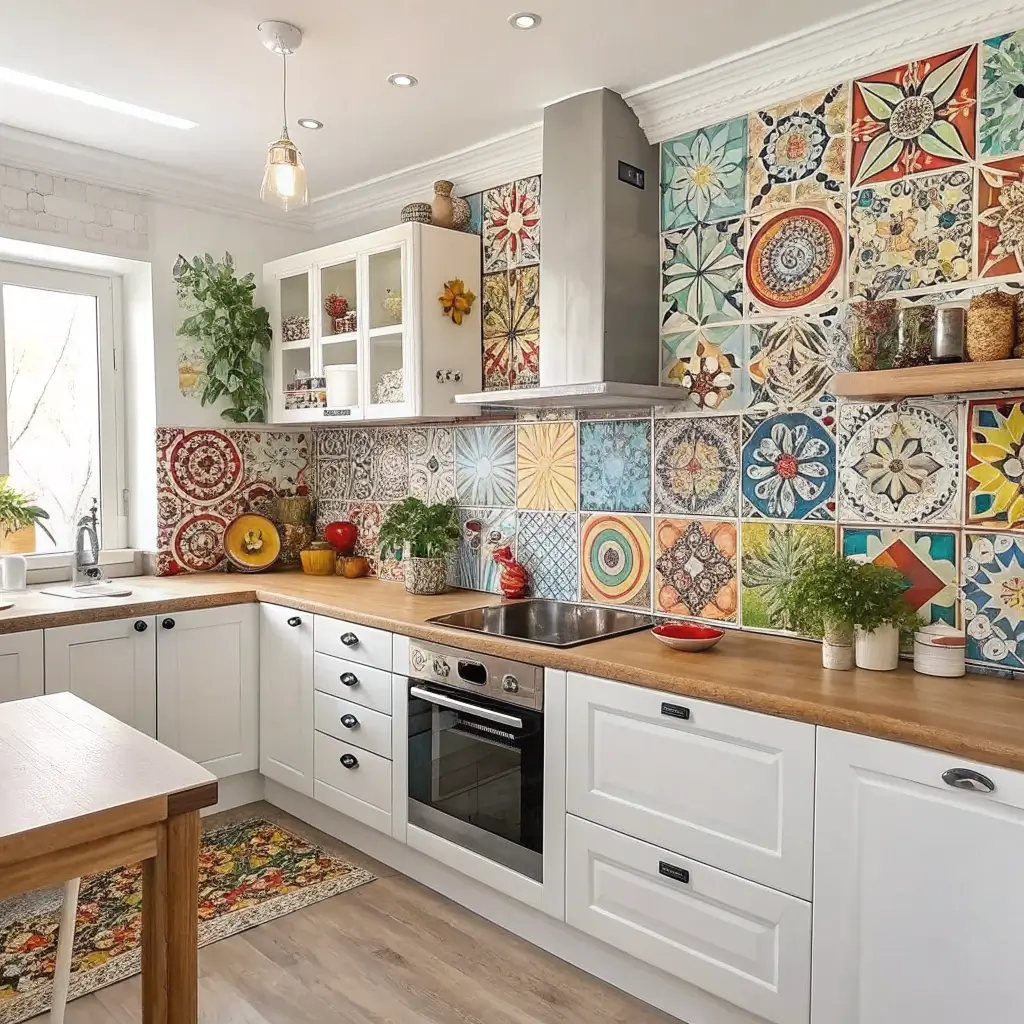
Patchwork installations celebrate pattern diversity. These eclectic approaches combine multiple designs for maximum visual impact.
The Patchwork Pattern Philosophy
Colorful patchwork mix and match tiles reject uniformity for creative combination. These installations embrace variety, creating kitchens with artistic personality and collected character.
Why patchwork patterns captivate:
- Creative expression: Shows personal aesthetic confidence
- Artistic installation: Creates unique visual compositions
- Collected appearance: Looks gathered over time rather than purchased at once
- Maximum visual interest: Multiple patterns engage eyes continuously
- Budget flexibility: Use remnants and discontinued patterns creatively
- Conversation guarantee: Guests inevitably notice and comment
Patchwork Combination Strategies
Successful patchwork requires thoughtful curation rather than random assembly:
Color family cohesion: Mix various patterns sharing color families. Blue patterns in different styles create cohesion through color while varying design.
Scale variation: Combine large patterns with small geometric variations. Different scales create visual hierarchy and interest.
Style mixing: Combine geometric patterns with florals, abstracts with traditional motifs. Unexpected combinations create artistic tension.
Defined zone variations: Apply different patterns to distinct areas—one design behind the range, another behind the sink.
Transition planning: Consider how patterns meet. Clean borders between areas look intentional; ragged edges look accidental.
Grout unification: Use consistent grout color throughout mixed installations. Common grout creates visual connection between varied patterns.
Apply patchwork with confidence:
- Commit fully: Half-hearted patchwork looks like mistakes rather than design
- Embrace bold: Timid pattern mixing creates visual confusion
- Balance with simplicity: Keep cabinets and countertops plain
- Edit carefully: Remove patterns that don’t work rather than forcing inclusion
- Trust instincts: Your collection should reflect your genuine preferences
Practical Pattern Considerations
Before committing to patterned tiles, understand practical implications.
Pattern Placement Strategy
Different patterns suit different kitchen areas:
Backsplash zones handle bold patterns well. These vertical surfaces naturally draw attention, making them ideal pattern locations.
Floor applications require durable patterns. Ensure chosen designs handle foot traffic and potential staining.
Accent areas suit concentrated pattern doses. Feature niches, island fronts, or defined zones contain patterns appropriately.
Full coverage requires careful pattern selection. Overwhelming patterns in full coverage can feel chaotic.
Pattern Scale Considerations
Pattern scale affects spatial perception:
- Large patterns can overwhelm small kitchens
- Small patterns may look busy in expansive spaces
- Medium patterns offer safest versatility
- Mixed scales create intentional variety
Coordination Requirements
Patterns need supportive surroundings:
- Simple cabinets: Flat-panel doors balance busy patterns
- Plain countertops: Minimal countertop patterns prevent competition
- Restrained accessories: Let patterns star without accessory competition
- Neutral walls: Plain painted surfaces provide visual rest
Maintenance Realities
Different patterns handle wear differently:
- Busy patterns hide everyday grime effectively
- High-contrast patterns may show wear at pattern edges
- Light backgrounds show staining more readily
- Multicolor patterns camouflage imperfections naturally
Final Thoughts
Patterned kitchen tiles transform ordinary cooking spaces into extraordinary environments with genuine personality.
Whether you embrace Moroccan geometric precision, classic checkerboard contrast, or eclectic patchwork adventure, patterns add visual complexity that solid tiles cannot achieve.
I remember standing in my kitchen after installing those Moroccan-inspired tiles, amazed at how one decision changed everything.
The space felt alive, interesting, and genuinely mine rather than generic and forgettable.
Choosing patterns requires courage. Solid neutrals feel safe but can leave kitchens feeling uninspired. Patterns demand attention and express personality—which means committing to aesthetic preferences honestly.
Take your time selecting patterns. Order generous samples. View them in your kitchen’s specific lighting. Consider surrounding elements carefully. The right patterned tiles await your discovery.
Your kitchen deserves tiles that bring you joy every time you enter. Patterns deliver that joy consistently—through visual interest, artistic beauty, and personal expression that plain tiles simply cannot match.
Now go find patterns that speak to you. Your extraordinary kitchen awaits.