10 Charming Preschool Classroom Decor Ideas for Cozy Classrooms
- Classroom Decor
 Ben
Ben- 0
- 28 minutes read
Remember walking into your favorite teacher’s classroom as a kid? That magical feeling when everything just clicked—the colors, the cozy corners, the way sunlight hit those perfectly arranged alphabet cards? Yeah, that wasn’t an accident. Creating a preschool classroom that feels like a warm hug takes intention, creativity, and honestly, a bit of madness (the good kind).
I’ve spent years transforming blank classroom walls into learning wonderlands, and let me tell you, the right decor can turn even the most reluctant little learner into an eager participant. Today, I’m sharing my favorite classroom decor ideas that actually work—not just Pinterest-pretty setups that fall apart after the first snack time chaos.
Rainbow-Themed Learning Corners
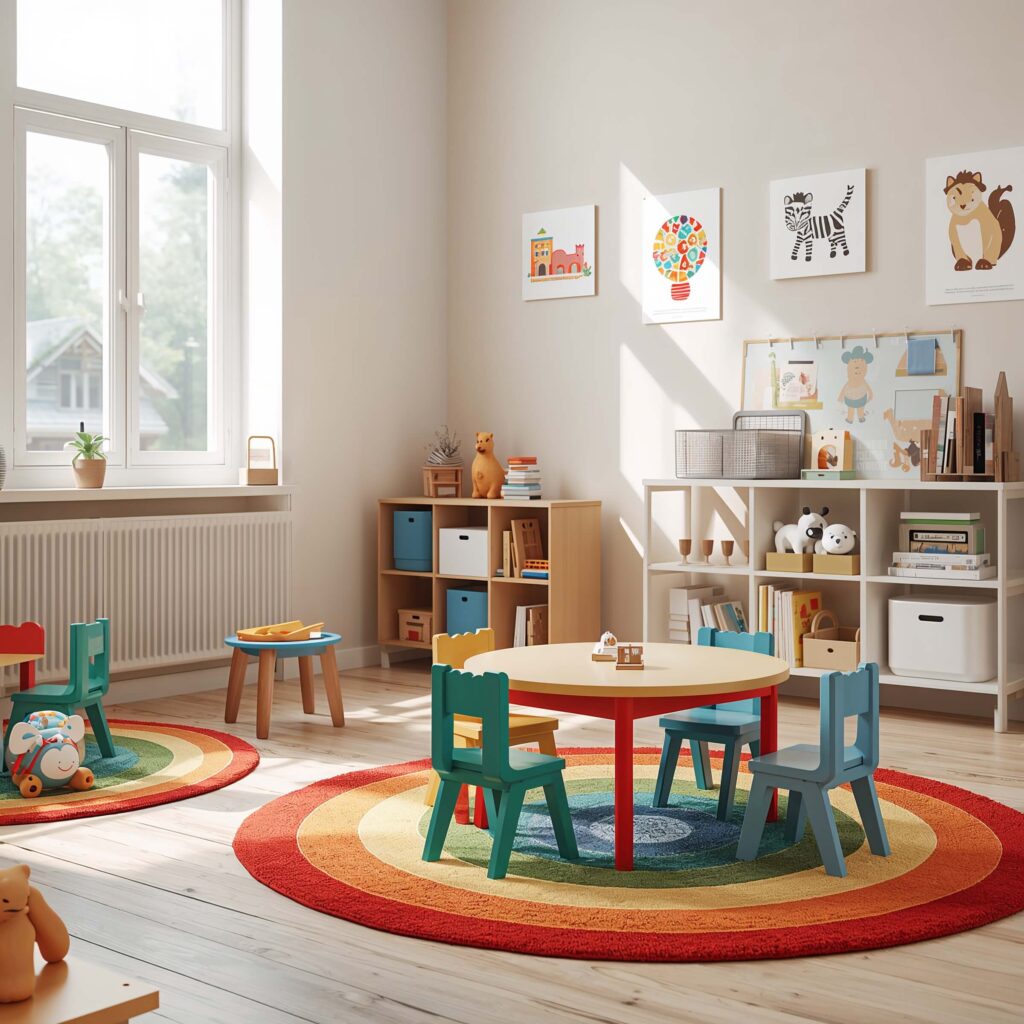
Who doesn’t love a good rainbow? Kids go absolutely bonkers for them, and here’s the secret—you can use this obsession to create distinct learning zones without explicitly telling kids they’re being organized. Sneaky, right?
I started implementing rainbow corners three years ago, and the transformation was immediate. Picture this: each learning station gets its own color from the rainbow spectrum. Your math corner glows with warm reds and oranges, while the science area sparkles in cool blues and purples. Kids naturally gravitate toward different areas based on their mood and the colors that attract them that day.
Setting Up Your Rainbow Zones
Here’s what works best for creating these magical spaces:
• Colored fabric panels draped from the ceiling to define each area
• Matching storage bins that reinforce the color coding
• Colorful rugs or foam tiles to mark floor boundaries
• Rainbow-themed labels with both words and pictures
The genius part? When you tell little Sophie to grab the counting bears from the “orange corner,” she knows exactly where to go. No more wandering around aimlessly while you’re trying to manage twenty other tiny humans.
Making It Stick
You’ll want to reinforce these colors throughout your daily routine. I use colored popsicle sticks for choosing activities—kids draw a stick, and boom, they know which corner they’re heading to. It’s like magic, except it’s just good old-fashioned color psychology at work.
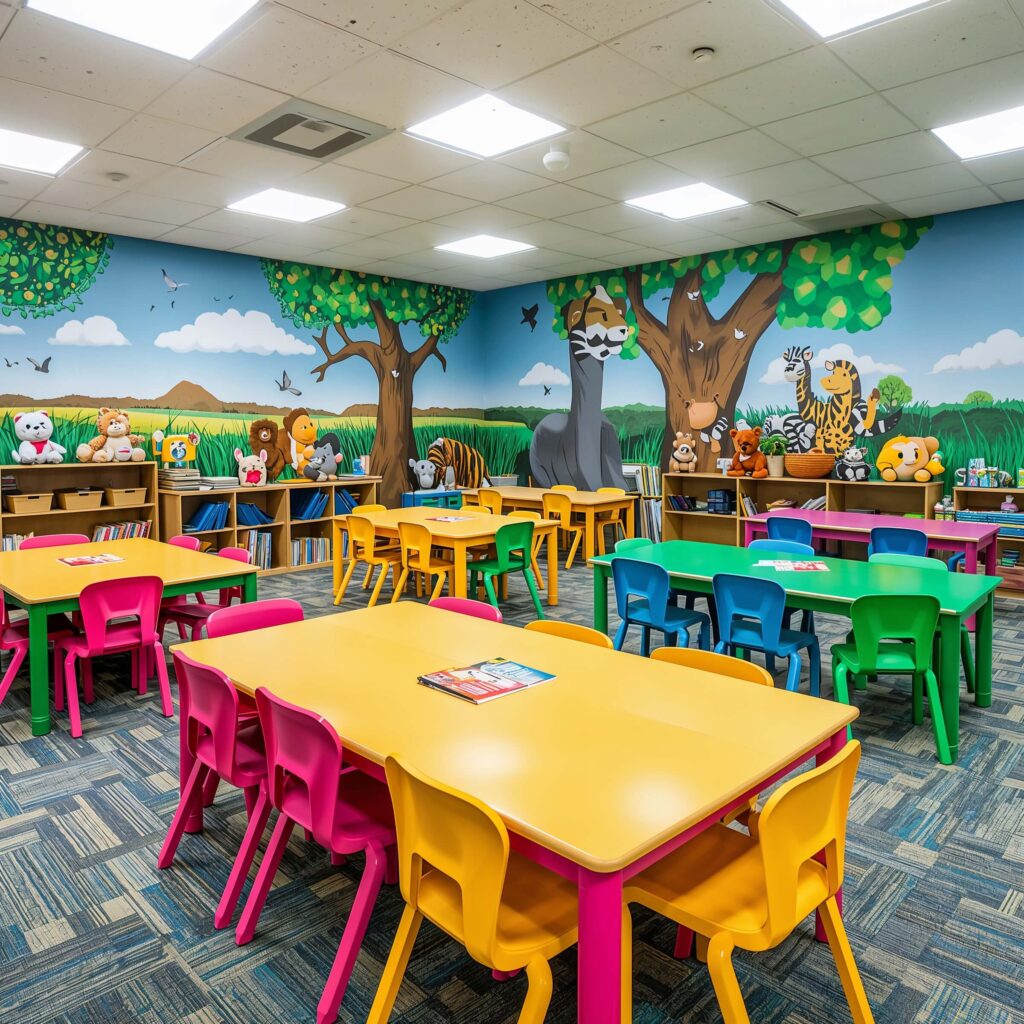
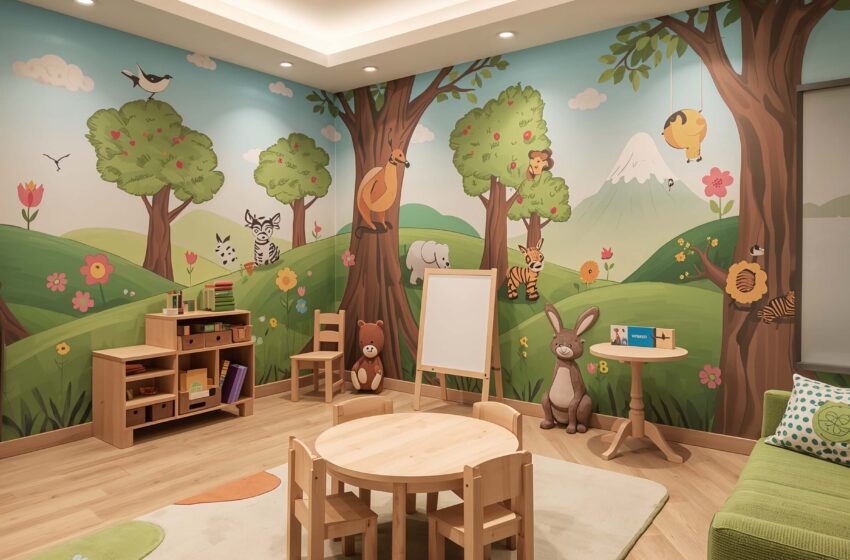
Nature-Inspired Wall Murals
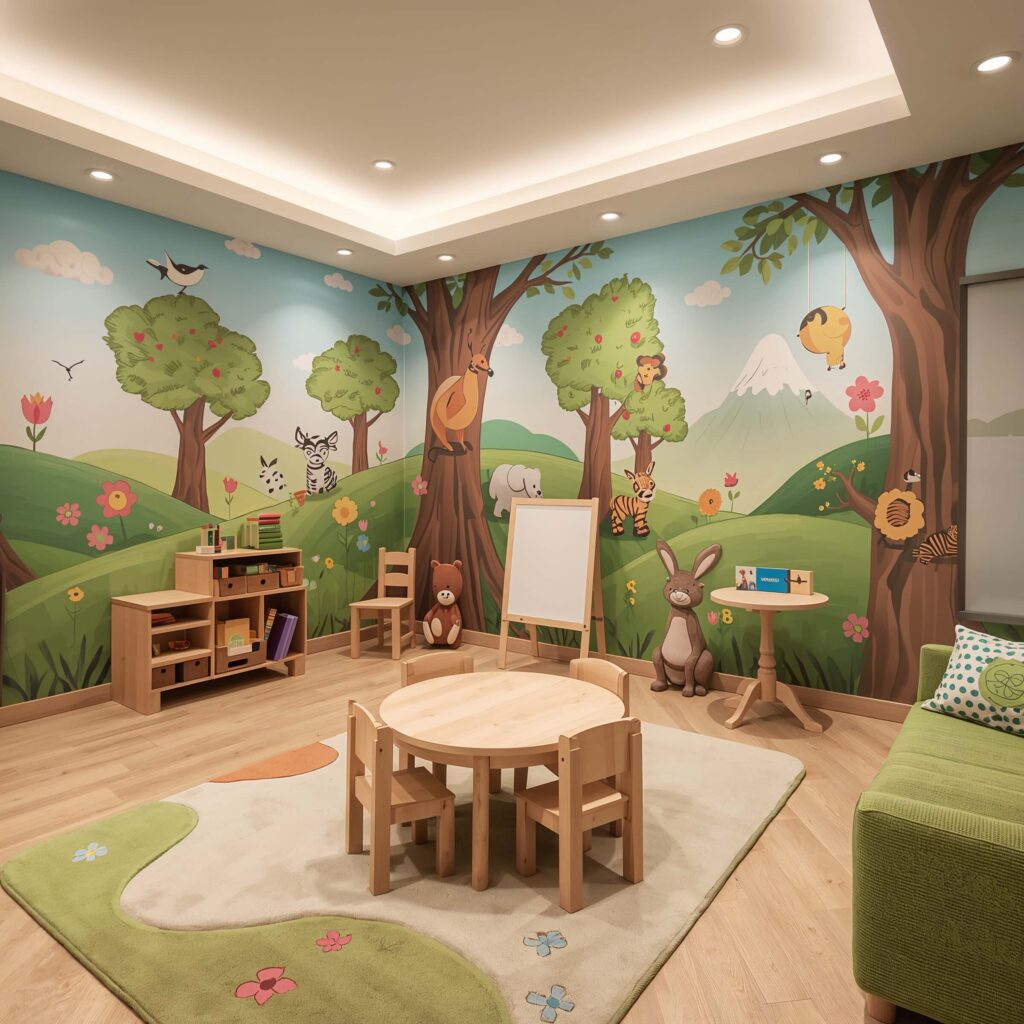
Forget those generic educational posters that scream “institution.” Transform your walls into living, breathing landscapes that spark imagination and calm anxious little minds. Ever notice how kids instantly relax when they’re outside? We’re bringing that vibe indoors, folks.
I once inherited a classroom with walls the color of old oatmeal (appetizing, I know). Instead of slapping up store-bought decorations, I grabbed some paint and created a forest mural that wrapped around the entire room. Trees stretched from floor to ceiling, with branches that held real learning materials—laminated leaves with letters, bird nests containing math manipulatives, you name it.
DIY Mural Magic
Creating your own nature scene doesn’t require Michelangelo-level skills:
• Start with simple shapes—trees are basically cylinders with cloud tops
• Use sponges for texture—instant professional-looking foliage
• Add 3D elements like paper butterflies or fabric clouds
• Include interactive pieces kids can move or change
The best part about nature murals? They grow with your curriculum. Teaching about seasons? Your trees can change throughout the year. Studying animals? Add new creatures to your painted habitat. It’s decor that actually teaches, not just decorates.
DIY Sensory Activity Stations
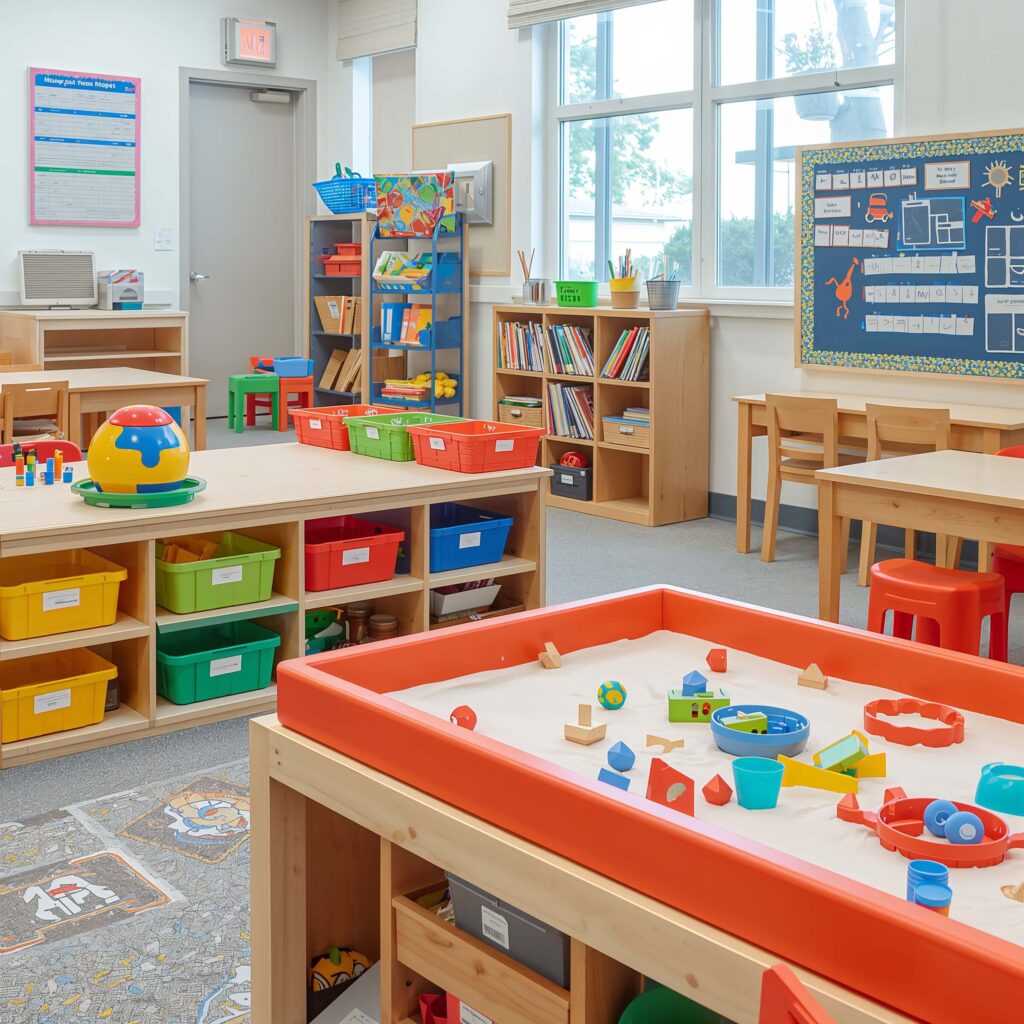
Let’s talk sensory stations—because if you’re not incorporating sensory play, you’re missing out on pure preschool gold. These stations aren’t just time-fillers; they’re essential learning tools disguised as fun.
I learned this lesson the hard way when I noticed my wiggliest students suddenly becoming zen masters at the sensory table. Turns out, giving kids something to squish, pour, or manipulate works better than any behavior chart I’ve ever made.
Building Budget-Friendly Sensory Stations
You don’t need fancy equipment to create engaging sensory experiences:
• Rice bins with hidden letters for literacy exploration
• Water beads in clear containers for color sorting
• Playdough stations with themed tools and molds
• Sand tables doubling as writing practice surfaces
• Texture walls made from carpet samples, bubble wrap, and fabric swatches
Rotating for Freshness
Here’s my pro tip: rotate your sensory materials weekly. Kids get bored faster than you can say “circle time,” but switching from kinetic sand to shaving cream to dried beans keeps them engaged. Plus, different materials target different developmental skills—win-win!
Also Read: 10 Eye-Catching Classroom Decor Ideas for Happy Students
Alphabet & Number Wall Display
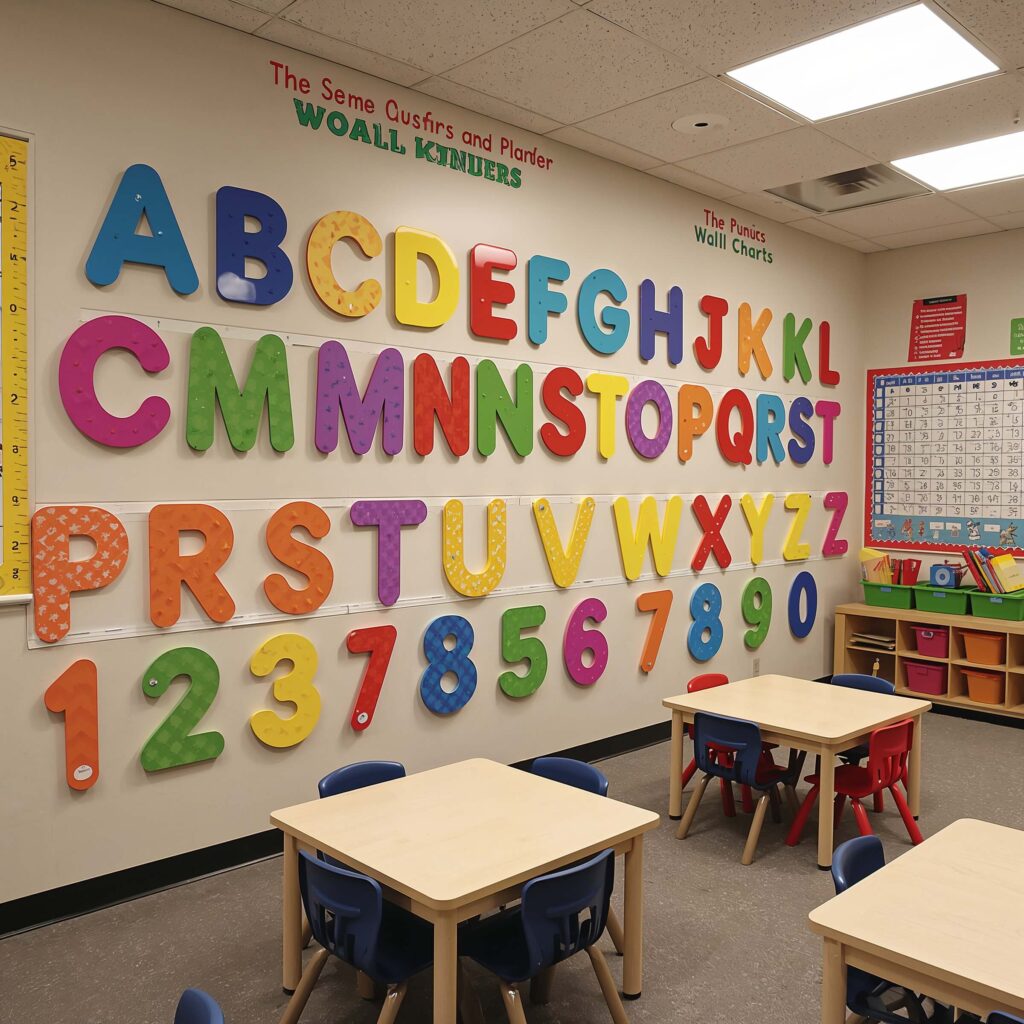
I know what you’re thinking—alphabet walls are as basic as it gets. But hear me out: the execution makes all the difference between a boring educational requirement and an interactive masterpiece kids actually use.
My current alphabet wall features photos of the actual kids in my class forming letter shapes with their bodies. Little Marcus making an “M” with his friends, Aria arching into an “A”—suddenly, letters aren’t abstract symbols anymore. They’re personal, memorable, and hilarious (have you ever watched four-year-olds try to make a “Q”?).
Beyond Basic ABCs
Transform your letter and number displays with these upgrades:
• Tactile elements—sandpaper letters, puffy paint numbers
• Real-world connections—photos of items starting with each letter
• Moveable pieces—velcro-backed cards kids can rearrange
• Growth tracking—spaces to add new words kids learn
Making Numbers Count
For numbers, I create a living number line that stretches around the room at kid height. Each number has pockets containing that many items—five toy cars under the 5, ten crayons under the 10. Kids physically interact with quantity, not just symbols.
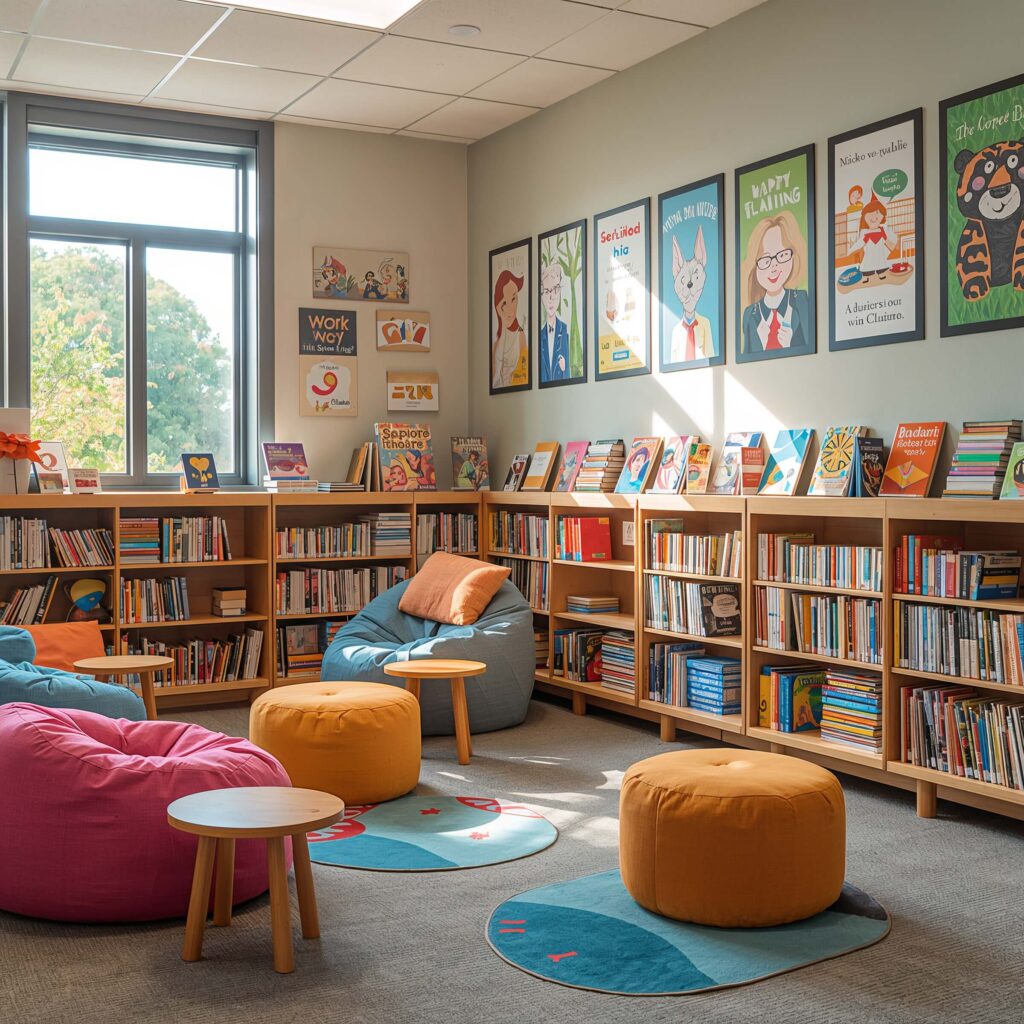
Cozy Reading Nook with Pillows
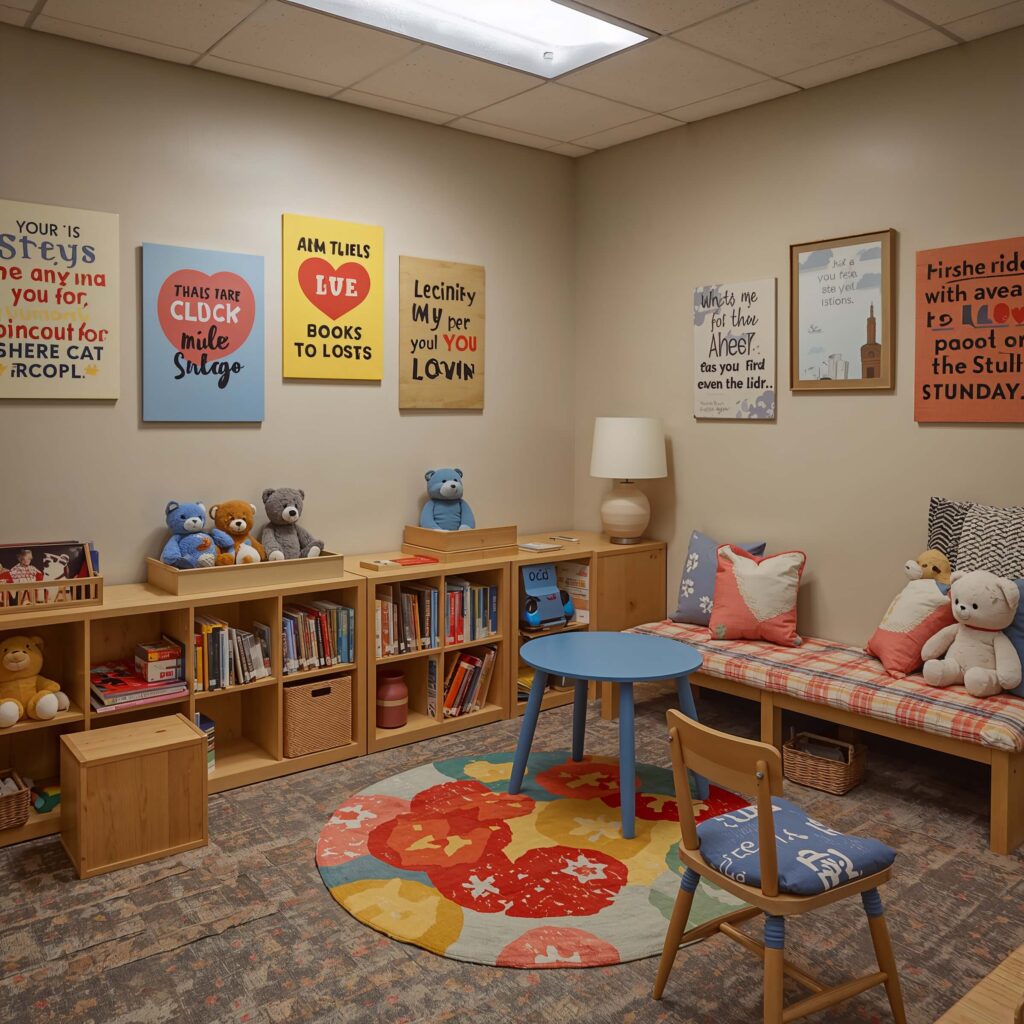
Every classroom needs that special spot where magic happens—and by magic, I mean kids actually choosing to pick up books. Creating an irresistible reading nook isn’t about having the biggest space; it’s about making kids feel like they’ve discovered a secret hideaway.
My reading corner started as a sad little bookshelf in the corner. Now? It’s a canopied wonderland with twinkle lights, more pillows than a Pottery Barn catalog, and books displayed like treasures. Kids literally race to get there during free choice time.
Nook Essentials That Actually Matter
Here’s what transforms a corner into a reading retreat:
• Soft lighting—string lights or a cute lamp beats harsh fluorescents
• Varied seating—bean bags, floor pillows, even a small couch if you can swing it
• Book display shelves showing covers, not spines
• Personal touches—stuffed animals, cozy blankets, maybe a fake plant or two
• Defined boundaries—use a rug, canopy, or low shelves to create walls
The Pillow Protocol
Can we talk about pillows for a second? Get washable covers. Trust me on this one. After one stomach bug season, you’ll thank me. Also, varying sizes works better than all matching—kids can build their own comfort zones.
Seasonal & Holiday Decor Rotations
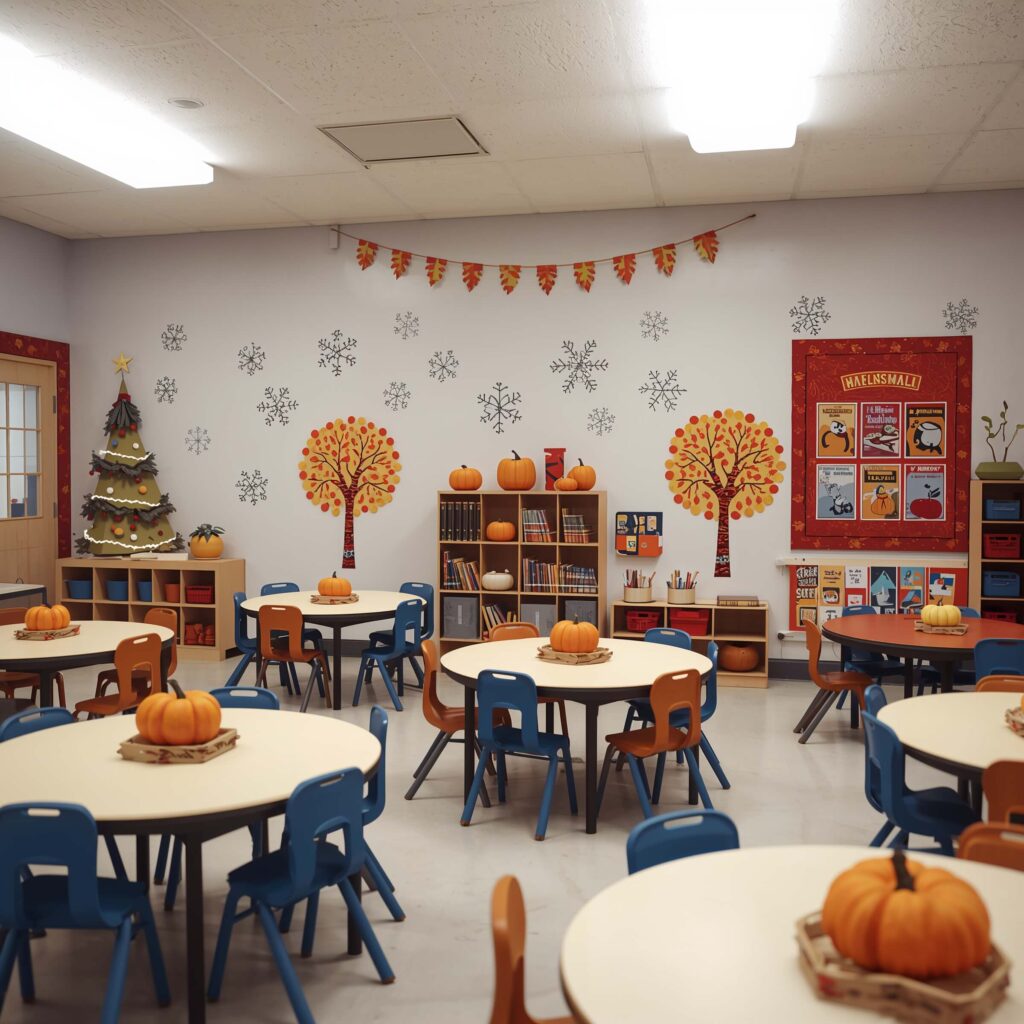
Keeping your classroom fresh throughout the year doesn’t mean redecorating from scratch every month (who has time for that?). Strategic seasonal updates keep kids engaged while saving your sanity and budget.
I use a base neutral decor that works year-round, then layer in seasonal elements. Think of it like accessorizing an outfit—same foundation, different scarves. My tree mural? Snowflakes in winter, flowers in spring, leaves in fall. Same tree, totally different vibe.
Seasonal Swap System
Create an efficient rotation system:
• Storage bins labeled by season—everything ready to go
• Reusable base decorations—frames that hold changeable artwork
• Student-created seasonal art—kills two birds, FYI
• Nature elements—real leaves, pinecones, shells depending on season
Holiday Balance
Here’s where things get tricky. You want to acknowledge holidays without going overboard or excluding anyone. My rule: celebrate seasons more than specific holidays. Winter wonder instead of Christmas overload, harvest themes rather than just Thanksgiving. Everyone feels included, nobody’s overwhelmed.
Also Read: 10 Inspiring Basement Layout Ideas Floor Plans for Family Fun
Interactive Chalkboard & Whiteboard Wall
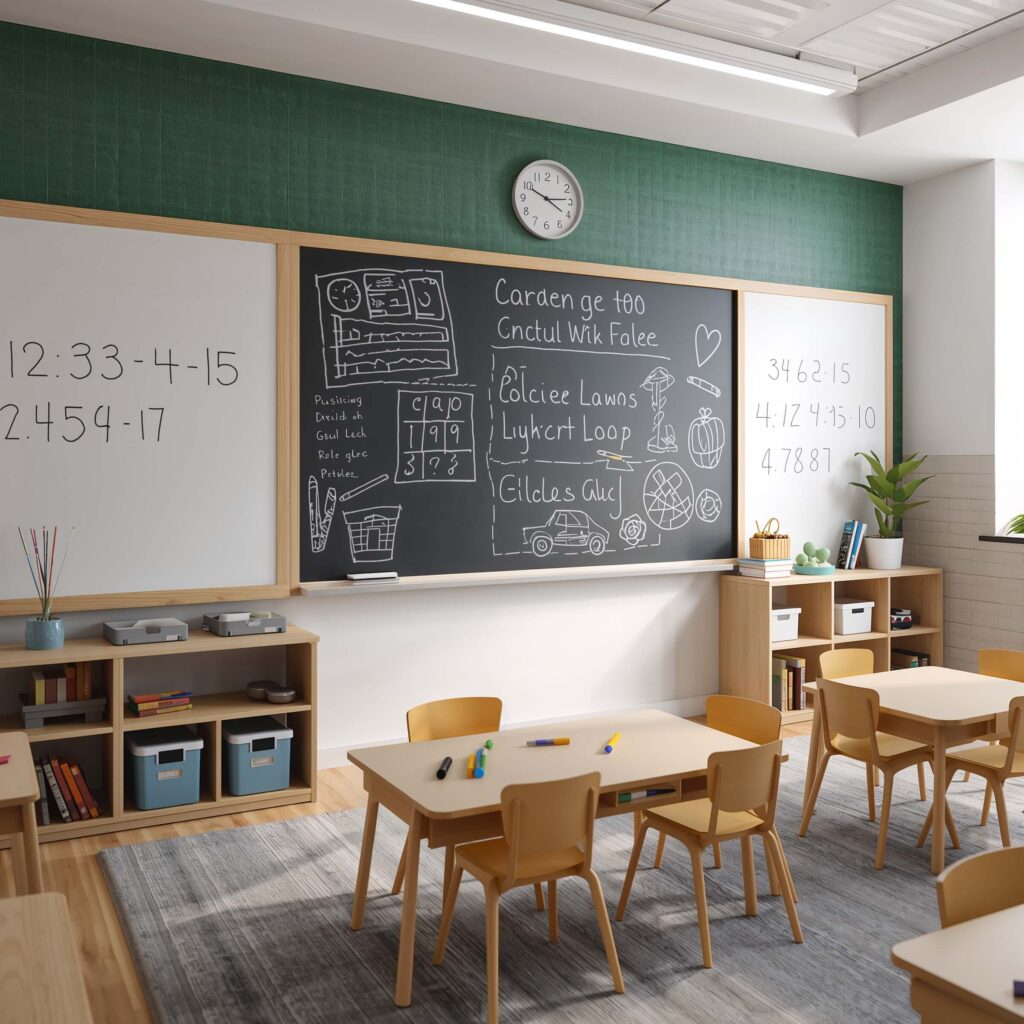
Remember when we thought interactive meant expensive smart boards? Plot twist: kids prefer good old-fashioned surfaces they can actually touch and draw on. I converted an entire wall into a chalkboard/whiteboard combo, and it’s been the best investment ever.
Half chalkboard, half whiteboard gives you options. The chalkboard side becomes our daily schedule, weather station, and group writing space. The whiteboard? That’s where kids practice letters, draw their feelings, and occasionally create masterpieces that belong in the Louvre (according to their parents, anyway :)).
Maximizing Your Drawing Surfaces
Make these surfaces work harder:
• Create permanent sections with tape or paint for schedules
• Add magnetic strips for holding materials
• Install cork strips between boards for displaying work
• Keep supplies organized in wall-mounted caddies
The Chalk Dust Dilemma
Let’s address the elephant in the room—chalk dust. Yeah, it’s messy. But dustless chalk exists, and it’s a game-changer. Also, assigning a “board helper” who wipes down surfaces daily teaches responsibility while keeping things clean.
Color-Coded Storage & Organization System
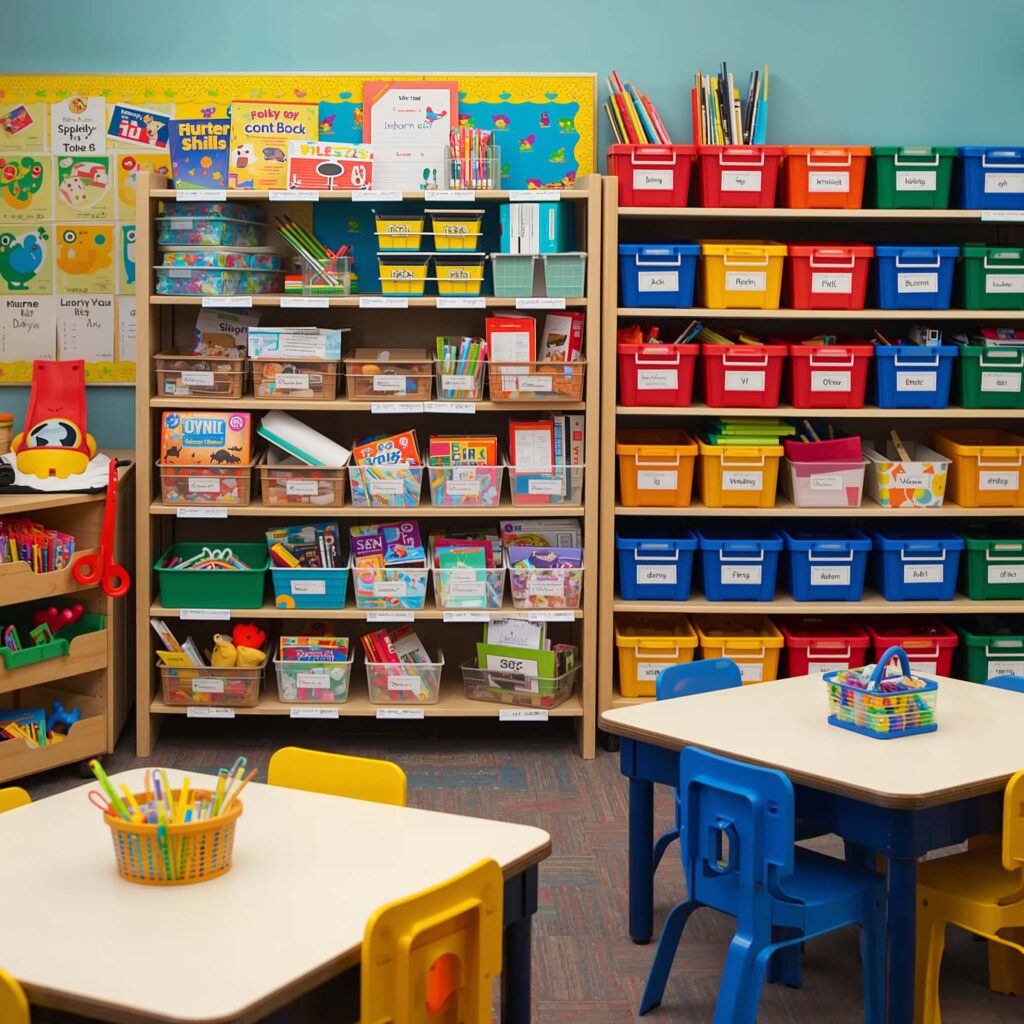
Organization in a preschool classroom? Sounds like an oxymoron, but stay with me. Color-coding everything transforms cleanup from chaos to an actual learnable routine. And IMO, teaching organization skills early sets kids up for academic success.
Each type of material gets its own color: art supplies in blue bins, blocks in red, dramatic play in yellow. I even color-code by difficulty level—green labels for independent activities, orange for partner work, red for teacher-assisted tasks.
Building Your Color System
Start with these basics:
• Consistent bin colors throughout the room
• Matching labels with pictures and words
• Color-coded shelf tape marking where items belong
• Student supply caddies in table colors
Making It Kid-Proof
The trick is making the system so obvious that even your most scattered student can follow it. Visual cues everywhere—colored footprints leading to different areas, matching colored signs, even colored timer cards for rotation schedules. When everything has a clear, colorful home, cleanup becomes almost automatic.
Animal-Themed Learning Zones
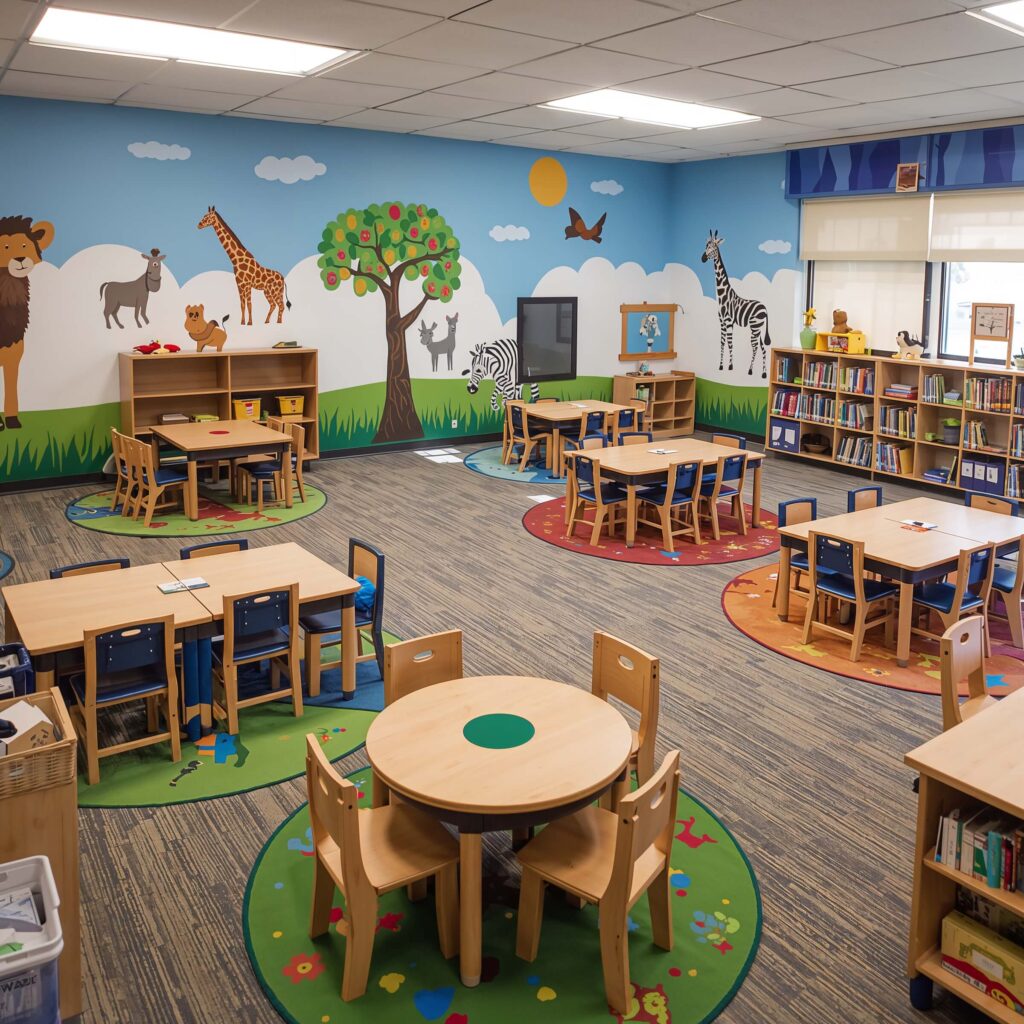
Kids and animals go together like peanut butter and jelly (unless someone has allergies, then like… sunbutter and jelly?). Animal themes make abstract concepts concrete and give shy kids something to connect with.
Each learning zone in my classroom has an animal mascot. The quiet reading area? That’s the owl’s nest. The math center? The clever foxes work there. Science exploration? Welcome to the monkey laboratory. Kids identify with different animals and suddenly have favorites based on activities, not just cuteness.
Bringing Animals to Life
Create immersive animal environments:
• Large animal cutouts marking each zone entrance
• Themed vocabulary posted in each area
• Animal-inspired storage—baskets that look like nests, boxes painted like habitats
• Stuffed animal “helpers” who “guard” each station
• Animal fact cards that connect to curriculum
The Behavior Connection
Here’s a sneaky teacher trick: use animal characteristics for behavior management. “Let’s be quiet mice in the hallway” works way better than “Be quiet!” Kids naturally embody animal traits when prompted, making transitions smoother.
Also Read: 10 Fresh Modern Basement Ideas to Maximize Every Corner
Inspirational Quote & Art Gallery Wall
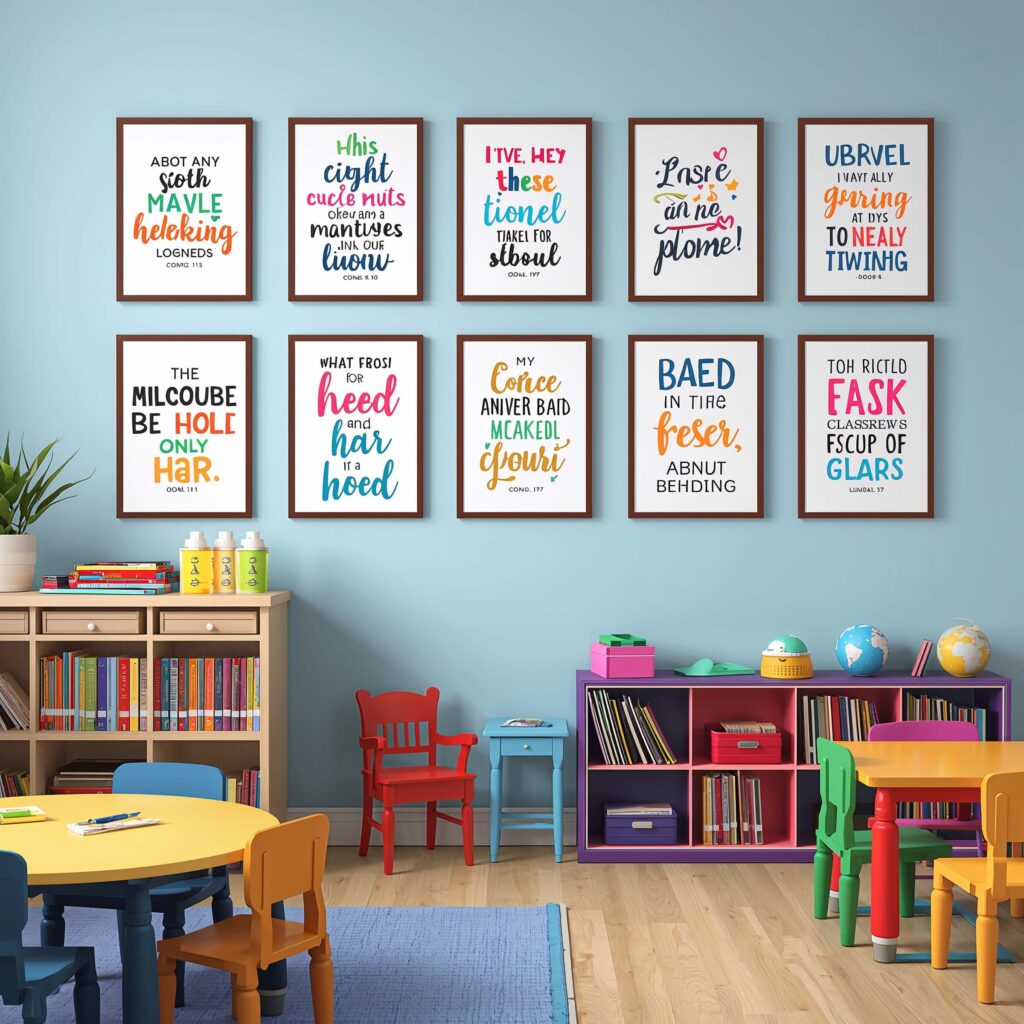
Before you roll your eyes at another “inspiration wall,” hear me out. Preschoolers can’t read most quotes, but they can feel the positive energy and recognize their own artwork displayed museum-style.
I dedicate one wall as our classroom gallery, complete with fancy frames (dollar store, but the kids don’t know that). Student artwork rotates weekly, and each piece gets a proper museum label with the artist’s name and title. You haven’t lived until you’ve heard a four-year-old describe their “abstract expressionist interpretation of snack time.”
Gallery Guidelines
Create a professional-looking display:
• Consistent frames or borders for cohesion
• Proper spacing between pieces—don’t overcrowd
• Mix media types—paintings, drawings, collages, photos
• Include process photos showing kids creating
• Add simple, visual quotes with accompanying illustrations
The Quote Question
What quotes work for non-readers? Visual quotes—think pictures showing kindness, effort, friendship. I pair simple words with clear illustrations. “We can do hard things” with a photo of a child climbing. “Mistakes help us learn” with artwork showing progression.
Monthly Artist Spotlights
Each month, one child becomes the featured artist with a special section. They choose their best works, create an artist statement (dictated to me), and even host an “opening” where they explain their pieces to classmates. It builds confidence like you wouldn’t believe.
Wrapping Up the Magic
Creating a cozy, engaging preschool classroom isn’t about perfection or Pinterest-worthy photos. It’s about building a space where little humans feel safe, inspired, and excited to learn. Every rainbow corner, every cozy pillow, every carefully chosen animal mascot serves a purpose beyond looking cute.
The best part about these ideas? They grow with your teaching style and student needs. Start with one or two concepts that resonate with you, then build from there. Your classroom should reflect your personality and teaching philosophy while serving your students’ developmental needs.
Remember, kids don’t need expensive, fancy decorations to learn and thrive. They need thoughtful spaces created by teachers who understand that environment is the third teacher. So grab some paint, raid the dollar store, and start transforming your classroom into the cozy learning haven your students deserve.
Who knows? Twenty years from now, one of your students might remember walking into your classroom and feeling that same magic we talked about at the beginning. And really, isn’t that what teaching is all about—creating moments and spaces that stick with kids long after they’ve learned to tie their shoes and write their names? That’s the real decoration that matters.