10 Charming Sage Green Kitchen Cabinets Ideas for Farmhouse Style
- Kitchen ideas
 Ben
Ben- 0
- 30 minutes read
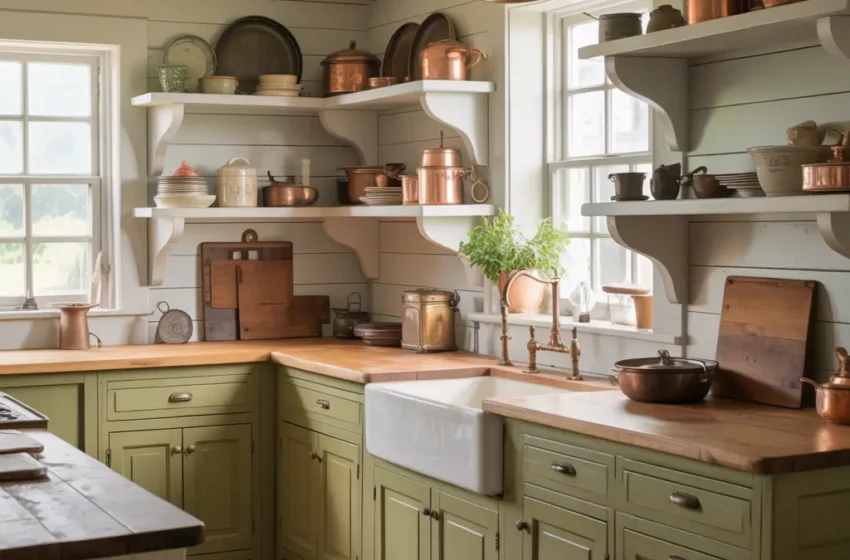
Sage green kitchen cabinets are everywhere right now, and before you roll your eyes thinking it’s just another trend that’ll die faster than your sourdough starter from 2020, hear me out.
This color has serious staying power, and I’m not just saying that because I painted my entire kitchen sage green six months ago (though that definitely factors in).
Here’s the thing about sage green—it walks this perfect line between making a statement and playing it safe.
Sage green cabinets bring warmth, sophistication, and that elusive “expensive” look to any kitchen without screaming for attention like bolder colors do.
It’s basically the Swiss Army knife of kitchen colors, working with practically everything you throw at it.
After helping three friends choose their kitchen cabinet colors this year (yes, I’m that friend), I’ve learned exactly what makes sage green work and what makes it flop.
So let’s talk about real ideas that’ll help you nail this color in your own kitchen, whether you’re doing a full renovation or just painting what you’ve got.
Understanding Why Sage Green Works So Well
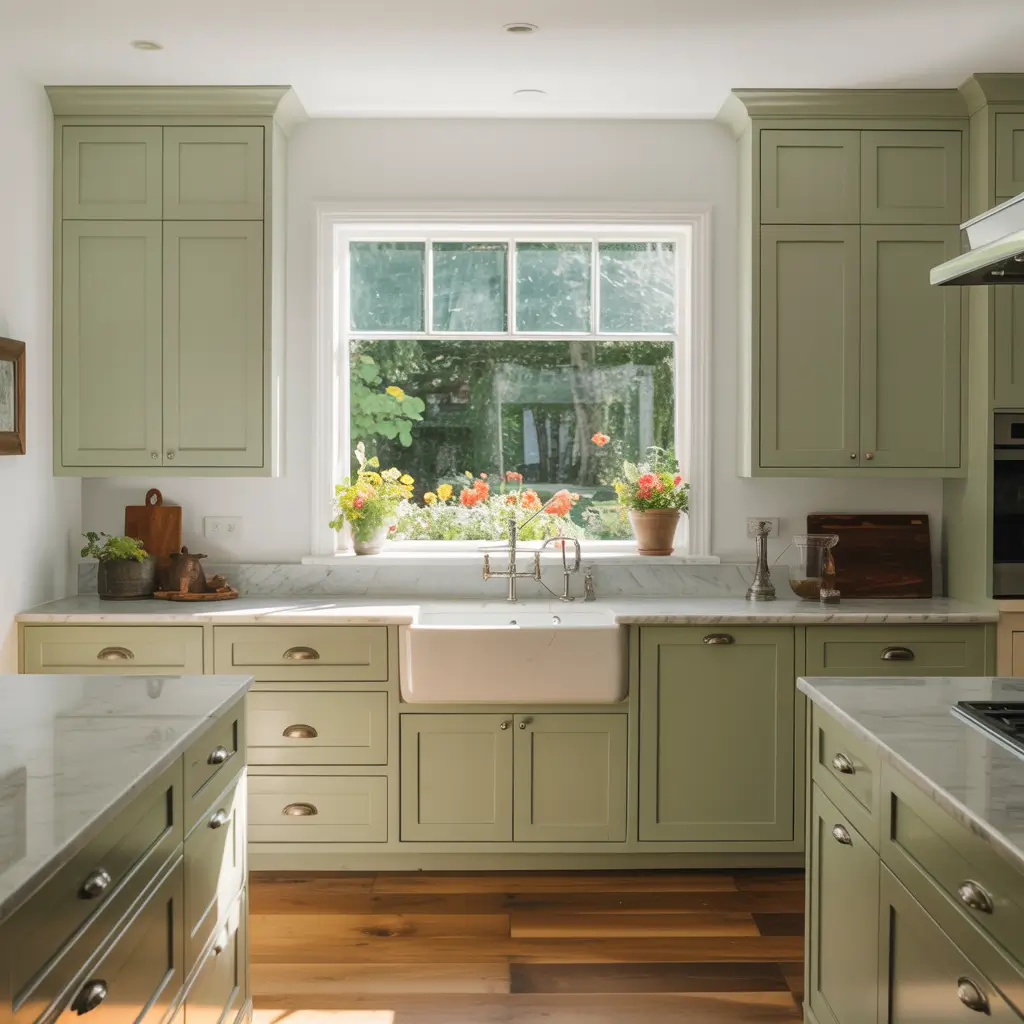
Sage green isn’t just having a moment—it’s having a whole era. This muted green-gray hybrid adapts to literally any kitchen style, from modern minimalist to cozy farmhouse, and everything in between.
The Psychology Behind Sage
Ever notice how sage green makes you instantly relax? There’s actual science behind that. Green connects us to nature, while the gray undertones keep it from feeling too “outdoorsy” or overwhelming. It’s calming without being boring, interesting without being exhausting.
I painted my kitchen cabinets sage after a particularly stressful year, and I swear my blood pressure drops every time I walk in there. My morning coffee routine feels more zen, and even doing dishes doesn’t seem quite as annoying (though let’s be real, it’s still dishes).
The Versatility Factor
- Works with warm AND cool tones equally well
- Complements both traditional and modern styles
- Plays nice with every metal finish from brass to black
- Adapts to different lighting throughout the day
- Ages gracefully as trends change
- Hides dirt and fingerprints better than lighter colors
The chameleon quality of sage green amazes me daily. Morning light makes it look fresh and energetic, evening light turns it cozy and intimate. It’s like having two kitchens for the price of one.
Sage Green with White Countertops
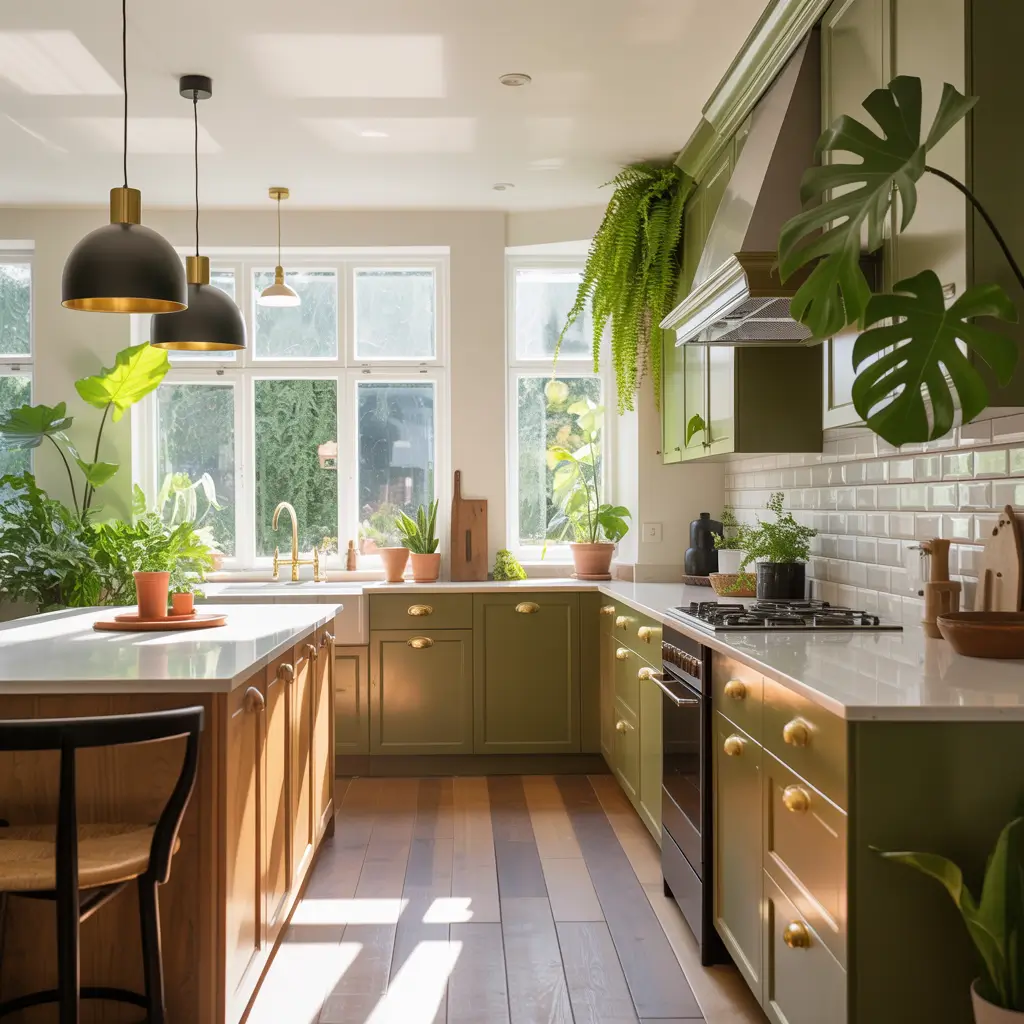
The classic combination of sage cabinets and white countertops creates a fresh, clean look that never gets old. This pairing brightens up the sage while the green adds warmth to stark white surfaces.
Choosing Your White
Not all whites are created equal when it comes to pairing with sage. Bright white can create too much contrast, making the sage look dull. Warm whites with subtle yellow or beige undertones complement sage’s earthy nature perfectly.
My kitchen has Caesarstone’s “Fresh Concrete” countertops (which reads as warm white), and they make my Benjamin Moore “October Mist” cabinets absolutely sing. The slight warmth in the white prevents that harsh contrast you get with pure white.
Making It Interesting
White countertops with sage cabinets could easily fall into “safe and boring” territory without some personality. Add texture through your backsplash, bring in wood elements, or go bold with your hardware. The neutral base gives you freedom to play with other elements.
Think about adding open shelving to break up the sage cabinets, displaying white dishes that echo your countertops. This creates visual breathing room while maintaining the color story.
Two-Tone Sage and Natural Wood
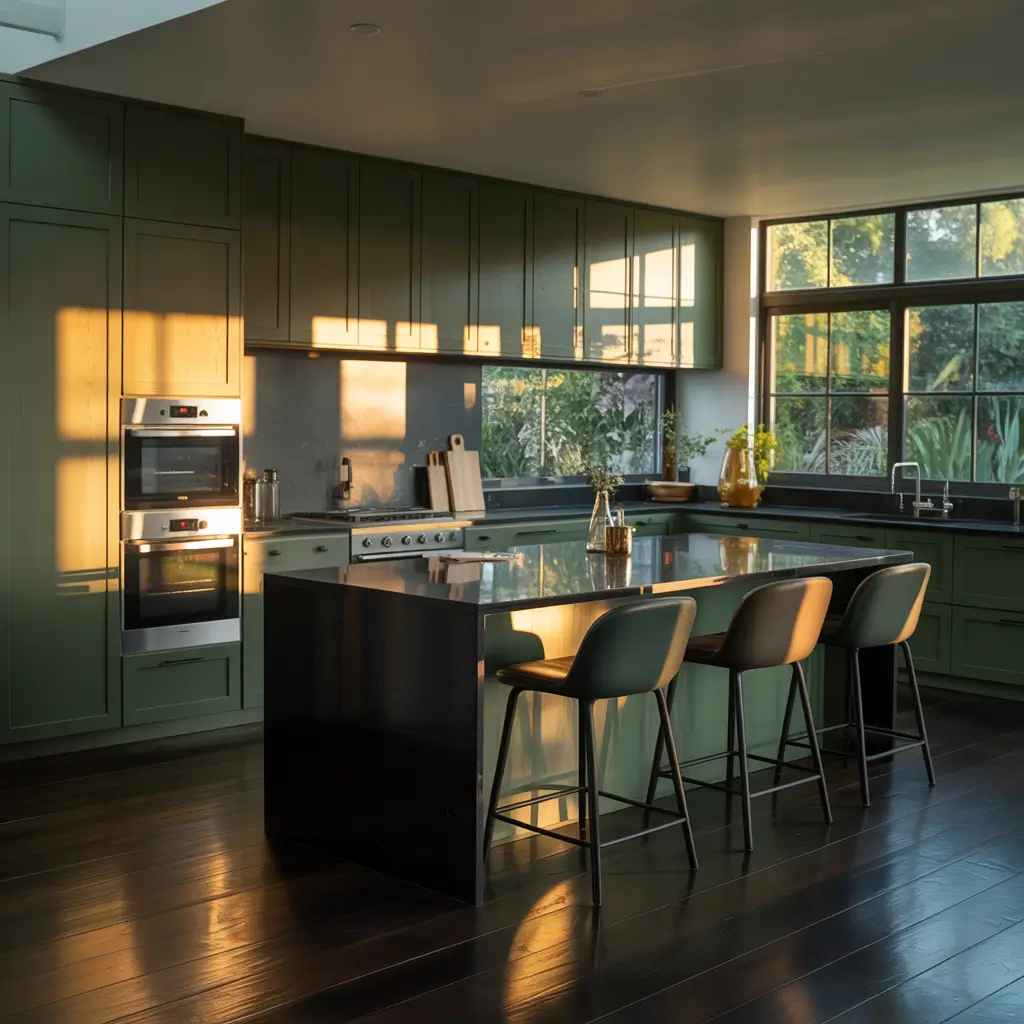
Mixing sage green cabinets with natural wood creates an organic, earthy kitchen that feels both trendy and timeless. This combination brings warmth and texture that prevents sage from feeling flat or one-dimensional.
Wood Tone Selection
The wood you choose dramatically affects your kitchen’s overall vibe. Light woods like white oak or maple keep things Scandinavian and fresh. Darker woods like walnut add sophistication and drama. Medium tones like cherry or regular oak bring traditional warmth.
I mixed sage lower cabinets with white oak uppers on my island, and the combination feels perfectly balanced. The wood adds warmth that makes the sage feel less “color-forward” and more integrated into the overall design.
Where to Add Wood
- Upper cabinets for an airy feel
- Kitchen island as a statement piece
- Open shelving mixed with closed sage cabinets
- Hood surround for a focal point
- Floating shelves against sage walls
- Ceiling beams if you’re feeling ambitious
The key is not overdoing it. Too much wood and you’ve got a cabin. Too little and you miss the warming effect entirely.
Also Read: 10 Trendy Green Kitchen Cabinets Ideas and Farmhouse Charm
Sage Green with Black Hardware
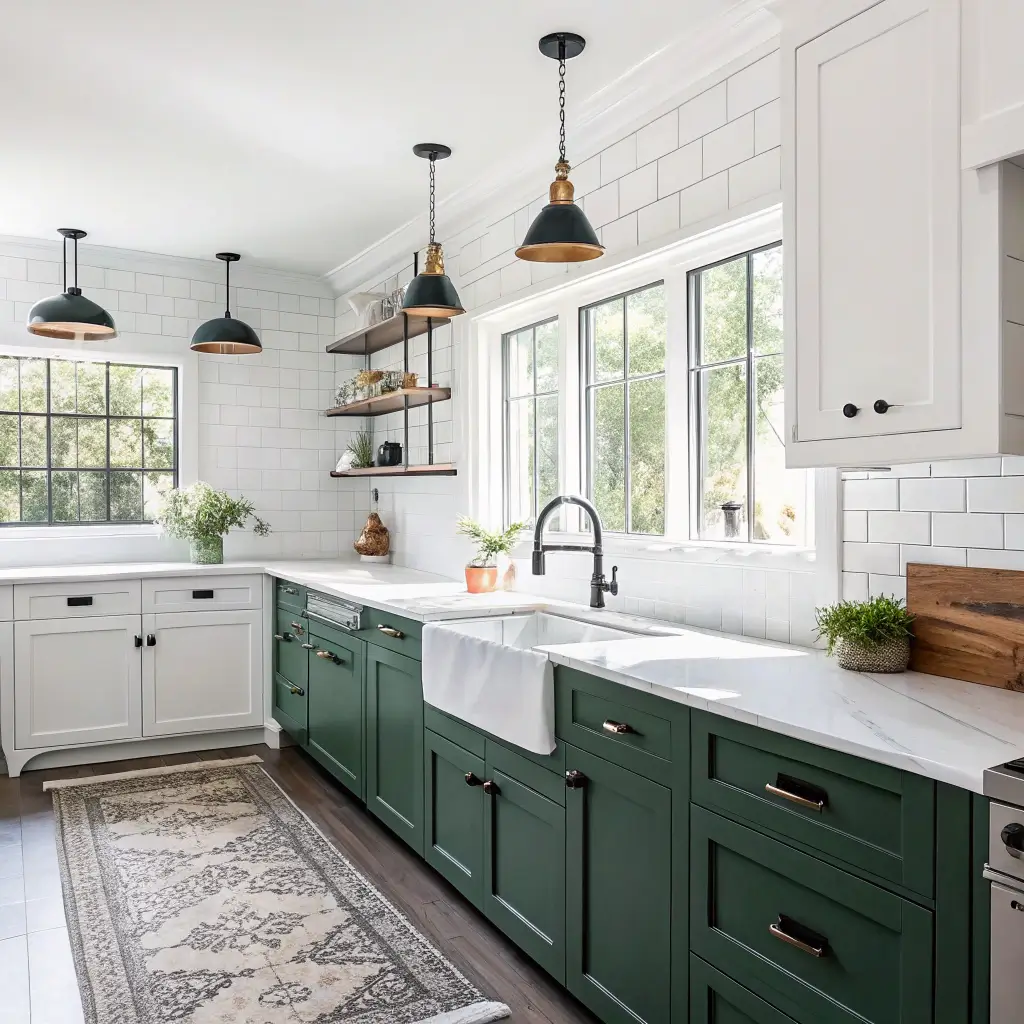
Black hardware on sage cabinets creates instant sophistication that makes even builder-grade cabinets look custom. This high-contrast pairing adds definition and modern edge to sage’s softness.
Hardware Styles That Work
Matte black hardware looks absolutely killer on sage cabinets. Whether you go for simple bar pulls, vintage-inspired cup pulls, or minimalist knobs, the black creates graphic interest against the soft green.
My kitchen has matte black hexagon knobs and thin bar pulls, and honestly, they make the whole space look way more expensive than it actually was. The hardware cost less than $200 total but transformed everything.
Beyond Cabinet Hardware
Don’t stop at drawer pulls. Black faucets, light fixtures, and even appliances create a cohesive look that feels intentional. I added a black bridge faucet and pendant lights, and suddenly my kitchen looked like it belonged in a design magazine.
The trick is keeping the black elements balanced throughout the space. Too much in one area feels heavy; spread it around for visual harmony.
Sage Cabinets with Marble Backsplash
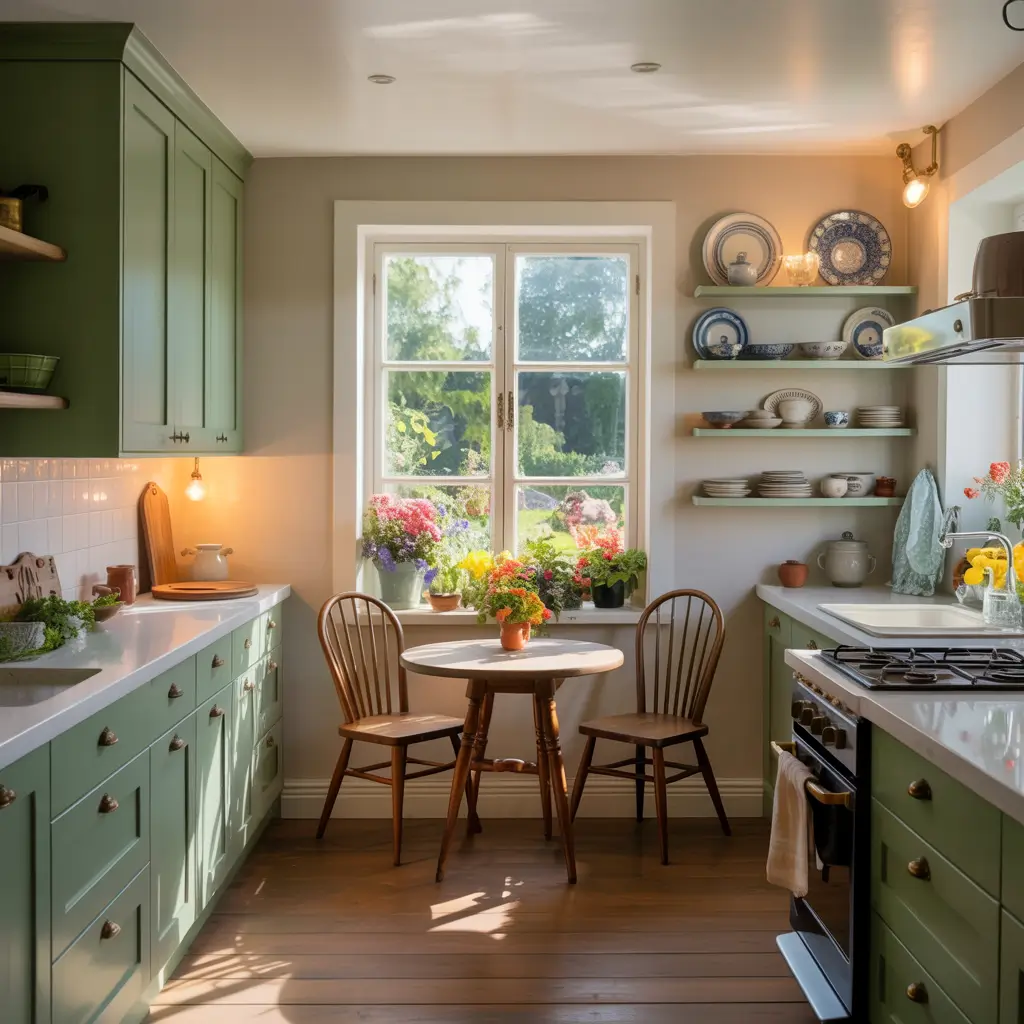
Marble and sage green together? Pure magic. This combination brings luxury and natural beauty that elevates sage from pretty to absolutely stunning.
Selecting Your Marble
White marble with gray veining echoes the gray undertones in sage beautifully. But don’t overlook warmer marbles with gold or brown veining—these create unexpected richness against sage green.
I splurged on Calacatta Gold for my backsplash (and by splurged, I mean I ate ramen for a month), but the way those honey veins play with my sage cabinets makes it worth every penny. The warmth prevents the kitchen from feeling too cool-toned.
Installation Patterns
- Classic subway for timeless appeal
- Large format slabs for seamless luxury
- Herringbone for added visual interest
- Vertical stack for modern edge
- Hexagon for trendy geometric appeal
Whatever pattern you choose, make sure your installer properly seals the marble. Sage green shows every splash and splatter, so you want your backsplash protected.
Sage Green in Small Kitchens
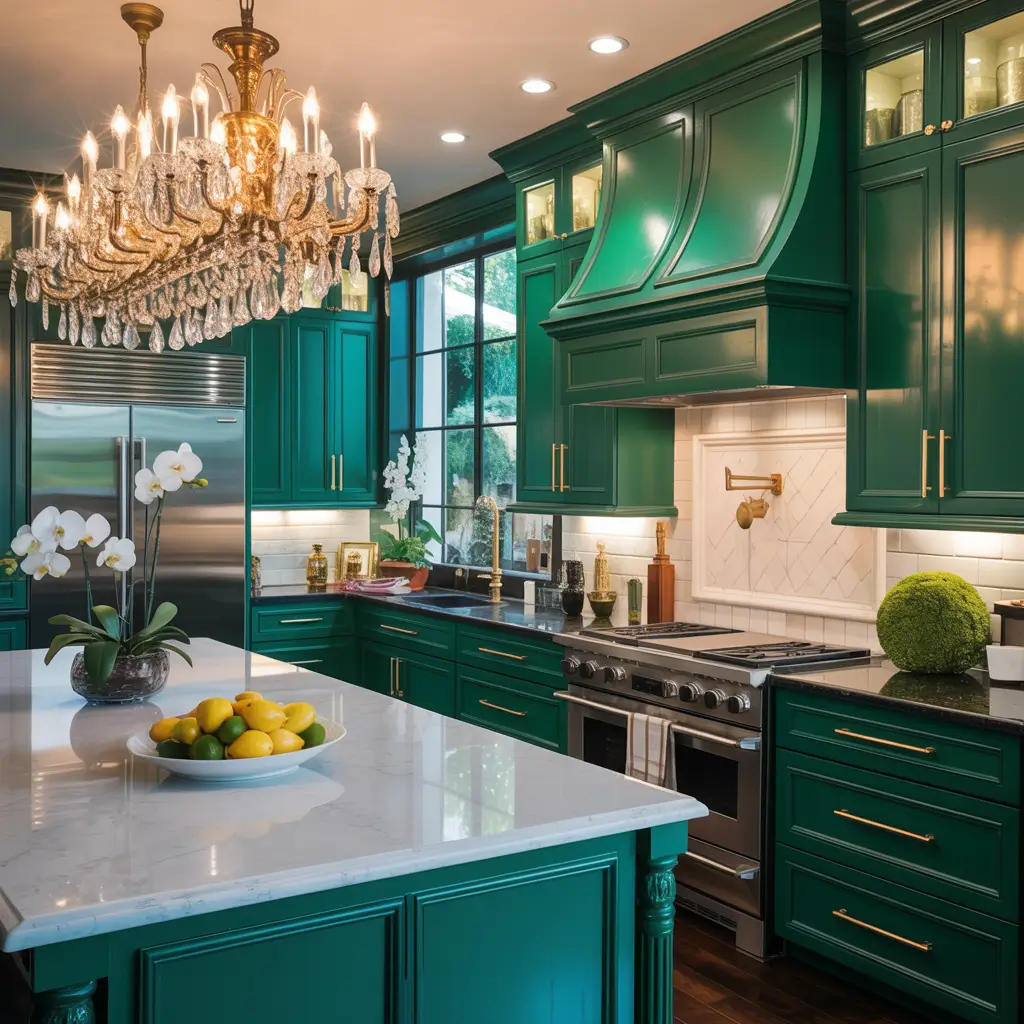
Think sage is only for spacious kitchens? Think again. Sage green actually makes small kitchens feel larger and more intentional than white ever could.
Why Sage Works in Tight Spaces
Unlike darker greens that can feel heavy, sage’s gray undertones keep it light and airy. It adds personality without overwhelming, and creates depth that plain white lacks. Your small kitchen suddenly feels designed rather than just small.
My friend’s galley kitchen is roughly the size of a walk-in closet, but sage cabinets make it feel intentional and cozy rather than cramped. The color adds interest that distracts from the limited square footage.
Maximizing the Effect
Paint all your cabinets the same sage color for cohesion in small spaces. Mixed colors can feel chaotic when square footage is limited. Keep your countertops and backsplash light to maintain airiness, and use mirrors strategically to bounce light around.
Good lighting becomes even more crucial in small sage kitchens. Under-cabinet LEDs are non-negotiable, and consider adding a statement pendant if ceiling height allows.
Also Read: 15 Creative Open Kitchen Cabinets Ideas and Cozy Decor Styles
Sage with Brass or Gold Accents
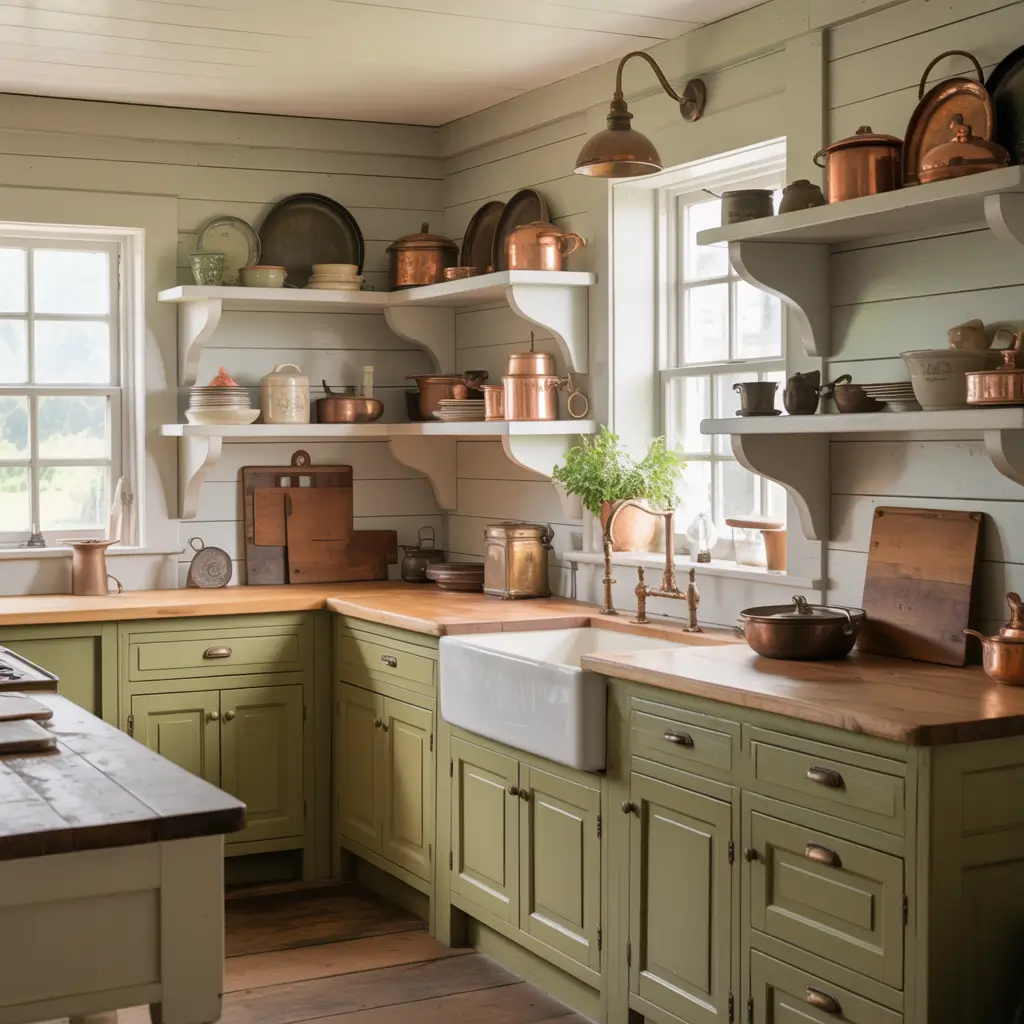
Sage and brass together create a combination that feels both vintage and thoroughly modern. The warmth of brass brings out hidden gold undertones in sage that you didn’t even know existed.
Choosing Your Gold Tone
Unlacquered brass develops patina over time, adding character that complements sage’s organic nature. Polished brass stays shiny and glamorous if you prefer consistency. Brushed gold offers a modern middle ground that won’t show every fingerprint.
I went with brushed gold hardware and faucet, and the combination with sage makes my kitchen feel like an expensive European café. The warmth of the gold prevents the green from feeling too cool or sterile.
Incorporating Brass Elements
- Cabinet hardware for immediate impact
- Light fixtures as statement pieces
- Faucets and plumbing fixtures for cohesion
- Mirror frames if you have a kitchen window
- Bar stools with brass legs or details
- Decorative objects displayed on open shelving
The key is restraint. Brass accents should enhance the sage, not compete with it. Think of brass as the jewelry for your sage kitchen.
Modern Sage Green Flat-Panel Cabinets
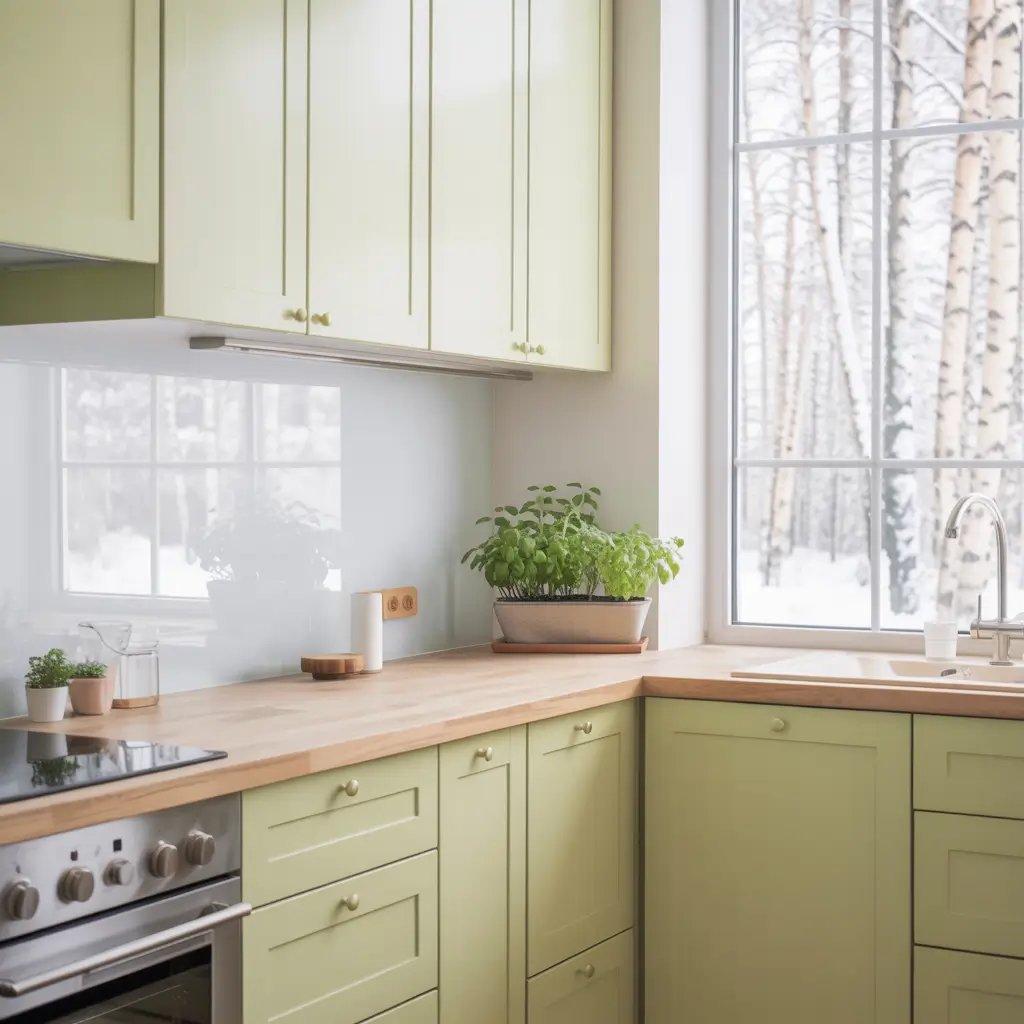
Flat-panel (or slab) doors in sage green create sleek, contemporary kitchens that feel fresh and current. This combination proves sage isn’t just for farmhouse or traditional styles.
Creating Contemporary Appeal
The clean lines of flat-panel doors let sage’s color be the star without any distraction from raised panels or elaborate profiles. This simplicity feels intentional and sophisticated rather than basic.
My neighbor just installed sage green IKEA slab doors, and with the right hardware and styling, her kitchen looks like it cost three times what she actually spent. The modern door style keeps the sage from feeling too cottagecore.
Modern Finishing Touches
Skip the distressing and visible grain. Modern sage kitchens want smooth, consistent color application. Consider a matte finish for that expensive, velvety look that’s huge right now.
Pair with integrated appliances, minimalist hardware, and clean-lined backsplashes. The sage provides warmth while the modern elements keep things current.
Sage Green Shaker Cabinets
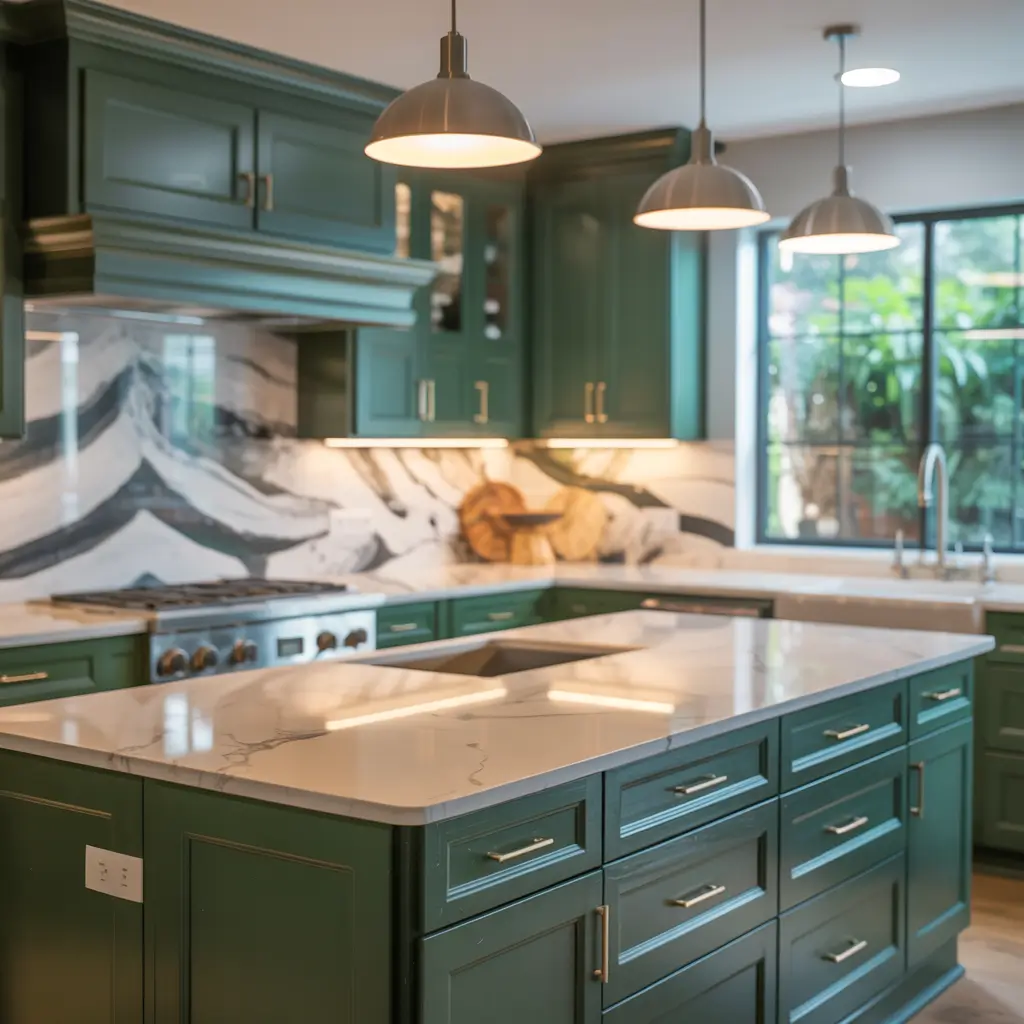
Shaker style and sage green are basically best friends forever. This classic door style paired with sage creates kitchens that feel both timeless and on-trend.
Why Shaker Works
The simple, recessed panel of shaker doors adds just enough detail without overwhelming sage’s subtle beauty. It’s architectural interest that doesn’t compete with the color, and it works in literally any style kitchen.
I chose shaker doors for my sage kitchen because I know I’ll still love them in ten years. Trends come and go, but shaker style has been around for centuries for good reason.
Styling Your Sage Shakers
- Paint the interior panels slightly lighter for dimension
- Add crown molding for traditional elegance
- Keep hardware simple to let the doors shine
- Mix with glass-front uppers for variety
- Consider beadboard on your island for texture
The beauty of shaker style is its adaptability. Dress it up with fancy hardware and crown molding, or keep it minimal for modern appeal.
Also Read: 15 Stylish Black and White Kitchen Cabinets Ideas to Try
Sage Kitchen Island with White Perimeter
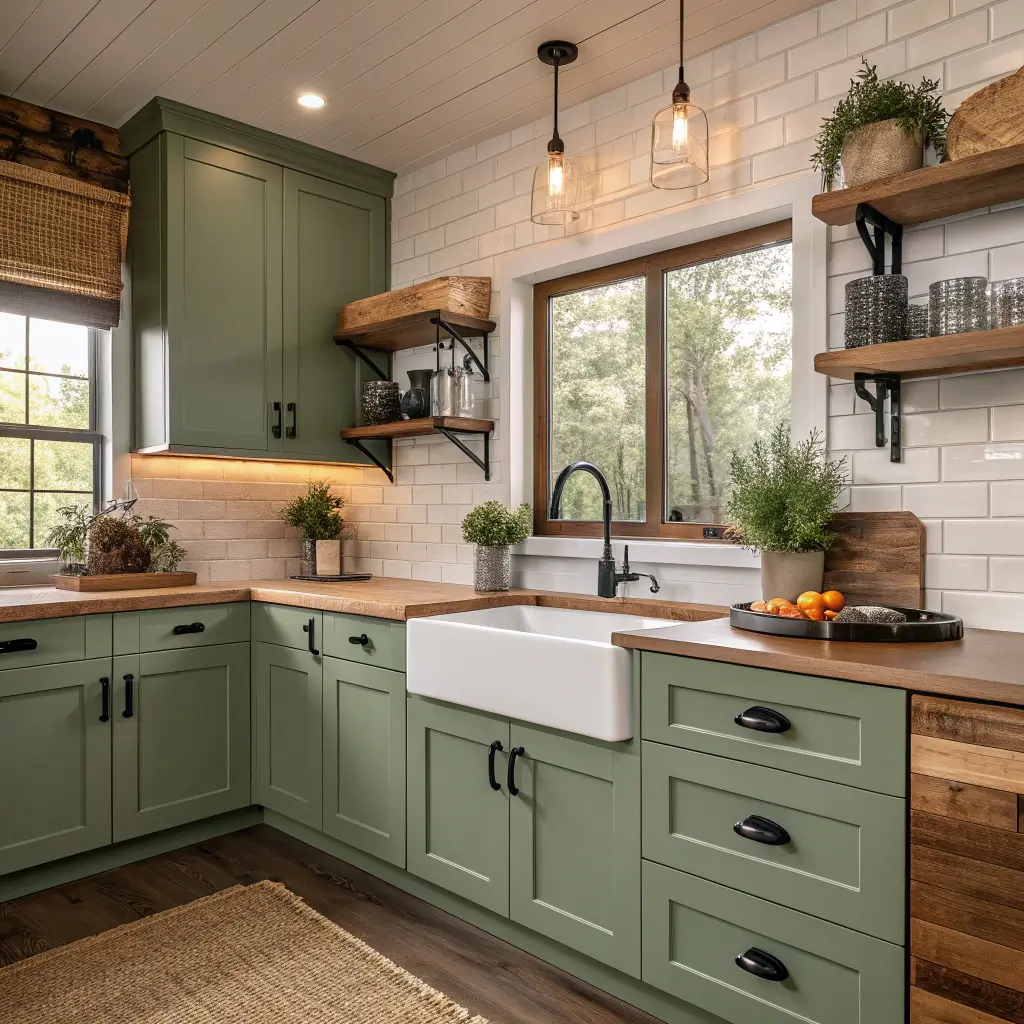
Creating a sage island while keeping your perimeter cabinets white (or vice versa) gives you the best of both worlds. This approach adds color without commitment and creates a natural focal point.
Making Your Island Pop
A sage island against white cabinets becomes an instant conversation piece. It anchors the kitchen and creates visual interest without overwhelming the space. Plus, if you get tired of sage, you’re only repainting an island, not an entire kitchen.
My sister did this in reverse—white island with sage perimeter—and it makes her small kitchen feel twice as big. The white island reflects light while the sage walls add warmth and personality.
Tying It Together
Use consistent countertops throughout to unify the two-toned look. The same goes for hardware—using identical pulls in the same finish creates cohesion even with different cabinet colors.
Consider adding sage accents throughout the white areas—perhaps a sage range hood or a few sage upper cabinets—to create visual flow.
Too much pattern with sage can feel overwhelming. Let one element be the star while the other plays supporting role.
Making Your Sage Green Kitchen Dreams Reality
Sage green kitchen cabinets offer endless possibilities for creating a space that feels both current and timeless.
Whether you’re going for modern minimalist or cozy traditional, sage adapts to your vision while bringing its own calming, sophisticated presence.
Remember these sage green principles:
- Test multiple sage shades in your specific lighting
- Consider undertones carefully—gray vs. blue vs. yellow matters
- Balance sage with lighter elements to prevent heaviness
- Choose hardware that enhances rather than competes
- Plan your whole color palette before painting
- Don’t forget the ceiling—it affects how sage reads
The best part about choosing sage green? It’s a color that grows with you. Unlike trendy shades that look dated quickly, sage has this timeless quality that just gets better as your kitchen develops its own character and patina.
IMO, sage green is the perfect choice for anyone who wants color but fears commitment. It’s bold enough to be interesting but subtle enough to live with long-term.
So grab those paint samples, trust your instincts, and create the sage green kitchen that makes you happy every single day. Your future self (and your home’s resale value) will thank you! 🙂