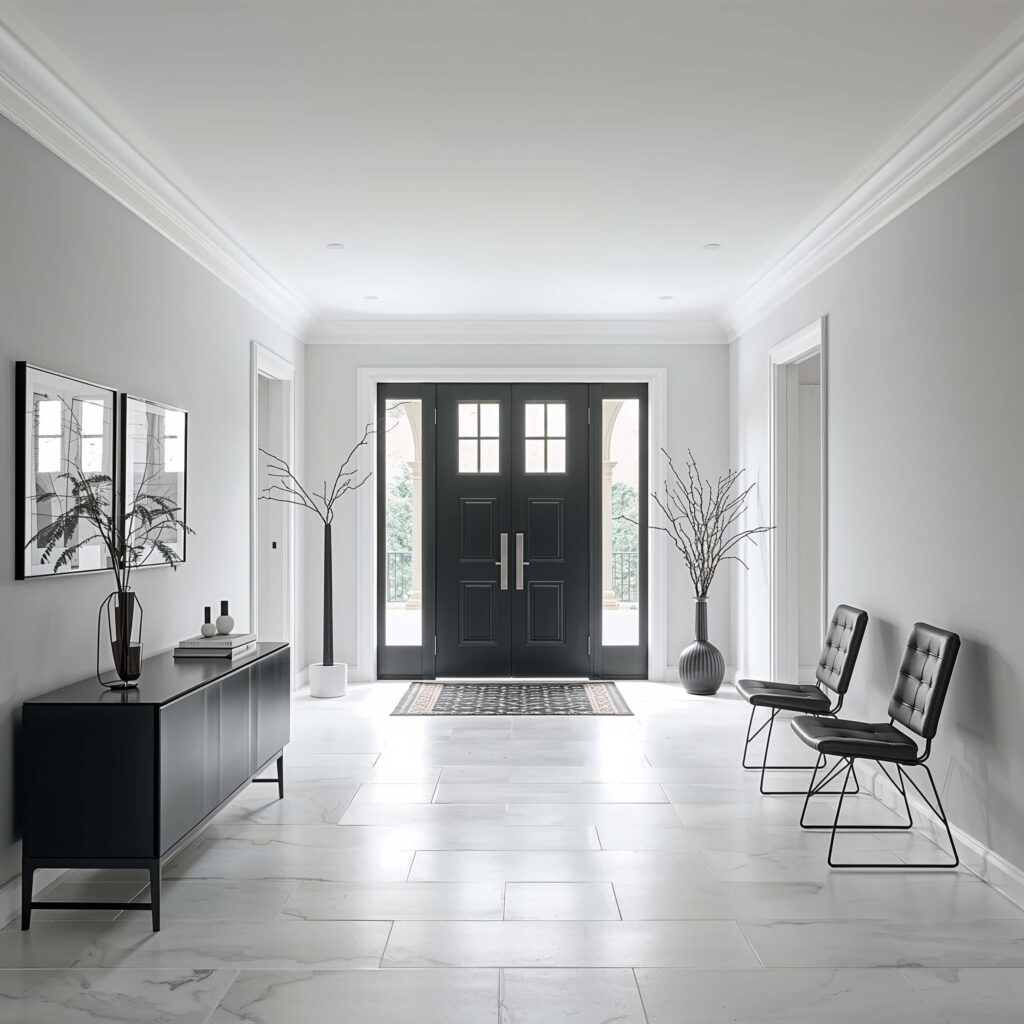
10 Chic Sliding Door Design Ideas for Contemporary Rooms
- Door Design
 Ben
Ben- 0
- 46 minutes read
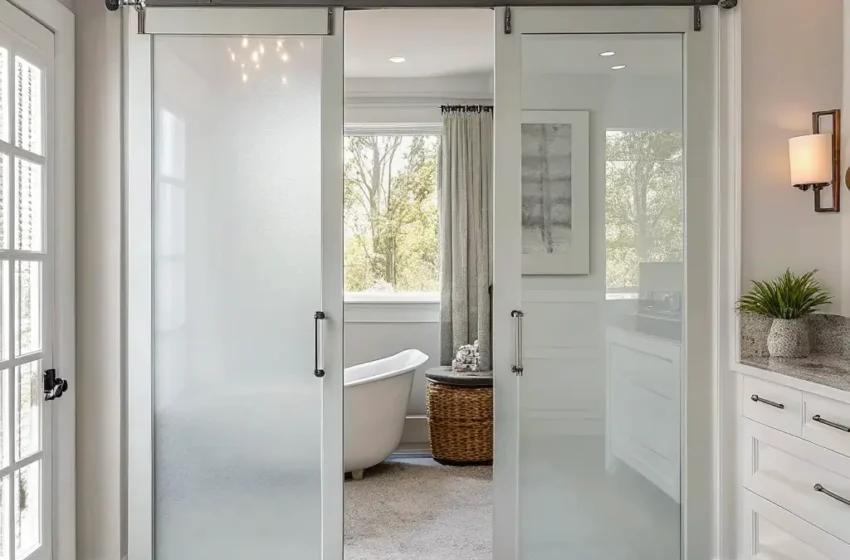
Sliding doors are the ninjas of home design—they sneak into tight spaces, disappear when you need them to, and somehow make every room feel twice as big.
While everyone else is fighting with doors that bump into furniture or block hallways, you could be gliding through your home like you live in a Japanese tea house (minus the kneeling and ceremonial matcha).
I discovered the magic of sliding doors when I moved into a studio apartment that was basically the size of a generous closet.
My traditional door ate up so much floor space that I had to choose between opening it fully or having a coffee table. Spoiler alert: I chose sliding doors, kept the coffee table, and never looked back.
Whether you’re dealing with space constraints, chasing that modern aesthetic, or just tired of doors slamming in your face when you’re carrying groceries, these ten sliding door design ideas will revolutionize how you think about moving through your home. Let’s slide into it!
Modern Black Frame Glass Sliding Door
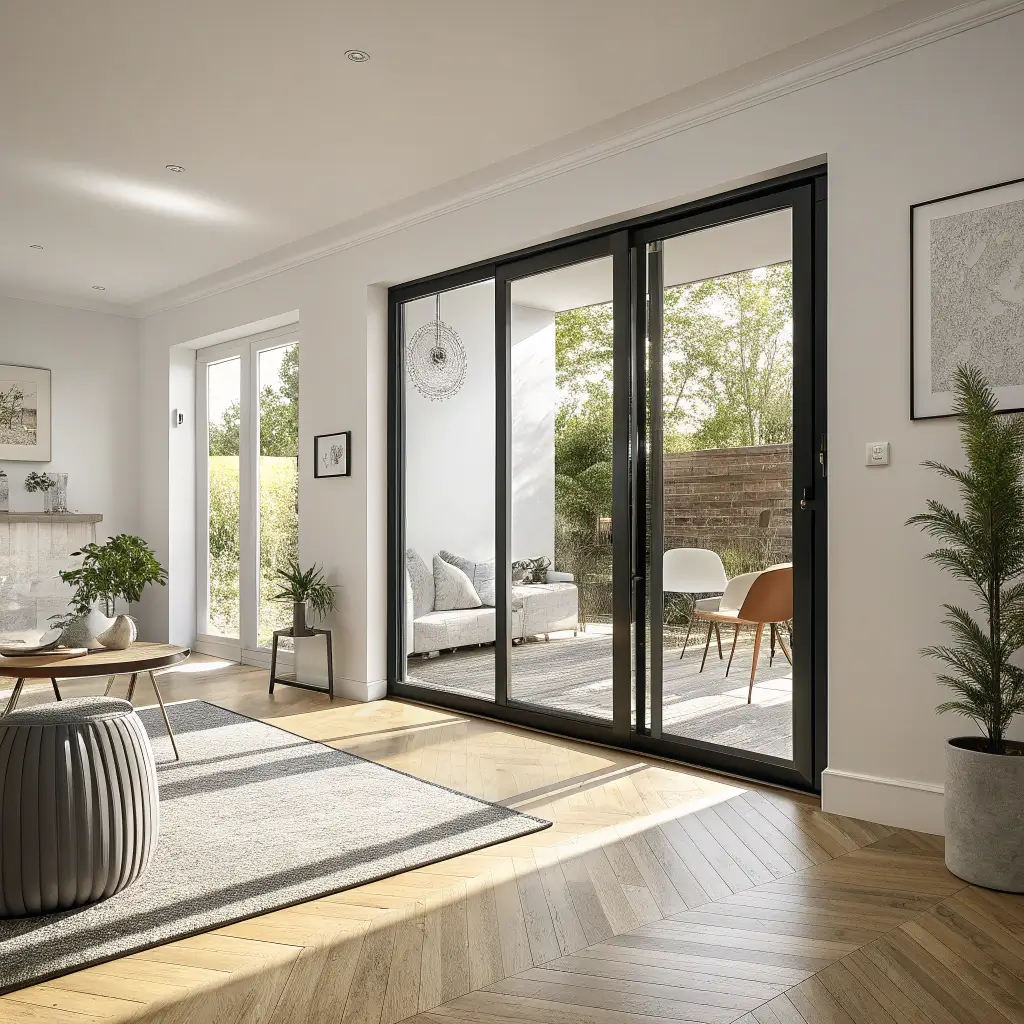
Black frame glass sliding doors are basically the supermodels of the door world—tall, sleek, and they make everything around them look better. These contemporary beauties combine transparency with bold lines, creating architectural statements that work in almost any space.
Why Black Frames Rule
Black frames create instant sophistication without trying too hard. They act like architectural eyeliner, defining spaces and adding drama while somehow remaining neutral enough to complement any color scheme. I installed black frame sliders between my kitchen and dining room, and suddenly my basic suburban home looked like it belonged in an architecture magazine.
The contrast between dark frames and transparent glass creates visual interest that plain glass doors simply can’t match. Plus, black hides fingerprints better than chrome or brushed steel—a blessing for anyone with kids or dogs (or clumsy friends who insist on pushing the glass instead of the handle).
Glass Options That Work
Modern black frame doors offer various glass choices:
- Clear glass: Maximum light and visual connection
- Low-iron glass: Ultra-clear without the green tint
- Tinted glass: Privacy with style
- Double-glazed: Energy efficiency without compromise
- Smart glass: Switch between transparent and opaque
Installation Considerations
These doors require proper planning:
- Structural support for the track system
- Level floors for smooth operation
- Adequate wall space for the door to slide
- Professional installation for heavy glass panels
- Quality hardware that won’t sag over time
Ever wondered why some glass doors glide like butter while others stick and judder? It’s all about the track system. Invest in quality hardware—your future self will thank you every time that door slides effortlessly.
Rustic Wooden Barn-Style Sliding Door
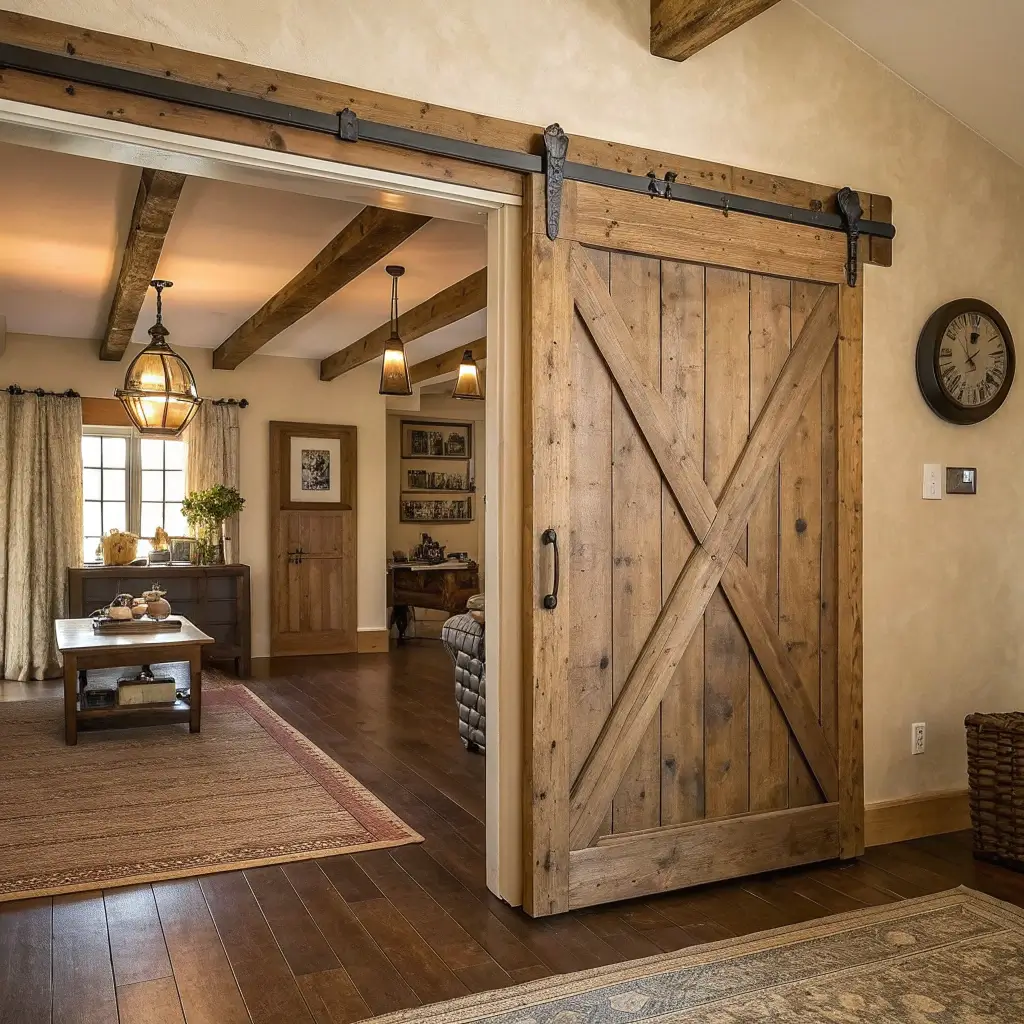
Barn doors went from actual barns to Pinterest stardom faster than you can say “shiplap.” But here’s the thing—when done right, these rustic sliders add character and warmth that modern materials just can’t replicate.
The Barn Door Renaissance
Modern barn-style sliding doors have evolved beyond the farmhouse aesthetic. Today’s versions work in industrial lofts, contemporary homes, and yes, actual farmhouses. The key is choosing the right wood, finish, and hardware to match your space.
I helped my brother install a reclaimed wood barn door in his modern condo, and everyone thought he hired an expensive designer. The contrast between rustic wood and clean modern lines created this perfect tension that made his whole place feel intentionally curated rather than decorated.
Wood and Finish Options
Different woods create different vibes:
- Reclaimed barn wood: Authentic character with history
- Pine: Budget-friendly with nice grain
- Cedar: Naturally aromatic and insect-resistant
- Oak: Durable with prominent grain
- Walnut: Rich, sophisticated tones
Finishes range from natural weathering to painted surfaces, whitewashed for coastal vibes, or stained for richness. The finish you choose dramatically changes the door’s personality.
Hardware That Makes the Look
Barn door hardware has become decorative art:
- Black iron: Classic and versatile
- Stainless steel: Modern and sleek
- Brass: Warm and trendy
- Copper: Unique with patina potential
- Industrial pipe: DIY-friendly and authentic
The exposed track system becomes part of the design, so choose hardware that complements both the door and your room’s aesthetic.
Minimalist White Hidden Sliding Door
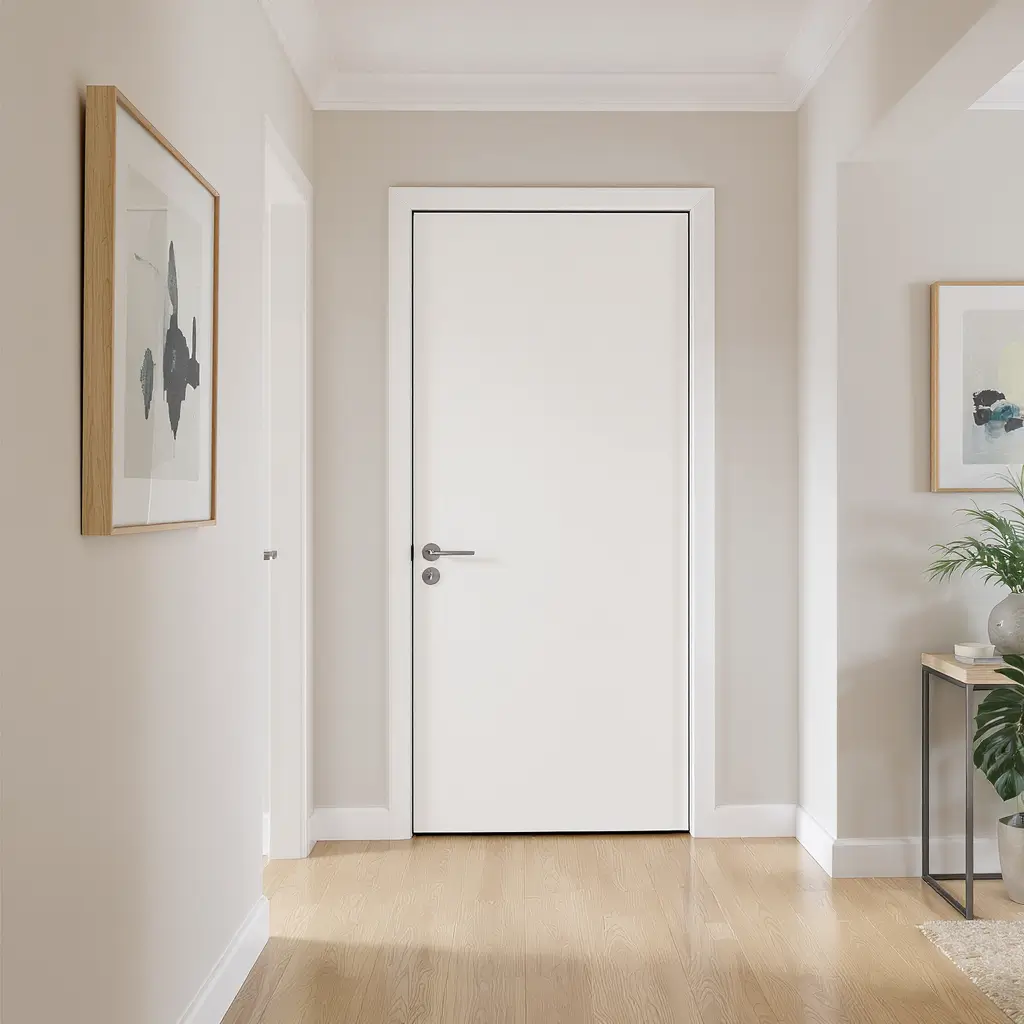
Hidden sliding doors are the introverts of the door world—they do their job without demanding attention. These minimalist marvels disappear into walls or behind panels, creating seamless transitions that make spaces feel larger and cleaner.
The Art of Invisibility
Hidden sliding doors work by recessing into wall cavities or sitting flush against walls when closed. They eliminate visual clutter and create clean lines that minimalist design lovers dream about. When closed, they can look like part of the wall—when open, they practically vanish.
I installed a hidden sliding door for my home office, and visitors literally don’t notice it until I slide it open. It’s like having a secret room, except the secret is just my messy desk and collection of coffee mugs.
Design Techniques for Concealment
Several methods achieve the hidden effect:
- Pocket doors: Slide completely into the wall cavity
- Wall-mounted flush doors: Sit against the wall when closed
- Matching wall finishes: Paint or wallpaper that continues onto the door
- Recessed handles: Finger pulls that don’t protrude
- Hidden tracks: Concealed mechanisms for clean lines
Where Hidden Doors Excel
These doors work best in:
- Small spaces needing every inch
- Minimalist interiors demanding simplicity
- Bathrooms where doors might hit fixtures
- Closets that open into bedrooms
- Any space where traditional doors feel intrusive
The beauty of hidden doors lies in their flexibility—they’re there when you need them, gone when you don’t.
Also Read: 12 Creative Double Door Design Ideas to Elevate Your Interior
Frosted Glass Privacy Sliding Door
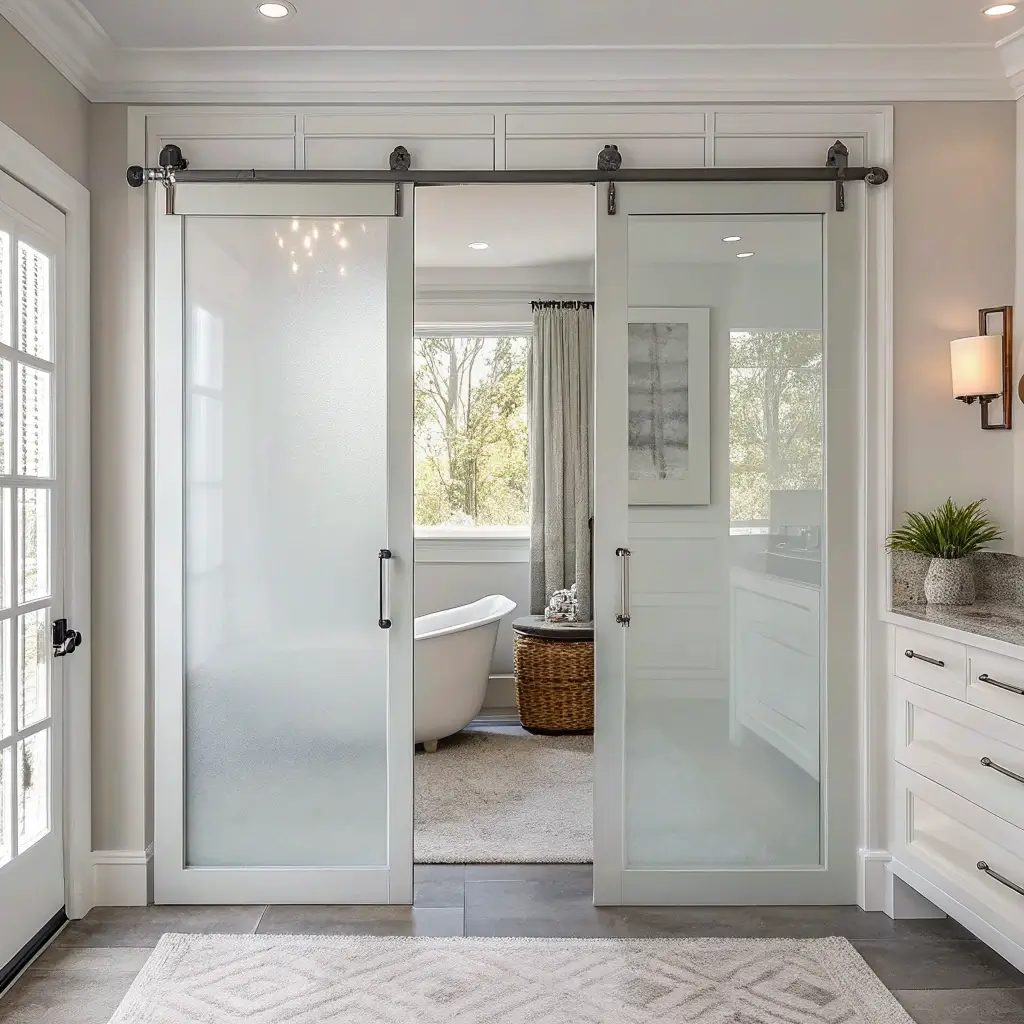
Frosted glass sliding doors solve the age-old dilemma of wanting light but needing privacy. They’re perfect for spaces that need separation without isolation, like home offices, bedrooms, or bathrooms (because nobody needs that level of transparency).
Privacy Levels and Options
Frosted glass comes in various opacity levels:
- Light frost: Subtle privacy while maintaining visibility
- Medium frost: Obscures details but shows movement
- Heavy frost: Complete privacy with light transmission
- Gradient frost: Variable opacity for design interest
- Pattern frost: Decorative elements within the frosting
Creating the Right Balance
The trick with frosted glass is finding your perfect balance. Too clear and you lose privacy; too opaque and you might as well have a solid door. I went through three different frosting films on my bathroom door before finding the sweet spot—visible enough to know someone’s there, private enough that details remain mysterious.
Different areas need different solutions:
- Bathrooms need maximum privacy
- Offices benefit from partial visibility
- Bedrooms vary based on household dynamics
- Living areas can use lighter frosting for openness
Design Possibilities
Frosted glass offers creative opportunities:
- Etched patterns: Custom designs or logos
- Color tinting: Frosted glass in subtle hues
- Mixed panels: Combining clear and frosted sections
- Textured frost: Adding dimensional interest
- Smart film: Electronically switchable opacity
FYI, you can add frosting film to existing glass doors for an instant privacy upgrade. It’s way cheaper than replacing the whole door and surprisingly easy to install.
Industrial Metal Track Sliding Door
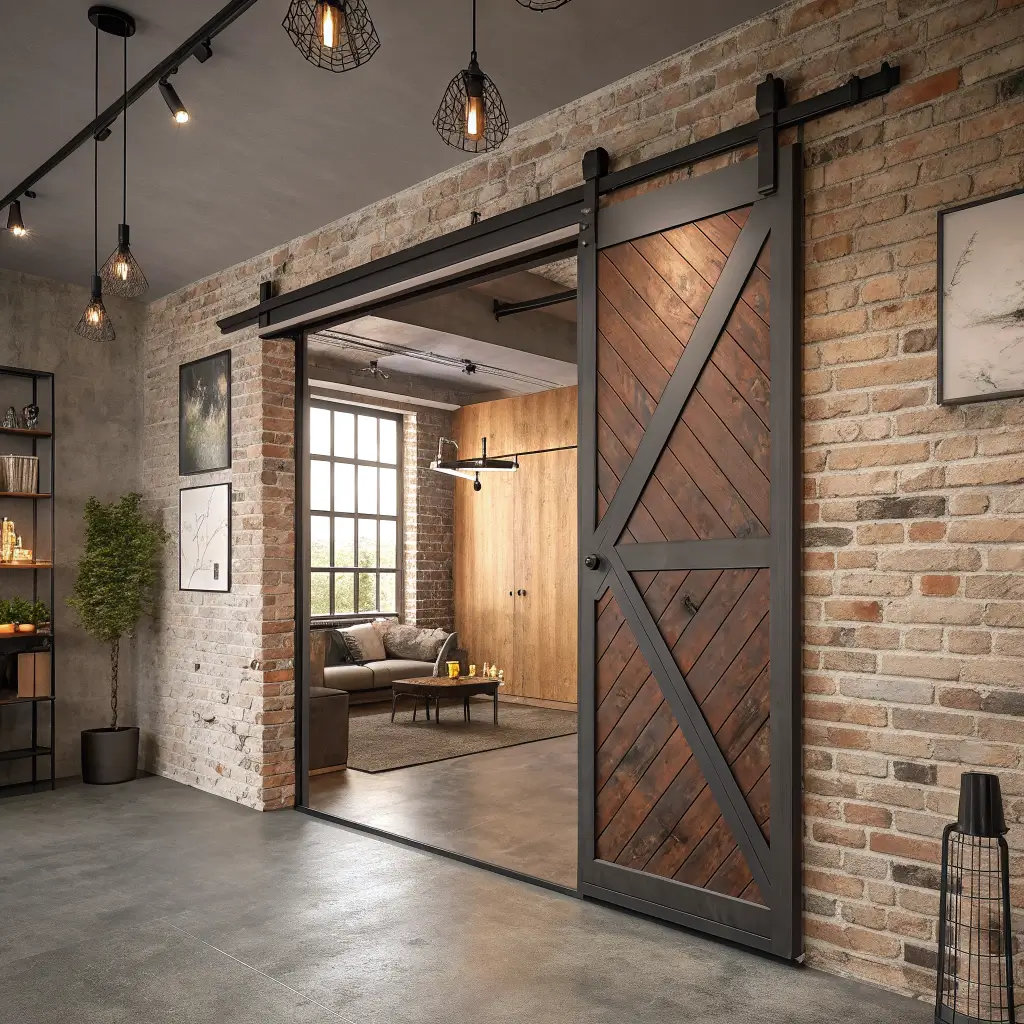
Industrial sliding doors bring urban edge to residential spaces. These raw beauties celebrate exposed mechanisms, honest materials, and the beauty of functional design.
The Industrial Aesthetic
Industrial doors don’t hide their working parts—they celebrate them. Exposed tracks, visible rollers, and raw materials create authenticity that manufactured “industrial-style” products can’t match. It’s the difference between genuinely distressed jeans and those pre-ripped ones from the mall.
Key industrial elements include:
- Exposed steel tracks: Often black or raw metal
- Large rollers: Visible and substantial
- Raw materials: Unfinished or minimally treated
- Visible bolts and joints: Honest construction
- Mixed materials: Metal with wood or glass
Making Industrial Work at Home
Industrial doors need the right context:
- Loft spaces: Natural fit for industrial elements
- Modern homes: Create interesting contrast
- Home offices: Add creative energy
- Basements: Embrace the raw aesthetic
- Garages: Bridge indoor-outdoor spaces
I installed an industrial slider made from an actual factory door in my workshop. The authenticity is unmatched, and every visitor asks where I found it. Sometimes the real thing beats any reproduction.
Balancing Raw and Refined
Pure industrial can feel cold, so balance it with:
- Warm lighting to soften harsh materials
- Soft furnishings beyond the doorway
- Plants adding organic life
- Colorful accents providing warmth
- Proper finishing to prevent rust or deterioration
Colorful Accent Panel Sliding Door
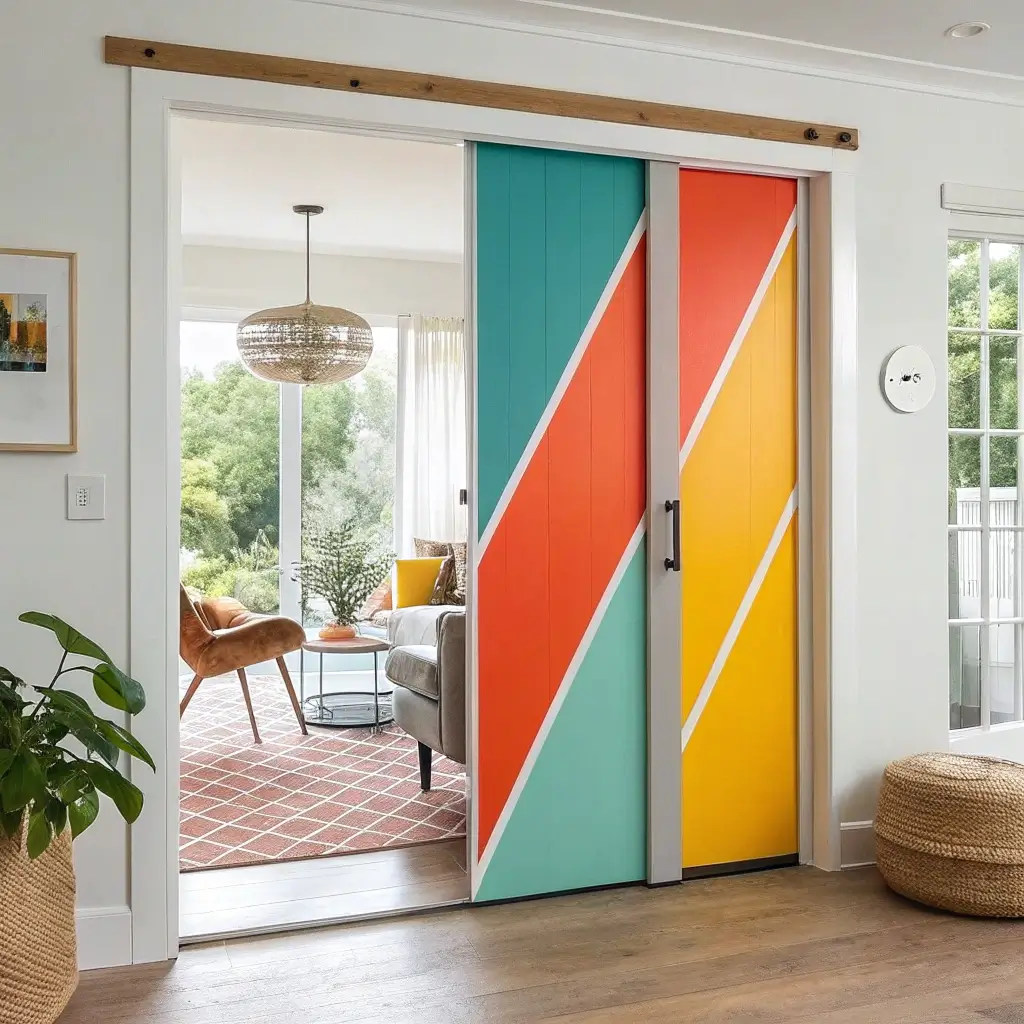
Who says doors have to be boring? Colorful accent sliding doors inject personality into spaces while solving practical problems. They’re functional art that happens to slide.
Color Psychology in Motion
Different colors create different moods:
- Blue: Calming and professional (perfect for offices)
- Green: Natural and refreshing (great for bedrooms)
- Yellow: Energizing and cheerful (ideal for kitchens)
- Red: Bold and stimulating (statement pieces)
- Purple: Creative and luxurious (artistic spaces)
I painted my closet sliding door a deep teal, and it transformed my beige bedroom into something magazine-worthy. Sometimes one bold color choice changes everything.
Design Strategies for Color
Successful colorful doors follow design principles:
- Complement existing colors: Work with your palette
- Create focal points: Let the door be the star
- Balance intensity: Bold doors need calmer surroundings
- Consider lighting: Colors change throughout the day
- Think long-term: Will you love it in five years?
Application Techniques
Different methods achieve colorful effects:
- Paint: Most versatile and changeable
- Laminate: Durable with consistent color
- Vinyl wrap: Temporary and removable
- Colored glass: Permanent but stunning
- Mixed materials: Combining colored elements
Also Read: 10 Inspiring Entrance Door Design Ideas and Modern Trends
Mirror Panel Sliding Wardrobe Door
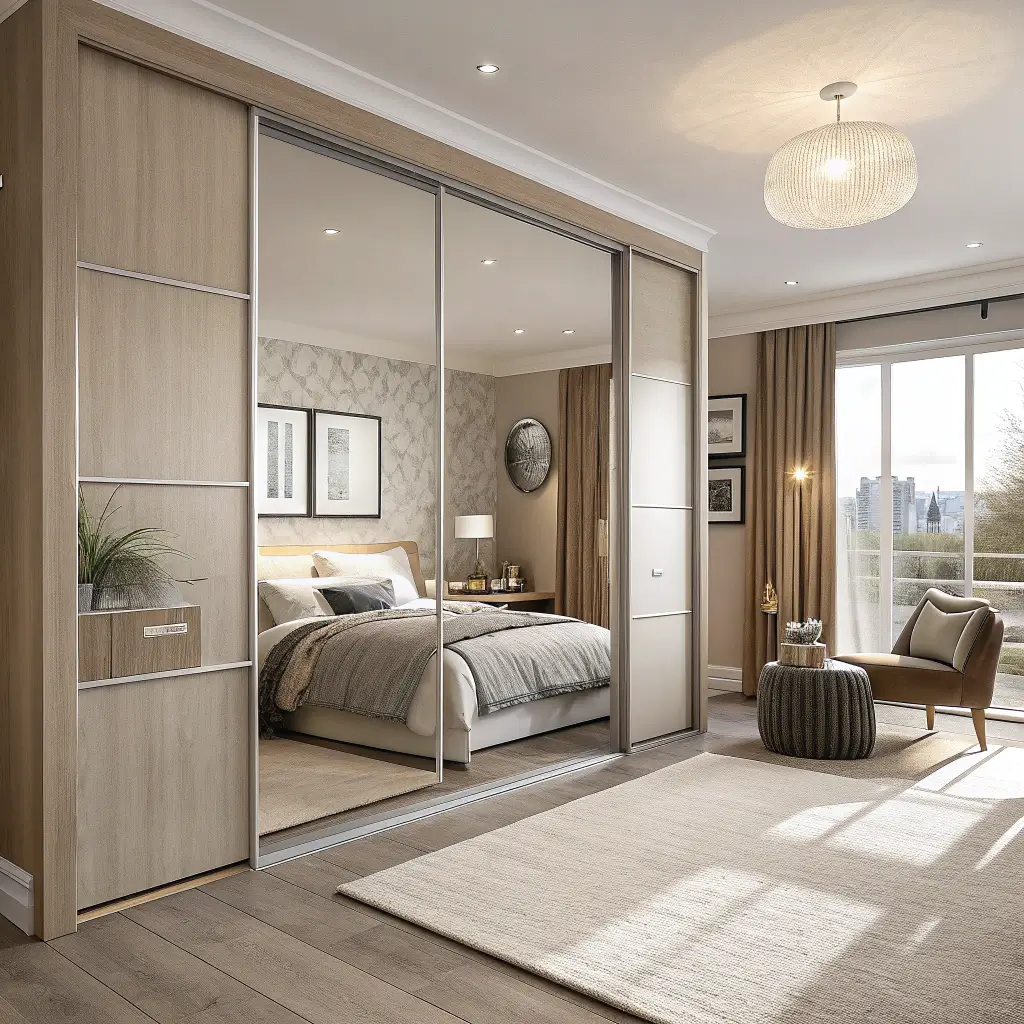
Mirror sliding doors are the multitaskers of the door world—they hide your stuff, make rooms look bigger, and save you from buying a separate full-length mirror. It’s basically three furniture pieces in one.
The Space-Expanding Magic
Mirrors double visual space instantly. A small bedroom with mirrored wardrobe doors feels twice as large, reflects natural light throughout the day, and eliminates that awkward “getting dressed in the bathroom” situation we’ve all dealt with.
Mirror options include:
- Full mirror: Maximum reflection and impact
- Framed panels: Breaking up the mirror for style
- Antique mirror: Adding character with cloudiness
- Tinted mirror: Bronze or grey for sophistication
- Mixed panels: Combining mirror with other materials
Practical Considerations
Mirror doors require thought:
- Weight requires sturdy track systems
- Fingerprints need regular cleaning
- Placement affects what gets reflected
- Safety glass prevents dangerous breaks
- Quality backing prevents deterioration
IMO, the maintenance is worth it for the space-expanding benefits. My bedroom went from cramped to spacious with one mirrored wardrobe installation :/
Styling Around Mirrors
Design with reflections in mind:
- Keep opposite walls attractive
- Consider what angles get reflected
- Use lighting strategically
- Maintain organized visible spaces
- Add plants for reflected greenery
Pocket Sliding Door for Small Spaces
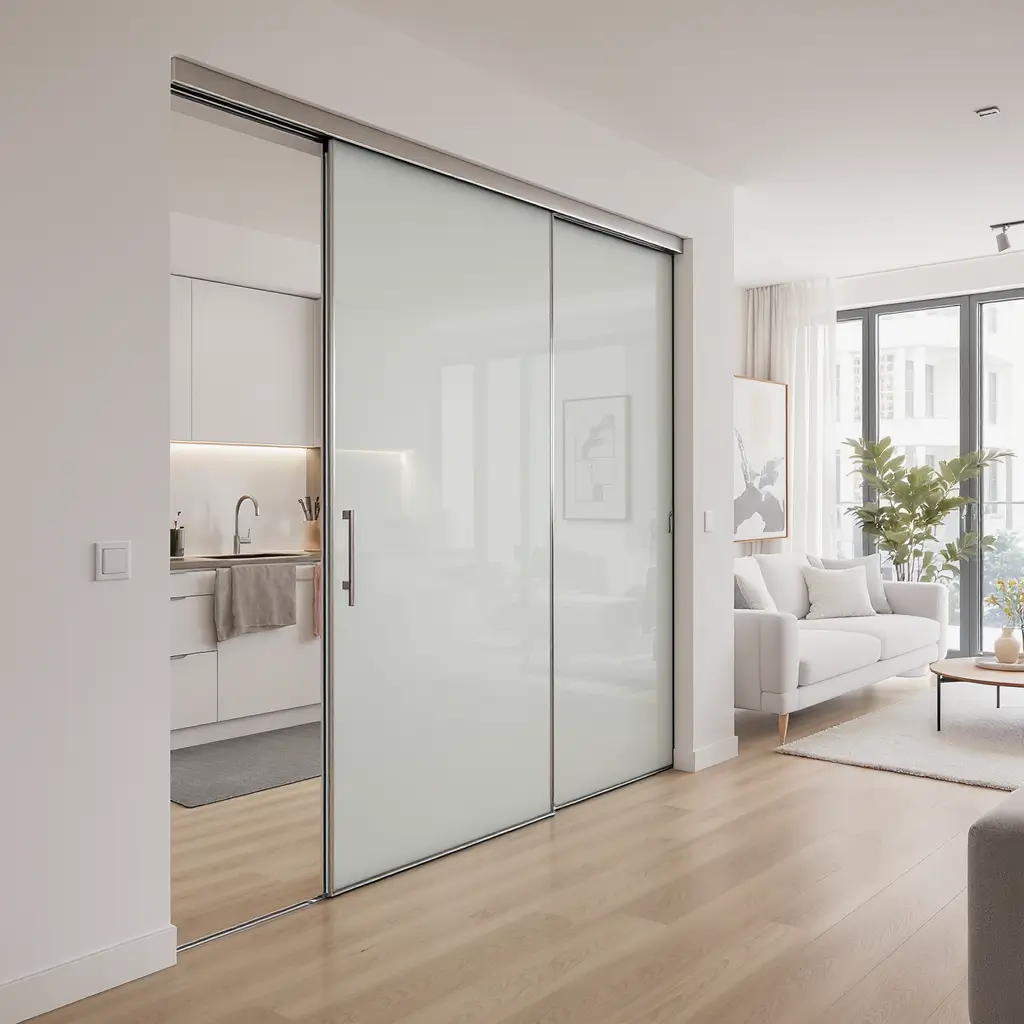
Pocket doors are the space-saving heroes we all need. They slide completely into the wall, eliminating door swing and freeing up precious square footage. In small spaces, they’re game-changers.
The Pocket Door Advantage
Pocket doors disappear completely when open, saving the 10+ square feet that swinging doors require. That’s enough space for a chair, a plant, or just the ability to walk through your home without playing door Tetris.
Benefits in small spaces:
- No door swing interference
- Complete opening when needed
- Visual flow between spaces
- Accessibility advantages
- Flexibility in furniture placement
Installation Realities
Pocket doors require specific conditions:
- Wall cavities free of plumbing/electrical
- Proper framing during construction
- Professional installation for retrofits
- Quality hardware for smooth operation
- Adequate wall thickness for the pocket
I retrofitted a pocket door in my tiny bathroom, and while the installation was complex, the daily convenience makes it worthwhile. No more door hitting the toilet or blocking the vanity!
Where Pocket Doors Shine
Ideal locations include:
- Bathrooms: Eliminating swing conflicts
- Closets: Maximizing access
- Between rooms: Creating flexible spaces
- Laundry areas: Hiding when not in use
- Home offices: Disappearing boundaries
Contemporary Chevron Pattern Sliding Door
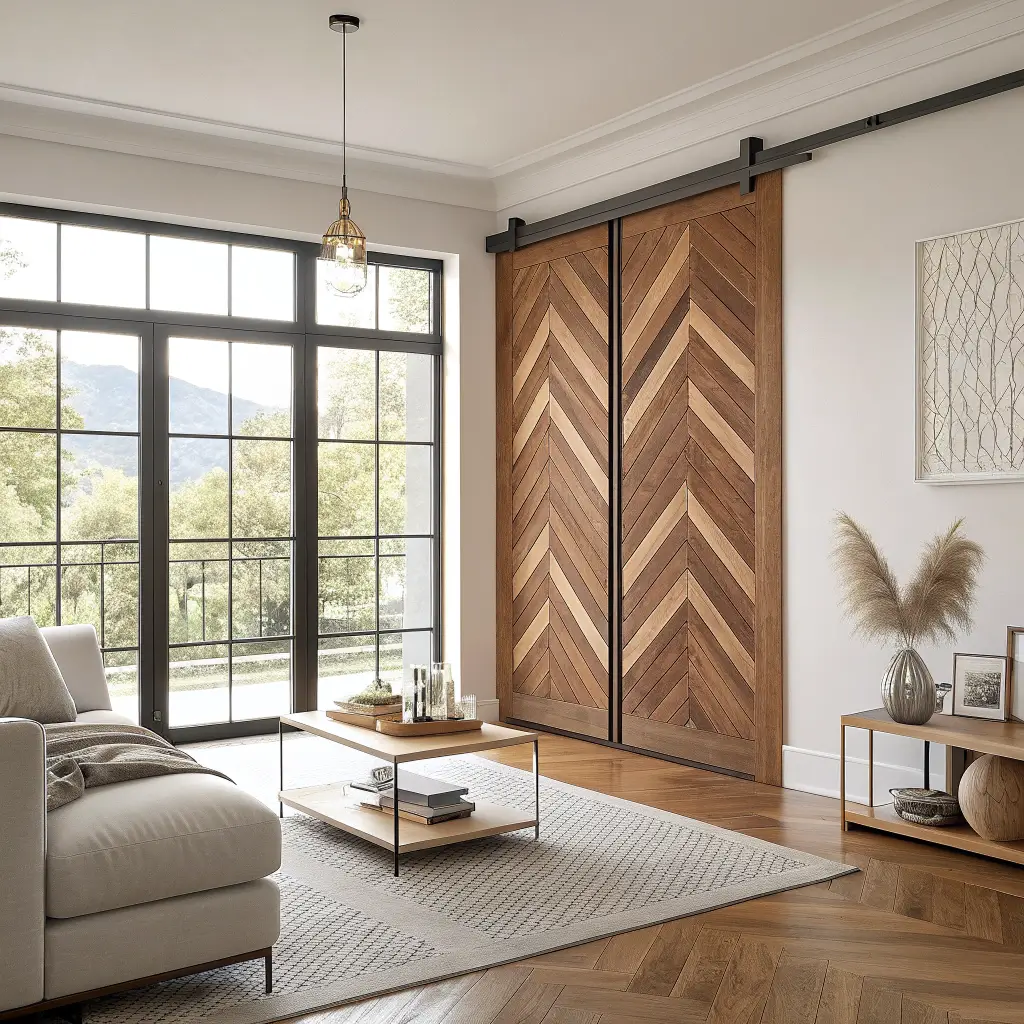
Chevron pattern doors turn functional elements into geometric art. These contemporary designs add visual interest while maintaining the practical benefits of sliding doors.
The Pattern Power
Chevron patterns create dynamic visual movement. The V-shaped pattern draws eyes upward, making spaces feel taller while adding sophisticated texture. It’s geometry that doesn’t feel mathematical.
I designed a chevron door using reclaimed wood in alternating stains, and it became my apartment’s focal point. People literally stop mid-conversation when they notice it—that’s the power of good pattern design.
Creating Chevron Effects
Different methods achieve chevron patterns:
- Wood strips: Applied in V-patterns
- Paint: Creating patterns with tape and patience
- Veneer: Pre-made chevron panels
- Metal inlays: Adding contemporary edge
- Mixed materials: Combining textures in patterns
Design Considerations
Successful chevron doors consider:
- Scale appropriate to door size
- Color contrast for pattern visibility
- Angle consistency for professional look
- Material quality for longevity
- Surrounding decor compatibility
The key is ensuring the pattern enhances rather than overwhelms your space.
Also Read: 10 Inspiring Door Design Modern Ideas and Sleek Home Styles
Bamboo Eco-Friendly Sliding Door
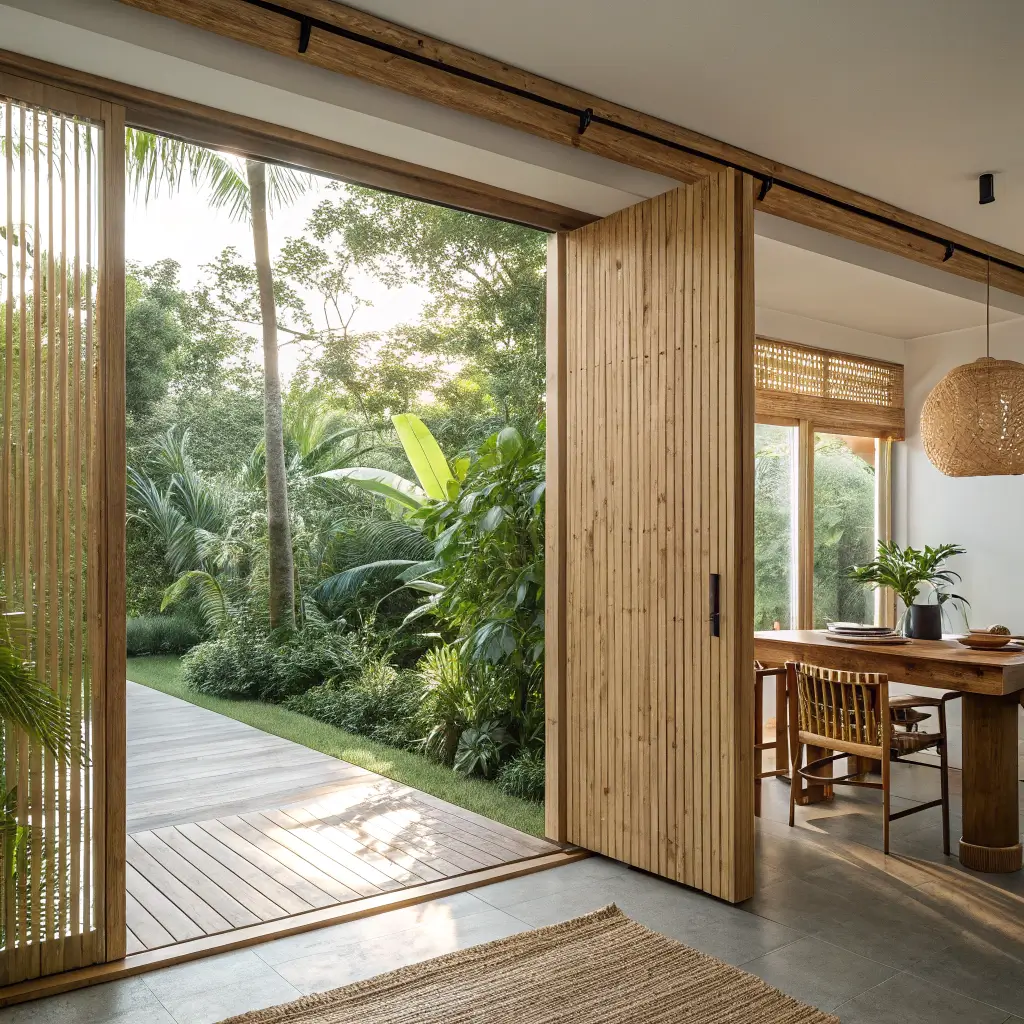
Bamboo sliding doors bring sustainability and style together. These eco-friendly options prove that green choices don’t mean compromising on design.
The Bamboo Benefits
Bamboo offers unique advantages:
- Rapid growth: Sustainable harvest every 3-5 years
- Strength: Harder than many hardwoods
- Natural beauty: Distinctive grain and color
- Moisture resistance: Natural properties
- Carbon negative: Absorbs more CO2 than trees
Design Styles with Bamboo
Bamboo works in various aesthetics:
- Modern: Clean-lined panels
- Traditional: Japanese-inspired designs
- Tropical: Natural finish celebrating grain
- Contemporary: Mixed with other materials
- Minimalist: Simple, unadorned panels
I replaced my old hollow-core door with bamboo, and besides looking beautiful, I love knowing it’s an environmentally responsible choice. Sometimes doing good feels as good as it looks.
Bamboo Considerations
Keep in mind:
- Quality varies significantly between suppliers
- Proper sealing prevents moisture damage
- Color changes with sun exposure
- Different processing creates varied looks
- Certification ensures sustainable sourcing
Making Your Sliding Door Choice
Choosing the right sliding door involves balancing aesthetics, functionality, and practical constraints. Consider your space limitations, design preferences, and daily use patterns.
Start by identifying your primary need. Is it space-saving? Privacy? Style? Light? Once you know your priority, the choice becomes clearer. Remember that sliding doors are investments—they affect daily life more than decorative elements.
Think about maintenance too. Glass needs cleaning, mirrors show fingerprints, and wood requires occasional treatment. Choose materials that match your maintenance enthusiasm (or lack thereof).
Installation Tips and Tricks
Proper installation makes the difference between doors that glide smoothly for decades and ones that stick, jump, or fall off their tracks. Here’s what I’ve learned through multiple installations:
Professional installation usually pays for itself through proper function and longevity. If you’re DIY-ing, invest in quality hardware—cheap tracks lead to expensive problems. Ensure your floor is level; even small variations cause operational issues.
Most importantly, measure twice, order once. Nothing ruins excitement like a beautiful door that doesn’t fit your opening 🙂
Final Thoughts
Sliding doors offer solutions that traditional doors simply can’t match. Whether you’re maximizing space, adding style, or solving specific problems, there’s a sliding door design that fits your needs.
I’ve installed sliding doors in five different homes now, and each time they’ve transformed how the space functions and feels. They’re not just doors—they’re design elements that happen to move.
The beauty of sliding doors lies in their versatility. From hidden pocket doors that disappear completely to statement barn doors that demand attention, the options let you express your style while solving practical problems.
So stop fighting with doors that don’t work for your space. Embrace the slide, choose a design that speaks to you, and enjoy the smooth, space-saving satisfaction of doors that actually make sense.
Your home (and your shins that keep hitting traditional doors) will thank you!