10 Stylish Small Bedroom Layout Ideas for Modern Homes
- Bedroom Design
 Ben
Ben- 0
- 37 minutes read

Let’s be honest—small bedrooms can feel like a never-ending puzzle. You’ve got a bed, a dresser, maybe a nightstand, and somehow you need to make it all fit without turning your personal sanctuary into an obstacle course. Sound familiar?
I’ve lived in tiny apartments for most of my adult life, and I’ve learned that small bedroom success isn’t about having less stuff. It’s about being smarter with how you arrange what you have.
The right layout can make a cramped room feel surprisingly spacious, while the wrong one turns even a decent-sized space into a claustrophobic nightmare.
The good news? You don’t need to knock down walls or hire an expensive interior designer to transform your small bedroom. Sometimes, all it takes is pushing your bed to a different corner or rethinking where your furniture sits.
These ten small bedroom layout ideas have saved my sanity over the years, and I’m betting at least a few will work wonders for your space too.
Ready to stop stubbing your toe on that dresser corner every morning? Let’s dive in.
Why Your Small Bedroom Layout Actually Matters
Before we get into the specific layouts, let’s talk about why arrangement matters so much in small spaces. Ever walked into a room and immediately felt uncomfortable without knowing why? Chances are, the furniture layout was fighting against the room’s natural flow.
Good layout does a few critical things. First, it creates clear pathways so you can move around without performing acrobatics. Second, it maximizes every usable inch without making the room feel stuffed. Third—and this is the part most people miss—it creates visual breathing room that tricks your brain into perceiving more space than actually exists.
A small bedroom with smart layout feels cozy and intentional. The same room with poor layout feels cramped and frustrating. The square footage hasn’t changed, but the experience has completely transformed.
I learned this the hard way when I moved into a 9×10 bedroom and immediately shoved my queen bed against the center of the longest wall. Seemed logical, right? Wrong. I could barely open my closet door, my nightstand blocked the window, and getting dressed each morning felt like a contact sport. One weekend of rearranging later, that same room felt twice as big.
The layouts below represent years of trial, error, and occasional furniture-moving rage. Let’s find the one that works for your space.
1. Cozy Corner Bed Layout

This is my absolute favorite layout for truly tiny bedrooms, and I’ll fight anyone who disagrees. The cozy corner approach pushes your bed into a corner, freeing up floor space in the center and opposite side of the room. It sounds simple because it is—but the impact is massive.
How It Works
Instead of floating your bed with space on both sides, you tuck it snugly into a corner where two walls meet. One side of the bed and the headboard touch walls, while the other side remains accessible for getting in and out.
This immediately opens up the rest of your room. You gain floor space for a small desk, a reading chair, or simply room to breathe. The corner placement also creates a natural cozy nook that feels intentional and inviting rather than cramped.
Making It Work For You
The corner bed layout works best with twin, full, or queen beds. Kings can work too, but you’ll sacrifice some of that precious gained space. If possible, position the accessible side toward the room’s main traffic flow so you’re not climbing over furniture to reach your bed.
Add some magic with corner-specific touches. A wall-mounted reading light eliminates the need for a bedside lamp. A small floating shelf replaces a traditional nightstand. Pile up some extra pillows against both walls to create that tucked-in, cozy vibe.
One thing I’ve learned: make your bed every single day with this layout. An unmade corner bed looks messy and chaotic. A made corner bed looks like a stylish daybed situation. Trust me on this one.
Who Should Try This
This layout suits anyone with a small bedroom who wants maximum floor space. It’s particularly great for bedrooms that double as home offices or creative spaces. Students, apartment dwellers, and anyone in an urban micro-apartment will find this approach life-changing.
2. Floating Furniture Arrangement
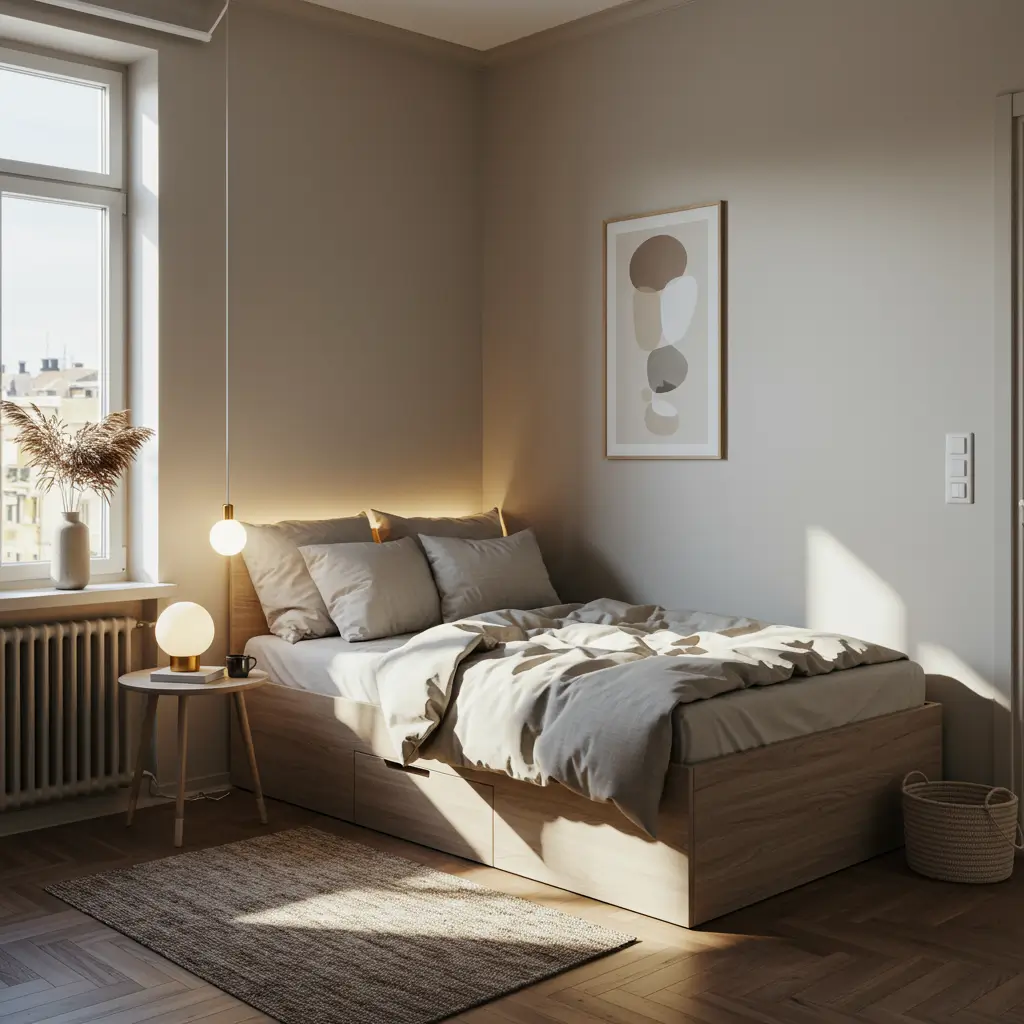
Here’s a counterintuitive trick that blows most people’s minds: in some small bedrooms, pulling furniture away from the walls actually makes the room feel bigger. I know, I know—it sounds completely backwards. But stick with me here.
The Psychology Behind It
When you push all your furniture against the walls, you create a ring of stuff around an empty center. Your eye travels around that ring and registers every piece of furniture as a visual barrier. The room feels full because the perimeter is packed.
Floating furniture creates small gaps between pieces and walls. These gaps allow sight lines to continue past the furniture, creating an illusion of depth. Your brain perceives the space behind the furniture as usable area, even if it’s just a few inches.
Executing The Float
Start with your bed. Pull it six to twelve inches away from the wall behind the headboard. Yes, you lose a tiny bit of floor space, but you gain significant visual depth. The shadow created behind the bed adds dimension that flat-against-the-wall placement can’t achieve.
Do the same with your dresser and any other substantial pieces. Even a few inches of breathing room changes everything. The key is consistency—if one piece floats, they all should float.
FYI, this layout works best in bedrooms that have at least moderate natural light. The shadows and depth created by floating furniture need light to read properly. In dark rooms, this approach can sometimes make spaces feel gloomy instead of spacious.
Practical Considerations
Floating furniture does require strategic thinking about what goes in those gaps. Dust bunnies love the space behind a floated bed, so regular cleaning becomes more important. You’ll also want to secure any pieces that might shift, especially on hardwood floors.
Some people run LED strip lights behind their floated headboards, creating a soft glow that emphasizes the depth effect. It’s not necessary, but it looks pretty cool and adds ambient lighting that small bedrooms often desperately need.
3. Minimalist Small Bedroom Design
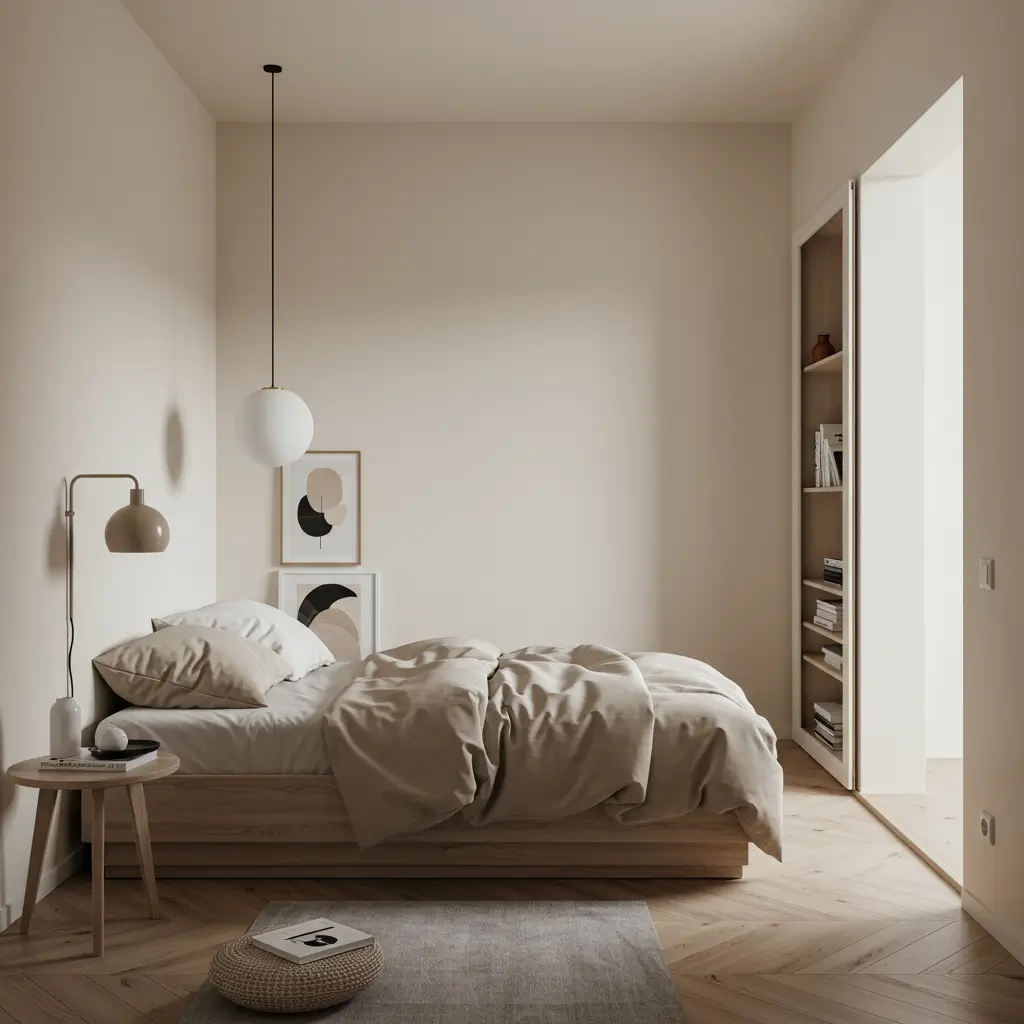
Sometimes the best layout strategy is simply having less to arrange. The minimalist approach strips your bedroom down to absolute essentials, creating space through absence rather than clever arrangement. It’s not for everyone, but for those who embrace it, the results are transformative.
The Minimalist Mindset
Minimalism in bedroom layout means ruthlessly editing what occupies your floor space. A bed, maybe one nightstand, and perhaps a single dresser—that’s it. Everything else either finds a home in a closet, gets mounted on walls, or leaves the room entirely.
This isn’t about deprivation. It’s about prioritizing sleep quality and relaxation over stuff accumulation. Your bedroom becomes a sanctuary specifically designed for rest, not a storage unit that happens to contain a mattress.
I spent one year living full minimalist in my bedroom, and honestly? I slept better than I ever had before. Something about that visual calm translated directly into mental calm. Every time I walked into that stripped-down space, my shoulders literally dropped with relaxation.
Essential Pieces Only
Your bed is non-negotiable—obviously. Choose the right size for your space, even if that means downsizing from a queen to a full. A properly proportioned bed in a small room beats a cramped king every time.
One nightstand provides a place for your phone, a book, a glass of water. If you can mount a small shelf instead, even better. A dresser handles clothing storage, though built-in closet systems can sometimes eliminate this need entirely.
That’s it. No chairs, no benches, no decorative tables, no random stuff. Every item earns its place or finds a new home elsewhere.
Making Minimalism Feel Warm
The common criticism of minimalist bedrooms is that they feel cold or sterile. Combat this with texture and quality over quantity. One really beautiful bedspread beats three mediocre decorative pillows. A single piece of meaningful artwork trumps a gallery wall of random prints.
Invest in the pieces you keep. When you only have four or five things in your bedroom, each one becomes more significant. That nightstand should be exactly what you love, not just something functional.
Also Read: 10 Chic Small Bedroom Makeover Ideas for Minimalist Rooms
4. Lofted Bed with Storage Below
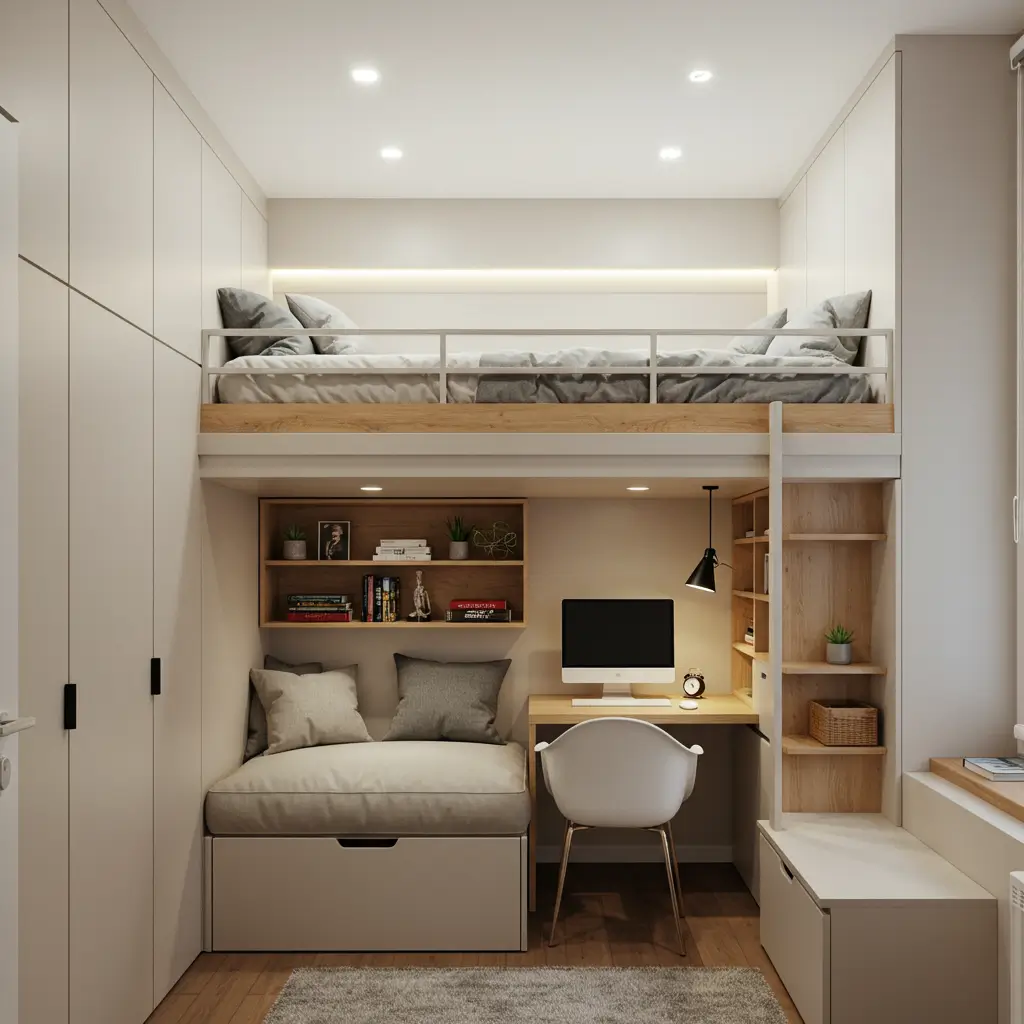
Why waste all that vertical space when square footage is at a premium? Lofted beds raise your sleeping surface several feet off the ground, creating usable space underneath that can serve as a closet, office, lounge area, or storage zone.
Understanding Loft Options
Loft beds come in various heights and configurations. True high lofts raise the mattress close to ceiling level, maximizing under-bed space but requiring a climb to access. Low lofts provide more modest clearance—enough for storage or a small desk, but not a full standing area.
Your ceiling height determines what’s possible. Standard eight-foot ceilings can accommodate low to medium lofts comfortably. Higher ceilings open up full loft possibilities where you can actually stand underneath. Measure carefully before committing—nothing worse than a lofted bed that leaves you bumping your head every morning.
What Goes Underneath
The beauty of lofted beds lies in their flexibility. Some people create full home offices in that under-bed space, complete with desk, chair, and shelving. Others install wardrobes or dresser systems, essentially creating walk-in closet situations in rooms that could never otherwise accommodate them.
My college roommate turned her loft under-space into a tiny reading nook with a bean bag chair, string lights, and a bookshelf. It became her favorite spot in our cramped shared room—a private retreat within a bedroom.
Cozy seating areas work wonderfully under lofts. Add a small loveseat or floor cushions, some good lighting, and suddenly your small bedroom has distinct zones for sleeping and living.
Loft Considerations
Lofted beds aren’t for everyone. Climbing up and down gets old, especially for middle-of-the-night bathroom trips. They can also make rooms feel top-heavy if not styled carefully. The space beneath needs deliberate design attention, or it becomes a dumping ground for random stuff.
Safety matters too. Quality loft frames include guardrails and sturdy ladder or stair systems. Cheap lofts wobble, creak, and occasionally collapse—none of which enhances your sleep quality. Invest in a solid frame from a reputable manufacturer.
5. Multi-Functional Bedroom Layout
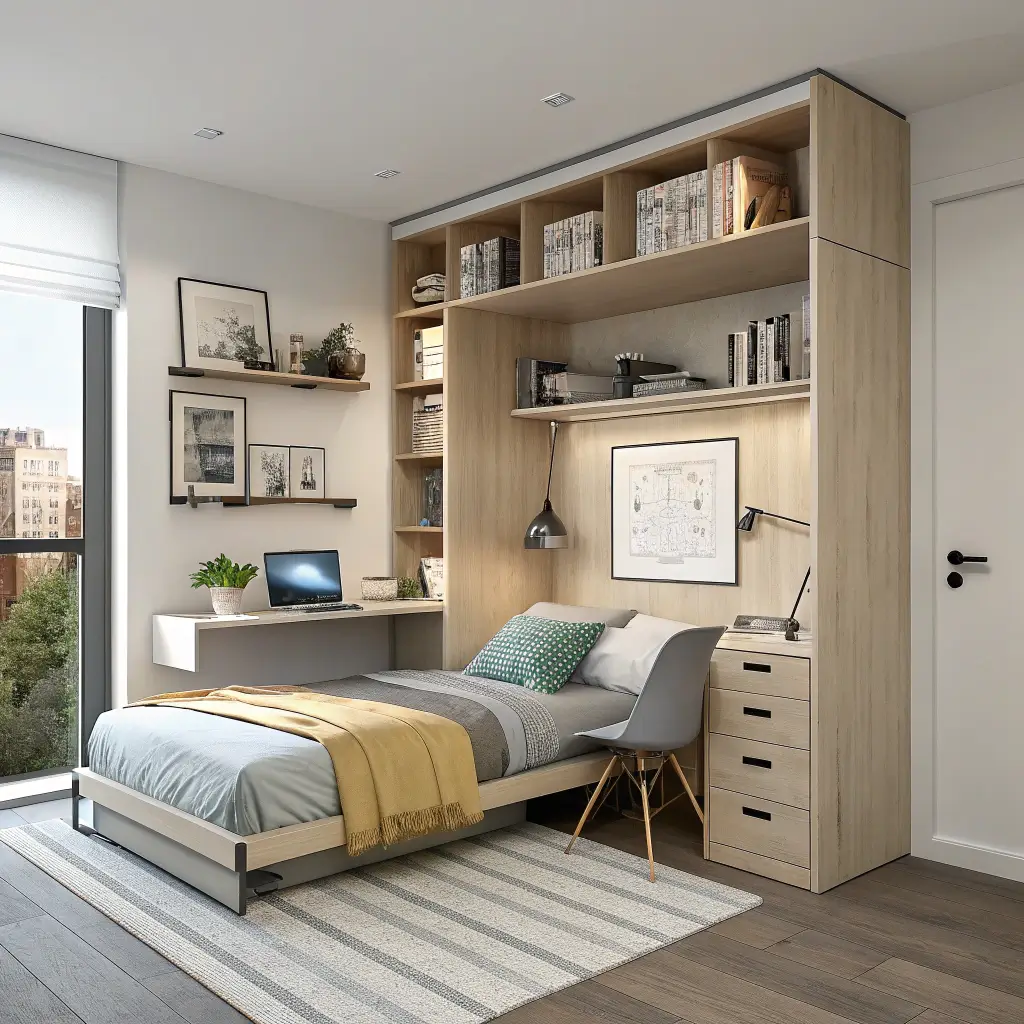
Small bedrooms often need to serve multiple purposes—sleeping space, home office, workout area, creative studio. The multi-functional layout embraces this reality and creates distinct zones within a single room.
Zone Planning
Start by identifying every function your bedroom needs to serve. Sleep, obviously. But also maybe work? Exercise? Meditation? Hobby projects? List everything, then prioritize based on importance and frequency of use.
Each function gets its own zone, even if that zone is tiny. Your bed and nightstand form the sleep zone. A small desk and chair create the work zone. A clear floor area near the window becomes the yoga zone. Physical or visual dividers separate these zones, creating the illusion of distinct rooms.
Creating Separation
You don’t need actual walls to define zones. Area rugs work wonderfully—one rug under your bed area, a different rug (or bare floor) in your work area. The texture change underfoot signals transition between functions.
Furniture positioning creates natural boundaries. A desk placed perpendicular to the wall forms a partial divider. A bookshelf can separate sleeping and working areas while providing storage for both zones.
Curtains offer flexible zone division. Hang a simple curtain on a ceiling-mounted track to screen off your bed during work hours. Pull it back at night, and your bedroom returns to a single unified space.
Mental Separation Matters
Multi-functional layouts only work if you actually treat each zone as distinct. Work stays in the work zone. Sleep happens in the sleep zone. Mixing activities defeats the entire purpose and usually leads to worse sleep and less productive work.
IMO, the key to successful multi-functional bedrooms is ritual. When you finish work, physically close your laptop, push in your chair, and walk away from that zone. When you’re ready for bed, approach your sleep zone as a separate space. These mental shifts help your brain understand that different areas serve different purposes.
6. Diagonal Bed Placement Trick
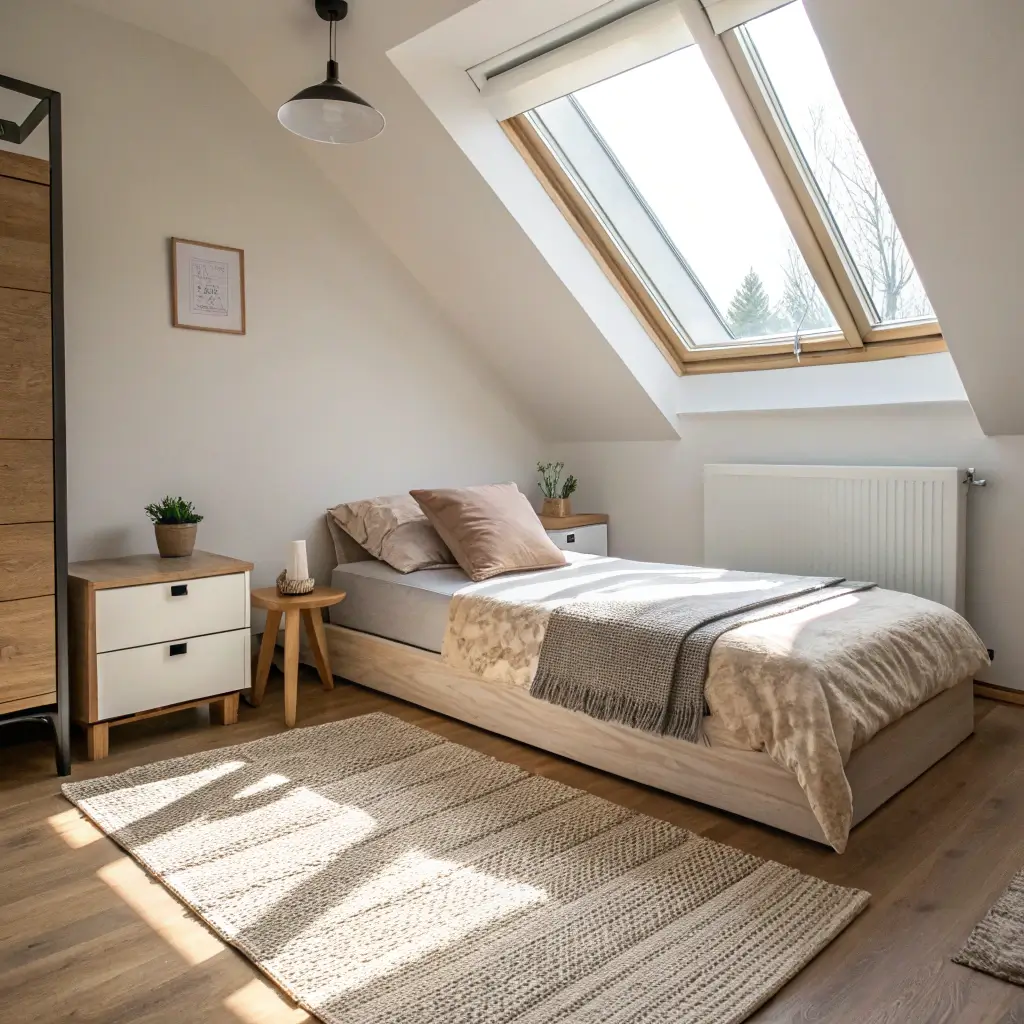
Here’s a layout trick that seems weird until you try it—placing your bed diagonally across a corner. This unconventional approach can solve specific small bedroom problems while adding visual interest that straight-on placement lacks.
When Diagonal Works
Diagonal placement shines in bedrooms with awkward dimensions or multiple doorways. If straight-wall placement means your bed blocks a door, window, or closet, diagonal positioning might provide the clearance you need while still fitting a reasonably sized bed.
It also works in rooms that feel too boxy or static. The angled bed line breaks up the expected geometry, making small rooms feel more dynamic and intentionally designed. Instead of a cramped box with a bed shoved in it, you get a cozy retreat with interesting angles.
The Space Trade-Off
Diagonal placement does sacrifice some usable floor space. The triangle of space behind a diagonal bed can’t hold much of functional value. However, that triangle can provide visual breathing room that tight straight-wall placement can’t match.
Some people fill the behind-bed triangle with plants, floor lamps, or decorative screens. Others simply leave it empty, treating it as the “breathing room” that makes the rest of the layout work. Either approach can succeed depending on your specific space and style.
Making It Look Intentional
The diagonal bed only works if it looks like a deliberate design choice rather than a desperate space solution. Commit fully—add matching nightstands on both accessible sides, layer your bedding attractively, and treat the angled placement as a feature rather than a compromise.
Lighting helps sell the diagonal arrangement. Position a floor lamp or pendant in a way that emphasizes the angled sight lines. Let the light draw attention to your bed from across the room, celebrating its unconventional position.
Also Read: 12 Trendy Black and White Bedroom Decor Ideas for Small
7. Symmetrical Twin Bed Layout
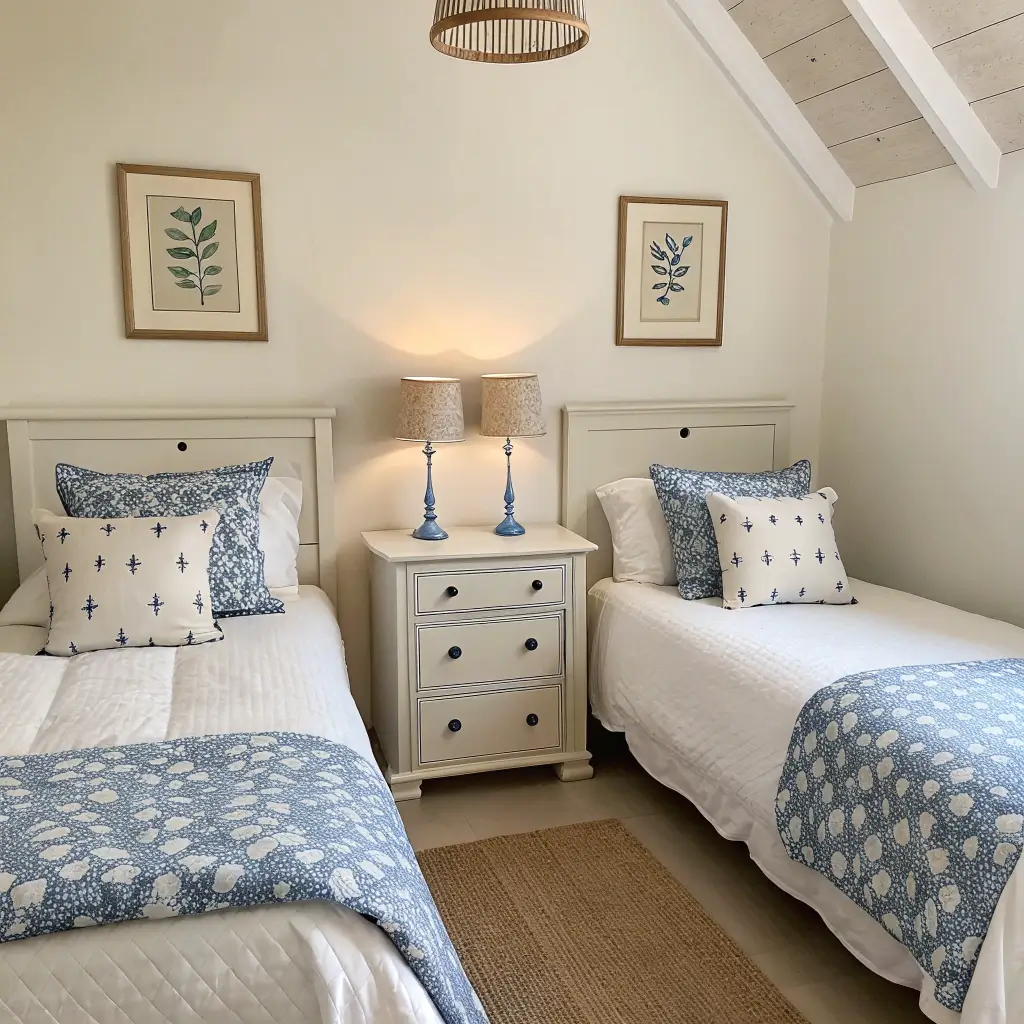
Who says small bedrooms can only hold one bed? Symmetrical twin layouts create charming guest rooms, kids’ rooms, or shared spaces that maximize sleeping capacity without feeling overwhelming.
The Power of Symmetry
Two twin beds placed identically on opposite sides of a room create visual harmony that’s inherently pleasing. Each bed gets its own nightstand, its own lighting, its own pillow arrangement. The matching setup feels balanced and intentional, even in a modest-sized room.
This layout works particularly well in bedrooms that are wider than they are deep. Position beds along the long walls with a shared nightstand or small table between them. The clear pathway down the center maintains flow while providing comfortable sleeping for two.
Variations That Work
Not every twin layout needs perfect symmetry. L-shaped arrangements place beds perpendicular to each other, creating a shared corner area between them. This works well in square rooms and provides more floor space along two walls rather than one.
Stacked or trundle arrangements hide the second bed during daytime, converting the room to single-bed functionality until guests arrive. Murphy-style twin beds fold completely into wall cabinets, creating maximum flexibility for rooms that serve multiple purposes.
Style Considerations
Matching bedding sells the symmetrical twin look. Identical quilts, pillows, and shams create that cohesive boutique-hotel vibe that makes shared rooms feel special rather than cramped. Even subtle pattern variations should stay within the same color family.
Headboards matter more in twin layouts than you might expect. Two bare mattresses on frames look incomplete. Matching upholstered headboards or simple wooden panels tie the beds together visually and add polish that elevates the entire room.
8. Built-In Wardrobe Integration
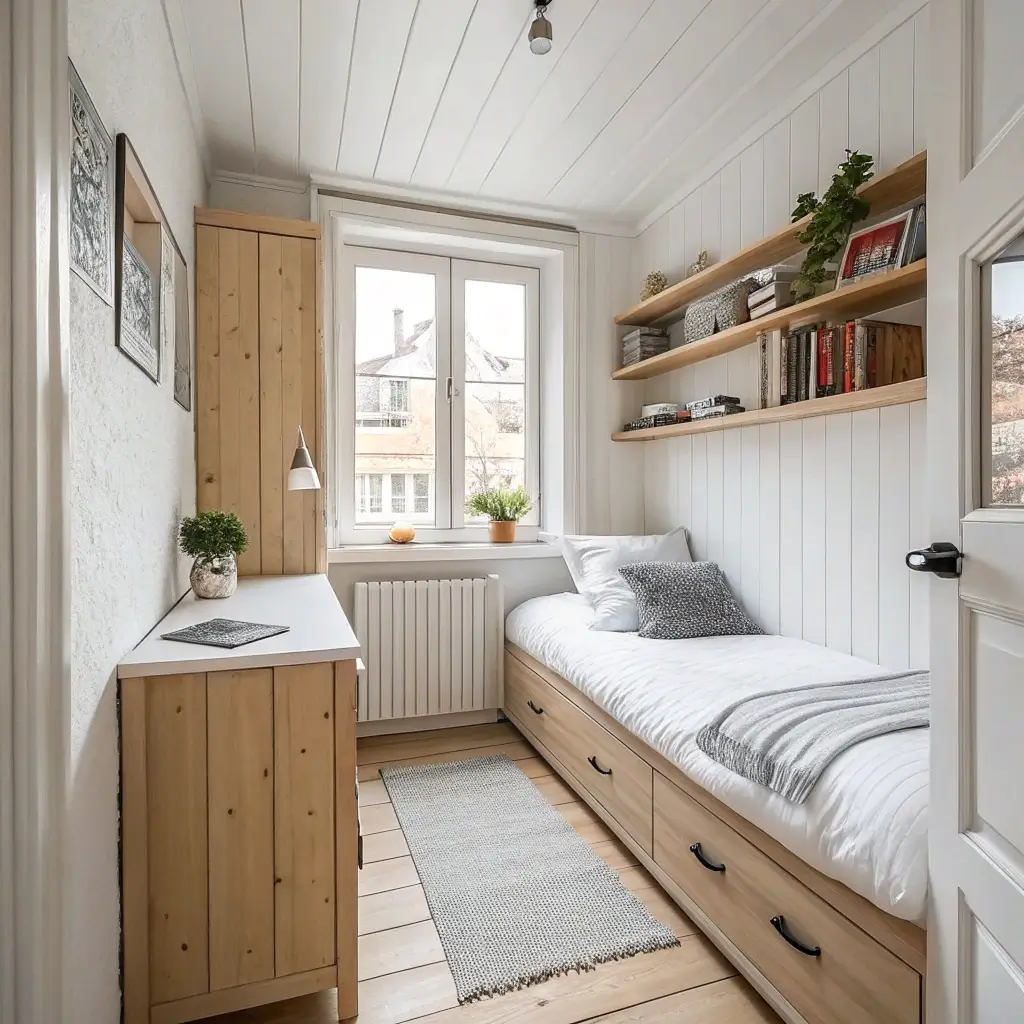
What if your storage didn’t compete with your living space? Built-in wardrobe integration treats storage as architecture rather than furniture, freeing up floor space for what matters—your bed and room to move around it.
Beyond Freestanding Dressers
Traditional dressers eat up significant floor space and create visual bulk that makes small rooms feel smaller. Built-in wardrobes eliminate this problem by turning walls into storage. Closets become deeper and more organized. Niches become shelving. Dead corners become drawer systems.
The result? Your floor stays clear. Your eye travels uninterrupted across the room. Your storage capacity actually increases even as your furniture footprint decreases. It’s a win-win situation that small bedroom owners dream about 🙂
Integration Options
Full wall wardrobes create seamless storage from floor to ceiling along one entire wall. Behind simple doors lies your complete clothing system—hanging sections, shelves, drawers, and specialty storage for accessories or shoes. When closed, it looks like architectural paneling rather than furniture.
Partial integrations work in bedrooms with existing closets. Upgrade your closet interior with custom organizers, then add built-in elements elsewhere—a window seat with storage underneath, bedside niches instead of nightstands, overhead cabinets spanning the headboard wall.
Working With What You Have
Full custom built-ins require significant investment—either hiring professionals or committing serious DIY time and skill. However, modular systems like IKEA’s PAX or California Closets’ free-standing options create built-in looks at lower price points and with easier installation.
The key is thinking like an architect rather than a furniture shopper. Where can walls serve double duty? What awkward spaces could become storage? Which freestanding pieces could mounted or built-in alternatives replace?
9. Scandinavian Small Room Style
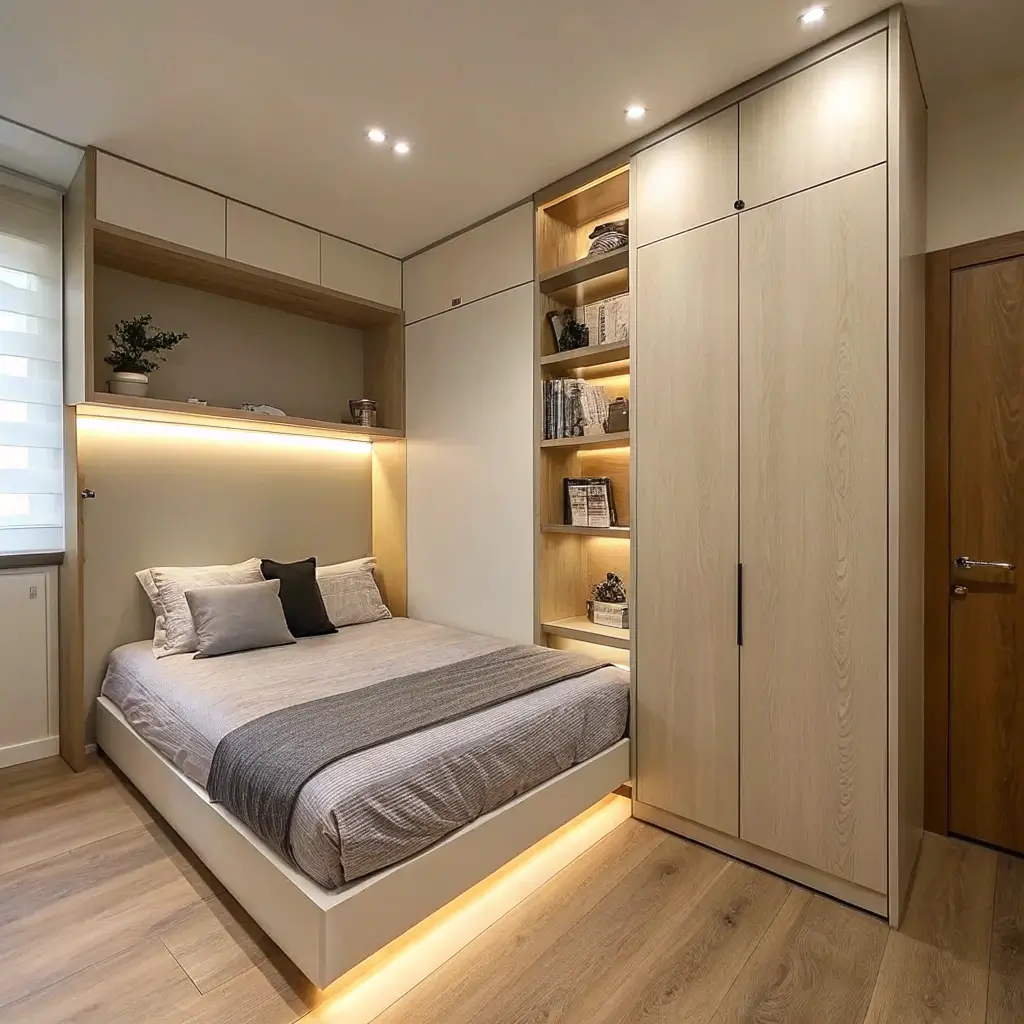
Scandinavian design and small spaces go together like coffee and mornings. This aesthetic developed in tiny Nordic apartments where maximizing light and minimizing clutter wasn’t a choice—it was a necessity for mental survival during long dark winters.
Core Scandinavian Principles
The Scandinavian approach emphasizes light colors, clean lines, and functional simplicity. White walls reflect every available photon. Furniture sits on slim legs, allowing sight lines to continue beneath. Every piece serves a purpose; decoration for decoration’s sake rarely appears.
Natural materials soften what could otherwise feel cold. Light wood tones, linen textiles, and wool accents add warmth without visual weight. The palette stays neutral—whites, grays, pale woods, with occasional black accents for contrast.
Layout Applications
Scandinavian small bedroom layouts prioritize open floor space and unobstructed light flow. Beds typically feature simple frames with storage drawers underneath. Nightstands stay small or get replaced with wall-mounted shelves. Dressers disappear into closets or get eliminated entirely in favor of carefully edited wardrobes.
Window treatments stay minimal. Sheer curtains or simple blinds let maximum light through. In many Scandinavian bedrooms, windows remain completely uncovered, with privacy achieved through frosted lower panes or strategic plant placement.
Creating The Look
Start with a complete white or light gray base. Paint walls, ceiling, and any built-ins in the same bright shade. This eliminates visual boundaries and makes your small room feel significantly larger.
Add furniture sparingly. A bed frame in natural light wood, one simple nightstand, perhaps a small wooden chair—that’s often enough. Each piece should have visible legs or wall-mounting, keeping floor visibility as high as possible.
Texture prevents sterility. Layer bedding in varying white and cream tones with different textures—a cotton sheet, a linen duvet, a wool throw. The tonal similarities read as calm while the textural differences add interest.
Also Read: 12 Trendy Small Teenage Girl Bedroom Ideas and Accessories
10. Open Floor Concept Bedroom
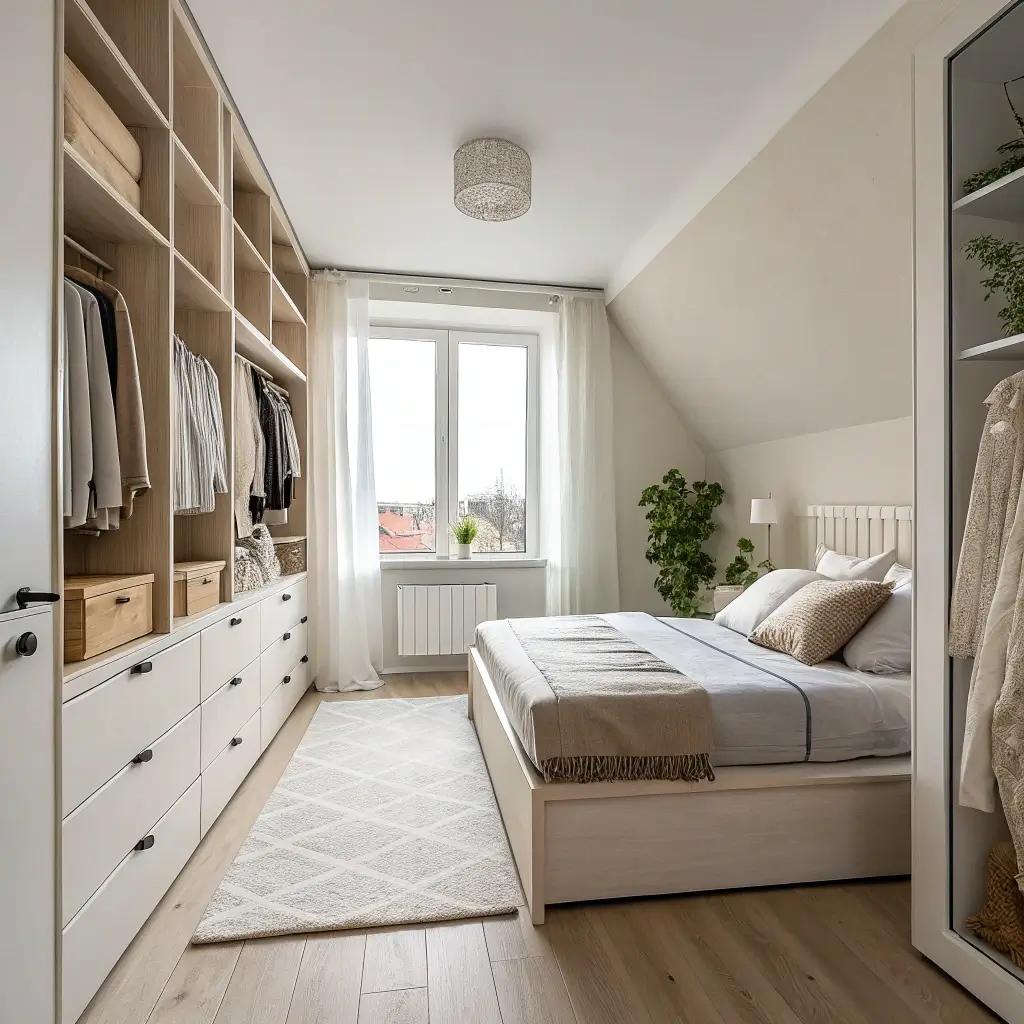
The open floor concept takes small bedroom layout to its logical extreme: what if your “bedroom” wasn’t really a separate room at all? This approach works in studios, lofts, and open-plan living situations where sleeping areas coexist with living spaces.
Defining Without Walls
Open floor concept bedrooms carve out sleeping zones within larger spaces using furniture placement, rugs, screens, curtains, or level changes rather than permanent walls. The bed occupies a defined area that feels distinct from the surrounding space, even without physical enclosure.
This approach demands intentional design. Without walls to automatically define your bedroom, every choice becomes more significant. Your bed’s position, the rug beneath it, the lighting above it—each element helps establish where “bedroom” begins and “living room” ends.
Zone Definition Strategies
Area rugs are the simplest zone-defining tool. Place a rug that’s large enough to extend beyond your bed on all sides, and you’ve created a visual platform that distinguishes sleeping space from surrounding floor.
Partial-height dividers—bookcases, plants, decorative screens—provide some privacy without blocking light or sight lines entirely. They suggest separation rather than enforcing it, which keeps small spaces feeling open while still creating distinct zones.
Canopy beds or ceiling-mounted curtains create enclosed sleeping nooks within open spaces. Close the curtains for sleep, open them during waking hours. This flexibility maintains open-floor benefits while providing bedroom privacy when needed.
Making Open Concept Work
The biggest challenge with open floor bedrooms is sleep quality. Without separation from living activities, maintaining good sleep hygiene becomes more difficult. Combat this with strict zone rules—no TV watching in the bed area, no work activities near the sleeping zone.
Lighting matters enormously. Your bed area needs independent lighting control so you can dim that zone while other areas stay bright. Blackout options for sleeping hours—whether curtains, shades, or sleep masks—become essential rather than optional.
Bringing It All Together
Your small bedroom doesn’t have to feel like a cramped afterthought. The right layout transforms even the tiniest space into a functional, beautiful retreat that you actually want to spend time in.
Start by measuring your room and sketching its shape. Note where doors, windows, and closets fall. Then experiment—on paper first, to save your back with the layouts we’ve discussed.
What solves your specific challenges? What matches your style preferences? What works with your budget and DIY abilities?
Remember that most small bedrooms benefit from combining elements from multiple layouts. Maybe you try corner bed placement with Scandinavian color choices and some built-in storage integration.
The ideas we’ve covered aren’t mutually exclusive; mix and match until you find your perfect combination.
Most importantly, don’t settle for “good enough.” Small bedrooms require more thoughtful design than larger spaces, not less.
The effort you invest in finding the right layout pays dividends every single day—in better sleep, easier mornings, and a space that genuinely feels like home.
Now stop reading about bedroom layouts and go rearrange some furniture. Your perfect small bedroom layout is waiting to be discovered.