10 Creative Small Closet Organization Ideas and Decor Touches
- Closet Organization
 Ben
Ben- 0
- 53 minutes read
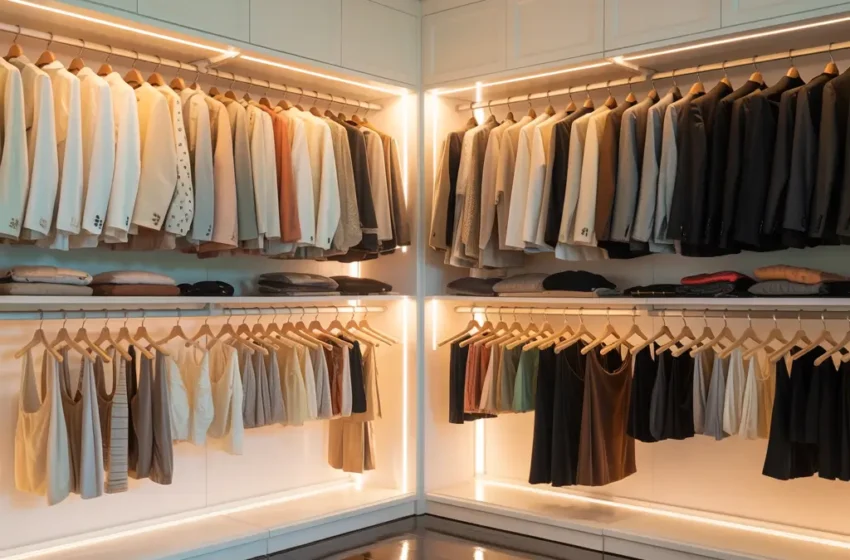
Your closet is basically a shoebox with delusions of grandeur, right? I feel you. My first apartment closet was so small I had to step outside to change my mind.
For two years, I played Tetris with my clothes every morning, and honestly? I lost that game daily.
Small closet organization isn’t about making peace with limited space – it’s about making that space work three times harder than it currently does.
Here’s what nobody tells you about small closets: they can actually be MORE organized than massive walk-ins. I’ve seen palatial closets that are total disasters and tiny closets that function like precision machines.
The difference? Strategic organization that maximizes every single inch. Since mastering my shoebox closet five years ago, I’ve helped seven friends transform theirs, and the tricks I’ve learned work regardless of whether your closet is 3 feet or 6 feet wide.
The real secret? Stop trying to fit everything you own into your small closet. That’s not organization – that’s stuffing.
Ready to actually solve your small closet chaos? Let’s talk about the ideas that genuinely transform tiny spaces into functional powerhouses.
Vertical Space Maximizing Closet Hacks
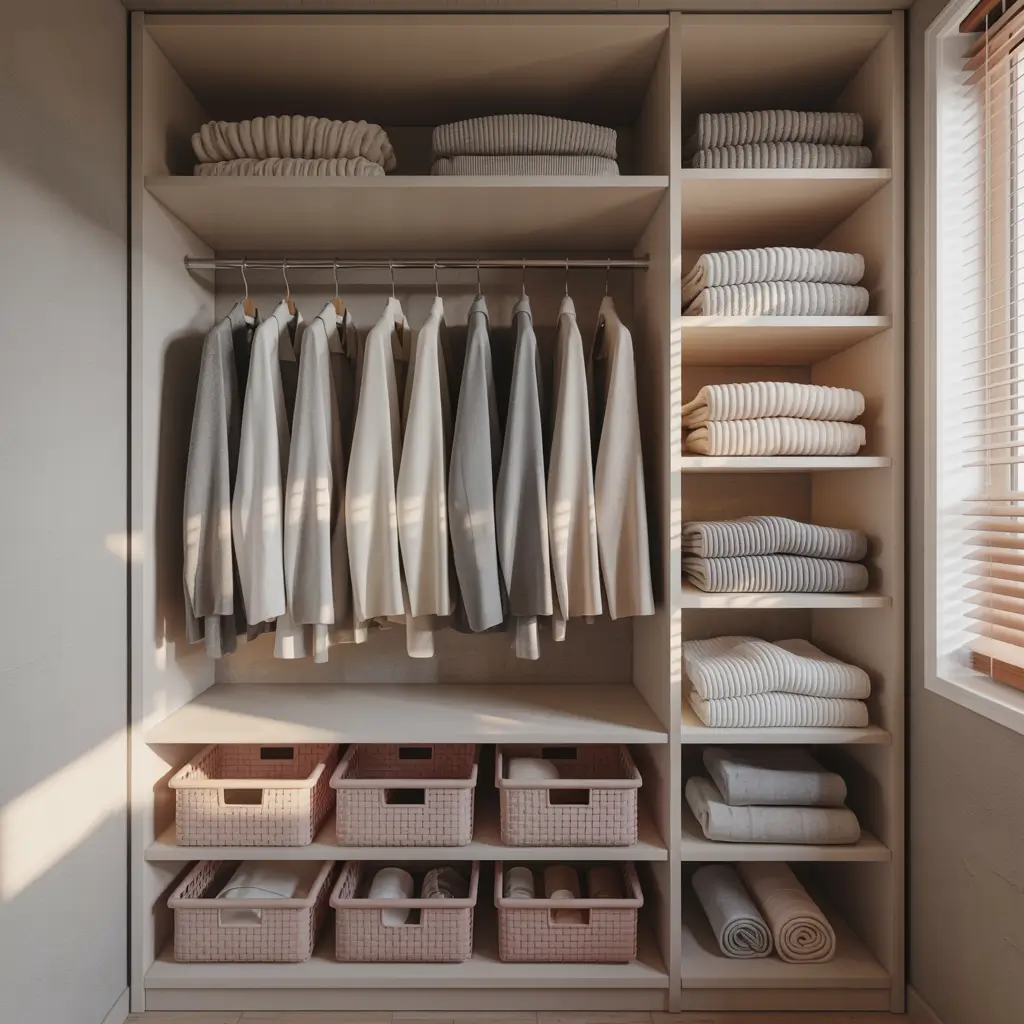
Vertical space is your secret weapon in small closets, and most people waste about 40% of it. I installed a double hanging rod in my tiny closet, and boom – instantly doubled my hanging capacity. This one $18 addition changed my entire closet game.
The space between your top shelf and ceiling? That’s prime real estate you’re probably ignoring. I added two additional shelves in that dead zone, and suddenly I had storage for all my off-season items, extra bedding, and bags. The total transformation took 30 minutes and cost me $35 in shelf brackets and wood.
Double Hanging Rod Systems
Here’s how double rods maximize small closets:
- Install the top rod at 80 inches from the floor
- Position bottom rod at 40 inches for optimal spacing
- Hang shorter items (shirts, pants, skirts) on both levels
- Reserve one section as single-height for dresses and coats
- Use adjustable rods to customize for your wardrobe
I positioned my double rods differently than standard recommendations because I’m short and needed easy access. The beauty of DIY installation is customizing heights that work for YOUR body and YOUR clothes.
Ceiling-to-Floor Shelving
Every inch of vertical space counts:
- Add shelves all the way to the ceiling
- Use lightweight storage bins on highest shelves
- Keep a small step stool nearby for access
- Install shelves in 10-12 inch intervals
- Adjust spacing based on what you’re storing
My ceiling is 8 feet high, and I now have seven shelves where I used to have three. Those top shelves hold things I use seasonally, while middle shelves store everyday items. The vertical organization means I can actually see and access everything.
Vertical Hanging Organizers
Hanging organizers multiply your space:
- Fabric hanging shelves for sweaters and accessories
- Over-the-rod organizers with multiple compartments
- Hanging shoe organizers that hold way more than shoes
- Cascading hangers that stack multiple items vertically
- Hanging jewelry organizers that save drawer space
I use a 10-shelf hanging organizer for my sweaters, and it freed up three entire shelves that I repurposed for shoes and bags. These organizers cost maybe $15 and create storage out of thin air.
Budget-Friendly Small Closet Makeovers
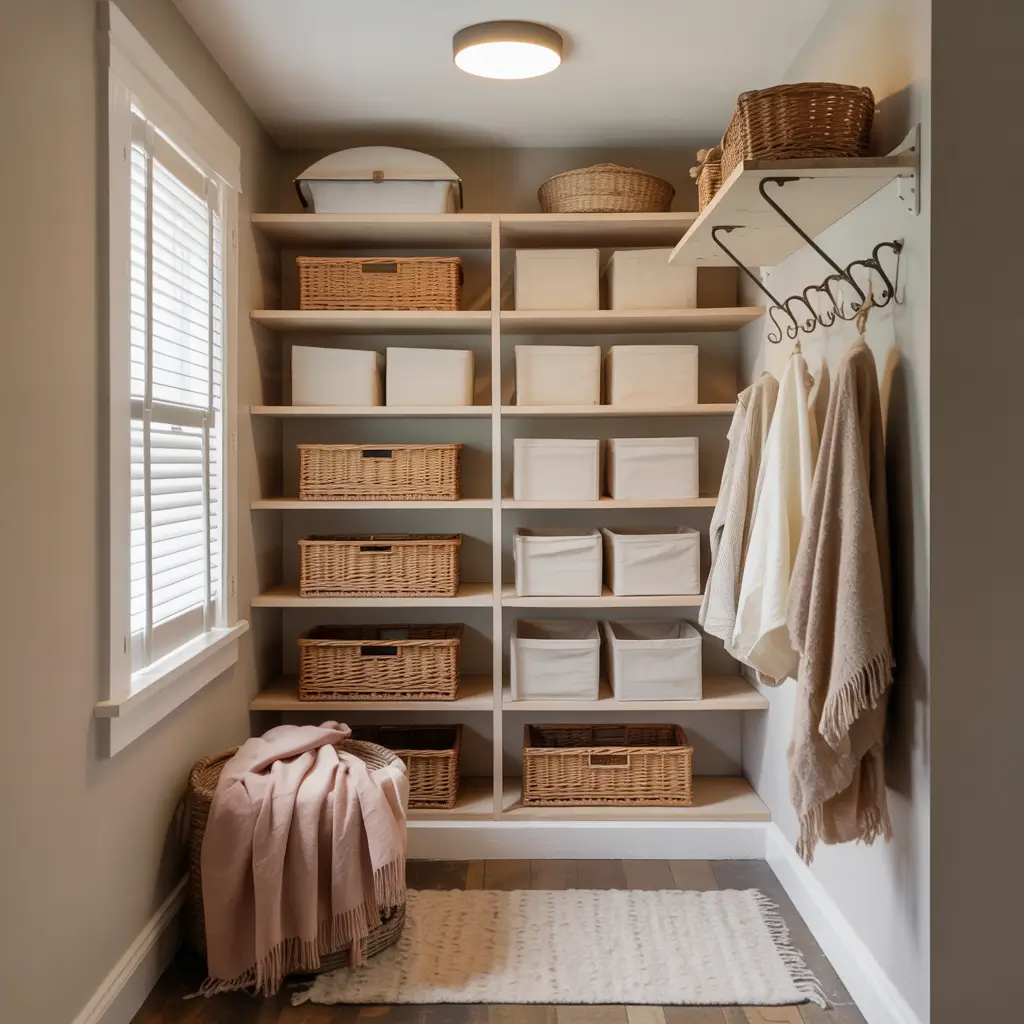
Small closet makeovers don’t require trust funds. I completely transformed my closet for $127, and it functions better than my friend’s custom system that cost $2,000. The secret is prioritizing smart investments over aesthetic ones.
Most people waste money on matching hangers and pretty baskets before addressing their actual storage problems. I spent my budget on functional solutions first – extra rods, shelving, and dividers – then added aesthetic touches with whatever was left.
Strategic Budget Allocation
How I’d spend $125 on a small closet makeover:
- $40 on adjustable closet rod and brackets
- $30 on slim velvet hangers (they save SO much space)
- $20 on shelf dividers and organizers
- $15 on clear stackable shoe boxes
- $10 on over-door hooks and hanging organizers
- $10 on drawer dividers for small items
This breakdown focuses entirely on maximizing space and functionality. The pretty stuff can wait until you’ve solved your storage crisis.
Dollar Store Organization Wins
Budget stores have hidden gems:
- Plastic bins for shelf organization
- Shower curtain rings for scarf and tank top storage
- Tension rods for creating dividers
- Small baskets for corralling accessories
- Command hooks for everything imaginable
I bought 20 shower curtain rings for $2 and threaded them onto a hanger to store all my tank tops. This hack saved me an entire drawer and cost less than a latte. Sometimes the best solutions are ridiculously cheap.
DIY vs. Buy Decisions
When to save and when to spend:
- DIY simple shelves using boards and brackets
- Buy quality hangers (worth every penny)
- DIY painted or wrapped storage boxes
- Buy proper drawer organizers
- DIY labels and organizing systems
- Buy sturdy shoe racks that won’t collapse
I learned this the hard way after buying a cheap shoe rack that collapsed under the weight of my boots, damaging three pairs. Some things are worth the investment.
DIY Closet Divider and Shelf Ideas
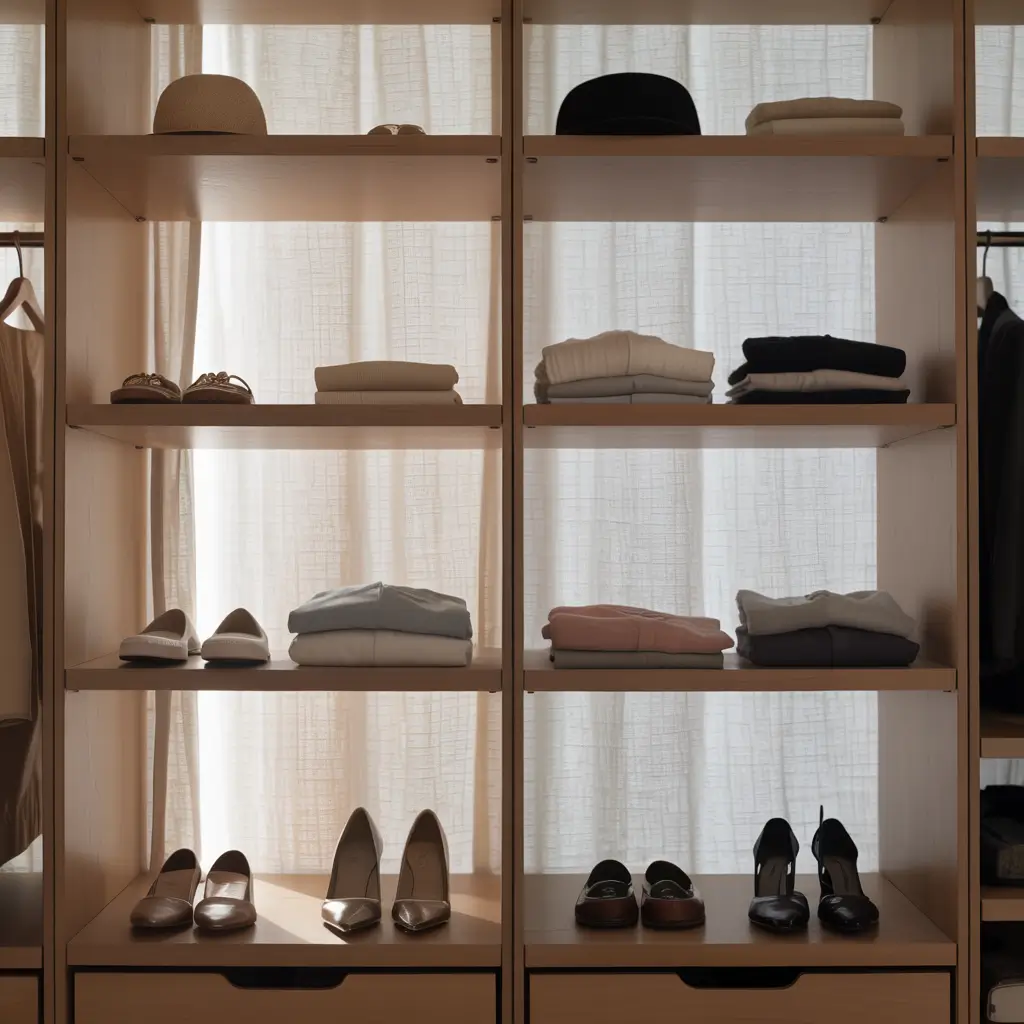
DIY dividers and shelves let you customize your small closet perfectly without paying custom prices. I created a shelf divider system using tension rods installed vertically between shelves, and it cost $12 total for materials that would’ve cost $60+ if I’d bought premade solutions.
The beauty of DIY is making things that fit YOUR exact measurements. Small closets often have weird dimensions that don’t work with standard organizing products. Custom DIY solutions fill those gaps perfectly.
Tension Rod Divider Hack
Creating vertical shelf dividers:
- Install tension rods vertically between shelves
- Space dividers every 8-10 inches for sweaters
- Adjust spacing for larger items like purses
- Use spring-loaded curtain rods for sturdy divisions
- Paint rods to match your closet for polished look
This hack prevents the dreaded sweater avalanche when you pull one item from a stack. My sweaters now stay neatly separated instead of toppling every single time I grab one.
Simple Shelf Building
Basic DIY shelving anyone can do:
- Cut wood boards to your exact closet width
- Install L-brackets every 16 inches for support
- Paint or stain boards before installation
- Add contact paper for finished look
- Create custom heights for your specific items
I built three custom shelves for my small closet, adjusting heights to accommodate my actual belongings instead of standard spacing. Total cost: $35. Custom closet company quote for the same thing: $400.
Repurposed Drawer Dividers
Turn household items into organizers:
- Cut cardboard to create custom drawer sections
- Use small boxes as ready-made dividers
- Repurpose ice cube trays for jewelry
- Cut pool noodles to maintain boot shapes
- Use magazine holders for clutches and bags
BTW, the pool noodle boot shaper hack is genuinely genius. I cut $3 pool noodles into sections, stuffed them in my tall boots, and prevented that sad floppy boot collapse that ruins leather over time.
Also Read: 10 Stunning Closet Organization Ideas and Luxury Walk-In Looks
Hidden Storage Solutions for Tiny Closets
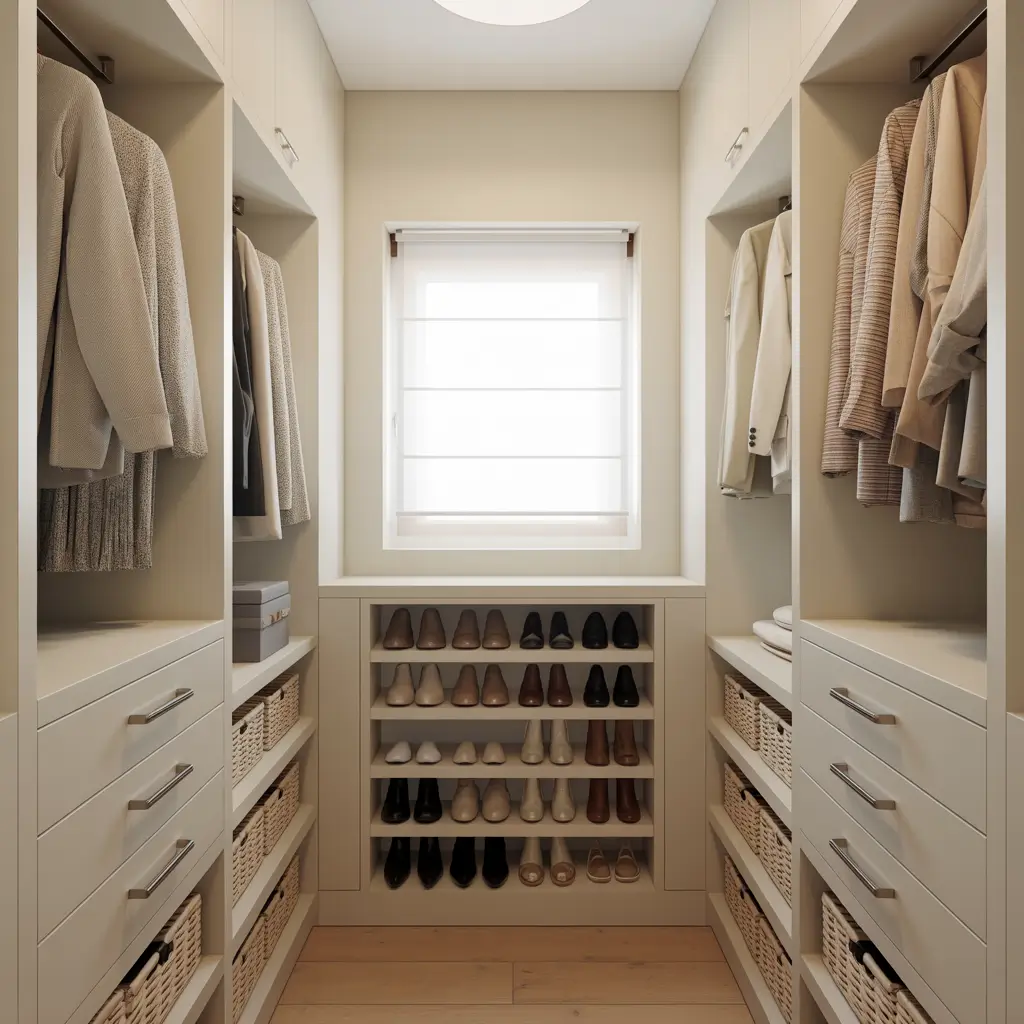
Hidden storage in small closets creates space you didn’t know you had. I discovered four different storage zones in my tiny closet that I’d been completely ignoring. Now those spaces hold tons of stuff without making the closet feel cramped.
The key to hidden storage is thinking three-dimensionally. Behind the door, on walls, under hanging clothes, inside other items – everywhere becomes potential storage when you get creative.
Under-Hanging Storage
Maximize space below short clothing:
- Add a small dresser or drawer unit
- Install low shelving for shoes
- Use rolling carts that tuck underneath
- Create stacked shoe storage
- Add a narrow bench with storage inside
The space under my hanging shirts was completely wasted until I added a 3-drawer unit. Now that area stores my workout clothes, pajamas, and loungewear that used to live in piles on my floor.
Door-Back Storage
Your door is prime real estate:
- Over-door shoe organizers hold 24+ pairs
- Door-mounted hooks for bags and robes
- Slim over-door storage for accessories
- Mounted cork board or pegboard systems
- Command hooks for belts and scarves
I installed an over-door organizer, and here’s the thing – I don’t just use it for shoes. The pockets hold sunglasses, workout accessories, small bags, and charging cables. This organizer probably holds 40+ small items that would otherwise clutter my shelves.
Inside Luggage Storage
Hidden storage within storage:
- Store off-season clothes in suitcases
- Use luggage for extra bedding or towels
- Pack away holiday decorations inside bags
- Stash shoes in hard-sided luggage
- Keep luggage accessible but functional
My suitcases sit on my top shelf, and inside them I store my winter sweaters during summer. This double-duty storage means my luggage doesn’t waste space sitting empty 11 months of the year.
Minimalist Small Closet Organization Tips
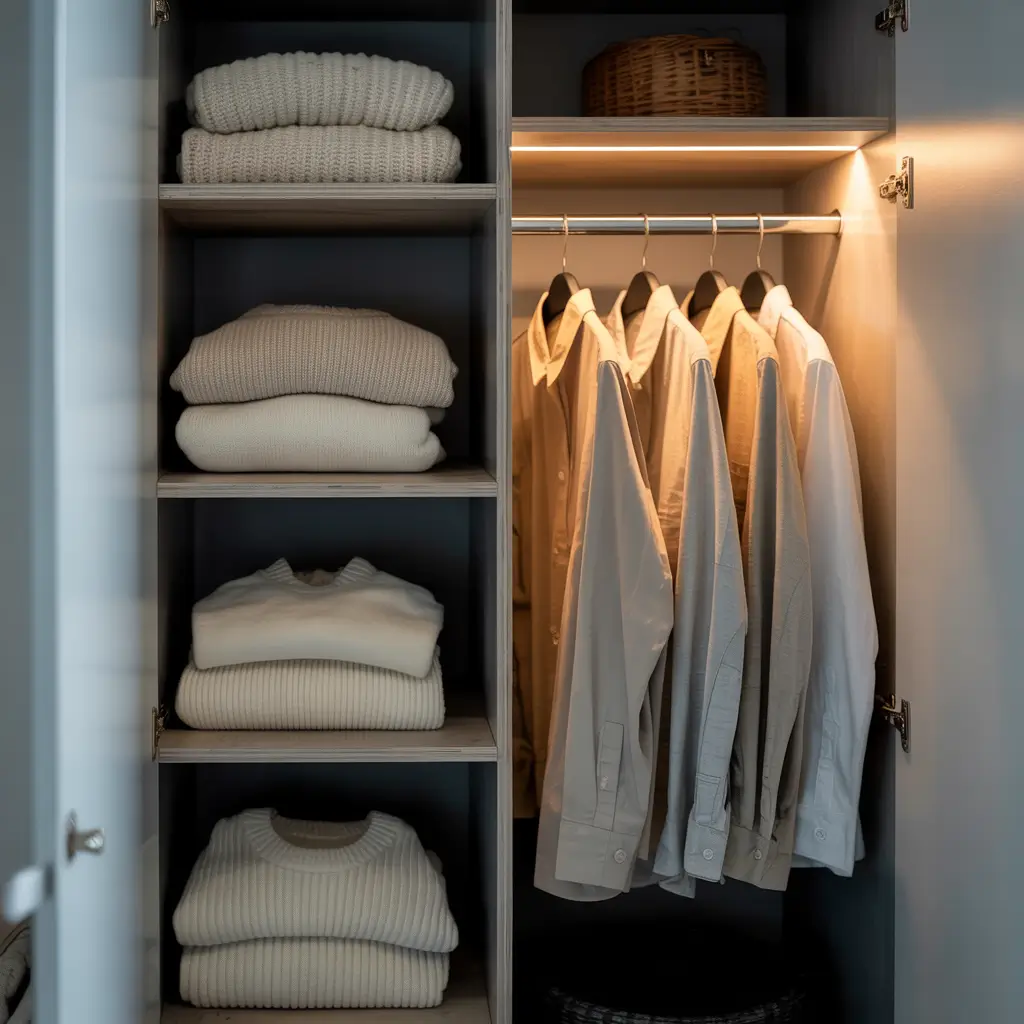
Minimalist organization for small closets means keeping only what you actually wear and love. I purged 60% of my wardrobe three years ago, and my small closet instantly felt spacious. Turns out the problem wasn’t the closet size – it was trying to stuff 200 items into space designed for 80.
The minimalist approach isn’t about deprivation. It’s about being honest about what you actually wear versus what you keep “just in case” or for “someday.” I’ve never once regretted anything I donated, but I regretted keeping things for years.
The Ruthless Purge Method
How to edit your wardrobe effectively:
- Remove everything from your closet completely
- Try on every single item (yes, everything)
- Donate anything that doesn’t fit NOW
- Eliminate clothes you haven’t worn in 12 months
- Keep only items that make you feel great
I used the backward hanger test: turned all hangers backward, then flipped them forward as I wore items. After six months, I donated everything still backward. This revealed I was keeping 40+ items I literally never touched.
Capsule Wardrobe Benefits
Fewer items, more outfits:
- Choose versatile pieces that mix easily
- Stick to a limited color palette
- Invest in quality over quantity
- Each item should work with multiple others
- Seasonal capsules keep closet focused
My 40-piece capsule wardrobe creates more outfit combinations than my previous 150-piece chaos did. Everything coordinates, so getting dressed takes minutes instead of the frustrated clothing tornado it used to be.
Quality Over Quantity Mindset
Upgrading your approach:
- Buy fewer, better-made items
- Choose classic styles over trendy pieces
- Invest in proper care for what you keep
- Embrace empty space as a feature
- Stop sale shopping for things you don’t need
Multi-Functional Closet Storage Systems
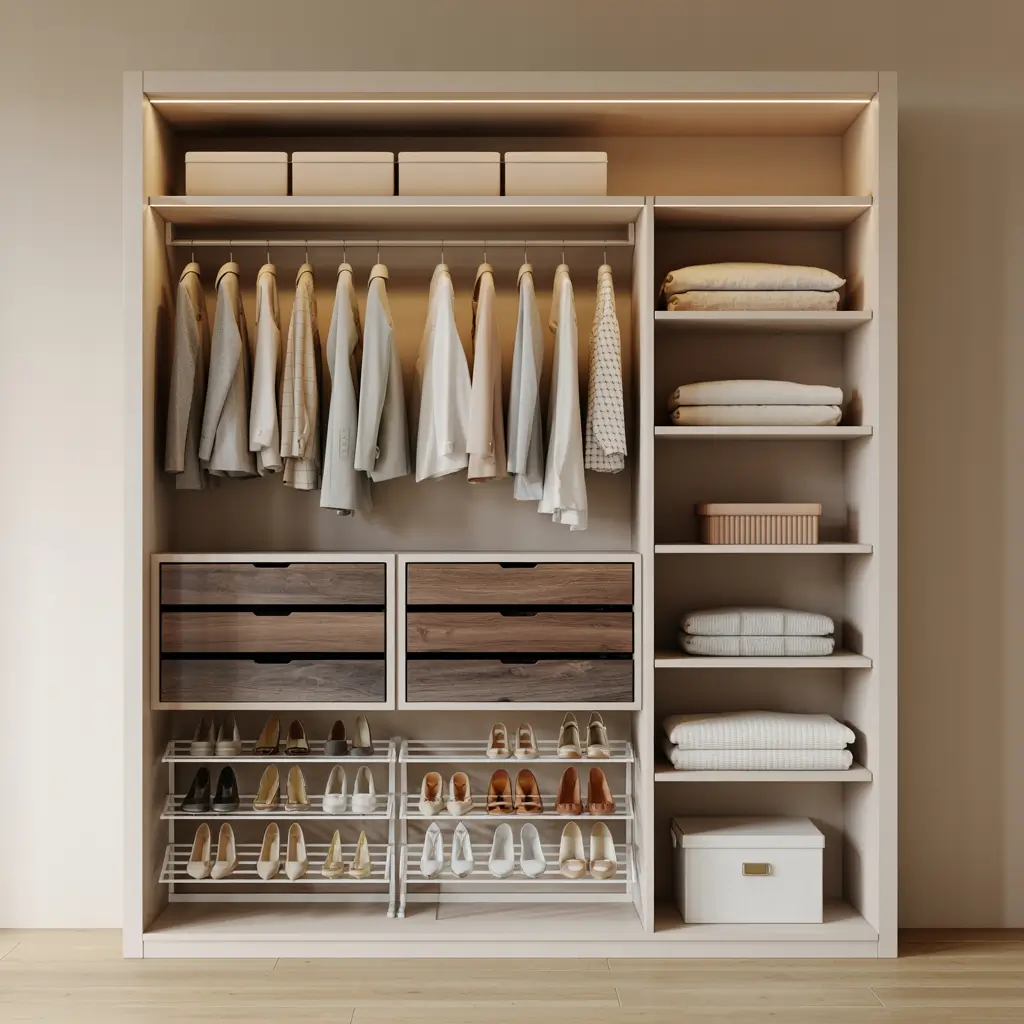
Multi-functional storage makes every item work double or triple duty in small closets. I switched to storage solutions that serve multiple purposes, and suddenly my closet capacity increased without adding a single inch of space.
The best multi-functional pieces adapt as your needs change. I love storage that doesn’t lock me into one configuration forever.
Adjustable Shelving Systems
Flexible storage that grows with you:
- IKEA ALGOT system for affordable customization
- Elfa systems for premium flexibility
- Container Store modular options
- Wall-mounted adjustable brackets
- Reconfigurable cube systems
I installed an adjustable shelving system, and I’ve reconfigured it four times as my storage needs changed. When I started working from home, I adjusted shelves to accommodate more casual clothes. This flexibility is priceless in a small space.
Ottoman Storage Seating
Furniture that multitasks:
- Storage ottoman for sitting and stashing
- Bench with lift-top for shoes or accessories
- Stackable storage cubes that reconfigure
- Ladder shelves that display and organize
- Rolling carts that move where needed
I added a small storage ottoman to my closet (yes, my closet is barely big enough for this, but I made it work). I sit on it to put on shoes, and inside it I store my extensive scarf collection. Two functions, one piece.
Convertible Hanging Solutions
Hangers and rods that adapt:
- Multi-tier hangers for pants or skirts
- Cascading hooks that create vertical storage
- Adjustable closet rods that move up or down
- Retractable valet rods for outfit planning
- Rotating tie and belt racks
My cascading hangers literally tripled my capacity for pants. I can store three pairs on one hanger, stacked vertically, and still easily access whichever pair I need.
Also Read: 12 Simple Kids Closet Organization Ideas That Stay Tidy
Color-Coded Closet Organization Tricks
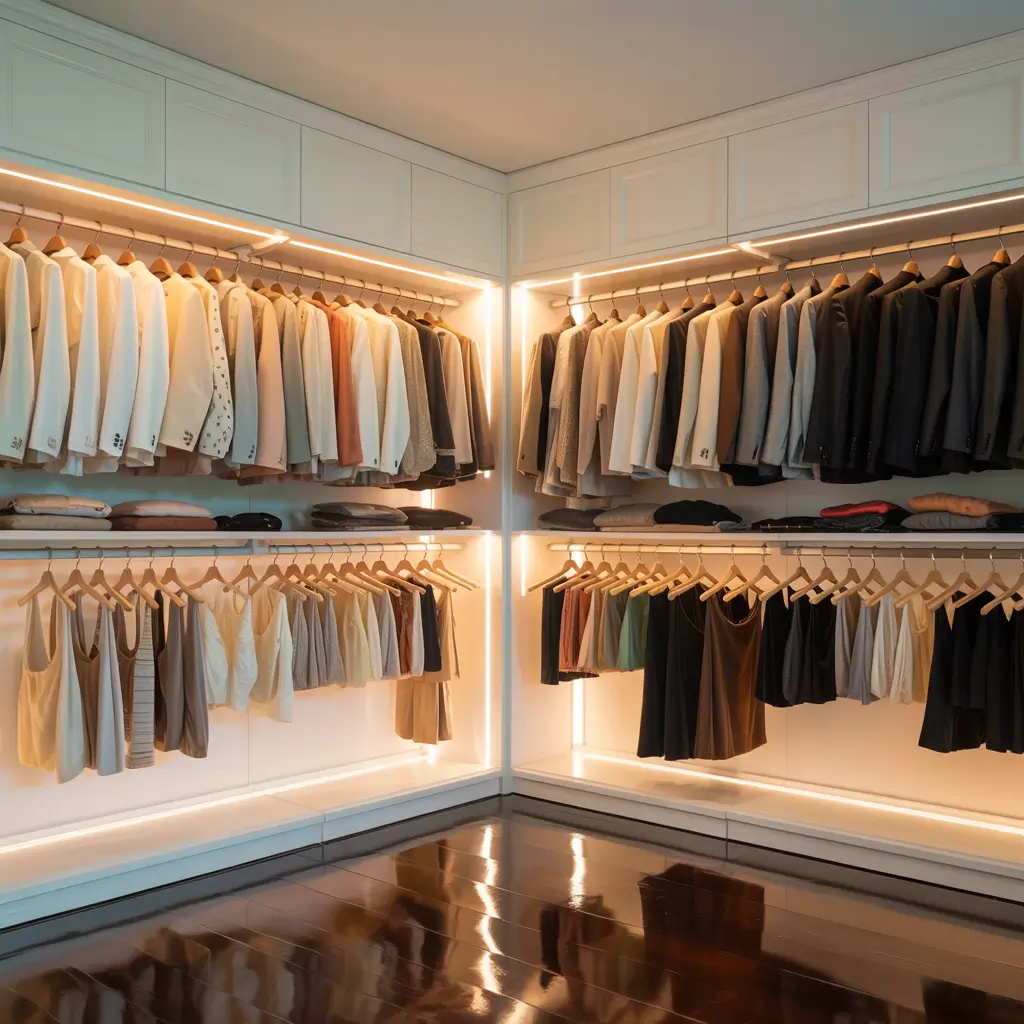
Color-coded organization looks Instagram-worthy while being genuinely functional. I organized my small closet by color last year, and finding specific items became so much faster. Plus, the visual calm of a color-organized closet makes the small space feel less chaotic.
The organization process itself is oddly satisfying. I spent one afternoon arranging everything from white through the rainbow to black, and the transformation was immediately noticeable.
Rainbow Organization Method
How to color-code effectively:
- Follow ROY G BIV order (red, orange, yellow, green, blue, indigo, violet)
- Start with whites and end with blacks
- Organize within each color from light to dark
- Apply to each clothing category separately
- Maintain the system by putting items back correctly
I organize each clothing type by color. Shirts go white to black following the rainbow, then dresses do the same, then pants. This system makes finding my navy blue sweater take literally five seconds.
Identifying Wardrobe Gaps
Color coding reveals patterns:
- Spot overrepresented colors instantly
- Notice missing color families
- Identify duplicate items you forgot you owned
- See seasonal imbalances clearly
- Make smarter shopping decisions
FYI, color-coding my closet revealed I owned nine black cardigans. NINE. I kept three favorites and donated the rest, freeing up significant hanging space I didn’t know I had.
Maintaining Color Organization
Keep the system working long-term:
- Return items to correct color section immediately
- Mini-reorganize when adding new pieces
- Take a photo to remember your system
- Adjust categories as wardrobe evolves
- Make it easy enough to maintain
Door and Wall Mounted Closet Hacks
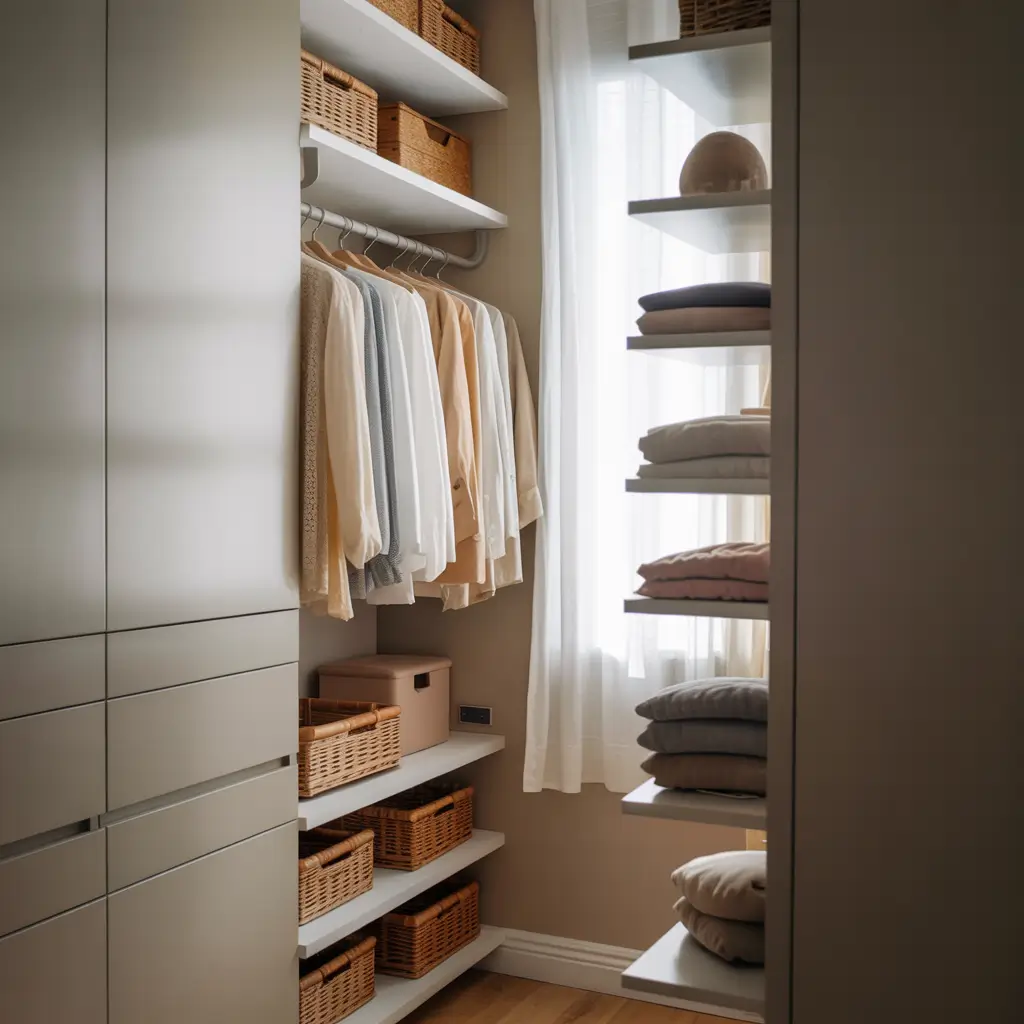
Doors and walls in small closets are untapped storage goldmines. I added storage to every vertical surface in my closet, and the capacity increase was shocking. These surfaces don’t reduce your floor space at all, making them perfect for tiny closets.
The trick is mounting things properly so they don’t fall, damage walls, or create hazards. I learned this after a poorly mounted shelf collapsed at 2am, scaring me half to death.
Over-Door Organization
Maximize door real estate:
- Over-door shoe organizers (hold 20-30 pairs)
- Door-mounted full-length mirrors
- Slim over-door racks for accessories
- Hanging organizers with clear pockets
- Command hooks rated for proper weight
My over-door shoe organizer is my closet’s MVP. Beyond shoes, the pockets hold sunglasses, belts, small bags, workout gear, and miscellaneous accessories. This one $12 organizer probably stores 50+ items.
Wall-Mounted Hooks and Racks
Every wall becomes functional:
- Decorative hooks for daily-wear items
- Wall-mounted jewelry organizers
- Pegboard systems for accessories
- Mounted baskets for small items
- Rails for scarves and belts
I installed a pegboard on one closet wall, and it’s become my accessory headquarters. Scarves, belts, hats, and bags all hang there in plain sight, making them actually get used instead of forgotten in drawers.
Command Hook Magic
Damage-free mounting solutions:
- Heavy-duty hooks hold surprising weight
- Perfect for rental closets
- Remove cleanly when reconfiguring
- Come in various sizes and styles
- Work on most smooth surfaces
I use Command hooks religiously because I rent and can’t drill holes everywhere. These hooks hold bags, belts, jewelry organizers, and even a small mirror. IMO, they’re small closet organizing essentials.
Seasonal Clothing Rotation Ideas
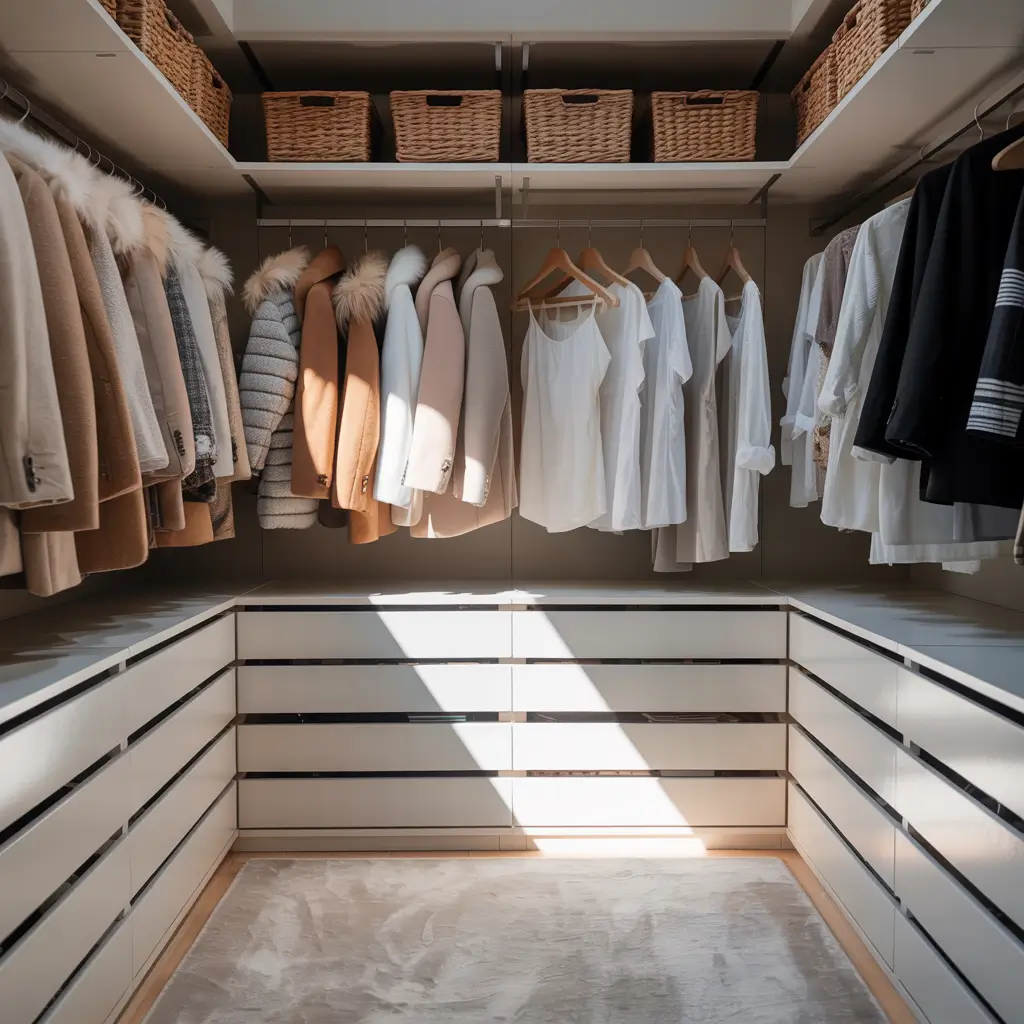
Seasonal rotation keeps your small closet focused on currently wearable clothes. I rotate my wardrobe twice yearly, and this single habit keeps my tiny closet from feeling overwhelming. Why would I need access to winter coats in July?
The rotation takes maybe 90 minutes twice a year but saves me time every single day. I only see and access season-appropriate items, making getting dressed significantly faster and less frustrating.
Smart Rotation Timing
When and how to rotate effectively:
- Switch in April and October during transitional weather
- Keep a few versatile pieces accessible year-round
- Store off-season items in bins or vacuum bags
- Label everything clearly with season and contents
- Use rotation as opportunity to reassess wardrobe
I do my rotation the first weekend of April and October. I pull out next season’s clothes, check their condition, make a donation pile, and store away the previous season. This built-in review prevents closet clutter from accumulating.
Off-Season Storage Solutions
Where to store seasonal items:
- Under-bed storage containers for easy access
- Vacuum-sealed bags for bulky winter items
- Top closet shelves in labeled bins
- Inside luggage for double-duty storage
- Basement or attic for long-term storage
I store winter coats in a garment bag on my top shelf during summer. Come October, I swap them with light spring jackets. This rotation keeps both seasons’ items protected and easily accessible when needed.
Capsule Seasonal Wardrobes
Streamline seasonal transitions:
- Create 30-40 piece seasonal capsules
- Everything current season should fit in closet
- Store everything else elsewhere
- Review and edit during each rotation
- Shop intentionally for seasonal needs
My winter capsule is exactly 35 pieces, and my summer capsule is 38. Everything for the current season fits comfortably in my small closet because I’m not trying to cram a year’s worth of clothes in there simultaneously.
Also Read: 10 Inspiring Walk-In Closet Organization Ideas and Layout Ideas
Stylish Accessories Storage for Small Closets
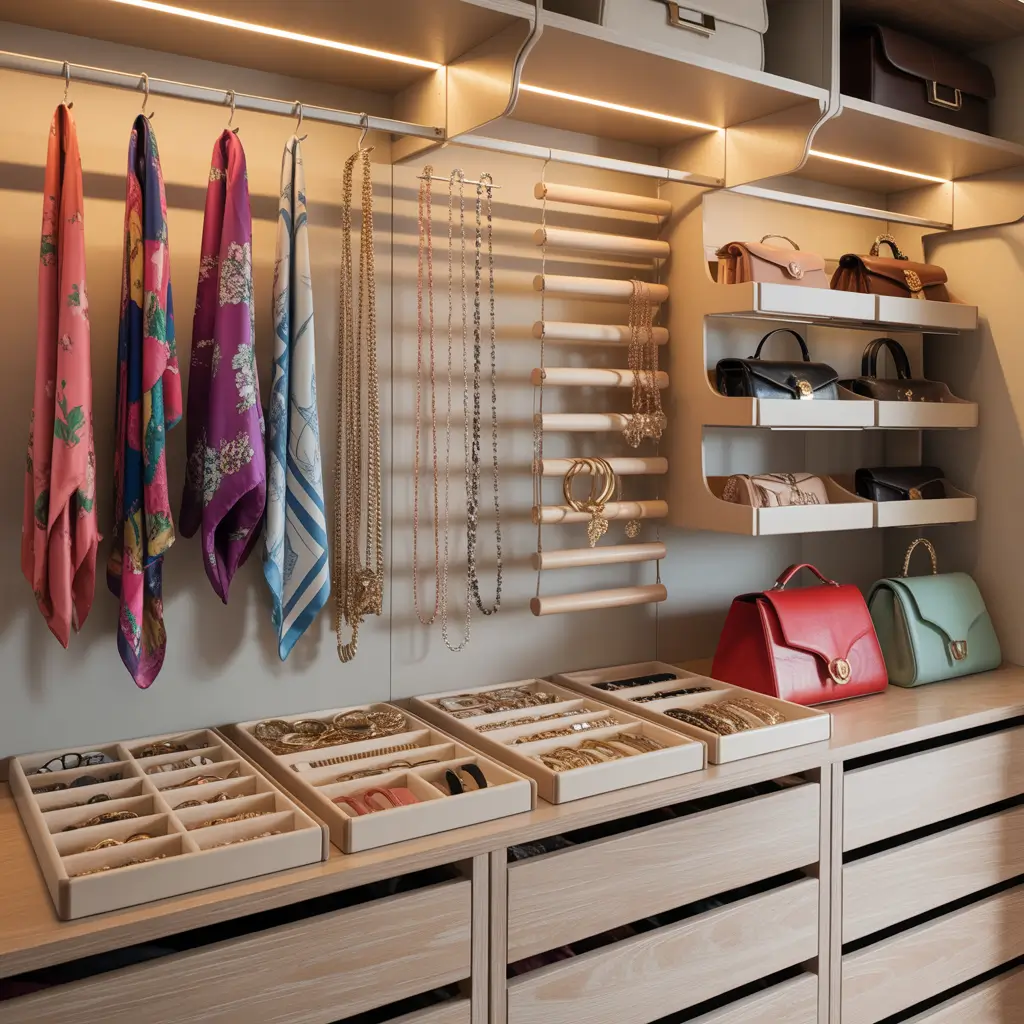
Accessories in small closets need specialized storage because they don’t stack or hang like regular clothes. I struggled with accessory chaos for years before finding solutions that keep everything organized, visible, and accessible.
The key is matching storage to each accessory type. What works for scarves fails for jewelry. What’s perfect for bags doesn’t work for belts. Custom solutions for each category transform accessory storage completely.
Jewelry Organization Systems
Keeping jewelry untangled and visible:
- Velvet jewelry trays in shallow drawers
- Wall-mounted jewelry organizers
- Acrylic multi-compartment organizers
- Ice cube trays for earring storage
- Hanging organizers with clear pockets
I mounted a jewelry organizer on my closet wall, and seeing all my jewelry daily means I actually wear it. When everything was tangled in a drawer, I wore the same three pieces constantly because I forgot what I owned.
Bag and Purse Storage
Protecting and displaying bags:
- Shelf dividers keep bags upright
- Clear dust bags for protection
- Hooks for everyday bags
- Stuffed bags maintain their shape
- Stacked boxes for special occasion bags
I use shelf dividers to keep my bags standing upright on a shelf. I stuff each bag with tissue paper to maintain its shape, and I can see every bag I own at a glance. This visibility means I rotate through my bags instead of using the same one forever.
Scarf, Belt, and Hat Solutions
Organizing awkward accessories:
- Hanging organizers with individual compartments
- Wall-mounted hooks for scarves
- Over-door racks for belts
- Pegboard for hats and caps
- Drawer dividers for folded items
My scarves hang on S-hooks from a mounted rod, and I can finally see every scarf I own. This simple solution cost $8 (towel rod plus hooks) and transformed scarves from tangled drawer mess to visible, accessible display.
Making Small Closet Organization Last
Here’s the truth: the best small closet organization system is the one you’ll actually maintain. I’ve created elaborate systems that failed within weeks because they required too much effort.
Now I focus on sustainable solutions that work with my actual habits.
Your small closet will only stay organized if the system is simple enough to maintain daily. If putting away one shirt requires moving three other things, you’ll never maintain it.
I design my systems around my laziest self, and that’s exactly why they work.
Start with just one section – maybe shoes or just one shelf. Get that working smoothly for three weeks before tackling another area. Gradual changes create lasting habits, while total overhauls create overwhelm that leads to failure.
Your small closet might not be big, but with smart organization, it can hold everything you need and make your life infinitely easier. Time to stop fighting your closet and start making it work for you 🙂