10 Brilliant Small Living Room Ideas Apartment Ideas for Cozy Spaces
- Apartment Decor
 Ben
Ben- 0
- 27 minutes read
Small apartment living rooms are like puzzles where half the pieces went missing and the picture on the box is lying to you.
I’ve lived in seven different apartments over the past decade (yes, I move a lot), and my living rooms have ranged from “cozy” to “is this a closet?”
The smallest was 95 square feet, and yet I somehow made it work for movie nights, working from home, and even hosting dinner parties.
You know what’s funny? People with massive living rooms always complain about not having enough space, while those of us with tiny apartments become storage ninjas who can fit a whole life into a shoebox.
After years of bumping into furniture and playing Tetris with my belongings, I’ve figured out exactly what works and what’s just Instagram fantasy that falls apart in real life.
These 10 small living room apartment ideas come from actual experience living in actual small spaces with actual limitations like landlords who hate nail holes and budgets that laugh at West Elm prices.
Let’s turn your cramped living room into something that doesn’t make you want to cry every time you come home.
1. Space-Saving Furniture Layouts for Small Apartments
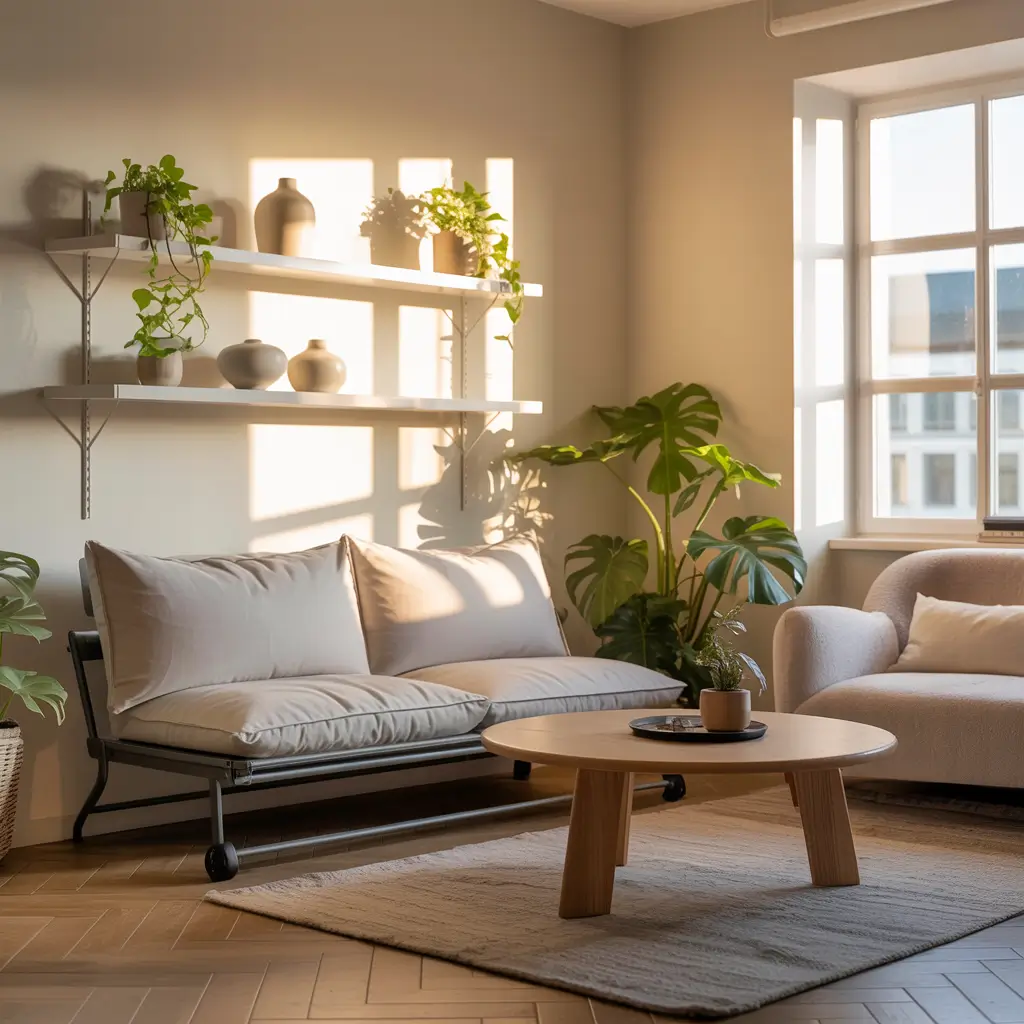
Layout is everything when you’re working with limited square footage, and I learned this after spending six months with a coffee table I had to climb over to reach my kitchen. The right furniture arrangement can make 100 square feet feel spacious, while the wrong one turns 200 square feet into an obstacle course.
Float your furniture away from walls – I know this sounds crazy when space is tight, but hear me out. I positioned my small sofa about 8 inches from the wall, creating a tiny “hallway” behind it that I use for a narrow console table. This holds lamps, plants, and storage baskets while defining the living area. The floating approach creates zones instead of one cramped box.
Think about traffic flow before placing anything. I map out walking paths with masking tape on the floor (looks ridiculous, works perfectly) to ensure I can move through the space without doing that awkward sideways shuffle. Keep at least 24 inches for main pathways and 18 inches for secondary routes. Trust me, your shins will thank you later.
Layout Rules That Actually Work
Follow these guidelines:
- Float main furniture pieces 6-12 inches from walls
- Create clear pathways (24″ minimum for main routes)
- Position largest piece first, build around it
- Use rugs to define separate zones
- Angle furniture in corners to save space
2. Cozy Minimalist Living Room Designs
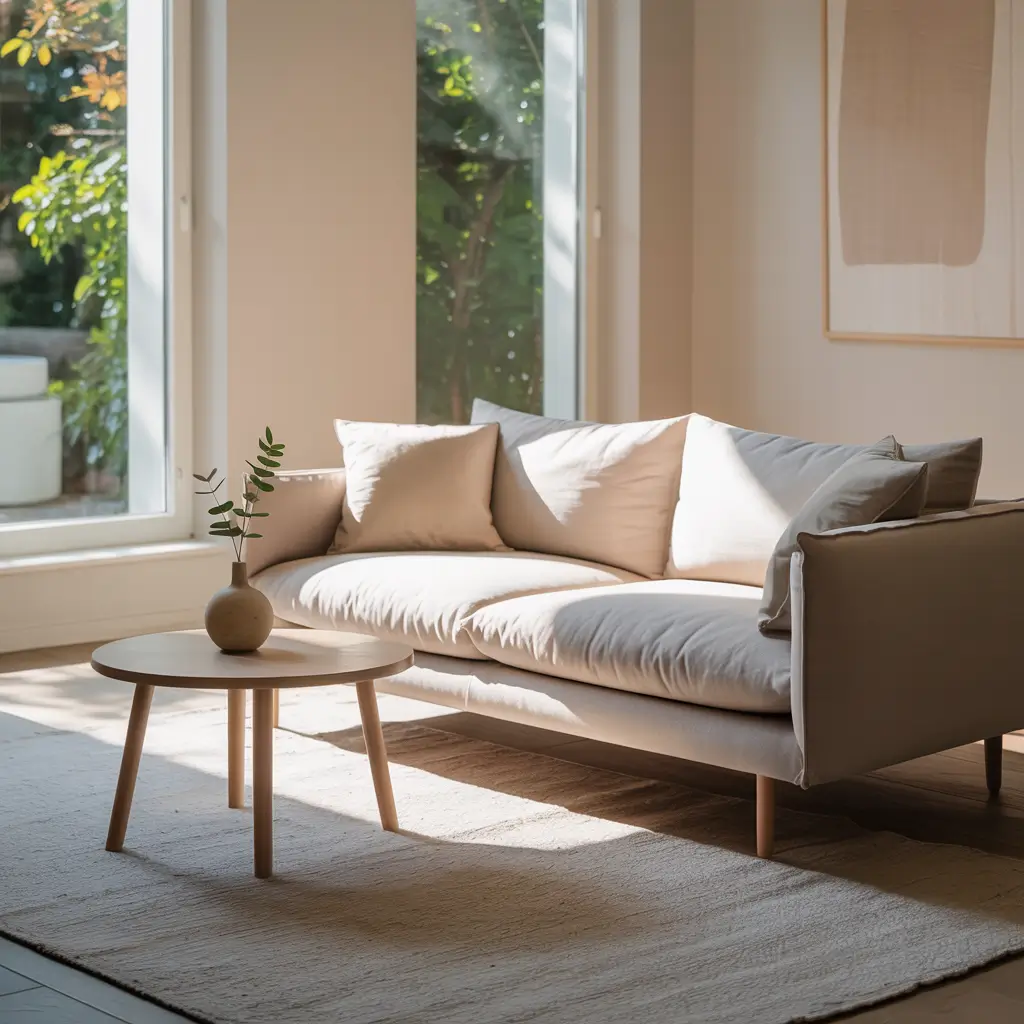
Minimalism in small apartments isn’t about living with nothing – it’s about living with exactly what you need and making those things count. I went full minimalist two years ago after realizing I owned three can openers but nowhere to sit comfortably. Cozy minimalism means quality over quantity, warmth over clutter.
Start by ruthlessly editing your stuff. I kept my most comfortable sofa, one perfect coffee table, two plants, and exactly five decorative items that actually mean something to me. Everything else either went to storage, got donated, or ended up in that friend’s apartment who “loves collecting things.” The instant breathing room this created made my apartment feel twice as big.
Add warmth through textures, not objects. My minimalist living room layers different materials – a chunky wool throw, linen cushions, a jute rug, one velvet accent pillow. These textures create visual interest without adding clutter. The best part? I can actually see my floor now, which apparently is hardwood. Who knew?
3. Multi-Functional Furniture Ideas
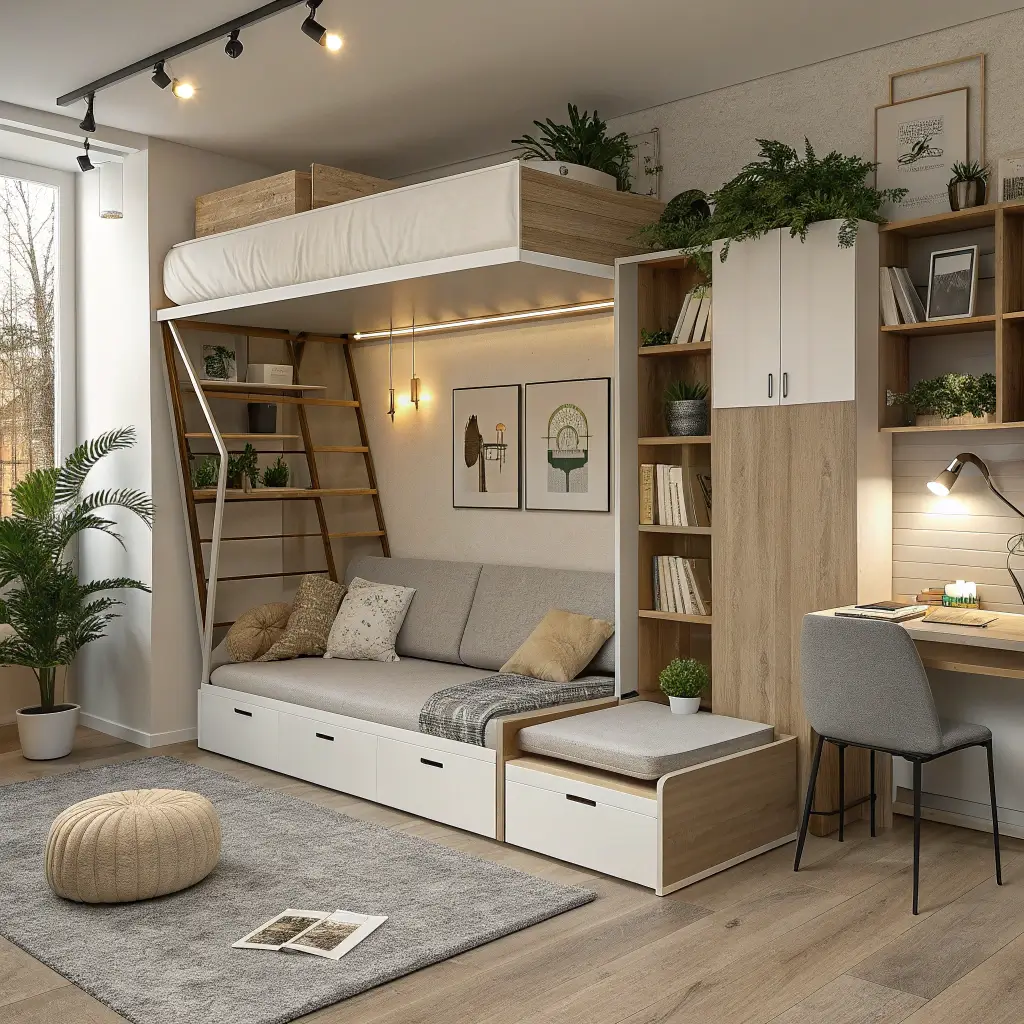
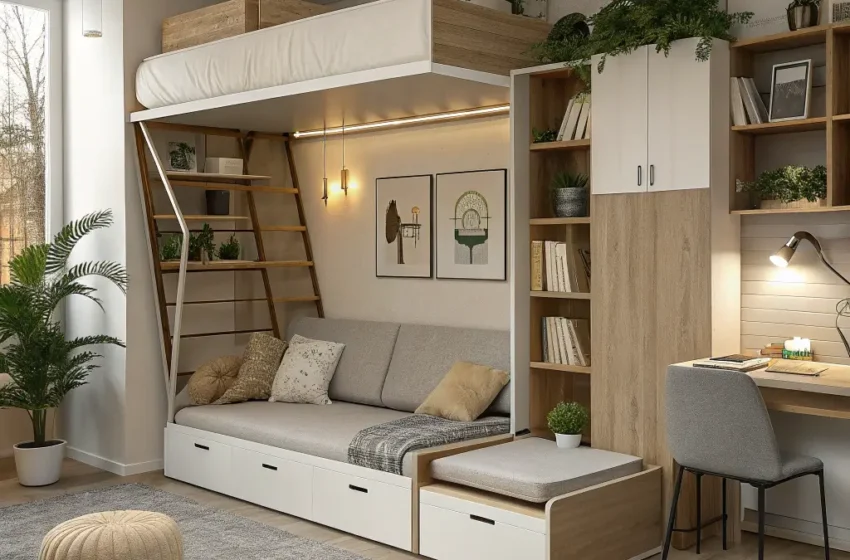
Multi-functional furniture saved my sanity and my security deposit. When every piece serves multiple purposes, you need less stuff overall, which means more space for actually living. My coffee table lifts up to become my desk, has storage inside for blankets, and rolls on hidden wheels when I need floor space for yoga. One piece, four functions – that’s the sweet spot.
Storage ottomans are the unsung heroes of small apartments. I have two that hold everything from winter clothes to board games, serve as extra seating when friends visit, and work as footrests during Netflix binges. They even become makeshift side tables when I’m too lazy to reach for my actual table.
Consider furniture that transforms based on need. My console table extends into a six-person dining table (okay, four people comfortably, six if we really like each other). Daily, it’s a tiny 12-inch deep surface against the wall. Party mode? Full dining setup. This flexibility means I don’t sacrifice floor space for occasional entertaining. FYI, transforming furniture has gotten surprisingly sophisticated and doesn’t all look like dorm room rejects anymore.
Must-Have Multi-Functional Pieces
Invest in these versatile items:
- Lift-top coffee tables with hidden storage
- Storage ottomans (buy two, trust me)
- Expandable console-to-dining tables
- Sofa beds that don’t suck
- Nesting tables that tuck away
Also Read: 12 Gorgeous Small Apartment Living Room Ideas and Layout Tricks
4. Bright and Airy Small Living Rooms
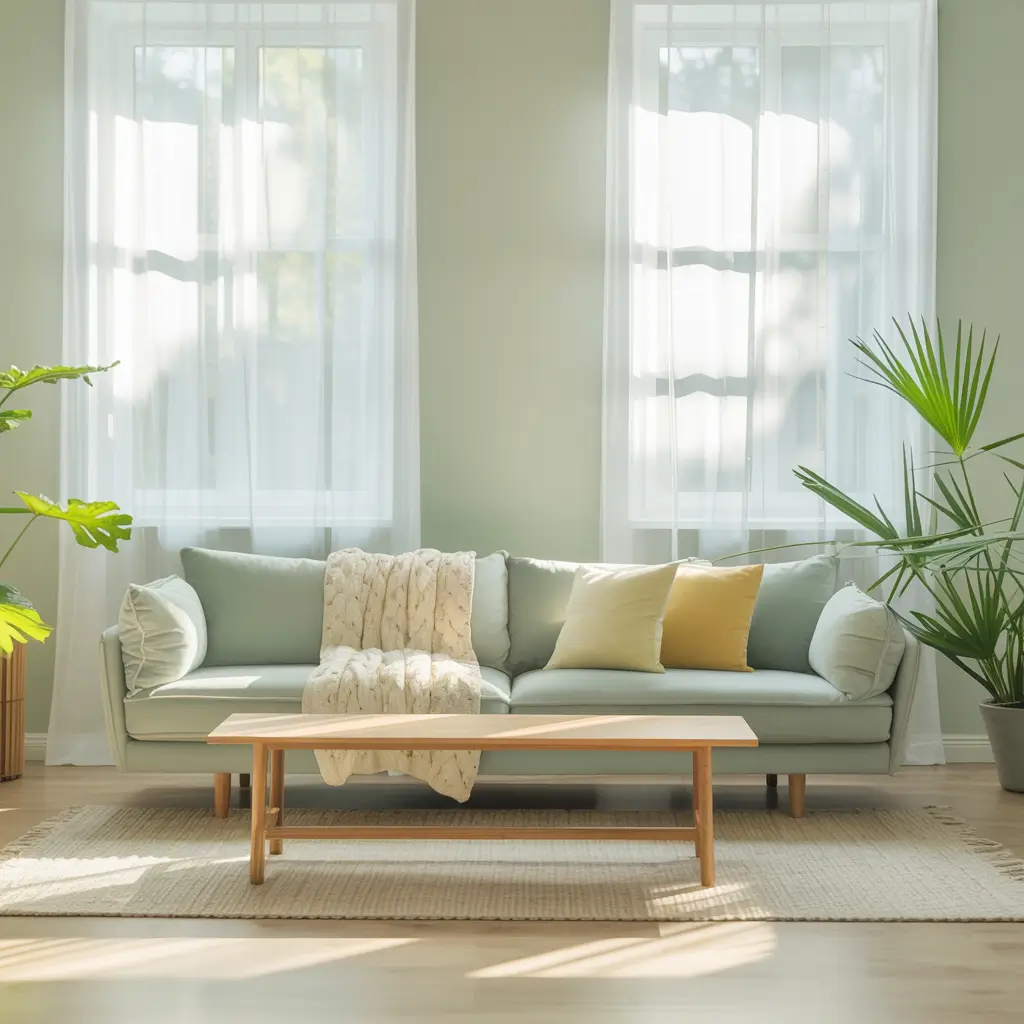
Light is basically free square footage – it makes small spaces feel larger without moving a single wall. My north-facing apartment gets approximately zero natural light, but strategic choices make it feel bright anyway. Light colors, mirrors, and minimal window treatments work together to maximize every photon.
Paint everything white or super light colors. I painted my walls, ceiling, trim, and even that ugly radiator in the same shade of white (Benjamin Moore’s Cloud White, if you’re curious). This eliminates visual breaks that chop up space. Some people think all-white is boring, but those people probably have actual room to display their personality through furniture.
Mirrors double your visual space and light instantly. I hung a massive mirror (found on Facebook Marketplace for $40) directly across from my only window. This effectively doubles my natural light and makes the room feel twice as deep. Position mirrors to reflect your best views – windows, artwork, anything except that pile of laundry you’re ignoring.
5. Stylish Storage Solutions for Tiny Spaces
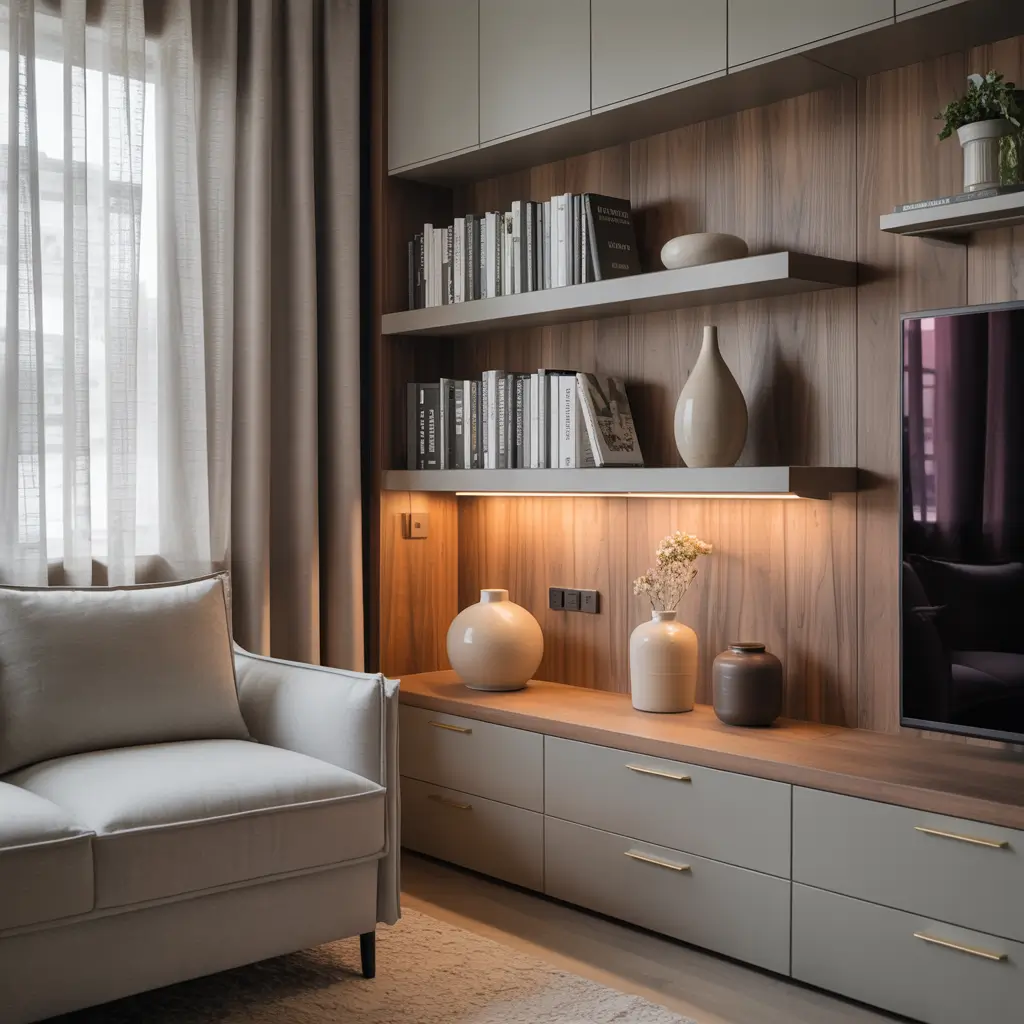
Storage in small apartments requires thinking like a criminal mastermind – finding hiding spots nobody expects. I’ve discovered storage opportunities in places that would make Marie Kondo proud. The key is looking up, down, and behind things instead of just around. Vertical storage and hidden compartments are your best friends when floor space is precious.
Wall-mounted everything freed up roughly 30% of my floor space. Floating shelves, wall-mounted desk, TV on the wall, even wall-mounted bedside tables (yes, in my living room – it’s complicated). The floor space underneath stays clear, making the room feel larger while still providing storage and surfaces where needed.
Under-sofa storage changed my life. I bought furniture risers to lift my sofa 4 inches, then slide storage boxes underneath for seasonal items and extra bedding. Nobody sees them, but they hold about 15% of my belongings. Behind-door organizers on every door (bathroom, closet, entrance) hold everything from shoes to cleaning supplies without taking up any room space.
Hidden Storage Spots
Maximize these areas:
- Vertical wall space (up to the ceiling)
- Under all furniture with risers
- Behind doors with organizers
- Inside ottomans and benches
- Above doorways with shelving
6. Color Schemes That Make Rooms Look Bigger
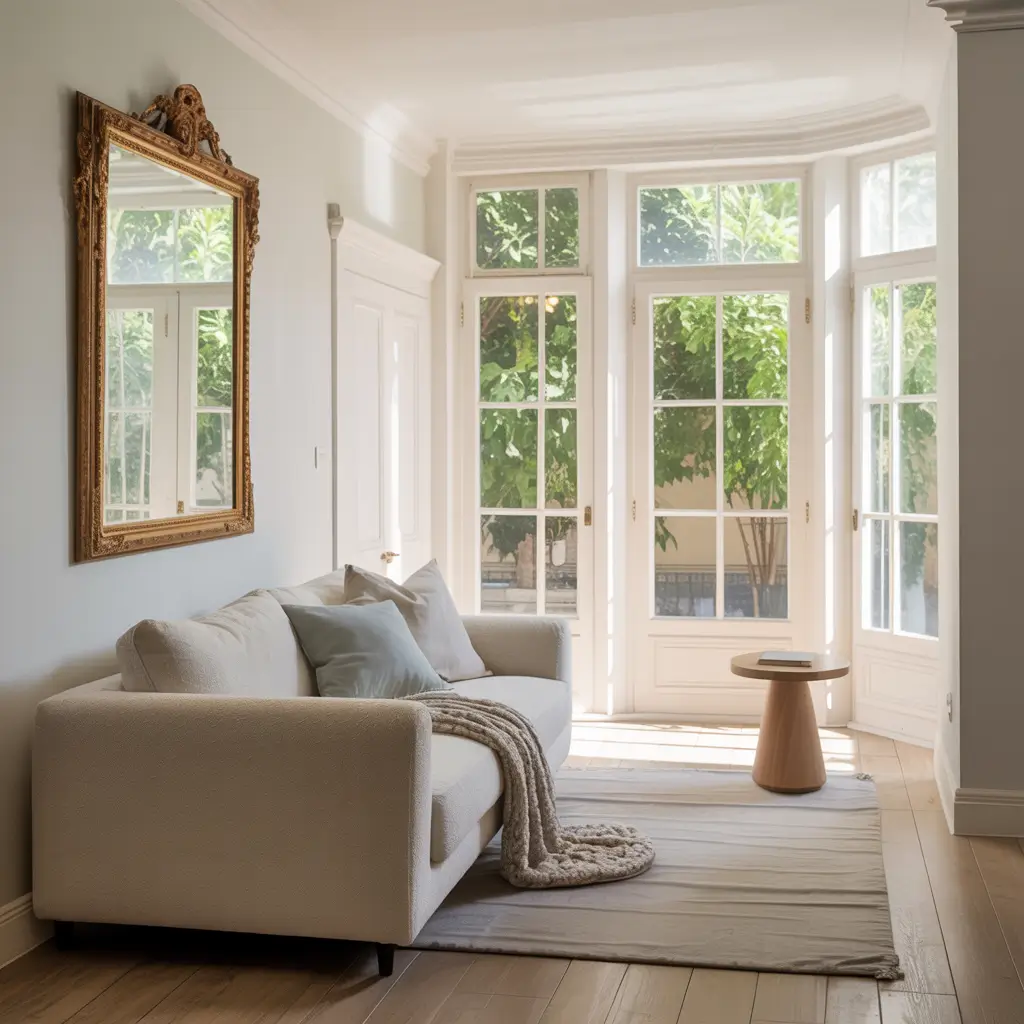
Color psychology is real, and the right palette can make your tiny living room feel spacious instead of suffocating. I learned this after painting an accent wall dark purple in my first apartment – the room immediately shrank by what felt like 50%. Now I stick to light, cool colors that visually recede and make walls feel farther away than they actually are.
Monochromatic color schemes create flow that makes spaces feel larger. My current palette uses various shades of white, cream, and pale gray with tiny touches of sage green in plants and pillows. The lack of contrast means your eye travels smoothly around the room without stopping at color boundaries that would emphasize the actual dimensions.
Add personality through removable elements like pillows, throws, and artwork. This lets you play with color without committing to painted walls or large furniture. I change my accent colors seasonally – warm terracotta in fall, cool blues in summer – for under $50 using thrift store finds and clearance pillows.
Also Read: 10 Creative Apartment Living Room Ideas for Renters
7. Compact Seating Arrangements for Apartments
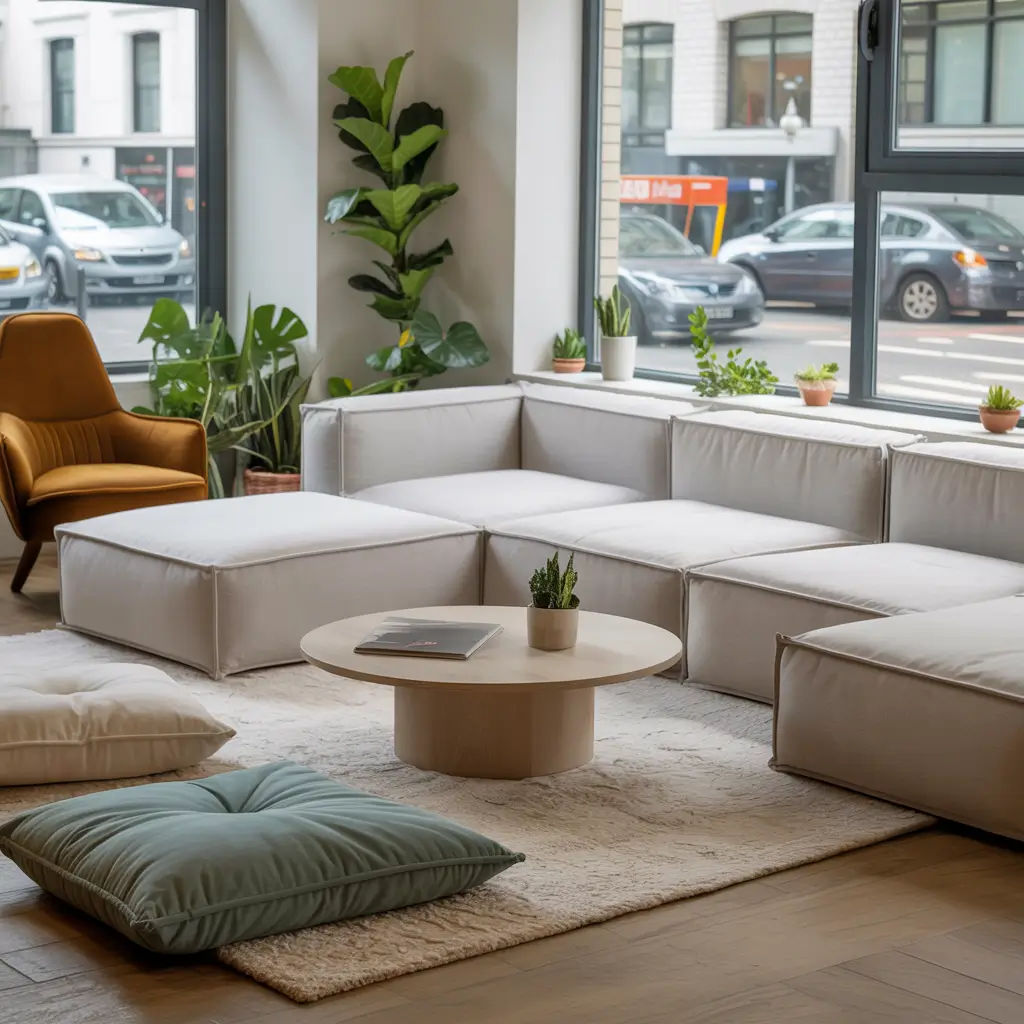
Seating in small apartments requires brutal honesty about how you actually live versus how you imagine living. I used to have seating for eight people in my 150-square-foot living room because “what if I have a party?” Spoiler: I never had parties that big, and navigating my living room felt like an obstacle course. Design for your real life, not your fantasy life.
Choose armless or low-arm seating to reduce visual bulk. My current loveseat has super low arms that don’t block sightlines or create visual barriers. This makes the room feel more open even though the actual seating footprint is similar to a regular sofa. Bonus: cats love walking on low sofa arms, if that matters to you.
Flexible seating adapts to different situations. I keep two folding chairs in my closet for the rare occasions I have more than two guests. Floor cushions stack in a corner and come out for movie nights. This approach means comfortable daily living with options for entertaining, instead of permanent seating for imaginary guests. :/
Smart Seating Solutions
Consider these options:
- Armless or low-arm sofas for openness
- Backless benches that tuck under tables
- Floor cushions for flexible guest seating
- Folding chairs stored in closets
- Storage ottomans for dual purpose
8. Small Living Room Decor on a Budget
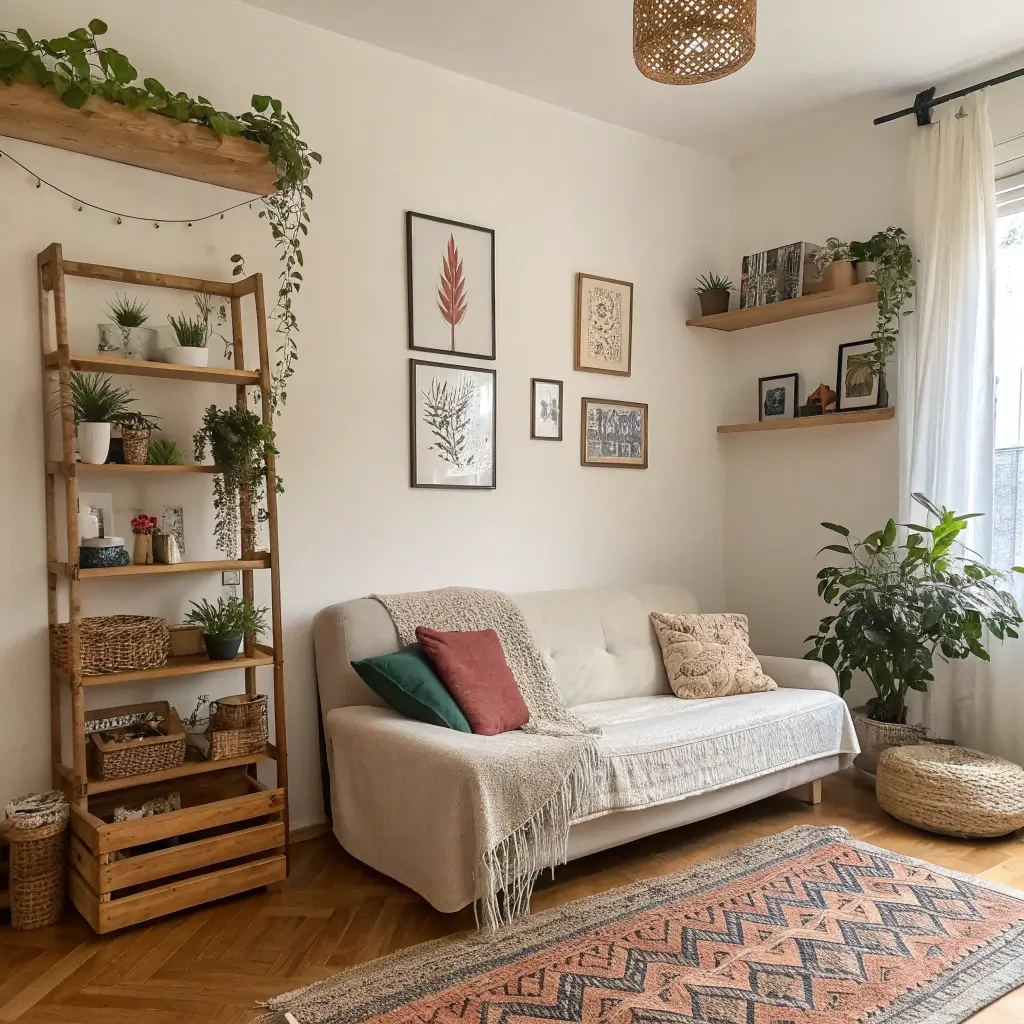
Decorating a small living room on a budget actually works in your favor – you need less stuff to make an impact. I’ve decorated entire living rooms for under $300 by being strategic about what I buy and creative about what I make. Thrift stores, DIY projects, and patience beat expensive furniture stores every single time.
Paint creates the biggest impact for the least money. I transformed a free roadside dresser into a gorgeous TV stand with $12 worth of paint. Painted an accent wall for $30. Updated all my picture frames with spray paint for $8. The total visual impact looks like thousands of dollars in updates for less than a nice dinner out.
Shop your own apartment first. I regularly “shop” my bedroom and kitchen for items to style my living room. That cutting board becomes a tray for candles. Bedroom throw pillows migrate to the sofa. Moving items between rooms costs nothing but creates fresh looks that feel like redecorating.
9. Creative Wall and Floor Space Hacks
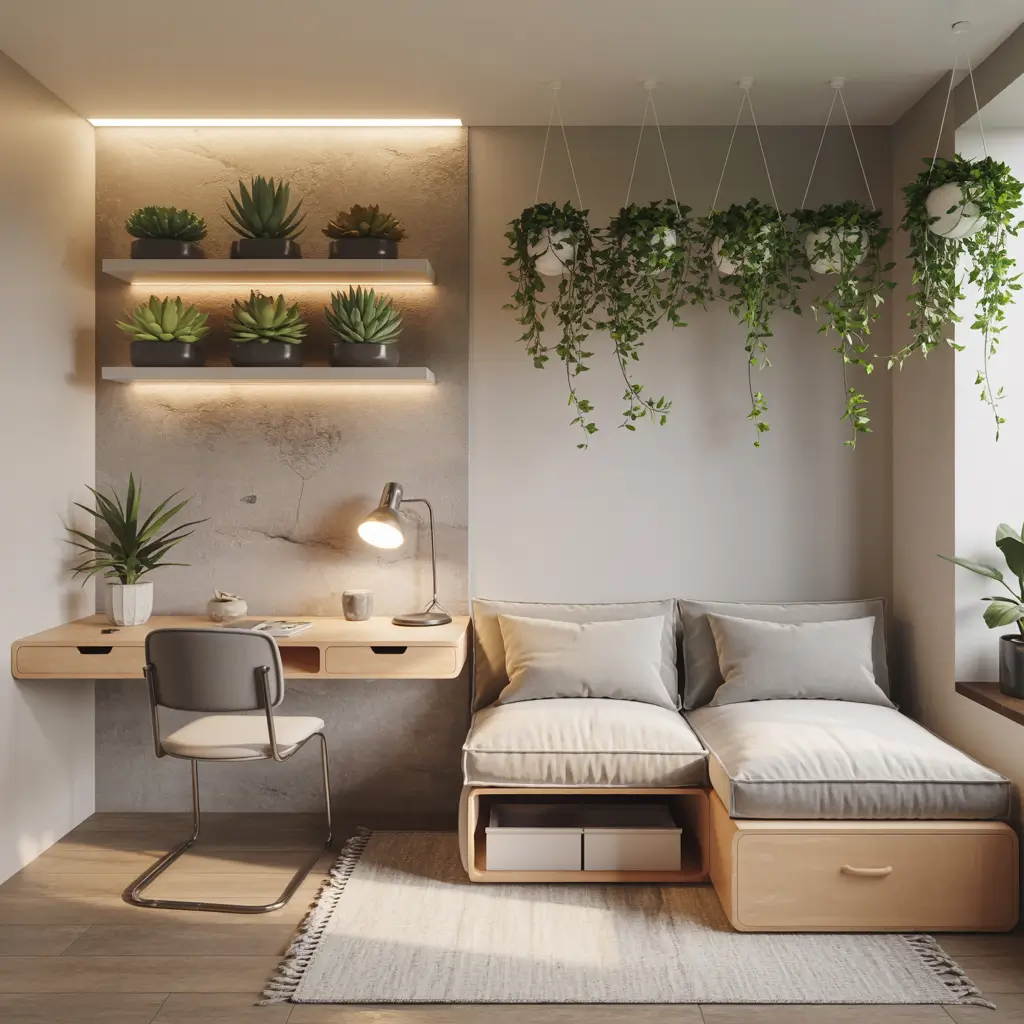
Walls and floors in small apartments need to work harder than just being surfaces. Every square inch counts when you’re dealing with limited space. I’ve turned walls into storage systems and floors into hidden compartments. Thinking creatively about surfaces doubles your usable space without adding furniture.
Wall-mounted desks that fold flat changed my work-from-home situation completely. Mine folds down when I need to work, then disappears against the wall when I’m done. This replaced a bulky desk that ate up 12 square feet of precious floor space. The fold-down version takes up exactly zero floor space when closed.
Area rugs define zones and hide floor storage access. I have a storage ottoman that lives under a rug corner – lift the rug, access the storage, drop the rug, invisible storage solution. Rugs also make small spaces feel intentionally designed rather than just cramped. Choose rugs slightly smaller than you think you need – too-big rugs in small spaces make rooms feel even smaller.
Wall and Floor Tricks
Maximize surfaces with:
- Fold-down wall desks and tables
- Picture ledges instead of individual frames
- Peel-and-stick tiles for rental-friendly updates
- Area rugs to define zones
- Wall-mounted lighting instead of floor lamps
Also Read: 15 Stunning Apartment Living Room Inspiration Ideas for Cozy Spaces
10. Open-Concept Small Apartment Living Ideas
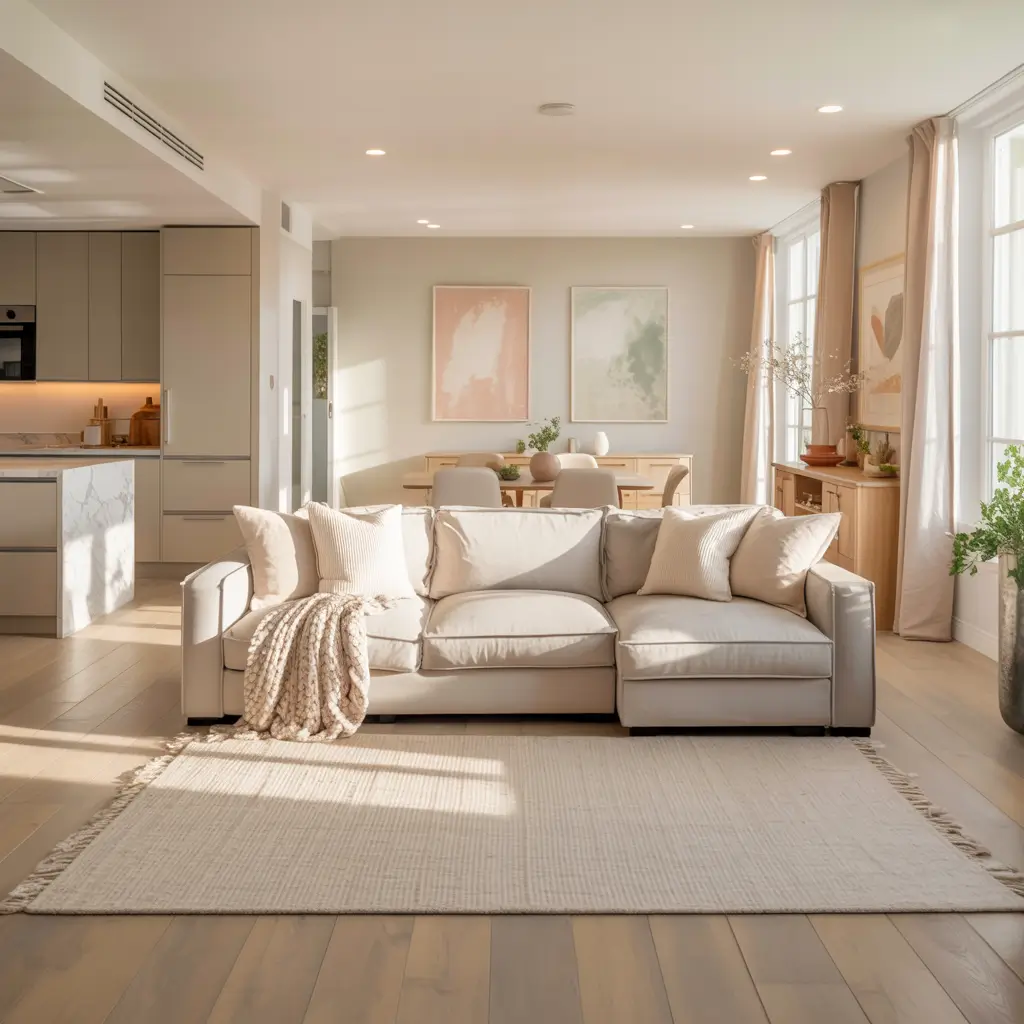
Open-concept in a small apartment means embracing that your living room is also your dining room, office, and sometimes bedroom. Fighting this reality makes you miserable. Accepting and designing for it makes your space functional. My 300-square-foot apartment is entirely open-concept (fancy way of saying it’s one room), and I’ve learned to make it work beautifully.
Define zones without walls using furniture placement and rugs. My sofa backs to my “bedroom” area, creating a visual divide. A different rug defines my “office” corner. These psychological boundaries make one room feel like multiple spaces even though it’s all technically the same room.
Consistent color throughout prevents visual chaos in open spaces. I use the same white and gray palette everywhere, with sage green accents tying it all together. This creates flow and cohesion that makes my single room feel intentional rather than cramped. IMO, trying to give each “zone” its own color scheme in a small open space just creates visual noise that emphasizes how small it actually is. 🙂
Making Your Small Living Room Actually Livable
After exploring all these ideas, you might feel overwhelmed about where to start. Here’s my practical advice from years of small-space living: begin by removing stuff before adding anything new.
I guarantee you own things that are making your space feel smaller without adding value to your life.
The best small living room is one that works for your specific life. My solutions might not be your solutions, and that’s okay. Maybe you need more seating because you actually do host game nights.
Maybe you need zero seating because you live alone and eat dinner on your sofa (no judgment, I do this too).
Remember that small spaces force creativity that large spaces never demand. Some of my best design solutions came from having no other choice but to get creative.
Constraints breed innovation, and your small living room can be just as stylish and functional as any mansion living room – it just takes more thought.
Don’t try to implement all these ideas at once. Pick one or two that address your biggest pain points and start there. My living room evolution took three years, and I’m still tweaking things.
The beauty of small spaces is that small changes make big impacts.