10 Stylish Small Living Room with Dining Area Ideas for Modern Spaces
- Dining Room
 Ben
Ben- 0
- 35 minutes read
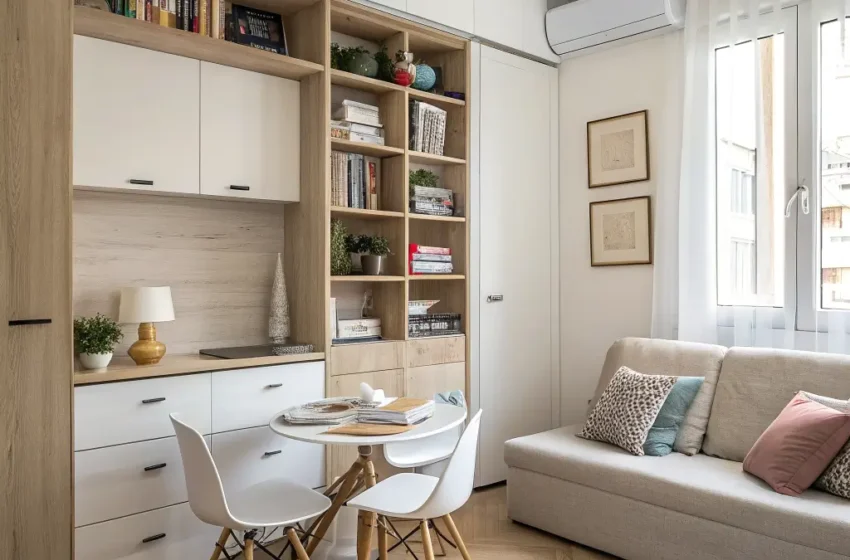
So you’re staring at your shoebox apartment wondering how to fit both a couch AND a dining table without turning your home into an obstacle course. I get it. My first studio was so small that I literally had to climb over my coffee table to reach the kitchen.
After five years of living in cramped spaces and helping friends maximize their tiny homes, I’ve learned that a small living room with dining area doesn’t have to feel like a compromise.
The trick isn’t about choosing between comfortable living or proper dining — it’s about making one space brilliantly serve both purposes.
These 10 small living room with dining area ideas come from real-life experiments, spectacular failures (like that time I bought a dining table that blocked my TV), and eventually finding solutions that actually work.
Let’s turn that cramped combo space into something that makes your friends wonder if you secretly hired an interior designer. Spoiler alert: you didn’t, you just got smart about your square footage.
1. Compact Scandinavian Living-Dining Combo
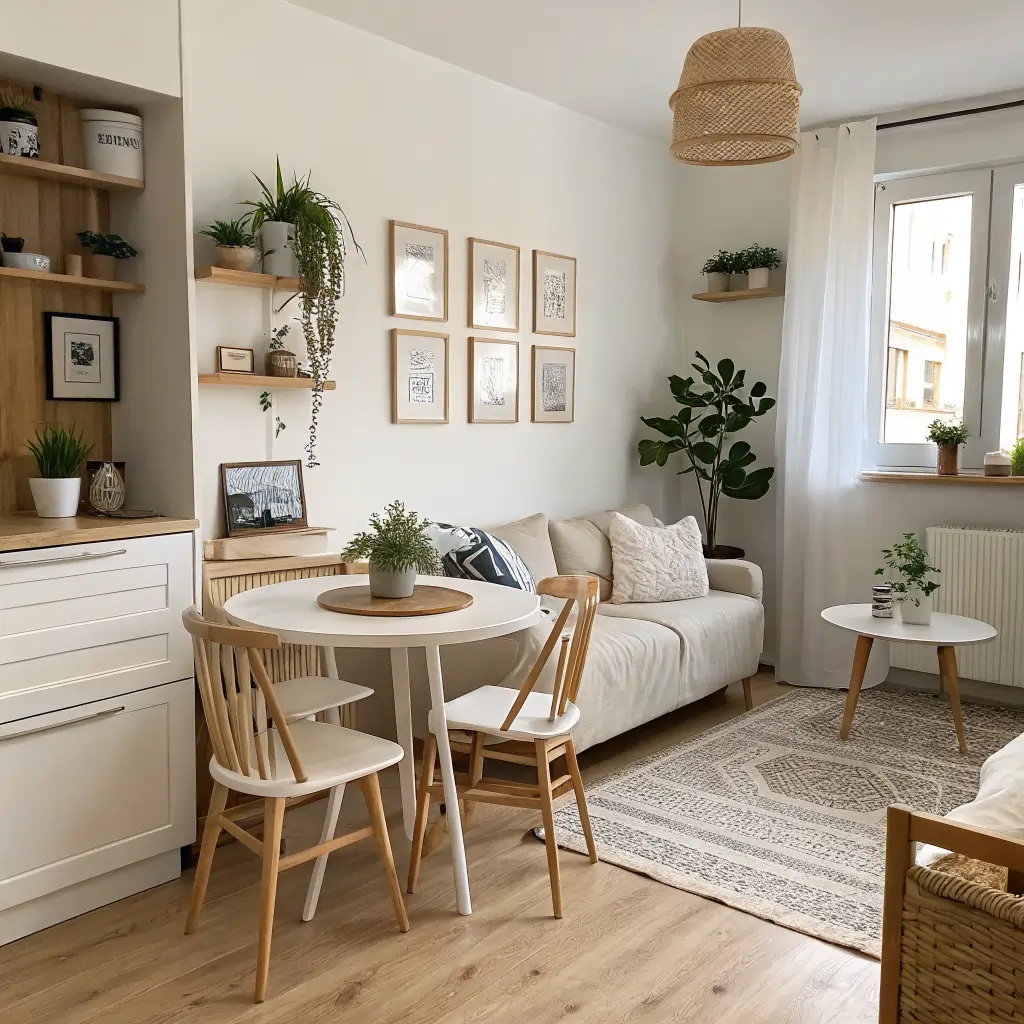
The compact Scandinavian living-dining combo takes everything Nordic design does right and shrinks it down to apartment-friendly proportions. This style proves that small spaces can feel both minimal and cozy without looking like an IKEA showroom exploded.
Why Scandinavian Style Conquers Small Spaces
I discovered Scandinavian design after visiting Copenhagen and wondering why their tiny apartments felt bigger than my American one-bedroom. The secret? They master negative space and natural light like nobody else. My Scandi-inspired living-dining combo now features a light oak dining table that doubles as my desk, paired with a streamlined gray sofa that doesn’t dominate the room.
Scandinavian design works in small spaces because it respects breathing room. Every piece serves a purpose, colors stay light and neutral, and clutter simply doesn’t exist.
Creating Your Scandi Sanctuary
Essential Scandinavian combo elements:
- Light wood furniture that doesn’t feel heavy
- Neutral color palette with white, gray, and beige
- Multifunctional pieces like storage benches for dining
- Minimal decor focusing on quality over quantity
- Natural textiles adding warmth without bulk
- Strategic lighting with pendant lamps defining zones
Have you noticed how Scandinavian homes always look magazine-ready? That’s because the style inherently resists clutter. When your space is small, that built-in organization becomes your best friend.
2. Multi-Functional Foldable Furniture Layout
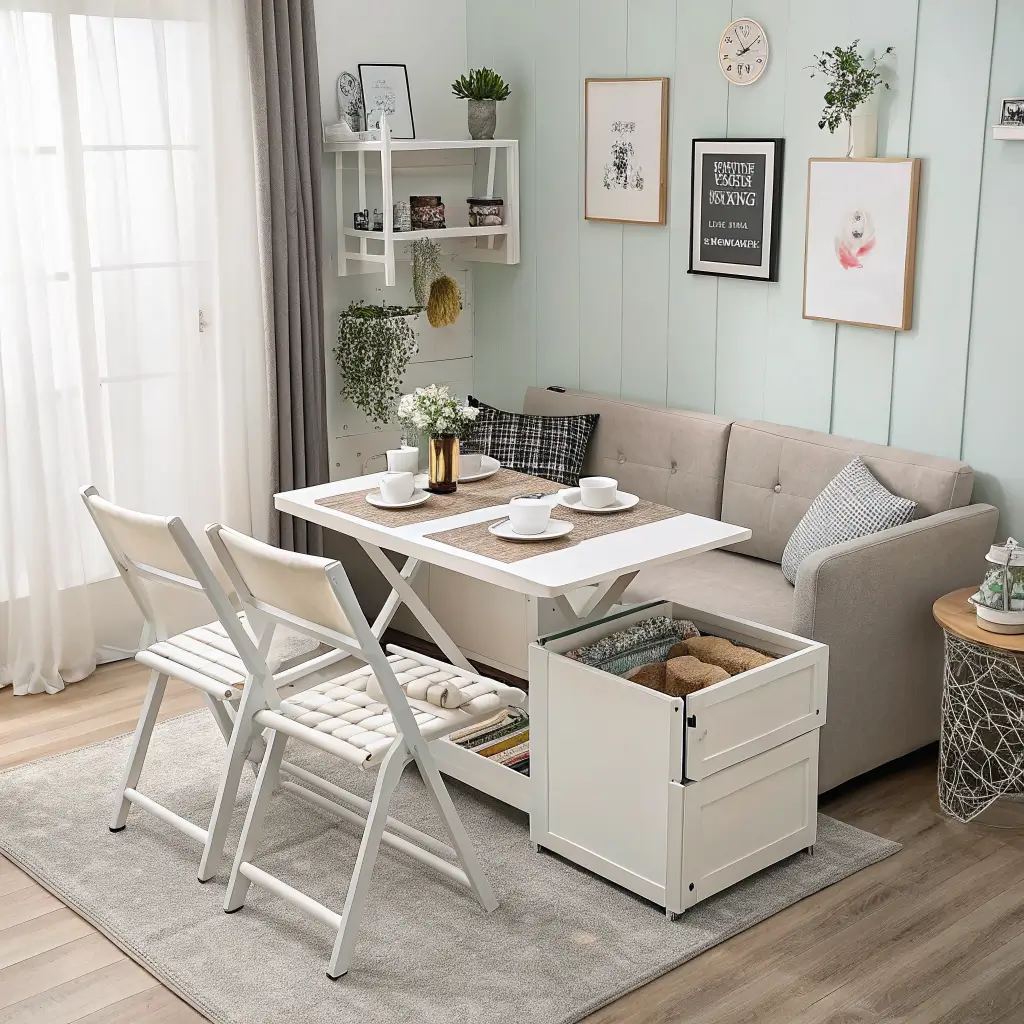
Multi-functional foldable furniture transforms your small living-dining space into a shapeshifter that adapts to whatever you need. Dinner party tonight? Unfold. Movie marathon tomorrow? Fold it all away.
The Transformer Approach to Small Spaces
My game-changer was a console table that extends into a 6-person dining table. Daily, it sits against the wall holding my keys and mail. For dinner parties, it extends across the room. The matching folding chairs hang on wall hooks that look like modern art when not in use.
Foldable furniture succeeds because it acknowledges that you don’t need a dining table 24/7. Why sacrifice living space for something you use twice a day?
Smart Foldable Solutions
Game-changing foldable options:
- Wall-mounted drop-leaf tables disappearing when not needed
- Nesting coffee tables that expand for dining
- Ottoman storage benches serving triple duty
- Butterfly dining tables with self-storing leaves
- Stackable stools that vanish under counters
- Murphy table-desk combos for ultimate flexibility
The beauty of foldable furniture? Your space transforms based on your needs, not the other way around. Monday’s yoga studio becomes Saturday’s dinner party venue.
3. Open-Plan Minimalist Design with Light Colors
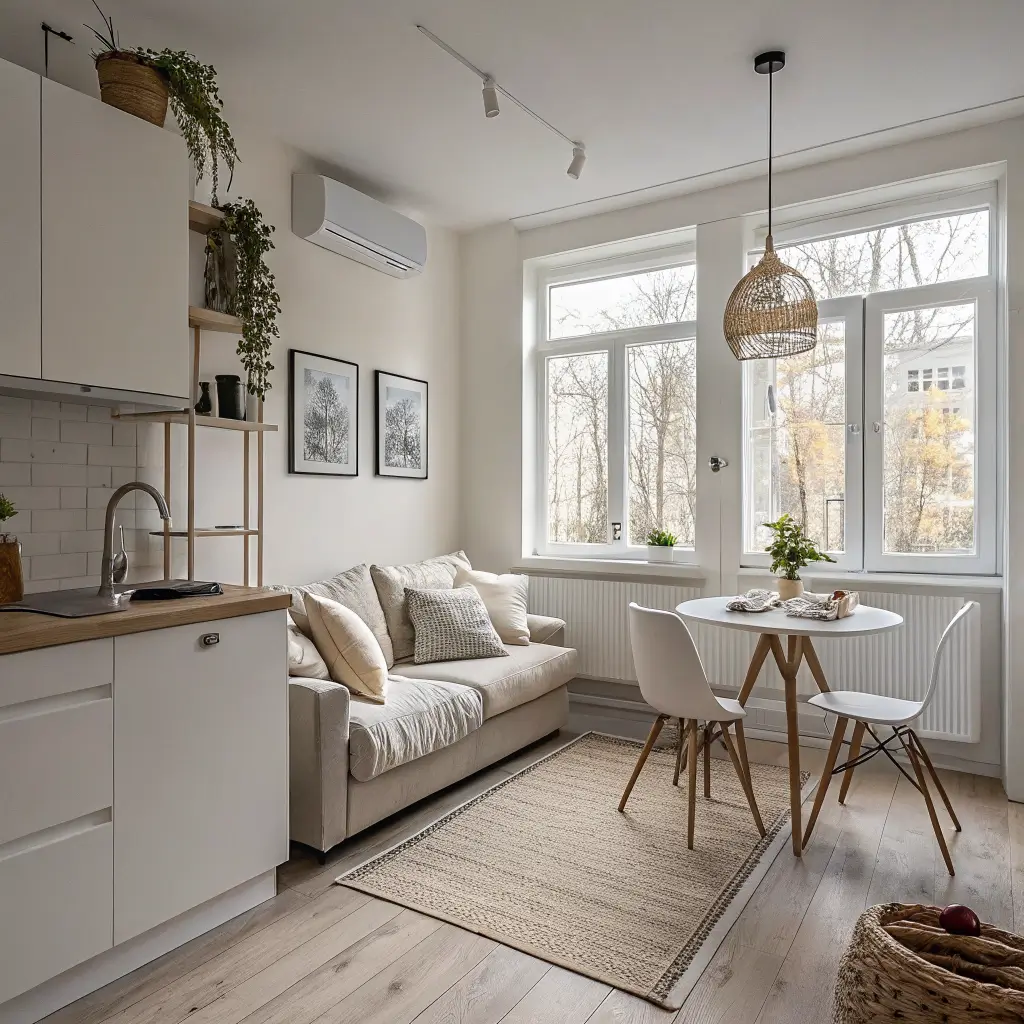
An open-plan minimalist design with light colors makes your small living-dining area feel twice its actual size. This approach uses visual tricks that fool your brain into perceiving more space than actually exists.
Light Colors as Space Multipliers
I painted my entire living-dining combo white (yes, even the ceiling), and the transformation was insane. The space instantly felt 30% larger without moving a single piece of furniture. Add a pale wood dining table and a light gray sofa, and suddenly my 400-square-foot area feels almost loft-like.
Light colors work because they reflect light rather than absorbing it. Every bounce of light expands the perceived boundaries of your space.
Executing Minimalist Magic
Creating spacious minimalism:
- Monochromatic color schemes eliminating visual boundaries
- Furniture with exposed legs showing more floor
- Glass or acrylic pieces maintaining sight lines
- Hidden storage everything keeping surfaces clear
- One accent color maximum preventing visual chaos
- Natural light maximization through sheer curtains
FYI, minimalism doesn’t mean boring. My single pop of emerald green in throw pillows makes the whole space feel intentional rather than unfinished.
Also Read: 12 Inspiring Kitchen with Dining Area Ideas for Small Spaces
4. Vertical Storage Solutions for Small Spaces
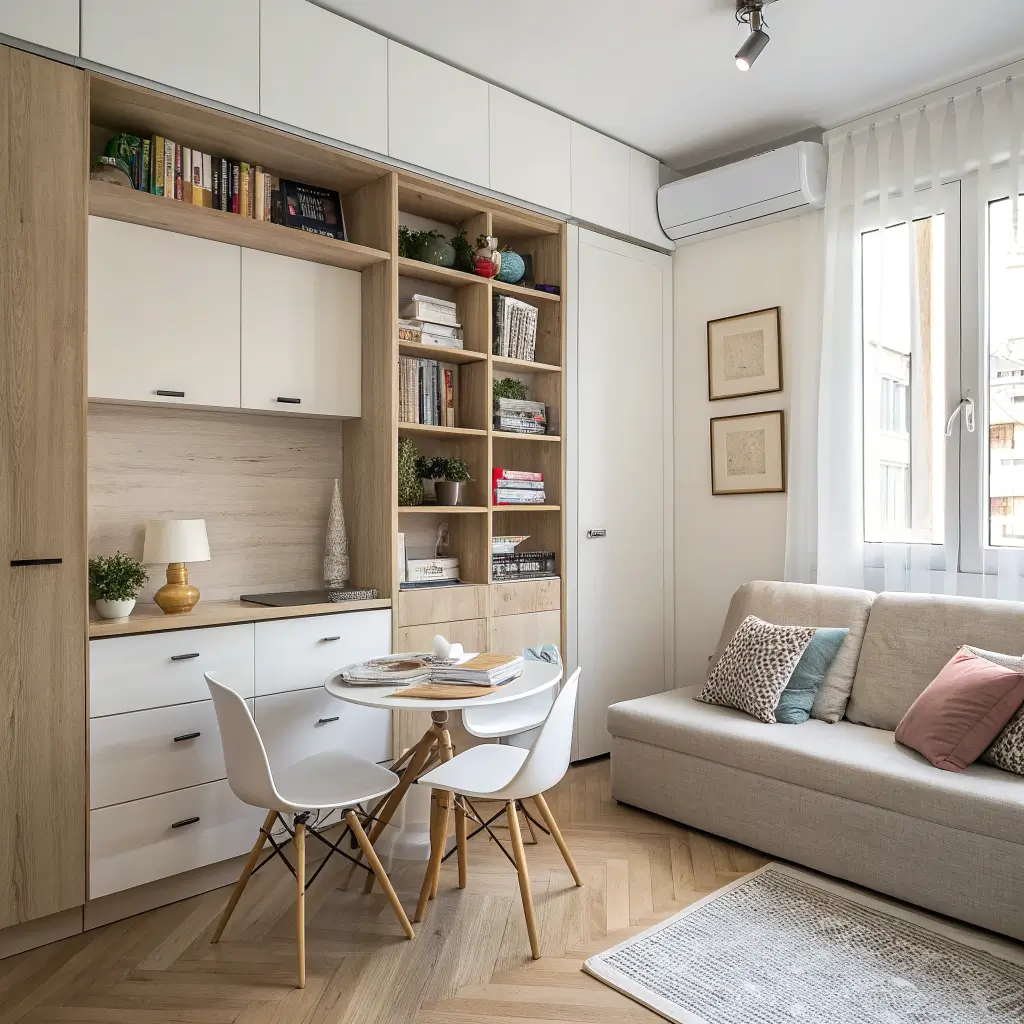
Vertical storage solutions make you look up — literally. When floor space is precious, your walls become the heroes of organization and style in your living-dining combo.
Going Vertical Changes Everything
I installed floor-to-ceiling shelving on one wall, and it revolutionized my space. Books, dishes, decor, and even folding chairs found homes up high. The dining area below stayed clear, and my living room suddenly had room to breathe.
Vertical storage works because it utilizes space that usually goes to waste. Those 8-foot ceilings? That’s 8 feet of storage potential you’re probably ignoring.
Mastering Vertical Organization
Vertical storage strategies that work:
- Floating shelves at varying heights creating interest
- Wall-mounted cabinets hiding clutter stylishly
- Pegboard systems for flexible arrangement
- Ceiling-mounted pot racks doubling as decor
- Tall narrow bookcases using minimal floor space
- Over-door organizers maximizing every surface
The key to vertical storage? Keep frequently used items at arm’s reach and decorative or occasional items up high. Nobody wants to climb for their coffee mug every morning. 🙂
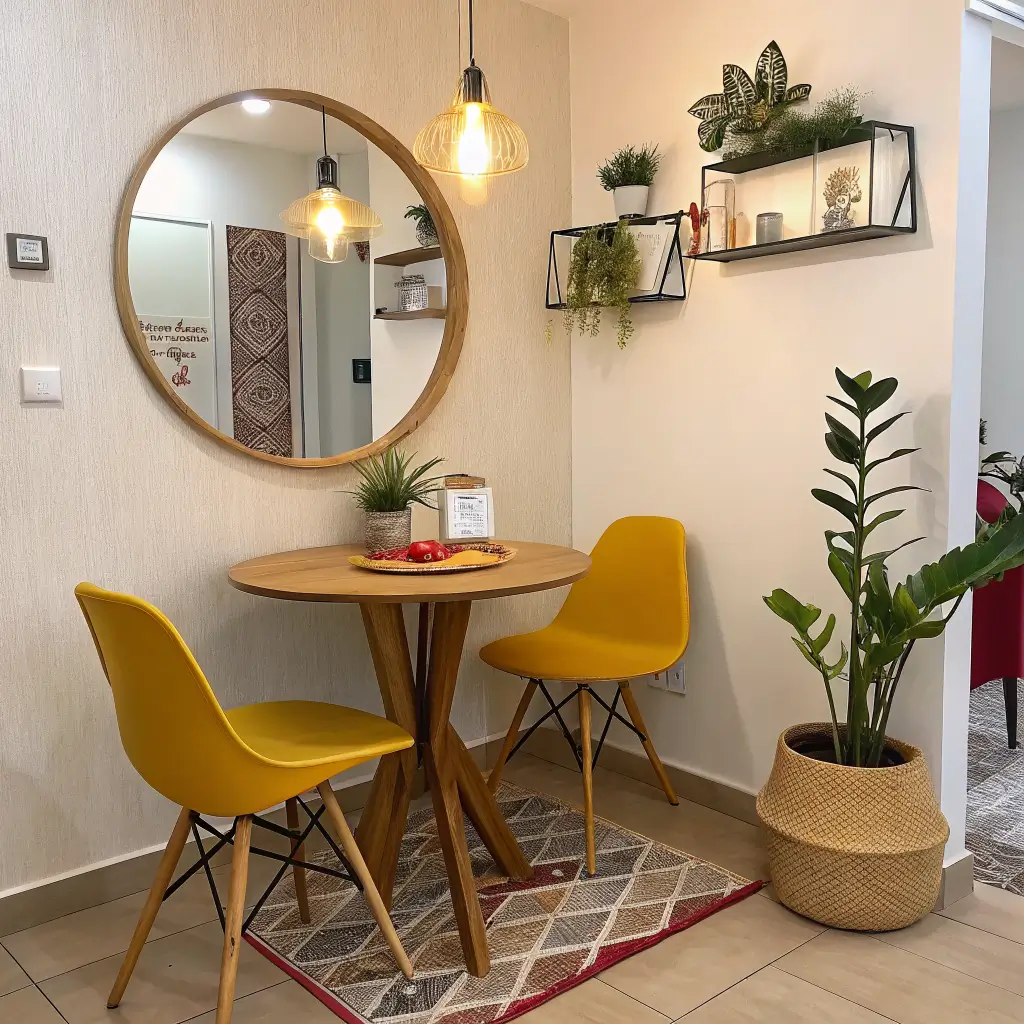
5. Cozy Corner Dining in a Small Living Room
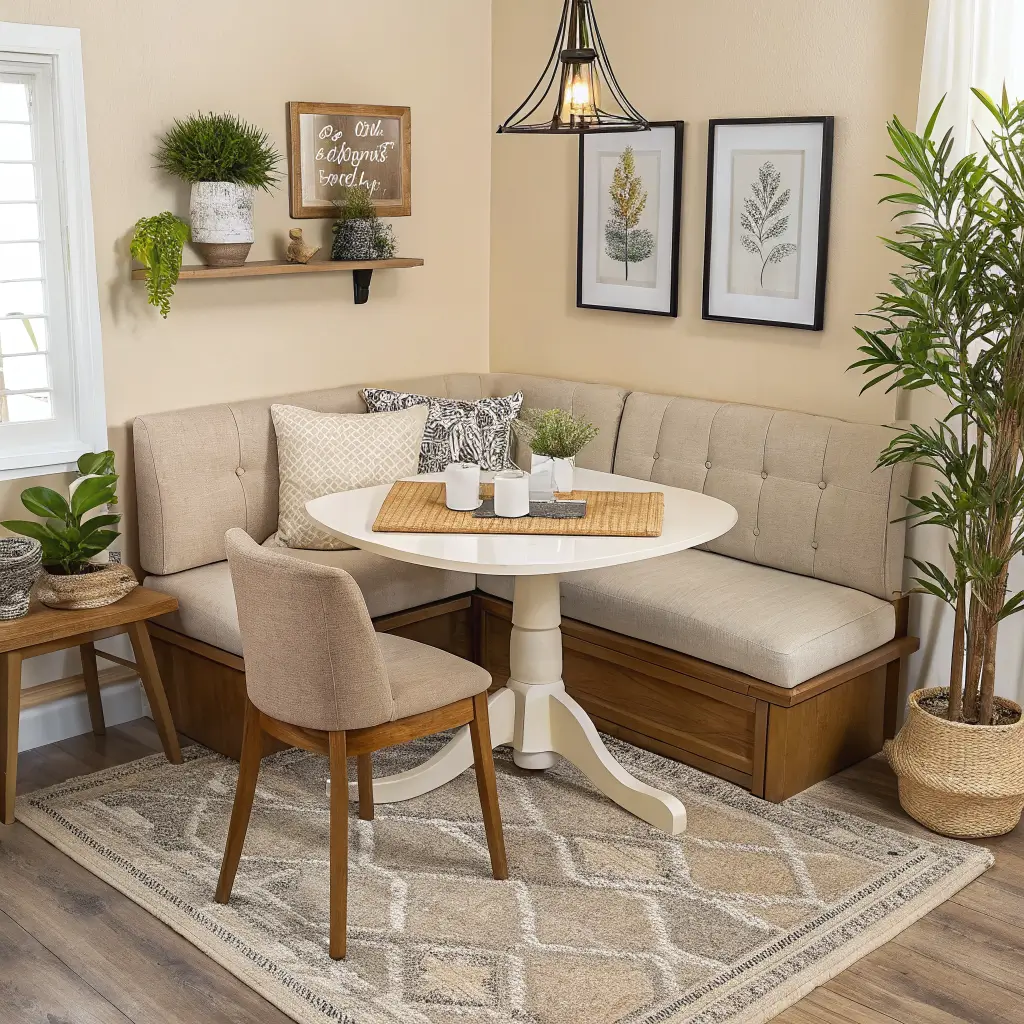
Cozy corner dining turns that awkward corner into the most charming spot in your living room. This setup creates an intimate dining nook without disrupting your living room’s flow.
Embracing Corner Potential
My living room’s corner used to hold a sad fake plant. Now it features a built-in banquette with hidden storage, a small round table, and pendant lighting that makes it feel like a restaurant booth. The L-shaped seating actually fits more people than traditional chairs would.
Corner dining works because it uses space that’s typically underutilized. The walls provide natural boundaries that define the dining zone without physical dividers.
Creating Corner Coziness
Corner dining essentials:
- Banquette seating maximizing every inch
- Round tables eliminating sharp corners
- Corner-specific lighting defining the space
- Built-in storage under bench seating
- Floating corner shelves for decor
- Cushions and textiles adding comfort
Corner dining nooks become everyone’s favorite spot because they feel special and separate while staying connected to the living area. It’s like having a VIP section in your own home.
6. Modern Studio-Style Living-Dining Fusion
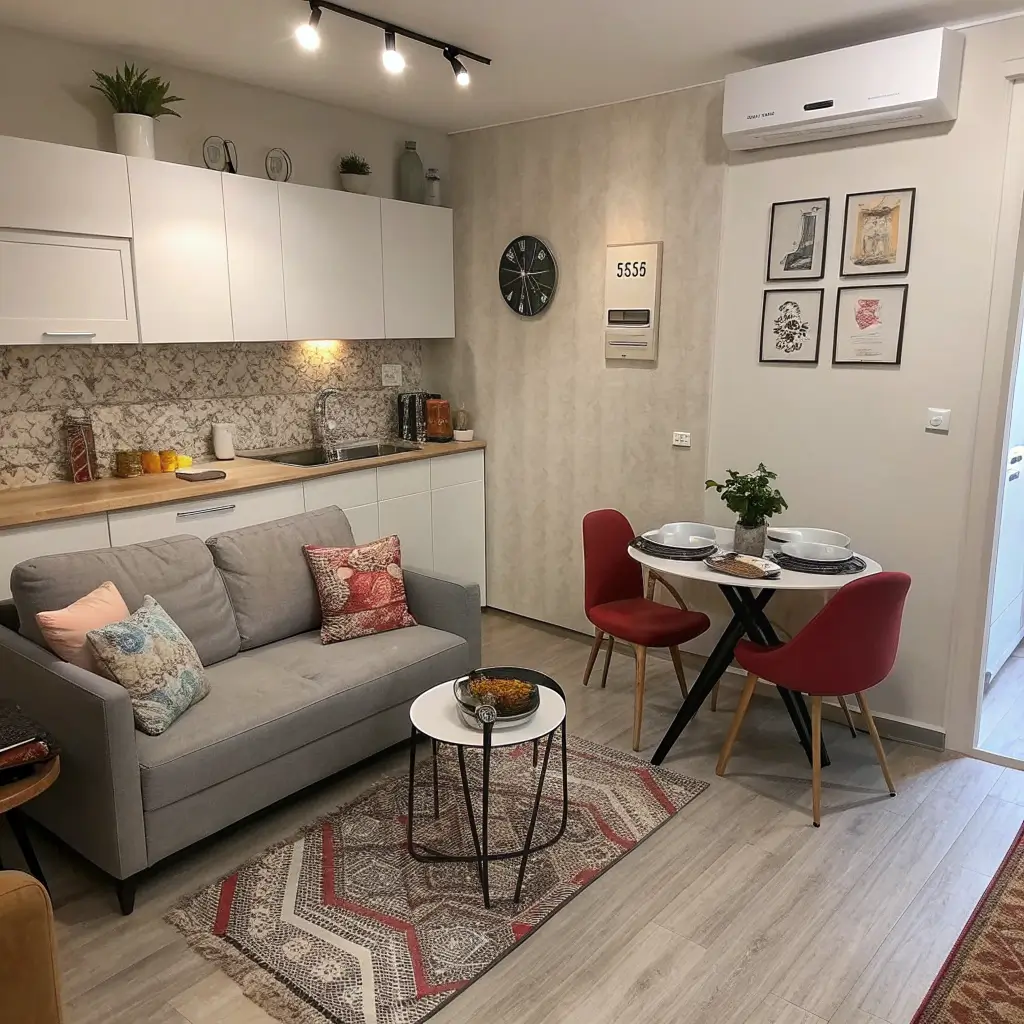
Modern studio-style living-dining fusion acknowledges that boundaries between living and dining are arbitrary in small spaces. This approach creates one cohesive space that flows naturally between functions.
The Studio Mindset
My friend’s 500-square-foot studio doesn’t hide that it’s one room — it celebrates it. Her dining table backs up to the sofa, creating a console table effect. The dining chairs are stylish enough to work as extra living room seating when needed.
Studio-style fusion works because it stops fighting the reality of small spaces. Instead of cramming in separate zones, you create one beautiful, multifunctional space.
Achieving Seamless Fusion
Studio-style success strategies:
- Consistent color palette throughout the space
- Furniture that works both ways (dining chairs as accent seats)
- Rugs defining zones without walls
- Lighting at different levels for different moods
- Mobile furniture on casters for flexibility
- Dual-purpose surfaces everywhere
The modern studio approach makes small spaces feel intentional rather than constrained. You’re not missing walls — you’re enjoying openness.
Also Read: 10 Chic Wash Basin in Dining Area Modern Ideas for
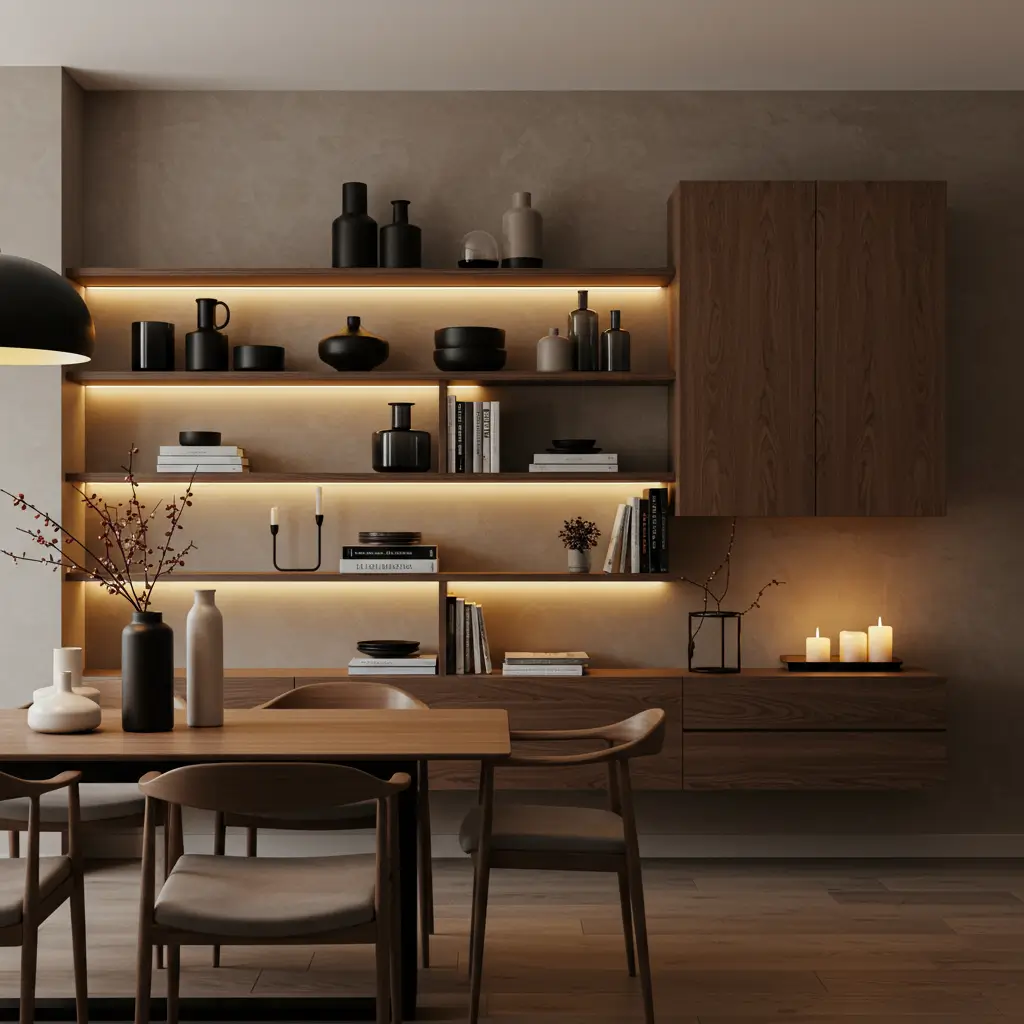
7. Floating Shelves and Wall-Mounted Dining Setup
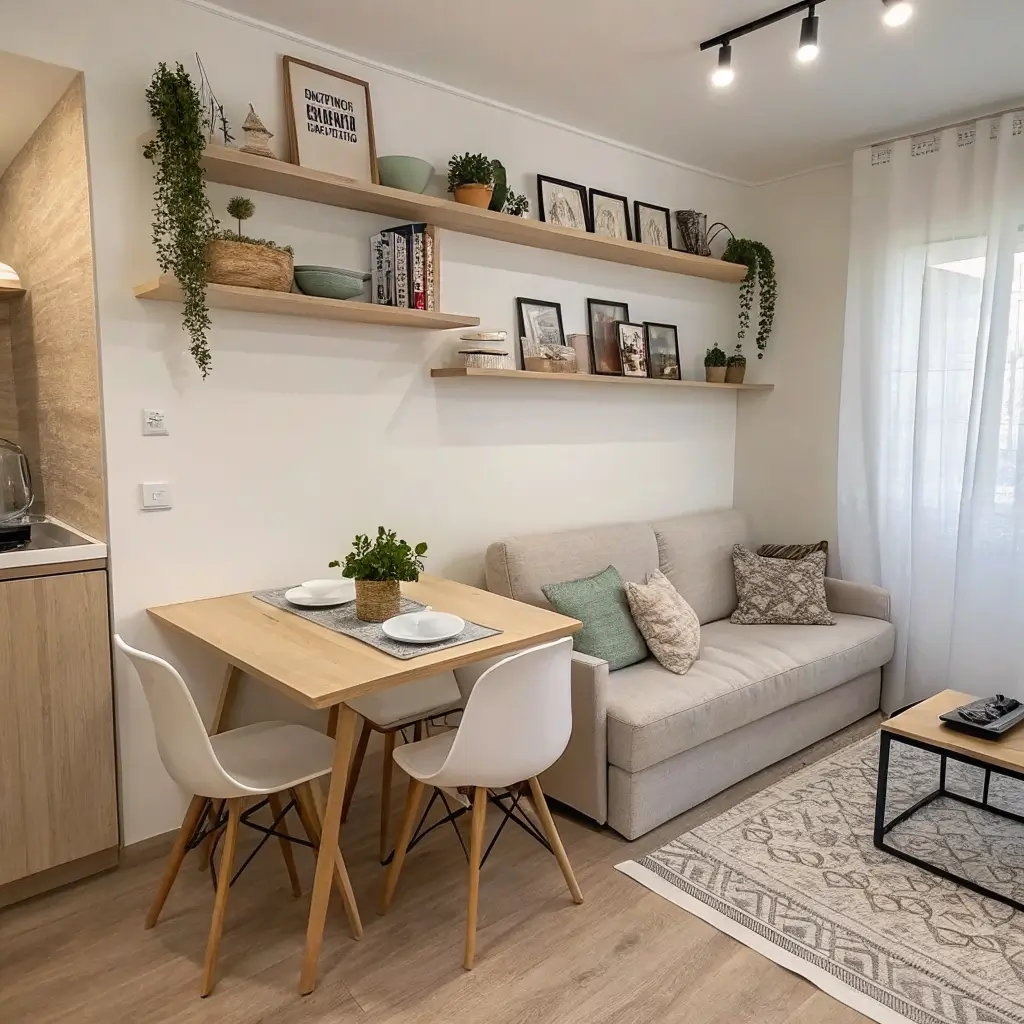
Floating shelves and wall-mounted dining free up precious floor space while creating a striking visual display. This approach makes your walls work as hard as your floor.
Walls as Functional Art
I mounted a narrow bar-height shelf along my living room wall that serves as my dining table. Bar stools tuck completely underneath, and floating shelves above hold dishes and glassware. The entire dining setup uses zero traditional floor space.
Wall-mounted dining works because it challenges traditional furniture assumptions. Who says tables need four legs?
Wall-Mounting Like a Pro
Creating wall-mounted dining success:
- Sturdy wall anchoring into studs for safety
- Appropriate height calculation for comfortable dining
- Coordinating floating shelves for cohesive look
- Under-shelf lighting for ambiance
- Foldable wall-mounted options for flexibility
- Decorative brackets as design elements
IMO, wall-mounted dining is the future of small spaces. It’s functional, unique, and makes your friends think you’re some kind of design genius. :/
8. Space-Saving Round Dining Table Ideas
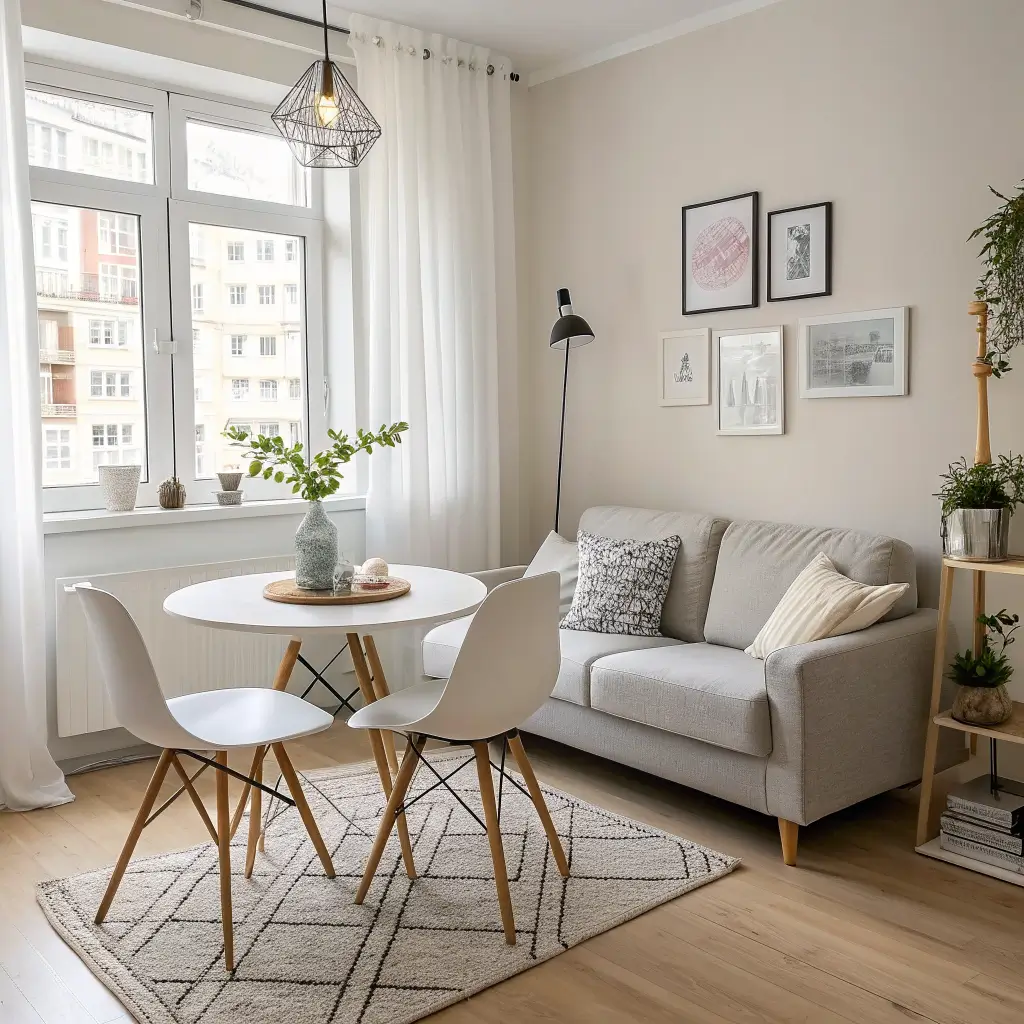
Space-saving round dining tables eliminate corners and create better flow in tight living-dining combos. These circular solutions prove that sometimes the best angle is no angle.
Why Round Rules in Small Spaces
I switched from a rectangular to a 42-inch round table, and it transformed my space. No more bruised hips from corners, easier navigation around the table, and somehow it seats the same number of people in less space.
Round tables work because they create natural traffic flow. People move around them intuitively, and the shape encourages conversation better than rectangular tables.
Maximizing Round Table Benefits
Round table optimization tips:
- Pedestal bases maximizing leg room
- Appropriate sizing (36″ for 2-3 people, 42″ for 4)
- Extension leaves for occasional larger gatherings
- Glass tops maintaining visual lightness
- Tulip-style bases for modern elegance
- Mixed seating with benches and chairs
Round tables in small spaces feel less imposing than rectangular ones, even when they’re the same square footage. It’s basically a optical illusion that actually works.
9. Integrated Sofa with Hidden Dining Extension
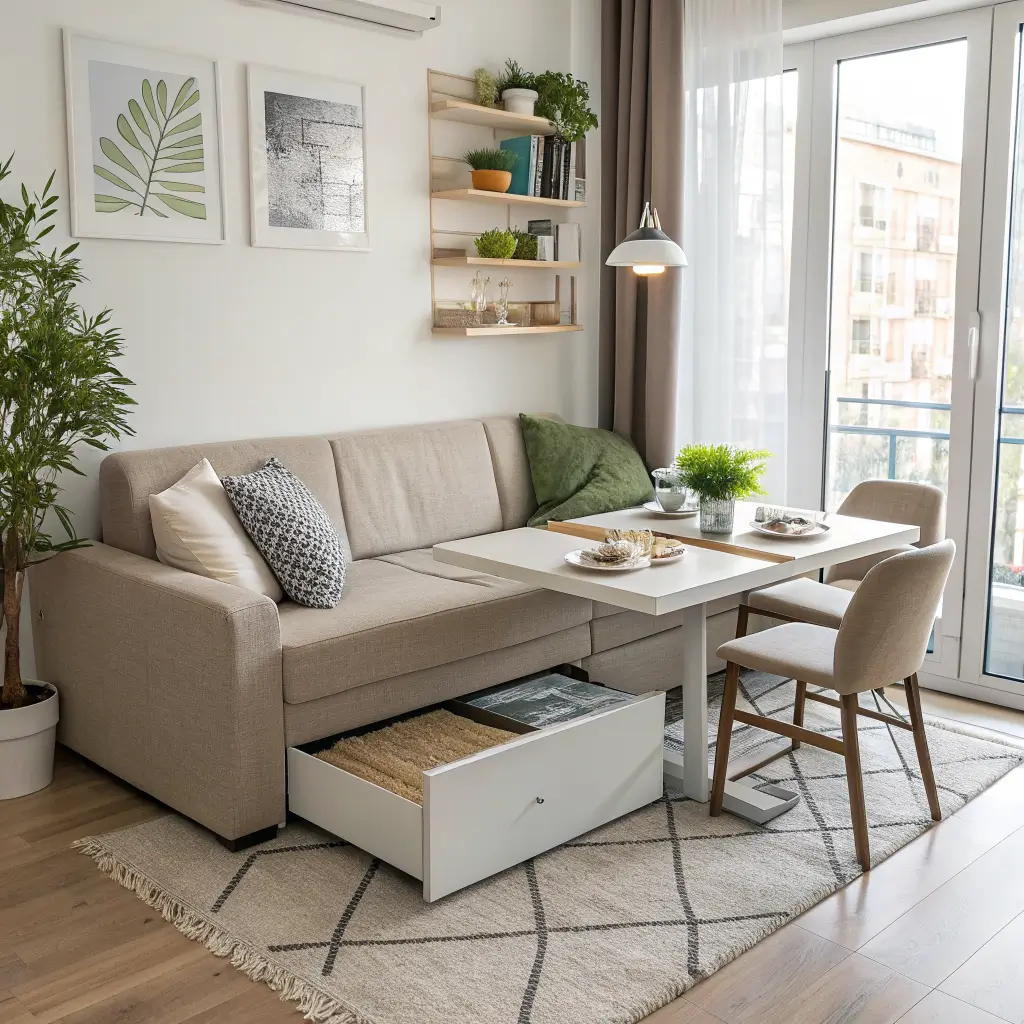
An integrated sofa with hidden dining extension sounds like furniture fantasy, but these ingenious pieces actually exist and they’re perfect for tiny living-dining combos.
The Ultimate Space-Saving Secret
My cousin has this incredible sofa with a pull-out dining table hidden in the back. During the day, it’s a normal couch. Pull a lever, and a dining surface emerges from behind the backrest. The engineering is mind-blowing, and it saves literally half her living space.
Integrated furniture works because it eliminates the either/or dilemma. You get both functions without sacrificing either.
Finding Integration Solutions
Integrated furniture options:
- Sofa tables that extend into dining surfaces
- Coffee tables with lift-top dining capability
- Storage ottomans with pull-out table leaves
- Console sofas with extending backs
- Modular seating that reconfigures for dining
- Built-in banquettes with pull-out tables
These pieces cost more initially but think about it — you’re buying two pieces of furniture in one. That’s actually economical when you factor in small-space real estate values.
Also Read: 10 Charming Outdoor Dining Area Ideas on a Budget
10. Bright & Airy Small Space Layout with Mirrors
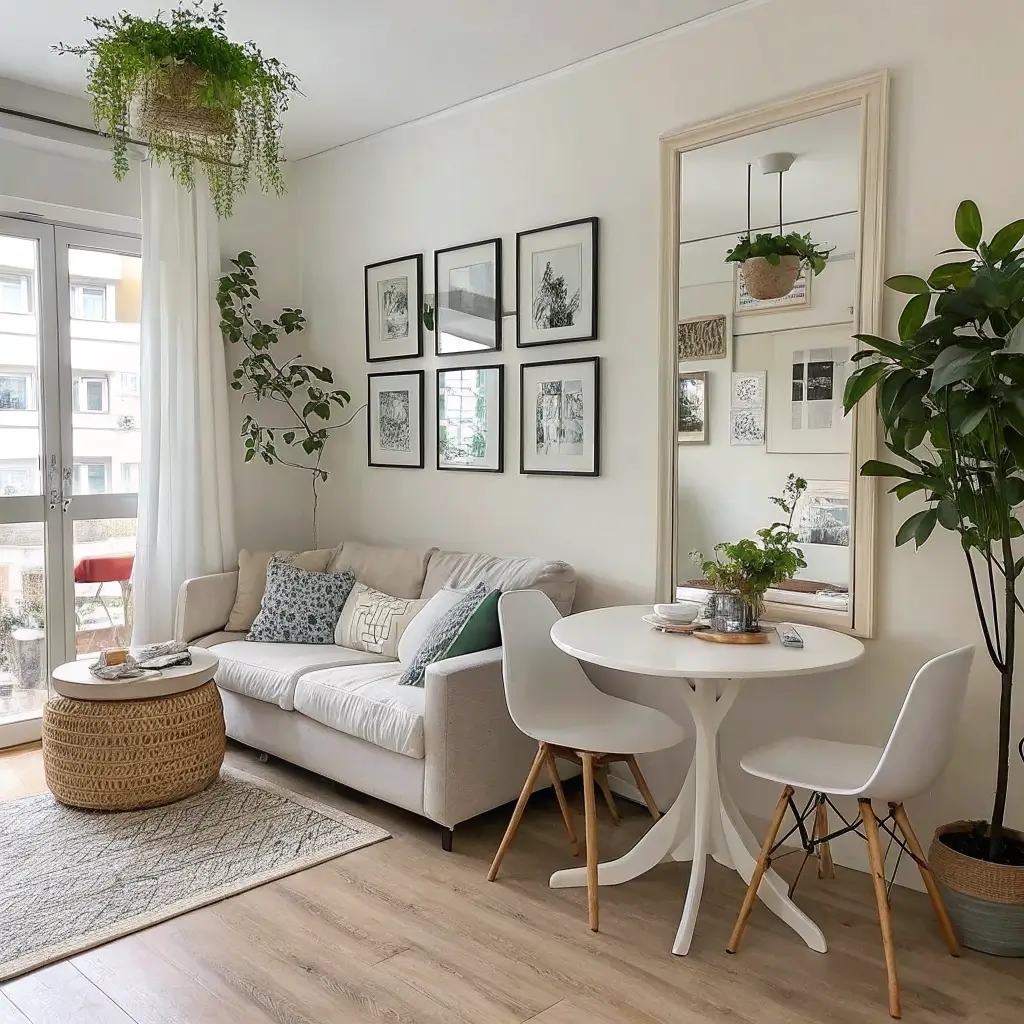
Bright and airy layouts with mirrors use reflection to double your visual space while maximizing natural light. This approach makes small living-dining areas feel expansive and luxurious.
Mirrors as Space Doublers
I installed a large mirror opposite my window, and suddenly my living-dining room looked twice as big. The mirror reflects both natural light and the view, creating the illusion of another window. My dining table sits between them, bathed in real and reflected light all day.
Mirrors work because our brains interpret reflections as extended space. Strategic placement can make a cramped combo feel like a loft.
Mirror Strategies That Work
Maximizing mirrors effectively:
- Full-wall mirrors for dramatic expansion
- Mirror galleries adding artistic interest
- Mirrored furniture like console tables
- Strategic positioning reflecting the best views
- Multiple mirrors at different heights
- Antiqued mirrors avoiding gym vibes
The trick with mirrors is avoiding that department store dressing room feel. Break up large mirrors with frames, use antiqued glass, or create galleries for sophistication rather than pure function.
Making Small Living-Dining Spaces Mighty
There you have it — 10 small living room with dining area ideas that prove size doesn’t determine style or functionality.
Whether you embrace Scandinavian minimalism or go all-in on foldable everything, these approaches show that small spaces can live large.
The secret to successful small living-dining combos isn’t about cramming in as much as possible. It’s about choosing solutions that match your actual lifestyle.
Do you entertain often? Prioritize expandable options. Work from home? That dining table better double as a desk. Hate clutter? Minimalism and vertical storage are your friends.
Here’s what I’ve learned from years of small-space living: the best solutions feel intentional, not forced. Every piece should earn its footprint, every design choice should serve multiple purposes, and the whole space should work harder than you do.
Your small living room with dining area has massive potential. Stop apologizing for its size and start celebrating its efficiency.
Pick the ideas that resonate with your situation, experiment with combinations, and remember — some of the world’s best restaurants are tiny. If they can make it work, so can you.
Now stop measuring your space with disappointment and start seeing it as the design challenge it really is. Trust me, once you nail your small living-dining combo, you’ll never want a massive space again! 🙂