10 Simple Small Office Interior Design Ideas for Tiny Rooms
- Home Interior Design
 Ben
Ben- 0
- 35 minutes read
Working from a closet-sized space while your laptop battles for territory with your coffee mug? Yeah, I’ve been there.
When I first started working from home, my “office” was literally a card table shoved in the corner of my bedroom, and let me tell you, my productivity matched the sophistication of that setup – which is to say, nonexistent.
But here’s the thing about small office spaces – they force you to get creative. After transforming three different tiny spaces into functional offices (including one that was literally a converted broom closet), I’ve learned that square footage matters way less than smart design.
These ten small office interior design ideas come from real experience, real failures, and eventually, real solutions that actually work.
Whether you’re carving out space in a studio apartment or trying to make that spare corner productive, these ideas will help you create an office that doesn’t make you want to work from your bed instead.
Because let’s face it, that never ends well.
1. Wall-Mounted Desk Power Office
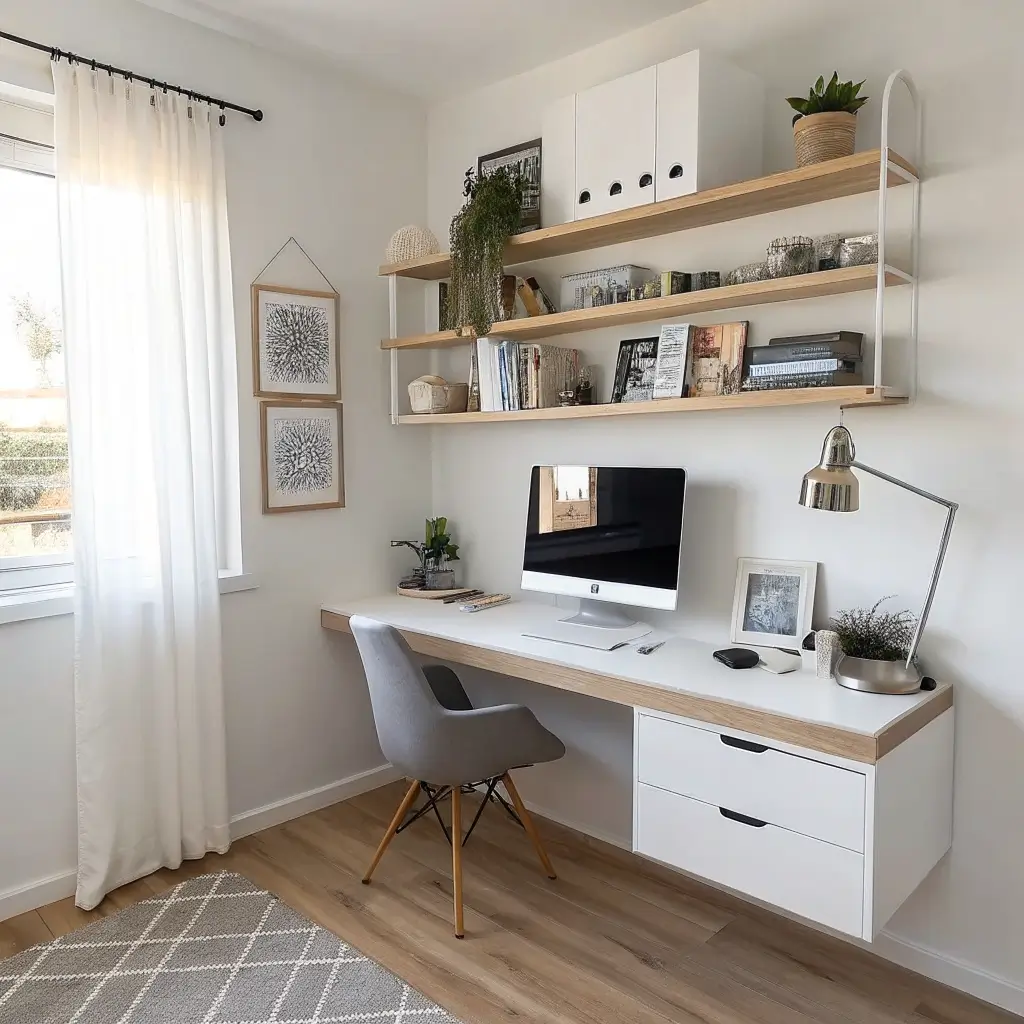
The wall-mounted desk changed my entire perspective on small office design. You literally gain back every square foot of floor space while still having a proper workspace. My first wall-mounted setup freed up so much room that I actually had space to, you know, move around.
The beauty of wall-mounted desks lies in their flexibility. Mount it at your perfect height – no more hunching over a too-low desk or stretching to reach a too-high surface. I installed mine at standing height with a tall stool, giving me the option to sit or stand throughout the day.
Cable management becomes crucial with wall-mounted setups. Nothing ruins the floating desk aesthetic faster than a tangle of cords hanging down like digital spaghetti. Use cord covers that match your wall color, or better yet, run cables through the wall if you’re handy with drywall.
Making Wall-Mounted Work
Essential considerations for success:
- Find the studs – drywall anchors won’t cut it for a workspace
- Choose the right depth – 20-24 inches works for most tasks
- Add a keyboard tray if the desk is too shallow
- Install power strips underneath for easy access
- Consider fold-down options for ultimate flexibility
The psychological impact surprised me most. Without bulky desk legs cluttering the floor, the entire room feels more spacious and less cramped. Plus, cleaning underneath takes seconds instead of requiring furniture gymnastics.
2. Vertical Storage Focus Workspace
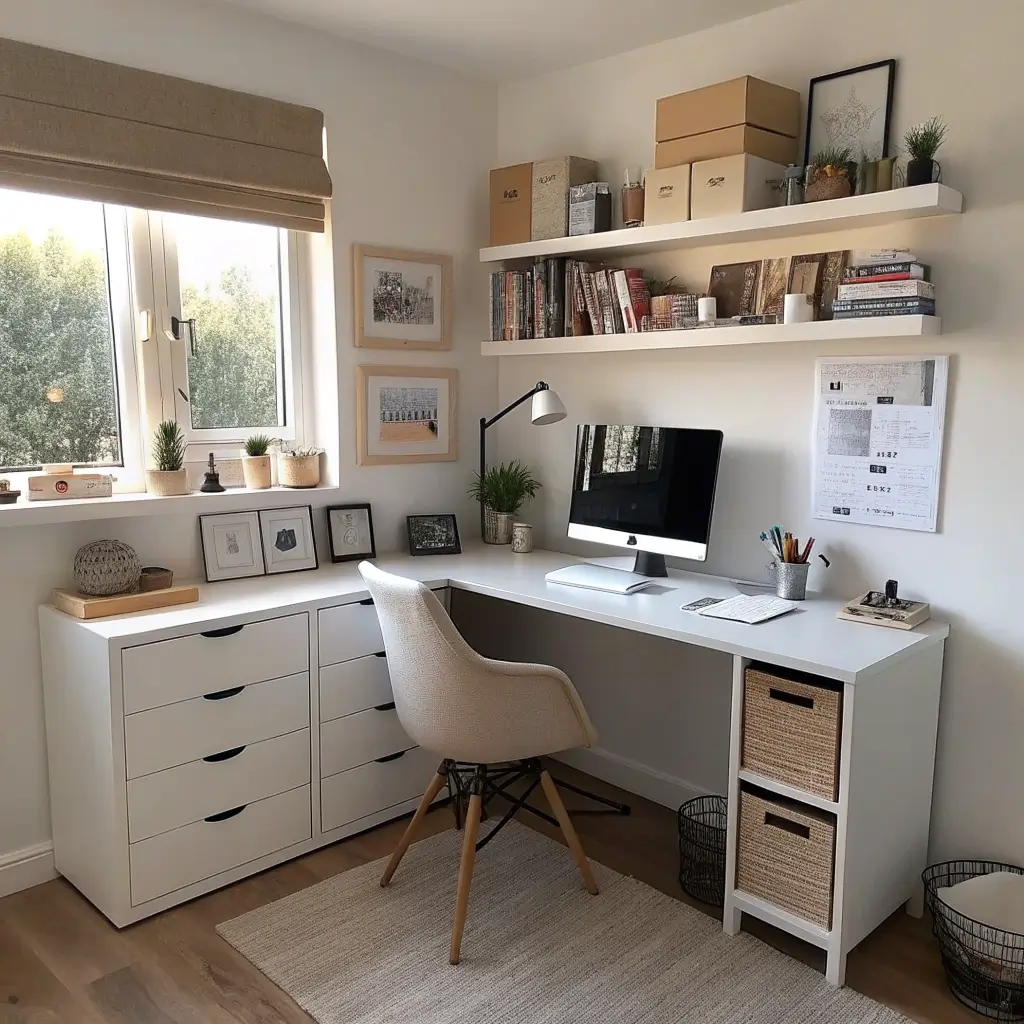
Vertical storage transformed my chaotic small office into an organized powerhouse of productivity. When you can’t spread out, you build up – it’s basically the skyscraper principle applied to office design.
I learned this lesson after my horizontal filing system (aka “piles on every surface”) nearly cost me a client contract I couldn’t find. Wall-mounted shelves, pegboards, and hanging organizers became my salvation. Now everything has a home, and that home isn’t my desk surface.
The key to vertical storage success? Accessibility zones based on frequency of use. Daily items at eye level, weekly items within easy reach, and those “just in case” supplies can live up high. My label maker became my best friend during this process – everything gets labeled, no exceptions.
Vertical Storage Solutions
Game-changing vertical options:
- Floating shelves at varying heights for visual interest
- Pegboard systems for customizable organization
- Wall-mounted file holders for active projects
- Magnetic strips for metal supplies
- Grid panels with hooks and baskets
- Over-door organizers for hidden storage
Don’t forget about the space above your desk. That wall real estate is prime territory for frequently accessed items. My monitor mount freed up desk space while my overhead shelving holds everything from reference books to coffee supplies.
3. Minimalist Corner Office Setup
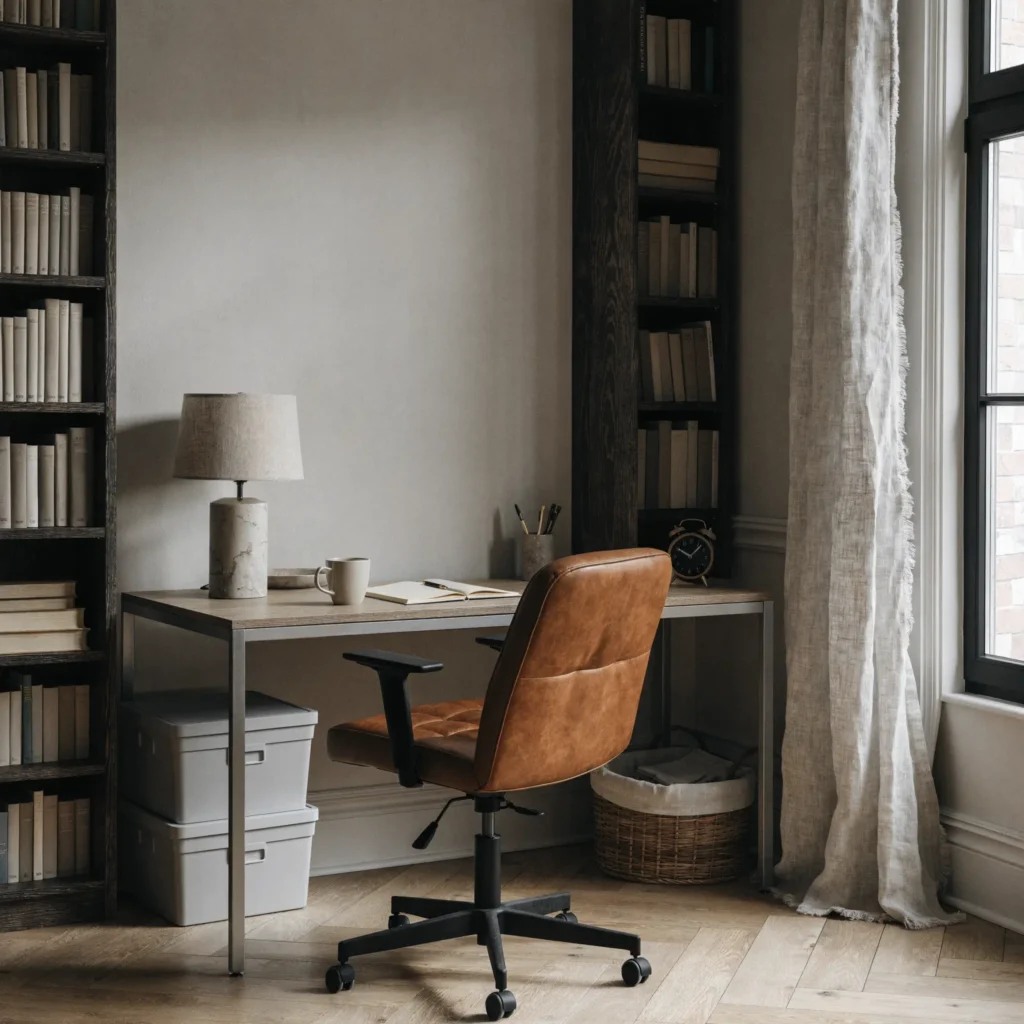
Corner offices aren’t just for executives anymore. That awkward corner in your living room or bedroom? Perfect spot for a minimalist office that doesn’t dominate the room’s aesthetic.
My corner office setup taught me that less really is more when space is tight. One sleek corner desk, one ergonomic chair, one laptop – that’s it. No printer taking up precious real estate, no filing cabinet that blocks the flow. Everything else lives in cloud storage or clever hidden compartments.
The L-shape configuration of corner desks provides surprising functionality. One side for computer work, one for writing or planning – it’s like having two desks in the footprint of one. Just make sure you can actually fit in the corner; I once bought a corner desk that required me to climb over furniture to sit down. Not sustainable.
Minimalist Corner Essentials
Must-haves for corner success:
- Cable management solutions to maintain clean lines
- Adequate lighting since corners can be dark
- Ergonomic positioning – don’t twist to see your screen
- Minimal decor – one plant or photo, max
- Hidden storage in the desk itself
The corner setup also creates natural boundaries. Your office space stays contained while the rest of the room maintains its primary function. This psychological separation helps with work-life balance when your office shares space with your bedroom or living room.
Also Read: 10 Practical Hall Interior Design Living Ideas for Every Home
4. Foldable Furniture Smart Office
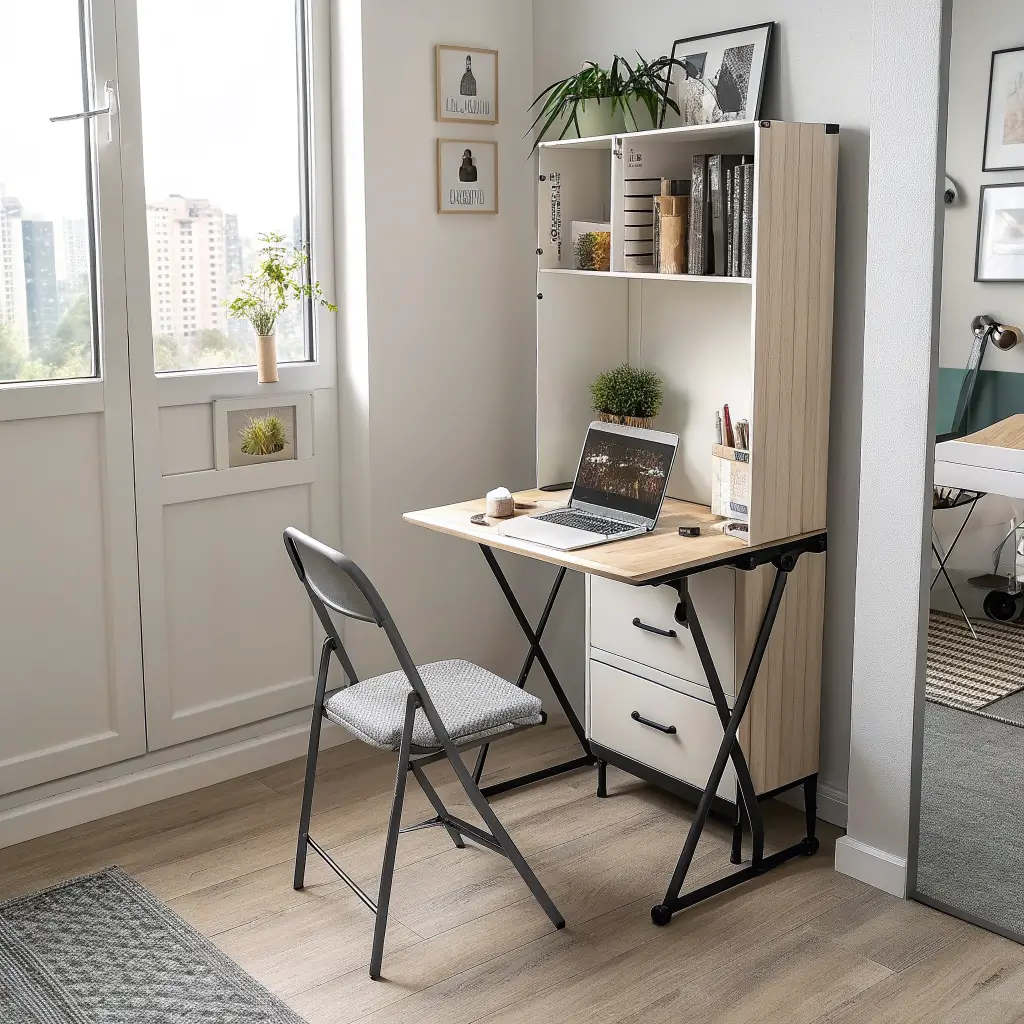
Foldable furniture turned my studio apartment into a transformer-style living space. Work mode: functional office. After hours: actual living room. No permanent desk reminding me of unfinished projects while I’m trying to Netflix and chill.
The key to foldable furniture success lies in quality. Cheap folding desks wobble, and wobbly desks make you want to throw your laptop out the window. Invest in sturdy options with locking mechanisms that actually lock. My current fold-down wall desk could probably support a small elephant.
Storage becomes interesting with foldable setups. Everything needs to be mobile or mountable since your desk might disappear at 5 PM. Rolling carts, wall organizers, and compact storage boxes become your best friends. Think of it as forced minimalism – you can’t accumulate office junk if there’s nowhere to put it.
Foldable Office Solutions
Smart foldable options:
- Wall-mounted drop-leaf desks for permanent installation
- Rolling fold-out desks for complete flexibility
- Collapsible chairs that slide under beds
- Portable monitor stands that pack flat
- Foldable desk screens for video call backgrounds
This setup particularly shines for irregular schedules. Work from home twice a week? Your office appears when needed and vanishes when not. It’s basically the Mary Poppins of office design.
5. Light Color Illusion Office Design
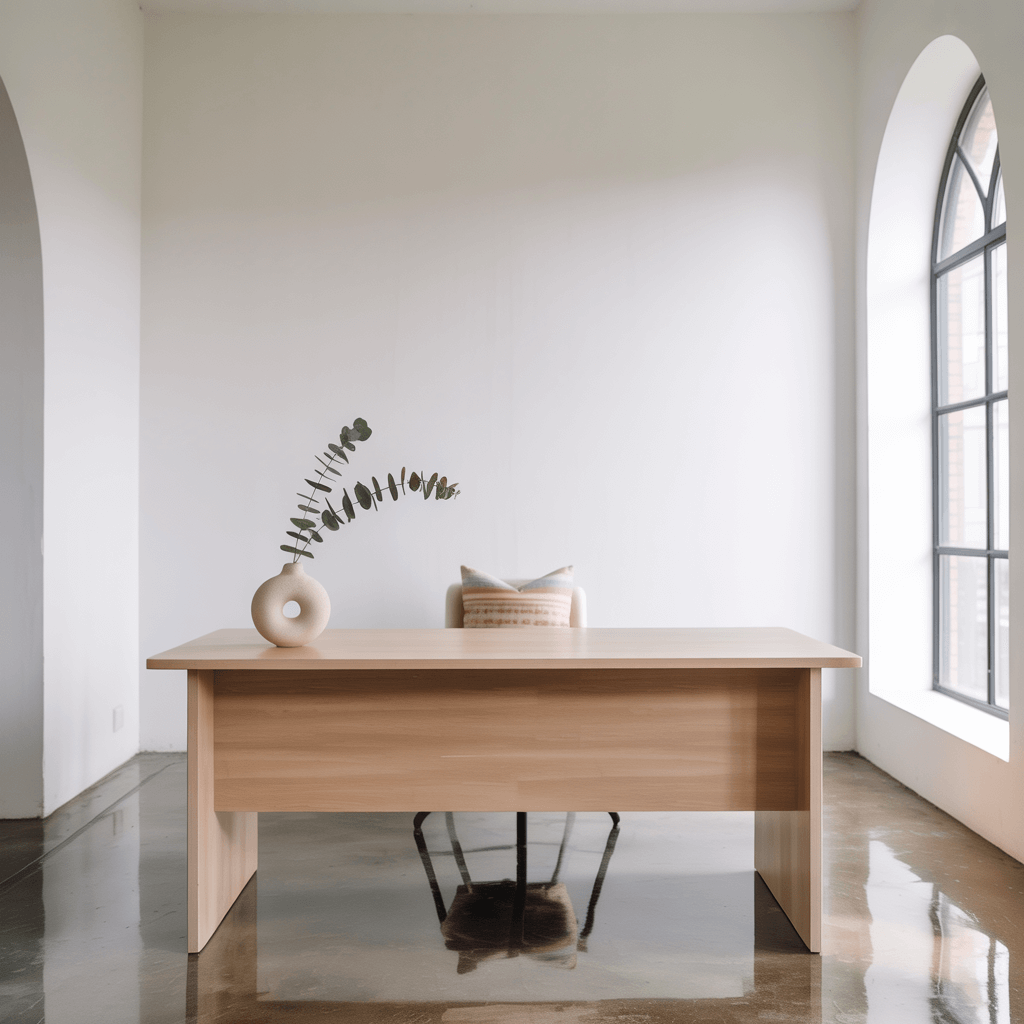
Light colors make small spaces feel larger – everyone knows this. But strategically using light colors in a small office goes way beyond just painting walls white. It’s about creating an optical illusion that tricks your brain into feeling less confined.
I painted my tiny office in three shades of the same light gray, creating subtle depth without visual weight. The darkest shade on the accent wall, medium on the sides, lightest on the ceiling. The gradual transition draws the eye upward, making my 7-foot ceiling feel higher.
Don’t stop at walls though. Light-colored furniture amplifies the effect. My white desk practically disappears against the pale wall, making the room feel less cluttered. Add mirrors strategically, and suddenly your 50-square-foot office feels like it could fit a small meeting.
Light Color Strategy
Maximizing the illusion:
- Monochromatic schemes prevent visual breaks
- Glossy finishes reflect more light
- White or light wood furniture maintains airiness
- Minimal contrast keeps eyes moving smoothly
- Strategic pops of color through accessories only
The psychological impact matters too. Light, airy spaces reduce stress and increase creativity. Dark, cramped offices do the opposite. Since you’re already dealing with limited space, why make it feel even smaller with dark colors?
6. Built-In Shelves Micro Office
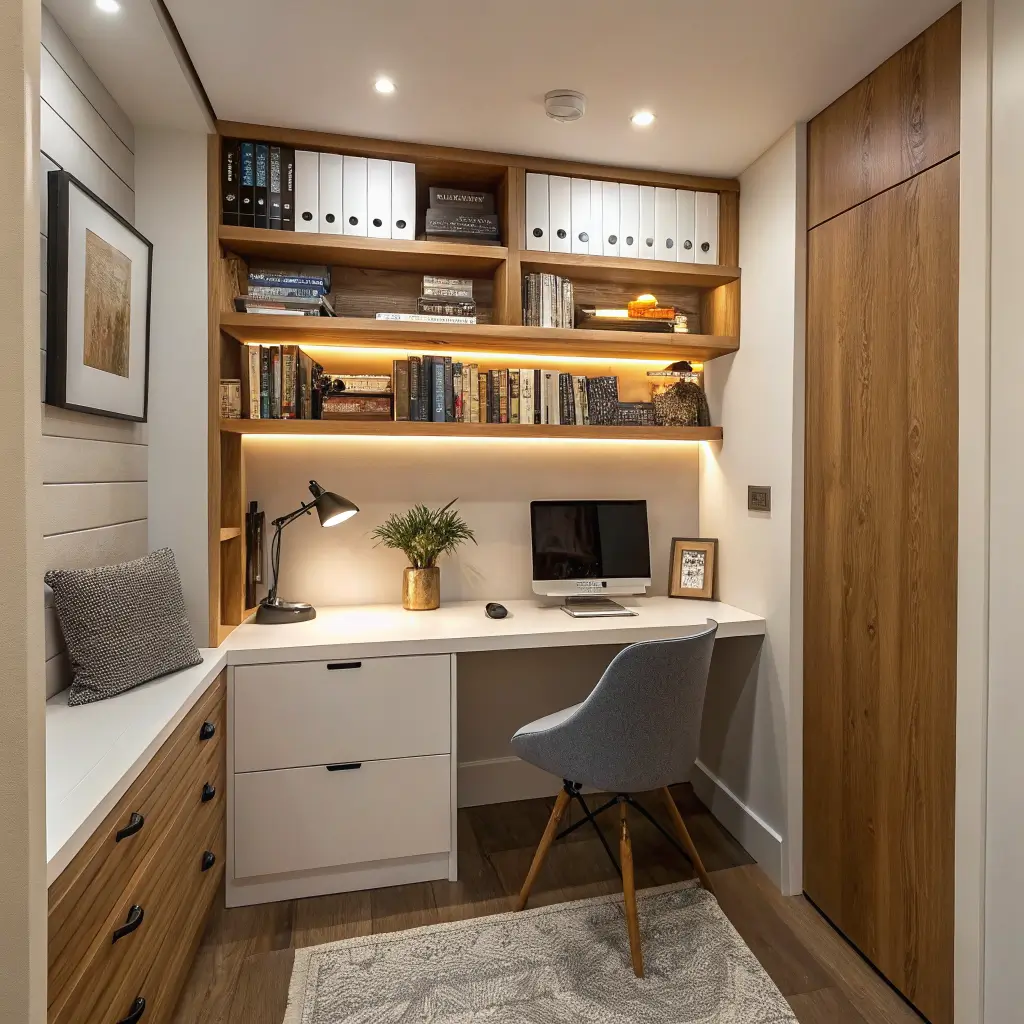
Built-in shelves transformed my awkward alcove into a Pinterest-worthy micro office. That weird indent in your wall that serves no purpose? Perfect spot for a custom shelving unit with an integrated desk.
The beauty of built-ins lies in their efficiency. Every inch gets utilized, from floor to ceiling. No gaps between furniture and walls where dust bunnies plot world domination. My built-in unit includes a desk surface, overhead shelving, side storage, and even a hidden printer shelf.
Going custom doesn’t require a fortune. Basic shelving units from IKEA can be modified to fit specific spaces. Add some crown molding, paint everything to match your walls, and suddenly it looks like expensive millwork. FYI, YouTube University taught me everything I needed to know about DIY built-ins.
Built-In Benefits
Why built-ins rule small spaces:
- Maximize every inch of available space
- Create seamless integration with room architecture
- Increase home value with permanent improvements
- Customize to your needs exactly
- Hide eyesores like routers and printers
The commitment factor scared me initially. Built-ins are pretty permanent. But three years later, I can’t imagine my office without them. They’ve adapted to my changing needs through adjustable shelving and modular components.
Also Read: 10 Unique Stairs Design Interior Ideas for Luxe Interiors
7. Window-Facing Productivity Office
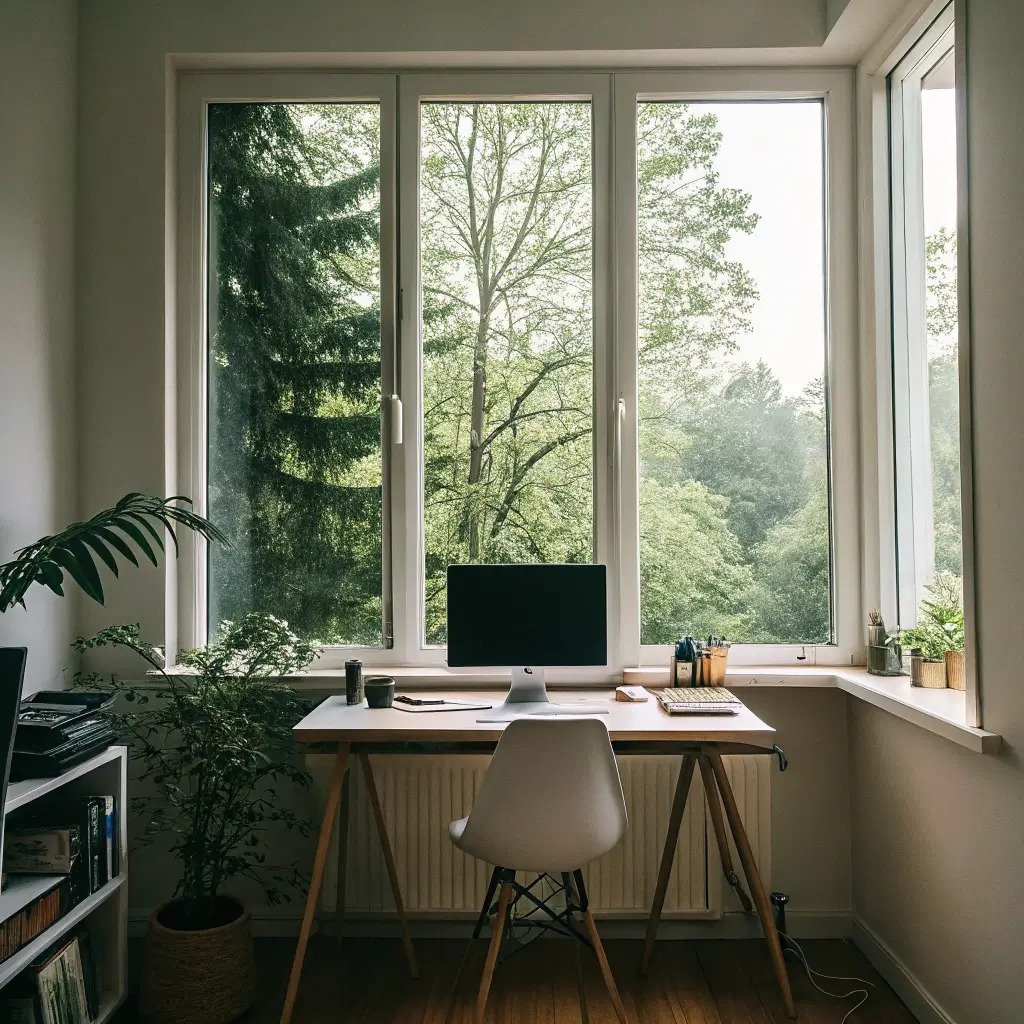
Positioning your desk to face a window isn’t just about the view – it’s about natural light, energy, and not feeling like you work in a cave. My window-facing setup increased my productivity by at least 30%, though that might also be because I stopped taking depression naps at my desk.
Natural light affects everything from mood to sleep cycles. Facing a window gives you free light therapy while you work. No more vampire-pale complexion from fluorescent bulbs. Plus, the ability to glance outside occasionally keeps you connected to the world beyond spreadsheets.
Glare can be an issue, but it’s manageable. Adjustable blinds or sheer curtains diffuse harsh sunlight without blocking it entirely. Position your monitor perpendicular to the window rather than directly in front or behind it. Trust me, squinting at your screen through sun glare gets old fast.
Window Office Optimization
Making window placement work:
- Use adjustable window treatments for light control
- Position monitors to avoid glare
- Add plants on the windowsill for green views
- Install shelving around windows for storage
- Keep window areas clutter-free for maximum light
The seasons affect window offices differently. Winter means shorter daylight but cozy snow views. Summer brings abundant light but potential overheating. Plan for both with appropriate window treatments and maybe a small fan.
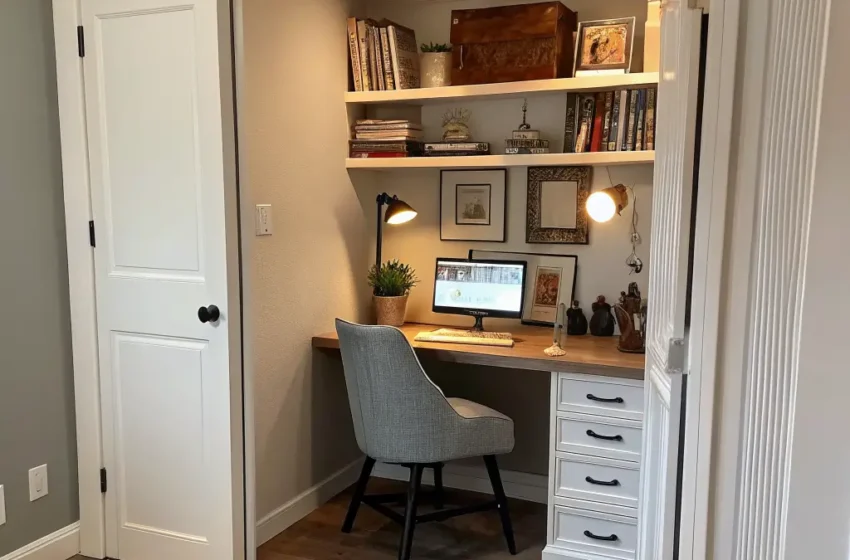
8. Closet-to-Office Transformation
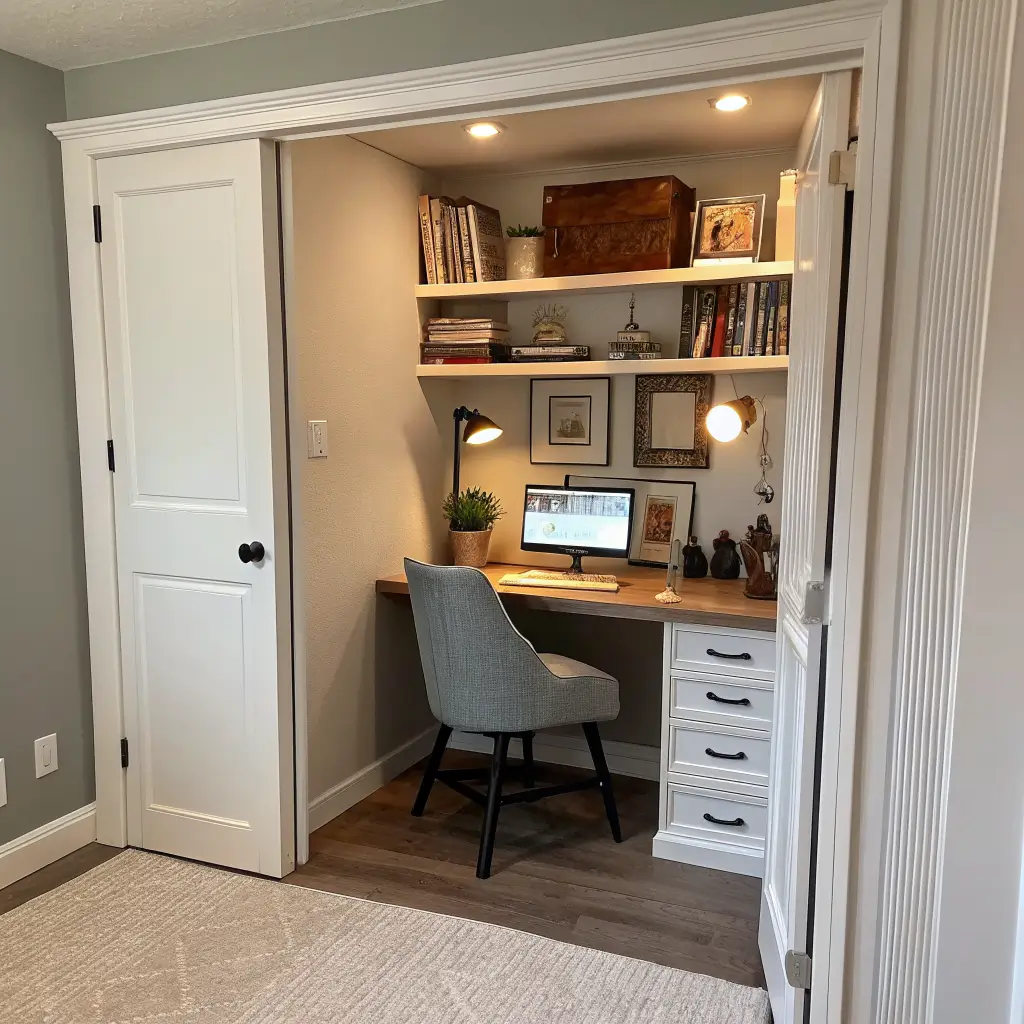
Turning a closet into an office sounds crazy until you realize closets are basically pre-built alcoves begging for purpose. My friend called this idea ridiculous until she saw my “cloffice” (closet + office) and immediately went home to empty her own closet.
The standard closet dimensions work surprisingly well for offices. 24 inches deep is perfect for a desk, and most closets are at least 4 feet wide – enough for a proper workspace. Remove the doors, add a desk at the right height, install some lighting, and boom – instant private office.
Ventilation becomes important in enclosed spaces. Nobody wants to slowly suffocate while answering emails. A small fan helps, or leave gaps at the top and bottom for airflow. I also installed a tiny USB desk fan that doubles as white noise.
Closet Conversion Essentials
Making closets work as offices:
- Remove or replace doors with curtains for flexibility
- Install proper lighting – closets are usually dark
- Add electrical outlets if needed (hire an electrician)
- Use the upper shelf for storage
- Paint the interior a light color to prevent cave feelings
The best part? You can close it off completely when done. Shut the doors or pull the curtain, and your office literally disappears. Work-life balance through interior design – who knew?
9. Multi-Functional Desk Workspace
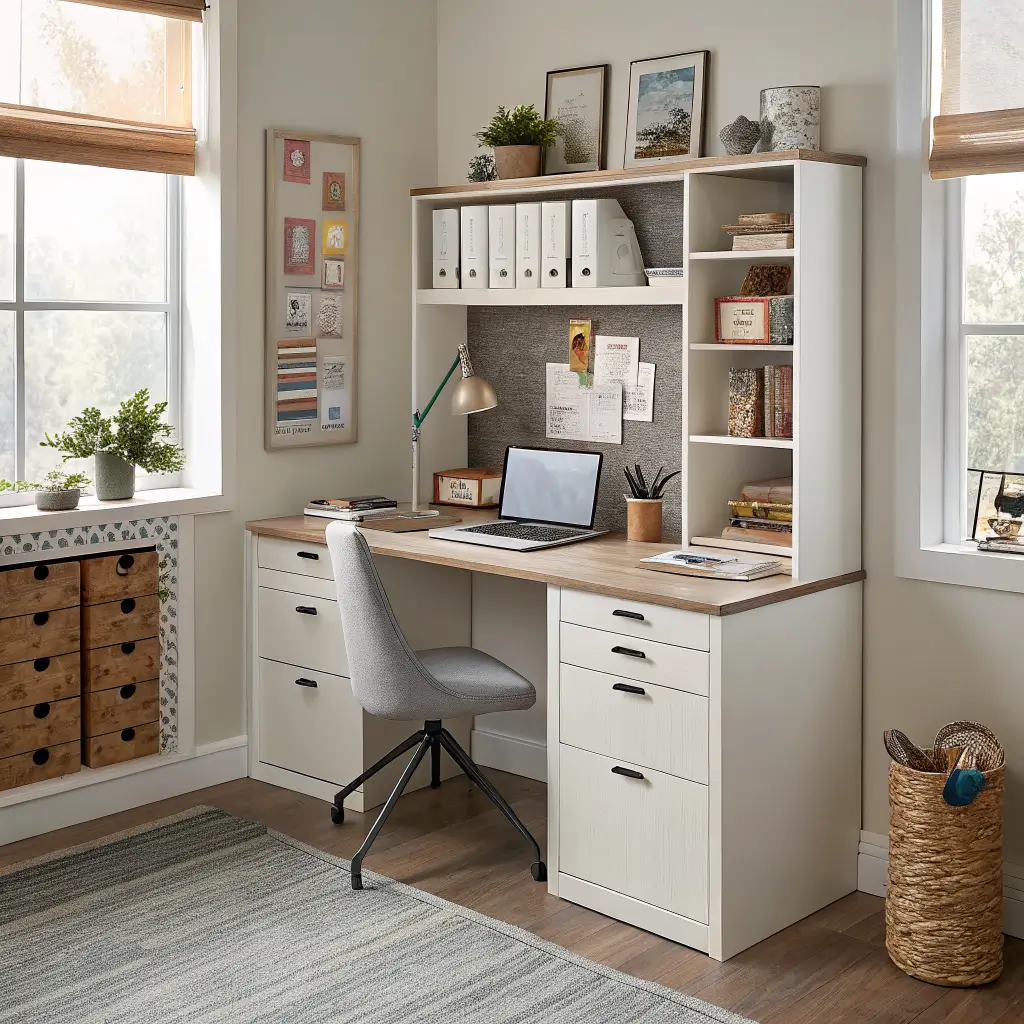
Multi-functional desks are the Swiss Army knives of small office design. One piece of furniture that works as desk, storage, filing cabinet, and sometimes even room divider. My current desk has more hidden compartments than a spy movie prop.
The key lies in choosing the right multi-functional pieces. Desks with built-in hutches maximize vertical space. Ones with drawers eliminate the need for separate storage. Some even include charging stations, so no more cable chaos.
Don’t overlook convertible options. Desks that transform into dining tables or console tables serve double duty in studio apartments. My previous desk converted to a bar for parties – nothing says “work hard, play hard” like serving cocktails from your spreadsheet station.
Multi-Function Must-Haves
Features that maximize functionality:
- Hidden storage compartments for supplies
- Adjustable shelving for changing needs
- Built-in cable management systems
- Expandable surfaces for project work
- Integrated lighting options
- Modular components you can reconfigure
The investment in quality multi-functional furniture pays off. One excellent piece beats three mediocre ones in small spaces. Plus, moving becomes easier when your entire office is basically one sophisticated transformer desk.
Also Read: 12 Stylish TV Unit Interior Design Ideas for Minimalist Rooms
10. Scandinavian Small Office Layout
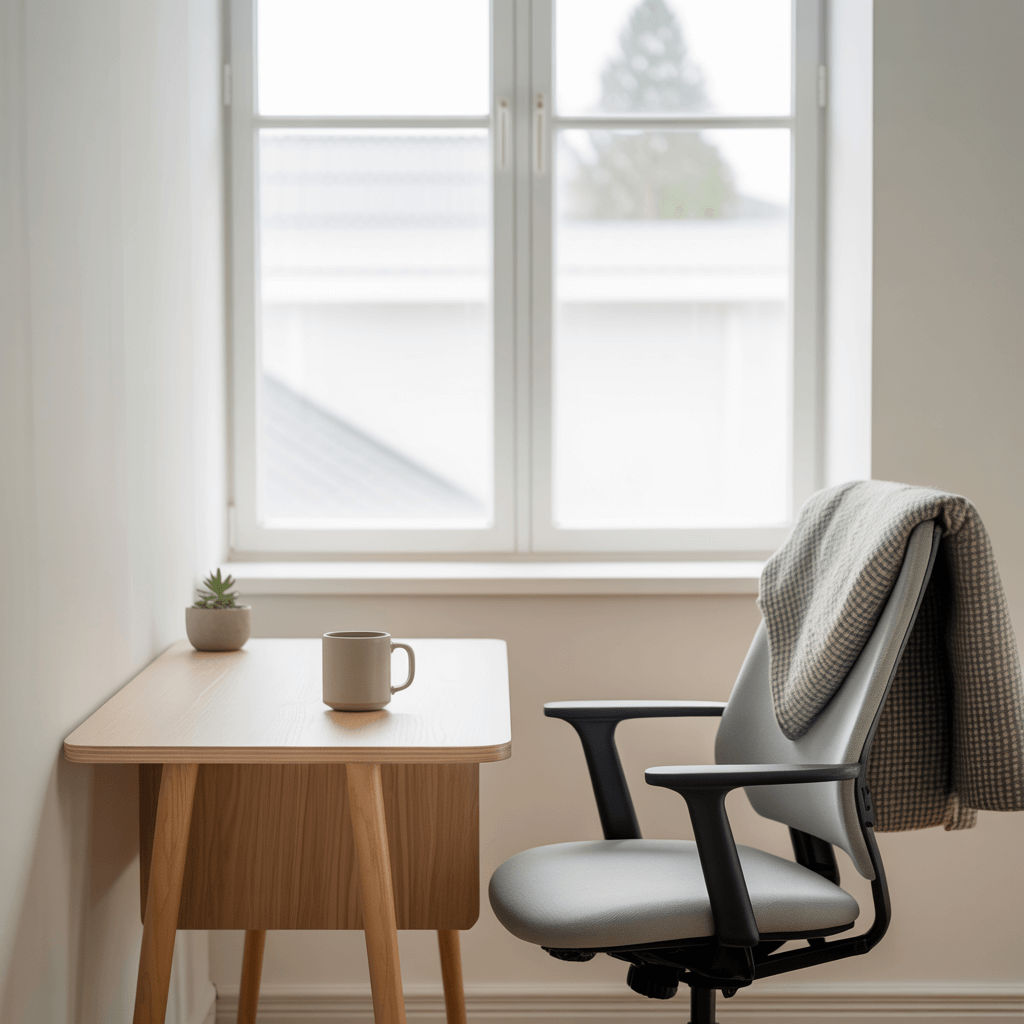
Scandinavian design and small offices are basically soulmates. Clean lines, functional beauty, and hygge vibes create productive spaces that don’t feel like corporate torture chambers.
The Scandinavian approach prioritizes function without sacrificing style. Everything serves a purpose, but that purpose includes making you feel good. My Scandi-inspired office uses a simple white desk, natural wood accents, and one perfect reading chair that makes the space feel intentional, not cramped.
Natural materials and textures add warmth without clutter. A sheepskin throw on the chair, a small potted plant, maybe one piece of minimalist art. The restraint required for true Scandinavian style actually works perfectly in small spaces where too much anything feels overwhelming.
Scandinavian Style Elements
Nordic design principles for small offices:
- Neutral color palettes with white, gray, and wood
- Natural materials over synthetic when possible
- Functional furniture with clean lines
- Minimal decorations but meaningful ones
- Abundant natural light or good artificial alternatives
- Cozy textiles for warmth without bulk
The lifestyle aspect matters too. Scandinavian design encourages work-life balance through comfortable, calming spaces. No harsh fluorescents or aggressive colors screaming “PRODUCTIVITY!” Just peaceful environments that happen to be incredibly functional.
Making Your Small Office Work
After years of wrestling with small office interior spaces, here’s what I’ve learned: the best small office is one that works with your specific needs, not against them.
Maybe you need tons of storage, or perhaps you’re fully digital and need nothing but a laptop stand. Know yourself before you start designing.
Don’t try to implement all ten ideas at once. Pick one or two that resonate and start there. You can always add elements as you figure out what works.
IMO, starting with good lighting and ergonomic basics beats having the prettiest space that gives you back pain :/
Remember that small offices have advantages too. Less space to clean, forced organization, lower costs – these aren’t consolation prizes but genuine benefits.
Some of the most productive people I know work from tiny, well-designed spaces that would make minimalists weep with joy.
The perfect small office doesn’t exist, but the perfect small office for YOU does. Experiment, adjust, and don’t be afraid to completely reimagine your space if something isn’t working.
Because at the end of the day, your office should inspire productivity, not dread. And if a converted closet or folding desk gets you there? Then you’ve already won the small office game 🙂