10 Practical Small Shared Kids Bedroom Ideas and Storage Hacks
- Bedroom Design
 Ben
Ben- 0
- 33 minutes read
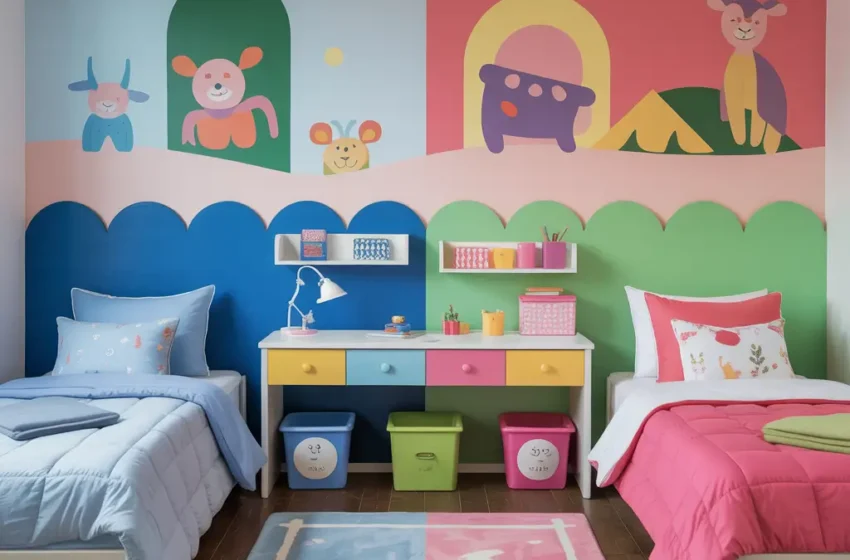
Two kids, one tiny room, and exactly zero square feet to spare – if that’s your reality right now, I totally get it. When my sister asked me to help redesign her kids’ 10×12 shared bedroom last year, I thought she was joking. Spoiler alert: she wasn’t, and somehow we made it work.
The secret to small shared kids bedrooms isn’t just about saving space – it’s about creating harmony between tiny humans who’d rather not share anything, especially not their personal space.
After transforming that cramped battleground into a functional (and dare I say, stylish) shared sanctuary, I’ve become the go-to person for friends dealing with the same challenge.
Trust me, you don’t need a bigger house or a construction crew. You just need smart ideas that actually work when real kids use them every single day.
Loft Beds with Built-In Desks
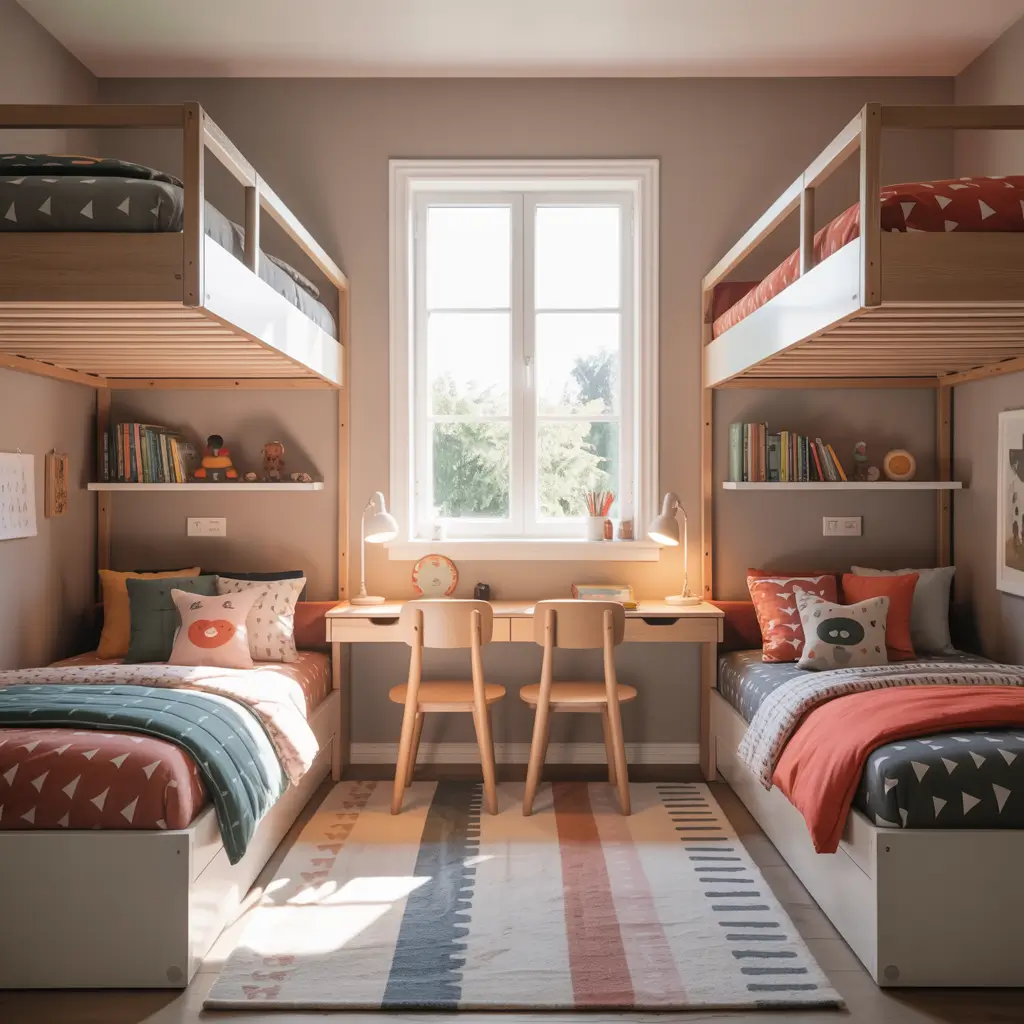
Let me tell you about the furniture piece that literally changed everything for my neighbor’s twins: loft beds with built-in desks. These vertical wonders give each kid their own sleep space up top and a personal work station below. No more homework battles at the kitchen table or fighting over who gets the “good spot” to color.
When shopping for these, I discovered not all loft beds are created equal. The best ones have full-sized desks underneath, not those tiny shelves some companies try to pass off as work surfaces. My nephew’s loft bed has a desk that fits his laptop, lamp, and still has room for actual homework. The cheap one we first considered? Could barely hold a coloring book.
Making Loft Beds Work in Tight Spaces
Here’s what really matters when choosing loft beds with desks:
- Ceiling height requirements (minimum 8 feet, but 9 is better)
- Weight capacity that grows with your kids
- Desk depth of at least 20 inches for real functionality
- Built-in outlets or cord management systems
- Sturdy ladder placement that doesn’t block room flow
The game-changer feature? Some models have desks that slide out or adjust height. My friend’s daughter uses hers as a standing desk when she’s feeling fidgety, then lowers it for sit-down homework. Genius design that actually considers how kids really work.
Personal Space in Shared Rooms
What I love most about this setup is how it creates defined personal territories. Each kid gets their own “room within a room” – their bed sanctuary above and their work zone below. This psychological boundary reduces about 80% of the “they’re on my side!” arguments. Not scientifically proven, but parent-tested and approved.
Bunk Beds with Sliding Storage Drawers
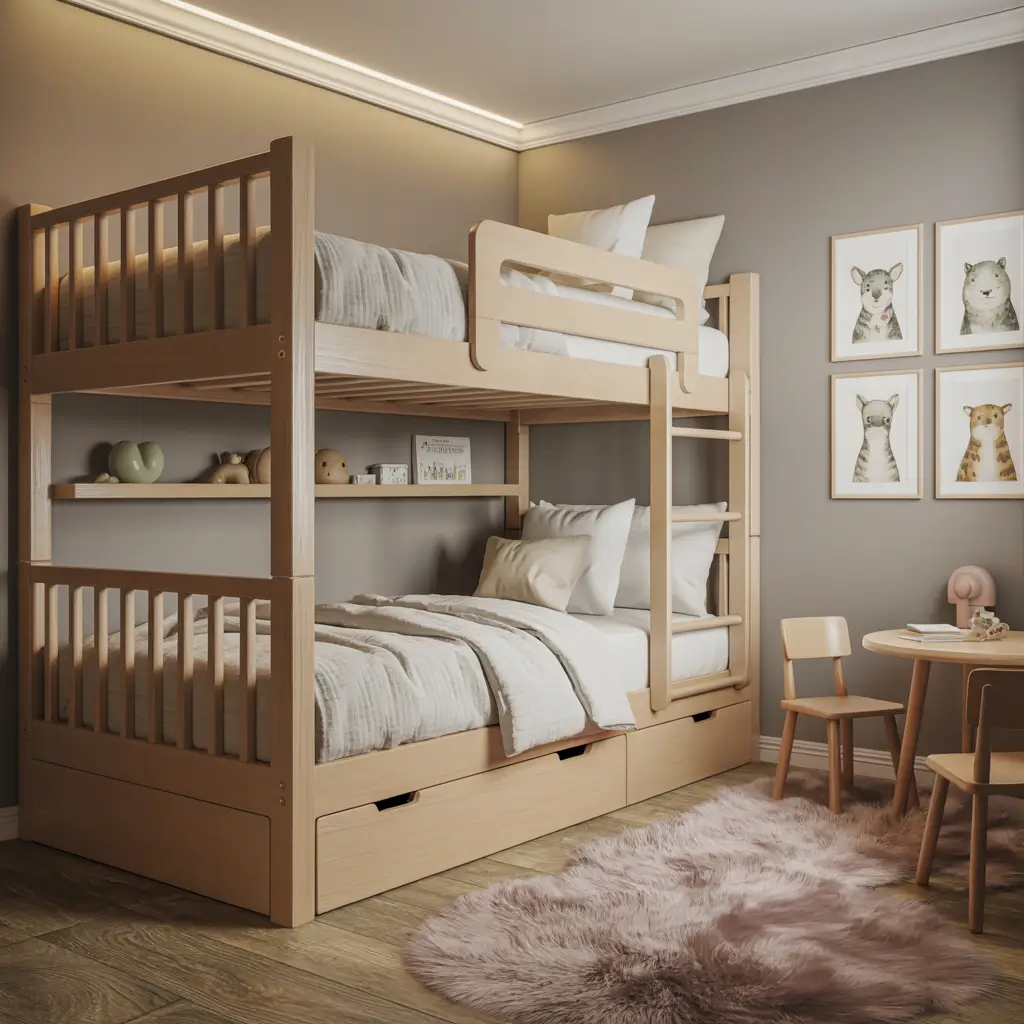
You know what’s lurking under most bunk beds? Dust bunnies the size of tumbleweeds and that toy your kid swore was lost forever. Bunk beds with sliding storage drawers turn that wasted space into organizational gold. Every inch counts in small shared bedrooms, and these drawers are like finding hidden square footage.
I helped install one of these systems for my cousin’s boys, and we fit three months’ worth of off-season clothes, all their sports equipment, and roughly 10,000 Pokemon cards in those drawers. The best part? The kids can actually access everything themselves without adult assistance or step stools.
Maximizing Drawer Storage
Smart drawer organization strategies:
- Assign specific drawers to each child (prevents territory wars)
- Use drawer dividers for smaller items
- Label everything with pictures for non-readers
- Keep everyday items in the easiest-to-reach drawers
- Reserve back drawers for seasonal or rarely-used items
Pro tip I learned the hard way: get drawers with soft-close mechanisms. Nothing wakes a sleeping sibling faster than a drawer slamming at 6 AM when someone’s looking for their favorite shirt.
Modular Furniture for Flexible Layouts
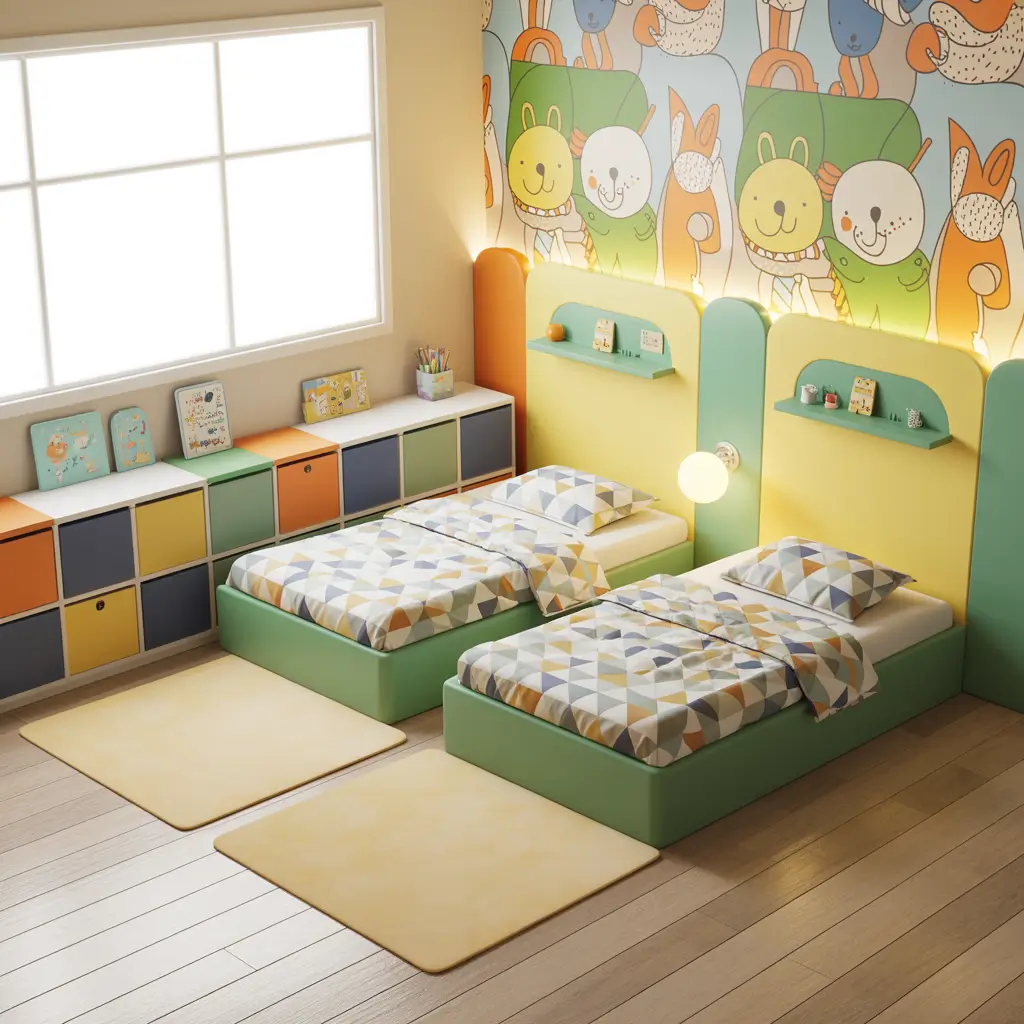
Kids change their minds about room layouts approximately every 3.7 seconds. That’s why modular furniture makes so much sense for small shared bedrooms. These pieces adapt and reconfigure as your kids grow or whenever they decide the room needs a complete transformation (again).
We went with modular cube storage in my kids’ room, and it’s been everything: a room divider, a toy garage, a bookshelf, and currently, it’s configured as stadium seating for their stuffed animal collection. The flexibility means we haven’t had to buy new furniture despite three major room “redesigns” in two years.
Choosing the Right Modular System
Key features to look for:
- Compatible pieces that truly work together
- Sturdy connections that survive kids climbing
- Multiple configuration possibilities
- Affordable add-on options
- Timeless design that won’t look dated
The biggest mistake people make? Buying from different modular “systems” that don’t actually connect properly. Stick with one brand or line, even if it means waiting for sales. Trust me, mismatched modular furniture is just expensive regular furniture that doesn’t fit together.
Growing with Your Kids
Here’s what’s brilliant about modular furniture: it eliminates the “but I’m too old for that” furniture problem. The same cubes that held baby toys become book storage, then display shelves for trophies, then whatever teenagers decide is cool. One investment, years of use.
Also Read: 10 Cozy Small Kids Bedroom Ideas to Spark Imagination
Under-Bed Toy Storage Solutions
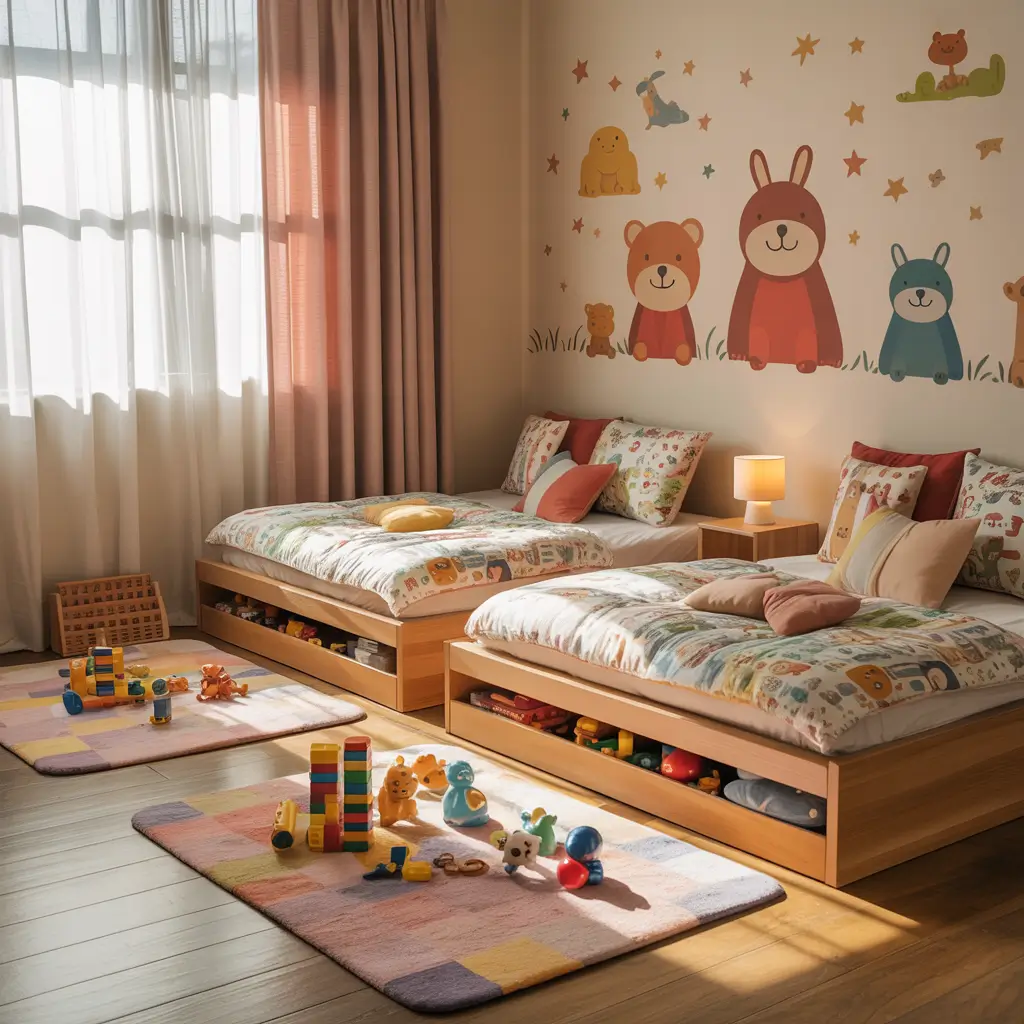
Let’s talk about the eternal question: where do all these toys actually go? Under-bed toy storage turns previously dead space into the answer to your organizational prayers. Modern under-bed solutions go way beyond basic plastic bins – we’re talking full-scale storage systems.
My daughter’s bed has a pull-out toy storage system that’s basically like having dresser drawers for toys. Everything has a designated spot, and cleanup takes five minutes instead of five hours. The clear bins mean she can see what’s inside without dumping everything out first (revolutionary, right?).
Types of Under-Bed Storage
Options that actually work:
- Rolling wooden crates on casters
- Fabric bins with rigid sides
- Vacuum storage bags for stuffed animals
- Drawer units that fit standard bed heights
- DIY platforms that create storage space
FYI, measure your bed height before buying anything. Nothing’s worse than excitedly bringing home storage solutions that don’t fit. Ask me how I know :/
Making It Kid-Friendly
The secret to under-bed storage that kids will actually use? Accessibility and visibility. If they can’t see it or reach it easily, it might as well not exist. We use clear containers with picture labels, and even my 4-year-old can maintain the system independently.
Color-Coded Zones for Each Child
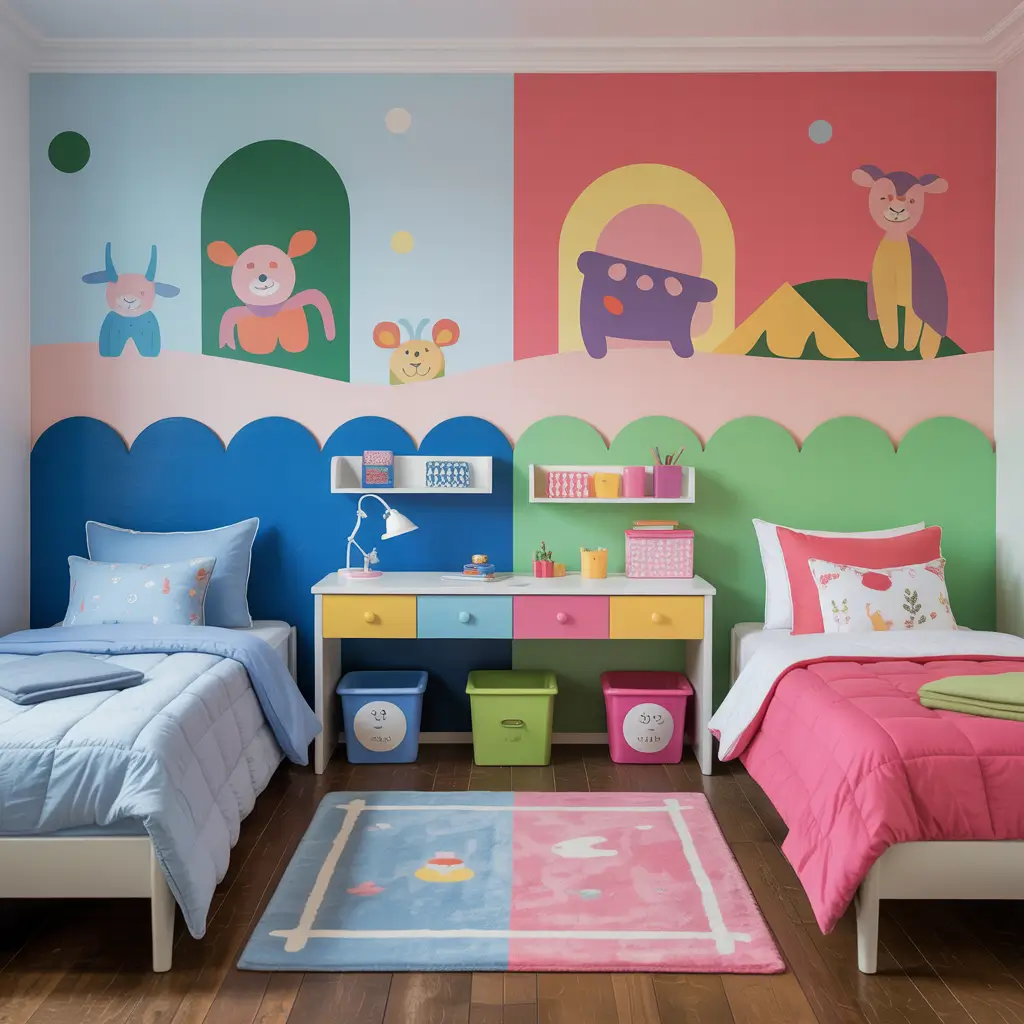
Want to stop approximately 90% of sharing arguments before they start? Implement color-coding like your sanity depends on it (because it does). Each child gets their own color for everything – bedding, storage, hangers, even toothbrushes if they share a bathroom.
In our house, blue means older brother, green means younger sister. No negotiations, no confusion, no “that’s mine!” screaming matches at 7 AM. It’s so simple I can’t believe it took me three years to figure it out.
Implementing Color Zones Successfully
Color-coding strategies that work:
- Let each child choose their color (buy-in is everything)
- Use removable vinyl dots for labeling shared furniture
- Coordinate but don’t match everything exactly
- Include color in unexpected places (lamp shades, drawer pulls)
- Keep some neutral shared items to encourage cooperation
The unexpected benefit? Gift-giving becomes foolproof. Grandparents, aunts, friends – everyone knows which color belongs to which kid. No more duplicate gifts or mix-ups.
Beyond Basic Primary Colors
Don’t want your kids’ room looking like a preschool? Use sophisticated color palettes within the coding system. My friend’s daughters have “all things sage green” versus “all things dusty rose,” and their room looks straight out of a design magazine.
Foldable Wall-Mounted Study Desks
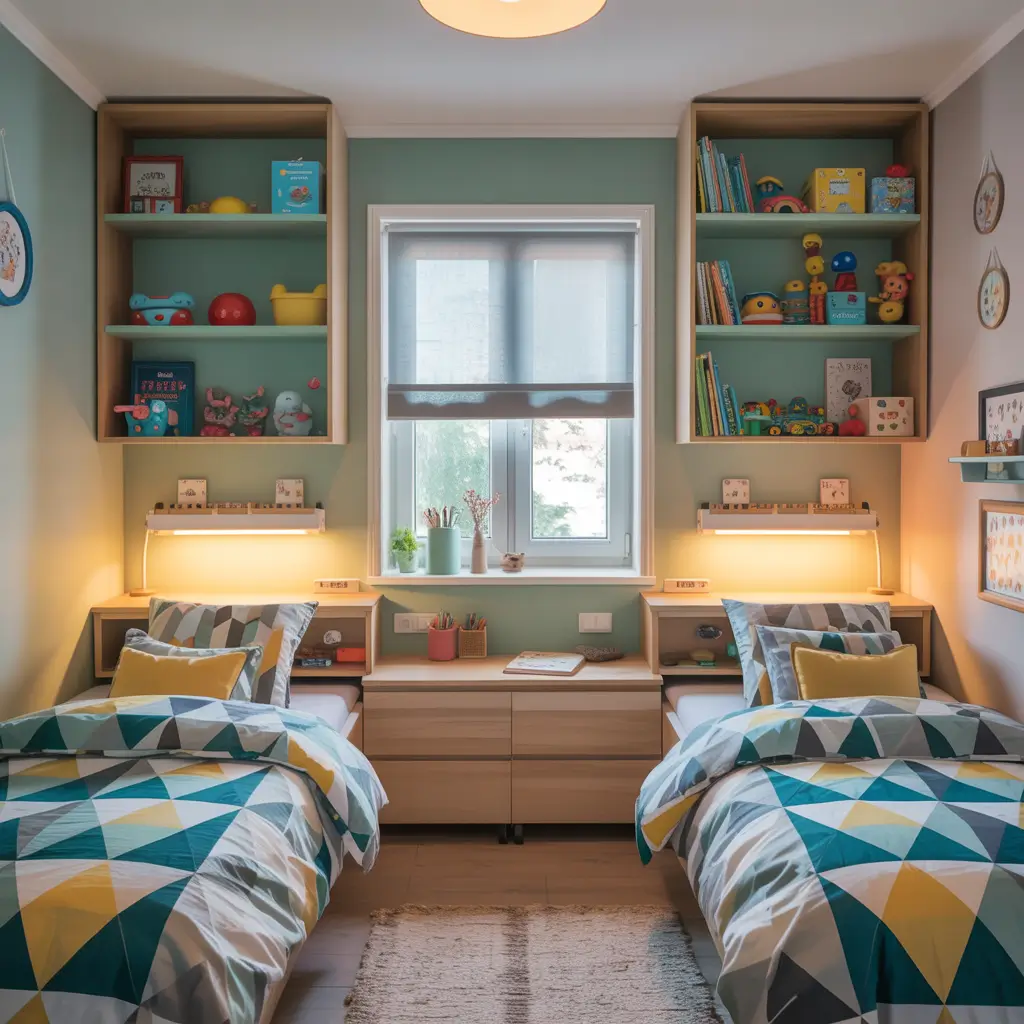
Floor space in small shared bedrooms is like gold – you never have enough of it. Foldable wall-mounted study desks give kids proper homework spaces that literally disappear when not in use. These aren’t your grandma’s rickety card tables – modern versions are sturdy, stylish, and surprisingly spacious.
I installed two of these in my nephews’ room, one at sitting height for the younger kid and one at standing height for the older one. Homework time? Desks fold down. Play time? They fold flat against the wall, freeing up the entire floor for activities.
Installation and Safety Tips
Critical considerations for wall-mounted desks:
- Stud mounting is non-negotiable (drywall anchors won’t cut it)
- Install at ergonomic heights for each child
- Add task lighting that doesn’t take desk space
- Include wall storage above for supplies
- Test weight limits before kids use them
My contractor friend taught me this: install a small lip or barrier at the desk edge. Pencils won’t roll off, and it prevents papers from sliding onto the floor. Such a simple addition, but it makes these desks actually functional for kids.
Making Them Appealing to Kids
Kids resist homework enough without uncomfortable study spaces. Add a comfortable wall-mounted stool that can tuck away, put up a small bulletin board for their achievements, and maybe let them choose a fun desk pad. My son has a world map desk pad, and he actually enjoys sitting there now.
Also Read: 12 Chic Modern Kids Bedroom Ideas and Playful Décor Touches
Shared Reading Nook with Cushions
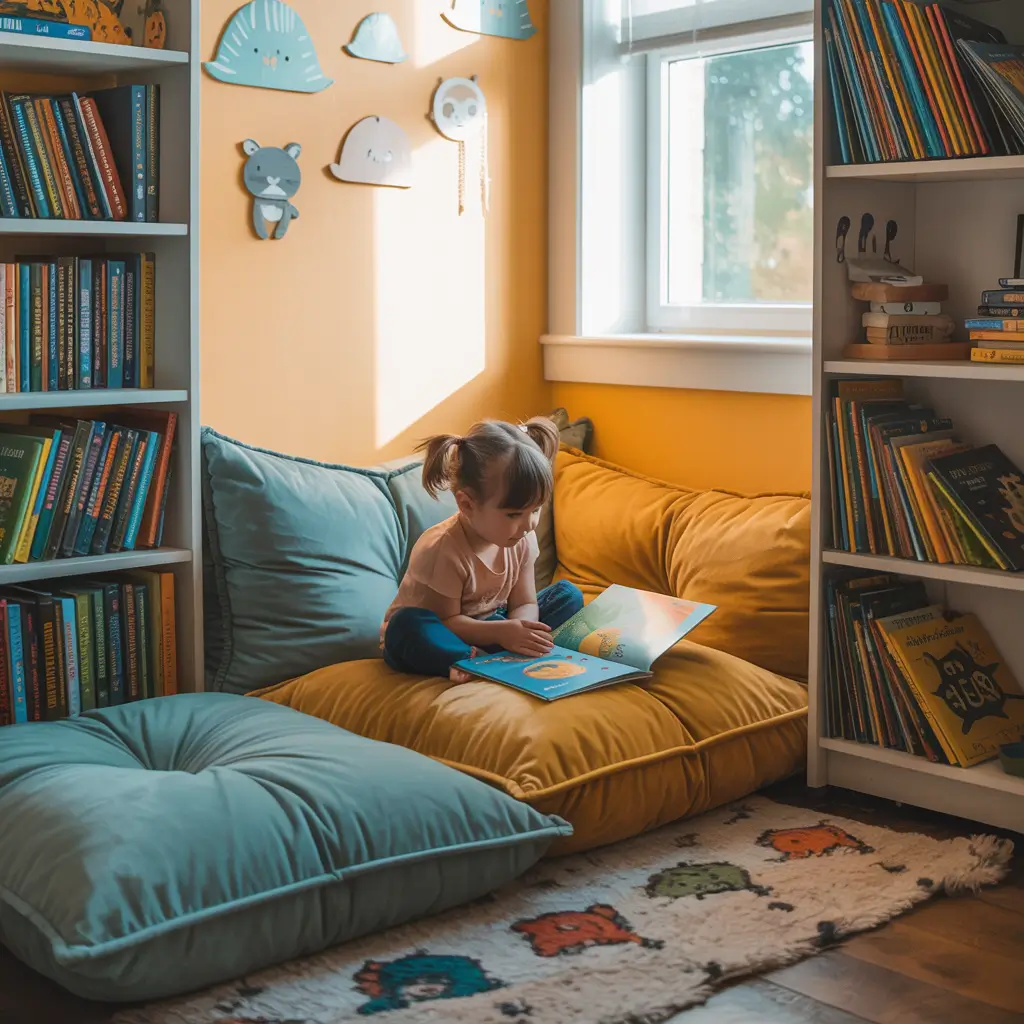
Every small shared bedroom needs a designated quiet space, and a reading nook does double duty: it encourages reading AND provides a retreat when siblings need space from each other. You don’t need much room – just a corner with good light and lots of soft surfaces.
We created a reading nook in my kids’ shared room using a corner, some floating shelves, and approximately 47 cushions (okay, maybe 8, but it feels like 47 when you’re picking them up). The kids take turns choosing weekly library books to display, and it’s become their favorite spot for morning reading.
Creating Cozy Without Cluttered
Essential reading nook elements:
- Corner placement maximizes unused space
- Floor cushions that stack when not used
- Wall-mounted book display shelves
- Battery-powered reading lights
- A small basket for current reads
The trick is making it cozy enough to be inviting but not so comfortable that it becomes a nap trap during homework time. We learned that lesson when my daughter kept “reading” with her eyes closed for suspicious amounts of time.
Age-Appropriate Adaptations
What works for a 5-year-old won’t work for a 10-year-old. Younger kids need lower shelves and bigger cushions; older kids want privacy and better lighting. Our nook has evolved from picture books and bean bags to chapter books and a proper reading chair as the kids have grown.
Playful Theme Walls for Personality
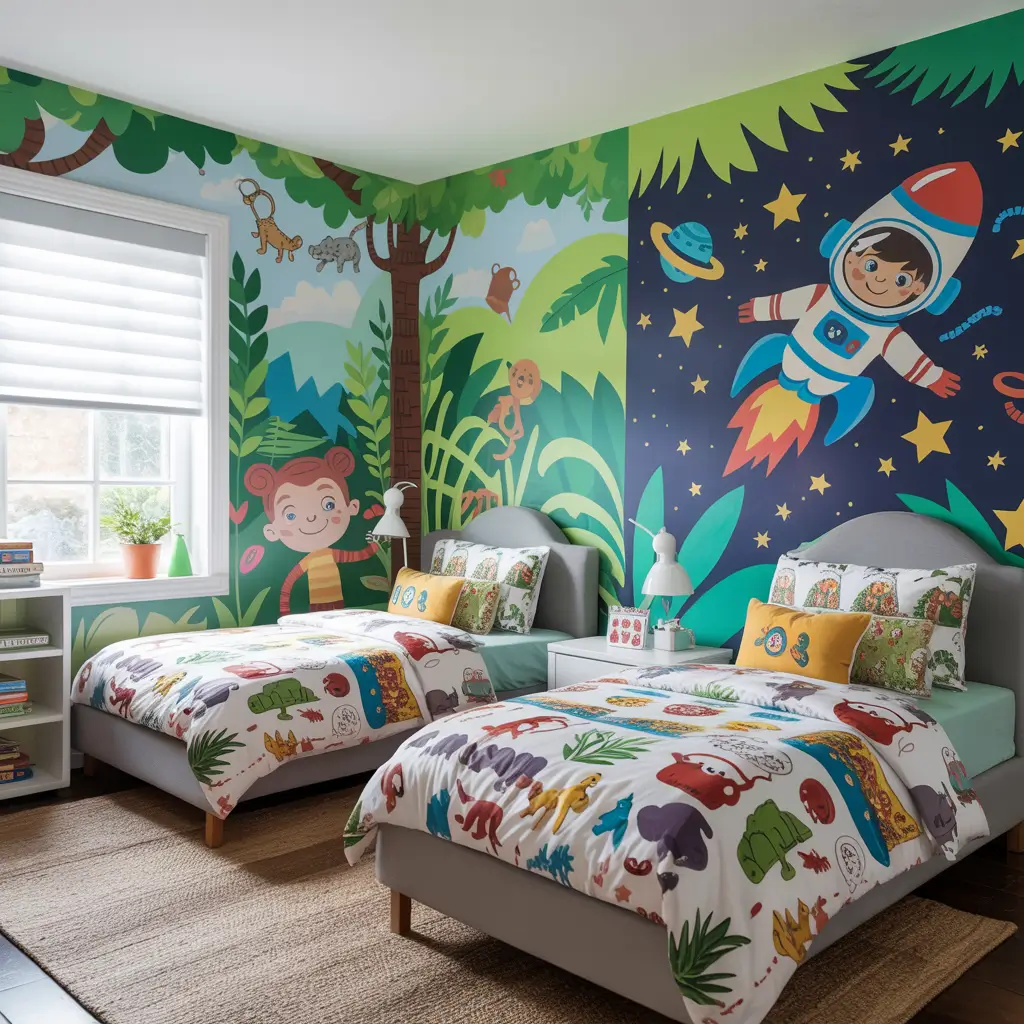
Just because siblings share a room doesn’t mean they have to share an aesthetic. Theme walls let each child express their personality without the room looking like a design disaster. The key is containing themes to specific walls rather than exploding them everywhere.
My friend’s kids have opposite walls themed completely differently – one has a galaxy mural, the other has a jungle scene. The connecting walls? Neutral white to balance the chaos. It sounds crazy, but it actually works beautifully.
Making Different Themes Coexist
Strategies for theme harmony:
- Limit themes to accent walls only
- Find connecting colors between themes
- Use removable decals for easy changes
- Keep furniture neutral to ground the space
- Add unifying elements like matching frames
IMO, the best approach is treating each theme wall like artwork rather than trying to blend them. Embrace the contrast instead of fighting it, and suddenly it looks intentional rather than chaotic.
Budget-Friendly Theme Solutions
You don’t need expensive murals or custom wallpaper. Removable wall decals, washi tape designs, or even themed posters in matching frames create impact without commitment or huge expense. We spent $30 on constellation stickers and created a whole galaxy wall that looks professionally done.
Multi-Functional Murphy Beds
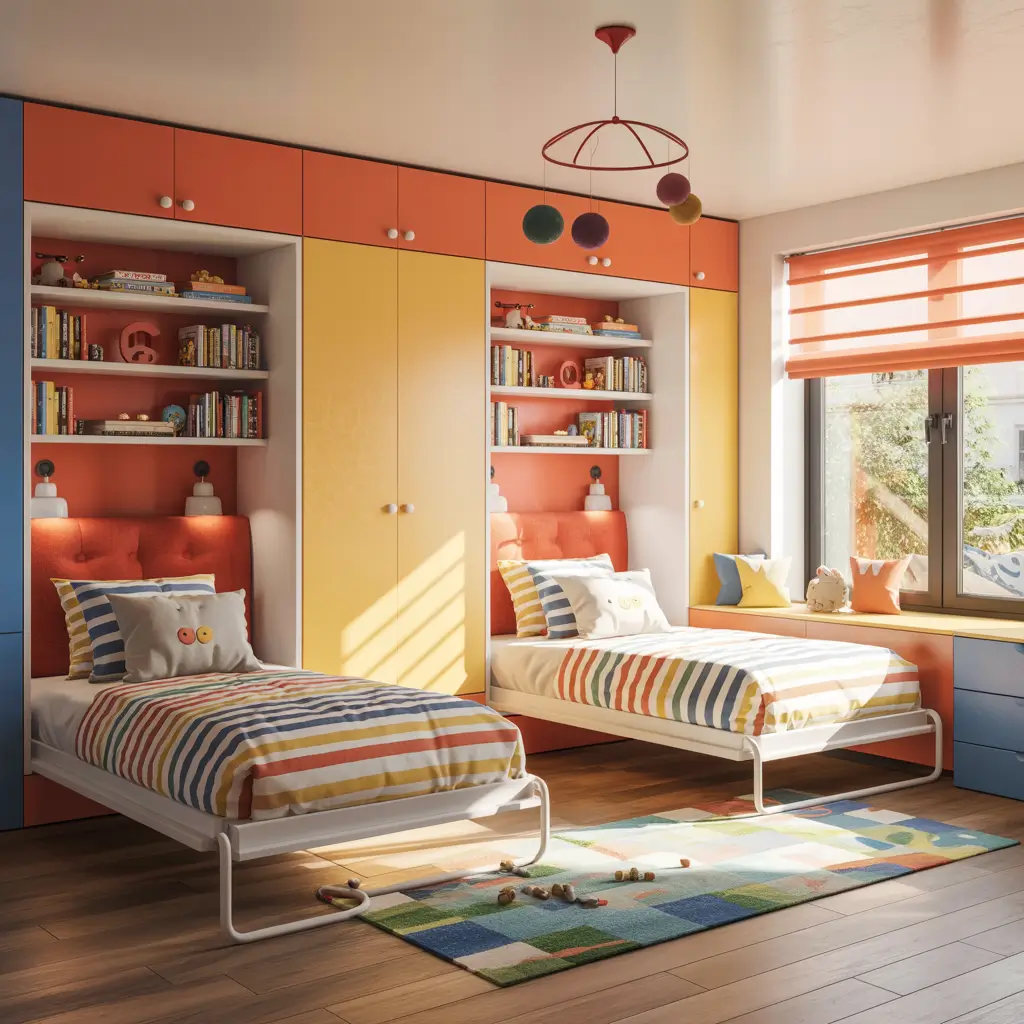
Murphy beds for kids might sound excessive, but hear me out. In truly tiny shared bedrooms, Murphy beds transform the space from sleep zone to play zone in seconds. Modern versions are safe, easy to operate, and some even include built-in storage.
My colleague has Murphy beds for both her kids, and their 10×10 shared room becomes a dance studio, LEGO building zone, or sleepover party space during the day. At night, beds come down, and it’s a bedroom again. It’s like having two rooms in one.
Choosing Kid-Appropriate Murphy Beds
Safety features to prioritize:
- Piston mechanisms that prevent slamming
- Locking systems to keep beds in position
- Lightweight designs kids can operate
- No pinch points or sharp edges
- Built-in shelving that stays level when folded
The newest models have USB ports and reading lights built into the frame, plus shelving that remains horizontal whether the bed is up or down. These aren’t your apartment-dwelling uncle’s Murphy beds from the ’80s.
Also Read: 12 Colorful Kids Bedroom Ideas and Cheerful Wall Art
Hanging Storage Baskets and Shelves
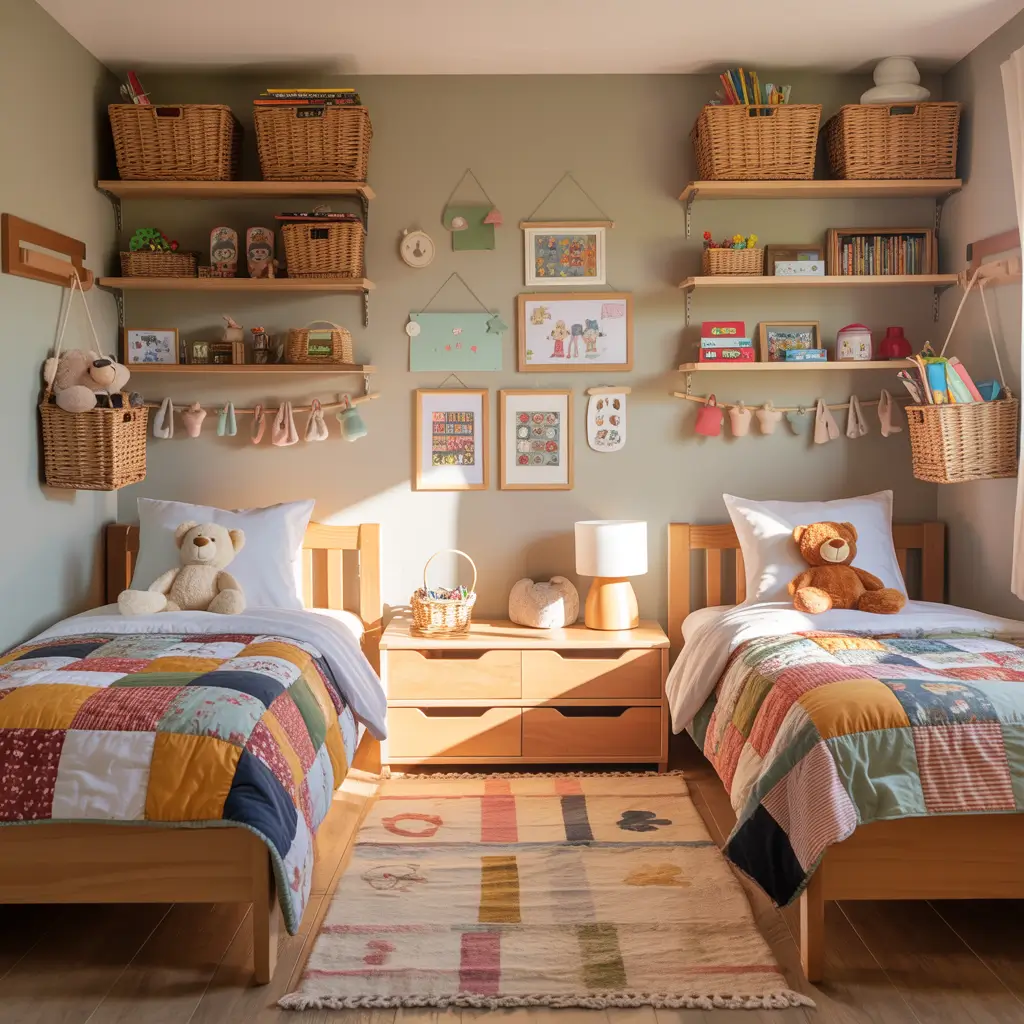
When floor and surface space run out, look up. Hanging storage baskets and shelves use vertical space that usually goes wasted. These solutions keep things accessible but off the ground, which is basically the holy grail of small room organization.
We installed a hanging system with baskets at different heights in my kids’ room. Lower baskets hold everyday toys, higher ones store special occasion items or toys in “time-out.” The visual impact is minimal, but the storage capacity is huge.
Strategic Hanging Storage Placement
Smart placement ideas:
- Corner installations maximize awkward spaces
- Above windows for seasonal items
- Behind doors for frequently used items
- Along one wall as a gallery display
- Ceiling-mounted nets for lightweight toys
My favorite hack? Macramé plant hangers repurposed as stuffed animal storage. They look decorative, hold a ton of plush toys, and cost about $10 each. Sometimes the best solutions aren’t even designed for kids’ rooms.
Making It Work Long-Term
The beauty of hanging storage is its adaptability. Baby toys in baskets become art supplies, then sports equipment, then whatever teenagers accumulate. The system grows with your kids without requiring new furniture or major changes.
Bringing It All Together
After implementing these ideas across multiple small shared kids bedrooms (mine, my sister’s, and several friends who’ve enlisted my help), here’s what I know works: start with your biggest pain point and solve that first.
If toys are everywhere, focus on storage solutions. If kids can’t study, prioritize desk space. If they’re constantly fighting over territory, implement color-coding immediately. You don’t have to do everything at once – in fact, you probably shouldn’t.
Remember, perfection isn’t the goal here. The goal is creating a functional, peaceful shared space where both kids feel respected and have room to grow.
Some days that room will look magazine-worthy, other days it’ll look like a tornado hit. That’s real life with kids, and that’s okay.
The best small shared kids bedroom is one that works for YOUR specific kids with YOUR specific challenges. Mix and match these ideas, involve your kids in the decisions (they’re surprisingly creative when given the chance), and be prepared to adapt as they grow.
What works for 5-year-olds won’t work for 10-year-olds, but with flexible solutions, you won’t have to start from scratch every few years.
And honestly? Some of my kids’ best memories are being made in that tiny shared room, proving that size really doesn’t matter when the design is smart and the love is big 🙂