15 Brilliant Small Space Living Room Ideas for Cozy Style
- Living Room Decor
 Ben
Ben- 0
- 39 minutes read
Living in a shoebox apartment? Yeah, me too. I spent three years in a 400-square-foot studio where my “living room” was basically the foot of my bed. But here’s the thing – small spaces don’t have to feel cramped and depressing.
With the right tricks up your sleeve, you can transform that tiny living room into a space that actually feels… dare I say it… spacious?
I’ve tried every small space hack out there (including some truly terrible Pinterest fails), and I’m here to share what actually works.
No fluff, no “just declutter!” nonsense – these are real solutions for real people who need their living rooms to work harder than a barista during morning rush.
Multi-functional Furniture
Let’s kick things off with the MVP of small space living: multi-functional furniture. Remember when your parents had that ugly ottoman that opened up to store blankets? They were onto something.
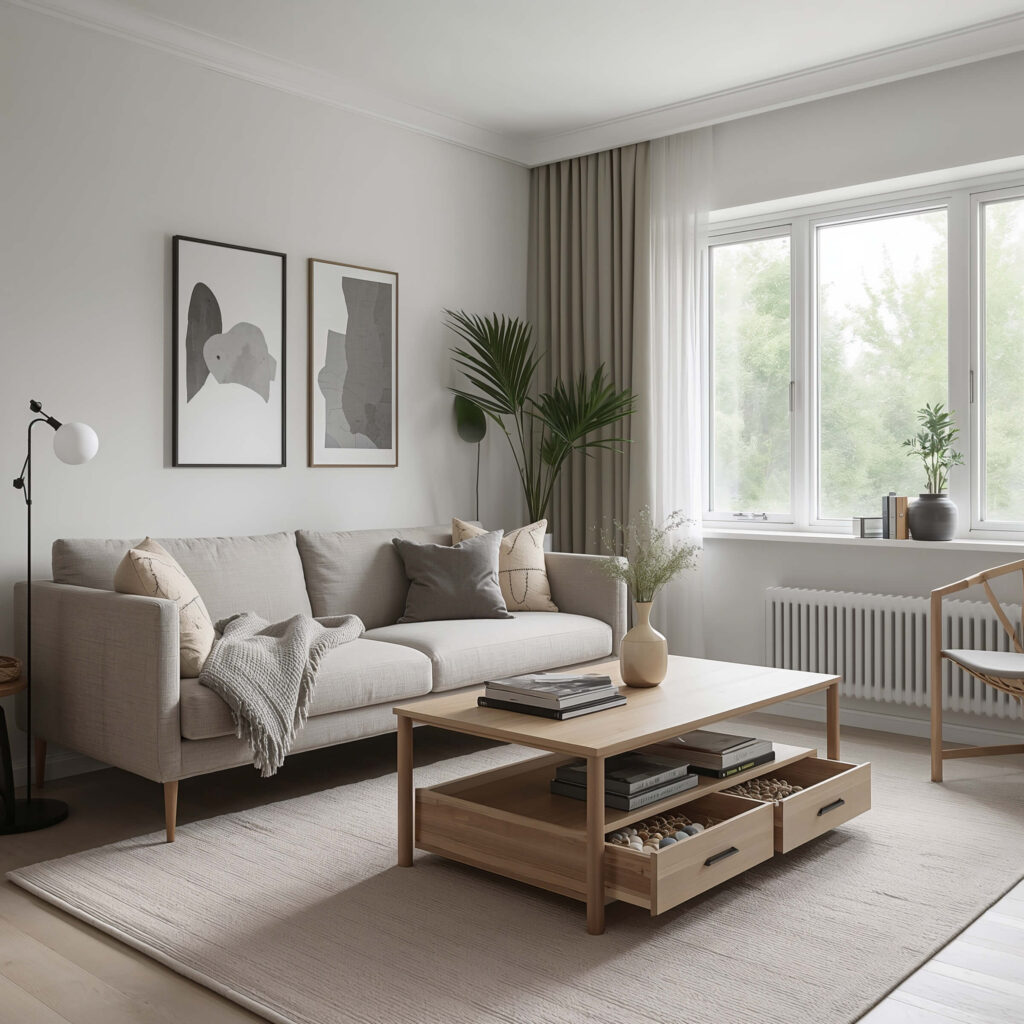
I learned this lesson the hard way after buying a gorgeous coffee table that looked amazing but was basically a space-eating monster. Now? Everything in my living room has at least two jobs. My personal favorite is a storage bench that doubles as extra seating when friends come over. It holds all my board games, extra pillows, and that collection of throw blankets I definitely don’t need but can’t stop buying.
Making Multi-functional Work for You
The key here is thinking beyond the obvious. Sure, a sofa bed is great, but what about:
- Coffee tables with lift-top surfaces that become instant work desks
- Nesting tables that tuck away when not needed
- Storage poufs that work as footrests, seats, and hiding spots for clutter
You know what’s wild? Once you start thinking this way, regular furniture starts looking wasteful. Why would anyone buy a table that’s just… a table?
Wall-Mounted Shelving
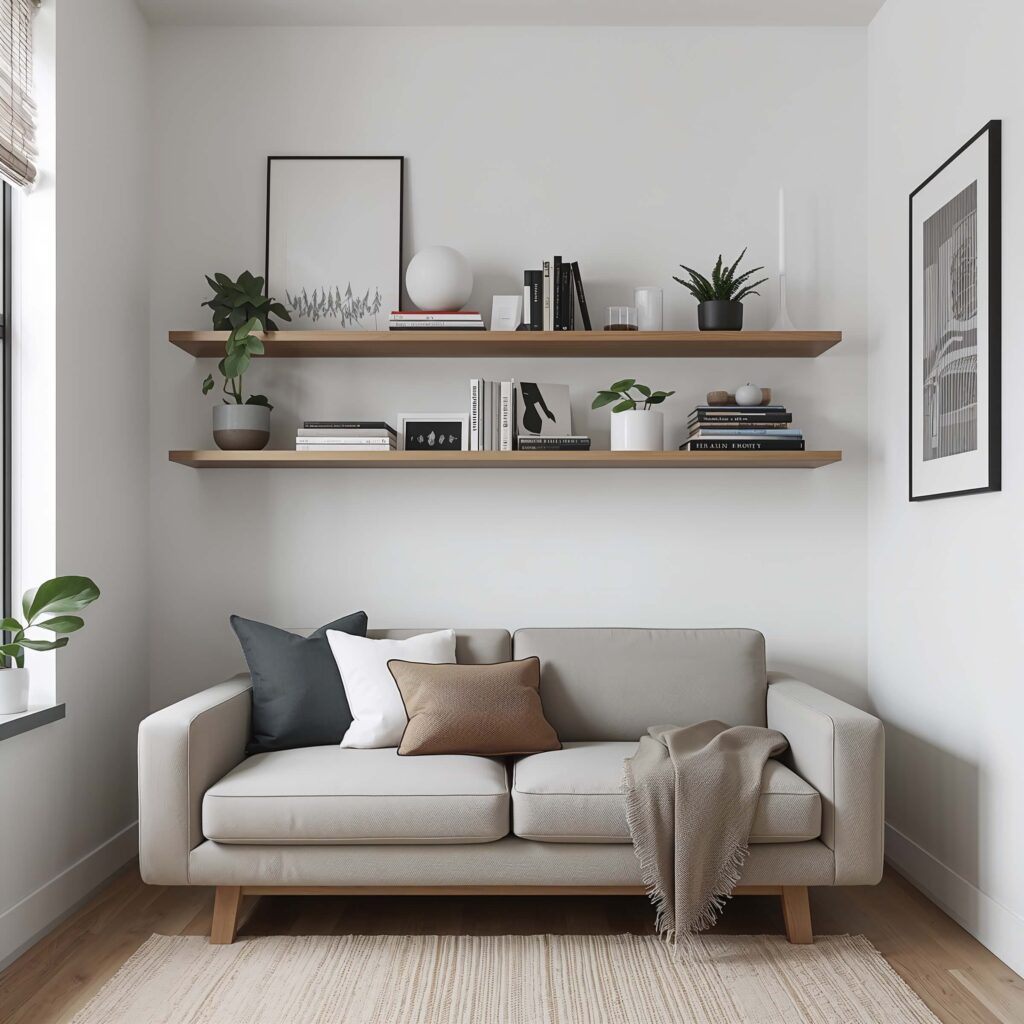
Floors are precious real estate in small spaces, so why are we putting stuff on them? Wall-mounted shelving changed my entire living room game, and I’m slightly embarrassed it took me so long to figure this out.
I started with simple floating shelves above my TV and suddenly had room for books, plants, and all those random decorative objects that were cluttering my surfaces. The best part? No bulky bookcase eating up floor space. My living room instantly felt bigger because I could actually see more of the floor.
Strategic Shelf Placement
Here’s what I’ve learned about wall shelving:
- Install them higher than you think – draws the eye up and makes ceilings feel taller
- Mix open and closed storage – display pretty stuff, hide the ugly
- Use corner shelves – that dead corner space? Prime real estate
Pro tip: invest in a good stud finder. Trust me on this one – nobody wants their shelf collection crashing down at 2 AM.
Light and Neutral Color Palettes
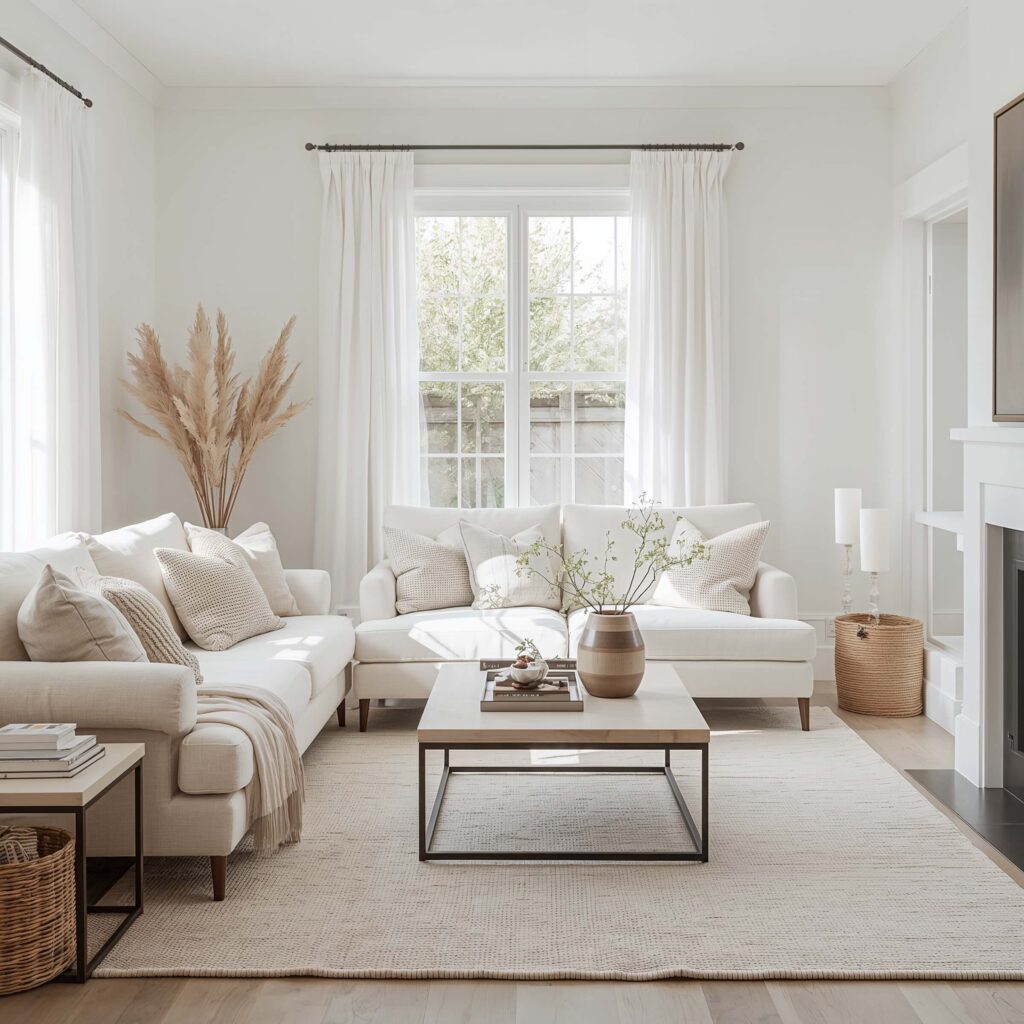
I know, I know. “Paint it white” feels like the most basic advice ever. But hear me out – light and neutral colors really do make spaces feel bigger, and there’s actual science behind it. Light colors reflect more light, which tricks your brain into thinking there’s more space.
My living room walls are now a soft gray (Benjamin Moore’s “Cloud White” if you’re curious), and the difference is ridiculous. Combined with white trim and light furniture, the room feels twice its actual size. Does it show dirt more? Absolutely. Do I care? Not when my living room no longer feels like a cave.
Beyond Basic White
But neutral doesn’t mean boring:
- Warm whites with yellow undertones feel cozy
- Soft grays add sophistication without darkness
- Pale blues or greens bring in color while maintaining airiness
The trick is consistency. Keep your main pieces neutral and add personality through accessories. Way easier to swap out pillows than repaint everything when you get bored.
Also Read: 15 Genius Very Small Living Room Ideas for Cozy Stylish
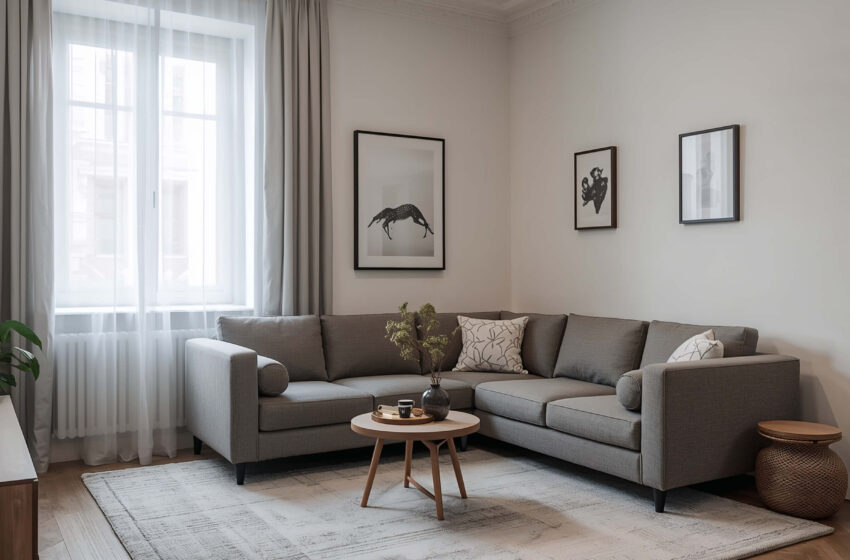
Compact Sectional Sofas
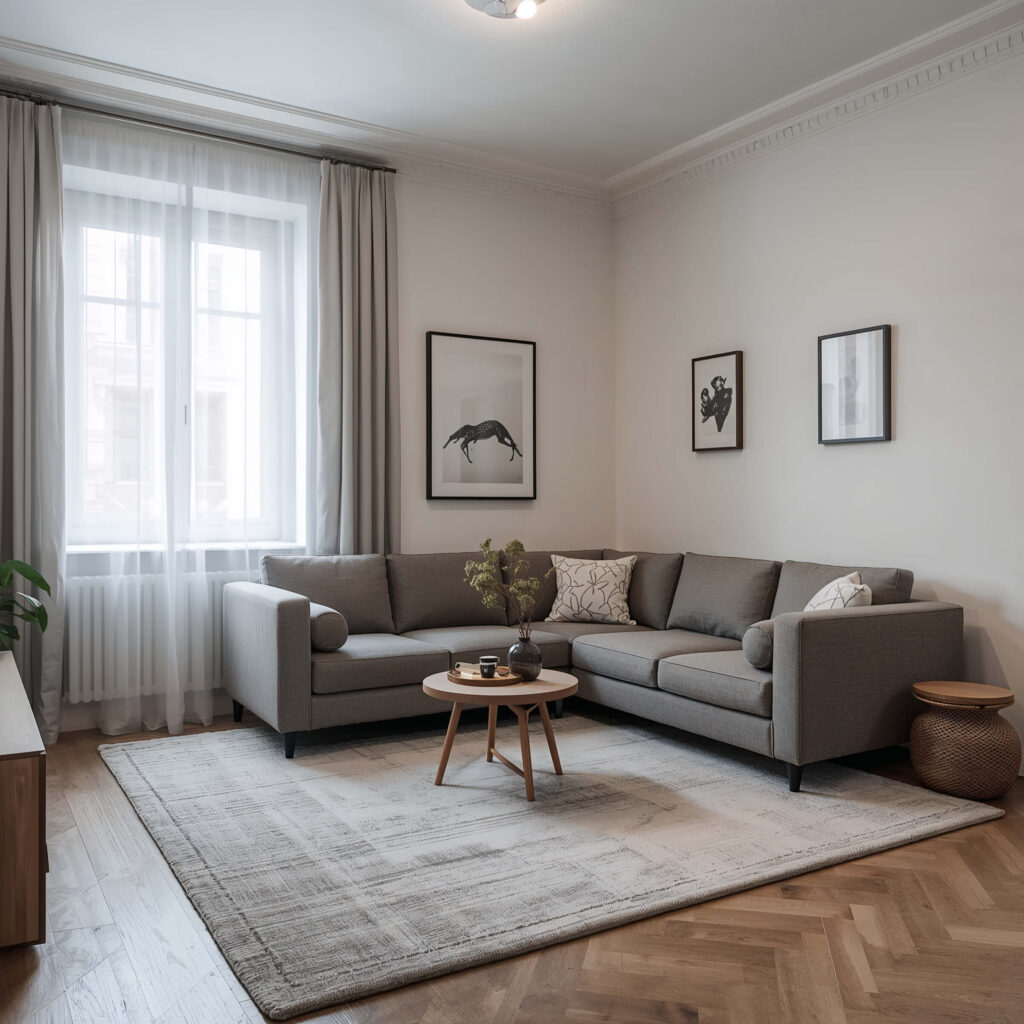
Who says sectionals are only for McMansions? Compact sectionals have been a game-changer for small living rooms, and honestly, furniture makers are finally getting it right.
I fought against getting a sectional for years, convinced it would overwhelm my space. Then I found a reversible chaise sectional that’s only 78 inches long. It defines my living area, provides tons of seating, and – here’s the kicker – actually makes the room feel more organized than my old sofa-and-chair combo.
Choosing the Right Sectional
When shopping for small-space sectionals:
- Measure twice, buy once – seriously, measure everything including doorways
- Look for legs – visible floor underneath = more spacious feel
- Consider armless or low-arm styles – less visual bulk
- Reversible chaise options give you flexibility
FYI, apartment-sized doesn’t mean uncomfortable. My compact sectional is where I spend 90% of my Netflix time, and it’s perfectly cozy.
Mirrors to Create Space
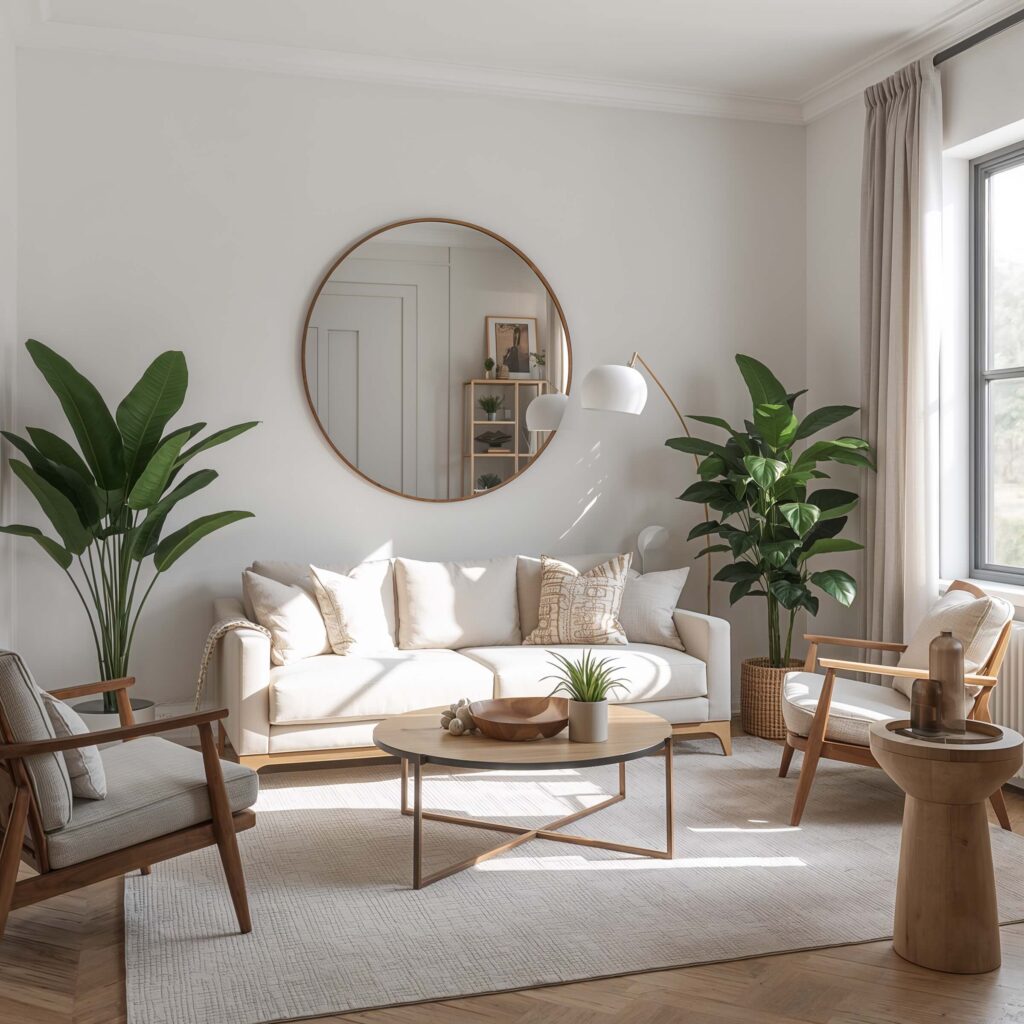
Okay, the mirror trick might be the oldest one in the book, but it works so well I’d be doing you a disservice not to mention it. Mirrors are basically magic for small spaces – they reflect light, create depth, and can literally double the visual size of your room.
I have a massive mirror (we’re talking 4×6 feet) propped against one wall, and guests constantly ask if I knocked down a wall to expand the space. Nope, just mirror magic. The key is placement – directly across from a window works best, but even reflecting a nice view of the room helps.
Mirror Strategies That Work
Want to maximize your mirror game?
- Go big or go home – one large mirror beats ten tiny ones
- Mirror furniture adds reflection without wall commitment
- Mirrored closet doors if you have them (instant room doubler)
- Strategic groupings of smaller mirrors can create window illusions
Just don’t go overboard. You want “stylish living room,” not “fun house.”
Vertical Storage Solutions
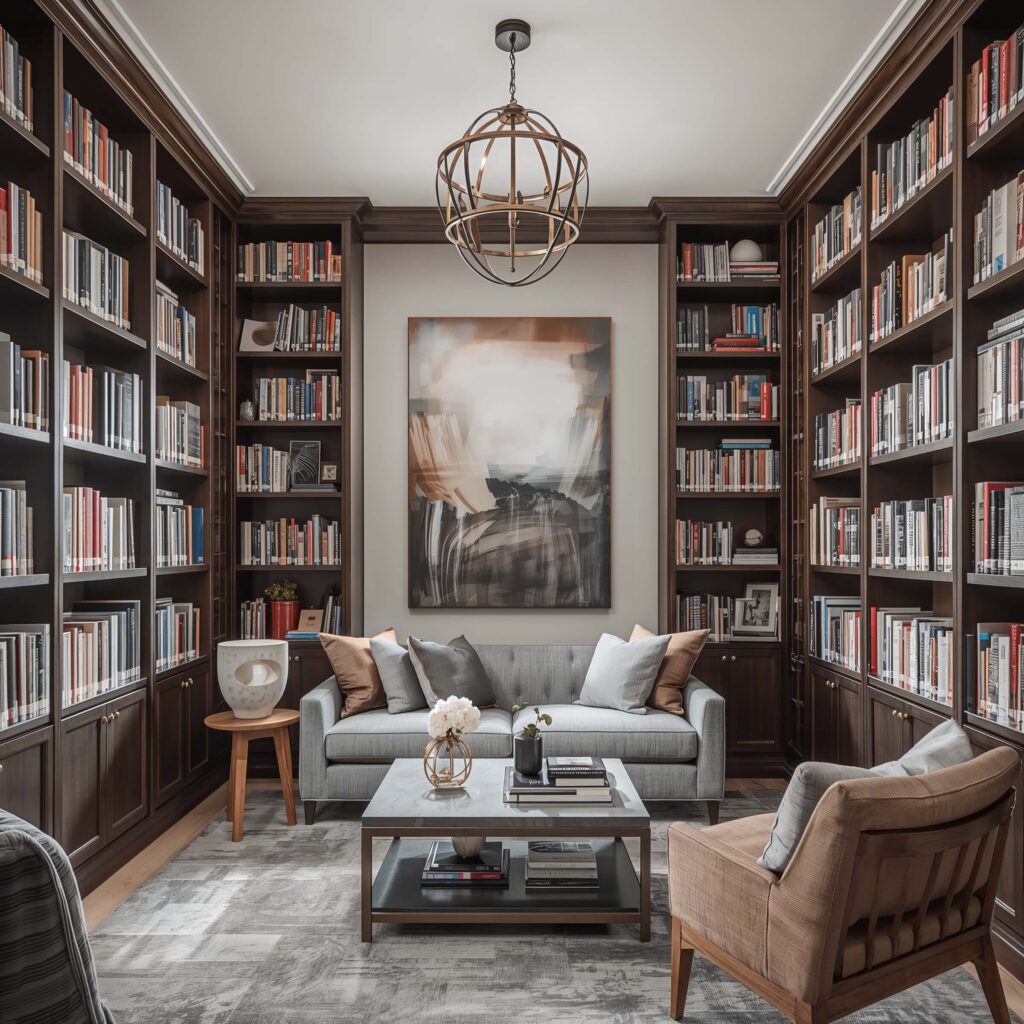
Here’s a truth bomb: vertical storage is the most underutilized space in most living rooms. We’re all fighting over floor space while walls sit there doing nothing. Time to put them to work!
I installed floor-to-ceiling shelving on one wall, and it’s like I added a whole room’s worth of storage. Books, baskets, decorative boxes – everything has a home now. The vertical lines even make my ceilings look higher, which is a nice bonus.
Thinking Vertically
Some vertical storage wins:
- Tall, narrow bookcases take up minimal floor space
- Wall-mounted desk units for that WFH corner
- Hanging organizers on the backs of doors
- Stackable storage cubes that grow with your needs
Remember: the goal is using height, not creating a storage wall that feels oppressive. Leave some breathing room.
Also Read: 15 Brilliant Small Living Room Ideas for Cozy Stylish Spaces
Foldable Coffee Tables
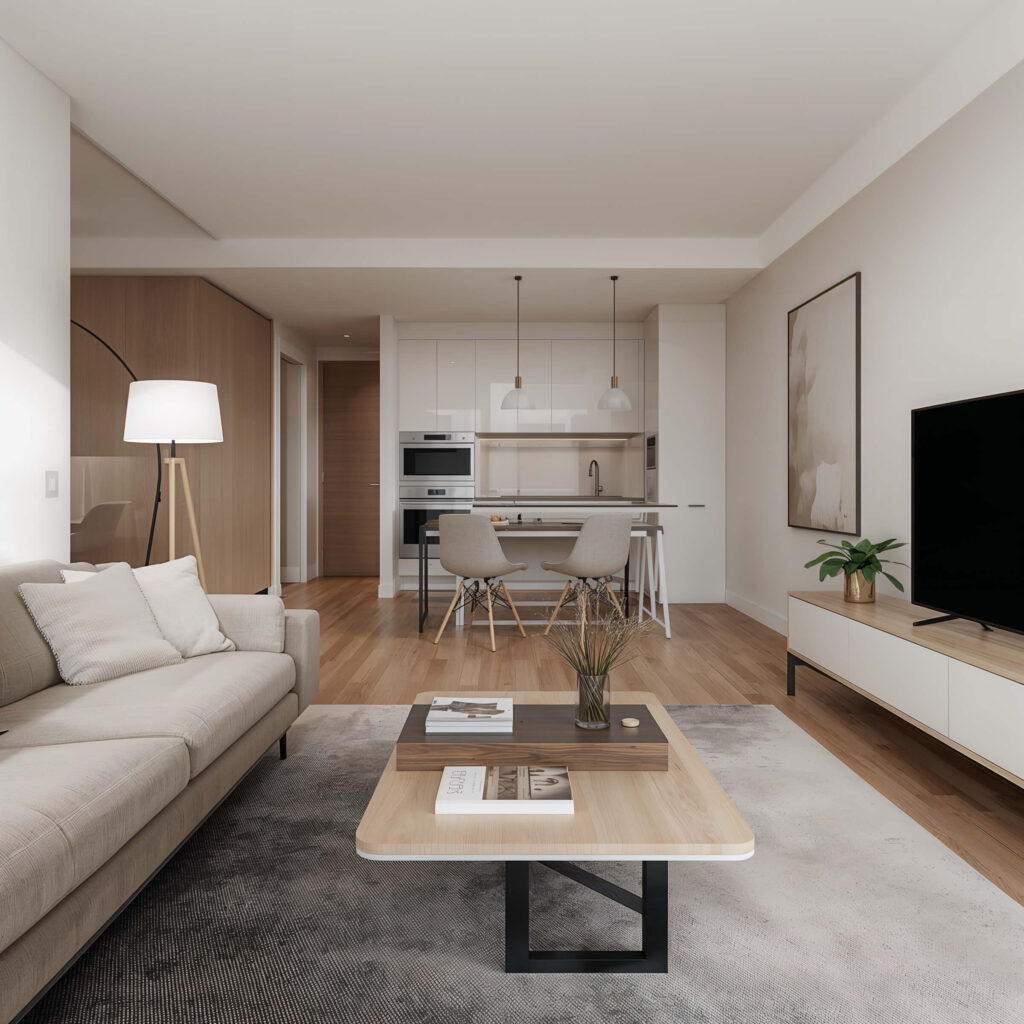
Let me tell you about my relationship with foldable coffee tables: it’s true love. When you need floor space for yoga, impromptu dance parties, or just walking without doing an obstacle course, these babies fold up and tuck away.
My current foldable table looks like a regular modern coffee table until you need it gone. Then – boom – it folds flat and slides behind the sofa. Game changer for someone who refuses to give up their living room workout routine.
Finding the Right Foldable Option
What to look for:
- Sturdy construction – wobbly tables are worse than no table
- Easy fold mechanism – if it takes an engineering degree, pass
- Attractive design – it’s out most of the time, make it pretty
- Multiple heights for versatility
Some even come with wheels. Living room table by day, kitchen island by night? Yes, please.
Minimalist Decor Style
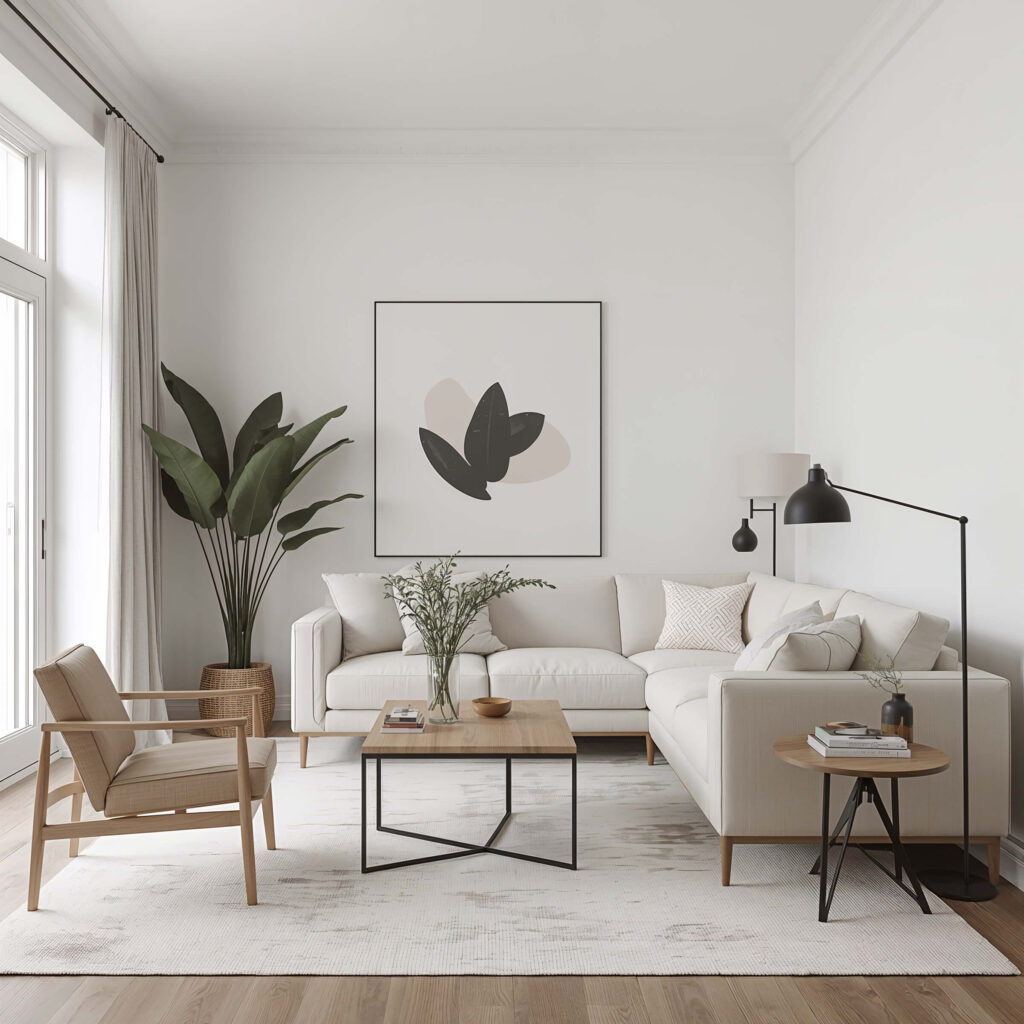
I used to be a maximalist. Every surface had something on it, every wall had art, every corner had… stuff. Then I moved into my current small space and had a come-to-minimalism moment. Minimalist decor isn’t about having nothing – it’s about having the right things.
Now I follow the “one in, two out” rule. Want a new decorative object? Two things have to go. My living room finally breathes, and honestly? I don’t miss the clutter. Each piece I keep has meaning or serious aesthetic value.
Minimalism That Doesn’t Feel Cold
The trick to warm minimalism:
- Quality over quantity – one great piece beats ten mediocre ones
- Texture adds interest – think chunky knits, natural wood, soft metals
- Negative space is your friend – not every surface needs something
- Hidden storage keeps necessities out of sight
Your space will feel bigger, calmer, and way easier to clean. Win-win-win.
Built-in Storage Seating
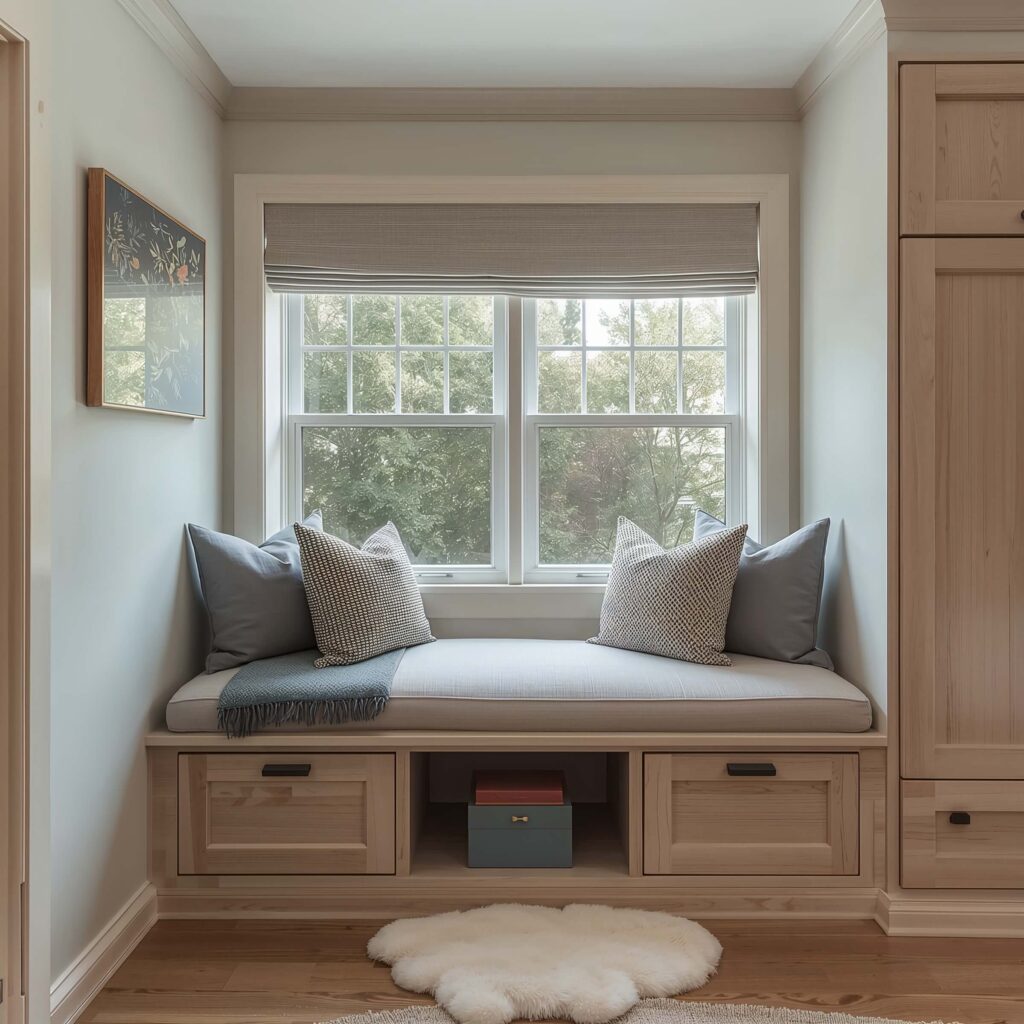
Window seats with storage underneath? Built-in storage benches? These are the holy grail of small space living. They’re seating, they’re storage, they’re architectural interest – basically the Swiss Army knife of furniture.
I DIY’d a storage bench along one wall using IKEA kitchen cabinets as the base (way cheaper than custom built-ins), and it’s become everyone’s favorite spot. The hidden storage holds everything from extra bedding to my partner’s vinyl collection. Plus, it makes the room feel intentionally designed rather than just furnished.
Creating Your Own Built-ins
IMO, you don’t need a contractor:
- Hack existing furniture – kitchen cabinets, bookcases, even dressers work
- Add a cushion on top – instant seating
- Install it wall-to-wall for that custom look
- Paint to match walls for seamless integration
The investment pays off in both function and home value.
Also Read: 15 Stunning Living Room Decor Ideas for Cozy Stylish Spaces
Layered Lighting Design
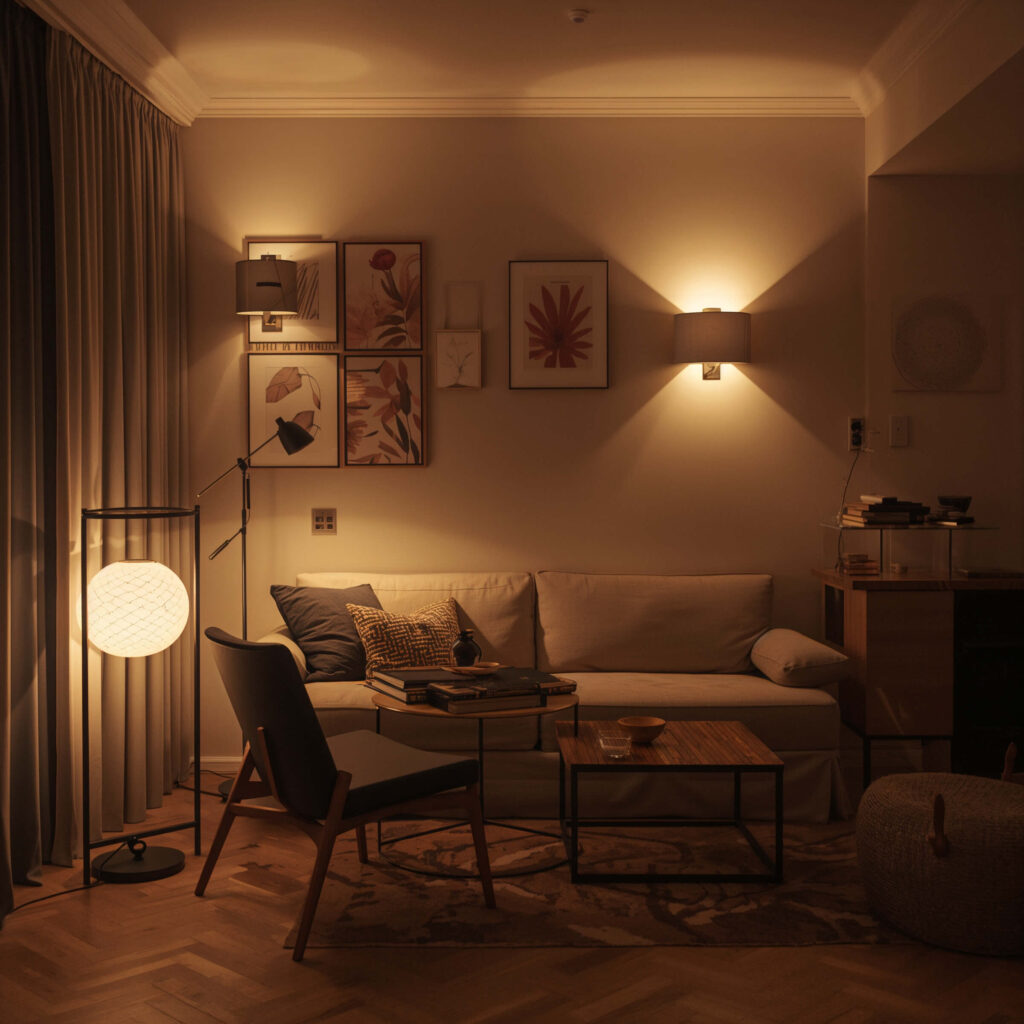
Overhead lighting alone makes any room feel flat and sad. Layered lighting transforms small spaces by creating depth, ambiance, and the illusion of separate zones. Who knew light could do so much heavy lifting?
My living room has exactly one overhead light (thanks, landlord), but I’ve added table lamps, floor lamps, and LED strips behind the TV. Suddenly my one-room space feels like it has different areas for different moods. Movie night? Dim the lamps. Reading time? Bright task lighting. Romantic dinner? Warm ambient glow.
Building Your Light Layers
Think in three levels:
- Ambient lighting – general illumination (overhead or floor lamps)
- Task lighting – focused light for specific activities
- Accent lighting – highlighting art or architectural features
- Smart bulbs let you control everything from your phone 🙂
Multiple light sources at different heights make rooms feel larger and more sophisticated. Plus, good lighting makes everything look better – including you.
Floating TV Units
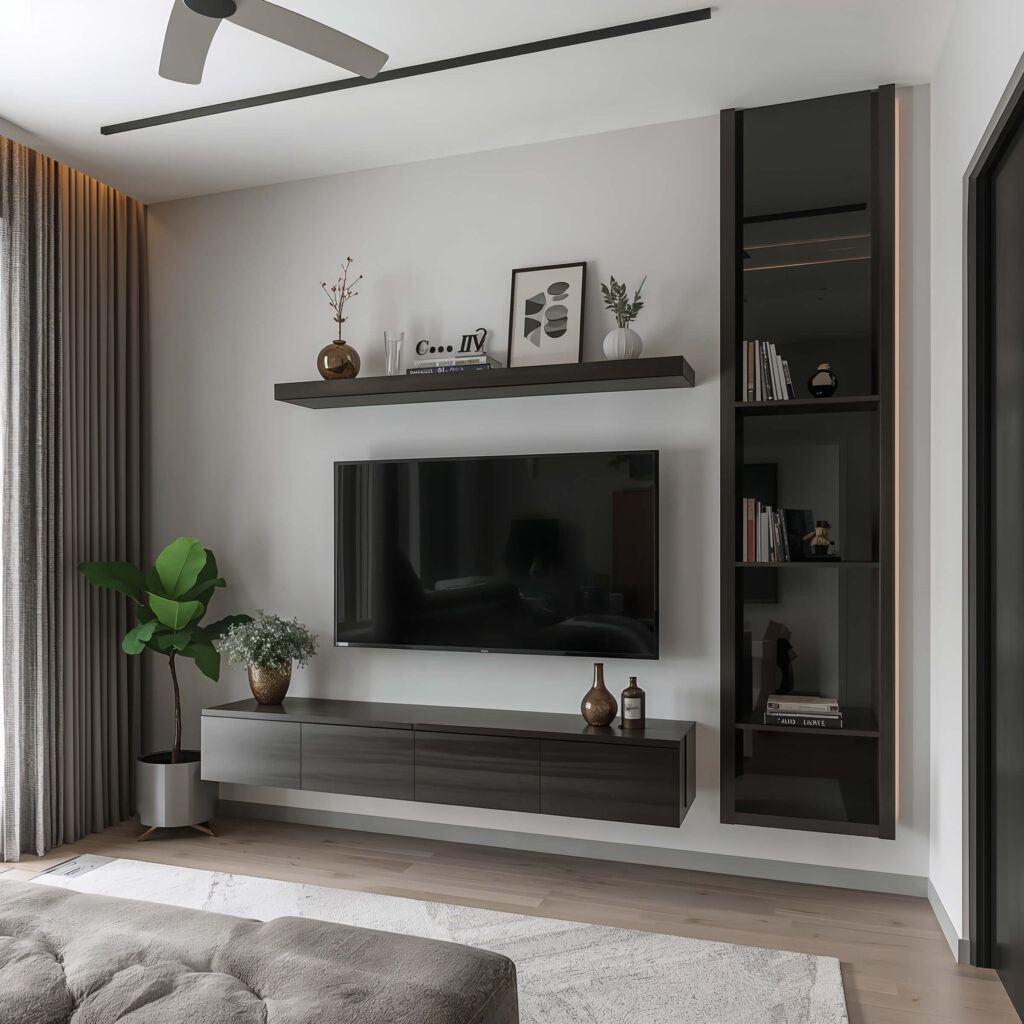
Remember entertainment centers? Those massive wooden beasts that dominated living rooms? Thank goodness for floating TV units. Mounting your TV and having a slim floating console underneath frees up so much visual and actual space.
I resisted wall-mounting my TV for years (commitment issues), but once I did? Revolutionary. The floating console underneath holds all the ugly cables and boxes, and I gained enough floor space for a reading chair. The whole setup looks intentional and modern instead of “I just shoved furniture against the wall.”
Floating Unit Essentials
Key considerations:
- Cable management – nobody wants to see that mess
- Weight capacity – know your limits
- Proper mounting – find those studs!
- Coordinating pieces – floating shelves above complete the look
The clean lines and visible floor space underneath make everything feel less cluttered.
Rugs to Define Zones
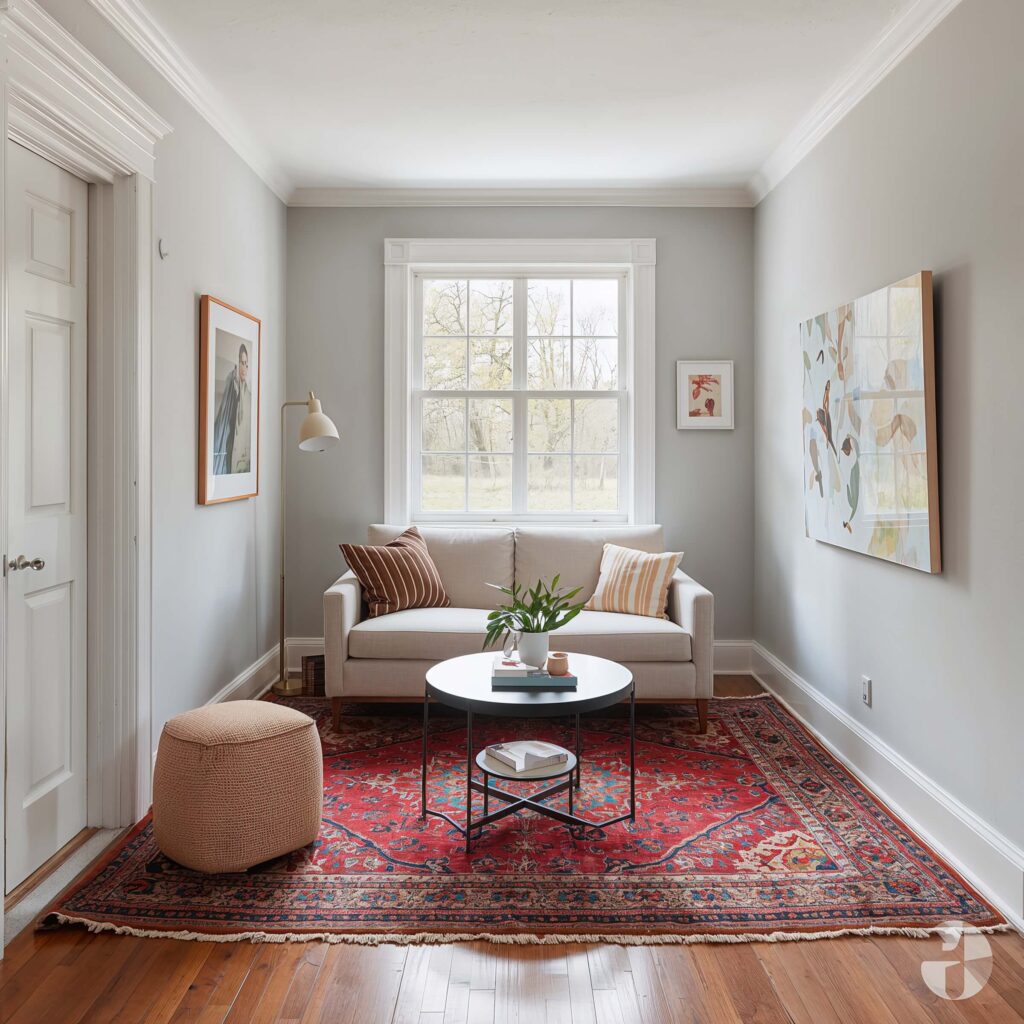
In studio or open-plan living, rugs become room dividers. They’re like magic carpets that create separate spaces without walls. My “living room” is actually just one end of a larger room, but a well-placed rug makes it feel like its own defined space.
The trick is sizing – go bigger than you think. All furniture legs should ideally be on the rug, or at least the front legs. Those tiny rugs floating in the middle of the room? They make spaces feel smaller and disconnected.
Rug Rules for Small Spaces
What works:
- Light colors keep things airy
- Low pile for easy cleaning and less visual weight
- Patterns can work if they’re not too busy
- Layer smaller rugs over larger neutral ones for flexibility
One good-sized rug beats three small ones every time. Trust me, I learned this the hard way.
Corner Furniture Arrangements
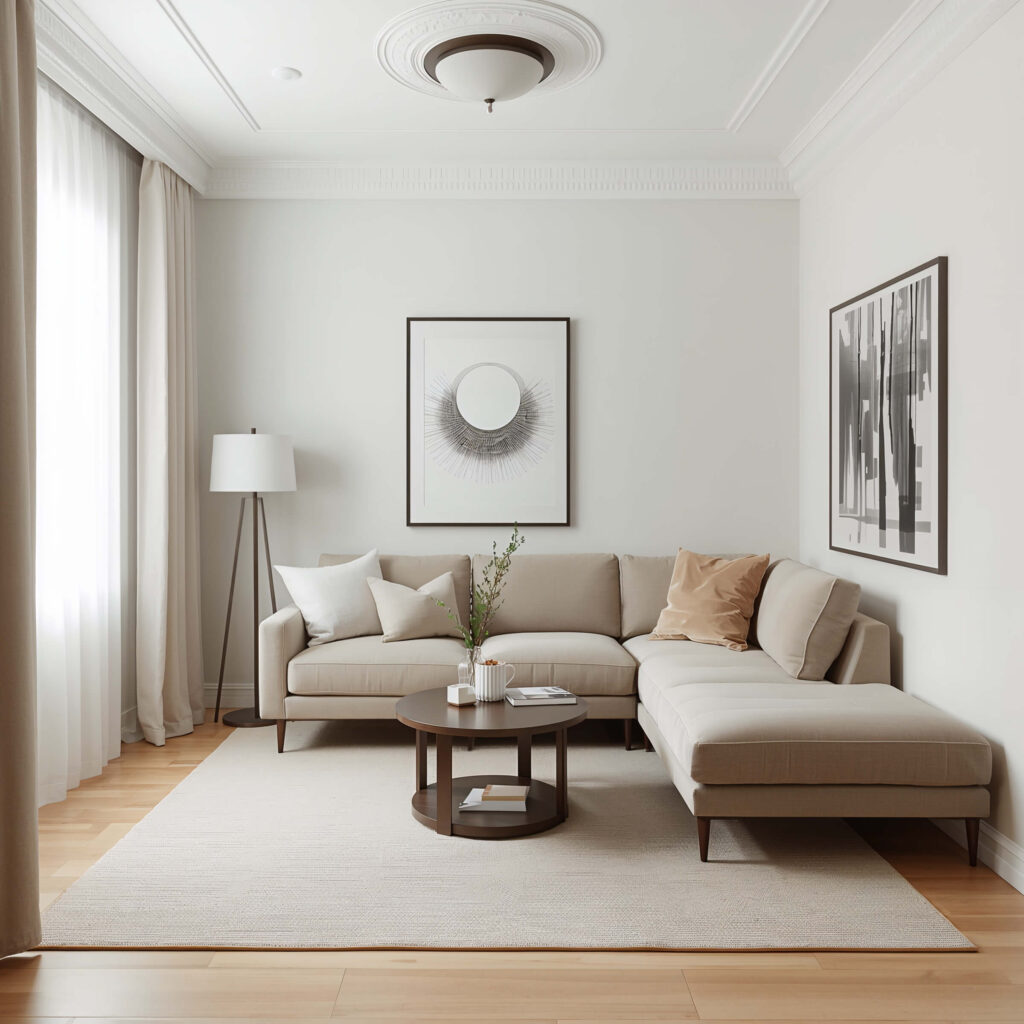
Corners are the Bermuda Triangle of living rooms – stuff goes in and never quite fits right. But corner arrangements can actually maximize space when done correctly. That dead corner? Prime real estate for the right setup.
I turned my awkward corner into a reading nook with a corner-fitting chair and floating corner shelves above. What was wasted space became my favorite spot. The diagonal placement of furniture can also open up traffic flow in tight spaces.
Conquering Corner Challenges
Smart corner solutions:
- Corner sofas maximize seating in minimal space
- Diagonal placement of regular furniture opens flow
- Corner shelving units use vertical space efficiently
- Plants in corners add life without taking floor space
Don’t let corners become dumping grounds for stuff that doesn’t fit elsewhere.
Sliding or Pocket Doors
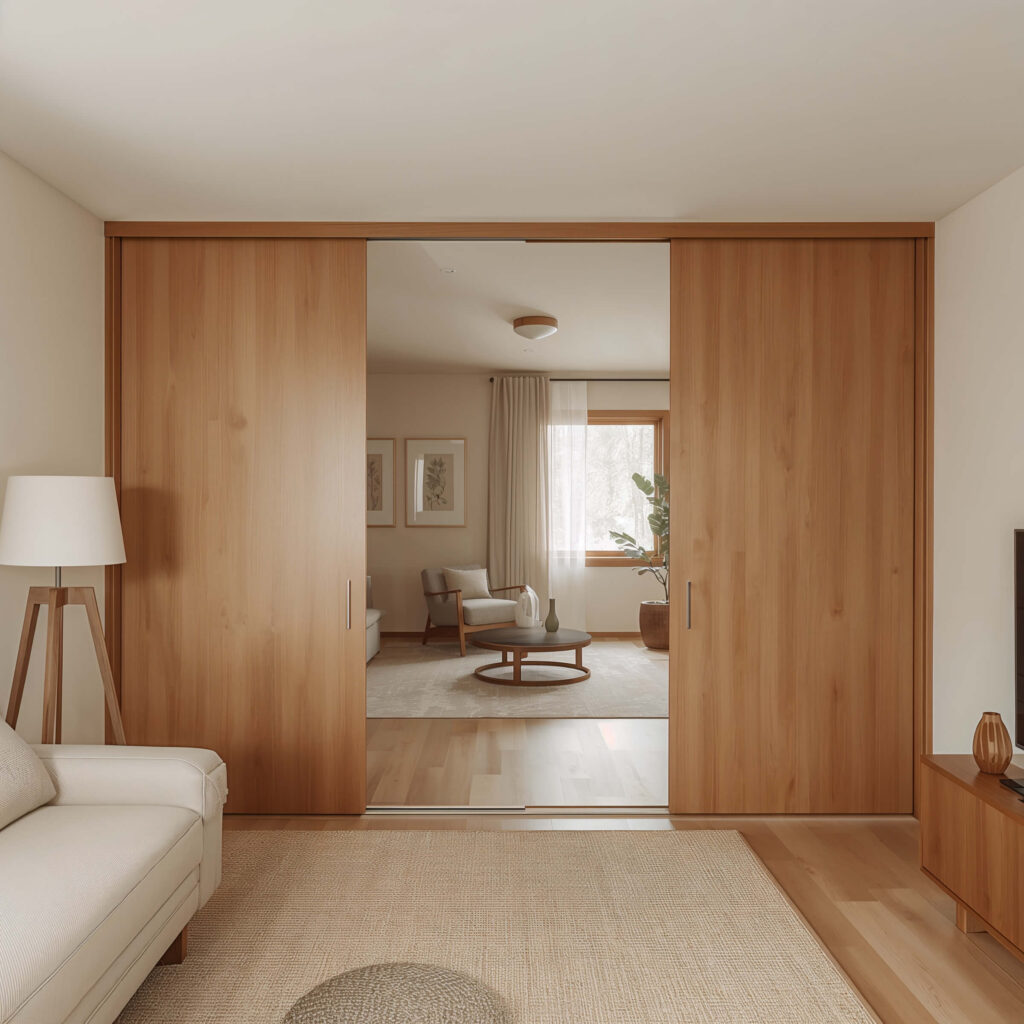
If you’re lucky enough to have the option, sliding or pocket doors are space-saving superheroes. Traditional doors need swing space – precious square footage in small living rooms. Sliding doors? They disappear like magic.
I convinced my landlord to let me swap the traditional door between my living room and bedroom for a sliding barn door (I paid, they agreed). Gained enough space for a console table that was impossible before. Even interior curtains on ceiling tracks can work as space-saving room dividers.
Door Alternatives
Options to consider:
- Barn doors – trendy and functional
- Pocket doors – completely disappear into walls
- Accordion doors – good for wider openings
- Curtain dividers – flexible and renter-friendly
Every inch counts in small spaces, including door swing radius.
Hidden Storage Ottomans
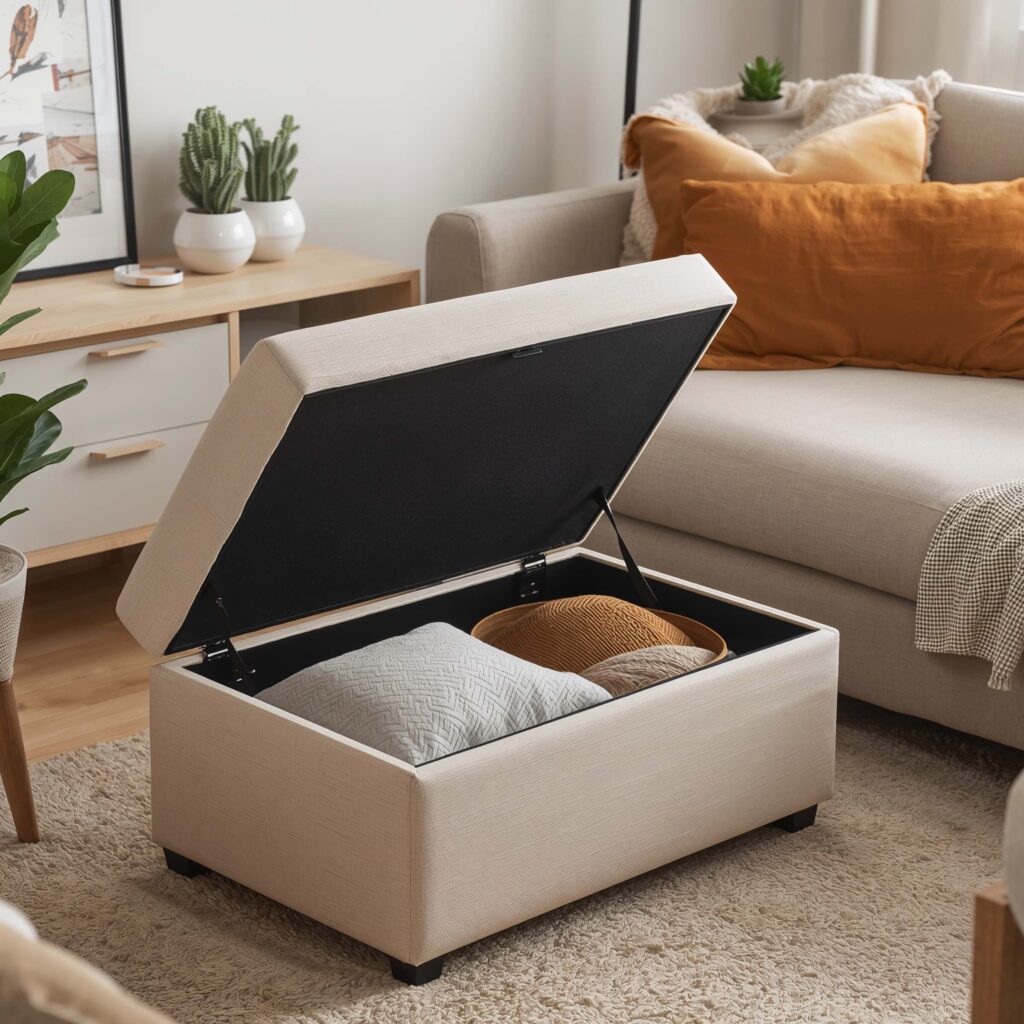
We’re ending with another storage superstar: hidden storage ottomans. These multitasking champions provide seating, foot-resting, coffee table surface (with a tray), and secret storage all in one compact package.
My ottoman collection might be slightly out of control (I have three), but they’re so useful! One holds blankets, another has all my gaming controllers and cables, and the third? Random stuff that needs a home but doesn’t have one yet. They slide under the console when I need floor space.
Ottoman Intelligence
Maximum ottoman optimization:
- Choose firm tops if using as coffee tables
- Wheels add mobility for easy rearranging
- Matching sets can separate for flexible seating
- Waterproof linings for plant supplies or wet items
They’re like furniture ninjas – hiding in plain sight while secretly organizing your life.
Making It All Work Together
Here’s the thing about small space living – it’s not about any single trick or piece of furniture. It’s about making smart choices that work together.
My living room incorporates almost all these ideas, and while it’s still small (physics hasn’t changed), it feels spacious, organized, and actually enjoyable to spend time in.
The biggest mindset shift? Embracing the constraint. Small spaces force you to be intentional, to really think about what you need and love.
No room for impulse furniture purchases or keeping things “just in case.” Everything has to earn its place.
Would I love a massive living room with space for a grand piano and sectional that seats twelve? Sure. But my small space has taught me more about design and living intentionally than any mansion could.
Plus, it takes like ten minutes to clean.
Start with one or two ideas that resonate with you. See how they transform your space. Then add more as you go. Before you know it, you’ll be that person whose friends ask, “Wait, how is your place so much bigger than mine when we have the same floor plan?”