10 Creative Small Study Room Ideas for Compact Homes
- Bedroom Design
 Ben
Ben- 0
- 40 minutes read
You know that feeling when you try to focus, but your knees keep hitting the trash can and your elbows knock over a lukewarm coffee? I know that struggle all too well.
Living in a small apartment for five years taught me that square footage doesn’t dictate your productivity, but your layout definitely does.
I used to think I needed a massive oak library to get anything done, but I eventually realized that the best small study room ideas actually thrive on limitations.
If you feel like your current workspace resembles a cluttered closet more than a sanctuary of focus, you came to the right place. We are going to explore how to turn those awkward corners and tiny walls into high-performance hubs.
I personally tested half of these setups in my own 600-square-foot “shoe box” home, and they genuinely changed my life. Let’s get your workspace sorted so you can actually enjoy your Monday mornings again.
1. Floating Desk and Wall Shelves Combo
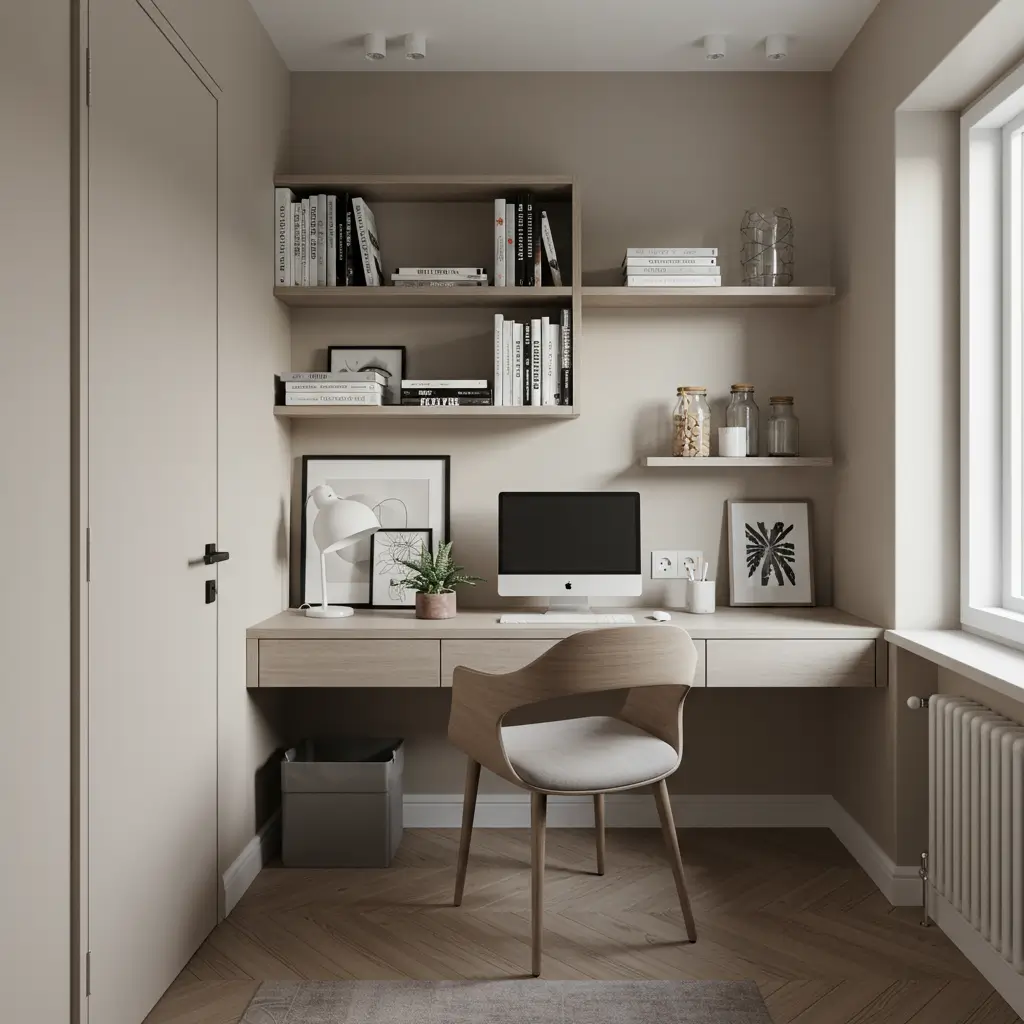
I firmly believe the floor is lava when you inhabit a small room. Every inch of floor space you occupy with heavy furniture makes the room feel like it’s closing in on you. That is why I absolutely swear by the floating desk and wall shelves combo. When you remove the bulky legs of a traditional desk, you open up the “visual floor,” which tricks your brain into thinking the room is much larger than it actually is.
Why You Should Ditch the Legs
A floating desk mounts directly to your wall studs. I installed one last summer, and the sense of relief I felt was instantaneous. Without those four wooden or metal legs trapping your dust bunnies, the air flows better and your legs move freely. You can also slide a small rolling filing cabinet underneath only when you need it.
Maximize Your Vertical Real Estate
Mount three or four long floating shelves above your desk to act as your library. I suggest you keep your most-used books at eye level and your decorative items—like that one trophy you won in middle school—on the very top shelf. This setup keeps your desk surface completely clear for your laptop and notebook.
- Choose sturdy brackets to ensure your desk doesn’t sag.
- Match the shelf color to the wall if you want them to “disappear.”
- Incorporate a cord management hole so your wires don’t dangle like vines.
Does your current desk feel like a magnet for random junk? A floating desk forces you to stay organized because it usually lacks deep “junk drawers.” You only keep what you need, and that, my friend, is the secret to a clear mind.
2. Compact Corner Study Nook
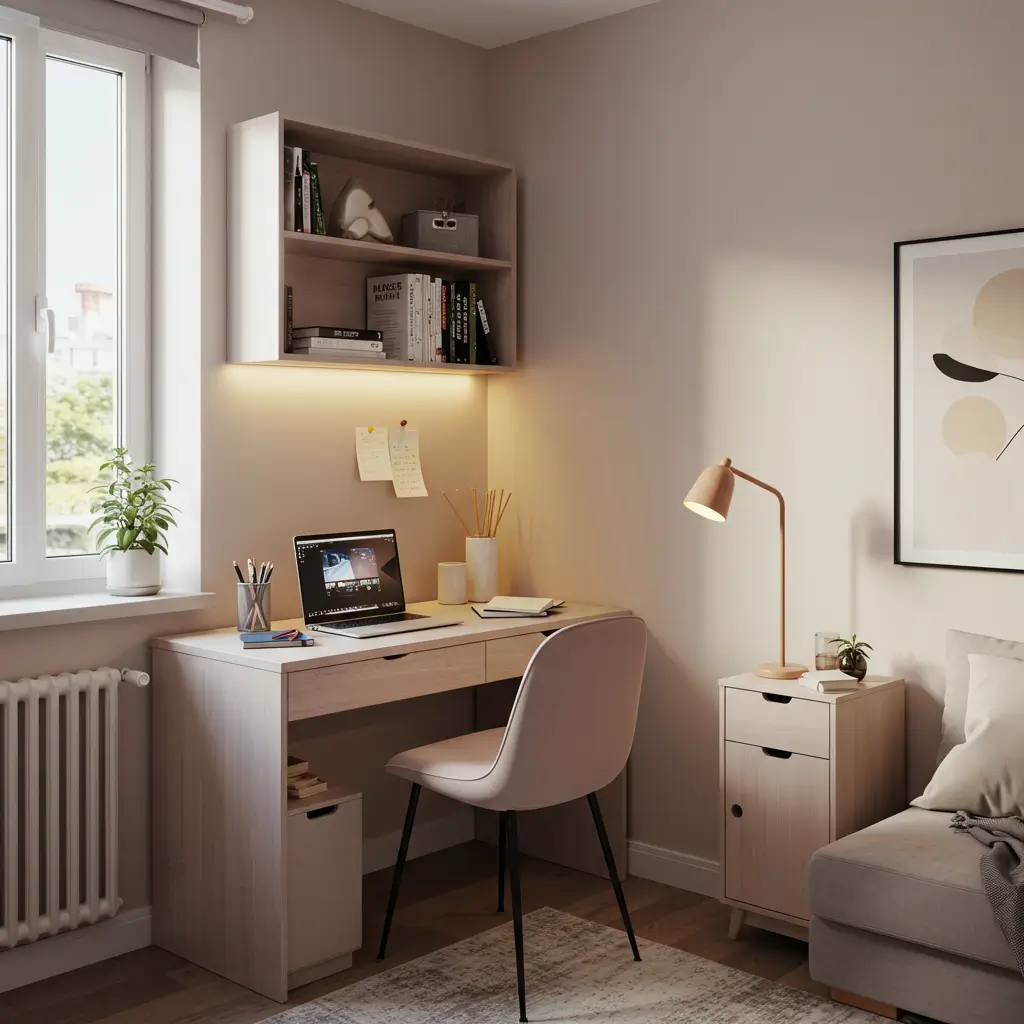
Ever looked at that weird corner behind your door or next to the window and thought, “What a waste of space”? Most people ignore corners, but in a small room, corners represent prime real estate. A compact corner study nook allows you to tuck your work life away from the main traffic flow of your home.
The Psychology of the Corner
I find that sitting in a corner provides a strange sense of security. Architects call this “prospect and refuge.” You have a solid wall behind you and a clear view of the room, which helps your brain relax and focus on the task. I suggest you find a triangular corner desk or an L-shaped unit that hugs the walls tightly.
Lighting the Dark Spots
Corners often suffer from poor lighting. You should never rely solely on a single overhead bulb that casts a shadow right over your keyboard. I recommend you add:
- A clamp-on LED lamp to save surface space.
- Battery-powered puck lights under your corner shelves.
- A small mirror on one wall to bounce light from the nearest window into the corner.
IMO, the corner nook is the ultimate “introvert’s dream.” It feels like a little cockpit where you control everything. Just make sure you don’t pile too many things in the corner, or it will start to feel like a cave rather than a nook. 🙂
3. Lofted Bed with Under-Desk Workspace
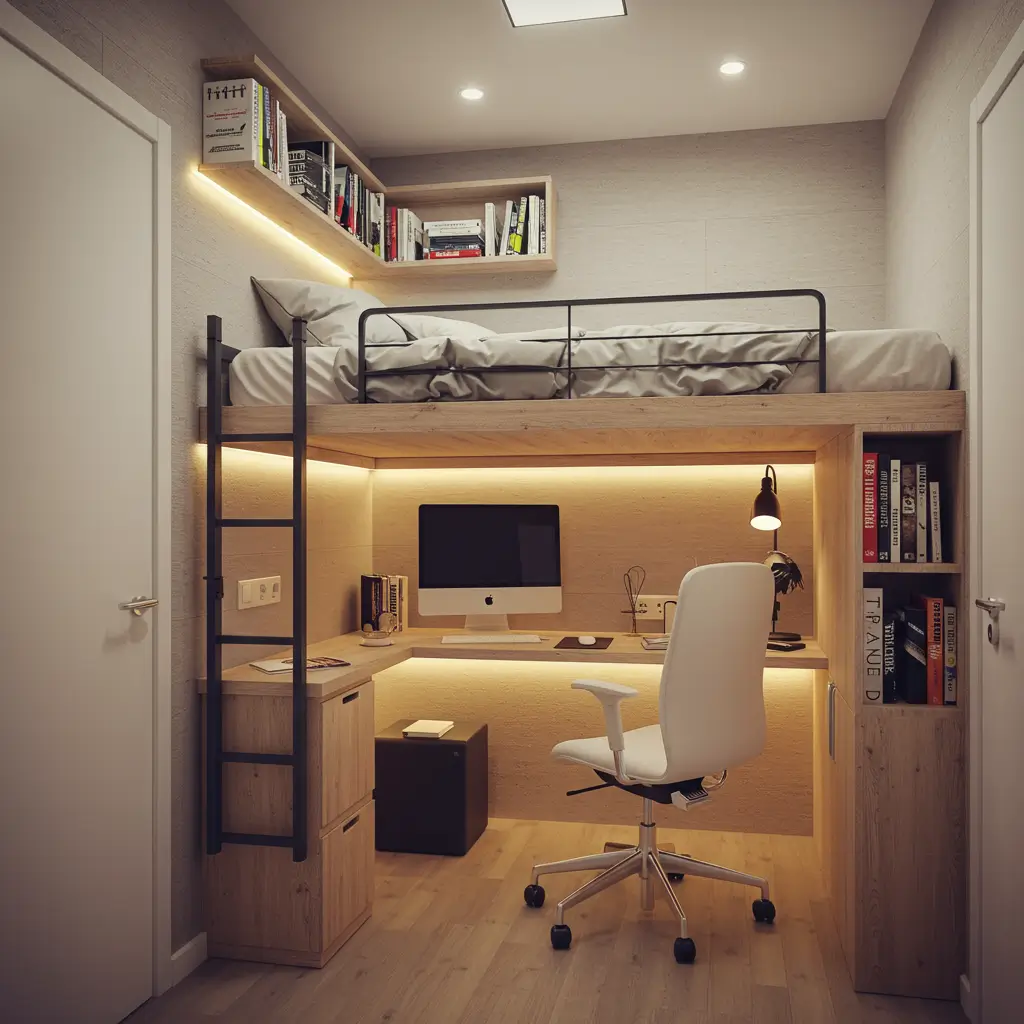
If you really want to win the small-space game, you have to stop thinking in two dimensions. Start thinking about your height. A lofted bed with an under-desk workspace is the undisputed heavyweight champion of small study room ideas. It literally doubles your usable square footage by stacking your “sleep life” on top of your “work life.”
Making It Work for Adults
Forget those shaky metal bunk beds from your college dorm days. I’ve seen some incredibly sophisticated wooden loft systems that look like high-end architecture. When you loft your bed, you create a private “office” underneath that feels entirely separate from the rest of the room. This mental separation helps you shut off your “work brain” when you finally climb the ladder at night.
Layout Tips for the “Under-Zone”
- Paint the walls underneath the bed a light color to prevent a claustrophobic feeling.
- Install a long LED strip along the bed frame above you to provide even, shadowless light.
- Use a low-profile chair so you don’t hit your head on the bed slats when you stand up.
Rhetorical question: Why pay for two rooms when you can just use the top and bottom of one? I helped my brother set this up in his studio apartment, and he finally stopped eating dinner on his bed because he had room for a real table elsewhere. It is a total game-changer for anyone living in a big city.
Also Read: 12 Beautiful Study Room Design Ideas and Bright Nooks
4. Minimalist Scandinavian Study Room
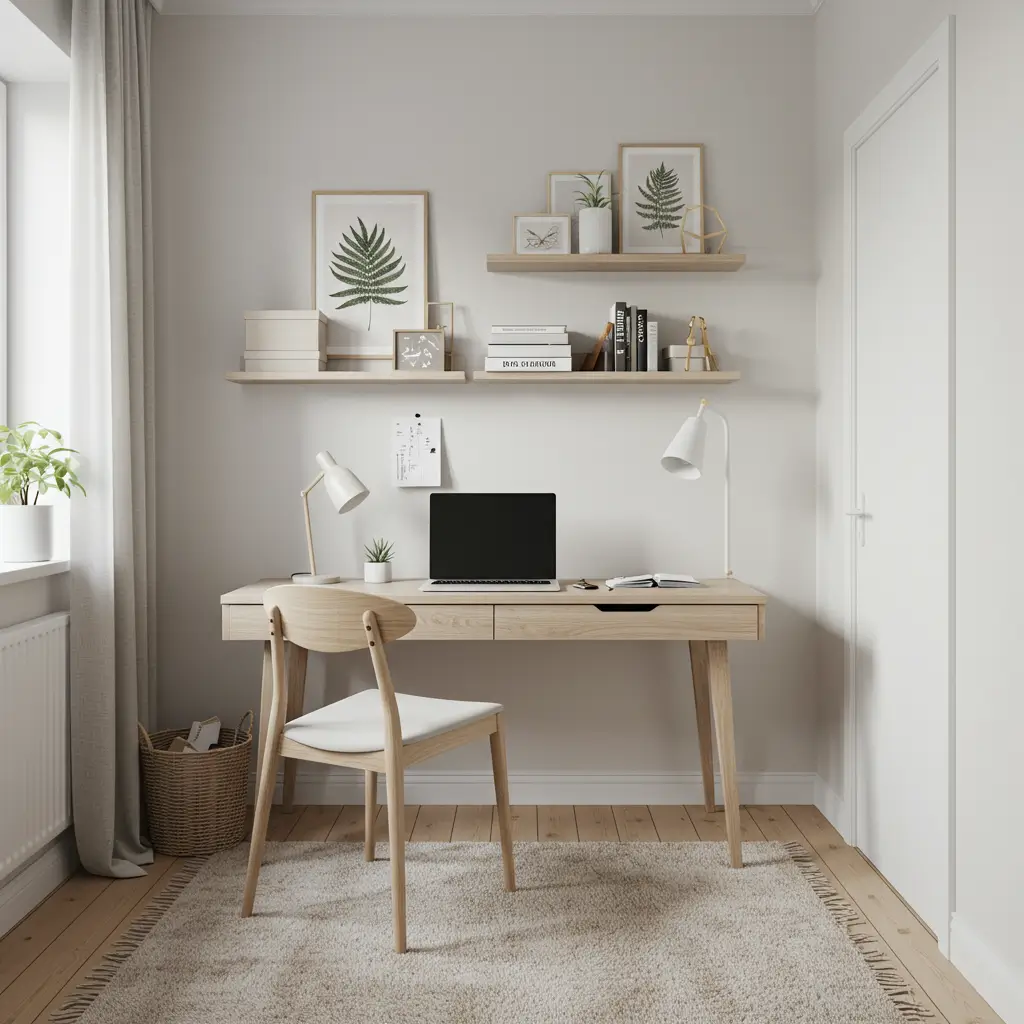
If you feel overwhelmed by “stuff,” the Scandinavian aesthetic will save your sanity. This style focuses on functionality, light, and natural materials. A minimalist Scandinavian study room uses a neutral palette to create a serene environment where focus comes naturally.
The Power of White and Oak
I recommend you paint your walls a crisp, warm white. This reflects every bit of natural light you have. Pair this with a light oak or birch desk. The wood grain adds warmth, so the room doesn’t feel like a sterile hospital wing. FYI, Scandinavians use “Hygge” to make small spaces feel cozy rather than cramped.
Selecting Your Essentials
In this design, you only keep the essentials.
- One high-quality ergonomic chair (Form meets function here).
- One single plant (A snake plant or monstera works wonders).
- A simple wool rug to dampen sound.
- A desk with clean, tapered legs.
I love this feature because it eliminates visual clutter. When I work in a Scandi-inspired space, I don’t get distracted by a million different colors and textures. Everything feels cohesive. If you find yourself constantly tidying up instead of working, this minimalist approach will solve that problem for good.
5. Foldable Desk with Hidden Storage
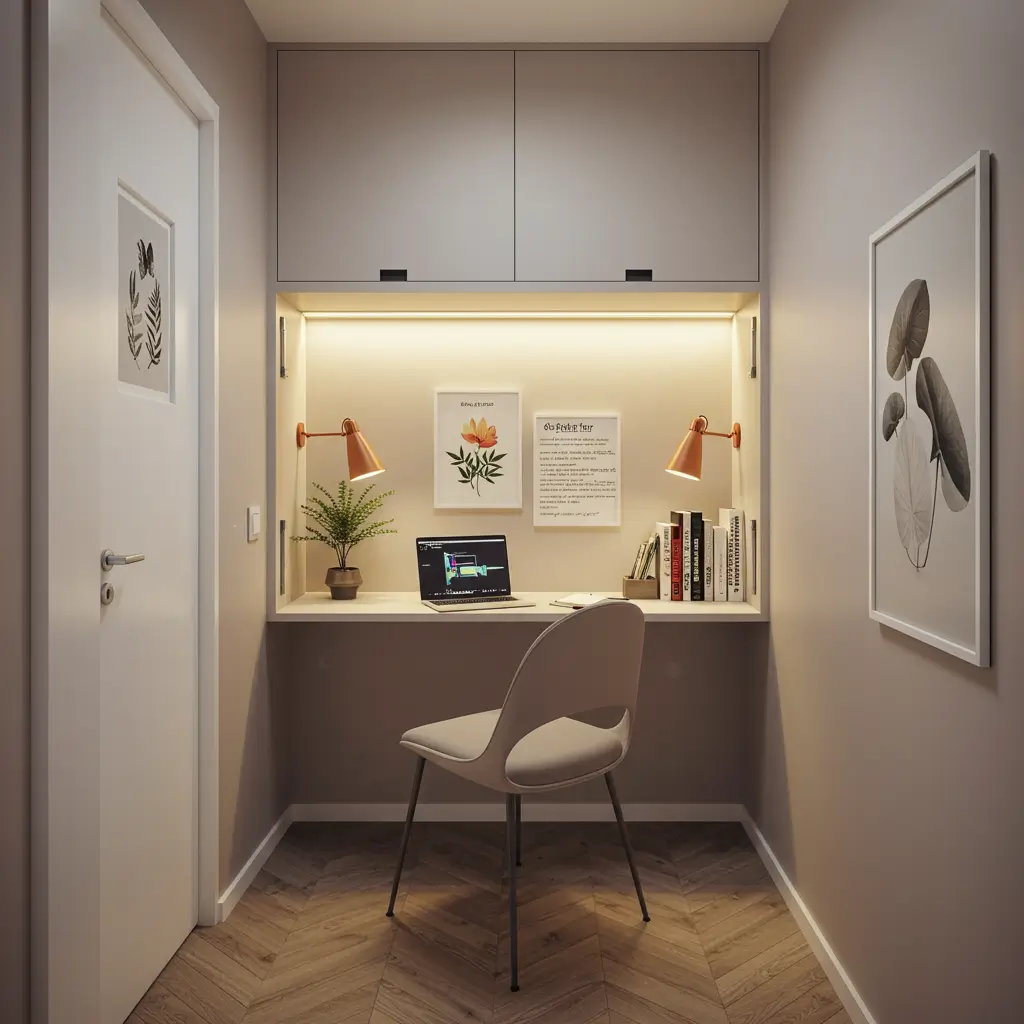
Some days you need a desk, and some days you need a dance floor. If your study room doubles as a guest room or a workout space, you need a foldable desk with hidden storage. This is the “ninja” of furniture—it’s there when you need it and disappears when you don’t.
The “Disappearing Act” Strategy
You can find desks that fold flat against the wall, appearing as nothing more than a shallow cabinet. I used one of these for two years. At 5:00 PM, I would clear my laptop, fold the desk up, and suddenly my office was gone. This ritual helped me maintain a healthy work-life balance, which is notoriously hard when your desk is three feet from your bed. :/
Hidden Storage Perks
Most of these foldable units include integrated cubbies for your pens, notebooks, and even a small tablet.
- Check the weight limit before you buy (some can’t handle heavy monitors).
- Use a folding chair that you can hang on a wall hook nearby.
- Add a piece of art to the bottom of the desk so it looks like a framed picture when folded up.
Ever wondered how some people keep their tiny homes looking so pristine? They hide their furniture. It sounds like a lot of work, but it actually takes about thirty seconds to set up. It is the perfect solution for anyone who hates the look of “office equipment” in their living space.
6. Bright Pastel-Themed Study Space
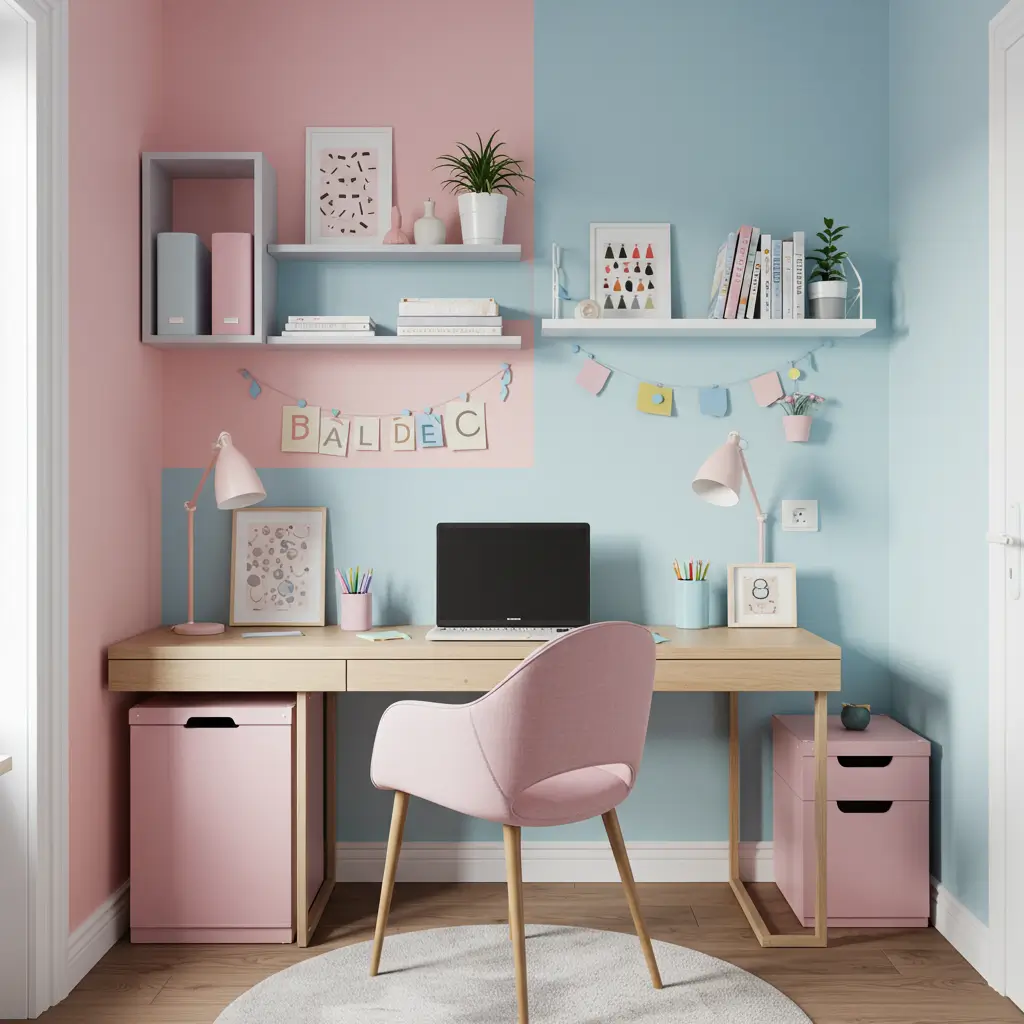
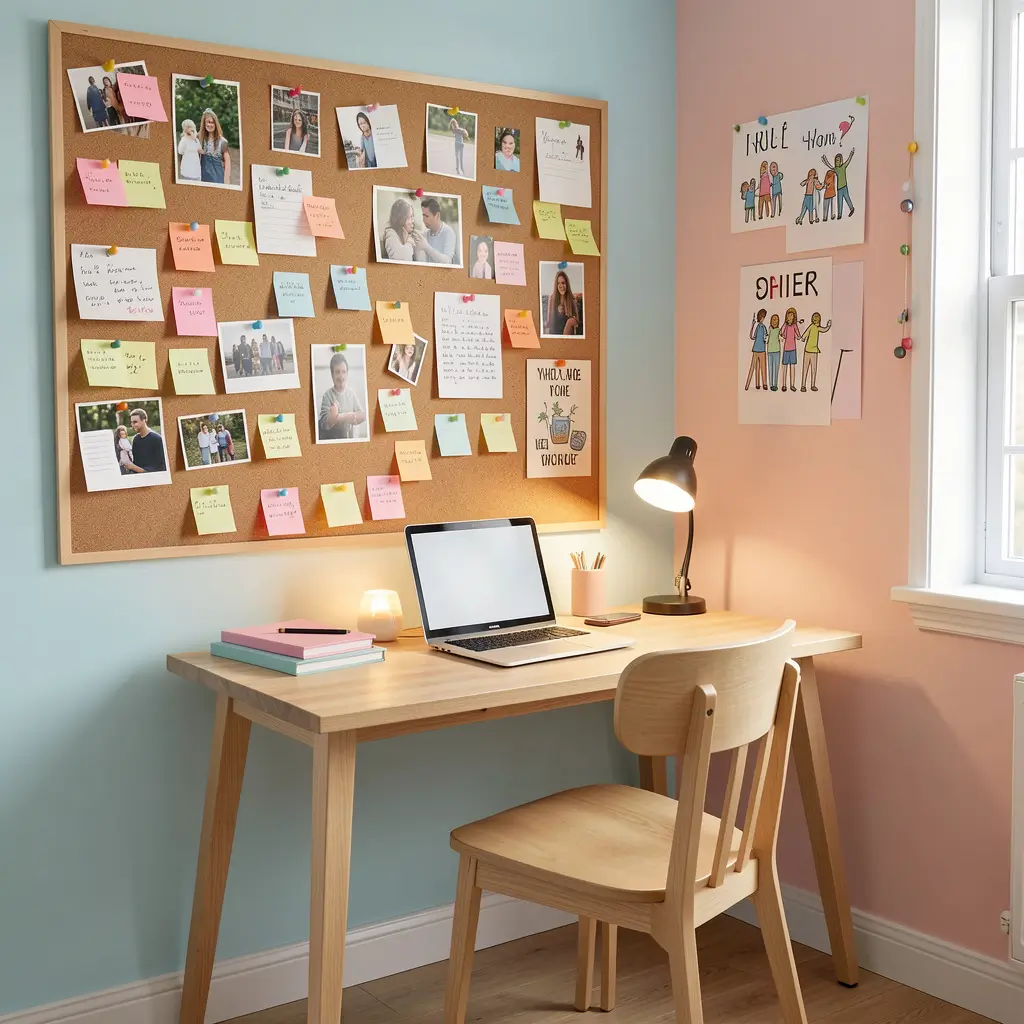
Don’t let anyone tell you that offices have to be gray or navy blue. In a small space, dark colors can sometimes make the walls feel like they’re leaning in. A bright pastel-themed study space uses soft hues to keep the vibe airy, cheerful, and energetic.
Choosing Your Mood-Boosting Colors
I suggest you look into mint green, soft lavender, or pale buttercup yellow. These colors provide enough personality to make the room feel “designed” without overwhelming the small footprint. Mint green, in particular, helps reduce eye strain—a huge plus if you stare at a screen for eight hours a day.
How to Apply the Color
- Paint just one accent wall to create depth.
- Use pastel-colored desk accessories (staplers, tape dispensers, file folders).
- Pick a white desk to let the pastel colors pop.
- Incorporate light-colored textiles, like a pale pink throw pillow for your chair.
I once styled a room in soft “duck egg” blue, and it felt like working inside a cloud. It lowered my heart rate immediately. If you have a high-stress job, skip the “power red” and go for something that keeps you calm. Soft colors expand the space visually, giving you more mental room to breathe.
Also Read: 10 Stylish Study Room Decor Ideas with Smart Storage
7. Multi-Functional Murphy Desk Setup
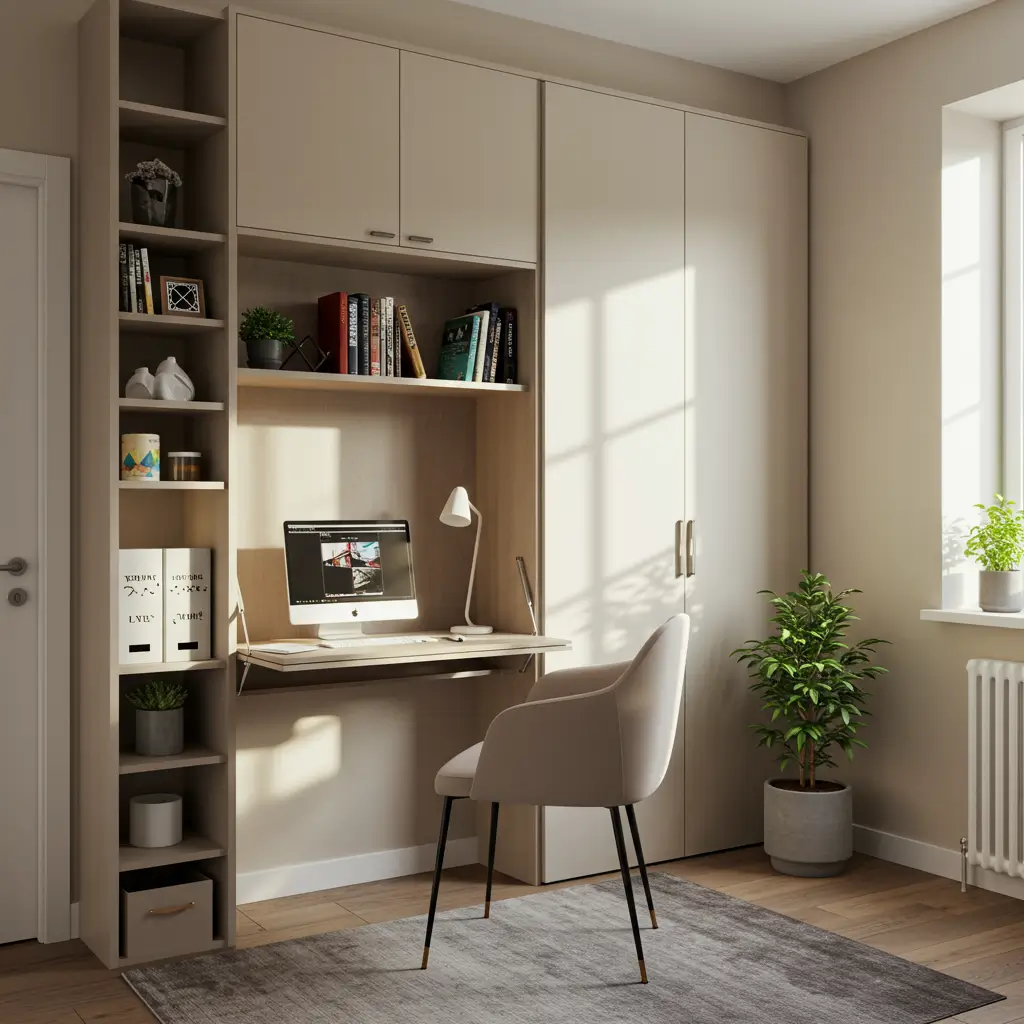
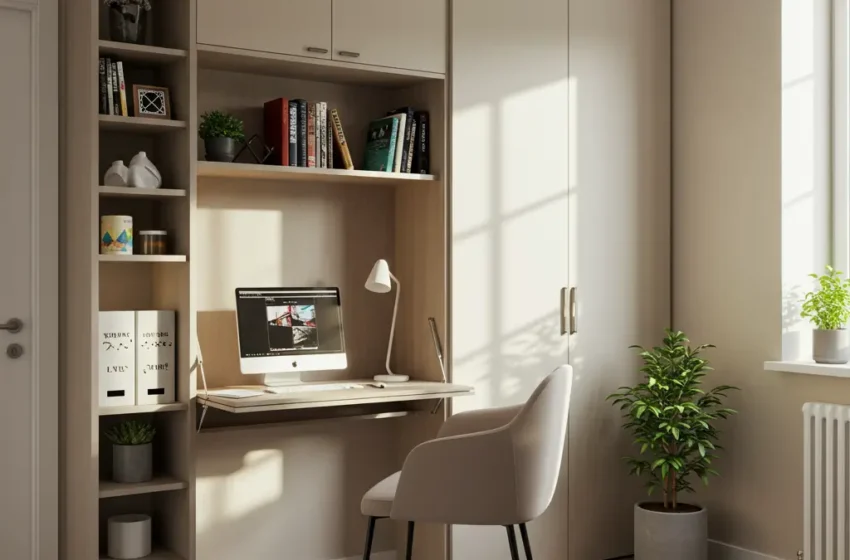
The Murphy bed has a cousin, and it is equally brilliant. A multi-functional Murphy desk is a wall-mounted cabinet that swings down to reveal a full-sized workspace. Unlike a simple folding desk, a Murphy desk often includes a built-in corkboard, shelving, and even a magnetic strip for your tools.
The “All-In-One” Cabinet
I love this feature because it acts as a self-contained office. You don’t need a separate bookshelf or a pencil cup. Everything lives inside the cabinet. When you close the door, the room returns to its original purpose. It’s the ultimate “hide the mess” solution.
Customizing Your Murphy Desk
You can actually DIY these if you are handy with a drill.
- Add a chalkboard finish to the front for your to-do lists.
- Install a small battery-operated LED bar inside for task lighting.
- Line the back with patterned wallpaper for a surprise “pop” when you open it.
IMO, the Murphy desk provides the best “bang for your buck” regarding organization. It forces you to keep a shallow profile, which means you won’t accumulate mountains of paper. Rhetorical question: Who needs a spare room when your desk fits in a 4-inch deep cabinet?
8. Vertical Storage and Pegboard Wall
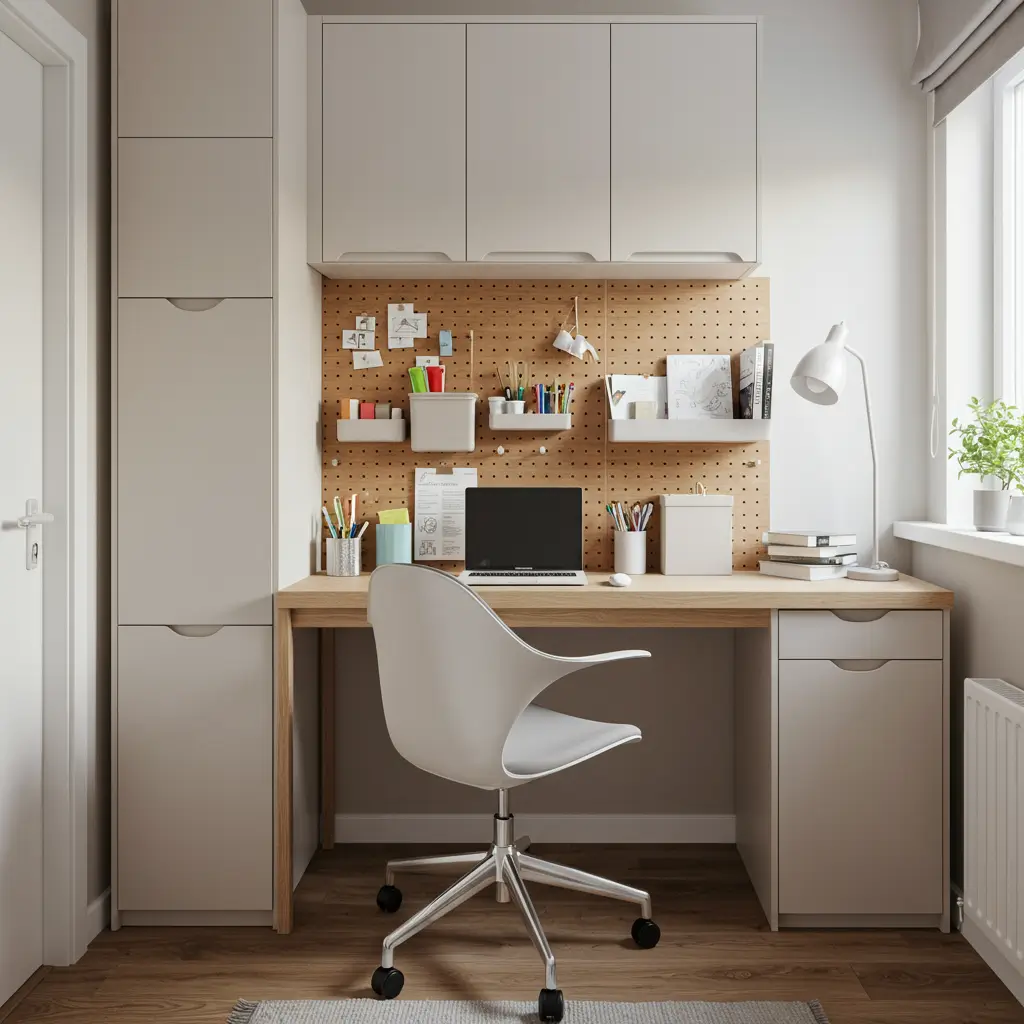
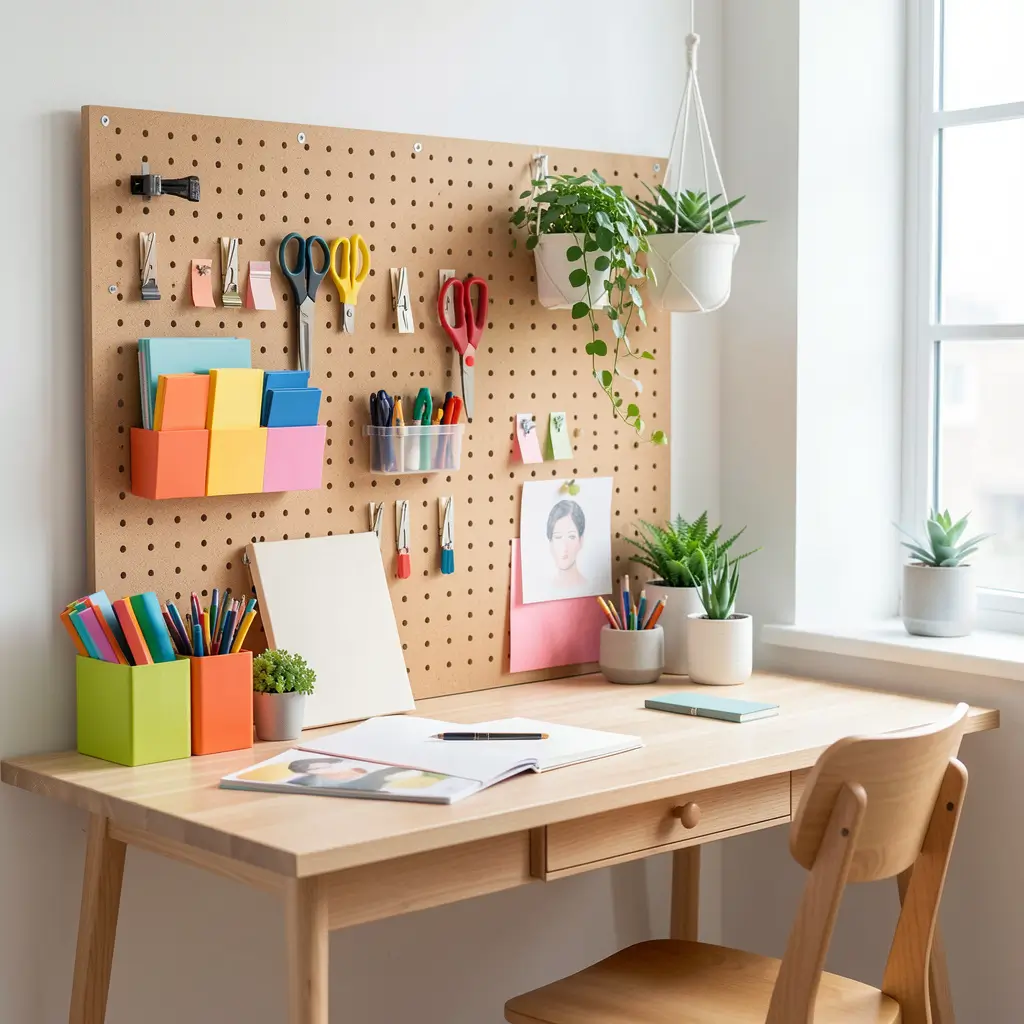
If you can’t go out, go up! A vertical storage and pegboard wall is a favorite among crafters and engineers for a reason. It turns your entire wall into a customizable storage grid. In a small study, this keeps every single tool, wire, and notebook off your desk while keeping them perfectly visible.
The Magic of the Pegboard
I installed a massive white pegboard in my study two years ago. I stopped losing my charging cables and scissors immediately. You can move the hooks, shelves, and bins around whenever you feel like changing your workflow. It’s like a living, breathing organization system.
How to Style Your Pegboard
- Group items by frequency of use. Put your pens near the bottom and your reference books higher up.
- Paint your pegboard a bold color to make it a focal point.
- Clip your favorite photos and quotes between your tools to add some personality.
- Use “S-hooks” for headphones and bags.
Vertical storage saves your desk from the “junk pile” fate. When every item has a specific hook, you are much more likely to put it back. This system works incredibly well for people with ADHD or anyone who needs to “see” their things to remember they exist.
9. Cozy Window Seat Study Area
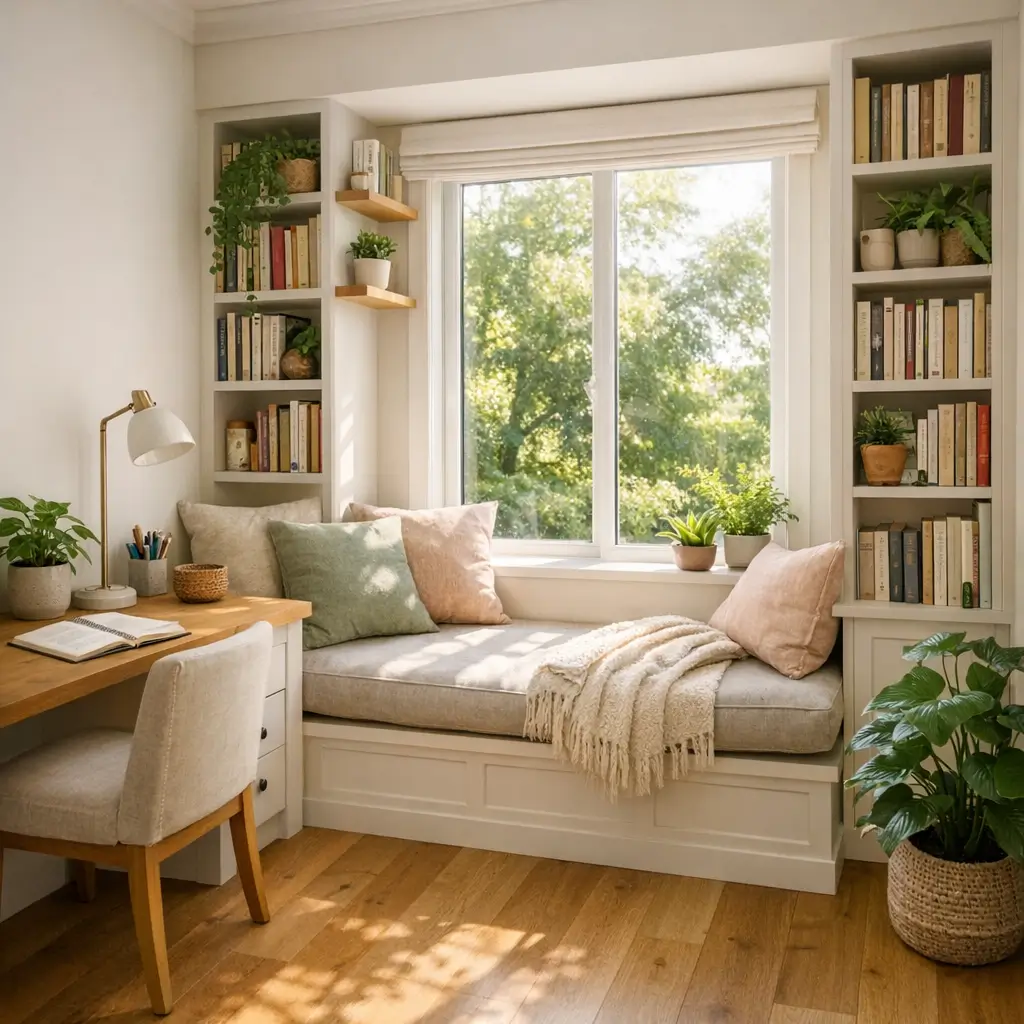
If you are lucky enough to have a window in your small study, you must use it. A cozy window seat study area combines a traditional desk with a built-in or makeshift bench right against the glass. There is no better way to boost your Vitamin D levels while you grind through a spreadsheet.
Natural Light is a Superpower
Studies show that natural light increases productivity and improves sleep quality. I suggest you position your desk so you look out the window, rather than having the window behind you. This prevents annoying screen glare and gives you a “visual break” every few minutes. Looking at a tree for 20 seconds helps your eyes recalibrate after staring at pixels.
Building the Window Nook
- Use a deep windowsill as a secondary shelf for your plants.
- Add a padded bench next to the desk for those long reading sessions.
- Install “Top-Down, Bottom-Up” blinds so you can let in light while maintaining privacy.
- Keep a small fan nearby, as windows can get a bit warm in the afternoon.
Also Read: 12 Fun Kids Bedroom Boys Ideas and Cool Study Zones
10. Modern Glass Partition Study Zone
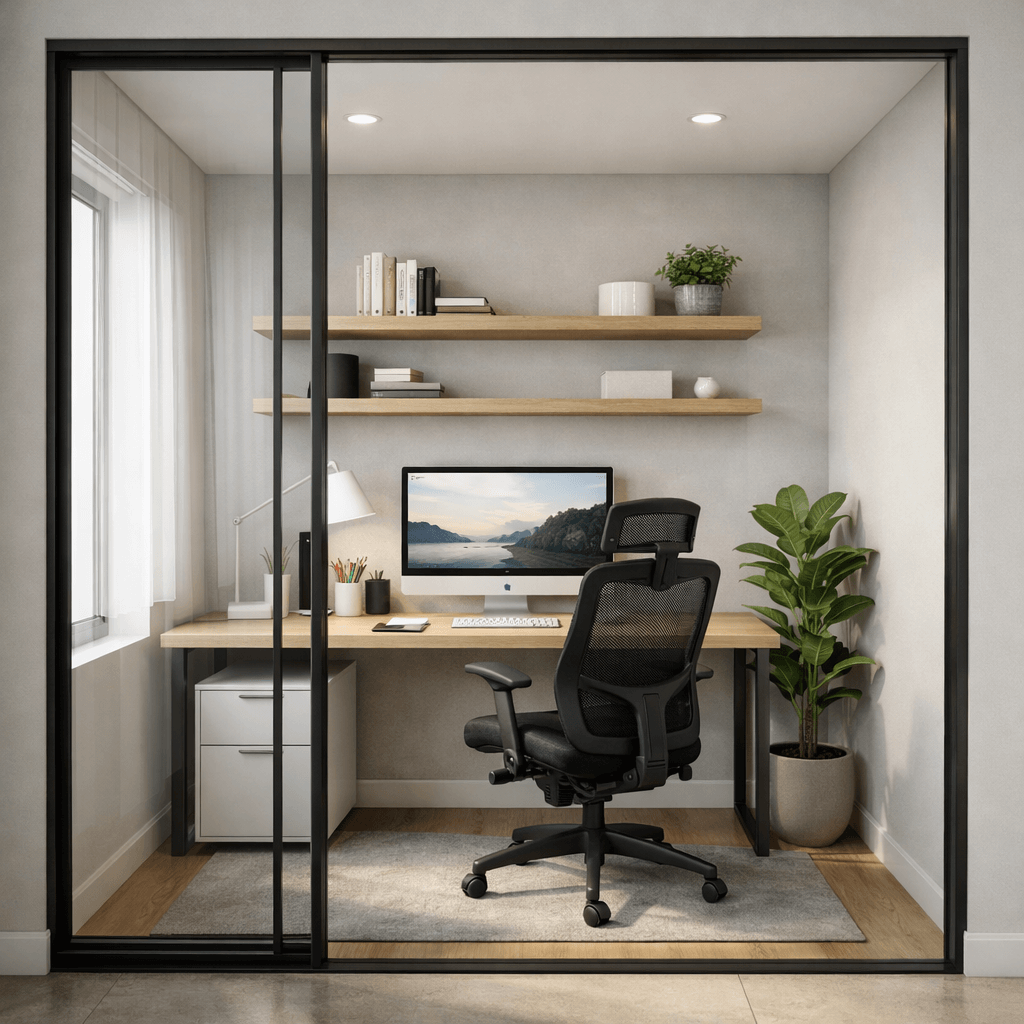
Sometimes the “small study room” isn’t even a room—it’s just a corner of your living room. How do you create a “zone” without building a thick, dark wall? I recommend a modern glass partition. This allows you to define your study area while letting light flow through the entire home.
Visual Separation Without the Bulk
A black-framed glass wall (often called “Crittall style”) looks incredibly high-end. It provides a psychological boundary that says, “This is a quiet zone,” without making your living room feel like a maze. If you are on a budget, you can even use a large glass shelving unit as a room divider.
Benefits of the Glass Look
- Maintains the “Open Concept” feel of your home.
- Provides a surface for sticky notes (you can write directly on glass with dry-erase markers!).
- Reduces some noise without blocking your view of the TV or the kitchen.
IMO, glass is the best material for small spaces because it has zero “visual weight.” It’s basically invisible, but it still does the job of a wall. It’s the ultimate choice for the modern, stylish professional who wants a dedicated study zone in a multi-use room.
Comparing the Best Desk Styles for Small Rooms
Before you pull out your credit card, let’s look at which desk style suits your specific needs. I’ve broken them down into three categories based on how you use your space.
| Desk Type | Best For | Visual Weight | Setup Effort |
|---|---|---|---|
| Floating Desk | Minimalists | Very Low | High (Wall Mounting) |
| Corner Desk | Awkward Layouts | Medium | Low |
| Murphy Desk | Multi-use Rooms | Low (Hidden) | Medium |
| Lofted Desk | Extremely Small Studios | High | High |
Technical Details: Small Space Lighting and Ergonomics
I know you want the room to look pretty, but if you ignore the “boring” stuff, your back will hate you. Even in a small room, you must prioritize ergonomics and proper lighting.
The 90-Degree Rule
I suggest you adjust your chair so your knees and elbows both sit at a 90-degree angle. If your small desk is too high, use a footrest. If it’s too low, use a monitor riser. Ergonomic health is non-negotiable, especially when you don’t have much room to move around.
Color Temperature Matters
When shopping for bulbs, look at the “Kelvin” (K) rating.
- 2700K – 3000K: Warm and cozy (Great for reading nooks).
- 4000K – 5000K: Cool and bright (Essential for your main desk to keep you alert).
FYI, most smart bulbs allow you to switch between these throughout the day. I use warm light in the morning to wake up gently and cool light from 10:00 AM to 4:00 PM for peak focus.
Frequently Asked Questions
How can I make a small study room feel bigger?
I recommend you use “The Legless Strategy.” Floating desks and shelves keep the floor visible. Also, hang your curtains near the ceiling rather than just above the window to draw the eye upward.
What is the best color for a tiny study?
Soft whites, pale grays, and light pastels work best. Avoid dark, matte colors on all four walls, as they absorb light and make the room feel like a cave.
How do I hide cables in a small space?
I suggest you use a “cable management box” or plastic cord raceways that stick to the wall. You can even paint the raceways the same color as your wall to make them invisible.
My Personal Small-Space Transformation
I want to share a quick story. Three years ago, my “study” was a messy corner of my bedroom. I had a heavy, dark mahogany desk I inherited from my uncle. It was beautiful, but it was huge. It ate the whole room. I felt cramped, grumpy, and my productivity was in the toilet.
I finally decided to sell that desk. I replaced it with a white floating desk and a pegboard wall. Suddenly, I had room to stretch my legs. I could see the floor! The room felt 50% larger just by changing the furniture style. I started finishing my work an hour earlier every day simply because I wasn’t fighting my environment.
Final Thoughts: Design Your Success
You don’t need a massive office to do massive things. Some of the world’s biggest companies started in garages and tiny bedrooms. The key to these small study room ideas involves being intentional with every square inch.
Start small. Maybe buy a pegboard this weekend. Or finally clear off that windowsill and put a plant there. You will be amazed at how much your mood improves when your environment supports your goals.
Remember, your workspace should serve you, not the other way around. Pick the idea that resonates most with your lifestyle—whether it’s the sleek Scandi look or the “ninja” Murphy desk—and start building your sanctuary.
You deserve a space that makes you feel like the most productive version of yourself.
Now, go clear off that desk and start planning! Your dream study is only a few wall brackets away. And seriously, hide those wires—your future self will thank you for it. 🙂