10 Stylish Study Room Decor Ideas with Smart Storage
- Bedroom Design
 Ben
Ben- 0
- 43 minutes read
Your study room currently looks like a disaster area, doesn’t it? I know that feeling because I spent three years trying to write my thesis while sitting at a kitchen table covered in crumbs and junk mail.
My brain felt as cluttered as the surface I worked on. Once I finally dedicated time to actual study room decor ideas, my productivity skyrocketed.
Creating a space that actually makes you want to work is a total game-changer. You don’t need a massive budget or a dedicated wing of your house to make this happen.
You just need a bit of intention and some clever styling tricks. Let’s look at 10 study room decor ideas that will turn your workspace into a focus-fueled sanctuary.
1. Minimalist Study Nook with Floating Shelves
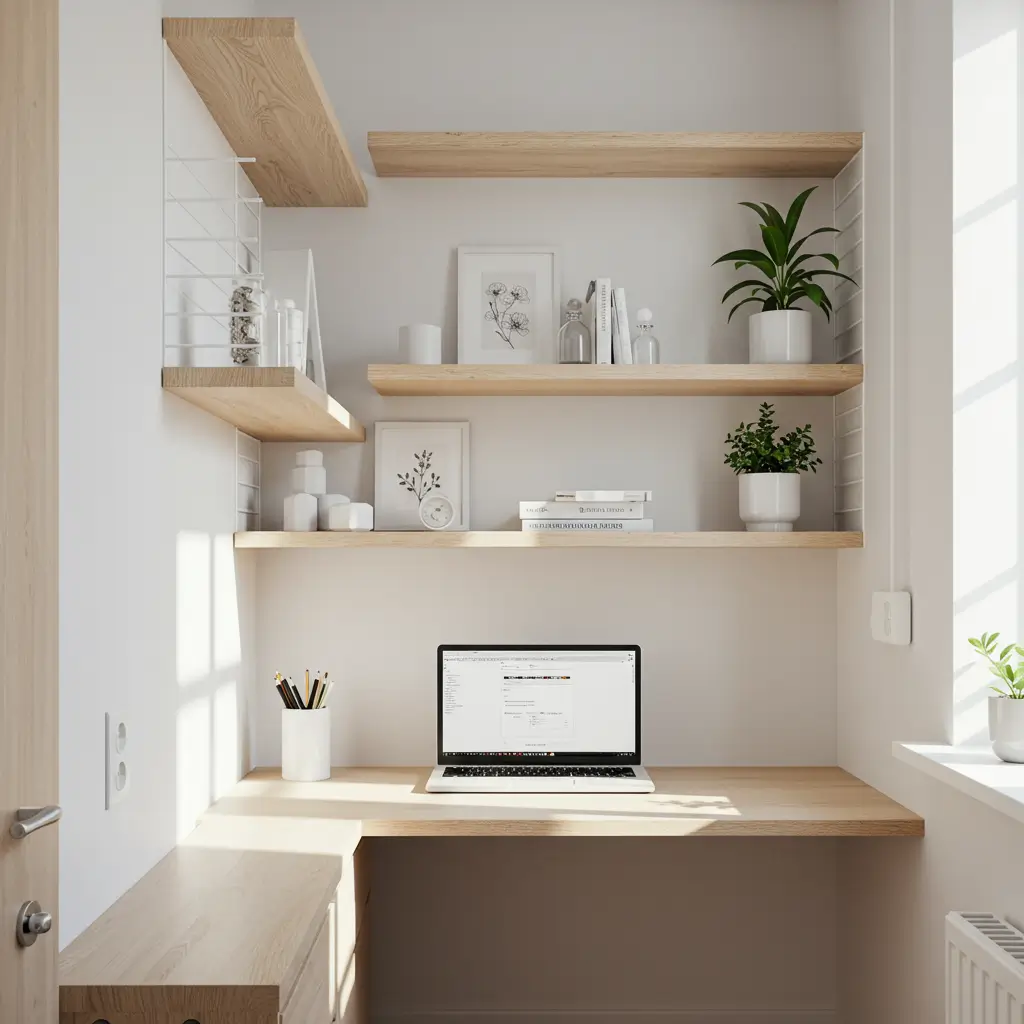
I honestly believe that a cluttered desk leads to a cluttered mind. If you find yourself constantly moving piles of paper just to find your mouse, you need a minimalist reset. A minimalist study nook uses floating shelves to get everything off your primary workspace and onto the walls.
Why Floating Shelves Rule
Floating shelves provide the perfect solution for vertical storage without adding the bulk of a heavy bookcase. I installed three reclaimed wood shelves above my desk last summer. This single move freed up about 40% of my desk surface. Now, my computer and my notebook have all the room they need to breathe.
Essential Elements for Your Nook
- One sleek, legless desk or a simple tabletop with thin legs.
- Two to three floating shelves mounted at varying heights.
- A monochromatic color palette like white, gray, or soft beige.
- Hidden cable management boxes to tuck away those ugly black wires.
- One single task lamp with a clean, geometric silhouette.
Does your current desk hold items you haven’t touched in six months? If so, move them to a shelf or a different room entirely. Minimalism demands that you only keep what you actually use daily within arm’s reach.
Styling Your Shelves
Don’t treat your floating shelves like a junk drawer for the wall. Place your most attractive books there, perhaps alternating between vertical and horizontal stacks. Add one small decorative object—maybe a ceramic bust or a glass orb—to keep it from looking like a sterile office. Floating shelves create visual interest while maintaining the functionality you need for deep work.
2. Cozy Corner with Warm Lighting and Rugs
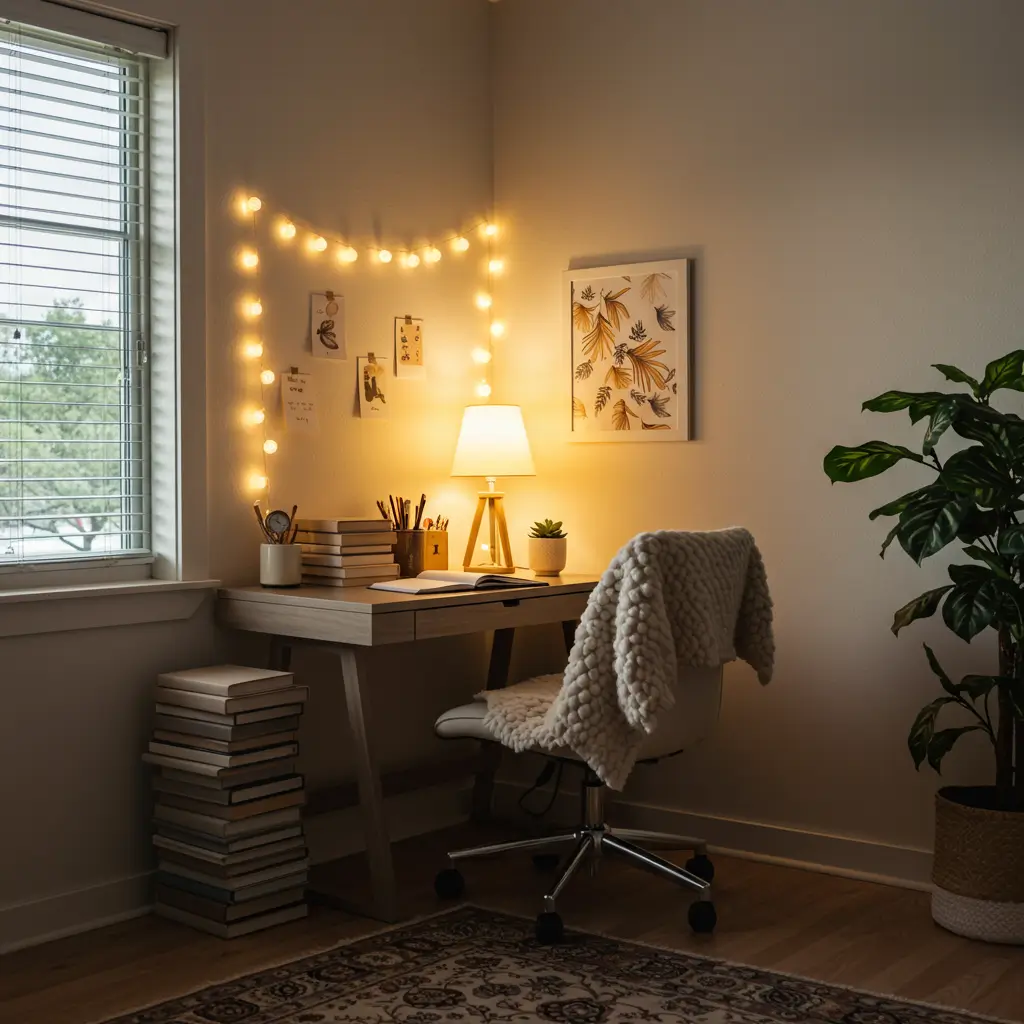
Not every study session needs to feel like a corporate board meeting. Sometimes, you need to hunker down and read for four hours straight. For those sessions, I swear by a cozy corner setup. This approach focuses on comfort, warmth, and textures that lower your stress levels.
The Magic of Layered Lighting
Ever wondered why fluorescent office lights feel so depressing? They kill the mood and strain your eyes. To create a cozy study area, you must layer your lighting. I use a warm-toned floor lamp for general ambiance and a smaller, adjustable brass lamp for focused reading.
Textiles are Your Best Friend
- A high-pile faux fur rug or a chunky jute rug under your feet.
- Velvet or linen curtains to soften the echoes in the room.
- An oversized throw blanket draped over your chair for chilly mornings.
- Floor cushions for those times you want to study on the floor.
- A padded footstool to keep your circulation moving.
I once bought a cheap plastic chair for my study, and I regretted it within twenty minutes. My back started aching, and the room felt cold. I swapped it for a plush armchair and added a small area rug. Suddenly, that corner became the most popular spot in my entire house.
Creating the Vibe
Lighting should mimic the golden hour. Choose bulbs with a “warm white” rating (around 2700K). This creates a glow that makes the room feel inviting rather than clinical. If you feel relaxed, you will likely stay in the zone longer without reaching for your phone to escape the boredom of a sterile room.
3. Color-Coded Desk Organization Setup
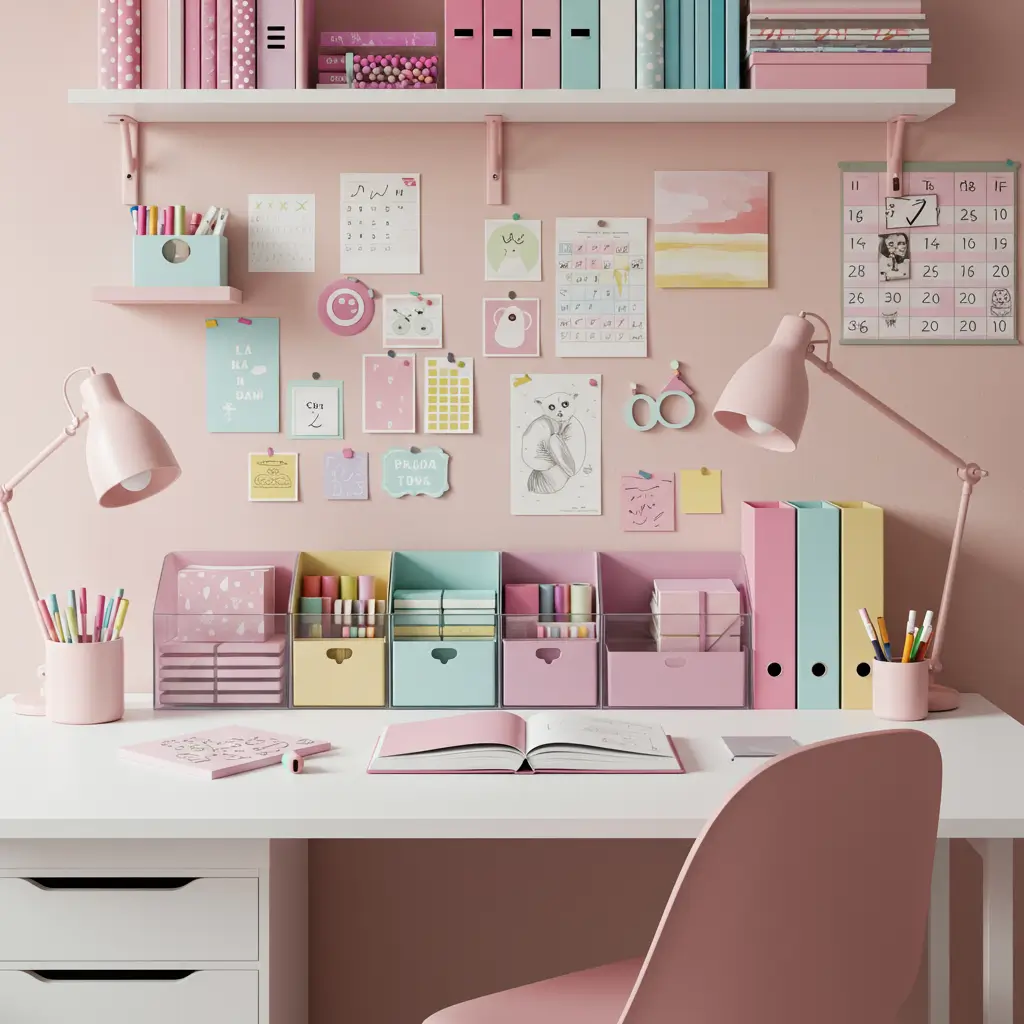
If you love office supplies as much as I do, this idea will make your heart beat a little faster. A color-coded desk organization setup isn’t just for the “aesthetic” Instagram crowd. It actually helps your brain categorize information faster. When everything has a specific visual home, you stop searching and start doing.
Visual Cues and Productivity
I recently switched all my folders and pen holders to a blue and green theme. Now, when I need my tax documents, I know they sit in the dark blue bin. My brain doesn’t have to read every label. It just looks for the color. Visual organization reduces decision fatigue, leaving you more energy for your actual work.
Top Organization Picks
- Acrylic organizers that allow you to see your colorful supplies.
- Matching pen cups and tray sets in your chosen palette.
- Washi tape for marking the spines of notebooks.
- Color-coded sticky notes for different types of tasks (urgent vs. long-term).
- A pegboard painted to match your desk accessories.
IMO, the key to this look involves picking a base neutral and then adding one or two “pop” colors. If you use every color of the rainbow, the room might start to look like a preschool classroom. Stick to a sophisticated palette, like navy and gold or sage green and white.
Keeping it Neat
The downside to this style? You actually have to put things back in the right spot. If you drop a red pen into your blue cup, the whole effect disappears. However, the beauty of the system usually motivates you to keep it tidy. Who wants to ruin such a pretty picture? 🙂
Also Read: 12 Elegant Foyer Ceiling Design Ideas and Timeless Charm
4. Scandinavian-Inspired White & Wood Study Room
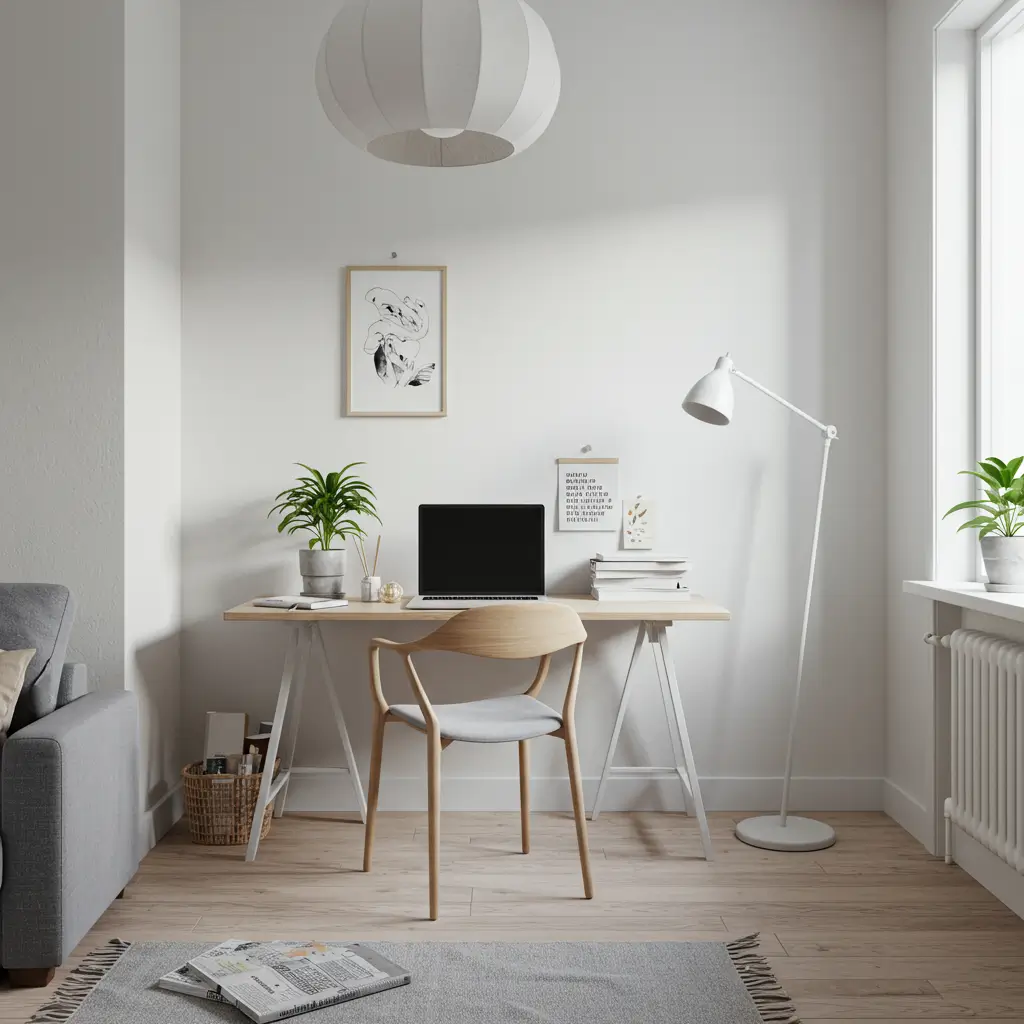
Scandinavian design stays popular for a reason—it works perfectly for focus. This style emphasizes natural light, organic materials, and simplicity. It feels incredibly fresh and airy, which is exactly what you need when you’re facing a mountain of work.
The Power of Natural Materials
Scandi style relies heavily on the “White and Wood” combo. I love the way a light oak desk looks against a crisp white wall. The wood adds enough warmth to prevent the room from feeling like a hospital wing. Natural wood textures ground the space, making it feel more human and less like a machine.
How to Nail the Scandi Look
- Maximize natural light. Keep your window treatments minimal or use sheer white linens.
- Choose a wooden desk with clean, tapered legs.
- Add “Hygge” elements like a simple white candle or a ceramic mug.
- Use functional art. A wooden wall calendar serves as both decor and a tool.
- Incorporate one green plant. A snake plant or a monstera works wonders here.
I recently moved my desk right in front of the window in my Scandi-themed room. The boost in my mood was instantaneous. Looking at the trees for a few seconds between emails prevents that “caged” feeling we all get during long workdays.
Why White Walls?
White walls reflect every bit of available light. If you live in a place with gray winters, this is a survival strategy. It keeps your energy levels up. Just make sure you choose a “warm” white so the room doesn’t feel icy.
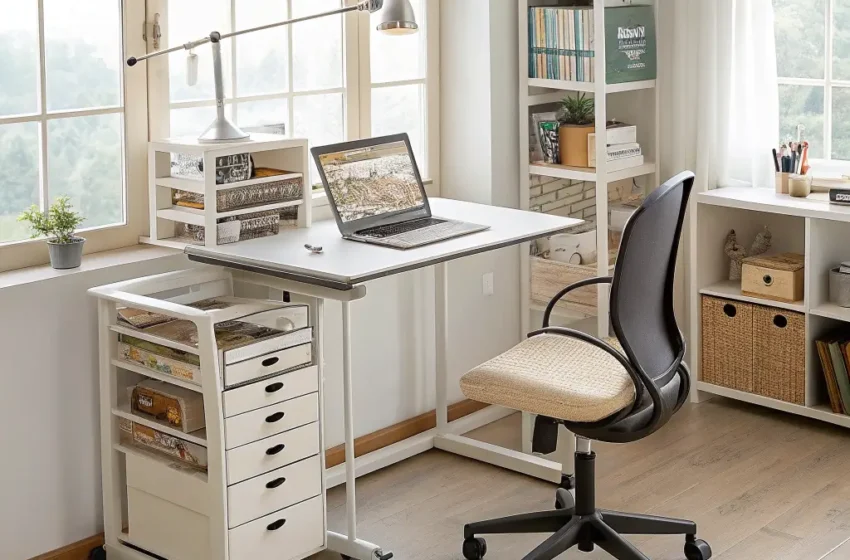
5. Compact Small-Space Study Room Layout
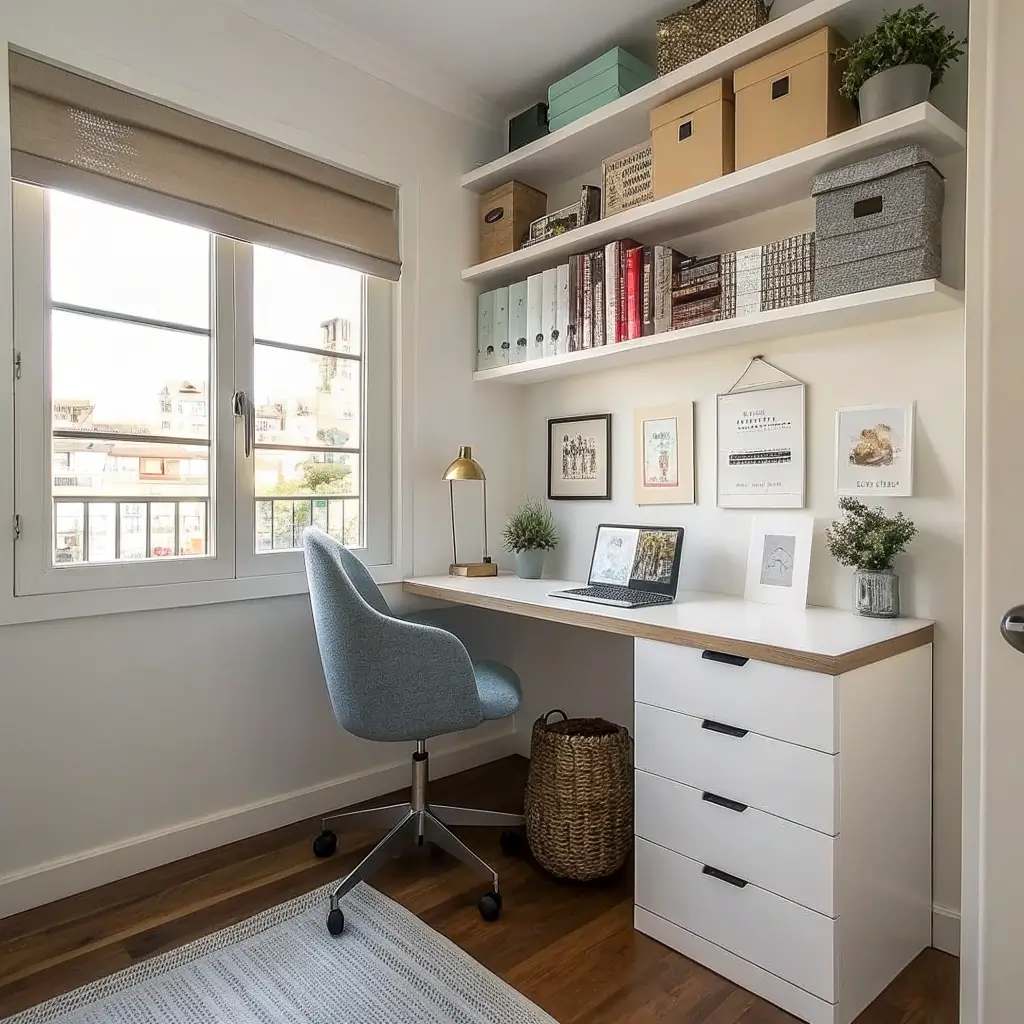
Not everyone has a spare bedroom to turn into an office. I spent years working in a “cloffice”—a closet converted into an office. A small-space study layout requires you to think like a puzzle master. You have to maximize every square inch without making the space feel suffocating.
Think Vertically
When you can’t go wide, go up. Vertical wall space is your best asset in a tiny room. I used a wall-mounted desk that folds up when I’m done for the day. This keeps the floor clear and prevents the room from feeling like a permanent workstation.
Tips for Tiny Studies
- Use a “Ghost Chair” (clear acrylic). Because it’s transparent, it doesn’t “eat” any visual space.
- Mirrors reflect the room and make a tiny corner feel twice as large.
- Under-desk storage on wheels allows you to tuck away files when they aren’t in use.
- Clip-on desk lamps save precious surface area.
- Wall-mounted monitors free up space for your keyboard and notebook.
FYI, a small space actually helps some people focus better. It creates a “cockpit” environment where everything you need sits within a six-inch radius. You don’t get distracted by the rest of the room because, well, there isn’t any rest of the room!
Creating Boundaries
If your study is just a desk in your bedroom, use a tall plant or a folding screen to create a visual barrier. This tells your brain, “We are in work mode now.” When you step behind the screen, the workday officially ends.
6. Modern Industrial Study Room with Metal Accents
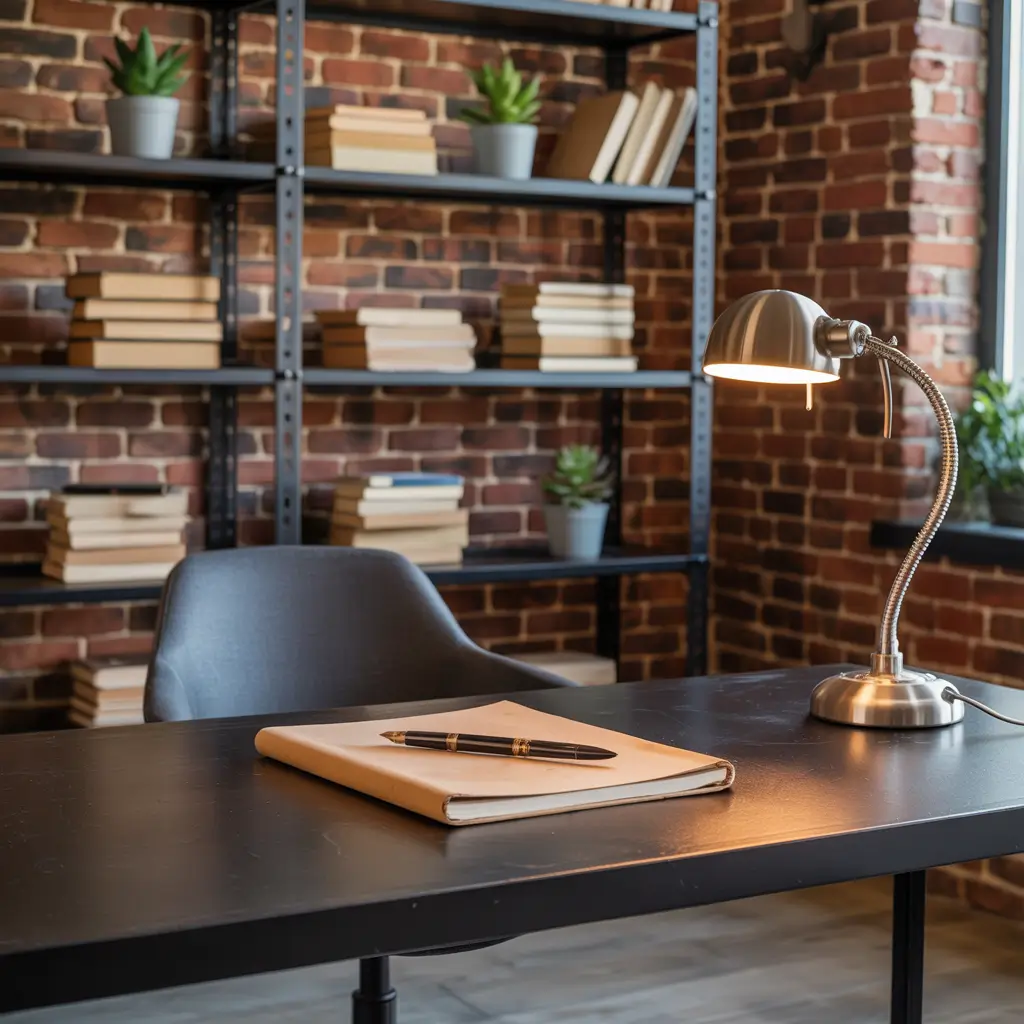
If you prefer a moodier, more masculine vibe, the modern industrial style might be your winner. This look uses raw materials like iron, steel, and dark woods. It feels sturdy, permanent, and very “serious business.”
The Industrial Palette
Think dark grays, matte blacks, and rich browns. I love the contrast of a heavy iron desk frame against a brick wall. It gives off a “converted warehouse loft” vibe that makes you feel like a high-powered architect or a gritty novelist.
Industrial Decor Must-Haves
- An Edison bulb desk lamp. The warm, exposed filament looks incredible at night.
- Metal wire baskets for filing papers and magazines.
- A leather desk mat. It protects the wood and adds a touch of luxury.
- Concrete planters for your succulents or cacti.
- Exposed shelving made of black pipe and thick wood planks.
I built my own industrial shelves using pipes from a local hardware store. They cost about $60 and look better than anything I saw in the high-end furniture catalogs. Industrial decor celebrates the “unfinished” look, so don’t worry about things being too polished.
Softening the Edge
Industrial rooms can sometimes feel a bit cold or harsh. I recommend adding a few “soft” touches to balance the metal. A worn-in leather chair or a wool rug will provide the necessary comfort without ruining the edgy aesthetic.
Also Read: 10 Sophisticated Foyer Interior Design Ideas and Luxe Details
7. Boho Chic Study Area with Plants and Textiles
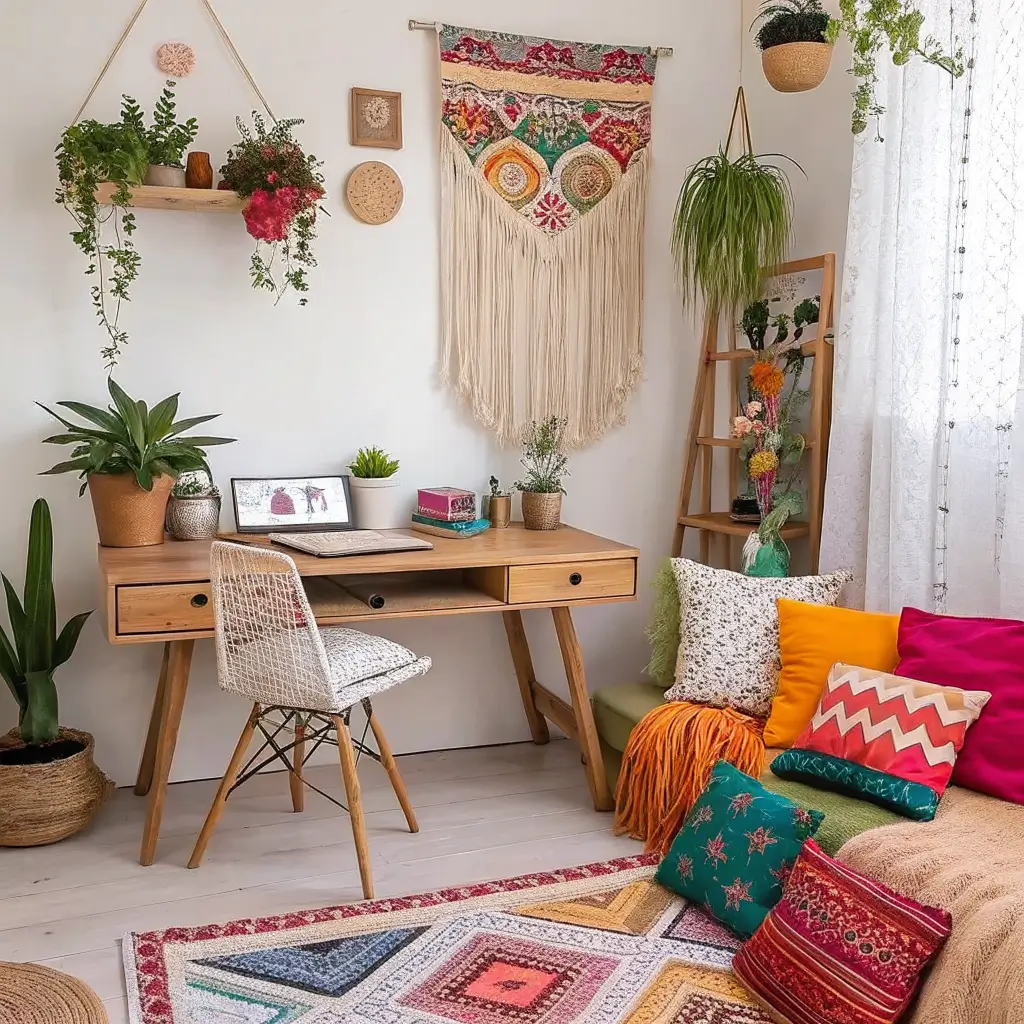
On the complete opposite end of the spectrum from industrial, we have Boho Chic. This style is all about life, color, and creativity. If your work involves brainstorming, designing, or creating, a Boho study will keep your inspiration flowing.
Why Plants Change Everything
You literally cannot have too many plants in a Boho study. Plants breathe life into a room and actually improve air quality. I have seven plants in my current workspace, and I’ve named almost all of them. The greenery creates a lush, jungle-like environment that feels restorative.
Key Boho Elements
- Macrame wall hangings or fiber art for texture.
- Hanging planters to keep greenery at eye level.
- Mismatched vintage furniture. A thrifted desk with a modern chair looks intentional here.
- Woven baskets for hiding your trash can or extra cords.
- Bold, patterned textiles like a Persian rug or an ikat-print cushion.
Ever wondered why this works so well? The variety of patterns and textures keeps your eyes moving, which can actually spark creative thinking. It’s the “organized chaos” of the design world.
Lighting for Boho
Skip the harsh LEDs. Use string lights, lanterns, or lamps with woven rattan shades. You want the light to be diffused and soft. This creates a dreamlike atmosphere where time seems to slow down—perfect for those long afternoons of writing or sketching.
8. Dual-Purpose Study and Reading Lounge
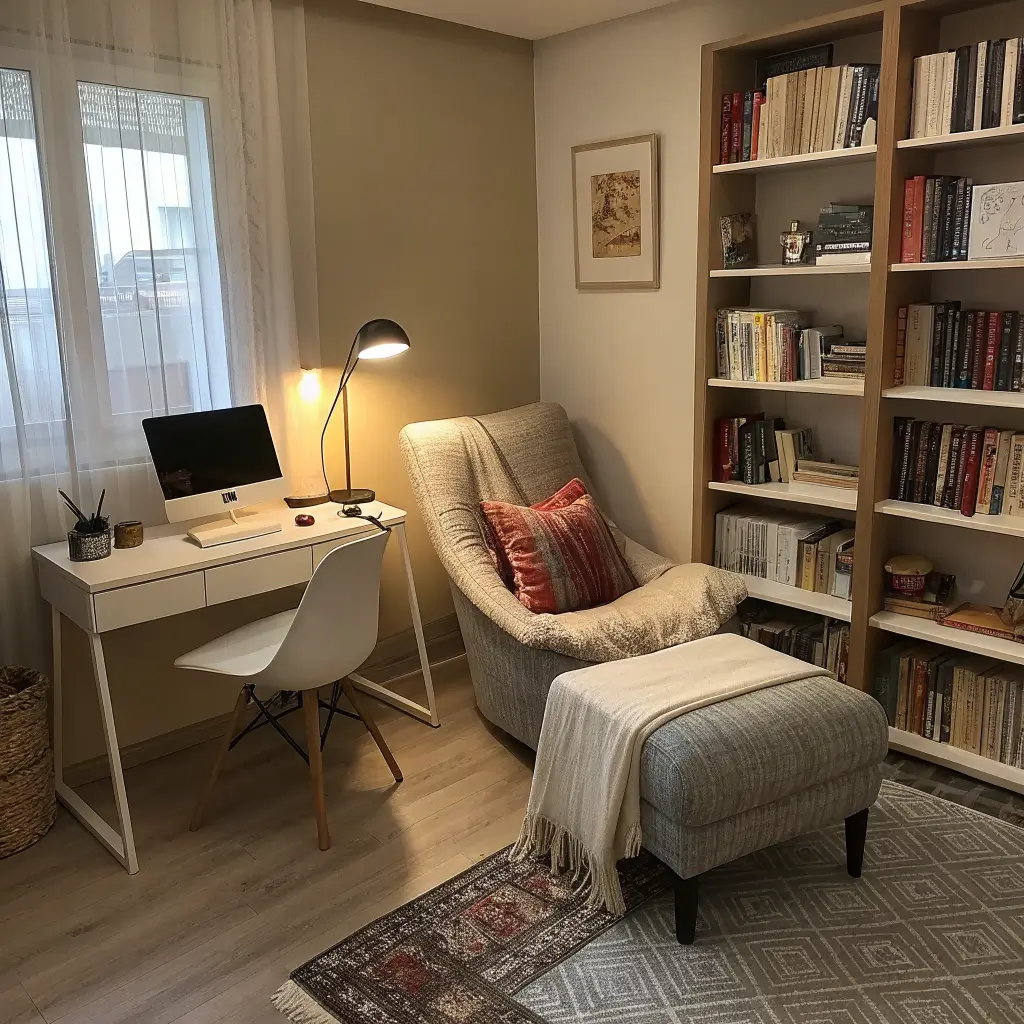
Let’s be honest: we don’t always want to sit bolt upright at a desk. Sometimes you need to review a document while reclining. A dual-purpose study lounge combines a traditional workspace with a high-end reading nook.
Creating the “Zone” Transition
The trick to this layout involves creating two distinct zones in one room. I position my desk against the wall for “high-intensity” work. In the opposite corner, I place a comfortable lounge chair and a small side table for “low-intensity” tasks like reading or planning.
Elements of a Study Lounge
- A high-quality lounge chair (think Eames style or a cozy papasan).
- A small bookshelves within reach of the chair.
- A dedicated side table for your coffee or tea.
- A second, smaller rug to define the lounge area.
- A floor lamp with a swing arm for the reading chair.
I find that switching between these two zones keeps me from getting bored. When I feel my focus dipping at the desk, I move to the lounge chair with my tablet or a book. Changing your physical environment can reset your mental state and give you a second wind.
Organizing for Two Purposes
Make sure the lounge side doesn’t get cluttered with work papers. Keep your “deep work” supplies at the desk. The lounge should remain a space for reflection and intake. This separation helps prevent burnout.
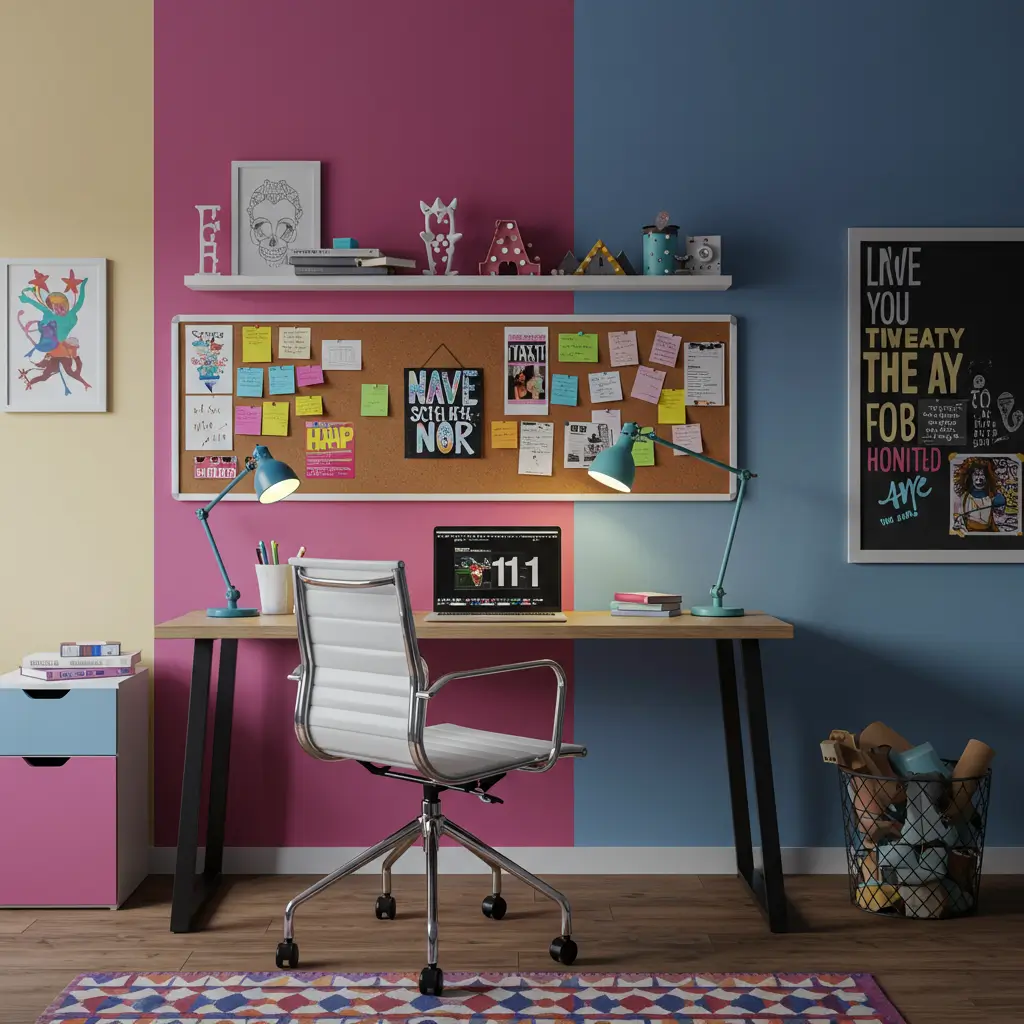
9. Creative Wall Art and Inspirational Quote Desk Setup
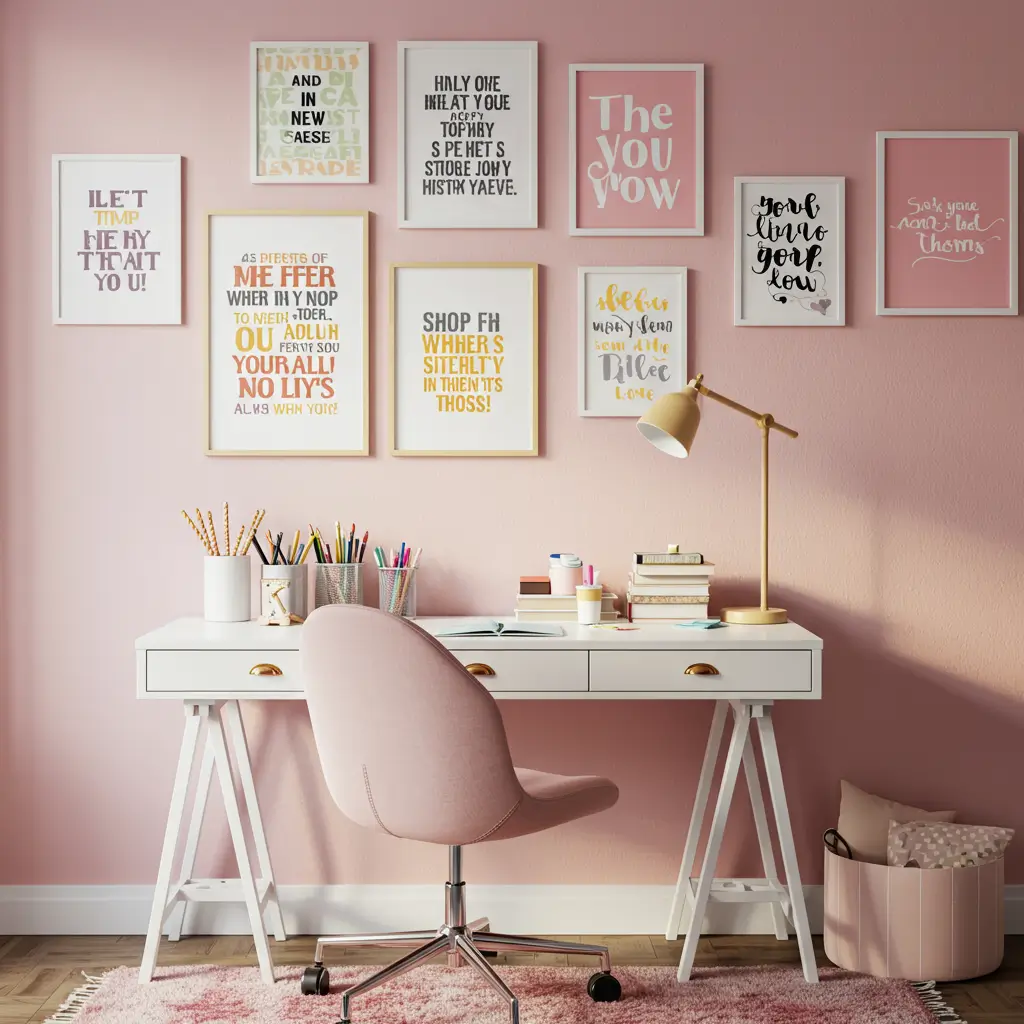
Your walls shouldn’t just be blank space. They should be a source of motivation. A creative wall art setup turns your study into a vision board for your life. When you look up from your screen, you should see something that reminds you why you are working so hard.
The Gallery Wall Approach
I love a gallery wall that mixes different mediums. Don’t just hang five framed photos. Mix in a wooden sign, a canvas painting, and maybe a framed map of a place you want to visit. Gallery walls tell a personal story, and they make the room feel much more curated.
Wall Art Inspiration
- Large-scale typography prints with quotes that actually resonate with you.
- A corkboard or grid wall for pinning up “in progress” ideas.
- Framed diplomas or certificates to remind you of your accomplishments.
- Abstract art in colors that make you feel energized.
- Personal photography from your favorite travels.
Avoid those generic “Boss” or “Hustle” signs unless you truly love them. They can often feel a bit cheesy. IMO, it’s better to choose art that has specific meaning to your personal journey.
Arrangement Tips
Lay your art out on the floor before you drive a single nail into the wall. This lets you play with the spacing and find the perfect balance. Use a level! Nothing ruins a creative wall art setup faster than a crooked frame that draws your eye away from your work.
Also Read: 10 Beautiful Foyer Area Design Ideas That Look Expensive
10. Ergonomic Study Space with Smart Storage
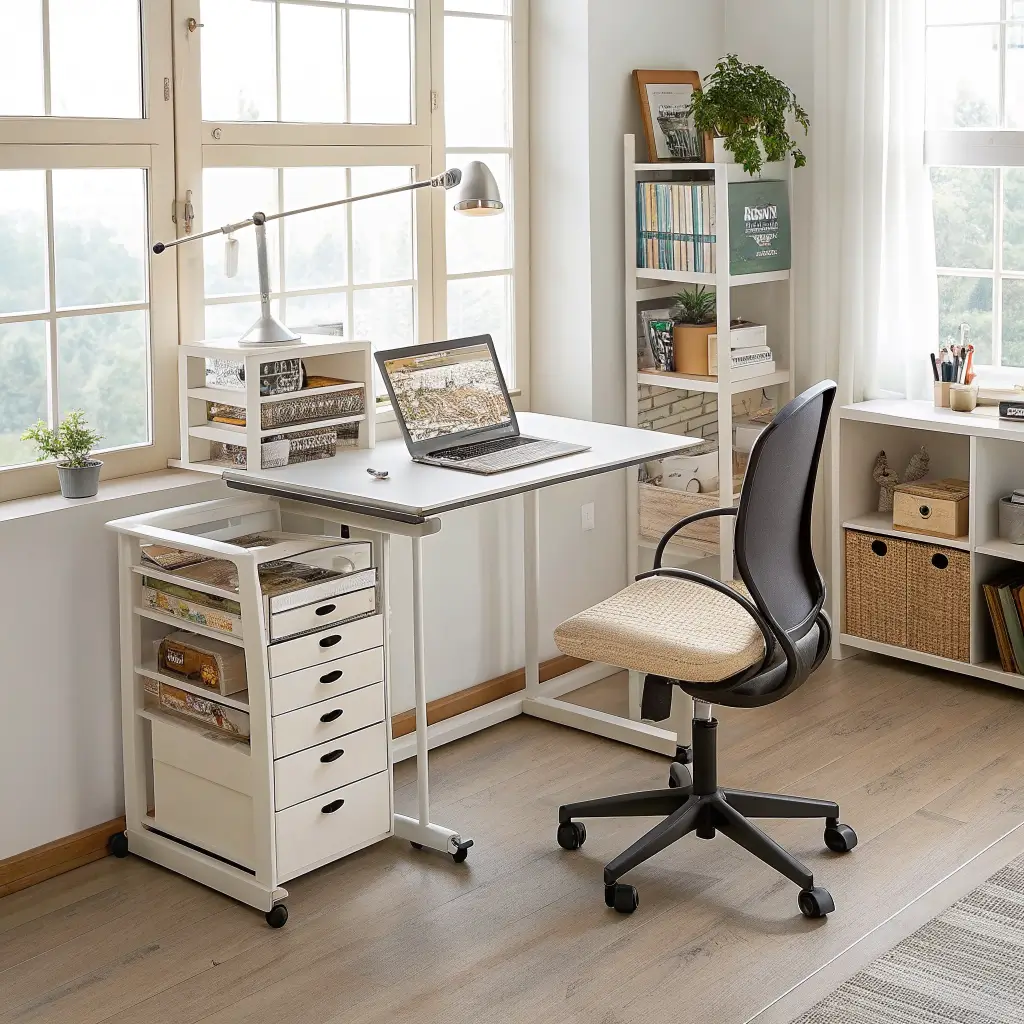
If you work 40+ hours a week in your study, your health must come first. An ergonomic study space might sound boring, but modern design has made “office health” look incredibly stylish. You can have a room that looks like a magazine cover and still protects your neck and wrists.
Investing in the Right Chair
This is the one area where you should never, ever skimp on your budget. A “cursed chair” will lead to back pain and frequent breaks. I invested in an ergonomic mesh chair three years ago, and I can honestly say it was the best $400 I ever spent. Ergonomic furniture supports your body’s natural alignment, which means you can work longer with less fatigue.
Smart Storage Features
- A height-adjustable standing desk. This lets you switch between sitting and standing throughout the day.
- Monitor arms that keep your screen at exactly eye level.
- Drawer dividers for your desk so you never have to hunt for a paperclip.
- Hidden printer cabinets that keep bulky tech out of sight.
- A dedicated charging drawer for your phone and tablet.
Cable management is the secret to a high-end look. I used a simple under-desk tray to catch all my power strips and cords. Now, instead of a “spaghetti mess” of wires, I see clean lines. Smart storage hides the chaos of technology, leaving only the beauty of the room.
Final Ergonomic Touches
Don’t forget about your eyes. If you work at night, use a “screen bar” light that clips to the top of your monitor. It illuminates your desk surface without causing glare on the screen. Small details like this make a massive difference in your daily comfort levels.
Comparison of Study Room Styles
Choosing a style can be tough. I made this quick list to help you decide which vibe fits your personality.
- The Minimalist: You hate clutter and want zero distractions.
- The Cozy Reader: You want a room that feels like a hug and values comfort.
- The Creative Artist: You love plants, colors, and textures that spark ideas.
- The Power Worker: You value ergonomics, dark tones, and industrial strength.
- The Small-Space Ninja: You need to fit a whole life into a tiny corner.
Technical Details You Should Know
When you shop for your study room decor, keep these technical specs in mind. They aren’t the “fun” part of decorating, but they make the room functional.
- Desk Height: A standard desk should sit about 28 to 30 inches off the floor.
- Lighting Temperature: Look for 2700K to 3000K for warmth, or 4000K to 5000K if you need daylight-mimicking clarity.
- Chair Height: Your knees should sit at a 90-degree angle when your feet are flat on the floor.
- Rug Size: Ensure the rug is large enough that all four legs of your chair stay on the rug even when you pull it out.
Frequently Asked Questions
How do I decorate a study room on a budget?
Paint is your best friend. A single can of paint for an accent wall costs about $30 and changes the entire room. Also, check thrift stores for “good bones” furniture that you can refinish with a bit of sandpaper and stain.
What is the best color for a study room?
Psychology suggests that blue promotes calm and focus, while green reduces eye strain. If you want energy, try small accents of yellow or orange. Avoid bright red on all four walls, as it can raise your heart rate and cause anxiety.
Should I put my desk against the wall or in the middle of the room?
If you have a large room, placing the desk in the center (facing the door) creates a “commanding” feel. In small rooms, placing it against the wall or under a window maximizes your floor space.
My Personal Study Transformation
I want to leave you with one final story. Two years ago, my study was a graveyard for cardboard boxes and broken electronics. I hated being in there. I would take my laptop to a loud coffee shop just to avoid my own home.
I finally followed the Minimalist Nook and Scandinavian ideas. I purged the boxes, painted the walls a soft white, and bought a simple wooden desk. The first morning I sat down in that clean, bright space with a hot cup of coffee, I felt a sense of peace I hadn’t felt in years. I finished my work two hours early that day simply because I wasn’t fighting my environment.
Final Thoughts
Your study room decor should reflect who you are and how you work. Don’t feel pressured to follow every trend you see on Pinterest.
If you love bright colors, go Boho. If you need total silence and order, go Minimalist.
Start small. Maybe buy one plant or one new lamp this weekend. See how it changes the energy of the room.
A well-decorated study isn’t just about “looking pretty”—it’s an investment in your own focus, your own goals, and your own mental health.
You deserve a space that inspires you to do your best work. Go out there and create it! And for the love of all that is holy, hide those computer wires. You’ll thank me later :/