10 Minimal Study Room Inspiration Ideas for Clean Setup
- Bedroom Design
 Ben
Ben- 0
- 46 minutes read
Your desk currently looks like a crime scene, doesn’t it? I know that feeling because I spent three years trying to finish my degree at a kitchen table covered in cereal crumbs and junk mail.
My brain felt as cluttered as the surface I worked on. Once I finally committed to finding some real study room inspiration, my productivity skyrocketed, and I stopped losing my pens every five minutes.
Creating a space that actually makes you want to study represents a total life hack. You don’t need a massive budget or a dedicated wing of your house to pull this off.
You just need a bit of strategy and some clever styling tricks. Let’s look at 10 study room inspiration ideas that turn a boring office into a high-performance sanctuary.
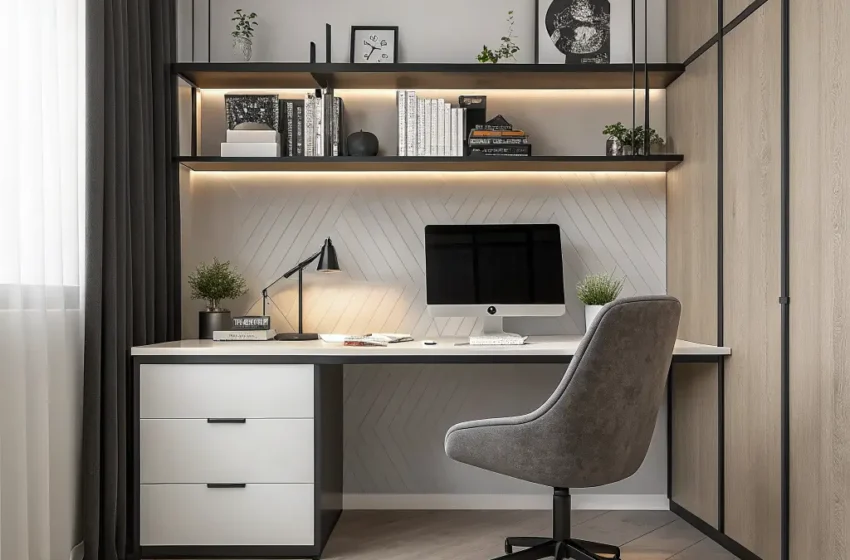
1. Minimalist Focus Study Room
I honestly believe that a cluttered desk leads to a cluttered mind. If you find yourself constantly moving piles of paper just to find your mouse, you need a minimalist reset. A minimalist focus study room doesn’t mean living in a sterile white box. It means you keep only the tools that actually help you succeed.
Why Less Truly Means More
I once lived in a 400-square-foot apartment. Every piece of furniture felt like an intruder. I learned that a minimalist setup saves your sanity. I recommend a sleek, legless desk or a simple wooden tabletop with thin metal legs. By keeping the area under the desk clear, you create the illusion of more floor space.
Essential minimalist elements:
- One high-quality task lamp with a slim profile.
- A single monitor setup to reduce visual distractions.
- A neutral desk mat to define your workspace.
- Concealed cable management to hide those ugly black wires.
Selecting Your “Essential Only” Tools
Does your current desk hold items you haven’t touched in six months? If so, move them to a different room. I keep exactly three things on my surface: my laptop, a notebook, and a glass of water. Ever wondered why some people finish their work an hour earlier than everyone else? They don’t waste time staring at random knick-knacks. Minimalism removes the friction between you and your study goals.
The Color Palette of Focus
I suggest you stick to whites, grays, or light oaks. These colors reflect natural light, which keeps your energy levels high during long study sessions. I painted my old desk a soft matte gray last year, and the room suddenly felt three times larger. IMO, neutral tones prevent visual overstimulation better than any other design choice.
2. Cozy Night Study Corner
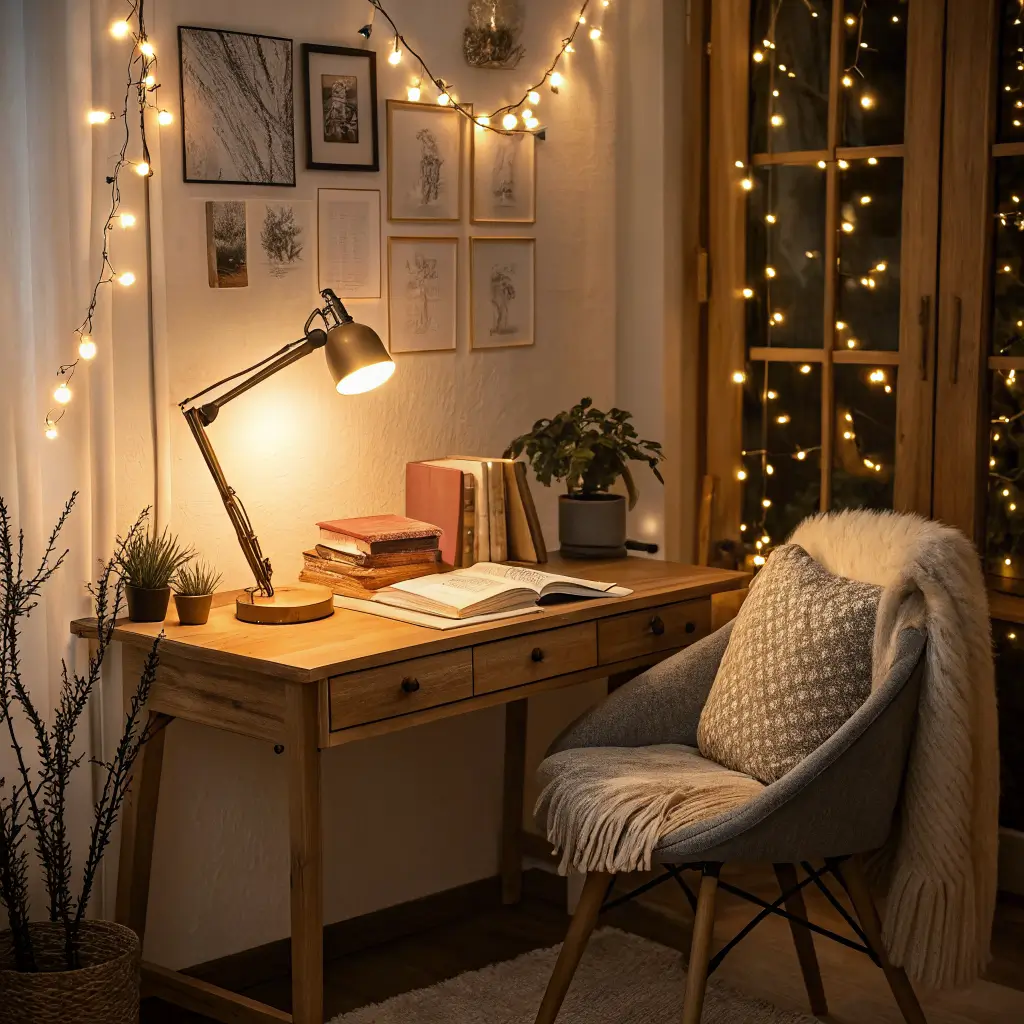
Not every study session needs to feel like a corporate board meeting. Sometimes, you need to hunker down and read 200 pages of history. For those sessions, a traditional desk feels like a punishment. I swear by a cozy night study corner to lower your stress levels while you absorb information.
Ditch the “Big Light”
I hate overhead hospital lighting. It causes headaches and makes the room feel cold. To create a cozy study area, you must layer your lighting. I use a warm-toned floor lamp for general ambiance and a smaller, adjustable brass lamp for focused reading.
Essentials for a cozy study nook:
- An oversized bean bag or a plush armchair.
- A high-pile rug or a faux fur throw under your feet.
- A small side table for your tea or coffee.
- A weighted blanket to keep you grounded and focused.
Textiles as Brain Food
I once bought a cheap plastic chair for my study corner, and I regretted it within twenty minutes. My back started aching, and the room felt cold. I swapped it for a soft velvet chair and added a small area rug. Suddenly, that corner became the most popular spot in my entire house. Soft textures signal to your brain that the environment is safe, allowing you to relax into a deep state of concentration.
Why Ambiance Matters
Ever wondered why this works so well? Warm lighting mimics the sunset, which helps regulate your circadian rhythm. If you study in a harsh, bright room at 9 PM, you won’t sleep well afterward. Warm white LEDs (around 2700K) provide the perfect glow for evening reading. You want the room to feel like a high-end cafe, not a laboratory.
3. Small Space Smart Study Setup
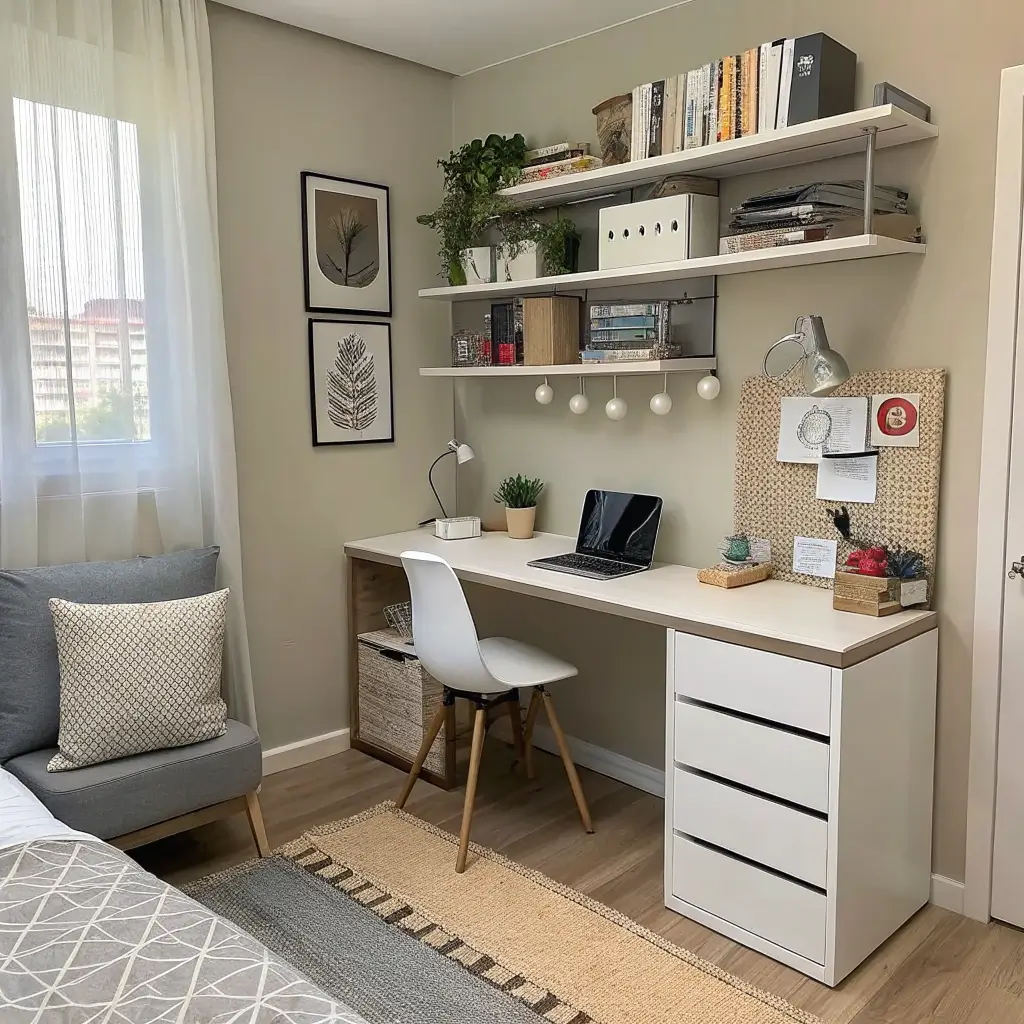
Not everyone has a spare bedroom to convert into a library. Most of us are fighting for every square inch. A small space smart study setup requires you to think vertically and use furniture that tricks the eye. I lived in a 500-square-foot apartment for two years, and I built a study nook in a literal closet.
The Magic of Floating Furniture
When floor space disappears, look at your walls. I recommend a wall-mounted floating desk. By keeping the floor visible under the desk, the room feels much more open. I installed a floating shelf system above my desk to hold my printer and books, which freed up my entire workspace. Vertical storage saves your sanity when you live in a tiny home.
Using Mirrors to Expand the Room
Mirrors aren’t just for checking your outfit. A large mirror reflects light and creates the illusion of depth.
- Place a mirror opposite a window to double the natural light.
- Lean a floor-length mirror in a corner to make the walls feel wider.
- Use mirrored desk accessories for a touch of glam that doesn’t feel heavy.
FYI, small spaces actually help some people focus better because there’s nowhere else to go. Use a “ghost chair” (clear acrylic) to keep the visual weight of the furniture low. Strategic small-space design turns a cramped corner into a cockpit of productivity.
Also Read: 12 Inspiring Study Room Decor Ideas DIY Ideas for Focus
4. Aesthetic Student Study Room
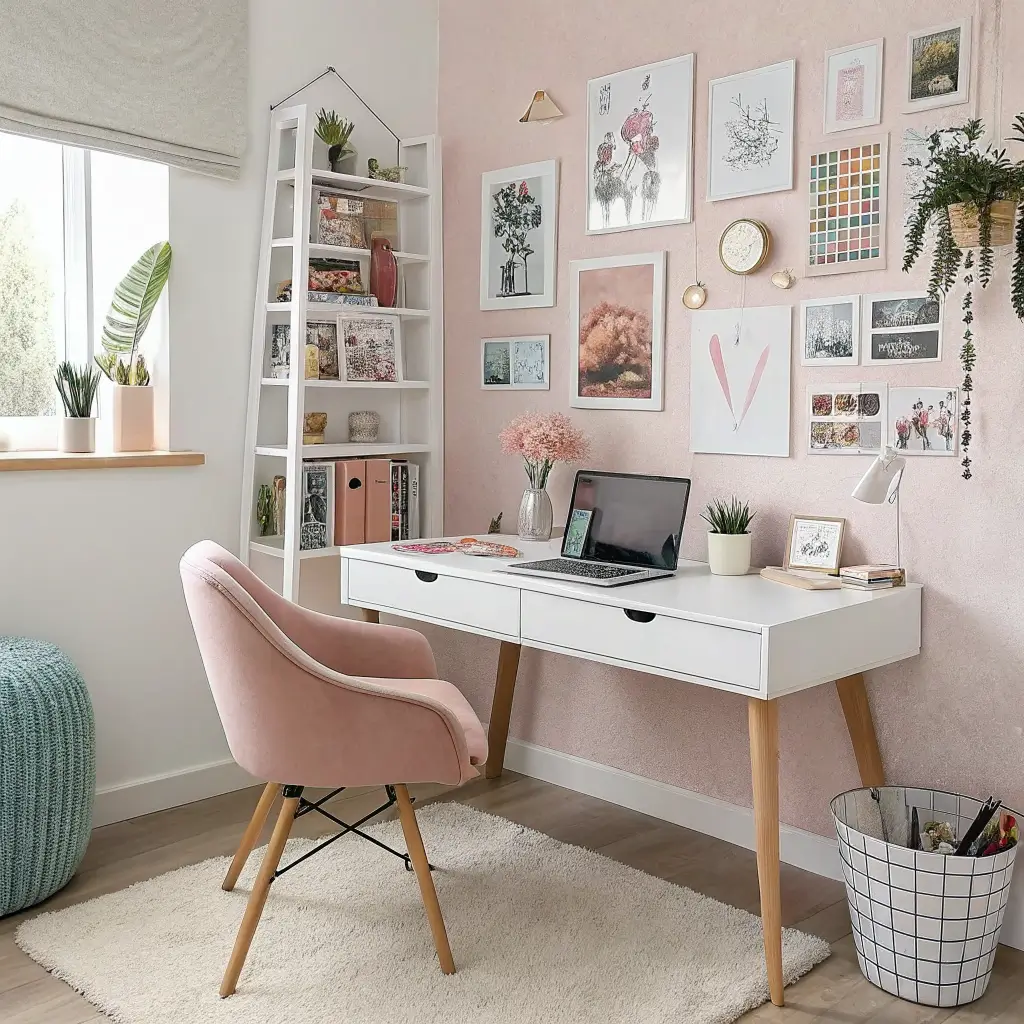
If you want a workspace that feels light, airy, and cheerful, a aesthetic student study room with pastel colors is the way to go. This aesthetic is incredibly popular for “studygram” creators because it looks soft and inviting on camera. It’s a great choice if your study room doesn’t get a lot of natural light.
Choosing Your Mood-Boosting Shades
I recommend picking one or two primary pastels to avoid a “clown house” look. Mint green helps reduce eye strain, while soft lavender promotes a sense of calm. I personally love a pale sky blue for a study room because it mimics a clear day. Pastel hues brighten a dark room without the harshness of neon colors.
Accessorizing with Soft Tones
- Pastel stationery: Colored folders and notebooks make organization fun.
- White furniture: This provides a clean canvas for your colors to pop.
- Colorful desk lamps: A pink or yellow lamp adds a playful focal point.
- Faux fur throws: Adds texture and comfort in a light shade.
- Minimalist art with a few pastel accents.
IMO, the pastel aesthetic makes the act of studying feel less like a chore. It turns your desk into a “happy place.” Just make sure you include a few neutral elements, like a white rug or a light wood floor, to balance the sweetness. Pastels create a dreamy atmosphere that encourages creative thinking.
5. Modern Desk-Only Study Zone
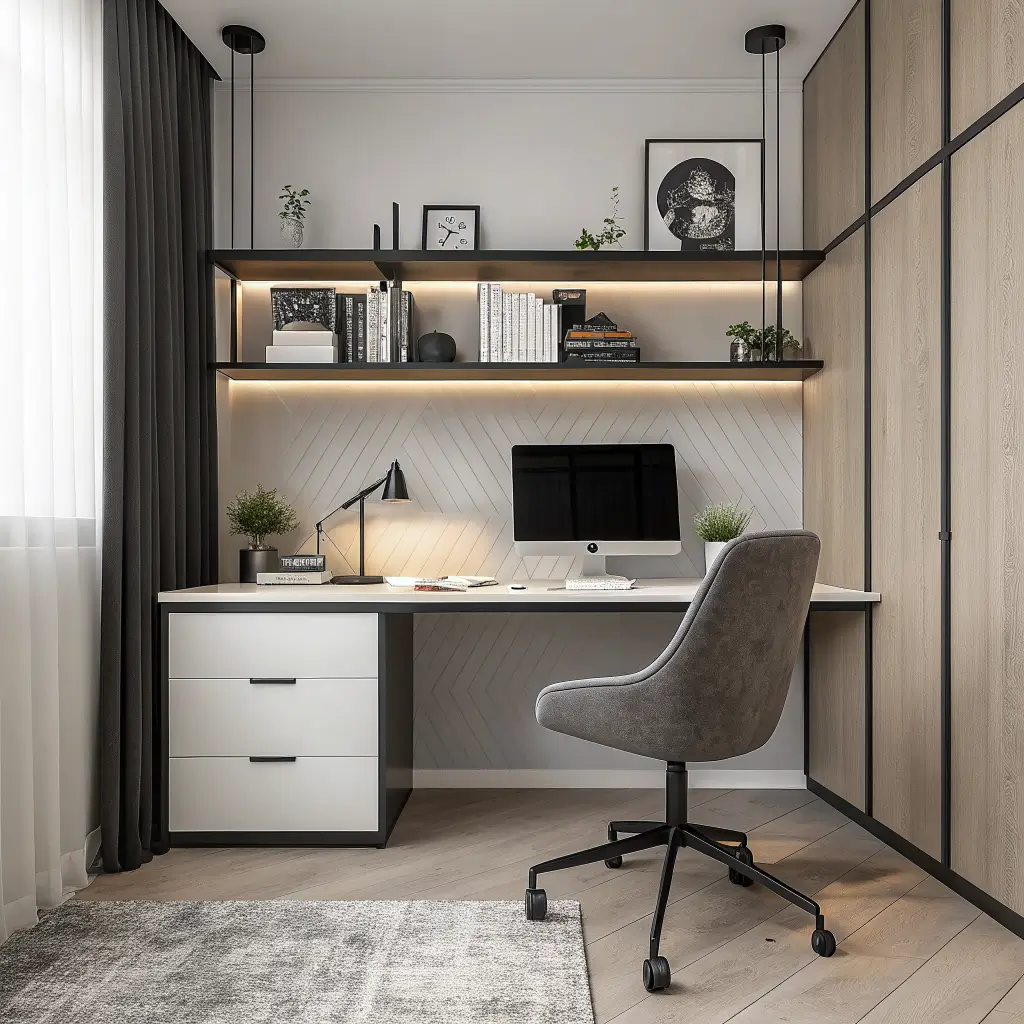
For the ultimate minimalist who finds even a single shelf too distracting, the modern desk-only study zone provides the perfect solution. This design philosophy champions a single, high-quality desk as the entire workspace. All other storage is hidden away in another part of the room or house.
The Power of a Single Surface
When your desk is the only piece of furniture in the study “zone,” it commands your full attention. I suggest investing in a beautifully crafted desk made of solid wood or metal. Since it’s the only thing you will look at, it should be a piece of art in its own right. The lack of shelves or filing cabinets means you have to be ruthless about what you keep.
Key Features of a Desk-Only Setup
- A high-quality desk with a durable, spacious surface.
- An ergonomic chair that tucks completely under the desk when not in use.
- One sculptural task lamp that adds a touch of design flair.
- A “go-bag” or rolling cart for your supplies that you can bring to the desk when you need it.
- Flawless cable management to maintain the clean aesthetic.
Rhetorical question: Why clutter your visual field with books you only use once a month? I tried this setup for a semester, and my focus improved dramatically. It forced me to plan my study sessions in advance because I had to bring my materials to the desk rather than just grabbing them from a shelf.
The Psychology of Isolation
By isolating your desk, you create a “sacred” space dedicated to one thing: work. Your brain starts to associate that chair with focus and nothing else. This single-purpose zone reduces mental friction and helps you get into the flow state faster.
6. Nature-Inspired Calm Study Room
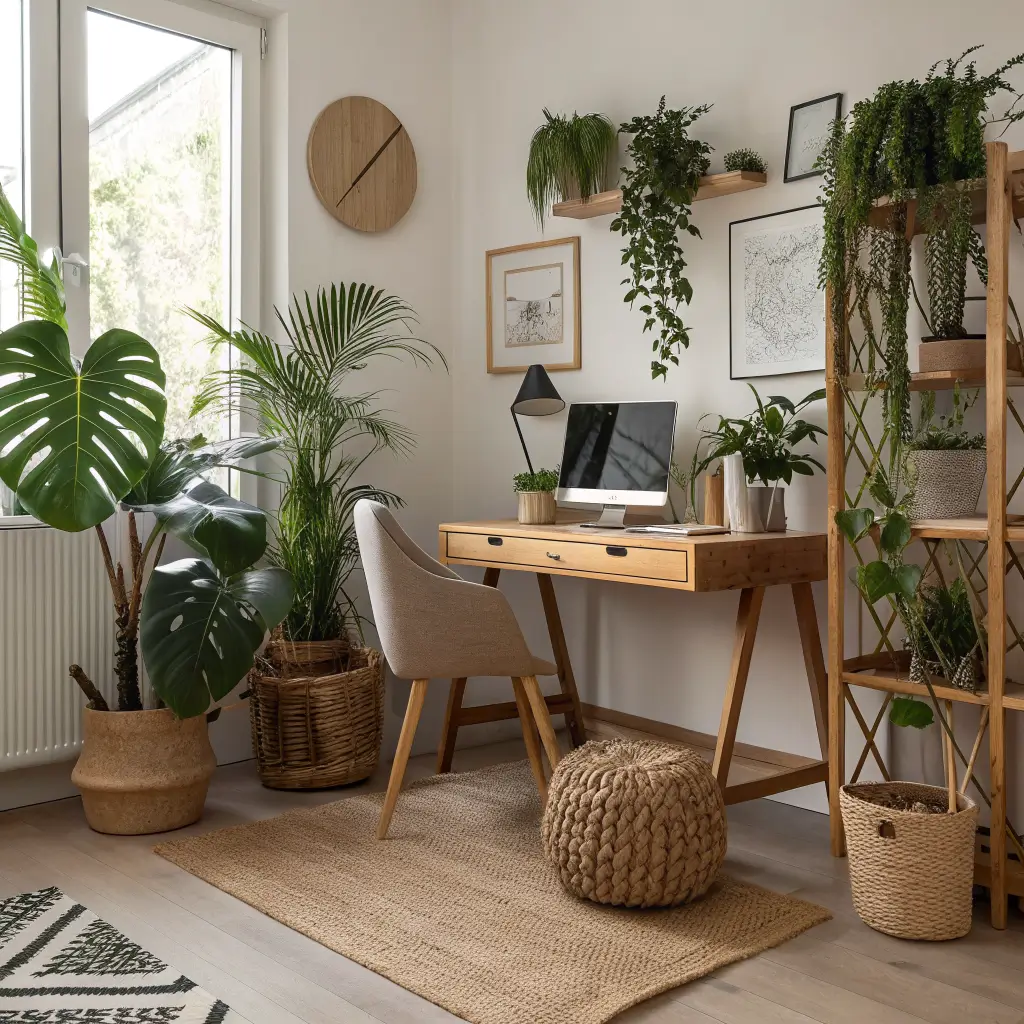
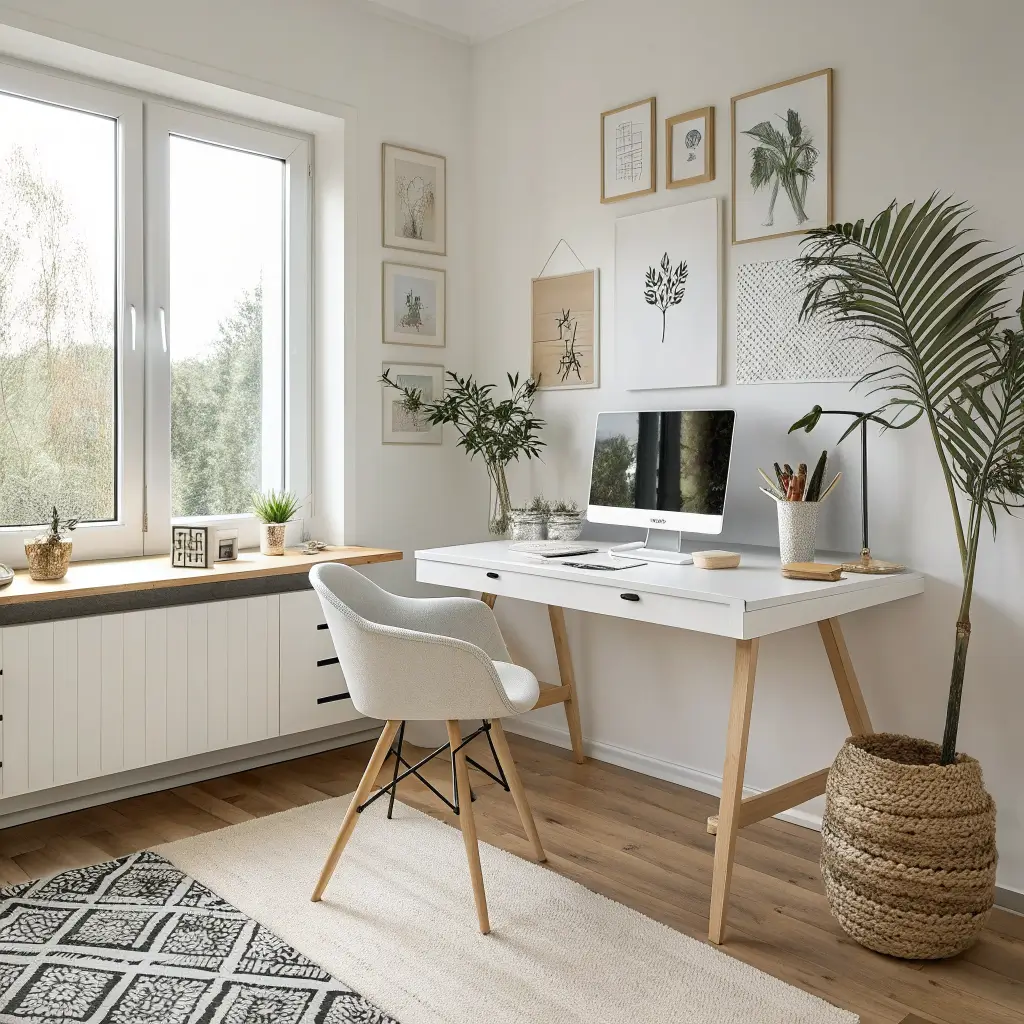
“Biophilic design” sounds fancy, but it just means we should put more plants in our rooms. A nature-inspired calm study room uses earth tones, raw wood, and plenty of greenery to create a calming environment. I find that I can work much longer without a headache when I’m surrounded by natural elements.
The Earthy Color Palette
I suggest using colors like sage green, terracotta, and deep forest green. These shades ground the space and reduce anxiety. I recently painted one accent wall a deep olive green, and it became my favorite part of the house. Natural colors soothe the nervous system, making them perfect for high-stress jobs or intense exam seasons.
Materials That Ground You
- Raw Wood Desks: The visible grain adds a tactile, earthy feel.
- Stone Coasters: Use slate or marble to add a touch of the outdoors.
- Linen Curtains: This fabric allows light to filter through softly.
- Terracotta Pots: These add a warm, rustic touch to your plant collection.
Does your current office feel like a plastic box? Swap out your plastic organizers for wooden or wicker baskets. Nature-inspired decor connects you to the outside world, even when you’re stuck inside answering emails. I find that this aesthetic works particularly well in rooms with large windows.
Choosing Your Green Roommates
If you are new to plant parenthood, don’t buy anything fussy. I suggest starting with a ZZ plant or a Sansevieria. These guys are virtually indestructible. They thrive in low light and don’t care if you forget to water them for a week. A study room should inspire you, not give you more chores!
Also Read: 10 Fun Study Room Decor Student Ideas to Brighten Your
7. Budget-Friendly Study Room Makeover
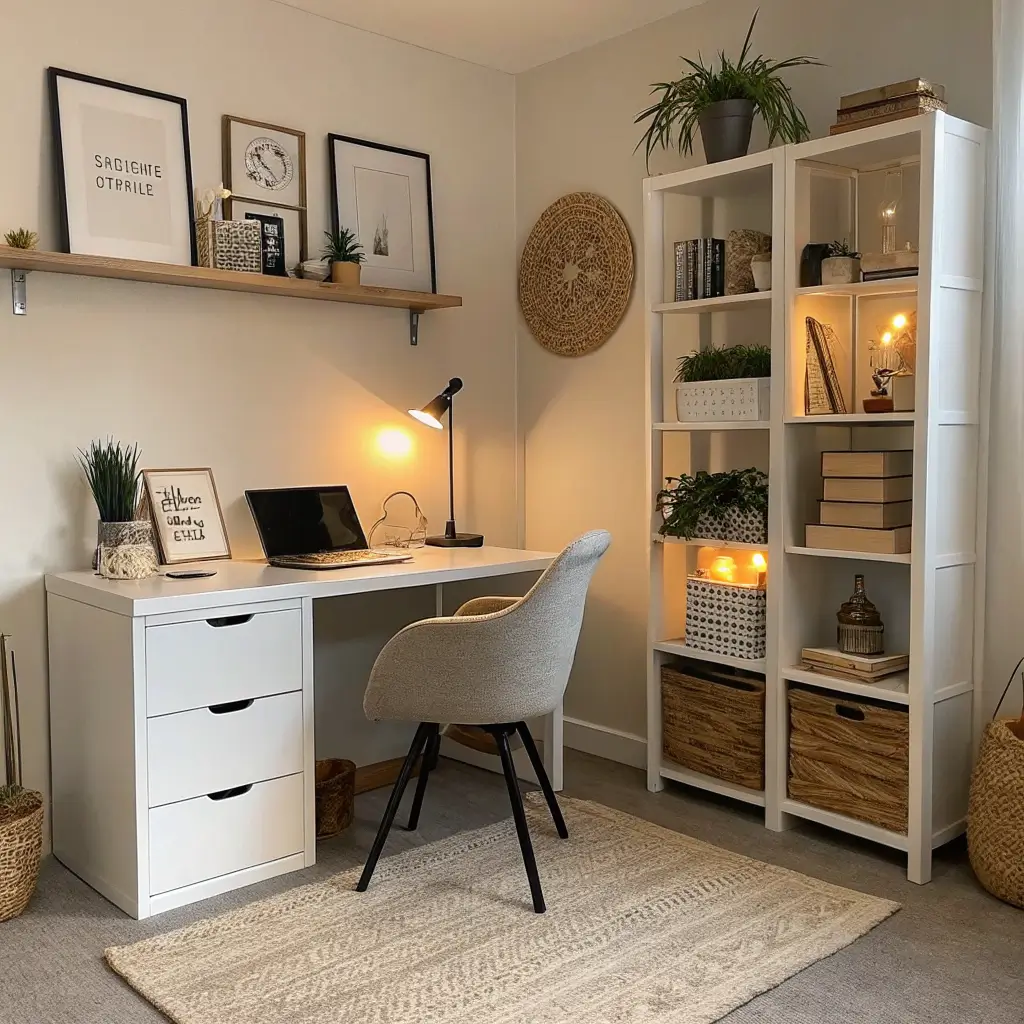
You don’t need a thousand dollars to have a beautiful room. A budget-friendly study room makeover relies on creativity and upcycling. I built my first home office for under $100 by raiding thrift stores and using a little spray paint.
The Power of Upcycling
I recommend looking for furniture with “good bones” but ugly finishes. I bought a scratched-up wooden desk for $15 and painted it a matte charcoal gray. It looked like a brand-new designer piece. DIY projects add a personal touch that you can’t buy in a store.
Budget Decor Hacks
- Mason Jars: Paint them to match your room and use them for pen holders.
- Clipboards: Hang three or four on the wall to display your to-do lists.
- Washi Tape: Use this to create a “frame” around photos on your wall.
- Plant Cuttings: Propagate your existing plants to get free greenery.
- Crate Bookshelves: Use wooden milk crates stacked on their sides.
FYI, some of my favorite pieces in my current office are things I made myself. Budget-friendly design forces you to be creative, which is a great skill for any student or professional. Personalize your space with handmade items to make it feel truly yours.
Smart Splurging
When working with a small budget, you have to be strategic. Spend your money on the chair. You can work on a plywood board if you have to, but a bad chair will cost you hundreds in physical therapy later. You can always upgrade your desk later, but your back needs support now.
8. Warm Neutral Study Space
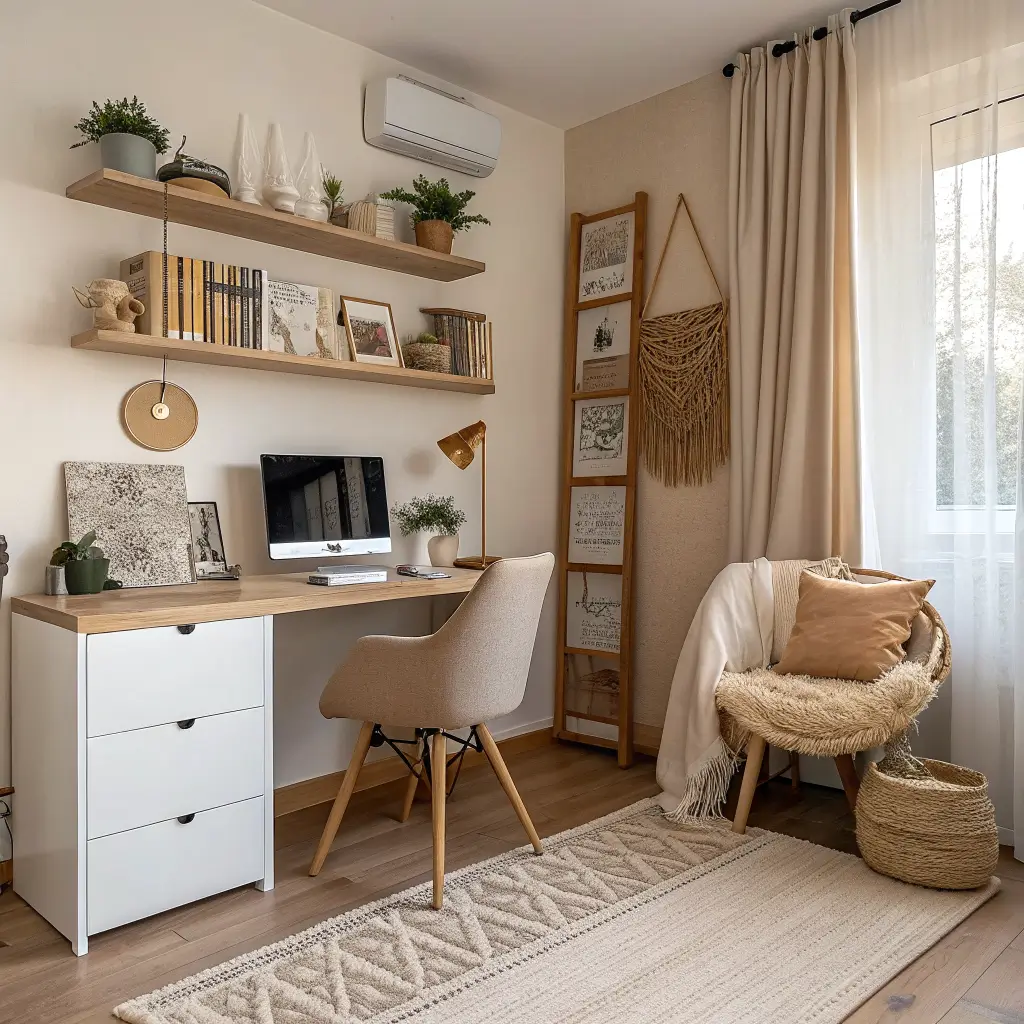
Neutral doesn’t have to mean boring beige. A warm neutral study space uses a sophisticated palette of creams, taupes, and soft browns to create a calm, luxurious environment. I love this aesthetic because it feels timeless and sophisticated.
Building Your Layered Neutrals
The secret to a beautiful neutral room lies in texture. If you use the same smooth texture everywhere, the room will look flat. I suggest you mix a wool rug with a linen chair and a wooden desk. The different surfaces catch the light in different ways, creating visual interest without the need for color.
Warm neutral palette essentials:
- Warm White Walls: Look for whites with a creamy or yellow undertone.
- Oatmeal or Taupe Accents: Use these for your rug or curtains.
- Natural Wood Tones: A desk in a warm oak or walnut adds richness.
- Leather Details: A leather mousepad or desk chair brings a touch of luxury.
- Brass or Gold Hardware: These warm metals complement the neutral tones perfectly.
The “Quiet Luxury” Vibe
Ever wondered why high-end hotel rooms feel so relaxing? They use this exact strategy. A warm neutral palette signals quality and calm. It’s a mature, sophisticated look that helps you feel like a “serious” student or professional. I personally find that this aesthetic helps me focus on complex, long-form writing tasks.
The Psychology of Warm Tones
Warm neutrals like beige and cream create a sense of comfort and stability. They make a room feel like a safe cocoon, which is perfect for students who need to block out the outside world and concentrate. Warm neutrals are the color equivalent of a cozy blanket.
9. Creative Wall-Focused Study Room
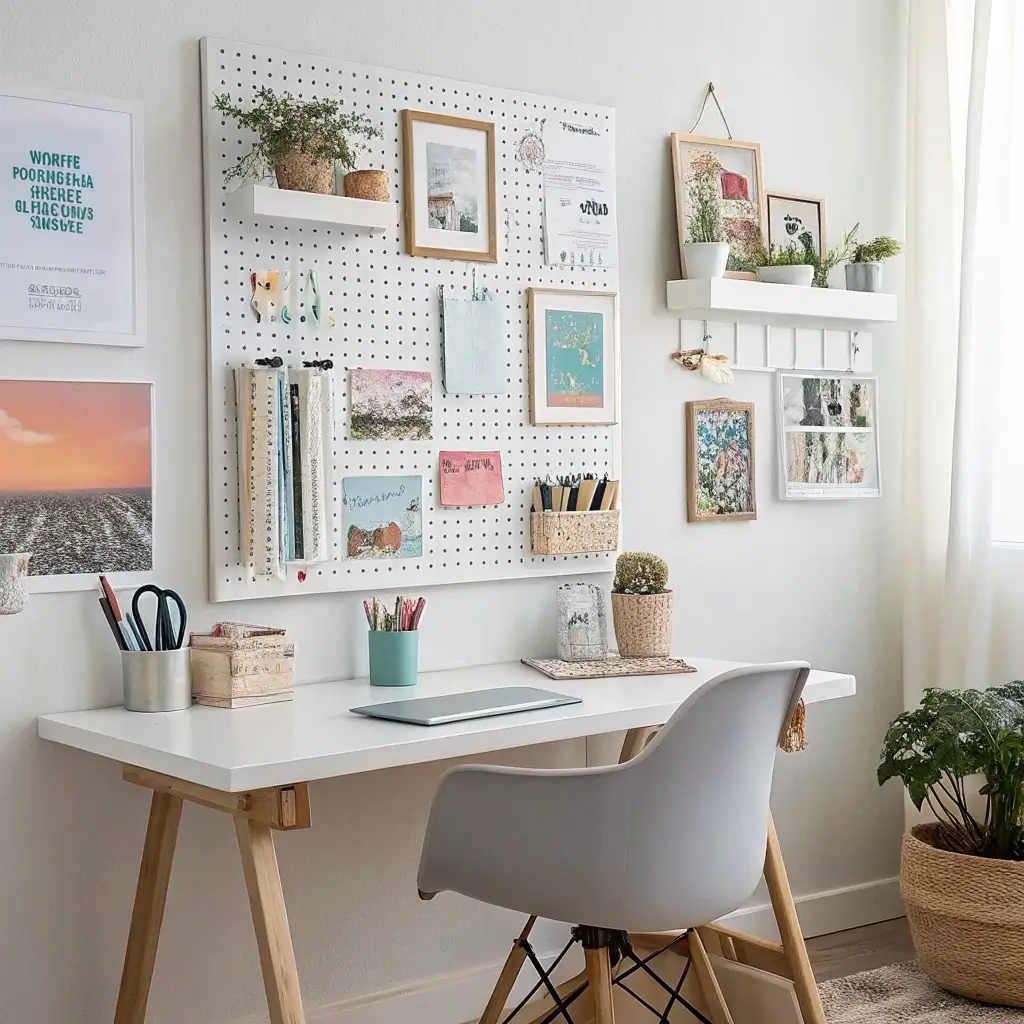
Sometimes, the best place for your ideas is right in front of you. A creative wall-focused study room turns your primary wall into a massive, interactive canvas. This design works wonders for visual learners and creative thinkers who need to see their thoughts laid out in front of them.
Your Wall as a Second Brain
I recommend using a combination of different wall treatments to create a “command center.”
- Chalkboard Paint: Use this to create a giant section for brainstorming and mind-mapping.
- Magnetic Primer: Paint this under your top coat so you can stick magnets anywhere on the wall.
- Cork Tiles: Create a pinnable section for your calendars, quotes, and photos.
- Dry-Erase Paint: This turns any wall into a giant whiteboard for quick notes.
Creating Your Interactive Zone
I once designed a study room where we painted a massive 8×8 foot square with dry-erase paint. The student used it to work through complex chemistry equations. The ability to “go big” helped him see the connections between different parts of the problem. A wall-focused design keeps your ideas at eye level, which prevents you from losing your train of thought.
Balancing the “Busy” Wall
When you have a wall that’s full of notes and diagrams, you must keep the rest of the room simple. I suggest a clear glass or acrylic desk that doesn’t compete with the wall. Use simple, solid-colored storage bins to prevent visual overload. The wall is the art; everything else is just the frame.
Also Read: 10 Cozy Kids Study Room Ideas and Perfect Reading Spots
10. Clean & Clutter-Free Study Area
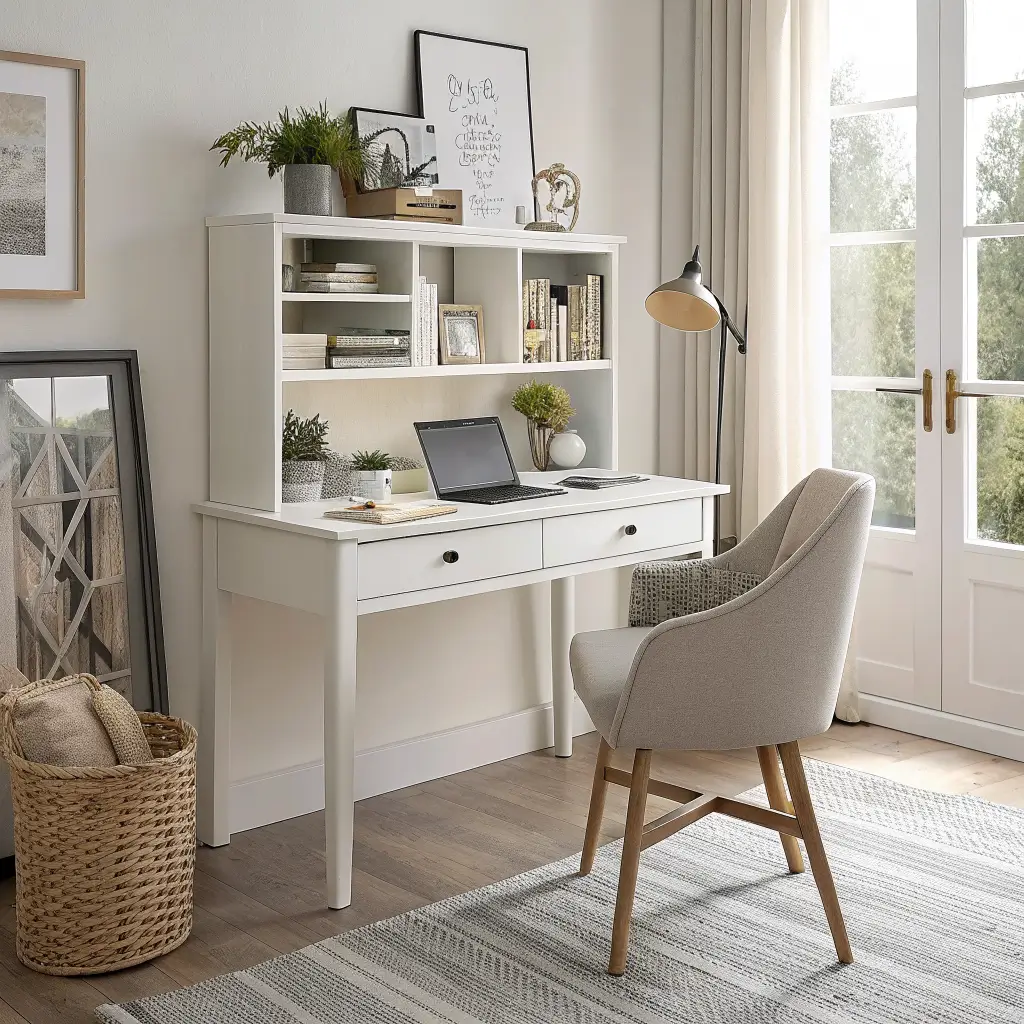
The clean and clutter-free study area is the ultimate goal for anyone who craves order. This isn’t just about minimalism; it’s about building a system that makes it impossible for clutter to accumulate in the first place. I implemented this system last year, and my desk has stayed clean for a record-breaking six months.
The “Everything Has a Home” Philosophy
The secret to a clutter-free space is hyper-organized storage.
- Drawer Dividers: Your pens and paperclips should never mingle.
- Labeled Bins: Every project gets its own bin.
- A “To-Do” Tray: All incoming papers go here and nowhere else.
- A “Done” File: All finished work gets filed away immediately.
- A “Five-Minute Reset” at the end of every day.
The Power of Hidden Storage
I recommend a desk with deep, built-in drawers or a nearby filing cabinet. The goal is to keep your desk surface completely empty except for your laptop and one notebook. When you sit down to work, you shouldn’t see anything that reminds you of a different task. A clean desk creates a clean mental slate.
Maintaining the Zen
The hardest part about this aesthetic is the upkeep. You have to commit to putting things away immediately. It feels like a chore at first, but after a week, it becomes an automatic habit. IMO, the mental clarity you gain from a clutter-free study area is worth the five minutes of tidying up each night :).
Comparing Different Study Room Styles
Choosing the right style can be overwhelming. I created this quick comparison to help you narrow down your favorite vibe based on your personality.
| Style | Best For | Main Vibe | Effort to Maintain |
|---|---|---|---|
| Minimalist Focus | Deep Concentration | Calm & Clean | High (Discipline) |
| Cozy Night Study | Reading & Research | Warm & Relaxing | Low |
| Aesthetic Student | Creative Work | Cheerful & Airy | Medium |
| Nature-Inspired | Stress Reduction | Earthy & Grounded | High (Plant Care) |
- Wall-Focused | Brainstorming | Energetic & Visual | Medium |
| Clean & Clutter-Free| Organization Lovers | Serene & Efficient | High |
Essential Technical Details for a Great Study Room
I know you’re excited about the decor, but if you ignore the “boring” technical specs, your body will hate you. Even a beautiful room can cause physical pain if it’s not set up correctly.
The 90-90-90 Rule for Ergonomics
I suggest you adjust your desk and chair height so your feet are flat on the floor, your knees are at a 90-degree angle, and your elbows are at a 90-degree angle when typing. If your desk is too high, use a footrest. Proper ergonomics prevent long-term physical issues like carpal tunnel and neck pain.
The Importance of Lighting Temperature
When shopping for light bulbs, look at the “Kelvin” (K) rating.
- 2700K – 3000K: Warm white (Great for a cozy, evening reading vibe).
- 4000K – 5000K: Cool white/Daylight (Essential for your main desk to keep you alert and focused).
I use smart bulbs that I can adjust throughout the day. It’s a small investment that makes a massive difference in my focus and sleep quality.
Frequently Asked Questions
How can I make my study room look inspiring on a budget?
Paint is your best friend. A single can of paint for an accent wall costs about $30 and completely changes the room’s energy. Also, check thrift stores for “good bones” furniture that you can refinish with a bit of sandpaper and a new set of knobs.
What is the best study room inspiration for a small space?
I recommend the Minimalist Focus or the Small Space Smart Study setups. Floating desks and vertical shelving are your best allies in a tiny room.
Should I add a rug to my study room?
Yes! A rug helps define the study “zone,” especially if it’s in a larger room. It also absorbs sound, which can help you concentrate. Choose a low-pile rug so your chair can still roll easily.
My Personal Study Transformation Story
I want to leave you with a quick story. Two years ago, my “study” was a messy corner of my bedroom. I had a heavy, dark mahogany desk I inherited from my uncle. It was beautiful, but it was huge. It ate the whole room. I felt cramped, grumpy, and my productivity was in the toilet.
I finally committed to the Minimalist Focus aesthetic. I sold the desk, painted the corner a soft white, and installed a simple floating desk with one shelf above it. The first morning I sat down in that clean, bright space with a hot cup of coffee, I felt like a different person. I finished my work two hours early simply because I wasn’t fighting my environment. That experience is why I’m so passionate about finding the right study room inspiration. A well-designed room is an act of self-care.
Final Thoughts: Design Your Success
You don’t need a massive office to do massive things. Some of the world’s biggest companies started in garages and tiny bedrooms. The key to these 10 study room inspiration ideas involves being intentional with every square inch.
Start small. Maybe buy a plant this weekend. Or finally clear off that desk surface. You will be amazed at how much your mood improves when your environment supports your goals.
Remember, your workspace should serve you, not the other way around. Pick the idea that resonates most with your lifestyle—whether it’s the sleek minimalist look or the cozy reading nook—and start building your sanctuary.
You deserve a space that makes you feel like the most productive version of yourself.
Now, go grab a tape measure and start planning! Your dream study is only a few wall brackets away. And seriously, please hide those computer wires—your future self will thank you for it. 🙂