10 Chic Terracotta Tiles Kitchen Ideas and Color Combos
- Kitchen Tiles Ideas
 Ben
Ben- 0
- 47 minutes read
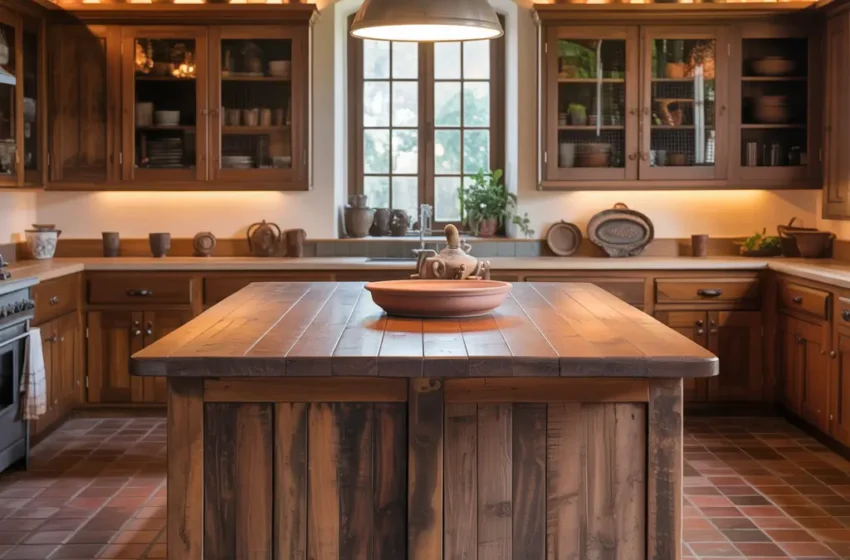
Terracotta tiles carry centuries of design heritage, and somehow they’ve never looked more relevant than right now. There’s magic in those warm, earthy tones that sterile white kitchens simply cannot replicate.
I spent years convinced that neutral kitchens represented sophistication. Then I walked into a friend’s Mediterranean-inspired kitchen featuring beautiful terracotta flooring, and my entire perspective shifted.
That space felt alive, warm, and genuinely welcoming in ways my all-white kitchen never achieved.
Terracotta—literally meaning “baked earth” in Italian—connects us to ancient building traditions while fitting perfectly into contemporary design.
These tiles bring warmth, character, and natural beauty that manufactured materials struggle to match.
Whether you’re planning a complete kitchen renovation or simply exploring options, terracotta tiles offer incredible versatility.
From rustic farmhouse aesthetics to sleek modern interpretations, this timeless material adapts beautifully to diverse design visions.
Ready to discover how terracotta tiles can transform your kitchen? These ten ideas cover everything from flooring to backsplashes, traditional to contemporary, helping you find your perfect terracotta approach.
1. Warm Terracotta Kitchen Floors
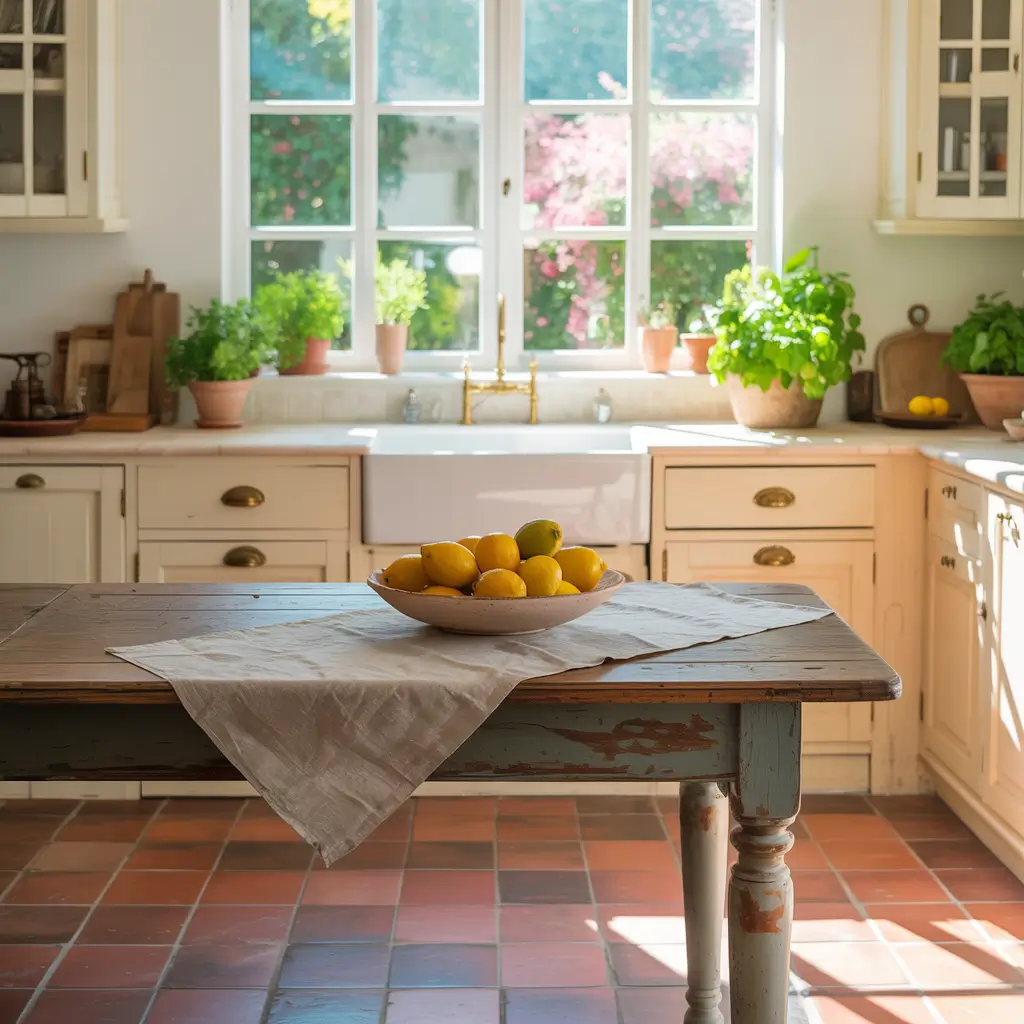
Nothing grounds a kitchen quite like terracotta flooring. Those warm, earthy tones create foundations that welcome everyone who enters your cooking space.
Why Terracotta Flooring Works
Terracotta floor tiles bring natural warmth that cold porcelain or sterile vinyl cannot achieve. Their organic color variations create visual interest underfoot while providing comfortable surfaces that feel genuinely homey.
The appeal of terracotta kitchen floors includes:
- Natural temperature regulation: Terracotta stays cool in summer, warms in winter
- Unique character: Each tile displays individual color variations
- Timeless durability: Properly maintained terracotta lasts generations
- Comfort underfoot: Softer feeling than porcelain or stone alternatives
- Slip resistance: Natural texture provides excellent grip
- Patina development: Ages beautifully over time
Choosing Terracotta Floor Tiles
Terracotta flooring comes in various formats and finishes:
Traditional handmade tiles feature maximum character with irregular edges and pronounced color variation. These tiles suit rustic, Mediterranean, or farmhouse kitchens perfectly.
Machine-made terracotta offers more consistent sizing and coloring while maintaining natural warmth. These tiles work well in contemporary or transitional kitchens wanting terracotta character with cleaner lines.
Terracotta-look porcelain delivers the aesthetic without natural terracotta’s maintenance requirements. These tiles suit busy households wanting warmth without sealing commitments.
Consider tile size carefully. Larger format terracotta (12×12 inches or bigger) creates more contemporary appearances with fewer grout lines. Smaller formats feel more traditional and suit cottage or rustic aesthetics.
I recommend starting with larger samples. Terracotta color varies significantly between manufacturers—what looks perfect online might appear completely different in your kitchen’s specific lighting.
2. Rustic Terracotta Backsplash Inspiration

Terracotta backsplashes bring warmth and character to vertical surfaces that often default to boring white subway tiles. The rustic charm creates instant personality.
The Backsplash Advantage
Terracotta backsplash tiles occupy prime visual real estate in kitchens. You stare at backsplashes while cooking, cleaning, and waiting for coffee. That space deserves more than basic neutrals.
Why terracotta backsplashes captivate:
- Warm focal points: Draw attention with earthy color
- Textural interest: Natural variations add visual depth
- Mediterranean references: Evoke European countryside aesthetics
- Unexpected choice: Stand apart from predictable white or gray options
- Cooking inspiration: Warm tones create appetite-enhancing atmospheres
- Easy personality: Add character without complete renovation
Rustic Backsplash Approaches
Handmade terracotta tiles deliver maximum rustic appeal. Their irregular edges, uneven surfaces, and pronounced color variations create authentically artisanal appearances.
Zellige-style terracotta combines Moroccan tile traditions with terracotta warmth. These glazed tiles offer color variation within individual pieces, creating stunning light-catching surfaces.
Patterned terracotta incorporates traditional encaustic-style designs. These decorative tiles add complexity while maintaining terracotta’s essential warmth.
Consider grout carefully with rustic terracotta backsplashes. Cream or sand-colored grout maintains warmth throughout. White grout creates more contrast but can feel clinical against earthy terracotta tones.
IMO, terracotta backsplashes work best behind ranges rather than full kitchen coverage. This focused placement creates dramatic focal points without overwhelming entire spaces with warm coloring.
3. Modern Kitchen with Terracotta Accents
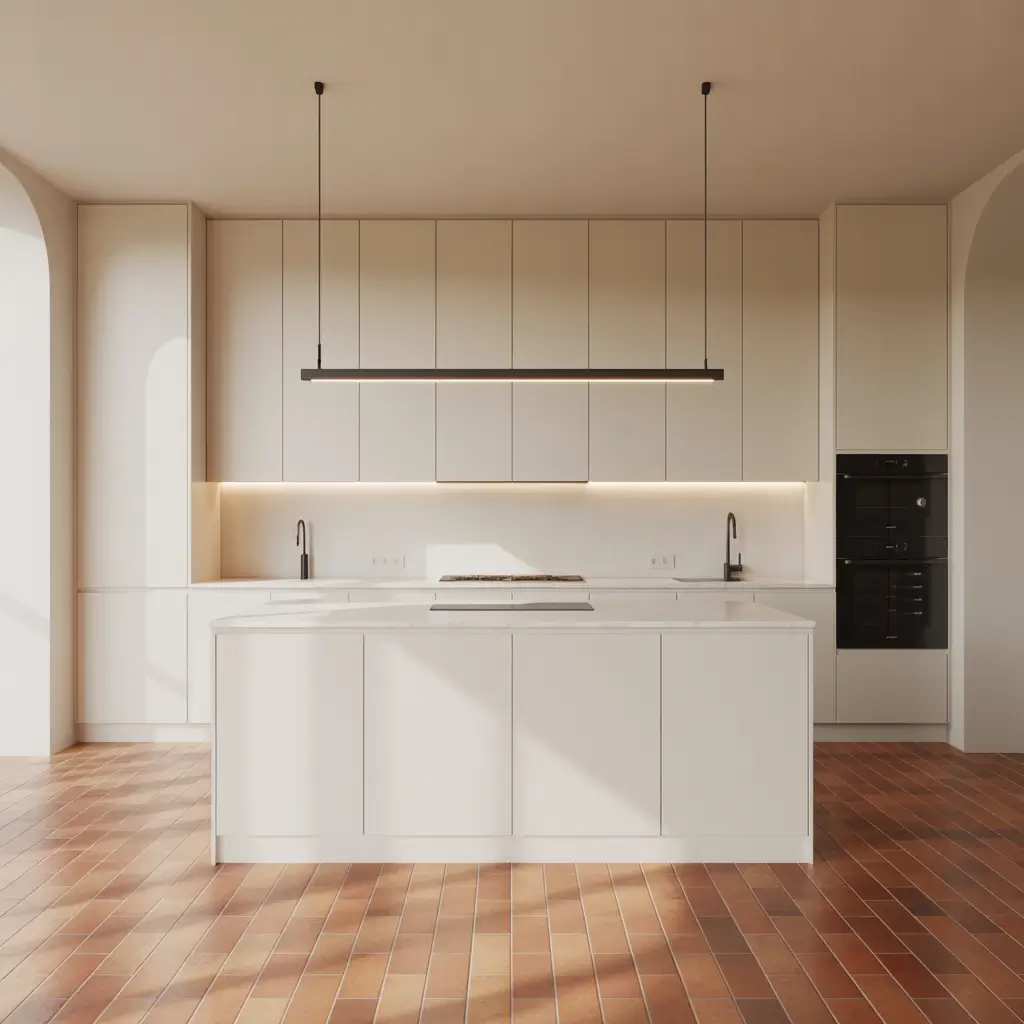
Terracotta doesn’t require commitment to full rustic aesthetics. Modern kitchens incorporate terracotta accents beautifully, adding warmth to contemporary clean lines.
Terracotta in Contemporary Spaces
Modern terracotta kitchen accents prove this ancient material works in cutting-edge design. The key involves strategic placement and thoughtful pairing with contemporary elements.
Why terracotta suits modern kitchens:
- Warmth balance: Counteracts cold minimalism effectively
- Natural contrast: Organic material against manufactured surfaces
- Texture variety: Adds tactile interest to smooth surroundings
- Color grounding: Earthy tones anchor floating contemporary elements
- Design sophistication: Shows intentional, curated aesthetic choices
- Trend resistance: Natural materials never truly date
Strategic Accent Placement
Consider these modern terracotta accent approaches:
Feature floors: Install terracotta in defined kitchen zones—under islands, in breakfast nooks, or as runner-style strips through contemporary tile fields.
Accent walls: Single terracotta-tiled walls create warmth without dominating. Position behind open shelving or in visible pantry areas.
Partial backsplashes: Terracotta sections within larger contemporary tile installations add interest while maintaining modern aesthetics.
Island fronts: Wrap kitchen islands in terracotta tiles for unexpected textural contrast against smooth countertops and cabinetry.
Pair terracotta accents with matte black fixtures, concrete surfaces, and minimalist cabinetry to maintain contemporary credibility. The contrast between ancient terracotta and modern elements creates sophisticated tension that design enthusiasts appreciate.
Also Read: 10 Creative Green Kitchen Tiles Backsplash Ideas to Try Today
4. Terracotta Tiles with White Cabinets

White cabinets remain eternally popular. Terracotta tiles provide the warmth and character that all-white kitchens desperately need.
The Perfect Partnership
Terracotta tiles with white cabinets create one of the most successful color combinations in kitchen design. White’s brightness balances terracotta’s earthiness perfectly, preventing either extreme from dominating.
Why this combination works so effectively:
- Temperature balance: Cool white moderates warm terracotta
- Visual contrast: Light and dark create dynamic interest
- Brightness preservation: White cabinets maintain kitchen luminosity
- Character addition: Terracotta prevents sterile white atmospheres
- Timeless appeal: Both elements transcend passing trends
- Versatile styling: Works with various accent colors
Application Options
This combination succeeds in multiple configurations:
Terracotta floors with white cabinets: The most classic approach. Warm flooring grounds floating white cabinetry beautifully. This configuration suits traditional, farmhouse, Mediterranean, and transitional kitchen styles.
Terracotta backsplash with white cabinets: Creates focused warmth behind cooking zones while maintaining bright, airy overall atmospheres.
Terracotta accent tiles with white cabinets: Incorporate terracotta in specific areas—around range hoods, on island fronts, or within open shelving backgrounds.
Consider countertop selection carefully. Butcher block or warm wood countertops extend terracotta’s warmth. White marble or quartz maintains brightness while allowing terracotta to provide all the warmth. Concrete or soapstone adds modern edge to this classic combination.
Hardware finishes matter too. Brass and bronze enhance terracotta’s warm undertones. Matte black adds contemporary contrast. Chrome or stainless maintain neutral balance.
5. Mediterranean-Style Terracotta Kitchens

Terracotta originated in Mediterranean regions, making this style the most natural expression of these beautiful tiles. Think sun-soaked Italian farmhouses and Spanish villas.
Capturing Mediterranean Spirit
Mediterranean terracotta kitchens embrace the material’s heritage fully. These spaces feel warm, inviting, and slightly rustic while maintaining functional efficiency.
Essential Mediterranean kitchen elements:
- Terracotta flooring: Foundation of authentic Mediterranean aesthetics
- Warm wall colors: Creams, ochres, and soft yellows complement terracotta
- Arched architectural details: Doorways, niches, and range hoods
- Open shelving: Display pottery, copper cookware, and ceramics
- Natural materials: Wood, stone, and wrought iron throughout
- Abundant texture: Rough plaster, exposed beams, and handmade tiles
Creating Mediterranean Authenticity
Achieve genuine Mediterranean feeling through these approaches:
Terracotta floor tiles should feature pronounced color variation and slightly irregular edges. Machine-perfect uniformity contradicts Mediterranean character.
Backsplash options include hand-painted decorative tiles, zellige-style glazed terracotta, or simple terracotta squares with contrasting grout.
Furniture and fixtures should embrace Mediterranean traditions. Consider farmhouse tables, rush-seated chairs, and pendant lights with wrought iron or copper details.
Color palette should remain warm throughout. Terracotta works beautifully with sage green, dusty blue, creamy yellow, and crisp white accents.
FYI, authentic Mediterranean kitchens prioritize function over pristine aesthetics. Embrace imperfections, allow patina development, and resist the urge for sterile perfection. These spaces should feel lived-in and loved.
6. Small Kitchen Terracotta Layout Ideas

Small kitchens present unique challenges, but terracotta tiles can actually enhance compact spaces when applied thoughtfully.
Terracotta in Tight Spaces
Small kitchen terracotta layouts require strategic thinking. The warm coloring can overwhelm tiny spaces or make them feel remarkably cozy—execution determines outcome.
Key considerations for small terracotta kitchens:
- Tile size selection: Larger tiles can make small spaces feel bigger
- Grout color choices: Matching grout minimizes visual interruption
- Coverage decisions: Full terracotta versus strategic accents
- Light balance: Ensure adequate illumination counters warm absorption
- Visual flow: Create continuity rather than choppy transitions
Successful Small Kitchen Strategies
Larger format tiles (12×12 or bigger) reduce grout lines and visual breaks, creating seamless surfaces that make compact kitchens feel more spacious.
Continuous flooring extending from adjacent rooms into kitchens enhances perceived space. Avoid transitions that stop the eye.
Light terracotta shades (closer to salmon or peach) feel less heavy than deep rust tones. These lighter variations maintain warmth without darkness.
Strategic placement focuses terracotta in specific areas rather than covering every surface. Consider terracotta flooring with light-colored walls and backsplashes, or terracotta backsplash accents against neutral surroundings.
Reflective surfaces counter terracotta’s warmth absorption. Glossy cabinet finishes, stainless appliances, and mirror accents bounce light effectively.
I’ve seen tiny galley kitchens transformed beautifully with terracotta flooring and white everything else. The contrast works brilliantly, adding personality without claustrophobia.
Also Read: 12 Amazing White Kitchen Tiles Ideas and Sleek Designs
7. Terracotta and Wood Combination Kitchens

Terracotta and wood share organic origins, creating natural partnerships that feel harmonious and grounded. These materials belong together.
Why This Combination Succeeds
Terracotta and wood kitchens combine two of nature’s warmest materials. Both display organic variation, age beautifully, and create welcoming atmospheres that manufactured materials cannot replicate.
The natural partnership benefits:
- Shared warmth: Both materials carry warm undertones
- Organic character: Natural variations in color and texture
- Tactile interest: Contrasting surfaces engage touch
- Design heritage: Traditional pairing with centuries of precedent
- Aging beauty: Both materials develop attractive patina
- Sustainability appeal: Natural materials feel environmentally conscious
Combining Terracotta and Wood Successfully
Floor and cabinet combinations: Terracotta flooring with wood cabinets creates the most traditional interpretation. Choose wood tones that complement rather than match terracotta exactly—slight contrast adds interest.
Mixed surface applications: Wood countertops or butcher block islands above terracotta floors create layered warmth. The horizontal-vertical distribution feels balanced and intentional.
Accent integration: Wood shelving against terracotta backsplashes combines both materials in focused areas. Open wood shelving particularly succeeds against terracotta’s earthy backdrop.
Consider wood tone carefully. Light woods (oak, maple, birch) provide contemporary freshness against terracotta. Medium woods (walnut, cherry) create rich, traditional warmth. Dark woods risk overwhelming with too much warmth—use sparingly.
The best terracotta-wood combinations include visual breathing room. White walls, light textiles, or stainless accents prevent spaces from feeling oppressively warm. 🙂
8. Bold Patterns with Terracotta Tiles
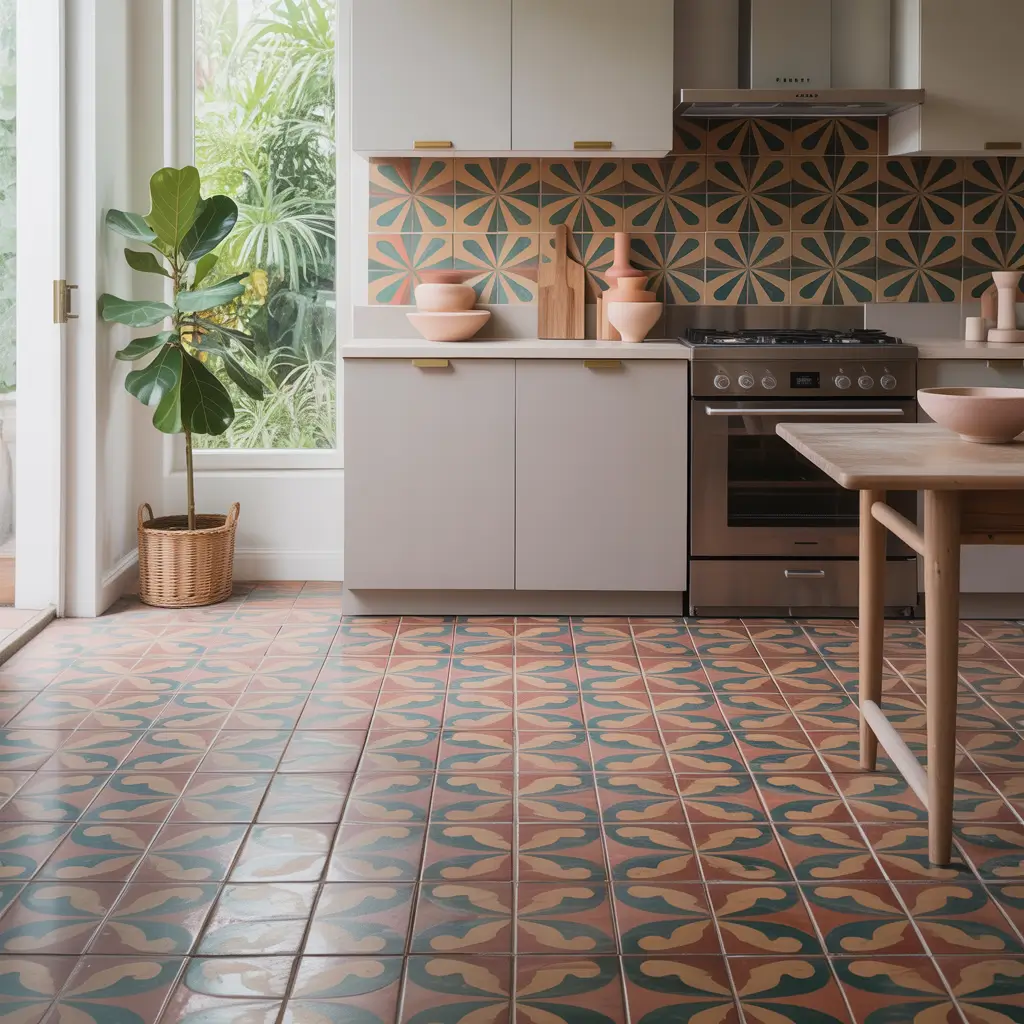
Plain terracotta tiles offer beautiful simplicity, but patterned versions add complexity that elevates kitchens into genuinely distinctive spaces.
Patterned Terracotta Options
Bold patterned terracotta tiles incorporate decorative designs within the warm terracotta palette. These tiles reference traditional encaustic cement tiles while maintaining terracotta’s essential character.
Popular pattern styles include:
- Geometric designs: Hexagons, diamonds, and angular compositions
- Floral motifs: Traditional botanical patterns in terracotta tones
- Moroccan influences: Star and cross patterns with Mediterranean heritage
- Abstract compositions: Contemporary artistic designs
- Two-tone variations: Simple patterns using terracotta and cream or black
Using Patterns Effectively
The key to successful patterned terracotta involves strategic restraint. These tiles demand attention—give them appropriate spotlight without overwhelming.
Feature floors: Use patterned terracotta in defined areas—under islands, in breakfast nooks, or as runner-style installations through simpler tile fields.
Backsplash statements: Patterned terracotta behind ranges creates stunning focal points. Keep surrounding surfaces simple to let patterns shine.
Border treatments: Frame plain terracotta areas with patterned borders. This approach adds interest without full commitment to bold patterns.
Accent zones: Kitchen alcoves, niches, or open pantry areas benefit from patterned terracotta without dominating entire kitchen aesthetics.
Pair patterned terracotta with solid-colored cabinets and countertops. Busy patterns against busy surroundings creates visual chaos rather than designed sophistication.
9. Minimalist Kitchen with Terracotta Touch

Minimalism doesn’t mean cold sterility. Terracotta touches add essential warmth that prevents minimalist kitchens from feeling unwelcoming.
Terracotta in Minimal Spaces
Minimalist terracotta kitchens balance clean contemporary lines with organic warmth. This combination creates spaces that feel sophisticated yet genuinely livable.
Why terracotta suits minimalism:
- Warmth injection: Counteracts clinical minimalist tendencies
- Natural interest: Organic variations add texture to simple spaces
- Color grounding: Earthy tones anchor floating minimalist elements
- Intentional contrast: Shows curated, considered design choices
- Human comfort: Prevents spaces from feeling like showrooms
- Timeless appeal: Natural materials transcend trend cycles
Achieving Minimalist Terracotta Balance
Less is more applies doubly when combining minimalism with terracotta. Choose one terracotta application and execute it beautifully.
Terracotta flooring in otherwise all-white minimalist kitchens provides grounding warmth without cluttering clean aesthetics. Keep cabinets handleless, counters clear, and surfaces unadorned.
Single accent walls in terracotta create warmth focal points within minimal surroundings. Position behind open shelving displaying carefully curated objects.
Terracotta vessels and accessories add warmth through objects rather than surfaces. Terracotta planters, pottery, and decorative pieces introduce the material without permanent installation.
For maximally minimal approaches, consider terracotta-effect porcelain with perfectly uniform sizing and minimal surface variation. These tiles deliver terracotta coloring with cleaner, more contemporary character.
The secret involves quality over quantity. Beautiful terracotta tiles in limited application outperform average terracotta covering everything.
Alos Read: 10 Creative Modern Kitchen Tiles Ideas for Dream Kitchens
10. Terracotta Tiles in Open-Concept Kitchens

Open-concept living presents unique design challenges. Terracotta tiles can unify connected spaces beautifully when applied thoughtfully.
Terracotta Across Open Spaces
Open-concept terracotta kitchens must consider living rooms, dining areas, and sometimes entire ground floors. The tile choice affects everything within visual range.
Open-concept considerations include:
- Visual continuity: How terracotta flows between functional zones
- Color coordination: Ensuring terracotta complements adjacent spaces
- Transition approaches: Managing boundaries between different areas
- Lighting variations: How terracotta appears under different room lighting
- Furniture compatibility: Adjacent room décor working with kitchen terracotta
Successful Open-Concept Strategies
Continuous flooring extending terracotta throughout connected spaces creates maximum visual unity. This approach works particularly well in Mediterranean, rustic, or farmhouse aesthetics.
Zone definition uses terracotta specifically in kitchen areas while adjacent spaces feature complementary but different flooring. Create smooth transitions rather than abrupt material changes.
Consistent color palette ensures terracotta kitchen tiles coordinate with adjacent room colors. Pull accent colors from terracotta into living spaces through textiles, furniture, or accessories.
Rugs and furniture in adjacent areas can either complement terracotta warmth (creams, greens, blues) or provide intentional contrast (cool grays, blacks, whites) depending on desired atmosphere.
Consider sightlines carefully. The terracotta tiles you choose will appear in photographs of living rooms, dining areas, and beyond. Ensure they represent the aesthetic you want throughout your home.
For open concepts, I recommend bringing terracotta samples home and viewing them from multiple room perspectives. What looks perfect standing in the kitchen might appear completely different from across the living room.
Practical Terracotta Considerations
Before committing to terracotta tiles, understand their practical requirements and characteristics.
Maintenance Realities
Natural terracotta requires specific care:
- Sealing: Most terracotta needs regular sealing to prevent staining
- Cleaning: Use pH-neutral cleaners; avoid harsh chemicals
- Spill attention: Address spills promptly before absorption
- Resealing: Typically needed every 1-3 years depending on traffic
- Patina acceptance: Natural aging creates character—embrace it
Terracotta-look porcelain offers easier maintenance:
- No sealing required: Porcelain resists moisture naturally
- Standard cleaning: Regular tile cleaners work perfectly
- Stain resistance: Non-porous surface prevents absorption
- Durability: Harder than natural terracotta
- Consistent appearance: Won’t develop natural patina
Installation Considerations
Terracotta tiles present specific installation requirements:
- Professional installation recommended: Natural terracotta irregularities challenge DIY attempts
- Subfloor preparation: Terracotta needs properly leveled, stable subfloors
- Grout selection: Matching or complementary grout colors affect overall appearance significantly
- Sealing timing: Initial sealing before grouting protects terracotta from grout staining
Cost Factors
Terracotta tile pricing varies considerably:
- Handmade imported tiles: Premium pricing reflects artisan quality
- Machine-made terracotta: Mid-range pricing with good value
- Terracotta-look porcelain: Variable pricing from budget to premium
- Installation costs: Natural terracotta typically costs more to install
Final Thoughts
Terracotta tiles bring something manufactured materials simply cannot—genuine connection to the earth and centuries of design heritage.
Whether covering entire kitchen floors or appearing in focused accent applications, these tiles add warmth and character that transforms ordinary cooking spaces into genuinely special environments.
I think back to that Mediterranean kitchen that changed my perspective on warm, earthy design.
Standing on those beautiful terracotta floors, surrounded by warmth and character, I understood why this material has captivated designers for thousands of years.
The right terracotta tiles exist for virtually any kitchen style. Rustic farmhouses embrace handmade variations. Modern minimalists appreciate strategic terracotta touches.
Mediterranean enthusiasts celebrate the material’s heritage fully.
Take your time selecting your terracotta approach. Order generous samples. View them under your kitchen’s specific lighting at different times of day. Consider maintenance commitments honestly.
Your kitchen deserves more than cold, sterile neutrals. Terracotta tiles offer warmth, character, and timeless beauty that improves with age. Now go find your perfect terracotta expression—your cooking space will thank you.