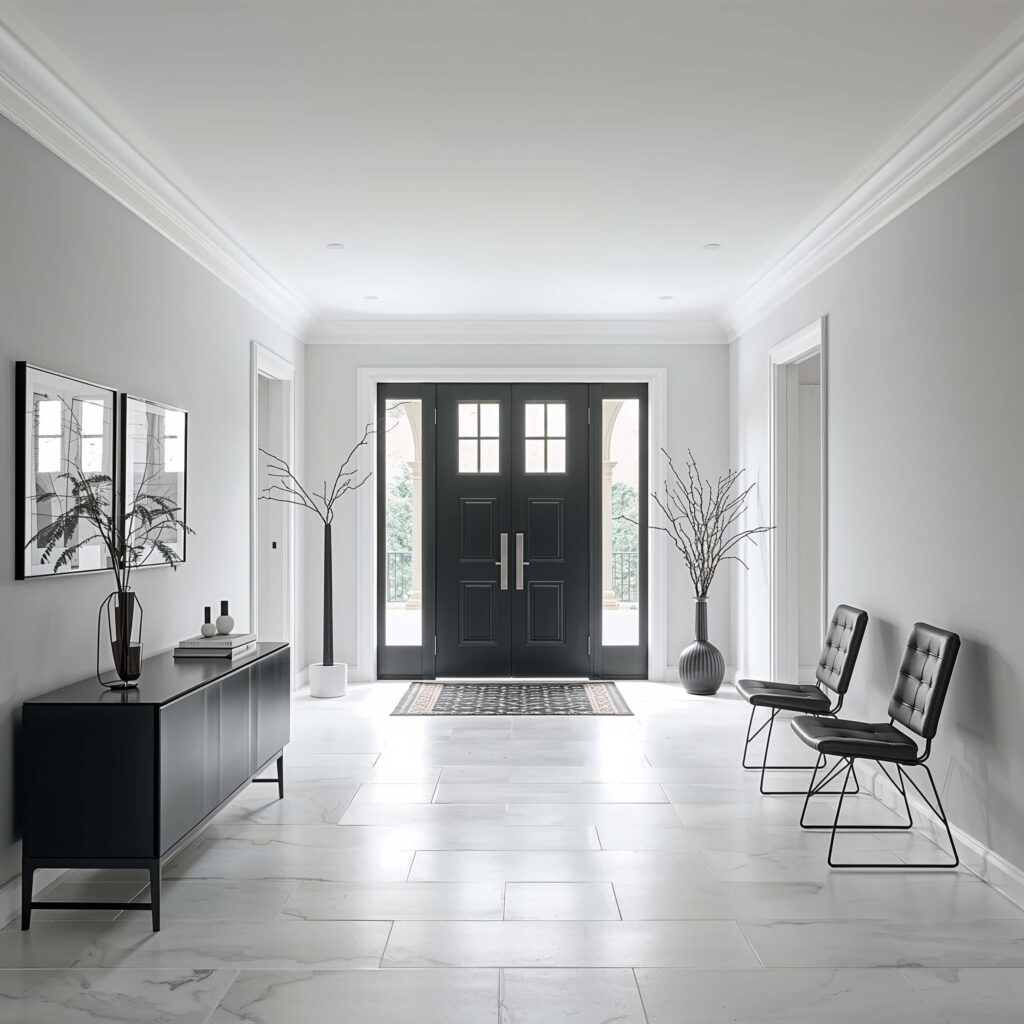
12 Creative Veneer Door Design Ideas and Trendy Looks
- Door Design
 Ben
Ben- 0
- 47 minutes read

Veneer doors are like the unsung heroes of interior design—they give you that gorgeous real wood look without requiring you to sell a kidney.
While everyone’s either going ultra-cheap with hollow core or ultra-expensive with solid wood, you’re here considering the smart middle ground that actually makes sense for most homes.
I discovered veneer doors during my first home renovation when my contractor showed me two samples: a solid oak door that cost more than my monthly grocery budget and a veneer door that looked virtually identical for a third of the price.
Three years later, those veneer doors still look fantastic, and I’ve used the money I saved on things that actually matter (like that espresso machine I definitely needed).
Whether you’re renovating on a budget, want sustainable options, or just appreciate good design without the premium price tag, these twelve veneer door design ideas will show you exactly why veneer deserves way more credit than it gets.
Let’s explore some designs that prove you don’t need solid wood to get solid style.
Vertical Grain Minimal Veneer Door
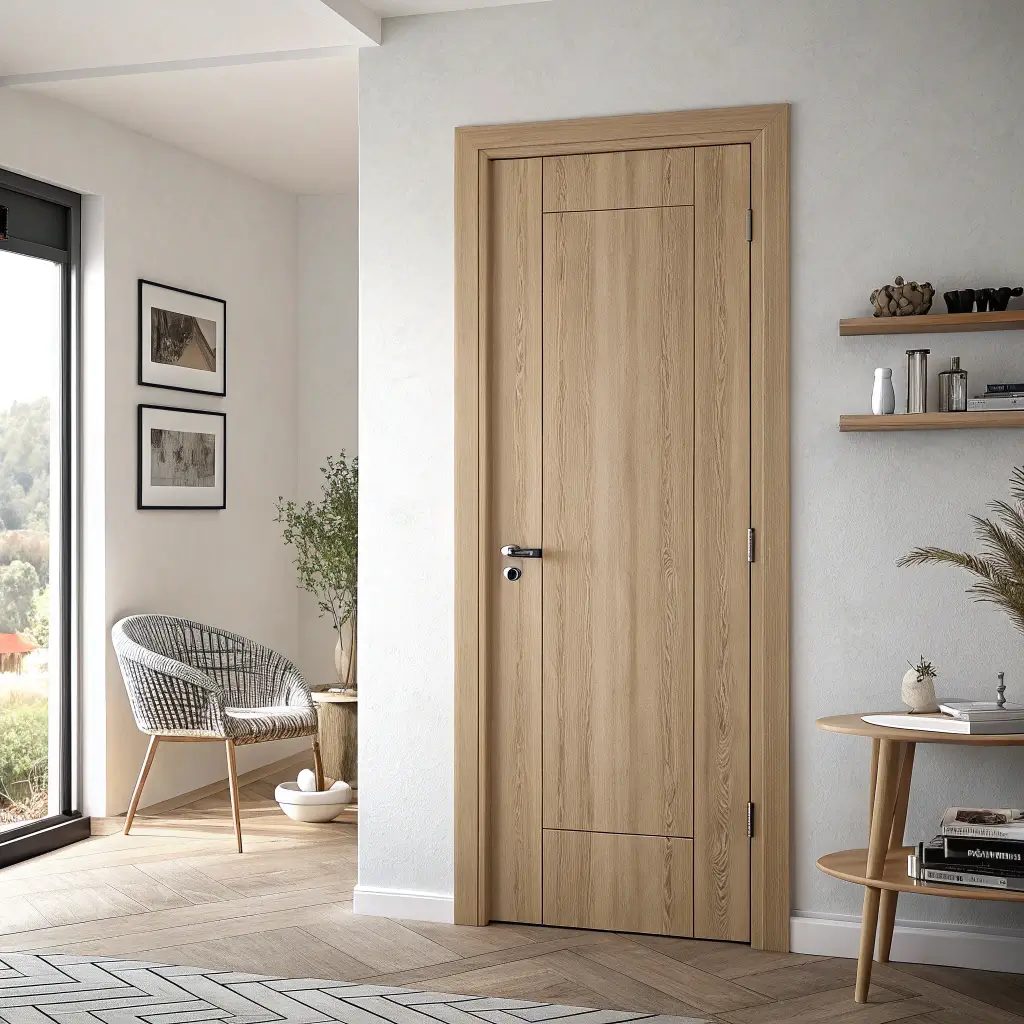
Vertical grain veneer doors are basically the supermodels of the door world—tall, sleek, and impossibly elegant. These minimalist beauties use the natural direction of wood grain to create visual height and sophistication without trying too hard.
The Power of Vertical Lines
Vertical grain patterns draw your eyes upward, making ceilings feel higher and spaces feel larger. The continuous lines create this zen-like calm that busy cathedral grains simply can’t achieve. It’s like the difference between a perfectly organized closet and one where you just threw everything in and hoped for the best.
I installed vertical grain oak veneer doors throughout my apartment, and the visual flow is incredible. The grain lines continue from top to bottom without interruption, creating this seamless, sophisticated look that makes my 8-foot ceilings feel like they’re 10 feet tall. Sometimes the simplest design tricks have the biggest impact.
Choosing Your Wood Species
Different woods create different effects with vertical grain:
- Oak: Classic with subtle texture
- Ash: Light with pronounced grain
- Walnut: Rich and sophisticated
- Maple: Clean and minimal
- Bamboo: Sustainable with unique striping
Finishing for Maximum Impact
The finish you choose can make or break vertical grain veneer. Clear finishes let the natural wood shine, while tinted stains can add depth without hiding the grain pattern. Avoid heavy, dark stains that obscure the vertical lines—you want to enhance, not hide, that beautiful grain direction.
Horizontal Slatted Veneer Door
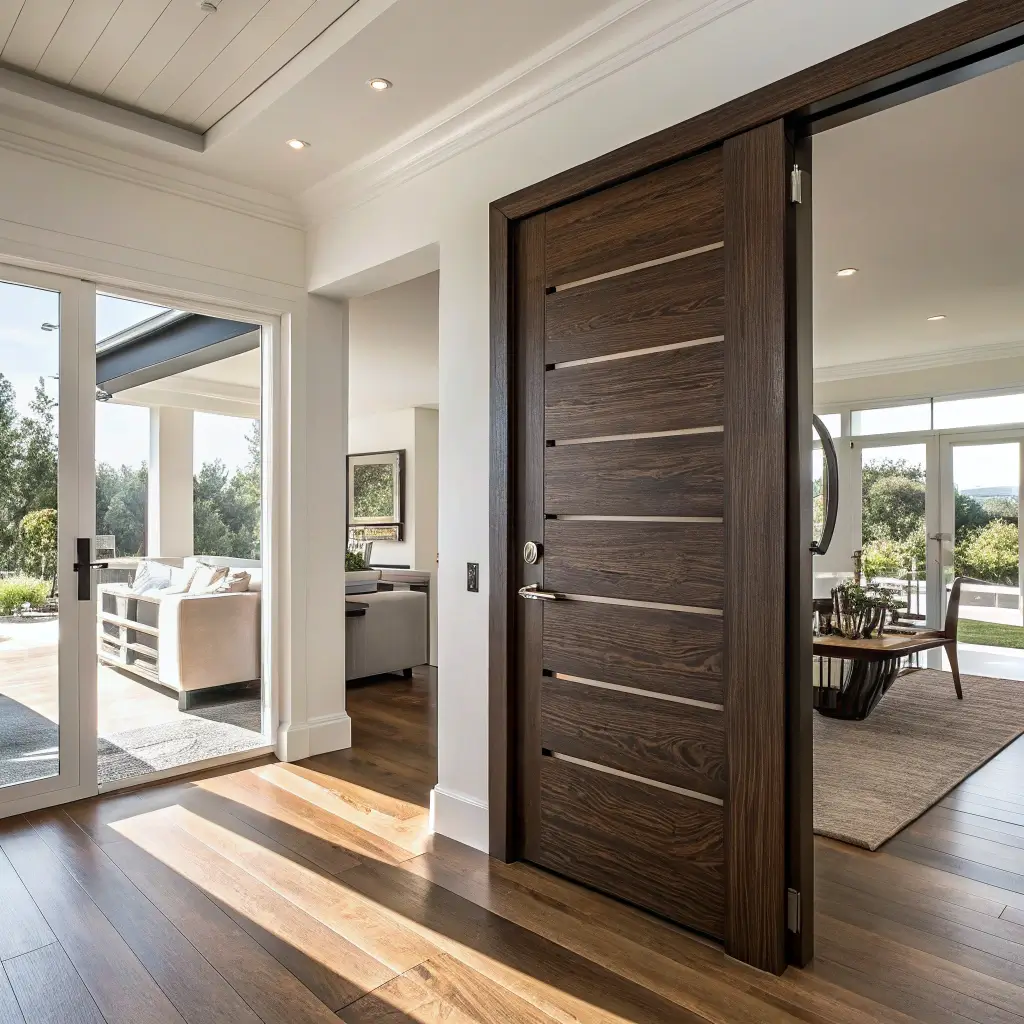
Horizontal slatted veneer doors bring contemporary flair and visual width to any space. These modern designs use parallel strips of veneer to create rhythm and interest while maintaining the warmth of real wood.
Creating Visual Width
While vertical patterns make spaces feel taller, horizontal slats make them feel wider and more grounded. The parallel lines create a sense of stability and calm that works particularly well in bedrooms and living spaces. It’s architectural psychology at its finest.
The spacing between slats matters more than you’d think. Tight spacing creates texture and privacy, while wider gaps feel more open and contemporary. I went with medium spacing on my bedroom door—enough to create visual interest without making it look like a fence panel.
Construction Methods
Horizontal slatted doors can be constructed in several ways:
- Applied slats: Individual strips mounted on a substrate
- Routed grooves: Creating the illusion of separate slats
- Mixed materials: Combining veneer with other elements
- Varying widths: Different slat sizes for visual interest
- Shadow gaps: Dark reveals between slats for depth
Maintenance Considerations
Here’s something nobody tells you about horizontal slats—they collect dust like nobody’s business. But honestly, a quick swipe with a microfiber cloth once a week keeps them looking fresh. The visual impact is worth the minimal extra maintenance.
Dark Walnut Luxury Veneer Door
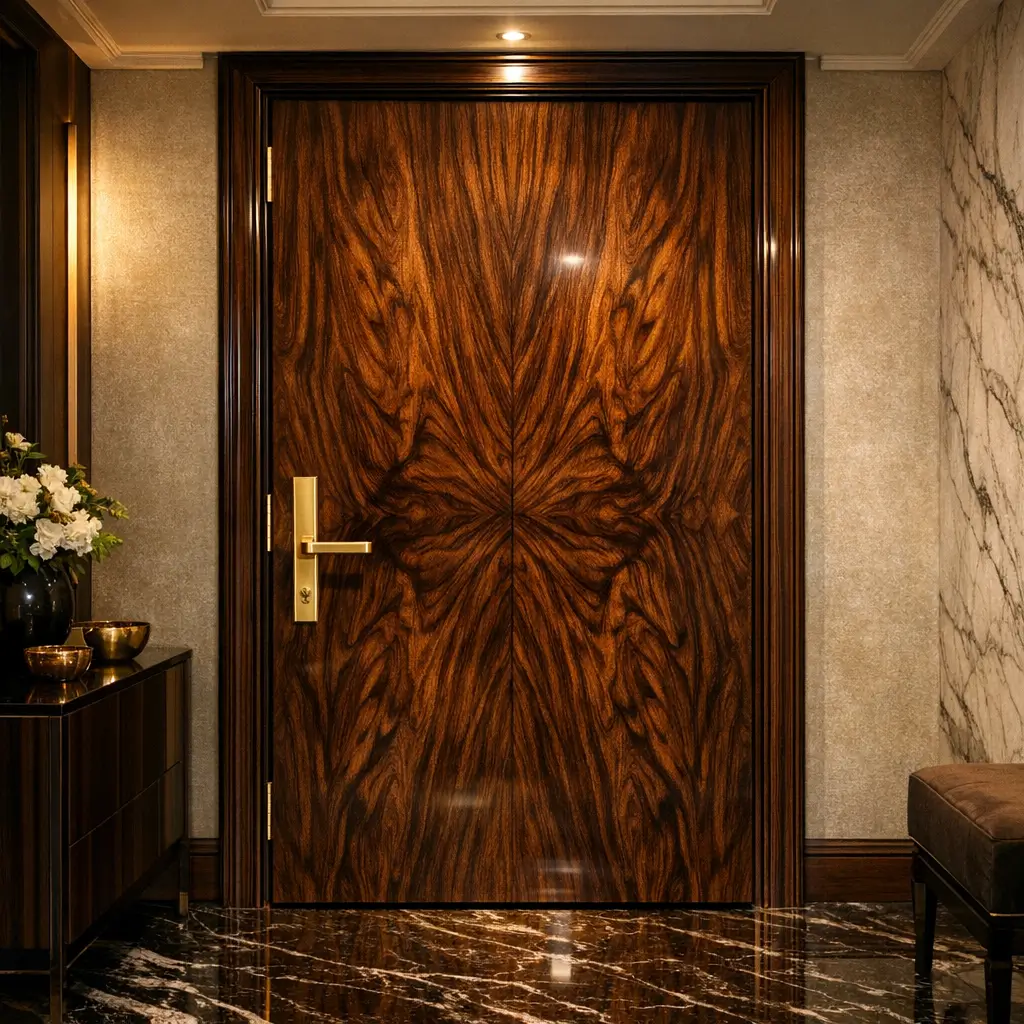
Dark walnut veneer doors scream luxury without the luxury price tag. These rich, chocolate-toned beauties add instant sophistication to any space while keeping your bank account relatively happy.
The Psychology of Dark Doors
Dark doors create drama and definition in ways that light doors simply can’t. They act as visual anchors, grounding spaces and adding weight to otherwise light interiors. Plus, they hide scuffs and fingerprints like champions—perfect for high-traffic areas or homes with kids.
I replaced all my boring beige doors with dark walnut veneer last year, and the transformation was shocking. Suddenly my basic builder-grade home looked custom and intentional. Friends actually asked if I hired an interior designer. Nope, just strategic door replacement!
Matching and Contrasting
Dark walnut veneer works beautifully with:
- White walls: Creating striking contrast
- Warm grays: Sophisticated and balanced
- Other wood tones: When done intentionally
- Metallic hardware: Brass or black for drama
- Light floors: Preventing the space from feeling heavy
Quality Indicators
Not all walnut veneers are created equal. Look for:
- Consistent grain patterns across the door
- Book-matched panels for symmetry
- Proper edge banding that won’t peel
- Quality substrate that won’t warp
- UV-resistant finish to prevent fading
Also Read: 10 Smart Glass Door Design Ideas for Small Spaces
Light Oak Scandinavian Veneer Door
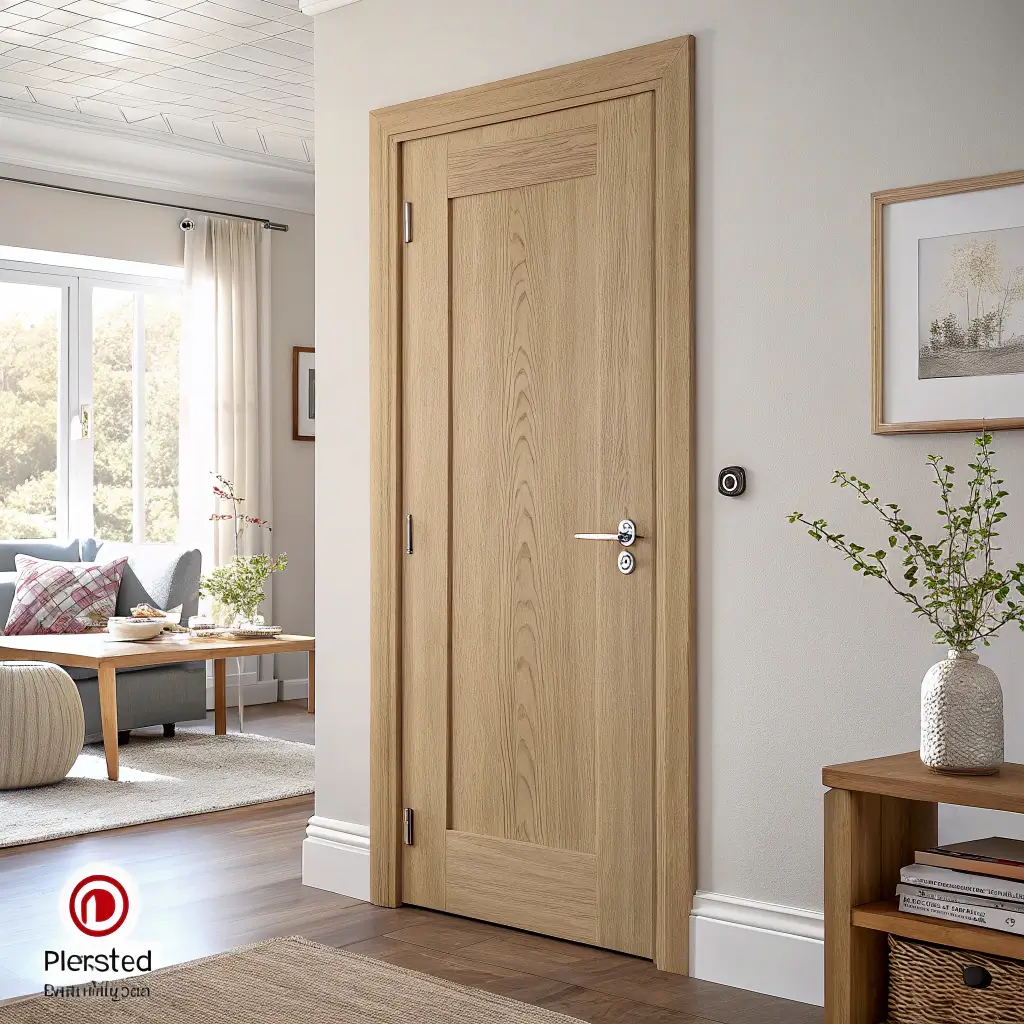
Light oak veneer doors bring that coveted Scandinavian vibe without requiring a trip to IKEA. These blonde beauties create bright, airy spaces that feel both modern and timeless.
The Nordic Appeal
Scandinavian design prioritizes light, functionality, and natural materials. Light oak veneer delivers all three while maintaining the budget-friendly approach that Scandis are famous for. The pale wood reflects light beautifully, making spaces feel larger and more welcoming.
My sister went full Scandi with light oak veneer doors throughout her home, and the cohesion is stunning. Every room flows into the next seamlessly, creating this calm, unified feeling that makes her house feel twice its actual size.
Grain Patterns and Selection
Light oak veneer offers various grain patterns:
- Straight grain: Clean and minimal
- Cathedral grain: More traditional appeal
- Quarter-sawn: Unique ray patterns
- Rift-sawn: Linear without heavy patterns
- Mixed grain: Natural variation for character
Coordinating Your Space
Light oak veneer doors work best when paired with:
- Warm white or soft gray walls
- Natural textiles and materials
- Minimal hardware in brushed metals
- Plants and greenery for contrast
- Simple, functional furniture
The key is maintaining that less-is-more philosophy while using the doors as a warm, natural element that prevents sterility.
Matte Finish Modern Veneer Door
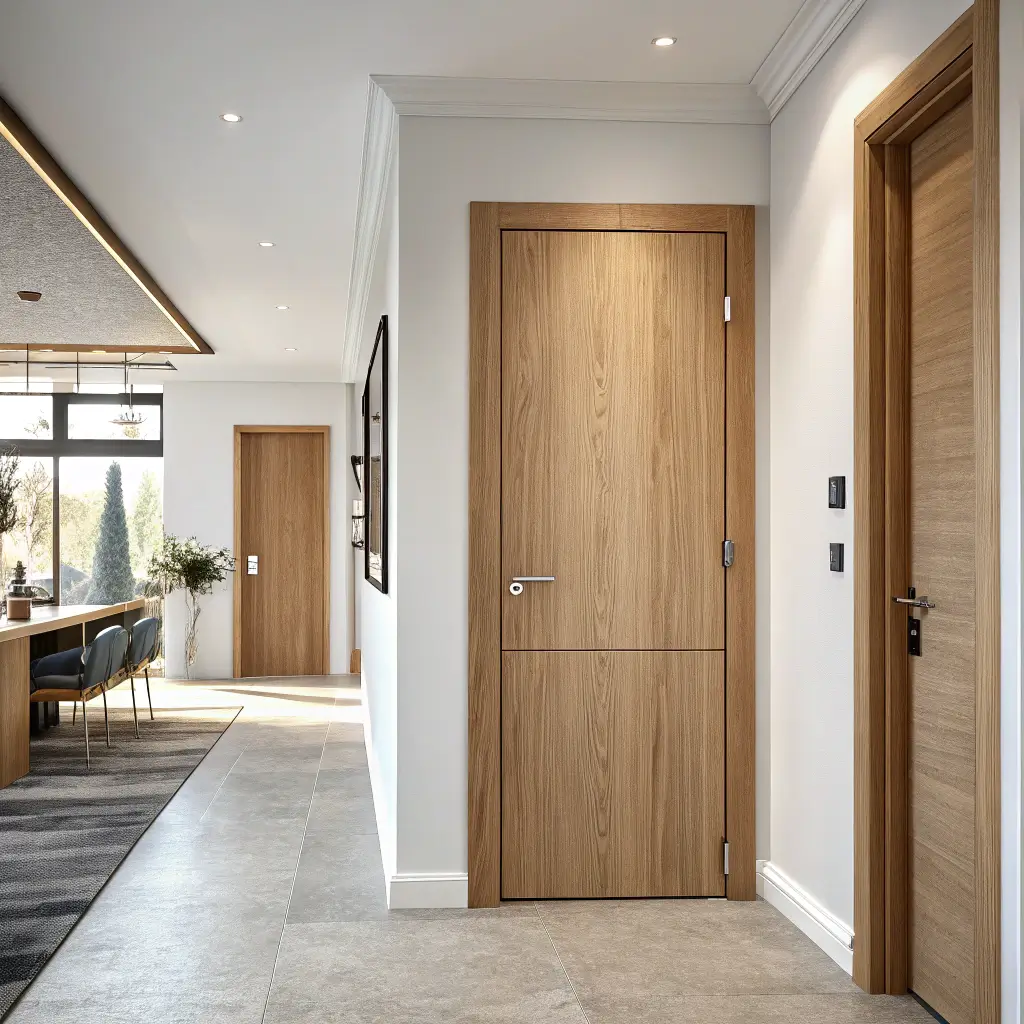
Matte finish veneer doors are having a serious moment, and honestly, it’s about time. These non-reflective surfaces create sophisticated, contemporary looks that make glossy finishes feel try-hard by comparison.
Why Matte Matters
Matte finishes eliminate glare and create this soft, touchable quality that glossy surfaces lack. They also hide imperfections better—minor scratches and fingerprints virtually disappear on matte surfaces. It’s basically the most forgiving finish you can choose.
I switched from semi-gloss to matte finish on my office door, and the difference is remarkable. The door now feels like an architectural element rather than just a barrier. Plus, I haven’t had to clean fingerprints off it once, which is basically a miracle in my house.
Application Techniques
Achieving a perfect matte finish on veneer requires:
- Quality primer: Essential for even absorption
- Multiple thin coats: Better than one thick coat
- Light sanding between coats: For smoothness
- Professional-grade matte sealant: Durability without shine
- Proper curing time: Patience pays off
Color Considerations
Matte finishes make colors appear differently than glossy ones. They tend to make dark colors look richer and light colors look softer. This means you might need to adjust your color choice when switching from glossy to matte—always test first!
Geometric Pattern Veneer Door
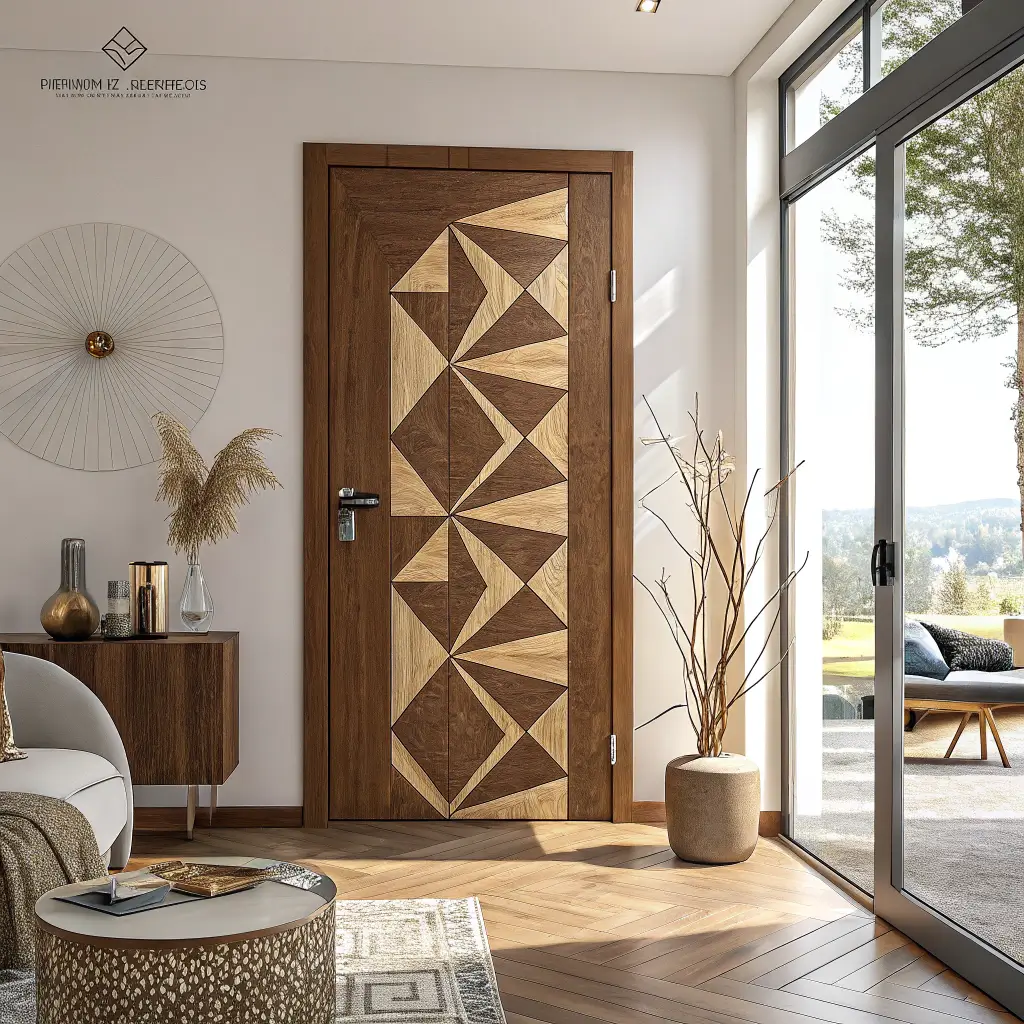
Geometric pattern veneer doors turn functional necessities into artistic statements. These eye-catching designs use different veneer grains, colors, or orientations to create patterns that make people stop and stare.
Pattern Possibilities
The beauty of veneer allows for incredible geometric designs:
- Chevron patterns: Classic and sophisticated
- Diamond configurations: Adding visual interest
- Hexagonal designs: Modern and organic
- Striped patterns: Simple but effective
- Mixed rectangles: Contemporary patchwork
Creating Visual Impact
The key to successful geometric veneer doors is contrast. This can come from:
- Different wood species creating color variation
- Same wood with different grain orientations
- Alternating matte and gloss finishes
- Combining veneer with other materials
- Using stains to create tonal differences
I designed a chevron pattern door using alternating walnut and maple veneers, and it’s become the focal point of my hallway. Every guest comments on it, and several have asked for my “door guy’s” number. Little do they know I designed it myself using an online configurator!
Installation Precision
Geometric patterns require absolute precision in cutting and installation. Even tiny misalignments become glaringly obvious when you’re dealing with repeating patterns. This isn’t typically a DIY project unless you have serious woodworking skills.
Also Read: 10 Charming Front Door Design Wood Ideas for Rustic Homes
Veneer Door with Metallic Inlay
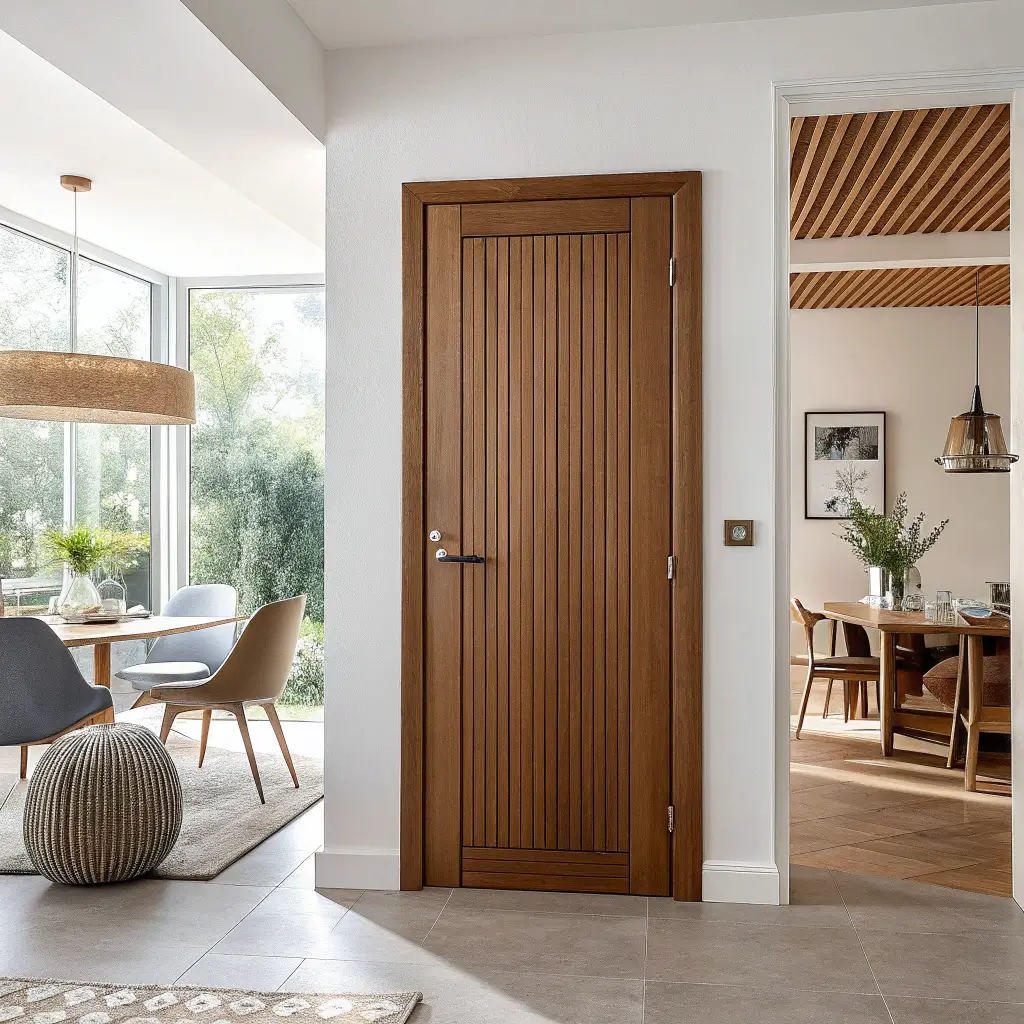
Veneer doors with metallic inlays combine warmth with glamour, creating designs that feel both natural and luxurious. These sophisticated combinations prove that mixing materials elevates everything involved.
Inlay Options and Techniques
Metallic inlays can range from subtle to dramatic:
- Thin brass strips: Creating linear patterns
- Copper accents: Adding warmth and character
- Stainless steel: Modern and sleek
- Bronze details: Traditional elegance
- Mixed metals: For complex designs
Design Applications
Strategic metallic inlay placement creates maximum impact:
- Border designs framing the door
- Geometric patterns within the veneer
- Handle and hardware integration
- Vertical or horizontal striping
- Corner accents for subtle elegance
The metal should complement, not compete with, the veneer. Think of it as jewelry for your door—a little goes a long way.
Maintenance and Patina
Different metals age differently against wood veneer. Brass develops a beautiful patina, copper turns green-blue over time, while stainless steel stays consistent. Choose based on whether you want evolving character or consistent appearance.
FYI, mixing wood and metal requires considering expansion rates. Both materials move differently with temperature and humidity changes, so proper installation techniques are crucial for long-term success.
Fluted Veneer Panel Door
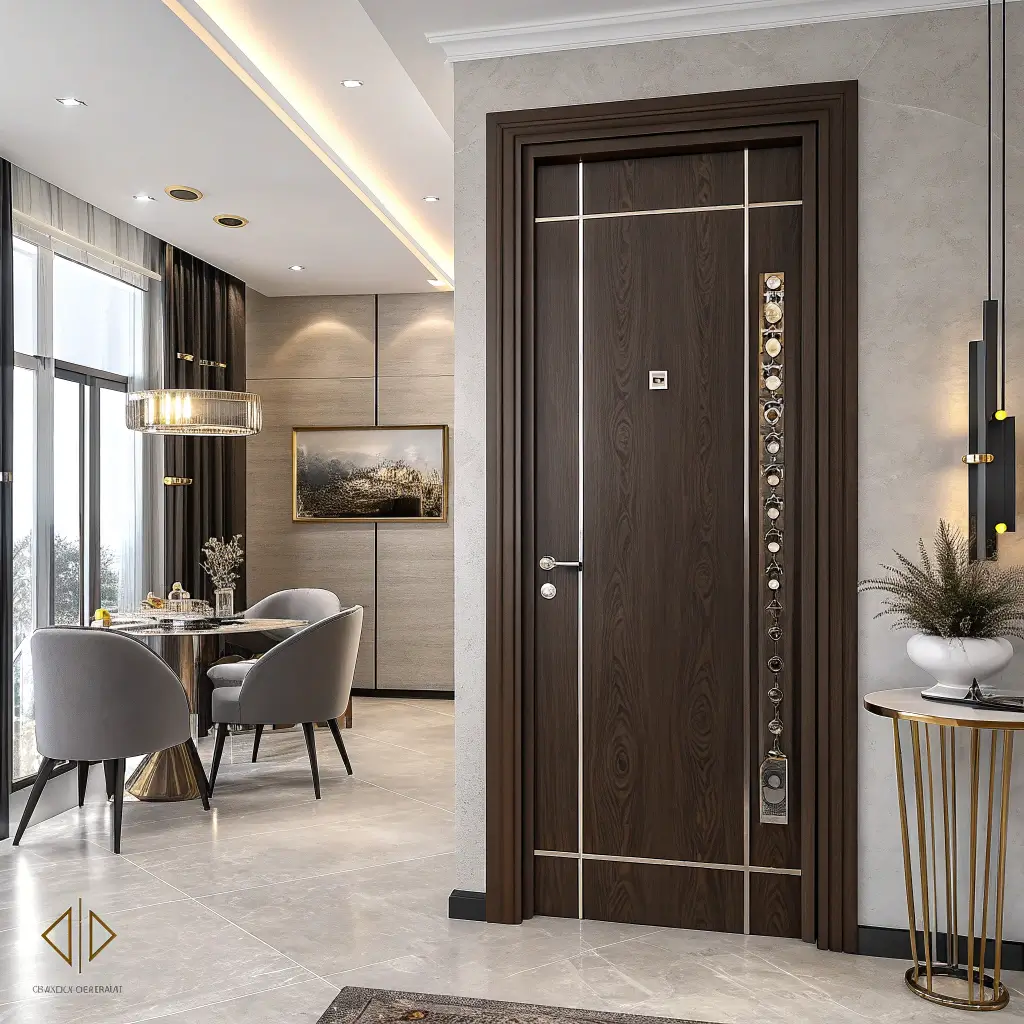
Fluted veneer doors, also known as reeded doors, have exploded in popularity recently. These vertically grooved designs add texture and sophistication while maintaining the clean lines modern design demands.
The Fluted Phenomenon
Fluted patterns create vertical rhythm that adds interest without overwhelming. The parallel grooves catch light differently throughout the day, creating subtle shadow play that brings the door to life. It’s like having a piece of functional sculpture that changes with the light.
I jumped on the fluted door trend for my primary bedroom, and honestly, I get why everyone’s obsessed. The texture adds this sophisticated dimensionality that flat doors can’t achieve, yet it’s subtle enough not to compete with other design elements.
Groove Specifications
Flute dimensions dramatically affect the overall look:
- Narrow flutes: More formal and traditional
- Wide flutes: Contemporary and bold
- Varied widths: Adding visual interest
- Shallow depth: Subtle texture
- Deep grooves: Dramatic shadow play
Manufacturing Methods
Fluted veneer doors can be created through:
- CNC routing for precision
- Applied molding strips
- Pressed veneer techniques
- Hand-carved details (rare but stunning)
- 3D veneer technology
Each method offers different levels of precision and cost, but CNC routing typically provides the best balance of quality and affordability.
Two-Tone Veneer Door Design
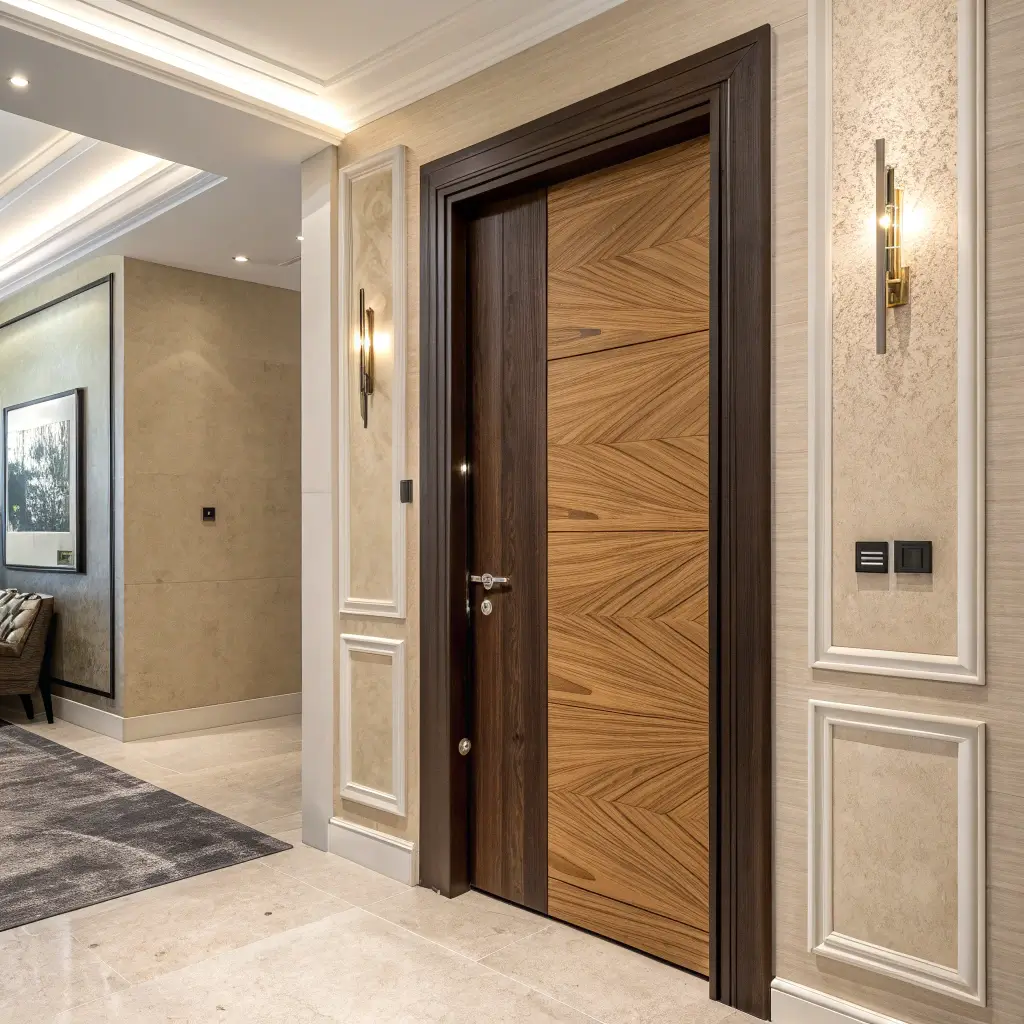
Two-tone veneer doors prove that you don’t have to choose just one wood—you can have your cake and eat it too. These designs use contrasting veneers to create visual interest and define spaces within the door itself.
Color Combination Strategies
Successful two-tone designs follow basic color theory:
- Complementary woods: Walnut and maple for high contrast
- Tonal variations: Different stains on the same wood
- Natural and painted: Combining veneer with painted sections
- Horizontal splits: Upper and lower variations
- Frame contrasts: Different woods for frame and panels
Design Proportions
The ratio between your two tones matters immensely. The golden ratio (roughly 60/40) often works well, but equal splits can create bold, modern statements. I tried several mock-ups before settling on a 70/30 split for my office door—dominant oak with walnut accents. The proportion feels intentional rather than indecisive.
Application Techniques
Two-tone effects can be achieved through:
- Different veneer species
- Staining techniques
- Directional grain changes
- Combining smooth and textured veneers
- Mixing matte and gloss finishes
Also Read: 12 Creative Double Door Design Wood Ideas for Dream Homes
Seamless Wall-Panel Veneer Door

Seamless wall-panel veneer doors are the ultimate in sophisticated minimalism. These hidden doors blend perfectly with wall paneling, creating secret passages that would make Batman jealous.
The Invisible Door Effect
When closed, these doors virtually disappear into the surrounding wall paneling. The veneer continues across both wall and door surfaces, with barely visible gaps revealing the door’s presence. It’s architectural magic that makes spaces feel larger and more cohesive.
Creating this effect requires:
- Matching veneer grain across surfaces
- Precision-aligned panels
- Hidden hinges and hardware
- Consistent finishing techniques
- Perfect installation alignment
Design Considerations
Seamless doors work best in:
- Modern minimalist interiors
- Spaces where flow is paramount
- Media rooms or libraries
- Hidden storage areas
- Executive offices
The investment in precision pays off in daily satisfaction. Every time someone fails to notice my seamless pantry door until I open it, I feel like a design genius.
Technical Requirements
This isn’t a casual DIY project. Seamless doors require:
- Exact measurements and planning
- High-quality concealed hinges
- Precision installation
- Matched veneer batches
- Professional finishing
Veneer Door with Hidden Frame
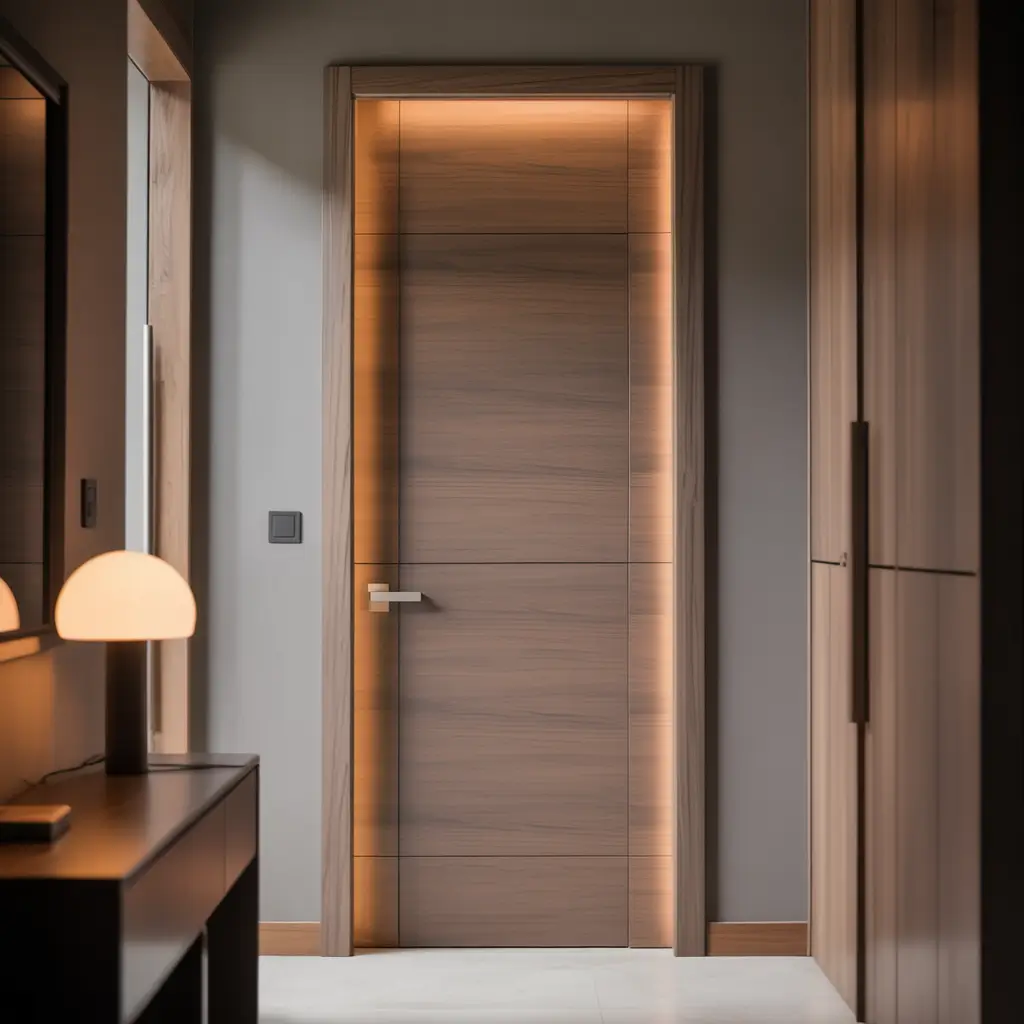
Hidden frame veneer doors take minimalism to the extreme. These designs eliminate visible frames, creating clean lines that make the door appear to float within the wall opening.
The Frameless Aesthetic
Hidden frames create uninterrupted sight lines and emphasize the door itself rather than its surround. The door becomes a singular element rather than a door-plus-frame combination, resulting in cleaner, more modern appearances.
This effect requires:
- Frames concealed within wall construction
- Precision gaps for operation
- Hidden hinges
- Minimal visible hardware
- Perfect door alignment
Installation Complexity
Hidden frame installations demand expertise. The frame must be perfectly square and level, gaps must be consistent, and the door must operate smoothly despite minimal clearance. One millimeter off and the whole effect is ruined.
I watched my contractor install hidden frame doors, and the precision required was insane. But seeing the finished product—doors that look like they’re simply placed in openings—made the complexity worthwhile.
When Hidden Frames Work Best
These doors excel in:
- Contemporary minimalist spaces
- High-end modern homes
- Spaces with continuous wall treatments
- Areas where traditional frames would interrupt design flow
- Renovations seeking maximum visual impact
Contemporary Veneer Door with Glass Insert

Veneer doors with glass inserts combine the warmth of wood with the openness of glass, creating designs that balance privacy with light transmission. These contemporary hybrids solve multiple design challenges while looking absolutely stunning.
Insert Configurations
Glass inserts in veneer doors offer endless possibilities:
- Vertical strips: Creating height and elegance
- Horizontal panels: Adding width and modernity
- Geometric cutouts: Making artistic statements
- Full-length side panels: Maximizing light
- Small accent windows: Adding interest without sacrificing privacy
Glass and Veneer Harmony
The key to successful glass-veneer combinations is balance. Too much glass and you lose the warmth of wood; too little and you miss the light benefits. I found the sweet spot with my kitchen door—three vertical glass panels that let light flow while maintaining the door’s woody character.
Privacy Solutions
Glass inserts don’t mean sacrificing privacy:
- Frosted glass for bathrooms
- Textured glass for subtle obscurity
- Tinted options for reduced visibility
- Smart glass for adjustable privacy
- Decorative films for customization
The versatility means you can have different solutions for different rooms while maintaining design cohesion.
Making Your Veneer Door Decision
Choosing the right veneer door involves balancing aesthetics, budget, and practicality. But here’s the secret—veneer gives you more options than solid wood ever could, at prices that won’t require a second mortgage.
Consider your overall design scheme first. Modern spaces might call for matte finishes and hidden frames, while traditional homes might benefit from rich walnut with classic panels. The beauty of veneer is its adaptability—there’s literally an option for every style and budget.
Don’t forget about maintenance and longevity. Quality veneer doors, properly installed and maintained, last decades. They resist warping better than solid wood, cost less to replace if damaged, and offer consistent appearance across multiple doors.
IMO, veneer doors are the smartest choice for most homeowners. You get real wood beauty, endless design options, and money left over for other renovations. Plus, with modern veneer technology, even experts struggle to distinguish veneer from solid wood.
Final Thoughts
Veneer doors have come a long way from the cheap-looking alternatives they once were.
Today’s veneer doors offer sophisticated design options, sustainable materials, and quality that rivals solid wood at a fraction of the cost.
I’ve installed veneer doors in three different homes now, and each time I’m amazed by the transformation they create.
From seamless wall panels that disappear into architecture to bold geometric patterns that become art pieces, veneer doors prove that smart design doesn’t require unlimited budgets.
The key is choosing quality veneer doors from reputable manufacturers, ensuring proper installation, and maintaining them appropriately.
Do these three things, and your veneer doors will look stunning for decades while your neighbors replace their solid doors due to warping and damage.
So embrace veneer without apology. Your wallet will thank you, your home will look amazing, and you’ll have the satisfaction of making a smart, sustainable choice that doesn’t compromise on style.
After all, the best design decisions are the ones that balance beauty, function, and fiscal responsibility 🙂