10 Smart White Bookshelf Ideas for Minimalist Interiors
- Bookshelf Styling
 Ben
Ben- 0
- 38 minutes read
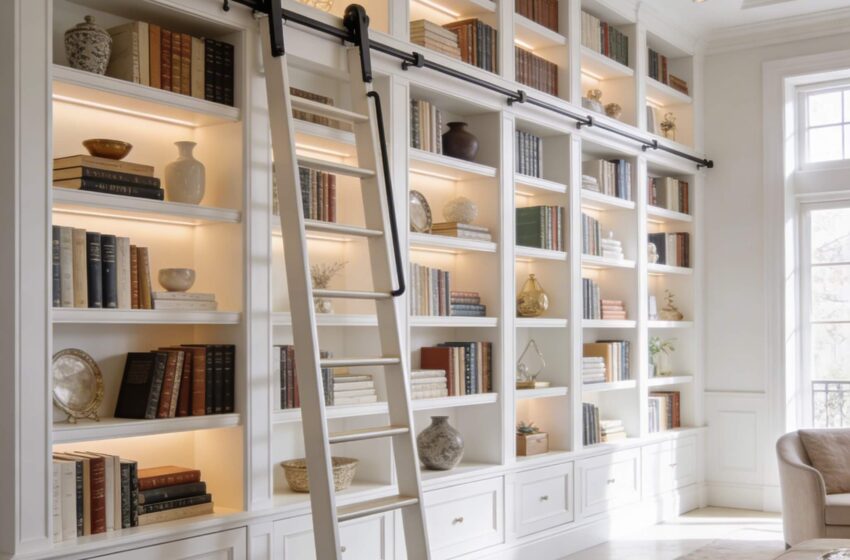
You know that feeling when you walk into someone’s home and their bookshelf just makes the room? Yeah, that’s what we’re talking about today. White bookshelves have this magical ability to transform any space into a Pinterest-worthy minimalist dream without trying too hard. And before you roll your eyes thinking this is another boring storage guide – trust me, it’s not.
I’ve spent the last decade obsessing over interior design (my partner would say too much), and white bookshelves remain my go-to solution for clients who want that clean, sophisticated look. They’re like the Swiss Army knife of home decor – versatile, practical, and they never go out of style. Plus, they make your book collection look curated even if you just threw everything on there five minutes before guests arrived.
Let me share 10 killer white bookshelf ideas that’ll transform your minimalist space from “meh” to “magazine-worthy.” And no, you don’t need a trust fund or an interior design degree to pull these off.
Floating White Bookshelf Wall
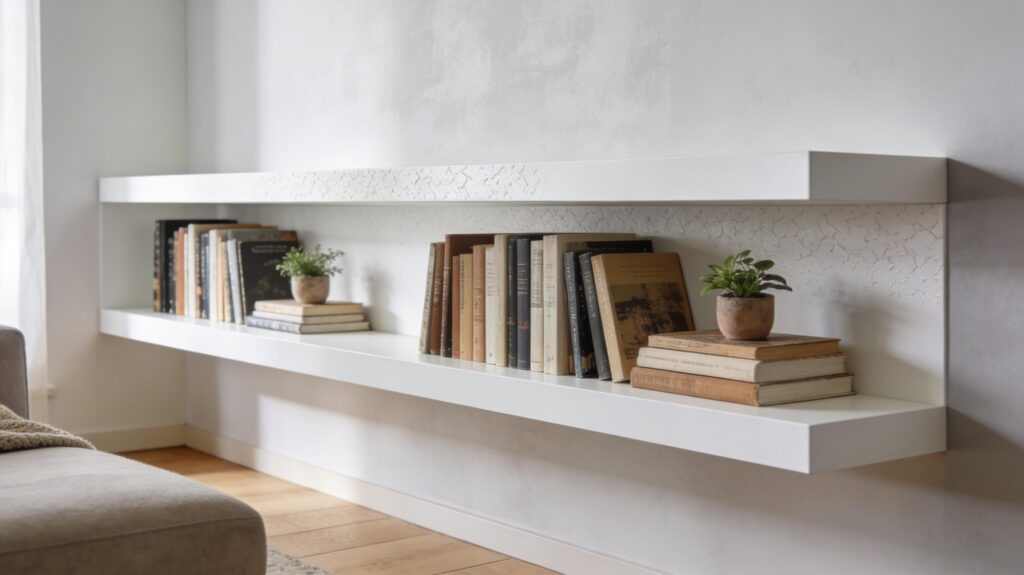
Picture this: you walk into a room and see books literally floating on the wall. No visible brackets, no bulky supports – just clean lines and your favorite reads suspended in mid-air. That’s the magic of floating white bookshelves, and honestly, they’re the ultimate minimalist flex.
I installed these in my studio apartment last year, and the transformation was ridiculous. The walls went from boring blank canvases to functional art pieces. What makes floating shelves so perfect for minimalist interiors? They create storage without the visual weight of traditional furniture.
Why Floating Shelves Work So Well
The beauty lies in their simplicity. Floating shelves eliminate visual clutter while maximizing your wall space. You control exactly how many shelves you need – two for a subtle accent or an entire wall for the book lover who can’t stop buying hardcovers (guilty as charged).
Here’s what makes them special:
- Zero floor space required – perfect for small apartments
- Creates an illusion of more room
- Easy to install at any height
- Completely customizable arrangement
- Works with any wall color
Installation Tips That Actually Matter
Let me save you from my mistakes. When I first attempted this, I thought I could eyeball the measurements. Spoiler alert: books don’t look great on crooked shelves. Use a laser level – seriously, it’s worth the $20 investment.
The weight capacity matters more than you think. Standard floating shelves hold about 15-20 pounds, but if you’re displaying those gorgeous coffee table books, upgrade to heavy-duty brackets. Nobody wants to explain why their first edition collection is scattered across the floor.
Minimalist White Ladder Shelf
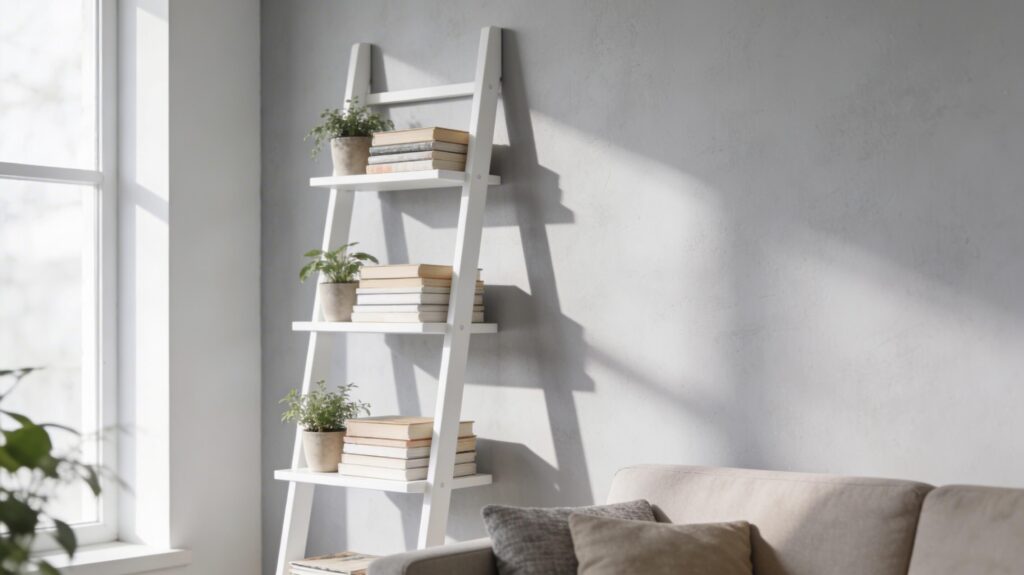
Ever notice how ladder shelves make everything look effortlessly chic? They lean against the wall like they just casually decided to be furniture. This style screams “I have my life together” even if you definitely don’t.
The ladder shelf trend exploded for good reason. They’re portable, stylish, and surprisingly spacious. Mine holds everything from books to plants to that random collection of candles I keep buying. The angled design naturally creates visual interest without overwhelming the space.
The Perfect Leaning Angle
Here’s something nobody tells you: the angle matters more than the shelf itself. Too upright and it looks unstable; too relaxed and you’re wasting space. The sweet spot? About 75-80 degrees from the floor. This gives you maximum stability while maintaining that casual, leaning aesthetic.
I learned this the hard way when my first ladder shelf kept sliding down the wall. Turns out, rubber furniture pads on the top rail work wonders. Small detail, huge difference.
Styling Your Ladder Shelf
The trick to nailing the minimalist look? Follow the rule of thirds. Fill one-third with books, one-third with decorative objects, and leave one-third empty. White space isn’t wasted space – it’s what makes the whole arrangement breathe.
My favorite styling combo:
- Bottom shelves: heavier items and book stacks
- Middle shelves: mix of vertical books and small plants
- Top shelf: lightweight decor or leave empty
- Add one unexpected item (like a vintage camera or sculpture)
White Corner Bookshelf Nook
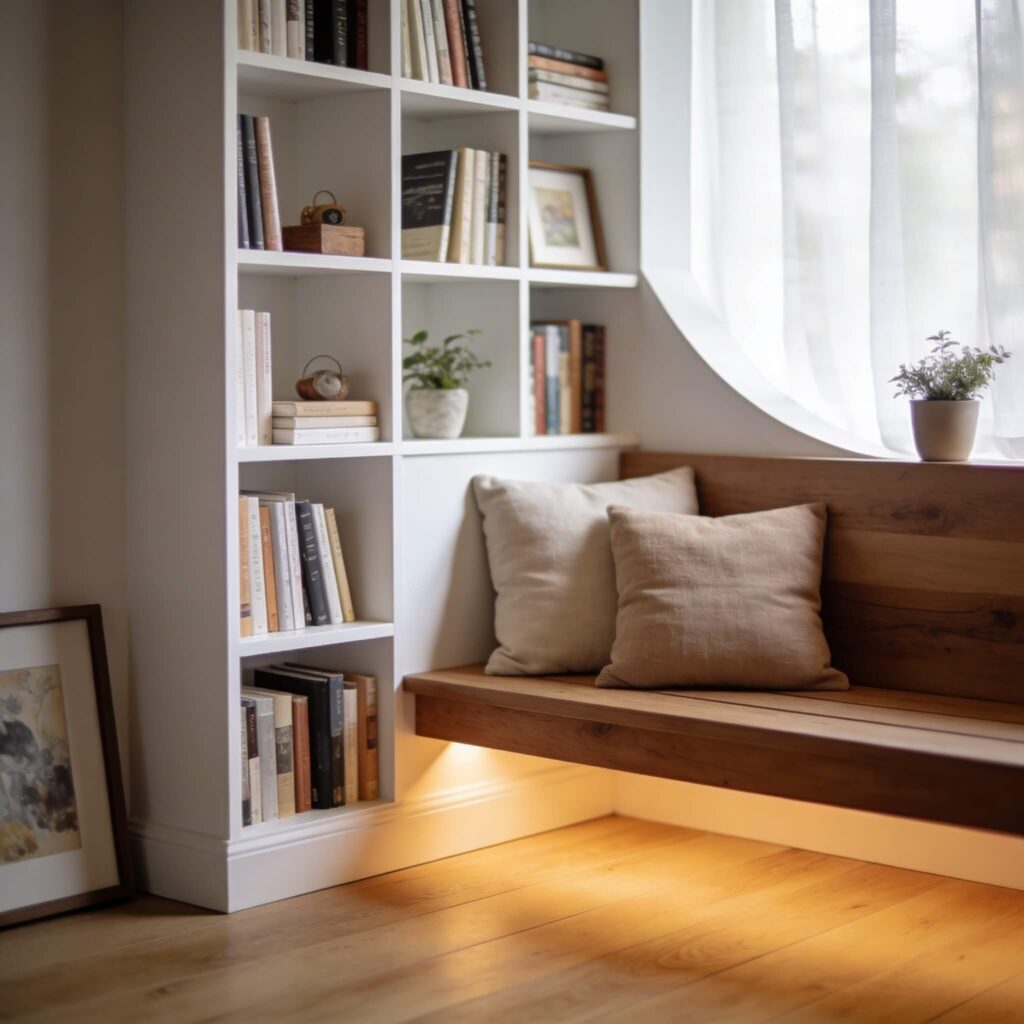
Corners are the forgotten heroes of interior design. Most people stick a sad plant there and call it a day. But a white corner bookshelf? That transforms dead space into the focal point of your room.
I discovered corner bookshelves when I moved into a place with the world’s most awkward living room layout. You know the type – where nothing quite fits right? The corner bookshelf solved everything. It filled that weird empty space and suddenly the room made sense.
Maximizing Awkward Spaces
Corner shelves work because they embrace the architecture instead of fighting it. They turn problematic angles into purposeful design elements. Plus, they create this cozy reading nook vibe that makes people want to grab a book and stay awhile.
The best part? Corner units come in every possible configuration:
- L-shaped for standard corners
- Curved for softer aesthetics
- Modular pieces you can customize
- Floating corner shelves for minimal impact
- Floor-to-ceiling for maximum storage
Creating Your Reading Sanctuary
Want to know the secret to a perfect corner nook? Add a comfortable chair and good lighting. Boom – instant reading sanctuary. I paired mine with a simple white accent chair and a sleek floor lamp. The whole setup cost less than $300 but looks like something from a design magazine.
FYI, corner bookshelves also make excellent room dividers in studio apartments. Position one perpendicular to the wall, and you’ve created distinct zones without building actual walls.
Read More: 10 Chic Bookshelf Wallpaper Ideas for Trendy Home Decor
Modern White Cube Organizer
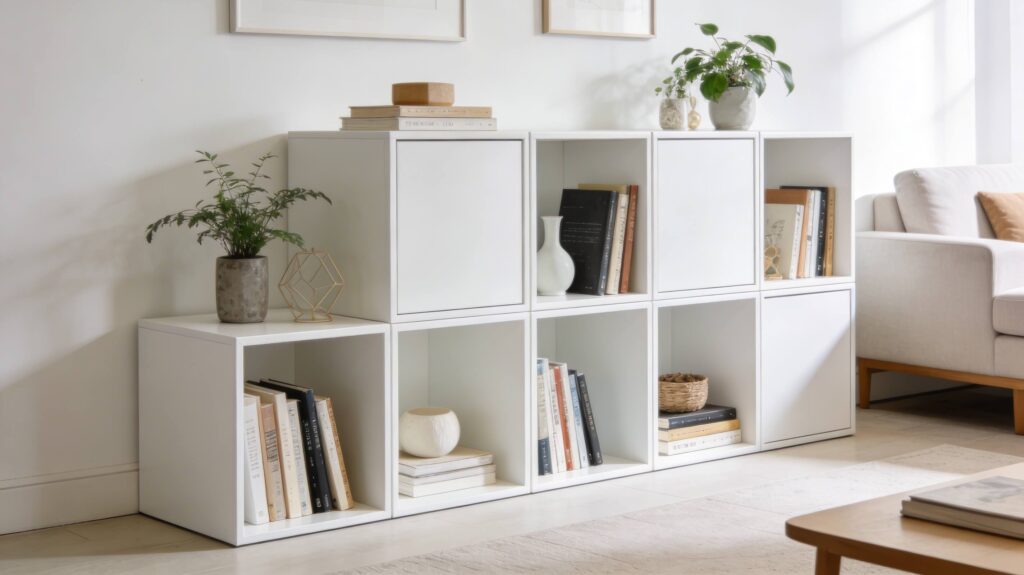
Remember when cube organizers were just for dorm rooms? Yeah, those days are long gone. Modern white cube organizers have evolved into sophisticated storage solutions that interior designers actually recommend.
These geometric wonders appeal to our brain’s love of symmetry and order. Each cube becomes its own little display case, and the grid pattern creates this satisfying visual rhythm. Plus, they’re ridiculously versatile – use them horizontally as a TV stand or stack them vertically for a statement piece.
The Cube Configuration Game
Here’s where it gets fun. You don’t have to fill every cube. In fact, leaving some cubes empty is key to the minimalist aesthetic. Think of it like a game of Tetris where winning means not filling every space.
My current setup uses this pattern:
- Books in 40% of cubes
- Storage baskets in 30%
- Decorative items in 20%
- Empty space in 10%
Customization Hacks That Work
Want to elevate your basic cube organizer? Add wooden drawer inserts or woven baskets to some cubes. This creates texture and hides the not-so-pretty stuff (looking at you, cable collection).
I discovered that painting the back wall of select cubes in a subtle accent color adds depth without disrupting the minimalist vibe. Light gray or soft beige works beautifully with white frames. Just don’t go crazy – two or three colored backs maximum.
White Built-In Bookshelf Wall
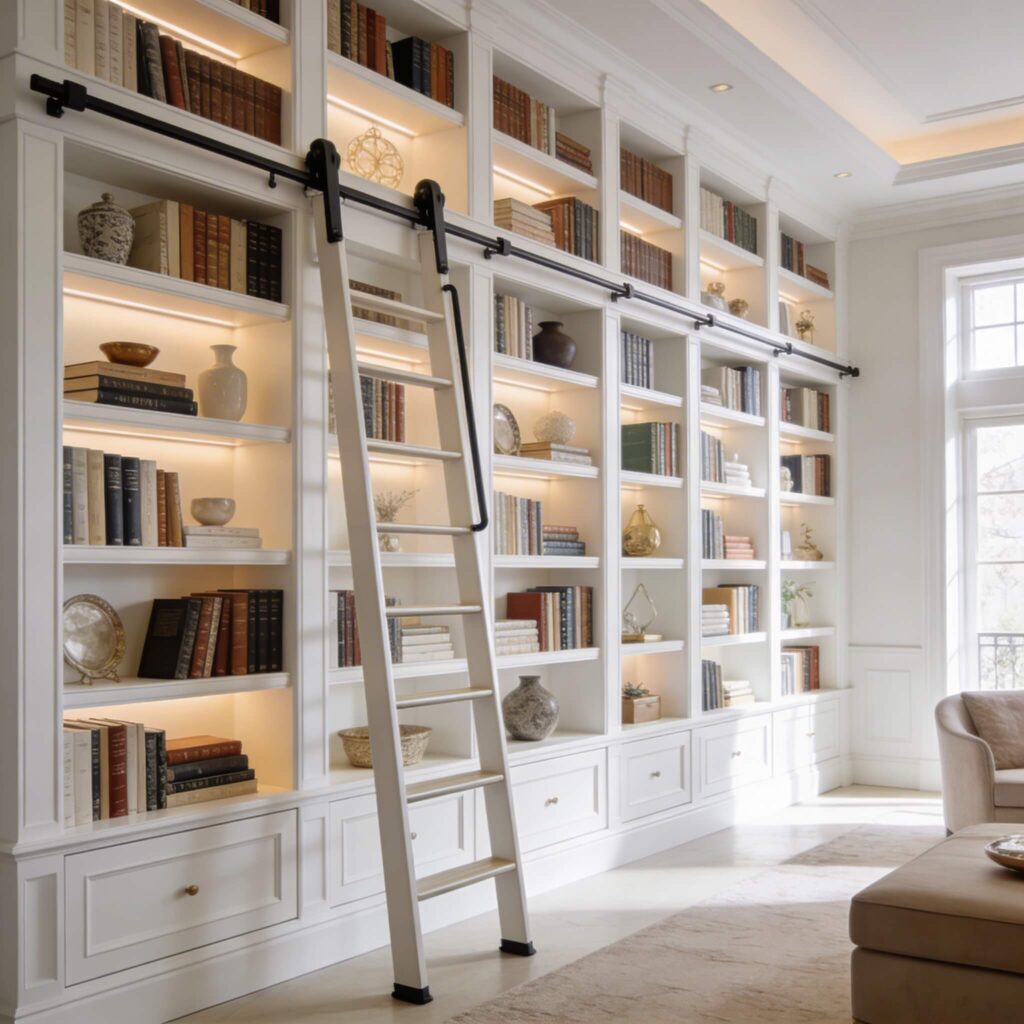
Nothing says “I’m a serious adult with excellent taste” quite like built-in bookshelves. They’re the ultimate investment in your space, transforming ordinary walls into architectural features. And when they’re white? Chef’s kiss.
I’ll be honest – built-ins require commitment. You can’t just decide to rearrange the furniture next weekend. But that permanence creates something special. The room and storage become one cohesive element instead of furniture randomly placed against walls.
Planning Your Built-In Paradise
Before you grab a hammer, consider these factors that make or break built-in shelving:
- Ceiling height (go all the way up for maximum impact)
- Natural light sources (don’t block windows)
- Room proportions (scale matters)
- Electrical outlets (plan for lighting)
- Future flexibility (adjustable shelves save lives)
The Investment Question
Yes, built-ins cost more than buying a bookshelf from IKEA. But here’s the thing – they add actual value to your home. Every realtor I’ve talked to confirms that built-in storage is a major selling point. You’re not just buying furniture; you’re investing in your property.
My built-in project cost about $3,000 for a 12-foot wall (DIY with some professional help). That same wall now holds 300+ books, displays my art collection, and makes everyone who visits ask for my “designer’s” contact. Worth every penny.
Lighting Makes Everything Better
Integrated lighting transforms built-ins from storage to art installation. LED strips along the underside of shelves create this gorgeous ambient glow. Add them to just the top few shelves for a subtle effect, or go full dramatic with every shelf lit.
White Bookshelf with Hidden Storage
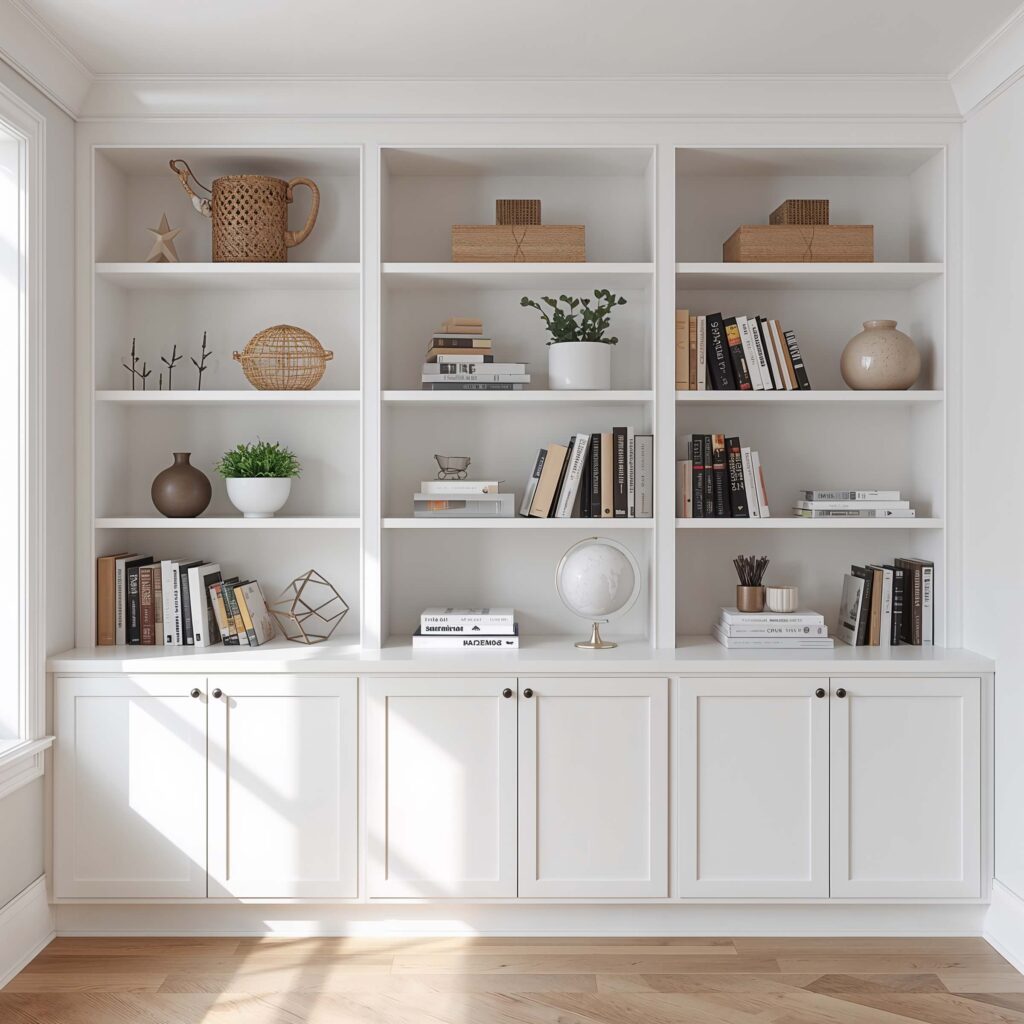
Can we talk about how satisfying hidden storage is? It’s like having a secret that makes you smile every time you use it. White bookshelves with concealed compartments give you that minimalist aesthetic while hiding life’s inevitable mess.
My favorite discovery? Bookshelves that look completely normal but have drawers hidden in the base. Guests compliment the clean lines while having no idea my tax documents and random electronics live inches away. It’s organization sorcery.
Types of Sneaky Storage
The options for hidden storage keep getting better:
- False book spines that open to reveal compartments
- Push-to-open drawers with no visible handles
- Rotating shelves that reveal storage behind
- Hollow shelf tops for hiding routers and cables
- Secret panels between shelf sections
What to Hide (and What to Display)
Here’s my rule: display what sparks joy, hide what sparks anxiety. Those beautiful art books? Display. The stack of bills and warranty papers? Hide immediately.
The key to maintaining minimalist vibes while maximizing storage:
- Hide 60% of your stuff
- Display 30% thoughtfully
- Keep 10% of space completely empty
IMO, the best hidden storage doesn’t try too hard. Simple cabinet doors that blend seamlessly with the shelving unit work better than complicated mechanisms that break after six months.
Read More: 10 Brilliant Wooden Bookshelf Ideas for Stylish Organization
Rustic White Farmhouse Bookshelf
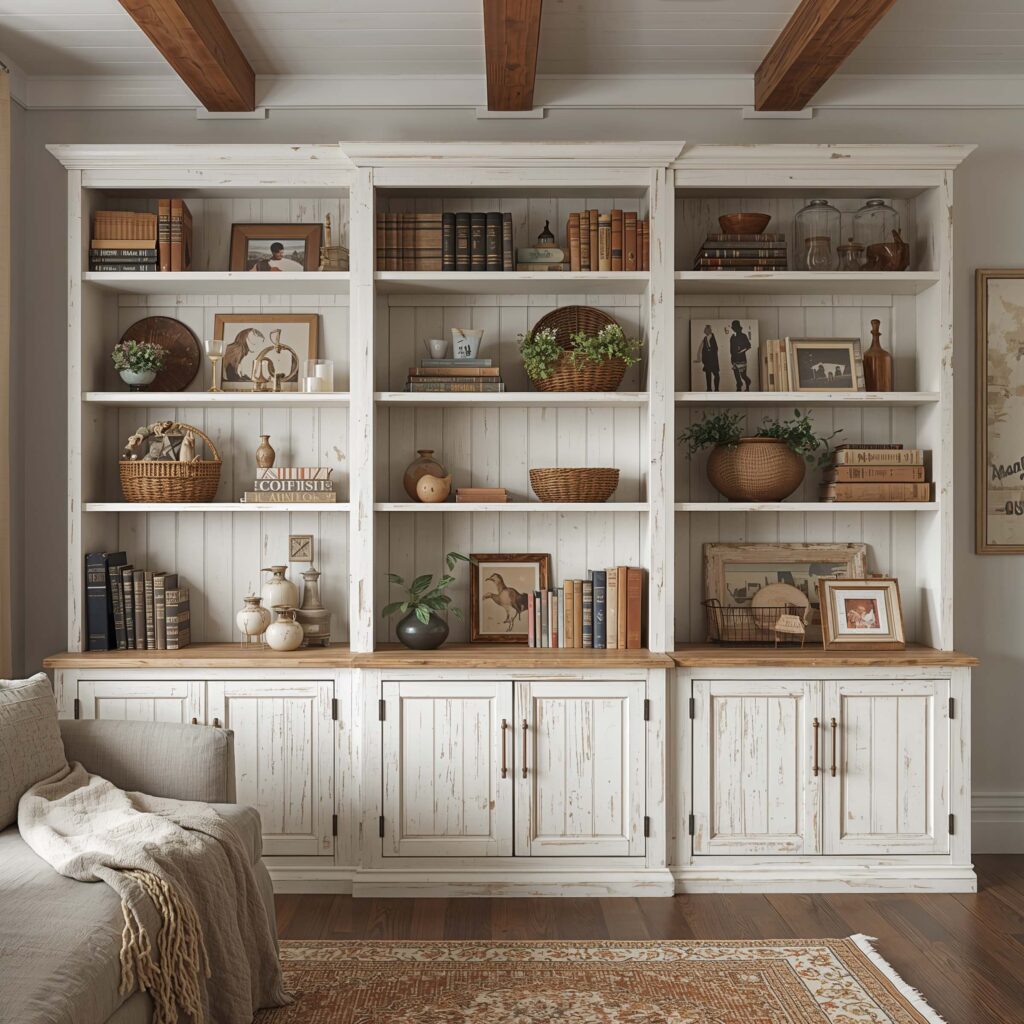
Who says minimalism can’t have character? White farmhouse bookshelves bring warmth and texture to clean-lined spaces without sacrificing that uncluttered feel we’re after. They’re basically the golden retriever of furniture – friendly, reliable, and impossible not to love.
I resisted the farmhouse trend for years (seemed too trendy), but then I found this distressed white bookshelf at an estate sale. The slightly weathered finish and simple construction added exactly the right amount of personality to my otherwise stark living room.
The Art of Controlled Rusticity
The trick with farmhouse style in minimalist spaces? Restraint. You want suggestion of rustic, not full-blown barn. Look for pieces with:
- Clean, simple lines
- Subtle distressing (not beaten with chains)
- Natural wood accents
- Minimal ornamental details
- Quality construction that’ll last
Mixing Modern and Farmhouse
This combination shouldn’t work, but it absolutely does. Pair your rustic white bookshelf with sleek modern accessories. Think geometric vases, minimalist bookends, or contemporary art pieces. The contrast creates visual interest without chaos.
My setup combines:
- Distressed white farmhouse shelf (the star)
- Matte black picture frames
- Simple white ceramic planters
- Natural linen storage boxes
- One vintage wooden accent piece
The result? A space that feels both current and timeless. Plus, the farmhouse style’s emphasis on functionality aligns perfectly with minimalist principles 🙂
White Open Shelving with Plants
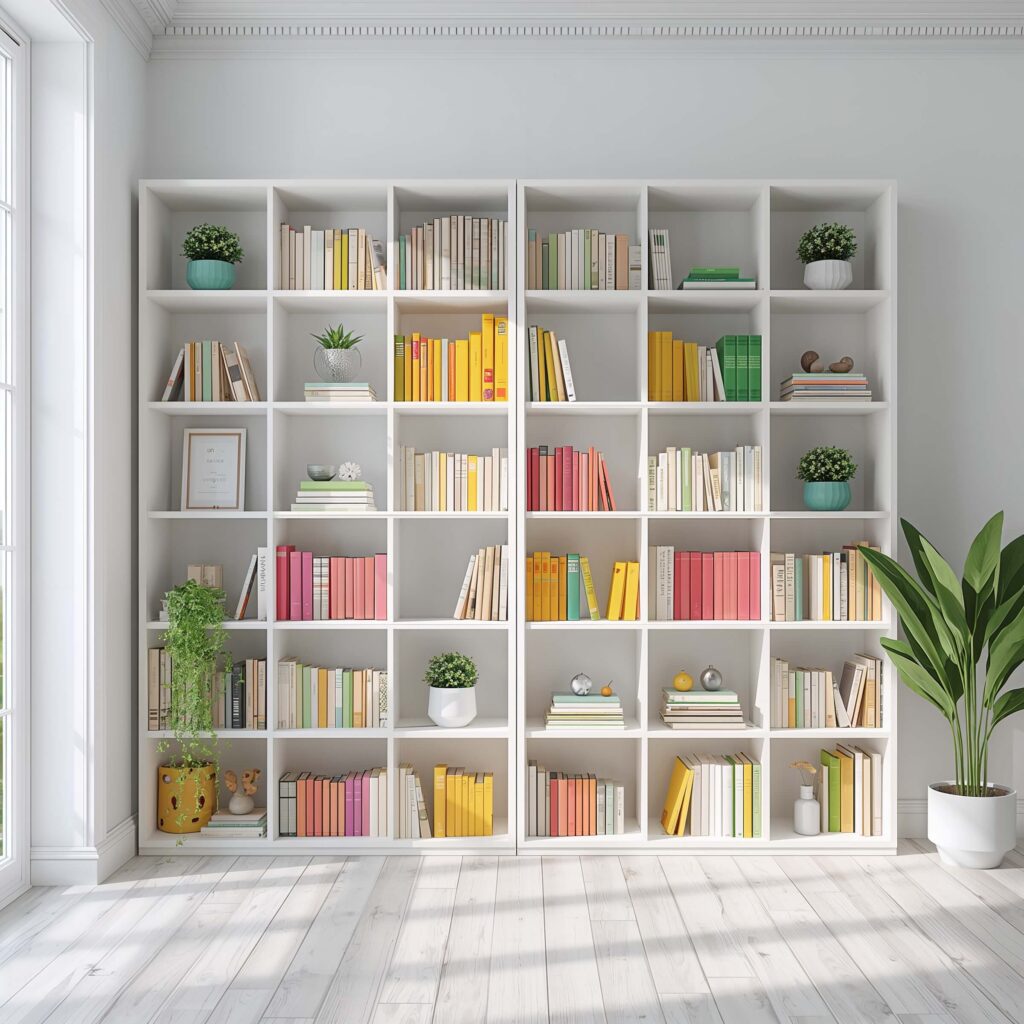
Plants and white shelves go together like coffee and mornings – technically optional but why would you want one without the other? This combination creates living art that purifies your air while looking absolutely stunning.
After killing approximately 47 plants (RIP), I finally figured out the secret: match your plants to your lifestyle, not your Pinterest board. My white shelves now host a thriving collection of almost-impossible-to-kill plants that make me look like I have my life together.
The Perfect Plant-to-Book Ratio
Here’s what works: one plant for every 8-10 books. This ratio keeps things green without turning your bookshelf into a greenhouse. Vary the plant sizes and let some trail down for that effortless jungle-library vibe.
Best plants for bookshelf life:
- Pothos (survives everything)
- Snake plants (vertical interest)
- Small succulents (minimal maintenance)
- Philodendrons (gorgeous trailing)
- ZZ plants (practically immortal)
Protecting Your Books
Nobody talks about this, but plants and books require different environments. Books hate humidity; plants love it. The solution? Use cache pots with proper drainage and never water directly on the shelf. Learned that lesson when I destroyed a signed first edition. Still hurts.
Place plants on decorative trays or saucers to catch any water. Better yet, take them to the sink for watering and only return them once they’ve stopped dripping.
Scandinavian White Vertical Shelf
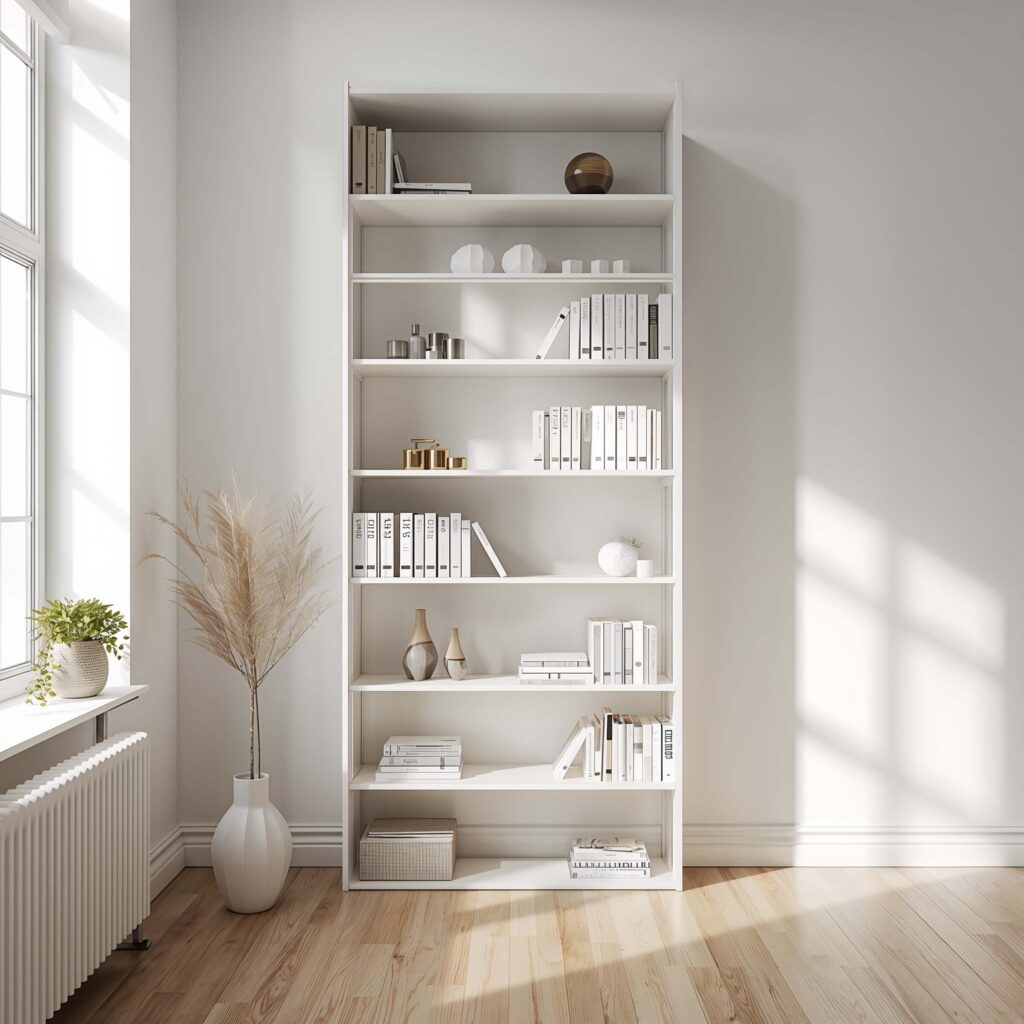
Scandinavian design masters the art of doing more with less. Their white vertical shelves epitomize this philosophy – tall, narrow, and impossibly elegant. They make small spaces feel larger while providing serious storage.
These shelves taught me that sometimes the best solution grows up, not out. My apartment’s tiny footprint meant traditional bookcases would eat up precious floor space. Enter the vertical shelf – same storage capacity, fraction of the footprint.
The Height Advantage
Vertical shelves draw the eye upward, creating an illusion of higher ceilings. This optical trick makes even the smallest room feel more spacious. Plus, that narrow profile means you can squeeze them into spaces other furniture won’t fit.
Ideal placement spots:
- Next to doorways
- Between windows
- Beside the bed as nightstand alternative
- In narrow hallways
- Behind doors
Styling Vertical Spaces
The challenge with tall shelves? Making the top shelves useful without needing a ladder every time. Keep everyday items at arm’s reach and decorative pieces up high. Those upper shelves are perfect for items you want to see but rarely need to access.
My vertical shelf organization:
- Eye level: current reads and daily items
- Lower shelves: heavier books and storage boxes
- Upper shelves: decorative objects and occasional-use items
- Very top: statement piece or left empty
Read More: 15 Aesthetic Vintage Bookshelf Ideas for Warm Interiors
White Bookshelf Room Divider
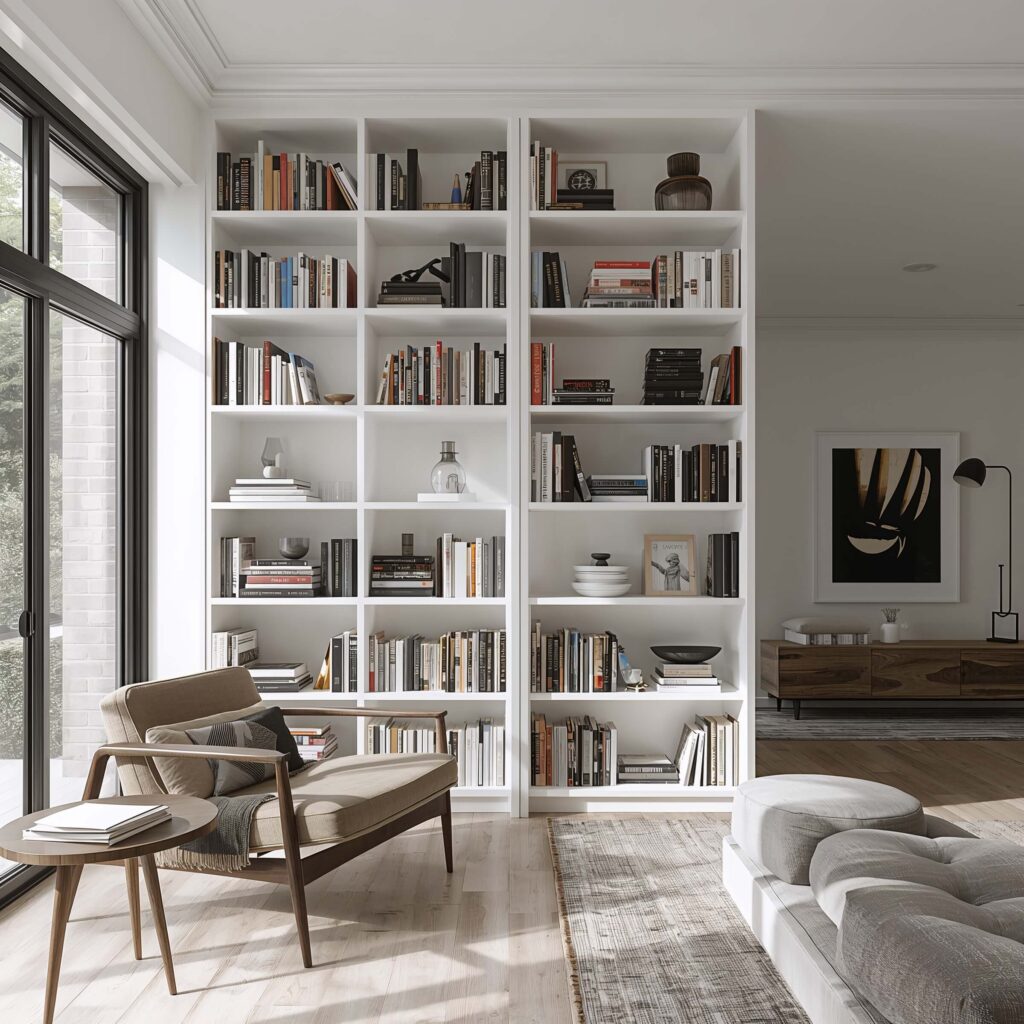
Open floor plans sound great until you realize your bedroom, office, and living room are basically one giant space. White bookshelf dividers solve this problem while maintaining visual flow and adding storage. It’s multitasking at its finest.
When I moved into my current loft, the lack of walls initially felt freeing. Two weeks later, I desperately needed separation between work and relaxation zones. A white bookshelf divider created distinct spaces without the commitment (or cost) of building walls.
Choosing the Right Divider Style
Not all bookshelf dividers are created equal. Open-back units maintain airflow and light while still defining spaces. The key is finding the balance between separation and connection.
Consider these factors:
- Height (full ceiling or partial?)
- Depth (stability vs. space consumption)
- Open vs. closed backs
- Fixed vs. modular design
- Weight and mobility needs
Double-Sided Styling
The beauty of divider bookshelves? You get two display surfaces. Style each side differently to reflect the room it faces. Kitchen side gets cookbooks and plants; living room side holds novels and art objects.
Pro tip: alternate which compartments you fill from each side. This creates visual interest from both angles while maintaining that crucial negative space.
Stability and Safety
Let’s talk about the elephant in the room – freestanding dividers can tip. Anchor tall units to the ceiling or wall using furniture straps. It’s not paranoid; it’s smart. My cat has tested this theory multiple times, and the anchors have saved both the shelf and probably the cat.
Making Your White Bookshelf Dreams Reality
After exploring these ten ideas, you might feel overwhelmed about where to start. Here’s my advice: pick the solution that solves your biggest pain point first. Need more storage? Go for built-ins or hidden storage options. Dealing with awkward spaces? Corner shelves or vertical units might be your answer.
Remember, minimalism isn’t about having less for the sake of it – it’s about having exactly what you need and loving everything you keep. White bookshelves provide the perfect framework for this philosophy. They’re the blank canvas that lets your carefully chosen items shine.
Start with one shelf and see how it transforms your space. Once you experience that perfect combination of form and function, you’ll understand why white bookshelves remain the secret weapon of minimalist design. Trust me, your future organized self will thank you for taking the plunge.
The best part? Every single one of these ideas can be adapted to your specific space, budget, and style. Whether you’re going full minimalist or just want to declutter that one chaotic corner, there’s a white bookshelf solution waiting to make your interior design dreams come true. Now stop scrolling through Pinterest and actually make it happen – your perfectly organized, magazine-worthy space is just one white bookshelf away.