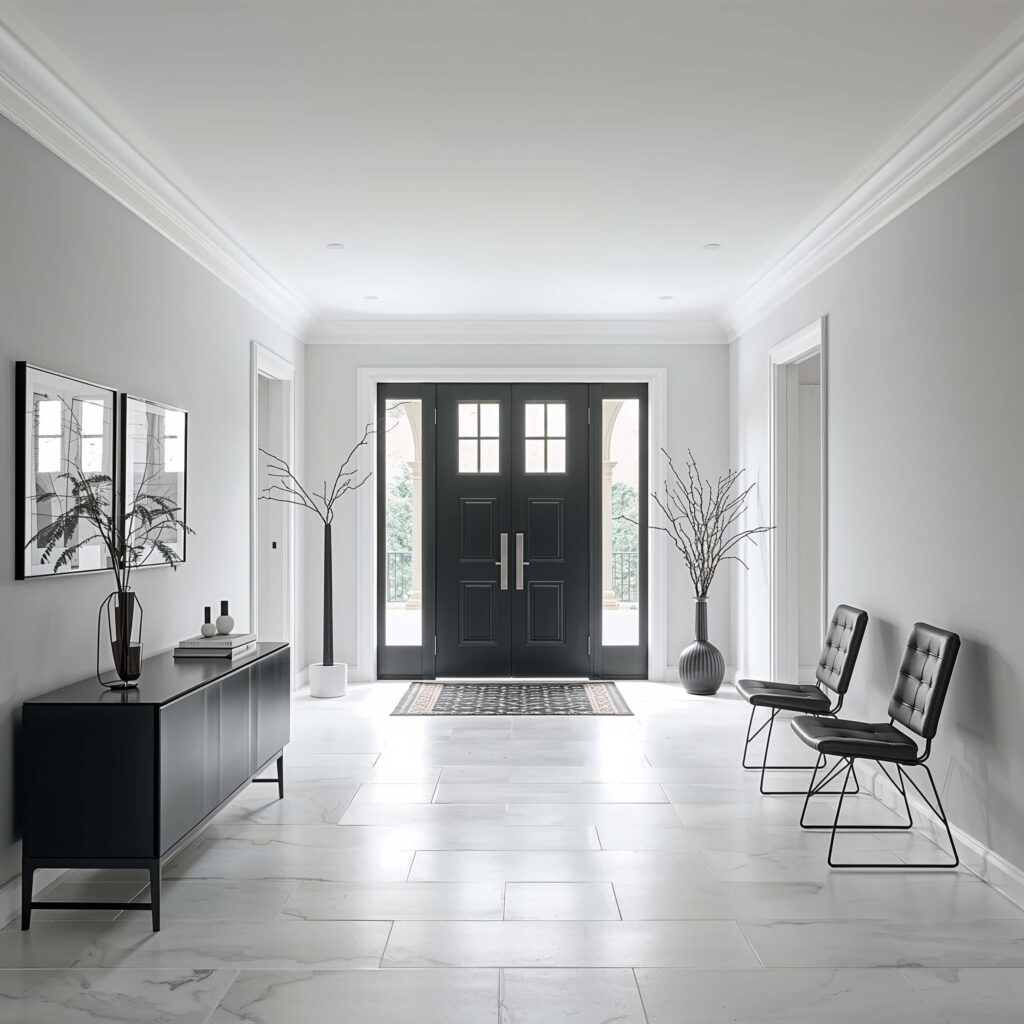
10 Stylish Wooden Door Design Ideas You’ll Want to Save
- Door Design
 Ben
Ben- 0
- 44 minutes read
Wooden doors are like the handshake of your home—they set the tone before anyone even steps inside.
Yet most of us treat them like an afterthought, stuck with whatever bland slab the builder slapped on there, wondering why our homes lack that certain something.
I spent years walking past my boring flat door without giving it a second thought until a friend asked if I’d “just moved in” because my door looked like it came from a clearance sale. Ouch.
That comment sent me down a rabbit hole of wooden door designs, and now I’m slightly obsessed with how much personality the right door can add to any space.
Whether you’re building new, renovating, or just daydreaming about upgrades while scrolling through Pinterest, these ten wooden door design ideas will show you how timber can transform your entrance from forgettable to fabulous.
Let’s explore some designs that prove wood is anything but boring.
Modern Minimal Wooden Door
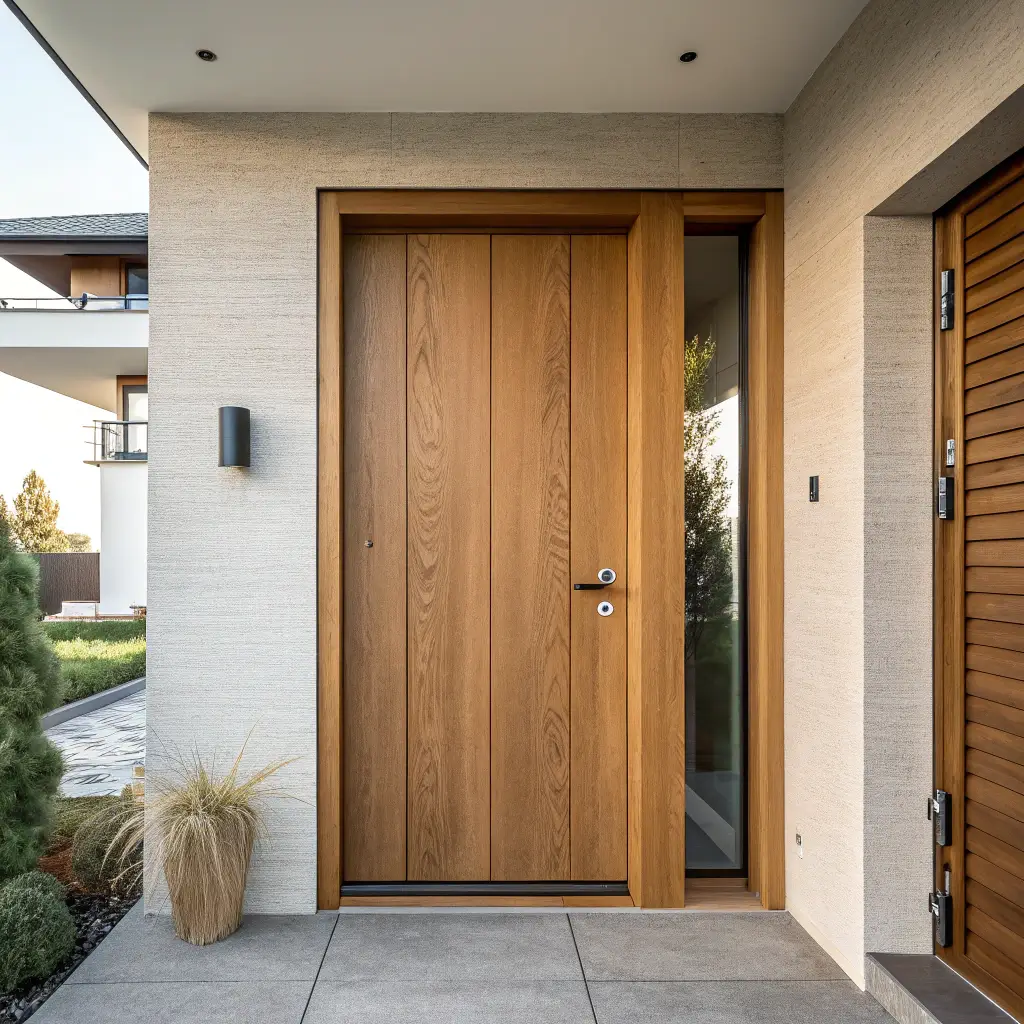
Minimalism doesn’t mean boring—it means intentional. Modern minimal wooden doors strip away all the fussy details, leaving you with clean lines and natural beauty that whispers sophistication instead of shouting for attention.
The Beauty of Simplicity
These doors celebrate what’s not there. No raised panels, no ornate carvings, no decorative hardware fighting for attention. Just smooth, flat surfaces where the wood grain becomes the hero. I installed a minimal oak door in my home office last year, and the number of compliments it gets is honestly embarrassing.
The magic happens through quality materials and precise craftsmanship. When you remove decoration, every imperfection shows, so these doors demand excellent construction. The wood needs to be properly dried, the joints perfectly fitted, and the finish flawlessly applied.
Wood Selection for Minimal Design
Choosing the right wood makes or breaks a minimal door:
- White Oak: Light, contemporary, with subtle grain that adds texture without chaos
- Maple: Clean and bright with minimal grain pattern
- Walnut: Rich and sophisticated for those wanting drama
- Ash: Similar to oak but more affordable
- Bamboo: Sustainable option with modern appeal
The grain pattern matters more than you’d think. Vertical grain creates calm, ordered lines that enhance the minimal aesthetic. Wild, cathedral grain can work too, but it becomes the focal point rather than background texture.
Hardware That Disappears
Minimal doors need hardware that enhances rather than dominates. Think long, linear handles in brushed steel or matte black that follow the door’s lines. Consider concealed hinges that maintain the clean profile. Maybe add a smart lock that looks more like modern sculpture than security device.
I spent three weeks obsessing over handle options for my minimal door before realizing the best choice was the simplest—a recessed finger pull that’s practically invisible. Sometimes the best design decision is choosing not to add something.
Luxury Carved Wooden Main Door
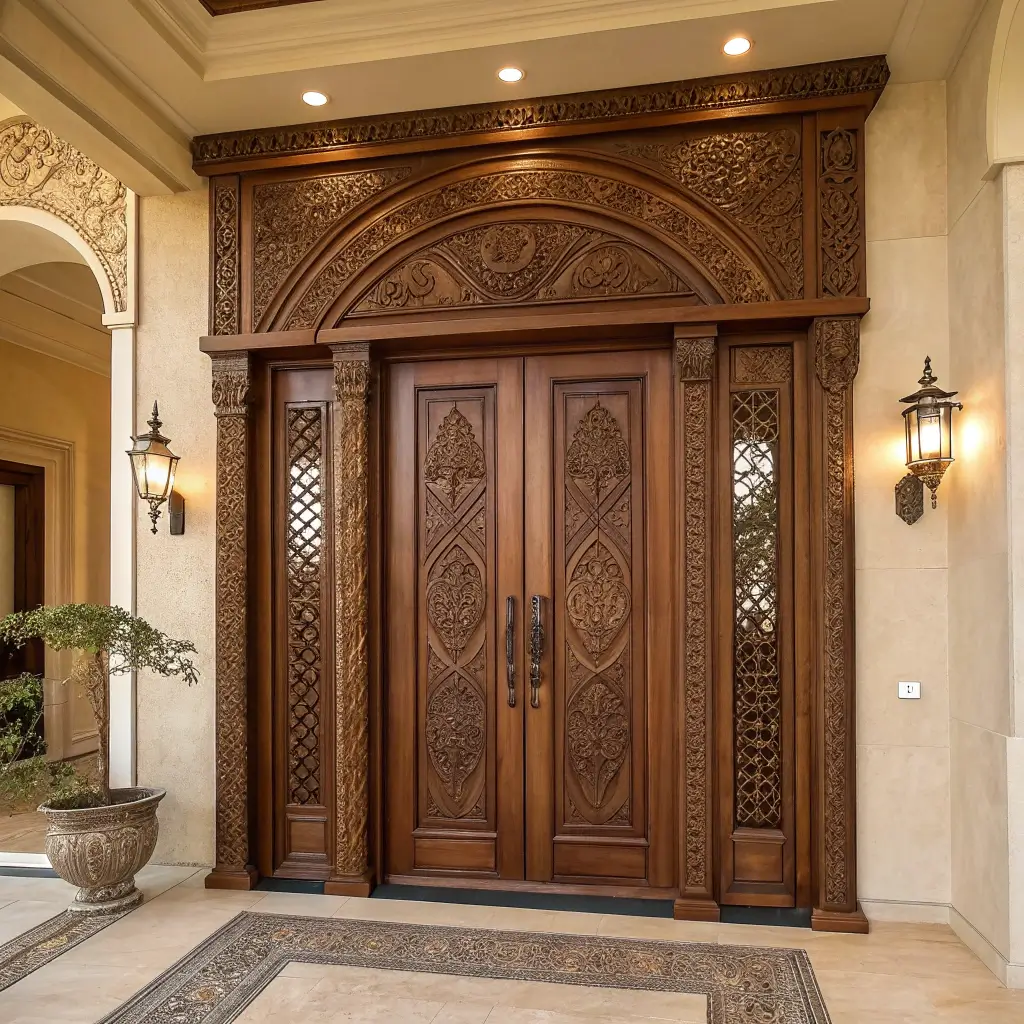
Carved wooden doors are basically functional art. These showstoppers transform entrances into galleries, telling stories through intricate patterns that make visitors pause before they even knock.
The Art of Making an Entrance
Luxury carved doors command attention through craftsmanship that’s increasingly rare. We’re talking about artisans who spend weeks creating patterns that machines can’t replicate, depth and shadow play that photographs can’t capture, and details that reveal themselves over time.
I visited a home in Jaipur with hand-carved doors featuring peacock motifs, and honestly, I stood there for ten minutes just studying the feather details. That’s the power of true craftsmanship—it stops you in your tracks and makes you appreciate human skill.
Carving Styles and Traditions
Different cultures offer distinct carving approaches:
- Indian: Intricate florals, religious symbols, and nature motifs
- Spanish Colonial: Mission-inspired patterns with geometric precision
- Moroccan: Mathematical patterns creating mesmerizing repetition
- Chinese: Dragons, clouds, and prosperity symbols
- European: Classical motifs with architectural elements
Wood That Carves Like Butter
Not all woods handle carving equally:
- Mahogany: Dense enough for fine detail, rich color that deepens with age
- Teak: Natural oils make it weather-resistant while holding intricate patterns
- Cedar: Soft enough for deep carving, naturally aromatic
- Walnut: Beautiful chocolate tones that showcase carved shadows
- Pine: Budget-friendly but requires skilled handling
The investment in a carved door often becomes a family heirloom. These doors routinely outlast multiple interior renovations and can even be relocated if you move. FYI, if you’re going the carved route, budget for proper maintenance—these beauties need regular care to stay beautiful.
Solid Teak Wood Statement Door
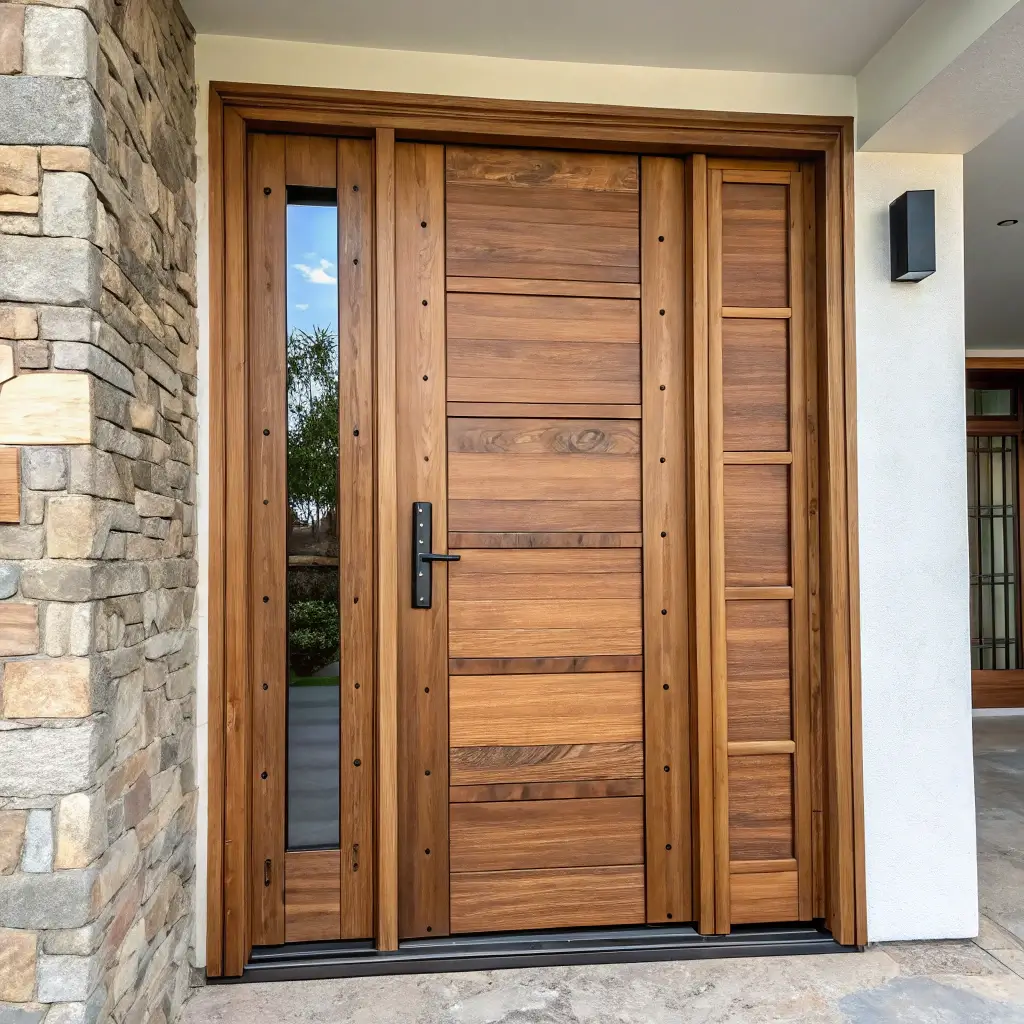
Teak doors are the Rolex of the door world—expensive, prestigious, and built to last generations. These golden beauties age like fine wine while standing up to weather that would destroy lesser woods.
Why Teak Rules
Teak contains natural oils that make it practically indestructible. Water beads off it, insects avoid it, and it barely expands or contracts with humidity changes. I’ve seen 100-year-old teak doors in Thailand that still function perfectly while their metal hardware rusted away.
The color journey of teak is fascinating. It starts golden honey, develops deeper amber tones, and eventually achieves a distinguished silver-grey if left unfinished. Each stage looks intentional and beautiful, which is why teak never really goes out of style.
Design Possibilities With Teak
Teak’s stability allows for designs other woods can’t handle:
- Wide, single-slab doors without warping concerns
- Intricate joinery that stays tight for decades
- Mixed indoor-outdoor applications
- Minimal finishing requirements
- Natural weathering as a design feature
The Sustainability Question
Here’s the elephant in the room—teak sustainability. Old-growth teak is increasingly rare and environmentally problematic. But plantation teak offers a responsible alternative. Look for FSC certification and documented sourcing. Reclaimed teak from old buildings provides character with conscience.
I chose reclaimed teak for my main door, and besides the environmental karma, the aged character is something new wood simply can’t replicate. Every scratch and weathermark tells a story from its previous life.
Also Read: 10 Chic Sliding Door Design Ideas for Contemporary Rooms
Contemporary Wooden Door With Metal Inlay
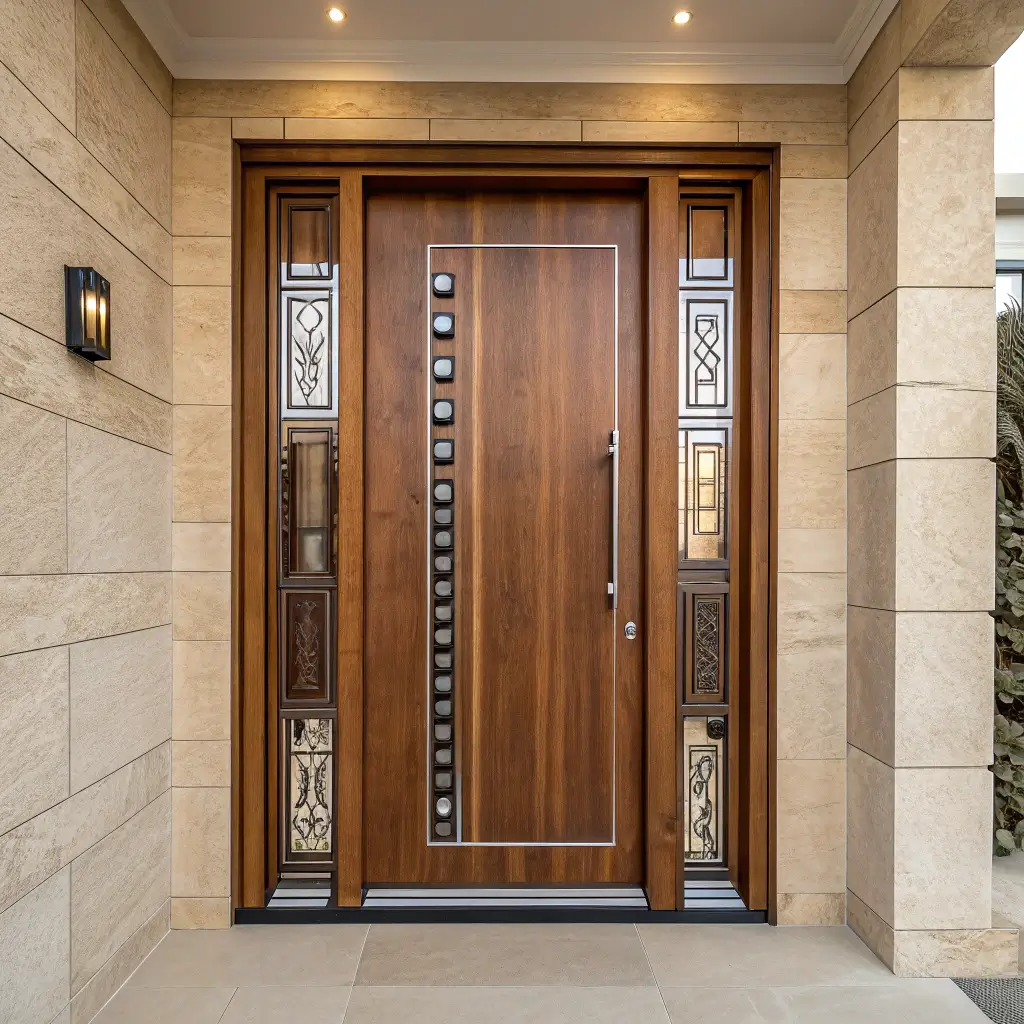
Wood and metal together create this perfect tension—warm meets cool, organic meets industrial, traditional meets modern. These fusion doors make statements without screaming for attention.
The Material Marriage
Combining wood and metal requires understanding how different materials behave. Wood expands and contracts, metal stays stable. The joinery needs to accommodate this movement while maintaining clean lines. When done right, the contrast creates visual interest that neither material achieves alone.
I designed a walnut door with brass inlay for my studio, creating a geometric pattern that catches light differently throughout the day. The brass has developed a patina that plays beautifully against the walnut’s deepening color. Sometimes contrasts create better harmony than matching ever could.
Inlay Techniques That Work
Different methods achieve different effects:
- Surface-mounted metal: Bold, three-dimensional impact
- Flush inlay: Smooth, sophisticated integration
- Metal frames: Defining panels or edges
- Decorative studs: Adding pattern through repetition
- Mixed metals: Combining brass, copper, or steel for complexity
Design Patterns and Possibilities
The patterns you create can range from subtle to dramatic:
- Geometric grids for modern appeal
- Organic curves softening angular doors
- Art deco inspiration with period-appropriate metals
- Minimalist lines creating subtle definition
- Cultural patterns telling personal stories
The key is balance—too much metal overwhelms the wood, too little looks like an afterthought. Aim for that sweet spot where both materials feel essential to the design.
Flush Wooden Door With Natural Grain Finish
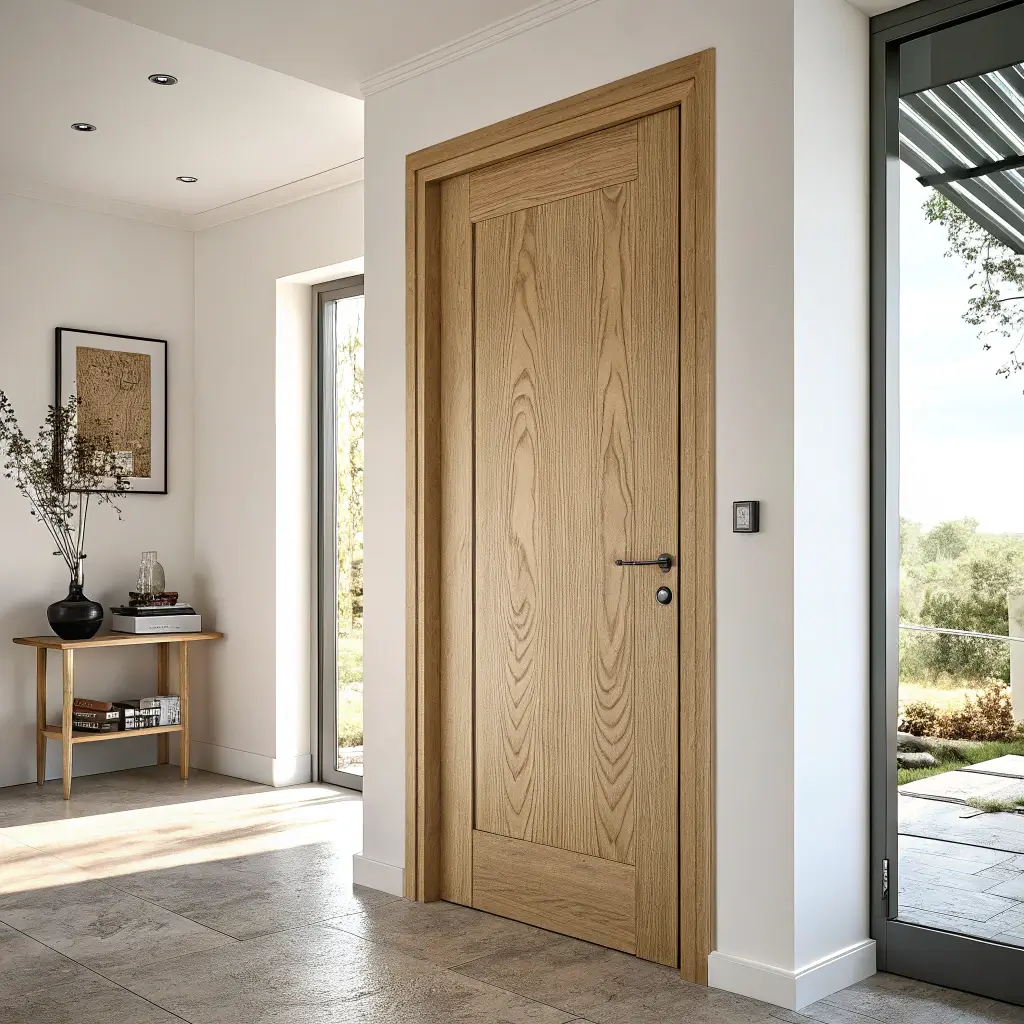
Flush doors with natural grain finishes celebrate wood in its purest form. No panels, no decoration, just the honest beauty of timber presented without pretense.
The Grain Game
When you strip away everything else, grain becomes your primary design element. The way light plays across the wood’s natural patterns creates visual interest that painted doors can’t match. Each door becomes unique because no two pieces of wood share identical grain.
I have a flush walnut door in my bedroom where the grain looks like a topographical map. Guests always ask if it’s a custom art piece. Nope, just nature doing its thing with a clear finish to protect it.
Finishing Options That Enhance
Natural doesn’t mean unfinished:
- Clear oil: Enhances grain while maintaining natural feel
- Matte varnish: Protection without shine
- Wax: Traditional finish with beautiful patina development
- Natural stain: Subtle color adjustment while showing grain
- Bleached: Lightening wood while preserving texture
Matching and Bookmatching
For wider doors, you’ll need multiple boards, which opens up design possibilities:
- Bookmatching: Opening boards like a book creates symmetrical patterns
- Slip matching: Repeating grain in the same direction
- Random matching: Embracing natural variation
- End matching: Creating continuous grain flow
The matching technique dramatically affects the door’s personality. Bookmatched doors feel formal and intentional, while random matching creates a more organic, casual vibe.
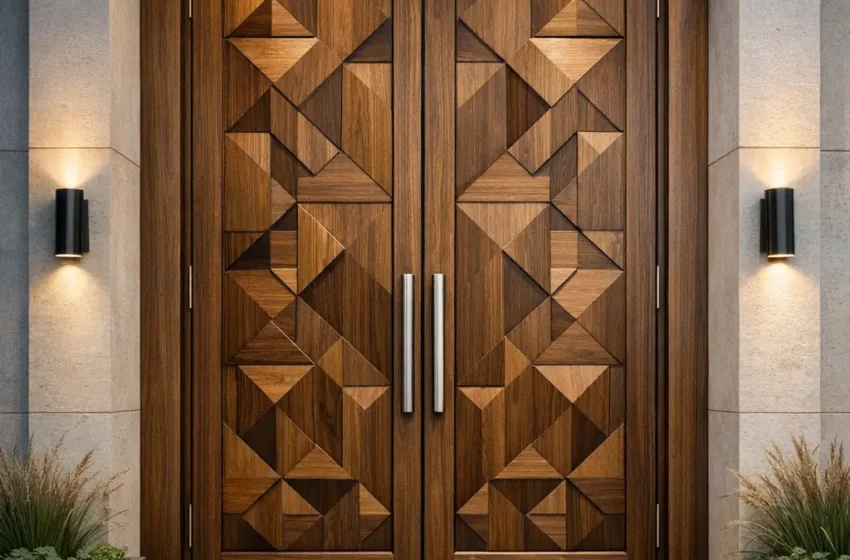
Double Wooden Door With Geometric Panels
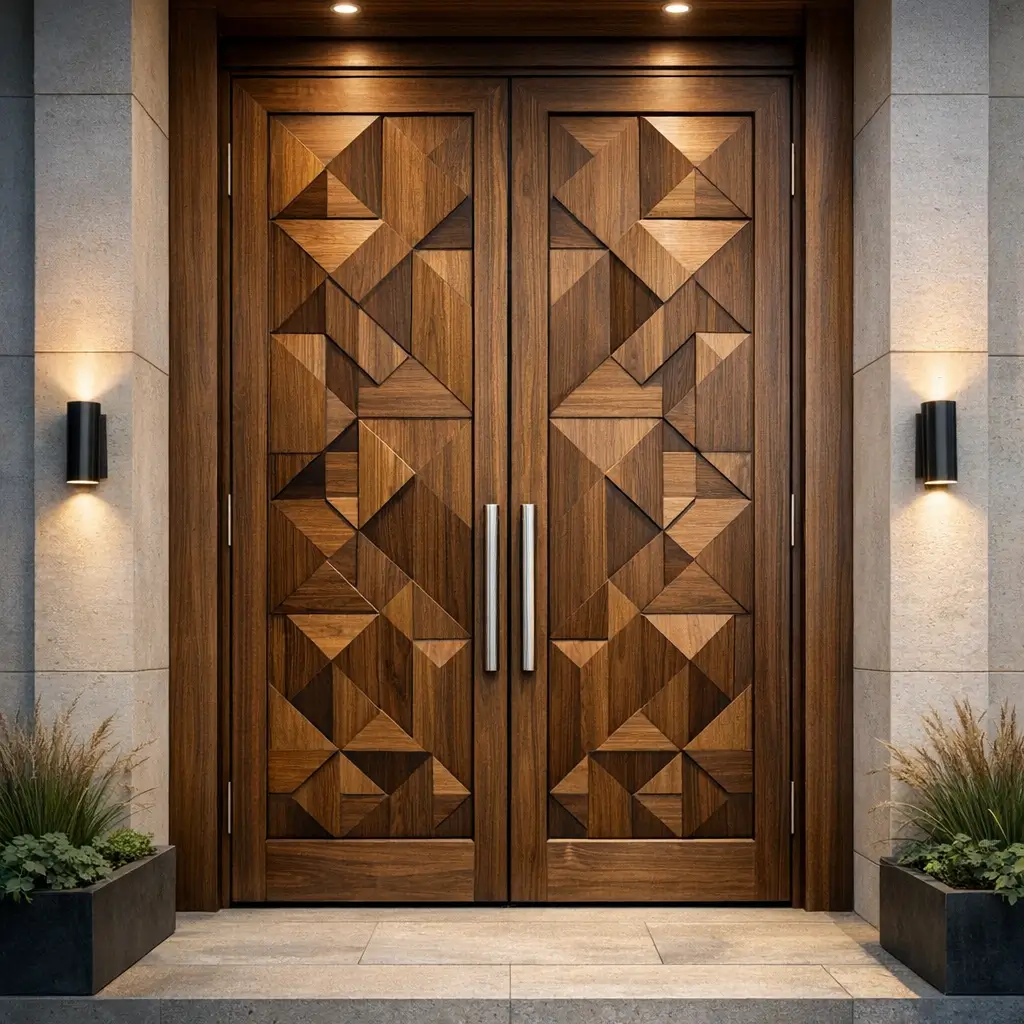
Double doors already make a statement—add geometric panels and you’ve got architecture that demands attention. These symmetrical beauties turn entrances into events.
The Power of Pairs
Double doors create different psychology than single doors. They suggest grandeur, preparation, and ceremony. When both doors open, the entrance becomes an experience rather than just a passage. Add geometric patterns, and you’ve got rhythm and visual interest that single doors can’t achieve.
I installed double doors with hexagonal panels in my dining room, and now every dinner party feels like an occasion. There’s something about pushing both doors open that makes guests feel special—even if we’re just having takeout.
Geometric Patterns That Work
Successful geometric designs consider scale and proportion:
- Squares and rectangles: Classic, versatile, always appropriate
- Diamonds: Adding movement and visual interest
- Hexagons: Modern, organic despite being geometric
- Circles: Softening angular architecture
- Mixed patterns: Creating complexity through combination
Creating Visual Balance
Double doors with geometric panels need careful planning:
- Mirror the pattern exactly for formal symmetry
- Vary the pattern slightly for subtle interest
- Use consistent proportions across both doors
- Consider how patterns align when doors close
- Think about shadows and how they’ll enhance the geometry
The biggest mistake people make? Using patterns that are too small or too busy. Remember, these doors need to look good from across the room, not just up close.
Also Read: 12 Creative Double Door Design Ideas to Elevate Your Interior
Traditional Handcrafted Wooden Door Design
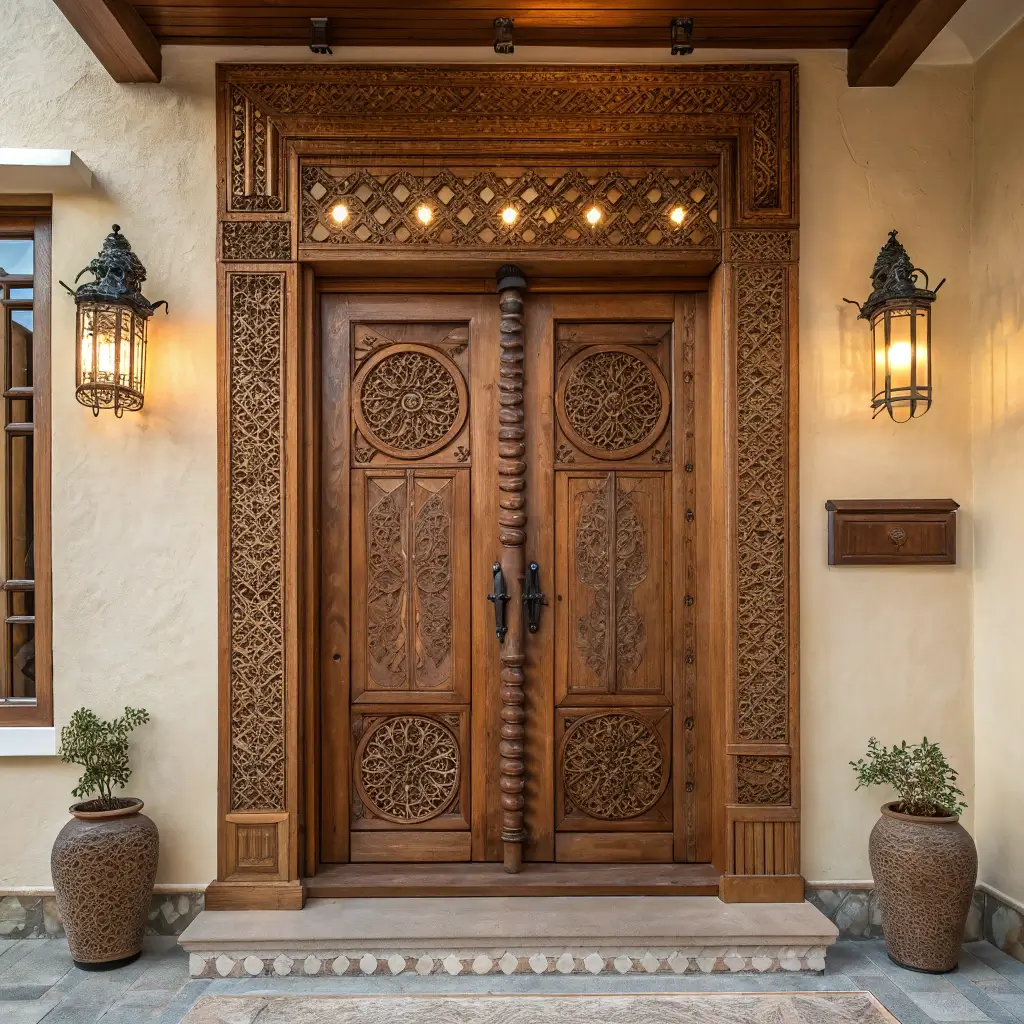
Handcrafted doors connect us to woodworking traditions that machines can’t replicate. These doors carry the maker’s touch in every joint, every carved detail, every carefully fitted panel.
The Human Touch
Machine-made doors have perfect consistency, but handcrafted doors have soul. You can see slight variations that prove human hands shaped the wood, tool marks that tell the story of creation, and details that required decisions, not programming.
A master craftsman made my front door, and you can literally feel the quality when you touch it. The joints are so precise they seem to disappear, yet each mortise and tenon was cut by hand. That’s craftsmanship you can’t fake :/
Traditional Joinery Techniques
Real handcrafted doors use time-tested methods:
- Mortise and tenon: The gold standard for strength
- Dovetail joints: Beautiful and functional
- Wedged through-tenons: Visible joinery as decoration
- Cope and stick: Traditional panel construction
- Hand-cut moldings: Profiles machines can’t replicate
Finding True Craftspeople
Here’s the challenge—finding actual craftspeople rather than people with routers calling themselves artisans. Look for:
- Portfolio showing consistent quality
- Understanding of traditional techniques
- Willingness to explain their process
- Appropriate pricing (quality costs)
- References from previous clients
True craftsmanship takes time and costs money. If someone promises a handcrafted door in a week for the price of factory-made, run away.
Vertical Slat Wooden Door Style
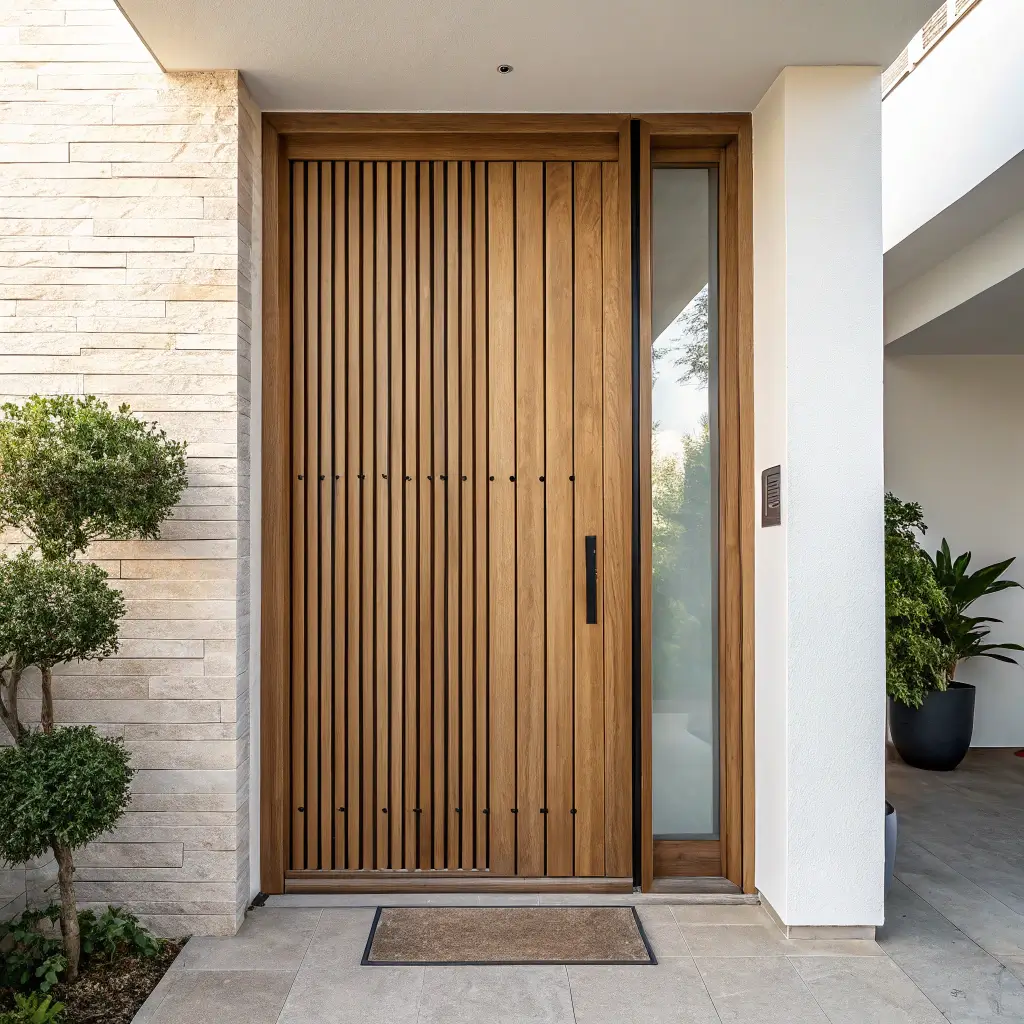
Vertical slat doors bring rhythm and visual interest through repetition. These contemporary designs add texture without overwhelming, creating doors that feel both modern and timeless.
The Slat Strategy
Vertical slats do interesting things to space perception. They draw eyes upward, making entrances feel taller. They create shadows that change throughout the day. They add privacy while maintaining airflow (depending on spacing).
I built a slat door for my bathroom using cedar strips with small gaps between them. The door provides privacy while allowing ventilation—solving the eternal bathroom humidity problem. Plus, the vertical lines make my low ceiling feel higher.
Spacing and Proportion
The magic is in the gaps:
- Tight spacing: More privacy, more formal appearance
- Wide spacing: Better airflow, more casual look
- Variable spacing: Creating rhythm and visual interest
- No spacing: Solid surface with linear texture
- Graduated spacing: Creating movement and flow
Wood Selection for Slats
Different woods create different effects:
- Cedar: Natural moisture resistance for bathrooms
- Pine: Affordable with nice grain
- Hardwoods: Durability for high-traffic areas
- Bamboo: Sustainable with consistent color
- Mixed woods: Creating pattern through variety
The key is consistency in dimension and finish. Even small variations in slat width or spacing become glaringly obvious in the finished door. Precision matters more here than in almost any other door style.
Rustic Wooden Door With Raw Texture
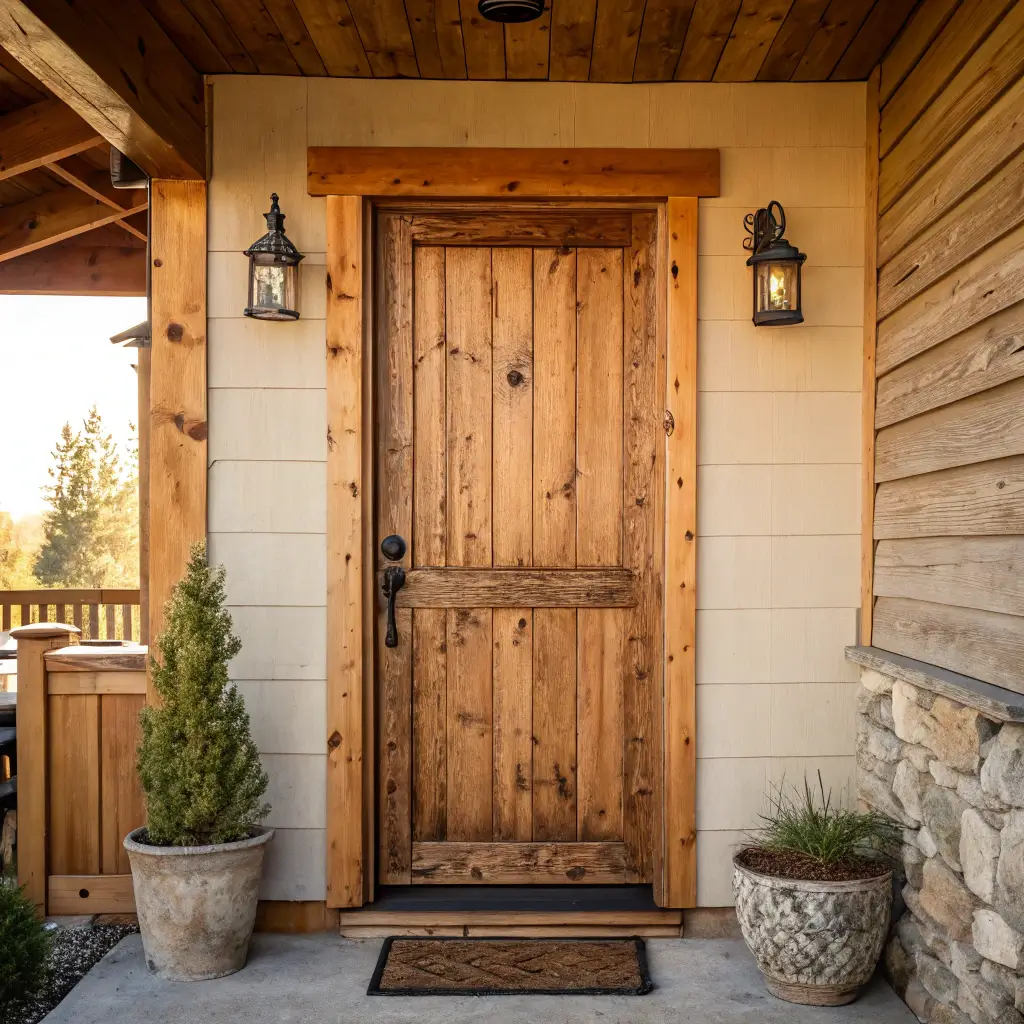
Rustic doors embrace what refined doors try to eliminate—knots, cracks, weathering, and natural imperfections that tell the wood’s story. These doors bring authenticity that manufactured “distressing” can’t match.
Embracing Imperfection
Raw texture celebrates wood’s journey. Saw marks from milling, weathering from exposure, nail holes from previous use, and natural aging patterns all contribute character. It’s the difference between genuinely vintage jeans and those pre-ripped ones from the mall.
My workshop door is made from barn siding that’s probably 100 years old. Every board shows different weathering patterns, creating this amazing patchwork of greys and browns. Visitors always want to touch it—there’s something about authentic aging that draws people in.
Sources for Rustic Character
Finding genuinely rustic wood requires hunting:
- Reclaimed barn wood: The holy grail of rustic
- Driftwood: Naturally weathered and sculpted
- Salvaged lumber: From old buildings with history
- Dead standing timber: Naturally aged while vertical
- Fire-damaged wood: Creating unique charred textures
Preserving Raw Character
The challenge with rustic doors is maintaining character while ensuring function:
- Stabilize loose pieces without over-restoration
- Seal surfaces while maintaining texture
- Address structural issues without losing patina
- Balance weathering with weather resistance
- Keep the story while ensuring longevity
Sometimes the best treatment is minimal treatment. Let the wood’s history show through rather than trying to “perfect” it.
Also Read: 10 Inspiring Entrance Door Design Ideas and Modern Trends
Wooden Door With Glass Panel Accents
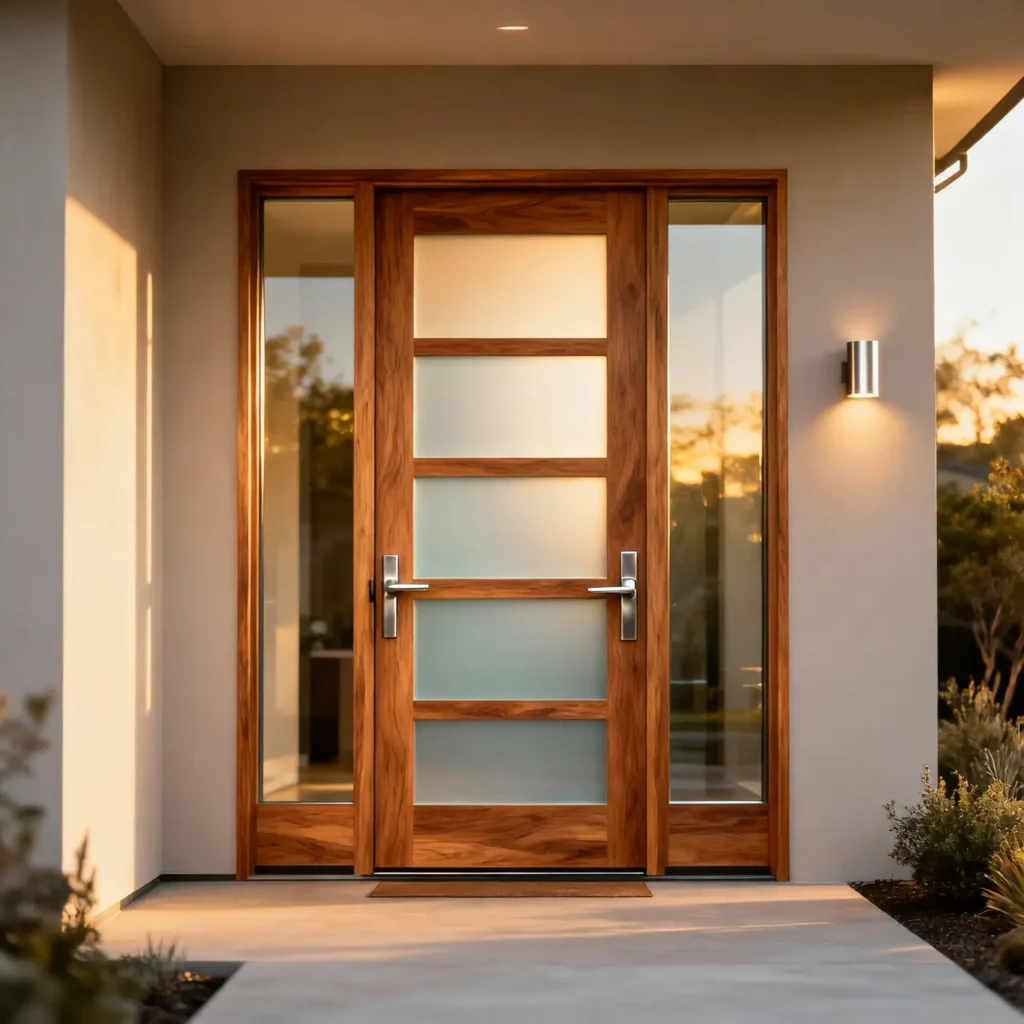
Glass and wood together create doors that balance privacy with light, solidity with transparency. These combinations solve the eternal entrance dilemma—wanting to see who’s there without living in a fishbowl.
The Light and Privacy Balance
Glass panels in wooden doors offer flexible solutions. You control visibility through glass type, determine light levels through placement, and maintain security through proper planning. It’s basically having your cake and eating it too.
I added glass panels to my solid office door, and the difference was immediate. The room went from cave-like to bright while maintaining privacy through frosted glass. Sometimes a little transparency goes a long way.
Glass Integration Styles
Different approaches create different effects:
- Top panels: Maximum light, maintained privacy
- Side lights: Framing the door with brightness
- Geometric inserts: Adding pattern and interest
- Full-length panels: Creating drama and openness
- Scattered small panels: Playful and unique
Glass Options for Every Need
Modern glass technology offers amazing choices:
- Clear: Maximum light and visibility
- Frosted: Privacy without darkness
- Textured: Adding pattern and partial obscurity
- Colored: Creating mood and style
- Smart glass: Electronic opacity control
The glass you choose dramatically affects the door’s personality. Clear glass feels open and welcoming, while textured glass adds mystery and sophistication.
Making Your Wooden Door Decision
After exploring all these options, how do you actually choose? Start by considering your specific needs, architectural style, and daily life patterns.
Think about maintenance honestly. Some woods need regular care while others age gracefully with neglect. Consider your climate too—humidity, temperature swings, and sun exposure all affect wood differently.
Budget matters, but remember that doors are long-term investments. A quality wooden door can last generations with proper care. Sometimes saving for the door you really want beats settling for something that’ll bug you daily.
Most importantly, choose a door that makes you happy. You’ll interact with it multiple times every day. That daily satisfaction (or frustration) adds up over years. IMO, life’s too short for boring doors 🙂
Installation and Maintenance Tips
Even the best wooden door needs proper installation and care. Here’s what I’ve learned through multiple door projects:
Professional installation usually pays for itself through proper function and longevity. If you’re DIY-ing, invest in quality hardware—cheap hinges lead to sagging doors. Make sure your frame is square and level; even small variations cause big problems.
For maintenance, establish a routine based on your door’s needs. Oil finishes need refreshing annually, painted doors need touch-ups, and natural finishes need occasional cleaning. Prevention beats restoration every time.
Final Thoughts
Wooden doors offer something manufactured materials can’t match—warmth, character, and connection to nature.
Whether you choose minimal modern or ornately carved, each wooden door brings its own personality to your space.
I’ve installed, refinished, and obsessed over enough wooden doors to know they’re worth the effort. They age beautifully, feel substantial, and add value that goes beyond money.
Plus, there’s something deeply satisfying about the solid thunk of a well-made wooden door closing.
The beauty of wooden doors lies in their variety. From sleek minimal designs to rustic barn doors, from carved masterpieces to simple flush doors, wood adapts to any style while maintaining its essential character.
So stop accepting that boring door as permanent. Your entrance deserves better, and honestly, so do you.
Pick a style that speaks to you, invest in quality materials and craftsmanship, and create an entrance that makes you smile every time you come home. After all, first impressions matter—might as well make yours memorable!