10 Stylish Boy and Girl Shared Bedroom Ideas for Unique Decor
- Bedroom Design
 Ben
Ben- 0
- 32 minutes read
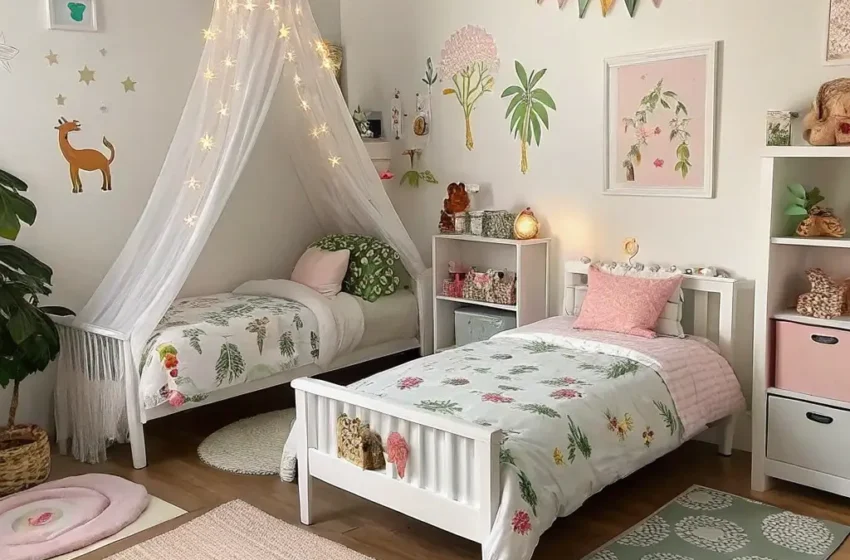
Telling your son and daughter they’ll be sharing a bedroom is like announcing you’ve decided to conduct a social experiment in your own home.
The outrage, the protests, the dramatic “it’s not FAIR!”—I’ve been there, and honestly? I thought my kids might actually move out (they were 5 and 7, so not realistic, but the threat felt real).
Here’s the thing about boy and girl shared bedrooms: they’re more common than you think, whether due to space constraints, new siblings, or that whole “building character through compromise” thing we tell ourselves.
After three years of my son and daughter sharing a room (and surviving to tell the tale), plus helping design shared spaces for four other families, I’ve learned what actually works versus what looks cute on Pinterest but creates daily civil war.
These boy and girl shared bedroom ideas come from real-life experience—the good, the bad, and the “why is there glitter in your brother’s LEGO bin?” moments.
Whether you’re dealing with toddlers or teens, tight spaces or just trying to make peace between drastically different personalities, these solutions will help you create a shared space that actually functions without needing a mediator.
1. Cozy Color-Blocked Shared Bedroom
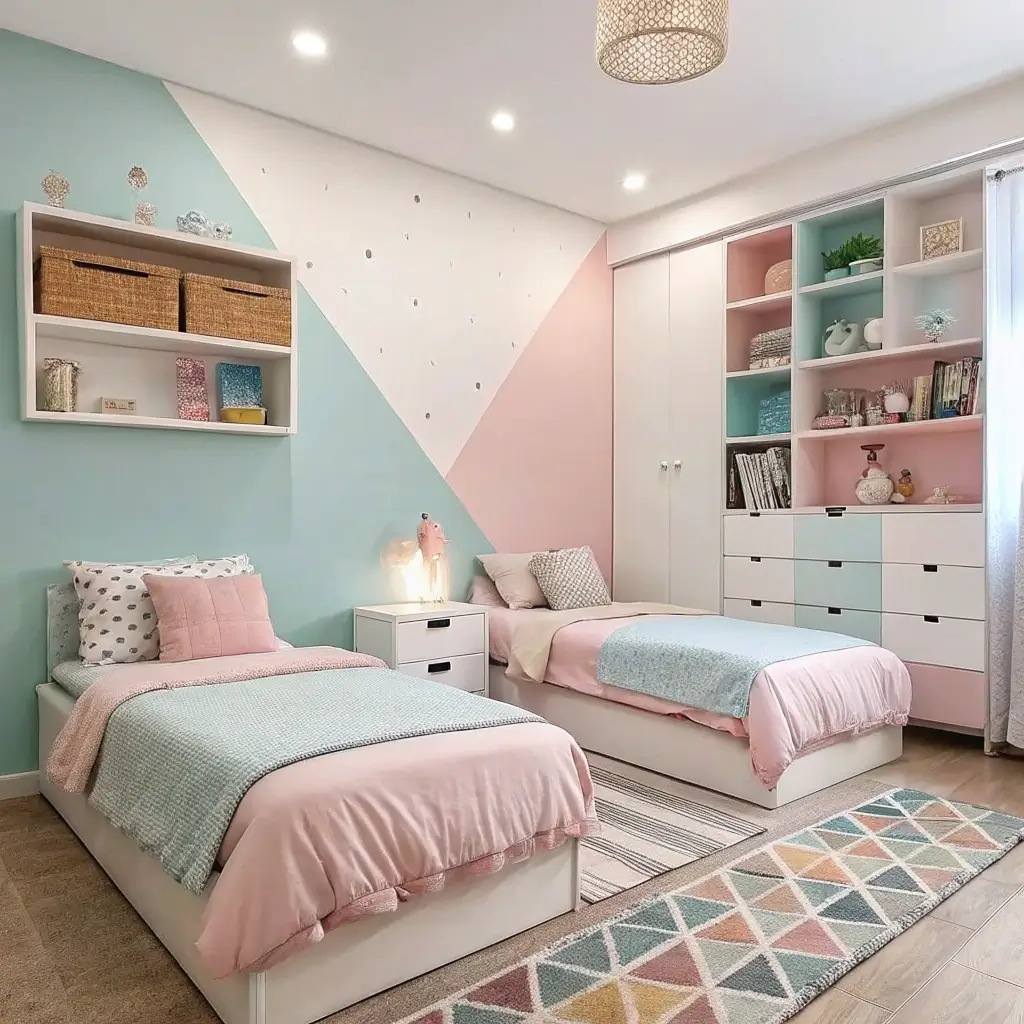
The cozy color-blocked shared bedroom gives each child their own visual territory without building an actual wall down the middle (though some days you’ll consider it). It’s like creating two distinct spaces that somehow still work together as one cohesive room.
My friend Sarah nailed this approach with her 6-year-old twins. She painted one half of the room navy blue and the other half sage green, with a white strip down the middle acting as neutral ground. Each kid got their own color zone, which dramatically reduced the “she’s on MY side” battles. The visible boundary helped them understand personal space in a way that words never could.
Making Color-Blocking Work for Both
Essential color-blocking strategies:
• Choose complementary colors that work together visually
• Use neutral furniture to bridge both color zones
• Paint one wall per child or divide the room vertically
• Keep the ceiling neutral to maintain cohesion
• Add each child’s color in the opposite zone for unity
• Let kids help choose their colors (within pre-approved options)
What makes color-blocking brilliant for shared rooms? Clear visual boundaries without physical barriers. Kids understand “my space” versus “shared space” immediately. Plus, each child gets personalization without the room looking like two completely different spaces smashed together.
The Neutral Zone Strategy
Here’s what I learned: you need a neutral meeting zone where neither color dominates. This becomes the shared territory—the play area, the doorway, or the center of the room. It’s Switzerland, basically, and it prevents that awkward color clash right down the middle.
2. Loft Bed Space-Saving Layout
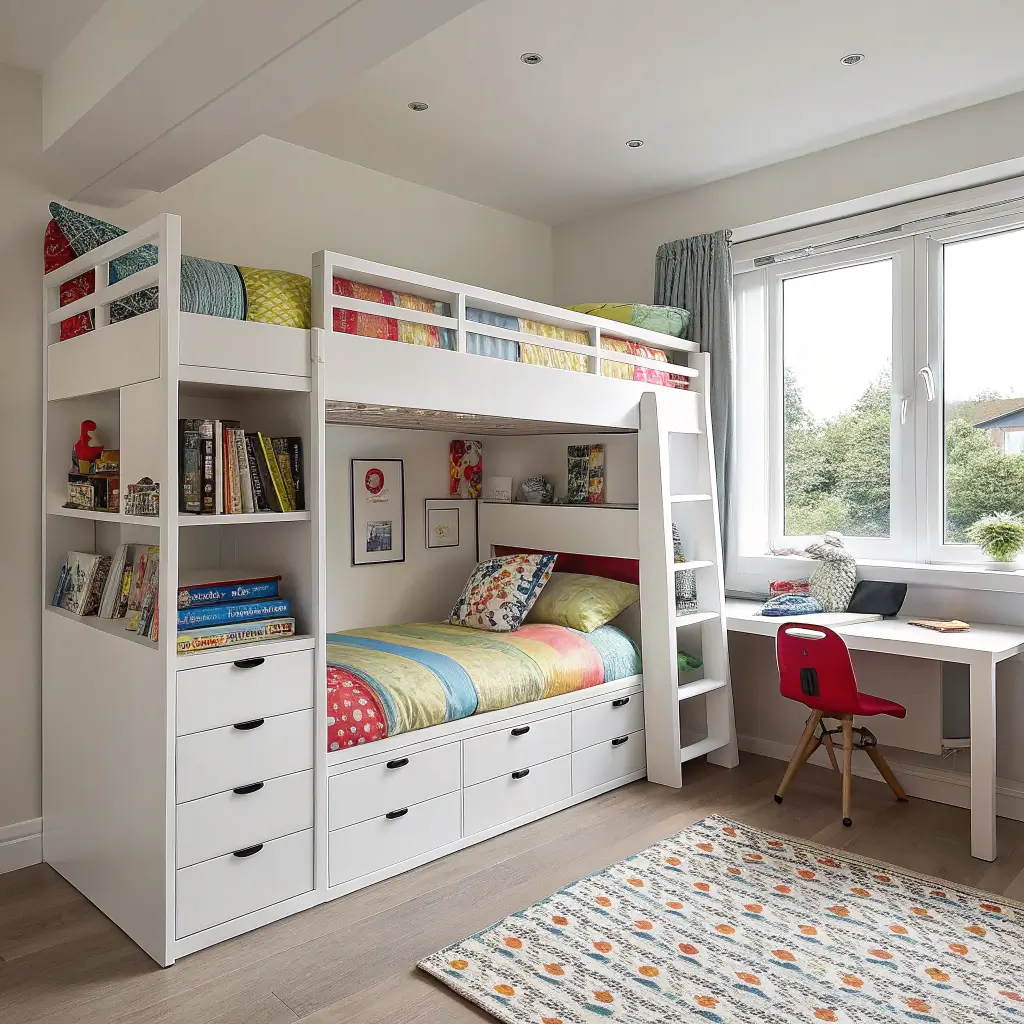
The loft bed space-saving layout might be the single best invention for shared bedrooms. Seriously, whoever figured out you could stack kids vertically (safely) deserves a medal. It doubles your floor space while giving each child a defined sleeping zone.
My kids’ shared room used a loft bed configuration for two years, and it transformed the space. My son had the loft bed with his desk underneath, while my daughter had a low bed with her reading nook beside it. The vertical sleeping arrangement meant we had actual floor space for playing, which reduced approximately 73% of the fighting (I’m being scientific here).
Loft Bed Configurations That Work
Popular loft setups for shared rooms:
• One loft bed with desk/play area underneath, one standard bed
• L-shaped loft beds creating corner sleep zones
• Loft bed with storage cubbies underneath
• Low loft for younger kids, standard height for older ones
• Separate lofts creating two distinct zones
The beauty of loft beds? They create natural separation. The kid on top has their own elevated sanctuary, while the kid on bottom has a defined space below. It’s like bunk beds but with the bonus of functional space instead of just another bed.
Safety Reality Check
FYI, loft beds require serious safety considerations. My son was six when we installed his, and we had strict rules: no playing on the ladder, guard rails always up, and his younger sister wasn’t allowed up there unsupervised. Make sure you follow age recommendations—most experts say kids should be at least 6 before sleeping in a loft.
3. Personalized Storage Zones for Siblings
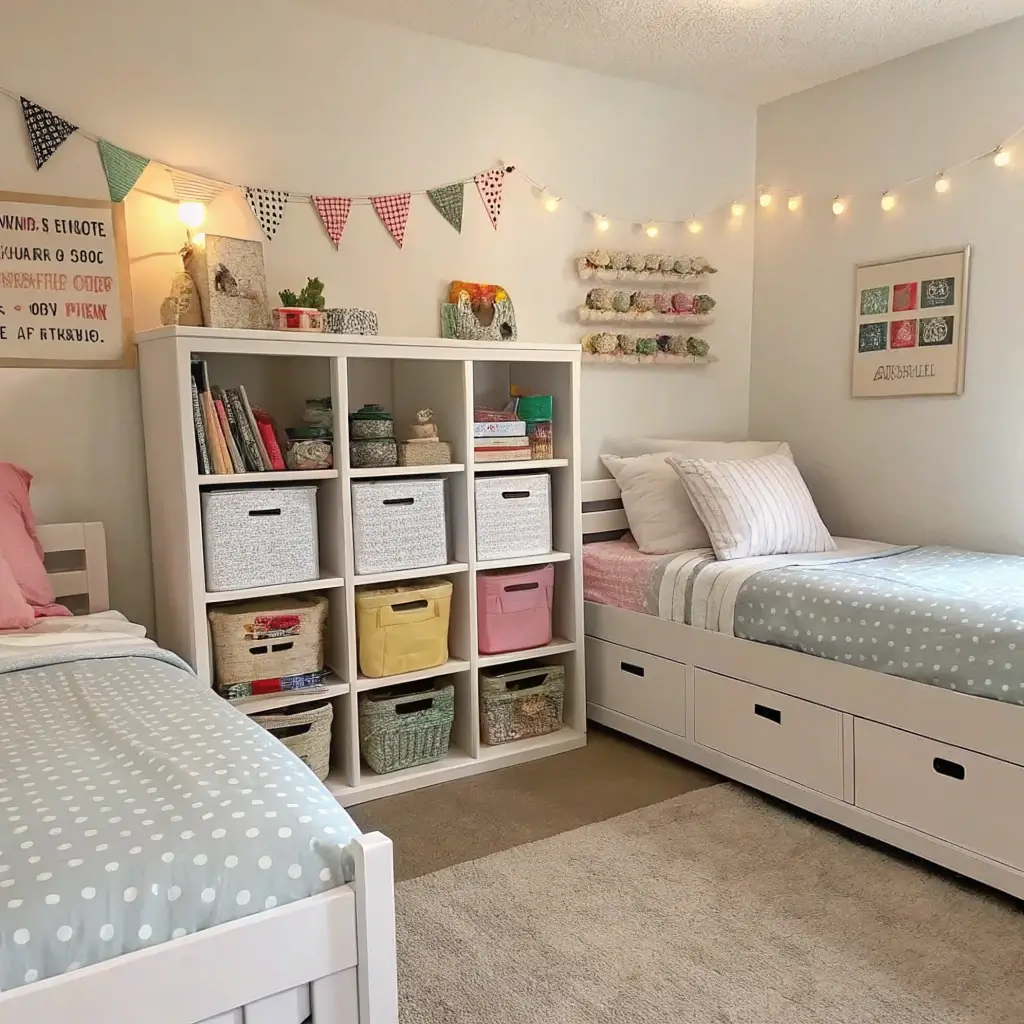
Ever notice how approximately 90% of sibling fights in shared bedrooms involve stuff? Personalized storage zones give each child designated space for their belongings, dramatically reducing the “that’s MINE!” screaming matches.
I watched my neighbor’s kids stop fighting almost overnight when she created personalized storage zones. Each child got their own color-coded bins, labeled shelves, and a designated closet section. The rule was simple: you only touch your storage zones unless you ask permission. Game-changer.
Creating Clear Storage Boundaries
Essential personalized storage elements:
• Color-coded storage bins for each child
• Separate closet sections with dividers
• Individual bookshelves or bookends for personal books
• Labeled drawers making ownership crystal clear
• Under-bed storage boxes designated per child
• Personal cubbies for treasured items
What makes personalized storage work? Visual clarity. When a bin is bright blue and has “Jake” written on it, there’s no argument about whose stuff belongs there. Even young kids understand the system immediately.
The Shared Storage Dilemma
You’ll also need shared storage for common items—art supplies, blocks, dress-up clothes. Create a clear category of “shared stuff” that belongs to both kids equally. We use a neutral-colored bin labeled “BOTH” for these items, and the kids police it themselves.
ASlso Read: 12 Creative Blue Girls Bedroom Ideas and Fun Color Combos
4. Dual Study Desk Setup Ideas
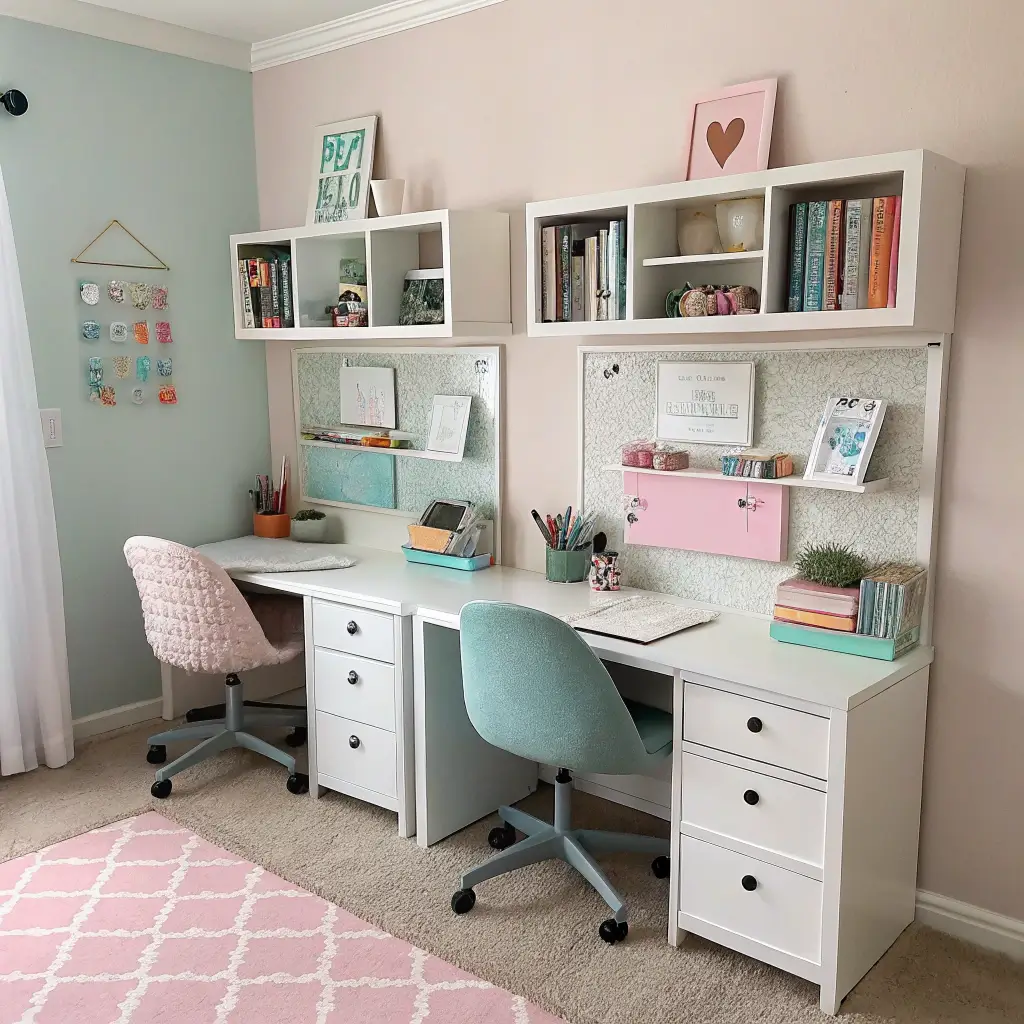
The dual study desk setup becomes crucial once homework enters the picture. Two kids trying to study in the same space while maintaining peace? Yeah, you need a strategy.
My kids share a room with two separate desks positioned in opposite corners. They face away from each other to minimize distraction, each has their own desk lamp, and we have a “quiet homework time” rule. It works about 85% of the time, which in shared bedroom math equals massive success.
Desk Configurations That Minimize Conflict
Effective dual desk setups:
• Corner desks facing different directions
• Long shared desk with divider down the middle
• Back-to-back desk arrangement
• Desks on opposite walls for maximum separation
• One desk per child with individual task lighting
• Built-in desk areas with designated boundaries
The key to dual desks? Separation and equality. Desks should be identical in size and quality to prevent “hers is better” complaints. Position them so kids aren’t staring at each other (trust me on this), and ensure each has adequate lighting and storage.
Managing Homework Wars
Here’s the real talk: sometimes one kid has homework and the other wants to play. Create rules around homework time—when one sibling has homework, the other needs quiet activities. We rotate who gets “priority quiet time” based on actual school schedules, which feels fairer than arbitrary rules.
5. Themed Corner Spaces for Each Child
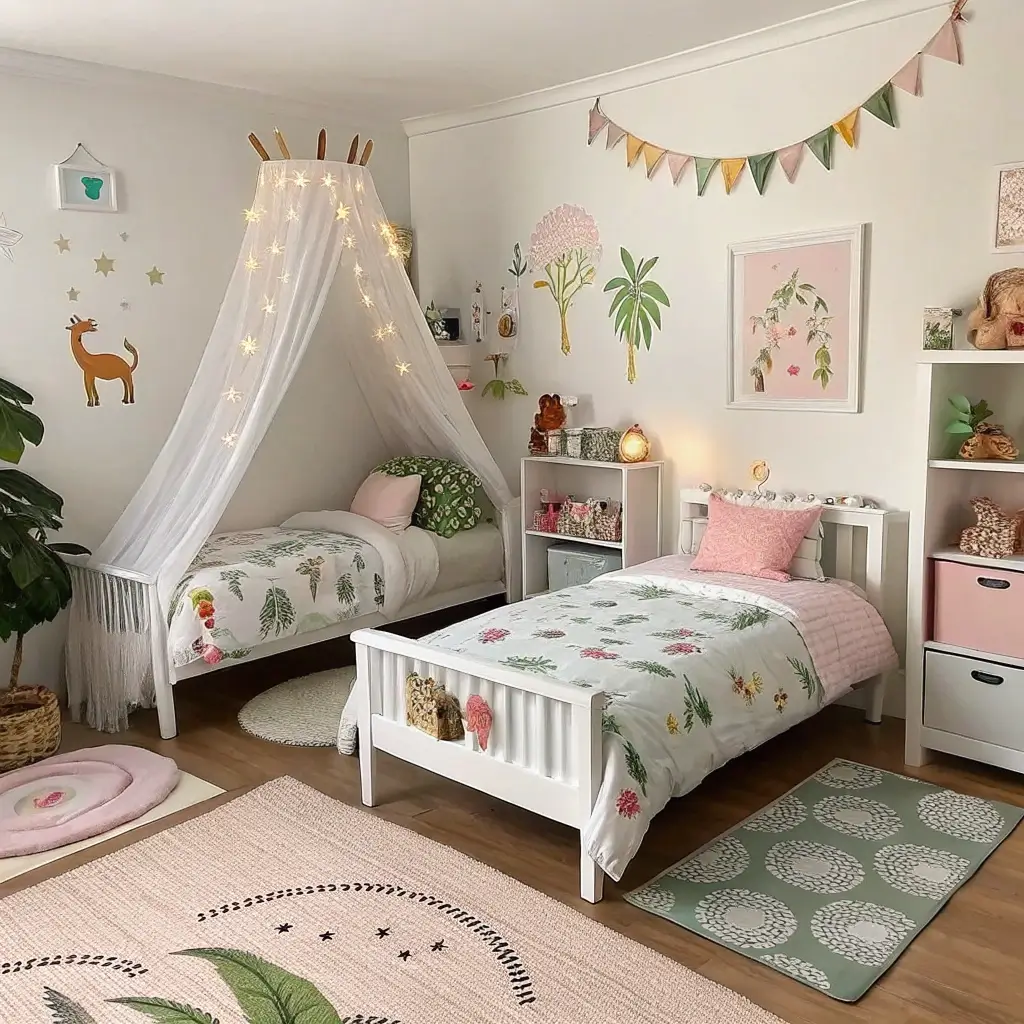
Themed corner spaces let each child express their personality without the entire room descending into visual chaos. Your daughter can have her unicorn corner while your son has his dinosaur zone, and somehow it all coexists.
My friend implemented themed corners brilliantly—her daughter’s corner has fairy lights and stuffed animals while her son’s corner features superhero posters and a LEGO display. The corners reflect individual interests while the main room stays neutral. Both kids feel seen and represented.
Making Personal Corners Work
Creating successful themed corners:
• Designate one corner per child as their personal zone
• Keep themes contained to that specific area
• Use neutral furniture throughout the room
• Let kids decorate their corners with removable items
• Establish boundaries for where themes can extend
• Rotate themes easily as interests change
What makes themed corners genius? Compromise without sacrifice. Each child gets full creative control over their corner while the shared space remains cohesive. It teaches them that personal expression and shared space can coexist peacefully.
The Evolution Factor
Kids’ interests change faster than you can say “I thought you loved dinosaurs?” Keep themed corners easily changeable using removable wall decals, swappable bedding, and posters instead of painted murals. When your son decides superheroes are “for babies,” you’re swapping posters, not repainting walls.
6. Minimalist Modern Shared Bedroom
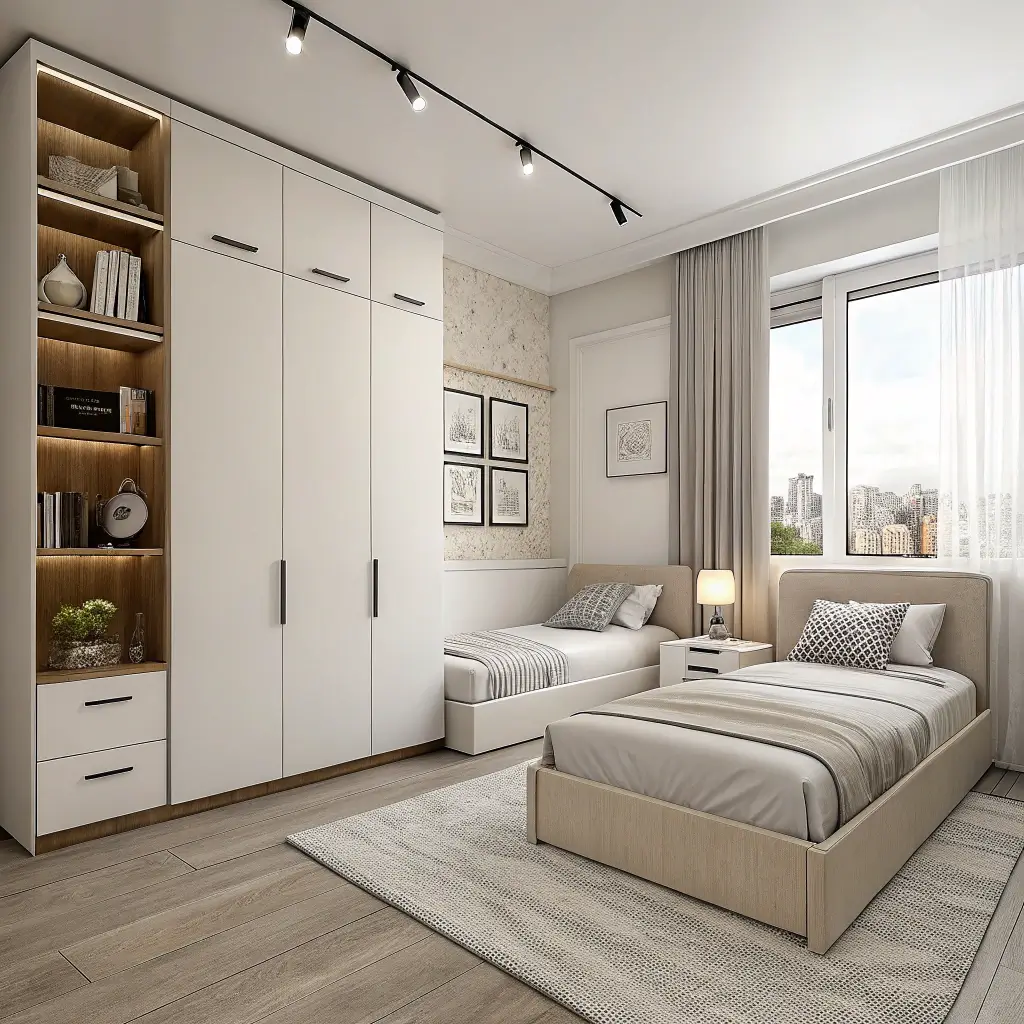
The minimalist modern shared bedroom might sound counterintuitive for kids, but hear me out. Less visual clutter means less fighting over space and stuff. It’s peaceful neutrality that benefits everyone.
I converted my kids’ chaotic shared room to minimalist modern after a particularly stressful school year. White walls, light wood furniture, hidden storage, and exactly three decorative items per child. The calm atmosphere actually helped them sleep better and fight less. Sometimes less really is more.
Minimalism That Works for Kids
Essential minimalist elements:
• Neutral color palette (whites, grays, natural wood)
• Multi-functional furniture only
• Hidden storage to minimize visual clutter
• Quality over quantity in everything
• Three personal items displayed per child maximum
• Clean lines and simple designs
The challenge with minimalist shared rooms? Maintaining the minimalism. Kids accumulate stuff like it’s their job. Build in extensive hidden storage, implement toy rotation systems, and do regular purges (when kids aren’t looking—you know the drill).
Making It Kid-Friendly
Minimalism doesn’t mean sterile. Add warmth through textures—cozy throws, soft rugs, comfortable pillows. The room should feel calm but welcoming, not like a design magazine that nobody actually lives in 🙂
Also Read: 15 Cozy Modern Girls Bedroom Ideas for Every Style
7. Convertible Bunk Bed Designs
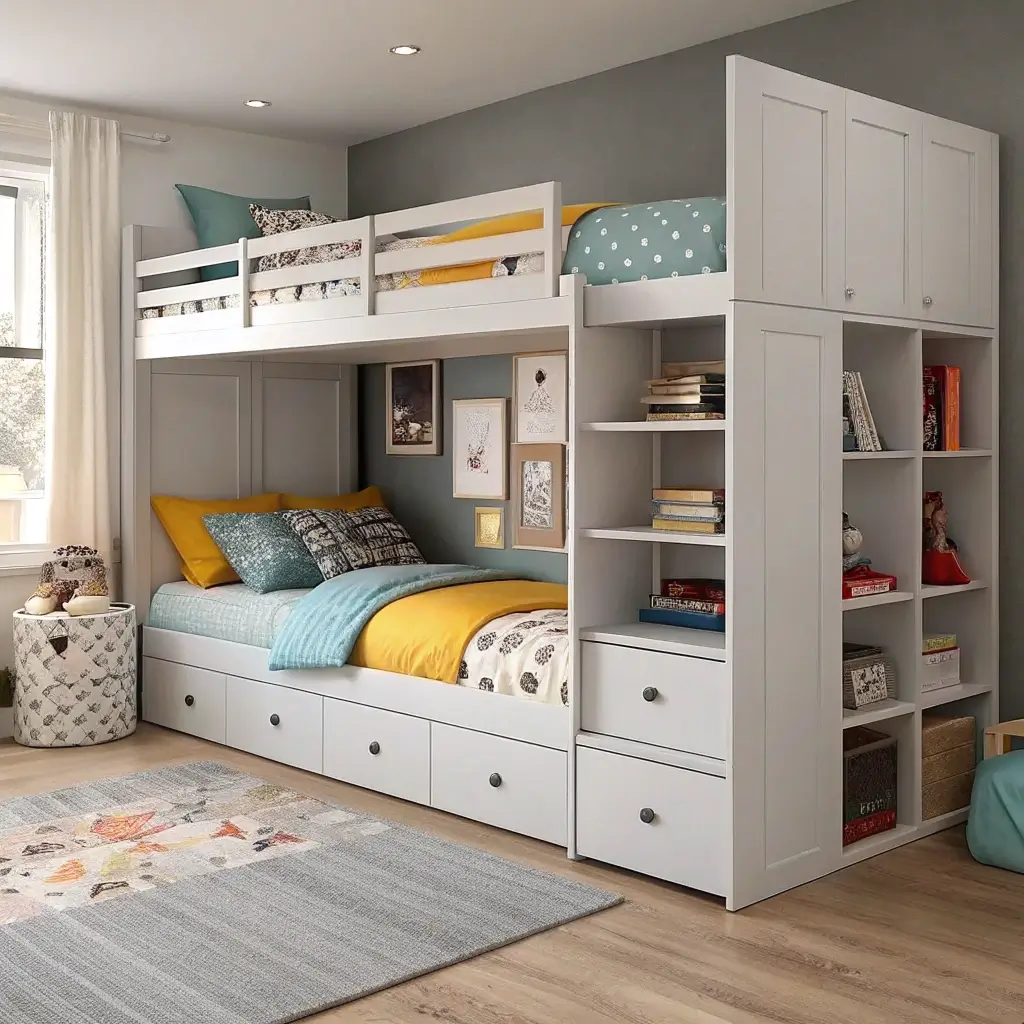
Convertible bunk bed designs solve the shared bedroom puzzle with flexibility. They work as bunks when kids are young and willing to share, then convert to separate beds when they need more independence (or when the top bunk becomes a war zone).
My sister invested in convertible bunk beds when her kids were 4 and 6. They used them as bunks for three years, then separated them into individual beds when her daughter hit the tween “I need privacy” phase. The furniture investment lasted through multiple room configurations.
Why Convertible Beds Make Sense
Benefits of convertible bunk beds:
• Longevity through different developmental stages
• Space efficiency when needed
• Separation options as kids age
• Cost-effective long-term investment
• Flexibility for room reconfigurations
• Safety for different age combinations
What makes convertible beds smart for boy/girl shared rooms? Adaptability. As kids age and need more privacy, you can separate the beds without buying new furniture. It grows with your family’s changing needs.
Investment Considerations
Quality convertible beds cost more upfront but save money long-term. I’m talking solid wood, not particle board that’ll crumble when you try to convert it. Look for designs that actually look good as separate beds, not obviously-bunks-that-got-separated.
8. Playful Wall Art Dividers
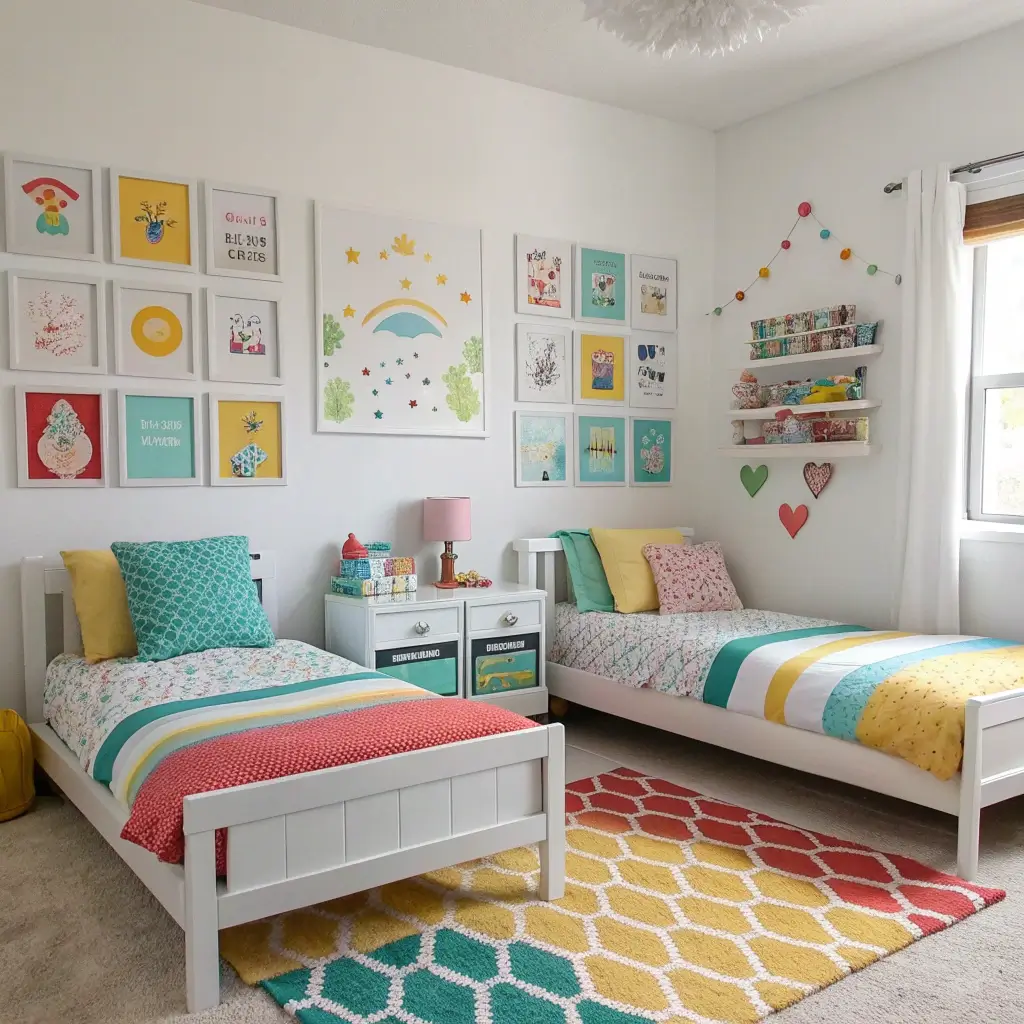
Playful wall art dividers create visual and psychological separation without permanent construction. They’re perfect for renters or anyone not ready to commit to actual room dividers.
My cousin used a large tree mural painted on the wall between her kids’ beds. The tree acted as a natural divider—son’s side had birds, daughter’s side had butterflies. It defined zones beautifully while still feeling like one cohesive room. Plus, it cost about $50 in paint versus hundreds for a physical divider.
Creative Wall Divider Ideas
Visual separation through art:
• Large-scale murals painted between sleeping areas
• Removable wallpaper creating distinct zones
• Gallery walls with different themes per side
• Painted geometric shapes dividing the space
• Oversized decals acting as visual barriers
• Hanging fabric panels that create soft division
IMO, wall art dividers work better than physical dividers for younger kids. Physical barriers just become things to fight over, climb on, or knock down. Visual dividers provide psychological separation without the temptation to destroy things.
Rental-Friendly Options
Renters can use removable wallpaper, wall decals, or fabric wall hangings to create division. I’ve seen incredible transformations using just washi tape to create geometric patterns that define zones. When you move out, everything peels off clean.
9. Nature-Inspired Shared Bedroom Decor
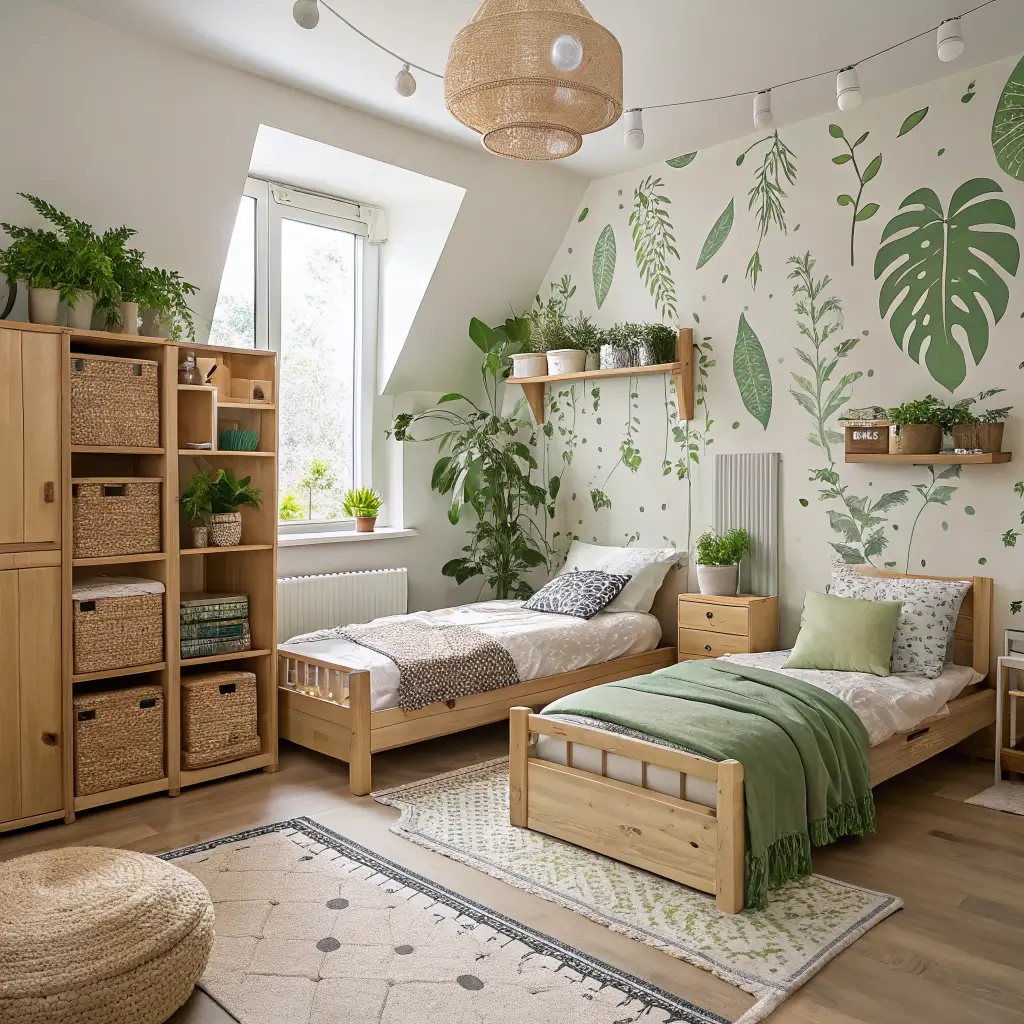
The nature-inspired shared bedroom brings calming outdoor elements inside, creating a peaceful environment that appeals to both boys and girls. It’s one of the few themes that genuinely works across gender without feeling forced.
My kids’ current room uses a nature theme, and it’s been the most successful design we’ve tried. Forest green walls, natural wood furniture, botanical prints, and tons of plants (mostly fake because I kill everything). Both kids love it, and the earthy tones create this zen atmosphere that actually helps with bedtime.
Universal Nature Elements
Nature decor that appeals to everyone:
• Earth-toned color palette (greens, browns, tans, soft blues)
• Natural materials (wood, rattan, jute)
• Plant life (real or high-quality fake)
• Nature photography or botanical prints
• Animal themes (realistic, not cartoon)
• Natural textures throughout
What makes nature themes perfect for shared boy/girl bedrooms? Universal appeal. Most kids connect with nature regardless of gender. Your son might prefer the mountain photos while your daughter loves the flowers, but they exist beautifully in the same theme.
Bringing Outdoors In
Nature themes teach environmental awareness while looking great. We use the room as a learning opportunity—identifying plants, discussing ecosystems, talking about wildlife. The decor becomes educational without feeling like school invaded their bedroom.
Also Read: 15 Inspiring Girls Bedroom Decor Ideas and Modern Chic Touches
10. DIY Multi-Functional Furniture Solutions
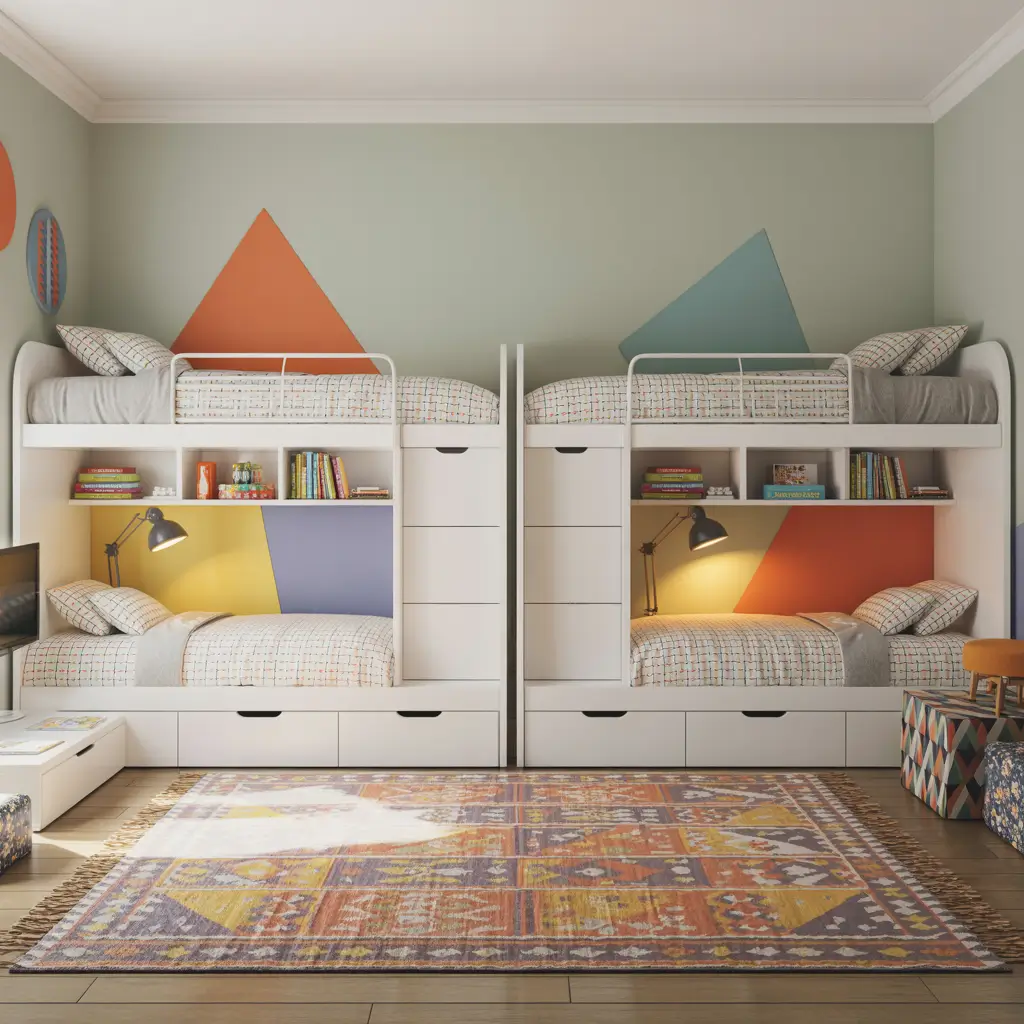
DIY multi-functional furniture solutions save money while creating exactly what your unique space needs. Sometimes the perfect shared bedroom furniture doesn’t exist in stores, so you build it yourself (or convince someone handy to help).
My husband built a custom unit for our kids that I couldn’t find anywhere—two beds with storage drawers underneath, a shared bookshelf divider between them, and built-in desks at the foot of each bed. It cost less than buying separate furniture and fit their room perfectly. Plus, the kids helped paint it, making them invested in taking care of it.
DIY Projects Worth Attempting
Functional DIY furniture ideas:
• Built-in bed platforms with storage underneath
• Custom closet systems maximizing every inch
• Fold-down desks that disappear when not needed
• Window seat with storage for shared space
• Modified bookcases creating room dividers
• Platform beds with integrated storage solutions
The beauty of DIY furniture? Perfect customization. You design for your exact space, your kids’ specific needs, and your budget. That narrow wall that standard furniture doesn’t fit? DIY solves it.
Realistic DIY Expectations
Full transparency: DIY furniture requires time, skills, and sometimes cursing at wood that won’t cooperate. Start with simple projects—adding storage to existing furniture, building basic shelving. Save complex builds for when you’ve gained confidence or can recruit skilled help. There’s no shame in hiring a handyperson to bring your vision to life.
Making Shared Bedrooms Actually Work
Here’s the truth about boy and girl shared bedrooms: the design matters, but the rules matter more. The most beautiful bedroom in the world won’t prevent fighting if you haven’t established clear boundaries, respect for personal space, and consequences for violations.
We have three golden rules for our shared bedroom: 1) Ask before touching anything in someone else’s zone, 2) Respect quiet time whether you need it or not, and 3) Shared spaces stay clean together. These rules prevent approximately 80% of potential conflicts.
The Investment Priority List
Where to spend money in shared bedrooms:
- Quality beds (they need good sleep more than anything)
- Adequate storage (fighting often stems from stuff issues)
- Personal lighting (reduces bedtime battles)
- Room darkening curtains (synchronized sleep schedules)
- Noise management (white noise machines, door draft stoppers)
The Bottom Line
Creating a successful boy and girl shared bedroom isn’t about finding the perfect Pinterest design—it’s about understanding your specific kids, your space limitations, and being willing to adjust as they grow.
These ten ideas provide frameworks, but you’ll need to customize based on your family’s unique dynamics.
The shared bedroom phase won’t last forever. Eventually, you’ll get more space or kids will move out, and weirdly, they’ll probably miss sharing a room with their sibling.
Those late-night giggles, the whispered conversations after lights out, the built-in playmate—shared bedrooms create bonds that separate rooms can’t replicate.
Start with one idea from this list that resonates with your situation. Maybe it’s color-blocking to create visual boundaries, or investing in that convertible bunk bed that’ll grow with them.
Build on it gradually, involve your kids in decisions where possible, and remember that perfection isn’t the goal—functional peace is.
And when you’re standing in the doorway at 2 AM refereeing yet another dispute about whose stuffed animal is on whose side, just remember: you’re building character, teaching compromise, and saving for therapy later.
The shared bedroom is temporary; the memories (and the stories you’ll tell at their weddings) are forever.