10 Creative Stairs and Hallway Ideas for Stylish Spaces
- Stairs Design
 Ben
Ben- 0
- 39 minutes read
You know that awkward space between your front door and the rest of your house? Yeah, the one you rush through without a second thought while juggling groceries and kicking off your shoes. Hallways and staircases get zero love, and honestly, they deserve better. I spent years treating mine like some boring afterthought until I finally realized these spaces have serious potential. Trust me, once you start seeing stairs and hallways as design opportunities rather than just functional zones, everything changes.
I’m about to walk you through ten killer ideas that’ll transform these overlooked areas into jaw-dropping features. Some are budget-friendly, others are splurge-worthy, but they’re all seriously cool. Let’s get into it.
Modern Minimalist Staircase Glow Upgrade
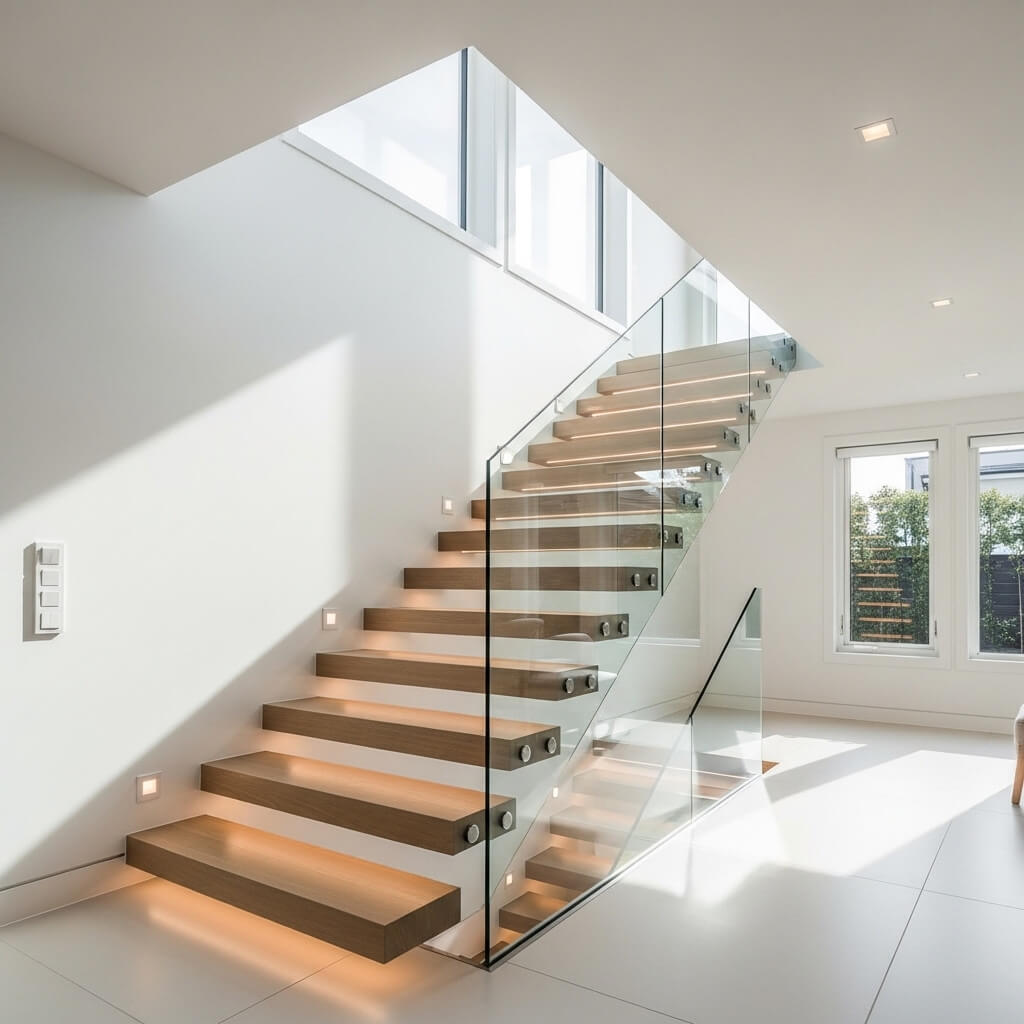
Remember when minimalism meant boring white walls and literally nothing else? Thank goodness we’ve evolved past that. Modern minimalist staircases now embrace the “less is more” philosophy while adding strategic pops of visual interest—and lighting does the heavy lifting here.
I recently helped a friend upgrade her builder-grade staircase, and we went full minimalist with a modern twist. We stripped the old carpeting (which, yikes, was gross), sanded down the treads to natural wood, and painted the risers in crisp white. Simple enough, right? But here’s where it gets interesting.
The Glow Factor
We installed recessed LED strip lighting along the side wall at baseboard level. These low-profile lights create this gorgeous ambient glow that makes the entire staircase look like it’s floating. You can set them to warm white for a cozy vibe or go full mood-lighting with color-changing options (though I’d save the disco colors for special occasions, unless that’s your thing).
The key elements for pulling off this look:
- Clean lines: Remove unnecessary railings or chunky balusters
- Neutral color palette: Stick to whites, grays, and natural wood tones
- Strategic lighting: Think recessed, linear, or under-tread LEDs
- Quality materials: Polished concrete, sleek metal railings, or glass panels
FYI, this approach works especially well in open-concept homes where your staircase sits front and center. The minimalist design doesn’t compete with your other spaces—it complements them. Plus, that subtle glow? Total game-changer for late-night trips to the kitchen.
Cozy Scandinavian Hallway Styling Ideas
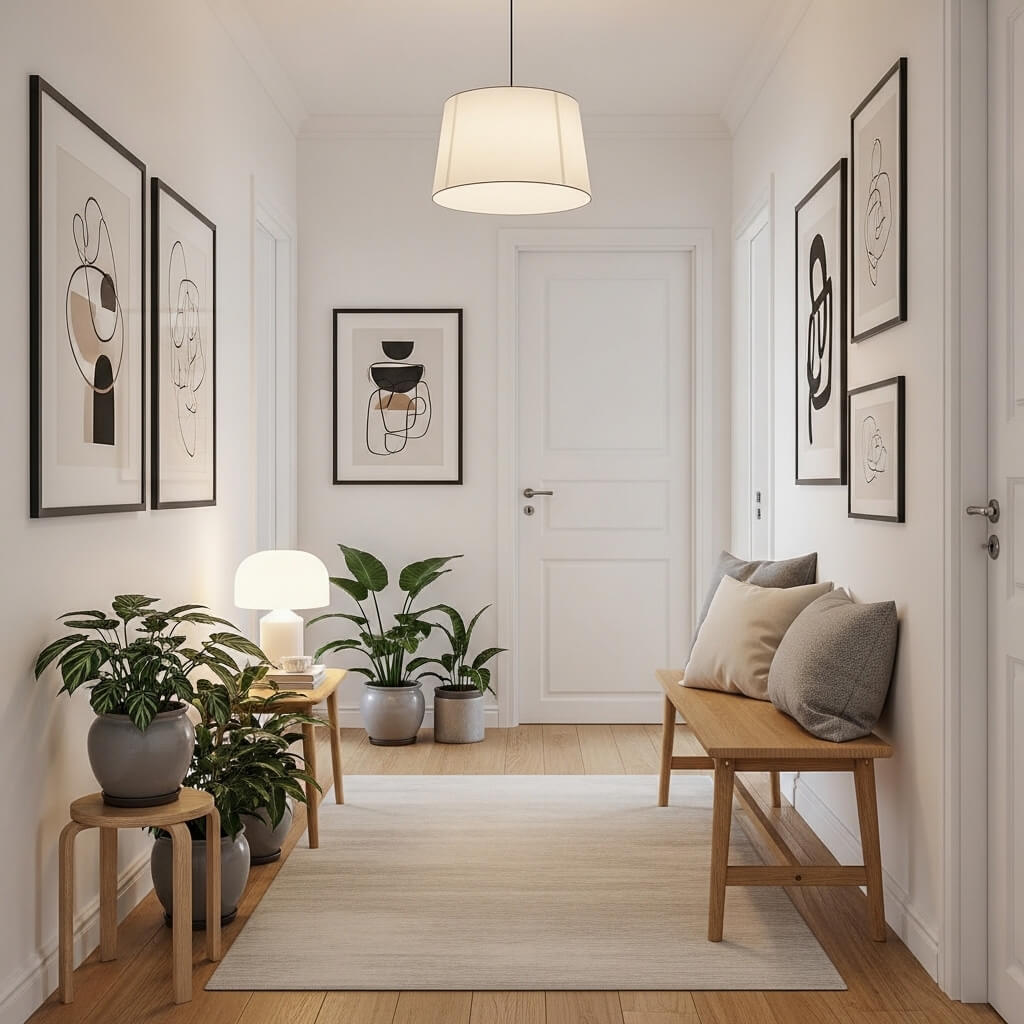
Scandinavian design has taken over Instagram for good reason—it’s warm, inviting, and somehow manages to feel both minimal and cozy at the same time. Ever wondered how Scandinavians nail that “hygge” vibe? It’s all about balancing simplicity with warmth.
Your hallway can totally channel this aesthetic, and you don’t need to move to Copenhagen to pull it off. I transformed my own narrow hallway using Scandi principles, and now it’s honestly my favorite spot in the house.
Creating That Nordic Charm
Start with a neutral base—think soft whites, warm grays, or gentle beiges on the walls. Scandinavian design loves natural light, but let’s be real: most hallways are basically tunnels with zero windows. I solved this by adding a large mirror with a simple wooden frame, which bounces light around and makes the space feel twice as big.
Next, bring in natural textures:
- A wool runner rug in muted tones (mine has subtle geometric patterns)
- Wooden hooks or a wall-mounted coat rack in light oak or birch
- Woven baskets for storing shoes, scarves, or random stuff you grab on your way out
- Simple black-and-white photography or botanical prints in slim frames
Here’s the thing about Scandinavian style—it’s functional as hell. Every piece serves a purpose. I added a narrow wooden bench that provides seating while housing storage baskets underneath. Above it, I mounted simple hooks for bags and coats. Form meets function, and it looks effortlessly chic.
Don’t forget plants! Even a low-light hallway can support hardy varieties like pothos or snake plants. I have a snake plant in a minimal ceramic pot sitting on my bench, and it’s thriving despite my terrible plant parent skills 🙂
Luxury Marble Staircase Entrance Designs
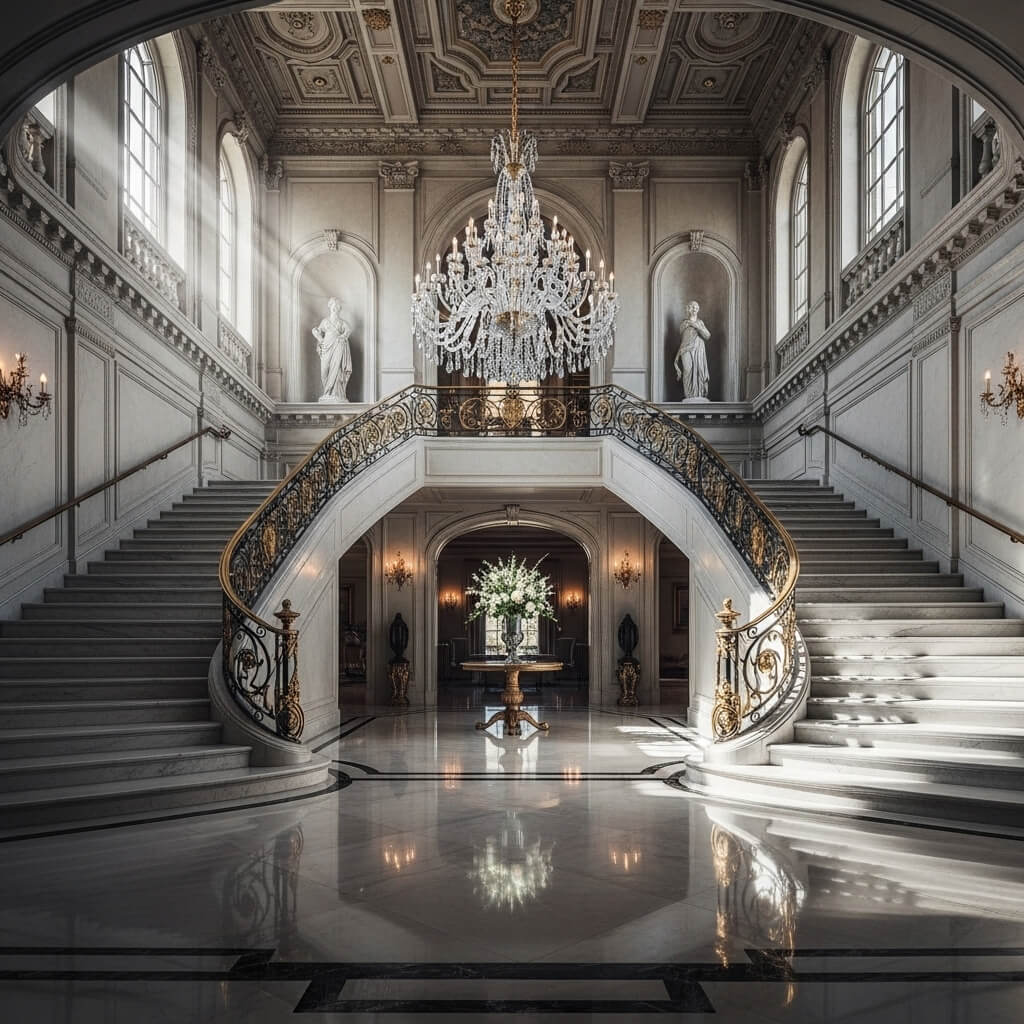
Okay, let’s talk about going all out. Marble staircases scream luxury louder than basically anything else in interior design. Yeah, they’re an investment, but if you want your entrance to make people stop dead in their tracks, marble delivers.
I toured a renovated brownstone last year where the owners installed a marble staircase, and I literally gasped when I walked in. The veining in the stone caught the light from their chandelier, creating this sophisticated, almost ethereal effect. Worth every penny, IMO.
Choosing Your Marble
Not all marble is created equal, and this matters more than you’d think:
- Carrara: Classic white with soft gray veining—timeless and slightly more affordable
- Calacatta: Bolder veining, more dramatic, pricier (but absolutely stunning)
- Emperador: Rich browns for a warmer, earthier luxury vibe
- Nero Marquina: Black marble with white veining for ultra-modern drama
Pro tip: Marble requires maintenance. It stains, it scratches, it’s porous. You need to seal it regularly and clean spills immediately. But if you’re willing to put in that effort? The payoff is incredible.
For a full luxury entrance, pair your marble stairs with:
- Brass or gold-toned railings for that old-world elegance
- Statement lighting like a chandelier or sculptural pendant
- Minimal accessories—let the marble be the star
- Complementary marble accents on nearby walls or flooring
Is it practical for a house full of kids and dogs? Probably not. But for an elegant adult home where you want serious wow-factor? Absolutely worth considering.
Also Read: 10 Brilliant Stairs Design Interior Ideas Smart Space Designs
Small Hallway Space-Saving Storage Hacks
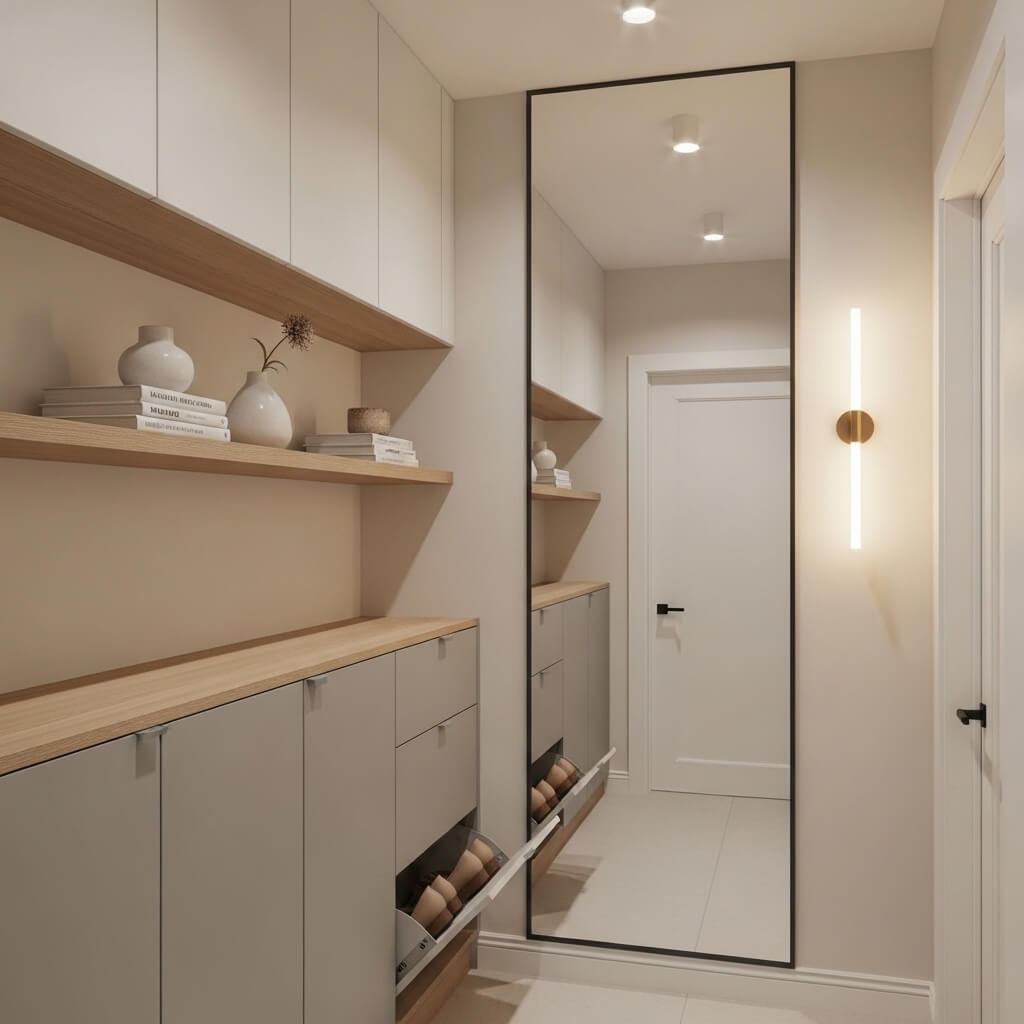
Small hallways are the worst. You need somewhere to stash shoes, coats, bags, and keys, but you’ve got approximately three square feet to work with. I’ve lived in more than one apartment where the “hallway” was basically just a doorway with delusions of grandeur.
The secret? Vertical thinking and multi-functional pieces. When you can’t expand outward, you expand upward and get creative with dual-purpose furniture.
Maximizing Every Inch
I installed floating shelves about a foot below the ceiling in my tiny hallway. Nobody ever looks up there, so it’s perfect for storing seasonal items, extra bags, or things I don’t need daily. Below that, I mounted a slim coat rack with a built-in shelf on top for keys and sunglasses.
Here are the space-saving heroes that actually work:
- Wall-mounted drop-leaf tables: Fold down when you need a surface, fold up when you don’t
- Narrow console tables (like, 8-10 inches deep) with drawers for storage
- Over-the-door organizers for shoes, scarves, or cleaning supplies
- Pegboard walls: Customizable, functional, and surprisingly stylish when done right
- Sliding door shoe cabinets: Super slim but hold like 20 pairs
The mirror trick I mentioned earlier? Even more critical in small hallways. A full-length mirror visually doubles your space while serving the practical purpose of checking yourself before you leave. Win-win.
Don’t forget about corners—these dead zones can fit corner shelves or narrow triangular cabinets. I found one at IKEA that’s literally designed for tight hallway corners, and it holds way more than you’d expect.
Under-Stair Reading Nook Transformation
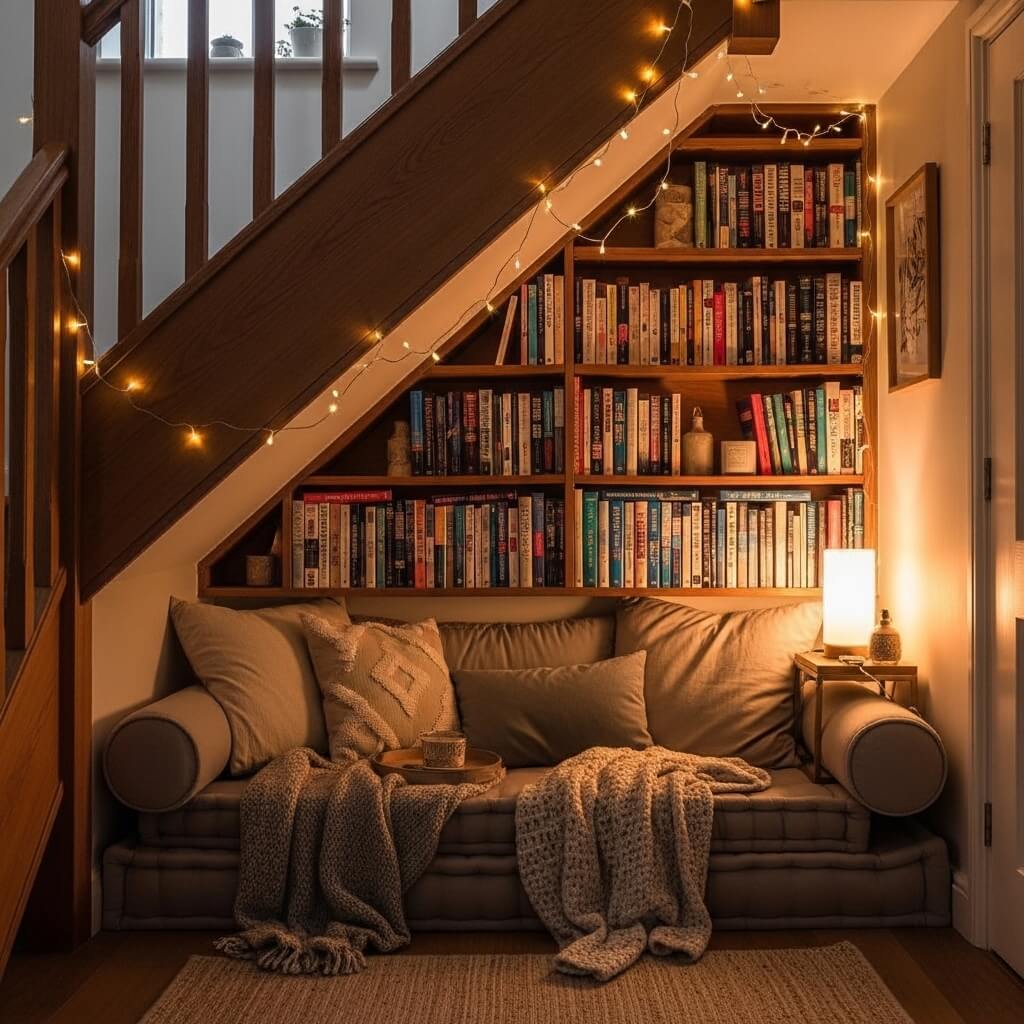
Can we talk about wasted space for a second? The area under your stairs is prime real estate that most people use for shoving random junk they don’t know what to do with. I’m guilty of this too—mine was basically a black hole of Christmas decorations and old textbooks.
Then I visited my cousin’s place, and she’d transformed her under-stair area into this absolutely charming reading nook. I sat in there for like an hour just reading and vibing, and I immediately went home to replicate it.
Building Your Cozy Corner
First, you need to clear out and assess your space. Measure the height, depth, and width carefully because you’ll be fitting furniture and yourself into this spot. My under-stair area had about 5 feet of clearance at the tallest point, which works perfectly for sitting but not standing.
What you’ll need:
- Comfortable seating: A built-in bench with cushions, a small armchair, or floor cushions
- Good lighting: Essential since these spaces are usually cave-like (I used a wall-mounted reading lamp)
- Shelving: Built-in shelves for books are perfect here
- Soft textures: Throw pillows, a cozy blanket, maybe a small rug
I painted the interior walls a warm sage green (different from the rest of my house) to make it feel like a separate little world. I added some string lights for ambiance—yes, I know, very Pinterest of me, but they’re genuinely cozy. A small floating shelf holds my current reads and a little succulent.
Customization options are endless: Add a small desk to create a homework station for kids, install a pet bed for your dog’s ultimate hideaway, or create a meditation corner with cushions and candles. The enclosed feeling that makes under-stair spaces feel awkward for storage makes them absolutely perfect for cozy nooks.
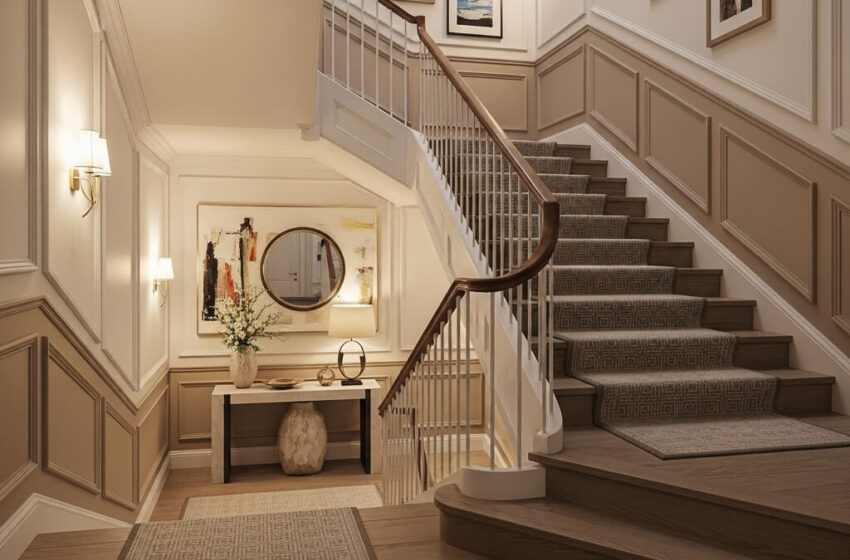
Elegant Wall Panel Stairway Makeover
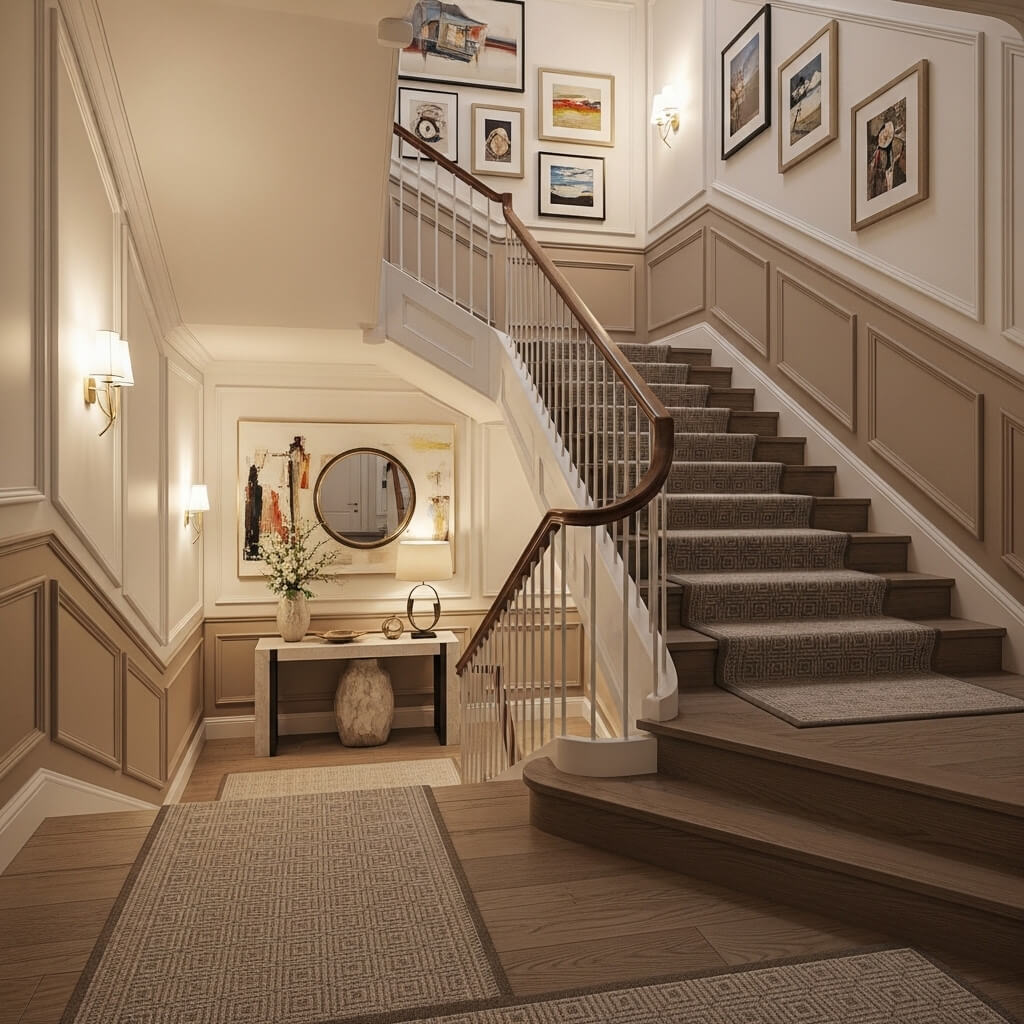
Wall panels (or wainscoting, if you want to get technical) add instant architectural interest to boring stairway walls. I always thought this was something you could only achieve through expensive renovations until I discovered modern panel options that basically anyone can install.
My stairway walls were builder-grade drywall painted in “landlord beige”—you know the shade I’m talking about. Adding wall panels completely transformed the space from forgettable to magazine-worthy.
Panel Style Options
You’ve got choices, and each creates a different vibe:
- Traditional wainscoting: Classic raised panels, usually on the lower third of the wall
- Board and batten: Vertical strips creating a farmhouse-modern look
- Shiplap: Horizontal planks for that coastal or modern farmhouse feel
- Picture frame molding: Creates elegant rectangular frames on your walls
- 3D geometric panels: Modern, sculptural, totally Instagram-ready
I went with picture frame molding because it felt sophisticated without being too traditional. I used pre-cut MDF molding from the hardware store, a miter saw (borrowed from a neighbor), wood glue, and a nail gun. The whole project took a weekend, and the transformation was insane.
Pro tips from my experience:
- Paint everything the same color for subtle elegance, or paint panels darker than walls for contrast
- Use a level religiously—uneven panels ruin the whole effect
- Start from the bottom and work your way up the stairs
- Measure three times, cut once (seriously)
The texture and dimension panels add make your stairway feel custom and high-end. Every time someone comes over, they comment on it. Best DIY I’ve ever done, honestly.
Also Read: 10 Innovative Under Stairs Storage Ideas for Home Upgrade
Boho Chic Hallway Gallery Wall Ideas
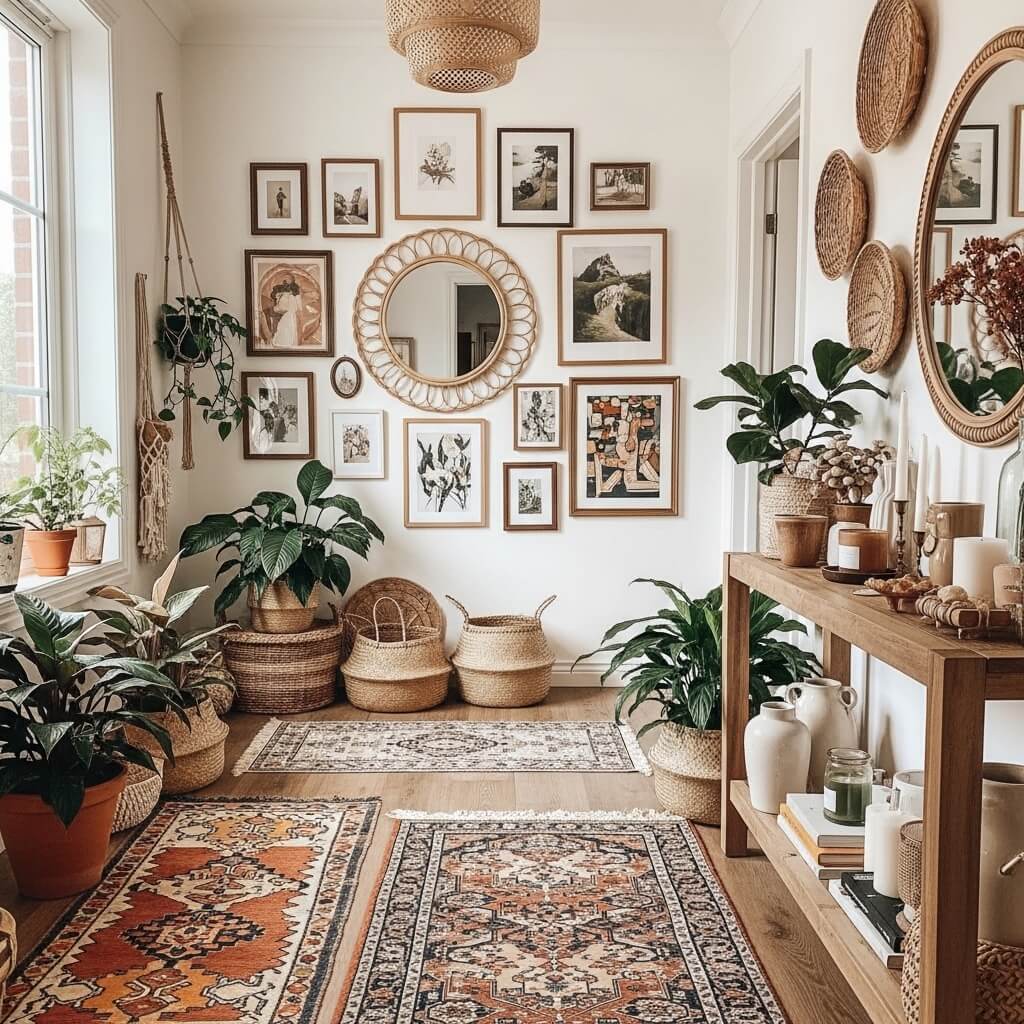
If minimalism isn’t your jam and you prefer spaces with personality and soul, boho gallery walls are calling your name. This aesthetic embraces maximalism, mixing patterns, textures, and art styles in a way that somehow works beautifully together.
I created a boho gallery wall in my hallway, and it became an ongoing project I absolutely love. Unlike traditional gallery walls with matching frames and symmetrical arrangements, boho style throws the rulebook out the window.
Creating Eclectic Harmony
The beauty of boho gallery walls is that there are no strict rules, but you still need some cohesion. I started by gathering frames in different sizes, shapes, and finishes—vintage gold, natural wood, white painted, even some rattan frames. The variety adds visual interest.
What to include:
- Vintage botanical prints or pressed flowers
- Abstract art in earthy tones (terracotta, sage, mustard, cream)
- Black and white photography
- Macramé wall hangings (not too many, or it gets overwhelming)
- Small woven baskets or plates
- Mirrors in interesting frames
- Personal photos in eclectic frames
I hung everything using a loose, organic arrangement rather than a grid. Some pieces overlap slightly, others have generous spacing. The key is balancing visual weight—put larger or darker pieces throughout rather than all clustered in one spot.
Color palette matters even in eclectic spaces. I stuck with warm neutrals, terracotta, deep greens, and touches of gold. This created unity despite the varied styles. And here’s something nobody tells you: you can (and should) swap pieces in and out as you find new treasures. My gallery wall evolves constantly, and that’s part of its charm.
Smart LED Stair Lighting Concepts
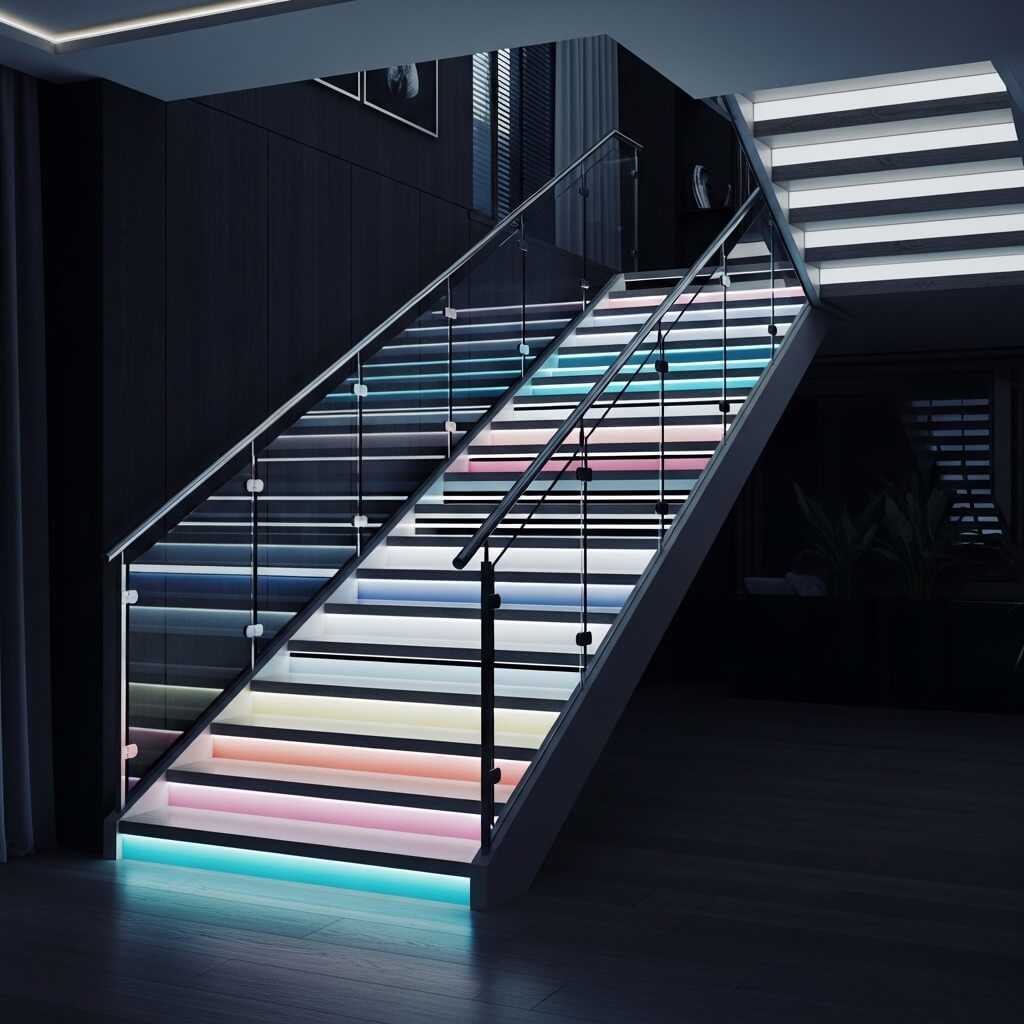
Let’s get a bit techy for a minute. Smart LED stair lighting combines safety, convenience, and serious style points. After installing motion-activated LED lights on my stairs, I genuinely don’t know how I lived without them.
Picture this: You get up at 2 AM for water, half-asleep and stumbling. You approach the stairs, and gentle lights automatically illuminate each step. No fumbling for light switches, no blinding overhead lights, just soft guidance. It’s like living in the future, and I’m here for it.
Smart Lighting Options
The technology has come a long way, and prices have dropped significantly. You’ve got several approaches:
Motion-Activated Step Lights:
- Sensors detect when you approach
- Lights turn on automatically and shut off after you pass
- Low energy consumption
- Installation ranges from super easy (stick-on LED strips) to moderate (hardwired recessed lights)
Smart LED Strips:
- Connect to your home automation system
- Control via smartphone app or voice commands
- Customizable colors and brightness
- Set schedules or link to other smart home triggers
I went with motion-activated LED strips mounted under the lip of each tread. The lights shine down onto the riser, creating a soft glow that defines each step without being harsh. Installation took about three hours (would’ve been faster if I’d measured better the first time… oops).
Practical benefits beyond aesthetics:
- Dramatically improves stair safety, especially for kids and elderly family members
- Saves energy compared to leaving hallway lights on all night
- Creates ambiance for entertaining
- Adds serious value to your home
Some people go wild with color-changing options, syncing their stair lights to music or holidays. Personally, I keep mine on warm white, but you do you.
Farmhouse Style Rustic Stair Decor Ideas
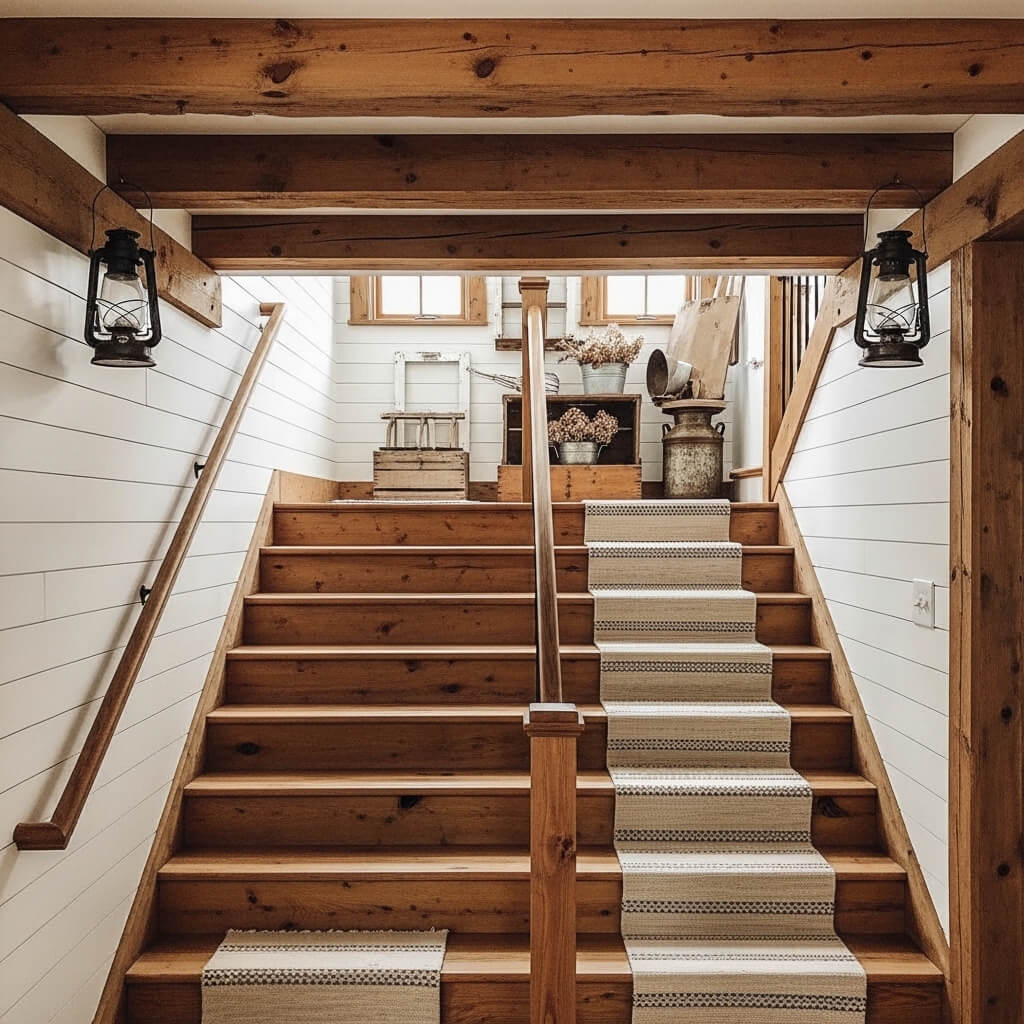
Farmhouse style refuses to go away, and honestly? I’m not mad about it. There’s something genuinely appealing about rustic, lived-in warmth that farmhouse decor brings to staircases and hallways. It’s cozy without being cluttered, styled without feeling stuffy.
My parents recently renovated their staircase with farmhouse styling, and it totally changed the feel of their entryway. The space went from dated and dark to warm and welcoming.
Nailing the Farmhouse Look
Wood is everything in farmhouse design. My parents replaced their carpeted stairs with natural hardwood treads and painted the risers white. That contrast between natural wood and crisp white? Chef’s kiss. They refinished the original handrail in a darker stain rather than replacing it, which added character.
Key farmhouse stairway elements:
- Shiplap walls: Horizontal planking painted white or left natural
- Wrought iron balusters: Black metal spindles replacing traditional wooden ones
- Vintage or vintage-inspired decor: Old signs, antique frames, galvanized metal accents
- Neutral palette: Whites, creams, grays, with natural wood tones
- Texture: Jute rugs, cotton runners, linen fabrics
They added a farmhouse-style pendant light hanging in the stairwell—one of those big metal and glass lanterns that looks like it came from an old barn. Sounds like it might be too much, but it actually anchors the whole space beautifully.
For the walls, they created a simple gallery of vintage-looking signs and family photos in distressed wooden frames. Nothing too matchy-matchy, just casual and collected-over-time vibes. They also added some open shelving near the landing with a few carefully curated items—old books, a small plant, a vintage clock.
The farmhouse approach works especially well if you’re mixing it with other styles. Pure farmhouse can veer into theme-park territory (just being honest here), but blending it with modern or industrial elements keeps it fresh.
Also Read: 10 Inspiring Stairs Design Ideas Pinterest Worthy
Hidden Storage Staircase Design Solutions
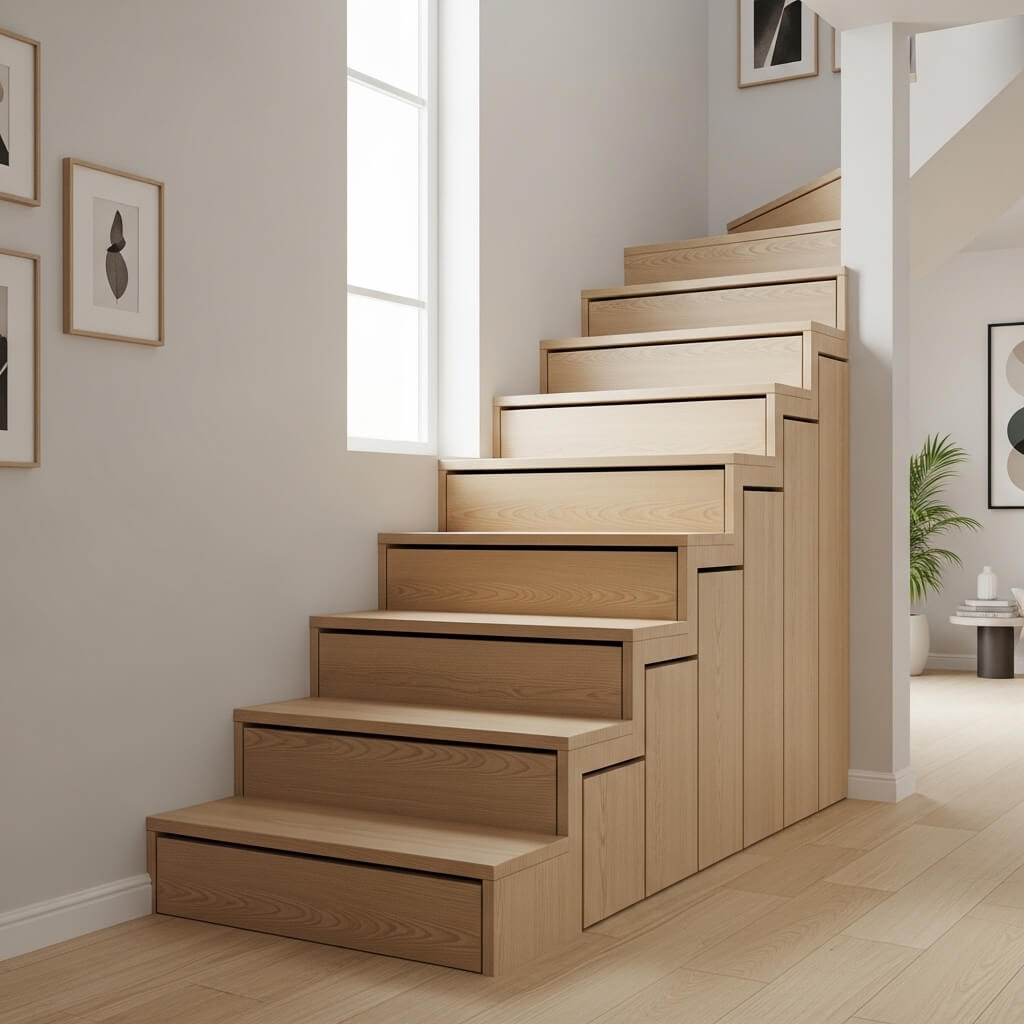
Okay, this is where we get really clever. Hidden storage staircases are basically magic—they maximize functionality without sacrificing aesthetics. You walk past them every day, and unless you know they’re there, you’d never guess they’re holding half your belongings.
I’m slightly obsessed with these after seeing one at a home tour. Each stair tread lifted up to reveal storage underneath. My mind was blown. The homeowner stored seasonal decorations, extra linens, and even their vacuum cleaner in there. :/
Types of Hidden Stair Storage
Drawer Stairs:
Pull-out drawers built into the riser or side of each step. These work best with enclosed staircases. You can store shoes, books, toys, craft supplies—basically anything that fits the drawer dimensions.
Lift-Up Treads:
The actual stair tread acts as a lid. You lift it up (often with a hydraulic hinge for safety) to access storage space within the step itself. This requires custom building but offers the most concealed storage.
Side Cabinets:
If your staircase has an enclosed side rather than open balusters, you can install cabinet doors that open to shelving or cubbies. This is the easiest option to add to existing stairs.
Under-Stair Built-Ins:
We talked about reading nooks earlier, but you can also create full closet systems under stairs with doors that blend seamlessly with surrounding walls.
My favorite implementation? A friend built drawer stairs for her kids’ toys. Each kid has designated drawers, clearly labeled. Cleanup takes seconds, and her living room no longer looks like Toys “R” Us exploded. Genius.
The catch? Hidden storage stairs usually require custom carpentry or significant renovation. They’re not cheap or easy, but if you’re building or extensively remodeling anyway, absolutely consider this option. The space-saving potential is unreal, especially in smaller homes where every square inch counts.
Final Thoughts
So there you have it—ten ways to completely transform those boring, underutilized stairs and hallways into spaces you actually want to look at (and show off to guests, let’s be real). Whether you’re drawn to sleek minimalism, cozy Scandinavian vibes, or rustic farmhouse charm, there’s something here for every style and budget.
The common thread? These spaces deserve attention. You walk through them multiple times every day. Why shouldn’t they bring you joy instead of just being forgettable transition zones?
Start small if the full transformations feel overwhelming. Maybe begin with better lighting, add a gallery wall, or incorporate some clever storage solutions. You don’t need to renovate everything at once. I’ve been working on my hallway and stairs for over a year now, tweaking and adding as inspiration (and budget) allows.
The best part about staircase and hallway design is that these spaces are basically blank canvases. They don’t have the functional constraints of kitchens or bathrooms. You can experiment, take risks, and let your personality shine through without worrying too much about resale value or practicality.
Whatever direction you choose, commit to it. These aren’t spaces you should “get around to eventually.” Make them priorities, and I promise your entire home will feel more cohesive and intentional. Plus, you’ll actually enjoy that walk from your bedroom to your coffee maker every morning. And honestly? That’s worth every effort.
Now stop reading and go look at your stairs with fresh eyes. I bet you’re already seeing possibilities you hadn’t noticed before 🙂