12 Stylish Courtyard House Plans Ideas for Urban Living
- House Plans
 Ben
Ben- 0
- 49 minutes read
Courtyards might seem like fancy architectural features reserved for Mediterranean villas or those sprawling homes you see in design magazines, but honestly?
They’re one of the most practical and beautiful ways to design a home—regardless of size or budget.
The concept of building your house around a private outdoor space creates this magical combination of indoor-outdoor living, natural light, privacy, and a personal oasis right in the middle of your home.
I’ve been obsessed with courtyard designs ever since visiting a friend’s U-shaped home where the courtyard basically became the heart of everything.
You could see it from almost every room, it brought light deep into the floor plan, and it created this protected outdoor space that felt worlds away from the street despite being in a dense neighborhood.
That experience converted me into a courtyard evangelist, and I’m here to convince you these designs deserve serious consideration.
So let’s explore twelve distinct courtyard house plan ideas that each bring something unique to the table.
Whether you’re planning new construction, considering a major renovation, or just love architectural daydreaming like I do, these concepts will show you how versatile and amazing courtyard living can be.
Grab your coffee and let’s talk about bringing the outside in (or is it bringing the inside out?).
1. Modern Minimalist Courtyard Home
Clean Lines Meet Natural Beauty
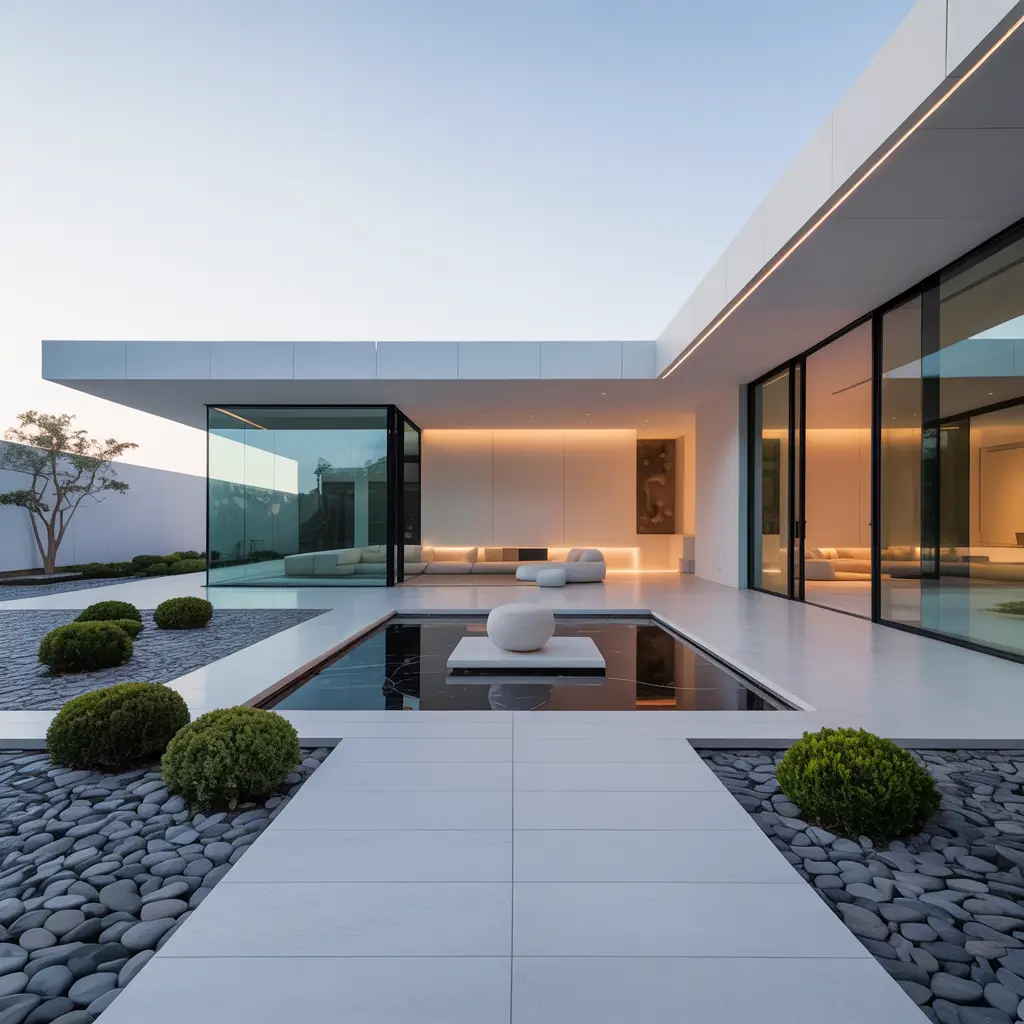
Modern minimalist courtyard homes strip away unnecessary decoration and focus on pure form, clean lines, and the interplay between built structures and natural elements. The courtyard becomes a carefully curated outdoor space—maybe just grass, a single sculptural tree, and some strategically placed rocks—that serves as living artwork visible from multiple rooms.
I toured a modern minimalist courtyard home last year where the courtyard featured literally just white pebbles, three bamboo plants, and a concrete bench. Sounds stark, right? But the simplicity was actually stunning, and the way shadows moved across that space throughout the day created constantly changing visual interest.
Design Characteristics
Large floor-to-ceiling windows or sliding glass walls frame courtyard views like gallery pieces. The minimal aesthetic extends to the courtyard itself—no busy plantings or cluttered furniture, just intentional elements that each earn their place. Materials like concrete, steel, natural stone, and wood in their natural states create texture without ornamentation.
The home’s footprint wraps around or partially encloses the courtyard, with living spaces, bedrooms, and maybe a home office all gaining courtyard views and access. Interior spaces maintain the same minimalist aesthetic—neutral colors, hidden storage, and clean surfaces that let the courtyard greenery provide all the visual interest needed.
Why This Works
The contrast between stark interiors and the organic courtyard creates drama without clutter. Natural light floods interior spaces from courtyard-facing windows, reducing the need for artificial lighting during daylight hours. The protected courtyard provides privacy without requiring window treatments that would block views and light.
This approach suits people who appreciate modern architecture, prefer uncluttered living spaces, and want a home where nature provides the primary decoration. The minimalist palette makes the courtyard’s seasonal changes more noticeable and impactful—spring blooms or autumn color shifts become major events rather than just slight variations in an already busy landscape.
2. Tropical Indoor-Outdoor Courtyard Design
Vacation Vibes Year-Round
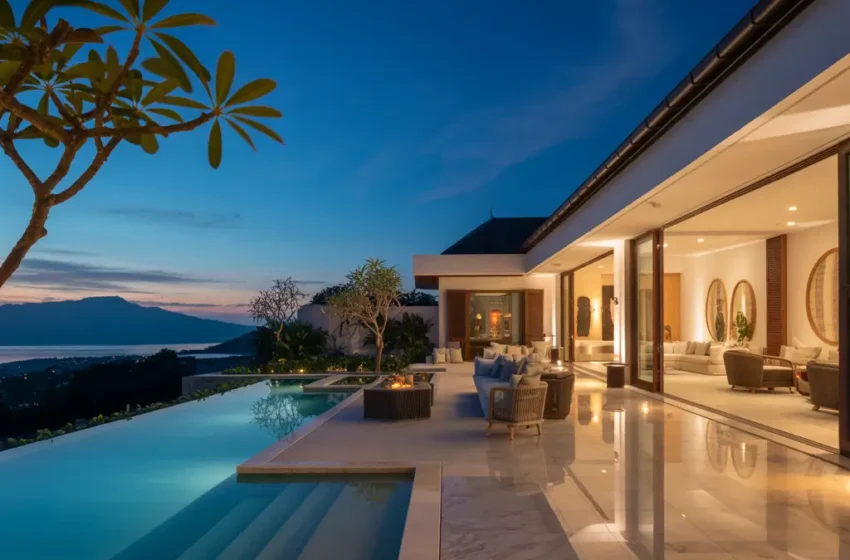
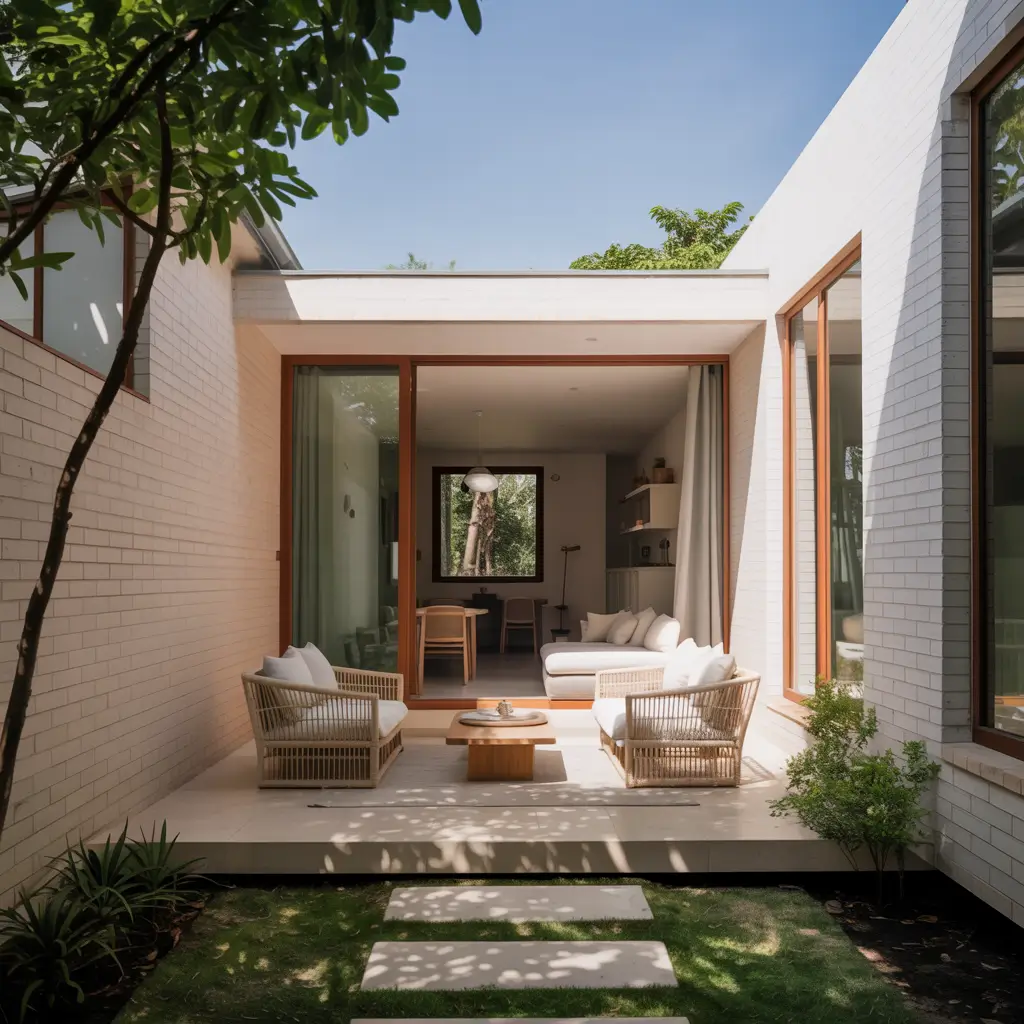
Tropical courtyard designs embrace lush plantings, natural materials, and that resort-like feeling where boundaries between inside and outside basically disappear. We’re talking large folding or sliding doors that open entire walls to the courtyard, making the outdoor space a genuine extension of interior living areas rather than just something you look at through windows.
My aunt designed her home with this concept in Florida, and walking into her place genuinely feels like entering a high-end resort. The courtyard has a small water feature, massive tropical plants, and the living room opens completely to it so you’re never quite sure where “inside” ends and “outside” begins.
Tropical Elements
The courtyard becomes a jungle-like retreat with layered plantings—tall palms or banana plants creating canopy, mid-height tropical foliage, and ground covers filling lower levels. Water features like small ponds, fountains, or even just a simple basin create soothing sounds and attract birds. Natural materials throughout—teak furniture, stone pathways, bamboo screens—reinforce the organic tropical aesthetic.
Living spaces feature tile or sealed concrete floors that transition seamlessly from interior to courtyard, with no steps or thresholds creating barriers. Ceiling fans and covered outdoor areas extend usability even during rain or intense sun. The courtyard often includes outdoor dining and lounging areas that get used as frequently as interior rooms.
Climate Considerations
This design works brilliantly in warm climates where you can actually use outdoor spaces year-round, though even in moderate climates, you gain several months of extended living space. The courtyard provides natural cooling through shade and plant transpiration, reducing air conditioning needs in interior spaces.
Heavy emphasis on drainage and humidity-resistant materials prevents moisture damage since you’re essentially inviting outdoor conditions inside. Insect screening on operable doors becomes essential unless you enjoy sharing your living room with every mosquito in the neighborhood.
Tropical courtyard homes suit people who love entertaining, want to maximize usable living space beyond interior square footage, and prioritize connection to nature over climate-controlled comfort. If you’re someone who lives outside whenever possible and views walls as unfortunate necessities, this design literally breaks down those barriers.
3. Small Space Courtyard House Plan
Big Impact, Compact Footprint
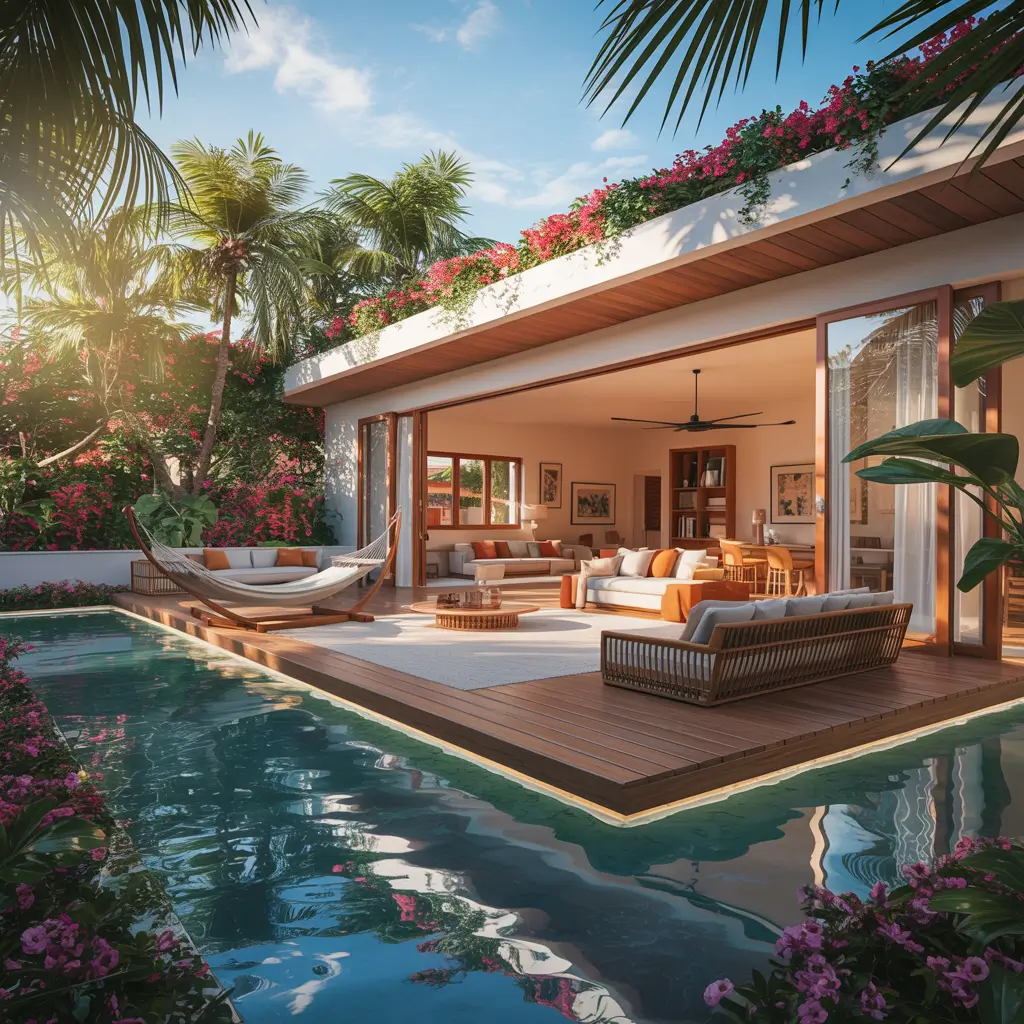
You absolutely don’t need a sprawling estate to incorporate a courtyard—small homes (1,200-1,800 square feet) can successfully integrate intimate courtyards that dramatically improve livability despite the compact overall size. The key is treating the courtyard as a central organizing element rather than leftover space.
I know someone who built an 1,400 square foot home with a 10×12 foot central courtyard, and that tiny outdoor space completely transforms how the home feels. Every room connects to it visually, light bounces throughout the interior, and the home feels easily twice its actual square footage.
Compact Design Strategies
The courtyard sits at the home’s center with rooms arranged around it, creating an inward-focused design that maximizes privacy on small lots where neighbors sit close. Even a modest 8×10 foot courtyard brings significant light and outdoor access to interior spaces that would otherwise feel dark and cramped.
Full-height windows and glass doors maximize visual connection—you might not be able to fit a dining table in the courtyard, but you gain the view and natural light that make interior dining spaces feel expansive. Vertical gardens or climbing plants on courtyard walls add lushness without consuming limited ground space.
Multi-Functional Courtyard Use
Small courtyards need to work hard—they might serve as herb gardens with easy kitchen access, meditation spaces with simple seating, or visual focal points that don’t require physical access at all. Some designs treat small courtyards as living skylights—bringing light and nature views to interior spaces without dedicating square footage to human occupation.
Sliding or folding interior doors between rooms and courtyard extend space flexibility—open everything up when you want connection and flow, close doors when you need climate control or defined spaces. The courtyard becomes a pressure valve that makes compact living feel less claustrophobic.
Small courtyard homes work beautifully for urban lots, couples or small families comfortable with efficient spaces, or anyone building on a budget who still wants that courtyard lifestyle. You sacrifice large outdoor gathering spaces, but you gain privacy, light, and a connection to nature that small homes typically struggle to achieve.
Also Read: 10 Dreamy 2 Bedroom House Plans Ideas and Garden Spaces
4. L-Shaped Courtyard Layout
Privacy Without Full Enclosure
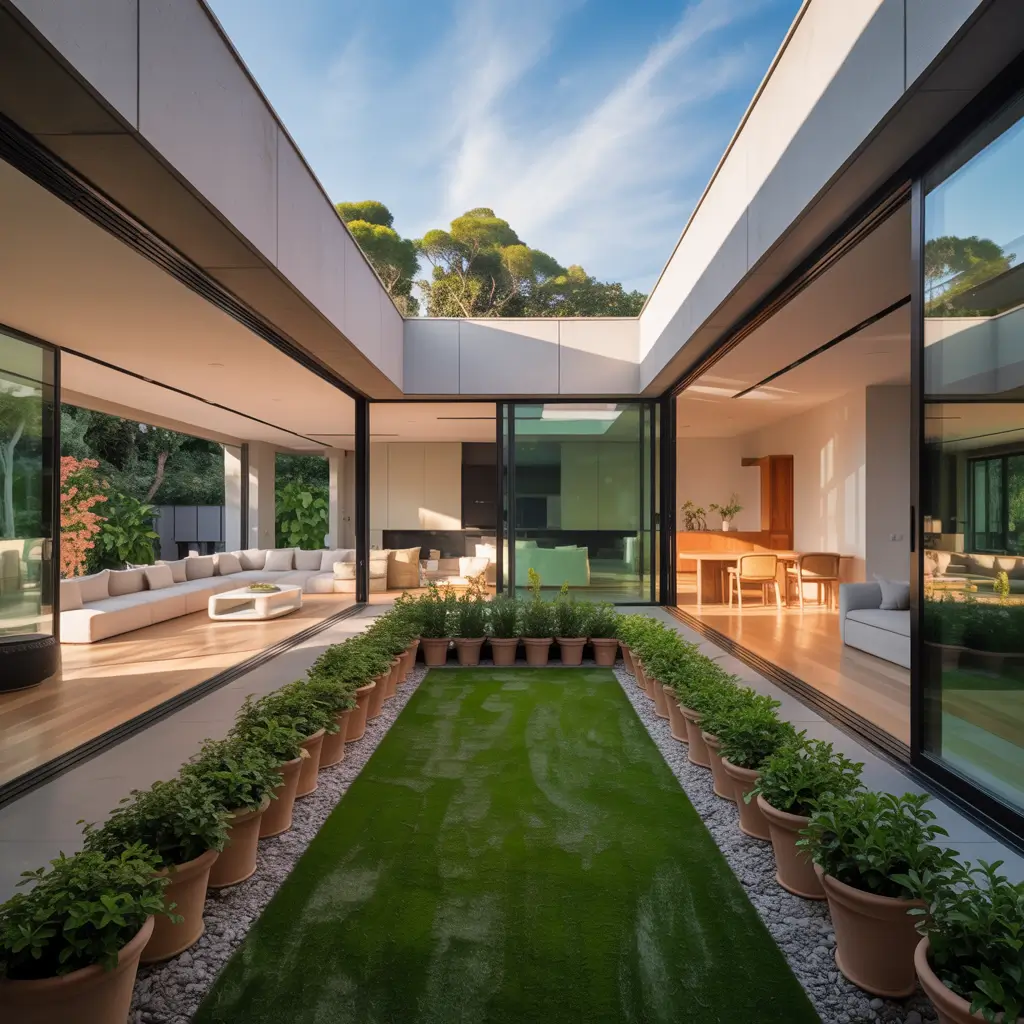
L-shaped floor plans create courtyards by forming two perpendicular wings with outdoor space in the resulting corner. This partially enclosed configuration provides courtyard benefits—privacy, protection from wind, visual connection from multiple rooms—while being easier and often cheaper to build than fully enclosed designs.
I visited an L-shaped courtyard home where one wing contained living spaces and the other housed bedrooms, with the courtyard sitting in the protected corner between them. This created natural separation between public and private areas while giving both wings amazing courtyard views and access.
Layout Advantages
The L-shape creates protected courtyard space using just two sides of structure rather than three or four, reducing construction costs and complexity. You can position the L to block prevailing winds or shield the courtyard from street view while leaving one or two sides open to broader yard areas or desirable views.
Each wing of the L gains courtyard exposure—maybe the living room and kitchen in one wing, bedrooms in the other, all with windows and doors opening to the courtyard. This configuration creates excellent sightlines where you can see across the courtyard from one wing to the other, maintaining visual connection throughout the home.
Flexible Courtyard Definition
The open sides of an L-shaped courtyard let you adapt the space to your lot and preferences. You might add a fence or wall to fully enclose the fourth side, leave it open to a larger backyard, or use plantings to create a soft boundary. This flexibility means the design adapts to various lot configurations and sizes.
Some people add a pergola or covered walkway connecting the two wings and partially defining the fourth courtyard edge. This creates the enclosure feeling while maintaining openness and providing covered outdoor circulation between wings.
Best Applications
L-shaped courtyard plans work wonderfully on corner lots where you can position the L to create privacy from both street sides. They suit growing families where wing separation creates kid zones and adult zones with shared courtyard connection. The partial enclosure provides enough protection for comfortable outdoor living without requiring construction on all four sides.
If you love courtyard concepts but worry about fully enclosed designs feeling too contained or limiting future expansion options, L-shaped layouts offer a middle ground that delivers courtyard benefits with more flexibility and openness.
5. Open-Air Central Garden Home
Nature at the Heart of Everything
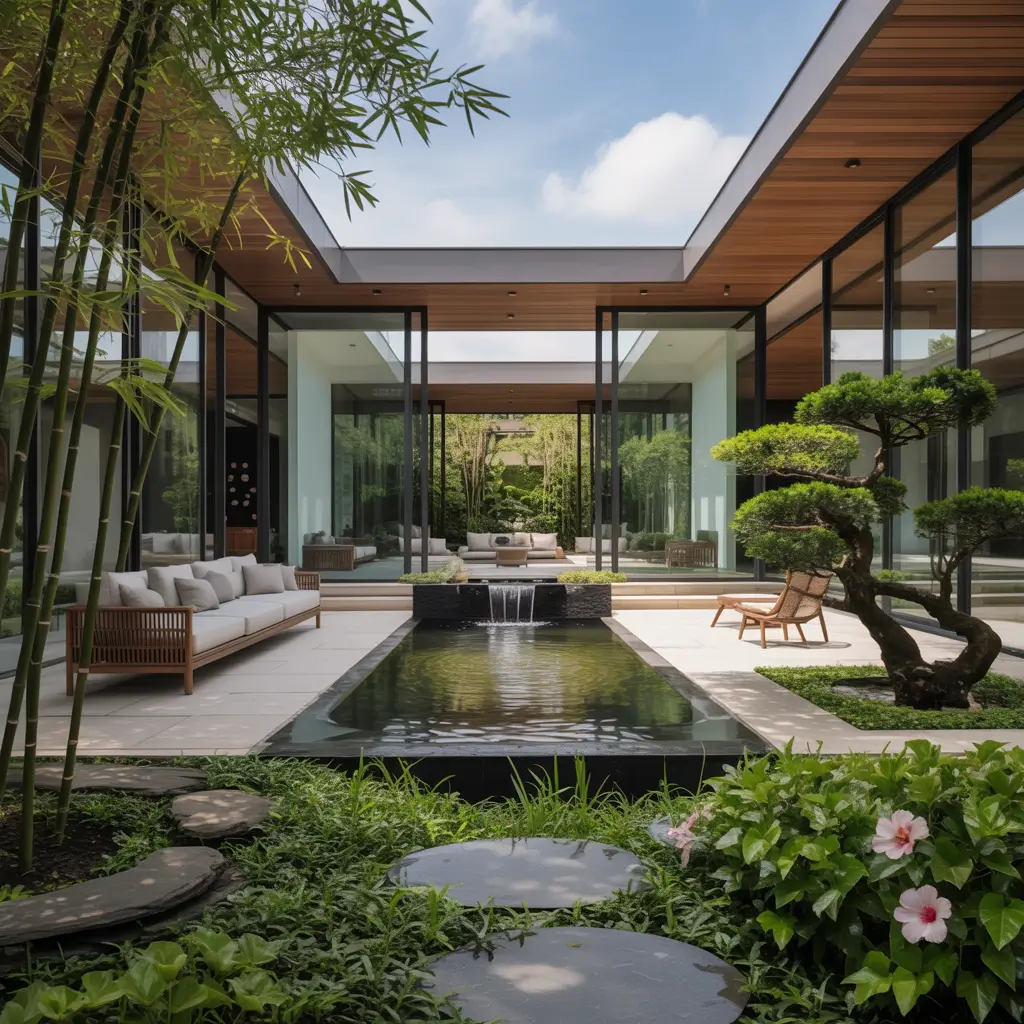
Open-air central garden homes build the entire floor plan around a substantial courtyard garden that becomes the literal and metaphorical heart of the home. Every major room connects to this central space, with circulation through the home often requiring you to cross through or past the courtyard, making it an integral part of daily life rather than just a view.
My friend’s parents have this design, and the courtyard is roughly 20×30 feet—large enough for actual garden beds, a seating area, and pathways. Their morning routine involves walking through the courtyard to reach the kitchen from their bedroom, and they swear this daily nature connection starts every day right.
Central Organization
The home’s footprint forms a rectangle or square with the courtyard carved from the center. Rooms arrange around the perimeter—living spaces, bedrooms, kitchen, bathrooms all facing inward toward the garden rather than outward toward street or yard. This inward focus creates privacy and makes the courtyard the primary source of views, light, and outdoor connection.
The central garden typically contains actual landscaping rather than just a paved patio—planted beds, lawn, trees, shrubs, and flowers creating a genuine garden experience. Covered walkways or breezeways might connect different areas of the home while maintaining the courtyard’s openness.
Circulation Patterns
Some designs require passing through or alongside the courtyard to move between different areas of the home—bedroom wing to living wing, for example. This ensures daily interaction with the outdoor space rather than it sitting unused. Other layouts provide interior hallways as alternatives, giving weather-independent circulation options.
Multiple access points from various rooms mean the courtyard serves different functions—morning coffee from the kitchen area, evening reading from the bedroom, entertaining from the living room. The central location makes it equally accessible from everywhere rather than favoring certain rooms.
Lifestyle Fit
Central garden homes suit people who genuinely enjoy gardening and maintaining plants, since the courtyard is front-and-center and neglect shows immediately. They work beautifully in climates with extended outdoor seasons where the courtyard is usable most of the year. The inward-focused design provides maximum privacy even on small lots surrounded by neighbors.
This configuration requires larger overall footprints since you’re dedicating significant square footage to the non-enclosed courtyard. If you’re building on a tight budget or small lot, other courtyard configurations might deliver similar benefits more efficiently. But if you have the space and want a home where nature sits at the center of daily life, this design delivers that vision perfectly.
6. Luxury Courtyard Villa Concept
Elegant Outdoor Living
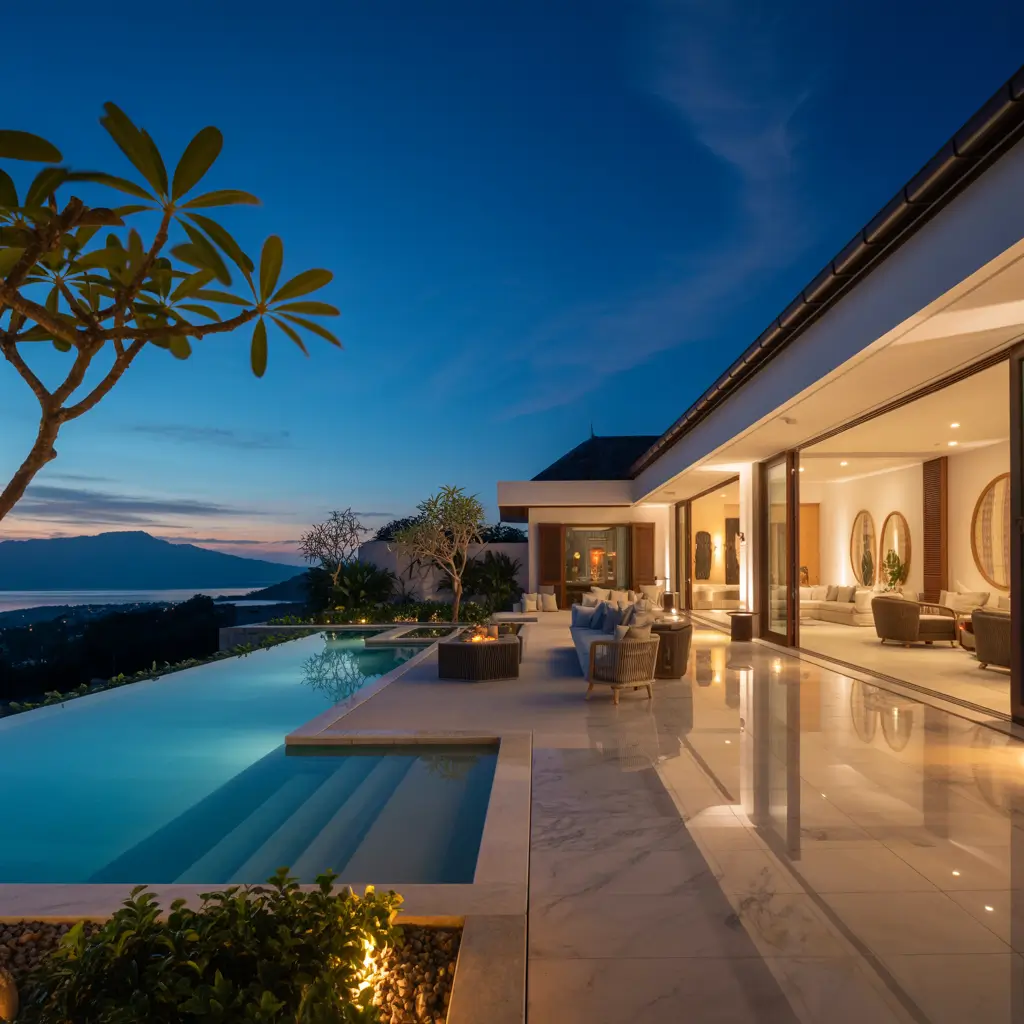
Luxury courtyard villas expand the basic courtyard concept with generous square footage (typically 3,000+ square feet), high-end materials, and resort-style amenities integrated into the courtyard space. We’re talking water features, outdoor kitchens, multiple seating zones, and architectural details that make the courtyard feel like a curated outdoor room rather than just open space.
I toured a luxury courtyard villa once for a magazine article, and the courtyard alone probably cost more than my entire house. Heated saltwater pool, full outdoor kitchen with pizza oven, multiple covered lounge areas, landscape lighting that turned it into a different space at night—it was basically a private resort.
High-End Features
The courtyard incorporates resort-level amenities—pools or spas, outdoor kitchens with high-end appliances and ample counter space, multiple dining and seating areas for various group sizes and functions. Water features like fountains, reflecting pools, or streams add sound and movement. Mature landscaping and architectural plantings create immediate impact rather than waiting years for gardens to develop.
Interior spaces feature luxury finishes—stone or hardwood floors, custom cabinetry, high-end appliances, and spa-like bathrooms. Floor-to-ceiling windows and oversized sliding doors (often disappearing pocket doors) create seamless indoor-outdoor transitions. Some designs include covered outdoor living rooms with fireplaces, entertainment systems, and weather-resistant furniture that rivals interior comfort.
Architectural Details
Columns, arches, decorative tiles, and water features add architectural interest to courtyard perimeters. Covered walkways or loggias provide shaded circulation around the courtyard. Landscape and architectural lighting transform the space after dark, creating ambiance for evening entertaining or quiet nights under the stars.
Multiple bedroom suites might each have private courtyard access, creating personal outdoor retreat areas. Guest houses or casitas positioned around the courtyard provide separate spaces for visitors or extended family while maintaining visual connection to the main home.
Investment Considerations
Luxury courtyard villas require substantial budgets—both for initial construction with high-end materials and features, and for ongoing maintenance of pools, elaborate landscaping, and outdoor systems. You need adequate land to accommodate both the home’s footprint and the courtyard dimensions that make the design work.
That said, if you’re in a position to invest in this level of home, courtyard villas offer something special—privacy, resort-style living without leaving home, and entertaining spaces that feel special and memorable. They work beautifully in warm climates where outdoor spaces get year-round use, though even in seasonal climates, they extend usable outdoor months significantly.
Also Read: 10 Elegant House Plans Ideas and Stylish Home Designs
7. Eco-Friendly Green Courtyard Home
Sustainable Design That Breathes
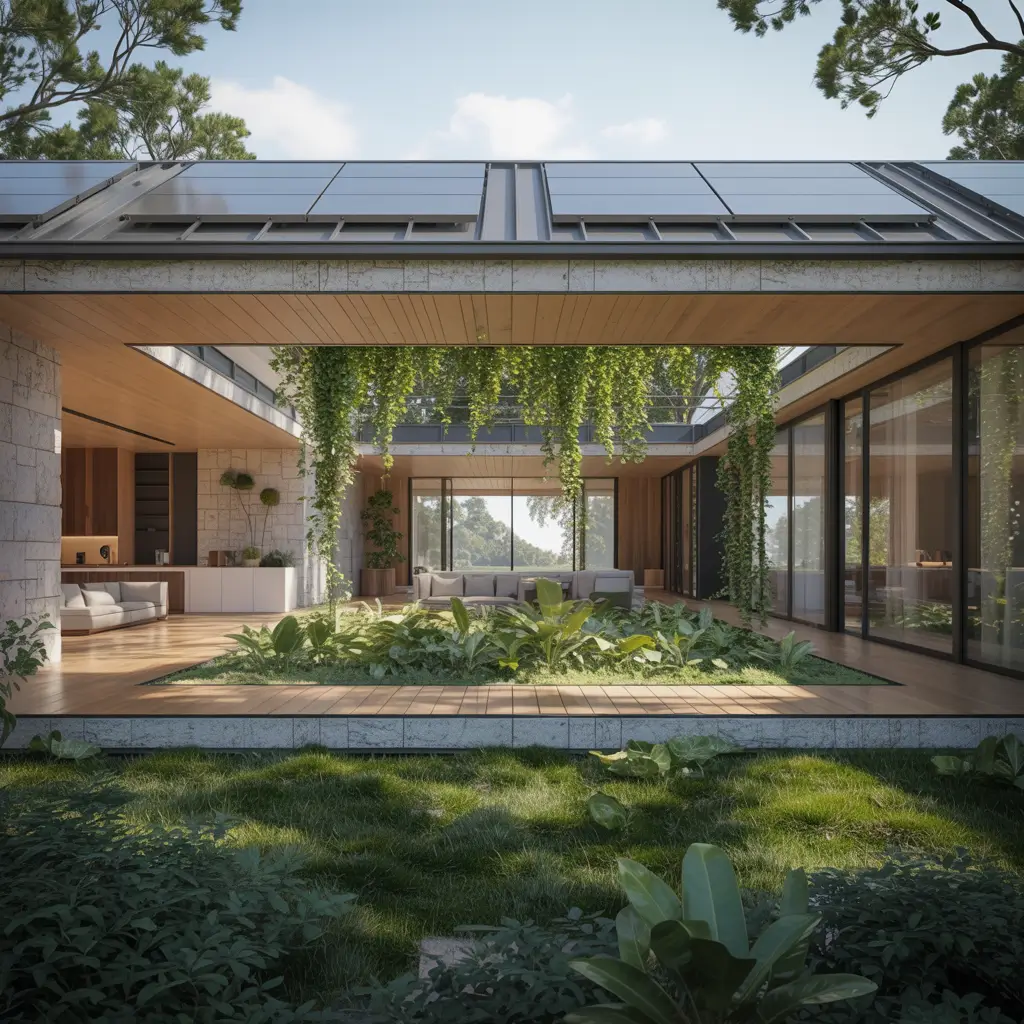
Eco-friendly courtyard homes integrate environmental consciousness throughout—from the courtyard’s role in passive cooling and natural lighting to material selection and water management systems. The courtyard becomes a functional element of the home’s environmental systems rather than just aesthetic outdoor space.
I know a couple who built a sustainable courtyard home where the courtyard actually helps cool the house through stack ventilation—hot air rises out through high courtyard-facing windows while cooler air enters from shaded ground-level openings. Their summer cooling costs are ridiculous low compared to similar-sized conventional homes.
Passive Climate Control
The courtyard facilitates natural ventilation by creating a protected zone where air can circulate between rooms without fighting wind patterns. Deciduous trees in the courtyard provide summer shade while allowing winter sun penetration after leaves fall. Evaporative cooling from courtyard plants and water features naturally reduces air temperature in the protected space.
High thermal mass materials—concrete, stone, brick—in courtyard walls and floors absorb heat during the day and release it slowly at night, moderating temperature swings. Strategic window placement allows cross-ventilation through living spaces via the courtyard, reducing mechanical cooling needs.
Sustainable Materials and Systems
Rainwater collection from roof areas drains into the courtyard where infiltration gardens, rain gardens, or collection cisterns manage stormwater naturally rather than sending it to sewers. Courtyard plants receive irrigation from this captured water, creating a closed-loop system.
Permeable paving materials in courtyard surfaces allow water infiltration while providing functional pathways and patios. Native and drought-tolerant plants reduce water needs and maintenance while supporting local ecosystems. Compost bins tucked into courtyard corners turn kitchen and yard waste into garden amendments.
Solar panels often integrate into home design more easily with courtyard layouts since roof orientations can optimize for solar collection. The courtyard’s protected location makes it ideal for outdoor living spaces that don’t require heating or cooling—you use these spaces instead of interior rooms, reducing overall energy consumption.
Environmental Benefits
Courtyard designs inherently use less energy for lighting since natural light penetrates deep into floor plans from courtyard-facing windows. The inward focus reduces window requirements on exterior walls, improving building envelope efficiency. Smaller heating and cooling loads result from compact footprints organized around courtyards.
Eco-friendly courtyard homes suit environmentally conscious builders obviously, but also appeal to anyone interested in lower utility bills, resilience against energy price volatility, and homes that function partially through passive systems rather than requiring constant mechanical intervention. IMO, combining courtyard designs with sustainable features creates homes that are both beautiful and genuinely easier on the planet 🙂
8. Compact Urban Courtyard Plan
Private Oasis in Dense Settings
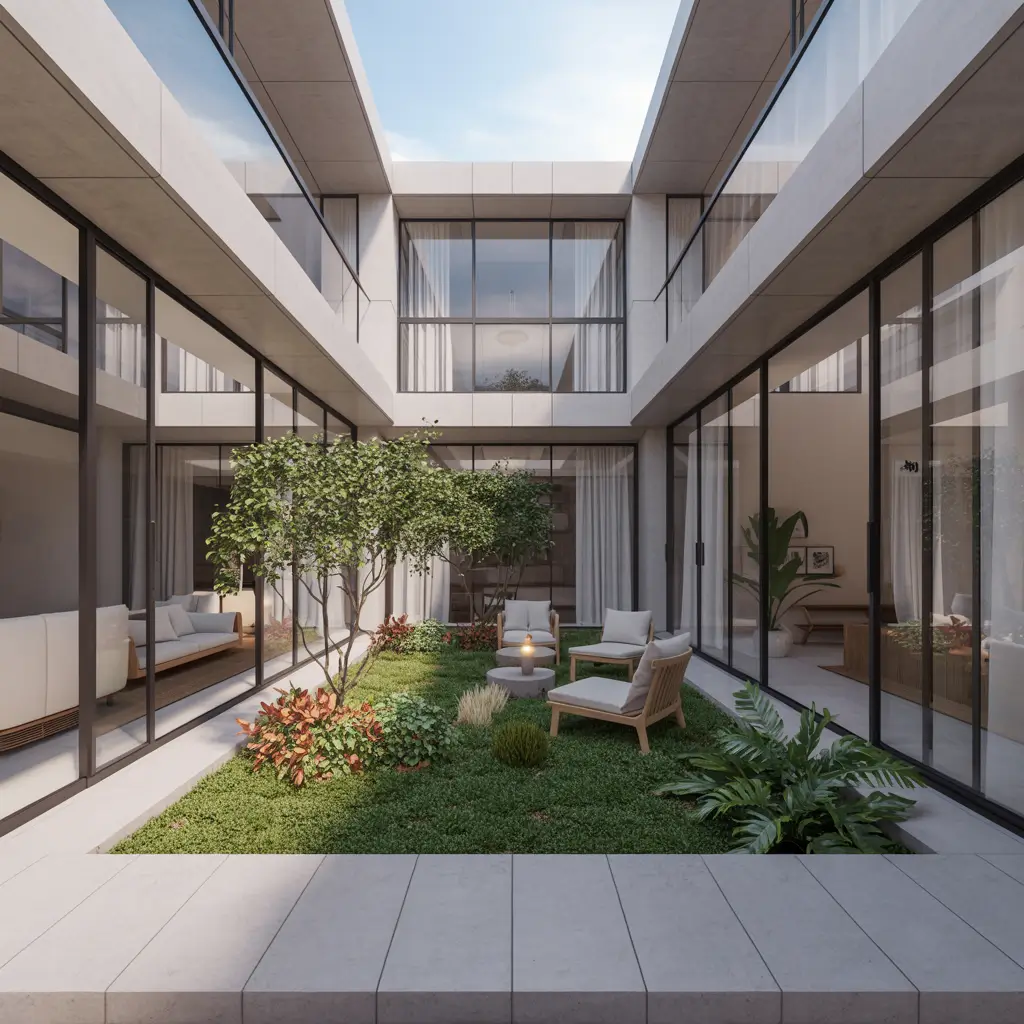
Urban courtyard homes tackle the challenge of creating private outdoor space in dense neighborhoods where lots are small and neighbors are close. By focusing the design inward around a courtyard, you gain usable outdoor space with privacy that traditional backyard setups can’t achieve on tight urban lots.
I have friends in a dense city neighborhood who built a compact urban courtyard home on a 35×100 foot lot, and their courtyard is maybe 12×15 feet—tiny by suburban standards, but it provides them private outdoor space they’d never achieve with a conventional layout where any backyard would be completely overlooked by surrounding homes.
Urban Design Challenges
Small lot dimensions force compact building footprints where every square foot matters. The courtyard might feel sacrificial—dedicating limited ground area to open space rather than enclosed rooms. But the trade-off delivers privacy, natural light to interior rooms, and outdoor access that makes the total living experience far better than maximizing enclosed square footage.
Noise from surrounding urban areas means the courtyard needs sound buffering—water features create white noise that masks street sounds, strategic planting provides acoustic absorption, and the home’s walls themselves create barriers between the courtyard and external noise sources.
Maximizing Limited Space
Vertical gardens on courtyard walls add greenery without consuming ground area. Built-in seating provides functionality without free-standing furniture that clutters small spaces. Multi-level designs locate courtyards on upper floors or roof decks where privacy comes more easily and views might be better.
The courtyard becomes intensively used because it’s your only outdoor space—it needs to function for multiple activities rather than being specialized. Flexible furniture, good lighting for evening use, and weather protection extend usability across seasons and times of day.
Urban Privacy Solutions
High courtyard walls, privacy screens, or strategically placed trees block sightlines from neighboring buildings. Focusing windows inward toward the courtyard rather than outward toward neighbors means you don’t need window treatments that would block light and views. The protected courtyard allows curtain-free living while maintaining privacy.
Some urban courtyard designs position the courtyard on a second story, creating a protected outdoor deck space above garages or first-floor rooms. This elevation provides privacy from street level while opening to sky views above.
Compact urban courtyard plans suit city dwellers who want outdoor space without suburban yards, people building on infill lots in dense neighborhoods, or anyone prioritizing privacy over yard size. You sacrifice large outdoor areas, but you gain usable outdoor space with privacy that typical urban lots can’t otherwise deliver.
9. Traditional Mediterranean Courtyard House
Timeless Design That Works
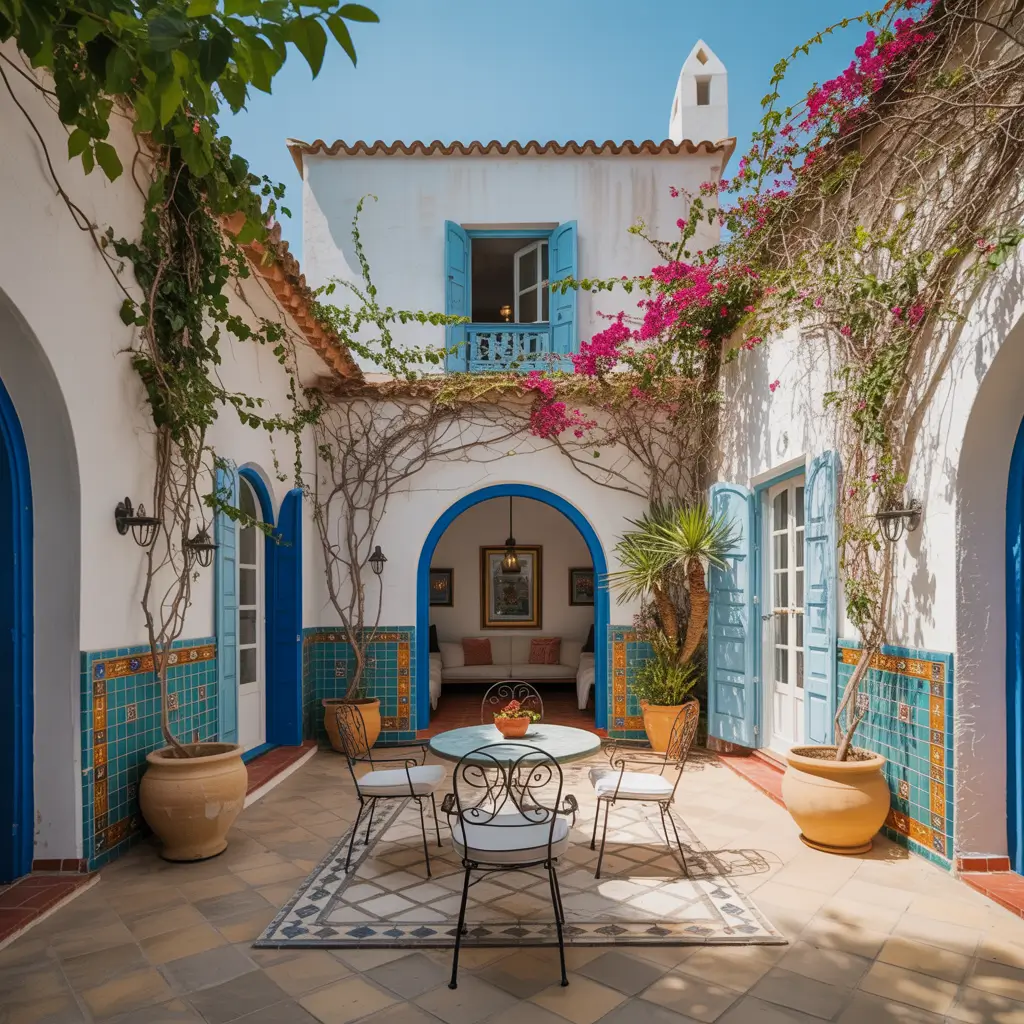
Mediterranean courtyard homes draw from centuries of architectural tradition in hot, sunny climates where inward-focused designs created comfortable living before air conditioning existed. These plans feature stucco or stone walls, tile roofs, arched openings, and courtyards that provide shade, circulation, and outdoor living spaces protected from harsh sun and heat.
My grandparents had a home inspired by this style (not authentic Mediterranean but definitely influenced by it), and the courtyard with its fountain and shaded arcades was hands-down the best hang-out spot on hot summer days. The design wisdom of these traditional plans still holds up beautifully today.
Mediterranean Elements
Thick walls in traditional materials—stucco over masonry, adobe, or stone—provide thermal mass that moderates interior temperatures. Small windows on exterior walls minimize heat gain while large openings facing the courtyard allow light and ventilation. Covered walkways or loggias around the courtyard perimeter provide shaded circulation and transition spaces between interior rooms and open courtyard.
The courtyard often features a central fountain or water element, tiled surfaces, and potted plants rather than planted beds. Terra cotta tiles, colorful ceramic accents, and wrought iron details add authentic Mediterranean character. Covered outdoor dining and sitting areas extend living spaces while protecting from sun.
Climate Adaptation
These traditional designs evolved to handle hot, dry climates through passive cooling strategies. Courtyard fountains add humidity and cooling through evaporation. High courtyard walls create shade for portions of the day while channeling breezes through living spaces. White or light-colored surfaces reflect heat rather than absorbing it.
The inward focus keeps harsh sun and hot exterior air outside while the protected courtyard creates a microclimate that’s significantly more comfortable. Night ventilation through courtyard-facing windows releases accumulated heat, resetting the home’s temperature for the next day.
Modern Adaptations
Contemporary Mediterranean courtyard homes maintain traditional aesthetics while incorporating modern conveniences—air conditioning, updated kitchen and bath fixtures, and larger window openings than historical examples. The time-tested courtyard configuration remains while materials and systems update for current building codes and lifestyle expectations.
This style works anywhere but particularly suits hot, sunny climates where traditional passive cooling strategies still provide real benefits. The timeless aesthetic has enduring appeal that transcends trends, and the courtyard configuration creates functional outdoor living spaces that extend usable area beyond interior square footage.
Also Read: 10 Elegant 7 Bedroom House Plans Farmhouse Ideas and Stylish
10. Courtyard with Pool and Lounge Area
Resort Living at Home
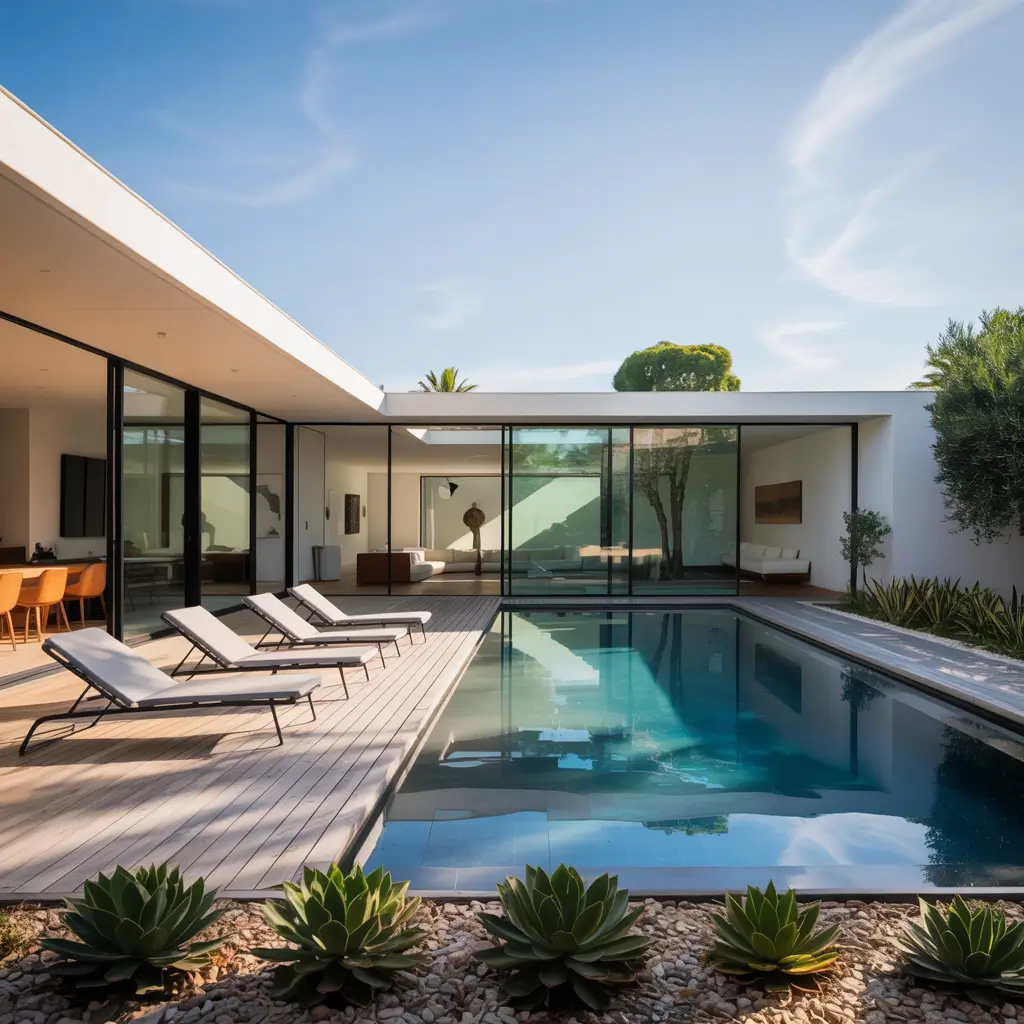
Pool-centered courtyards transform the courtyard space into a genuine outdoor entertainment and recreation area rather than just a garden or view. The pool becomes the courtyard’s focal point, with the home’s footprint wrapped around this aquatic centerpiece creating a private resort-style environment.
I spent a weekend at a friend’s courtyard home with a pool, and the setup was absolutely perfect for entertaining—the kitchen opened to a covered patio with dining, the pool sat in the center, and lounge areas stretched along the far side. Everything felt connected and social while completely private from neighbors and street view.
Pool Integration
The pool’s size scales to the courtyard dimensions—maybe a lap pool in a long narrow courtyard, a freeform pool in a larger square space, or even a small plunge pool in compact courtyards where you want water features without dedicating huge areas to swimming. Positioning the pool centrally creates views from multiple rooms and ensures equal access from various parts of the home.
Surrounding deck areas provide sunbathing and lounging spaces with weather-resistant furniture, shade umbrellas or pergolas for hot days, and maybe an outdoor shower for rinsing off before entering interior spaces. Pool equipment (pumps, filters, heaters) tucks into storage areas or dedicated rooms accessed from the courtyard.
Entertainment Zones
Covered outdoor living areas with comfortable seating create gathering spaces for when people aren’t actively in the pool. Outdoor kitchens or at minimum a grill and serving area facilitate pool-side dining without constantly running inside. Fire pits or outdoor fireplaces extend evening use and create cozy gathering spots.
Multiple seating zones allow simultaneous activities—some people swimming, others lounging, maybe someone grilling—without everyone crowding into the same area. Landscape and architectural lighting transforms the space after sunset, creating ambiance for evening pool use and entertaining.
Practical Considerations
Pool maintenance requires commitment—chemicals, cleaning, equipment monitoring, and potentially higher insurance costs. Safety concerns matter especially with children—most codes require pool fencing, though the courtyard walls themselves might satisfy requirements if properly secured. Climate determines usable seasons unless you invest in pool heating.
Courtyard pools work beautifully in warm climates where you’ll actually use them regularly rather than maintaining an expensive water feature you swim in twice a year. They’re perfect for people who entertain frequently, have active families, or just want that resort lifestyle without leaving home. The courtyard configuration provides privacy for pool use that external pools often lack—you can swim without feeling on display to neighbors or passersby.
11. Zen-Inspired Courtyard Retreat
Minimalist Peace and Tranquility
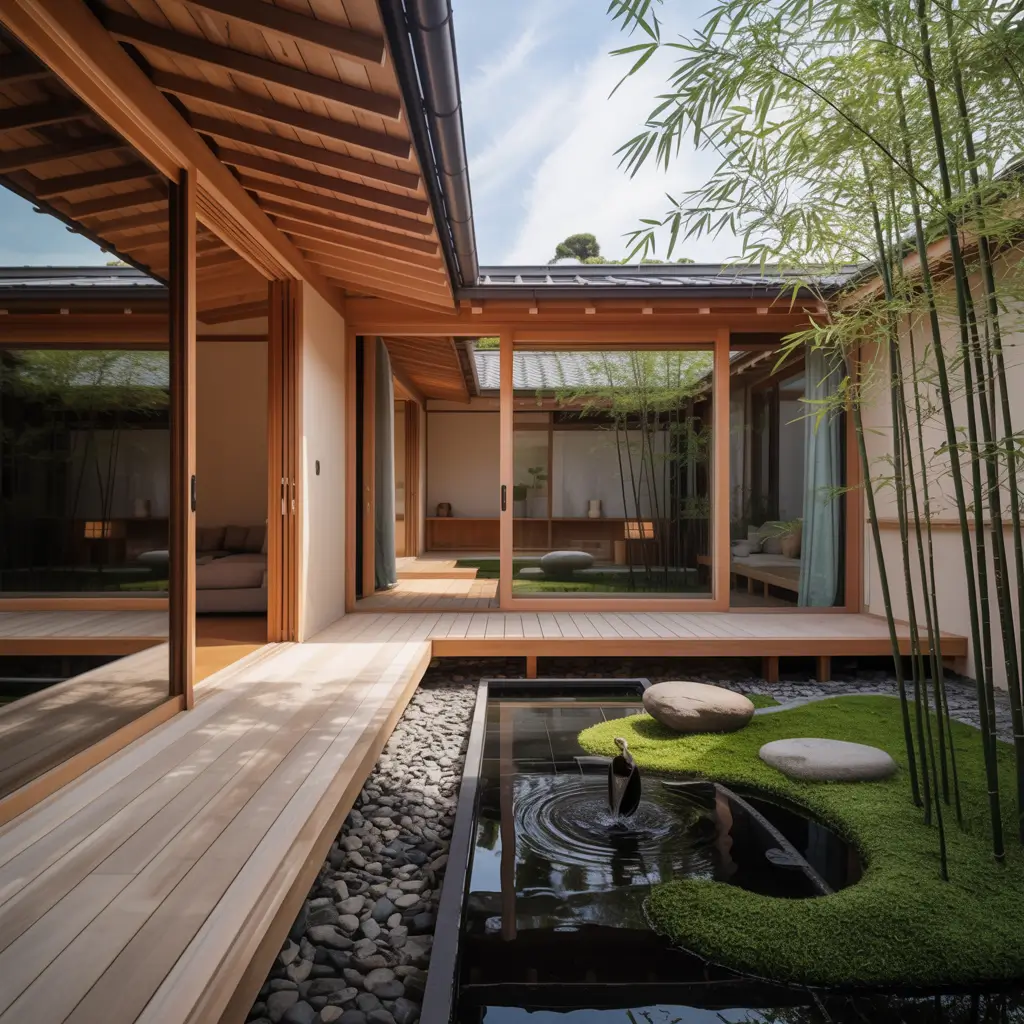
Zen-inspired courtyard designs prioritize simplicity, natural materials, and contemplative spaces that encourage meditation and calm. These courtyards feature minimal plantings—maybe a single Japanese maple, carefully placed rocks, raked gravel or sand, and water elements that create soothing sounds without visual complexity.
I visited a Zen courtyard home that had maybe six plants total in the courtyard—but their placement was so intentional and the simplicity so complete that the space felt incredibly peaceful. You wanted to just sit and breathe and let your mind quiet down, which is exactly the point.
Zen Design Principles
Simplicity dominates—few elements, each carefully chosen and placed for maximum impact. Natural materials in their authentic states—stone, wood, bamboo, gravel—create texture without requiring artificial decoration. Asymmetrical balance rather than formal symmetry creates visual interest that feels natural rather than contrived.
The courtyard might feature a small koi pond or water basin with a bamboo fountain. Rocks and boulders serve as sculptural elements. Raked gravel or sand creates patterns that change regularly, adding an element of impermanence and mindfulness to the space. Minimal plantings focus on form and seasonal change—evergreens providing year-round structure with deciduous trees adding seasonal drama.
Contemplative Spaces
Simple wooden platforms or stone seating areas create meditation spots within the courtyard. The space invites stillness and contemplation rather than active use or entertainment. Views from interior rooms frame the courtyard like living artwork that changes subtly throughout days and seasons.
Interior spaces maintain the same minimalist aesthetic—neutral colors, natural materials, clean lines, and minimal decoration that lets the courtyard provide visual interest. The connection between interior simplicity and courtyard serenity creates holistic environments that support mindfulness and calm.
Maintenance and Care
Zen courtyards require different maintenance than traditional gardens—raking gravel, pruning plants to maintain specific forms, keeping water features clean and functioning. The aesthetic demands precision and attention to detail rather than lush abundance. This maintenance becomes a meditative practice itself for people drawn to this design philosophy.
Zen-inspired courtyard homes suit people seeking peaceful retreats from busy modern life, those who appreciate minimalist aesthetics, or anyone drawn to contemplative practices like meditation or yoga. The courtyard becomes a daily reminder to slow down, breathe, and find peace—pretty valuable in our constantly-connected, always-busy world.
12. Multi-Level Courtyard House Design
Vertical Integration of Outdoor Space
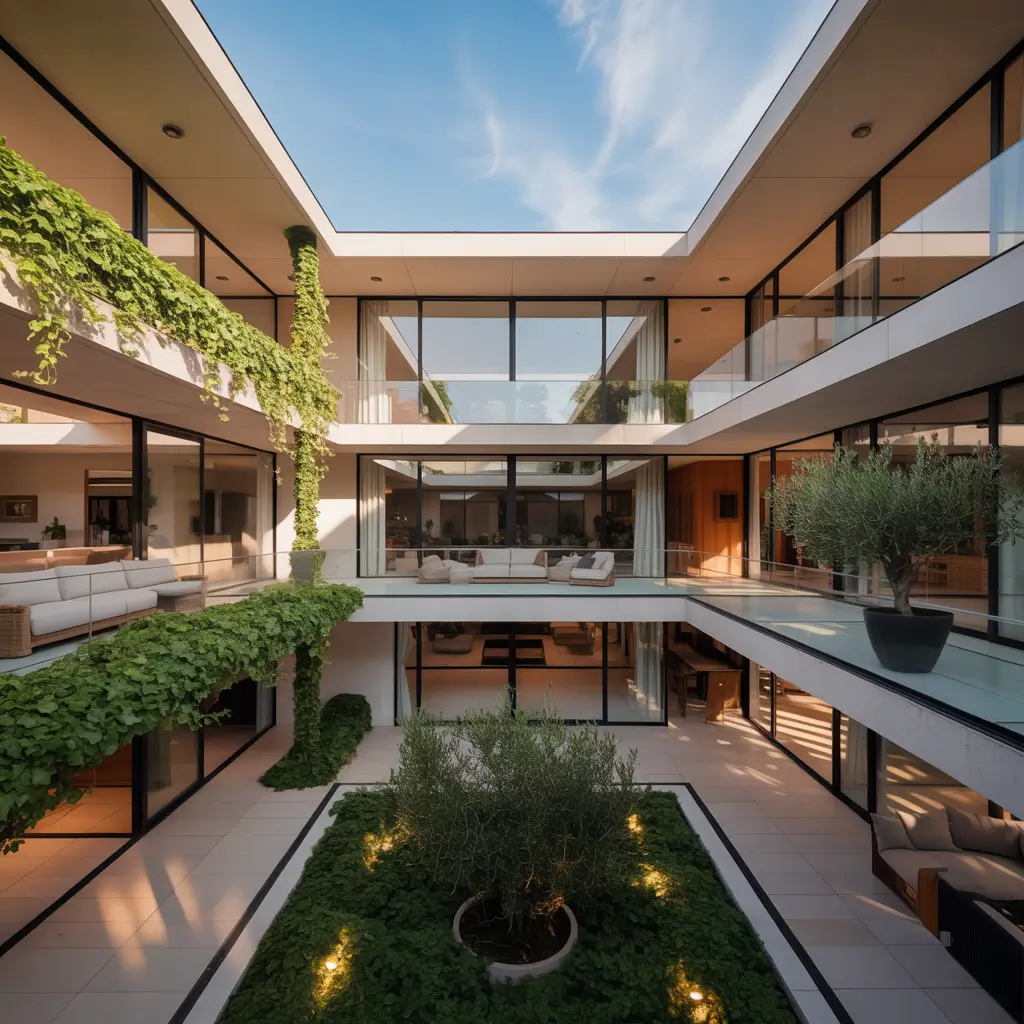
Multi-level courtyard homes (typically 2-3 stories) create interesting spatial relationships where the courtyard connects to different floor levels, creating varied experiences and views of the same outdoor space. Upper-floor rooms might overlook the courtyard from balconies or terraces while ground-level rooms open directly to it, adding vertical dimension to the courtyard experience.
I stayed in a 3-story courtyard home once where the courtyard had different zones at different levels—a sunken garden area, main courtyard level, and raised terrace—each accessible from different floors of the house. Moving through the home meant experiencing the courtyard from constantly shifting perspectives, and it was genuinely fascinating.
Vertical Design Strategies
The courtyard might start at ground level with first-floor rooms opening directly to it, while second and third-floor rooms overlook it from balconies or terraces. Alternatively, some designs locate the courtyard on an upper floor, creating a protected outdoor deck space above ground-level rooms with views to sky rather than ground.
Multi-level courtyards can include terraced landscaping, stairs connecting different courtyard levels, or even vertical gardens on walls that rise through multiple stories. Water features might cascade from upper to lower levels, creating visual and acoustic connections between floors.
Spatial Relationships
Upper-floor bedroom balconies overlooking courtyards create private outdoor spaces connected to sleeping areas—perfect for morning coffee or evening wind-down time. Living areas on middle floors gain courtyard views without direct access, creating visual connection without requiring ground-level location. Ground-floor spaces open directly to the courtyard for easy outdoor entertaining and living.
The vertical orientation creates interesting sight-lines and views within the home—you might see across the courtyard from one wing to another, or look down from an upper floor to courtyard activities below. These internal views create a sense of connection throughout the home even when family members are in different areas.
Architectural Opportunities
Multi-level designs create opportunities for dramatic architectural gestures—floating stairs, suspended walkways, cantilevered balconies, or glass bridges crossing the courtyard at upper levels. Natural light strategies differ from single-story courtyards—clerestory windows at upper levels, skylights above courtyard spaces, or light wells that extend through multiple floors.
Heating and cooling considerations become more complex with multi-story courtyards since temperature stratification can create hot upper floors and cool lower floors. Strategic window placement and mechanical systems need to address these vertical differences while taking advantage of stack ventilation opportunities the courtyard creates.
Multi-level courtyard homes work wonderfully on compact urban lots where building vertically makes better use of limited ground area, in hillside locations where natural grade changes accommodate multi-level designs, or for larger families needing separation between floor levels while maintaining that courtyard connection. FYI, the architectural complexity usually means higher construction costs, but the resulting spatial experience is genuinely unique and special.
Bringing Your Courtyard Vision to Life
Here’s the thing about courtyard homes they’re not just architectural features or design trends, they’re genuinely different ways of living that fundamentally change your relationship with outdoor space and natural light.
Traditional homes put outdoor spaces at the periphery—backyards you walk to, front yards for curb appeal. Courtyards bring outdoor space to the center, making it an integral part of daily life rather than something you access separately.
The right courtyard design for you depends on your climate, lot characteristics, budget, lifestyle, and honestly, how much you actually want to interact with outdoor space.
If you’re someone who genuinely lives outside whenever possible, courtyards with active use areas—dining, lounging, pools—make perfect sense. If you prefer admiring nature from climate-controlled comfort, courtyards focused on views and natural light might suit you better.
Climate matters enormously. Courtyard designs evolved in warm, sunny regions where outdoor living is practical year-round and shading strategies are crucial.
They still work beautifully in temperate and even cold climates, but the usage patterns and design details shift—maybe more covered areas, different plant selections, or strategies for snow management and ice prevention.
Lot characteristics influence which courtyard configuration works best. Small urban lots suit compact inward-focused designs. Larger suburban or rural lots allow expansive courtyard villas with generous outdoor areas. Corner lots create opportunities for L-shaped designs.
Challenging lots with privacy issues benefit enormously from inward-focused courtyard layouts.
Budget impacts everything from courtyard size to finish materials to amenities you can incorporate. But here’s the good news—courtyard designs work at every budget level from modest small-home courtyards to luxury villa concepts.
The core benefits of privacy, natural light, and outdoor connection don’t require huge budgets, just thoughtful design.