12 Inspiring House Floor Plans Ideas and Family Comfort
- House Plans
 Ben
Ben- 0
- 31 minutes read
Picture this: you walk into your home after a long day, and instead of feeling cramped or frustrated by awkward layouts, everything just flows perfectly.
Your kitchen connects seamlessly to your living room, your bedroom feels like a private retreat, and that weird corner that always bothered you? It doesn’t exist. Sounds like a dream, right?
Well, here’s the thing—finding the perfect house floor plan feels a lot like dating. You scroll through endless options, some look amazing on paper but disappoint in reality, and just when you’re ready to give up, you stumble upon something that makes your heart skip a beat.
I’ve been through this journey myself, and trust me, the right floor plan can completely transform how you live.
So grab your coffee (or wine, no judgment here), and let’s explore twelve house floor plan ideas that actually make sense for real life.
These aren’t just pretty drawings—they’re thoughtfully designed layouts that balance what you need with what you want.
Why Your Floor Plan Matters More Than You Think
Before we dive into the specific plans, let’s get real about why floor plans deserve your full attention. Your house’s layout determines everything from how you start your morning to how you entertain guests on weekends.
A bad floor plan can make even a large house feel cramped and uncomfortable. You know those homes where you have to walk through three rooms just to get to the bathroom? Yeah, that’s poor planning at its finest. On the flip side, a well-designed floor plan can make a modest home feel spacious and luxurious.
The best floor plans anticipate how you actually live, not how you think you should live. They create natural traffic patterns, provide the right balance of togetherness and privacy, and adapt to your changing needs over time.
1. Open Concept Family Flow Plan
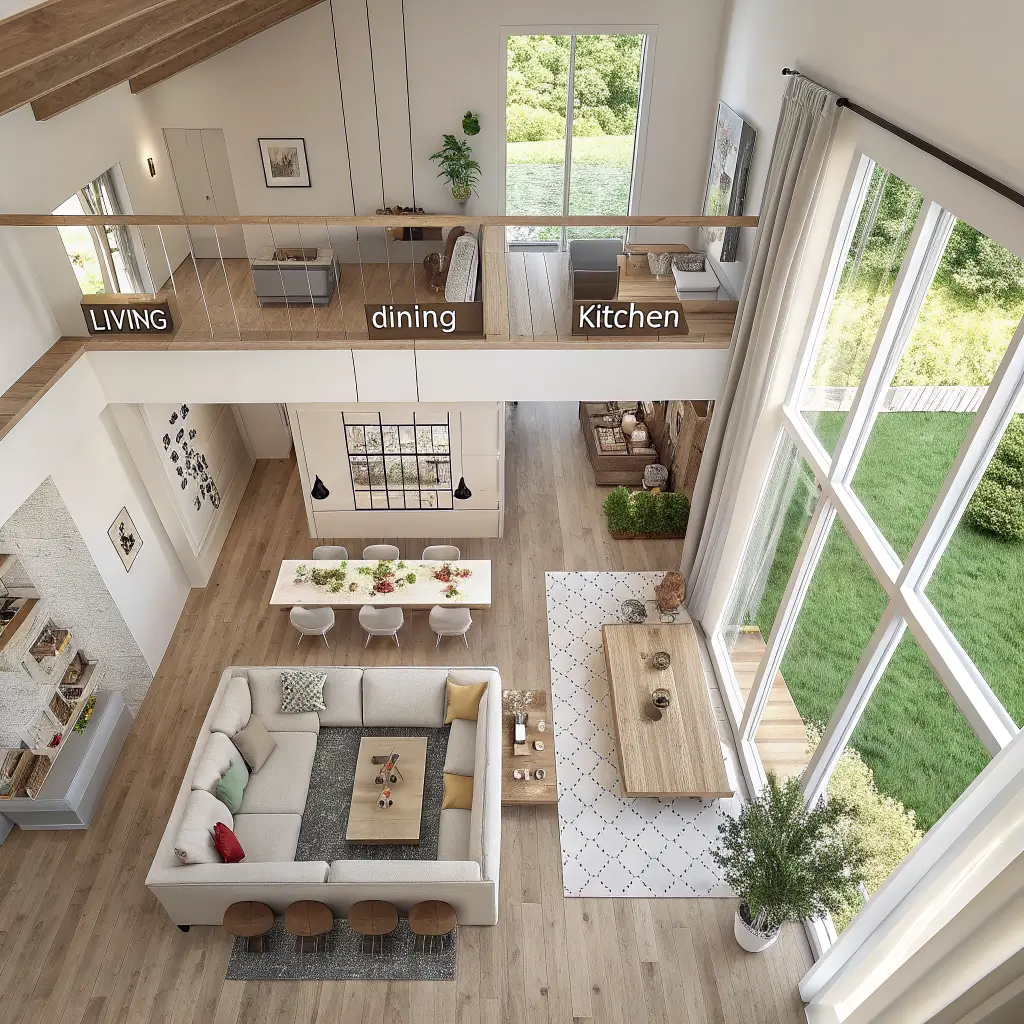
Let’s kick things off with the crowd favorite—the open concept family flow plan. This layout has dominated home design for years, and honestly, there’s a good reason for its popularity.
What Makes Open Concept Work
The open concept plan removes walls between the main living spaces, creating one large area where kitchen, dining, and living room functions blend together. This design reflects how modern families actually spend time—together but doing different things.
I remember the first time I experienced true open concept living at my sister’s new house. The kids could do homework at the dining table while she cooked dinner, and everyone could still chat. No more shouting through walls or feeling isolated while preparing meals.
Traffic Flow and Natural Gathering
The beauty of open concept lies in how it encourages natural gathering without forcing it. People gravitate to where they feel comfortable—maybe the kitchen island, perhaps the cozy corner of the sectional. The space allows for both interaction and independence.
Smart open concept plans use subtle design elements to define different zones. A change in flooring might signal the transition from kitchen to living room. The kitchen island creates a natural boundary while maintaining sightlines. Furniture arrangement guides traffic flow without creating obstacles.
The Downside Nobody Talks About
Here’s the truth bomb—open concept isn’t perfect for everyone. Cooking smells travel everywhere (hope you like the aroma of last night’s fish). TV noise competes with kitchen cleanup. And forget about hiding that pile of dishes when unexpected guests arrive.
2. Compact Smart Space Layout
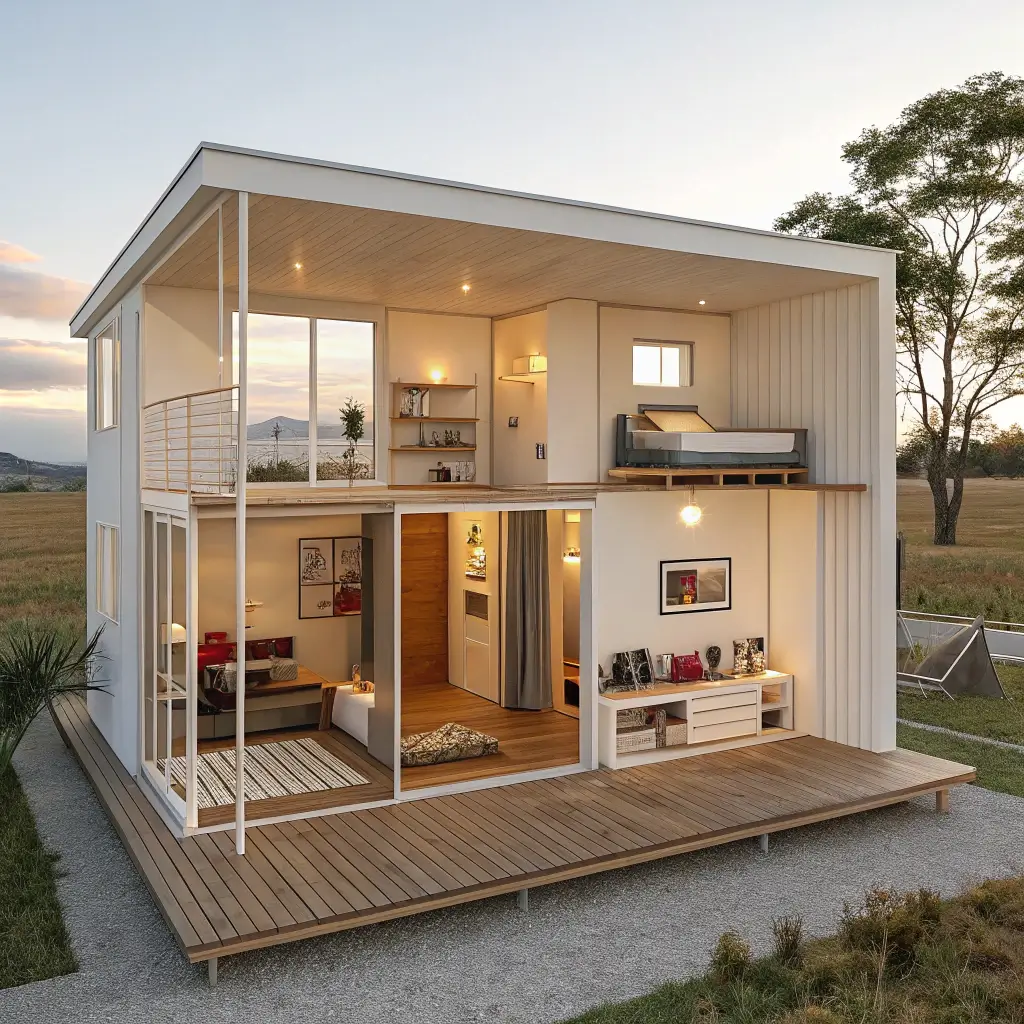
Not everyone has unlimited square footage to work with, and that’s where compact smart space layouts shine. These plans prove you don’t need a mansion to live comfortably.
Making Every Square Foot Count
Compact layouts eliminate wasted space through clever design strategies. Hallways become minimal or disappear entirely. Rooms serve multiple functions. Storage gets integrated into unexpected places.
I once toured a 900-square-foot home that felt larger than my friend’s 1,500-square-foot house. The secret? Every single element served a purpose. The staircase included pull-out drawers. The kitchen island doubled as a dining table. Even the window seats hid storage compartments.
Vertical Space Solutions
When you can’t build out, build up. Compact plans maximize vertical space through lofted areas, tall storage solutions, and strategic ceiling treatments. High ceilings with clerestory windows make spaces feel larger while maintaining the small footprint.
Think about it—why have empty space above your head when you could use it for storage, sleeping lofts, or architectural interest? Smart compact designs treat vertical space as valuable real estate.
3. Modern Zoning Privacy Plan
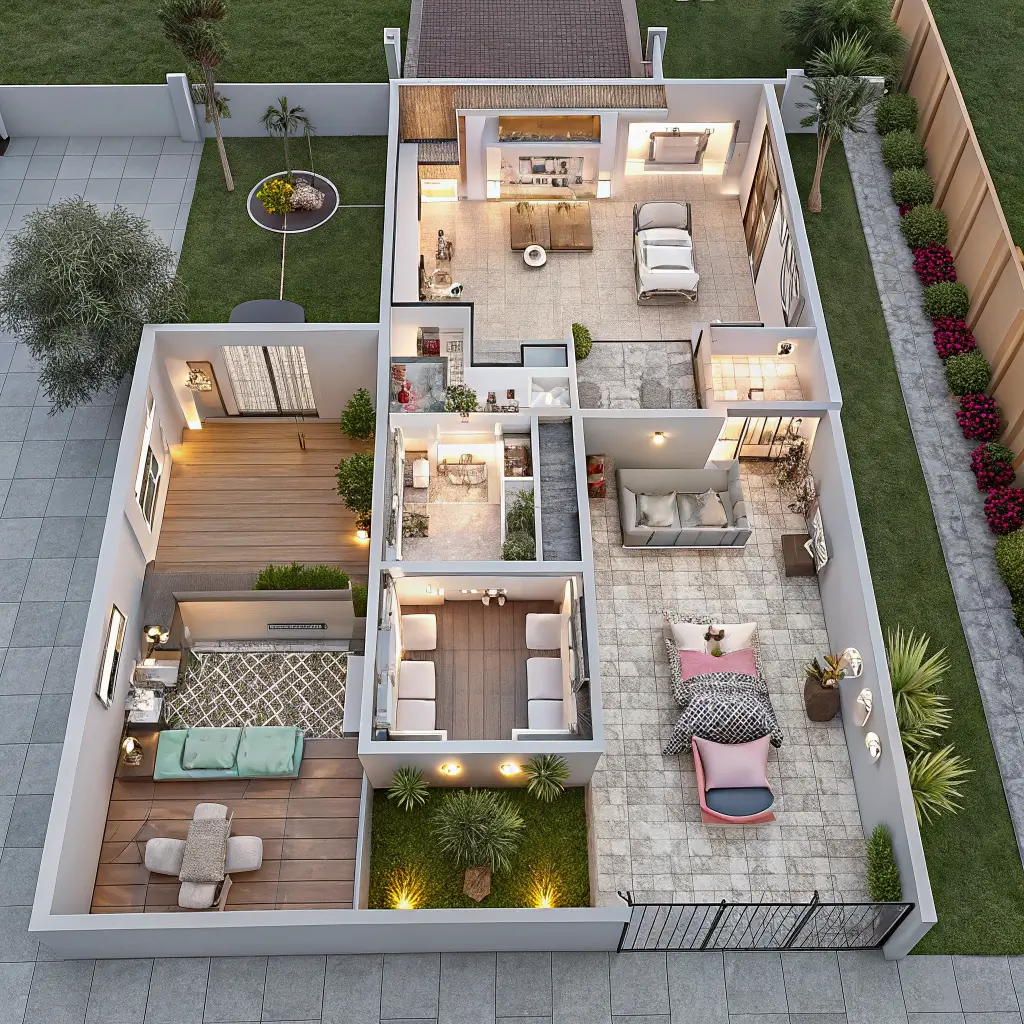
Even in our connected world, everyone needs privacy sometimes. Modern zoning plans create distinct public and private areas while maintaining an overall sense of flow.
Strategic Separation
These layouts typically position bedrooms away from main living areas, often using the home’s shape or levels to create natural separation. The master suite might occupy one end of the house while children’s rooms cluster at the opposite end.
Public spaces—kitchen, living room, dining area—sit in the center, accessible to everyone but buffered from private retreats. This arrangement works brilliantly for families with different schedules or those who frequently entertain.
Acoustic Considerations
Good zoning plans think about sound travel, not just visual separation. They position noisy areas (like family rooms or play spaces) away from quiet zones (bedrooms, home offices). Strategic placement of closets, bathrooms, and storage areas creates sound buffers between spaces.
FYI, this becomes incredibly important if you have teenagers who think 2 AM is the perfect time to practice their electric guitar. Ask me how I know.
Also Read: 10 Creative Modern House Floor Plans Ideas for Stylish Living
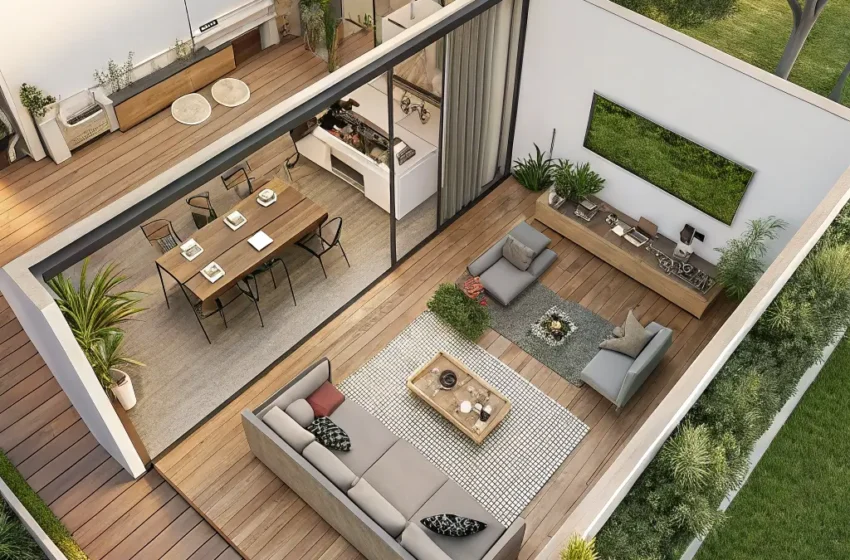
4. Indoor-Outdoor Living Floor Plan
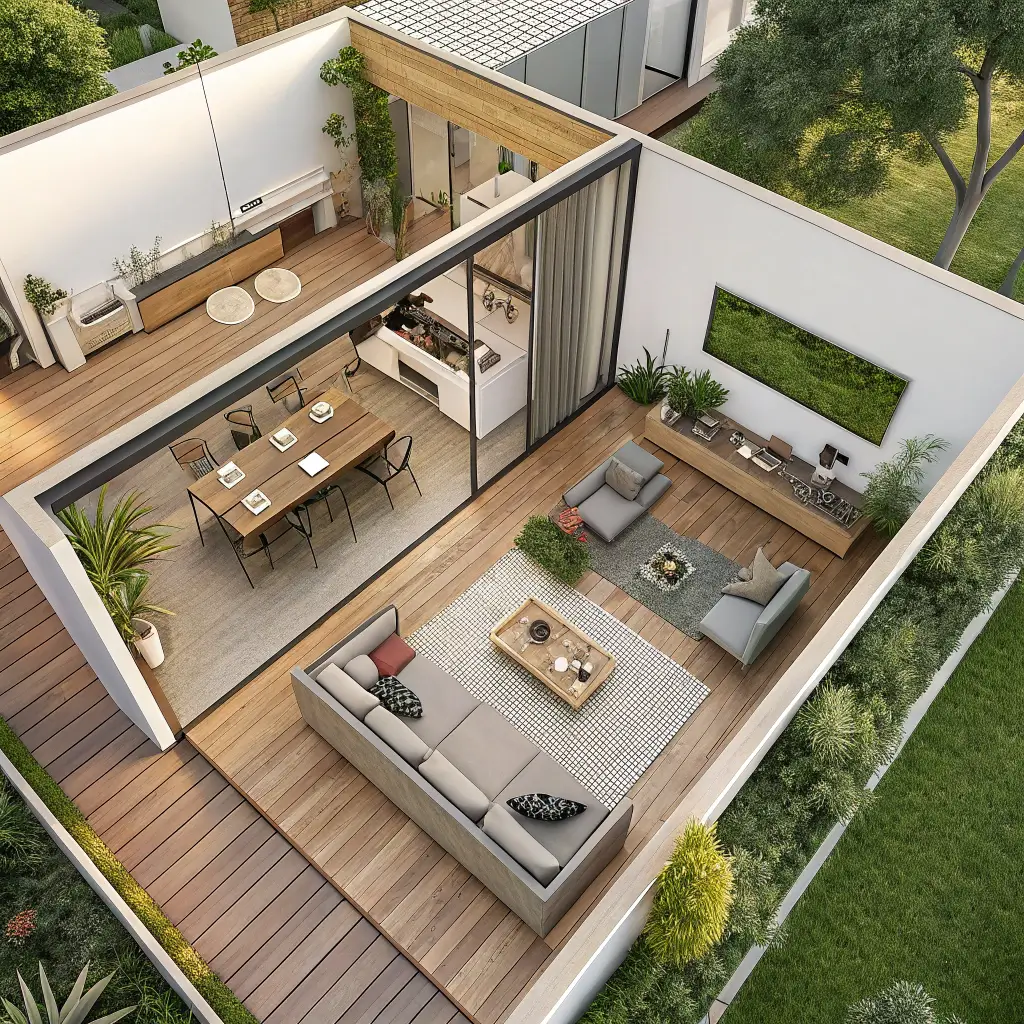
Why should your living space stop at your walls? Indoor-outdoor floor plans blur the boundaries between interior and exterior, effectively expanding your usable space.
Seamless Transitions
These plans feature large sliding doors, consistent flooring materials, and covered outdoor areas that feel like natural extensions of interior rooms. When you open those doors, your living room suddenly doubles in size.
The key lies in treating outdoor spaces as actual rooms, not afterthoughts. An outdoor kitchen becomes as functional as your indoor one. A covered patio serves as a three-season family room. Even small balconies can function as outdoor offices or reading nooks.
Climate Adaptation
Obviously, indoor-outdoor living works differently in Phoenix than in Portland. Smart plans adapt to local climate conditions through features like retractable screens, heating elements, or shade structures.
I’ve seen brilliant solutions like screened porches that keep bugs out while maintaining outdoor feel, or courtyard designs that create protected outdoor spaces in windy locations. The best plans work with your climate, not against it.
5. Minimalist Functional Home Plan
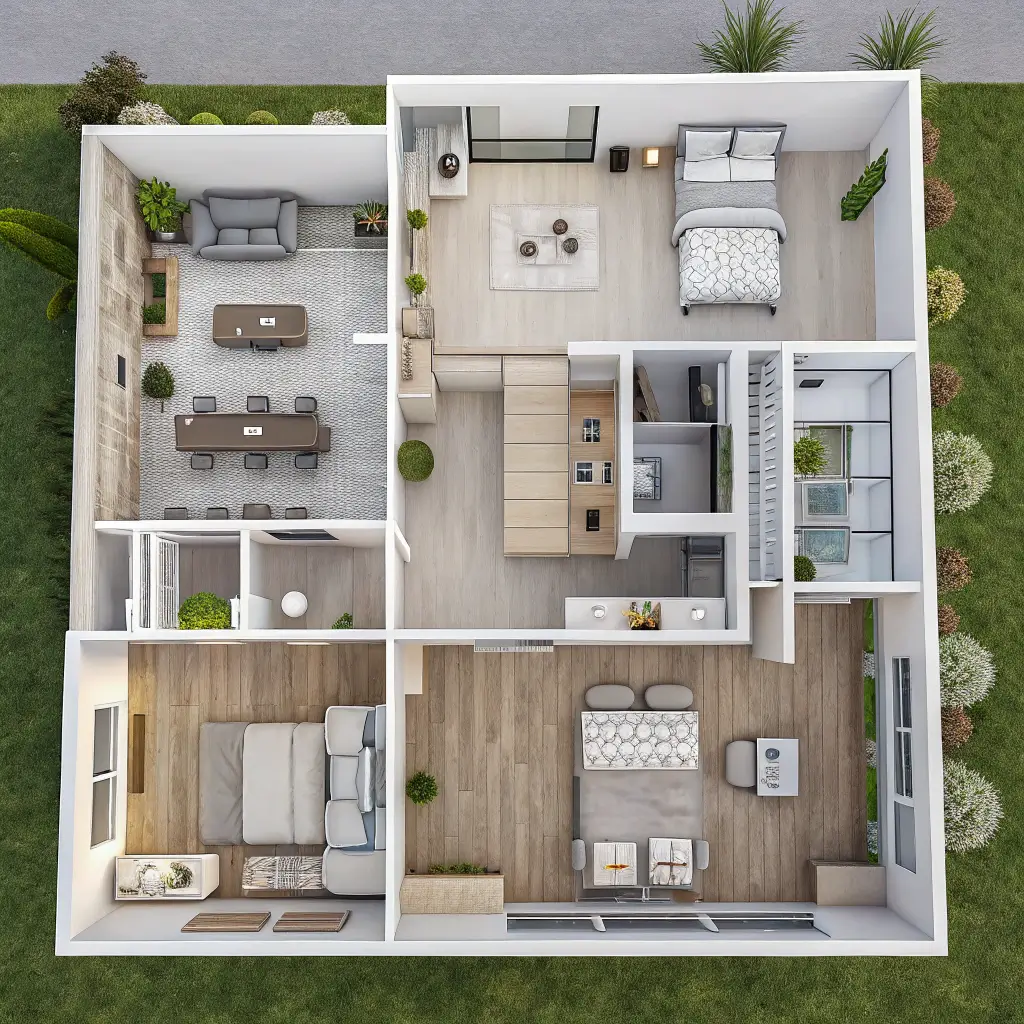
Minimalist plans strip away everything unnecessary, focusing on clean lines, simple forms, and purposeful spaces. But here’s the thing—minimalism doesn’t mean boring or uncomfortable.
Less Stuff, More Life
Minimalist floor plans force you to be intentional about what you include. Every room has a clear purpose. Every element serves a function. This clarity creates surprisingly peaceful living environments.
These plans often feature built-in storage that maintains clean lines while hiding life’s necessities. Think floor-to-ceiling closets with invisible doors, under-stair storage systems, or platform beds with integrated drawers.
Quality Over Quantity
Instead of having five mediocre rooms, minimalist plans might include three exceptional ones. Spaces feel generous because they’re not cluttered with unnecessary elements. Natural light, quality materials, and thoughtful proportions create luxury through simplicity.
The challenge? You need to actually embrace minimalist living. If you’re a maximalist at heart (guilty as charged), this layout might feel restrictive rather than liberating.
6. Split Bedroom Privacy Layout
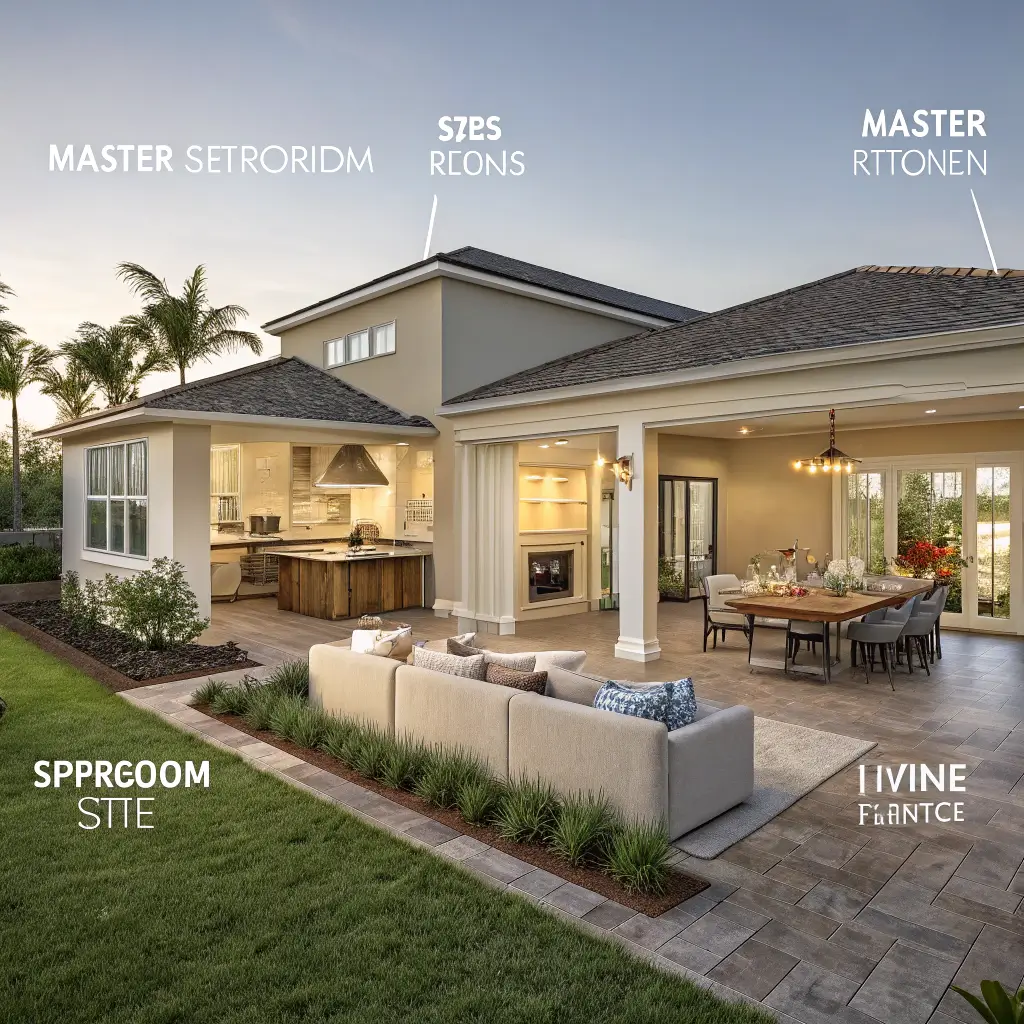
The split bedroom layout represents genius-level planning for families who want togetherness and privacy. This design separates the master bedroom from other bedrooms, usually positioning them on opposite sides of the house.
Privacy for Everyone
Parents get their sanctuary away from kids’ chaos. Teenagers gain independence without feeling like they’re under constant supervision. Guests have privacy without invading family spaces. Everyone wins.
The common areas typically sit in the center, creating a buffer between the different bedroom zones. This arrangement means you can watch TV in the master bedroom without waking kids, or teenagers can have sleepovers without disturbing parents.
Flexibility for Life Changes
Split bedroom plans adapt beautifully to changing family dynamics. That secondary bedroom wing might house young children initially, become teenager territory later, then transform into guest suites or home offices when kids leave.
I particularly love split plans that include a bedroom near the master suite that can serve as a nursery early on, then convert to a home office or sitting room later. Talk about planning ahead!
Also Read: 10 Creative Dream House Plans Ideas and Functional Homes
7. Courtyard-Centered House Plan
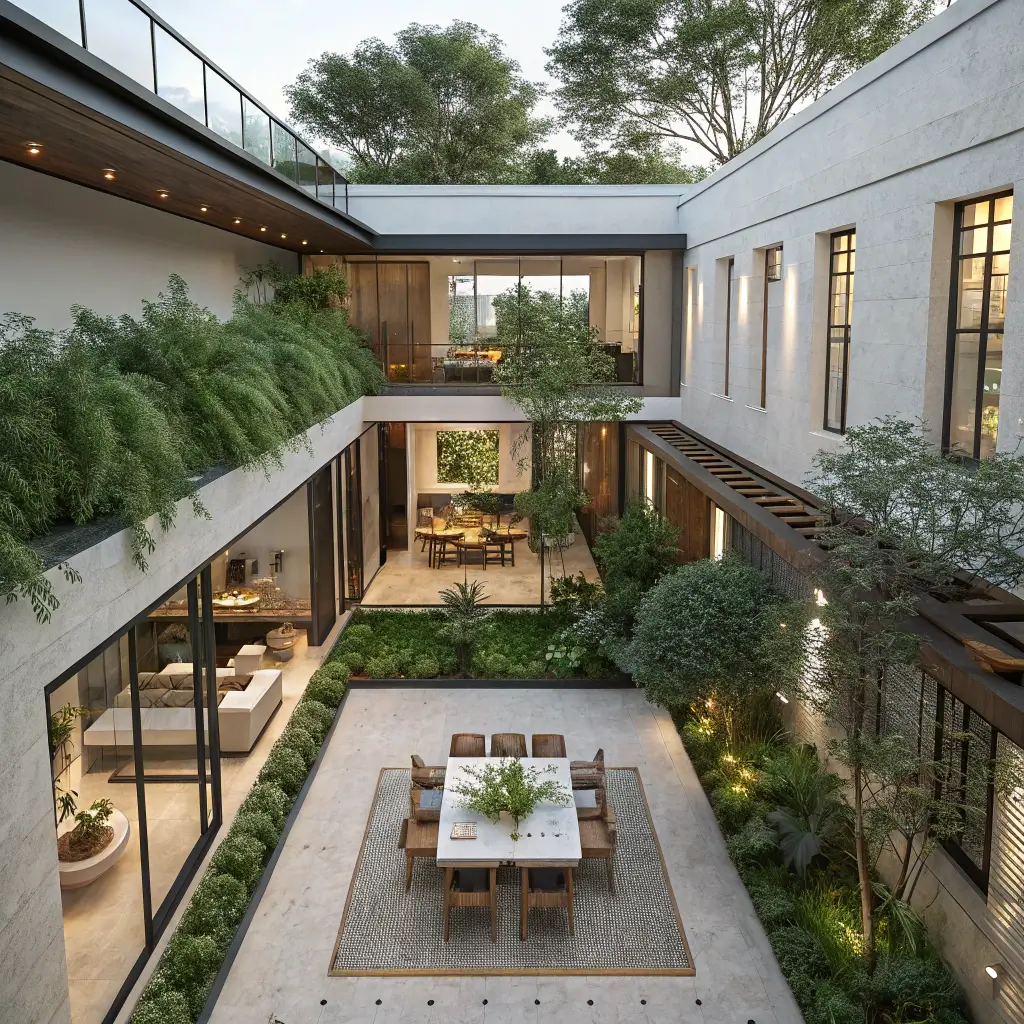
Courtyard plans organize rooms around a central outdoor space, creating a private oasis that becomes the heart of your home. Think of it as bringing a piece of nature inside your walls.
Creating Your Private Paradise
The courtyard becomes your own secret garden, visible from multiple rooms but hidden from the outside world. This design offers privacy in dense neighborhoods while maintaining connection to nature.
Rooms facing the courtyard enjoy natural light and garden views without sacrificing privacy. You could walk around in your pajamas all day without worrying about neighbors seeing you. 🙂
Natural Climate Control
Courtyards can actually help regulate your home’s temperature. They create natural air circulation patterns, provide shade in summer, and protect from harsh winds. Some designs even incorporate water features that cool surrounding spaces through evaporation.
The challenge with courtyard plans involves maintenance—that beautiful central garden requires regular care. But for garden lovers, this “problem” becomes a delightful opportunity.
8. Multi-Purpose Room Floor Plan
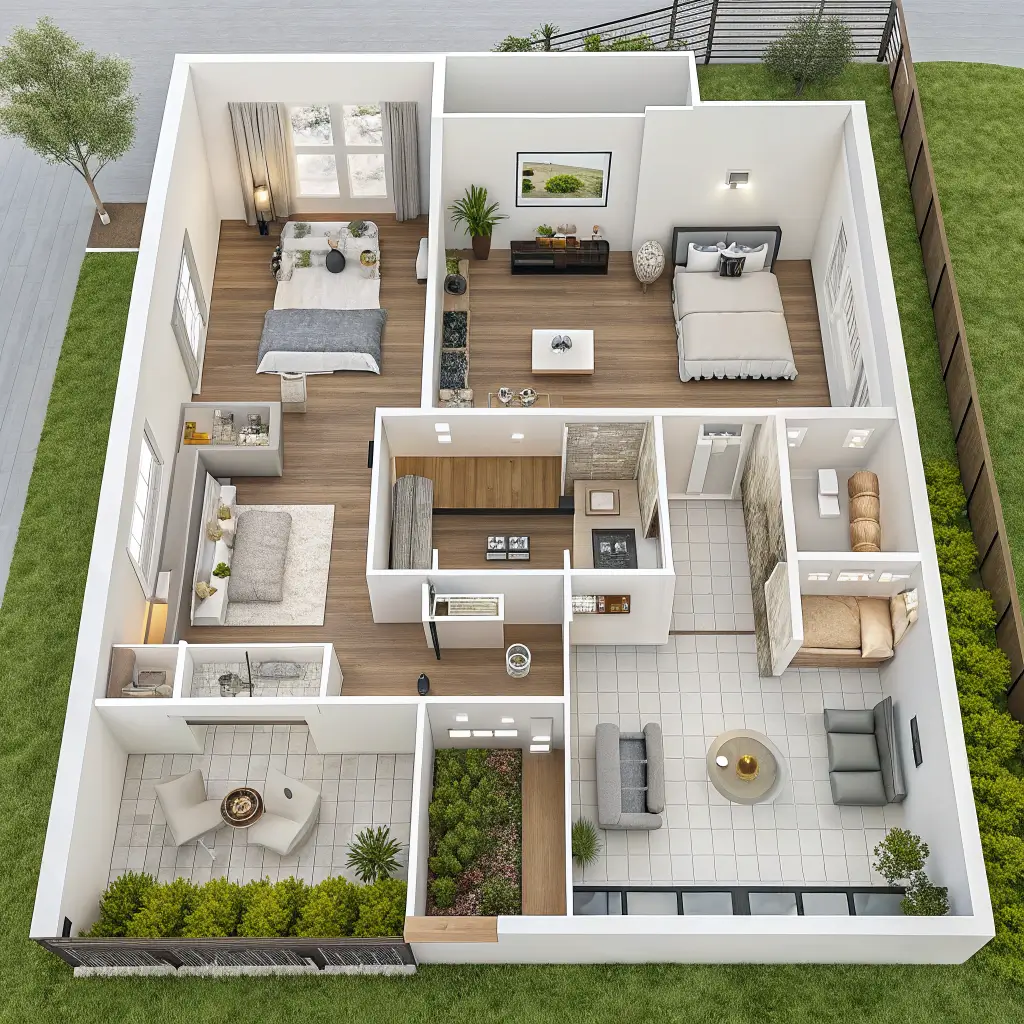
Modern life demands flexibility, and multi-purpose room plans deliver it in spades. These layouts include spaces that transform based on your needs throughout the day or over time.
Rooms That Shape-Shift
Imagine a room that serves as a home office during weekdays, transforms into a guest bedroom when family visits, and becomes a yoga studio on weekend mornings. Multi-purpose plans make this possible through smart design and flexible furnishing.
These spaces often feature murphy beds, modular furniture, or moveable partitions that allow quick transformations. Built-in storage keeps equipment and supplies organized but accessible.
The Bonus Room Concept
Many multi-purpose plans include a “bonus room”—an intentionally undefined space you can customize. Might become a playroom, media room, craft studio, or home gym. The beauty lies in not having to decide immediately.
I’ve seen families completely change bonus room functions as their lives evolved. What started as a play space became a teen hangout, then a home theater, and finally a home office. That’s the kind of flexibility that makes a house work long-term.
9. Natural Light Focused Layout
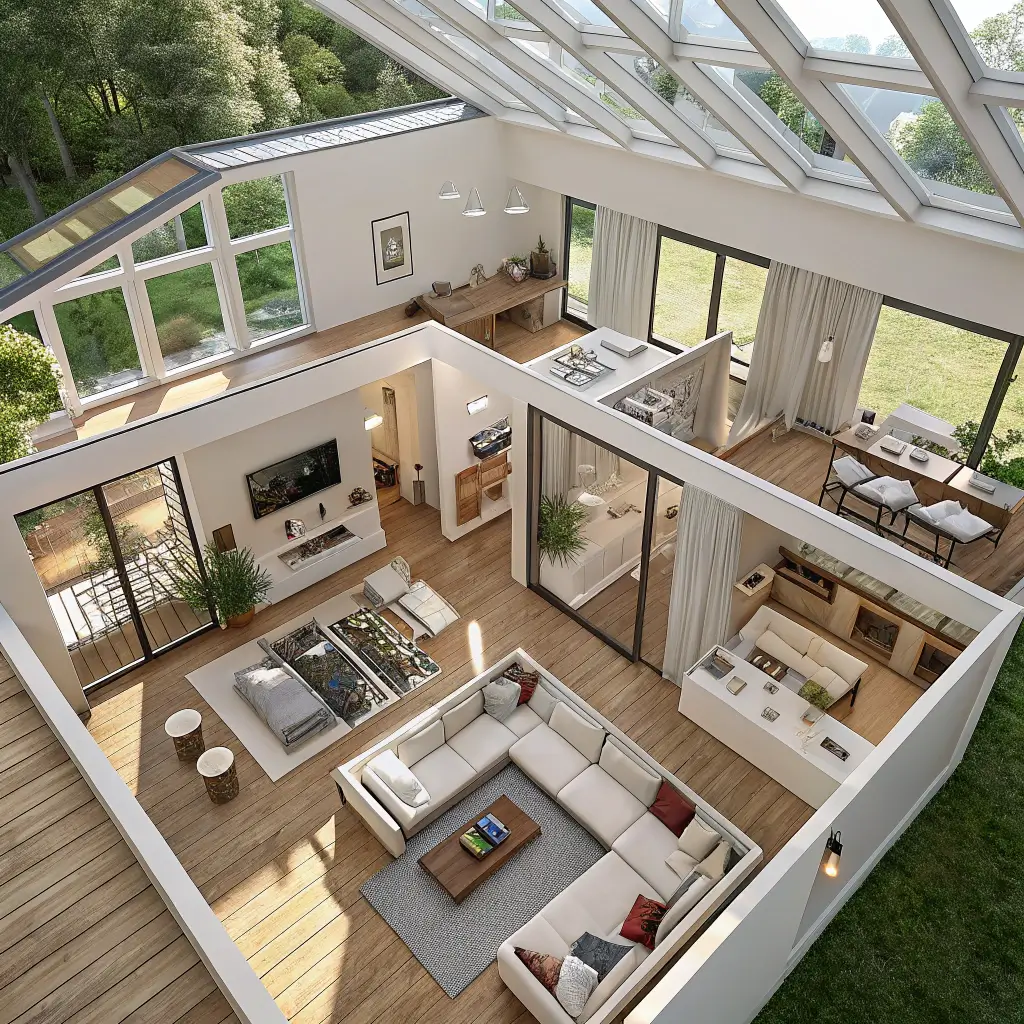
Some floor plans prioritize natural light above all else, and the results can be absolutely transformative. These designs maximize daylight through strategic window placement, skylights, and open sightlines.
Chasing the Sun
Light-focused plans position rooms based on sun exposure throughout the day. Morning light floods bedrooms and breakfast nooks. Afternoon sun warms living spaces. Evening light creates ambiance in dining areas.
Large windows, glass doors, and skylights become architectural features rather than simple openings. Clerestory windows bring light deep into the home’s center. Light wells illuminate interior spaces that might otherwise feel dark.
Health and Happiness Benefits
Natural light does more than reduce electricity bills. It improves mood, regulates sleep patterns, and makes spaces feel larger and more welcoming. Ever noticed how you gravitate toward the sunniest spot in your home? That’s your body craving those benefits.
The main consideration with light-focused designs involves managing heat gain and privacy. Strategic overhangs, smart glass, and window treatments help control these factors without sacrificing the light you love.
Also Read: 12 Elegant 4 Bedroom House Plans Ideas That Inspire Living
10. Flexible Future-Ready Floor Plan
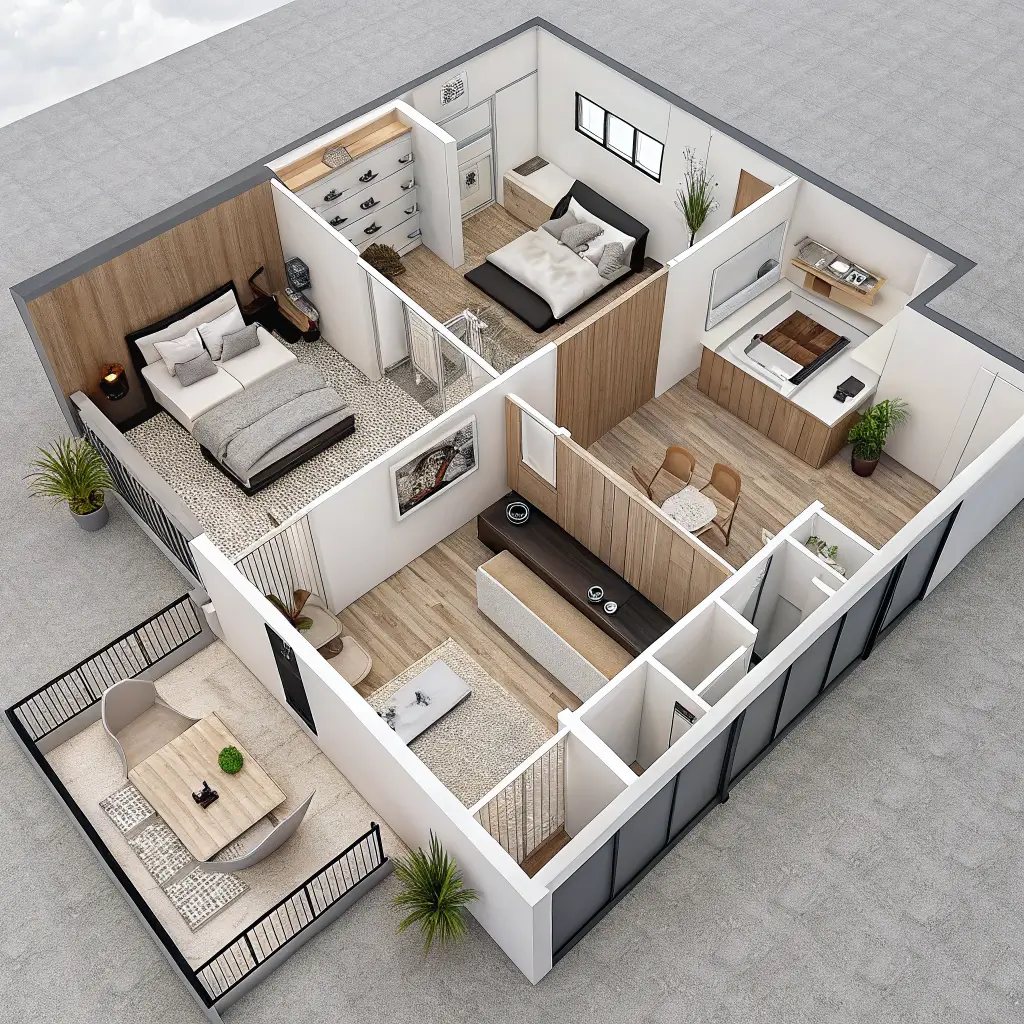
Life changes, and flexible floor plans anticipate those changes rather than forcing you to adapt to rigid layouts. These designs include features that allow easy modifications as your needs evolve.
Planning for the Unknown
Future-ready plans might include plumbing rough-ins for potential bathroom additions, reinforced floors that could support future walls, or electrical systems designed for easy expansion. They think ahead so you don’t have to renovate extensively later.
Universal design principles ensure spaces remain accessible as you age. Wider doorways accommodate wheelchairs if needed. Bathrooms include blocking for future grab bars. At least one bedroom exists on the main floor for aging in place.
Expandable Spaces
Some flexible plans include unfinished spaces you can complete when needed—an attic ready for conversion, a basement waiting for finishing, or a garage designed for future ADU conversion. These options provide room to grow without moving.
The investment in flexibility pays off enormously over time. Sure, it might cost slightly more initially, but it’s way cheaper than major renovations or moving when your needs change.
11. Budget-Friendly Efficient Plan
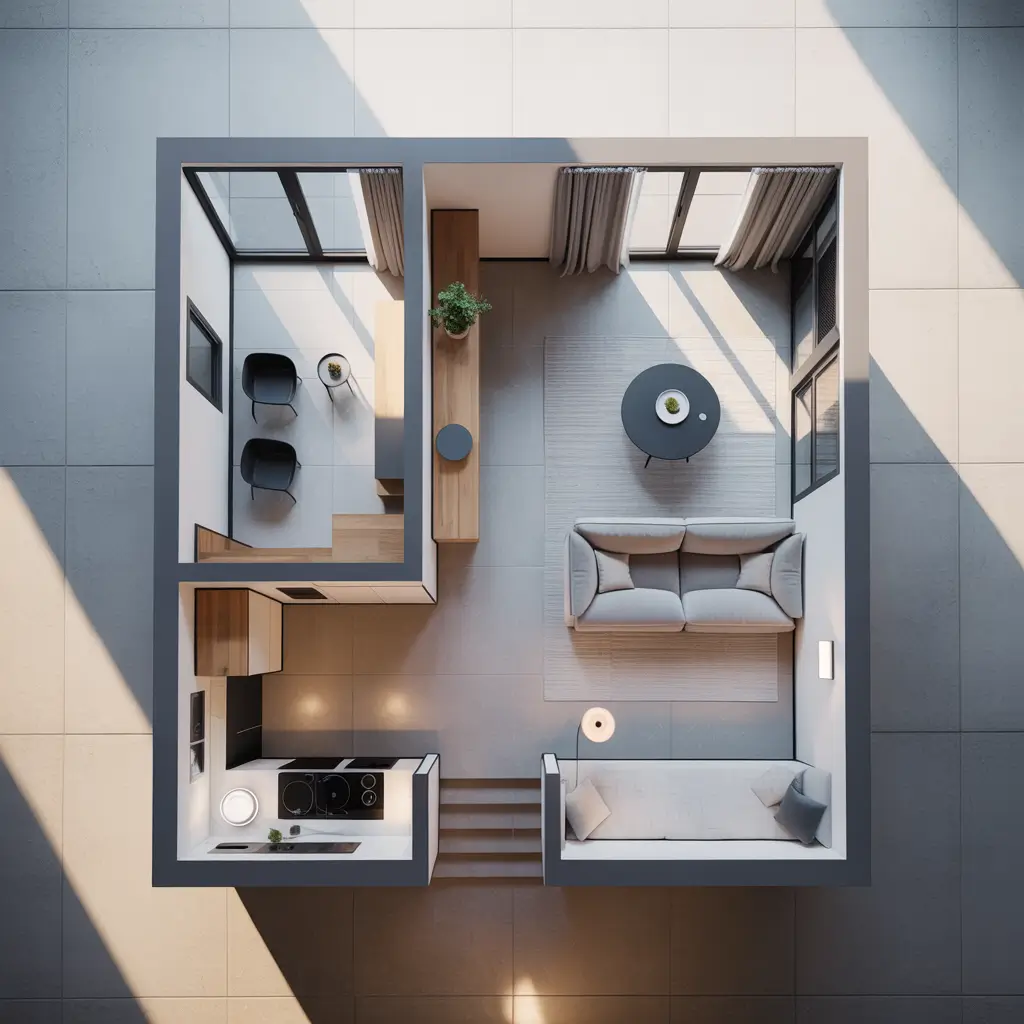
Let’s be real—not everyone has an unlimited budget. Budget-friendly plans maximize value through smart design choices that don’t sacrifice livability.
Where to Save, Where to Splurge
Efficient plans often feature simple rooflines that reduce construction costs. Rectangular or square footprints cost less than complex shapes. Positioning plumbing fixtures back-to-back minimizes pipe runs.
But here’s the secret—you can still include a few splurge-worthy elements. Maybe you save on square footage but invest in a gorgeous kitchen. Or you choose standard finishes throughout but spring for that amazing master bathroom tile.
Long-Term Value
Budget-friendly doesn’t mean cheap. The smartest economical plans prioritize structural quality and energy efficiency—things that save money long-term. Better to have a well-built smaller home than a poorly constructed larger one.
IMO, the best budget plans also consider future earning potential. A good layout in a decent location will appreciate in value, making your “starter home” a smart investment rather than a temporary compromise.
12. Luxury Everyday Living Layout
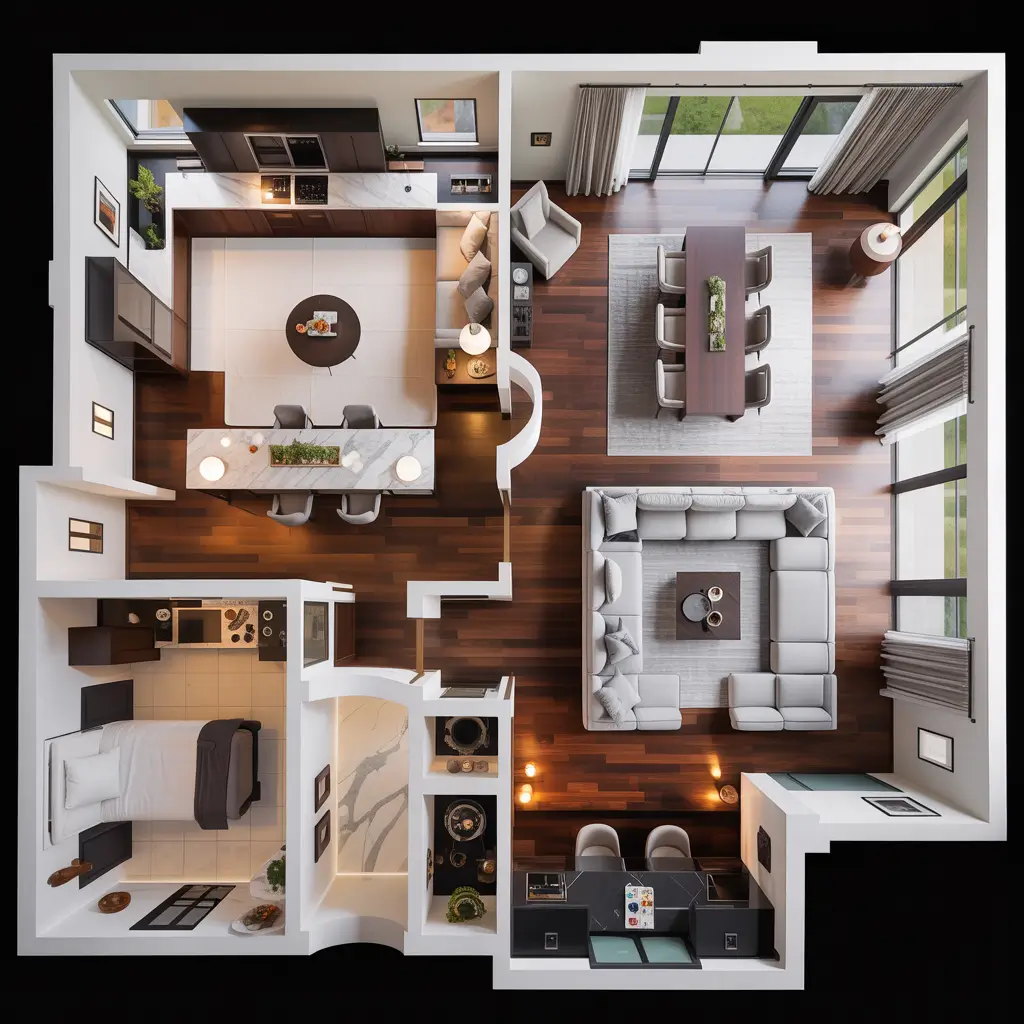
Let’s end with something aspirational—luxury layouts designed for everyday enjoyment rather than occasional entertaining. These plans make ordinary life feel extraordinary.
Redefining Luxury
Modern luxury isn’t about gold-plated fixtures or massive square footage. It’s about spaces that make daily routines feel special. A coffee bar in the master suite. A walk-in pantry that would make a chef weep. A mudroom that actually keeps mud out of your house.
These plans include features like spa-inspired bathrooms where your morning shower feels like a retreat. Gourmet kitchens where cooking becomes a joy rather than a chore. Home offices that make working from home a pleasure.
The Details Make the Difference
Luxury lives in the details—soft-close drawers, heated floors, built-in speakers, and smart home systems that simplify daily life. These elements might seem excessive, but they transform how you experience your home every single day.
The best luxury plans balance impressive features with intimate comfort. Sure, that two-story great room looks amazing, but does it feel cozy on a quiet evening? The sweet spot combines wow factor with livability.
Making Your Floor Plan Choice
We’ve covered twelve different floor plan ideas, each with unique benefits and considerations. So how do you choose the right one for your situation?
Start by honestly assessing your lifestyle. Do you entertain frequently? Work from home? Have young children or aging parents living with you? Your daily life should drive your floor plan decision more than any Pinterest board.
Consider your lot and climate too. That stunning courtyard plan might not work on a narrow city lot. Indoor-outdoor living hits differently in Miami versus Minneapolis. Your plan should work with your specific conditions, not fight against them.
Think long-term as well. How might your needs change over the next decade or two? The best floor plans adapt to life changes rather than forcing you to move when circumstances shift.
Final Thoughts on Finding Your Perfect Floor Plan
Here’s what I’ve learned after years of obsessing over floor plans: there’s no universal “best” layout.
The perfect house floor plan is the one that supports your specific life, fits your budget, and makes you excited to come home every day.
Don’t get so caught up in trends that you ignore practical needs. That open concept kitchen might photograph beautifully, but if you hate washing dishes in view of guests, it’s not right for you.
Be honest about how you actually live versus how you think you should live.
Remember, floor plans provide the bones, but your personal touches make a house feel like home. Choose a layout that excites you, then trust your instincts about how to make it uniquely yours.
Whether you go with an open concept design, a courtyard plan, or something completely different, make sure it’s a choice that supports the life you want to live.
Now get out there and find your perfect floor plan. Your dream home is waiting! :/