12 Practical House Plans One Story Ideas and Elegant Interiors
- House Plans
 Ben
Ben- 0
- 37 minutes read
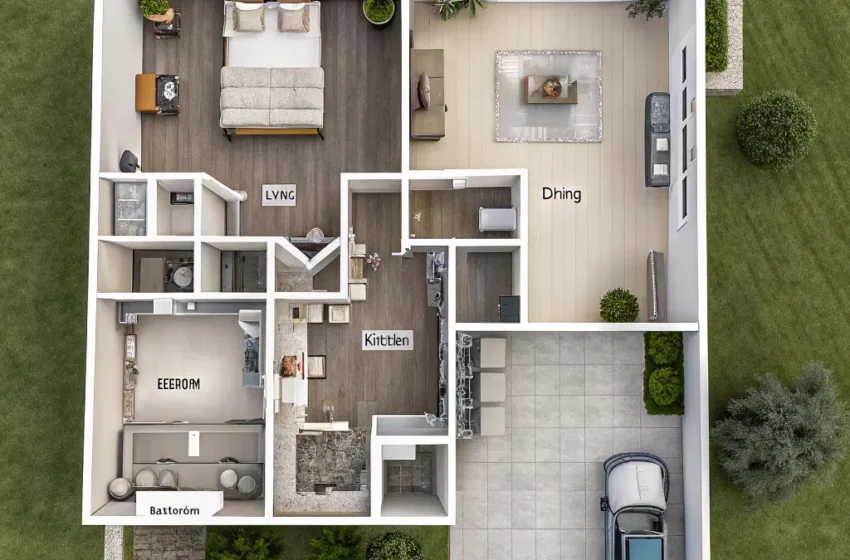
Let me tell you something—stairs are overrated. There, I said it. Sure, they look dramatic in home magazines, but you know what’s actually amazing? Walking directly from your bedroom to your kitchen without climbing a single step.
No knees complaining. No hauling laundry up and down. Just smooth, effortless, single-level living.
I became a one-story convert after spending a weekend at my aunt’s sprawling ranch-style home.
Everything flowed so naturally—she could carry groceries straight from the garage to the kitchen, check on dinner while grabbing something from her bedroom, and never once worried about her aging knees.
That experience completely changed how I thought about home design. Why were we all obsessing over two-story houses when single-level living offered so much more convenience?
So let’s explore twelve one-story house plan ideas that prove horizontal living beats vertical every time.
Whether you’re planning to build, dreaming about your future home, or just sick of climbing stairs every time you forget your phone upstairs, these layouts will show you the brilliance of keeping everything on one level.
Why One-Story Houses Make Perfect Sense
Before we dive into specific plans, let’s talk about why one-story homes deserve way more love than they get. These aren’t just houses for retirees (though they’re perfect for aging in place)—they’re smart solutions for anyone who values accessibility, efficiency, and frankly, not climbing stairs eighteen times a day.
One-story homes eliminate the single biggest barrier in residential architecture—literal barriers between floors. You can move freely throughout your entire home regardless of mobility. Parents can hear kids from anywhere. Moving furniture becomes infinitely easier. And let’s be honest, you’ll never again experience that special frustration of reaching the top of the stairs and forgetting why you climbed them.
These layouts also tend to feel more connected to outdoor spaces since every room sits at ground level. Patios and gardens become natural extensions of your living areas. Indoor-outdoor flow happens effortlessly when you’re not dealing with elevation changes.
1. Open Concept One-Story Family Layout
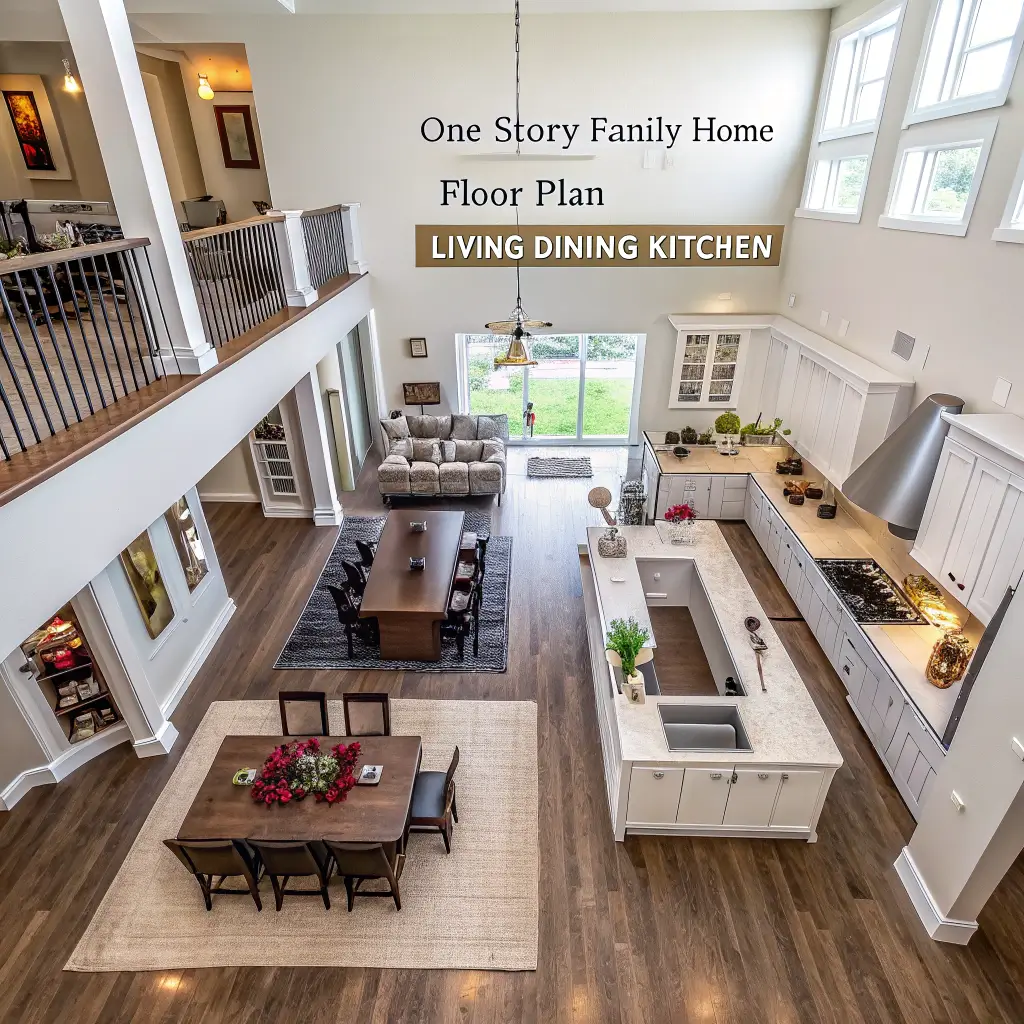
Let’s kick things off with the most popular one-story configuration—the open concept family layout that eliminates walls between main living spaces to create one flowing, functional zone.
The Great Room Approach
Open concept one-story plans typically feature a “great room” where kitchen, dining, and living areas merge into one expansive space. This layout works brilliantly for modern family life where everyone wants to be together even while doing different activities.
Parents cook dinner while helping with homework at the kitchen island. Kids play in the living area while remaining visible and supervised. The family gathers naturally in this central space without feeling cramped or isolated.
Strategic Bedroom Placement
The bedrooms in open concept one-story homes usually branch off from this central living core, creating natural separation between public and private zones. The master suite often occupies one end of the house while children’s bedrooms cluster at the opposite end.
This arrangement provides acoustic privacy—the living room acts as a buffer between sleeping areas, so different schedules don’t create conflicts. Parents can watch TV after kids’ bedtime without disturbing anyone.
Indoor-Outdoor Connection
Open concept one-story plans excel at connecting to outdoor spaces. Large sliding doors or French doors open living areas directly to patios or decks. The single-level configuration means outdoor spaces feel like natural room extensions rather than separate zones requiring navigation.
I visited an open concept one-story where the great room opened onto a covered patio through massive sliding glass walls. During nice weather, they basically doubled their living space by opening those doors. The indoor-outdoor flow felt absolutely seamless.
2. Compact One-Story House for Small Lots
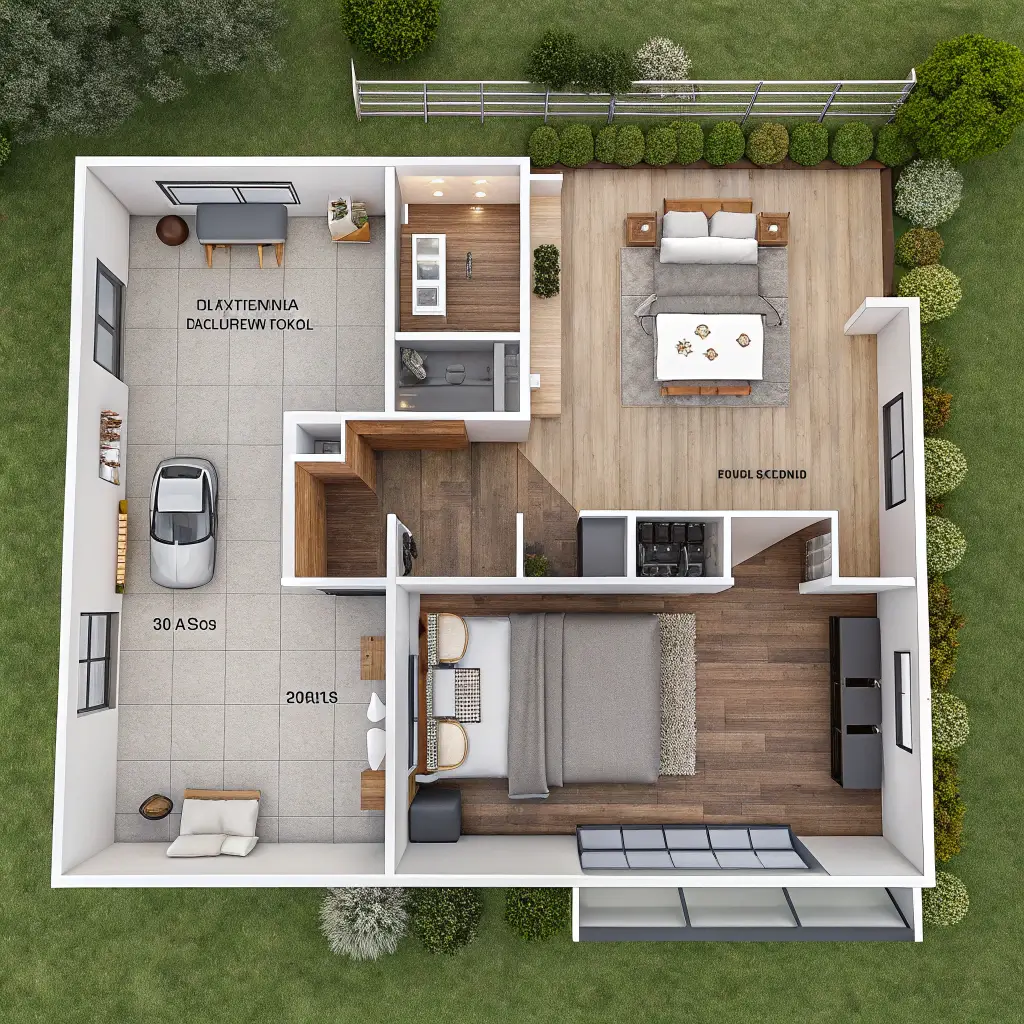
Urban lots and tight budgets demand efficient solutions. These compact one-story plans prove you can have single-level living without requiring sprawling acreage.
Maximizing Limited Footprints
Compact one-story homes eliminate wasted space through careful planning. Hallways shrink or disappear. Rooms serve multiple purposes. Every square foot earns its keep. The result delivers complete functionality in remarkably small footprints—often under 1,200 square feet.
These plans typically embrace open concepts to maximize perceived space. Without walls chopping up the interior, even small homes feel airy and spacious. Strategic window placement brings in abundant natural light, further enhancing the sense of openness.
Clever Storage Solutions
Storage becomes crucial in compact one-story homes. Designers incorporate built-in solutions throughout—closets that maximize vertical space, kitchen cabinets that extend to ceilings, and creative use of awkward corners that might otherwise go to waste.
Some compact plans include garage storage systems, outdoor sheds, or covered porch storage to supplement limited interior space. The key involves getting creative about where and how you store belongings.
Outdoor Rooms Expand Living Space
Compact one-story plans often compensate for limited interior space through generous outdoor areas. Covered porches, patios, or small courtyards effectively extend living space seasonally. These outdoor rooms provide breathing room that makes compact interiors feel less confining.
3. Modern One-Story L-Shaped Floor Plan
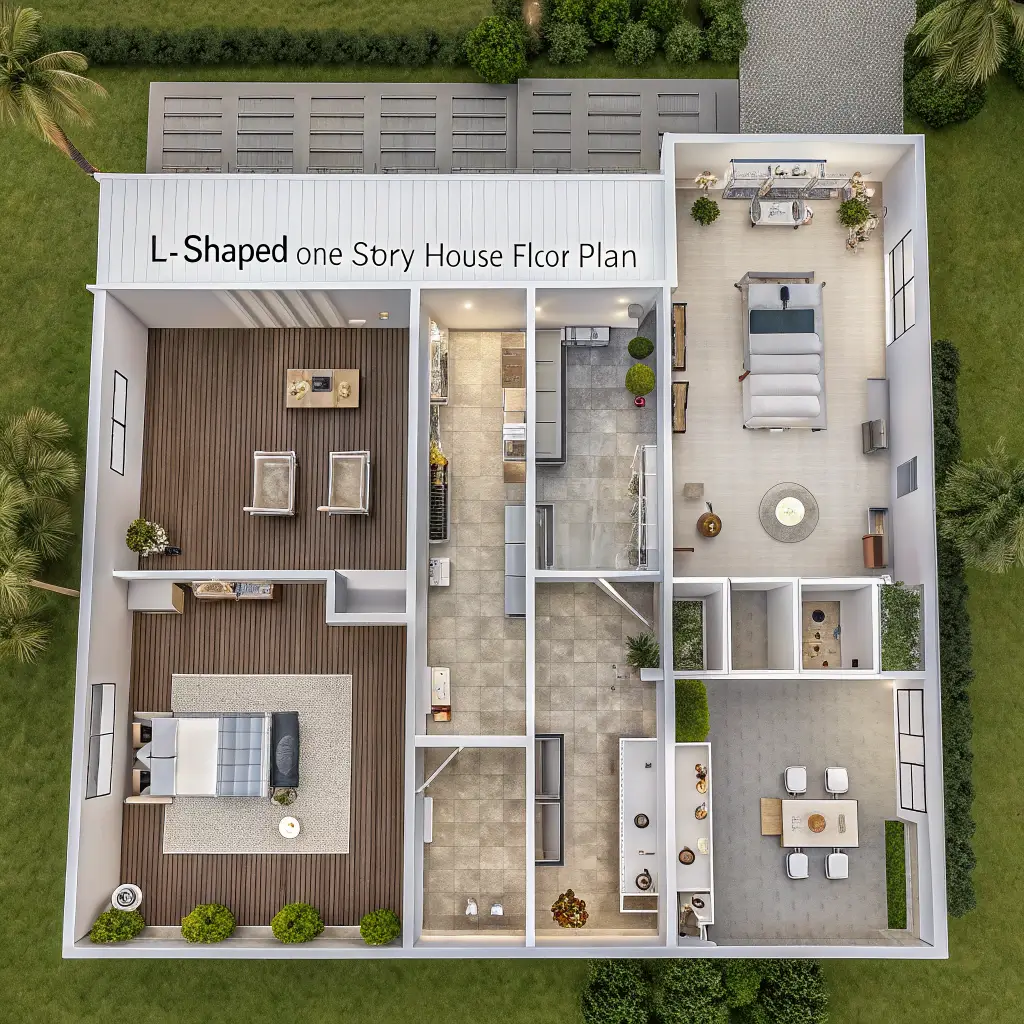
L-shaped configurations create interesting possibilities for one-story living. These plans use geometry to separate zones naturally while creating protected outdoor spaces.
Natural Zone Separation
L-shaped one-story plans typically position bedrooms in one leg of the L and living spaces in the other. This arrangement provides excellent separation without requiring long hallways or wasted circulation space.
The corner where the two legs meet often becomes a dramatic focal point—maybe a two-story great room (okay, technically breaking the one-story rule but creating visual drama) or an expansive kitchen and dining area that connects both wings.
Protected Courtyard Spaces
The L-shape naturally creates a protected courtyard or patio area nestled into the crook. This outdoor room feels private and intimate, shielded from wind, street noise, and neighbor sightlines.
Many L-shaped plans orient living spaces to face this courtyard, bringing its beauty and natural light into the home’s core. Bedrooms might also feature courtyard access, creating private outdoor retreats for each sleeping area.
Flexibility for Various Lots
L-shaped plans adapt beautifully to different lot configurations—corner lots, sloped sites, or standard rectangular parcels. The flexibility makes them suitable for challenging locations where simple rectangular homes might struggle.
Also Read: 10 Elegant 2 Bedroom 2 Bath House Plans Ideas That
4. One-Story House with Private Master Wing
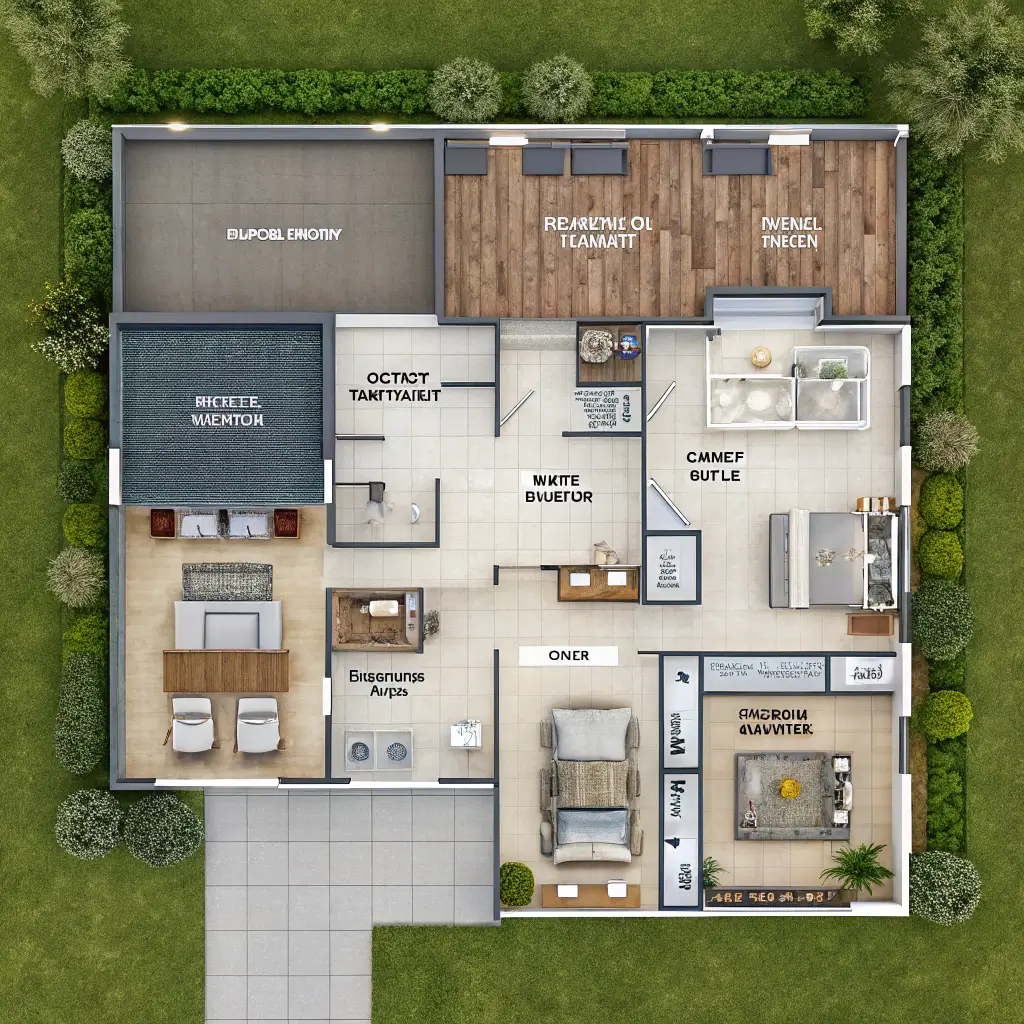
Privacy matters, and these one-story plans create true master retreats separated from the rest of the home. Think of it as having your own private sanctuary that happens to be attached to the main house.
Master Wing Separation
These plans position the master bedroom suite in its own dedicated wing, often separated from other bedrooms and main living areas. This arrangement might place the master on one side of the house with living spaces in the center and secondary bedrooms on the opposite side.
The master wing typically includes not just a bedroom and bathroom but also walk-in closets, sitting areas, and sometimes private outdoor access. Some luxury versions add home offices, exercise rooms, or morning kitchens to the master wing.
Creating True Retreats
The separation allows the master suite to function as a genuine retreat from household activity. Parents can escape to their wing for privacy while kids occupy other areas. Different schedules become manageable when sleeping areas sit far apart.
I know a couple who built a one-story with a private master wing, and they swear it saved their marriage. Okay, maybe that’s dramatic, but they definitely appreciate having their own sanctuary away from teenage chaos.
Acoustic Privacy Benefits
Physical separation provides acoustic privacy that no amount of soundproofing can match. When your bedroom sits in a completely different part of the house, you simply don’t hear noise from other areas. This matters enormously for light sleepers or households with varied schedules.
5. Affordable One-Story Starter Home Plan
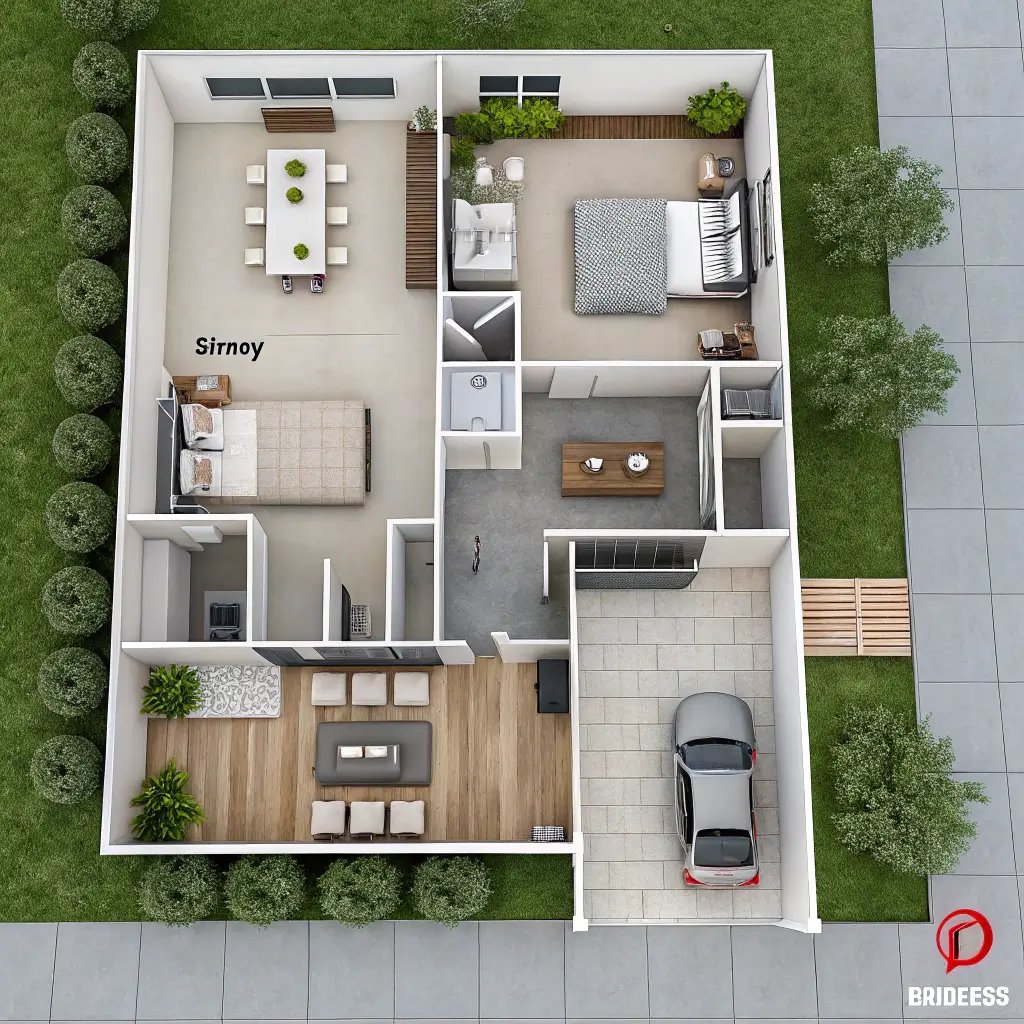
Not everyone has unlimited budgets, but that doesn’t mean you can’t have quality single-level living. These affordable one-story plans deliver functionality without the premium price tag.
Simple Shapes Save Money
Affordable one-story plans stick to basic rectangular or square footprints that minimize complex framing and rooflines. Simple roof designs cost far less than complicated multi-gable configurations. Standard window sizes and spacing reduce expenses without looking cheap.
The layouts prioritize function over fancy features. You get the bedrooms, bathrooms, and living spaces you need without expensive extras. The beauty comes from good proportions and smart design rather than costly architectural flourishes.
Efficient Square Footage
These plans make every square foot count, typically ranging from 1,000 to 1,500 square feet. Open concepts make limited space feel larger. Multipurpose rooms adapt to changing needs. Strategic storage solutions keep homes organized without requiring extra square footage.
The smaller footprint also means lower construction costs, reduced utility bills, and minimal maintenance expenses. You’re not paying to heat, cool, or maintain space you don’t actually need.
Room for Sweat Equity
Many affordable one-story plans accommodate DIY finishing work. Maybe you initially finish only essential spaces, leaving a bonus room or garage workspace for future completion. Simple layouts make owner-builder involvement manageable for handy homeowners.
FYI, starting with a basic affordable one-story and gradually upgrading finishes over time often proves smarter than stretching budgets to build everything perfectly from day one.
6. One-Story Ranch Style Living Design
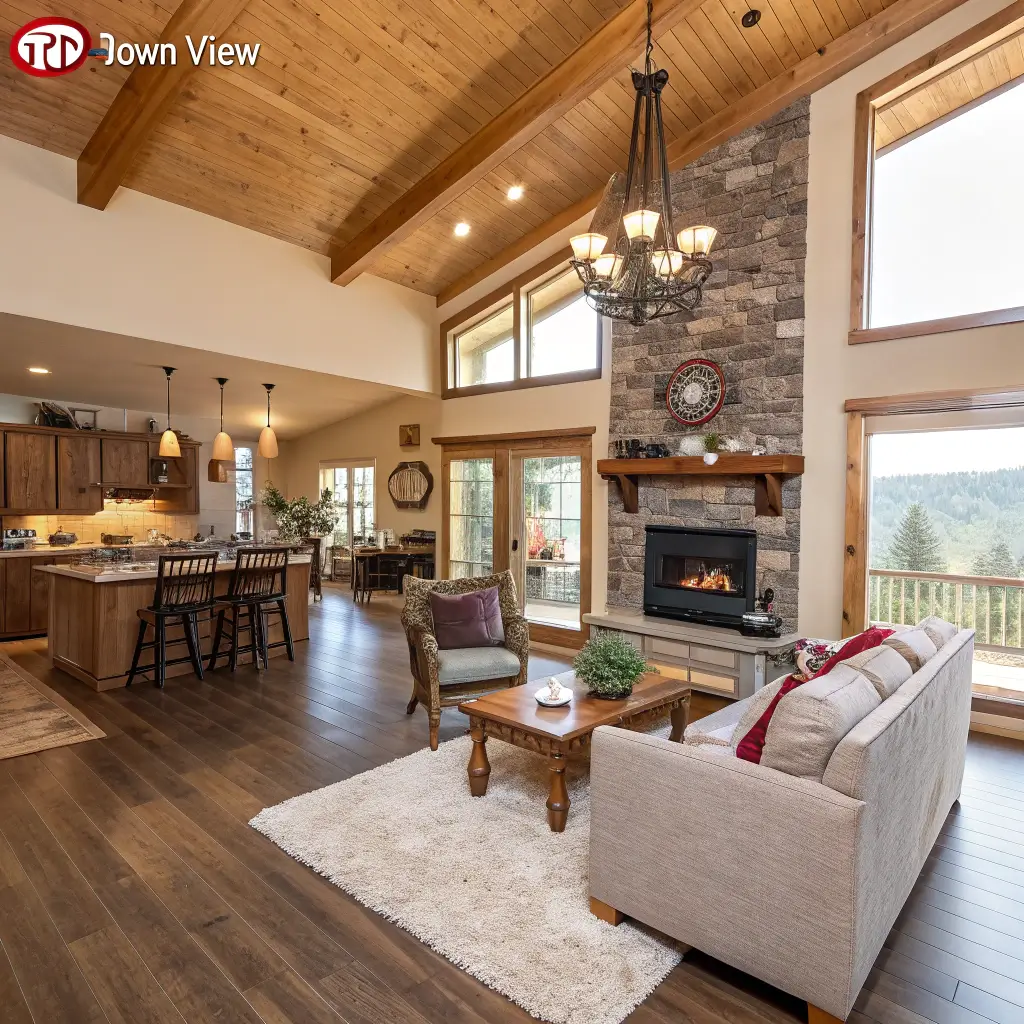
The classic ranch-style home has dominated American residential architecture for decades, and these timeless one-story plans show why the style endures.
Defining Ranch Characteristics
Ranch-style one-story homes feature long, low profiles with simple rooflines and strong horizontal emphasis. Large windows, attached garages, and open floor plans characterize the style. The aesthetic feels casual, comfortable, and distinctly American.
Modern ranch designs update the classic template with contemporary finishes and open concepts while maintaining that signature horizontal sprawl. You get the best of both worlds—timeless appeal with modern functionality.
Indoor-Outdoor Emphasis
Ranch homes excel at connecting to outdoor spaces. Large windows bring the outdoors in visually. Sliding glass doors open living areas to patios. Many ranch plans feature covered porches or patio overhangs that extend living space outdoors.
The single-story configuration means outdoor areas feel immediately accessible from any room. You can step from your bedroom directly into the garden, or move from kitchen to outdoor dining with zero barriers.
Flexible, Functional Layouts
Ranch plans typically organize spaces logically along the long axis of the house. Public areas occupy the center, bedrooms branch to either side, and garage access connects near the kitchen. This arrangement creates clear circulation patterns and functional zoning.
Also Read: 10 Charming 2 Story House Plans Ideas for Small Lots
7. One-Story Home with Central Courtyard
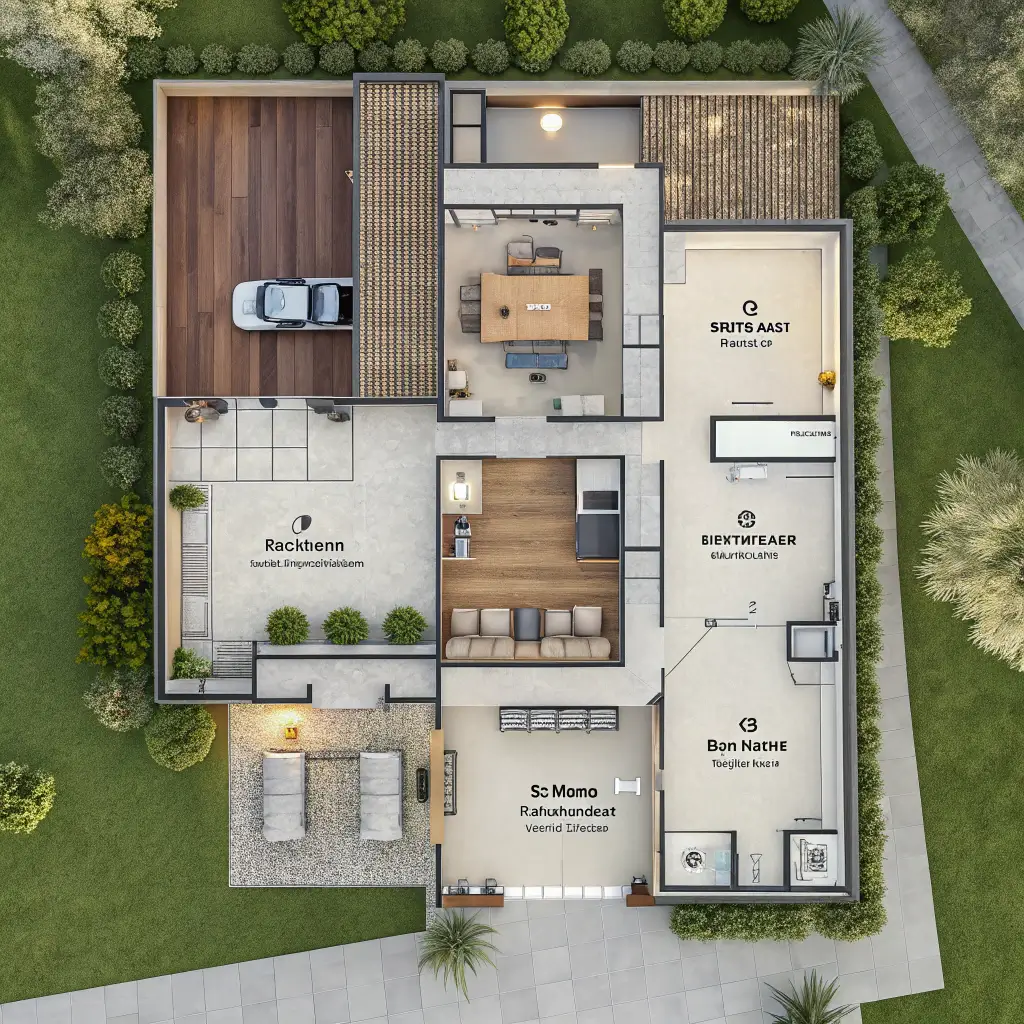
These plans wrap around central courtyards, creating homes that feel connected to nature despite being completely private from streets and neighbors.
The Courtyard as Living Space
Central courtyard plans organize rooms around a protected outdoor space that becomes visible from multiple interior rooms. Living areas might feature walls of glass facing the courtyard. Bedrooms could include courtyard access. Even bathrooms might incorporate courtyard views.
The courtyard brings natural light deep into the home’s center while providing completely private outdoor space. You can open curtains and doors without worrying about neighbor sightlines or street visibility.
Climate Control Benefits
Courtyards create natural ventilation opportunities in one-story homes. Opening windows or doors on opposite sides of the courtyard allows air to flow through the house naturally, reducing air conditioning needs.
The courtyard also moderates temperature through shade, evaporative cooling from plants or water features, and protection from harsh winds. These microclimates make the entire property more comfortable.
Privacy With Openness
The genius of courtyard one-story plans lies in achieving both privacy and connection simultaneously. The home feels open and filled with natural light, but the courtyard provides complete privacy. It’s like having your own secret garden right in the middle of your house. 🙂
8. Smart One-Story Layout with Home Office
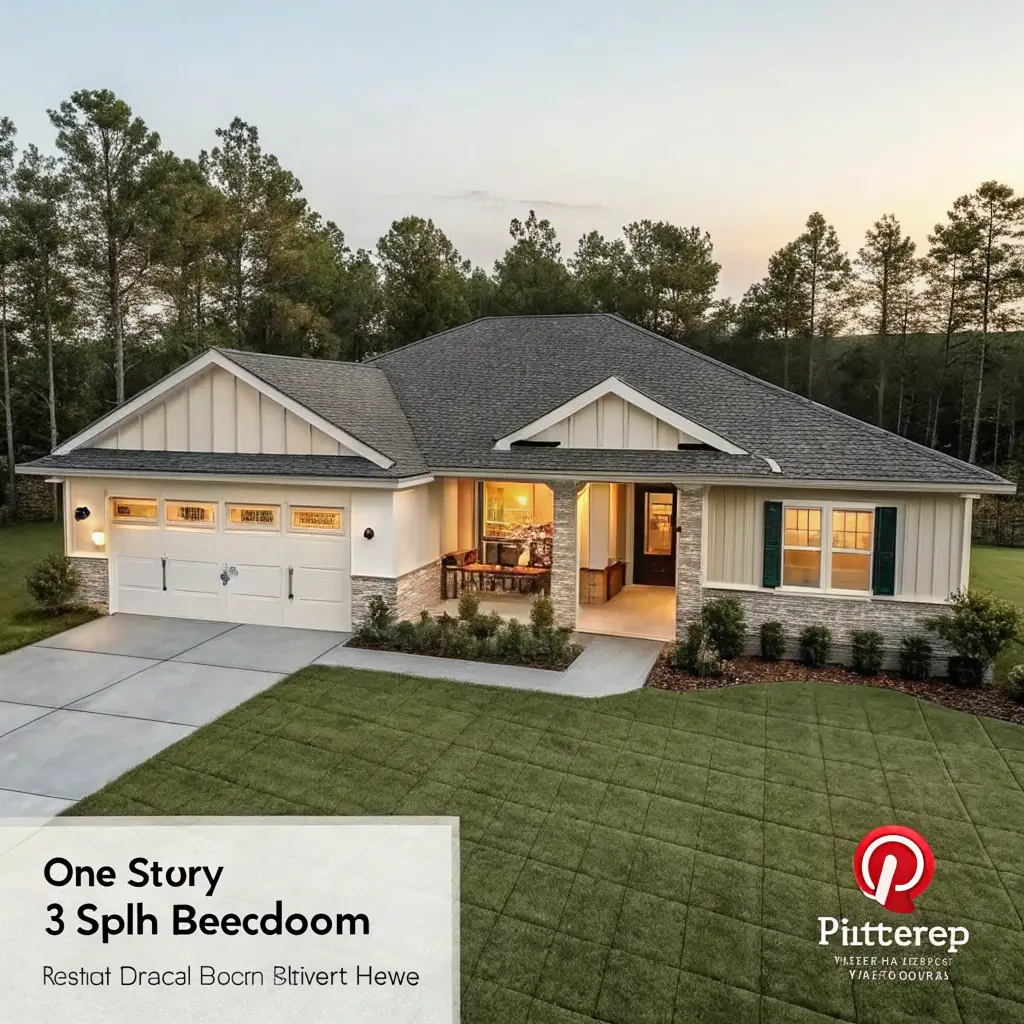
Remote work has made dedicated home offices essential. These one-story plans integrate proper workspaces rather than treating them as afterthoughts.
Dedicated Office Zones
Smart home office one-story plans include designated office spaces with proper doors, adequate electrical outlets, good natural light, and separation from household activity. These aren’t just corners of bedrooms—they’re legitimate workspaces designed for productivity.
Some plans position offices near the main entry, creating semi-separate zones appropriate for meeting clients. Others tuck offices into quiet corners away from household traffic. The placement depends on whether you need privacy from family or privacy from visitors.
Acoustic Considerations
Home office plans address sound control seriously. They position offices away from noisy areas like kitchens or playrooms. Some include extra sound insulation in walls. The goal involves creating spaces where you can take video calls without background chaos.
The single-story layout actually helps here—you don’t have footsteps from above interrupting calls. Noise travels horizontally, which good layout planning and strategic door placement can manage effectively.
Flexible Multi-Use Potential
The best home office one-story plans design offices to convert easily if work situations change. That office might become a guest room, craft studio, or additional bedroom as needs evolve. Flexible spaces protect your investment long-term.
9. One-Story House Plan with Split Bedrooms
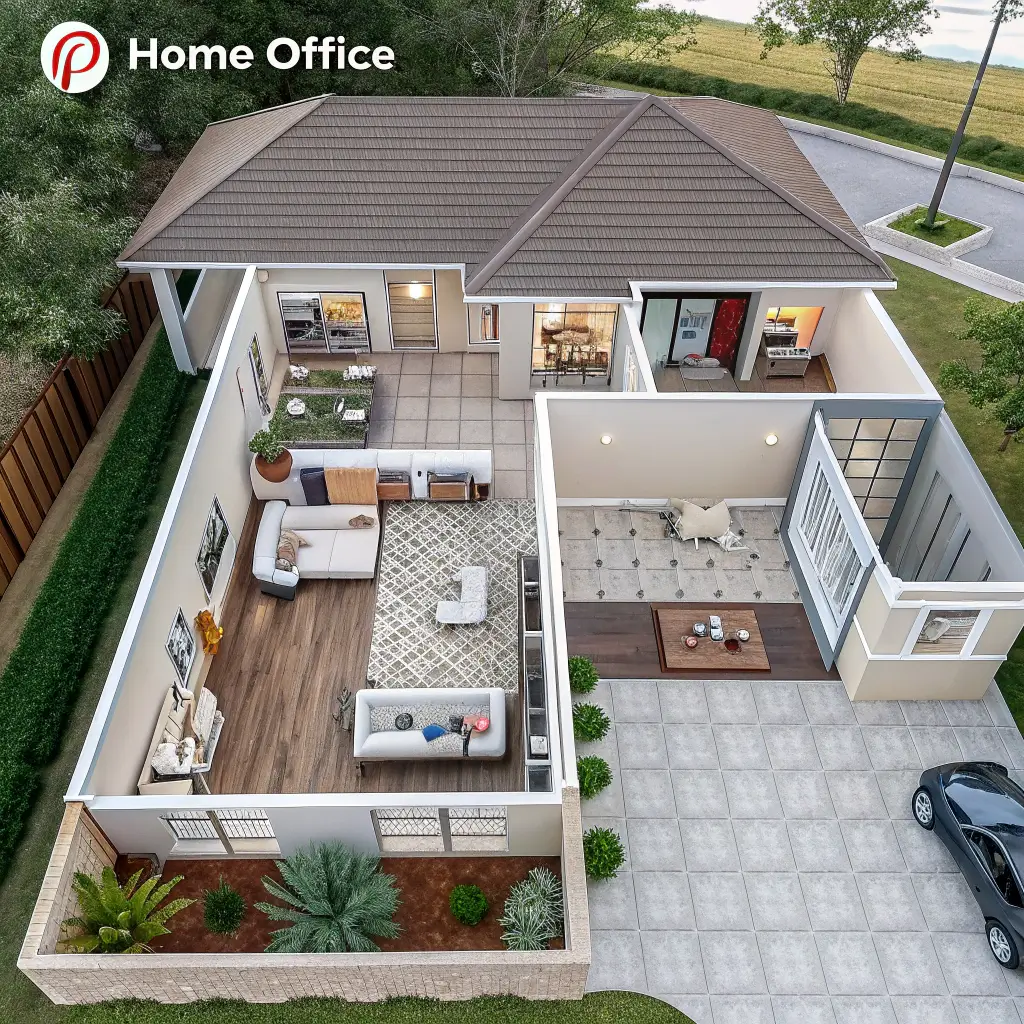
Split bedroom layouts position the master bedroom on one side of the house and secondary bedrooms on the other, with living spaces creating a buffer zone between them.
Maximum Bedroom Privacy
Split bedroom one-story plans provide excellent acoustic and visual privacy between sleeping areas. The master suite occupies one wing while children’s bedrooms cluster in another wing. Living areas sit between them, creating natural sound buffering.
This arrangement works beautifully for families with teenagers who keep different schedules, couples where one partner snores, or anyone who values nighttime privacy. You simply don’t hear what’s happening in bedrooms on the opposite side of the house.
Guest Accommodation
Split bedroom layouts also work well for occasional guest situations. The secondary bedroom wing can function as a guest suite that provides privacy for both hosts and visitors. Guests don’t feel like they’re intruding on family space, and families maintain privacy in their master wing.
Some split bedroom plans include a full bathroom in each wing, essentially creating two mini-suites with complete independence.
Aging in Place Considerations
Many split bedroom plans position the master suite for easy accessibility while placing other bedrooms in areas that could convert to different uses over time. As families empty nest, those secondary bedrooms might become offices, craft rooms, or guest suites rather than vacant children’s rooms.
Also Read: 10 Inspiring House Layout Plans Ideas and Family-Friendly Designs
10. Minimalist One-Story Open Living Plan
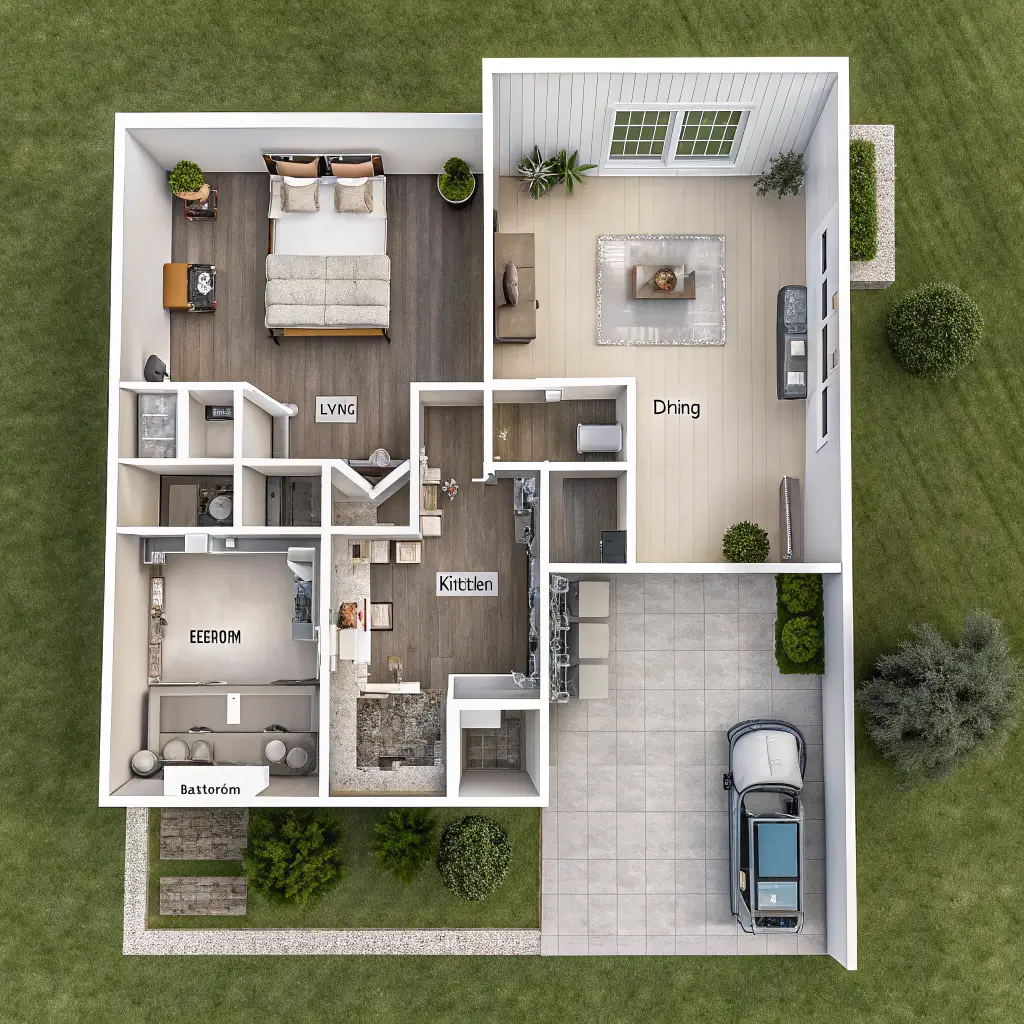
These stripped-down designs embrace minimalist aesthetics while delivering surprisingly functional living spaces. Less really can be more when you nail the design.
Radical Simplicity
Minimalist one-story plans remove all unnecessary walls, creating flowing spaces where kitchen, dining, and living areas merge completely. Bedrooms and bathrooms might be the only enclosed spaces in the entire house.
This radical openness forces intentional living. Everything you own needs a designated place. Visual clutter disappears because hiding it becomes impossible. The result feels peaceful, spacious, and almost meditative in its calm simplicity.
Hidden Storage Solutions
The key to successful minimalist one-story living involves extensive hidden storage. Built-in cabinetry with seamless doors conceals belongings. Under-bed storage handles clothing. Kitchen storage extends to ceilings behind clean panel fronts.
Every surface might hide storage potential—window seats lift to reveal compartments, benches contain drawers, walls include shallow recessed shelving. The storage exists but remains invisible, maintaining clean visual lines.
Quality Over Quantity
Minimalist plans emphasize exceptional materials in limited doses rather than mediocre finishes spread everywhere. Beautiful tile might cover one stunning bathroom completely. Premium hardwood could flow through the entire living space. Limited square footage makes luxury materials affordable.
11. One-Story Home with Large Covered Porch
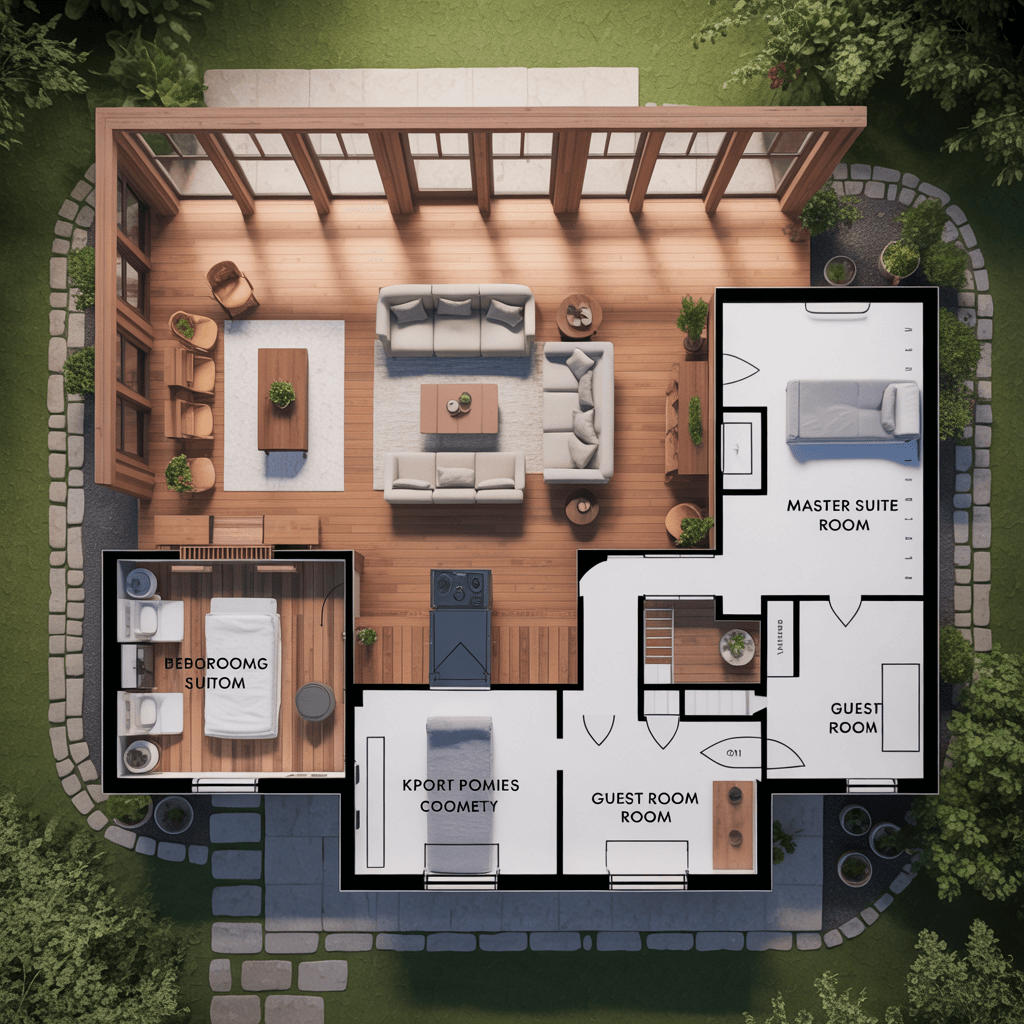
Southern living perfected the covered porch, and these one-story plans celebrate outdoor living through generous porch spaces that extend the home’s functionality.
Porch as Living Room
Large covered porch plans treat outdoor areas as legitimate rooms rather than afterthoughts. These porches might span the entire front of the house or wrap around corners, providing protected outdoor space with substantial square footage.
The porches include adequate depth for furniture—ceiling fans, lighting, and sometimes even outdoor kitchens or fireplaces. They function as actual living spaces where families spend significant time rather than just passing through.
Climate Adaptability
Covered porches work in various climates by providing weather protection that extends usability. They offer shade in hot climates, rain protection in wet regions, and wind breaks in blustery areas. The coverage makes outdoor space functional far more days per year.
In temperate climates, screened porch versions keep bugs out while maintaining outdoor ambiance. Some plans include both open and screened sections, providing options for different weather and seasons.
Architectural Character
Large porches add tremendous architectural character to one-story homes. They create strong horizontal lines, provide visual interest, and establish welcoming curb appeal. A house with a proper porch just looks more inviting than one without.
12. Functional One-Story Plan with Extra Storage
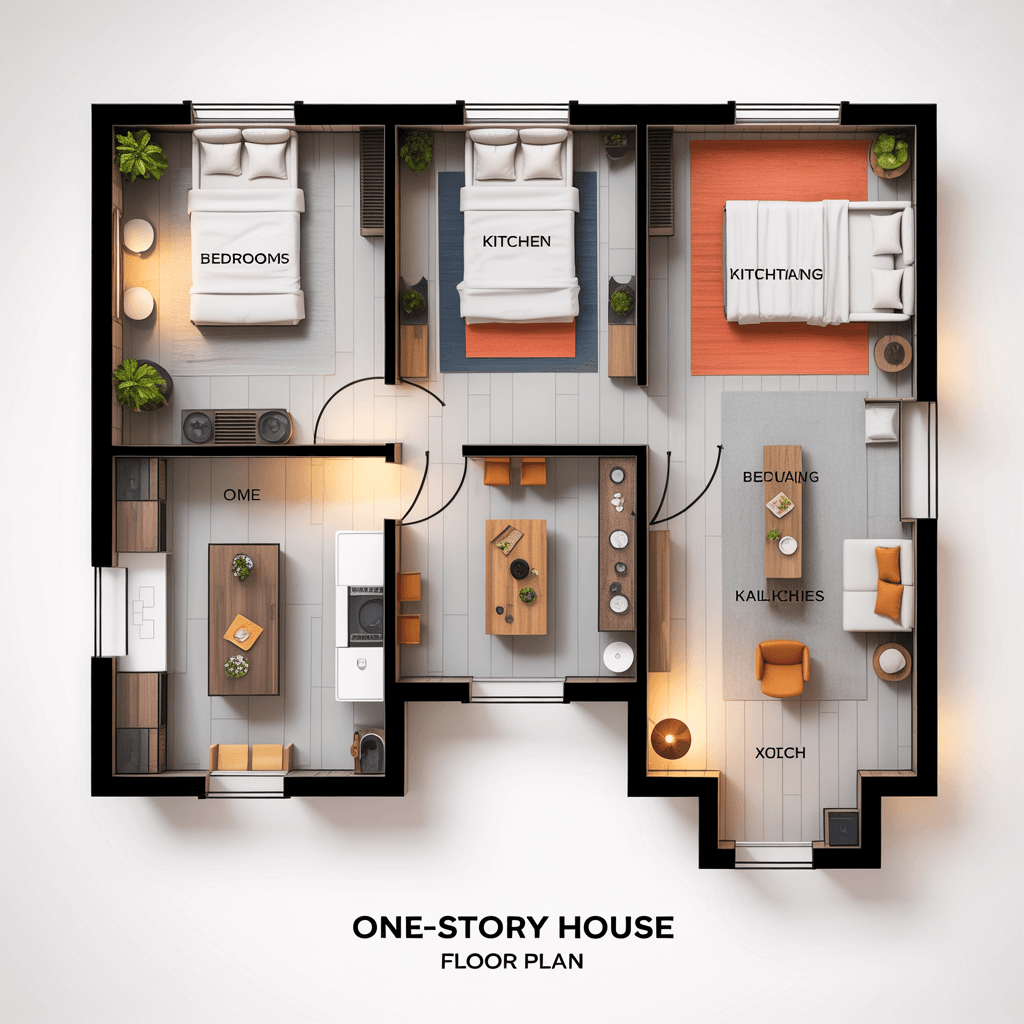
Storage makes or breaks one-story living. These plans prioritize storage throughout, ensuring everything has a designated home.
Strategic Storage Placement
Functional storage plans include thoughtful storage solutions in every area—walk-in pantries near kitchens, linen closets in bathroom hallways, mudrooms near garage entries, and bedroom closets with custom organization systems.
The plans also incorporate less obvious storage—pull-out drawers in kitchen islands, built-in benches with lift-up seats, and garage storage systems that keep tools and seasonal items organized.
Garage and Utility Integration
One-story homes can integrate garages and utility spaces more seamlessly than multi-story houses. These functional plans position garages for easy kitchen access, include proper mudroom transitions, and sometimes incorporate bonus storage areas above garages.
Utility rooms get proper treatment too—adequate space for washers, dryers, and folding areas rather than cramped closets where you can barely move.
Seasonal and Special Storage
The best functional one-story plans include dedicated spaces for items you don’t use daily—holiday decorations, sports equipment, camping gear, or hobby supplies. Built-in storage, outdoor sheds, or designated garage zones keep these items accessible but out of daily living spaces.
Choosing Your Perfect One-Story Plan
After exploring these twelve approaches to single-level living, you might wonder which layout suits your needs best. Start by considering your lot—its size, shape, and orientation all affect which one-story plan works optimally.
Think about your lifestyle honestly. Do you need separation between master and secondary bedrooms? How important is indoor-outdoor connection? Will you work from home regularly? Do you anticipate mobility challenges in the future? Your answers guide you toward certain plan types.
The Accessibility Advantage
One-story homes offer unmatched accessibility for all ages and abilities. Young families appreciate not worrying about toddlers near stairs. Active adults enjoy the convenience. Aging homeowners love staying independent longer. Universal design principles work naturally in single-level layouts.
This accessibility also protects your investment. As populations age, one-story homes will likely command premium prices. You’re not just building for today—you’re creating a home that serves you across decades.
Energy Efficiency Considerations
One-story homes can be more energy-efficient than two-story houses in certain climates. Heat naturally rises, so single-level homes avoid the temperature stratification that plagues multi-story houses. You’re not paying to heat upstairs rooms you rarely use.
However, one-story homes have larger roof-to-square-foot ratios, which can increase heat gain in hot climates. Proper insulation, reflective roofing, and smart orientation mitigate these concerns.
Your One-Story Journey Begins
Whether you choose open concept flow, split bedroom privacy, or courtyard serenity, remember that the best one-story plan supports how you actually live.
Don’t let anyone tell you single-level living is boring or only for older folks. :/
IMO, one-story homes represent smart design for people of all ages who value convenience, accessibility, and connection to outdoor spaces.
They’re not settling—they’re choosing quality of life over unnecessary complications.
Visit one-story homes if possible. Walk through them imagining your daily routines. Does the flow feel natural? Can you picture your furniture fitting comfortably?
Trust your instincts about whether single-level living suits your personality and lifestyle.
The perfect one-story house plan is out there, waiting to prove that the best homes keep you grounded—literally!