12 Gorgeous Victorian House Plans and Bay Window Concepts
- House Plans
 Ben
Ben- 0
- 38 minutes read
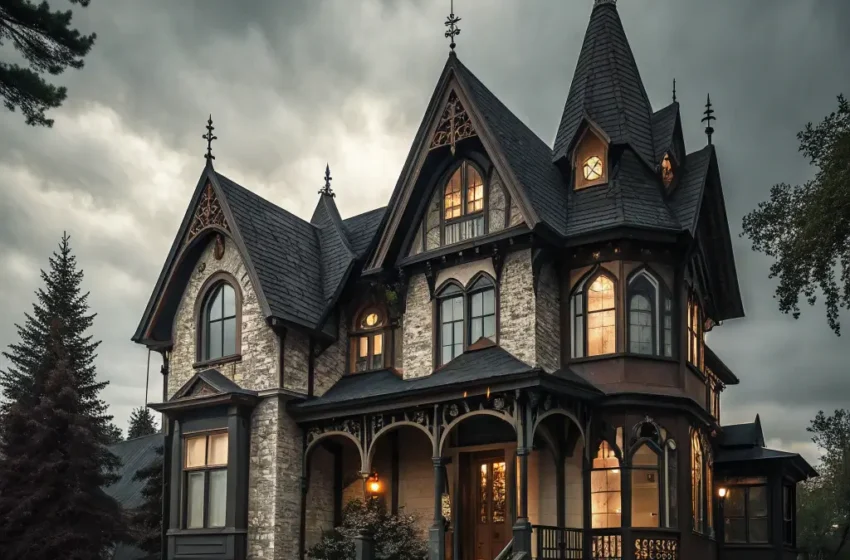
Let me guess—you drove past that stunning Victorian house on Oak Street again and nearly crashed your car staring at those gorgeous gables. Been there, done that, got the insurance claim.
There’s something about Victorian architecture that grabs you by the collar and refuses to let go, isn’t there? Maybe it’s those intricate details that make modern houses look like cardboard boxes, or perhaps it’s the unapologetic “more is more” attitude that speaks to your maximalist soul.
I fell head over heels for Victorian houses when I toured my great-aunt’s 1892 Queen Anne in San Francisco.
Walking through those rooms felt like stepping into a jewelry box—every corner had something ornate to discover, every window framed a view like a painting, and don’t even get me started on that turret room.
That day sparked an obsession that led me down a rabbit hole of floor plans, architectural history, and way too many Pinterest boards labeled “Future Dream House (When I Win the Lottery).”
So let’s explore twelve Victorian house plans that prove you can capture that 19th-century magic without sacrificing modern conveniences like, you know, electricity that doesn’t randomly quit.
Whether you’re actually building, renovating, or just feeding your architectural fantasies during lunch breaks, these ideas show how Victorian style adapts beautifully to contemporary living.
Why Victorian Architecture Still Makes Hearts Flutter
Before we dive into specific plans, let’s talk about why Victorian houses continue to captivate us despite being designed for people who thought ankles were scandalous. These homes emerged during an era of unprecedented optimism and technological advancement, and that exuberance shows in every spindle and gingerbread trim piece.
Victorian architecture celebrates craftsmanship and ornamentation in ways that modern minimalism never could. Every surface becomes an opportunity for decoration. Plain walls? Absolutely not—add some wainscoting. Simple rooflines? Boring—throw in some gables, dormers, and maybe a tower for good measure. The philosophy seemed to be “if you can decorate it, you should decorate it,” and honestly? They weren’t wrong.
The variety within Victorian style also keeps things interesting. From the fairy-tale Queen Annes to the more subdued Folk Victorians, there’s a Victorian flavor for every taste. These houses refuse to be boring, and in our age of beige subdivision sameness, that rebellious spirit feels refreshing.
1. Modern Victorian House Plans
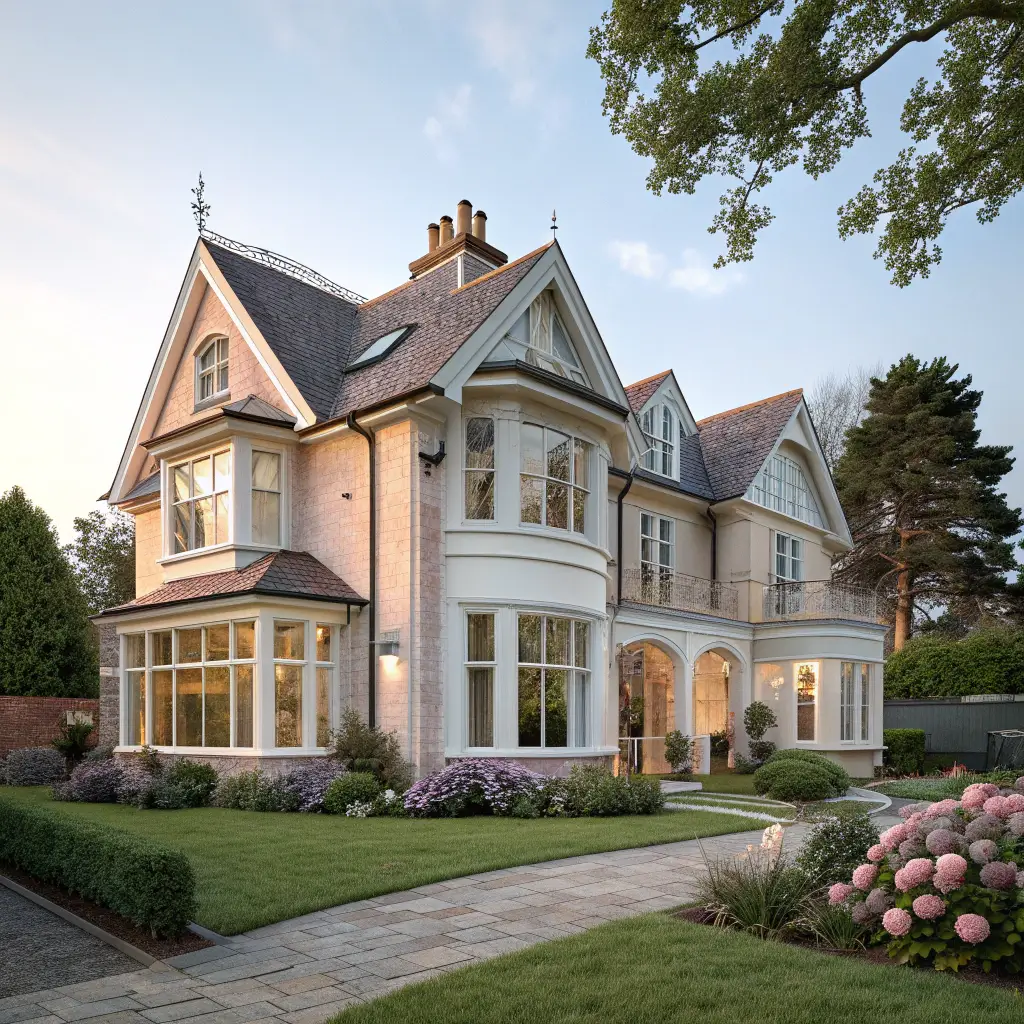
Modern Victorian plans take the best of both worlds—that gorgeous Victorian aesthetic with floor plans that actually make sense for how we live today. No more closed-off kitchens where servants toiled in isolation, thank you very much.
Opening Up the Floor Plan
Traditional Victorians featured compartmentalized rooms for specific purposes—parlors for receiving guests, separate dining rooms, and kitchens hidden away like guilty secrets. Modern Victorian plans maintain the exterior charm while opening up interiors for contemporary living.
The key lies in preserving architectural elements that matter—crown molding, ceiling medallions, and those stunning staircases—while removing walls that served social conventions we’ve long abandoned. You keep the pocket doors but open them to create flow between spaces. The butler’s pantry becomes a coffee bar. Evolution, not revolution.
Tech Meets Tradition
Modern Victorian plans seamlessly integrate technology without disrupting the aesthetic. Smart thermostats hide behind period-appropriate covers. Kitchen islands conceal charging stations. Home theaters tuck into what would have been music rooms.
I visited a recently built modern Victorian where they’d hidden a 75-inch TV behind a painting that slides up at the touch of a button. The owners called it their “Bruce Wayne Victorian,” and honestly, that’s exactly the energy these homes should have—sophisticated with secret superpowers.
Sustainable Victorian Living
Today’s Victorian plans incorporate energy efficiency that would blow those coal-burning Victorians’ minds. Double-pane windows maintain the divided-light look while actually insulating. Solar panels hide on rear-facing roofs. Insulation gets serious attention despite being invisible.
2. Small Victorian Cottage Designs
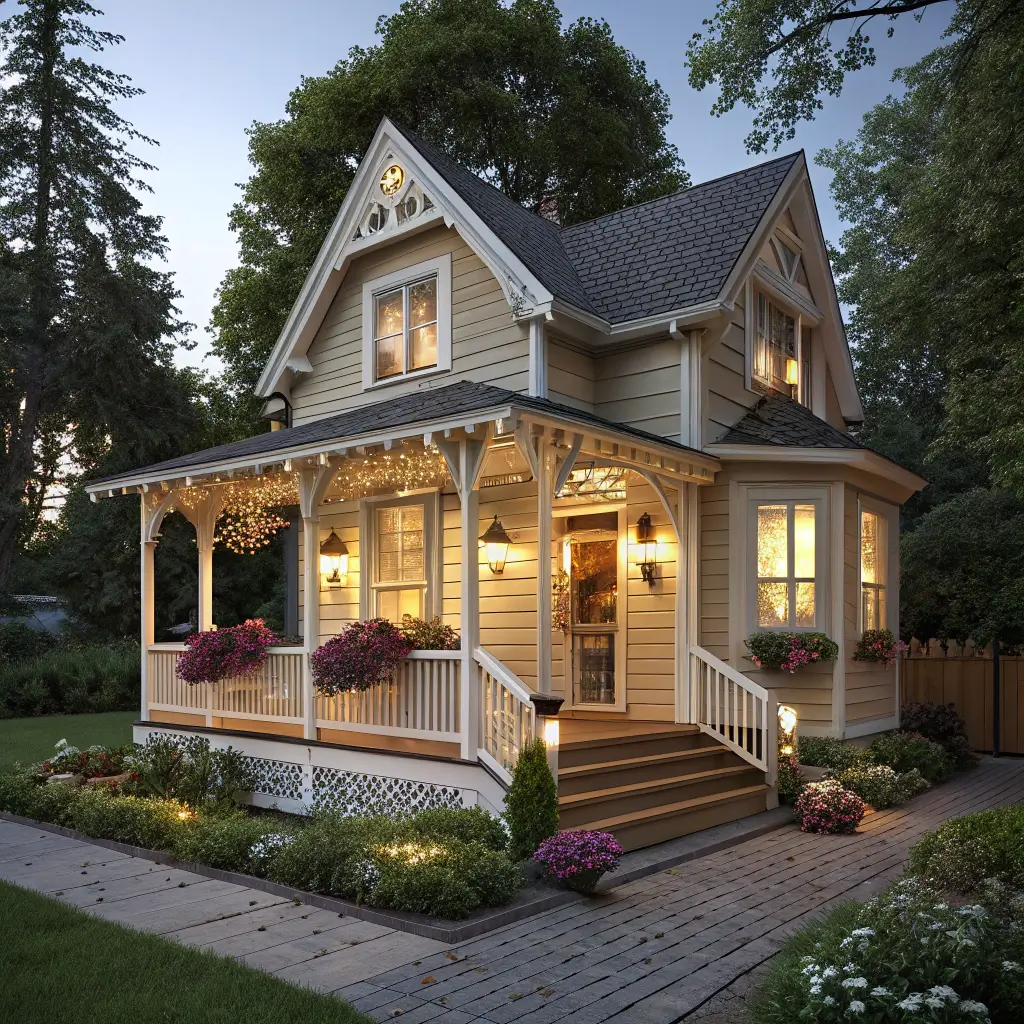
Not everyone needs a 5,000-square-foot mansion to capture Victorian charm. Small Victorian cottages—often called “Victorian cottages” or “folk Victorians”—pack personality into compact packages.
Big Style, Small Footprint
Small Victorian cottages typically run 800-1,500 square feet but compensate with vertical interest. Steep rooflines, decorative gables, and strategic trim work create visual impact that belies the modest square footage. These homes prove that Victorian style isn’t about size—it’s about attitude.
The trick involves choosing a few Victorian elements to emphasize rather than trying to cram every possible detail onto a small facade. Maybe you focus on elaborate porch trim and a bay window, letting those features star while keeping other elements simpler.
Efficient Victorian Living
Small Victorian plans maximize space through built-in storage, window seats, and clever use of vertical space. Those high ceilings aren’t just for show—they accommodate lofts, tall bookcases, and storage solutions that keep floor space clear.
Many cottage plans include signature Victorian features scaled appropriately. A cozy octagonal breakfast nook replaces the grand turret. A charming window seat substitutes for a conservatory. You get the Victorian experience without the Victorian mortgage.
Perfect Starter Victorians
Small Victorian cottages make ideal starter homes for young families enchanted by old-house charm but constrained by reality. The manageable size means lower maintenance costs, heating bills, and property taxes while still delivering that Victorian magic.
FYI, these smaller Victorians often appreciate faster than their mansion-sized siblings because they appeal to broader buyer demographics.
3. Queen Anne Victorian Floor Plans
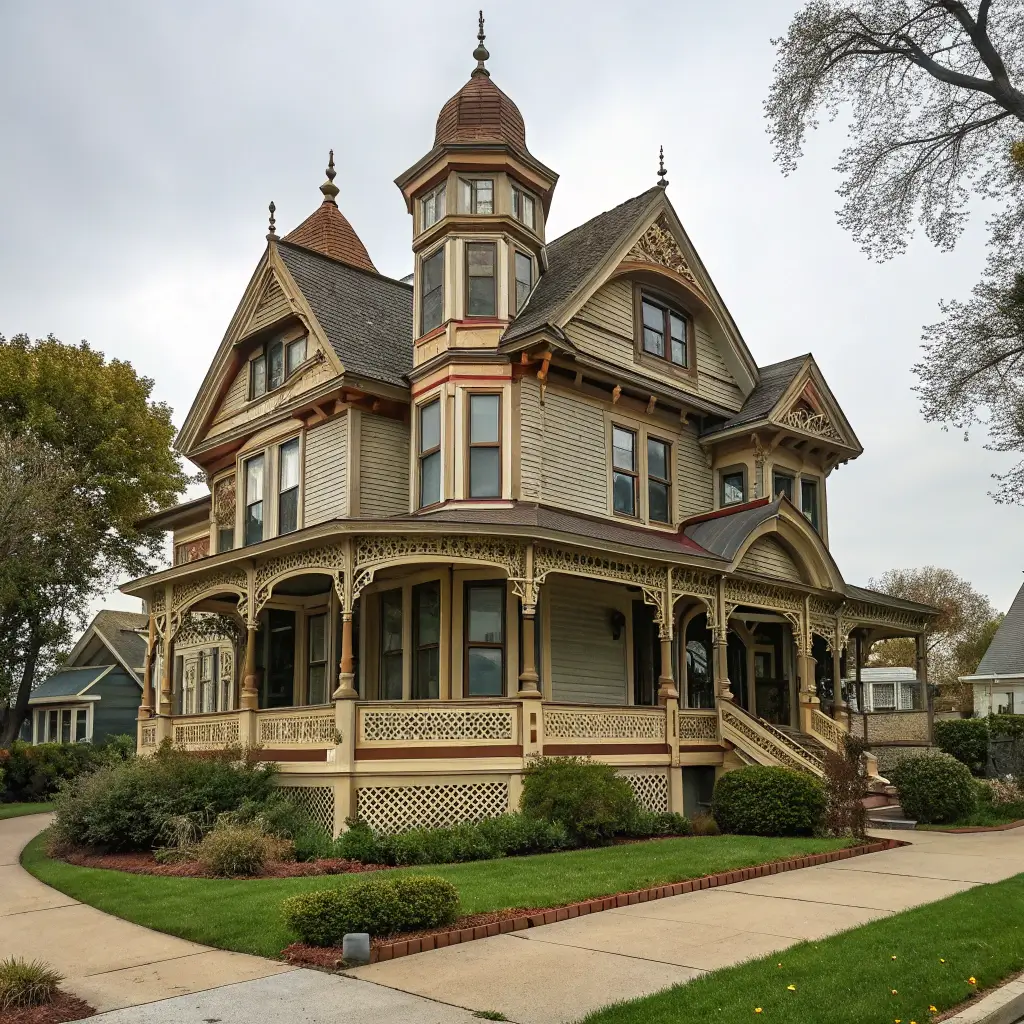
Queen Anne Victorians represent peak Victorian excess in the best possible way. These plans embrace asymmetry, complexity, and “why have one roofline when you could have seven?” energy.
Signature Queen Anne Features
Queen Anne plans incorporate the style’s defining elements—towers or turrets, wraparound porches, multiple gables, and bay windows galore. The floor plans reflect the exterior complexity with interesting room shapes and unexpected connections.
The famous round turret rooms become reading nooks, home offices, or kids’ playrooms. Their curved walls challenge furniture placement but create spaces so special that nobody cares. These rooms inevitably become everyone’s favorite spot in the house.
Managing Queen Anne Complexity
The challenge with Queen Anne plans involves preventing the complexity from becoming chaos. Good Queen Anne designs maintain logical flow despite the elaborate layouts. Public spaces connect sensibly. Private areas cluster appropriately. The complexity adds interest without sacrificing function.
Modern Queen Anne plans often simplify mechanical systems and structural elements while maintaining visual complexity. You get the look without the maintenance nightmares that plague original Queen Annes.
Color and Queen Annes
Queen Anne houses famously embrace color with multi-tone paint schemes that highlight their elaborate trim. Modern Queen Anne plans consider paint schemes from the design phase, ensuring trim placement and architectural details support the intended color palette.
These aren’t houses for beige lovers. Queen Annes demand bold color choices that celebrate their architectural exuberance. Think deep teals, rich burgundies, and warm golds—colors that would make a minimalist faint but make these houses sing.
Also Read: 10 Cozy Guest House Plans Ideas for Extra Living Space
4. Affordable Victorian Home Ideas
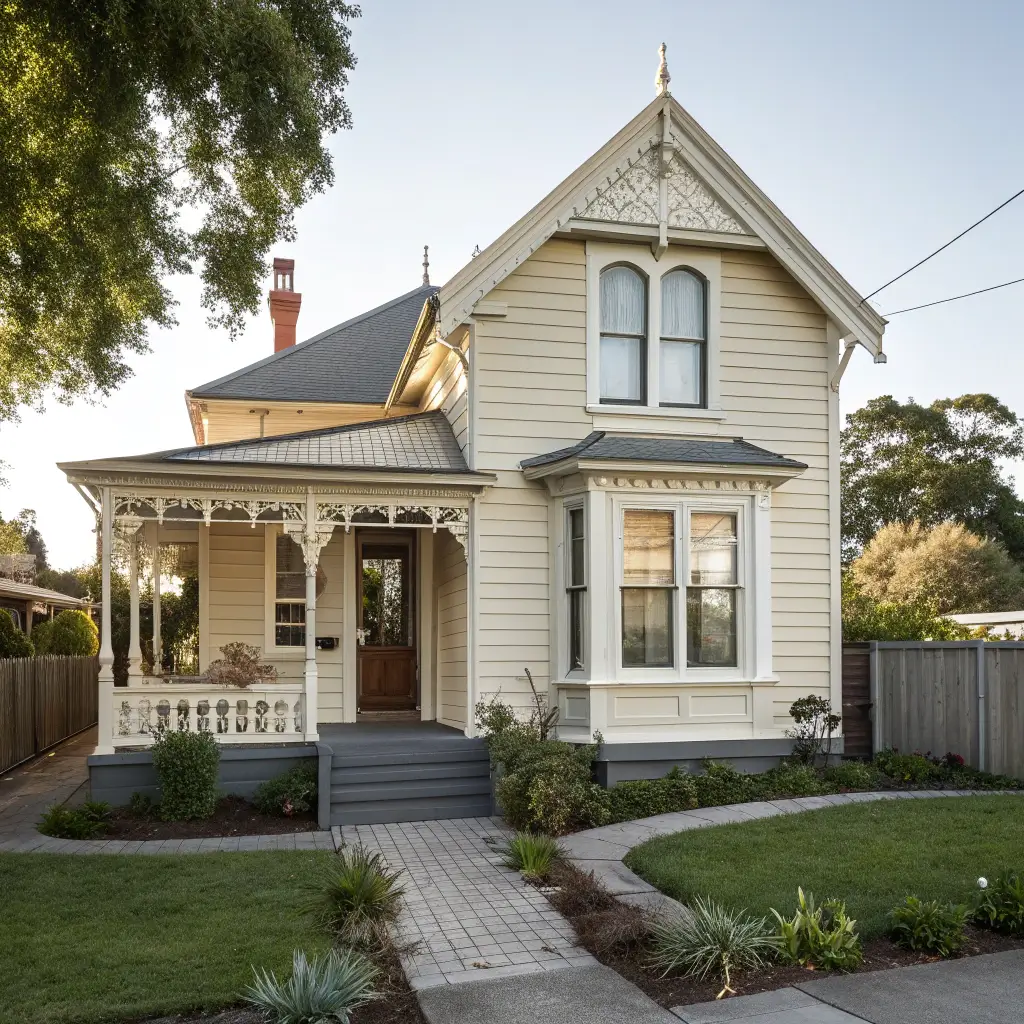
Building Victorian on a budget sounds like an oxymoron, but affordable Victorian plans prove you can capture the style without selling organs to finance the gingerbread trim.
Simplifying Without Sacrificing Soul
Affordable Victorian plans maintain the style’s essence while eliminating costly complexities. Simple rooflines replace elaborate multi-gable designs. Stock millwork substitutes for custom trim. The key lies in choosing battles wisely—splurge on a few statement features while simplifying elsewhere.
Focus spending on street-facing elements that create curb appeal. That elaborate front porch makes a bigger impact than expensive trim on rarely-seen side elevations. A beautiful front door and distinctive paint scheme deliver Victorian charm without breaking budgets.
Phased Victorian Building
Build your affordable Victorian in phases, starting with a simpler structure and adding Victorian elements over time. Begin with basic trim and upgrade gradually. Add the wraparound porch in year two. Install decorative brackets when finances allow.
This approach lets you live in your Victorian dream sooner while spreading costs over years. Plus, adding details becomes a fun ongoing project rather than a overwhelming initial expense.
DIY Victorian Details
Many Victorian decorative elements suit DIY installation. Gingerbread trim, porch brackets, and decorative shingles come as affordable kits. If you’re handy with a paintbrush, those elaborate multi-color paint schemes cost little beyond time and patience.
I know someone who spent five years slowly adding Victorian details to a plain 1960s ranch. The transformation was incredible, and they spent less than $10,000 total. Patience and persistence beat deep pockets.
5. Victorian House Plans with Wraparound Porch
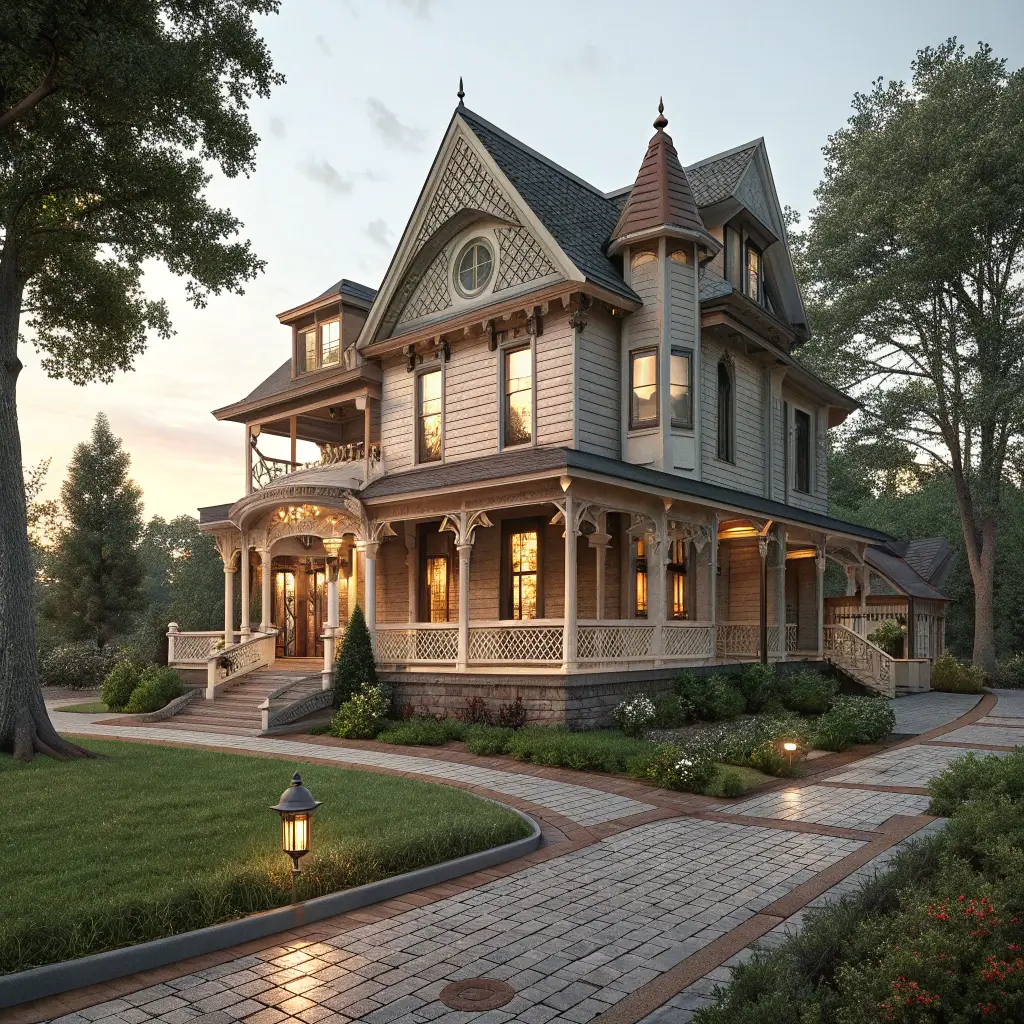
The wraparound porch might be the most beloved Victorian feature, and for good reason. These porches transform houses into neighborhood landmarks and create outdoor rooms that extend living space.
Porch as Living Space
Victorian wraparound porches weren’t just decorative—they served as crucial living spaces in pre-air-conditioning times. Modern plans embrace this function, creating outdoor rooms with ceiling fans, lighting, and comfortable furniture zones.
Different porch sections serve various purposes. The front becomes a welcoming entry. Side sections offer private seating areas. Rear portions might include outdoor dining spaces. The wraparound design provides options for sun or shade throughout the day.
Architectural Impact
Wraparound porches unify Victorian facades and soften the transition between house and landscape. They add horizontal elements that balance Victorian verticality. The continuous roofline creates visual cohesion despite the typical Victorian asymmetry.
These porches also provide practical benefits—protecting walls and windows from weather, reducing solar heat gain, and offering covered access around the house. Form and function in perfect Victorian harmony.
Modern Porch Upgrades
Contemporary Victorian porch plans incorporate modern amenities while maintaining period charm. Composite decking eliminates constant painting. Cable railings preserve views while meeting code. Outdoor kitchens and entertainment systems hide discretely.
Some plans include screened sections for bug-free enjoyment or glass panels that extend porch seasons. These updates make porches genuinely usable rather than just pretty.
6. Compact Victorian Homes for Narrow Lots
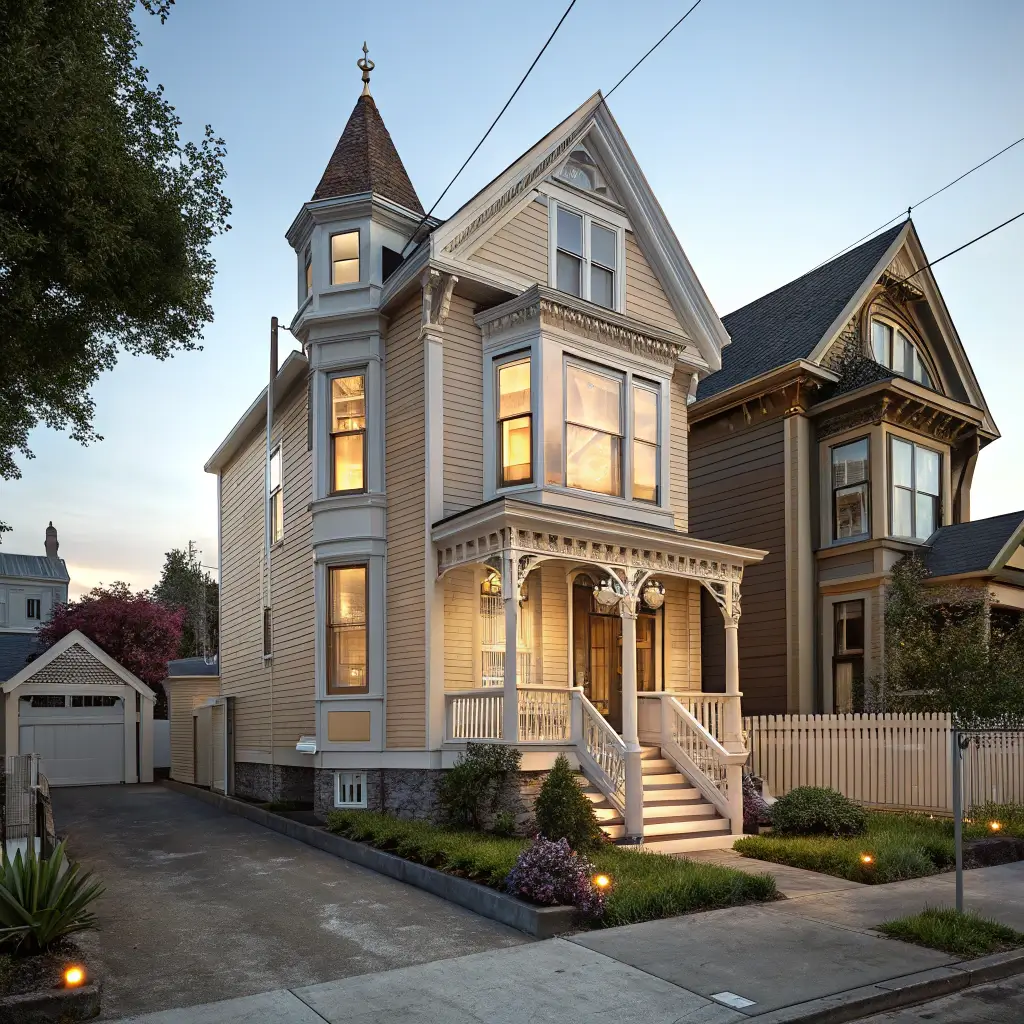
Urban lots don’t disqualify you from Victorian dreams. Compact Victorian plans for narrow lots prove that Victorian style adapts to challenging sites.
Vertical Victorian Living
Narrow lot Victorians grow up rather than out, often reaching three stories to achieve adequate square footage. The vertical orientation actually suits Victorian proportions, emphasizing the style’s natural tendency toward height.
These plans stack functions logically—public spaces on the ground floor, bedrooms on the second, and bonus spaces in finished attics. The vertical separation provides privacy while maintaining compact footprints.
San Francisco Inspiration
San Francisco’s famous “Painted Ladies” demonstrate narrow lot Victorian success. These homes, typically just 25 feet wide, pack incredible detail and functionality into minimal width. Modern narrow lot plans borrow these space-saving strategies.
Bay windows add space and light without expanding footprints. Rear additions step back to maintain light for neighbors. Side passages become charming garden paths rather than wasted space.
Light and Air Solutions
Narrow Victorians face unique challenges getting natural light into their centers. Smart plans incorporate light wells, skylights, and strategic window placement. Interior transoms share light between rooms. High ceilings and light colors prevent claustrophobic feelings.
Despite the constraints, these homes often feel more spacious than their square footage suggests. Victorian ceiling heights and architectural interest create volume and visual engagement that compensates for limited floor area. 🙂
Also Read: 10 Elegant Craftsman House Plans Ideas for Family Homes
7. Victorian Style Homes with Open Floor Plans
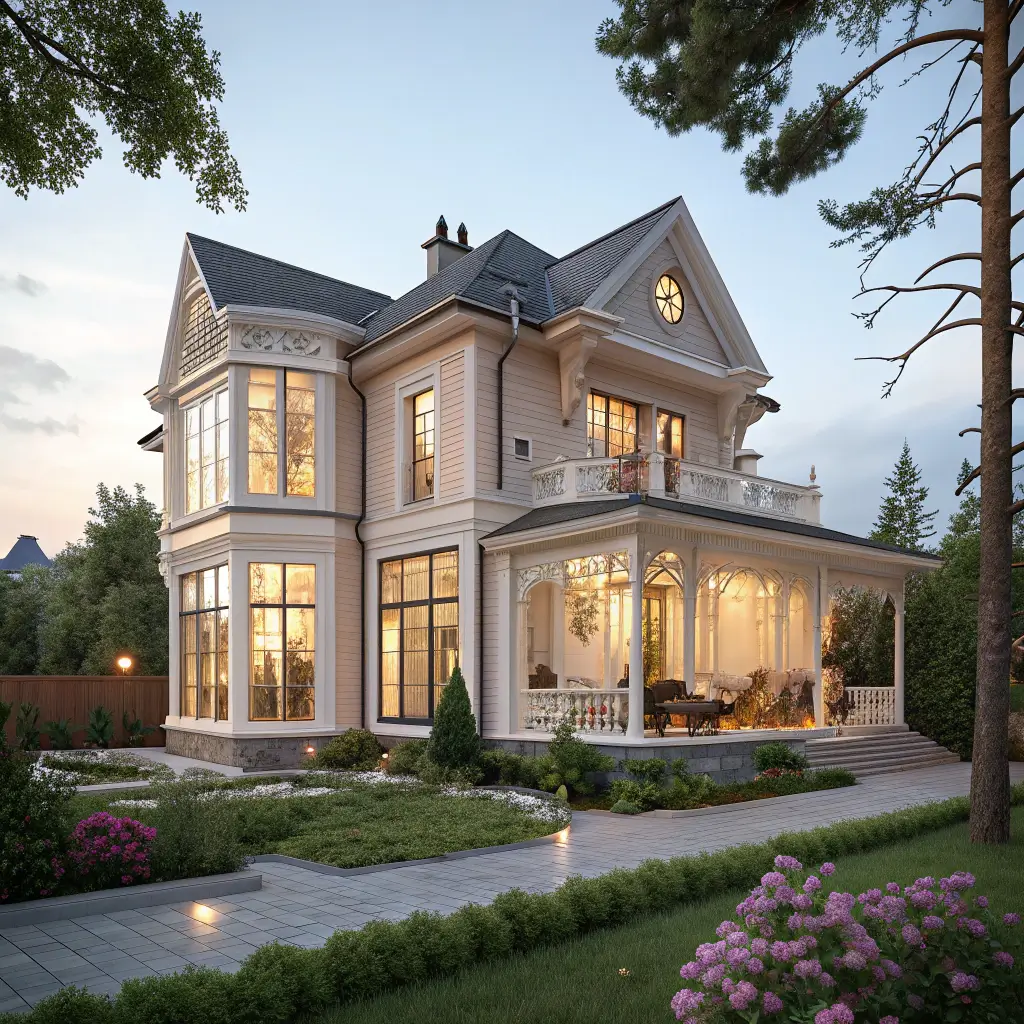
Merging Victorian style with open floor plans seems contradictory, but these designs prove that Victorian homes can embrace modern living patterns without losing their souls.
Selective Wall Removal
Victorian open floor plans maintain important architectural elements while removing walls that no longer serve purposes. Load-bearing walls often coincide with important visual elements, making selective opening possible.
Keep the stunning entry hall with its impressive staircase. Preserve the formal dining room’s beautiful built-ins. But open the kitchen to the family room. Remove the wall between parlor and living room. Strategic changes create flow while maintaining Victorian character.
Visual Boundaries
Open Victorian plans use architectural elements to define spaces without walls. Ceiling treatments change between zones. Column and arch combinations mark transitions. Different flooring materials signal room changes. The space flows while maintaining distinct areas.
These visual boundaries preserve the Victorian sense of defined rooms while allowing modern open living. You get the best of both worlds—Victorian formality when you want it, casual flow when you don’t.
Maintaining Victorian Character
The key to successful open Victorian plans lies in preserving enough original character that the house still feels Victorian. Crown molding continues throughout open spaces. Ceiling medallions mark important zones. Victorian color schemes unify the expanded spaces.
Without these elements, you just have an open floor plan house with fancy trim. With them, you have a Victorian that happens to embrace modern living patterns.
8. Gothic Victorian House Plan Concepts
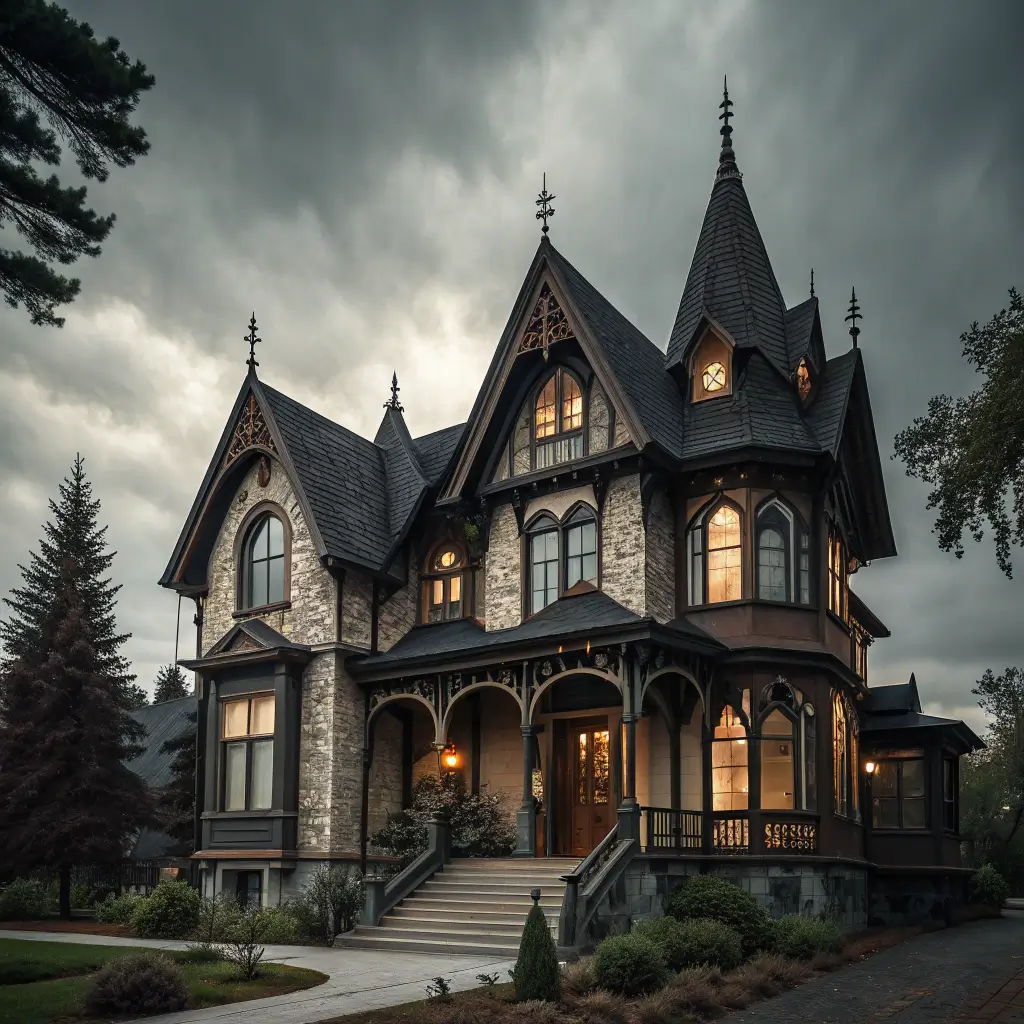
Gothic Victorians bring drama with pointed arches, steep gables, and slightly spooky vibes that make every day feel like Halloween (in the best way).
Embracing Gothic Elements
Gothic Victorian plans incorporate pointed arch windows, decorative bargeboards, and steep roof pitches that reach toward the heavens. These elements create vertical emphasis even more pronounced than typical Victorians.
Inside, Gothic Victorians feature dramatic spaces with cathedral ceilings, exposed trusses, and windows that wouldn’t look out of place in a cathedral. The style suits those who find regular Victorians insufficiently theatrical.
Modern Gothic Interpretations
Contemporary Gothic Victorian plans balance drama with livability. Those pointed arch windows now feature efficient glazing. Cathedral ceilings incorporate insulation and ventilation. The drama remains while the drafts disappear.
Some modern Gothic plans embrace the style’s slightly dark reputation with moody color palettes, dramatic lighting, and mysterious architectural moments. Secret passages, hidden doors, and tower studies lean into Gothic fantasy.
Gothic Details That Work
Not every Gothic element translates well to modern living. Focus on features that add character without compromising function. Pointed arch doorways create impact. Decorative trusses add ceiling interest. Gothic-inspired millwork provides period character.
Skip the gargoyles unless you’re fully committed to the aesthetic. IMO, Gothic Victorian works best when it hints at drama rather than screaming it.
9. Folk Victorian Home Design Ideas
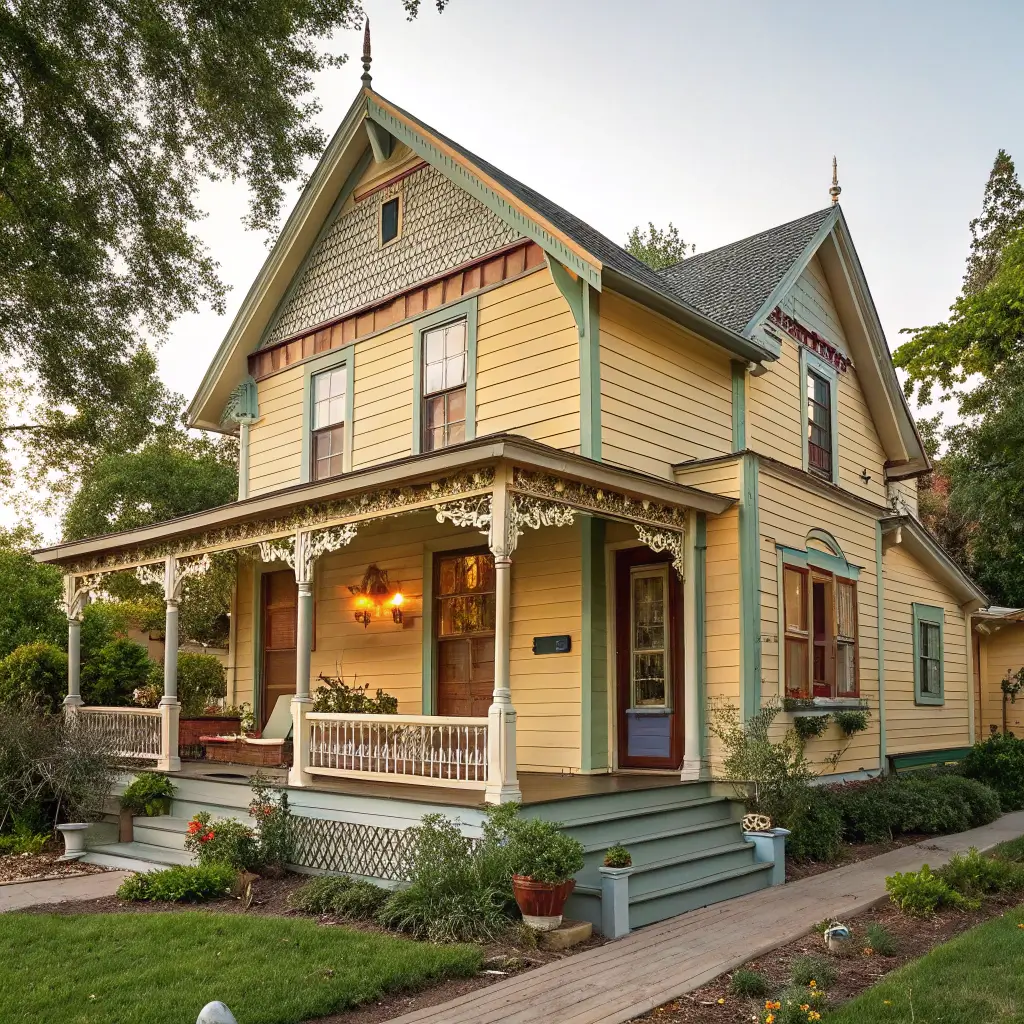
Folk Victorians represent the democratic version of Victorian style—simpler, more affordable, but still packed with charm. These plans suit builders wanting Victorian character without aristocratic pretensions.
Accessible Victorian Style
Folk Victorian plans typically feature simpler massing with Victorian decorative elements applied to basic forms. Square or rectangular floor plans replace complex Queen Anne asymmetry. Decorative trim adds personality to otherwise straightforward structures.
This approach makes Victorian style achievable for average budgets. You get Victorian charm through surface decoration rather than expensive structural complexity.
Regional Folk Victorian Variations
Folk Victorians adapted to regional preferences and materials. Southern versions featured large porches for heat management. Midwest examples used local limestone trim. New England Folk Victorians incorporated traditional colonial elements.
Modern Folk Victorian plans can embrace these regional variations, creating homes that feel both Victorian and contextually appropriate. The style’s flexibility allows customization while maintaining Victorian character.
DIY-Friendly Folk Victorians
Folk Victorians’ simpler structures make them ideal for owner-builders or extensive DIY involvement. The basic framing doesn’t require specialized skills. Decorative elements can be added gradually as skills and budgets allow.
Many Folk Victorian elements—spindle work, brackets, and decorative shingles—come as affordable prefab components. Assembly becomes a fun weekend project rather than skilled craftwork.
Also Read: 12 Charming Ranch House Plans Ideas and Outdoor Retreats
10. Victorian Houses with Bay Window Layouts
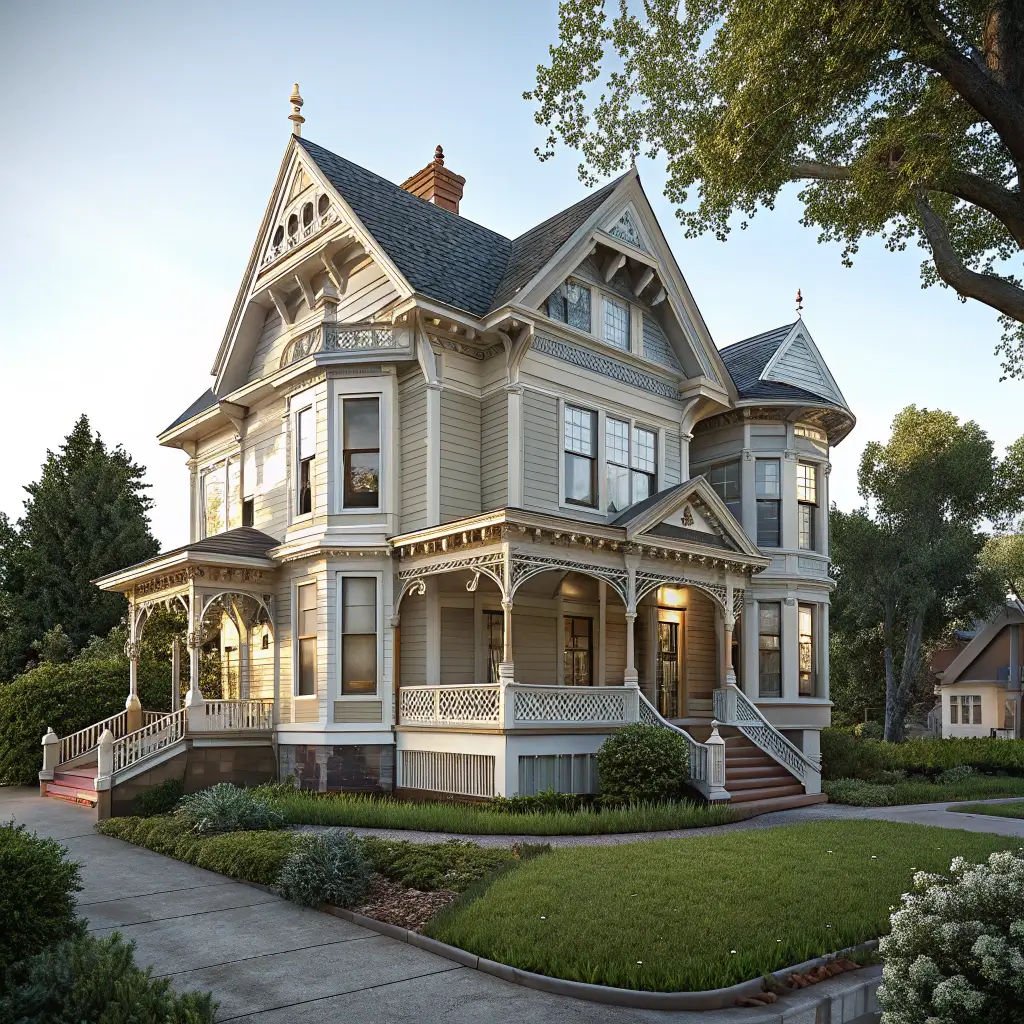
Bay windows define Victorian architecture like peanut butter defines sandwiches. These projecting windows create interior alcoves and exterior interest that epitomize Victorian design philosophy.
Bay Window Benefits
Bay windows add square footage without expanding foundations, create cozy interior nooks, and flood rooms with natural light from multiple angles. They break up flat facades and provide architectural interest that plain windows never could.
Inside, bay windows become natural focal points. Window seats turn them into reading nooks. Plants thrive in the abundant light. Dining tables nestle perfectly into their embracing angles.
Strategic Bay Window Placement
Victorian plans strategically position bay windows for maximum impact. Front-facing bays create curb appeal and define important rooms. Side bays capture morning or evening light. Multiple bays establish rhythm across facades.
Modern Victorian plans might include contemporary bay window variations—box bays with clean lines, curved bays for Queen Anne turret effects, or two-story bays that unify floor levels.
Bay Window Interior Design
Bay windows create unique interior design opportunities and challenges. Their angles complicate furniture placement but create special moments. Built-in window seats maximize their potential. Custom curtain solutions maintain privacy while preserving architectural beauty.
The alcoves bay windows create become homes’ most beloved spaces—breakfast nooks, reading corners, or plant conservatories that bring Victorian charm to daily life.
11. Two-Story Victorian Family House Plans
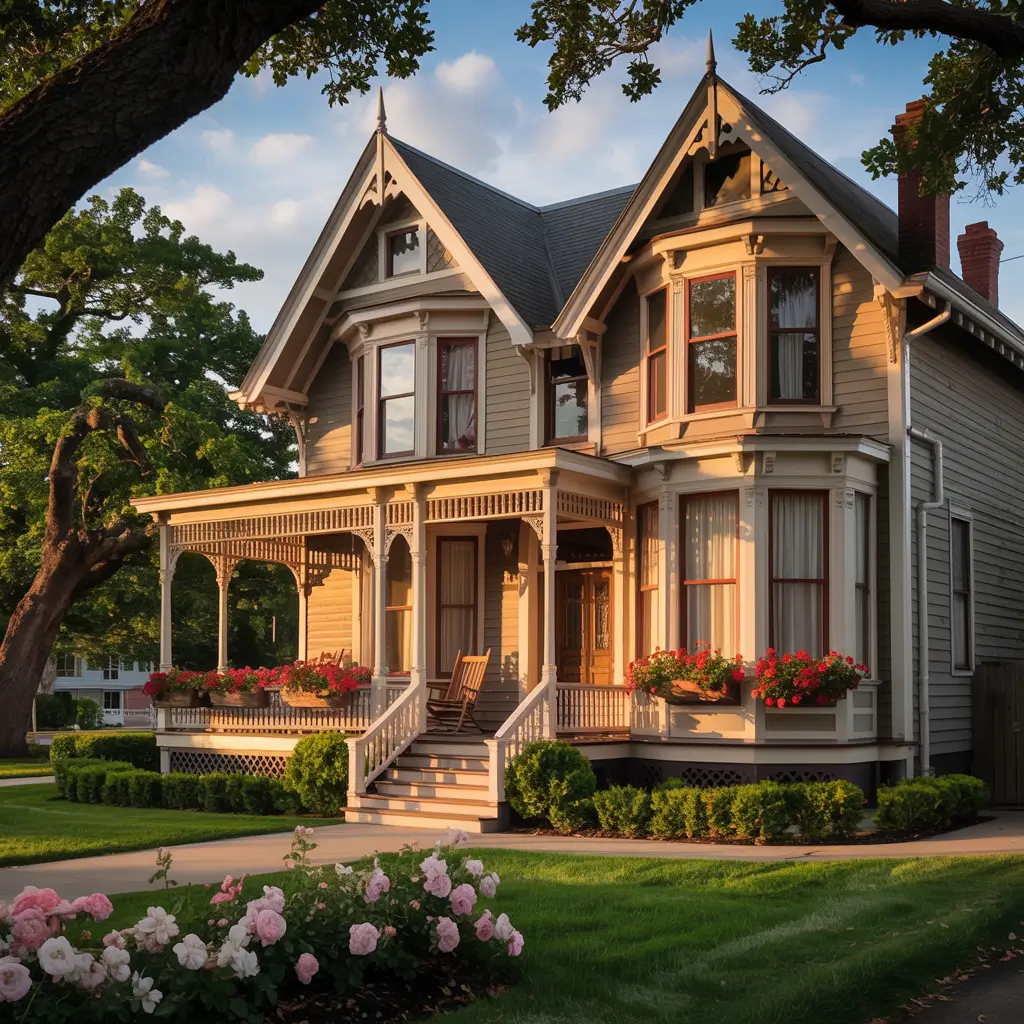
Two-story Victorian plans provide the space growing families need while maintaining the vertical proportions that make Victorians so striking.
Family-Friendly Victorian Living
Two-story family Victorian plans typically include 3-5 bedrooms, multiple bathrooms, and both formal and informal living spaces. Modern versions add family rooms, home offices, and mudrooms to traditional Victorian room arrangements.
The second floor provides bedroom privacy while keeping family life contained to one level during evening routines. Parents appreciate the separation when teens stay up late or young children wake early.
Modernizing Victorian Circulation
Traditional Victorian stairs were narrow and steep—charming but challenging with laundry baskets. Modern two-story Victorian plans widen stairs, reduce angles, and improve flow between floors.
Some plans include back stairs (originally for servants) repurposed as convenient circulation for modern families. These secondary stairs prevent traffic jams during morning rushes and provide discrete laundry transport routes.
Zoning for Family Life
Two-story Victorian plans excel at creating zones for different family activities. Formal spaces near the front door maintain Victorian propriety for guests. Casual family spaces toward the rear embrace relaxed living. Upstairs provides private retreats for all family members.
This zoning lets families enjoy Victorian formality when desired while living comfortably day-to-day. :/
12. Victorian Exterior and Floor Plan Combos
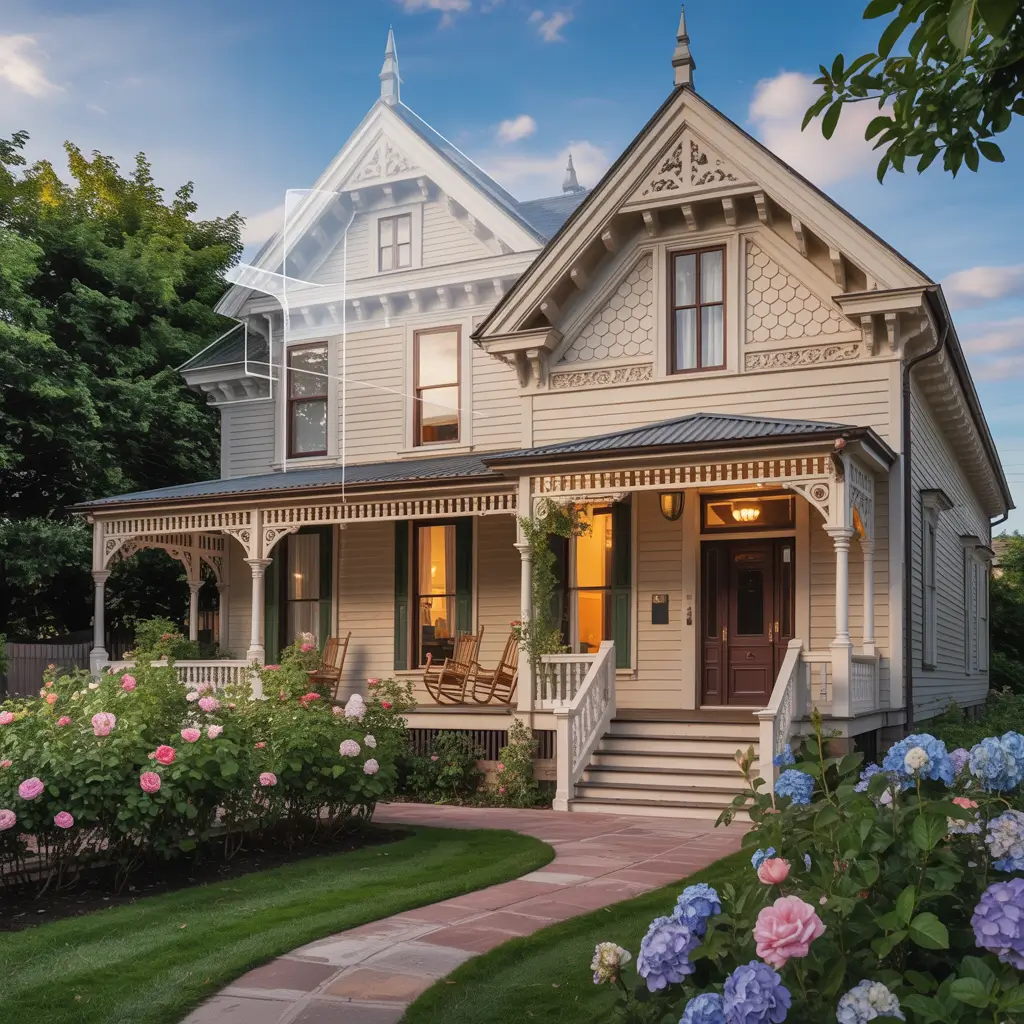
The best Victorian houses marry stunning exteriors with functional floor plans. These combinations ensure your Victorian looks gorgeous while actually working for modern life.
Matching Exterior to Interior
Victorian exterior choices should reflect interior layouts. Turrets need circular rooms that make sense. Bay windows should enhance important spaces. Porches must connect logically to interior rooms.
The most successful Victorian plans design from both outside and inside simultaneously. Exterior charm and interior function develop together rather than forcing one to accommodate the other.
Avoiding Victorian Pitfalls
Some Victorian exterior features create interior challenges. Excessive gables complicate roofs and create awkward ceiling conditions. Too many bay windows fragment rooms. Over-elaborate exteriors inflate costs without adding livable space.
Smart Victorian plans balance exterior impact with interior livability. Every exterior feature should enhance rather than compromise interior function.
Creating Cohesive Designs
The best Victorian plans create harmony between elaborate exteriors and practical interiors. Exterior colors continue inside through carefully chosen palettes. Trim profiles remain consistent throughout. Window styles unify interior and exterior appearance.
This cohesion makes Victorian houses feel intentional and complete rather than decorated boxes. The Victorian spirit infuses the entire home, not just its facade.
Bringing Your Victorian Dreams to Life
After exploring these twelve Victorian approaches, you might wonder where to start your own Victorian journey. Begin by identifying which Victorian elements speak to your soul—the dramatic Gothic arches, the welcoming wraparound porches, or the playful Queen Anne towers.
Consider your real-life needs alongside your Victorian fantasies. That turret room looks amazing, but will it become an expensive storage closet? The elaborate trim requires maintenance—are you prepared for that commitment?
Visit actual Victorian houses when possible. Tours of historic homes reveal how these spaces actually feel. Pay attention to what works and what doesn’t. Notice how light moves through rooms, how spaces flow, and where original Victorians succeeded or failed.
Final Thoughts on Victorian Living
Victorian house plans offer something modern architecture often lacks—unabashed personality, craftsmanship celebration, and the radical belief that houses should be beautiful, not just functional.
In our era of minimalism and efficiency, choosing Victorian feels like a delicious rebellion.
Whether you build new, renovate old, or simply dream, Victorian houses remind us that homes can be art, shelter can inspire, and there’s absolutely nothing wrong with wanting a tower room just because it makes you happy.
Your perfect Victorian plan exists somewhere between historical authenticity and modern reality.
Find that sweet spot, and you’ll create a home that honors the past while embracing the future—indoor plumbing and all!