10 Fun Mini Bookshelf Ideas to Organize Your Books Beautifully
- Bookshelf Styling
 Ben
Ben- 0
- 31 minutes read
You know that feeling when you’ve got books piling up everywhere – nightstand, coffee table, that random corner behind the couch – but zero wall space for a massive bookcase? Yeah, I’ve been there.
After moving into my tiny apartment last year, I spent months tripping over book stacks until I discovered the magical world of mini bookshelves.
These compact storage solutions completely changed how I organize my reading collection. Mini bookshelves pack serious organizational punch without eating up precious floor space.
Whether you’re dealing with a studio apartment, a cramped dorm room, or you just want to add some character to that awkward nook in your hallway, I’ve got you covered with ten brilliant ideas that actually work.
Floating Corner Mini Bookshelf
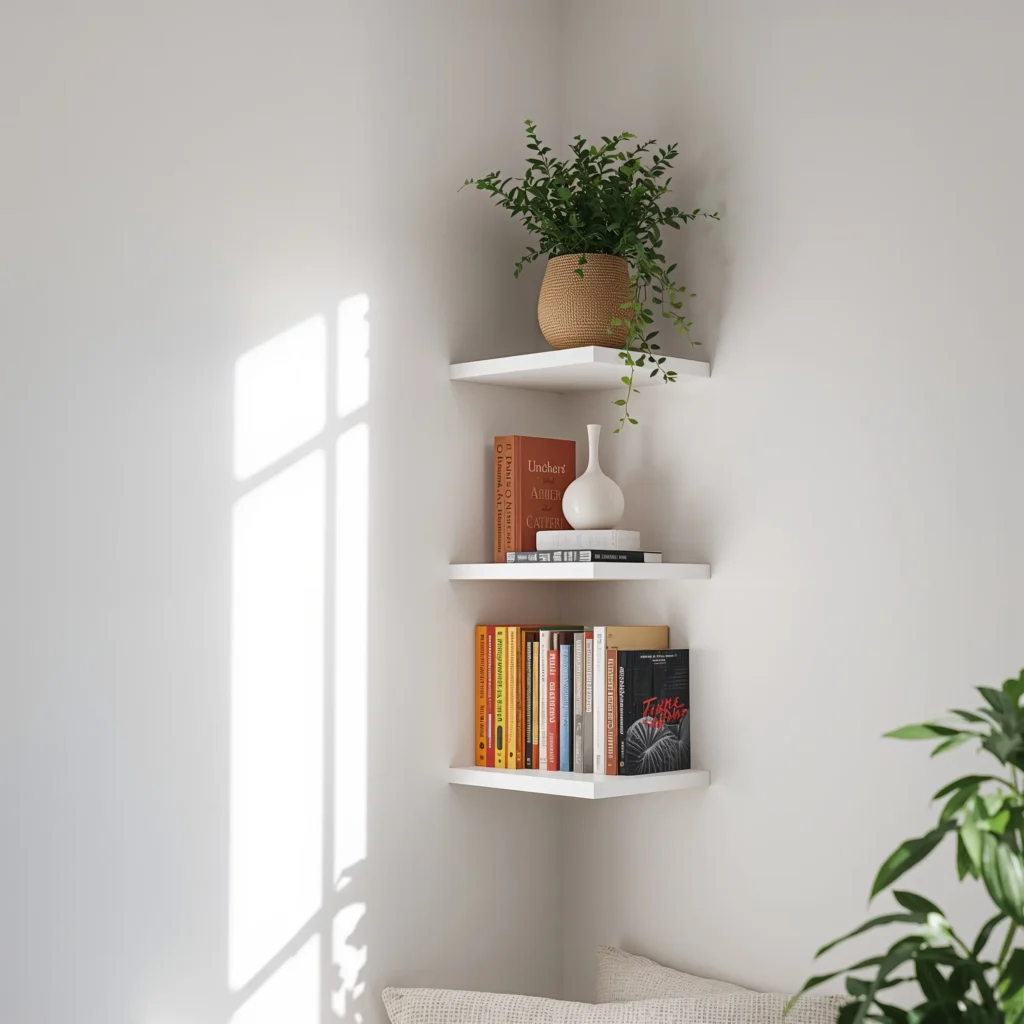
Let’s start with my absolute favorite space-saving hack – the floating corner shelf. Remember those weird corner spaces that just sit there, mocking you with their uselessness? Well, floating corner shelves turn those dead zones into prime real estate.
I installed my first floating corner shelf above my desk, and honestly, it felt like I’d discovered hidden square footage in my apartment. These shelves literally float in the corner where two walls meet, creating this perfect triangular platform for your books. The installation process took me about 30 minutes – you just need a drill, some wall anchors, and basic DIY confidence.
Why Corner Shelves Rock
What makes corner shelves so brilliant? First off, they use space that normally goes completely ignored. You can stack them vertically too – I’ve got three in my bedroom corner, creating this cool cascading effect.
The weight capacity surprised me too. My shelves hold about 15-20 paperbacks each, depending on thickness. For heavier hardcovers, I’d recommend staying under 10 books per shelf. Pro tip: alternate your book spine directions for a more visually interesting display.
Installation Tips That Actually Matter
Here’s what nobody tells you about corner shelf installation: always check for studs first. I learned this the hard way when my first attempt resulted in a 2 AM crash that scared my cat half to death. If you can’t hit studs, heavy-duty drywall anchors are your best friend.
Consider the height carefully too. You want easy access but not so low that you’re bonking your head every time you walk by. I keep mine at eye level or slightly above – perfect for grabbing that bedtime read without stretching.
Ladder-Style Mini Shelf
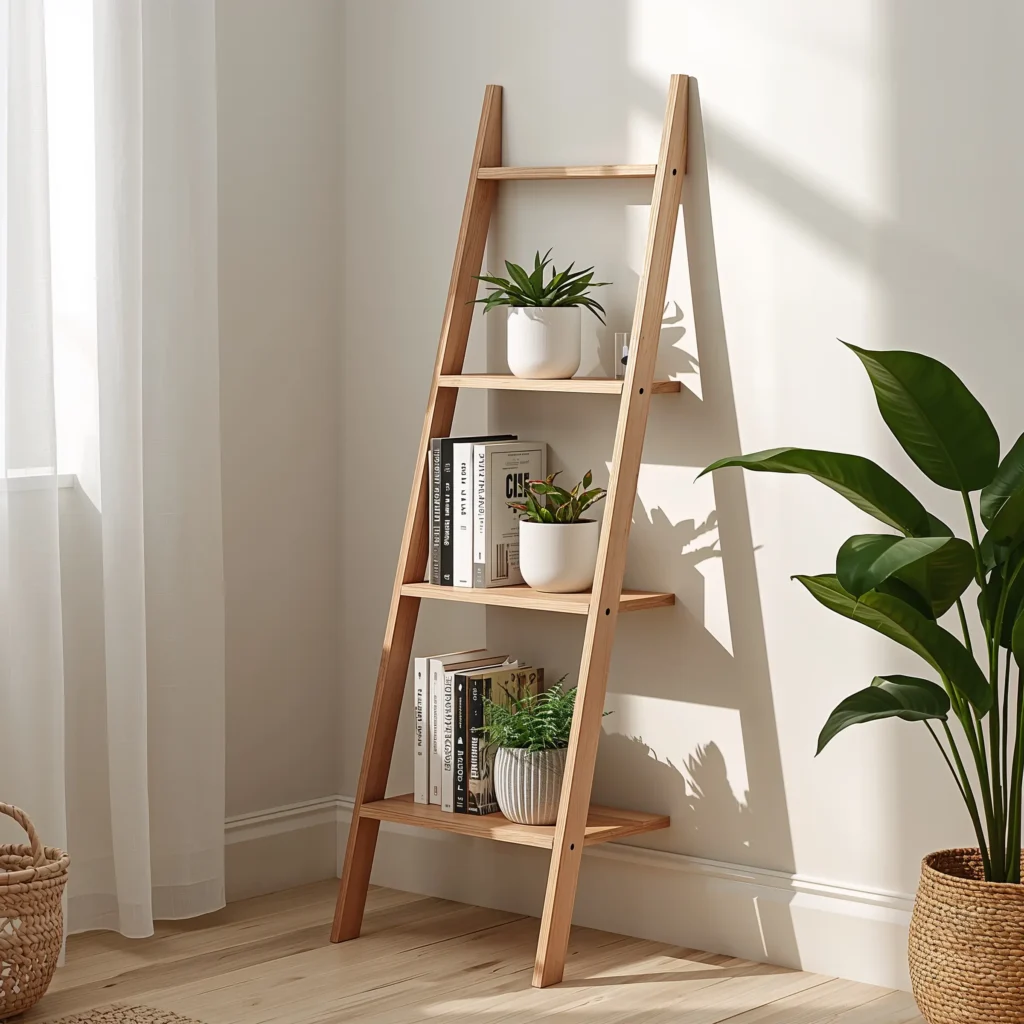
Ever notice how ladder shelves give off this effortlessly cool vibe? They lean against the wall like they couldn’t be bothered to fully commit, yet they’re surprisingly stable and functional. My ladder shelf sits in my entryway, holding everything from novels to succulents.
The beauty of ladder shelves lies in their graduated shelf sizes – wider at the bottom, narrower at the top. This design naturally distributes weight and creates visual balance. You can fit chunky art books on the bottom shelves while displaying smaller paperbacks up top.
Making the Most of Your Ladder Shelf
I organize my ladder shelf by genre, with each rung representing a different category. Fiction lives on the middle shelves (easy grabbing height), reference books sit heavy at the bottom, and my to-read pile claims the top spot where it guilts me daily 🙂
Don’t just limit yourself to books though. I mix in small plants, framed photos, and decorative boxes between book clusters. This breaks up the visual monotony and makes the whole setup feel less like a storage solution and more like intentional decor.
Choosing Your Perfect Ladder Shelf
When shopping for ladder shelves, pay attention to the lean angle. Too steep and your books slide forward; too shallow and the shelf becomes a space hog. The sweet spot? Around 75-80 degrees from the floor.
Material matters too. I started with a cheap particle board version that warped within months. Now I swear by solid wood or metal frames – they cost more upfront but last forever. Plus, real wood ladder shelves develop this gorgeous patina over time that adds character to your space.
Cube Stack Mini Bookshelf
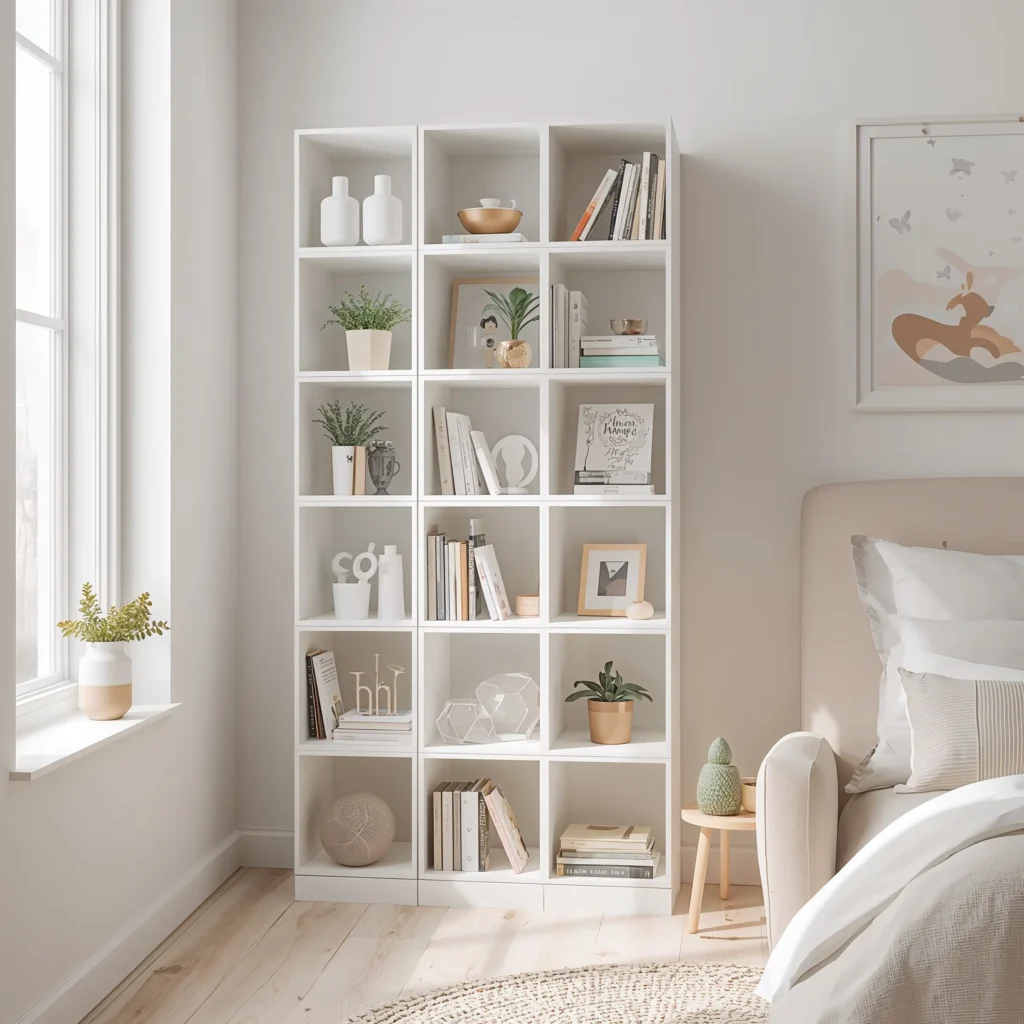
Cube shelving units are basically the LEGO blocks of the furniture world. You can stack them, arrange them horizontally, create stairs – the possibilities are endless. I’ve rearranged my cube setup at least five times this year, and each configuration feels like a whole new piece of furniture.
Individual cubes typically measure 13-15 inches square, perfect for standard books with room to spare. The modular nature means you start small and expand as your collection grows. Started with two cubes? Add two more next month. Your bookshelf evolves with your reading habits.
Creative Cube Arrangements
Here’s where things get fun. Instead of boring straight stacks, I offset my cubes to create this zigzag pattern up the wall. Each cube becomes its own little display vignette. One holds my favorite poetry collections, another showcases vintage paperbacks with gorgeous spines, and yes, one is entirely dedicated to my embarrassing romance novel addiction.
You can also flip some cubes on their sides to create different sized compartments. Horizontal rectangles work great for oversized coffee table books that won’t fit in standard vertical spaces.
Cube Shelf Styling Secrets
The trick to making cube shelves look intentional rather than dorm-room-esque? Don’t fill every single cube with books. I follow the rule of thirds – one-third books, one-third decorative objects, one-third breathing room.
Use bookends within cubes to create mini sections. Stack some books horizontally to break up the vertical lines. And here’s my favorite hack: add battery-powered LED strips inside select cubes to create dramatic uplighting for your favorite titles.
Also Read: 10 Amazing IKEA Bookshelf Ideas and DIY Inspiration
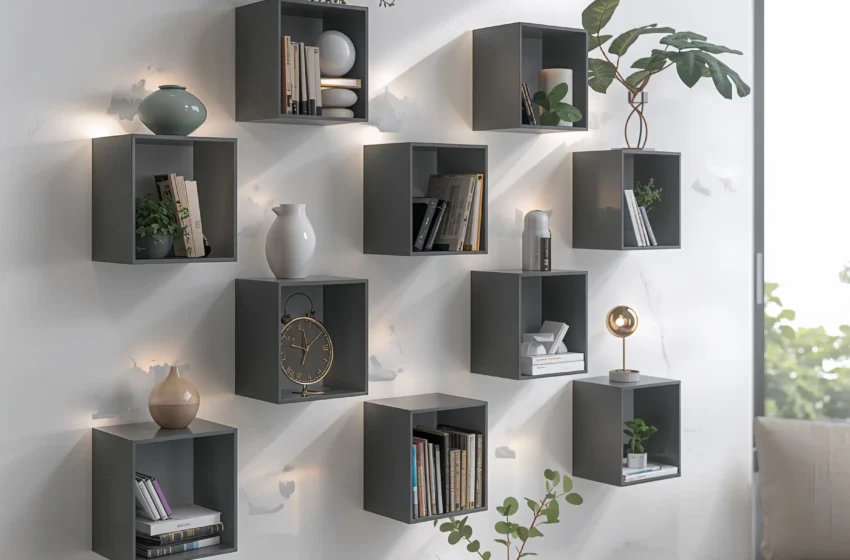
Wall-Mounted Geometric Shelf
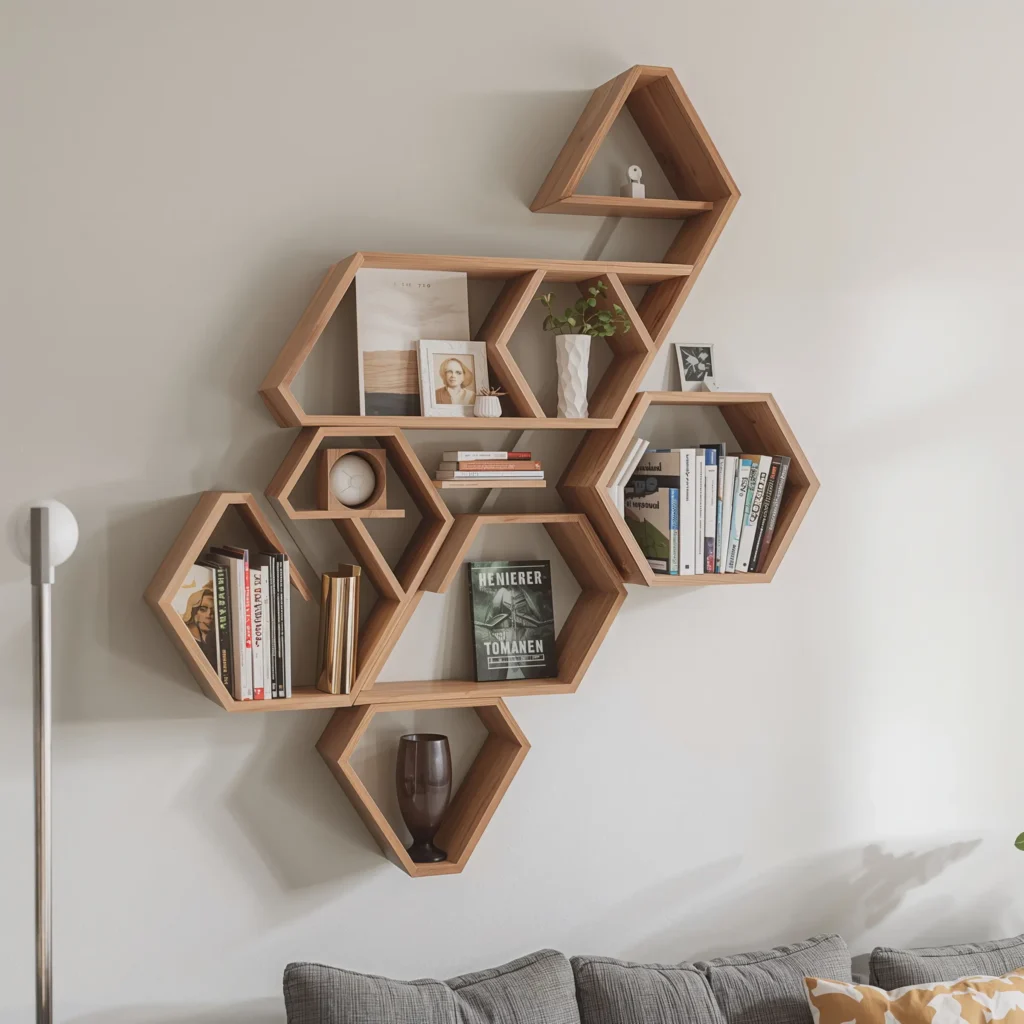
Geometric shelves turn your wall into an art installation that happens to hold books. Think hexagons, triangles, asymmetric diamonds – shapes that make people stop and stare. My living room features a honeycomb arrangement that gets more compliments than my actual artwork.
These shelves work especially well in modern or minimalist spaces where bold shapes create visual interest without overwhelming the room. Each geometric compartment becomes a frame for whatever you display inside.
Planning Your Geometric Layout
Before you start drilling holes, I learned to map everything out with paper templates first. Cut shapes from cardboard and tape them to your wall. Live with the arrangement for a day or two. You’ll quickly spot if something feels off-balance or if the spacing needs tweaking.
Consider the negative space between shapes too. The gaps are just as important as the shelves themselves – they create rhythm and prevent the display from feeling cluttered. I aim for consistent spacing, usually about 4-6 inches between units.
What Works Best in Geometric Shelves
Not gonna lie, geometric shelves have limited capacity. Each compartment typically holds 3-5 books max, so they’re better for displaying special editions or current reads rather than storing your entire collection. I rotate my display monthly, treating it like a curated bookstore window.
Mix book orientations within the geometric shapes. Vertical books in hexagons, horizontal stacks in rectangles, single statement pieces in triangles. The variety keeps eyes moving across the display.
Hidden Storage Bookshelf Bench
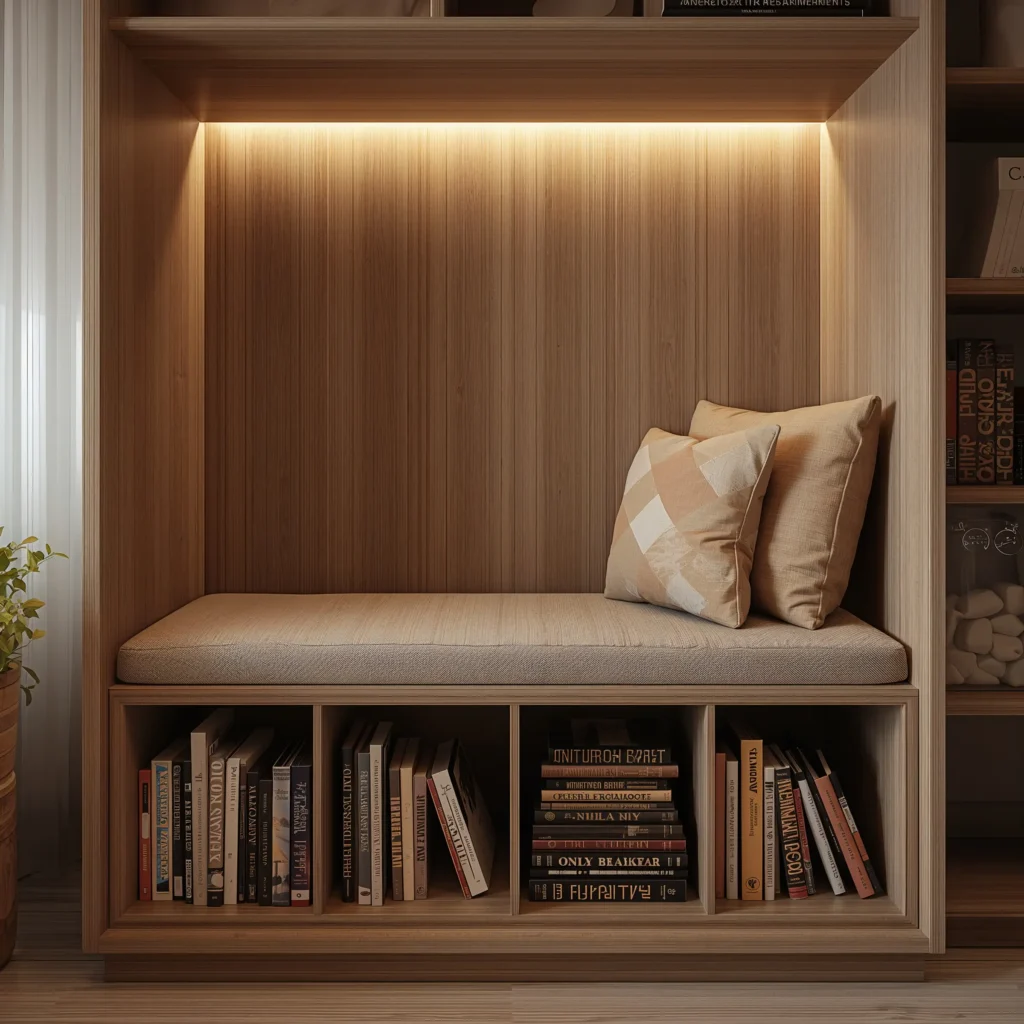
Who says furniture can’t multitask? My entryway bench secretly stores about 40 books, and visitors have no clue they’re sitting on my emergency book stash. Bookshelf benches combine seating with storage, making them perfect for tight spaces that need to work overtime.
The best designs feature cubbies accessible from the front or sides, letting you grab books without disturbing anyone sitting on top. Some models include a hinged seat that lifts to reveal hidden compartments – perfect for books you don’t need daily access to.
Maximizing Bench Storage
I organize my bench storage by season. Summer beach reads live in the left compartment, cozy winter novels on the right. The middle section holds library books and anything I need to return or lend out. This system keeps me from digging through everything when I need something specific.
Consider adding fabric bins or baskets in some compartments. They slide out easily and protect paperbacks from getting bent or dusty. Plus, they hide the messy reality of books crammed in at weird angles (we’ve all been there).
Choosing the Right Bench Style
Your bench should match its location’s primary function. Entryway? Go for something sturdy that can handle wet boots and heavy bags. Bedroom? Pick a softer, upholstered top for comfortable seating.
I learned to measure doorways before buying – my first bench barely squeezed through my apartment door. Also check the weight capacity for both sitting and storage. Most quality benches handle 250-300 pounds on top and 30-50 pounds of books inside each compartment.
Hanging Rope Shelf
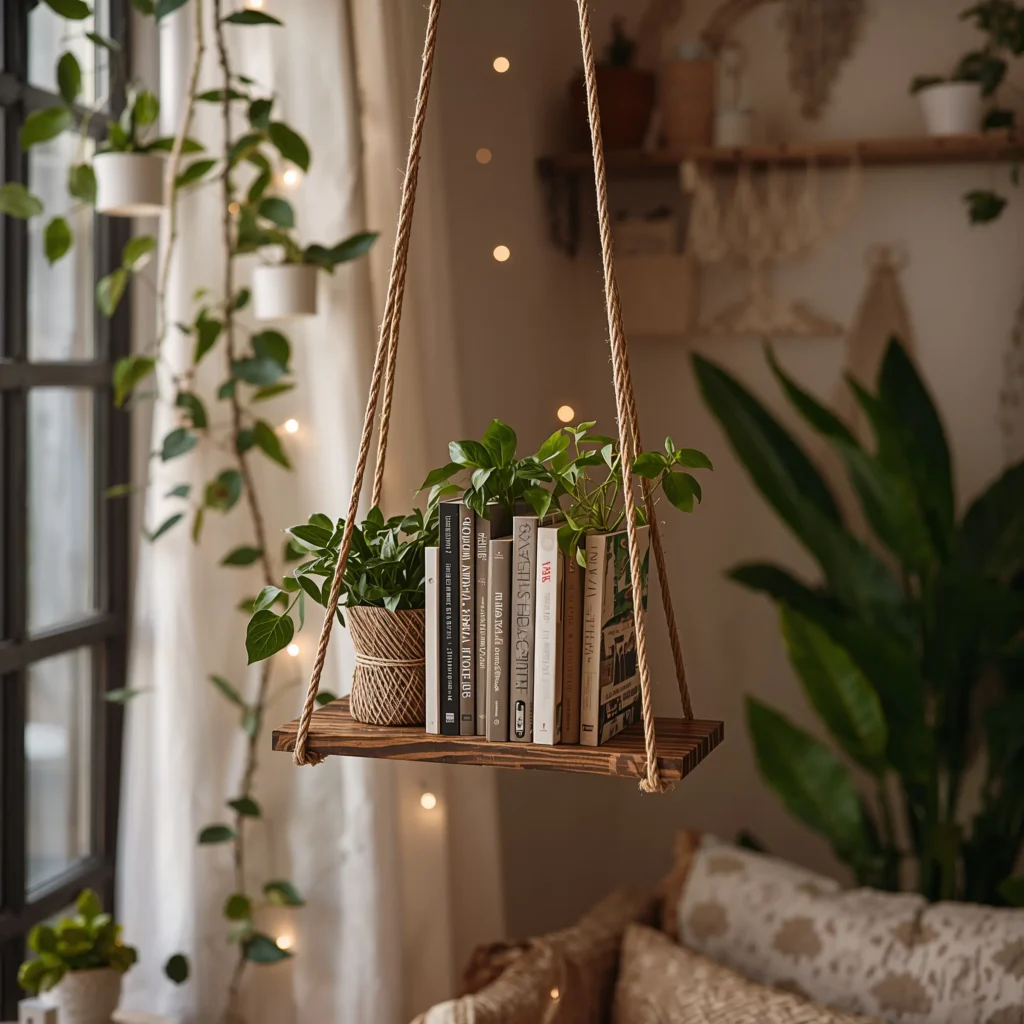
Want to add some nautical charm or boho vibes to your space? Hanging rope shelves bring texture and movement that traditional shelves can’t match. Mine hangs in my bathroom (yes, really!) holding towels and my collection of bath-time reading material.
These shelves typically feature wooden planks suspended by rope or macramé from ceiling hooks. They swing slightly when you grab a book, which feels weirdly satisfying. Just don’t go too crazy with the swinging – learned that lesson when three books took a dive into my bathtub.
Installing Rope Shelves Safely
Ceiling installation freaks people out, but it’s actually straightforward. Find a ceiling joist using a stud finder, drill pilot holes, and screw in heavy-duty hooks rated for at least 50 pounds each. The rope and wood might only weigh 10 pounds, but books add up fast.
Consider the swing radius when choosing placement. You need clearance on all sides – I recommend at least 6 inches from walls. Also think about head clearance. Nothing ruins the vibe faster than constantly ducking under your own bookshelf.
Styling Your Hanging Shelf
Rope shelves look best with a casual, lived-in arrangement. Don’t obsess over perfect alignment – let books lean naturally. Mix in small potted plants (secured in containers that won’t tip), candles in glass holders, or collected shells and stones.
The rope itself becomes part of the decor. Natural jute gives rustic charm, white cotton rope feels beachy, and black cord adds modern edge. I wrapped fairy lights around my rope for extra ambiance – just ensure they’re battery-powered to avoid dealing with cords.
Also Read:10 Creative Bookshelf Organization Ideas for Small Spaces
Modular Magnetic Mini Shelf
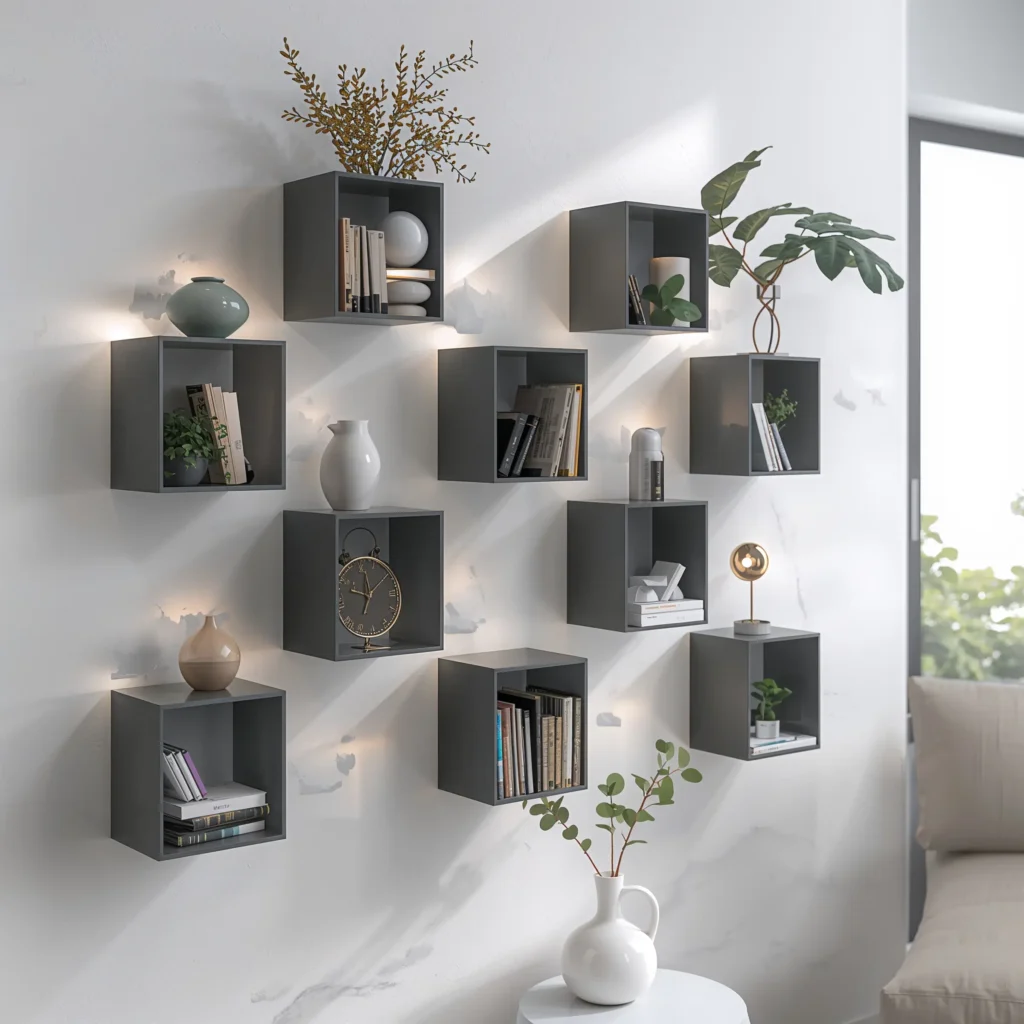
Okay, this one blew my mind when I discovered it. Magnetic modular shelves use powerful rare-earth magnets to stick directly to metal surfaces or special wall-mounted metal strips. You can rearrange them in seconds without tools, holes, or commitment issues.
I use magnetic shelves on my refrigerator side (apartment life, am I right?) to create a mini cookbook library in my kitchen. Each shelf holds about 5-8 standard paperbacks or 3-4 chunky cookbooks. When I need counter space, I just slide them higher. Genius.
Getting Creative with Magnetic Placement
Think beyond traditional walls. Metal filing cabinets, washing machines, steel doors – any ferromagnetic surface becomes potential shelf space. I’ve even seen people use them on metal room dividers to create double-sided book displays.
The modular aspect means you can create patterns. Diagonal lines, scattered clusters, geometric grids – whatever matches your mood. Rearranging becomes oddly addictive. FYI, I spent an entire Sunday afternoon playing with different configurations.
Magnetic Shelf Considerations
Not all magnetic shelves are created equal. Cheap ones use weak magnets that slip under weight. Invest in shelves with neodymium magnets – they cost more but actually stay put. Test weight limits gradually; just because it sticks doesn’t mean it’ll hold your complete Harry Potter hardcover collection.
If your walls aren’t metal, you’ll need to install metal strips first. These typically come with the shelf system and mount like picture rails. Make sure they’re level, or your books will slide toward the low end.
Tiered Plant & Book Shelf
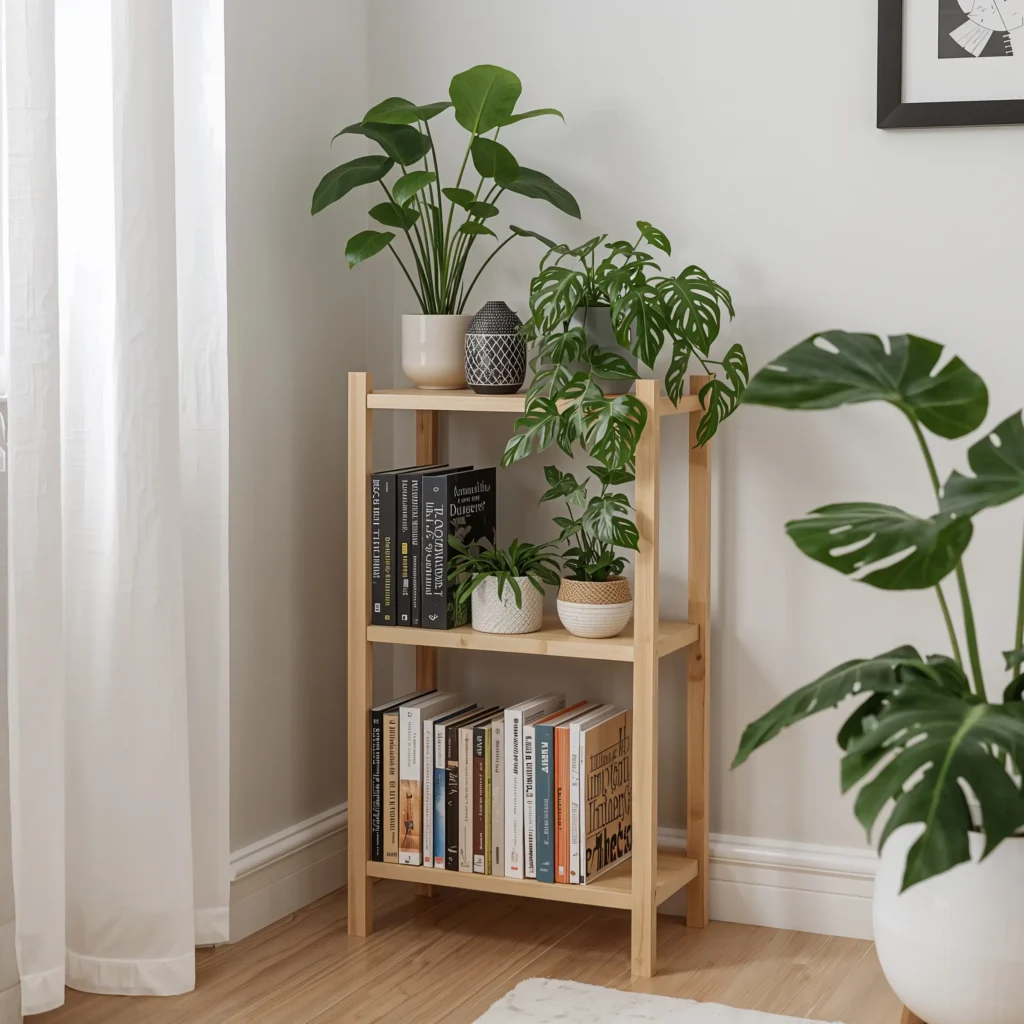
Why choose between books and plants when you can have both? Tiered plant stands make surprisingly excellent book storage, especially if you’re going for that dark academia meets urban jungle aesthetic. My bedroom corner features a bamboo plant stand that’s 70% books, 30% plants, and 100% my favorite spot in the apartment.
These shelves typically feature 3-5 tiers of different heights, creating natural zones for different items. Tall plants up top where they won’t block book spines, trailing plants on middle shelves draping between novels, and hefty book collections on the sturdy bottom tiers.
Balancing Books and Greenery
The key is choosing plants that thrive in similar conditions to where you’d keep books. Low-light tolerant plants work best since direct sunlight can fade book covers. My go-to combo: pothos, snake plants, and ZZ plants mixed with paperback mysteries.
Water carefully to avoid book damage. I use a small watering can with a narrow spout and always remove books from nearby shelves when watering. Learned this after destroying a first edition with an overzealous watering session. Still hurts to think about.
Choosing Your Tier Setup
Look for stands with varied shelf sizes. Uniform tiers look neat but limit flexibility. My stand has two wide shelves for books, two narrow ones for small plants, and one medium shelf that holds both.
Material matters here too. Wood looks gorgeous but can warp with moisture from plants. Metal resists water damage but might rust. I chose sealed bamboo – naturally moisture-resistant and fits my aesthetic perfectly. Whatever you pick, add waterproof shelf liners under plants for extra protection.
Ladder-Like Leaning Bookshelf
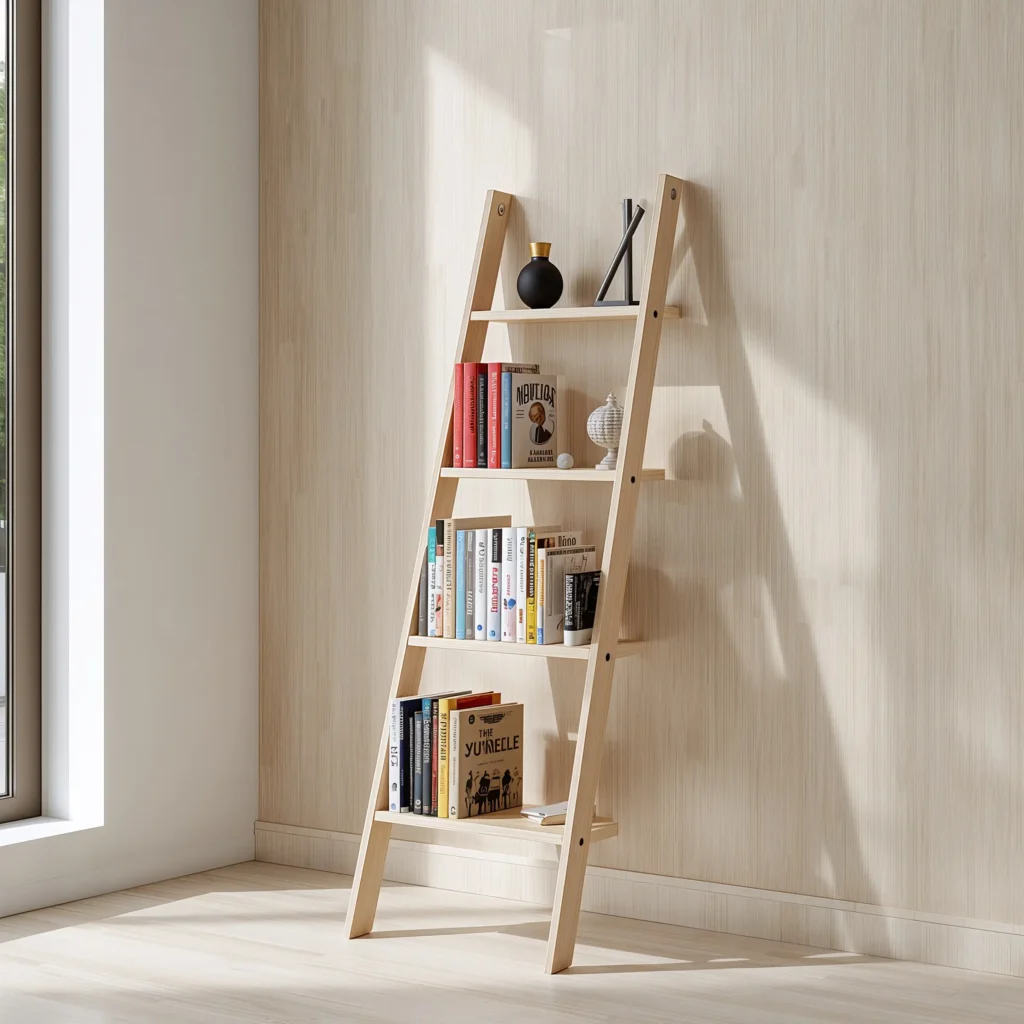
Different from the ladder-style shelf I mentioned earlier, these leaning bookshelves look like actual ladders with wide rungs that got promoted to furniture status. They lean at a sharper angle and often feature deeper shelves that can hold multiple rows of books.
Mine lives behind my couch, creating a room divider effect while keeping books within arm’s reach. The steep lean means I can see all my book spines at once – no more forgetting what I own and buying duplicates (happened more than I’d like to admit).
Maximizing Leaning Shelf Space
Double-stack paperbacks on deeper shelves with favorites in front and backup reads behind. Use bookends to create sections within each shelf level. This prevents the domino effect when you pull one book out.
The top shelf sits pretty high, so I reserve it for books I rarely need or decorative items. Middle shelves get heavy rotation titles. Bottom shelf holds reference books and anything I grab while sitting on the couch.
Stability and Safety Tips
Leaning shelves rely on physics and friction to stay upright. Always anchor the top to the wall with the included safety strap. Trust me, you don’t want to test gravity with hundreds of pounds of books.
Check that your floor is level before setup. Even slight slopes can make the shelf feel unstable. I use furniture pads under the feet to level mine and protect my hardwood floors from scratches.
Also Read: 10 Fun Nursery Bookshelf Ideas to Organize with Style
Cube Drawer Combo Mini Shelf
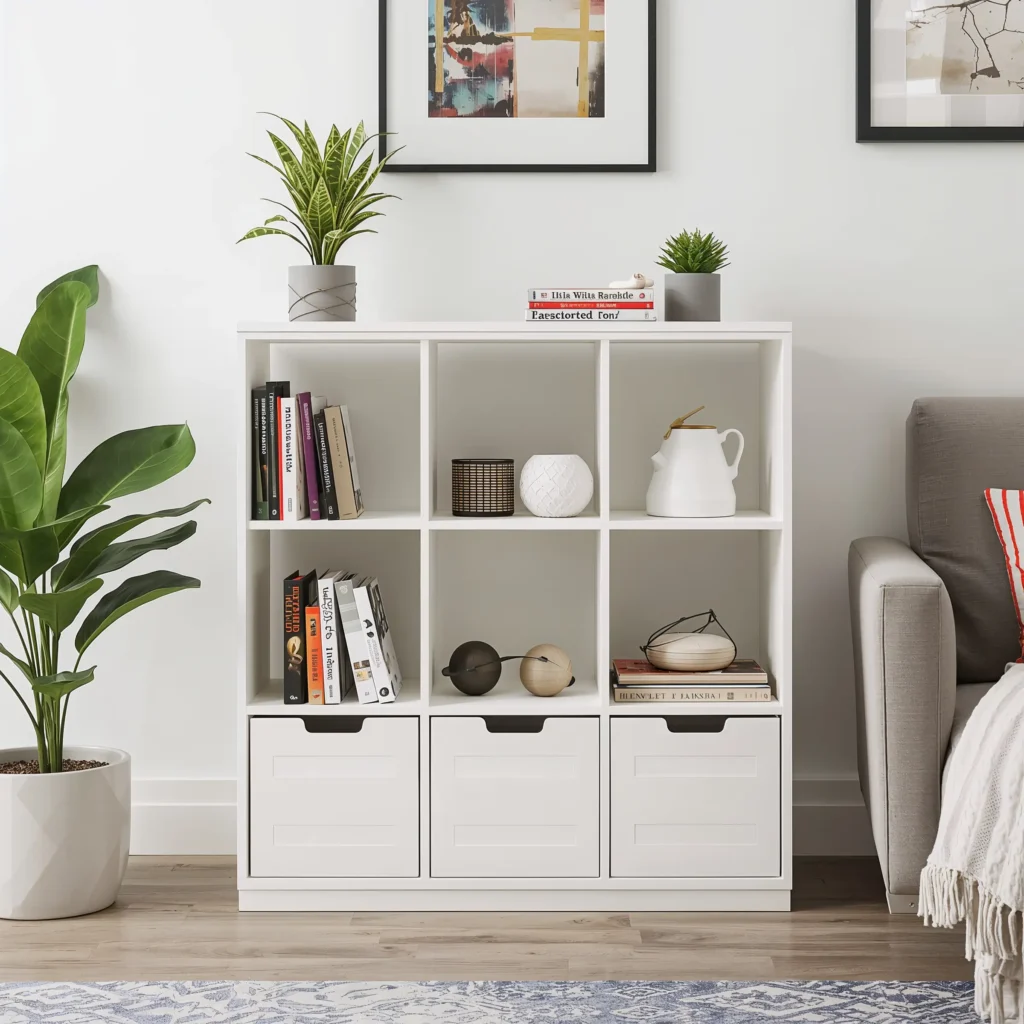
Last but definitely not least, the cube drawer combo brings the best of open and closed storage. Picture standard cube shelving but with some cubes containing pull-out drawers or doors. You display pretty books in open cubes while hiding less photogenic items (looking at you, mass market paperbacks with cracked spines) in drawers.
My home office uses this system brilliantly. Work references and attractive hardcovers live in open cubes where I can grab them quickly. Personal journals, rough drafts, and guilty pleasure reads hide in drawers away from video call backgrounds.
Strategic Drawer Placement
I recommend a 60/40 ratio of open to closed storage. Too many drawers and your bookshelf looks like a dresser; too few and you lose the hiding benefit. Alternate drawer cubes with open ones in a checkerboard pattern for visual interest.
Use drawers for more than just ugly books. They’re perfect for book-adjacent items like reading glasses, bookmarks, book lights, and that stack of bookstore receipts you’re keeping for some reason. Everything stays accessible but not cluttered-looking.
Customizing Your Combo Unit
Many cube systems let you add drawers later, so you can start basic and upgrade. Fabric drawer inserts cost less than wooden drawers but work great for lightweight items. Just don’t overload them with hardcovers unless you enjoy watching fabric bins slowly collapse (speaking from experience).
Label drawer contents if you’re organizationally challenged like me. I use a label maker for a clean look, but washi tape and handwriting works too. My labels include genres, authors, and yes, one drawer simply marked “books I’ll totally read someday.”
Making Your Mini Bookshelf Work for You
After trying all these different mini bookshelf ideas, I’ve learned that the best solution combines multiple approaches. My apartment now features floating corner shelves in the bedroom, a ladder shelf in the entryway, magnetic shelves in the kitchen, and a cube drawer combo in my office. Each serves a different purpose and adds its own character to the space.
Don’t feel pressured to fill every shelf immediately. Start with what you have and let your collection grow organically. Empty space isn’t failure – it’s potential. Plus, it gives you an excuse to hit up used bookstores, and who doesn’t need more of those in their life?
Remember, mini bookshelves aren’t just about storage – they’re about creating a space that reflects your personality. Whether you go minimal with geometric shelves or maximize every inch with clever combos, the goal is making your books accessible and your space more you.
The best part? When friends come over and compliment your creative shelving solutions, you can casually mention how you figured it all out yourself. Because honestly, there’s nothing quite like the satisfaction of solving your own storage puzzle while surrounding yourself with the books you love. IMO, that’s what makes a house feel like home – not perfect furniture, but perfectly personalized solutions that work for your actual life.
So grab that drill, measure twice, and start transforming those empty walls and awkward corners into your personal library. Your books (and your shins that keep tripping over floor stacks) will thank you.